The General Synopsis at Midnight

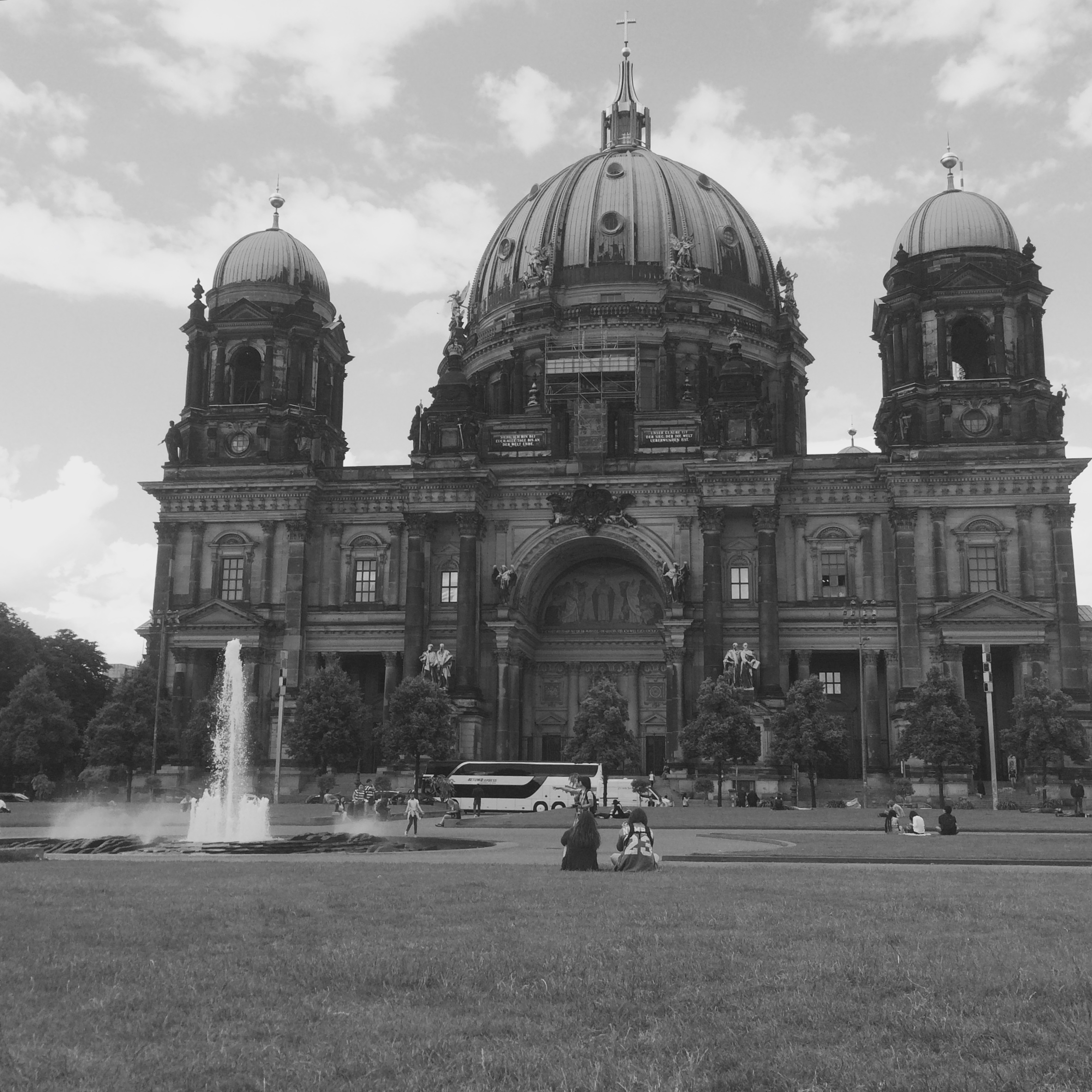
IMG_2009.jpg

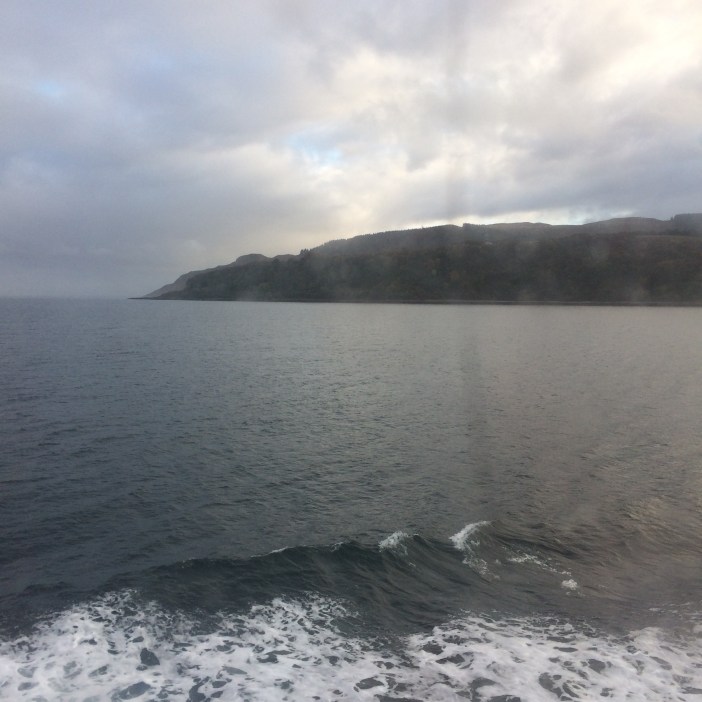
To the best of my memory, I have only ever been on a sailing boat once. Or, I have only been happily in control of a sailing boat once (there was a time we had to try windsurfing in primary school, a time whose details have, thankfully, long been repressed).  It was 2005, I was twelve years old, and had won a competition through the local youth club to go on a sailing trip to Oban. I don’t remember anything about what I must’ve learned regarding sailing, but I do recall a beautiful suite of seafaring terms: a special vocabulary which transformed previously mundane structural features into curious artefacts of mysterious potential: cleat, keel, stem, rudder, transform, tiller, clew, boom, shroud, telltale, jib, winch, deck and spreader. The man in charge was a hardened fisherman type; I don’t recall his name, but we called him the skipper. He was dismayed to learn I was a vegetarian, having packed little in the way of vegetables for our journey. I was happy to live off Ovaltine, jam rolls and digestives for the following days. It was such an odd combination of children—were we still children?—on that trip. No popular kids, but a few of the scarier misbehaviours (probably not okay to still call them neds), the freaks and geeks—then me, wherever I fit in. ‘Goth’, which in the case of my school was generally singular. Somehow, we all bonded rather than fought in the tiny space of that boat.

One boy, who would always be in fights, bullying and hunking his weight around, was so sweet to me. He saw I had eaten barely anything and gave me a whole bar of Cadbury Mint Chocolate, insisting I had all of it. It was such a kind gesture that I remember it still. Everyone was different at sea: softer, more honest. We were willing to admit our social vulnerabilities; there was no-one, no context, to perform for. A boy I’ll call L. opened up to me about his love for 2Pac, and when Coldplay came on the skipper’s stereo (it was their first truly mehhhh album, X&Y), we shared a little rant about how cheesy it was. We ate fruit out of tins, pulled scarves over our faces on deck and watched the coloured houses of Tobermory loom closer. The skipper let us all have a go at the tiller; he told us stories from previous trips, about how the weather had turned nasty and they’d had to pull themselves through miniature hurricanes. I found myself craving the wild mad weather, even as I was shivering in some inadequate waterproof jacket (I have a history of coming ill prepared to such outings). The skipper and I sort of oddly bonded, since I was usually the first one up in the group. He’d put the kettle on and we’d go out on deck to watch the sky. He’d point out things to look for in the cloud patterns, the colours that bloomed on the horizon. It’s this kind of practical knowledge that I thirst for. Chefs talking to me about how to sharpen knives, bake brownies; motorcyclists betraying the secrets to keeping your speed; engineers talking about formulas and team rivalries and how to build a bike wheel. I’m completely incapable of almost anything practical, so it’s always a magic alchemy to me. When people ask what I want to be when I grow up, I say shepherdess, even though I have little idea of what that entails, beyond reading the excellent The Shepherd’s Life by James Rebanks and occasionally listening to The Archers. I think I’d just be content to wander around hills.

Red sky at night, shepherd’s delight…

I awake to steady rainfall, first day of November. I have been thinking a lot about that sailing trip recently, mostly because I’ve been doing writing workshops in Greenock, and the nature of the place as a harbour town has everyone often turning back to boats and fishing topics. I talk to a chef at work about fishing, not because I’m all that interested in fish but because there’s something about its psychology that reminds me of times gone by. Once, I took myself out to Cardross on the train, following the road up to Ardmore to sit on the point which was a good spot for anglers. It was so quiet and still, the beaches strewn with lumps of quartz. I sat there for an hour or so, listening to the steady lap of the estuary, then slowly made my way home, tearing my skin on all the brambles. It had the feeling of a secret, overgrown place. A little out the way, a nest you could curl into: an almost island. I recall those tiny islands on the Swan Pond at Culzean Castle, where we used to leap across to. As a kid, I’d hide among the bamboos and rushes and feel entirely in my own little world. The pathways and grasses were lit with secret creatures, this 12th World I’d created—it was over a decade prior to Pokemon Go, but here I was in my augmented reality. I’d sit up on the top of the stairs reading for as late as possible, imagining that I was on top of a waterfall, and all before me was water cascading instead of carpet. I’d lie upside down and the ceiling became the first planes of a new universe. I’d wake up early and write it all down; but those pages are lost to whatever antique sale of the past stole my youth.

Now I am adult, less governed by diurnal rhythms. I find myself lost in the long bleed of night into day, up far too late in the bewildering recesses of the ocean online, the oceanic internet. Far corners where articles smudge their HEX numbers in true form down the page and I am rubbing my eyes to see beyond light. Time, perhaps, to rehash that old metaphor, surfing the web. Occasionally, some page would bring me crashing back down in the shallows; I’d wake up, ten minutes later, groggy on my keyboard. Press the refresh key. Instagram has me crossing continents at bewildering speed, lost in Moroccan markets, Mauritian beaches and Mexico City. In the depths of some nightclub then the heights of a Highland peak. So many fucking faces. Closeups of homemade cakes, delicious whisky. Memories. Oscillations I can hardly breathe in, watching my thumb make its onward scroll without my direction. The rhythms become flow, become repetition. I need an anchor. It’s been hours and hours and maybe I’m hungry.

On the boat, whose name I have sadly lost, we slept by gender in two separate cabin rooms. They were tiny, low-ceilinged, and we were just a handful of slugs pressed tight in our sleeping bags. It was better than a sleepover, because there was no pressure to stay up all night and we were all too exhausted from the sea air to talk much. I’d close my eyes and feel the steady rock of the boat’s hull as it bobbed on the water. There was a deep throb of something hitting against the walls outside, maybe a buoy or rope; it felt like a heartbeat. Sleeping in many strange places, the floors of friends’ flats and houses, in tents and on trains, I try to revisit that snug tight room where sleep was difficult to separate from consciousness itself. It was all of a darkness. Something Gaston Bachelard says in The Poetics of Space:  ‘We comfort ourselves by reliving memories of protection. Something closed must retain our memories, while leaving them their original value as images.’ There was no mirror in that boat, so all I remember are smells and objects. No sign of my own pale and windswept face. Everything we ate was an old-fashioned brand; it made me think of rationing and traditional values. I wasn’t quite sure what that even meant.

I need an anchor. A place to dock in.

Governed by some primordial instinct, I go to make my dinner around the same time most nights—which happens to be one in the morning. The shipping forecast used to be the last thing on the radio, before a sea of white noise till dawn. When cutting veg, my fingers weak from another long day, I switch on the radio and there are the familiar intonations. I listen as I would a poem or a shopping list, a beautiful litany of place names, nouns, directives. I have no idea what any of it signifies. It’s been a double shift, perhaps, or an extreme stint in the library, a walk across the city. My mind is full of words and sounds, so many conversations. The debris of the day threatens to spill out as a siren’s cry, and how easily I could slump against the kitchen cupboards, wilt upon the floor. Make myself nothing but driftwood, no good turning till morning. But instead I chop veg, listen to the shipping forecast. It’s difficult to think you deserve food, even when your body’s burning for it and you haven’t eaten for hours. But there are so many other things to read or do! You need an anchor, a reason.

The general synopsis at midnight.

Many of my childhood lost afternoons, bleeding to evenings, were spent playing The Legend of Zelda: The Wind Waker on a GameCube I shared with my brother—avoiding the narrative quests and dungeons in favour of epic ventures across that cobalt ocean. What I wanted was that rousing sense of the wind’s spirit, the freedom to glide and find new islands. Whirlpools, tornados and Chtlulu-like creatures hurled me out to stranger lands. It was all so beautifully rendered, an expansive thalassic field of possibility; with each route I was fashioning some lovelorn story for my lonely hero. The ocean has always represented for me some point of erasure where reality dissolves into imagination. I think maybe it’s this perceptive meshing that we need to attune to in order to make sense of the vast scale effects of the Anthropocene. How else to grasp those resonant shockwaves of consequence, whose manifestations often transcend our human grasp of time and space?

Headache, Viking, southwesterly veering. The same refrain, moderate or good. When occasionally poor at times, do I picture the sailors with rain lashing their faces, rising through mist towards mainland? Is that even where they want to head? Rain at times, smooth or slight, variable 3 or 4. The dwelling conditionals; always between, never quite certain. The weather being this immense, elusive flux you can guess at, the way paint might guess at true colour. Cyclonic 4 or 5. In Fitzroy are there storms circling around the bay? Very few of these places could I point to on a map. I like the ambiguity, the fact of their being out there, starring the banks and shores and isles of Britain and beyond: Shannon, Fastnet, the Irish Sea. There’s a sense of being ancient, from Fair Isle to Faeroes.

I went to a talk last week for Sonica Fest where a girl from Fair Isle talked about climate change, how her home island would probably one day be swallowed by the sea. I can’t help picturing a Cocteau Twins song when she says it. She dropped handmade bronze chains in different oceans so you could see the divergent levels of oxidation, relative to saline content. It was beautiful, this abstract material rendering of elemental time. The world rusts differently; we are all objects, exposed to variant weathers. Her name was Vivian Ross-Smith and she talked about ‘islandness’, a project which connects contemporary art practise with locality and tradition. The term for me also conjured some sense of the world as all these archipelagos, whose land mass is slowly being ravaged by warming waters. The pollutants we put in. Islandness betrays our vulnerability, the way we were as 12-year-olds at the mercy of the tides, the weather and our gruff skipper. I had little conception of what climate change was, but even then I didn’t set a division between humankind and nature.

Back on the boat, I traced my own moods in the swirls of those mysterious currents, dipping my fingers in the freezing North Sea. Who are we before puberty, pure in our childish palette of pastel moods? When I think about how that sea spreads out to become the Atlantic, so vast and impossibly deep, I grow a bit nauseous. Maybe that’s the sublime; an endless concatenation of seasickness, feeling your own weakness and smallness in the face of great space, matter, disaster. How easy you too could become debris.

Increasingly, that waltzing Cocteau Twins song feels more like an elegy, haunted by the shrill of soprano, those shoegaze guitars resounding like notes through a cataract. A line from Wordsworth’s  ‘Tintern Abbey’* I always remember, ‘The sounding cataract / Haunted me like a passion’. Interplay between feeling and form, sound and vision. The ocean warming, the beat steady and mesmerising. Are we sleepwalking into the Anthropocene, over and over again, a lurid repetition compulsion? Why we keep burning up fossil fuels, emitting our plumes of carbon, senseless in the face of a terrible sensorium? I crave solid objects that show up the archives of history, those plastiglomerates of Frankenstein geology, the warped materials of the Earth’s slow and drawn-out hurting. Liz Fraser’s operatic howls are maybe the mourning of the land itself, begging to be swallowed by the sea. A saving? If originally we came from water, hatched out of amniotic sacks or evolved from subaquatic origins, then maybe we return to its oceanic expanse, its blue screen of death. When I’m anxious and needing to write furiously, write against the tides of exhaustion or time, I listen to Drexciya—Detroit-based techno that harks back to Plato’s mythology of Atlantis, via Paul Gilroy’s Black Atlantic. There’s this crazed evocation of diaspora, drowning, a mysterious race of merpeople. What evolves below water, what is spawning in the recesses of subculture; what resists the mainstream, the violent currents of everyday life. This subterranean city is a ‘sonic third space’. I can’t help but think of my own other planet, that 12th World separate yet attached to daily reality; somewhere distant but still impossibly intimate. That resonant intensity that drives you from sleep and into midnight discos of the mind, all pulsation of lights, wonder, horror.

There’s a sense that sound itself can be physically embracing. This is maybe how it crosses over into sonic third space, where embedded mythologies flourish in resonant affect. Where sound becomes tangible, making vibrational inscriptions of code upon the body like transient hieroglyphs of an assemblage’s trellising energy. In Tom McCarthy’s novel C (2010), the protagonist Serge is obsessed with hacking the radio to tune into the ether. Alongside the obvious supernatural connotations, there’s a more pressing suggestion that Serge is able to make his entire being become channel for sound. He lays on a ship as I once lay on a boat, listening to the warm stirs, the conversational blips and signals of objects:

The engine noise sounds in his chest. It seems to carry conversations from other parts of the vessel: the deck, perhaps, or possibly the dining room, or maybe even those of its past passengers, still humming through its metal girders, resonating in the enclosed air of its corridors and cabins, shafts and vents. Their cadences rise and fall with the ship’s motion, with such synchronicity that it seems to Serge that he’s rising and falling not so much above the ocean per sea as on and into them: the cadences themselves, their peaks and troughs…

McCarthy’s lyrical clauses accumulate this notion of sound as spreading, seeping into words and orifices, surfaces. Presences, absence. A lilting simultaneity between the movements and pulses of objects. Sound becomes material; is spatialised as cadence, lapping the edge of Serge’s senses with lapidary, enticing effect—always tinged, perhaps, with a lisping hint of danger. The sounds, after all, also evoke the dead. There’s a radio drama by Jonathan Mitchell, where the protagonist has developed a device which allows you to extract sound from wood. There’s the idea that wooden surfaces absorb sounds from their surroundings, and the time and quality of storage depends on the type of wood. It’s a brilliant sci-fi exploration of what would happen ethically if we could extract auditory archives from material surroundings—the problems and possibilities of surveillance, anamnesis and so on. Consequences for human and nonhuman identity, the boundaries between life and death, silence and noise.

https://soundcloud.com/jonathan-mitchell-1/the-extractor

Do the walls hear everything? I think of rotting driftwood, how porous and light it is. How its every indent, line and scar marks some story of the tides, the stones and the sea. Robinson Crusoe, chipping the days away as notches on wood. I think of the hull of that boat, perhaps coated in plastic, sticky with flies and algae.

On the last day of our sailing trip, we were sitting round the table of the cabin, docked in Oban harbour, reading the papers and having a cup of tea. Our youth club leader got a text from a friend back home. She was informing us of the London 7/7 bombings. This was a time prior to having internet on our phones. We weren’t so wirelessly in tune with everything everywhere always. But that little signal, a couple words blipped through the ether, brought the sudden weight of the world crashing back down upon our maritime eden. I had family in London who escaped the attack by the skin of their teeth, a fortuitous decision to take that day a different route. How everything was at once the dread of hypotheticals. I did not understand the vast arterial networks of terror that governed the planet; these things happened in flashbulb moments, their ripple effects making what teachers called history. Somehow it didn’t seem real. Bombs went off all the time on tv; I grew up with the War in Iraq and Afghanistan. Those televised wars were the ambient backdrop to everything on the news. Later, my friends would wile away their teens shooting each other on Call of Duty. It was all logistics, statistics, the spectacle of bodies and explosions. Nobody explained it. We were distracted by MSN Messenger, then those boys with their controllers tuning in and out of conversation, signing online then drifting away into present-absence. X-Box (Live). Signifier: busy. It was good to be away from the telly in the relative quiet of the boat, startled instead by foghorns and seagulls. But even then, we remained connected.

⚓️

The Shipping Forecast has been issued, uninterrupted, since 1867. Its collation of meteorological data provides a map of sorts, a talismanic chart of patterns and movements, currents, pressures, temperatures—something that helps millions of sailors out at sea. I look at such visual charts and truly it boggles me. I prefer grasping such data as sound, delivered in the hypnotic lilt of that voice: its clear diction and poetic pace, calling me home. I think of the west coast, the bluish slate-grey of the sea. Becoming variable, then becoming southerly, rain or showers, moderate or good. Always between things’ becoming, becoming. There’s the pitch-black womb of a cabin again, the childlike promise of dreams and sleep, a genuine rest I’ve forgotten entirely. Listening makes it okay to be again, buoyed up halfway between where I am and where I’ve been. A constellation of elsewheres to placate insomnia’s paranoia; to be in winter’s dark heart or the long nights of summer, endlessly tuning to atmosphere, cyclonic later, slowly veering from the way. My present tense is always eluding, like ‘In Limbo’ with Thom Yorke’s seaward crooning, the morse code of emotion in whirlpool arpeggios, closing and bleeping and droning on a wave far away, the spiralling weather, the fantasy…Another message I can’t read.

*Full title, of course, being ‘Lines Composed a Few Miles above Tintern Abbey, on Revisiting the Banks of the Wye during a Tour, July 13, 1798’.

IMG_2735.jpg

Analysis/Review: Roddy Hart’s 17th Annual Gordon Lecture and the Contemporary American Lyric

p04j7cmv
Source: BBC

Analysis/Review: Roddy Hart’s 17th Annual Gordon Lecture and the Contemporary American Lyric 

What a treat to listen to a lecture sprinkled with songs and stories, especially among the beautiful acoustics of Glasgow University’s chapel. After a rather spectacular introduction from Professor Simon Newman, singer-songwriter Roddy Hart gave the 17th Annual Gordon Lecture, organised by university’s Andrew Hook Centre for American Studies. Having collaborated with Kris Kristofferson, released an EP of Dylan covers and found success in the States with a stint on Craig Ferguson’s Late Late Show—not to mention running his own radio show for BBC Scotland and hosting Celtic Connections, the BBC Quay Sessions and the Roaming Roots Revue—Hart was well qualified to talk on this subject from a musician’s point of view.

Hart’s talk was a tribute to the great American lyric; to what makes it, in Hart’s words, particularly alluring, otherworldly and cool, especially to those who grew up outside of the United States. Admitting that he lacks an academic education in the history of American culture and music (actually, Hart has a law degree gleaned from within these very walls), Hart made up for this by sheer enthusiasm, celebrating the musical merits of songs from Woody Guthrie to Father John Misty and covering such topics as the journey motif, humour, darkness, nostalgia, politics and death. The talk took the form of a powerpoint, with Roddy speaking, singing snippets of songs and then commenting on their significance in a lucid, passionate way that kept everyone hooked for an hour and a half.

bob-dylan-ff51a1fc-5814-4717-8e71-9a49271fb47a.jpg
Bob Dylan / / Source: Rolling Stone

Hart began with the assertion that lyrics are not poetry, or indeed literature of any kind. Lyrics, he claimed, involve respect for structure, rhyme, metre and field (all definitions you could apply to poetry…), a certain knack for a hook, a streak of ingenuity and originality. Like poetry, a great lyric can reshape how we view the world we live in, send ripples through the fabric of reality and inspire us to take action, critically reflect or wallow in grief. The distinction Hart draws between poetry and the lyric prompted a desire to find out what exactly his thoughts are on Bob Dylan winning the Nobel Prize for Literature. My own thoughts on this issue have never rested on a single position, and I don’t really know enough about the prize’s history to comment on Dylan’s suitability.  However, there have always been strong connections between lyricists and poets, from the likes of Langston Hughes writing jazz poems during the Harlem Renaissance to Kate Tempest releasing rap albums as well as a novel and poetry collections published by the likes of Picador and Bloomsbury, no less. Hell, what about Leonard Cohen? At the end of the day, all writing is a performance of sorts, regardless of how it’s delivered. I could talk about Roland Barthes here, mention ‘The Death of the Author’, how the reader ‘performs’ the text like a score of music etc etc, but I won’t digress. Basically: sometimes a poem seems built for performance; other times it rests more easily on the page, where the eye follows an intriguing visual form or dance of letters arranged on white space. While poetry can be a two-way street, I’m not sure how well Dylan’s verse works on the page. Admittedly, most of his songs tell interesting stories, but that deceptive simplicity often needs the nuance and expression of Dylan’s voice to draw out the subtler levels of irony, humour, derision or sorrow from straightforward-seeming lyrics. Just my two cents on the matter, though I still like to wallow in ambiguity when it comes to these distinctions.

Hart gives the proviso that his talk is meant to be a working definition of the American lyric, not a comprehensive history. He does, however, mention a few characteristic features. The prominent one, of course, is name-checking: all the best American lyrics will draw on the wealth of states, street names, famous bars and hotels. In doing so, they draw on a tradition, they write themselves into a history of locations, urban legends and folk tales. Hart illustrated this by starting with Paul Simon’s ‘America’, pointing out how the song documents a search for America itself; this idea that America will always be this endless signifier, sliding along the great highway of desire that stretches across desert, country and city, drawing across generations. On the way, the lovers in Simon’s song make the best of their adventure, cooking up stories from the characters on the Greyhound, honing in on material details. It’s this sense of taking the listener on a journey that’s one of the American lyric’s greatest seductions. As Simon sings, “it took me four days to hitchhike from Saginaw” the chords soar and there’s that sense of being lifted to somewhere radically elsewhere, an open field, road, desert. The sweet spot between freedom and sorrow, of missing something deep and mysterious, the impossible pursuit.

Hart traces such material details in songs by Kris Kristofferson and Dylan, this sense of a ‘quintessential American aesthetic’ which he quite eloquently describes as a ‘Moby Dick-esque hunt across America’. The whale, ironically, is America itself. The road narrative is central to the American lyric. It’s a romanticised, extravagant sprawl into the dust of the past and glitter of the future, marked by place names which glow with familiar warmth and legendary spirit. Hart argues that this is something specific to the American lyric; that a Scottish equivalent wouldn’t quite have that same epic effect. He even sings a made-up local spin on ‘America’ to prove it; a journey between Edinburgh and Dunoon falls pretty flat in comparison. Of course there’s something special about the land of the free, in all its bright mythology and promise, but it’s not as if Scottish bands haven’t tried it. There’s that famous line from The Proclaimers’ ‘500 Miles’ which immortalises an array of parochial towns ravished by Thatcher, deindustrialisation and eighties recession: “Bathgate no more. Linwood no more. Methil no more. Irvine no more”. Of course there isn’t the same expansive magic, but there is something epic about lyrically connecting the local to broader political discontent. Still, you can’t really compare the Proclaimers to Simon & Garfunkel…or can you?
ontheroadmap2.jpg
Source: lettere-persiane.blogspot.com

Back to America. Hart describes Dylan as the nation’s great scene-setter, effortlessly drawing a sense of the times from the wisping drift of personal narrative, of stories about people and their lives. Details shuffled together like cards and strung along a line of verse. While some singers make their politics clear in the didactic manner of protest, Dylan sets these more intimate tales against the backdrop of cities and an impressionistically vivid sense of history. Hart plays possibly my favourite Dylan song, ‘Tangled Up in Blue’ from the 1975 album, Blood on the Tracks, spending time going over the lyrics to point out the singer’s knack for detail, the narrative journey which documents a succession of relationships, places and jobs. That famous philosophy: you’ve got to keep on keeping on. There’s something more raw here than the cosy, apple-pie fuelled comforts of Kerouac’s road narratives, which always depend on money from back home. You can hear it in the howl of Dylan’s voice, which becomes more a sultry croon in Hart’s version. What does he mean by blue? There’s the blues, there’s the blue of the sky and the ocean—symbols of infinitude. It’s a signifier that shifts as easily as Dylan’s character, from fisherman to cook, as he crosses over the West, learning to see things “from a different point / of view”. Surely this is one the basis for democracy, the meritocratic ideal of fairness upon which the USA was founded: empathy? The ability to openly shift your perspective, to never stay too long in your own shoes. That existential restlessness, set against the backdrop of a shaky political atmosphere, the dustbowl sense of losing one’s bearings in a maelstrom of uncertainty, characterises many of Dylan’s songs and indeed many road narratives throughout literature and American lyric.

You can’t talk about the American lyric without mentioning politics and Hart documents the history of the protest song, from Woody Guthrie’s ‘This Land is Your Land’ to Tracy Chapman’s ‘Talking About a Revolution’: songs that pose an equality of belonging, that document the quiet desperation and struggle that takes place beneath the surface of everyday life. Rather than tangling himself in the barbed reality of contemporary politics, Hart opts to situate his chosen songs in the context of more general themes: the failings of the American dream, social inequality and the oppression of working people, all set against the turning tides of the economic landscape. It’s notable that most of these singers are men, singing about working men, often with reference to some vulnerable lost girl who needs saved. But then you have the likes of Anaïs Mitchell, writing visceral songs of longing and misplaced identity. ‘Young Man in America’ opens with this mythological, sort of monstrous story of birth: “My mother gave a mighty shout / Opened her legs and let me out / Hungry as a prairie dog”. Images of industrial decline, capitalist opulence and landscapes both mythical and pastoral are woven by a voice whose identity is a mercurial slide between human, animal and disembodied call. Skin is shed, belonging is only a shifting possibility. It’s a complex song, with native percussion, brass; moments of towering climax and soft withdrawal. The music mirrors the strange undulations of the American journey from cradle to grave, its dark pitfalls and glittering peaks, the cyclical narratives of the lost and forgotten; the “bright money” and the “shadow on the mountaintop”, the fame of the “young man in America”, a universal identity disseminated across a range of experiences. For this is the myth of the American Everyman, and Mitchell deconstructs it beautifully.

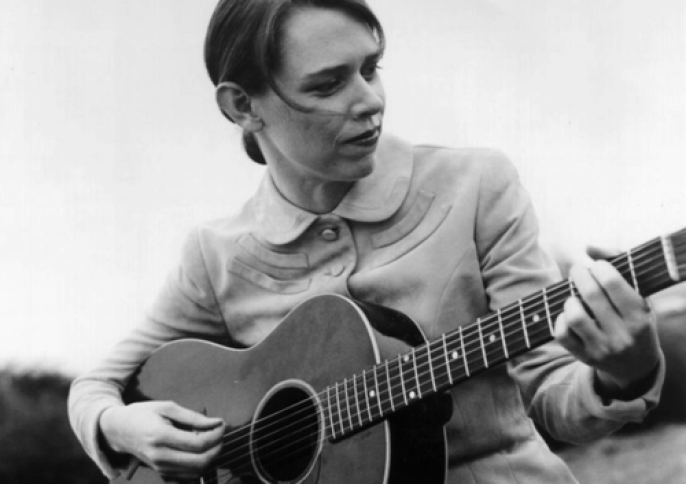
Gillian+Welch+gillianPNG.png
Gillian Welch / / Source: Born to Listen

On the subject of female songwriters, I was very pleased that Gillian Welch and Lucinda Williams got a mention in Hart’s talk. The self-destructive sentiment of Welch’s ‘Wrecking Ball’ reminds us that the experience of being ground down by the relentless demands of a marketised society isn’t confined to men alone. Welch’s ‘Everything is Free’, not mentioned in the talk though highly relevant, makes this clear. It’s a song about artists will go on making their art even if they won’t get paid, and the tale of how capitalism discovered this and cashed in on its fact: “Someone hit the big score, they figured it out / That we’re gonna do it anyway, even if it doesn’t pay”. Like Dylan, Welch finds herself winding up on the road, working in bars, working hard and regretting being enslaved to, well, The Man. ‘Everything is Free’ is a message of both despondency and hope, crafting this sense of the beauty of song itself as protest and freedom even as the structure closes in: “Every day I wake up, hummin’ a song / But I don’t need to run around, I just stay at home”.

Hart mentions how the American lyric provides an escape to those who find themselves trapped in the smallness of their lives. You might live in a nondescript town slap-bang in the middle of Scotland, where the musical climate favours chart music blasted from bus-stop ringtones, but then aged fourteen you discover Dylan or Springsteen and suddenly America opens up its vast, sparkly vista, from East Coast to West. This seems to be Hart’s trajectory, as his career—from the first tour with Kristofferson to his continued promotion of transatlantic connections—closely follows an American strain of songwriting. My mum used to listen to Welch’s Time (The Revelator) album over and over again on long car journeys, so the lyrics to all those road songs are burned in my brain like tracks in vinyl, superimposed with endless visions of the M8 stretching out before me… It was only a couple of years ago that I found out Time (The Revelator) was released in 2001; I’d always assumed this stuff was ancient, the seventies at least. Maybe because Welch just has this knack for writing timeless songs; songs about heartbreak, loneliness and restless desire that reach back into the comforts of the past even as the journey itself is long and hollow, the destination vague as the blurred sign on the front of a train.

I guess this raises a broader question which Hart’s talk touched upon: the politics and poetics of nostalgia. There weren’t opportunities for questions afterwards, but if there were I might have asked Hart whether nostalgia is a necessary condition for American self-reinvention. It’s a pretty relevant  question right now, with much of Trump’s whole appeal based on the nostalgic vision of a vaguely industrial golden age of capitalism—a vision which is obviously the smokescreen for whatever chaotic ideologies are at work beneath the surface. The American lyric can set up this romanticised vision, only to break it apart; reveal its seedy underbelly, its failings, the disastrous gap between identified goals and actual means of attainment. Yet throughout the cynicism, there’s always that restless desire to continue, to keep on keeping on. Hart compares it to the green light in F. Scott Fitzgerald’s The Great Gatsby (1925), a novel significantly indebted to music (jazz, of course). The final line of that novel captures that past/present lyrical impulse so well: ‘so we beat on, boats against the current, borne back ceaselessly into the past’.

Which leads to the question: what about genre? Is the American lyric necessarily the domain of indie folk rockers? What about commercial music and pop? Can a pop artist deconstruct the American dream and earn a play in the lyrical family tree if they make money off their record and earn fame from MTV? Hart engages with Father John Misty as an example of how the American lyric can use humour to deconstruct the nation’s ideologies of progress and meritocracy, at the same time as retaining a post-postmodern self-awareness of identity politics, a meta-awareness of his own dabbling in ironic coolness. His very name evokes a sort of New Age gospel figure, a preacher for the times, whose stage is the television set or Twitter feed instead of the old-fashioned soapbox. Hart describes songs such as ‘I’m Writing a Novel’ and ‘Bored in the USA’ (obviously a riff on Springsteen’s classic) as depicting the ‘American dream for the millennials’. I’ve written about Misty extensively already on this blog (specifically, on his metamodernist tendencies), so I won’t go into detail here, but suffice to say I agree that FJM represents something special about contemporary cultural critique. It’s that blend of irony and sincerity, an exaggerated interrogation of the romanticism and the Gen X postmodernism of yore; the oscillation between raw subjective experience, political critique and the cool facade of self-deprecating wit. A constant juggling of ‘candour and self-mockery’, as Dorian Lynskey puts it. FJM notoriously got into a tiff during an interview with Radio 6 Music veterans, Radcliffe and Maconie. Aside from all the awkward sarcasm, what strikes me about this interview is the mentioning of kitsch merchandise objects: oven-gloves, jeggings. Hart explores a bit of kitsch lyric in the likes of Randy Newman, but I think FJM blends especially well that jaded sense of millennial despondence alongside tracks that can feel like rollicking simple narratives or epics of history on a 13-minute scale that gives Springsteen’s marathon tunes a run for their money. He pushes his stuff to the edge of the cheesy and cringe-worthy, exposing how all conviction has that shadow side of kitsch, even the most authentic lyrics—kitsch is somehow the cheap taste of someone else’s experience, the trick is to make it meaningful, and not just another imitation, a plastic model of the Empire State Building.

But Misty isn’t the only singer-songwriter deconstructing the American dream, exploring how both its poetic promise and jingoistic glory play out on a personal level. What about Ryan Adams, whose songs have that alt-country appeal of the restless bard? ‘New York, New York’, from his 2001 album Gold, opens with a Dylanesque lyric about shuffling “through the city on the 4th of July”, brandishing a “firecracker” that’ll break “like a rocket who was makin’ its way / To the cities of Mexico. The clean rhymes and ballad-like lilt of guitar are also very Dylanesque. But at some point I’ve got to stop making comparisons to Dylan, because ultimately this is reductive; it’s cheap and lazy music journalism. I do think, however, the ease with which we make these comparisons reveals something interesting about our generic assumptions. Guy has a guitar, sings melancholy songs about America and his place within it, a smart knack for a lyrical twist, occasionally picks up a harmonica? Instant Dylan; their careers overshadowed by a giant. (Note: I guess a similar thing happens with very talented female folk singers—the likes of Laura Marling—being compared to Joni Mitchell). But even Dylan doesn’t monopolise the American lyric. He might have a Nobel Prize, but this doesn’t crown him King of the Lyric Alone (or maybe it does?); we’ve got to tease out what exactly we mean by this term and how relevant it is in the fragmentary scene of contemporary music. Think with Dylan, but beyond Dylan.

Conor Oberst, formerly of the band Bright Eyes, is an artist who’s been branded with Dylan comparisons throughout his career (an extensive career at that; the precocious Nebraskan recorded his first album, Water, aged just 13). Sasha Frere-Jones in the New Yorker condenses many of my own feelings on the Oberst/Dylan comparisons: ‘Dylan is armour-plated, even when singing about love; Oberst is permanently open to pain, wonder, and confusion.’ Oberst is in many ways a liminal figure: cutting it out on the folk and country circuit  (Emmylou Harris and Gillian Welch appear on previous records) while hanging and collaborating with indie rock bands (The Felice Brothers, First Aid Kit, Dawes), flirting with punk (The Desaparecidos) and fitting with some comfort within the elastic nineties/noughties stratosphere of emo. Frere-Jones describes Oberst as a ‘poet-prince’, again opening debate on that binary between poetry and lyric that Hart sets up but that nonetheless remains slippery and problematic. Where Dylan espouse the solid wisdom of a sage or wandering bard, Oberst has a reticent, warbling quality that rises to epiphany but admits failure and the graceless fall into existential aporia. He wails like Dylan wails, but many of his songs have a fragility and surrealism that doesn’t quite match up with Dylan’s more assured narrative balladry. So in that sense, he’s a lyric poet in the more subdued, Keatsian manner, exploring the self in all its fragmentary, perplexing existence.

But he’s also very much an American lyricist. In his ‘mature’ career, Oberst hasn’t shied away from more directly tackling political themes alongside more personal songs. 2005’s ‘When the President Talks to God’ rips to shreds George W. Bush’s policies. Comprising a series of questions addressed to an audience, it more closely follows the form of a traditional protest song, laced with bitter satire: “When the president talks to God / Do they drink near beer and go play golf / While they pick which countries to invade / Which Muslim souls still can be saved?”. This is definitely a song to be performed, on a wide open stage or indeed to the even wider audience accessing broadcasts of The Tonight Show with Jay Leno, where he performed the song in 2005. Then there’s the angry, crunchy southern kick of ‘Roosevelt Room’, off Oberst’s solo record, Outer South (2009). Oberst’s later work isn’t as playfully weird and surreal as his early bedroom stuff, sure, but increasingly he masters the power of allusion that characterises American lyric, in Hart’s sense of the term: “Go ask Hunter Thompson / Go ask Hemingway’s ghost”. He’s addressing someone to be critiqued, wrenching them off their political pedestal: “Hope you haven’t got too lazy / I know you like your apple pie / Cause the working poor you’ve been pissing on / Are doing double shifts tonight”. There’s that apple pie again, symbol of steadfast Americana, fuel of the nation, the well-lighted place of a diner—a place of domesticity, stability and, let’s face it, commercial comfort. Oberst cynically dismisses the well-nourished white middle class politician, recalling a generalised story of poverty from material details: “And I’d like to write my congressman / But I can’t afford a stamp”.

7287149713eb38f78915555f9fe62624.jpg
Source: pinterest

Then there’s the frontier motif, the sense of America as a place of deep mystery as well as self-created landscape. Experiments with Eastern and Navajo cultures. Bright Eyes’ 2007 album, Cassadaga, with its album art requiring a spectral decoder to be fully appreciated, its envisioning of the singer as mystic or medium, channelling psychic forces through song. Cassadaga is very much a journey. The opening track, ‘Clairaudients (Kill or Be Killed)’ involves an extended spoken word sample of some kind of very American mystic who begins by setting us in the ‘centre of energy’, Cassadaga’s ‘wonderful grounds that have vortexes’, moving us through astral projections of a ‘new era and life’ that is changing, a message of hope, doubling back on the uncanny sense that ‘Cassadaga might be just a premonition of a place you’re going to visit’. Cassadaga is a real place, a spiritualist camp set somewhere between Daytona and Orlando, known as the ‘Psychic Capital of the World’. By naming his album Cassadaga, Oberst isn’t just name-dropping in typical hipster fashion, honouring local identity nor casting back nostalgically to a familiar place; he’s attempting to channel the energy of this location, interrogate its spirit, draw out its various psychic possibilities for the present. He sings of attempts to detoxify his life, of former affairs, of lost soul singers and the pursuit of a sense of belonging.

‘Lime Tree’ is one of the most beautiful songs Oberst has written. It’s a composite tracing of impressions drawn from various experiences, both personal or secondhand. While much of Cassadaga follows an upbeat, distinctly country sound in the manner of 2005’s I’m Wide Awake, It’s Morning, ‘Lime Tree’ closes the record with a dreamy, wistful serenity that recalls the likes of ‘Lua’, ‘Something Vague’ and ‘Easy/Lucky/Free’. Accompanied by angelic female vocals, ‘Lime Tree’ is ethereal, the guitar strumming minimal though following a certain continuous loop. Pale and lush strings contribute to the sense of being pulled downstream, giving yourself up to the languorous current. Ostensibly, it’s a song about abortion, about a struggling relationship: “Since the operation I heard you’re breathing just for one / Now everything’s imaginary, especially what you love”. But as in all good poetry, the beauty of the lyrics on ‘Lime Tree’ is their movement from specific experience to a vaguely spiritual voyage that gestures towards ending but instead finds the open plains of abyss, always suspended in paradox and ambiguity, the fault-lines between life/death, hope/despair, dream/reality: “So pleased with a daydream that now living is no good / I took off my shoes and walked into the woods / I felt lost and found with every step I took”. Home is a tidal wave, a churning wind, a shifting sand, a fragment.

tarotspread.gif
Source: crystalinks

America’s great confessional poet, Sylvia Plath, also explored mysticism, and her writing is rich with strange imagery, not to mention all those Tarot allusions in Ariel. In The Bell Jar (1963), the fig tree is the novel’s dark and mysterious heart, this vivid image that sprawls its symbolism through the text, a figure for existential paralysis: ‘I saw my life branching out before me like the green fig tree in the story […] I saw myself sitting in the crotch of this fig tree, starving to death, just because I couldn’t make up my mind which of the figs I would choose’. We might think of the connection between the term ‘roots’ and ‘roots rock’, its rhizomatic sprawl of influence never quite settling on a home even as a sense of home and locality is supposedly the music’s grounding purpose. Roots, of course, are always growing. The lime tree is an image plucked from a dream, but its significance is less clear in Oberst’s song than the fig tree in Plath’s narrative. Perhaps more than most contemporary songwriters working within a lyric tradition, Oberst is content to write from a position of uncertainty, in gaps and pieces of affect and narrative. The sound of his voice suspended over those gentle strings and strums is enough to make tremors in your chest, as if the slow vortex of another world were opening its mouth like the parting of the sea in someone else’s biblical or drug-enhanced dream: “I can’t sleep next to a stranger when I’m coming down.” The way of the lyric; so often the way of the lonely. Even as ‘Lime Tree’ might be a love song, it opens itself towards ending, loss, death: “don’t be so amazing or I’ll miss you too much”; there can never be plenitude in the journey: “everything gets smaller now the further that I go”. Bittersweet doesn’t quite cut it. It’s too subtle for that, a softly shimmering lullaby goodbye to the world, a retreat and a return, just like Nick Carraway’s vision of beating on but back into the past. The passage of an everyday spiritual pilgrim, the way we all are in life, our faces fading in the ink-blot of photographs. We turn back to look at ourselves through others, through words, just as Dylan notes how the girl in the “topless bar” “studied the lines on my face”.

A voyage through nostalgia, a quest for identity, belonging, an escape from something and a return, a desiring pursuit without end, a lust for life and ease into death; a twist of humour, a narrative of hope, aspiration and the failures that draw us back into the dustbowl. The American lyric is all of these things and more; its boundaries perhaps are pliable as the nylon strings on somebody’s battered acoustic guitar. Maybe it all culminates in madness and absurdity. For every One Flew Over the Cuckoo’s Nest, you’ve got The Felice Brothers’ ‘Jack at the Asylum’, a rollicking satire on the madness of contemporary American life which trades in richly surreal and absurd imagery to render the accelerated pace of this madness, crossing history in the blink of a screen flicker: “And I’ve seen your pastures of green / The crack whores, the wars on the silver screen”. Pastoral America is always already contaminated by an originary violence. Maybe the best American lyric depicts such realisations through personal stories, the relationships and encounters set against and embedded within wider structural phenomena, the recessions and closures and urbanisations. The Felice Brothers remind us, however, that all of this is secondhand, aspirational narratives passed down to us through screen culture, advertising: “You give me dreams to dream / Popcorn memories and love”. Once again, there’s that fluctuation between an earnest love of country to an embittered sense of its very elusiveness, the distant static shimmer of success whose failed pursuit we watch ourselves experience through the mediating comforts of daily life—the popcorn pharmakon poisons and cures for (post)modern existence, as calorific as they are nutritionally empty.

But once again, genre. String off a handful of names from Hart’s Americana playlist and you’ll be pressed to find anything that falls outside the folk-rock camp, even as its boundaries remain pretty permeable. Yet what of hiphop? Isn’t hiphop, in a sense, the great alternative American folk lyric? Rap is it’s own kind of poetry, after all. You might think of someone like Kendrick Lamar as an American lyric writer, working from a different generic background from Hart’s examples, but nonetheless telling the story of contemporary USA from the streets to the level of the visionary, just like Dylan did. Lamar even has a track called ‘Good Morning America’: “we dusted off pulled the bullet out our heads / Left a permanent scar, for the whole world to recognise / California, economics, pay your taxes bitch”. Once again, that originary violence, the scar of identity. Lamar works back from the wounding.

2c6fcf7f11a106ec68ee3464c221b2f8.jpg
Source: pinterest

My knowledge of hiphop is far too limited to discuss it in any detail, but thinking it through  the idea of American lyric prompted me onto the figure of Lana Del Rey, who often uses hiphop production techniques, from trap beats to muted, stadium echoes. I hate to bang on about oor Lana again (see articles here & here), but irresistibly she’s a shining example of a mercurial musician, drawn to the sweet dark chocolate centre of American melancholy. LDR performs a kaleidoscopic array of identities, just as Dylan often wore a mask that veiled itself in the confessional sincerity of the beaten-down worker, drinker, lover, escaping to the Mid-West alone. Yet while America’s great bard more or less got away with it, Lana has been constantly lambasted for her artifice and supposed inauthenticity. Which begs the question: what do we even mean by authenticity? Is only the white male—your Princes, Bowies and Eminems—allowed to strut in the performative identity parade? Both LDR and Lady Gaga have been lambasted for their supposed fakeness. There are obviously complex questions of racial, class and gender identity which I don’t have time to cover here. Sometimes, a musician is lauded for their alter ego (and doesn’t alter ego itself imply a certain surrender to the patriarchal ideology of masculinity?)—take Beyoncé’s hugely successful Sasha Fierce—and other times, it takes the invisible tide of the internet to swell in support for those critiqued by other forms of media.

maxresdefault-2.jpg
Source: YouTube

My friend Louise is always comparing LDR’s work to F. Scott Fitzgerald’s novelistic visions of 1920s America, and while this might seem a bit extravagant, there’s something to be said for the way Lana seamlessly evokes the spirit of the jazz age, the consumer paradise of the 1950s and the hipsterdom of millennial Brooklyn in the through the poetry of song. Is this just retroculture, in the sense of recycled kitsch and the twenty-first century urge towards nostalgia explored in Simon Reynolds’ excellent Retromania (2011)? Is there something pathological in Lana’s obsession with the past, a symptom of a broken psyche or worse, a broken generation? Perhaps. But there is something transformative and subversive about LDR’s retrovision, even as it may be critiqued for indulging in vintage gender roles as much as vintage styles (framing yourself as a sort of white-trash ‘gangster Nancy Sinatra’ is always gonna invite a certain feminist controversy, let’s face it).

One of Hart’s recent examples of the American lyric came from The National (even the band name evokes questions of what it means to be American), with their song ‘Sorrow’ from 2010’s dark and trembling High Violet. I’m interested in how this song apostrophises sorrow in the manner of a great Romantic lyric. We might think of Keats’ ‘Ode to Melancholy’ or Charlotte Smith’s Elegiac Sonnets, the eighteenth-century cult of sensibility remade for jaded and alienated millennials. Sorrow once again invokes that Platonic idea of the pharmakon as both poison and cure. We can wallow passively in sorrow, as The National sing: “I live in a city sorrow built / It’s in my honey, it’s in my milk”: it’s a trapped landscape, a petrified terrain in which the self can only slip deeper into isolation; but it’s also milk and honey, a kind of temporary nourishment to a darker psychic scar. As Smith so eloquently puts it in the final lines of 1785’s ‘Sonnet Xxxii: To Melancholy’: O Melancholy!–such thy magic power, / That to the soul these dreams are often sweet, / And soothe the pensive visionary mind!’. Sorrow provides a toxic tonic for the soul, a lubricant for paralysis that eventually leads us back towards the existential road. Life goes on.

Lana Del Rey is fixated on sorrow. Blue, she admits, is her favourite colour, her favourite “tone of song”. Her songs are always hyper aware of the transient beauty of life, even as they lust after death. On the soundtrack song she did for Baz Luhrmann’s adaptation of The Great Gatsby, she worries “Will you still love me when I’m no longer young and beautiful?” ‘Video Games’ is a melancholy ballad for the contemporary relationship, a lush, brooding expression of love in the time of Call of Duty. Roddy Hart even did a cover of it. Her songs have titles like ‘The Blackest Day’, ‘Cruel World’, Sad Girl’, ‘West Coast’, ‘Old Money’, ‘American’, ‘Gods & Monsters’ and ‘Summertime Sadness’. All these titles evoke the Daisy Buchanan sad girl trope at the same time as gesturing towards the broader existential melancholy of America itself in the manner of Springsteen; with sometimes the detached urban cool of Lou Reed, other times the genuine, trembling passion of Billie Holiday. The video for ‘National Anthem’ restyles Lana as a Jackie O type married to a young, good-looking black president, with 1950s iconography spliced among pastel-hazed footage of the pair lolling around in love, sniffing roses, smiling, looking good as a Vanity Fair shoot. The video begins with her character singing Marilyn Monroe’s famous ‘Happy Birthday Mr President’ routine. She re-envisions JFK’s assassination, with a spoken word piece on top. She’s imagining alternative political futures even as she casts back to the past. There’s that lyric sense of wonder and ambiguity, of being lost in time.

It’s this layering of styles, scenes and cultural iconography that makes Lana’s work way more complex than most of what else fills the charts. Sure, it’s great that a positive message of bodily empowerment (Beyoncé feminism) is doing the rounds just now, but that shouldn’t mean that those who fall outside this category are anti-feminist or ignorant to gender identity politics. When all the R&B pop stars are prancing around proclaiming their sexual freedom, dominating men in various flavours of BDSM allusion, getting all the looks in the club or whatever, LDR is crying diamond dust tears into her Pepsi cola, draped naked in an American flag. Her videos, songs and artwork engage with cinematic discourse, high fashion photography and cultural history in a manner that’s intellectual interesting as much as it is affective and aesthetically satisfying. In a sense, she’s meaningfully evoking the past in order to say something timeless about the American dream and the objectified position of the ‘white trash’ woman under its mast of starry glory. In another sense, she’s indulging in a postmodern recycling of historical styles: constantly name-dropping, from James Dean to Springsteen, Lolita—perhaps the great American road novel not written by an American—and David Lynch’s lush, dark suburban epic, Blue Velvet. Despite the performance and ventriloquy of figures and archetypes from twentieth-century cultural history, she retains a sincere expression of melancholy, heartbreak and longing that’s personal but also strives towards rendering the more universal experiences of womanhood in certain communities. All the controversy surrounding Lana in relation to racial politics, class politics and sexual politics exists because her work is provocative, problematic and complex, like any good American lyric.

One reason that Roddy Hart was such a good choice to deliver this lecture is that he’s had experience writing new melodies for Robert Burns poems for Homecoming Scotland. Why is this relevant to the American lyric? So much of the lyric tradition, in all its forms, is based on that sense of romanticism, visionary wonder, self-exploration; the rendering of universal experience through personal narratives, the subjective telling of a story, the trade in imagery and sound and careful arrangement. Burns was a sort of rock star poet of his times, and not just because he was a bit of a cheeky philanderer. He toured around, worked as a labourer and farmer; he talked to many people, opened himself to influence. It’s this diversity that continues to mark the American lyric in the twenty-first century; the way that Father John Misty can sing a very ironic and playful song on late-show tv, about a man checking social media on his death bed, with the conviction of a crooning Leonard Cohen; accompanied by a gospel choir whose voice raises Misty’s ballad to a level of epic, overly extravagant grandeur that still somehow works, remains genuinely compelling beyond the initial sarcasm. The way Detroit’s angelic avant-indie hero, Sufjan Stevens, can ambitiously and patriotically plan to write an album for every state in America, then turn on the project, calling it “such a joke“. The way that Suzanne Vega, in ‘Tom’s Diner’, sings about a familiar American institution, the fabled diner—or Well-Lighted Place, as Hemingway put it—with the simple verse structure of an Imagist poem made narrative, sketching brief impressions of the myriad people she encounters in a public space. It feels cinematic, with deep eighties bass, bursts of brass and string-like synths, but also has that emergent sense of a postmodern folk, looking at the world from the bottom-up, catching everyday lives and stories in song. Even when irony remains the chief aesthetic order of the day, the lyric doesn’t have to be sucked into self-referential abyss. The best singer-songwriters continue to channel the American lineage through a romantic strain as much as a humorous one, inflecting songs with sorrow, joy and vitally that lust for something more—sometimes beyond life itself, sometimes just the restless possibilities of the road. Singing alone in the Glasgow Uni chapel on a Thursday evening, Roddy Hart rekindled some love for all that.

*

American Lyric playlist:

Elementary Witchcraft

Elementary Witchcraft

(something written before Christmas)

I stir the coffee in time with my monotony. Footsteps from when the children used to play round here still haunt the kitchen walls. Everything tastes black, bitter. The plaster is peeling. I made friends with a spider who lived in the top corner of the window; while washing the dishes I watched it spring out for its daily kill. It was satisfying to observe the squirming flies, caught in the sticky web. I licked jam off a knife as the pincers squeezed their deadly juices. Sometimes I buy butter, but often it is too expensive and now I make do with the cheap stuff, which Tessa is always telling me to stop buying since it is full with nasty chemicals. I don’t mind. I like the sense of my body building up all those chemicals, my veins like rivulets of rock, acquiring their cholesterol, their calcium deposits. Darling, it is all geological.

Josh sends his love from the city. He has a new girlfriend, a very pretty young lady with reddish hair and soft, emerald eyes. Basically, she has walked off the page of one of the fantasy novels he read as a boy and goodness, how lucky he really is that she’s real! I will possibly never see him again. Her parents own a castle in Dumfries & Galloway and that is where he is spending Christmas. There will be extravagant banquets, servants, Christmas crackers stuffed with fivers and slivers of unisex jewellery. Charades by firelight and expensive brandy. Here, I have made a small effort at seasonal preparations. There are three jars of pickled onions, a tangled pile of fairy lights, a box of Foxes biscuits—which I have only just refrained from devouring on several recent occasions.

You see it is very difficult to restrain myself these days; there’s no one else around to stop me. Tessa will come for the day and we’ll watch the soaps and probably smoke a great deal of her Silk Cuts and not bother very much with the food. She has a wonderful taste in tacky festive music and so we’ll blast it out with the windows open, the cold air rushing in as we dance around the kitchen, the wine bottle bubbling with festive spells. It is one day of our lives together and it will be perfect.

Tessa can’t come at all. She has to work; she’s a nurse. In fact, right now she’s probably clasping a long thin syringe, sticking some viscous, silvery substance in someone’s skin.

I pour the dregs of the coffee down the sink, which is clogged with nasty pieces of something that might possibility still be living. The bin overflows, but I don’t bother. The thought of the ice-slippy steps and the neighbours gazing at my garish, half-hearted outfit somewhat disturbs me. I have thirty minutes before I must leave for work, but the clock doesn’t seem to be working and it’s uncertain as to whether I can trust it. The minute hand pulls slow and gelatinously over and over, never quite moving past itself, stuck in the honey-trap of its own echoes. My teeth feel dirty and coated, as if I’ve feasted on some delicious thing with a skin. In the mirror as I brush them I see my face contort like an animal’s. I have such furious eyes, the skin beneath them spilled with their shadow.

Accidentally, I rip my tights as I pull them over my knees, the gossamer threads unravelling so easily. The mohair jumper that I quite liked and thought quite smart indeed has a mysterious stain on its front, which I can’t quite explain. My fingers remain jam-sticky, even when I scrub them raw with fairy liquid. It is impossible to conjure a style from my hair, though by now I have learned to be content with this fact. I have a headache which feels like rocks pounding off rocks in a hollow cavern where salt spray lashes at the walls.

Somehow I am late for work. On the bus in the plexiglass of the windows I see the reflection of a girl who is very tall and wild, whose ragged face seems to have come from another place. It is only when I sit down, clutching my handbag and its absence of forgotten lunch, that I realise she is me.

London Thunder

IMG_2758.JPG

We arrive at the bus station. It’s four in the morning and god knows why people are still here. Where I’m from, people are in their beds at this hour; the old folk know the truth of properly impenetrable slumber, even mothers draw brief glimpses of sleepy solace amidst the screams of their babies. Chimneys may shudder, walls may fall, but people will sleep. No, the folk where I’m from don’t haunt train stations, unless they’re homeless and know the secret places where you can hide from the rain. Benches scratched with ink and tip-ex, territorial markings. Nowhere to buy spray cans. Nothing interesting to hang around for. Here, I look around and all the same places flash in the ugly strip lights: a Starbucks, a sandwich bar, a Marks & Spencers. Nothing open, except some stand selling donuts, which smell fucking lovely even though I hate donuts. It’s that hot promise of oozy sugar, mouth-melting jam and fluffy fatty dough. Chewy. I can taste it, just as the guitars kick in, clean as the stars which god knows in this city you can’t see.

It’s cold. It’s the beginning of August and I’m homesick like the kid stuck at space camp.

It’s dark as hell in my head, that little sleep on the plane still safe, hovering over my thoughts like a shroud. It’s not all that dark outside; traffic passes, the neon from bars still aglow. Signs reflect back in headlights. I blink, rub my eyes. I have this sense of something vast and black. I want to close my eyes, imagine this spreading, seeping oil spill, disseminating its viscosity out over every surface, every gloss or gleam of grease, the echoes of footsteps melting, the pavements dissolving to nothing. I dream of an oil that is precisely that: nothing. It is matter as nothing, it is fat and black and coats everything, inevitably, inexorably. The chorus builds. I can hear something pulsing, a faint chime that cuts through all the sirens; when you pay attention, the littlest things cut through. You just have to pay attention, I’m telling you.

No water, no sound. I’m following someone else’s footsteps. People are everywhere, bumping and jostling, bags clattering on the vinyl floor, the cold stone steps, the deplorable concrete. Wouldn’t the oil flood over all of this, covering even the star speckled whiteness of gum? There is a lull, there is a slow progression of chords. There is a sense that…no. The sleep will not come back. I fall into it; I’m on the bus now, it’s slow thumping rhythm echoing the song. People get on and off; it goes and stops. I don’t know this place, or that. The high-rises are imprints, no longer there. Innumerable blurrings of nameless shops, bars, boutiques. You wouldn’t recognise them. It is all glass, sharp-cut and brilliant. In it, I see the bus. I don’t see my face. I never see my face…

And yet there is a crushing. The smoothness compresses back upon itself, like someone scrunching an aluminium can. I dream of a Diet Coke, fresh from some fridge-freezer, the snap of its top, crack, clack; the way the fizz bubbles fast in your throat. Mmmm, aspartame. I am in a room that is someone else’s. So sweet, so lonely. When they are gone to the bathroom, I get up to look out the window, a foreign sheet wrapped round my shoulders. I see more of the glass buildings, endlessly reflecting. I cannot see the window, nor my face. I’m waiting to return. It’s like vertigo, all the glass and all the lights. I miss the darkness. Sometimes when I’m in a room like this, lying on the crooked bed with my head far away, I think I hear the meteor showers. They come back again, silvers and silvers of them, lilting and sprinkling like the softest, most intangible fireworks. I have this memory of November 5th, ten years ago maybe, spinning round and round on a roundabout in a park in the middle of nowhere, the sky shattering above me but even then I’m so indifferent, just whirling, singing something very random, the scattering mess of everything swirling in my head. And I could fly off to the soft dark ground and let the darkness fall over me and god I wouldn’t mind, wouldn’t mind one bit, just the last gasp of a drowned sailor and that promise of a ————————-

So Long, Marianne

So Long, Marianne

(a story I wrote back in April, after a friend gave me two prompts: ‘railcard’ and ‘lonely’).

She found the railcard lying in a puddle. It was the case that caught her eye: its plastic glitter coating blinded her momentarily as she waited to cross the road. A single beam of sunlight had caught that glitter and Amanda knew it was for a reason. She knelt down to pick it up, wiping it clean on her jeans. The man standing next to her on the pavement eyed her warily as she examined it. The name on the card was Marianne Holbrook, and the picture, slightly blurred, showed a girl of Amanda’s age, with cropped brown hair and eyes rimmed thick with kohl and shadow, lips a deep rich red. On the flip side of the case was another card: a student ID, whose expiry date was last year.

“You should hand that in you know,” the man beside her said, interrupting her reverie.

“Yes,” she replied.

Amanda did not hand it in. She took it home with her and tried to go about her evening as normal. She put it up high on her bookshelf, next to the little cat ornaments her grandmother had given her as a child. She put the radio on, to make the flat seem less quiet. She boiled the kettle. She stood in front of the mirror, brushing her long thick hair. The jangly pop music seemed only to ricochet off the silence, intensifying instead of subduing it. Amanda tugged and tugged at her hair but she could not get the knots out. Tears of frustration sprung to her eyes.

She felt pathetic for crying. Her arms crumbled to her sides and she threw down the brush. The kettle began to whistle. Amanda burnt her tongue on the first sip of tea. She checked her phone but there were no texts; there had been nothing, now, for three days.

The following morning, she went out on her lunch break and got a standby appointment with a hairdresser near her work.

“I want it very short,” she said carefully, fingering the long strands of hair that framed her face.

“How short?” The stylist asked, lifting clumps from the lengths of Amanda’s hair and letting them fall again, as if she were trying to gauge how much her tresses weighed.

“Oh, a crop. A pixie cut.”

“Bold, huh?”

“Like Laura Marling. Very short.”

“I don’t know who that is honey. You sure you have the features for something that short? I’m not saying you have a big nose or anything but wouldn’t you like to look at—”

“No,” Amanda said firmly, “I want a crop. Please. I don’t care about dainty features.”

“Okay, whatever you want.”

It took an hour. Great wads of hair fell away past her shoulders as the stylist attacked Amanda’s locks with her scissors. She cut away in steady, hungry snips until all that was left was a ruffled mess, short as a boy’s.

“Don’t worry,” the stylist assured her, “it’ll look weird until I’ve wetted it and done the layers.” Another half hour and it was done. The blow-dry took minutes. Amanda blinked in the mirror and tried to imagine what she would look like with heavier eye makeup. Marianne Holbrook. The girl in the railcard photo, blankly staring, mysterious.

“Thanks.”

“It does look rather amazing,” the stylist admitted, surprised.

Amanda went back to work and everyone was so shocked at what she had done that they all forgot to reprimand her for being late.

“Very sexy,” her boss said, biting his pencil. Amanda felt hollow inside as she sat down at her desk. The afternoon stretched before her, empty and dark as an elevator shaft. She couldn’t wait to get home; there were things to be done.

That night, she took the glitter wallet off the shelf and carefully pulled out the two cards inside. She took the student ID and held it over the bin as she snipped it into pieces. The girl in the photo looked very young: she had shoulder-length hair, blonde, a shock of fringe and a lurid shade of lipstick. It hardly seemed the same Marianne as the one in the railcard photo. Amanda turned the railcard over in her fingers. She had looked it up online and discovered that it granted the user unlimited free travel to any UK rail destination. It was a mystery as to how this girl obtained such a privilege, but Amanda realised that it had fallen into her hands for a reason. Without the obstruction of fares, the whole of Britain opened up for her like some elaborate flower, ready to ooze its precious nectar. She googled train routes across the rest of England, Wales and even, with some timidity, Scotland. The red patterns spiralled outwards, running their veins lusciously across the green countryside, alongside rivers, canals, forests and coastline. She looked up towns and cities, high speed connections and leisurely scenic routes. There was so much to see that soon enough, Amanda could hardly contain her excitement.

She would take time off work to live on  Britain’s trains. How difficult could it be? She would give herself up to the whims of timetables and route planners, to vague and uncertain destinations and journeys. There were some trains that ran through the night. There were stations with shelters that didn’t kick you out. If worst came to worst, she would tap into her savings and stay in hostels and cheap B&Bs. The whole while she would assume her new identity. She would be Marianne Holbrook. She would never be lonely.

She phoned up her work the following morning.

“Hello Gina,” she said, “can you tell Mr. Raymond that I’ll be gone for a few weeks?” Gina, the manager’s personal assistant, raised her voice to a shrill pitch.

“What do you mean, gone a few weeks?”

“Oh, I’m going away for awhile. My circumstances have…changed.”

“‘Manda—” She cleared her throat loudly. “I’m going to need a better explanation to give him…do you have a doctor’s note? Are you leaving? You’ll have to hand in your notice, there’s procedure—”

“Tell him I’ll just be gone awhile. He won’t mind. Have a nice day, Gina.” Amanda hung up. For once, she realised she did not care about procedure. She stuffed her phone back into the side pocket of her rucksack, and turned back to the window. It was partially open and a cool breeze rustled the bare skin of her neck, which felt deliciously naked without her long hair to cover it. April hadn’t brought many showers since it turned its first few leaves; in fact, the weather had been glorious. Outside the carriage window, the sky was a bright bright blue and the crumbling buildings that skirted the city gave way to fields which rolled over and over in verdant, romantic green. It took forty minutes before they were properly out of the city. Once the ticket inspector had checked her railcard, Amanda plugged in her headphones and listened to an old Cat Power album.

She had to change trains a few hours in. The whole process was far less stressful now that she had no fixed destination, no time constraints. Every hour was her own, and time itself did not matter. She sat on the cold station seats, trying to read a leaflet about a local whisky distillery that she had picked up by the ticket gates. People looked at her differently with her new hair. Girls glanced at her with lingering intrigue. Boys rarely noticed her, or else they had to do a double-take. Amanda wasn’t sure if these were good double-takes, or bad ones. She wasn’t even sure what the difference was.

As the station clock clicked to ten o’clock, Amanda checked her phone. Still no texts. And yet, why did she care? She had already told him it was over. 

She travelled up and down the whole of the UK. She spent a day in sunny Brighton, looking out to the limit points of this country she called home, at the sparkling lights at the end of the ocean. In the nightclub that evening, she found herself dancing to Eurotech, face gleaming with metallic makeup and sweat. A stranger slid his hand to the back of her neck and she let him kiss her amidst the flashing lights and thumping music. His mouth tasted chemical sweet. Outside, gasping for breath on the beach pebbles, she wondered whether this was something Marianne would do. Take things on impulse. Treat people like shadows, passing through your day, swelling, shrinking, disappearing. Somewhere in the darkness, the sea whispered its history of secrets. The city withheld its judgment.

Back up the country she travelled. She skirted round London, past the rolling hills of the South Downs; past Basingstoke, Luton, Milton Keynes. The changing accents haunted her with their shrill cacophony. She slept in a Travel Inn that night, washing her hair with the complimentary lemon shampoo that smelled good enough to eat. It was a very lonely motel: all the corridors were empty. Even the cleaners drifted along like ghosts, never looking up or smiling. She caught herself checking work emails on the WiFi and had to force herself to stop. She took a small vodka from the minibar.

What would Ruaridh say to all this?

Night after night, the meaningless names drifted through her mind. She had seen so many towns and cities now that she had lost her sense of what made each one distinct. England became unreal, this vast, impenetrable stretch of motorways, train tracks, telephone wires and suburbs. The crowds and the people and the buildings were different, but each time she felt the same. She did not feel real, floating aimlessly down street after street with no direction or purpose, nestling into the armchair of yet another Starbucks. Amanda told herself she was just exploring.

Sometimes she found herself wondering what Marianne had studied at uni, what she now did for a living. She imagined her, all cropped hair and smoky eyes, leaning over a desk at some sleek fashion magazine office. She pictured her in a court of law, sharp in a suit, scrawling notes. She saw her lifting weights at a gym after a hard day at the bank. She saw her serving tables at a classy restaurant, drinking martinis at some downtown bar. These were all possibilities. Marianne was made of possibilities.

On the train from Birmingham, disillusioned with cities and their grey array of indifferent buildings, Amanda managed to bump her way onto the first class carriage. This was something Marianne would do, sleek and easy like her hair. It was simple enough to turn tricks when you were less self-conscious. She brushed her fingers over the plush seats and nestled into her headrest. A skinny man dressed as a waiter came round with a trolley bar and every time he passed, Amanda ordered another Bloody Mary. She licked her lips as he stirred in the celery, the other passengers impatiently waiting.

Three drinks in and she kept dialling his number on her phone.

“Come on Ruaridh, pick up,” she hissed. People around her were staring. She was an odd sight on their carriage, with her little white belly poking out of her cut-out dress. She dialled again and again and of course he did not pick up. It was three months since they had last spoken, since she told him they could no longer be together; three months since the silence started, since she cut herself off from the world. And yet, a fortnight was all it took. Two weeks since her first outing as Marianne Holbrook.

“You never tell me what you want, how I can make things better for you.” Is that what he said to her, or did she say it to him? It hurt that now she could hardly remember; there was a time when she thought she had the words they exchanged engraved in her soul. Now it seemed, they slipped away, easy as the faces left melting on the platform as the train pulled out of the station…

She was in Leicester, Nottingham, Coventry. She found herself addicted to all the stations, their absolute sense of space devoid of place. In the stations, everyone could be anyone. She liked the dull parquet floors and the green painted railings and the matching uniforms, the logos and slogans, the slow and constant stream of announcements. People coming and going, bags and suitcases rolling along, teenagers moping around by the Burger Kings, waiting to be asked to move on. In so many ways, each station was the same. Aside from the stacks of leaflets advertising local attractions, it was easy to forget where you were. Each one was a kind of anywhere. Accents blended and clashed and Amanda felt like she was in some way everywhere in Britain at once: the stations were just another node in the network of cities, people and identities. The same chain stores brightened her view as she stepped off the train. She started buying the exact same things every time: the superfood salad from M&S, the Wrigley’s gum and magazines from WHSmith, the treat bag from Millie’s Cookies, the almond butter hand cream from The Body Shop that depleted so fast, what with the air conditioner on the trains drying out Amanda’s skin. It was so satisfying to follow a pattern.

“What’s your name?”

It was the day that somebody broke the pattern. She was hovering by the ticket gates at Preston station, clutching her railcard and hoping to catch the northbound train.

“Am-Marianne,” she found herself saying in reply. The stranger was an old man, laden with a heavy-looking rucksack.

“Ammarianne, it sounds Greek or something.” Amanda bit her lip.

“I’m Jim,” the man added. He wore an old tweed cap and had a vaguely Scottish accent. She did not know what to say, what he wanted from her. She thought about what Marianne would do, the possibilities that the interchange offered for experimenting.

“It’s actually Marianne,” she said.

“Hm?” he was checking the screens, squinting to see his train time.

“My name. Not Ammarianne.” She forced a smile.

“Where are you heading then?” He gestured towards the board of departures and arrivals.

“Well, somewhere up north I think,” she replied vaguely.

“Glad to hear it,” he said, “me too. I’m a fish out of water here. Scotland is a good place to go for the lonely.”

“Yes.” She hadn’t planned on heading that far north. Carlisle had been her limit point.

“Oh. Well,” he hauled his bag from the ground. “That’s my train. Better hurry.”

“Bye,” Amanda whispered, watching him stumble through the ticket gates. Just before disappearing around the corner of the platform, he turned and shouted out to her.

“So long, Marianne.” She could see that he was grinning and she did not understand the joke. What would come upon a person to make them approach a stranger like that, for no reason other than to say hello? It was so foreign to her, that kind of politeness, that pointless brand of interaction. Stepping on her own train, the thought of the man lingered in her mind. So easily he had broken the silent contract of anonymity which seemed to govern the stations. Was this something she could do too?

The thought of talking to strangers made Amanda feel powerful. She knew, then, that Marianne was the kind of girl who had no problem letting her guard down.

They had thrown her off the train where she sat in first class. She had drunk one too many Bloody Marys and was slurring nonsense at her fellow passengers, bits of celery still stuck in her teeth, tomato juice stinging her lips. It was difficult for her to recall now, but she had more than once broken the silent contract herself. She had not so subtlety propositioned a businessman, declared to everyone an undying love for her ex-boyfriend, blithely told a woman that she should eat less of those chocolate bars because they were making her fat.

“But don’t worry,” she had droned on, “look at the state of me too,” she pinched a roll of flesh that clung to the skin of her dress, “I’m gonna lay off the cookies too once I get off this ride, once all this stops…” She had promptly vomited all over the polished floor and the conductor had to clear it up while the train was still moving and his mop bucket sloshed and then at the next station he escorted her to the exit, while everyone eyed her with disdain. She threw up again on the platform and knew that night she could not stay at the station. The world had clocked her for who she truly was.

The thing was to keep moving. She got herself to Blackpool on the bus and won some money on the slots. There was such a pure satisfaction in the click and spin of the fruit symbols, turning and turning. The leap in her chest when they matched up: three bright sets of cherries. That night she watched the boats twinkle over the bay, the carnival music blaring wickedly from the Pleasure Beach. There were couples everywhere, locking lips as the blue lights shone down from the rides, as the waves slushed gently on the sand, as the breeze whistled in the cold dark air. Leaning over the pier, Amanda ate fish and chips drowned in vinegar, hoping to cure her hangover. Her phone bleeped with a message from her mother: Hope you’re OK honey. Guess who I bumped into in town today? xxxx

Amanda hardly wanted to know. It was probably an old school teacher, or some pal that Amanda hung out with in primary school.

Who? x The grease from the fish supper made thumb prints on her phone.

Ruaridh, of all people! and we thought he had gone away! 

Ruaridh?

I don’t know how long he’ll be here for. He was asking after you.

Not that he ever texted her back. Not that he ever really tried to touch base anymore. She flicked through her messages to him:

I’m sorry. Can we talk? 

Please can you answer the phone. I want to explain. 

I miss you. I’m faraway from home and I still miss you. 

Call me back. 

Please Ruaridh, call me back.

It had been so long since they had talked that he had started to appear to her only in the abstract, the name on her phone a source code that might unlock some pattern from the shards of memory resting useless in her brain.

And yet he had asked after her; he had spoken to her mother. Had he perhaps changed his number? Was his old phone lying, battery dead, at the bottom of the desk drawer where he kept his protein shakes, his condoms and badges and passport?

She thought of those texts, drifting on through the ether, directionless as she was. Town names and station signs blurred into one. Even the old-fashioned stations seemed the same, with their pretty red brickwork, their giant clocks and gleaming phone boxes. The whole journey she had been going nowhere, but all the while she longed for one destination. Was it him? Could it possibly just be him? The city she had lived in all these years seemed so distant. It felt impossible, the prospect of just going home. In the carriage with the tables, the ragged newspapers, the empty bottles and coffee cups, she was leaving her old life behind.

The train was so quiet. A little girl was licking crisp crumbs from her fingers, staring at Amanda across the table, eyes wide and oddly fearful.

What does she want, what does she want?

She was in Scotland now at last, passing by sparkling lochs and pine-covered mountains. She hadn’t planned on coming here. The train just kept going, rolling on slower and slower, and Amanda had lacked the energy to change her route at Carlisle. Scotland seemed like the end of the universe. It was easier to stay on the same train, easier to let the world direct her like this. This was the land of accents she could hardly understand. Silvery land of wilderness and silence. Everything enveloped in mist. Everything cold, mysterious, romantic. The train tracks wound dramatically round mountains, farmland, fields pregnant with the summer harvest. Sometimes the mist cleared and Amanda would glimpse patches of bright sky. In the past few weeks, the evenings had grown longer, so that now at half past eight the carriage was bathed in a soft yellow light. The grass that Amanda could see from the windows was a kind of supernatural green, so vivid it was difficult to look away. The fields stretched out into endless hills, lush with ferns and trees, fluffy white sheep and even the odd telephone line. Often they passed little cottages and farms, or villages speckled with lights that twinkled through chimney smoke. There were very few houses in the mountains; the train was disappearing into somewhere very remote. Surely by now they should be in Glasgow, or maybe Edinburgh? She couldn’t remember which one came first. All that surrounded her now were the mountains, snow-capped, rust-coloured, rocky, sometimes a deep and sinister green.

It struck Amanda that the mountains reminded her of her father, who used to take her up to the Lakes sometimes when she was young, forcing her to learn the maps even though the sight of all those squiggly lines and symbols made her dizzy, more disorientated than she was before. He made her traipse across acres of countryside, reciting his favourite segments from the guidebook, stretching out the hours with his constant narration. Reviving himself with cider at some farmer’s pub, where the locals would stare at them suspiciously as Amanda sipped her lemonade and the whole while her father never noticed. It was in the summertime, two years ago now, that he died.

Nobody talked about it. Amanda’s parents were halfway through a messy divorce when he discovered he had cancer. It had all happened so fast. The appointments, the vomiting, the weight loss – the transition into anonymity and sickness.

At rockbottom. Please call me, even just for a minute. 

She hated herself even as she typed the message. All I want is to hear your voice. The thought of all those pathetic unanswered texts piling up on his phone made her physically sick. The train churned on, its sluggish rhythm another source of her nausea. The only messages she’d been receiving were voicemails from work, telling her she’d missed deadlines, meetings; telling her they were disappointed, telling her not to bother coming back.

In the cracked glass mirror of the carriage toilet, her reflection looked strange somehow. There were new shadows etched under her eyes, greenish as some disease. Little flecks of red that veined the whiteness round her irises. She realised she hadn’t slept more than three hours a night for weeks.

She thought of her father, emaciated, pushing a supermarket trolley, his fingers gripping the bar so hard you could see the tendons round his knuckles. The smile he forced as she shoved bottles in the trolley was grotesque and strange: a Cheshire cat grin smeared upon those hollow cheeks. He was buying her vodka because she was going to a birthday party, because she was not yet eighteen – a clandestine mission concealed from her mother. She thought how he would appear then to a stranger, vodka rattling in the trolley, this gaunt figure swathed in scarf and overcoat, incongruous against the mildness of that May.

There were secrets in these hills, Amanda thought, that nobody knew. Such endless stretches of greenery, pure as the wool on a lamb’s back; stretches which no man had touched with his brick or chisel. In the hills, there was a sense of possibility; in the hills, you could be free.

This freedom was quite terrifying.

The train had slowed as it finally approached a new destination. Nervously, Amanda fingered the plastic coating of the railcard with Marianne’s face on it. She was tired of always playing a role. It drained you, the whole process of never revealing your true name, spinning webs of lies to perfect your anonymity. Brushing past strangers and missing out on meaningful conversation. Out of a picture she had fashioned an entire existence, but now this identity felt crude and shallow. She was tired of staring out of windows, tired of flirting with strangers. She found herself missing her mother, the 24-hour shop down the road, the memories that haunted her home in Bristol.

She disembarked from the train in some small town, the name of which she couldn’t even pronounce. Everything was tiny, shrunken somehow, like a toy sized version of reality. Standing outside the town’s single newsagent, Amanda checked her phone. There was no signal whatsoever. She walked round and round the village, but to no avail. She knew then that she had completely left civilisation behind.

This was probably the loneliest place she had ever visited. Her father had never taken her somewhere like this: his favourite destinations in the Lakes were the comparatively bustling towns of Ambleside and Windermere. Tourist hotspots with ferries and buses and trains. Here, all the pretty streets, with their flower baskets, their plant pots and cobbles, were empty. Only the humming bees provided company. It was, perhaps, a town that time had forgotten.

Amanda realised she was starving, that the pains in her stomach meant something. She came across a tiny shop which seemed to be the only amenity in the village. The sign in the window said: “No More Than Two Children At Any One Time”. She stepped inside and a bell tinkled. The woman behind the counter greeted her in a thick accent. It was not like the Scottish voices on the radio or telly. The shop was so small that Amanda had to duck her head the whole time as she looked around. There were only a handful of aisles, shelves half stocked with off-looking bread and chocolate bars and tin after tin after tin of beans. At the counter there were a few fresh rolls and some fruit. Amanda bought what she could and thanked the woman.

“What brings you to these parts?” she asked, noticing Amanda’s conspicuous Englishness, the Queen’s face on the £5 note she handed over.

“I don’t know,” Amanda admitted. “I guess I’m looking for something.”

“Well, you might find it here. Folk have found worse in this village.” She smiled wryly and the wrinkles of her face creased up like the sand folding in patterns left by the tide.

“Oh?” The woman handed Amanda her change but her lips remained shut tight. Outside the shop, the weather had changed ever so slightly. There was a faint breeze stirring in the surrounding trees. The village seemed to be in a valley, protected from the harsher elements. It was a miracle there was a train station at all here – probably it was some relic from the Victorian era. Maybe there was a coal mine here once, or maybe the roads were in such bad condition that even the buses couldn’t get out this far into the wilderness. Amanda had the vague sense that she was in the Highlands, but she couldn’t be sure. The air had a thick moisture to it, a soothing texture to every breath she took, to the smoke that rose from cottage chimneys, the clouds that curled round the snowy tops of mountains.

She wasn’t quite ready to eat yet, though she was very hungry. She wanted to explore every inch of the village first. There were a handful of tiny winding streets, windows in miniature, house after house with Gaelic names etched on the door. Wild cherry trees flowered with late blossom round a square, in the centre of which was a war monument. Amanda stood and read all the names of the deceased carefully. Everyone seemed to have the same names: John and William and James. She touched the thick grey stone and its coldness seemed to spread through her bones. All those people, whose minds and bodies were lost in the turmoil of something far larger than themselves. The memorial seemed the only thing, apart from the ancient railway line, that connected this place to the outside world.

Ruaridh was a soldier. His job was to fight in whatever war they sent him to, to follow commands with cold precision, to give himself up to the mechanisms of higher forces. He had been in Iraq when Amanda was still at school and Afghanistan when she took night classes in college, serving coffees in Starbucks during the day. This whole other life had washed over him, while she remained at home, slowly growing, mostly staying the same. He had seen things he could never explain to her.

I miss you. I’m far away from home and I still miss you. 

Perhaps his reticence was worse than hers. Perhaps he was the one who was truly unreachable, the one who could never match her in their silent exchanges beneath the sheets. She remembered the way he used to shake with nightmares, though denying them upon waking. It could’ve been his name, up there on a monument like this. Only no, because soldiers these days didn’t fight for glory, not like the old ways of valour and poetry and bravery. These days, even more they did not know what cause they were fighting for. They were just sent away, hardened with protein bars, coldly dished therapy and standardised training. She thought of the muscles in his neck, quivering as he spoke. Despite the strength of his body, it seemed all the time like it might snap, like the stem of a rose.

A photograph from the news: skinny, doe-eyed children, the reverberating dust of explosions, debris flying through a colourless sky. Soldiers in their khaki uniforms, praying for this world that they had not yet had time to properly love. For this world they might lose.

She remembered kissing him for the first time, in his mother’s living room, while they watched a black and white movie. The sound turned down, the whisper of their voices rustling the air. The walls would still contain those voices. Her fingers brushed the cold marble setting of the monument. Youth and innocence. Was that all that love was worth? And what about war?

Was loneliness the reward for all she had taken the guts to sever?

She thought of the scarring on his arms, the swellings of all those magenta welts which flowered outwards in jagged patterns, not unlike the etched textures of tree bark, both coarse and strangely smooth. The burns he had suffered were some price he had paid, his dues to the people he lived and fought for. Sometimes he would lie awake at night in pain while Amanda rubbed them with expensive oils and honey. She would watch his eyes close before the tears could leave them.

She turned away and the wind picked up and stirred the trees, shaking fistfuls of cherry blossoms from the branches, swirling them in the path with the shrivelled daffodils and the silver gravel. Some of the blossoms settled in Amanda’s hair. She walked away, past the church, following the tinkling sound of a river. She sat on its mossy bank and ate her apple, watching the midges rise above the water, spiralling in the gold light playing in the reflections of the pines in the river. Afterwards, her mouth felt sour as her soul. She wished she had cigarettes. She looked through her texts.

At rockbottom. 

At rockbottom. 

At rockbottom.

Three times she had sent it. Three times, and no reply.

She pictured herself, tied to the stir of the riverbed, pulled along by an unseen current. She would let it drag her where it willed, battering her on the sharp stones.

Somethings you just have to let go. Her father, whose ashes they scattered from Friar’s Crag, looking out upon a brilliant body of water, the light in the sky the colour of indigo as she watched her mother tearfully smile her final goodbye. The wind in the pines, the light on the lake.

Somewhere, Ruaridh would have stood among dust and chaos, a gun in his belt and his heart encased in a golden cage. In sparse Internet cafes, he would have written all those emails to her, sent her pictures of the crumbled houses and the desert. From this lush valley of greenery and quiet, it seemed another planet. She realised, then, that she was so many people. She wasn’t just the Amanda that maybe he had loved and grieved over and then ignored. She was the girl who would always mourn her father, who would long for summer afternoons in the Lakes; for the taste of ice lollies, for the breeze on her face. She was the lonely employee, biding her hours in her stuffy office. She was all these Amandas. But she was also Marianne: this monster who had burgeoned from a picture, larger than life, a figure of surface and depth, past her expiry date, readymade to inhabit. She had built this person from nothing but a picture, its plastic gloss the surface foundations. She knew, then, that she had the power to put herself back together.

I want to explain. 

The midges danced on the water. The clouds moved overhead, the gloaming settled its purple shadows around the pines.

She no longer needed him to remember. Probably he was broken too, broken beyond her control. He would be back for awhile, but the call to leave would always drag him along again. War was, in a way, another kind of travelling. She did not crave the same excitement, the same desperate thrills of horror and danger that lay in the army; but still it was the impulse for movement that drove them both. She saw that now. They were both trying to escape the same lonely feeling, the hollowness that gnawed out from the bones that once held them up, that once fused their connection to the land and earth. To each other.

She caught the last train out of the village, finishing the last of her picnic. She watched the river’s silent starlit glitter stretch along the valleys, turning round the hillsides. She waited for her phone to regain its signal. She knew when it did, she would text her mother back at last: Tell him I’m fine. 

And then she would delete his number from her phone.

And later, when she fell into sleep, she finally realised what the old man at Preston station had meant when he bade her goodbye. What it was he was quoting. The rich deep baritone of Leonard Cohen drifted into her mind and she remembered, she remembered. A song her father used to play on Sunday afternoons, smoking illicit cigarettes from the bedroom window while her mother was out getting the shopping.

I’m standing on a ledge and your fine spider web
is fastening my ankle to a stone. 

And the chorus came to her, easily as sleep did, easy as the loneliness that now she embraced, languid and happy; as easy as the slow tug of the train that would take her who knows where, that would link this life and this self to the next one and bring her always some fresh memory that was better than home:

Now so long, Marianne, it’s time that we began…

Trip to Berlin

I haven’t been ‘abroad’ since Dublin in June 2014, so the prospect of Berlin was pretty exciting. I thought it was about time I spent my birthday somewhere different and I’ve never heard a bad word said about Berlin. We stayed in the Heart of Gold hostel, which is in Berlin Mitte, about ten minutes from Friedrichstrasse train station and a short walk away from Brandenburg Gate, Reichstag and Museum Island. This was my first time in a hostel and it felt a bit like going on a residential school trip combined with student halls; only unlike a school trip you had total freedom over your time, and unlike student halls people actually respected the place. The decor was kinda cool and space-themed, plus there was a pool table and unlimited free hot drinks and super cheap beer. The slightly rickety bunk beds were worth it in terms of price and location. Also, not many budget hotels will bless you with music ranging from Radiohead to German techno to obscure Cure albums to enjoy over your breakfast. I loved it.

I always forget how funny a place airports are. Their sense of spatial and temporal dislocation. Everyone just waiting; not exactly lounging around, but waiting all the same. Checking their phones, browsing the duty free, trying not to lose each other. If you’re like me and don’t go away much, you forget that whole other culture – that of the British holidaymaker. Screaming families and the endless churning crowds making their way to Spain, their unprotected, pasty skin volcanically craving the crack-over burn of continental sunshine. Groups of lads with Nike snapbacks making their way out to Zante or Magaluf for their sixth year holidays, my brother beside me tearing their outfits to shreds with his devastating fashion analysis.

Berlin kinda has it all. There are vegan and vegetarian restaurants and cafes everywhere. We came across a place with hammocks that allowed you to concoct your own tea and watch the traffic go by as you swayed from side to side. Cool riverside cafes with bars embedded inside cabana-style sheds. Supermarkets which sell hummus and play Lana Del Rey on their speakers (what more do you need?!). A frankly mesmerising selection of Ritter and Lindt chocolates (the best). Parks where all sorts of people hang out, drinking beer and wine and throwing frisbee for dogs. It’s legal to drink in the street in Berlin and the vibe is always pretty chilled. The streets weren’t covered with litter, and generally the abundance of graffiti gave off the impression that to remove it would be to strip something pure from the city. It’s a colourful place, a dusty place (lots of construction going on), a green place. There’re parks everywhere, not to mention the massive Tiergarten, where you can lay around for hours, make friends at an outdoor bar, go rowing along the pond, check out a statue dedicated to good old Rousseau. There were little stands outside train stations which sold nothing but punnet after punnet of fresh strawberries. Beautiful Brutalism. Boutique coffee shops, vintage clothing stores, fruit and veg stalls everywhere. It’s super hipster, yes, but not in the kind of wanky obsessed-with-‘taste’ Shoreditch way, just in this laid-back, established way of cool. Plus, all the spirits seemed to be served as doubles, which was fun.

We walked around for hours and hours in the heat, sometimes catching a train, sometimes just walking some more. We walked more than 60km in three days, according to my phone! We saw the main shopping precinct, the parks, the lovely laid-back bar areas, the touristy stuff, the artwork at the East Side Gallery. I already want to go back, preferably with a group of pals who are brave enough to explore all the crazy warehouse raves, speakeasies, weird bars (especially The Black Lodge – think this might’ve freaked my brother out too much!)and clubs in the depths of Kreuzberg…

Some of my favourite Berlin things:

  • The place which used a gym bench as a bar top and sold my favourite whisky (Talisker)
  • The riverside cafe with a hairdresser inside a treehouse
  • Double gin & sofa after walking for hours in the sun
  • The laid-back cafe vibe around Mitte
  • The crazy hotchpotch of people at Mauerpark
  • Ritte ‘Nougat’ chocolate, which is like those Guylian seashells only in a block of chocolate, yummmm
  • The African festival at Alexanderplatz (everyone looked cheerful)
  • All the lovely Americans we met at the hostel
  • Vodka bottles for like €1 at the supermarket
  • Seeing posters for loads of cool festivals, even though I won’t be going to them
  • The fact that cigarette machines still exist here!
  • All the bright yellow buildings
  • The solitary man with long black greasy hair playing lovely sad dissonant songs on his cello, sitting under a bridge
  • Not having WiFi for a few days then coming home to lovely birthday messages!

Loving the Other: The Cinematic Magic of Paddington

Source: www.walesonline.co.ukSource: http://www.walesonline.co.uk

It was the morning after the busy Black Friday weekend at work, and, predictably, I slept in. The rain was pouring down thick and fast and Glasgow was a gloomy vat of grey. There was a need for something warm and enchanting in this mist that overshadowed Christmas.

Every year, my Mum, brother and I try to find something to visit – it’s become a kind of tradition. An acoustic gig, a play or a film, usually. In past year’s, we’ve seen the likes of Pearl and the Puppets, Great Expectations; a long time ago, it would be Maybole Bazaar or the Carrick Christmas Show. Sometimes it’s true that the older you get, the better things are. There was a year when I was supposed to go see Frightened Rabbit at The Arches with some friends, but a heavy snowdrift cancelled out all the trains and so I had to content myself with a night at home studying Higher Sociology…

Anyway, this year I found myself on the train to Edinburgh on Sunday morning. Since the weather was a gloomy storm of wind and rain, we decided to go to the cinema. I always like the thrill of going to a cinema I haven’t been before – even if it’s got the same pick and mix, popcorn machine and seats, there’s still something exciting about navigating the screen doors and the dark staircases. We went to the VUE cinema. Mum was keen on going to see Paddington. I was pretty sceptical; I mean, I’m not too keen on animated films, and I agreed with my brother that it might end up being a bit…childish. Probably like going to see Frozen, although I wouldn’t dare to be so controversial as to comment on that film, and anyway I haven’t seen it. Certainly, when we sat down to watch the adverts, there were a lot of commercials for toys and cereal and films that come with a ‘U’ certificate. A baby behind us intermittently crying. We exchanged Sibling Glances. What was this going to be?

I suppose in my mind I’ve always lumped Paddington in with Winnie the Pooh, The Wind and the Willows, Watership Down and Beatrix Potter: fuzzy, anthropomorphic children’s tales which hold prime place in the history of children’s literature. Yet all these tales tend to have a hidden dark side: like all traditional fairytales, their simple stories of adventure are interwoven with commentaries on the likes of family, love, violence and perhaps even racism. So I wasn’t sure what to expect from Paddington, but as I waited for the adverts to roll out, I was imagining that perhaps this would be more than just a plain old children’s film. Maybe it would reach the stature of one of the only children’s films I like, the (I think) highly symbolic Bug’s Life. 

Paddington begins in the midst of ‘darkest Peru’, recounting a colonial tale whereby an English explorer named Montgomery Clyde makes friends with two bears and tells them upon his return to England that they will always be welcome in London if they ever visit Britain. The whole film holds a self-conscious ironic mockery of British colonialism, like some postmodern update of Conrad. Imperial knowledge is held by the ‘Geographical Society’ who cruelly banish Clyde for his benevolent approach to the ‘natives’.

Soon after, we witness fantastical elements of the bears’ lives as they live alongside their nephew in the wilds of darkest Peru. These lives are remarkably sophisticated, featuring an intriguing marmalade-making machine and a radio crackling with the sharp tones of BBC R.P. informing distant listeners about life back home on the streets of London. There are also some very nice hats. The simple harmony of the forest is disrupted one day by a violent earthquake, which leaves the female bear Lucy effectively a widow as the other bear Pastuzo disappears. Lucy sends her poor bereft nephew away to London to seek adventure and fortune by sneaking him onto a ship, and retires peacefully to a retirement home for bears.

After this, the film follows a somewhat bizarre but delightfully heartwarming immigrant narrative. The young bear finds himself alienated in a strange city, acquires himself a ‘British’ name (Paddington, after the train station he arrives at), and then a suitably quirky and very English family to adopt him. The Browns (with Downton Abbey’s Hugh Bonneville as the dad and Made in Dagenham’s Sally Hawkins as the mum) embody that kind of slightly dysfunctional, messy and a bit bizarre middle-class family that holds mythological status at the heart of our culture. Yes, there is the threat of stereotype, but the film carries off these qualities generally well as they mould perfectly into warm, fairytale figures that chime in various ways with cultural caricatures without becoming too flat or prescriptive. The stern, paranoid father and the liberal, empathetic mother; the boy obsessed with building things; the girl choked on embarrassment and fear of seeming ‘weird’ to her friends. The Scottish and slightly alcoholic housekeeper, Mrs Bird, who can predict things with her knees and saves the day towards the end of the film by distracting a security guard with copious shots of whisky.

We might compare this play on well-loved family archetypes it to the likes of TV comedies My Family or Outnumbered, which features semi-improvised scripts depicting the chaos of modern family life. The overly-inquisitive little sister Karen, the perpetually-stressed mum, the wearied father, the embodied chaos of Ben, the youngest brother, the sulky teenager. What makes Paddington shine above any TV drama is the simple humour of its script and the cinematic magic of its costumes: Nicole Kidman’s sharp heels and trench as she stars as the villainous taxidermist who seeks to capture and stuff our beloved bear for the Museum of Natural History, Sally Hawkin’s outfits (all marvellous colour-clashing, woolly hats and embroidered cardigans), and that iconic blue duffle coat and red hat that Paddington wears himself. Let’s hope sales of said duffle coat go up in the aftermath of this film because I’m more than happy to see it everyday, especially in that lovely cobalt colour that Paddington sports so well:

Source: www.cityam.com
Source: http://www.cityam.com

Then there’s the magic of the house itself, which features a giant spiral staircase and walls painted with a Japanese cherry blossom tree, the blossoms of which bloom or fade beautifully according to the emotional tone of the story.

As Paddington adjusts himself to (human) family life, the audience goes through scenes of low-level cognitive estrangement, as Paddington explores everyday human life and tries to make sense of it, with amusing consequences: flooding the bathroom, using a toothbrush as an ear-cleaning cotton-bud, mastering how to use the escalators at the tube station. As I said at the beginning, I’m not generally a great fan of animated films, but Paddington carries off its loveable animal protagonist flawlessly, down to the details of individual water droplets shaking off each strand of his fur. Originally, Colin Firth was set to play the voiceover for Paddington, but he stepped down after worrying that his voice didn’t sound quite ‘open’ enough for the young bear. Instead, Ben Whishaw got the part and the sweet dulcet tones that so charmed us in his portrayal of Romantic poet John Keats in Jane Campion’s Bright Star are here perfect for the innocent wide-eyed charisma of Paddington. It’s a remarkably technical process; Whishaw had to wear a kind of helmet so that the animated Paddington bear could match the facial expressions and head movements of his kindred (human) spirit.

Source: www.networkrailmediacentre.co.uk
Source: http://www.networkrailmediacentre.co.uk

London is a dream in this film. From the grand corridors of the museum to the polished floors of Paddington Station (I imagine a much-needed plug for Network Rail…) and the snowy streets, it provides a romantic backdrop to Paddington’s adventures that makes us fall in love with the old city all over again. Sometimes I get very sick of London, especially the way it always flickers through media as this glassy corporate giant full of rich people with perfect lives (I’m thinking of the sweeping shots that open The Apprentice or basically every shot in Made in Chelsea that isn’t an awkward closeup of someone’s glakit face). The London of Paddington is a city of nostalgia, drenched in snow and old antique shops and red telephone boxes and a Dickensian wallet thief. Peter Capaldi playing an archetypal nosy old neighbour with a cockney accent and Doctor Who scarf. The family portrayed at the heart of the film are at once old-fashioned (the boring, distant father that perhaps echoes the banker father of Mary Poppins?) but deal with relatively modern issues: the presence of technology, the moodiness of teenagers. It’s this blend of the nostalgic and contemporary that really adds magic back to London itself, that spins a fairytale of visual beauty and enough narrative suspense to keep you hooked to the end (there is the encroaching threat of Kidman’s cold cyborg of a villain coming to kill and stuff our beloved protagonist).

Aside from the lovely visuals and fairytale storyline of good vs. evil, there’s the narrative of the Other which I already touched upon. Paddington experiences both alienation and welcome, and simultaneously the audience goes through the motions of heartbreak and compassion. Initially, he finds himself spurned by Mr Brown for his clumsy inability to fit into the household without making a mess of everything. In the cold rain he wanders the streets, and finds shelter with one of the Queen’s Guards who kindly offers him an emergency sandwich that he has stuffed under his enormous hat. Paddington is of course perfect for Christmas time: there is the message of family love, compassion and understanding, but also that simple narrative of sharing food that means so much in the shared gluttony of the festive season. There’s a reason we buy a tin of Roses or Heroes or Quality Street and it’s not just because it offers choice, but also because it’s a shared pleasure. Much like the film itself (I recommend everyone sees it on the big screen where the glorious visuals can really come to life).

You can look to the likes of Derrida or Donna Harraway to academically unpick the importance of understanding animality and other species for recognising the animal in us. By the end of the film, we realise that species shouldn’t divide us or cause fear or hatred or hierarchy. It’s wrong to treat another being as an instrumental object: something to be prized and displayed and stuffed. Go to Peter Singer for some philosophy too; I recommend ‘All Animals Are Equal’ (1974). It’s wrong to treat the Other with anything less than the respect you’d give to your own ‘species’. If bears and humans can become family, then can’t we all as humans get along in the turbulent times of the terrorism and threat and anti-immigration rhetoric of the 21st century?

What draws the immigrant narrative out from this Every(bear’s)man’s tale of immigration is the interspersed classic calypso songs which a band play throughout the action. Michael Bond’s children’s books were written, as Tim Masters (BBC 2014) points out, around the time when a new immigrant community were settling in Notting Hill – the place where Paddington himself finds a home. The songs are all positive and cheery, telling a story of endurance in the face of hardship and rippling with a fresh, hopeful spirit. The kind we need for 2015. By invoking the positive narrative of the Caribbean settlers in the mid-twentieth century (who came to help rebuild post-war Britain), the film implicitly critiques our contemporary societal stance on immigration. All the fear-mongering rhetoric that gets whipped up by the likes of UKIP is exploded in this heart-warming tale of love and discovery and acceptance of difference. It’s a classic tale of the journey of the Outsider that could be applied to anyone who has had the experience of settling into a new community as some kind of racial/ethnic/sexual/physical Other. And perhaps this, more than anything else, is the enduring magic of Paddington. So I’m glad I went to see it.

(On a side note, the only thing I was sceptical about was the heroic pigeons who essentially save Paddington at the film’s climax – not to put to fine a point on spoilers – I can’t see pigeons ever acting so benevolently. But then maybe that’s a terrible species bias that I should work on myself).

Bibliography:

Masters, Tim, 2014. BBC News Online. http://www.bbc.co.uk/news/entertainment-arts-30196290

Pauli, Michelle, 2014. Interview with Michael Bond. http://www.theguardian.com/books/2014/nov/28/michael-bond-author-paddington-bear-interview-books-television-film