I’m walking home, stuck on a narrow pavement, hemmed in by parked cars. Two men are dawdling ahead of me, both of them huffing cigarettes. They’re dirty fags, definitely Marlboros, a stench that’ll take out your lungs like a morning bloom of toxic frost. I feel nauseous as the smoke blows back in my face and it’s a struggle to breathe; I’m striding fast to get ahead of them, not caring at this point whether it’s rude to push them aside. My heart-rate is up too much, the bodily reaction palpable.
I’m in a friend’s flat. It’s July and we’ve been awake all night and now it’s 4pm the following day, three of us watching videos, drinking rum with blackcurrant cordial in lieu of food. Somebody rolls every hour or so; two of us smoke out the window. It’s been raining for weeks but today the sky is blue and the daylight sparkling. A warm breeze comes through. I’m reminded of the night’s shimmery feeling, a glorious cocktail of chemicals and dropped sugar levels producing slow-release euphoria. The cigarettes are neatly rolled, thin and compact. They don’t take long to smoke, but the two of us—not being proper smokers—relish and linger the moment of supplementary respiration. They don’t taste of much at all, a very faint tobacco flavour that twirls down our throats, the thing we’ve been craving all night. We take turns to gaze at the street below, a couple of lush-leafed trees, passersby offering glimpses of the reality we’ve temporarily dropped out from. Everything has that vaguely pixellated feel of the virtual. Sideways glances at each other’s faces; at times like these you notice the colour of eyes, the shape of noses. We’re listening to dream pop, hip hop, lo-fi. We gossip to forget ourselves, spark grand discussions on topics ranging from astrology to engineering to ghosts. There’s a certain ambience we’ve made out of pure haze, a hilarity of mutual laughter meaning nothing in particular, resounding through abyssal chains of meaning. It’s one of the most blissful afternoons of my life. I go home, hours later, still tingling with nicotine. I lie on my sheets and let the scenes flicker by like beautiful lightning.
Like many people, my relationship to smoking is a little complicated. I’m a Gemini, my loathsome desire always cut into halves. I find myself disgusted by the dry sharp smell and residue taste, but somehow addicted to the presence of cigarettes in narrative, their signifying of time, their eking of transition between moments. It feels natural that such action should then manifest in real life: the disappearance outside after a talk or song or reading, buying yourself time to mull things over, return anew—snatch chance interactions with strangers. I know a friend who started smoking at university purely for the excuse to talk to girls outside nightclubs. I guess it worked well for him. The universal language of the tapped fag remaining a perpetual possibility, footsteps approaching the rosy garden of your smile and your smoke, your contemplative aura. Veils over nature. This is nothing but nothing; this is just the vapourisation of time and space. Smoke gets in your eyes and reality feels smoother. Less needs to be said; intrigue can be held. You add that plenitude of mystery in your walk, your dirty aroma of cyanide, carbon, tar and arsenic—an edge above the vaporous plumes of sweet-smelling e-cigs. With a fag in hand, there’s less impetus on you to talk. With a vape in hand, people want to know about your brand, juice, flavours.
A Smoker’s Playlist:
Mac DeMarco: Viceroy
The Doors: Soul Kitchen
Nick Drake: Been Smoking Too Long
Sharon Van Etten: A Crime
Simon & Garfunkel: America
Oasis: Cigarettes and Alcohol
Otis Redding: Cigarettes & Coffee
The White Stripes: Seven Nation Army
My Bloody Valentine: Cigarette In Your Bed
Tom Waits: Closing Time
Neil Young: Sugar Mountain
Smoking is an object-orientated approach to daily existence. A way of distilling the Bergsonian flow of time into its accumulative moments, paring apart the now from then in the spilling of ashes—slowing and building anticipation by the mere act of rolling. Appropriate that Bergson should use a rolling, snowballing metaphor for temporality. To roll a cigarette is to accumulate a fat tube of tobacco, to acquire something that smoulders, continues, then what? Flakes off as snow, delays. So you interrupt the flow, so you start again.
Denise Bonetti’s recent pamphlet, 20 Pack (2017), released via Sam Riviere’s If a Leaf Falls Press, explores the temporal and bodily effects of smoking. The title itself relates to a deck of cigarettes—twenty once being the glut of an addict’s indulgence, now the standard legal purchase—but of course you can’t help thinking of a deck of cards. Especially since the numbered poems are all out of order, starting with ‘20’, finishing at ‘1’; but by no means counting down in order in-between. I think of Pokemon cards, Tarot cards. We used to play at school and you’d always ask how many in your opponent’s deck, like “I’ve got a 20 deck, want a match?”. With Tarot, I don’t think we understood that only one person was supposed to have the cards in hand. We probably triggered some real bad luck, doing that. Bringing two realities, two predicted futures, into collision. Messing up the symbolic logic. I always flipped over the sun card, savouring the dry irony of Scottish weather and clinging to that vibrating possibility of future joy. We swapped velvet tablecloths for the scratchy asphalt of playgrounds. The older kids drifted on by the bike sheds, wielding cigarettes, watching us with scorn and suspicion.
Smoking has a lot of symbolic logic: ‘the faith in the liturgy the telling of a story / the pleasure of knowing what’s coming’. This is a whole poem from Bonetti’s collection: number ‘4’. A liturgy being a religious service but also a book. Cigarettes are made out of layered paper, scrolled possibility, something to become enslaved to. You just smoke your way through them, the way you might blaze through a novel, find yourself drifting on down a webpage. What thoughts roll round your mind in that moment, churning as soaked clothes in a launderette? You rinse them by the final intake, stubbing the line out and switching your mind like a refresh key. Take it off spin cycle and have a breather. Knowing what’s coming is that sweet anticipation, first cigarette of the morning, of the night or the shift. Remember what’s good for you. Physical relief disguised as imminent pleasure.
The poems of 20 Pack are quite wee poems, thin poems, poems with space inside them, milling and floating around the language. Punctuation is often erased to allow lingering where one pleases. These poems negotiate geometries of thought and situation, honing on imagistic visions which score upon memory: a seagull’s beak, swimming pool tiles, a gold leaf or ‘terrible sequin’, the sun and moon, ‘cyanic peas’. There’s the oscillations of desire, an almost mutual voyeurism that invites the reader within this intimacy, controlled as the cold celestials then warmed with a little wit. Each cigarette is tied to these ‘songs’, lamenting ‘the self- / replicating minutiae of days, / nights, encounters’; ‘An act of anachronism’. Every cigarette involves that mise-en-abyme of re-inhabiting each moment you once smoked in before, a concatenation of places and tastes starting to merge together with the first inhale. This is the seductive literariness of cigarettes. As Will Self characterises it, ‘it’s the way a smoking habit is constituted by innumerable such little incidents — or “scenes” — strung together along a lifeline, that makes the whole schmozzle so irresistible to the novelist’. Maybe also the poet. Easy to make necklacing narratives from the desire points instated by the gleam of a lit cig on a cool summer’s night. The worried observer or reader, clicking the beads together, watching with interest for events to slide into effect. The imminent possibility inherent within the duration of a smoke: what happens next? The loose stitches of a poem you pull apart for a better look, a glimpse of the future. Is all poetry a signal from tomorrow, that fragment of what comes next in the rolling tapestry of the present?
Simultaneous acts:
A tobacco impression between two movies,
Fingertips brushed in the exchange of a lighter,
Expendable tips,
The thick lisp of silver foil,
Dark cigar husk of Leonard Cohen’s voice,
Where we hid from the rain, making miniature glows.
In Ben Lerner’s 10:04 (2014), a novel set in New York, poised on the brink of various recent storms, streetlights provide a sort of talismanic portal into other dimensions. The text’s obsession with Back to the Future plays out the film’s time-travelling logic of multiple temporalities colliding, but it is light that figures this as fiction’s possibility. Embedded within 10:04 is a short story titled ‘The Golden Vanity’, in which the protagonist is struggling to write a novel, an echo of the narrative arc of Ben Lerner’s text. The protagonist pictures his protagonist standing at the same ‘gaslight’ beside which he stands in Ben’s (10:04’snarrator) fiction: ‘he imagined […] that the gaslight cut across worlds and not just years, that the author and the narrator, while they couldn’t face each other, could intuit each other’s presence by facing the same light’. The vicarious union of all these writerly characters, standing at the same gas lamp in different points of real and fictional time, enacts this sense of immanence contained in (re)iteration. The lamp embodies this externalised marker of being—resembling the narrative I that cuts across the novel’s page.
We might think of Virginia Woolf in A Room of One’s Own, describing the appearance of a shadow, a ‘straight dark bar, a shadow shaped something like the letter “I”’. It’s difficult not to think of the extra implications here: a straight dark bar is surely more than just a crudely drawn line on a page? Maybe also a heteronormative public space in which strangers meet under gloomy mood-lights, exchanging phone numbers and slurring words? There’s the association between the male voice and the act of smoking. How many times have you seen a male writer smoking onscreen, or in a novel? Is smoking an act of masculine dominance or, as Bonetti seems to suggest, a more fluid ‘act of negotiation’? Woolf writes: ‘One began dodging this way and that to catch a glimpse of the landscape behind it [the “I”]’. Like the emanating smoke of a cigarette, the literary I dominates context and setting with its insistent perspective, its rationalised display of determined personality. How can we see the fading moors, the elaborate trees, behind the I’s lament? What is it that recedes beyond the smoky planes of our everyday rhizomes, stories trailing over one another with a certain lust for narrative, precision, suspension—self-perpetuating molecules of thought? In poem no. ‘8’, Bonetti relays a ‘text from max: “i can’t stop picturing my first fag break splitting into a chain of identical fag breaks, each reiteration carrying a fainter trace of the initial reason”’. The pleasure of focus dwindles like a tiny dying seed, until all that’s left is this black, Saturnal kernel, reflecting outwards the rings of former moments.
Things people have spoken to me about in smoking situations:
Family problems,
Sex and relationships,
Hunger,
Literature,
Politics, Parties,
Mental illness,
Makeup,
The ethics of cheating,
Shared memories with deeper resonance beyond initial palpability.
Like some subtle, truth-telling elixir, cigarettes invite a space for confession. As Self argues, cigarettes are great for novelists. Not just because of their magic ability to garner stories from others, but because of their Proustian resonance. Gregor Hens, in his beautiful memoir essay Nicotine, describes the focus of smoking thus:
The chemical impulse initiates a phase of raised consciousness that makes way for a period of exhausted contentment. Immediately after the first drags an almost unshakable focus on what’s essential, on what’s cohesive and relatable sets in. I often have the impression that I can easily link together mental reactions to my environment that serendipitously arise from one and the same place in the cortical tissue during this phase. This results in associative and synaesthetic effects that help me to remember, along with the dreamlike logic that is the basis of my creativity.
The ebb and flow of a cigarette’s biochemical culmination prompts a certain rhythm of consciousness conducive to the rise and fall of creative impulse. Little flash-points of mental connection are made with each spark of a lighter; while joining the serotonin dots the nicotine rush soothes us into a mental state of dwelling, which allows those perceptions and expressions to take shape from the swirls of smoke. Consciousness lingers thirstily in the moment.
With an existentialist’s recalcitrant cool, Morvern Callar inhabits her eponymous novel by Alan Warner by describing the scenery around her, narrating her actions rather than inner feelings. Frequently she ‘use[s] the goldish lighter on a Silk Cut’—the phrase is repeated with little variation at least 30 times across the text. It’s a touchpoint of continuity in her turbulent world of suicide, secrets, solitude vs. claustrophobic community and most importantly the whirling raves of the 1990s in which you shed your identity. The rave scene itself ‘is just evolving on to the next thing like a disease that adapts’, as one of the ‘twitchy boys’ on her Spanish resort relates. Cigarettes are perhaps the little quotidian landmarks, the tasteful eccentricities that lend temporal solidity in a late-modern universe that warps and sprawls like some viral code, recalling the human ability to transmogrify base materials. Turn manufactured product to curls of paper, smouldering ash. Cruelly ironic, then, that they cause cancer—the terrible cells that twist, coagulate, balloon and elude.
Every cigarette recalls a former cigarette, the way you might look into the eyes of a lover and see the ghosts of all those who came before. That uncanny glimpse of deja vu that is human desire, the algorithmic infinitude of selfhood. Cue Laura Marling ‘Ghosts’ and sit weeping youthfully into your wine, or else think of it this way, as William Letford writes in his collection Dirt: ‘If you’re lucky you’ll find someone whose skin / is a canvas for the story of your life. / Write well. Take care of the heartbeat behind it’. You might never find a single soul whose skin provides the parchment for your ongoing sagas. Maybe you will. Maybe they smoke cigarettes and so you try to tell them to stop, thinking of their poor organs, struggling within that smoke-withered body. Maybe you’re single and lonely, writing as supplement for the love that’s trapped in your own ribcage like so much bright smoke waiting to be exhaled. There are many mouths you try out first. Poems to be extinguished in a crust of dust and lost extensions. Maybe you don’t think of it at all.
On average, romantic encounters triggered by a shared cigarette:
3/5
+ one arm wrestle,
a distant sunrise,
a song by Aphex Twin,
a bottle of gin,
a fag stubbed out drunk on the wrist.
We tend to think of cigarettes according to the logic of ‘first times’. Again that elusive search for origins, innocence. I remember doing a creative writing exercise long ago where we had to write, in pairs, each other’s first times. Others tackled drunkenness, kisses, flying, swimming. For whatever reason, the two of us (both nonsmokers) chose smoking. My partner recalled being at a festival, aged sixteen, being passed a rollup by her older sister. She remembered the smell of incense, coloured lights, the little choke in the crowd that signalled her broken smoker’s virginity. I slipped back into the dreary vistas of Ayr beachfront, sheltering from the sea wind with a couple of friends. This tall girl I looked up to in ways beyond the physical realm passed me what was probably a Lambert & Butler and I remembered being so pleased that I didn’t cough, but probably because I swallowed the smoke greedily and didn’t know how to inhale properly.
It took me a while to learn how to breathe altogether; when I was born I almost died. The first smoke feels like an initiation into identity and adulthood. It was like coming home from somewhere you never knew you were before. That little spark, a doorbell deep in the lungs. You purposefully harm yourself to establish a cause, a chain reaction. Realising the strange, acidic feeling flourishing in his stomach after smoking his first fag as a child, Hens suggests that ‘in this moment I perceived myself for the first time and that the inversion of perspective, this first stepping out from myself, shook me up and fascinated me at the same time’. It’s hard not to think of the bulimic’s first binge and purge, the instating of shame and pleasure whose release enacts this sweet dark part of the self, an identity at once secreted and secret. Feeling the little spluttering sparks or tingles within you, you realise there’s a thing in there to be nurtured or destroyed. As the bulimic’s purge renders gustatory consumption material, a thing beyond usual routine or forgotten habit of fuelling, the smoker daily encounters time in physical context, the actuality of habit, transition. From the perspective of his spliff-huffing protagonist in Leaving the Atocha Station (2011), Lerner puts it so eloquently:
the cigarette or spliff was an indispensable technology, a substitute for speech in social situations, a way to occupy the mouth and hands when alone, a deep breathing technique that rendered exhalation material, a way to measure and/or pass the time. […] The hardest part of quitting would be the loss of narrative function […] there would be no possible link between scenes, no way to circulate information or close distance […].
The cigarette is Jacques Derrida’s Rousseau-derived dangerous supplement, the elliptical essence of what is left absent but also implied. The three dots (…) or flakes of ash left on the skin from another’s cigarette. Are we adding to enrich or as extra—a thing from within or outside? Derrida describes the supplement as ‘maddening, because it is neither presence or absence’; ‘its place is assigned in the structure by the mark of an emptiness’. We find ourselves entangled; we smoke because we want to write, move, kiss, drink or eat but somehow in the moment can’t. Yet somehow those actions are imbued within the cigarette itself, the absent possibility making presence of that motion, the longest drag and the wistful exhale. Consciousness solidifies as embers and smoke: becomes thing; fully melds into the body even while remaining narratively somehow apart. The supplementary cigarette instates that split: even as smoking itself attempts a yielding, there is always a temporal logic of desirous cleaving. This is its process of transforming…the literal becomes figural—a frail, expendable ‘link between scenes’—the smoker dwindles in memory, stares into distance through a veil that is always there, then faintly dissipating…
The idea of melding with the body, melding bodies (O the erotics of skin-stuck ash), is compelling for smokers because there’s a sense that the cigarette becomes more than mere chemical extension. Like Derrida’s pharmakon, it’s both poison and cure: a release from the pain of nicotine deprivation, but also the poison that reinstates that dependence cycle within the blood. When smoking, you slip between worlds of the self, oscillate between freedom and need. All the old cigarette ads liked to tout smokers as self-ruling souls, lone wolves, Marlboro men who could conquer the world in the coolest solitude. The truth being really a crushing weakness: have you seen a smoker deprived of their vice? Tears and shivers abound, as if the body were really coming apart, the spirit melting. The cigarette becomes synecdochic mark for the smoker’s whole self. Think of Pulp’s ‘Anorexic Beauty’: ‘The girl / of my / nightmares / Brittle fingers / and thin cigarettes / so hard to tell apart’. Fingers and fags merge into one, when all that’s indulged is the un-substance of smoke.
I have certain friends who I could not imagine without their constant supply of paraphernalia; every interaction involves the punctuating rhythms of their trips outside, or desperate searches for lighters, filters, skins. I have seen them smoking far more times than I’ve seen them eating. The very nouns connote that sort of fleshly translucency; it’s a sense that these flakey tools really do mediate our experience of time, space and reality. There’s a horror in that, as well as a remarkable beauty. I have had many epiphanies, watching my friends smoke, the way they stylishly cross their knees or flip their hair out the way or cup their hands just so to protect that first and precious spark. There’s a sort of longing for that ease, that slinkiness; an ersatz naturalness of gesture which is itself a reiteration of every gesture that came before, the muscle memory of a million screenaging smokers always seeking that Marlon Brando original. The protagonist of Tom McCarthy’s Remainder (2005), lusting after the way Robert De Niro so effortlessly sparks up a fag, as if each motion was the freshest, the purest expression. Authentic. The compulsive abyss of the Droste effect in advertising, mentioned by the young Sally Draper in mid-century advertising drama Mad Men: ‘When I think about forever I get upset. Like the Land O’Lakes butter has that Indian girl, sitting holding a box, and it has a picture of her on it, holding a box, with a picture of her holding a box. Have you ever noticed that?’. To smoke is to wallow in that loop-work of fractals, feeling each replicated gesture slip past in the artful skeins of the next.
10:04’s protagonist, Ben, observes his lover Alena smoking a post-coital cigarette: ‘“Oh come on,” I said, referring to her cumulative, impossible cool, and she snorted a little when she laughed, then coughed smoke, becoming real’. There’s an uncanny sense of removal in that: the notion that in playing character, channeling gesture, Alena becomes real. Observing her smoke, Ben is able to achieve a more sensitive awareness of his material surroundings, his attuning to nonhuman objects. He also feels as though the smoking transmits a particle effect that draws his and Alena’s being closer together, as if those tiny motes of poison were causing a mingling of auras, a certain transcendental longing nonetheless grounded in the physical: ‘We chatted for the length of her cigarette […] most of my consciousness still overwhelmed by her physical proximity, every atom belonging to her as well belonged to me, all senses fused into a general supersensitivity, crushed glass sparkling in the asphalt below’. The little chimes of assonance betray that sense of mutual infusion, which can only ever be fictive possibility, the poetic conjuring of words themselves. Later, after feeling the disappointment of Alena’s ‘detachment’ towards him, Ben sends her a fragmentary, contextless text: ‘“The little shower of embers”’. While he regrets sending it, it speaks of our human need to talk desire in material metaphor, often enacting the trailing effects of synecdoche. Here is my (s)ext.: my breasts, my cunt, my limbs. Extensions or reifications, lost signals or elliptical read receipts betraying aporia…We offer a glimpse then withdraw our being. What remains is that transitory passion he cannot let go of, while she so easily finds it extinguished in the sweep of her day.
For Ben, ‘the little shower of embers’ lingers. It’s difficult not to think of the street-lights again, the punctuating markers of spatial trajectory across the grid of the city, twinkling in millioning appearance on 10:04’s book cover. I’m reminded of the street-light ‘Star Posts’ in early Sonic the Hedgehog games (we used to call them lollipops—appropriately enough, another supplement for oral fixation) which you had to leap through to save your place, so that if you lost a life you’d revert back to that position in the level. They’d make a satisfying twanging sorta noise when you crossed them, and sometimes if you had enough rings the Star Posts could open a portal into the ‘Special Stage’. Even the virtual contains its checkpoints of place, the long thin symbols of presence not unlike those Silk Cuts, the I, the anorexic fingers. A sense of these moments that flicker, the length of the cigarette marked as physical duration and spatial decay. A Deleuzian fold or cleave in time. In the new Twin Peaks, Diane is an entity stretched across dimensions. No surprise that she smokes like a chimney, and every time someone tells her to stop she yells fuck you! The implication is a laceration, quite literal. There’s a violence to that delicious rip, the cellophane pulled off the packet. Then there’s episode 8, where the universal smoker’s code—Gotta light?—acquires the bone-splitting currency of horror in the crackling mouth of the Woodsman.
Associative moments lost in time:
She gave up drinking and started smoking on the long flat dirty beaches;
People who burned bright & were extinguished young;
A neighbour whose house smelt so badly of stale fags we used to play in the garden instead;
His fingers shivering like leaves;
The reciprocity of this loose tobacco;
Taste of aniseed skins from Amsterdam, watching the film version of Remainder;
Broody Knausgaard in The Paris Review, admitting his continual addictions;
Smoking on the steps of my old flat saying everything will be okay—but what?
To smoke is perhaps to enact a kind of haunting, owing to the ghostly flavour of the former self performing the same action over. A poststructuralist elliptical supplement or sincere act of nostalgia. Masculine desire for luminous females, or the complicated politics of vice versa. A strange deja vu which mingles identity’s presence with absence. The fictive act of smoke and mirrors. In Safe Mode (2017), Sam Riviere’s ambient novel, the recurring character James recalls a phantom encounter, shrouded in imagined memory:
One summer at a garden party I danced with a girl in a green dress. I remembered her from high school, and built afterwards in my mind a certain mythology around the events of the evening…I discovered the next day that she had died a few months earlier. It seems I had been dancing with her sister. Almost any encounter can alter its configuration through the addition of detail or, more traditionally, a death.
In Safe Mode, problems may be troubleshooted as the brain or hard-drive enters a twilight zone of reduced consciousness, minimised process. The addition of detail: supplemented ornaments of thought, the drapery of memory or retrospective chain of events. What shatters through desire is the gape of that absence. A similar thing happens in 10:04, as Ben recalls his younger self falling in love with a girl he erroneously took to be his friends’ daughter: ‘She became a present absence, the phantom I measured the actual against while taking bong hits with my roommate; I thought I saw her in passing cars, disappearing around corners, walking down a jetway at the airport’. Always at the corner of his vision, she becomes an elliptical presence, diminished to the dotdotdot of memory attempting to make the leap. I think of binary code, the stabbed insistence of typewriter keys. In actuality, nobody else remembers who she is. Objects in the mirror are closer than they appear. What essence lies beyond or within that phantom appearance? What real need is channelled in the flimsy aesthetics of a lit cigarette, a girl in a memorable dress? We fashion narratives to make reality…what is this deep mode of operation; in what state of mind may we dispel rogue software, the signifying virus of niggling, unwitting desires? What jade-coloured jealousy of movement spins like an inception pin, stirring its quiet tornado of dreamy amnesia? How do we pick up our lost selves without cigarettes, what Self calls the usual rebirth of the ‘fag-wielding phoenix’?.
The mysterious ennui of Francoise Sagan’s chain-smoking heroines will always haunt me. Don Draper in the inaugural episode of Mad Men, ‘Smoke Gets in Your Eyes’, lingering over a Lucky Strike, will haunt me. Those moments of waiting for soulmates to finish cigarettes outside pubs will haunt me. Sitting by the sea on a picnic bench watching a friend smoke, talking of boys, will haunt me. The man who kept bugging us outside the 78 about ~The Truth~ will haunt me, even when I gave out a light to shut him up and tried to quote Keats—‘Beauty is truth, truth beauty’—losing his features to the veil of smoke as I myself drowned in chiasmus. Every teenage menthol enjoyed in clandestine fashion, on long walks up the Maybole crossroads, will haunt me. My clumsy inability to roll will haunt me. The cigarettes of stolen time behind the gym block at school will haunt me. The erotic proximity of those curled-up flakes, the crystal possibility of an ashtray haunts me. Frank O’Hara’s cheeky smoker’s insouciance haunts me. The way you stroll into newsagents and sheepishly ask for the cheapest fags will haunt me. Those dioramas of gore on each new packet will haunt me. The foggy spirals of facts and platitudes, health warnings and reassurances haunt me. The way you light up to kill time will haunt me. The dirty, morning-after coat of the tongue still haunts me. My own slow longing for breath will haunt me, I’m sure, in some other dimension where I start smoking and finally find the special addiction. For now, I choke behind strangers, stowing old packs in neglected handbags, writing as supplement for the first delicious drunken fag. Without that fixed, poetic, smouldering duration—Bonetti’s ‘comma between phrases’—I’m meandering through sentences, essaying in mist, waiting as ever for the next scene to begin.
Sylvia Plath wrote many of her Ariel poems in the wee hours before dawn, sucking in the cold and inverse crepuscular air, its colourations of sinister lilac and absent sleep. We have a cliché of the poet’s spontaneous overflow, but instead with Plath there’s a sharp intake, a suspension of air, of breath: ‘Stasis in darkness. / Then the substanceless blue / Pour of tor and distances.’ We have to think through the impossibility of a substanceless blue, as everything must be a component of something; we are all of a sort as perilous hybrids, weak in some place with the viral code of our own demise, shimmering within and outside us like a beautiful aura. The speaker paralyses herself on the brink of sublime, of suicide. Tor: a hill or rocky peak. Vertiginous depths to erase the scale of the self on earth. Tor: a free software project which protects your privacy online. Where history bounces back, is the elaborate sarcophagus that traps the foul air of your history. Think of layering, onions, peeling stench of purple flesh. Indulgent recipes for regret; the cloying addresses of cheap pornography, of midnight Amazon deliveries. Inside the deep centre a secret, liquid sweet as Timothy Morton’s chilli-dark core of chocolate ecology. Chilli, chilly; a shiver in the air that is freeze or fiery. I have been googling your name in my sleep. A shivering, unsettled enmeshment. The encryption an insufficient addition to the substance of memory, its thick brain mulch of skin and image. Such protocol stacks are hypothetical only, nested as the heavenly day that will not die. Wordsworth singles his day from a tangle of others, the onion clot and rot of forgettable hours. To dwell forever in that substanceless blue! To wear innocence on the sleeve of freedom! Plath’s line breaks are harsh and sharp, they flake off the page in their skinly abscission of sound and sense; the body is imposed on grander scales, made to stretch then wither in variable ‘dead stringencies’. All of a space, the thin poem shivering down a spacious page. All of this is so much of air. Take me to the edge, go on, it’s a dare.
An understudy is someone who learns another’s role in order to act at short notice in the person’s absence. You lurk in the background, an absent presence of possible flourishing. The poem as understudy: recipes perhaps in the absence of breathing. What we read when there is no air left to breathe. Poems in reserve for a gradual apocalypse. What exists as core substance, what complements the element whose insouciance charms the lungs without thought. Derrida’s maddening supplement: neither presence or absence, something added and something in place of. An understudy for air, a rehearsal of air’s function. Anthropocenic, tarry air, stung with coal and thickly textured.
Robert Macfarlane asks that we find a ‘thick speech’ for articulating life in the time of climate crisis. Enter Daisy Lafarge’s Understudies for Air (Sad Press, 2017). This is not a collection, ostensibly, about ecology or even the end of the world. It is a phantasmic scaffolding of words and lines for living, breathing, being. Its epigraph takes the axiom of the pre-Socratic philosopher, Anaximenes: ‘The source of all things is air.’ Air being then the ubiquitous neutral substance, something available for occasional roles in physical process. A reluctant but capable actant, developing itself or forced upon by other natural causes. Air’s principle shifts bring about the other main elements: flicker into fire through precious density, condense into wind or water, earth then stone. Anaximenes articulates this through a simple example: if you relax your mouth and blow on your hand, it’s hot; if you do so with pursed lips, the air is cold. So rarity correlates with heat, density with cold. A beautiful, quiet, material intimacy. Everyday action, for Anaximenes, here forms the source of a theory of matter, and yet ever with time this matter recedes. There’s a scarcity of air, something sparse and grasped for in the gelatinous enjambment of Lafarge’s lines.
Precision of form: shortness of breath. When we pause at caesura, pause to breathe, when we lilt our words over the ambiguous interval of a line-break, we are forced temporarily to think about air. I recall the little ticks my brass instructor would make on a sheet of music: remember to breathe. The ticks would supplement a conventional musical pause; I guess I just needed more time to breathe. Breathing is temporal, but also material. There’s a precision to Lafarge’s form, a negotiation of reflective lyric transposed through material effects and affects. In ‘sapling air’, a sense of childhood’s loss is articulated as nonhuman ailment, the ‘first outbreak’ which is a poisoning of the air or the bark of trees. At first I think ash dieback, but then we are taken somewhere more grandiose, planetary, magmatic. Lying in the liminal space between ‘child / and whatever came next’, the speaker is in the bath, ‘gazing up through the skylight / as a plane passed overhead’. This sense of temporary epic scale, its vanishing écriture of ‘vapour trail’, is a writing of fleeting sheen. I think of glassels: those stones which appear glossy beneath water (in river or sea) but when picked and brought home they revert to dispirited dullness. It is as if life has left them, where momentary they truly appeared as vibrant matter, appealing to the senses with electric connection. Is this the fate of the bath-varnished body? How beauty consists in the wounded part of a thing, a fragile glitch in the viral code—what makes death inevitable. Stones ground down by the sweat and chafe of salty water, the sky a landfill for carbon dreams, modernity streaked across substanceless blue.
The speaker glimpses the oscillating scales of panorama and miniature: the passing plane and the ‘passengers’ eyes’. She sees through the eyes of others; a vertiginous, fleeting sublime in which she is the one looking down and the one looked down upon. Humans become binary nodes in this networked communion of sound and sense: ‘the passengers’ eyes flickered on and off / with signal’. Air carries, air travels. Air miles, as both temporal noun and verb. I find myself tangled in the space between transitive/intransitive. Air signifies the dialectic flickers of presence/absence. Accumulates, billows. What the speaker notices is a peculiar distortion, a toxicity overlaid with her own poisoned body: ‘I looked down. the bath water / was the colour of porphyry and I could no longer breathe’.The excess of the skin flakes away as feldspar, silicate rich and igneous, carrying traces of radial or volcanic exposure, imperial purple or deposited copper. Containing within it divergent scales: wee matrix crystals and larger phenocrysts. The speaker experiences her body as this suddenly alien thing; the sight of the bathwater steals her breath. Is it the first glimpse of what the outside does to the inside, the staining within us we leave on the world in a permanent toxic chiasmus? But I can’t help think also of period blood, given the speaker’s interlude adolescence: something tricky to articulate that nonetheless clots in the mind as childhood’s instated loss of innocence, a condensation of excitement that clings then turns readily and stickily to red, to blood. That moves in turns, cycles as the waxing mist of the moon. What is this substance, this iron-rich bodily flood? Where matter confuses, we turn back to air.
She tries to express to her father a bewildered grief, ‘there’s something wrong with the air’, but her ‘words went through to dial tone’. There’s a delay, language meeting its buffer at difference: through what? Gender, generation, divergent points of vision? Her special melancholy is something that lingers down the line, seeps inside the passage of time. The poem closes: ‘I still wonder, how many months, years from now / he will listen to the message’. Throughout Understudies for Air, Lafarge uses this technique of unfurling: instead of saying simply, ‘how many years from now’, she adds in the months, practices a sort of delay or lag. I think of smoke billows, slowly dissipating. Of what it means to say, there was chemistry between us, an atmosphere in the room. The way voiced words vibrate momentarily in meaning then once again settle to silence, stasis. An almost electricity, crackling then out. Compare this to the written word’s more permanent, inevitable viscosity. Language sticks: you can tease it over and over, read the same thing till centuries down the line the ink wears off from the page. You can replicate. Speech is quite a bit more fleeting, unless you set it down on wax or tape, find new ways to materialise language’s spit, crackle, lilt. The forcing of sign and shape from sound.
Air in Lafarge’s collection is a sort of pharmakon, in Jacques Derrida’s sense of an undecidable fluctuation between poison and cure. It is a substance acted upon with the medical impetus of invasion: in ‘desecration air’, ‘brittle waves of grit’ are ‘growing, syringe-like / into the air, and in so doing suckle / and cleave the dunes around them’. There’s a sense of maternal genesis and geologic violence, an injection of force into air’s spaciousness. For air at once signifies space and density of matter at the brink of scattering, sparking, forging. I start typing what is air into my search bar and it suggests, where can it be found? I am suddenly struck by air’s mystery, the possibility of everyday deception as to its ‘nature’. What is taken for granted has elusive substance; after all, can we view air in the object-oriented sense of ‘object’, or even, at transcendently nonhuman scale, ‘hyperobject’? For air blends and bleeds, both substance and accident. The painting or glass had an airy quality, we talk of a room as light and airy. Does this mean more air, or air less dense, more receptive to breath and space and quiet? Air is rich with the silt of existence: dust being its materialised twin, these myriad phantasms of hair, fibre, textiles, minerals, meteorites, mostly skin. Air is nitrogen, oxygen, argon, carbon dioxide flavoured with traces of neon, methane, helium. We breathe air but also pass constantly through it, as our molecules swim in the vast bombardment of other molecules swirling. Ambient air is safe, we pass through it daily; but air can also spark, as fire’s immanent ingredient, awaiting some flagrant chance to burn. We talk of dry air, damp air, air that feels ‘close’. Air signifies both absence (space) and presence (elemental matter, tangible substance). Air is always potentially transformative.
There is a poem called ‘calque air’. Calque means loan translation: a word-for-word exchange of meaning across languages (examples include ‘fleamarket’ and ‘skyscraper’). In French it means literally ‘copy’, derived from calquer: to copy, base on, trace; derived again from Latin calcāre, to tread, press down. Thus in the abstracted xerox of translinguistic exchange, we meet a sense of material rubbing, the friction that exacts its inscription between two substances: stone on stone, wood on wood, paper on paper etched with lead. It’s a physicality that chills the spine. Yet tracing somehow also connotes residue, the excess material produced by this rubbing, the patterning stains set down by a tread, like footprints sunk deep in the sand and preserved semi-permanent by glitters of frost. Lafarge writes: ‘people / were finding messages / in their bodies they hadn’t / written’. Again this sense of material semaphore, whose translation is a phenomenological act of physical reality, a sudden otherness within us that requires an empathy, an excess, a confusion of words rubbing wrongly against one another: ‘it was decided the system was malapropic’. Language spiralling as if in the hands of the nonhuman, the air or machine or book.
Anthropomorphism reaches its textual extreme: ‘the book grew hair, organs, toes’, and so even ‘accurate translations’ become disputed, subjective, active and physical. What is it about air that somehow substantiates the symbiosis of language and matter, its aching and perilous leak? Here we are, tipped in the gaslit eve of twilight, where ‘the sky throbbed / sideways like a haemorrhage’. Matter acts upon us, causing a gulping or gaping as we churn through it, our bodies mucilaginous mulched into altered form, new affect. We can try to discern the nature of air, but in some way its inner essence remains recalcitrant, resistant to the interpretive instruments of other forms, including humans. Lafarge plays on the semiotic plurality of ‘forms’, poking fun at science’s ‘consent and feedback forms’, ethical necessities which prove useless upon the elusive air. This raises the question of how to extend a nonhuman ethics, what forms of consent are required when probing and monitoring their patterns of agency or behaviour? In ‘attempted diagnosis air’, Lafarge concludes: ‘in the end, / you left the forms in the airing cupboard / to let the air fill out itself; it acquiesced / in many hands of mould, dust and heat, / none of which you could hope to translate’. The air transmogrifies into purely itself, is available only as sensation in the perceptive ‘hands’ of other substances. It’s worth quoting Jane Bennett at length here:
Thing-power materialism figures materiality as a protean flow of matter-energy and figures the thing as a relatively composed form of that flow. It hazards an account of materiality even though materiality is both too alien and too close for humans to see clearly. It seeks to promote acknowledgment, respect, and sometimes fear of the materiality of the thing and to articulate ways in which human being and thinghood overlap. It emphasises those occasions in ordinary life when the us and the it slipslide into each other, for one moral of this materialist tale is that we are also nonhuman and that things too are vital players in the world.
Air is surely the channel for thinking through this vibrant materiality. Lafarge’s poetics, shifting through sparsity and density, perform this slippage between human and nonhuman at variable scales. Rooted in ordinary life, in personal memory, the poems of Understudies for Air root out these collected knots of ontological ‘torsion’, the ‘bunioned’ meanings that wash up like offerings then shut down all visible meaning—‘they closed in my hand / like eyes’. The lack of capitalised titles renders the poems’ drift into one another, in free-flow without the arche conventions of literary closure, of textual finality. A sense of fractured or wounded text, poems chipped out of a grander object, left now to change and drift. In ‘driftwood air’, driftwood makes a temporary semiology of the shore. Driftwood being perhaps the airiest form of wood, a text well-chewed by aquatic bacteria, lightened and smoothed by the tide; erosion performing its nonhuman act of calque: a copying of wave upon wood, the tiny treads of millioning microscopic appetites, like the imperfect press of a nonhuman telegram. With her spells of air, Lafarge conjures a vibrant ecology of non-anthropocentric process; evocative still as such effects take place through the decomposition of the lyric ‘I’, whose voice drifts out in nonhuman confusions, signals and distance. Human affect returns in glimpses like delicious flotsam, jetsam, moments of reflection gleaned from material debris.
The ‘I’ often shrinks or recedes, but sometimes floats over the ambient scene with declarative assertion: ‘the twin lines of naming and being / run parallel but never touch’. Such philosophic pronouncements then melt away in exploratory thought, lines closely attuned to trans-species process: the swell and lurch and pleat of water, plant, lichen or toxin. Once again we come to air as pharmakon, and so its process arises as a sort of pleasing monstrosity. The odd thing about plants is they just grow, often without purpose, foregoing teleology for an impersonal, gorgeous flourishing. In ‘asbestos air’, the speaker marvels:
lichen and moss
grooming your body;
it is a relief to watch
things grow without
difficulty
End-stopped punctuation is often foregone for free-flowing, morphological enjambment throughout Understudies for Air, so the inclusion of semicolon here is its own kind of force. I think of imagism’s stop-motion visual equivalencies: Pound’s apparitional faces in the metro and wet black petals. The ‘body’ in question could be human or nonhuman. There is a plain admiration of process and flow, the ease of growth that feels significant against the endless stuttering, knotted bolts of human maturity. And what about ‘asbestos’? More silicate minerals invading the air, released by abrasion and enacting a slow-release of symptoms, as deadly fibres clot in the lungs. Asbestos makes its own mark upon air. The speaker clearly craves that insulation, a felting of absence with ‘lichen and moss’ that comes as a ‘grooming’. Grooming being the softening and smoothing of matter, but also tinged with danger: to be groomed is to be seduced towards some form of invasive peril. Twin signals, twin materials; a chiasmus of death and sleep’s electricity. Sucking in air, we sleep towards death; slowly we rove over lines that enamour with deceptive simplicity. We can’t help but breathe in sleep; it’s just evolution. What’s more, nature isn’t mere positive growth, but might be compounded poison, cancerous swells. Tumours accumulating almost mycologically, darkly twisting and rising in the shadowy mulch of the organs, the undergrowth. Behind a benign appearance is the spectre of asbestos; for of course mosses and lichens are indicator species, material harbingers of polluted air. Air is the cure, the restorative; but air can also kill. It is both oxygen and carbon monoxide, its healthiness hinges on a delicate balance.
Air’s undecidability, perhaps, is a deconstructive motion of question and answer, a maddening circuitry of frazzled nerves and linguistic synapses. In Lafarge’s attempt to materialise air, to verbalise its form as supplementary poetics, writing does the work of metaphysics. Enter Maria-Daniella Dick and Julian Wolfreys in The Derrida Wordbook, glossing Derrida’s term undecidability:
If metaphysics teaches us how to read, and reading teaches us metaphysics, birthing each other in a twin maiuetics, then deconstruction also calls us to a reading. To read undecidability is to resist that other resistance which would efface it.
Air’s invisible toxins make themselves known with prickling, painful insistence at the miniature level of surface pollutants, scum left on water or stains on metal. A poet’s Keatsian eye would draw out this material tread of Anthropocene effect, illumine its slow evolution with the linguistic wit of a chemist. The irony of deep-time causation at the hands of humans, those obfuscations of cause and effect that place humankind as geologic agents. Reality, matter, climate change become undecidable. We are being taught, in these poems, the call to the earth that is really a subtle conversation within our own bodies—palimpsests of dangerous nature we tried to fashion but grew otherwise, anyway. Despite melting icecaps, the air grows colder in winter, it thickens.
Lafarge develops this viscous, hyperobjective symbiosis through her descriptions of air’s sticky contaminations. There are ornaments of scattered matter: bitumen, seed heads, the wildfire possibilities of ‘drying leaves’. There is a constant overlay of the biological, spatial and arboreal: ‘we soiled our mouths to mimic / the good fettle of root and seed’; those ‘dark thickets of lung’. I think of the word forest, then ‘for rest’. Places we go to shelter, to cleanse ourselves scented on pinewood air. We can’t see the woods for the trees, or was it the trees for the woods? Morton’s idea that we need a return to parts over wholes, this notion of subscendence: the whole is always less than the sum of its parts. A tree more important than a forest. Lafarge strains her ear to every little activity, the expressions of suffering that come from sources beyond the human: ‘on every corner a tree / articulates its script’. Tree language is material too, it is sound in the air unique, and seedlings glistering on rustling rhythms. It is the flail and droop of branches diseased, stung acid by rain or ravaged by leaking methane.
To put words in air implies a sense of declaring, but this is less the enlightened ejaculations of a singular genius and more a sensual symbiosis: ‘the words / identified me as carrier / and now along I go / sowing their imprint in air’. To sow, to plant seed, to let meaning take root and feed upon air and soil, sound and shape. By tuning to nonhuman forms of inscription, Lafarge attempts to answer the call of the absolute other. This is ecological poetry’s luminous tool, its potential ethics.
This is also, to a degree, Michael Marder’s ‘plant-thinking’: a thinking about plants, a thinking through plants, a symbiosis of human and vegetal thought at the level of form and content. Not discursive domination of subject but a perceptive, non-anthropocentric and multisensory modality of what Marder calls ‘transfigured thinking’. I cannot help think of a shadowy, cooperative alchemy in which the baroque foliage of language ravels round the utterances of the absolute other, those bladed shivers and flashes of light, that speak of time felt close in the skin of a cell. It is a metaphysical elixir that deconstructs its own postulated recipe. Metaphysics, for Marder, is unable to think coextensively ‘with the variegated acts of living’ that exist in plants; it seems to ‘affirm the quasi-divine life of the mind’, but actually ‘wields the power of negativity and death’. It risks becoming ‘a cancerous growth’, smothering the plants it attempts to draw ‘vitality’ from in knowledge and energy. I think of the chemical kill that Keats in Lamia implies is the effect of philosophy, which ‘will clip an angel’s wings / Conquer all mysteries by rule and line / Empty the haunted air, and gnomed mine’. Writing poetically, we must be tender, channel the lurid sounds that fill the sparkling air, nevertheless deathly polluted as a charnel ground. Embrace inexplicable oscillations between the living and dead; challenge binary conceptions of stasis and liveliness, animals and matter. Retrieve a kindred sense of mutual mystery, preserve the lingering aura of species-being. Plant-thinking must instead be ‘receptive’ to the ‘pole of darkness’ within botanical existence. There is a Keatsian sense of negative capability here, a chameleon dwelling in the infinite and multiple, the rhizomatic offshoots of unknown effects, undecidability. There’s a Deleuzo-Guattarian intermezzo too, as Marder puts it: ‘To live and to think in and from the middle, like a plant partaking of light and darkness, is not to be confined to the dialectical twilight […]. It is, rather, to refashion oneself […] into a bridge between divergent elements’, to allow that darkness to shine as much as the light of visible knowledge. Remain discursively flexible, morph through variant perspectives.
We have here an immersive rhizomatics, hinting also towards Graham Harman’s assertion of the object’s metaphysical withdrawal. Lafarge’s speaker certainly stands in this middle, exploring ‘a vernacular for pipelines, / circuitry, the fetid grids and systems’. She doesn’t penetrate essences. Stinking like soil mulch, our carbon economy is overlain with what we traditionally take to be ‘nature’: those lichens, mosses, leaves. We are reminded that cancerous growths, chemicals and shameful asbestos are as earthly as the daffodil or ash tree; each to each, irrevocably and intimately enmeshed, from the clinging of air to shared DNA. The speaker lets nonhuman forms speak through her: the shape of those gusts and shudders, those incremental growths and sudden ruptures, take effect in the passage of language. She brings us quietly, unassumingly, to aporetic conclusions, refusing to clasp meaning’s assertion from the lateral sprawl, preferring the precarious, seductive dissolve towards undecidability: ‘I still think of them, their clod eyes / roiled with fever, churning the peat / of a stagnant loop’. Clod: insensitive fool or chunk of mass. A clod of stone, an ignorant clod. An estrangement of nature, a closure of humanity to uncanny matter, churned in the loop of signature tautology—a metaphysics of presence that is ever an ‘argument’, a stagnant pool. How we must dwell, thickly, in these poems, these fleshy pools of blood and sap and dripping air. The declarative trochee like a stone thrown in a pond, ‘roiled with fever’; these shivers on the petrified skin with its fur of moss, toxin, mould. Conveyers of nonhuman temporality. The speaker licks such substances with lapidary language; the effects are circling, strange, recursive as a maddening philosophical problem. She dwells quite certain in uncertainty. Perhaps this makes her the perfect understudy, questioning but never at the point of egotistical revolt.
If all that is solid melts into air, then we know this now to entail less evaporation than transmutation. Solid objects arise elsewhere. What daily we flush, cough and excoriate from our bodies floats out in the hothouse biosphere, only to be reborn as fragrant waste, the fettered matter that is fetid at the point of being/becoming other. In the pamphlet’s final poem, the speaker passes a ‘high-rise’ and in the shrill of its alarm encounters an ‘elderly lady’, naked in her white towel like a terrible angel wrenched from the heavens to corrode on earth. The white signifies a kind of surrender to time and matter; the woman addresses the speaker thus: ‘one day I will know how it feels / to haul around a body of rotten flowers, to let memory / chew holes in my mind like maggots’. I’m reminded of a passage from Virginia Woolf’s Mrs. Dalloway, where Peter Walsh witnesses a vagrant woman, ‘opposite Regent’s Park Tube station’, her gurgling vowels speaking in a tongue he cannot understand. Is this a primitive ecofeminist figure from the future-past, her voice ‘bubbling up without direction, vigour, beginning or end, running weakly and shrilly and with an absence of all human meaning’? She speaks with ‘the voice of an ancient spring spouting from the earth’, channels somehow that geologic core, its rupturing pain. There’s Jonathan Bate’s insistence on poetry as ecological dwelling, in The Song of the Earth (2000). Woolf’s eerie, primeval wanderer stirs up the dead leaves from their settled grave, recalls an ancient song that aligns feminine suffering with planetary pain. I think again of Lafarge’s speaker, lying in the bath with a sense of her own body eking out a substance unfamiliar, the water stained a curious, feldspar colour. Poetry as monstrous giving-birth, poetry as vegetal thinking; poetry as lichenous growth or ambient eddy and flow.
There isn’t much pastoral about Understudies for Air, where things are scorched or ‘unspeakable’, full of porous holes and an inexplicable, surveilling gaze, those eyes which absorb and emit reality with cytoplasmic osmosis. There’s a dwelling in-between; a refusal of pastoral’s smoothed surface, its crudely soldered contradictions. Lafarge’s material history is thick, polluted, complex: irrevocably enmeshed with the speaker’s autobiography, a slow enclosure of tainted expiration; the result of some unreachable, originary trauma—the first infected inhalation. As the first poem opens: ‘difficult to pin the beginning / of the bad air’. In the Anthropocene, as with shame and trauma, it’s tricky to find causes, to trace singular beginnings. We have to face the impossibility of the transcendental signified, keep crossing over the same old tracks, tuning to peculiar scale effects in the dust and dirt, shaking the rain from our wilting manes, blades, branches, names. We can hack at the data, break the trees. In the end it is all just mutual suffering, the poem as supplement for what we can’t say, the horror of thought that is personal guilt and environmental blame. Yet somehow, Lafarge stirs sweetness from the wastelands of contamination, a little bit of the old Eliotic ‘breeding / lilacs out of the dead land’, or Morton’s molten, dark ecological chocolate. We move from depression to mystery to empathetic, mouth-melting sweetness. What you bury might come up lavender later; death still tainting, beautifully, the fullness of life. There is a shivering ethical suspension between the one and the other, cheating human text with the infiltrating voice of the strange stranger, where even the poet doubles back on herself, shrinks and fades, becomes alien against her own voice and song. Amidst all these ‘unspeakable things’, Lafarge reflects the coruscating absence, the flicker-to-effect of the dust in the air; motes of melancholy love, life and death, that cluster temporarily in poems and feel like a homecoming, yet always on the brink of becoming unsettled. Forever this ‘speech / impaired through contact / with the air’, the wrenching of justice from staunch aporia.
All this is so much of air. The words clot and float, they are pushed elsewhere as stacks of data, the coded reverie of software forgotten. Dwell in the dark web, a gossamer poetics that drips with the fringe-work of hackers, pirates, spiders. Once again: ‘homes / for unspeakable things’. Protection of privacy, pelt of fur, air that gluts on the temporary flesh of speech. A child’s ‘moonmilk / crusted round its mouth’. Language for future generations, raised on the logic of ‘selenography’; all human attempt to make sense of time beyond the body. There is a rhythm and a dwelling, a child’s bright cry in mica-flecked darkness. We all find overlays for our love or trauma—‘perhaps it was an early leak of the air / that conjured the image of his mother’—but instead of burial there is only entanglement, the sentencing ever excess of ‘a bad root / growing in every direction’. Trouble is, we can’t find it exactly; it grows and grows regardless. It shrouds us, auroral, auratic. Lafarge picks at flakes of flesh and star and paint, travels arterial between filament, taproot, wire, synapse and galaxy. Understudies for Air feels performative, a traversal of myriad sorts that folds back on itself, reflectively prone to spiralling dialogue, a postured void. For, as Steven Connor reminds us, the thing about air is ‘it encompasses its own negation […]. Take away the air, and the empty space you have left still seems to retain most of the qualities of air’. It’s in this multivariant, phenomenological pulse that Lafarge’s speaker dwells, sparked against the air’s vibrant matter as much as its ever conditional abyss. I read her words over and over, fragments of collected matter; conjuring in the cold winter light some other possible, nonhuman chorus. I’ll vapourise now, leave you trailing in the ‘fuzzy, fizzy logic of volumes rather than outlines’ (Connor), for it’s the sheer glut of language, coming in and out of phase with human perception and nonhuman form, that really matters. Matters. Connor again: ‘We earthlings, we one-foot-in-the-grave air-traffic-controllers, may have much to learn from the clamorous cooccupancies the air affords.’
“I guess it’s like, for the past seven months, I’ve felt like I don’t exist.”
A friend and I are standing down by the River Kelvin, watching the dark sloshy water unravel itself below us, the purplish October twilight settling around in the shadows and leaves. Part of our friendship has always been this: trying to fill in meaning and substance amongst the ghost-worlds of our lives. The drifting, disappearing act of routine. We agree that we are lone wolves; we pick apart the significance of things, every social occasion an attempt at just living. It isn’t easy. We write letters to each other with little drawings and pictures, sometimes forgetting to dot our i’s and cross the t’s. It doesn’t matter. The point is to communicate things, to write about the weather and the changing colour of the leaves and the way we are feeling. Relationships crumbling, people leaving. What stays the same is the insistence on memory. Remember this time. The walk we took out to Glasgow Green, sitting for hours in the glasshouse with the ripe spring sun so clear and gold on our skin, our talk of the future striving towards something tangibly positive. That night when the boy was sick and when the music was so loud it crashed in our ears for days afterwards; that night you dropped a pill and waited for the high to come, waited so long that you were outside of time, you were in a bubble with the world around you nebulous, distant, the high never coming and only that sense of being washed ashore, exhausted, after a long journey. I always sensed an ending and left the party early.
We write letters and they pile up in a shoebox in my bedroom, tacked together with coloured rubber-bands, as if candy-wrapped, waiting to be opened again after their first moment of preservation. Each one contains the microcosm of a whole moment, month, a jewellery case of feelings that glimmer in the arrangement of words, jotted down so simply but now rich with possibility. I can read this in your handwriting. I wonder if you do it too, if you like to trace the curls of my y’s and m’s. I am obsessed with materiality, as if it was the writing itself that keeps us being—making a record is insurance of existence, the future reassurance that I am alive, I did these things, I existed like this—once. I doubt anyone in the world cares so much about the little things as I do. It’s strange; I suppose it works against my exaggerations.
When you are sad, I say: keep a diary. It’s something I’ve done for years. Part of me truly believes there is no use in telling people certain things. I wonder, is this because I treasure secrets? Yes, I love to hoard. I keep jotters stuffed full of primary school scribblings, drawings of stick-figures falling from buildings. I keep clothes that no longer fit me, broken pencils, lipsticks long since soured but still heady with the smell of wintry, glittery evenings in bars I cannot visit again. There’s a box full of Game Boys, ancient crystals on the windowsill, fantasy novels whose worlds I feel cast out of forever, too old, too cynical.
Keep a diary. Is this my catchall advice for the lost and lonely? What is a diary? Why keep a diary…? Such questions are cast in the meaningless swirl of words; they float to one’s consciousness every time one sits down to write another entry. What is the point in this useless recording of words? Words, words, words. How hypnotic they are, how pointless! In keeping a diary, we make secrets. The secret lies behind every word. It is all decipherable possibilities that lead us back to the realm of the undecipherable. Hélène Cixous and Jacques Derrida, in their playful, lyrical essay, ‘A Silkworm of One’s Own’, draw attention to the slippage between secret and secretion. There is something decidably intimate, eremitic, perhaps insect-like, about the human will to autobiography. As a silkworm or a spider spins its gossamer web, as the Lady of Shalott sits in her tower weaving her tapestry of the world, the diarist retreats to her solitary lair and writes of the day—that which has happened, that which is yet to come.
Unlike the fictional novel, the diary is more or less necessarily bound by the clock and calendar, as opposed to narrative time which might follow the personal experience of time, a more Bergsonian sense of duration. For Henri Bergson, our sense of time is not a mishmash of broken moments, memories to be recalled at will as if accessed from some inner harddrive, but rather that of duration: the accumulation of the past in the present, a ceaseless flow of unbroken moments. ‘The truth is we change without ceasing,’ and duration itself is ‘the continuous progress of the past which gnaws into the future and which swells as it advances’ (Bergson 2013: 69-70). There is a sense of our personal time as being in flux, more fluid than the linear progression of calendar time would suggest. The diary form negotiates between this structuring of days and months and the impressionistic rendering of moments, which flow between past, present and future. We experience the present through the memories which populate our past and colour our senses. I walk through these streets, which are palimpsests of years gone by, a split screen of seasons, the autumn leaves and Christmas frost, the corner where we stopped…the desk by the window on level four of the library where I first cracked the notion of différance, the place by the pond where the bluebells grow, the shop which used to sell ribbons and now lies empty, gathering lumps of broken plaster and dust. This place has a bittersweetness, a depth of shadows, which it did not have the first time. A diary grows fatter by the year; as time goes by and I read back old entries, the words have acquired a weight they lacked when first written in all instancy and innocence.
The Britannica Encyclopaedia Online defines the diary as a
form of autobiographical writing, a regularly kept record of the diarist’s activities and reflections. Written primarily for the writer’s use alone, the diary has a frankness that is unlike writing done for publication. Its ancient lineage is indicated by the existence of the term in Latin, diarium, itself derived from dies (“day”).
This foregrounds the essential relation between the diary and dailyness. We write to contain the day, to compare our days, to express the day, to make sense of the day, to merely record the day. Not everyone writes on a daily basis; nor are all diaries structured in a daily sense. Sometimes, vague and impressionistic renderings of a summer, a month or week, might be jotted down as an amalgamation of sensations and feelings. The summer a loved one died, when it rained for weeks on end, when the news was full of insufferable political travesties. A patch of time defined less by rigid temporal boundaries and more by a general mood, which like watercolour paint bleeds into its edges.
Writers use various metaphoric images to make sense of time. In a diary entry from 22nd July 1926, Virginia Woolf writes, ‘[t]he summer hourglass is running out rapidly and rather sandily’, an image which coalesces the objective measure of time with the abstraction of a summer and its accompanying texture—sandily—giving some experiential hint as to the abrasive ‘feel’ of that particular passage of time, ‘[h]ere nothing but odds and ends’ (Woolf 2008: 216). In a single entry we might note a month of great personal achievement, rapturous words on the fulfilment of a new job or relationship or project. For me, this style of diary-writing falls more into the remit of a journal. A diary, for me, probably has to be associated somehow with the daily. This is what makes it interesting, since in recording the day, the writer has little chance to reflect with all the hindsight of distance upon the events of the day. They are more raw, honest; they contain the energies of the present moment as it is borne upon by the immediate, pressing past.
Maurice Blanchot usefully if not obtusely describes the everyday as that which escapes: it is ‘the residual life with which our trash cans and cemeteries are filled: scrap and refuse’; however, ‘this banality is also what is most important, if it brings us back to existence in its very spontaneity and as it is lived – in the moment when, lived, it escapes every speculative formulation, perhaps all coherence, all regularity’ (Blanchot 1987: 13). There is then a sense that it might be impossible to represent the everyday as the everyday. In our experience of dailyness, we are so blinded by habit, routine, ritual, that we cannot step back to discern what actually happens. There is a strangeness to the everyday, its mediation of spontaneity and routine, which seems to elude attempts at representing the exact experience of encountering it. All reports of the everyday, whether fictional or in the form of a diary or ethnographic report, seem to fall prey to retrospective narrative organisation of some form or another. The truth is that in our daily lives we experience a particular texture to the passing of time, the passing through space and place. It depends on our job, our friends and family, our use of leisure time, our responsibilities. Time is experiential as well as ‘objective’. The diary, to some extent, captures this, with its vague sense of immediacy (something Samuel Richardson cashes in especially in his novel Pamela (1740), where Pamela is literally writing ‘to the moment’, as he puts it). The gush of sitting down to write before bed: here, I must capture it all before it fades into memory. The diary is a willingness to preserve the past, a form of archive fever, a possibility of dumping or offloading memories to be dealt with later. It is often prescribed to those undergoing psychological difficulty for that very cathartic reason: the possibility of sorting out the chaos of one’s thoughts and experiences by simply writing them down, thinking them through.
Diaries abound in literature. I will never have time to talk of them all.
There is a queer slippage between presence and absence in the diary. Think of Tom Riddle’s diary in Harry Potter and the Chamber of Secrets, which Harry finds himself writing onto, into, watching ink dissolve and then materialise on the page after his own scrawled print, as if he were having some primitive MSN conversation with the realm of the dead. Riddle speaks through the diary, but it is a specific fragment of his character, the Riddle of the days when the diary was written. The diary is a puzzle to be solved; it is full of secrets (as the name Riddle suggests). We read a diary and we are confronted with a problem: it is chockfull of names, places, references that are never explained, since the person writing is writing not for an understanding readership but for herself alone. As readers we have to decipher the shorthand, the elliptical allusions to things that have happened, people who appear briefly but are then never mentioned again, though their unexplained presence haunts the diary like a ghost. You don’t have to justify your inclusion of certain characters when you’re accounting for a day. It’s just what happened. She did this, he had a go at me, the man that sits beside me at work, my favourite cafe, Mr. S and Mrs. C etc etc. We redact, unconsciously, as we write our lives (for reasons of repression perhaps but also brevity). The reader has to scour through page after page, trying to decode all the references. For what purpose, however? It’s not like in a novel, where you might be searching towards some argument, some overall notion of what the text is about. Doesn’t the diary elude this, in its very fragmentary nature, its resistance to the definition of closed art, its status as a kind of found object documenting a life (maybe even still living and thus not even closed off by death!), never intended to be published, let alone poured over by a curious reader or critic?
Perhaps, then, the diary is the perfect method through which to represent the unknowability of the everyday.
Img source: twi-ny.com // John Hurt in Krapp’s Last Tape (photo by Richard Termine)
Think of the tape ‘diaries’ of Samuel Beckett’s Krapp’s Last Tape (1958). Every year, on his birthday, Krapp indulges in the ritual of making a tape recording in which he accounts for the events of the year, his general impressions of life, hopes for the future and so on. Every year, on his birthday, Krapp also listens back to previous tapes. Some of the tapes thus constitute a dialogue between tapes, as the Krapp of the present or past tries to make sense of the Krapp of a more distant past. Much of this dialogue, this ‘reading’ of the tapes and their various temporal selves, is an encounter with moments of aporia, with references that don’t make sense anymore. Krapp scours his personal memory, but often the cognitive dissonance persists. The uncanniness of the diary is that it reminds us that we are always strangers to ourselves; there are things in our memory, buried subconsciously, that we cannot access or understand, and yet they are part of us. They are the other within us. As such, writing, as one form of what Derrida calls ‘originary technicity’, is a key technological mode which humans have used for thousands of years to generate and make sense of their being (there can be no outside text). Early humans recorded their memories and made sense of the world through cave paintings; later came language as such, the gramophone, the typewriter, the tape recorder (so far, so Friedrich Kittler). Memory and being, therefore, have always already been technical. The prevalence of the diary as discursive form throughout history attests to this.
The diary can be intimate and confessional, but also performative. Not performative in the sense of a memoir, which has the luxury of retrospective maturity to aid its arrangement and sculpturing of events (a diary has the rawness and disarray of immediate record), but performative in the sense that in language all attempts to express the self are inevitably cast into the play of difference and deferral. Let us make no mistake about the representative problems of writing. In writing, the self dissolves. This is the basic Lacanian assumption that when I identify myself in language, I also split myself as Other (‘I’ am no longer the ‘I’ of writing), just as when in the Mirror Stage, the child recognises their mirror image for the first time and sees herself as a coherent object—the initiation of the decentering of the human. It is perfectly possible to refer to ourselves in the third or second person, creating an even greater distancing effect (think back to our most emo of teenage diary entries: you’re so selfish, fat, useless, you might as well give up now and so on). So in writing, the self splits. It is referring back to itself from the position of another self. Blanchot attests writing as a kind of space of death:
The truth of the journal lies not in the interesting, literary remarks to be found there, but in the insignificant details which attach it to daily reality. The journal represents the series of reference points which a writer establishes in order to keep track of himself when he begins to suspect the dangerous metamorphosis to which he is exposed
(Blanchot 1982).
All year I’ve felt like I don’t exist. There is a sense in which writing a diary is a desperate attempt to pin down the self, to attest to your existence—here, look, see all the things I’ve done so far!—but in doing so, the self stays fluid, under the signifying movement of language. You can’t pin it down and then mount it like a butterfly. The writer’s self undergoes this ‘dangerous metamorphosis’ in the play of words, a transformation and dissolution that she indeed ‘suspect[s]’ even as she writes. A diary indeed, is partly a performance, even if you never intend another soul to read it. You can’t quite get the right words to come out. You’re striving towards an ideal expression of an experience or feeling or even just the sense of your own personality. Perhaps that’s why diaries are full of repetition. Dates, names, phrases. I’m always talking about how sound a person is, how lovely the leaves are at this time of year, how nice to sit in bed like this at three in the afternoon, listening to Arthur Russell albums. Sometimes the music changes, but the habit doesn’t, the phrases might modulate but they’re mostly the same.
Flicking back, painfully, through some diary entries from 2012-2014, I’m struck by how much I just write about the weather. Lyrical descriptions of rain, the promise of summer, the ephemeral beauty of daffodils. Maybe there’s a way in which diary writing is also a kind of phatic speech act, in Roman Jakobsen’s sense of a deliberate establishment of communication for communication’s sake. Communication to whom? The self of the future? Some entries seem to me reluctant; angry somehow, pissed that I’m even having to write this stupid thing at all. The phrase ‘But I will keep writing for the sake of writing’ comes up a lot…Why then do I keep writing? It’s like I’m trying to work through things. I spend sentence after sentence rambling on about the books I’m reading, formulating half-baked ideas which in retrospect often seem deliciously twee and naive. I exert grand claims for my continued writing: ‘I need to find purpose and order in things again, instead of being content with chaos’; claims that are ironically followed with the rambling chaos of self-deprecation and a rather banal outlining of my day, as if I had never made such grandiose assertions of existential realisation a few lines before. I think the diary attests to existence itself and memory more than it does to subjectivity and self-awareness. This is partly why reading one’s diary is always going to incur cognitive dissonance. Yes it’s good to write things down, to work them out, but often the world gets even more confusing in the process of writing.
It’s not a problem of empathy, it’s a problem related to the nature of subjectivity itself. Read back through old entries and yes the memory is stirred, you get a vague impressionistic matrix of sensations that to some extent recall the moment. But can you really remember what it was like to live it at that moment, with that particular naive frame of mind, untainted by everything that has happened since? I don’t think you can really. You get this sharp sense of empathy with the version of you in the diary, but in a way it isn’t really you. It’s quite sad actually. It forces us to deal with our own mortality, the irrevocable passage of time, that melancholy sense of the person we once were, the innocence we have lost. The diary is a record of traces of existence. They’re not necessarily mine. Maybe they’re filtered through dreams or literary narratives or imagined versions of what really happened. They’re attempts to make sense of the everyday, doomed always to fall back on the concrete detail which is its own story of surfaces over depth. As Jacques Lacan put it, the signified always slides under the signifier. The event always shifts under its representation in language. To make sense of one thing, you refer to another and so on, ad infinitum. There is an impossibility to the diary: is it bound to the self’s mortality? And yet it lives on, haunted with its revenants. The diary is always also a writing towards the future, a writing against death, a resistance to the ephemeral that extinguishes at the very level of the ephemeral. For in capturing a moment, perhaps you erase its elusive presentness…
In literature, the diary form is frequently used to make sense of the duality of personal time and clock time (which is itself historically, culturally and technologically relative). The metafictional chaos of Laurence Sterne’s The Life and Opinions of Tristram Shandy (1759) is a constant spillage of clock time, leaps between temporalities, anachronisms, the time of writing, the spanning of a lifetime, of a narrative. Its self-referentiality gives its time-space a maddening, recursive quality. One of the most famous encounters with the literary journal, Daniel Defoe’s Robinson Crusoe (1719), is partly a rendering of the need to record time and daily rituals in order to maintain order and stability in a world outside of society. On his desert island, Crusoe marks the days in notches on a makeshift cross of wood but also notes with Puritan precision the days and dates and changing seasons. A significant chunk of the narrative is constituted by Crusoe’s journal, as he relates:
And now it was that I began to keep a journal of every day’s employment; for, indeed, at first I was in too much hurry, and not only hurry as to labour, but in too much discomposure of mind; and my journal would have been full of many dull things; for example, I must have said thus: “30th.—After I had got to shore, and escaped drowning, instead of being thankful to God for my deliverance, having first vomited, with the great quantity of salt water which had got into my stomach, and recovering myself a little, I ran about the shore wringing my hands and beating my head and face, exclaiming at my misery, and crying out, ‘I was undone, undone!’ till, tired and faint, I was forced to lie down on the ground to repose, but durst not sleep for fear of being devoured.”
Some days after this, and after I had been on board the ship, and got all that I could out of her, yet I could not forbear getting up to the top of a little mountain and looking out to sea, in hopes of seeing a ship; then fancy at a vast distance I spied a sail, please myself with the hopes of it, and then after looking steadily, till I was almost blind, lose it quite, and sit down and weep like a child, and thus increase my misery by my folly.
But having gotten over these things in some measure, and having settled my household staff and habitation, made me a table and a chair, and all as handsome about me as I could, I began to keep my journal; of which I shall here give you the copy (though in it will be told all these particulars over again) as long as it lasted; for having no more ink, I was forced to leave it off.
(Defoe 2015)
I love this passage. You get the actual tangibility and physical limitations of the journal (he runs out of ink – another indication of writing’s material and temporal basis). Defoe provocatively renders Crusoe’s sense of real terror—‘fear of being devoured’—alongside his grand exaltations and little self-congratulations. There is a touch of pathos in his solitary situation, but also a self-aware sense of humour. Crusoe sometimes interrupts his journal to give over the ‘present’ narrative to philosophical and religious musings which connect the reflective mode of his present self with the self of the journal, encountering trials and tribulations of solitary island life firsthand. This interplay is what gives us a sense of Robinson Crusoe’s Protestant work ethic, a work ethic which Max Weber, in The Protestant Ethic and the Spirit of Capitalism (1905) defines as that of being thrifty, ordered, productive, rational, self-controlled.Crusoe is not only deeply religious and ascetic but also a rather zealous capitalist, a merchant tradesman who dabbles with various colonial trades, and the novel negotiates the ideological balancing of these two positions through its shift between journal and narrative reflection. As Thomas Kemple argues, ‘in spite of the boundlessness of nature, Crusoe budgets his time, rations his resources, and keeps a strict account of the tools he has been able to save from the shipwreck in a way that does not exemplify but only prefigures the logic of investment and savings which will later drive the expansion of capitalism’ (1995: 249). Part of this budgeting and rationing is conducted through the journal.
There is a sense in which keeping a diary or journal is a means of keeping the self in check. Disciplining the self in the Foucauldian manner of applying internalised beliefs and discourses of control to the self, which becomes an external product to be in a sense ‘worked upon’. Listing one’s eating habits, exercise, love interests and so on is a way of tying them to the day, making them concrete. There can be some things that are embarrassing to write about, and the diary forces us to moralise ourselves, to justify our actions in writing. This isn’t always pleasant and there is a sense in which keeping a diary reinforces our panopticon-like internalisation of morality, our self-surveillance on a daily basis. It is true that the wilder our lives get, the less we write in our diaries, and perhaps this isn’t just a practical issue of lacking the time, but a more evasive, psychoanalytic phenomenon. Crusoe is deeply reflective about his ‘journal self’ and by putting our own lives in writing, we are subjecting ourselves to a similar internal discipline. Think of how much Jane Eyre loves Pilgrim’s Progress, for example. Think of Pamela, in Richardson’s eponymous eighteenth-century novel, where the young servant protagonist writes both letters and a diary as an assertion of her virtue, a way of sorting out her emotions and assuring herself that she is not in the least tempted by the licentious advances of her master. Yet she must hide her papers delicately in her underwear, always on her person, raising the question as to whether we carry our secrets, our personal burdens, with us always. Even if our diaries are hidden under a mattress, at the back of a drawer or in some old box, they still speak of their very existence. Perhaps that’s why so many people burn them.
The diary then, has a deep connection to inner morality, to self-justification, to the secret. One diary that is seductively rich with secrets is The Diary of Laura Palmer (1990), written by Jennifer Lynch, daughter of David Lynch, co-creator of the early 1990s tv series Twin Peaks, from which Laura Palmer is drawn. Without delving into too many Twin Peaks spoilers, we can say that The Diary of Laura Palmer is compelling partly because it gives voice to a character whose absence defines much of the television show, far more than her presence. Laura’s death in the first episode overshadows the action of the Twin Peaks’ narrative; she is an object of memory and memorial far more than a subject in her own right: she’s the Homecoming Queen portrait; the beautifully still and glittering corpse, iconically wrapped in plastic; the name on everyone’s lips (I always think of that Bat for Lashes song, ‘Laura’, and the implications of the trace in the metonymic lyrics which attempt to grasp her presence as absence: ‘You’re the train that crashed my heart / You’re the glitter in the dark, oh, Laura / You’re more than a superstar / You’ll be famous for longer than them / Your name is tattooed on every boy’s skin’). In Lynch’s diary, we get access to Laura’s voice, which is a strange experience after knowing her only through the stories told by other characters. She gives detail and flesh to the entity known as ‘BOB’ and the psychological breakdown associated with her encounters with this torturing spirit. If you weren’t familiar with the tv series, you could probably read the diary as a standalone account of someone who suffered possibly schizophrenic tendencies, but with the weight of the show behind your reading, BOB is loaded with more sinister metaphysical and narrative implications and is certainly not just a psychological projection of Laura’s mind. Laura gets involved in all sort of sordid activities: lurid jaunts in the wood with a number of men, involvement with the local porno business (the creatively named Fleshworld magazine) and taking cocaine like it was cotton candy. What is haunting about Laura’s diary is that it troubles our easy narrative of corruption from small town innocence to debasement; the diary reveals that desire and its darkness were in Laura even as a child, as we see in her first entry:
Dear Diary, July 22, 1984
My name is Laura Palmer, and as of just three short minutes ago, I officially turned twelve years old! It is July 22, 1984, and I have had such a good day! You were the last gift I opened and I could hardly wait to come upstairs and start to tell you all about myself and my family. You shall be the one I confide in the most. I promise to tell you everything that happens, everything I feel, everything I desire. And, every single thing I think. There are some things I can’t tell anyone. I promise to tell these things to you.
(Lynch 2012: 1)
Lynch lets us into the taboo world of preteen sexuality which grows even more visceral as the diary progresses. Stylistically, we have the enthusiasm of someone very young, the peppered exclamation marks, the excitement, the promise. Towards the end of the diary, an entry from four years later, Laura remarks: ‘The girl who received this diary on her twelfth birthday has been dead for years, and I who took her place have done nothing but make a mockery of the dreams she once had’ (Lynch 2012: 167). This self-conscious sense of a fundamental splitting of self is not merely a moralising narrative about the loss of innocence, but is characteristic of our human condition as decentred subjects. With the archive fever of the diary (distinct from other forms of archivisation such as the blog or the social media profile by its privacy, its overt association with the intimate, ‘authentic’ self), we are forced to realise more vividly what we have gained and lost in the years, the sense of alienation that occurs when confronting the thoughts of our younger selves.
The secret is always a communication, even as it is concealed as such. You cannot have a secret without a hint of communication, otherwise it hardly exists. The promise of Laura’s diary entry is its seduction: ‘I promise to tell these things to you’. We are led to believe we are reading something intimate, never designed for public consumption. Yet as the diary progresses, we find that Laura is increasingly insistent on her narrative as narrative; she wants to write the diary to tell her story. When she realises she is in grave danger, she gives the diary to her friend Harold ‘for safekeeping’ (Lynch 2012: 184). She wants people to know how she ended up in such a twisted, seedy situation. Although Laura sometimes goes into detail about her trips into the woods with various shady characters, her dalliances in the Double R diner and hangouts with best pal Donna, the diary is often elliptical—especially elliptical in relation to Laura’s erotic fantasies: ‘ I went into a deep, drugged, happy, thoughtful, nasty, and still-innocent fantasy. I’ll have to tell more later…I feel so dreamy right now…’ (Lynch 2012: 120). The chain of adjectives is as bewildering as it is suggestive, the oxymoronic play between nasty/still-innocent disturbing our easy sense of the binary between good-girl and bad-girl. There is a sense of playful performance not unlike the deliberately seductive tone of someone selling phone sex, the elliptical gaps indicating that breathy space of erotic silence. Laura’s refusal, or inability, to disclose the details of her strange and alluring fantasy, seduce us with the promise of a secret. At some points in the diary, she lapses into poetry and what resembles a kind of displaced dramatic script, furthering the sense of the deferral of meaning, the weight of the secret and the struggle to articulate it which is the masochistic scene of both pain and play.
Indeed, some of the pages of the diary are noted by the editor as torn out, and often Laura alludes to something but never explains it fully. In a sense, this enables to maintain power over her secrets. As Jean Baudrillard says of the secret:
Everything that can be revealed lies outside the secret. For the latter is not a hidden signified, nor the key to something, but circulates through and transverses everything that can be said, just as seduction flows beneath the obscenity of speech. It is the opposite of communication, and yet it can be shared. The secret maintains its power only at the price of remaining unspoken, just as seduction operates only because never spoken nor intended.
(Baudrillard 1990: 79)
How unseductive it is to be explicitly seduced! Some cretinous man in a nightclub approaching you with his sloppily explicit sonnet of adoration. It is in the price of a glimpse, a smile or a chance, enigmatic word, that we are seduced. Seduction unravels in the realm of the clipped, the elusive and cryptic. Vladimir Nabokov’s famous novel, Lolita (1955), is written as a diary and its beautiful language is not the only thing that seduces the reader: its disturbing seduction is the uncertainty as to how much of the narrative is truth, how much the projection of Humbert Humbert’s zealous, harlequin imagination. Think also of Amy Dunne’s diary in Gillian Flynn’s thriller Gone Girl (2012), which provides a reflective counter narrative to her husband Nick’s present control of the story. Later, we learn that her diary entries were fabricated in order to incriminate Nick in her disappearance. The diary here becomes a tool of seduction, the private sphere designed to cause events in the public. Anita Loos’ Gentlemen Prefer Blondes is a comic novel disguised as a diary, satirising the cultural representation of the ‘dumb blonde’ stereotype by having her blonde protagonist, Lorelei Lee, cannily trick men into various racketing schemes (including buying her diamonds), at the same time as negotiating a trickstery language which shamelessly embraces its spelling errors and grammatical faults, and as such pokes fun at both the Patriarchal Laws of Discourse and the whimsical gendering and power performance of Lorelei Lee herself.
The diary, as I have already said, is actually a form of communication, whether we like it or not. As a text, there is the implicit potentiality of its exposure to the world; a frisson between public and private that worms its way into the diary and infects the way we read and write, encouraging us to hold back or expose more, constantly engaged in the game of the secret, its slippage between presence and absence, silence and revelation. Perhaps no clearer is this visible in Laura Palmer’s diary than in her final entry, which is noted (presumably by the ‘editor’) as one of the torn pages:
Dear Diary, Undated
I know who he is. I know exactly who and what BOB is, and I have to tell everyone. I have to tell someone and make them believe.
Someone has torn the pages out of my diary, pages that help me realise maybe…pages with my poems, pages of writing, private pages.
I’m so afraid of death.
I’m so afraid that no one will believe me until after I have taken the seat that I fear has been saved for me in the darkness. Please don’t hate me. I never meant to see the small hills and the fire. I never meant to see him or let him in.
Please, Diary, help me explain to everyone that I did not want what I have become. I did not want to have certain memories and realisations of him. I only did what any of us can do, in any situation…
My very best.
Love, Laura
(Lynch 2012: 184).
The fact that Laura does not reveal the true identity of BOB is compelling, because why should she? If this is a diary merely for herself, then there would be no need to recount the agony of his name in writing. She does not disclose the truth, but rather marks the pain of a burial. ‘I have to tell everyone. I have to tell someone and make them believe’: and yet we know she will never get to tell the secret, since, as the editor tells us, after this final entry Laura is found dead days later. This drive for knowledge which seduces us as readers, sends us scattering back over the text, searching for clues and codes as to the true nature of the entity that has tormented Laura for most of the entries. It is probably for this reason that the creators of Twin Peaks, Mark Frost and David Lynch, were so reluctant to reveal the identity of Laura’s killer halfway through season two, as their network pressured them to. What keeps us watching and reading is partly the seductive possibility of the secret; we don’t really even want to know, we just want the pleasure of trying to find out…
Still, while Laura’s diary was evidently written as an exploration into trauma and the problematic pleasure of voyeurism and secrecy, a similar teenage drug diary from the early 1970s raises questions about the ethics and polemic uses of the diary as a writerly form. Published by ‘Anonymous’ as Go Ask Alice (1971), but later discovered to be written by Beatrice Sparks; while initially marketed as nonfiction, it is now widely sold as fiction. There is some controversy over whether Sparks based the diary on the real diary of one of her patients, and the persistence of this controversy attests to our obsession with the slippery division between fiction and reality, a line that the diary form negotiates with only the most tender of distinctions. Like Laura Palmer, Alice is a young teenager who soon finds herself embroiled in a darkly muddled world of drugs (coke for Laura, LSD and heroin for Alice) and prostitution, made darker still by the hints of physical and sexual abuse incurred by both characters/diarists. There are striking similarities between the two diaries, but the crucial difference, to me, is that while Lynch wrote Laura’s diary to extend the thematic explorations of Twin Peaks, to give Laura a voice and deepen our knowledge of her character, Sparks wrote her diary novel with the didactic purpose of teaching an anti-drugs message to its avid teenage readers.
Img source: obviously Tumblr [screencap from Erik Skjoldbjaerg’s 2001 film adapation of Prozac Nation]
When I first devoured Go Ask Alice, a whole six years ago now, I found myself sucked into the sinister allure of Alice’s adventures, which were at once so far away and yet perilously close to my life in a rural Ayrshire community where many of us were bumming out on toxic legal highs purloined from the local sex shop. I found myself rather terrified of my edition of the book; after reading it I shoved it to the back of the shelf, behind my equally harrowing copy of Joyce’s Ulysses, and tried to forget about it. The cover has a picture of a skinny girl, face turned away from the camera, buried in her hand. It is all shadows; the title has ALICE and ANONYMOUS printed in harrowing block capitals. It reminds me of similar covers from the anorexic and depressive memoirs of Wasted (Marya Hornbacher) and Prozac Nation (Elizabeth Wurtzel). It cut a bit too close to the bone; I was worried that I’d get lost in the text somehow, the way I used to find myself lost in things that horrified yet seduced me.
Maybe part of this devouring was like Crusoe’s fear of being devoured: what scares him is the thought of being eaten alive by some unknown beast (think also of the Beast that haunts the boys in Lord of the Flies…). The fact that the corrupted fable of a contemporary Alice was meant to be anonymous probably made it scarier for me, because she was the everygirl, the possibility that anyone might be seduced by a life of self-destruction. Alice is the horror of the other within; the self-hating, monstrous self.
Img source: AbeBooks
Reading it back now, however, with my vaguely improved and university approved capacities at close reading, I can see the slippages where the text reveals its true author, the moralising American therapist who wanted to push her opinions on sexuality and drug abuse. Maybe as a teenager I was too close to the subject matter to think about the tone and style, the actual form of the diary. Some of it is pretty accurate: the in-depth reflections on diet and weight and self-image which prompt Alice’s first trip down the rabbit hole of self-harm and addiction. However, it’s obvious to me that it couldn’t be the authentic discourse of someone Alice’s age. There are so many points where you have to stop and think, would a teenage girl really say that? Like when she reflects on her mother’s youth and whether her mother got so hung up on boys as she did: ‘I wonder if boys were as oversexed in those days as they are now?’ (Sparks 1994: 9). ‘Oversexed’ reads like the kind of word that would crop up on Mumsnet if it was around in the 1970s. There’s a general tone to the novel, a kind of failed attempt to script the logic of a teenage mind through an emphasis on ‘cool’, that reminds me of those 1970s and 1980s sex ed documentaries they used to wheel out the telly for in Personal Social Education at school. You’d be so distracted by the bad haircuts and the terribly stunted dialogue that you forgot about what the documentary was supposed to be teaching you, even as the narrative hammered it home so overtly that you’d have to be asleep to miss it. The ‘editors’ of Go Ask Alice claim the book to be ‘based on the actual diary of a fifteen-year-old drug user’; ‘It is not a definitive statement on the middle-class, teenage drug world. It does not offer any solutions’. Nevertheless, the definitive statement that you can extract from Go Ask Alice is clearly: don’t do drugs. Don’t have casual sex. Don’t runaway from home. Alice does all these things and it only ends badly from her and occasionally, Robinson Crusoe-style, she chides herself with an almost religious morality for falling into such vices and immoral behaviours. Sometimes, Alice’s anxiety is rendered with such clunkiness it’s surprising the reading public didn’t pick up on the diary’s inauthenticity sooner:
I hadn’t thought about being pregnant before. Can it happen the first time? Will Bill marry me if I am or will he just think I’m an easy little dum-dum who makes it with everyone? Of course he won’t marry me, he’s only fifteen years old. I guess I’ll just have to have an abortion or something. I certainly couldn’t stand it if I had to leave school like_______did last year. The kids talked about absolutely nothing else for weeks. Oh God, please, please make me not pregnant!
(Sparks 1994: 30-31)
You could take those first few sentences as the cover quotes on leaflets from a vintage NHS ad on pregnancy and birth control advice. It’s so obviously contrived. There are other parts of the text where the slippage between teenage imagination and cringe-worthy adult representation is a bit more ambiguous; for example her description of sex with her drug dealer boyfriend, Richie, as ‘like lighting and rainbows and springtime’ (Sparks 1994: 43), which is naively refreshing at the same time as being a little too absurd for someone who is supposed to premise her existence on being a hyper-cool teenage dropout.
While Laura’s last diary entry is genuinely pretty harrowing, Alice’s is laced with a queasy sense of self-awareness that seems filtered through textbook rhetoric on adolescent mental health, as if the wiser voice of Sparks (therapist and Mormon youth counsellor) were speaking through her:
I used to think I would get another diary after you are filled, or even that I would keep a diary or journal through my whole life. But now I don’t really think I will. Diaries are great when you’re young. In fact, you saved my sanity a hundred, thousand, million times. But I think when a person gets older she should be able to discuss her problems and thoughts with other people, instead of just another part of herself as you have been to me. Don’t you agree? I hope so, for you are my dearest friend and I shall thank you always for sharing my tears and heartaches and my struggles and strifes, and my joys and happinesses. It’s all been good in its own special way, I guess.
See ya.
(Sparks 1994: 151-152)
Would a teenage girl really use the word ‘strifes’? Would she really, in the midst of a drug-addled breakdown, sound as lucid and lofty as to say ‘I think when a person gets older’? There is though some genuine pathos in the simple, casual ‘See ya’ followed by the overtly political and moralising register of the epilogue:
The subject of this book died three weeks after her decision not to keep another diary.
Her parents came home from a movie and found her dead. They called the police and the hospital but there was nothing anyone could do.
Was it an accidental overdose? A premeditated overdose? No one knows, and in some ways that question isn’t important. What must be of concern is that she died, and that she was only one of approximately 50,000 drug deaths in the United States that year.
(Sparks 1994: 153)
This overtly cold and clinical passage is obviously rendered as a contrast to the preceding philosophising from Alice herself, who is here transformed into the impersonal ‘subject’, whose identity is subsumed into a broader narrative about drug problems in the U.S. However, the canny reader should be suspicious of the way that Sparks clearly set up Alice’s ‘epiphany’ as the ironic precursor to her death, which was obviously meant to emphasise the tragedy of her wasted life, the cause of which is explicitly rooted in drug abuse. There’s that famous phrase of second wave feminists, the personal is political: it resonates throughout Go Ask Alice in the sense that Sparks is making a political statement on sexual morality through the denigrating circumstances that Alice finds herself in as a result of reckless, premarital sex—which in the diary’s narrative is almost always tied to drug abuse, to being irresponsibly stoned out your head. The familiar narrative of suburban girl gone bad appears as a microcosm for a wider point about the ‘50,000 drug deaths’ across the rest of the U.S that year. Thus the diary in literary fiction serves to blur the line between fiction and reality, the personal and political.
This blurring of the personal and political is also evident in the actual diaries of various authors. I take as my example Virginia Woolf, who wrote on the brink of World War II a vision of a perfect pastoral afternoon in the English countryside as a counterpoint to the ominous coming of war:
I stay out here, after bowls, to say – what? On this possibly last night of peace. Will the 9 o’clock bulletin end it all? – our lives, oh yes, and everything for the next fifty years? Everyone’s writing I suppose about this last day. I walked on the downs; lay under a cornstack and looked at the empty land and the pinkish clouds in a perfect blue summer afternoon sky. Not a sound. Workmen discussing war on the road – one for it, one against. For us its [sic] like being on a small island. Neither of us has any physical fear. Why should we? But there’s a vast calm cold gloom. And the strain. Like waiting a doctor’s verdict. And the young – young men smashed up. But the point is one is too numbed to think. Old Clive sitting on the terrace, says “I don’t want to live through it.” Explains that his life recedes. Has had the best. We privately are so content. Bliss day after day. So happy cooking dinner, reading, playing bowls. No feeling of patriotism. How to go on, through war? – that’s the question. Yes, its [sic] a lovely still summer evening; not a sound. A swallow came into the sitting room
(Woolf 2008: 459).
There is something rather uncanny about reading this passage, blessed and cursed as we are with retrospective knowledge of what was to come in the war, its atrocities, its rupturing of this simple, innocent life forever. Woolf is clearly already aware of what is to come; she has learned from the first war: ‘young men smashed up’, a ‘vast calm cold gloom’ – images which seem incongruous against the ‘perfect blue afternoon sky’. Woolf effectively evokes that awful limbo feeling of waiting for something terrible to happen. The diary form is especially suited to capturing such moments, the in-betweenness of present and future, the ‘strain’ of this waiting, writing as if to pass time. Woolf notes the futility of writing at such a time: ‘I stay out here, after bowls, to say – what?’, the dash emphasising that aporetic sense of meaninglessness in the face of the unknowable war to come. It is the granular details of everyday life that remain concrete, that seem to ground her, as they ground the reader against the shadowy abyss of war that hangs over our reading of this piece: ‘cooking dinner, reading, playing bowls’. The strange interruptions that mark a routine day: ‘A swallow came into the sitting room’. That Woolf flits indecisively between describing the beautiful pastoral scene and thinking ahead to the war suggests the struggle to capture the everyday, the struggle to pin down in language that elusive sense of momentary calm which is swept up in the grander historical events. I wonder, if I had kept a diary as far back as 9/11, would I have written much about the event itself? One of the few ‘flashbulb memory’ events from my lifetime that I remember vividly is the London 7/7 bombings. I was on a boat on the way to Tobermory and the youth worker who was looking after us got a text about it. I think she had the same Nokia 3220 phone as me. She mentioned the terrorist attack briefly but I have no recollection of how I felt about the event itself, whether I was stricken with grief or worry for London family members. I seem to remember more the fact that someone was playing 2Pac on a crackling ship radio; we were drinking watery Ovaltine and sharing a bar of Cadbury’s Mint Chocolate. I remember feeling very calm and safe, being rocked to sleep in the dark little cabin with the boat moored at some bay, the feel of the water sloshing up against the walls so comforting. Perhaps it’s only the tangible details we can cling to.
Woolf’s diary entry brings us to the question of the cultural function of the diary. The diary gives us a bottom-up, microcosmic insight into a specific experience in a specific time and place. Woolf: the middle-class writer’s view of the interwar years, told from the position of poetic eloquence and reflective precision. Then there’s perhaps the most famous of all ‘historical’ diaries: Anne Frank’s. Arguably, what draws people back to Frank’s account of living as a Jew in that perilous moment in German history is not the overall backdrop of historical and personal trauma but the focus on everyday detail. We want the tangible reality of how someone like Anne lived, survived and loved at a specific, dramatic moment in time. It’s the classic liberal humanist narrative of empathy. The Diary of Alice James (1934), sister of Henry and William James, is an interesting case as a ‘real life’ diary, not only because it was published after her death (and thus raises interesting ethical questions about whether one’s diary is up for grabs after one’s passing), but also because of its representation of illness. Alice’s struggle with physical illness plays out in the diary as a conflict of mind and body, will and impulse, power and impotence. She describes abandoning her body in order to preserve her mental sanity. It is a candid account of illness that shirks away the need for sympathy and never skirts around the difficult issues of assuming the ‘sickness’ identity. It is also rather funny in parts (as in Frank’s), delivering an array of scathing opinions on figures known to the James circle.
The diary form, then, has a clear lineage within ideas of trauma and authenticity, gender and genre. If the diary is associated with dailyness and immediacy, it seems the ideal form to express the experiential ‘reality’ of everyday life, which is at once the most obvious and most elusive aspect of our existence. Most of the texts I have discussed so far have been written by women, about women (including themselves). Dorothy Wordsworth wrote several beautiful journals rich with everyday description and nature writing, imagery which her brother William plucked scrupulously for his poetry.She talks about illness, frustration, the loveliness of her garden. While William’s poetry is hugely famous and taught in school curriculums, Dorothy’s journals remain a niche interest for Romanticists and academics. While William enters literary stardom, even into the twenty-first century (though Carol Ann Duffy seems to have overtaken him in the Higher English poetry stakes…), Dorothy remains cast aside as a kind of fragile, queer and weak Victorian woman.
I could reel off a list of other texts by women writers which use the diary to thematise and dramatise psychological and/or historical trauma: Charlotte Perkins Gilman’s ‘The Yellow Wallpaper’ (1892) and Alice Walker’s The Colour Purple (1982) being two strong examples. When we think of writing a diary, do we think of teenage Sylvia Plath wannabes (Kat Stratford from 10 Things I Hate About You), wearing all black and scribbling furiously, alone in a bedroom adorned with Cure posters and feminist slogans? Do we think of the innocent young woman, maintaining a diary to make sense of transitions in their life—Dodie Smith’s I Capture the Castle (1949), Marielle Heller’s 2015 film The Diary of a Teenage Girl? Why is the diary form traditionally associated with women? Perhaps it’s for the same reason that women are traditionally associated with the everyday as such. This is because, as Rita Felski (2000) has suggested, women (because of their biological ‘rhythms’ and link to domesticity) are connected with repetition, with tasks that repeat day after day; whereas men are associated with the dramas of the public sphere, the dynamism of war, work, politics and so on.
There is obviously a rich array of texts which fit into this gendering of the diary. When one tries to think of a masculine tradition of diary writing, one realises that diaries by male authors tend to be subsumed into the category of historical artefact, rather than the comparatively ‘feminine’, domesticated diary. Think of Samuel Pepys’ diary for instance, which was certainly focused on details of everyday domestic life as much as it was on the politics and social events of the time, but is largely considered as a loftily important historical document. Think of Jean-Paul Sartre’s Nausea (1938), which is modelled on the 18th-century fictional convention of presenting itself as a diary, but in fact is generally conceived of as a philosophical novel rather than a diary as such. There are far more texts to be discussed here and critical issues at stake, but clearly there is a lot to be said about the gendering of the diary as ‘genre’ (genre in the sense of form but also content, i.e. philosophy, everyday life, adventure, young adult etc).
…Admittedly some people live more than others. The excitement curve of a telephone operator, white-haired, lumpy as a pallid pudding with knots of blue arthritic veins for raisins, would no doubt be shallow = a slow undulation with a monotonous mechanical basis, heightened by a slight bump for a movie or dinner with the “girls.” But the life of a Willa Cather, a Lillian Helman, a Virginia Woolf – – – would it not be a series of rapid ascents and probing descents into shades and meanings – into more people, ideas and conceptions? Would it not be in colour, rather than black-and-white, or more grey? I think it would. And thus, I not being them, could try to be more like them: to listen, observe, and feel, and try to live most fully
(Plath 2011: 44).
As Sylvia Plath muses in her diary entry above, everyone has different ways of living, and in a sense, some people ‘live more than others’. Why do we (as the consumers, the reading public — to use a rather gross term) lust after the details of famous people’s lives, while leaving the case of ‘people like us’ to the ethnographers, to the experimental sociology of the Mass Observation project? Perhaps it is because of the magical realisation that such extraordinary people actually led ordinary lives: Virginia Woolf cooking her dinner, Sylvia Plath enjoying a couple of sherries before bed, Beyoncé perhaps clipping her toenails and settling down to an evening with Big Brother (okay, that last one is clearly fantasy – Beyoncé surely wouldn’t clip her own toenails?!). While Plath makes the point that some people have more colourful lives than others, she also usefully foregrounds the role of the diary as a way of rendering one’s life as more exotic, regardless of how famous or exciting one is. Plath refreshingly admits to ‘try[ing] to be more like them […] and try to live most fully’. Maybe there is a sense in which the impulse to record the daily occurrences of your life encourages you to live more fully, to embrace the moment, to linger over the good things and make their significance more concrete in writing, to start weaving a web of associations that will linger on in memory and perhaps provide the treasure of discovery for a future reader…
And even if nobody ever reads your diary, I still think it’s a useful form of self-expression. I’m pretty sure it’s done wonders for my own mental health, and also it means that nobody has to listen to me bang on about my problems for too long, because I’ve already sorted them out in writing, stashed them away at the back of a drawer. Decanted them, like Krapp, if only temporarily (the written has a habit of breaking out into the real, as anyone who has read Cornelia Funke’s Inkheart will attest). Anyway, sometimes it’s fun to have a casual flick through old diary entries. While it generally feels self-indulgent, there’s a certain pleasure in being reminded of wee embarrassing and maybe endearing details of your old life that you’d have totally forgotten otherwise. Like celebrating sixth year exam results with ‘Pimms in the West Kirk’ (Ayr’s finest…), like writing a poem called ‘The Sirens of Ibiza’, like having a weird addiction to sweet’n’salt popcorn, star jumps and Downtown Abbey, like ‘feeling nostalgic for Comic Sans’. Like the morsels of venom or wit I must’ve mustered in the flush of the moment, describing the ‘wankery South London yuppies who didn’t tip’ ; the silly wee quirky conversations you had with people: ‘I stopped at the bridge to gaze at the near-full moon and told Douglas it made me feel primal somehow so he told me when he was twelve he used to have a Ghostbusters calendar which told him to go outside and howl at the moon. I just adore Douglas’. It’s an opportunity to revisit your first impressions of people (who later become friends or enemies), albums, poems, novels, political events (the 2015 election and 2014 election gaining a particular amount of page coverage–Brexit being too depressing to even write about), travesties and celebrations. Sometimes, my diary makes absolutely no sense to me, often because I neglect the provision of context— ‘At the Burns party upstairs, I talked to people about brewing magic crystal meth, learning Japanese, and postcolonialism, among other things’—but I think I’m comfortable with the mystery. I like that there’s a part of myself that I might never know again; it’s like the relieving of some burden. Maybe that’s the beauty of the diary in general: its sense of controlling one’s life but also its possibility of escapism, paradoxically, through reality.
A Select Bibliography
Baudrillard, Jean, 1990. On Seduction, trans. by Brian Singer,(Montréal: New World Perspectives).
Bergson, Henri, 2013. ‘From Creative Evolution’, Modernism: An Anthology of Sources and Documents, ed. by Vassiliki Kolocotroni, Jane Goldman and Olga Taxidou, (Edinburgh: Edinburgh University Press), pp. 68-72.
Blanchot, Maurice, 1982. The Space of Literature (University of Nebraska Press).
Blanchot, Maurice, 1987. ‘Everyday Speech, Yale French Studies, Vol. 73, pp. 12-20.
Cixous, Hélène and Jacques Derrida, Veils, trans. by Geoffrey Bennington, (Stanford: Stanford University Press).
ONE need not be a chamber to be haunted,
One need not be a house;
The brain has corridors surpassing
Material place.
—Emily Dickinson
It seems silly to write about one’s love for a house. After all, houses are inanimate things; they can’t feel or think, can’t love you back. It’s a bit materialistic, a bit capitalist perhaps, to love one’s property. Still, houses aren’t just houses. We are brought up in this world to experience ourselves through things. Not only is this the sociological and psychological consequence of living in a world where we define ourselves through the symbolic order of possessions, but it is also the personal, lived experience of assigning meaning to that which surrounds us, the structures and spaces in which we spill our being. What’s more, the very act of dwelling is charged with the problem of desire. We constantly pursue ownership and control over that which we occupy; constantly assigning possession, marking territory. As Karl Marx said, ‘the felt need for a thing is the most obvious, irrefutable proof that the thing is part of my essence, that its being is for me and that its property is the property, the particular quality peculiar to my essence’: we are, through and through, the things that we own, desire, lose. Maybe it is our seemingly irrevocable need for things that dooms us to a certain emptiness, a loss that prevents the fulfilment of the self.
The old Lacanian equation of desire as relying on lack. Maybe we love things more when we lose them. We start to think if we ever really had them in the first place; we question the possibility of possession altogether. In the void we clasp at meaning, like a baby blindly seeking nourishment.
When I was just three years old, my parents, my brother and I left a cramped cottage in leafy, small-town Hertfordshire for a three-bedroom, two-garden semi-detached house in Ayrshire, Scotland. Land of agriculture, Burns, Buckfast and teenage pregnancy. My first day at school, a couple years later, and I did not understand why everyone kept saying aye, still thinking they were making bizarre expressions of the first person pronoun, rather than simply saying yes. Ken was another strange one. Scotland was foreign and I was even more foreign. I spent most of my childhood trying to grapple with my Englishness, working out who the hell I was and what’s more, who did I want to be? Toning things down to avoid being bullied…but really, deep down, did I want to be different from anyone else? Slowly, the older I got, I felt the bright Scots words trickle into my vocabulary: hanek, gads, glaikit, wee, Ned, jakey. When my cousins visited, I found myself wishing I had the purity of that sweet, Hampshire accent, instead of my own brand of weird hybridity. When friends at school made jokes about Scotland’s superiority, their hatred of the English, the need for their country’s freedom, I felt that wavering sense of otherness, an instinctive need to protect my ‘origins’. As a child, England meant family; it meant going home and being ‘free’. Days out in the summer holidays to the sun-sparkly cities of Brighton and London; the suburban beauty of Milton Keynes in autumn. I liked how I was the only one in my primary school class who wasn’t born in Irvine hospital. When you’re a kid, you kind of like to be special.
Maybe it’s terribly ironic that I would grow up to become a pretty staunch supporter of Scottish independence; someone who works in a whisky bar and identifies more with the social milieu of Kevin Bridges’ standup than that of Austen novels, who cut their teeth drinking Frosty Jacks instead of White Lightning, who fell in love with a wasted seaside town instead of London, and spent inordinate amounts of time listening to endearingly miserable Scottish folk bands over whatever was ‘hip’ in Hoxton. When did the change happen? At what point did I stop mourning my lost English childhood, with its (probably false) promise of sunny summers, middle-class comforts and extra bank holidays? It was long before I started to associate much of England with the heartlands of UKIP and Brexit, long before I realised that Scotland did things differently (socially and politically) to the rest of Britain, and that this was a very good thing.
I guess part of it was realising I didn’t really belong in England either. I couldn’t play the cool and demure English rose, not all the way. For one, with the lack of sun up north, my naturally blonde hair faded, and I’ve now settled on a Celtic shade of copper red. Back then family members would point out queer things I said, like when I relayed stories about folk ‘battering’ each other at school, or how it was ‘pishin’’ it down with rain, or my periodic and derisive expressions of ‘haneck’ whenever anything unfortunate happened. My brother and I would amp up our ‘Scottish’ banter whenever we were down south, cracking jokes and putting on our rough Ayrshire accents the same way any Brit does abroad. I started to realise that I sort of loved the strangeness of Scotland: the Ceilidh dancing we had to learn in P.E, the pervasive aura of folktales, of haggis and kelpies; bottles of Irn Bru that I was forbidden from drinking as a kid, the stern broad Scots of the man on the tape who announced the beginning of every French Listening paper. I wasn’t sure how well I fit in, but I liked it anyway. It started to feel like home.
Home. The year before I left for uni.
***
In my hometown of Maybole, there is a strict policing of difference. The smoke plume of neds at every bus stop will be the adjudicators of any risqué fashion you choose to indulge in. If you wore black and a slick of thick eyeliner, for example, they were sure to enquire whether you ‘shagged deed folk’; if you wore a miniskirt you were a ‘wee hoore’; if you were a guy who had slightly long hair you were a ‘poof’; skinny jeans made you – perhaps the ultimate insult – ‘an emo’. In our school, there was the Mosher’s Corner, the Farmer’s Corner, the Smoker’s Corner, to name just a handful of territories whose policing often bordered on the militant. In first year, I witnessed a friend being shoved headfirst into a spiky hedge because he tried to ‘invade’ the Farmer’s Corner. At the Mosher’s Corner, which took a couple of years to gain full acceptance, you were pelted with stones by bored and angry first years, or scolded by irate P.E. teachers, who had to pass through the area and always liked to pull you up on inane details of uniform. Don’t tell me I can’t wear my stripy knee socks to school when that guy’s cutting about in a tracksuit.
In the midst of this battlefield of identities, is it any wonder I loved my house? The one place where I could be whatever I wanted? Whenever we had to write our address down at school, I relished scribbling down the house name, Daisybank, with all its pastoral resonance. Compared to all the places I have lived in Glasgow (room such and such, flat 1, 2, 3 etc), having a house name is a proper luxury. It was on the road to Turnberry Golf Course; ten minutes walk from the Ranch caravan park. I had a pal who owned a dairy farm nearby, and the woman a few doors down bred collie dogs. For some reason, we always seemed to live beside ministers. In a way, Maybole is the epitome of rural quaintness: it is famous mostly for its former glory as a cobbler’s paradise, for being the meeting place of Rabbie Burns’ parents, for having a relatively crap golf course, a sixteenth-century castle and once upon a time a couple of lemonade factories. You’re ten minutes drive from the sea and surrounded by vibrant green hills studded with pretty villages. The air is fresh and the water tastes great. There’s even a train line.
Still, it’s difficult to appreciate all that stuff as a teenager. I started to dream of Glasgow as this mythical solution to all my problems: a place of cosmopolitanism, where people read poetry, played in bands, and didn’t care what anyone thought of them.
It was only when I moved away from home, got a flat in the city, that I realised the extent of my weird sense of belonging to this silly wee town where technically I had no roots.
***
The last time I properly cried was the day I said goodbye to Daisybank and Maybole for the last time. I paced round the empty rooms, hearing the silent creak of the floorboards, memories passing by me as fleetingly as moths, leaving me with this overwhelming sense of grief. It was like saying goodbye to the entirety of childhood, the last eighteen years of my life, all at once. Unlike most people, we didn’t move around much and this was our home all that time, through thick and thin, good times and bad. I realised how protected I had felt by the presence of the house, its strong sandstone walls, the elaborate latticework of memories that had wove themselves into every structure, every smell and texture and object.
I sat on the train back to Glasgow, staring at the late summer scenery pass behind me, feeling like I had severed a limb.
I don’t know what it is that made me feel that way. Maybe it was the garden: the pond we made with water reeds and frogspawn pinched from the lake at Culzean (the pond in which at my sixteenth birthday party, my friend lost his Buckfast bottle), the faint scent of the lilac tree and its treasure trove of bluebells in May, the memories of bonfire nights, Easter egg hunts, performing original plays; the August weekend when a friend and I climbed the rowan tree and picked every red, gleaming berry – each one to our childish eyes as precious as a ruby. Maybe it was the peace sign my Mum’s ex-boyfriend mowed into the front lawn. The lingering whiff of failed baking experiments that still haunted the kitchen, popcorn burnt to the bottom of the pan, bowls dissolved in liquid heat, vague explosions in the oven (the door of which had to be constantly propped open by a chair). The mice that lived in the piano, the washing machine that shook so violently we had to put a brick in it.
Maybole Golf Course & The Memorial monument. Winter 2014.
The bike rides up into the Carrick hills; the hysterical impersonations of bleating sheep, chasing chickens and pheasants off the roads. Feeding lambs in spring, horse-riding and jumping off hay bales. Long walks with friends, where we deconstructed the universe as the sun bled its final light behind the Kildoon monument.
The summer we painted the wall of the den at the back of the garden, purple and orange, and I got black floor paint, thick as molasses, on my brother’s leg. He was about six and it didn’t come off for weeks. The concrete steps I fell down once and grazed my side so badly I could hardly move. The cities we drew with chalk on the patio, until the rain came the next day to wash them away again. The nights of mild teenage trauma, when I crawled into the space beneath my bed to calm myself down. All the people that came and went, who knocked on the back door or else rang the bell at the front. Afternoons alone in the corner of my room, hunched over chord sheets and trying to play Paramore songs on guitar. Parties with gin served in secondhand teacups, with contraband vodka smuggled in Coke bottles, with the perpetual background flicker of my frozen iTunes library, which everyone cracked a shot at.
Halloween parties with ersatz cobwebs strung from every surface, bowls of punch and fistfuls of body glitter; dubstep thundering from the upstairs study.
The secret room next door to the bathroom which we never discovered, because you had to knock the wall through. Sometimes, when I was lying in the bath, I liked to think about what was on the other side. What wild and weird stories I could fathom from that dark place of possibility? You could see the skylight in the garden and I thought maybe someone had died in there and the previous owners had decided to seal it in.
Previous owners. It’s strange, when you settle so deeply into a house, you think you are the only person to have ever lived there. I remember being about six years old and finding a little plastic doll under the gas fire once and thinking how disturbing it was to think of another young girl playing on the floor of the living room, as I was. The mere thought of her presence could only be a ghost to me, as transient and fantastical as the people on tv.
There was the man next-door who thought we were dirty hippies, but still gifted us with various vegetables grown in his greenhouse, and murmured a gruff hello when we were in the garden.
The long grass meadows out front across the road, where once we made snow angels in winter and walked the dog, where now there’s an estate of houses.
My wee bro and I hanging out on the patio. Don’t think I have aged at all to be honest.
The home videos from when we first moved in: plastic toys scattering the grubby carpet, school friends garbed in 90s fashion (lilac or orange crop tops, white peddle pushers and velvet hairbands) draped over the ugly, velcro sofa. The dent in the wall from a misfired golf ball; the scorch mark on the carpet where someone dropped char from a shisha pipe. Places on my bedroom wall, behind the plaster, where I scrawled Green Day, then Cat Power lyrics; ‘star pupil’ and various Kerrang stickers that couldn’t be peeled off the wardrobe (also the Metal as Fuck sticker we stuck on the lamp, which I’m sure still lingers, irrevocably); the cupboard under the stairs with the camping gear, the old washing machine and the pervasive smell of must. As soon as you opened the door, you were simultaneously attacked by a falling hoover, a bag of tent pegs and a canopy of jackets.
Whole evenings and afternoons, lost to playing Sim City on the old computer. Waiting patiently for dialup to connect, doodling on wee notepads that my dad brought back from hotels on his business trips. Sifting through stacks of Standard Grade artwork, band posters, electric guitars, music stands, golf clubs, tennis rackets and folders of homework.
I could go on forever listing details. I guess it’s the nature of missing something that you link things together, this endless concatenation of memories. You think it would be claustrophobic, living in a small town, but one of the things I’ve always missed since moving out was the space. You could run up and down the stairs, pretend the floor was lava and jump from sofa to sofa in the living room, stare out the big bay windows not at a yard of bins and more buildings but at the rolling, sprawling countryside. Hear the jackdaws in the chimney, watch the butterflies flutter around the Buddleja, the sunflowers bloom in June after the dying of the tulips. Life had a rhythm; you paid more attention to nature: the creeping in of the spiders in September, the wasps in August that nested constantly outside my mother’s bedroom, to the point where her windowsill was a nasty holocaust of their dying bodies.
My childhood home was flawed. There was the icy drafts that blew in through the floorboards, the lack of a shower, the grit that sometimes spat out the taps, the sound of lorries trundling past, the toilet that struggled to flush, the kids out back that belted JLS songs as they bounced on their trampoline. Sometimes the roof leaked, we had to clean the gutters, the hot water stopped working, the carpet always slipped on the top step of the stairs. Somehow though, despite their irritation, these flaws were endearing. It’s different, I think, when you own a property compared to when you rent: when you own it, the flaws are just something you sort of live with, rather than demand your landlord to fix. When you explain them to guests, you’re only ever semi-apologetic. The embarrassing parts (the Alan Partridge lap dance postcard on the fridge, the broken oven, the cracks in the kitchen tiles which our friends and I used to take apart and reassemble like puzzle pieces, the precarious stability of the garden wall) become something you’re sort of proud of. It seems kind of absurd now to think that one time, in the middle of the night, our garden wall literally just collapsed, blasting bricks across the patio and shattering the wooden bench, sending its splinters as far afield as the neighbour’s garden.
Maybe it’s that shambolic charm that drew me again and again to Dodie Smith’s novel, I Capture the Castle, as a preteen. I wasn’t just obsessed with the lucidly beautiful voice of the young heroine, her story of unrequited love and the struggle to grow up amidst slightly meagre and crazy circumstances, but also her descriptions of the crumbling castle which her family called home. She describes her first impressions thus:
How strange and beautiful it looked in the late afternoon light! I can still recapture that first glimpse – see the sheer grey stone walls and towers against the pale yellow sky, the reflected castle stretching towards us on the brimming moat, the floating patch son emerald-green water-weed. No breath of wind ruffled the looking-glass water, no sound of any kind came to us. Our excited voices only made the castle seem more silent.
The image is imprinted on her memory, relayed back through her diary; as still as a flower pressed between the pages of a book, as the motionless water, a reflection of a very specific and idealised point in time, the fresh perception of this place that would become the crumbling though romantic ruin of a poverty-stricken home. It is clear that much of Cassandra’s descriptions of the castle are filtered through the discourse of fairytale, though in a knowing, reflexive way, that recognises the flaws of such fantasies. Her sister, Rose, will not be the perfect princess, English Rose though perfect she is; neither will she be the perfectly objective narrator. I just adore the scene when they are drinking outside the village pub: cherry brandy for Cassandra, bright green creme de menthe for Rose, to bring out the russet shades in her hair.
Sitting outside in the comparative paradise of my own garden, I enjoyed the traditional Scottish though equally vibrant liquor of Mad Dog 20/20 to season my youthful palette (unlike Rose, I don’t think my choice of tipple ever worked very well to seduce rich and handsome American suitors). I had the smell of woodsmoke in my hair, the wind coming in off the near-distant sea with a faint and familiar saltiness, the taste of health. There’s something so lovely about that nostalgia, when you can see yourself outside of yourself, picturesque in your childhood surroundings.
The den beneath the sycamore tree and all its long-faded paint.
In a way, I guess I sort of thought as Daisybank as my castle. We didn’t have a mote, or a crumbling turret, but we had a garden of long grass and dog daisies and a steep drive that kept the floodwater out and the crazed night dwellers away (once, my mother parked the car on the road and some random jakes literally tipped it on its side, so she woke up in the morning to it pouring oil all down the street, like it was weeping sadness and blood). It’s hard to recreate that sense of absolute safety, of home — where all your memories have long seeped into the walls, where you first wept at a book, kissed a boy, got blackout drunk on whisky. All the birthday cakes and candles, the mean words said and the reparations. It’s like the house has witnessed the sweetest and darkest parts of ourselves and god knows it must be a burden to bear those secrets.
It’s kind of impossible for me to imagine the house with new people living in it. It’s even difficult to imagine Maybole without my family living there. You sort of stay in touch via Facebook pages, you have the odd dream about walking down the high street or buying a roll in the deli or sitting on the swings at Miller Park, but you can’t really imagine it just going on being. Like a kind of clockwork village, it stops in your mind when you’re no longer there; when your roots are sort of severed. When people I’d known a long time found out we’d sold the house, they talked about it with the almost the same level of sadness and compassion they would on discovering a close relative had died.
It was a bloody good house; I don’t think I’ll ever live somewhere as nice and homely again – or at least it’ll never be quite the same. There’s just something about the place you grow up in, a magical and elusive quality. I can start to describe it, the pink and orange light seen from the patio on winter mornings, the daffodils on the kitchen table, steam from the iron, the flicker of Sonic the Hedgehog games on the old television, the space under the desk where my dog used to hide on fireworks night; but then here I am again, slipping back into details. You can’t grasp it; it’s in all of these things. Like love. It’s supplementary, in the Derridean sense that it has no inherent presence or meaning: it’s just all the things you try to hold in place for a moment, the mesh of connections and space of interplay that forms, pliably, impermanently, when you try to grasp at the meaning.
Houses are, perhaps, more than houses. Every writer, every intellectual discipline under the sun has spent centuries debating the meaning of ‘home’, but perhaps houses themselves are equally strange and uncanny. What does a house mean to us after we have vacated it, stripped it of all the stuff that made it personal to us? Can it still be a home? I must admit, I don’t imagine myself living in my old house anymore; I can only see it as it was before. I can recall myself standing in particular locations: the feeling of waking up in my bed, or standing at the sink, washing up on a Sunday evening, watching the birds out the window. Yet when I try to think about how it might be decorated now, what the people inside are doing, I draw a blank. You can’t picture it like in the the Sims; can’t just imagine the drama of the lives within.
Many authors have anthropomorphised the houses in their books. They become characters in themselves, or at least acquire some kind of emotional or physical sensitivity to what goes on in and around them. Toni Morrison, in Beloved, describes the house, from Denver’s perspective, as ‘a person rather than a structure. A person that wept, sighed, trembled and fell into fits’: the domestic space is as much a character as Denver herself, it takes on the qualities of and indeed reacts to the events which take place within it. You know that eerie sense of dust settling, of silence and weightiness that falls upon a house after an argument? There’s something to it. An ethereal feeling, a kind of knowingness; as if the house itself could somehow be conscious.
Perhaps the most famous instance of an anthropomorphised house is that of the Ramsay’s holiday home on the isle of Skye in Virginia Woolf’s novel, To the Lighthouse. Woolf takes a hefty chunk out of her narrative to describe the process of decay that unravels the household in the Ramsay’s absence. Significant family events, such as marriage, childbirth and death, are confined to parentheses, while intensely lyrical descriptions of the details of the changing conditions of the household are given centre stage:
[Prue Ramsay died that summer in some illness connected with childbirth, which was indeed a tragedy, people said, everything, they said, had promised so well.]
And now in the heat of summer the wind sent its spies about the house again. Flies wove a web in the sunny rooms; weeds that had grown close to the glass in the night tapped methodically at the window pane. When darkness fell, the stroke of the Lighthouse, which had laid itself with such authority upon the carpet in the darkness, tracing its pattern, came now in the softer light of spring mixed with moonlight gliding gently as if it laid its caress and lingered stealthily and looked and came lovingly again. But in the very lull of this loving caress, as the long stroke leant upon the bed, the rock was rent asunder; another fold of the shawl loosened; there it hung, and swayed. Through the short summer nights and the long summer days, when the empty rooms seemed to murmur with the echoes of the fields and the hum of flies, the long streamer waved gently, swayed aimlessly; while the sun so striped and barred the rooms and filled them with yellow haze that Mrs. McNab, when she broke in and lurched about, dusting, sweeping, looked like a tropical fish oaring its way through sun-lanced waters.
I just adore this passage for several reasons. It’s full of poetic devices which bring the house itself to life: all the personification which renders objects and shadows and light into living, breathing things. The recurring consonance of the l sound which leads us, liltingly, through all sensory encounters; as if we, occupying and flying through the sentences, were as light as air, a travelling dust mote, surveying the situation. L is a flickering kind of sound, fluttering, leading onwards, somehow soporific. A line like this sends tingles up your spine: ‘the stroke of the Lighthouse […] came now in the softer light of spring mixed with moonlight gliding gently as if it laid its caress and lingered stealthily and looked and came lovingly again’. The sentences and descriptions flit between movement and stasis: the loving caress and the sudden shift of a rock, followed by a hanging, a loosening, a suspension. Everything seems to be swinging, swaying; the material of the house unfolds and unravels like a shawl. The zanily surreal image of the housekeeper Mrs. McNab trying to control the chaos in the manner of a ‘tropical fish oaring its way through sun-lanced waters’ is deliciously both amusing and vivid, conjuring a sense of the beauty of this interplay of order and decay. It’s a clashing sort of image, the vibrancy juxtaposed with the dulling surroundings, but the effect is to exoticise, just ever so slightly, the whole scene. We are invited to look closer, as if peering through a fish tank. This is more than just a house laying to waste in its owners’ absence. Real empathy is stirred for the house itself:all the ghosts that inhabit the walls, the absence that tears at everything. Objects and noises, the vacant trails where once human footsteps made their passage. Mrs. McNab, in all her matronly cleanliness, is but a colourful fish, pulling itself fleetingly through the reeds. All our efforts to clean up the world, to annihilate its disorder, are perhaps similarly slightly futile.
Throughout Time Passes, Woolf contrasts and holds together opposites: day/night, abstract/specific, growth/decay, movement/stasis, beauty/waste, absence/presence and life/death, to name a few. At once we lament the abandoned house, while also marvelling at the ‘power’ of nature’s ‘fertility’ and ‘insensibility’: the way in which dahlias, giant artichokes, cabbages and carnations continue to flourish amongst the house’s decline. She might as well be describing the inconsistencies and tensions within the psyche of an actual human character. Time veers between eternities and instances; the sheer significance of a death (here, Prue’s) is passed by fleetingly, another stain upon the already well-blotched backdrop of war, a different trauma to the slow, inevitable decline of the house. The writing here is both photographic and cinematic: moving through the stillness of random snapshots to the build-up and unravelling of a time-lapse. Isn’t that like life, like memory itself?
***
‘Some days in late August at home are like this, the air thin and eager like this, with something in it sad and nostalgic and familiar’
— William Faulkner, The Sound and the Fury
Maybe home is all about the seductiveness of boredom, the comfort of merely occupying space. Maybe its familiarity is what contains an inherent sadness: a sense of loss stemming from that which we cannot regain, despite our close spatial proximity. Like someone you love but who has changed, irrevocably, drifted out far beyond your reach. Like lost innocence and joy, the way we were before we knew certain things; before life happened, in all its terrible narrative beauty. Quentin’s reflections in The Sound and the Fury have a degree of universal application. Late summer and early autumn; the turning of the seasons, the fading of the year. We spend more time indoors as the air thins to a coolness; we retreat into the safety of houses. Each year, we think back to blackberry picking in gardens, cooking soup on the stove, going back to school. One of my favourite (and pleasantly simple) opening lyrics, from Stornoway’s song ‘Zorbing’: ‘Conkers shining on the ground / the air is cooler / and I feel like I just started uni’. It’s details like that that send us home. Reminders that time moves in loops; that constantly we are living through our memories, mixing the strange and new with familiarity. You don’t necessarily need a specific physical location to be ‘home’. Maybe it’s more complex and slippery than that. Sure, I miss Daisybank like hell, but it’s the details I miss most, and like everything else, with age they acquire that golden, treacly glow of nostalgia. Maybe I don’t need to be Scottish or English or anything at all. I just need to find home. Then I can begin again.
Home is where one starts from. As we grow older
the world becomes stranger, the pattern more complicated
Of dead and living. Not the intense moment
Isolated, with no before and after,
But a lifetime burning in every moment
And not the lifetime of one man only
But of old stones that cannot be deciphered.
There is a time for the evening under starlight,
A time for the evening under lamplight
(The evening with the photograph album).
Love is most nearly itself
When here and now cease to matter.
— T. S. Eliot, Four Quartets
My wee bro & what was probably my first bike in the kitchen, 1997.Christmas 2014 in the kitchen2011




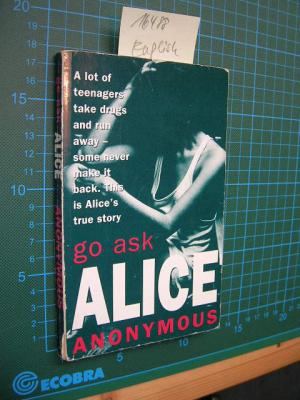
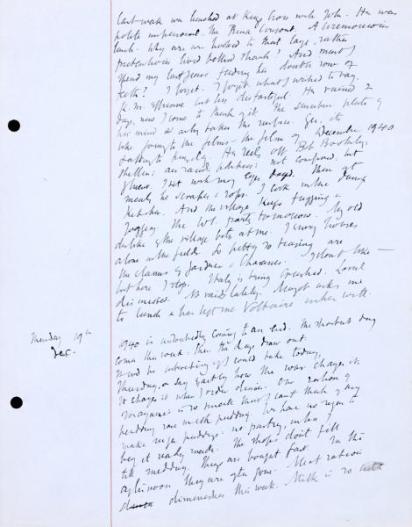
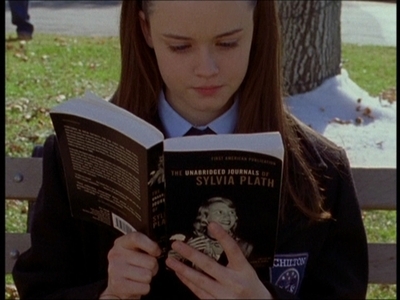
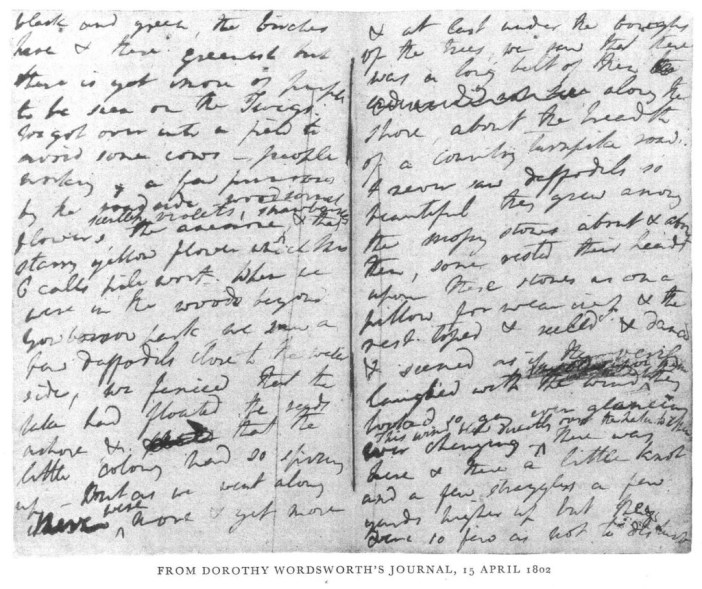


 mariaology