Out from a colourless tundra
comes the turning wind, the wind
that rattles the glass of a window
knife-thin,
willing outside the world within.
Down in the park the pathways flood,
so gurgling glugs
of chocolate water swirl and seep
and spill from the river,
like blood burst from an artery.
Across a sky of aching grey
the flock of blackbirds fly,
showering outwards in sparks of darkness—
a blink and they will fade.
Turn around in sparkling rain:
the glaze that clings to twigs and leaves,
saliva soft and silver glinting,
like water on a house’s eaves,
lushly splashing
the webs of spiders.
Behind the sway of hollow trees,
their million fingers twinkling,
there is a spread of endless green,
a distant summer—
the luxury, my own decision.
Here, out of the storm you now appear,
a tangle of whiteness: white scarf,
white floss of hair. Your sadness
lost to me now, a fragment
as the rain blinks on and off
and loses my vision.
You used to worry about the palms: there was something wrong,
you said,
if the palms weren’t sighing.
You relished the soft peel of the wind through those palms,
the ones by the hotel garden.
We’ve been here every year
since Dad died.
The white beach sand is a mouthful of moonlight.
We sit up late drinking crushed fruit
and you say strange things, as you always do—
have you ever eaten a mango in the bath?
You would live your life like that,
all the time you said, eating mangoes in the bath.
All that pulp and mess, all that flesh.
Dad died in the spring, when blossoms
of soft pink cherry gathered on my lawn.
The baby lolled around in it like April snow
and we watched her giggle, ribbon
flying out from her hair. He would’ve loved that,
seeing her there.
The cancer took the green out his eyes,
ate the skin of his face.
Even when they pumped him full of fat and creamy vitamins,
the bones kept poking, pointing.
His face was a mask of something;
I couldn’t let the baby near it.
I imagine you prefer it here
to back home. You like the ooze
of the days, the way the maids make the beds;
the emerald green of the parakeet,
early mornings where the tide sparkles. Still,
you saw signs in everything.
Dad used to come visit during monsoon season.
He wrote reams of prose,
lapping up slushfuls of rain. He wrote
in the small hours, when he wasn’t working.
We lost the notes.
We’ve only the stuff on his business trips,
lost code on his laptop.
We haven’t a sense
of what to him was sharp or clear, what it was
that brought him over.
Just the whispering palms, the sleepy tense—
one day I’ll take the baby here.
The wedding was held on the first of October, that first fresh fling of a spring day with cherry blossoms lining the avenue and the smell of sunlight in the air. Marianne had chosen this day because on the calendar it had glowed up like a promise, the hope of something clean and new that wasn’t tarred with the silliness of April Fools or the bloat of British summertime. It was luck, really, that brought the good weather to New Zealand on that uncertain spring morning. It was also luck that bagged them the venue. She and Ethan had spent weeks debating where to get married, pouring over glossy brochures featuring medieval castles, luxurious hotels with honeymoon suites, country houses and converted churches which allowed you to toss your bouquet extravagantly from the bell tower. Arguing about the cost of fancy desserts and appropriate champagne. It was all very expensive and a little vulgar for Marianne’s liking. She was raised to believe that the most enchanting things in life were free. She had insisted for years and years that if she ever got married she would do it smack bang in the middle of Oxford Street for all it mattered. The best part of a wedding, Marianne had thought as a child, was the cake. I will find the best cake in the world, she would boast to her mother, because everyone likes cake, and not everyone likes a wedding. You can always, as Marie Antoinette put it, let them eat cake.
Growing up, Marianne found it to be true that not everyone likes a wedding. Or, at least, a wedding doesn’t do well for everyone. At the age of twenty-six, Marianne had dragged herself through enough of her friends’ weddings to know that the occasion prompted flourishing happiness for some, and hours of breakdown for others. Only last year, she had been drinking with her old roommate Bill at a colleague’s wedding and over the slurry candlelight he confessed to her his deep desire to kill himself.
“I just can’t stop thinking about it,” he had said quietly, refilling his wine glass, wiping the sweat from his eyes.
“William, William I had no idea.” And as the confetti swirled about the crowd, queer as a summer snowdrift, Marianne felt like she’d been chained to something dark and profound. Some sense of the underworld that she needed to get rid of. Bill had left soon after, taking a cab back to the hotel, and Marianne had gorged herself on the cheeseboard to cheer herself up, because it seemed there was nothing else she could do but stuff away her dreams with sticky lumps of brie. In the midst of all the magic, there was still all this sadness that seemed to coat the world in fear. When the bride passed her, Marianne smiled brightly, but later on she called Ethan in tears.
“Don’t worry,” he’d said, “he’ll be alright. Weddings bring out the best and the worst in people—”And yes, Bill was still alive, but he and Marianne had not spoken since. In all the chaos of organising her own wedding, she had forgotten.
Eventually, she and Ethan found their perfect venue in New Zealand, of all places. It was a rare corner of the world, special in its simple charm of rolling hills and friendly faces. Yet Marianne had a great deal of trouble convincing Ethan’s family to fly out there, even for just one weekend. Ethan’s mother suffered from bouts of depression and an event like a wedding, he said, could prove difficult – if not debilitating – to her state of mind, which had been fragile since his childhood. What’s more, Ethan’s father (they were divorced) seemed to drag himself through life with the sole intention of avoiding tricky situations such as these. He was a plumber who worked hard and spent most of his spare money down the pub, with people he’d known since high school. A cosy existence, free of the kind of complications that Marianne’s parents liked to pick over for a living. Marianne’s parents were academics, the kind of academics who relished a wedding, if only for the excuse to drink nice wine. She and Ethan were very worried about the whole occasion, about their parents coming together for only the second time, about the cost and the question of religion and whether it was weird to give people Love Heart sweets as favours.
“Shouldn’t we try for something more…intellectual?” It was him that said it first, not her.
On the last day of September, they landed crisp and safe on New Zealand ground, ready for rehearsal. To their surprise, they found the priest getting baked under a cabbage tree.
“My god, look at you two!” he exclaimed in his thick Kiwi accent, scrambling to his feet to greet them with a dazed look on his face. “Why I’ve never married such a beautiful couple!” He kissed them both on the cheek with enthusiasm.
“When do the family arrive?” he asked, walking them towards the church.
“Tonight,” Ethan glanced at his fiancé, expecting the nervous expression to show on her lips. She was, however, remarkably composed.
They were being married in a church made of trees. A brand new church, constructed in imitation of a similar design which went viral on the Internet a few years ago. The venue had appeared quite randomly in Marianne’s inbox, with all the sparkle of a super-charged Groupon offer, and she was quite enchanted by its strange beauty, its sense of the ephemeral. She did not want her marriage to be stone-cold and static, confined to a church, but to evolve and shift with the seasons, like this lovely temple.
Ethan and Marianne were just the seventh couple to get married under its bowers.
Silently, they stepped inside the iron framework and stood under the greenery, marvelling at the dappled light playing along the carpet of grass.
“Amazing,” Ethan whispered.
“It’s better than I ever dreamed of.” Marianne turned to him and gave him a long, satisfied kiss. They felt like they could stay here forever, dreamy and alone in this virescent version of heaven. The priest ushered them through their vows before leaving to meet his next clients. They delayed going to the airport to meet their parents, preferring to sit on one of the pew benches, scuffing their bare feet in the soft soil and laughing as they shared their secrets.
“All I want,” Marianne said to her fiancé as they sat later in the back of a cab, “is a few days of harmony. D’you think we can manage it?”
“All I want,” Ethan replied, “is our parents to get on okay. God knows I’m dreading the next few hours.”
“Don’t,” Marianne kissed him quiet. “It will be fine. They love us.”
To their surprise, it was fine. Fine as dinner and mumbled wisps of conversation could ever be. At the end of the meal, Ethan’s father stood up to deliver a drunken speech, exposing an embarrassing array of Ethan’s ex-girlfriends and childhood habits, enough for Marianne’s parents to speculate on for months to come. Ethan’s mother complained about the food and how warm it was for this time of year, her jet lag and sore head, then retired early to her room. Marianne worried, but Ethan knew better.
After dinner, they drank coffee in the restaurant lounge and all talked quite civilly about married life. Brian, Ethan’s father, had consumed a little too much wine and was already slurring off with jokes about how marriage was always a ‘two-way street’ with ‘no exits except death’. He wouldn’t stop, no matter how much Ethan tried to hush him. He teased the young couple about their choice of venue, speculating on all sorts of disaster scenarios which could disrupt the ceremony: lightning storms, forest fires, a rain shower. Marianne’s parents remained very quiet through all of dinner; so quiet, in fact, that Marianne worried there was something on their mind that they were choosing not to share.
Under the cool spring moon, they walked Marianne back to the hotel, leaving Ethan and Brian to have a last-minute tête-à-tête, which Ethan clearly didn’t appreciate. In the hotel garden, Marianne nuzzled herself into her father’s arms like she used to do as a child, feeling small and safe. It was different from how she felt with Ethan.
“Are you going to be okay?” Her father asked her. She thought about the day she first met Ethan, walking up the campus steps to her morning lecture, the sun breaking through a rain shower and the look on his face, concentrated and expectant. He wore his hair very short then – even shorter than it now was – clipped and cool in his blazer, a third-year law student.
“I think so,” she whispered back. The crickets purred around them.
“Just remember, everything is your own decision,” he said cryptically, ruffling her hair gently as he turned to enter the building.
“Goodnight love,” her mother echoed.
She and Ethan spent the night achingly in separate rooms, sleepless and fearful and eager. Marianne took out a pad of paper from the desk drawer and under the header with the hotel logo she wrote a list of all the reasons she was getting married: Love, dreams, sex, money, future, Sunday mornings, love. She laughed at how easily the cliches buoyed up in her mind. Brian’s words had awakened some tiny, irritable worm inside of her, a worm that wriggled with uneasiness. Yet she waited for it to rest and eventually fell asleep, letting the magic of the words she had written take shape in her dreams.
In the morning the sun bathed the grass in golden light and it was just as the first day of spring should look like, so different from October back home, where the streets were bronzed with glossy rain and fallen leaves. Ethan waited among the bright green bowers until Marianne appeared half an hour later, shrouded by the vines and only gradually entering his vision as she stepped through the knitted trees.
“How long?” he mouthed at her. She gave him a funny look as she slowly glided down the aisle, trailing her lacy dress. The church could only seat fifty guests, but there were very few people there. None of Ethan’s friends could afford the New Zealand flight, and Marianne hadn’t wanted to invite so many of her own that the bride’s side would outweigh the groom’s.
“What?” she asked him as they got closer.
“Why have we waited so long for this?”
She stood opposite him over the simple altar and as the priest approached Ethan added:
“I would’ve married you at uni, I would have married you so long ago.” He couldn’t help but grin then, and it was the kind of grin that unravelled the tight poise of his face and showed the fine lines around his eyes, the sparkling hazel eyes that she knew as mirrors of her own soul. She loved him, then, for that fragile smile alone.
“Don’t kid with me,” she murmured. She then looked up to face who they would be soon; who they would be after the magic words and the kiss that sealed them. She stood tall in her crystal heels and white gown, her light hair tumbling long down her shoulders, secured by the flower garland that her little niece had assembled for her that morning from the field of daisies. It was funny, she didn’t feel quite grownup; it was like being a child again, playing dress-up, playing at something that all of a sudden she knew nothing of. The priest stood over them in his robe, casting a shadow into the space around the altar. Marianne imagined that in winter the ground beneath their feet would be scattered with old seedpods and stray leaves fallen from the trees. Were they evergreen? She could not tell; she was no scholar of nature. How different the place would look, all wiry and skeletal. It was a chance vision, the fleeting kind gifted to the mind from a wisp of wind, cold and coming northwards. A fantasy of life at another time, caught in the secret culverts of the land around them.
She smiled as he slipped the ring on her finger, looking into the clouded space of his eyes and enjoying the blind joy that enveloped her.
After the ceremony, they led the guests down the aisle and out of the sparkling world of green onto the garden plains with the ornate shrubbery and the guesthouse lodge in the distance. Marianne’s mother, in her yellow hat, approached her and dutifully kissed her daughter on each cheek.
“It’s been a pleasure,” she said warmly, simply. Her father came and clasped each of her hands in his.
“You look wonderful love,” he told her. “I’m sure you’ll be very happy.” But she felt the clamminess of his fingers in hers, and slipped away. It was as she had felt at her friend’s wedding, that sudden moment talking to William, his face cloaked in cigarette smoke. There was something strange about the way her parents were so keen to share in her joy; it didn’t seem real.
What she would remember most about that day was not the party afterwards, with the sunlight dancing in her hair and the lilting joy of the violins and the woman that sung for them from a makeshift podium. It was not the fairy lights strung across the trees at night, or the sad sighs of the children told they had to go to bed. Not the crumbling wedding cake and the sugared strawberries eaten secretly in the grove by the river, or the sweet laughter of Ethan’s parents as they sat together sharing a bottle of wine and loudly reminiscing. Not the restless, whisky kisses pressed between the sheets in the cool summer evening, with the starriness of midnight pouring through the window. What she remembered most, now, was the feeling of her father’s fingers: cold and foreboding as she pulled away from him and out of her old world altogether.
Yet in the haze of those joyful days, it seemed obscene that in a few more hours they would be returning to a bleak, British winter, leaving behind the Kiwis and their colourful summer.
And love was all, love was all. That was what they said, what everyone kept saying, not knowing what it meant. The daydream of that day, its harmony draining slowly away in the time that was passing, the prickling chaos of day after day in each other’s company. Years flaking from them; precious layers of what they had always wanted to be, sloughing off and collecting in piles on the bedroom floor. There was then the new house, the miscarriage, the man in the white coat who talked to them as if they were children. The strangeness that grew between them. When they had argued, falling back into bed with tired passion, her father’s words flashed back to Marianne: everything is your own decision. And yet.
Here she was at her desk with the wads of paper blocking her view of the window, with the mirror glass behind her and that silver strand in her hair exposed for all to see. They had waited too long; too long they had waited to let happiness wash over them like a morning shroud of marijuana dreams. Marianne sat at her desk because it was the only place she knew where she was. Her head was full of the smell of hospital chemicals and the sound of dogs barking down the lane, old women nattering at bus stops. Blood being sucked through a plastic tube, the soft groan and the closing of his eyes, the shadow self that came over him in those moments. Pale and loitering. Loosely, the memories unravelled from her grasp, so that sleeplessly she would lie awake seeing her mother-in-law’s tormented face, the frown she pulled when she heard the news, the devastation in her eyes. There were too many pieces, too many pieces to pick up, replace.
Marianne lit a cigarette and stared at the ceiling.
In June she boarded the flight to New Zealand – the one she had booked only a week ago – the one her mother had paid for because Marianne was bogged down with the debts he’d kept secret.
Up in the air, suddenly the world no longer appeared in cut glass fragments of what she had lost. The blue sky was open and wide, the land below long and solid. When she landed, this time there was no priest to greet her, no summer insects singing in the grass.
She stepped off the road and made her way into the gardens without stopping, because there was no longer an attendant at the gate asking for an entry fee, a charity donation.
The land was starved. Ten years had passed, and here was the place where his parents had sat looking healthy for once, here the river where the children played, there the place with the daisy ring and the standing stones, the spot where they took their first dance under the virgin moon. The grass was now dry and yellowed underfoot, the breath of winter bitter on her cheeks, like ice kisses left by a dead lover. The irony was not lost on her. As she paced around, traces of litter – plastic rings, bottle tops and molten cardboard – lingered on from summer picnics. There were charred places where bonfires had burned, and Marianne imagined the fatty air filled with ash instead of confetti snow.
From the sky, the rain fell cold and slow. It seemed there was no money to be made from love, not here, not anymore.
The trees which had once flourished together protectively were now gnarled and thin and lonesome-looking, like trees from a fairy story.
How long had they waited for this? The last gasp of a feeling: not everyone likes a wedding. A ghost doesn’t like a wedding; a ghost resents its solidity, she thought, its promise of new absolution. Or was it the dreamy quality? Marianne had forgotten. They had waited too long, and it had cost them.
She sat under the skeleton trees, on the same bench where ten years ago she had dug her toes into the soft earth, sighing. And with the violins sounding sweetly in her ear, she took her shoes off; but the earth was too hard at her touch, encrusted in hoar frost and the dust of other memories, other dreams floating free.
I am coming to the end of the Glasgow Uni Creative Writing Society’s ‘Flash Fiction February’ Challenge. The aim is to write one piece of flash fiction a day, following prompts that are posted on the blog. The best thing I have probably achieved since I wrote my 10,000 word ‘The Quest’ story (complete with self-made Photoshop image and realistic fire effects) aged eleven is successfully averaging at least 700 words a day for a whole month (some days writing 700, other days moving upwards of 1300…). The reward is not just having a little portfolio of stories to go back and edit in the summer, but the habit of discipline that’s been earned. I have learned that I need the motivation of ‘completing something’, and that sharing one’s work and discussing it with others helps to feel better about writing. There is also the satisfaction of word count. If I averaged at least 700 a day, then that’s at least 19,600 for all of February. If I doubled my word count and did that for two months, I’d have a respectable 80,000 word novel. It’s an encouraging fact. Even if the content is sometimes pretty crap, I have something to work with! I just have to keep up the daily habit. It’s a bit like crack, only not so addictive, and cheaper. And, well, you have to work for its effects.
One of my fascinations is with the daily routines of successful writers. Not necessarily just literary authors, but philosophers, artists, journalists – even mathematicians. Anyone who gives up a significant chunk of their day to solitary writing, creating or just working. There is a fabulous blog called ‘Daily Routines’ which is the ultimate procrastination: putting off work by reading about how others work. It’s refreshing to see that not everyone needs a wee dram or French cocktail to get the imagination flowing, though it seems to be a recurring theme. As well as the time of day and the choice of stimulant, I’m a little bit obsessed with peoples’ medium: the effects of the pen, pencil or keyboard; how one’s writing implement impacts upon their style, speed and even argument.
I write with a felt-tip pen, or sometimes a pencil, on yellow or white legal pads, that fetish of American writers. I like the slowness of writing by hand. Then I type it up and scrawl all over that. And keep on retyping it, each time making corrections both by hand and directly on the typewriter, until I don’t see how to make it any better. Up to five years ago, that was it. Since then there is a computer in my life. After the second or third draft it goes into the computer, so I don’t retype the whole manuscript anymore, but continue to revise by hand on a succession of hard-copy drafts from the computer.
[…]
I write in spurts. I write when I have to because the pressure builds up and I feel enough confidence that something has matured in my head and I can write it down. But once something is really under way, I don’t want to do anything else. I don’t go out, much of the time I forget to eat, I sleep very little. It’s a very undisciplined way of working and makes me not very prolific. But I’m too interested in many other things.
One day I want to write a big essay looking at how writing style changes according to how you get the words on the page (I even bought a beautiful typewriter to test that out). I love the idea that Sontag uses layers and layers in her writing and editing: the process of writing on top of writing, of scrawling and scoring out like the palimpsest diary Cathy in Wuthering Heights creates on the margins of a bible. Like Heidegger with his under-erasure being.
I also find it fascinating how people can study and write with music playing around them. I used to be a lover of total silence: a pure space in which I find the need to fill up the void with words. Now I can sometimes do with a bit of ambient sound: coffee shop clattering, birdsong, falling rain and so on. It makes a difference whether you are in the actual space (writing in a real garden or a coffee shop, for instance) or in the hyperreal zone of generated sounds (there are excellent Youtube sources of ambient sound, from whale-song to fire crackling in a grate). One will distract me to write about immediate details, the other soothes you into a weird creative ‘roll’ where you can pour out your words or nonsense like code streaming out in hyperspace. OK, I’m being self-indulgent.
And indeed, there is a self-indulgent aestheticisim to all of this: the endless procrastination involved in selecting the correct font for a piece, the need to rearrange one’s desk or shuffle books or change your pen or whatever it is. Yet there is something more important here that relates to publishing itself and the way literature often gets sucked into a commercial vacuum (think of the likes of the Brownings’ letters or Shakespeare’s sonnets which get beautifully repackaged in time for Valentine’s Day) . The original text is beautified by the paratext, and what is left is perhaps more of a consumer object than a discourse of words and sentences. There is an emphasis on white space, the chic luxury of thick paper and the gaps between printed letters. James Fenton said that, ‘what happened to poetry in the twentieth century was that it began to be written for the page’. But what is this page? Is it the sublime landscape of print paper stretching out its possibilities of unblemished whiteness? Or perhaps the virtual page: the ever-changing Internet archive that risks the dreaded 404, this page is missing; that risks alteration and collaboration and manipulation – and is this not a good thing? It is poetry changing, in transition; undergoing the morphological process of the human into cyborg. An automated computer voice reading aloud, staggering over the dashes and tildas and sharps, the onomatopoeia and enjambment like a child having a crack at reading Derrida. Il n’ya pas hors text: there is nothing outside the text/there is no outside-text (he writes in Of Grammatology). When somebody reads aloud I imagine the words before me, drawing out of the page like butterflies coming to life; I can’t help it, it’s the way I learned to play with poetry. The world I like is the enclosed, shy space between the black ink and the reader’s eyes, the moving lips so silent.
The Mariner’s ship and the Albatross. Source: thestage.co.uk
Like the ‘fluttering stranger’ that Coleridge observes as a child at school in ‘Frost at Midnight’, words in poetry become strange: there is an uneasiness to them that we cannot quite place. Verbs, adjectives and nouns are not what our teachers told us. You cannot fix them to a blackboard, and anyway chalk crumbles. While butterflies might be pinned down and classified by their colours, words are dependent on each other for meaning. So signification sifts in swirls of dreamy reading, and the mind makes connections. The imagination stirs and sometimes forgets them. Footnotes adorn the margins and confuse us, as they perhaps do in Coleridge’s ‘The Rime of the Ancient Mariner’, where we are driven into warmer but often more perplexing territory, as Coleridge’s gloss is less an academic explanation, and more a multiplicity of voices. At once, he joins in the action, ‘Like vessel, like crew!’ – yes, ‘her skin was white as leprosy’ – and we too catch this virus, moving between microbes of words that open and mutate through the strangest imagery. We shift between and through things with Coleridge’s metonymy, as in the gloss: ‘[a]nd its ribs are seen as bars on the face of the setting sun’. What are we to make of this being, ‘a Death’: an embodied spirit whose translucency both stirs and disturbs and amuses us, all at once? Aesthetics and meaning all blur into one.
With Romanticism what we often get is the journey, the progression through space, selves and substance, and through visual experiences: the sublime, picturesque and the beautiful. Not to mention the ugliness of Frankenstein’s monster, mirrored in Mary Shelley’s own monstrously patchworked collation of tropes and terrors and texts (imagine being raised on Milton but growing up like Rousseau – being both Satan and a noble savage – now that is Otherness embodied, surely?). We follow Wordsworth up Snowdon and along the Alps in his glorious Prelude, with the seamless switch between interior musings and the expansive, golden panoramic shot that reveals the gaping ice and mountains, the tracks the subject’s wandering thinness:
The unfettered clouds and region of the heavens,
Tumult and peace, the darkness and the light,
Were all like workings of one mind, the features
Of the same face, blossoms upon one tree,
Characters of the great Apocalypse,
The types and symbols of eternity,
Of first, and last, and midst, and without end.
(Wordsworth, Book VI of The Thirteen-book Prelude, lines 566-572).
Where nature itself merges into one terrifying being, where opposites uncannily forgo their differences to become ‘features | of the same face’ and still the sweet ‘blossoms upon one tree’, we are in a sublime landscape, and then in the pastoral garden. The subject stamps himself upon the mountains, as the mountains are stamped upon him; we recall, with the help of the OED, the varied meanings of the term ‘character’: as both noun (a literary figure of self/person; a sign or symbol used in writing, print, computing; a code; the properties of a substance) and verb (‘to distinguish by particular marks, signs, or features’). Wordsworth’s figure is the self encoded in the text, the lonesome Romantic imprinted in his white sublime of Snowdon, going deep into the very properties of the rock itself. All is viscous, melting subject into object. All is, as Timothy Morton so aptly puts it, a mesh: where there can be nothing ‘out there’, as we are all a set of strangenesses, part of an existence that is always coexistence; and yet we are not simply part of a holistic collective, but connected in our differences, in our mutations that separate, stick and undo us. There are those clouds which seem ‘unfettered’ and yet even they cannot rise above the poet’s vision, the tacky link of aesthetic projection that takes nature from unified cliché to a space of wilderness in which things move between abstraction and reification, and humans move with them in the ambiguous space between – like those viruses that multiply and mutate, ‘first, and last, and midst, and without end’.
This dangerous, homogenised idea of ‘landscape’ can be undone by thinking of it textually: as a palimpsest too of sorts, where human language adds layers to our understanding, alters our relationship with nonhuman things of the living and non-living. In writing and reading ‘nature poetry’, we are reconfiguring our place in the mesh; just as a drop of colour upon a single Paint pixel shifts the impression of the whole picture.
While Romanticism takes us on these messy forays into psyches and space, in the twentieth century we have, as Fenton has suggested, the poem as object: the poem as visual play on the page. The attempt to make the poem an object, to get to the very basics of objects. Think of Ezra Pound’s Imagism: ‘The apparition of these faces in a crowd; | Petals on a wet, black bough’ (‘In a Station of the Metro’). Think of William Carlos Williams’s notorious modernist poem, ‘The Red Wheelbarrow’, in which Williams’s poetics bring the object into stark and colourful being, like an object being rendered on some kind of graphic design program. Assonance coats our visual impressions so that we can almost taste what we see, the wheelbarrow ‘glazed with rain’. On the page, the poem too is a spilling of rain, of long lines dripping into single words, of basic objects hardening, forming. The ‘red wheel | barrow’; the ‘white | chickens’.
There is also the lovely aestheticism of the fin de siècle: the beautiful margins and separation of art and text in the The Yellow Book, and of course Husymans’s jewel-encrusted tortoise, which eventually dies from the weight of its ridiculous embellishments. Does a text too collapse under the weight of its stylistic ornamentation? The fashion for minimalism perhaps gives way to this assumption, and yet what about the explosive textuality of Finnegans Wake, Gravity’s Rainbow; anything by Henry James, or for that matter, Angela Carter? Art for art’s sake is not a dip into vacuity, but is necessarily a political statement, a textual position, after all. An attempt to escape the shading blinds of ideology. You might write a dissertation on the politics of purple prose; you might float buoyantly along the clear river of Wikipedia readings.
And now I have lost my place in the forest and cannot find the light again. Birds tweet shrilly and their song is like stars tinkling and various shades of darkness hang in blue drapes from the bowers of pine trees. If I look around I see the jewel of every dew drop glisten and I know that it is twilight. I am looking for something particular: that silent speck of a presence; that which evades me every time I turn over each new leaf. Only I know that I cannot see, cannot see the gathering of these particles; the light is fading and soon the day will close its drapes.
These are just words after all, and who would cling to them?
I have this memory of being nestled in the cleft of a rock on the isle of Cumbrae, my bike propped up beside me as I sit watching the sea and eating fizzy laces (they were cola-flavoured, or maybe strawberry). I’m on the rugged side of the island, where yellow eyes and strange animal faces are painted onto cliff walls and sometimes if you stare hard enough at the ocean you can see seals. On the other side of the island, you have the little town of Millport, with all the white and pastel-coloured houses looking out onto the harbour. Everything is still, soft, crisp – the texture of sorbet – so that the only sounds you can hear are the steady lap of the waves sloshing against rocks, and the occasional cry of a wandering cormorant. The island to me is like the shyest of kisses: the kind that taste of rain and raise your spirits. Yes, I’m eleven years old and I feel invincible.
You see, I’m on a bike ride, travelling twelve miles right round the island. I’m wearing jeans with the bottoms rolled up and spattered with black oil from the chain; I’m gripping the handlebars so tight I can feel the blood burn and tingle in the tips of my fingers. I’m pedalling even faster than my sporty brother and my father and I know I’m going somewhere because the landscape changes the faster I go. Life rushes by like a montage peeling back luscious scenery. I pass other families on their bikes but they don’t see me; I’m caught on the drift of the wind that they’re battling and I’m going faster than they could imagine. The sun is on my back and I’m flushed and my hair tangles around me, caught in the straps of my rucksack. I want to get there first; I want to be the first one to reach the secret beach.
You can stand there in your bare feet and I remember the cockle-shell rocks, greenish with sea leeches and weeds. Nearer the sea the sand is velvety thick and oozes up between your toes. My child’s eye spots the starfish and sea anemones, and I wish I had a jar to take some home. I’m teasing my brother about something and he throws a stone into the ocean, watching it bounce five times over the waves. Sullenly I watch it. Then in my head I tell everyone I’m a mermaid and paddle in the shallows, looking out for the shoals of fish that swim by in miniature shimmers. We’d wander back up to the rocks and pick our seat; and that’s where I’m sitting, now, in this moment, looking out to the mainland without worrying about a thing. I’m just admiring the craggy shapes of the distant cliffs and the way the cloud looks like billows of cigarette smoke coating the landscape.
The worries would come later, in the dreamy space that opens before sleep. I’m trying to get at the dregs of this memory. The exact details of colour and light, the way that the April air felt and the shapes of circling time. You go right round the island and come back to the start. You paint the strokes of the green hilltops and the silver belt of the road. It’s nearing summer so the day drifts endlessly through night; it doesn’t get dark properly here, not really. Not until the depths of winter. A shower of rain that’s a spray of glitter. Maybe there’s a lighthouse shooting beams of white across the bay. Ships passing ghostlike in the night and you wouldn’t even know. I remember the cold blasts of wind you get on the ferry, with the horn of other boats and the marvelled awe of other children looking out towards the harbour. I call up all these things and wish for more.
Source: openroadscotland.com
Maybe all that remains of this memory are the sea-smoothed shards collected in a jar that sits on the sill of some window in my mind. You can remove the lid and pick the best colours, turn them over separately in your palm, but you can’t make them real again. Time has softened the sharpness of their edges, added layers of distortion to their rays of shifting colour. Hold one up to the light and you will see the bubbles that mark each year that’s passed, arranged in no order other than chaos.
Somewhere, there is the shimmering bleep of slot machines from the cheap casino room of a ferry. A man asking for tickets and a car stuck on the gangway. The taste of peanut butter sarnies gritted with sand, the crispness of silver foil in my hand. If I close my eyes, dizzy and thirsty, I am back there, my body nauseous with the pull of the sea, the boat rocking to and fro with the turn of the words that mutter on my tongue. My hair whips over my face and it smells of salt and seaweed and I can feel the island growing ever so closer to me as the ocean moves towards the setting sun. It’s not that I’m eleven again – nothing is the same twice over – but it’s the feeling of a memory that you can hold up to the light, watch it distorted, watch it glimmering bright.
How are you meant to review a year when the year itself isn’t quite over? You try and think of it as a block of time: a chunk of events lumped together to form some kind of history. You’re always reaching out for connections, trying to box things and label them as such. This was the year I got divorced and found my freedom; the year I graduated and stepped onto my career path to success; the year I lost someone dear to me and found solace in a new hobby. The movies have it all mapped out for us, the way we’re supposed to review the events in our lives. Facebook, Flickr and other social networks that we rely on help us with this theatre of memory, by archiving everything together in chains of photograph albums and status updates. Events are strung together in relation to chronology and names and computer-configured faces; what happened to who, who was tagged where, who liked this and who got married and who had a baby and who got promoted. Every element of time is rendered orderly, linear. Compartmentalised to make us all competitive, individual, empathetic, jealous. We’re moving on a straight line towards goals, achievements – more notches to add to our timeline.
But what end are we moving to? A timeline cannot flow on indefinitely; or can it? Surely it’s meant to document an A to B, a fixed period in time with all the events this period contains (contained). Life, as we commonly think of it, is a series of events strung together only by their relationship to the future, to development and change. We hate stasis; we love drama. Really, as Freud put it, what we desire is death.
Desire, however, isn’t quite as simple as this. Freud, as Deleuze and Guattari argued, ignores the basic tenants of capitalism. The need for more, more, more which arises not solely out of some psychoanalytic lack, but out of production itself. The act of purchase, the mesmerising experience of lifting up some pretty snow globe and spinning it in one’s hand and thinking I would like to buy that. The flicker of a giggle as we take it home, imagining how our new product is going to enhance the life that fills our fragile hours. Fill a room and create new topographies of mental space. For everything we see disrupts our schemas of reality, even if only slightly. The snow swirls up and covers the landscape and for that moment we are free from the chaos around us.
What we are looking for is T. S. Eliot’s ‘still point in the turning world’: that perfect moment where we are at peace with ourselves, where we see through to the present itself amidst all the churning miasma of the world we exist in. The wars and media images, the headlines and celebrity photographs and radio crackle and dance music beating and phones ringing and Blackberries bleeping and all the million signals that flicker in our brain as we gaze into a computer screen. For we are multiple, divided, networked creatures, always-already caught up in swarms of information. Time is not a static archive, but a rhizome of interconnected possibilities that flash and shift and click in our minds.
And what’s more, events in time always come back. The logic of the return. Write a sentence and press the Enter key. We aren’t just running forward into the bright light at the end of some metaphorical tunnel. We follow our lives in a loop. Spilling over and retracing our steps. Think, for example, of a book: meaning is made not from a linear plot, but from the intricate play of signifiers and motifs which weave a melody of meaning throughout the narrative, linking the past and present with a possible production of future. That old New Critical interplay between Fabula and syuzhet.
Real life too. Wars return and people die in the same way, as if re-enacting the past in some big-budget film, tracing archives of pain that carve out a bitterness in history. We stand in the mirror at roughly the same times each morning and perform the same routine. Routine, like it or not, structures our whole mentalities. That’s why culture is formed on the basis of habit and ritual. Religion falls in here too. Are we always waiting, as Yeats suggested, for the Second Coming? The ‘revelation’ that is always ‘at hand’, ‘surely’? Let’s circle back to the start – of the twentieth century, to be specific. Freud says our personalities are determined by the first few years of our lives. Our anxieties now repeat the biological functioning of our infant bodies. Are we so caught up in ourselves that we cannot think beyond our bodies?
***
What does it mean to be in simultaneous temporalities? I write this sitting by my newly-decorated Christmas tree, in the living room where I spent almost every Christmas of my life since the age of three. The smell of pine and the reflection of fairy lights through the window lighting up the pampas grass in the garden. Everything wondrous and dark. Remembering lying on the floor after a day in town drinking Jack Daniels and shivering cold on the bus and listening to Muse’s ‘Butterflies and Hurricanes’ and dreaming of another night so unlike this. The frozen park in November with the roundabout and fireworks and the tall black shadows of the distant trees. Now the steady showering of rain at the window, spraying like glitter under the orange lamp light. Once there were family members sitting where I sit now, all laughing and ripping open presents and drinking sherry. My dog Bella climbing over everything, whining and wreaking havoc with the whip of her tail. I slip through all these memories until they feed my present. I cannot focus on one thing alone. I feel like I am several people at once. I am no longer singular. No longer a statistical person.
What happens when you are no longer one person? There is a politics to this. There are the people that believe in return and repetition. People whose whole religion is based around recurrent events and cyclical time. The solstices of Paganism, then the spiritual systems of the Mayans and Aztecs. This contrasts with the Judaeo-Christian vision of linear time, which starts with Creation and ends with the Second Coming. But what if this Second Coming was always coming? To come? Since the present is contaminated with the future (unconsciously or not, the things we think and do are always shadowed somehow by some possibility to-come), doesn’t this render the idea of ‘the present’ almost impossible? Do we slip into the spirals of Yeats’ gyre and Derrida’s spectrality?
Are we on a road or an ocean? A stream or a snowball?
Capitalism and heteronormativity set out a life plan for us. Find a mate, get married, reproduce, recreate the system. Work, earn money, pay your way. Consume. These are all instrumental processes which work towards goals. Inside these events we make our own histories, certainly, and there is a degree of creativity and fulfillment. We aren’t just pawns. But this isn’t the whole story. Here comes in Judith Halberstam’s queer temporality. What happens to the temporal experience of those who do not follow this conventional route to eventual death? Who fill their lives with more entangled possibilities which are fraught with uncertainties and questions rather than fixed narratives and clear answers…
Remembering his lover’s death from AIDS, Mark Doty says: ‘all my life I’ve lived with a future which constantly diminishes but never vanishes’. The looming possibility of a non-future, a future without hope or action or life, shifts the focus back to the present. Gone are the regular goals of ‘making a living’, ‘providing for the future’, ‘putting something away’ for one’s children. The next generation are often invoked in political discourse. Global warming is dangerous because it will spoil the world for the children of the future. Non-heterosexual relationships are supposedly dangerous because they don’t follow the capitalist ethic of (re)production in the strict sense. Atheists threaten the idea of progression because they do not believe in a future beyond. The list goes on. Sometimes we are unaware of how important time is to politics. If we ‘queer’ time by questioning the validity of its conventional Western linear conception, what kinds of lives can we live in our present political realities? How can we change – perhaps even revolutionise – the system. There’s the old doctrine of Hedonism – live out your pleasures in the present with a general disregard for others and the future. But the present isn’t inherently selfish. It’s a place where people can come together and change things, without being bound to the very isolated narratives of old age and death.
Drugs, jobs, relationships and illness all alter our experience of time: slowing it down, speeding it up, blurring it, erasing memory, making us fearful for the future. As these things become less stable and more unpredictable, how will this affect the future?
Will we have a future, or will it be a series of presents? Can we really look to the future?
Maybe the answer is in science fiction.Think of Ursula K. Le Guin’s The Dispossessed (1974), which explores the concept of anarchist politics through ideas of simultaneous temporality and cyclical return. Revolution and repetition are in operation at the level of both form and content: story and narrative, narrative and story. Time revolves in curious ways around and between two planets, just as a moon revolves around the Earth…but what does the Earth do when you are on the moon? Einstein’s relativity comes to disrupt the easy narrative of linear time, even at the level of science…
Maybe the answer is also in our own experience. Think of a memory. Any memory you have: the first time you rode your bike, the time you fell over while dancing drunkenly on a beach in the freezing winter, the time you lost your first pet to the grovelling paws of death. All these memories do not stand alone in our minds like a physical photograph stuck and labelled in an album; but are rather bloated and blurred with the original anticipation of the event itself, and of the aftermath – the events which have happened since and in turn coloured the original. Repetition is not static but transformative. Moreover, human beings revel in repetition. The simple pleasures of revisiting an event, even if just to experience the same emotions again as they recur in a faded form like a polaroid misted by the breath of time. Maybe that’s why people have children, so they can do the things they miss doing as a kid. And as Fredric Jameson points out, in the postmodern condition of consumer capitalism, nostalgia becomes an industry itself, shaping culture from advertising to film and literature. As our lives get more complicated, faster, information-saturated – we return to an idealised, rosy history that is often removed from any genuine meaning.
***
I always find Henri Bergon’s work fascinating, when I can get my head around it. He was writing around the same time as William James, the psychologist that first coined the term ‘stream of consciousness’, which is still widely used today to describe the workings of our minds but also how these workings are depicted in certain kinds of literature. Yet a stream has linear connotations, assuming that our mind is always ‘in flow’ – moving forwards and never stopping or growing, just streaming onwards. Bergson, however, figured consciousness as an experience of ‘duration’. Think of any moment, any moment as it happens. As soon as you think of it, with a milli-gasp of a second, it’s gone again. Time is always shifting and never static or complete. While science might attempt to chart time in a linear, measured fashion with clocks and calendars and equations, in our psychological experience; time does not easily fix itself to such points. It can only be grasped by imaginative intuition; it is always fallible and contingent, never the same as each moment reconfigures the last, endlessly shifting our experience of the world and ourselves: ‘my mental state’, as Bergon puts it, ‘as it advances on the road of time, is continually swelling with the duration which it accumulates: it goes on increasing – rolling upon itself, as a snowball on the snow’. And so where does that lead us, if not to the icy abyss of our certain deaths?
Well, for one thing, it actually confirms that we are not mechanical beings, destined to follow the path that time lies out for us. Sure, we will probably all die. But importantly, if Bergson’s theory works, we have free will; imagination plays a significant role in determining our relationship to the past and future. The moment is always an evolution, and this gives us a kind of freedom.
There are, of course, a multiplicity of links between return, recurrence, rupture and revolution. The breaking free of history as history is understood in a linear manner, read from front to back like a traditional book.
Literature has a long history of delving into irregular conceptions of time. An example might include Tom McCarthy’s Remainder (2005), in which an unnamed protagonist decides to reconstruct a series of memories after coming into a large sum of money following a mysterious accident. These reconstructions are performed down to the smallest of details: the expression on an old lady’s face as she takes out the bin, the cats that prowl the rooftops, a crack in the wall, the pattern of floor tiles, the sound of liver frying in the flat below. What follows is a topography of static memory, caught in the narrator’s imaginative present. Time loses its linear quality as the past plays out in ‘real time’ with the narrator switching his memory scape into ‘on mode’, hiring ‘re-enactors’ to perform the roles of the people in his memory. And yet an amnesia and aporia haunts the narrative, as we are never quite sure where these memories originally came from; whether they even belong to the narrator. With a book like this, we lose the certainties of the traditional realist novel and the linear movement which often ended so finally with the closure of marriage or death – the first promising reproduction and progression, the latter an ultimate extinction that ends the line. There is something about the novel form in general that links it irrevocably to time; it is not contained in a performative moment like poetry, but must be read over a series of hours or days or even weeks. We physically must turn the page. Days pass in the novel, or maybe they don’t, as in the one-day novels of Woolf and Joyce (Mrs. Dalloway and Ulysses). Novels often concern themselves with memory and futurity; the sheer arrangement of sentences on a page, moreover, takes us through time. Time flows as we read. We make connections and go back again; we are at once linear and circular as we exist as minds in a novel.
But we are now in the era of the great hypertext, which denies all paths to origin in its networks of complex code and multiple nodes. The Internet exists largely in a state of simultaneity, connecting various presents from around the globe. And yet, like Bergsonian duration, it resists a static conception of time; everything about a webpage is always changing as new file paths are forged, different visitors leave their online traces, new links and reposts alter the original location. Life is a labyrinth, but we would do well to forget thinking about what lies at the end. Maybe we should focus on the here and now, and give ourselves the freedom to transform the present.
***
And this year? Well, this year started with a parting: losing my most beloved pet to death. All life is a natural cycle though, as the year ended with two new births in our family. On New Years Day 2014, I went for a walk to refresh my head from working the night before. A man stepped out of the 24 hour newsagent with a bottle of Mad Dog 20/20 and cracked open the screw top to a dream of futurity that ended in drunken oblivion. I feel this is somehow fitting.
Most of my months passed in the library with the seductive glow of the computer stopping me from doing much other than reading and essay writing. I fulfilled both of my somewhat humble resolutions to a) do more creative writing and b) grow my hair down to my hips. I passed my exams and spent my 21st birthday hanging upside down at the park. Went to Dublin and even got a bit tanned and kind of liked Guinness. Saw Little Comets twice, first at Cabaret Voltaire and then Liquid Rooms in Edinburgh. Spent quite a bit of free time in Edinburgh actually; explored the Botanic Gardens and the beach at Portobello and went for walks at Dean Village. Listened to lots of Belle & Sebastien, Manic Street Preachers, the new Bright Eyes album and a heap of other stuff. Bagged an iPod classic before Apple stopped doing them. Had one of my best Wickerman Festivals and ate coffee granules for the first time. In August I went down to England to see family and ended up at Stepney Green, going ‘back to the ancestors’. Drank a lot of ginger tea and did some yoga. Went to Loch Lomond. Averaged about a kilo of chocolate a week, mostly Dairy Milk. Got a blog article put up on WordPress’ Freshly Pressed which was lovely. Went through the referendum and came out a little deflated but unscathed. Also enjoyed the spirit of the Commonwealth Games, even if I couldn’t really give a toss about sport. Saw an amazing sunset on Ayr beach, all alcopop pinks and oranges burning and sinking into the silver sea. Wrote three times my dissertation then another proper word-count-conscious dissertation and didn’t go completely insane. Served Alasdair Gray some brandy and a few months later . Started playing trombone again. Enjoyed one sip of red wine and dyed my hair strawberry copper. Went to a conference call to Peter Singer. Changed my favourite study space in the library…
Yep, as you can probably tell, my 2014 hasn’t been exciting by most people’s standards. But you know, it was a very good year overall. God knows where I’ll be a year from now, having graduated and moved out and hopefully made some provisions for the future. But even if I haven’t, even if it seems that not much has changed, what does it matter when everything dissolves in a series of moments? 😉
Some Reading:
Deleuze, Gilles, and Felix Guattari, Anti-Oedipus: Capitalism and Schizophrenia.
Bergson, Henri. Creative Evolution.
Eliot, T. S. Four Quartets.
McCarthy, Tom, Remainder.
Halberstam, Judith, In a Queer Time and Place: Transgender Bodies, Subcultural Lives.
It’s that little thing at the back of every undergraduate arts student’s mind: the dreaded dissertation. You find yourself at a Fresher’s Fair in the grand halls of some ancient university, poring over a prospectus for your dream course. There’s that word ‘Assessment’ and then, if you follow down the page, the words ‘Senior Honours’ and ‘Dissertation’. The percentage, length and allotted time period will vary between universities and courses. From my experience, it seems English Literature is fairly unique in its allocation of just one semester to complete your 8-10,000 word dissertation. Most other people I’ve spoken to tend to get two semesters, from September to March/April, to write their academic ‘masterpiece’.
Well, it’s not really a masterpiece, is it? It’s basically just several essays woven into an extended argument. Sounds simple enough. The trick is, they all say, to find a topic you really love and stick with it – if you manage that, then writing and researching will be a breeze. For some people, this part is easy. They’ve been waiting their entire degree to write about queer tropes in Medieval dream visions, the gender politics of Harry Potter, or, as Sylvia Plath’s Esther Greenwood prepares to write her thesis on in The Bell Jar, twin motifs in Finnegans Wake. For others, picking a topic is perhaps the hardest bit. I fell into the latter category. The advice we are always given is read as much as you can. Devour everything. Make notes, talk to lecturers. So in my junior honours year, I picked the courses that I suspected would be most up my street: American Literature 1900-Present, Modern Literature 1890-1945, Modern Literature 1945-Present and Literary Theory. All courses I would highly recommend to anyone in second/third year thinking ahead to picking next year’s honour’s courses. I suppose the whole time I was tracing vague themes that threaded themselves through my favourite books on these courses: textual effects of the uncanny, pastoral modes, madness, poststructuralist subjectivity, psychoanalysis, psychogeography, as much Derrida as I could even slightly get my head around.
In the end, my dissertation interest fell on technology, as I was seduced by a very strange novel on my 1945-Present course: Tom McCarthy’s C. In a way, it’s an encyclopaedic novel which picks up on all of my favourite themes. A novel which, at the level of both form and content, weaves together questions of modernity, the avant-garde, wireless technology and theories of networked society and subjectivity. It’s a novel haunted by the flickering presences of insects, war, Freud, Joyce, Kafka, Ballard, Marinetti; a novel which inhales and exhales as many intertexts as it can possibly breathe in. A novel which disturbs with its themes of incest and violence, its lack of a strong sense of humanist ‘character’, but enlightens with mini-lectures on entomology, Egyptian history, the workings of various technologies. There are also bouts of dark humour that keep you sane throughout the narrative, along with its beautifully crafted imagery. McCarthy cleverly invokes the emergent technological communications of the early twentieth century to comment on our present condition in a world saturated with wireless signals and the ever-present dominion of the Internet, which is not really external to us but rather an inherent web through which we live our daily lives and experience our desires.
We had to submit our dissertation prospectus right after our exam period in May of this year. That was a stressful time; even though these prospectuses aren’t binding, it’s still difficult to come up with a semi-logical argument and assemblage of texts when your brain is still fried from months of exam revision. Still, it’s good that we were forced to think about it early. I spent the first couple of months of summer rereading my primary texts and thinking about some ideas I wanted to develop. By August, once I’d returned from seeing family in England, I suddenly hit panic station. In a month or so, I’d be returning to uni and then it would be a matter of weeks before the deadline. I thought of all the things that might threaten my ability to complete the deadline in that time. Being called for Jury service, work, deadlines for my other course that semester (Modern American Women’s Writing), a freak spell of perishing weather, my laptop dying, losing my pen-drive, falling into the dark pits of writer’s block or depression – the worries dragged on. Thankfully, these things either didn’t happen, or only happened to a perfectly manageable degree. In fact, it turned out to be possibly my favourite semester at uni.
You see, there’s something very rewarding and liberating in being charged with your own project. There are no specific guidelines for your particular topic: aside from the annotated bibliography and the final submission, you set your own deadlines; you decide the scope of your topic, the texts you want to read; you aren’t harrowed by the prospect of a final exam which may necessitate the memorising of quotes from every last piece you find yourself reading. Of course, it varies from supervisor to supervisor your experience of all these things. They are there to give you advice, to offer you ideas for further reading, but everyone goes about it in different ways.
So throughout August and September, while we were being blessed with an unusually bright summer, I found myself in the pits of the library almost every day, trying to get my head around all the theory I was planning to use. I read countless journal articles, chapters from monographs, books on or by the likes of Freud, Derrida, Deleuze and Guattari, Friedrich Kittler and Bernard Stiegler. Interviews with all my chosen authors. I jotted down pages and pages of notes, filling up a little sparkly notebook I’d bought to encourage me to get started early. My bibliography was already totting up nicely with tons of references. I was putting together a plan. It felt good, to feel motivated enough to work this hard.
Luckily, I managed to keep the momentum up throughout the semester. I wrote the dissertation originally split into three large chapters, the first two comparing various texts and the third focusing on C. It was easy to write (early mornings in the library or in bed) with my personal harsh deadlines always in mind. If I finished the thing early, I could breathe easy again. Fuelled on green tea and Dairy Milk chocolate, I got most of my dissertation written by Reading Week (mid-way through term). The problem was, my word count had gotten waaaaaay out of hand. I thought this was okay; just write now, edit later. But it’s kind of impossible to cut out as many words as I had. I tried rewriting the middle chapter over Reading Week and all I succeeded in was cutting the odd paragraph and making my prose sound better; there was still some serious trimming to be done. I went to my supervisor and pleaded my word count woes. Her excellent advice was to pick one – just one – chapter and stick with that. Now that’s a terrifying thought when you’ve just spent four months researching and writing on four primary texts that you’re no longer going to use. Nevertheless, it was something I had to do; I felt that to condense my argument as it was would jeopardise the quality of my analysis. Maybe one day I’ll go back and re-work my discarded material for a Masters. It’s a thing we all have to go through as Lit students, getting the balance between variety and depth. Fitting in both theory and close reading. In the end, I chose my third chapter on C and completely rewrote it with smaller chapters. Time will tell if that worked out okay.
Sometimes I think back to the process of dissertation writing we went through in sixth year at school, writing our Advanced Higher dissertations. Admittedly, they were half the size: English Lit at 4500 words, Modern Studies at 5000. You got all year to write them and in theory, there were more opportunities for help. Still, although I worked consistently throughout the year on both, there was still that last-minute panic dash to sort out small things: referencing problems, formatting issues, those evil little things that you think will be okay but come back to bite you. I remember the day before the Modern Studies one was to be handed in, my teacher phoned my mobile to tell me he just opened it to read and noticed that there were footnotes missing, or just floating around my document. So I had to get the bus back from college and traipse into the school that night at six o’clock to fix it. Similarly, last Tuesday night I found myself at five to six (and I needed to be somewhere else at six) in a tizzy at the library, surrounded by heaps of messed up paper and broken hopes. I thought I’d finished it, proofread it fifteen times (and got others to proofread it) but reading it again I was still finding things that had mysteriously disappeared, moved, or simply needed replacing. The bibliography giving me the wrong page numbers. Queue a mad dash from my computer to the library printers (over and over) as I kept replacing the mistake-ridden pages. This day was perhaps the most stressful in five months of working on the dissertation. No kidding, give yourself as much time as possible for formatting and proofreading. Word processors will be the death of me.
Maybe this is all hyperbole; after all, I got my dissertation in over a week early. What a great feeling, although it’s only now that it’s hitting me. It’s hard to grasp how much of your mind is occupied by your dissertation until you’ve done one yourself. Until you’ve handed it in. Even now, I still get names and references flashing through my mind and I worry did I put that in the bibliography? did I remember to mention this theory? where did that quote go? It’s really difficult to let it go.
Nonetheless, it’s not all fear and stress. In the end, I loved my topic and can really see myself going back to it, rewriting and expanding it in the future. Your dissertation is one of the most satisfying pieces of work you’ll ever produce at uni. Scrolling through the finished document, it feels good to see all that prose stretched out over many pages, and know that it’s all yours. You wrote it. You should be proud of that, no matter what mark you get. Sure, there will be times when you want to hide under your bed or a desk in the library and cry, when you want to fling your books out the window or delete every last silly word you have written, but in the end you have to break through the pain and just get it written. Accept it and let it go. If you get writer’s block, spend ten minutes free writing on anything at all that’s irrelevant to your dissertation. The weird person sitting opposite you in the library, for example. This should help to get your ‘writer’s flow’ back. Moreover, chocolate helps (indeed proves invaluable), as does a supportive friend (and/or flatmate). There’s a warm sense of ‘we’re all in this together’ amongst fourth year English students, particularly as the dissertation is such a lonesome project, so it helps to talk to someone about your ideas. Also, obviously, as everyone always says, a good topic makes for a good dissertation. But either way, it will be okay. You have to learn to be good with timekeeping, to narrow your argument and find ways of connecting and condensing it. All very useful skills for any kind of future critical writing you might engage with. And out of all the stress, the feeling of finishing your dissertation makes all the hard work worth it. So to anyone who has any kind of dissertation to write either this year or next, I say don’t dread it, but look forward to it.
(from a Creative Writing Society freewrite with the prompts ‘fireworks’ and ‘oranges’)
She remembers the days when she and her brother popped over to the neighbour’s house for Bonfire Night. She’d climb over the garden wall, wearing her wellies and her dad’s itchy jumper that came down to her knees and a hat her mother had pulled over her fringe. They’d play with the children next-door because they were good friends and the same age, more or less. Even though it was pitch dark in the November night, they’d dance around the garden, shrieking and playing tig or hide and seek while they waited for the fireworks to be set up. They were cheap fireworks, bought from the local store, which ordered them from some chemistry enthusiast in the city. This was, of course, before The Internet.
She can’t remember his name, the man next-door; the dad who told the kids off for laughing too loud and who’d sneak off for fags in the greenhouse while his wife did the washing up. She remembers the blur of his bearded face. His yell as he stepped back from the firework he’d just set up. She remembers the mum better; the mum used to bring out steaming mugs of soup and carrier bags loaded with oranges. She remembers standing in the cold bright air, peeling with the stubs of her fingernails the rind that came away like thick flakes of skin. Biting into the soft flesh as a flame-coloured Comet rippled above her. The sour sting of the juice squirting in her eye; the sweetness seeping over her tongue. Stickiness on her fingers. She’d toss most of it away, into the rhubarb patch. She wanted to save her appetite for the chocolate log and lollypops that awaited them inside.
There’d be the rockets, soaring and screeching in her ears like banshees, sizzling in her belly. The wheeeEEeeeee like electricity. She hated them, but they were a thrill. She’d look up to catch them but they’d be gone already. Then there were the pretty ones. She read their names off the cardboard box, discarded on the porch: Crosettes, Dragons’ Eggs, Ice Fountains and Blossoms. She watched them go off with the other children, trying to identify each one as if they were flowers in a biology textbook. Only, they were always too quick; their beauty dazzled her vision and then evaporated. There were the ones that overflowed like ocean spray, showering and spitting flickers of white and silver, like a jeweller soldering a giant diamond. Rainbows would spread out across the smooth sky, raining colours across the tall trees at the back of the garden. Her favourite was the Catherine Wheel. It took ages to set up, but it was magical. It spiralled like a wild thing from the pole of the washing-line, sparks flying around it with the craziness of broken machinery, or hypnosis. She adored the Catherine Wheels. They made her feel strange and unreal, as if she were looking into an abyss.
After all the fireworks were gone, the children were doled out sparklers, which they were only allowed to use with gloves. The sparklers let them write their names in the air, as if they were inscribing their thin identities into the vast constellations of the night sky, the atoms of the air around them. She misses how back then in the country you could always see the stars and the sky achieved a proper dark. In the city where she lives now the sky is always a murky brown, the colour of Coca Cola or dirty rivers.
She used to hate how eventually they’d have to go inside. She used to want to stay out in the garden forever, sucking in the lovely coldness of November night. She hated how the sparklers had to be chucked into water buckets, where they’d snuff out with a quick hiss. The adults would always check that they hadn’t burned their little fingers. She remembers the faint char marks that stained her gloves. Remainders. She found those gloves, only a few months ago, when she’d gone home to help clear the house. They were in that same yellow jacket she used to wear, and even just touching the plasticky fabric brought back glimmers of firework enchantments. But the gloves were full of holes, the stitches became undone in her hands. Everything was to be given away, sold or donated to charity, after her mother died and now that the house was to be sold as her father left for business in America.
He’d phone her from new places and his voice would crackle over the phone like a fading sparkler. She closes her eyes and still she smells the warm soup, the tickle of gunpowder.
And oranges. She remembers the oranges. She never liked oranges.
There is a sense in which selfhood is just a scattering of remembrances, remembrances dependent on places. Everywhere in which I have been encodes some trail, some trace of memory. As a child whenever we went on walks I would magic things into being, imagining worlds on top of worlds, layering enchanted spaces and creatures upon the reality of adolescent landscapes. I’d see fantastic beings darting in rocky streams, strange birds sweeping from forest canopies, a thousand intriguing microbes, exotic in colour, swirling on the ground amidst the paws of my (real-life) dog. And even as I grow older, shedding away these whimsical worlds, I keep the magic of perception, imbuing the places I visit with a mental significance. As some store their spatial memories in smartphones, clicking them into flattened snapshots, I try to inscribe them in my mind as networks of sentiment – of senses, thought and memory. There is this particular spot in Kelvingrove Park, with the perfect view of the Glasgow Uni spire and a quiet pool of sunlight that occurs in May at about 4 o’clock; the spot where after my first year exams I sat lazily making daisy chains and reading Laurie Lee’s nostalgically beautiful Cider With Rosie. There is that salt smell and clacking of pebbles, the quick breeze that is Brighton Beach and with it many far off summers, of paddling cold feet and minty sticks of rock. Weird innocence. There is that favourite place in Culzean, a small jutting of cliff that looks out to a glittering dusk-covered ocean and the eerie mound of the Ailsa Craig. So many times I have sat up there with various friends and family and each time I am a different person, bound together perhaps only by the chains of associations set off by this location. Although I was brought up in the country, my mind is also a sprawl of urban spaces: the wintry, bustling streets of Paris at New Year, the seagull strewn alleyways of Ayr, Glasgow’s gritty pavements and eclectic skyline of the modern and the gothic, Edinburgh with its panoramic view of hillside, castle, parliament and sea. What makes all these places somehow special is my relationship to them both cognitively and spatially – in other words, psychogeographically – a sense of pulsating interconnections based on walking, on exploring the world on foot.
Ailsa Craig
Someone who has written extensively on his psychogeographic travels is the author Will Self, who ambles everywhere, in the search for new perspectives of space – walking famously from his house in England to New York (albeit with the help of an aeroplane), exploring the curious border spaces between urban and rural, airport and field. Self worries that in the contemporary world of globalisation and machine transport, we are becoming increasingly confined to ‘micro-worlds’ which offer restricted, miniature universes of hotels, airports, clubs and bars that bear little difference from city to city, in the sense that they are being used for the same purpose, and we rarely escape them. The frequency with which tourists, travellers and the like will take a taxi cab, subway or train rather than exploring on foot results in a limited perspective of urban space. There is no chance to stand back and observe one’s situatedness in relation to the built environment, to gauge one’s relationship to north, to the cathedral, the river; to form the intricate networks of association and recollection that pattern themselves around street-walking. I want to make a plea for this street-walking, not just as a fitness alternative to the stuffy mundanity of the gym but as an exercise in perception, in self-formation. (Sometimes, sounding pretentious or perhaps overly poetic is worth getting my point across, especially if it’s a pretty simple point about the joys of that most archaic of sports: walking.)
street in Dowanhill
I feel like I’m naturally bad at driving. I don’t like being in control of a dangerous vehicle; yes, that’s one reason, and a reason certainly more justified after delving into J. G. Ballard’s dystopian account of sex, violence and dangerous driving in Crash. The car, as a vehicle of speed charged with the excitement of modernity – see Marinetti’s ‘The Futurist Manifesto’ – is the antithesis of the slow pacing of walking. With a great driving instructor, I took lessons for over a year and while I enjoyed the freedom of leaving my small town and gliding (at my shy snail’s pace) along country roads, I don’t think I’m cut out to drive powerful vehicles. Even a bike I manage only at a push. I spend too long getting distracted by pretty sunsets, sheep, or the name of a passing cafe.
So I guess rather than machine-obsessed Marinetti, I’m more aligned with the modernism of the flâneur, the original ‘street-walker’ who spent his/her time sauntering the streets (usually of Paris) and losing his/herself in the crowd. Charles Baudelaire describes the flâneur in The Painter of Modern Life:
The crowd is his element, as the air is that of birds and water of fishes. His passion and his profession are to become one flesh with the crowd. For the perfect flâneur, for the passionate spectator, it is an immense joy to set up house in the heart of the multitude, amid the ebb and flow of movement, in the midst of the fugitive and the infinite. To be away from home and yet to feel oneself everywhere at home.
There is something strangely ‘natural’ in becoming a liminal figure, between observation and participation, haunting the city streets and drinking the atmosphere of the crowd as if it were the very sustenance of life itself. Moreover, this sense of haunting can be literal, as stepping among a wealth of sensations recalls dreaded memories and fugue states of psychological wandering, as the narrator of Jean Rhys’ novel, Good Morning, Midnight suggests:
Twelve o’clock on a fine autumn day, and nothing to worry about. Some money to spend and nothing to worry about.
But careful, careful! Don’t get excited. You know what happens when you get excited and exalted, don’t you?….Yes….And then, you know how you collapse like a pricked balloon, don’t you ? Having no staying power….Yes, exactly….So, no excitement. This is going to be a quiet, sane fortnight. Not too much drinking, avoidance of certain cafes, of certain streets, of certain spots, and everything will go off beautifully. The thing is to have a programme, not to leave any thing to chance – no gaps. No trailing around aimlessly with cheap gramophone records starting up in your head, no ‘Here this happened, here that happened’. Above all, no crying in public, no crying at all if I can help it.
Thinking all this, I pass the exact place for my after dinner drink. It’s a cafe on the Avenue de l’Observatoire, which always seems to be empty. I remember it like this before.
The narrator, Sasha, speaks in ellipses, in the strange silences and drifting prose of a vagabond, losing her mind to the networks of memory that haunt and map out her present.
And while Rhys’ flaneur is at times made painfully aware of herself by her own solitude amidst the Parisian crowds, sometimes in the city, one actually craves the claustrophobia of people and buildings and even the nasty proliferation of pigeons. It is maybe a kind of sublime, where one forgets one’s self in the overwhelming hustle and bustle. I remember my first time walking into Glasgow city centre on foot via Argyle and St Vincent Street. Standing breathless at the crossing of the A804 I looked up to the massive glass-coated buildings, beaming off bright April sunlight. There’s a feeling there that I don’t think I’ll ever quite replicate, that of a young adult from a little town, now encountering for the first time alone the vastness and slightly daunting excitement of the metropolis. It is a vision of the city infinitely different from seeing the big buildings from the safety of the backseat of a car; a vision that seems much more urgent on foot, with the vehicles rushing around you and the commercial structures seeming so much grander from the pavement. And it is funny now, how I walk past these buildings so often and they seem diminished; I have adopted more of a blasé, Simmelian attitude to an urban environment that once appeared so compelling. The only solution to this, of course, is to explore new places, gain new perspectives.
It isn’t easy to explore new places when you are notoriously bad at navigation. I didn’t take Modern Studies over Geography for nothing; I genuinely find it a problem grasping my location through maps, to mentally situate myself. Instead of compass coordinates or street names, I tend to place myself in relation to strange landmarks: a telephone box with wild flowers sprouting out the side, an antique shop where the man sits outside polishing wood and making sandwiches, a crumbling wall or peculiar tree that grows by a river. My brain is more of a mesh of colours and markers than a standardised map of labelled coordinates; I know my space through unstable nodes of remembered landmarks which shift and change and alter my spatial awareness. Perhaps this is why Glasgow (or even just the West End) no longer seems the same, huge place it once did when I first came to uni. Perhaps this is why I always tend to get lost in new places, because I can’t follow a steady route without getting distracted by the allure of a pretty residential estate or a path that detours miles along a canal.
An example of this is my sense of Victoria Park. Victoria Park often comes up weirdly in Limmy’s Show as a place where the fences demand repainting, but that isn’t my only notion of it. Victoria Park is a strange place in its location: a kind of island of green surrounded by motorway. And it is quite difficult to get to, requiring knowledge of the underpass and the correct entrances. I’m better at it now, but before I used to set out for it, following the trail set out by my portable Google Map, and then get confused and lost, ending up wandering aimlessly around Whiteinch. I don’t really know why I forgot how to get there, after the first time I stumbled across it. It flashed in my mind only as a bizarre mirage, almost like Mirage Island from Pokemon Ruby & Sapphire, appearing to me only on certain days when the weather was right and I was in the proper frame of mind necessary for navigation. I actually had to search online for photos of the place, to make sure I really had been there, to make sure it existed at all. The seeming elusiveness of the Park gave it an ethereal quality that remains today, even though I have now memorised exactly the route to get there. And it’s not that difficult at all, really. Barely thirty minutes from my flat. Yet arriving upon that still, wide silver pond with its hordes of swans, I feel like I have found a peaceful, otherworldly territory. And then I hear the Glaswegian accent of a fellow walker with his dog, and the illusion shatters somewhat.
Victoria Park in autumn
Glasgow is peppered with these secret spaces, and as the old etymology goes, it is in a strong sense a ‘dear green place’. There are so many parks and walkways I have yet to discover. I have found canals and strolls along the river, where you could be anywhere – until you spot a stunning piece of architecture peeping through the trees. And like all the places of my childhood, I feel like Glasgow is now a part of me: I have a hidden history that exists among the old buildings, the pretty parks and streets. I don’t think I’d have such a strong sense of rootedness if I hadn’t explored the city always on foot; if I’d always gotten the Clockwork Orange (the subway) rather than meandering through various roots to town, would I have stumbled upon Park Circus, or the spring blossom that lights up Great Western Road? Living in the country is lovely, but when you are in a city, all it takes is a walk out the door and down a few streets and suddenly you are part of a crowd; not just a crowd of people, but a crowd of forgotten memories and historic spirits, of buildings that bear the souls of all those who have set foot inside them. The city has a certain music to it, different from the birdsong and breeze and tractor groans of the country, lively and beautiful and ambient all the same. Personally, I believe that you can only experience this music in its pure form by using your good old legs and walking the metropolis. I’d like to end with one of my favourite passages of psychogeography, from Joyce’s A Portrait of the Artist as a Young Man, where the young Stephen Dedalus is discovering Dublin for the first time:
Dublin was a new and complex sensation. […] In the beginning he contented himself with circling timidly round the neighbouring square or, at most, going half way down one of the side streets but when he had made a skeleton map of the city in his mind he followed boldly one of its central lines until he reached the customhouse. He passed unchallenged among the docks and along the quays wondering at the multitude of corks that lay bobbing on the surface of the water in a thick yellow scum, at the crowds of quay porters and the rumbling carts and the ill-dressed bearded policeman. The vastness and strangeness of the life suggested to him by the bales of merchandise stocked along the walls or swung aloft out of the holds of steamers wakened again in him theunrest which had sent him wandering in the evening from garden to garden in search of Mercedes. And amid this new bustling life he might have fancied himself in another Marseille but that hemissed the bright sky and the sum-warmed trellises of the wineshops.
Yes, I’ll leave you with that lovely, assonant image of sun-warmed trellises and bright skies and wineshops…because it’s always nice to imagine a sunnier world on top of the real one.
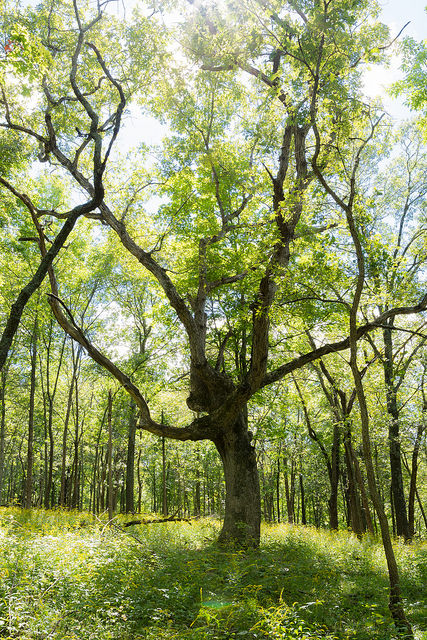
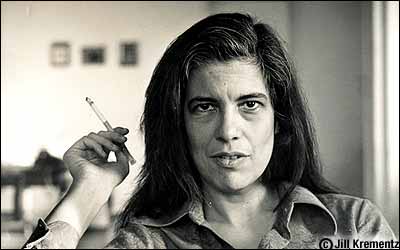


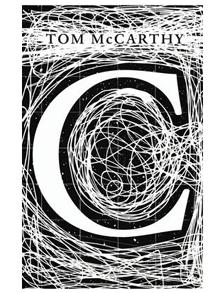


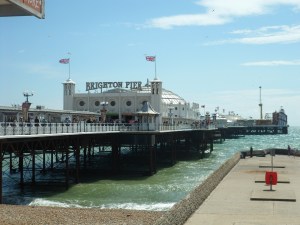
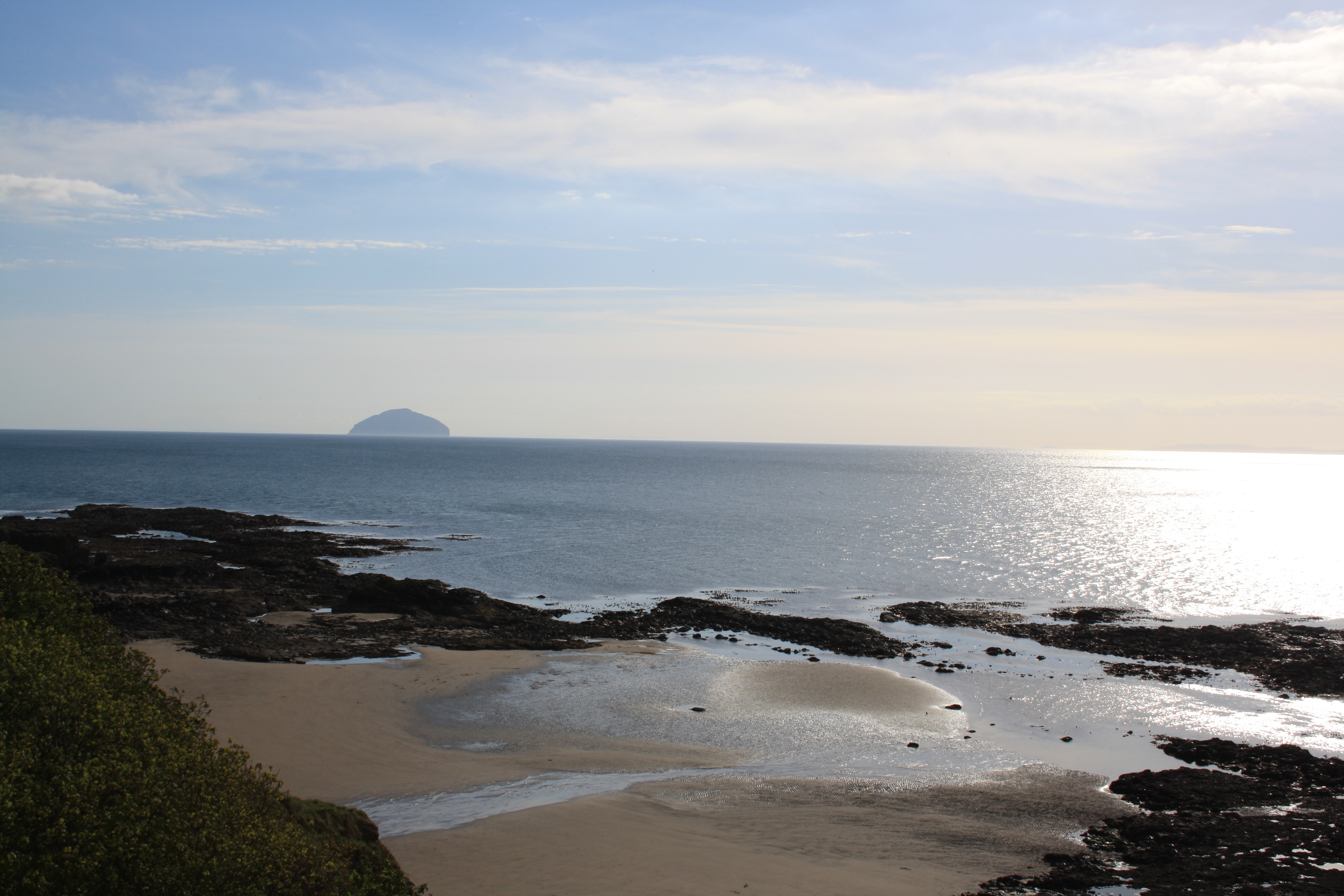
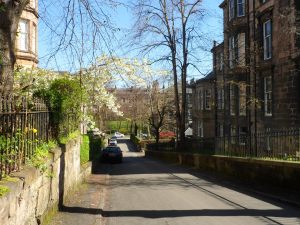
 mariaology