Hi sorry it took so long to get back to you we’ve been super busy here you know I know am going there now fine be with you in five. Not. Ten. Fine. Can all support workers please email in with completed timesheets by the end of the week before right yes okay, did you see the edinburgh rainbow I am a bit confused as to where to find this building you come pick me up right. Yes. In the morning. Yes. It’s staff spa day I am a bit nevermind. Right. So if you. Yeah I’m good it’s been Ok let’s try this instead. Alright you know maybe did you check the reference I think that’s What was wrong no no one’s gotten Their feedback yet have you considered. I am going there now yeah that’s so true The link seems to be broken can you Hit resend yes it’s in the attachment not This one this other. Sorry. Can I send you the month again I think I’ve been spotlighted and muted at the same time I mean if you want to you could always no that one’s closed have you checked out the right books so sorry! I mean fine I’m good yeah You know I am alright I can order another So if you check on the library resources Tab yeah you’ve got. I totally understand! Sorry for your understanding I’ll take care of that, would you. Ok. Where’s my phone? So you see it does Not allow for templates so what you do is Put the big red box. Right. And then The blue box and the green. Right. Could you… It would be great to be in the big black box Which you put in the bin. Totally! Uhm, the poem’s not Opening are you sure you sent it yes It’s not a PDF though it’s literally inscribed on the stars. Right…. Do you have a skin by any chance Can I put it in your poem? I think it’s in my pocket That’s so fucked? I’m so sorry? Can you put my head on the maintenance portal? Okay. I need your help and expertise unravelling One of the world’s longest standing misconceptions. Right. So I think mobile view is a write off? Have you tried emailing them? Yes they’ve sent in the letter. Please hold the line for the council. I am the council. I am the Queens Park Hello Kitty. You could apply for a partial refund just answer A couple of questions one Have you. Yes. I am applying for emergency funding for my damp lifestyle. Do you want me To pin the window on the call so folks can have a better look? Can I sit right next to you? Is it Ok? I can stand where you need me hey Maria The file is so corrupt THERE IS NO AUDIO why is he Making inchoate humming noises can you Take over the cat from me? Haha it’s Ok I guess I’ll just Fill up the bathtub with cat food. Are you in tomorrow? Are you offering anything? New deal on flaking. I am just totally zoomed out. Well, I’m a tiny speck On the furniture. I don’t think the wifi is working Why you ask. You see the password? Let’s take it from there. Okay. Are you sure You want to send it without a subject header Like are you totally sure? No I’m sorry It’s Mau but with like a ‘oooooooooooo’ at the end. Think of cows! Happy in the field. Grazing on liberty caps. Ma – ooooooo. Yes! You’ve got it. Not many people can do that. Can you please ring me back. Hi it’s Amy And Georgia. I’ve filled in your invoice for you Sorry about the cuts. Hahahahaha Love you! I want to get on my knees for you. I’m on strike. Trust me I have a good reason To look? Hello? Hey how are you I hope
the stillness of the painting has a kind of speech to it the sustaining restless grammar of poetry is that how good poets defy things with their heart the sun on the tongue is a kind of living the poem seems to fill up with this a panic, just in the peripheral vision a mode that can maintain the day something of Schuyler in the act of saying how it allows the people to enter the self we are not complete when I’m writing, I’m the right size I’m not bigger or smaller than anything kindle’s like etch a sketch one of the issues of elegy is not being able to let go the Orphic is endless we’re all here because we’ve been taken captive by our reading practice a text of dubious origin which is a great analogy for poetry trick us into thinking these are finished propositions the only authority is the sound itself foregrounding the process of echoing the lyric utterance as operating system in the present moment humour my error invent my own invisible poem behind the invisible poem beginnings are always about nothingness meaninglessness makes meaning a horizon or atmosphere that I can continue to write into I am always beginning… I literally don’t know how to write a poem phantom architecture of a poem the complexity of getting from one line to another a properly honest relation to our temporality the poem that doesn’t know it’s good is usually good you can’t find anything if you’re not lost making nothing as a suspension of labour marking the duration of a symptom speculative topos for tracing affinities there is no better time than the present when we have lost everything a generative uprooting of one’s identity or biography to do the work incantation to wrestle the poem from its enclosure to project in divine sublimity hoping poetry might come back
*
All of these lines are quotations of things said by panellists and contributors at the Peter Gizzi Colloquium at St Andrews University on 18th October 2024: Anne Boyer, Luke Roberts, Oli Hazzard, Honor Hamlet, Colin Herd, Jacob Bard-Rosenberg, Rosa Campbell, David Herd, Caspar Bryant, Daisy Lafarge, Anthony Caleshu, Peter Gizzi.
In 2018, I started a Doctorate of Fine Arts in Creative Writing at the University of Glasgow. I also started a new diary. In October, the month it all started, I wrote about duplicate footsteps and permanent landfills. I wrote of lacking the energy to dance, being lost in the forest, looking for safety among swirling leaves. Can’t remember if the forest was real or metaphorical. I wrote seemingly in lieu of being able to actually venture beyond the confines of my working life. Over three years and three months, I went through multiple iterations of research focus. I looked at foam, clouds, technicity, glitter, quotidian measures, fire and cinders. I fell asleep on coaches circling lochan sunsets. I produced a list of figures for how we might conceptualise this project. It was a sort of Escherian dollshouse, a self-deconstruction of building this place to think. I thought about Bhanu Kapil dropping her book in the river. I thought about doing a writer’s residency within the confines of a square-shaped digital platform. I wrote of ‘An angel tossing her gunpowder sequins’ and ethical eating, ‘how so often you are so paralysed between two choices that you just don’t eat at all’. I wondered what kind of home this work would make for me. This was a material question: thanks to the Scottish Graduate School of Arts & Humanities, it was a funded period. It paid me through Covid-19.
These were my original research questions:
How can creative and critical writing interrogate and depict the apparent tensions between the Anthropocene’s deep-time and the quotidian context of our ecological orientations?
What hybrid critical-creative forms might open up possibilities for a future ecological art, one which builds productive ways of ‘tuning in’ to a non-anthropocentric experience, with reflexive attention to the artistic and technological media involved in this process?
How might ‘the everyday’ provide a temporal and formal mode through which to develop a critical, interdisciplinary Anthropocene aesthetics, negotiating ecological questions of affect, sensory relations, ethics and responsibility at scales both macro and micro, human and nonhuman?
It is up to the reader to decide how far the end result fulfilled or strayed from these lines of enquiry.
Six years on, having graduated from being a baby scholar-poet, I am really thrilled this project has found a dream home with No University Press, a new imprint from Tenement Press. The ‘no’ of refusal feels appropriate to this project, which very much concerns the affordances and limits of an academic and institutional mode when thinking through (im)possible questions of ecological thought and living on. Working with Benjamin Pickford and Dominic Jaeckle, editors at Tenement, I was able to bring the project’s creative detours and modalities to life in its final book form: Midsummer Song (Hypercritique). This is definitely the most ambitious work of my life. It’s 469 pages of critique, poetics, meadow work, illustration and elegy. I see the whole book as a big song, a study, an architectural attempt at making an ecological home in lyric.
Somewhere between an academic monograph and performative dreamwork, poetry and poetics, conceptualism and the commonplace.
You can order the book direct from Tenement here or from Asterism here.
You can read a full description of the book and access endorsements, sample poems and other materials here.
I will be touring the book at some upcoming dates in Glasgow, Edinburgh, Manchester and London:
09.11.24 Peter Barlow’s Cigarette / with Maria Sledmere, Harriet Tarlo & Lucy Wilkinson The Carlton Club, Whalley Range Manchester See here.
05.11.24 Midsummer Song / Readings & Discussion Maria Sledmere, David Farrier & Colin Herd Fruitmarket Gallery, Edinburgh See here.
26.10.24 Midsummer Song / Readings & Discussion Maria Sledmere, Chris McCabe Small Publishers Fair Conway Hall, London See here.
22.10.24 Midsummer Song / Readings & Discussion Maria Sledmere, Carl Lavery & Colin Herd Advanced Research Centre, University of Glasgow / (Online via Zoom) See here.
I wanna show up for poetry every day for the rest of my life. There’s this word for when food continues to cook itself — carry-over — like tortiglioni warm and slippery in the colander needing to be eaten. I wish poetry could do that. A. says it does, doesn’t it? When you remember a line sometime down the line and it occurs to you: a new meaning. Or when the poem you wrote marinades in the background all to be felt with alternative pressure. I guess to write then is to throw out your salt or chuck a glass of water behind you as you leave the door of the document. Poem to set out for the day each day.
When I say I want to show up for poetry it’s not just that I want to hear or write or feel it live. Is it that I want to pay it attention? Who or what is poetry and where do I go to do this?
Right now, I’m going to fiction.
Recently I attended a joint book launch at Waterstones, Glasgow with Elle Nash and Kirsty Logan. Nash said the thing about fiction, her philosophy, is that she wants it to bring the reader to their knees. Logan said she wanted fiction to be like telling the reader a story. Both are forms of surrendering and/or attention. I don’t remember being held in the cosy space of storytelling at school because my brain was off on its own adventures. I categorically could not pay attention. Or maybe I practised another form of attention. I had it for free, and didn’t need to pay anyone anything. Something I was scolded for. Maria, pay attention. Was I failing to pay some kind of respect to the storyteller? Part of me wanted that form of listening attention so badly, to be wrapped up in the words of another and so in the folds of the room, but I just couldn’t surrender like that. I would look around the class and be hyper aware of a hundred things at once. The pins and needles in my feet; the subtle vocal inflections of the reader; the question of whether or not this teacher had sex and surely they had because they said they had kids but could I imagine them having sex and then when I tried I could not stop imagining them having sex and it was awful; what would there be for dinner tonight and would I have to cook it; does anyone in this room have a cute dog; when will I be old enough to smoke; which of these characters should I care about; why does my nose itch; when will I get my first period; why does my friend think everyone’s a lesbian; is everyone a lesbian; what does the word bedraggled mean; I think I know what lethargy means; what is the word for….; when can we go outside; I hate going outside; wonder why the publisher gave the book that cover; wonder why there are dots in the ceiling tiles; whose body odour is that etc etc etc. I’ve already forgot what this paragraph was supposed to do or say. At some point in my school years I would just nod off.
I have never been someone who could digest a book, slowly and thoughtfully, and then be able to recount the significant actions and characters and narrative highlights back in a considered, ordered and clarified way. I come at it sideways and can’t talk about it without finding a new angle each time. I need to talk to people about books who can work with the zig zag.
I need writing to ‘strike’ like a match or lightning. I need to read to fall off the edge of reading.
Piece of feedback from a student: you know you teach better off the book.
Been thinking a lot about what that means and what the book is and how to cultivate a kindness towards an open style of teaching.
Been thinking about the way Emma Stone drives that aubergine Dodge muscle in the new Yorgos Lanthimos movie, Kind of Kindness (2024).
Sometimes I can’t pay attention to my own teaching. It happens on auto-pilot and I’m saying things and all of a sudden it’s the breathless bell supplement of the passing hour and people are packing their bags, and bizarrely I’m starving and it’s over. What does it mean to trust the other self that takes over? To walk into every classroom unsure of what will happen?
Sometimes, crash. Often, swerve.
I would describe my reading style as lackadaisical, dyspeptic, errant, passionate, half-awake. Why would I expect my students also to listen with 100% unadulterated attention, when this is how I go about my own learning?
At her recent Good Press event for the launch of Lessons of Decal, Sophie Seita spoke of asking her audiences to ‘absorb [her] words like a piece of music, where the words come in and out of consciousness’. To be given permission for that form of drift and daydream to be okay is a huge relief. If I’m at some event where it feels cool to whip out your phone and notebook, I usually enjoy it a lot more. It’s relaxing to pay attention by not paying all your attention. Allowing my attention to go stereo is sometimes the best way to listen (this was one of the things I loved about the poet Callie Gardner, the way they would often whip out a notebook during a reading, and by extension granting a kind of permission for others to do the same). Seita spoke on what a non-extractive form of attention might be, and might it be that more ambient, absorbing, blurring and responsive mode. I sometimes let the sentences snake around me, other times they cut little jewels, hardening and cleaving and polishing the soft matter of my thoughts. Sometimes I mishear, overhear. In lockdown readings and lectures, I’d participate heartily in the flowing ticker-tape of the Zoom chat and its various overspills onto group chats and discords. I liked the sense of multiplying conversations happening simultaneously, emoji splurging.
I went recently to Inside Voices, a free night of ambient music and poetry held at King Tuts and hosted by anoraq. I love these nights because I always fill up my notebook. There were readings from Medha Singh and Ian Macartney, a performance by Dronehopper. While listening, I pondered especially what the percussive parts of language were. Little coughs, plosives, hovers of breath while the performer altered their pace of attention.
I take this to mean affirmation of porosity between texts, but nonetheless one that holds true to the material reality of a text’s construction.
There’s an iPhone that crops up in some kind of poem and whatever it’s doing there, I start to see it running the whole text, a little monstrously. The poetic subject becoming a mediating interface. When I asked the jetpack AI to give me more emoji string, it granted me a handful more stars.
I like books for being (in)complete worlds perforated with holes (words and the gaps between them). A night (sky), variably rich.
My lover sees me drop the book and flop sideways three times before taking it off me and shutting the light. I try to read and the whir of sentences stirring up is somehow the kind of stimulus to send me to sleep.
When I wake early, as I often do, to the dawn screeching of gulls, I keep the light off and try to read by the dark. It’s every sixth or seventh word I miss. The full stops slide away, smudge into dimness, and I read sentences continually — sloshing into one another.
Sometimes I think I read off the book. Like, the reading comes not when my eyeballs are actually skimming the lines on the page but in some kind of preliminary or afterglow moment.
What about the content?
I once had to do a medical questionnaire that asked me if I ever struggled to understand the motivations and emotional behaviours of fictional characters. This was a fascinating question. I let it cook for a few days before answering on the numbered scale.
Hovering with my ballpoint, I kept thinking of that Virginia Woolf quote from ‘Mr Bennett and Mrs Brown’ (1924): ‘On or about December 1910 human character changed’.
Maybe I didn’t know why characters did things, even as I sat in rooms and offices and Zooms with students, discussing with great sincerity and intent the mechanics and motivations of fictional bone collectors, world-savers, serial killers, suffering girlfriends etc. Maybe I could only attend, momentarily, their tendencies; and so fathom a pattern or path from there.
What does it mean to give your full attention, to pay attention or to offer it?
I’ve started to think paying attention means there might be such a thing as ‘attention debt’. Is that the same as ‘attention deficit’? If I were to somehow skip the NHS diagnostic waiting lists to find myself looking at a special time-release pill on a silver platter, would that pill buy me attention? And would I somehow have to give it back, eventually, foreclosed or with massive accruals of cognitive interest? I start to think about the speed of my heartbeat in time to attention.
When I press my ear to your chest, and it’s your heartbeat I hear: am I witnessing the cost of attention?
Paying attention = being a cognitive agent of capitalism?
Does the heart hold the indelible mark of other attentions?
I would save all my heartbeats for you in a heartbeat. I hold them back from work. I save them in service of love and its ghosts.
Sometimes I want to be sharp; other times it’s better to blur.
Why do we say ‘pay attention’ and not ‘give attention’ or ‘do attention’? There’s a pretty useful article on this over at Grammarphobia:
English acquired the verb “pay” in the early 1200s by way of Anglo-Norman and Old French (it was paiier or paier in Old French), according to the OED.
The Old French verb meant, among other things, “to be reconciled to someone,” Oxford says, reflecting its classical Latin ancestor pacare (to appease or pacify), derived from pax (peace).
As the Chambers Dictionary of Etymology explains, “The meaning in Latin of pacify or satisfy developed through Medieval Latin into that of pay a creditor, and so to pay, generally, in the Romance languages.”
Some of the earliest meanings of “pay” in English are obsolete today—including to pacify, or to be pleasing or satisfactory to someone.
But senses relating to handing over money—or whatever is figuratively owed to someone—are just as old, and of course they’re still with us.
If I say pay attention, I’m not exactly doing so in the service of pacifying or pleasing. Much more likely that you’d take the phrase the way you’d take ‘pay your debt’ or ‘pay your letting agent’.
I don’t want attention to be an extractable value, but it is. We know that most of presenteeism at work is about being able to perform your paying attention for the sake of appearances. It isn’t really about productivity.
What if I let go of that presenteeism in other areas of life which demand attention? What if we got much more into improvising what makes for good listening? What if I wanted to watch television as a way of processing a complex emotional conundrum while also laughing my ass off at another life?
Would I write more? Would I understand human character?
Would I ~frolic in the generative plenitude of non-instrumental value?
✦
In 2017/2018, I saw Iain Morrison perform some of his Moving Gallery Notes at Market Gallery, back when it was in Dennistoun. The video I’ve linked above begins something like ‘right now, the time is 97%’. I feel my attention brimming like a healthy battery. Morrison’s poetic works comprise notes made while at various gallery events and artist talks. He describes the project as ‘a sequence that samples a chain of events, encounters, conversations, meetings, empty spaces and all the other things that make up the life of an arts organisation making its way through changing contemporary contexts’. Listening to the work is less about being presented with ‘content’ and more about being provided a poetic architecture in which to indulge great reverie. The content itself is also fascinating. Morrison’s gallery notes encompass everything from embodied experience to the yield of eavesdropping. The initial ‘splurge’ or ‘stream’ of notes goes handwritten onto the page, from the context of an event, and eventually gets whittled into lineated poetry. I found this description from Morrison’s blog, Permanent Positions, particularly useful:
The reason ‘notes’ is in the title of this and my earlier series, is because my first step for each poem is to choose an event at the gallery and write notes during it. When I’m making the notes I mostly write continuously, allowing whatever I’m thinking about – whether it’s things people are saying, or things occurring by association in my head – to stream onto the page, at the speed I can write at. My objective while doing this is to not worry about the appropriateness or relevance of what I write down. I try to get material down on paper, and there’s a hope that I can use my embodied presence – a thinking body in the space – to make myself into a recorder, one that acknowledges its subjectiveness, of the event. So this stage of writing can be a splurge. It usually is. I will edit these notes at the next part of the process.
This seems to me an ambient method of composition. It is open to digression, refuses to ignore the body and sees the self as both subject and ‘recorder’. Not so much Spicer’s radio here as the ZOOM H1n versatile pocket recorder.
Moving Gallery Notes is of course also a work of ekphrasis.
For my birthday, K. gave me a copy of Danielle Dutton’s Prairie, Dresses, Art, Other (2024). Halfway into this delicious compilation of fiction and nonfiction is an essay on ekphrasis which discusses, among other things, Rindy Sam’s kissing of a Cy Twombly canvas in 2007 and Eley Williams’ short story ‘Smote, or When I Find I Cannot Kiss You in Front of a Print by Bridget Riley’ (2015). The idea of ekphrasis is presented as a kiss, a mark left more or left indelibly from one work to the next. Soon I will write a poem called ‘kissing cy twombly’ because aside from the brilliant parenthesis of the act itself, sullying a white canvas and paying one ceremonial euro to the artist for the privilege, it sounds like a CSS song or something. So I will commence the writing of the poem from the idea that I am speaking to Lovefoxxx or sprinkling tongue-glitter on crayola-smeared Moleskine.
I write this painting my nails Essie (un)guilty pleasures and trying not to leave such a mark on my MacBook keys. What shade of green is this? It’s too late. Everyone who has seen my laptop knows the key letters are tapped out beyond repair. Skin friction has caused the letters to smudge and blur into pools of acidic white light.
Milton writes of ‘th’ Arch Angel’, about to speak, in Paradise Lost: ‘Attention held them mute’. Meanwhile, ‘Tears, such as Angels weep, burst forth’.
Have I cried on my laptop sufficient to melt its keys? Do I write from speech or silence?
The OED reminds me that one can ‘attract, call, draw, arrest, fix‘ attention.
Thou art to wink.
What if we wept for attention. Made its call. Applied the right fixative.
Now we say something like ‘oh that therapy session totally ate‘.
✦
What I like about blogs is that they are deliberately undercooked. You basically serve them up to the world before you’ve had time to stew, finesse and perfect the product. This one I wrote this weekend while procrastinating emails, on a rickety bus and then rushed with sips of coffee before heading out to a festival. It’s pretty al dente okay sorry you’re gonna have to chew on it. I like that I can look at a blog post and think ‘that’s a fucking mess’ and then immediately post it.
I do think I am capable of being floored by good fiction. When I read Nash’s latest novel, Deliver Me (2024), I was sick with flu but the flu was on a kind of continuum with the book. I kept texting everyone: ‘no one writes sex and the body like Elle Nash!’. I read it feverishly, dreamed in it and let certain scenes linger in my psyche long after I’d folded the last page. I read it with a curiosity I don’t think I’ve had since the way I used to read the internet. By which I mean: I devoured its voices.
Similar thing happened when I devoured Thomas Mann’s The Magic Mountain (1924) in January. I was listening to the audiobook version and continually would have to stop what I was doing (walking to work, cleaning, washing my hair) to make copious notes. All such fiction makes me weak at the knees. And you know, it isn’t the characters or the plot that do this to me, but the language. Its essaying of life, presence, intimacy, repetition. The way narrative is a temporal prosody conducting attention.
I liked hearing about Nash and Logan’s manifestos for fiction, what they hoped to give readers, because it made me realise my own liminal, elusive bar for contact. I think about the text as a space, not just for the conveyance of meaning but explicitly for bearing its im/possibility and by extension, its potential for ellipsis, disappearance. That’s where the fun begins.
Maybe what I wanna do is s(w)erve attention. Keep showing up.
I started watching this semi-excruciating flying movie with Gwyneth Paltrow as starry-eyed wannabe air hostess simply because I wanted to imagine being in the sky hard knowing it was the way to ugh you know it. My heart simply was a necessary flying. I didn’t want to claim its property, almost too light to hold kind of beating against a pale blue membrane. Every single version of ‘My Bonnie Lies Over the Ocean’ is correct. I went to bed and flew each night and woke up not having landed, not quite. Flit. Thinking my bonnie my bonnie my bed my boy my bonnie my bed.
There are these fistfuls of infinity berries that go like: because it’s true / we can afford them. Squishfruits fell out of my fridge from weeks ago.
I can’t remember my dreams any more. Did I give up their supplement to pay other attentions?
The carbon credit was to be discarded because I had really grown wings and could fly (more luridly than ever before).
Twas a lullaby we learned when young in our bones enough to know. I felt then the only thing that could do as was true must have been classical, dishevelled and charming in its way of upsetting the absolute. I knew nothing of where I was and only looked at those kids old enough to know their way out. Which is why I accepted their gentle gifts of Glen’s and cigarettes. One single grain of salt worth a beach. I took home from the autocorrect gone. Gone home. I’m gone. Home. Home and gone and away like the here/there sculpture of Berkeley that Sophia kindly explained to me.
Home could be in two big places. It was a compact piece of shell I once licked as a way to the heart. Having wanted to do this for days, like walking by Golden Sardine and thinking “do I want a glass of wine of my heart”
iridesce!
What did I scheme of that?
I partook in rose accelerants and knew
anhedonia be gone
fred said after the Bulb reading that they wanted to blurb my next book like “Maria is Tom Raworth for girlies” so I guess I need to have a next book pretty soon
I read that poem about ‘The Hungry Tree’ thanks to Laurie for telling me about that tree and for the aweful people of tripadvisor who gave forth their opining
“Sorry for being so lovesick at the residency”
We need to have more places to collect in public. They are a currency of summer. O look this berry. You missed a spot. The fact that you can acquire them here in winter is at considerable cost. Cloudberries. An idea. Coffee.
Add them to the celestial smoothie bowl. It’s our Californian version of the famous porridge. If you know you know. girl & boy variety of blueberries
Sydney would eat the whole world anything
Elliott Smith – sweet adeline.mp3
In my new lilac gingham notebook a gift from Sophie I want to write ONLY VISIONARY THINGS.
Magnesium supplements and chasteberry and a stranger recites the phrase lapis lazuli ~
There was everything new. I assembled a plain white table and chairs. My wrists hurt from screwing. I bought a new glitter shell plastic phone case because I had this new relationship to my phone: it was the ocean’s telecommunique, bearer of heart swells, bigger than it really was in my hand the size of an almost sexual distance
so amazed at how it had lifted
‘A kiss on the eyes—lifts sleeplessness. I kiss your eyes.’ – Marina Tsvetaeva
speech acts for touch
the bubbles Claire said beware they are so sticky and she was right they had like a latex tendency to pop in your hair a trace viscosity sort of like synthesised insects
is this true fat or water fat? i pinch myself to stay alive
do you say hello to your demons?
that lady I saw on Buchanan Street with the midlands accent wearing lavender and the flop-haired boy texting from outside the station and the nerds with flirt rucksacks holding a kissingness close to their knees or their memes I kept taking the wrong direction
looking for nessie
how could I feel so light while carrying around this diamond!
wee boy on the bus poking a glowstick into his eye
decided the new subways are terribly designed. makes me feel sick ricochet. quiet, but where to put my my hands when I want to clutch the overhead and pretend I am flying
else
stoned and assembling furniture
I found myself adding spirulina to miso soup and eating smoked cheese and strawberries and this spirulina miso all the while listening to Anne Waldman read at the Poetry Project my little ears prick up when she says cinders
and also i like her phrase ‘elders of softer places’
can you please try to unzip this?
i am enamoured by what’s in my email
blessing misspelling
I need to go to Helensburgh
run along the beach with dogs
keep talking to me in the wrong direction
it’s not a poem it’s
a poem poem
the total surf
‘No daylight comet ever breaks On so sweet an archipelago’ – W. S. Graham
∵∴∷ ∵∴∷ ∵∴∷ ∵∴∷ ∵∴∷ ∵∴∷ ∵∴∷ ∵∴∷
The new Cloud Nothings album, just enough screamo, did I put them in a poem once for their namesake seemingly when I was crying on the way to Los Angeles next to the tween who was obsessed with clouds, taking pictures of their pastel alacrity and even when the air hostess told her close the window blind she put it up again — just one more photo of the seraphic peach cobbler please miss!
I’ll go listen to pop. Diagnosed with variable tenses. The citational declarative we discussed in class like no single I love you is the same as before except decorated with echoes of the rest it might mean more?
(That pale blue-green exchange and the typing indicator) I kept clutching my phone to my breast in an ecstasy comparable to those eighteenth-century wenches in total novel love, why not
∵∴∷ ∵∴∷
After six years, A+E Collective are going on a soft dissolve. Ane, Finn and Lucy (and formerly Marie) have been my comrades in thinking ecologically all of this time and beyond. We have spent afternoons agonising at riso and lying on the heated floor of the Lighthouse easing cramps to make work, marathons in cold studios and performing,
performing,
the first time I did something for them was in 2018, that sound poem I composed with Vas and what they invited me to do was to think about all of this hot hot world anxiety at the level of the daily and so by design we’d gently invite others to do so, it was the year of the IPCC and my phd and the year I lost a lot of innocence it’s fine, hi Greta (Ane spotted her on the scotrail at COP26, eating a meal deal) the year after that something sweetened and I started to know what language was capable of being its only loving thing accordant to living but is that enough? for a while I lived on saltwater crushes
nothing planetary at all about that except
who would go on living?
People thought we meant the accident and emergency and in a way we would incubate the waiting room of our lives to make this work. Don’t be worried, I’d say, be a whirlfriend to someone. Once it was everyone. I learned so much from these artists about how to collaborate truthfully like in the service of radical listening to move things very intentionally around the page, to look at art, to show up for stuff because you never know how it might change you, or the conditions for who you are. We ventriloquised the fly agaric and made a film about the special Mull sand that was also found on Mars and we tried to make it all about the more-than-human but we couldn’t erase the little shadow of Marie in the reeds.
∵∴∷
keep thinking about the katie dey song and the refrain about losing specialness, specialness
I wanna go to victoria’s secret bombshell isle
saying it’s the bomb because I spent a week that way
chairs are beautiful even when we don’t sit on them
Che Go Eun, a hole in a boat and a deep hole (2024)
Dear pain,
That’s how the light gets in. Fractal emanations of screaming the dark is a luxury the dark the dark. I listen to the radio and a mother talks of her autistic child preferring the dark — thriving in it, coming to life.
We soft-light to protect the unsaid stories.
Our bodies twist in the dark and we make an inconsistent work of pain-pleasure. The mattress gives out: pools of blood, ink, sweat, coffee, sex. I feel better when the sun comes up and when the sun goes down, wine-dark. It’s what’s in-between that’s the problem.
I keep thinking about Fred Moten’s luminous correspondence, ostensibly between Andrea Geyer and Margaret Kelly:
My friend, I have discovered in the antagonism between my work and dead letter that the project returns as an amazing field and air of correspondence, a transgenerational lotion of breathing, a revue of breath, a general bouquet in the grace of your asking in friendship since the day we met, and our braiding and breathing of a correspondence that we are now and have been working together in the atmosphere of our comrades, that we literally breathe them as a kind of braiding, an insistence of revolt as garment, a tapestry for the touched wall of a spaceship we noticed on the way to school, that off dimensionality of the cloud from our perspective, which I want to say is real not graphed, which I want to say is both a function of, and still untainted by the terrible business of, the Dutch masters, so that it’s impossible to tell the top from the side, though there was some kind of emanation or emendation that we all saw as a smooth flatness, like a table the cloud prepared of its own accord, a spread platform for spreading our metastatic air, our beautiful, is ourreal.
To make a pain of you, stop being a pain, I’d form a cartography of the nerves so rich you’d never know I’d outmatched the major scale. A map does not function in service of security. Anyone who has seen me read (and attempt to follow) a map knows this.
What is so gorgeous about the Moten quote above is its ph(r)asal longing: an ongoingness open to improvisation and constant sentence desuetude. Language like you don’t even need it, breathing all the same beyond what’s essential. Take this key. Braiding and breathing a coital somnolence of the body, twice rung out in language / only us leaving voice notes for what clicks pearls together, minor, deep in the distance.
Emollient longing of writing between pith and pronoun, what is prepared by the passing between. Our breath, clouds; mattering.
‘•.¸♡ ♡¸.•’
I saw the spaceship too. Didn’t you?
Intimacy, I told someone recently, feels like the opposite to what capitalism wants of us. Intimacy is worldsharing, ourreal, a grammar of humours, kisses and shibboleths. You know my pain and I know yours. We make a joke of it. What escapes serious talk but our serious dreams. So when we’re all in the gallery, we switch to our senses to make language-sense of ourreal, cellular vibe spread. It’s a room replete with the sonic ecology that is feeling all my fucking feelings (Clémentine Coupau): aka hook me up to ‘electronic components, dimensions variable’. The little paper lantern is a miniature version of my own IKEA lampshade. The problem with my IKEA lampshade is that I had to tear it a bit to change the lightbulb. I have a torn lantern. Magic hands. That’s how the light gets in. Paper = skin. Creamy light.
Che Go Eun 최 고 은, a hole in a boat and a deep hole (2024)
Aside from lanterns, the other homeware alluded to are curtains. Che Go Eun’s a hole in a boat and a deep hole is composed in collaboration with artificial intelligence. The artist inserted diary notes into an AI image generator which ‘transformed [their] intimate reflections and resulted in images’. Watercolour drawings were then made in response to those results, with the artist ‘reappropriating’ their ‘own feelings back from the AI’. This tension between creativity, data and predictive imaging results in a fascinating, speculative assemblage of arabesque, thorn and psychedelic colour. The nod to William Morris/Arts & Crafts reminds us of the collaborative handicraft that has gone into the piece’s imaginary and manifestation. Diary phrases such as ‘art nouveau’, ‘harder I am sinking’, ‘throw all my stress into the hole’ are woven into the fabric of these drapes which suggest both privacy and opening, light and shade. The work is gauzy. There’s a real street, a construction site behind it. Trongate: name as lozenge. What Moten says in the same letter-poem as quoted above, ‘a gauze of reckoning’. Threads, braids: stress, tension. I want to wrap the code-baroque of the fabric around my body like I’m a silkworm going in reverse, all the way back to its gross and sultry, larval conception. I keep hearing that the internet is just the unconscious. I see a bag of squishie candies in a vending machine and think: ugh, silkworms.
‘•.¸♡ ♡¸.•’
Back IRL, it’s raining with the pelting dreich that only a Glaschu April delivers, and I arrive at Trongate 103 having walked through Dennistoun listening to Elliott Smith. I’m not feeling morose; I’m just in touch with my feelings. As if they were tangible: animatronics, statuettes, pets. I’m still on a medication that holds such whimpering demands at just enough distance to be considered somehow ornamental — torrents no more. Once I would torrent my day in their favour. Let someone seed me. Now, I might choose to pick them up, put them back down, or smash them into oblivion. Let my soul have the architecture of a bleeding gate.
As I enter the exhibition, the invigilator says something about one of the objects we’re allowed to touch. I forget immediately what they say because I am greedy for colour and form, not meaning. So the whole time I am looking at the exhibits wondering: which of you may be touched? A finger trace of the curtains, time slider on video screen, glass surface of framing, kinesiology tape cut into bows and ribbons.
Daisy Lafarge, Gate Theory of Pain (III) (2024)
Touch is not in itself untainted. I am in love with Lafarge’s black tulips; their painful, precious tendrils.
‘•.¸♡ ♡¸.•’
Some people gave me advice on how to do better: thirsty in the flowerbed for some aphids fed upon 200 ladybugs to eat/moult more often than not they would die as fast as any plant blocked sunlight to pay (dustfall / bonnie / smitten ) should the wind ever blow you a raven
‘•.¸♡ ♡¸.•’
Mau and I try to diagnose the Mandelbrot set-seemingness of Lafarge’s watercolour fractals. The sequence ‘remains bounded in absolute value’. This is a beautiful phrase I find on Wikipedia. ‘It is one of the best-known examples of mathematical visualisation, mathematical beauty’. I could watch the little fractal gif forever like giving birth to myself over and over as a starfish with 7000 eyes & infinite narcissism. As it stands, that boundedness is a gate: pink, the colour of doll-flesh. I think of tentacles, elliptical phone calls, inflammation. We agree that almost all the art in the room is art that could be done on the phone. It’s not just about doodlecore but the intimate, desultory gesture of the line itself, and what’s on either side of it.
Not to get kinda kinky but the other day we were explaining ‘lucky pierre’ in the pub (because of Frank O’Hara the poet we all love and love most of all to discuss in the pub). In his ‘Personism: A Manifesto’, O’Hara talks about the poem in supplementary relation to people. Intimacy again. Sure, he wrote it while ‘in love with […] a blond’, which makes it all the more true and golden:
I went back to work and wrote a poem for this person. While I was writing it I was realising that if I wanted to I could use the telephone instead of writing the poem, and so Personism was born. It’s a very exciting movement which will undoubtedly have lots of adherents. It puts the poem squarely between the poet and the person, Lucky Pierre style, and the poem is correspondingly gratified. The poem is at last between two persons instead of two pages.
As Moten’s poem from The Service Porch is framed between two persons, so the epistolary heat is folded into Personism. It’s not letters but speech itself that gets electric. So what Mau and I mean by ‘this is art that could be done on the telephone’ is perhaps something about how the work takes place in correspondence between two or more bodies. Lafarge describes her paintings ‘as a means of pure distraction’, made during ‘episodes of severe chronic pain’, ‘remote NHS chronic pain sessions’ and ‘in phone queues and conversation with Adult Disability Payment (Social Security Scotland)’. The trembling of watercolour is an apt form for the bleeding edges that connect the power imbalance of someone trying to get support and the person with the power to connect them to it. It’s the art of turning away, seeking psychic space, without letting total go of the line.
How often do we find ourselves at the gate, with no end of wanting to both know and not-know what’s beyond it?
Wrought/not I.
‘•.¸♡ ♡¸.•’
I love gates. I love especially baroque ones with curlicues. I grew up with a broken gate which soon got removed. What did we have to keep in, or shut out? It was black and gold and the paint flaked off very beautifully. You might describe it as ‘tawdry’. I probably have false memories about this gate. Sometimes the screech of its opening hinges my dreams. Lafarge’s gate might be a homophonic pun on ‘gait’ (and so referencing the debilitating effects of chronic pain on one’s ability to walk freely). The painting, titled Gate Theory of Pain (III), no doubt references Ronald Melzack and Patrick Wall’s 1965 paper on ‘The Gate Theory of Pain’. In the words of Lorne M. Mendell:
The [Gate Theory of Pain] dealt explicitly with the apparent conflict in the 1960s between the paucity of sensory neurons that responded selectively to intense stimuli and the well-established finding that stimulation of the small fibres in peripheral nerves is required for the stimulus to be described as painful. It incorporated recently discovered mechanisms of presynaptic control of synaptic transmission from large and small sensory afferents which was suggested to “gate” incoming information depending on the balance between these inputs.
The Gate Theory concerns sensory fibres, transmission cells and their respective levels of activity. The idea is that painless sensations can supplant and so quell sensations that are painful. The process involves a blocking (a closed gate) of input to transmission cells. When the gate is left open, the sensory input gets through to transmission cells and produces pain. An example of the therapeutic application of this theory is transcutaneous electrical nerve stimulation (TENS), massage, acupuncture, vibration and mindfulness-based pain management (MBPM). While gazing at Lafarge’s vivid watercolours, one senses that pain is not suspended in the art of painting so much as calibrated, channelled, short-circuited. We keep commenting on the bleeding edge.
Aniara Omann, Resting on an icy couch (mother, grandmother, grandfather, big brother, older sister, little sister) (2020-2024)
Elsewhere in the exhibition, ideas of feedback loop, intimacy, daily life and relationality are also manifest. Feronia Wennborg and Simon Weins’ soft tissue plays with sound transduction to install a ‘lo-fi sound system that lives at the periphery of perception’. This installation of contact-based sound production manifests the pair’s ‘long-distance collaboration’ in felt space. Aniara Omann’s haunting paper baskets, plugged by family faces, makes a ragged philosophy of grief and panic. The raggedness betrays a struggle for focus which is played out through the woundful (I meant to say wonderful, but this works better) arrangement of loose paper, woven baskets, the sense of things cut, twisted, recycled. Omann describes wearing the clothes of their sister, who died: ‘If anyone complimented me on a garment I had inherited from her, I would say it was a gift from a family member’. In that sense, we could think about the paper baskets as fragile amphora for an archival underworld. The baskets are not perfect, machine-made. They retain the expressive and painful grace of their making. They are a flammable structure, woven from newspaper clippings, election flyers, prescription papers, envelopes, bills. What is it to find a way of wearing something? Wrap your troubles in dreams. Shuffle for sources. The difference is a question of agencies; and yet either way the gesture remains. The gift: it has to be infinite.
Elísabet Brynhildardótti, The Lines- Hesitant line, Obediant line, Indecisive line, Decisive line (2023)
When someone says ‘hold the line’. Please hold the line. Please hold the handrail and take care on the stairs. Will you please hold? What’s at the end of that hold? I have been trying to get a medical appointment for weeks. They keep putting me on hold, hanging up. I phone up a doctor’s surgery which is based in a shopping mall at precisely 08:30, when the lines open, and immediately the lines (the queue) are full. How do I envision those lines? Swirling and spiralling around the postcode lottery of where we live, tangled and fizzing with people trying to find words for the pain they’re in. I think of my mum in lockdown, endlessly on the phone 500 miles away from the fact of trying to get prescriptions and medical treatment for my nan. It’s pretty mild for me, my current need to be on the line: among other things, fucked-up hearing, tinnitus, crackling I hear like static between the two sides of my skull. Sometimes a pleasurable hum in the morning, like ultrasound waves in the skeins of my pillow. On hold to the doctor’s office, you become a line. The hidden labour of the chronically ill is this beholden quality, the line with its insecurities. It’s getting thinner. There is no guarantee that the line will lead to something: its pulsing, throbbing insistence on being anything but spirogram music. The irony of disconnect. Give me a point; an appointment; a person at the other end.
Who would pick up the line would do so, of course, in the dead of night. In Stigmata: Escaping Texts, Helene Cixous writes:
It is the dead of night. I sense I am going to write. You, whom I accompany, you sense you are going to draw. Your night is waiting.
The figure which announces itself, which is going to make its appearance, the poet-of-drawings doesn’t see it. The model only appears to be outside. In truth it is invisible, but present, it lives inside the poet-of-drawings. You who pray with the pen, you feel it, hear it, dictate. Even if there is a landscape, a person, there outside—no, it’s from inside the body that the drawing-of-the-poet rises to the light of day. […] The drawing is without a stop.
Hélène Cixous, Stigmata: Escaping Texts, trans. by y Catherine A.F. MacGillivray (1998)
What I see in iNsEcurE (whose inconsistent casing recalls the long identifiers of medical-grade pharmaceuticals, the vowel-like howling insistence, the trembling name) are poets-of-drawings. The asemic work of line, layer and bleed is an avid supplement for writing itself. Who can write while in pain? Who’s afraid of the dark? Who’s afraid of the blank? It is in the night of writing, unnannounced. What is that invisible presence but pain itself? There is no ‘outside’ to pain, once you’re inside it. And yet the gate theory does imply a certain threshold. Relief bucks at the gate. Still, we draw from the well of it moving inside us. You can’t stop it. The appearance of the outside is only gauzy separation.
‘•.¸♡ ♡¸.•’
When I thought I had endometriosis and lived in the hormone torture of latent, duplicate pubescence, resulting from the long-durée of various quiet disorders, I wrote spiky little poems for a pamphlet called Cherry Nightshade. I didn’t yet know about the gate theory of pain but I saw all the poems in a dream_garden festering behind a gate. Well, more like a trellis. Ground cherries contain solanine and solanidine alkaloids: toxins which are lethal, and all the more lethal for their immaturity. Tart cherries have soporific qualities. I wanted sleep to envelop me in perfect velvet. My speaker was a jumping nerve, a shitty little internet silkworm.
What did I get from staring so long at the gate? I fell asleep on the line and the vine grew around me.
I love this exhibition for what it teaches us about art between bodies, how light interacts with feeling-colour, Moten’s ourreal in its total ambience, the drilling outside is part of that thrum in your skull, the way I love to look at my friends as they look at art, tulip mania, mourning vessels, the exquisite difference between red and pink, the meaning of panic touch, pain as the body’s great epistolary effort, fragility, attention’s relationship to healing, what it means to be gratified (if at all). I am grateful for the sharing of insecurity at the heart of the works, and for what they offer by way of being with pain. A bearing, a cloud platform, an intricacy. Standing at the gate.
‘•.¸♡ ♡¸.•’
Further notes:
medical filigree
acid yellowing
mau touches a sound magnet
‘insecurity fuels consumerism’
light source
biofeedback
neon bandage
organelle ballet
tesselate attentions
the puzzle pieces do not technically touch
go into the hole
golden shovel
’emoji repertoire’
give me a viable body
‘cast latex, apple seeds, sawdust’
‘I am still earning less than living wage through my art practice’
Becoming a line was catastrophic, but it was, still more unexpectedly (if that’s possible) prodigious. All of myself had to pass through that line. And through its horrible joltings. Metaphysics taken over by mechanics. Forced through the same path, my thoughts, and the vibration.
Henri Michaus, Miserable Miracle (2002) – quoted by Elísabet Brynhildardótti in the exhibition handout
iNsEcurE is open at Glasgow Project Room, Trongate 103, First Floor G51 5HD between 29th March-7th April. It is organised by Aniara Omann and supported by Creative Scotland and Hope Scott Trust.
What a fucking privilege to sit down with a writer whose work not only touches a nerve but leaves a whole room of folk feeling inspired, invigorated and just the right amount of raging about the world to go and do something good about it. Graeme is an eloquent, generous speaker who came to StrathWrites last week to talk to us about his memoir, The Cloud Factory, along with his debut novel The Young Team (2020)which has made waves for its frank engagement with Scottish gang culture, masculinity and the vitality of Scots language. Graeme read from the end of The Cloud Factory, a work which feels like memoir dialled up to the communal document of what it feels like to be both inside and outside of something, to memorialise it and to work right through it, to know what was beautiful and also painful beyond words, camaraderie and shattering, refusing to paper over the cracks in reality, to note their presence and texture, to send up lost pals and those who never made it, to speak measuredly about how class and gender affect everything, to meditate on addiction, self-medication, faith, to find a turning point, to know what the past does, ‘stored as a memory in yir very cells’. He’s an author that gets it — the inside violence as much as the outside — and it’s clear from listening to him and watching a room full of folk listening to him that he can negotiate what goes unsaid with clarity and determination. After the reading we all just talked for ages, people sharing their stories and their experience of working in schools and what it means to teach and mentor and edit and pull each other through the muck of it all. What I loved most was everyone just speaking in their strongest tongue, telling stories.
~
StrathWrites is a series of writing events and workshops supported by the Strathclyde Jubilee Engagement Fund and the Strath Book Club. I’m lucky enough to work with the wonderful Jenny Carey from the Institute of Education — she’s swiftly become a radiant presence in my life and we’ve had loads of fun collaborating on these events.
READ: Extract from The Cloud Factory by Graeme Armstrong, in Granta
For anyone who missed Thursday’s event with Graeme, in lieu of a recording here’s a transcript of the workshop handout:
‘In place ae a realistic dialect portrait, authors create mutations where narrative is transacted in a ‘higher’ form. The clarity ae thought n expression afforded tae oor native guide default tae a more palatable Standard English. Meanwhile, the low, wild demotic dialect is reserved fur characters, who become linguistic puppets dangled on strings ae supposed authenticity. Characters ir reduced tae caricatures by this effect, their true dialect offered as dialogue canapés tae the unfamiliar reader, satiated by the apparent otherness ae the partial linguistic exhibit. They provide the local reader nae such nutrition. Oor language becomes a motif n isnae truly represented or respected by it. Nae working class Scot thinks in RP. Kin yi imagine? The willin suspension ae disbelief fur us is broken. An elevated n alien Standard English narrative voice betrays the remainin realism they have so carefully n respectfully crafted.’
— Graeme Armstrong, ‘Standard English is oor Second Language’, Literature Alliance Scotland
‘My culture and my language have the right to exist, and no one has the authority to dismiss that.’
— James Kelman’s Booker Prize Acceptance Speech 1994
Prescriptive grammar, in other words, becomes the sound made flesh of prescriptive pronunciation. The tawdry little syllogism goes something like this:
1. In speaking of reality, there is a standard correct mode of pronunciation.
2. In writing of reality, there is a standard correct mode of pronunciation.
3. In reality, correct spelling and correct syntax are synonymous with correct pronunciation.
Putting it another way, if a piece of writing can’t be read aloud in a “correct” Received Pronunciation voice, then there must be something wrong with it.
— Tom Leonard, ‘Glasgow Stir-Fry: Chopped language pieces on “the language question” in answer to a request’, Poetry Ireland Review
Drug-inspired delusion or Christmas epiphany, A cannae say fur sure but everyhin changed fae that night on. A never used drugs again n the violence wis finished tae. Suhin stirred in that wee flat that feels fundamental tae ma life noo. Maybe it wis always kinda there n just a ringin phone, never answered. The mare A sat n scrutinised it days later, A felt stupid n that kinda exposed way that speakin aboot faith sometimes makes yi feel, like if yi told any yir pals they would rip the pish oot yi n aw laugh. That feelin started tae pass. A dunno the ins n oots ae aw this either. The required leap that faith demands is complicated tae the best ae us, but ask yirself this, who really made the clouds? N when they clear, ask yirself, who put aw they fuckin stars up there? No everybody hus faith n that’s sound. A don’t minister tae anycunt, but A know the difference it made tae me wis life or death. That’s no nuhin.
Gangs huv dominated ma life. A’ve spent the last decade recoverin fae them n tryin tae find the words fur it aw in ma writing. That’s twenty year ae gangs in total. Their effects on yi ir far-reachin n complicated. Substances n drink ir used by many as self-medication. The aggression n hypervigilance that years ae gangs create don’t just disappear. They’re stull somewhere below, stored as a memory in yir very cells or expressed as violent tendencies.
— Graeme Armstrong, The Cloud Factory
WORKSHOP ACTIVITIES
Word bank warmup
Share what you consider to be an unusual or personal word – perhaps one you associate with place/location or a dialect word. Share a definition with the room.
Then pick someone else’s word and use that as a prompt for some free-writing.
Discussion: collocation e.g. ‘pishy pubs’. What effect do these have on our sense of familiarity with the world of the prose and the associations we have between words?
Voice
Writing dialogue: write a conversation between two people who come from a place you know really well. It might be your hometown or your current neighbourhood or a place that’s connected to your family somehow, or just a place you’ve spent a lot of time. Think about the textures of familiarity that are revealed in the language: experiment with dialect, code-switching and loanwords.
Now write about the relationship between these two people using the same dialect that they speak in. Whether your narrator is third person omniscient or first person, experiment with writing in dialect so that there isn’t a stark difference between how the characters speak to each other and how the narrative ‘speaks’.
Memory triggers
Think of a photograph or significant object that holds memory for you. Describe it in detail and use it as a springboard for writing a poem or story. Be as personal as you like.
Turning points
Write about a turning point in your life where you realised something, or had to make a decision to live differently.
This event took place on 21st March 2024 at the University of Strathclyde.
I wanted to write this a week ago, in the throes of a northbound Avanti while grown men stood up shouting things like ‘plastic cunts!!!! all of em plastic cunts!!!!!’ (some cryptic reference to the footie) before departing at Carlisle, but another border had to be crossed and here I am, writing this from my sickbed. Week 6 of the academic semester finally got to me. But this is my diary of the first official SPAM Tour. Guys, I was so so excited for this tour. I even got up at 5am on a weekday to iron the custom design on a tour t-shirt (omg why did nobody tell me how hard it is to draw on tshirt fabric?). I love that poetry literally takes me places. I met some of the best people ever on tour. Tour tour tour.
What follows is my fond paracetamol-induced delirium ❤
We were a poetry carousel in celebration of three new pamphlets: Thirteen Morisettes, a transatlantic collab by Courtney Bush and Jack Underwood; in the country garden/the end of england, by Jack Young and Karólína Rós Ólafsdóttir’s All in Animal Time. Ever since the latter was submitted to SPAM I have been rolling it around in my head when something is asked of me and I want to say, sighing, yes yes all in animal time, it will be done. Who were the horses? Who were the horseback riders? This is getting a bit Yeatsian so I’ll give you the names: of course there were the two Jacks, Courtney and Karó, along with Marianne Tambini, Leo Bussi, Annie Muir, Eve Esfandiari-Denney and me. And everyone we met along the way.
It may have been my decision to go see All of Us Strangers on Valentine’s Day but the transition to a dreamstate of solace, if not soul-searching, was upon me. Walking home on Wednesday night I wrote: ‘When she looks at him taking his wet clothes off from the rain and knows that suddenly he is older and she is sort of his daughter. I feel so messed up and grateful that it is raining and when I get home I can cry and read my stupid poetry. How I have missed this ceaselessly crying. I was always too sensitive like melting into the folds of the world’.
The next morning was all coffee and white noise, still a bit shook. I met Kirsty Dunlop, my glitchsistertrix, at Glasgow Central and we piled on the Avanti whose queue as ever was abundant. I had big plans to commit to ‘agile working’: I was going to research Detroit techno, ahead of a summer conference, get my MLitt marking done and generally clear the inbox but these earnest endeavours were DERAILED by the indubitable fact of half term madness. This is a concept still foreign to me, as someone raised in Scotland, the February half-term. Idk if that is a sufficient explanation for why there were about 300 twelve-year-old boys on our train. In the queue, the Avanti guy is like to me and Kirsty, ‘are you in the school trip’ and I clipped back, ‘nah, we’re far too old’ and he does this kind of sweet double take ‘aw not really’ to like, I guess encourage our confidence that we could make convincing schoolkids, probably with our backpacks etc. I take that as a flirt, though on hindsight maybe creepy. He’s a good guy though, I see him every time I get the London train and he’s having to put out fires with the insouciance of work-place survival tactics, every time. You can tell he’s reliable and it’s like being ID’d for cheap sauvignon blanc; you have to take compliments when they come.
On the train, from the get-go these schoolboys are kicking off. For the morning, Kirsty and I convince ourselves we are schoolboys too. We are practically hysterical. They are practically hysterical. The boys have discovered a famous boxer on the train called Anton. They are, let’s not beat around the bush here, obsessed with Anton. Every other word that comes out their mouths is Anton. ANTON. BIG ANTON. I daren’t google to see if he’s real or not. We are convinced he’s made up, a fiction. The hyperstition of their near arrival. ‘Let’s get Anton on snap’, ‘Come to the bathroom and we’ll go see Anton’, ‘Come get food and we’ll go see Anton’, ‘Let’s give Anton a present’, ‘I want to give Anton some milk’. K. and I dissected the extent to which such gestures were euphemisms. We answered some overdue Plaza emails because it was literally the first time in weeks we’d had a shred of time to do dedicated SPAM admin. We took pictures of ourselves being silly because how silly it is to be travelling poets. I’d left my anti-nausea pills in the big orange bag I couldn’t bear trying to get off the shelf in front of everyone, so I sat tight and gingerly sipped a ‘fiery kombucha’ and loosened my tie. I really do need anti-nausea pills for England. When we pulled into Euston the boys threw some of their milk sachets in our direction, landing by our boots, and I wondered if we’d been the hyperobject of ‘”Anton”‘ all along.
Before we get to London I should tell you about Tuesday. We had this great reading at Mount Florida Books, hosted by the glorious Katia: a bookseller and all-round babe whose generosity and humour ne’er fails to completely lift my mood. We agreed the secret to Glasgow was to talk freely about your life but don’t name anyone. We talked about when you can’t stop thinking about kissing. And sexy poetry. How did we get here or there? Most of us, as non-south-siders, were at the mercy of rush hour traffic. My bus didn’t show up. I missed the pre-match dinner at The Battlefield Rest and Courtney got stuck on a 90 bus which took her on some kind of motorway loop out of town. I love that she called it the freeway and briefly my brain merged the M8 with Los Angeles and an offbeat sunset, nine hours behind. The 90 bus is such a gamble at the best of times it is best taken when one has made peace with the possibility that you might end your journey on the moon, or Carlisle. We know that it’s always Carlisle, wherever you are. Perhaps Loch Lomond. On the bonnie bonnie bus to Loch Lomond…….okay, shut up Maz, get on with it.
Happily all poets were fed and watered and though they arrived late for their own reading, this is in fact a local custom to be adhered to. Plus, if you are going to have a press run by two ADHD queens this is going to happen at some point. Time must reasonably adjust to our lossy measure. Have you ever tried to get several poets out of (or, for that matter, into) a room all at once? My fellow editors had brought wine with the security tag still on (‘Kirsty did you steal this wine?!’, ‘No, ofc not!!!’) and which I sort of shotted with the precision demanded of 7pm on a Tuesday. Kirsty and I introduced the evening and I did something weird which was when she said the word ‘earworm’ or something like ‘lines that curl in your ear’ I couldn’t help but go to touch her ear onstage, like it was a seashell. Ian captured this gesture as a blur of the hand and my big stupid grin.
Our readers (Marianne, Leo, Annie) were by all accounts devastating, hilarious and super-luminous. Apparently it was Marianne’s first reading and you wouldn’t know it because she was so funny, deadpan and confident. I loved the M8/mate poem. She is a very fine reader of the absurdity of the world. Puns galore. Swerves. Leo also. Omg that Ben Lerner poem of theirs. Leo co-runs this amazing reading series in Glasgow that’s been going for over a year now: it’s called Waterwings and on Wednesday they have a pamphlet launch at Strangefield, French Street. Annie is a good friend of SPAM and MF and we are label mates on Broken Sleep Books (she read from her 2021 pamphlet New Year’s Eve along with some new stuff). She also runs Time For One Poem which is a poetry podcast I listened to a lot in the pandemic, and a workshop series at Glasgow Zine Library for beginners and experienced poets alike. I really admire Annie’s passion for breaking open the joy and difficulty of poetry and she really lights up a room when she reads.
This was the first time Jack and Courtney had actually met each other IRL. The story goes that Jack tweeted his first Morisette and only two people liked it (no way to prove this as Jack, like all respectable people, is no longer on Twitter). One of them was Courtney (the other purveyor of a like remains a trade secret). She slid into his DMs and thus the collab began, and the rest is post-internet poetry history. Both poets read from their new spamphlet as well as other books. they had such a joyous and sweet kind of poetry sibling rapport. You can watch their performance on youtube! Please like and subscribe to SPAM on youtube! If you do probably we will find more things to share there.
Afterwards, thanks to an enthusiastic Mount Florida resident and fellow writer Victoria, we wound up in a place whose sign promised ‘a friendly local bar’. We had tried to get into the Clockwork which was our usual post-poetry haunt, but they were not having it. Maybe they genuinely were closing for the night. I don’t know the ways of the south side. Anyway, it was too ‘well-lit’ for our tastes besides. Since it was the 13th February, the florist next to Mount Florida was still busy working at 9pm to put all the Valentine’s roses into sumptuous red bouquets. It was joyous to see our friendly poets all making friends with each other. Ian and I practised mewing and everyone seemed to have vitamin T and it took me an hour and a bit to get back to Haghill because the Cathcart Circle and the fact that trains are cancelled at Queen Street more frequently even than Matty Healy. I feel like somebody has made a similar joke in a poem before. I fell asleep at my desk next to a bowl of cornflakes reading about cybernetics. Yeah, idk who was doing the reading, me or the cornflakes. Theory eats itself.
I woke up with the horrendous news that I had been on Twitter (‘X’) for fifteen years, that is half my life. ‘Happy X anniversary’ is giving this bitch will never get married and their anniversary might as well be with an extractive hyperdistracting platform in whose word limits dreams are made and unmade.
Okay back to London. What the hell, we arrived and spring had sprung upon Euston with a vengeance. Which is to say it was seventeen bloody degrees and I was wearing my sleeping bag coat because Glasgow was cold and we had about thirty bags of books to carry between us. We stopped in Tavistock Square to rearrange our garments (essentially, stripping in public — I nearly pulled off my tights right in front of the Woolf statue). The purple crocuses were out and even some spring blossom on the trees. Lovely. I texted solidarity purple crocuses to someone who was doing a good and important thing back home. We got to the London Review Bookshop and spoke to the wonderful John who benevolently relieved us of some of our stock (including the work of the tour poets, plus Brilliant Vibrating Interface, Cocoa and Nothing, Visions & Feed). Down in the poetry basement and secret pamphlet cupboard, it was not long until I’d found away to pile the weight back onto my luggage in the form of Prynne’s Snooty Tipoffs, Ted Berrigan’s Get the Money! and Rachael Allen’s God Complex. Kirsty’s partner Sean also met us at the LRB (he’d gotten an earlier train but arrived later, such is the the Avanti’s negentropic spacetime elongation of the West Midlands) and saved us by carrying some of the bags. The suitcase, however, was doomed for. Kirsty has an unfortunate history with London-based suitcase drama and this poetry trip was no exception. We couldn’t get the damn handle to budge and at some point her and Sean had to perform a kind of suitcase surgery, whose outcome I can’t remember. I do remember wrestling with it on the floor of Euston while K. was in the loo and people looking at me like I was doing something not only suspicious but positively heinous. Yes my hair was in two plaits and I was wearing a tie but so what! Let the poets have their endless, impossible luggage. The tote bag theory of poetry tour.
We made our way to the Tate Modern and I can confirm that not once did I put us on the wrong tube. This is one thing I can show a concrete, material improvement on in the past five years: navigating London with confidence. After stowing our bags, we spent an hour and more wandering the Philip Guston exhibition. I’ve been wanting to see that for months. It was really breathtaking. We all choked up a bit at some of the late works, especially the painting of the tangled limbs in bed and the sense of mutual pain. I sat in front of The Ladder for a long time. Kirsty said sometimes in exhibitions you forget that it is actually the real painting in front of you, like it’s travelled all this way, and that’s quite overwhelming. Especially after a life of scrolling digital images. I thought about the sincerity of paint strokes and presence and colour and preservation. How lucky we all were. Worlds. Emotional corporeal pinks. What pink must’ve been like before the millennium. Our navigation of the Tate had a comic air of being in the funhouse, going between connected buildings. I took pictures of Sean and Kirsty on the escalator and charged on ahead because I was so excited for art. The coat check guy was kind of horrified that we found London hot because he said it was freezing to him and he only feels that way when he goes to Spain. Sometimes I forget how cold Scotland is in comparison. Once I was in London for one night only in March and it was genuine full-blown floral aromas while it snowed back home.
When we finally got to the Peckham Pelican, Kirsty fell into a hole right outside and let out a cry. You have to watch out for those holes in the ground (they might lead to Carlisle). Sean charged his vape and I delighted in the phenomena of ‘happy hour’. We ate nachos and pizza with caramelised onions and goats cheese and I drank an Asahi very slowly because I kept getting up to say hi to people. Reunited with so many poets and hugging Jane so hard because it had been so long, and everything we’ve been through. Katy with their long wavy hair and pizza queries. Adam and I talking about Don DeLillo. Courtney got stuck on a bus again listening to this guy talk on the phone to his girlfriend Jodie about how to cook a pork chop for over an hour. We sold loads of books (thanks!!!) and the readings were so gorj and we recorded them so stay tuned for the URL Sonata podcast episode someday. I loved taking pictures of the poets and I love the pictures where you can see people’s faces reacting to the poets, so wholesome. It was a dream to be united with our queen Denise and also Nasim and many others.
Kirsty and I performed our weird Morisette intro poem that we penned on the train and semi-plagiarised from Alanis and Lana. It makes a lot more sense if you hear it being sung but fuck it, here it is (we read it a line each taking turns). See if you can guess which Alanis song it’s from.
WRITE THRU U (ME+YOU)
You mispronounced my POEM You didn’t wait for all the INFORMATION Before you turned me away Wait a minute sleekit beastie You kind of hurt my feeeeeeelings You see me as tinned meat delight And you’ve got a meal deal taste I see tonight through you I know tonight through you I feel the SPAM bite through you I talk tonight through you You took me for a sonnet You took me for a round of golf You took a long hard look at my sass And then played crazy golf for a flash Your hacket face is like a fish You pat me on the motherboard You took me out to lyrically slay me But didn’t hear a damn anapaest I remix through you I hyperlink through you I glitchfully seduce you I’m loooooading you I’m buffering you slowly Oh hello Mr. SPAM You didn’t think I’d come back You didn’t think I’d show up with my poetry And these goddamn pamphlets on my back Now that I’m (almost) a doctor Now that I’m a zillionaire Now that I’m the incoming integrity officer of the tortured poets society You scan the credits for your literary influence And wonder why it’s not there I write through you I’m typing right through you I’m recording right through you I’m poyuming right through you, you You, it’s all for you everything I do I tell you all the time heaven is a place on earth with you tell me all things you wanna do I heard that you liked the bad rhymes honey is that true IRL from Glasgow me and you who knows what these poets will do ………..(FADE OUT)
People said they thought it was funny and very ‘written on the train’.
That night, I stayed at my brother’s in Hackney and it took Jane and I an hour and forty-five minutes to get home because London. We met Jack at the station and he also missed his train because they cancelled a bunch of trains. I tried some of the beautiful Björk liqueur that Karó had brought us as a gift from Iceland and it tasted like licking the sweet vanilla minerals of the most exquisite waterfall. In Joe and Minnie’s flat, I ate leftover Valentine’s babka, slept like a log on the floor and felt pretty good in the morning. We woke early and went for breakfast for weird mushroom lattes and talked about work problems, and our awesome school friend who now does hardstyle gigs in New Zealand. Karó, Courtney and I got the train to Bristol from Paddington and I sat next to Courtney and talked about love, about how being with poets is like a drug because everyone talking about poetry getting higher and higher on the total collapse infinity of language. This sensation was augmented by how warm it was on the train. We talked about cats, about US poetry scenes and struggling with narrative and being in love and the difference between feeling and thought, the art of being charming and our favourite poets. I kept thinking about how beautiful Eve’s poems were and how great it is when you discover a new poet.
When we got to Bristol, we headed straight to Bookhaus and met another Joe, this time Joe Vaughn of Strange Region who is super cool and lovely and hosted us in the bookshop that night. You can now buy a bunch of SPAM things in there! Courtney, Karó and I got lunch at an organic place round the corner (more kombucha, this time turmeric) and we talked about our craziest student/teaching experiences, learning runes for no particular reason, doing virtual workshops, making friends on the internet, making films, our collective love for Jack Underwood. We then got lost in a mall looking for Second Page Books, an excellent secondhand place, in which I found a copy of TheReality Street Book of Sonnets. I was pleased to find that Bristol did in fact fulfil all my Skins fantasies and more, as a place with bluetooth speaker jungle music, old tramlines, pervasive smell of weed, authentic mall goths, Cornish pasties and a vibe that seemed extremely conducive to thrifting. We walked around laughing about how bins in England always have to have some kind of rhyming poem on them to convince you to use them. After checking into our Travelodge, doors held open for us by earnest hockey-stick brandishing teen boys (more half-term trouble?), we fulfilled Courtney’s bubble tea craving then headed to Cargo Cantina where tacos were had along with orange wine and much funny conversing about the stuplimity of Valentine’s chocolates, dreams revolving around BeReal, the inimitable typing speed of Jo Lindsay Walton. It felt so classy and impossible to sit outside for dinner in February but I guess this is possible in Bristol! We collectively admired Courtney’s vintage coat and its interwoven display of amphora. We were just on time for our reading at Bookhaus. Alex Marsh of sold out Hot Orange Squash Sky was there and I was so excited that SPAM poets from multiple seasons were present in the same room, so far south from Glasgow.
We were hosted by lovely Dan Eltringham, who co-runs the reading series Toppling State (from which this evening had been christened as Toppling SPAM, and some people had thought it was a sushi tasting event from the poster) and who wrote this amazing book Poetry & Commons which won the ASLE-uki environmental writing prize last year. I read first, a few poems from my new book Cinders and my second collection, Visions & Feed. My copies of Cinders were supposed to arrive yesterday but UPS did that thing where they pretend to have showed at your door but they don’t leave a note or anything, and you were there all along and didn’t hear the doorbell. Jack Young and I were in the eco-bubble of the reading and he did such a brilliant performance from in the country garden, a book that was so great to work on last autumn and a book that has taught me a lot about the violence of taxonomy and what might a garden mean to ongoing colonialisms and how do we cultivate something queer and flourishing instead. Karó read wonderfully too, and I thought about her girl and punctuation poems as innovative gems that have stuck with me more than I otherwise realised. It’s like metabolising the lyric by way of Lisa Robertson (at her most camp) through Rachael Allen’s ‘Girls of Situations’ through zoomscapes of play and animal joy. I also want to shout out all of Karó’s showstopping colourful outfits. Courtney, alone this time (Jack U couldn’t make the Bristol leg of the tour) performed totally irresistible Morisettes numbers alongside poems from her book I Love Informationand even read some of Jack’s poems from A Year in the New Life. We debated the pronunciation of apricot. I prefer how Americans say it. I loved that she even near-sang some of the morisette poems to get at the sway of melody. The genius goddess of bad moons, Sam Walton, hosted a Q&A with all the poets and we talked about the importance of small press poetries and it was so nice to hear Jack, Karó and Courtney talk about the origin stories of their spamphlets. Thanks Sam, Dan and Joe for being great hosts!
Afterwards we went to a delightful pub called The Orchard where a drunk hippie fell on me (feels like a Bristol right of passage) and we guzzled the best cider I have ever tasted. I was so tired from the fullness of poetry and travel that I was falling asleep right there in the pub mid-conversation, such is my habit, I would fall asleep and chime in a few beats later with some anachronistic question. For a long time this happened to me constantly, such as at gigs or in attendance of lectures, and I now realise it’s not narcolepsy just a symptom of intense sleep deprivation. I was sort of light-dreaming while talking to my friends in the pub. It’s like my brain wants to be in both worlds at once. We talked about heartbreak, dating musicians, dating poets, writing novels. Joe is writing one, Courtney has written one, Alex is also writing one. I want to write one. I have an idea now, we cracked it out over hotel breakfast the next morning. Perhaps more on that later.
The next day we had to say bye to Courtney who was going back to London before the next leg of her Europe trip (Paris!) and none of us wanted to part </3. In an attempt to console ourselves Karó and I went to look at some art then we did some drawing and then met Sam and Dan and bought some supplies from Cass Art and got amazing noodle hotpots at Chilli Daddy that were bigger than our faces. Karó gifted me a big bag of Icelandic liquorice for the train home. I couldn’t believe that tour was over and we’d have to go back to our lonely heads. The train manager announced that people were having a good dance in coach H. Reader I almost joined them, but instead I read Courtney’s books twice because I was missing her and tour already and then I finished reading the Cixous novella I’d brought with me, which was all about time and grief. People seemed especially beautiful that day. Even the boy vomiting in the bowels of Queen Street Station was beautiful. Some women twice his age stopped, brandishing wine, told him that puking was a right of passage. It was Saturday night. They said they were having an overdue Galentines, which reminds me of gelatine which reminds me of the sacred caul in which spam is encased. SPAM forever!
~
Buy Thirteen Morisettes Direct from SPAM US folks might want to order from Printed Matter UK folks might want to order from Good Press, or head to MF Books or LRB Bookshop to pick up a copy.
and love doesn’t need to destroy you any more (Weyes Blood, ‘A Given Thing‘)
Our love – ‘For there to be a gift, there must be no reciprocity’ (Derrida, Given Time). To keep loving is the gift, smoke emitted from wormholes, arterial flow of words in their fuck supplement. Had I experienced the kind of crush economy that results in debt and ruinous loves that smudged off years of existence, I would be that smoke. When I realise so much what that love was, given to me, not even to have been noticed, that is the gift. Derrida states of the gift: it is ‘Not impossible but the impossible […] It announces itself, gives itself to be thought as the impossible’. When you are still in love with the love (afterglow) you remain in that trembling verb, having the state, quality, identity, nature, role etc of one in love, given the fact of your waking each day in dream to get worser and worser. I declare this a gift: love bleeds out of me. We were conducting lightning not making love.
sometimes we confuse the dream for one another we’re just screaming to be closer to infinity to love everlasting (Weyes Blood, ‘A Given Thing’)
The gift starts and never ends in time: ‘Not only does it make simultaneous what is irreconcilable—gift and exchange—but it occurs only within and according to the form of a preexisting gift: the gift of time itself. […] We are situated within time, we receive time’ (Marcel Hénaff).
That we end is only that our gift is impossible.
Our love is chronic, cupidity, personified time. Our kisses encourage temporal knowledges.
Recall the wormhole scene in Donnie Darko, which is not a wormhole so much as a ‘Liquid Spear Waltz’, theatrical cut of television, the family and the liquid come out of our chests and bellies. I love myself loving this movie. Would it not take you through to the place of conception into the wardrobe of the thought you’d never been here at all, not once, they hadn’t borne you into things, and the smoke that passes over you is not god, but an airplane. Can determinism accept the gift? If I was destined to give it until I am given time in return. Time is all you take from me. You’re spending too much time. I’m all out of time. That is not death but jet lag. Nausea and healing.
‘She can no longer take her time. She has none left, and yet she gives it’ (Derrida, Given Time).
Kiss / episteme / chronos.
Our love is impossible.
We’re all out of time. An earth signature.
We are no longer making it. When the water comes of chorus, the same thing again.
It was that we could never be solid in the first place. Before. We were liquid people poured into the vessel our love would otherwise vapourise, like a couplet. The gift is when you forget. I don’t know why I gave you this in the first place. Love’s amnesia forgets what you were before each other. Loving many people is our ruin. We’re not being love we’re forgetting to live. Literally it lives, this giving to forget we gave each other, and you and yours and our love forgotten is a hole on the other side of the world. It never was a heart-shaped wound in the sky. It was love. It would have been the same if never we made it.
Love satiates itself in the giving over of the word, more language, semantic ever-after: it is perfect when I forget that I love you.
The time leftover of perfect echoes.
The tiny glass statuette of a boy you are polishing.
Chamber music.
❥
Reading
Derrida, Jacques, Given Time: 1. Counterfeit Money, trans. by Peggy Kamuf (Chicago: The University of Chicago Press).
Hénaff, Marcel, 2019. ‘Derrida: The Gift, The Impossible, and the Exclusion of Reciprocity’, The Philosophers’ Gift: Reexamining Reciprocity (New York: Fordham), pp. 11-29.
Weyes Blood, 2022. And in the Darkness, Hearts Aglow (Sub Pop)


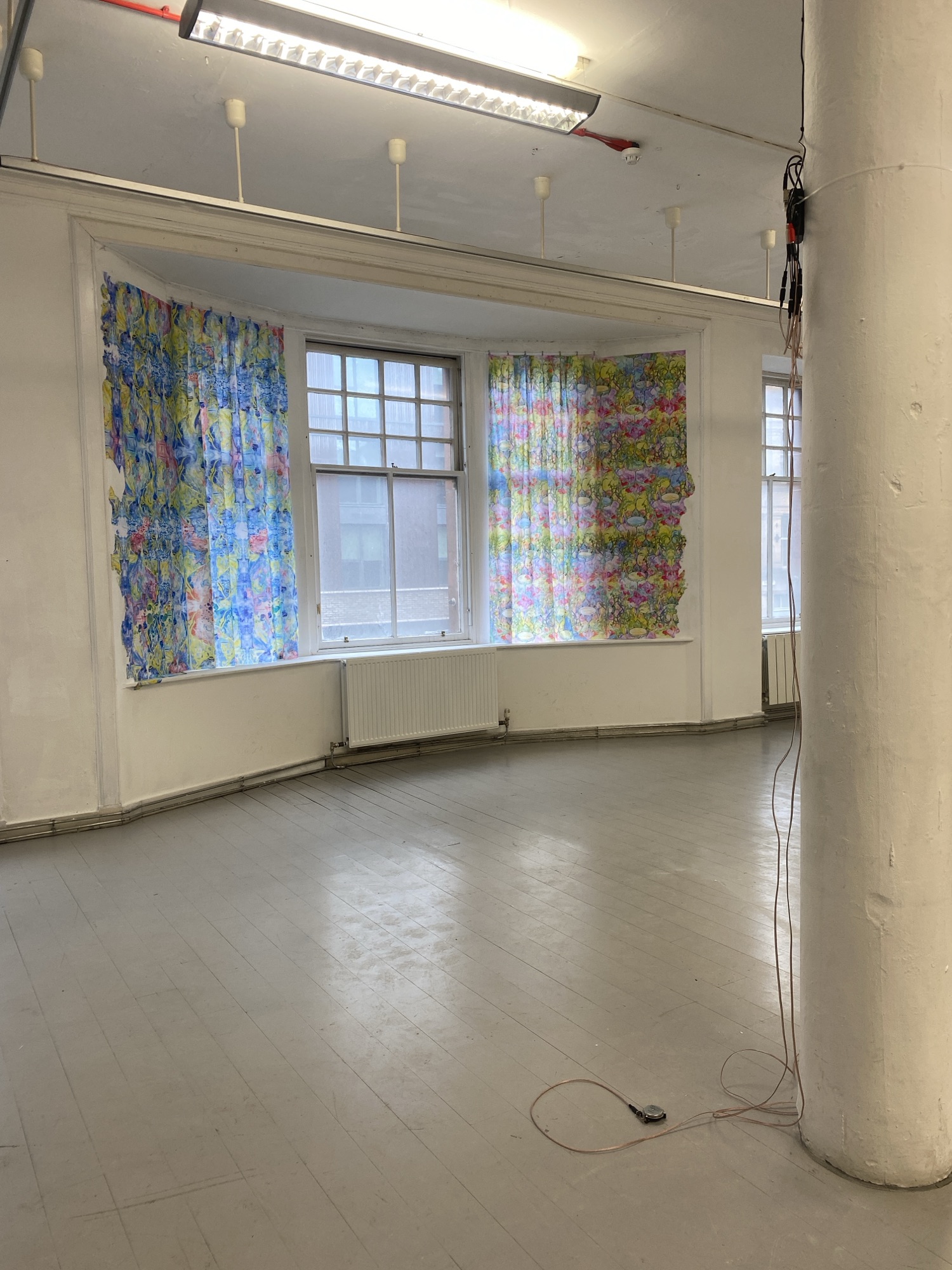

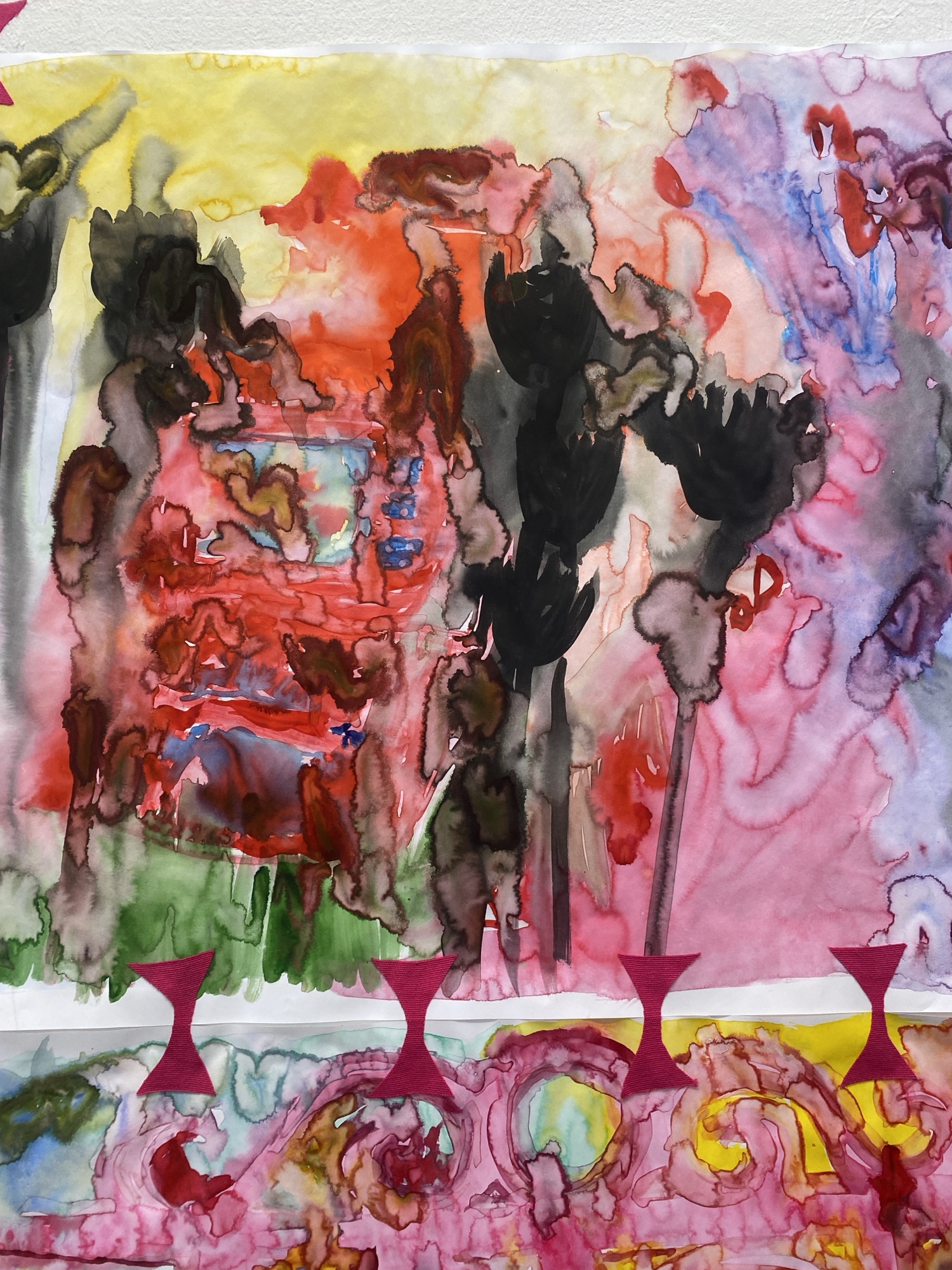
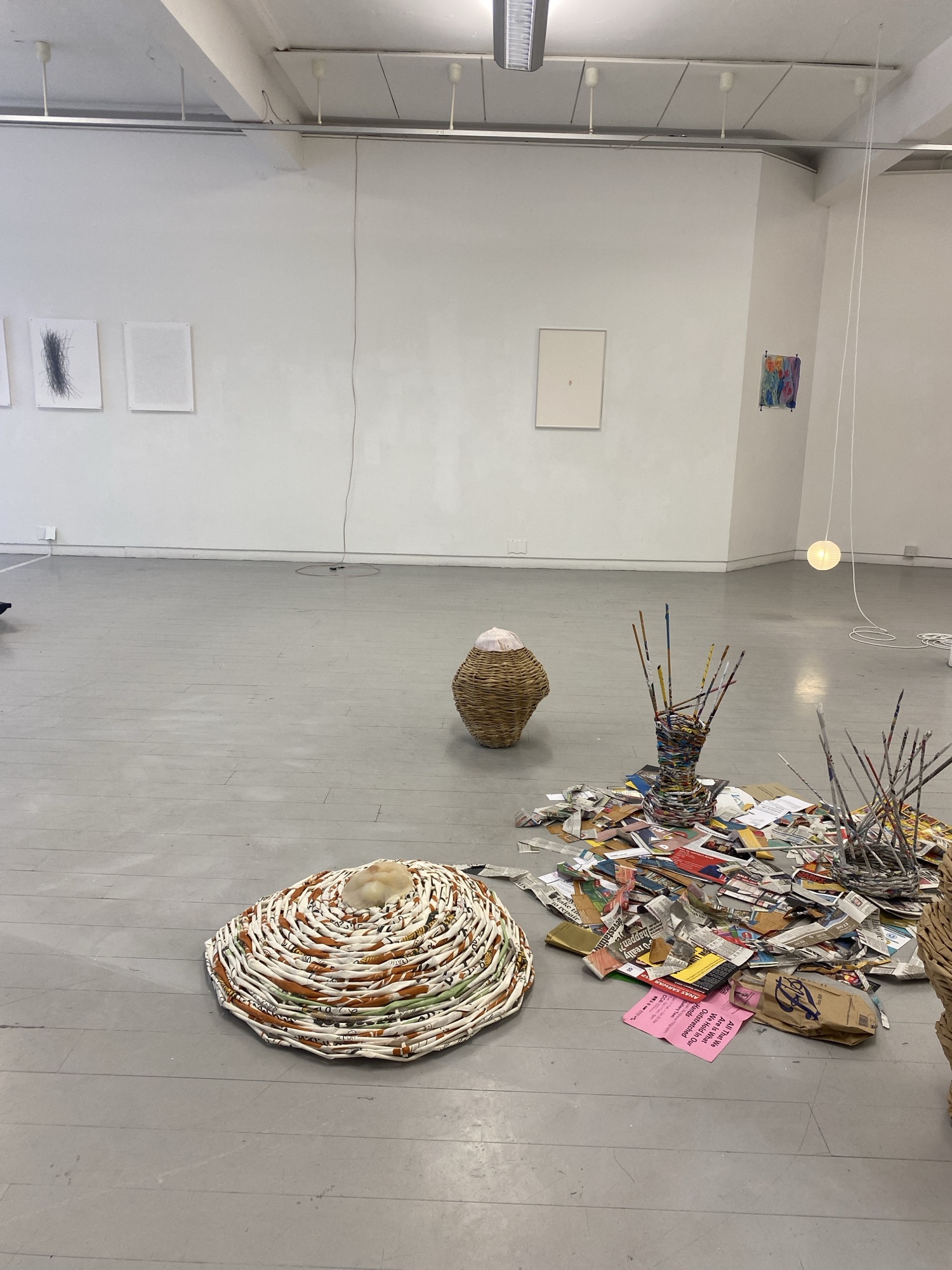
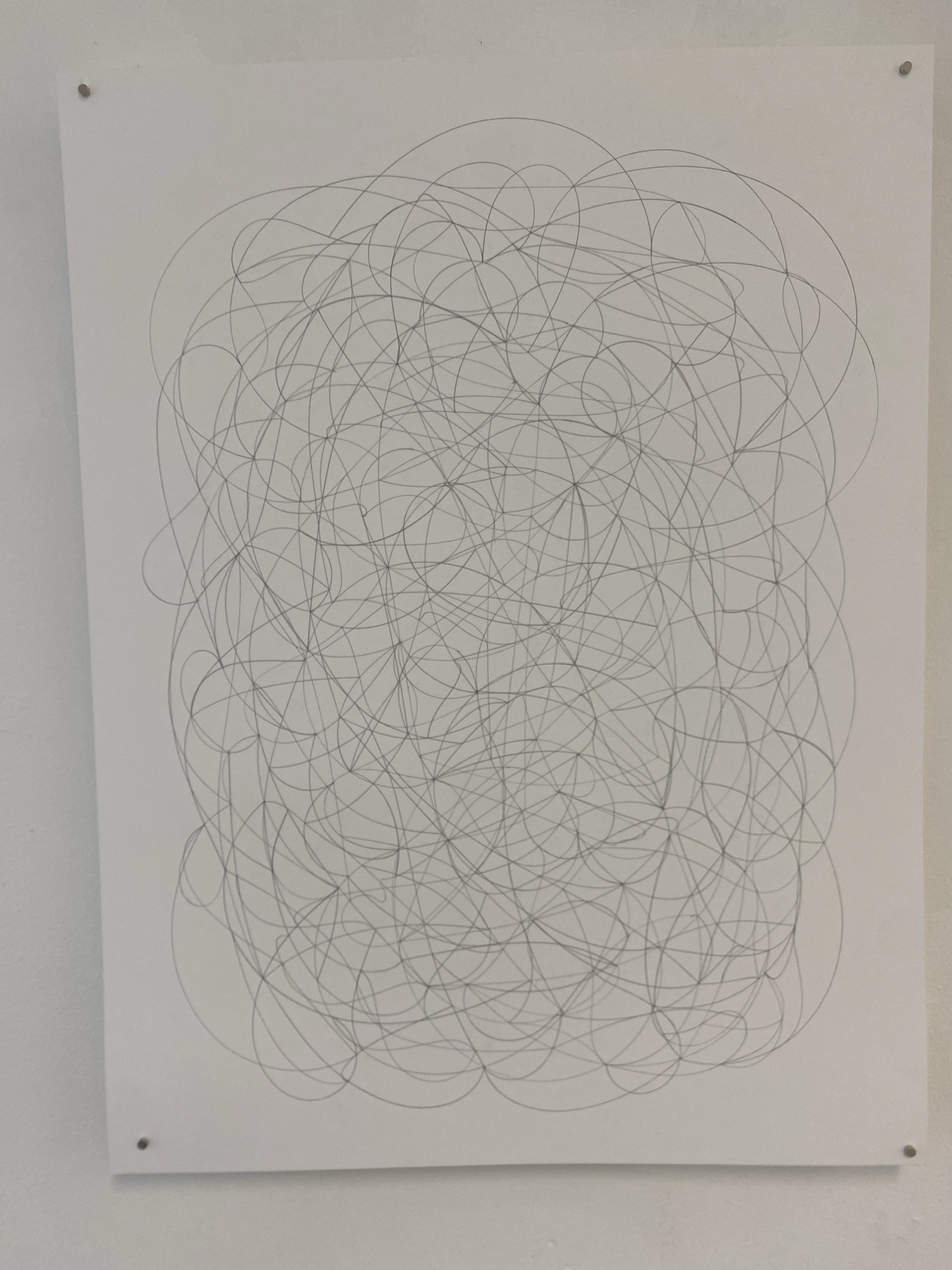


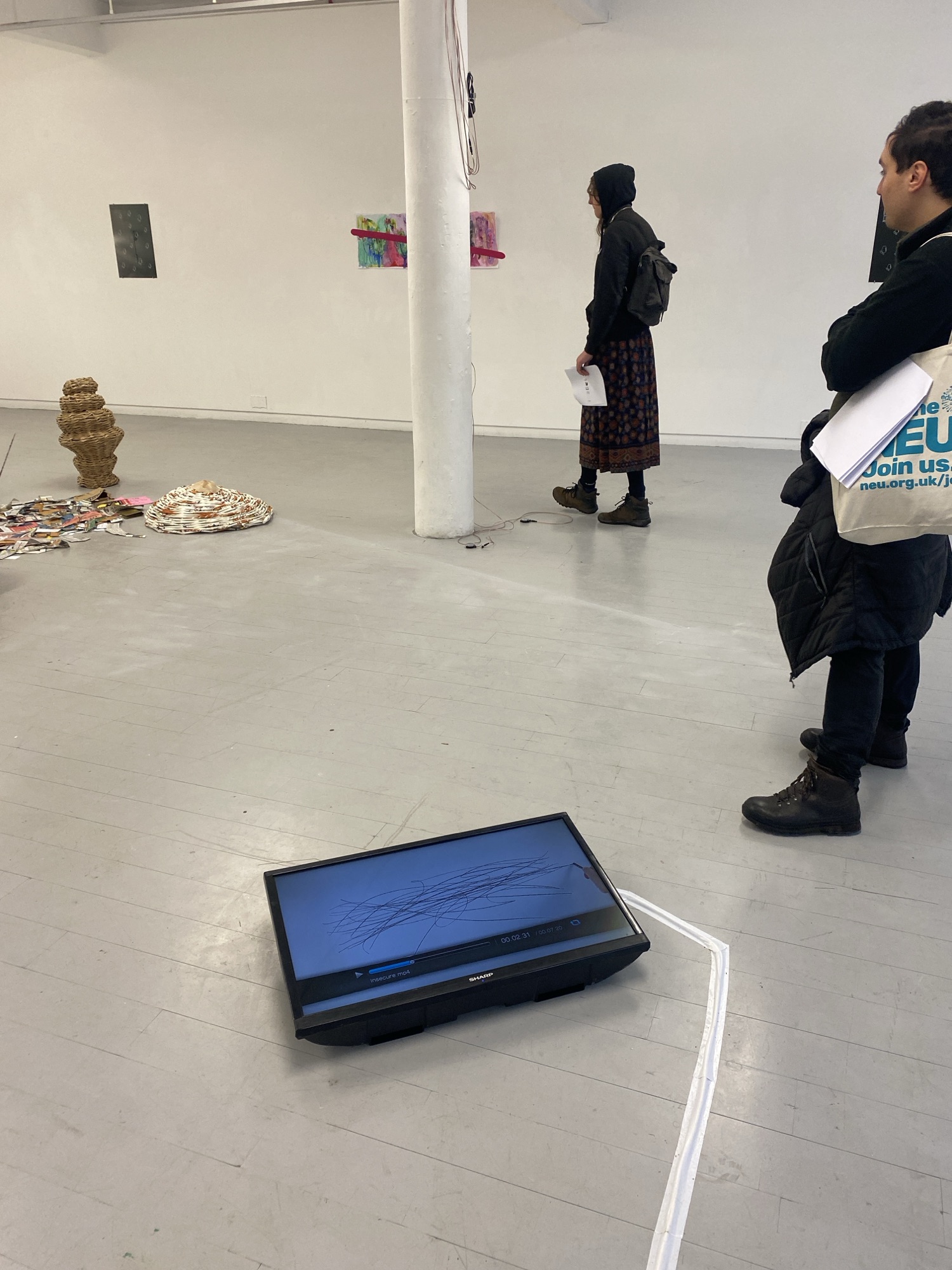
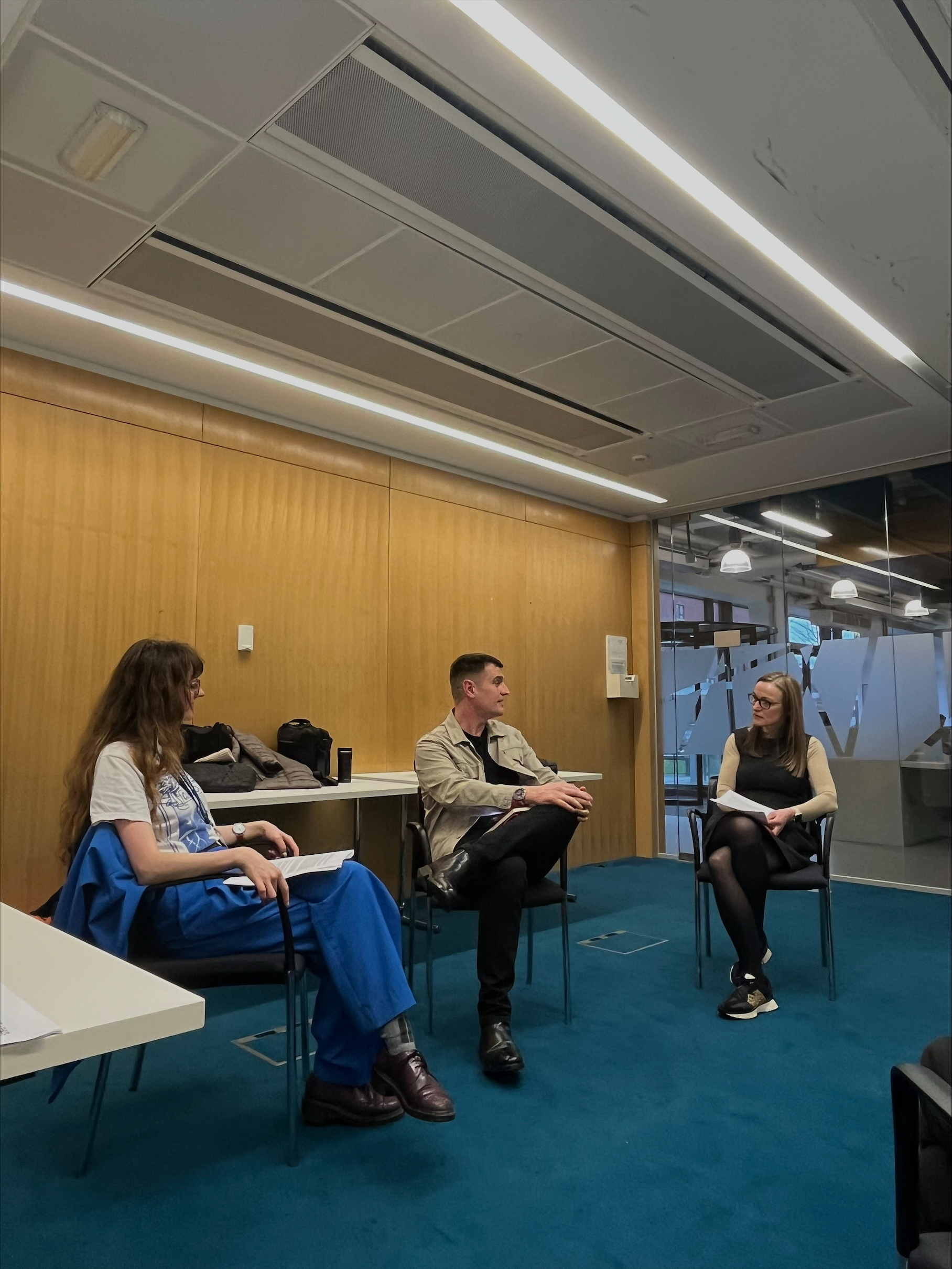


 mariaology