Tonight I wore what can only be described as a billowing tent and cycled in the rain to the SPAM x sincere corkscrew AFK event. Summer is over, sorry. The newish Away from Keyboard series has so far featured poets-poets-poets — local and visiting — with some exceptional forays into prose. Tonight’s affair was premised more on the prose-y variety, with flash fiction, short stories aplenty, but also music and poets reading to music. A London poet recently said all the poets are now doing ‘sonic poetics’ and this trend has made its way north. I’ve been wanting something more durational for a while. Longer readings that feel like a proper ‘set’. Having sound in the mix trains us to listen longer because we are listening beyond listening for ‘meaning’. This event was set up nicely so that the first few performers did their punchier sets and then the final two were longer. I wasn’t involved in organising this one so also quite nice to just sit back a bit.
First up was Anna Walsh. My first time seeing them read after much hype from Kirsty over the years. Their short story pamphlet Stag Do / Fantasy Horn just came out with brand new London-based indie, Ssnake Press. Anna read a piece set in PureGym, ‘the best spin class in Shawlands’. It was funny, closely attuned, turning a sharp lens to the ennui and im/possibilities of desire, and made me think about the gym as a terrain of fantasy triangulated by disgust and expenditure. A toxic combination that is fun to sublimate through multitasking on the StairMaster, whether you are sending emails or texting e-girls. The observational plane of fiction would then cut up into self-reflexive moments of becoming-object. Here are my thighs. They are moving shapes. Sweaty hair. Here is the screen showing a beach. The pink disinfectant spray. In my notebook I wrote: What can you trust of how human relations conspire in the endorphin farm?

Anna’s reading was short and sweet, followed by the blazing Tom Byam Shaw who delivered some hits from the cesspools of late capitalism. A disturbing anecdote featuring a licentious coworker at Footlocker. The reterritorialising of terror as gender reveal party… ‘We have a gender…it’s a war!’. A story about Chernobyl Cat Girl at the rave, ‘a party without respite or rest’. These are fictions which tremble with the hurtling premise of assured combustion. Tom’s book is coming out soon with sincere corkscrew. Launch at Mount Florida Books on the 3rd October. Following Tom was Sean Turner McLeod. Nobody knows if they have ever heard Sean read before. His author photo definitely wins best prize (if you didn’t see it, he’s standing in a picturesque river looking fierce af, exhaling dragon-quantities of vape smoke). He has been published ‘widely and discreetly’ and his work is great, witty, delivering its critique in lashes of sardonic commentary on everything from the gentrification of Glasgow to self-hating ghostwriters, poverty tourism, the Sunday night tv spectre of our Scottish childhoods, Neil Oliver, whose ‘voice made you drink’ (intone that darkly). Sean is good at verbal sparring and he essays with ease around many things vivid, for instance, the ‘controversial’ Joan Eardley painting of a male nude. Sean, I hope we will hear you read more!

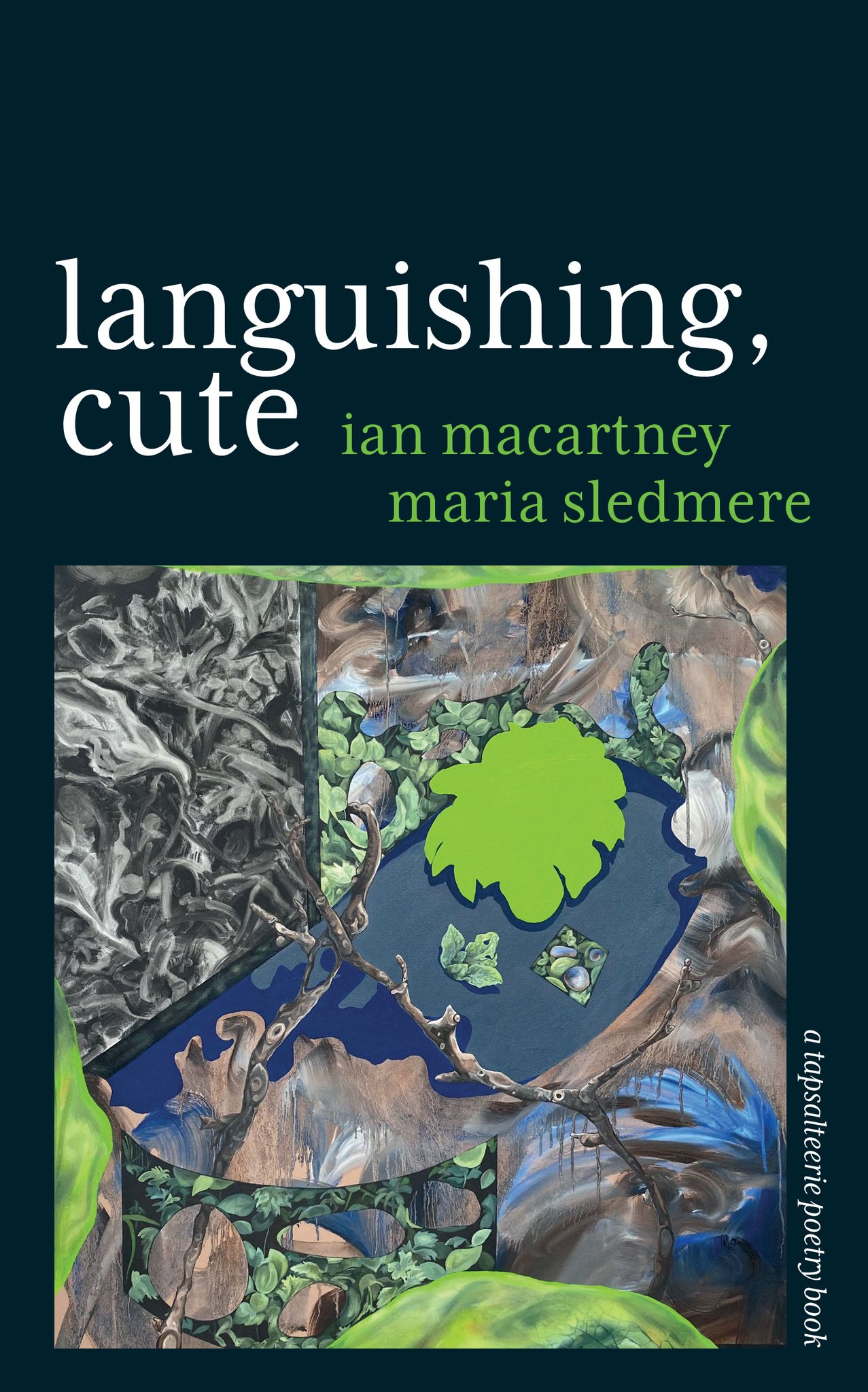
After a break we had Ian Macartney, cohost of the night, deliver a virtuosic list poem about playlists. A smart, discursive cascade which was hallmark Macartney, traversing pop culture, geopolitics and counterfactual plot twists of recent Scottish history. One of the first lines was ‘The playlist is a commons’. Ian is a true lover of songs and the anguish of how much love for the playlist is distorted by the cynical, algo-ploy of subscription profiteering comes across in the poem’s argumentative rivulets and sparkle. It got me thinking to how so much of this blog used to be ‘playlist posts’ where I’d diarise lightly around a playlist, as a way of marking time. At some point, I fell out of love with the playlist form. Too long, sprawling and tantalised by algorithms, I lost the ardour for ‘looking’ that precedes any possible curation. What then soundtracked my life since I stopped making monthly playlists? An album, or a single song. So how did that transform the flow of time itself? Did I get ‘too old’ for playlists? There was a loud tone. It was found resounding in everything. Summer’s faded peach. Plaster peach. Crooning afternoons. This one plucked lyric. Is that true though? I remember having a collaborative playlist (‘E-WASTED’) for my 30th birthday party and on the night, the pub wouldn’t let us turn it up loud enough to hear it. But we played it anyway, all 24 hours and 54 minutes, knowing it was there, knowing we’d never get through it. Registering time in its variety. I wrote in my notebook: Once the modal curation of the playlist was a way into writing but then I stopped thinking of songs in their lily pad potential to cross the river of whatever mood or walk you were caught in. So what, did I wear the songs instead? I let them wear me out and I wore them to death. The songs were hot freaks! Ian’s playlist poem was a poem of nowness, enacting its ‘repetitive pattern in space’. I heard a girl downstairs shriek ‘Bye, love you!’ and thought — that’s one for the playlist. Add ‘Bye, love you!’. Midway through the reading, Ian holds up a piece of paper revealing an obscure, eleven-sided shape. I hope the mathematical reality of the poem is some kind of angel number squaring of 11 and for the playlist to transform from anaphoric placeholder to the reflexive imperative — play [the] list — as you wish. Start the poem. Perform. An eleven-sided playlist for being born again. For this to be a gesture of love, obviously. & ofc, fuck Spotify – tho I have spent over half my life listing songs on its lifeless interface.


Following Ian, Madeleine McCluskey of Big Red Cat zine read some short stories with a fairytale flair. There was an island setting, ‘spindly earrings’ and ‘menthol cigarettes’. A girl who dies. Friendship, hunger, ‘a burrow formed where lunch ought to be’. I thought about the cruelty of fiction and how we must die and plotting towards endings and hunger as a grammar of prolonging. A few performers this eve list 1999 as their d.o.b. in the author bios and it got me thinking to what a fin de siècle aesthetic might be like. I wouldn’t say anxiety was a running theme exactly. Neoliberal hell obv. But maybe an archipelagic consciousness of hopping between — something about working with what is shorn up amidst so much erosion [more thoughts needed]. Elsewhere supplants elsewhere’s interminable now. We had another break then Zeo Fawcett did a set of live viola playing with backing tracks and singing. He is so so talented and the songs were unique and compelling, shifting the tone of the evening. He had this story about missing out on hanging outside Boots being an emo because of having Gaelic singing lessons as a teenager. Sometimes I wish I’d had the Gaelic singing lessons instead of hanging outside the Odeon being an emo. There was a song called ‘Feeling really impermanent right now’. Later, I start to identify too much with a rain drop running down the window in a memory of a bus window in a 00s tv show.


Introducing Charlie McIlwain to his Texture Texture outfit, Ian attests to the success of their connection, claiming that ’email is the way forward’. Honestly not enough people in the room questioned the boldness of this claim. I want him to be right about it though and briefly I parenthesise all communication to the epistolary promise of endless more soons like the swooning glut that would end platform capitalism and reunite us with wild cognition, in just enough time to save the world. For now, this chance pairing of Charlie and Ian will do. This is a fucking great set of surreal, whipsmart k-hole cantos delivered with register switch ups that surprised at every turn. Hilarious and devastating, with fitting improvised drone from Ian. I thought of Spicer’s radio and how there would be aliens in the ancient walls of The Doublet dictating this through the frequencies of wave machine. One regular punter from downstairs popped in by accident and stood in mesmerised bewilderment (nah, rly he was just giving glaikit) before turning back and losing the opportunity to have his head blown off by poetry. We had ‘white fire violetted daddy’, we had ‘sleep is just cloth’, ‘you can use your ass like an appliance’, we had literally two pairs of glasses, ‘stop killing Lorca’, imploring ‘the language is in trouble’ folded into ponderings borrowed from W.S. Graham, we had ‘Hegel ate a crow’, ‘the furniture will not endure perception’, we had Brian Wilson and John Clare ‘and shall I know that sleep again’. Listening was like trying to trip talk with someone who is not tripping and in the duration of that performance (idk 30 mins or so?) I let myself (what comprises brain matter of synapse and syntax) be scrambled by signifying mayhem and enjoyed every minute. Go buy Charlie’s Elegy [Model Interaction Trend] now you fools!
When I found the remnants of some kind of pop-up carnival show on Kelvin Way, cycling home, dis-articulated along the road in luminous obstacle, I knew I was still riding through Charlie’s poem.
~
Thank you for reading! This write-up is for K. and anyone else who couldn’t make it – plus I forgot to record the audio for this one sorry! but one day we will upload the mp3s from AFKs of yore…and this one will be remembered in the hearts & minds of all who attended… xx