New pamphlet: Scar Code

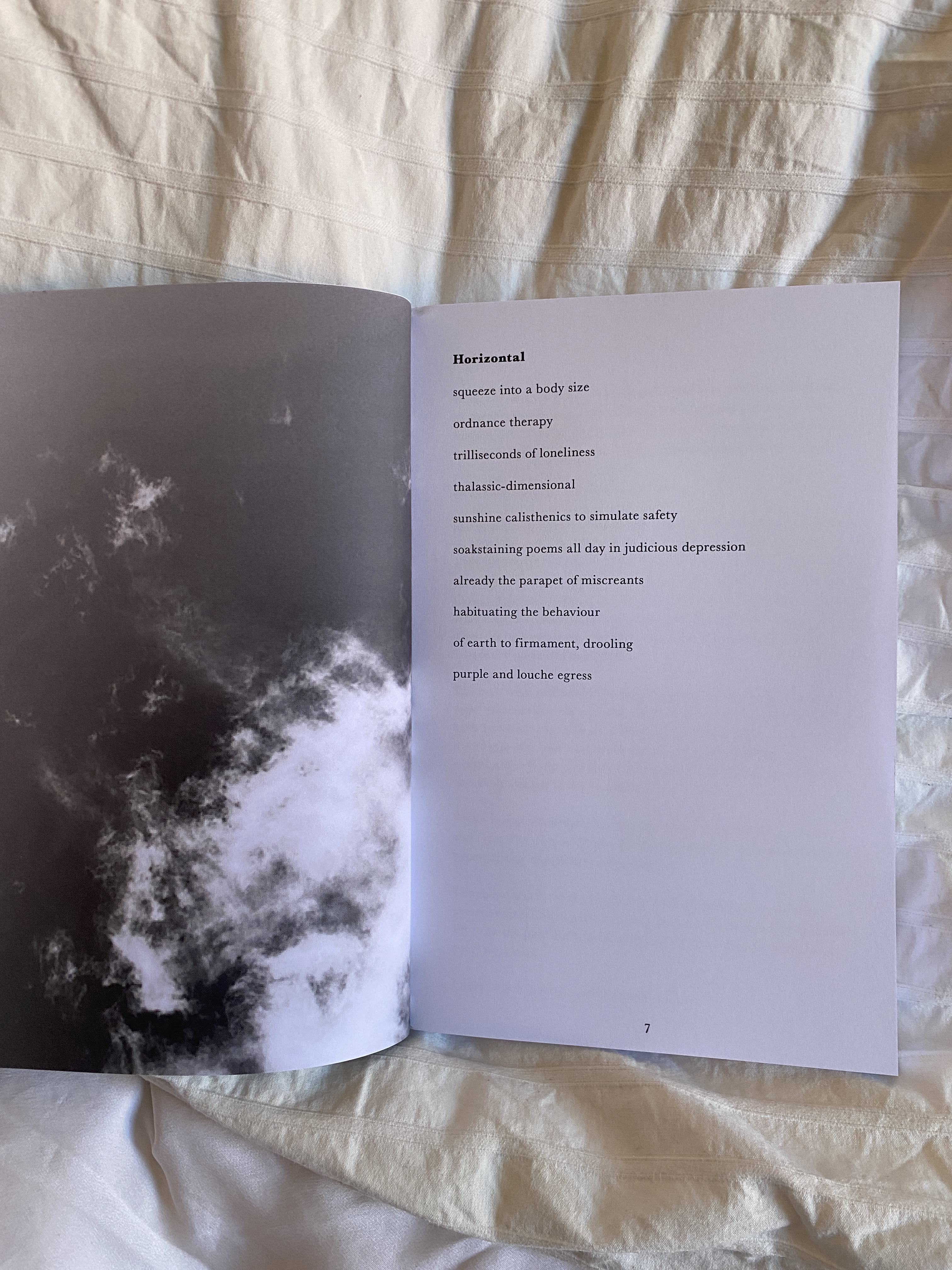
Snippet from the book

Anticipatory grief, sleep and spiderwork come together in my prosimetric pamphlet, Scar Code, the first from new pamphlet press Weather Band (produced by Robyn Skyrme of the Crisis Crystal reading series). Originally written for the Ek Symposium and exhibition hosted at Glasgow Project Room in September 2025, I developed it into a fuller sequence at Robyn’s invitation. It picks up some themes on threads, spiders and entanglements from my monograph Midsummer Song, and responds ekphrastically to Chiharu Shiota’s installation Sleeping is like death (2016).

A more formal abstract:

What happens when ekphrasis is conceived of as performance in the context of artwork concerned with sleep and dreams? Commencing with a verse description of Chiharu Shiota’s thread installations, I take my cue from T.J. Clark to consider the limits of ekphrasis as tool for ‘converting’ visual into verbal representations as a possibility for recreating the ‘experience’ of ‘thinking in’ the artwork (2022). As Shiota’s elaborate, sleep-themed threadworks, notably Sleeping is Like Death (2016) evoke an interwoven neural net, whose nocturnal scenes are withheld from the viewer via webs of abstraction, I offer sentences of hypercritique as ‘drawings in space’ (Shiota) whose weaving is a dreamwork: enacting via intuition a space for the unknowable. This intuition is partly premised on the rhythmic, affective and imagistic affordances of poetic language.

In the ward, three patients lie asleep.
The spiders entered them long ago, not
by the usual oral route, but via the silk of sleep itself.

36pp. • 50 copies • £7.50 UK / £12 INTL

To order: https://crisiscrystal.net/weatherband

Infinity Lyric: Lysergic Excess in the Poetry of Dana Ward

Fruits of research leave!

My new article, ‘Lysergic Excess in the Poetry of Dana Ward’, is now live over at Green Letters, as part of a special issue theme of ‘Psychedelic Ecologies’.

Abstract:

This article examines how the work of contemporary American poet
Dana Ward generates ecological thinking through ‘infinity lyric’:
a mode shaped by psychedelic aesthetics, drifting attention and
shifting scales of perception. By close reading Ward’s two collec-
tions, This Can’t Be Life (2012) and The Crisis of Infinite Worlds (2013),
in conversation with poststructuralist, new materialist and contem-
porary poetic theory, the article explores how Ward performs an
active reorganisation of everyday experience, forging a psychedelic
ecosophy in which mind, society and environment connect through
lyrical voice and movement. Situating Ward’s work within the cul-
tural ecologies of Web 2.0 and anti-capitalist critique, the article
argues that Ward’s aesthetic of lysergic excess offers an ethical
practice grounded not in transcendence but in immanent, rela-
tional forms of being. It concludes that infinity lyric provides
a distinctive contribution to ecological thought by modelling parti-
cipatory, heterogeneous and open-ended ways of attending to the
world’s material agencies.

https://doi.org/10.1080/14688417.2026.2690909

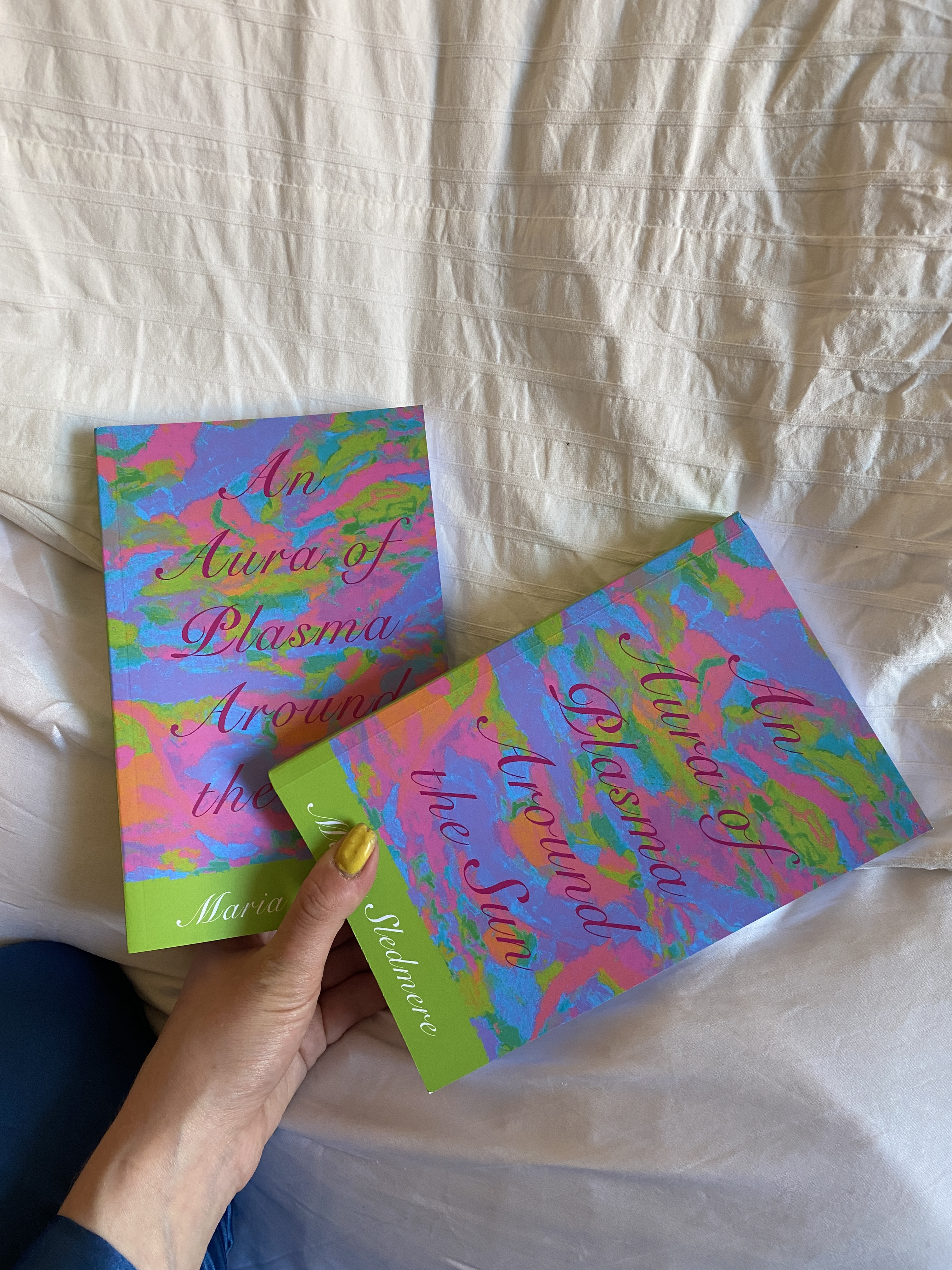
An Aura of Plasma Around the Sun

£12.00

RELEASED 19TH JUNE 2023

FROM THE PUBLISHER:

Blending oneiric memoir, experimental fiction and glitched verse, An Aura of Plasma Around the Sun swirls narratives of adolescence, occulted textual topographies and Scotland’s pandemic lockdown. Sweet, funny, heartbreaking, clever and ridiculous, often sentence-by-sentence, Maria Sledmere doesn’t guide readers through these whirlwinds so much as throw them in. Yet her spliced reveries and decadent languages are always underpinned by a celebration of community, as radiant and permeating as the sun. 

198 x 129 mm / 254 pages with illustrations and photographs

Preorder from Hem Press

Grapevine

Technology is harvesting our attention away from each other. We all have a “Grapevine” entwined around our past with unresolved wounds and pain. 

— Natalie Mering

Of course, the flesh of the body and the flesh of the world are one.

— Catherine Malabou

Morning brings indigo gluttony of the night’s dim prizes. I remember a night in February of 2019, the brightest stars in my life we saw above a kirkyard eating chocolate for all the stars. Looking for tickets to see you again, star stuff for popcorn synecdoche of eating the bones of what you believe at the movies, infinity pool, the liminal alimony of the heart you have. I pay it all back which is why skylines exist. At this time of year, we make our own light. I text you all day and all night the text pings resonate without me, though I’m still conscious. This is how I listen to music. Harvest the ricochets until my synapse nozzles are ripe and sweet.

“It’s too difficult” 

the beautiful song in my ear
The Butterfly splitfin will go extinct this year 

“My plastic girlhood obligatory 
wrote a novel you’d never know
elemental love for the noise of horses” 

Electra pastel of giving the lecture

Its voice never falters

Spotify should hire poets to replace the algorithm with iambs

A perfect way to respond?

The album cover of Weyes Blood’s And in the Darkness, Hearts Aglow features a glowing heart which is the idiosyncrasy of love song, gentle and melodic and good and wrong. There is something we say at breakfast about the inexplicable intimacy of an interval, this bit in the song where the chords do this or that and suddenly your heart’s aflutter. Why is that? I feel vulnerable and unclasped by music like the locket of a promise necklace snapped open, opulent. When are you gonna feel okay? 

I like it best when I don’t expect it.

/

Designing the conditions for crying is easy these days. A tiny fly lands on my wet nail polish and departs as lavender.

I used to wander the abandoned golf course and around the monument to see the snowcapped hills and feel it. 

Perished by screaming clouds in my brain.

I am in love with the music of Weyes Blood, we share the same birthday. 

At a recent gig the singer said “thank you all for being alive”. Some people describe these songs as hymns. Last year in the climate rush of COP26 I was cycling around with my bones on fire and freezing. I would show up to the job being stared at, horrible mess of myself couldn’t hide, what do you think of this poem I said it’s a lot to unpack. Why don’t we leave those tools in the box? He says toolbox isn’t so bad. You could just improvise. I don’t look to these men to be mentors but menthols were my first cigarettes, a clothing brand called MEN is like SHEIN you could have MENOUT or menagerie, mispronounced as shine, a giraffe made of glass or a tiny glass seal with whiskers of onyx, weeping. MELATONIN or MENACING, MENDACITY / my avuncular muses of more money have outraged, they will never understand candida. A spanner in the works. No more lies. I’m most men when in lingerie maybe or styling my old surprise, the giant window in a dream wouldn’t close after I’d opened it so I had to go looking for a man to help me, high-vis or high waters our time would come to close it, not until I had escaped. Fled is that happiness. Look at it hardcore. No more lies, no more dying. Your arms in the air.

I heard catastrophe on the grapevine which was snipping guitar strings all the better to hear the lyre underneath, the union makes us strong, picket-cold and trellises our kitten hearts are growing, Natalie as in a new flower or the Minecraft roses coming up fast this year to be eaten by the dreams of spiders. Nicky Melville poem says if you’re a soft person you just get squashed, Sarah once read it aloud at the picket. I pictured a soft orange in the principal’s pocket. Roses last forever even when past their superlative. Shedding their petals to cover our eyes. Bunny put them in cubes to exhibit. Smooth wax skin.

Violet roses.

Ever since my friend with the purple aura died I’ve worn so much purple to find a flame of them, purple flame of my Raynaud’s and holy flux of traumas. What’s the point of poetry, it’s purple. I lilac therefore I lamb. I am on the lamb, I am lambing seasons, turn me into a leaf on the riptide, for I am lost. The clouds are glamorous, in pursuit of beauty’s excreta, a bad era, the best

negentropy saves us from losing everything

Secret blue note.

Wine-dark reverie of the quiet escapade, my late heart 
blooms for the red, the read receipt 
staining your tongue. 

Catherine Malabou says ‘The body becomes worthy of philosophical examination when it is no longer a question of the body but of my body’. Descartes dripping wax on his robes, a lecturer pouring a pan of boiling pasta over his hand in rehearsal; the red welts between two moments, my horrible bleeding thumb. Scarlet clustering of old blood. Say it feels personal, say it is orange or purple. When it started inside me I felt the glow in my chest handed down by hyleticism of data from song: the body electric or incarnate. Menstrual tripping, I saw Kate Winslet literally on fire in fantasy after watching Romance & Cigarettes but she was invincible, what’s this script, literally the fire coming out of her in waves was my love of music. I harboured desires to stub cigarettes out on the wrists of saplings, light them and throw them barely smoked on the street; imagine my child self, scurrying around to collect them, smoking wholeheartedly the barely unsmouldered, especially rose ones. Lemonade’s infinity sunflower. I was so guilty in my treehouse for getting high, higher, highest of them all to bioluminesce in lieu of sunsets, fuck it. The cruelty displayed to our cousins was a lonesome one. What’s that word for when a word is hinged between two things, like flesh stitches that keep skin together and then dissolve inside you — a word that makes sentences make sense in this precious knitted way. What’s Latin. 

Butterfly notifications in my dopamine receptors.

Coffee luxuriance and pillowslips ink-stained with diary slumbering. There are too many images trying to bed us. A stage whisper for the saints. I was born from a chrysalis of synths swaddled in melody all the better to tell you. 

The discourse is banana-bruised and overly ripe in your bag.

Perfect oracle rosehip tea.

You can’t fully vanquish chaos but 
on the phone
at a planetary scale 
your mouth an aquarium, spilling numbers.

It’s okay that I died, and you died a little bit that night
we all did, really.

A friend is on the phone trying to renew medication. The record-breaking temperatures have lost their meaning, as in a lost glom of mercury swallowed by me. The Butterfly splitfin is in jeopardy. I have never fixed on a form for these cramps in language. The males intensify in colour when excited. The young are entirely silvery. I want to go on the profiles of the gentle ones and swim with them; you don’t need these comments, you didn’t need these things. The internship of being elegant more insect is fading. At some point

I wanted to drive. I was a girl toy and thought of many plastic cassette cases filling up the doors, the backseats with sugar. The idea of analogue as shadow, scrolling magnetic and stopping. I’m glitched by the ache which is lightening, gloss, disquietude, gelid. Girl drivers filling the roads, pouring concrete from their jars of face creams into the sea and beckoning 

to make love on the white lines, almost drifting

you were there, you were swimming, 

our worlds elided

I wanted to drive you to the sea cliffs of skyward to breakfast on blue. 

Natalie and Lana sing of the body California incarnate, plasticity glowing emails,
eyeshadow blue as in Bowie

my exospore of the hokum knowhow, excessive sentiment, hearts aglow

That house over there. That home over there. A palm. Analgesia of the sea.

Ghost for your thot

organology of a negative situationship

Catharsis polaroid still develops in my purse of us, you’re blowing out blue smoke in the dream, I’m bowing out. The eye emoji, heart stun soft mote. 

And in the darkness…

It’s good to be soft when they push you down

[…]

Such a curse to be so hard

Lightning bolt award for being born at all.

I used to chew beads and often swallow them

C. said so inside you it’s like the anthropocene

many plastiglomerate organ marias 

menstruating rainbows

What someone called my emotional Teflon was melted by your white-hot non-logic, almost like heroin of the pain I was in, as if to have a little blister polishing her oysters. Why is there no word for girl-come

or the tragedy of icepacks.

Kept panic-crying at the idea of sleeping

and did it until the blood vessels burst around my eyes 

which are sea-coloured and colourless, unseeing.

Divine & oversized teardrop:

I bought this not on etsy but via the estuary, quartz time, I dreamt a skipped ad and heard myself in the rearview mirror bound in leather. Here is a lilac wine and the name of that bone in your chest, flagrant sternum of the lonely highway, pulling your jacket to keep warm

picking pearls off your shoulders, all the better to lick this neck

in the flesh of the road

Bernard Stiegler says the relation entropy/negentropy is really the question of life par excellence

a pair of glowing red eyes

Buying more dreams at the pharmacy

of lurid blue

your poor wee cold sore

sky porn falls into humming. It’s free, it has to be. 

Anything lost at the point of service.

There’s so much I wanna say about this album

holding me tight

I wanna tie the lights

and go off to hear it shimmering beneath the moon, whose memory 

bruises 

rosemary

real blood from your forehead

and the shadow of the one who 

was yours

a long plague 

season of neutral sensation

new motor neurons at the cosmic dawn

tripping cured my parosmia somewhat I could smell sauerkraut, frying onions, coffee, kerosene my only name the body odour of the shadow you loved 

I can’t tell the trees from the shape of lightning

in subtitles

spiralise my love for the seventies 

in edible language

flares in the highlands

the problem is not being affectless

but totally loving too much

all the tautology of stardust

let’s take the motorway route to ride our souls 

under sunblock and metal sculpture

you feel balmy here, less exposed, fear of 

merging

what we are

white hot collision

emotional whiplash

Emerging triumphant the dawn is a fog machine it is only October, none of us a sweetheart neckline could finish the sentence 

swishing our way to ceremony

music makes sense

instead: a down & dirty musical set in the world of italicised starlings

which are assholes

because of radiance

for the love of original mud which connotes the whole story

they had to take flight

The body of both selves is ochre like in Husserl the real world is everything

a dialectician of starlight

Morning gluttony. Grasping. A worm in your blessing

fragile apples on the counter / collect to rot.

The real era was gradient and dependent on what Merleau-Ponty calls illness, ‘a complete form of existence’. I lost a normal form but what I found was the shimmer conundrum of the shape of you, California, a rice harvest of shiny red-blue tears to grow a purple flower, you guessed it. 

Possession. 

Pearly beads, the slasher heartfire of a bold new vision 

touching me soft jealous of cornfields

Hellbound in egress, dark glow, December’s acupuncture of clouds. 

How can something so big feel so cosy?

The creature is god.

Told myself I’d scrub mould from the bathroom today. Flux glow from the dirt that is given us to know the worst.

A given thing: music is grieving.

I wrap the vine around me in the hope of fruiting, or any violet outcome is fine. You bake a good pastiche like an electric goddess, cancelling plans all the better to scream at the stars. 
Loop trope. 
Hold yourself soft or hard, by the collar or hand, by moonlight
tripping in Finnieston
and in Yorkhill and by the masticated night 
which is always online 
in the digest of even the worst
‘The Flower Called Nowhere’

Mothering the subgenre of oblong buildings, bliss our heart this hurt. You essay your way to music but is it not your allergies that crystallise accomplice to the throat of time? Thank you, thank you for the mystery. It’s so late.

And we love this crescent moon 

for all intelligence is the art of rupture

Falling asleep at the movies 

And I am choking for a sweetness that really sees me.

~

Some italics are lyrics taken from Weyes Blood’s And in the Darkness, Hearts Aglow (2022).

Cowboy Gardening

It was supposed to snow in the night and the not snowing was sore as a missed period. I awoke with two crescent-shaped moons in the palm of my hand and thought of a sacrifice unwittingly given in dreamland. Said Jesus. Peridot phlegm and the scratchy sensation, knowing that speech too could be cool, historical, safe. Could not see beyond pellucid rivulets, Omicron my windows, my streaming January. January 

streams from every well-known orifice of the world. Its colour is shamelessly stone. I seem to be allergic to inexplicable moments and so keep to the edge of the polyphony of yellow. I am cared for. The Great Barrier Reef dissolves in my dreams the substrate of yellow. It goes far. Pieces of the GBR are washed ashore in Ayr, Singapore, Los Angeles, Greenland. I go to these places by holding a polished boiled candy in my mouth, like the women in Céline and Julie Go Boating. My ankles licked by truest shores / but January didn’t fucking happen. 

❤

Put together the orange-purple rose, your possible outcomes are red or gold (if you are lucky). Two reds together, with the golden watering can, could result in the rare blue rose. A novel rose. Black velvet roses grow in the old woman’s garden because she has infinite time to tend them. I’m not saying she’s immortal, like the Turritopsis dohrnii jellyfish; only that she doesn’t exist in our time. It’s rude to assume so. I’m not saying the lines of her face are asemic writing — nobody did that to her, or scarred her. She’s not scared. She just lives and dies all the time. She waters the roses.

Sometimes I imagine her in fisherman’s clothes, in meshy nightclub outfits of neon flavours, in extravagant ballgowns, blue boilersuits. Sometimes I’ve seen her before. The only way I can see her is to climb a few steps on the ladder by the village store, its red paint flaking, and I hang my body upside down the other side, risking exposure. I never eat before doing this. She doesn’t see me; she doesn’t see her roses either, not the blooms. In the village, people walk around with handfuls of rose seeds sometimes strung in little hemp bags. These are the currency of care. I have tended the young with haircuts and watched the flourishing of teenage roses. They say I am an old lady in the garb or garbage of former actresses. I hear them sing to me their stories. “Remember 
she shot the guy who brought the astrograss”.
What they don’t remember, whippersnappers, is the incorrigible realism of that turf. Fuck it, 
I have done nothing wrong. I perform for them my cowboy gardening. Broadcast the surplus value of our mutual twilight. Halloween roses for everyone. Every night I wake up from someone else’s childbirth and the world is so sore, the wound in the sky the snow wants to fall through. They bandaged it with realism. I need to go far. Do you remember the last time you awoke and felt like a person?

❤

The roses grow up in the gaps of the cattlegrid, knowing they will be trodden on. Again and again. We can’t stop them from doing this and they do it so often we have to account for a portion of Waste. Kissing you is itself a trellis. But we are propped and grown sideways with the vines strung betwixt our ribs. We are babies.

I like the tired way the roses intonate colour. The economics of the roses. Their euphemistic fetish. I tried to avow my commitment to rosehood the day I saw your calves all torn, and saw about women getting their labias reduced, and the red, blood roses sold on the internet, and rest. I lay this on your grave, the world.

My love, as a redness in our rosette
That’s newly worn in June
O my love, like the melt 
That’s sweetly played in turbines 

So fairway artery thou, my bonnie lasso
Defiled in love as I 
Will love thee still, my decade
Tinged as the seas are garlanded dry 

Tinged all the seas as thee, my decanter
At the romantic menagerie of sunset
I will luminary still, a debutante
Of the lighthouse sarcophagi 

And plough thee well, my only lathe!
And plough thee well, awhile!
And I will come again, my love
Though it were ten thousand millennium.

My love’s rose-coloured highlighter really hurt the extra-textual, and thus booked trains to bed. I had an identity. I knew what you had done to the text. Austerity of the meadow to blame for ongoing culling of kin. You are abandonable as you have always been. Saplings for pronouns.

I feel wild and sad. 

I feel pieces together stirring inside the world. Little bits of coral awake in
my throat, the shape of eight billion sun-spike proteins I was dumb
enough to swallow. It is not my fault but in my dreams 
I get product emails like, Forget-me-not
a pair of jeans, high-waisted Levi’s 
as if to wear at the end of the month 
we keep saying sorry for delay, embroidered 
our thighs with spiders
excuses to use lighters
without smoking
does it make us vectors
the warning of snow and ice still issued
from inside the snow globe of the rosehip 
changes as it withers, glass shards
pissed from acid clouds in all colours:
black, blue, burgundy, cherry brandy, coral
cream, dark pink, green, lavender, light pink,
lilac, orange, peach, purple’s timeless red,
salmon, Hollywood white & yellow, rainbow
chosen for the significant other, a masculine flower
dipped in fortified light, I’m thankful
I look good lying down, the long unconditional stem 
aka Lemonade, l-l-l-lemonade, l-l-l-lemonade…….

Particulate Matters

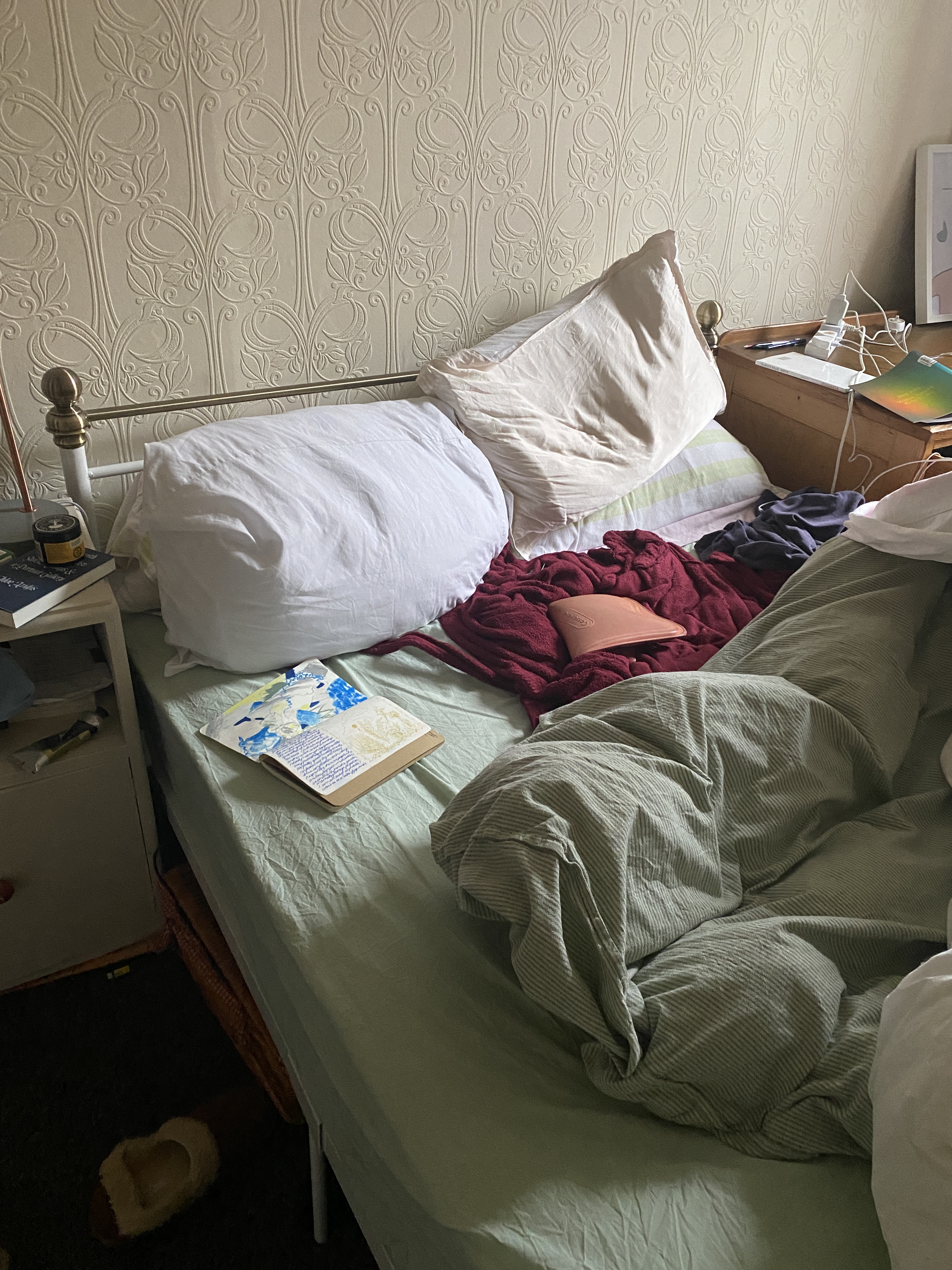
An unmade bed with mint green duvet showing an open notebook,hot water bottle and dressing gown

It was the morning I had decided to stop living as if dust wasn’t the primary community in which I sobbed and thrived, daily, towards dying. I spent Tuesday night in a frenzy trying to discern what particular dust or pollen (animal, vegetable, floral) had triggered my allergies anew, what baseline materiality had exploded in my small room its abysmal density. All recommended air filters had sold out online in the midst of other consumers’ presumably asthmatic dust panics; the highly desirable Vax filter seemed sold out across all channels, and I eyed up the pre-owneds of eBay with lust and suspicion, through a fug of beastly sneezes. A friend recommended the insufflation of water as a temporary remedy: ‘I drop some drops on my chopping board, get a straw and snort it up like a line of Colombian snow’, he texts me. I sneeze at the thought, but have to admit that the promise of clearing one’s nasal cavities with water is somewhat appealing. For isn’t water, like sneezing, a force in itself? Some kinds of sneeze come upon you as full-body seizures of will; so that to sneeze repeatedly you must surrender an hour or so, sometimes a full day, to the laconic state of being constantly taken over by this brute, unattractive rupture. ‘Sneezing’, writes Pascal, ‘takes up all the faculties of the soul’. My soul is in credit to the god dusts, who owe me good air. It’s why I am always writing poems (the word air meaning song/composition). But maybe I need good water, a wave of it. 

In Syncope: The Philosophy of Rapture (1990), the philosopher Catherine Clément characterises sneezing as an instance of ‘syncope’: a kind of ‘“cerebral eclipse,” so similar to death that it is also called “apparent death”; it resembles its model so closely that there is a risk of never recovering from it’. My muscles ache; I eclipse myself with blood, cellular juices and water. What kind of spiritual exhaustion results from being cast into eclipse repeatedly? Quite simply, one becomes ghost: blocked, momentarily or otherwise, from the light of consciousness. One becomes lunar and attached to the dark bright burn, the trembling red of their inflammation. Those who suffer respiratory allergies might better glimpse what Eugene Thacker calls ‘a world-without-us’. I sneeze myself to extinction. It is the hyperbole of a felt oblivion. I do this on random days of the year, at random times; it is beyond my control. But can I derive pleasure from it, as one does the other varieties of syncope (orgasm, swoon or dance)?

From Spirited Away (2001)

Let me admit, I have always had a fetish for those moments on television and film where a character is administered, or self-administers, an intravenous dose of painkill so sweet as to enunciate this ecstasy simply by falling to a sweet slump, their eyes rolled back accordantly. The premise of silencing the body’s arousal so completely to blissful inertia (suspending the currency of insomnia, hyperactivity, anxiety and attention deficit) is delicious. The calmness of snowfall, as if to swallow the durée of its full soft melt. From quarantine, I fantasise about having adequate boiler pressure as to run a bath and practice the khoratic hold of hot water’s suspension. This is not what I text my landlord. 

Recently, my partner spent several hours unpacking boxes from the attic of their parent’s house, in preparation for moving belongings to a new flat. The next day, I found myself suffused in the realm of allergy: unable to think clearly, or articulate more than three words without the domination of a sneeze. On such days, I am held on the tight leash of my own sensitivity: I tremble pathetically, my blood temperature rises; my nose glows reindeer and no amount of fresh air, hydration or sinus clearance will appease it. I am not ‘myself’. The body has enflamed itself upon contact with the ambient and barely visible. I feel an intimate, but non-consensual relation to the ghost trace, the dust trace, of all boxed things — finally been given the attention they so summoned or desired in dormancy. I mourn with objects the passage of time and neglect so betrayed on their surface; I never ask for this, but my body is summoned. Dust presses itself upon you, even as you produce it. I’m scared to touch things because of the dust. What is it but the atmospheric sloughing of something volatile, mortal — the grammatology of our darkest spoiler, telling the story of how bodies are not wholly our own, or forever. 

Sneezing disrupts and spoils nice things; it is an allergic response to both luxury and decay. Cheap glitter, rose spores, Yves Saint Laurent. Sneeze sneeze. ‘When a student comes to class wearing perfume’, admits Dodie Bellamy, ‘my nose runs, my eyes tear, I start sneezing; there’s nowhere to move to and I don’t know what to do. When the sick rule the world perfume will be outlawed’. Often I have this reaction too. It prompts a fury in me: Why can’t I have nice things, as I used to? During my undergraduate finals, I developed phantosmia: a condition in which you smell odours that aren’t actually there (olfactory hallucination). Phantosmia is typically triggered by a head injury or upper respiratory infection, inflamed sinuses, temporal lobe seizures, brain tumours or Parkinson’s disease. Often I have tried to conjure some originary trauma which would explain my condition: did some cupboard door viciously slam my head at work (possibly), did I fall over drunk (hm), was I subject to some terrible chest infection or vehement hayfever (often)? Luckily, my phantosmia was a relatively benign and consistent scent: that of an ersatz, fruity perfume. It recalled the pink-tinted Poundland scents I selected as a twelve-year-old to vanquish the horror of body odour raised by the spectre of Physical Education, before graduating to the exotic spices of Charlie Red. I was visited by this scent during intervals of increasing frequency as I served customers at work, cooked or studied; I trained myself to ignore them by pinging a rubber band on my wrist, or plunging my nose into scented oils I kept on my person. Years later they returned at moments of stressful intensity; the same cryptic, sickly smell. 

More recently, phantosmia, under the umbrella of a general ‘parosmia’ (abnormality in the sense of smell) is associated with Covid-19. Not long ago I realised I hadn’t been smelling properly for months, despite not testing positive until very recently. Had I, like many others, a ghost Covid that went undetected by symptom or test? Drifting around, deprived of olfactory sense, I felt solidarity with the masses of others in this flattened condition. I eat, but when was the last time I truly enjoyed food? My body doesn’t register hunger like other people’s; unless it is a ritualised mealtime summoned in company, I eat when I get a headache. Pacing around the flat, I plunge my nose again into jars of cinnamon, kimchi, mint tea bags, bulbs of garlic. Certain things cut through the fug: coffee, bleach, shit. I remember a friend, who was born without a sense of smell, telling me long ago that the absence of that sense made her a particularly spicy cook. Often she wouldn’t notice the over-firing of a chilli until her nose started running. What does scent protect us from? What does it proffer? Surely it is the unsung, primal gateway to corporeal desire itself: the gross and indescribable comfort of a lover’s sweaty t-shirt, the waft of woodsmoke from a nearby village, the coruscation of caramelised onion to whet your appetite. Scent is preliminary in the channel of want. Without it, I feel cast adrift into anhedonia. I begin chasing scent. Still, I sneeze.

Dust gathers. Is it yours or mine? Can we really, truly, smell our dust? How does dust manifest as material trace or evidence? In Sophie Collins’ poem ‘Bunny’, taken from the collection Who Is Mary Sue? (2018), the speaker interrogates an unknown woman on the subject of dust: 

Where did the dust come from 
and how much of it do you have? 
When and where did you first notice
the dust? Why didn’t you act sooner?
Why don’t you show me a sample.
Why don’t you have a sample?
Why don’t you take some responsibility? 
For yourself, the dust?

It would be perhaps an act of bad naturalisation to read the dust allegorically, or metonymically, as a figure for all kinds of evidence we are expected to produce as survivors of violence and harm. This evidence is to be quantified (‘how much’, ‘a sample’) and accounted for temporally in terms of cause, effect and responsible agency (‘first notice’, ‘act sooner’). The insistent repetition of dust produces a dust cloud: semantic saturation leaves us unable to discern the true ‘meaning’ of the dust. That anaphora of passive aggression, ‘Why don’t you’, coupled with the where, when and why of narrative, insists on a logical explanation for the dust that is apparently not possible. For anyone summoned to account for their trauma, the dust might be a sort of materialised psychic supplement: the particulate matters of cause and effect, unequally distributed and called for. It seems as though the speaker’s aggression, by negation wants to produce the dust while ardently disavowing the premise of its existence. The poem asks: is it possible to have authority over one’s experience when others require this authority to take the form of an account, a story, with appropriate physical corroboration?  The more I read the poem, the more ‘dust’ becomes Covid. But it could be many things; dust always is.

‘Bunny’ also reveals the process by which testimony is absorbed into a kind of white noise, a dust storm repugnant to those called upon to listen. As Sara Ahmed puts it in Complaint! (2021), ‘To be heard as complaining is not to be heard. To hear someone as complaining is an effective way of dismissing someone’. Collins’ poem performs the long, grim thread of being told to ‘forget’, bundling us into a claustrophobia whose essence, the speaker implores, is ‘your own / sense of guilt’. Does this not violently imply (from the speaker’s perspective): as producers of dust, we take responsibility, wholly, for what happens to our bodies? I take each question of the poem as a sneeze: it is the only answer I have. I feel compelled to listen.  

As she is asked, ‘Why don’t you take some responsibility? / For yourself, the dust?’, the addressee of the poem becomes conflated with the dust itself. I often think of this quote from Sylvia Plath’s The Bell Jar (1963), where erstwhile sweetheart Buddy Willard announces to budding poet Esther Greenwood, ‘a poem is […] A piece of dust’. Poems can be swept away; they are miniscule in the masculine programme of reality. They are stubborn, perhaps, but easily ignored by the strong and healthyy. In ‘Bunny’, the addressee’s own words are nothing but dust, ‘these words, Bunny’: the name ‘Bunny’ hailing something beyond the colloquial term, dust bunny — a ball of dust, fibre and fluff. The invocation of the name a kind of violent summons: you, the very named essence of you, are nothing but words and dust; there is no proof. The more I say the word ‘bunny’ aloud, the more I become aware of a warm and tender presence; this entity who has lived so long in the house of language — under the stairs, on the mantel’s sentence. Bunny, bunny, bunny. Clots in syntax. Dust can be obliquely revealed to all who notice; it coats the surface of everything. It is in the glow of wor(l)dly arrangement, the iterative and disavowed: a kind of ‘paralanguage’ Collins writes of in her nonfiction book small white monkeys (2017):

similar to ours but that is not ours […] when a writer manages — nearly, briefly — to access this paralanguage, we get a glimpse of what could be expressed if we were able to access this other, more frank (but likely bleak, likely barbaric) reality. 

Running parallel to, or beneath ‘Bunny’, is the addressee’s reply, or lack of: the dust of her permeable silence, or inability to speak. It catches as a dust bunny in the throat. So how do we speak or listen, when faced with the aporetic knots of a hidden, ‘barbaric’ reality that is glimpsed in various forms of testimony and written expression? ‘Citation too can be hearing’, writes Ahmed. The title of Collins’ poem cites implicitly Selima Hill’s collection Bunny (2001), which she writes of extensively in small white monkeys as a book ‘I am in love with’. This citation opens ‘Bunny’ through a portal to the household of trauma that is Bunny: documenting, as Hill’s back cover describes, ‘the haunted house of adolescence’ where ‘Appearances are always deceptive’ and the speaker is harassed by a ‘predatory lodger’. Attention (and reading between texts) offers us openings, exits, corridors of empathy, solidarity and recognition. Its running in the duration of a poem or conversation might very well relate to the ‘paralanguage’ of which Collins speaks, in the oikos of trauma, grief and counsel. If poems are dust, then to know them — to write them, read them aloud and listen — is to disturb the order of things, one secret speck at a time. But the sight of each speck belies the plume of many.

The morning I tested positive for Covid on a lateral flow, having assumed my respiratory problems were accountable to generalised allergies, I decided to blitz my one-bedroom flat of dust. In the hot panic of realising my cells were now fighting a virus, I vacuumed my carpet and brushed orange cloths over bookshelves. I was really getting into it. Then my hoover began making a petulant, rasping noise. I turned off the power and flipped it upside down. To my horror, in the maw of the hoover’s rotating brush, I saw what can only be described as dust anacondas: huge strings of dense grey matter attached to endless, chunky threads of hair. Urgently donning a face mask, I began teasing these nasty snakes out with a pencil, as clumps of dust emitted from the teeth of the hoover and gathered on my carpet, thickly. All this time I was crying hysterically at the fact of my having Covid less than two weeks before my PhD thesis was due, the hot viral feeling in my head, and of having to deal with the dust of my own flesh prison: the embarrassment, shame and fail of it all, presented illustriously before me. 

From My Neighbour Totoro (1988)

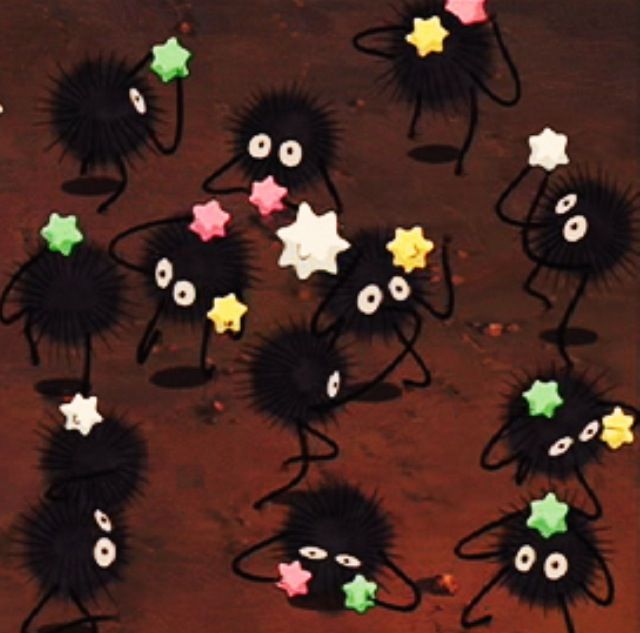
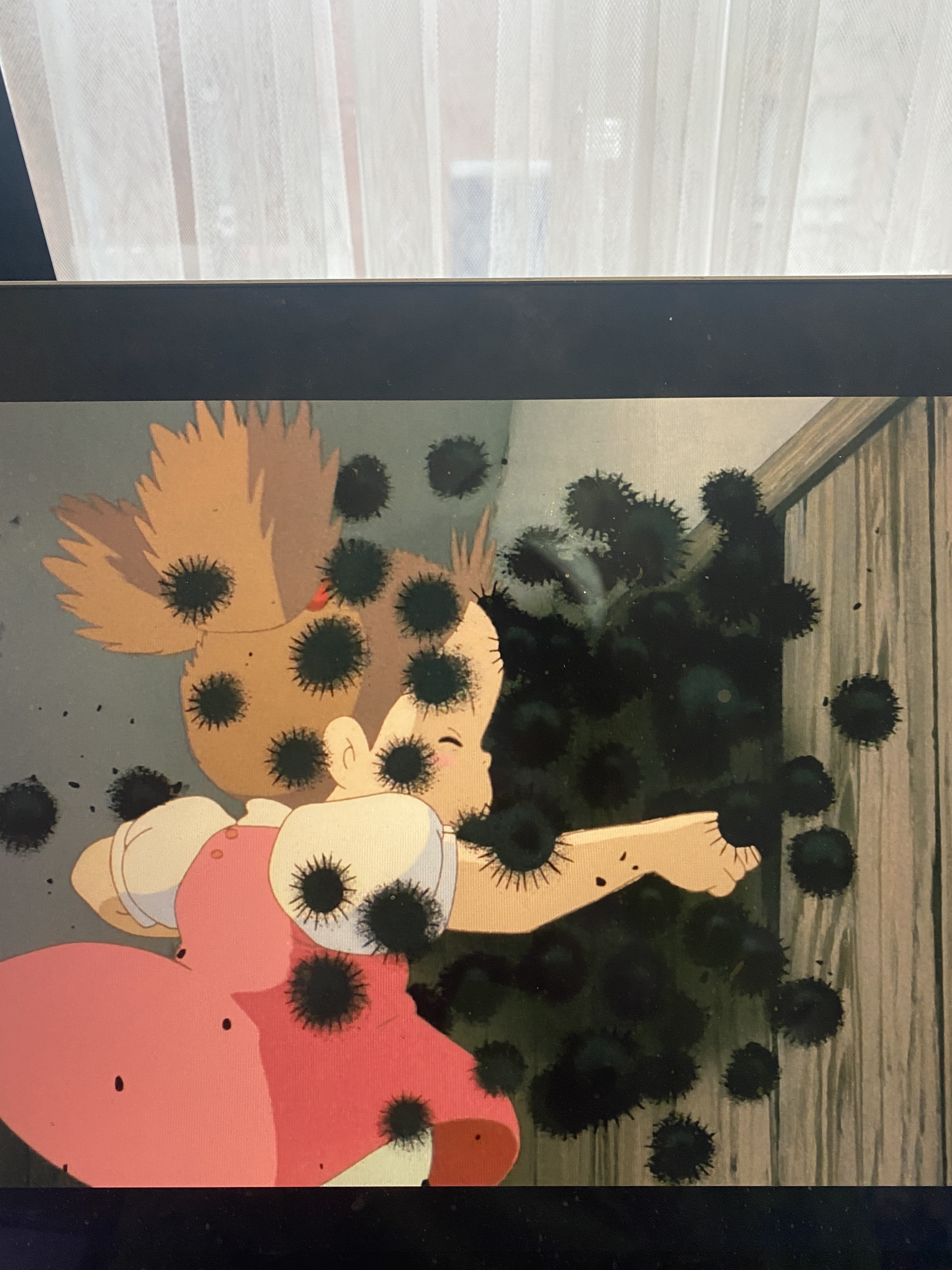
If only I could have purified my air! Forced to confront my body’s invasion (this time coronavirus, not just dust), I try to settle into the ‘load’. I make lists of the smells I miss, research perfumes online (aerosols glimpsed from the safe distance of text). I sneeze a lot, cry a lot, wheeze a lot; and then my sinuses go blank. Is this breathing? I imagine the cells of my body glowing new colours from the Omicron beasties. I re-watch one of my favourite Studio Ghibli movies, My Neighbour Totoro (1988), which features anthropomorphic dust bunnies known as susutarawi, or ‘soot sprites’ (which also appear in Spirited Away (2001)). The girls of Totoro, Noriko and Mei, initially encounter these adorable demon haecceities as ‘dust bunnies’, but later they are explained as ‘soot spreaders’ (as per Netflix’s Japanese-to-English translation). When the younger girl, Mei, gingerly prods her finger into a crack in the wall of the old house she has just moved into, a flurry of the creatures releases itself to the air. She catches one in her hands, and presents it proudly to Granny, a kind elderly neighbour who reassures her the soot sprites will leave if they find agreeable the new inhabitants of their house. When she opens her palms, the sprite is gone, leaving just a smudge.

An absent-presence in My Neighbour Totoro is Noriko and Mei’s mother, Yasuko, who is in hospital, recovering from an unexplained ‘illness in the chest’. Mei’s confrontation with the animated dust mites, or soot sprites, acts out the wound of her mother’s absence. With curiosity and panic, she and her sister delight in the particulate matters of the household, of more-than-human hospitality. What is abject about history then, or even the family, its hauntings, is evoked trans-corporeally through the trace materials of a powdery darkness, dark ecology (see Timothy Morton’s 2016 book of this name) that is spooky but sweet. (S)mothering in the multiple. My sense of smell now is consumed entirely by a kind of offbeat metallic ash; I’m nostalgic for cheap perfume. I’m not sure if this essay is a confession or who is speaking; it seems increasingly that I speak from a cloud of unknowing coronaviruses. And so where do I end or begin, hyperbolically, preparing my pen or straw? The ouroboros of my dust anacondas reminding me that I too was only here, alive and in this flat, by tenancy and to return from my current quarantine having prodded the household spirits for company, with nothing for show for it these days, except these, dust, my words.

Days of Scene

full-28

There was a brief period of my life where I was obsessed with Chicago. I thought all the best music came out of Chicago (maybe I could name three bands). It had a specific molten quality in my mind, like everyone there was never quite present but always dissolving at some point into the walls or sidewalks. There were basement clubs and people drank lager lager lager, a nod to cool Britannia, or else they swilled actual Liquor. I actually had no idea what went on in Chicago. It was possible everyone smoked in dingy bars and went about listening to jazz, feeling miserable. Did it rain much? All I had to go by was a Fall Out Boy lyric: ‘I’ve got a sunset in my veins / And I need to take a pill to make this town feel okay’. I was thirteen and still didn’t know what Seven Minutes in Heaven meant, let alone Sophomore; the spidery long titles made me feel Poetic. I was convinced Pete Wentz was the Bard of his generation. I still hadn’t seen any live footage of him goofing around onstage. I mostly thought of him in dark corners, sweeping his fringe aside, scribbling lyrics. Too much got spilled on the internet. I couldn’t believe when I found out he only played bass. 

Wasn’t there a gimmick with one of their albums, where you got special tarot cards if you pre-ordered? 

We used to stand on tables, chairs and cabinets back then, to get our selfies. Back then, they were prosaically named Profile Pics. You had to aim for a good mirror. The visible flash, you thought, was just a sunbeam addition to the general ~aesthetic~. You’d comment on each other’s photos, pc4pc. Like, Hello! It was good to get your legs in. Stripy knee socks or gauzy ripped tights. I wanted to wear a watch round my ankle like the lady with the white pumps at the party in Breakfast at Tiffany’s. I put rubber bands round my hair, dying it semi-permanent blue or pink, trying to get ‘coon tails. I backcombed with a religious zeal, scrunching as I walked to maintain the buoyancy. Hairspray wafted around us; a flammable aura of considerable permanence. There was an imperative to asymmetry, to looking a little like a lamppost. We all wanted to be skinny, we wanted the biggest hair. 

I grew addicted to the bright, popcorn guitar licks. The sugary vocals. They spoke to someone that wasn’t me; there was this constant apostrophe of the lost girl, the lost boy, the key to a locked diary. I felt like a year would pass and I’d slip into these narratives, grow tall, smelling the gas of those cigarette lighters my friend used to rig to make the flames a foot high. 

I don’t blame you for being you / But you can’t blame me for any name. 

There was this corny idea of the rock show, everyone bobbing their heads in time. It was basically prom without the couples and expensive dresses. We all dropped weight for it, we all found a sweat in the rhythm and heat. When I got sick, I watched Kerrang! TV for hours, probably still playing my Game Boy or something. They’d show FOB videos more or less on repeat. I waited up for my crush on MSN, gossiped with friends; maybe there was something in that cyan-coloured comic sans font he used. We drank Jolt Cola cut half and half with Glen’s Vodka. An electric shandy, six times your daily recommended caffeine. Running down the beach. Emoticon wars. Back then in the middle of nowhere, a text was like a radar signal sent from the deep.

2018, I try gifting my cousin’s baby daughter with a Hello Kitty hair clip. She doesn’t get it.

I wrote all sorts of pop punk lyrics all over my Sports Direct trainers. I like to think I turned up to gym class with these crappy white trainers, each one adorned with My shadow’s the only one that walks beside me. My teacher looked me up and down with disdain. I imagined she listened to Meatloaf on the car to work each day, wolfing tuna sandwiches. She said my trainers were too ‘flat’. She dragged me out the library, where I was often skiving; she made me play badminton for hours. I liked to reach and aim, slam something delicate and thin to the ground. That was kinda how it felt being in the world, trying to fly out all light and free, then some dude with a bat just whacking you back down, crushed and moth-like. Playing badminton felt vengeful. There were spiders in the showers of the changing rooms afterwards. There were kids in first year who would throw golf balls over a fence to hit us. If they smashed a window, we’d get the blame. Some of us stole fags round the back of the gym block, looking out at the Carrick Hills.

Walking the crossroads was my favourite escape. I liked the bit that unfurled into greenery, sheep, rolling hills. Sometimes I’d be climbing Kildoon, sitting by the falls. That was learning to breathe again. When a lorry came, I felt the rush pass through me like a terrible swarm of ghosts. I was rattling. 

There were diet pills you crushed with pro plus, sipped with diet coke or JD. 

In The Virgin Suicides, Lux writes the name of her crush on her underwear. This is a false start, by any means. In writing we only possess a shard of some other self. It’s only ever temporary. The shape of ribs, a smile, the cut of your bangs or hipbones.

Imagine writing a name now. Keats Keats Keats. Each iteration a tiny seed. 

Sometimes I liked to just lie on the concrete. 

In town, loitering is our ontological condition. We exist for no other reason. We browse but never buy things. Some of us sneak lip glosses, necklaces, bars of chocolate beneath our sleeves. I had a friend that could even steal booze and pills. I’ve saved up my daily lunch money just to get here on Saturdays. In Burger King, we kill time and snort vitamins for kicks. A year before the haze of legal highs set in. We are so young. 

All our talk is just procrastination. I watch you try on neon sports jackets in TKMaxx and it’s the best best thing. 

In Chicago, they had a scene. Sufjan sang about it on some movie they showed, eventually, on Sunday TV. Little Miss Sunshine. I’m not saying I identified with the nihilist son, but…I wished sometimes it was acceptable not to talk. The less I ate, the less I spoke. That was liberating, I suppose. I was in love with the place, in my mind / In my mind. 

There was the Easter holidays we played football down the Low Green every day, the last time in that year I remember being truly happy. All sorts of drama happened, breakups and makeups, and we watched it roll out from a distance. Smoked occasional menthols, hid under climbing frames, spun each other round in the night till we were dizzy. I never once grew tired of waiting at train stations. I had my iPod, my violet-lined eyes, my dreams. 

We walked along the river sometimes, deep in the foliage, and joked about places you could get away with having sex in. We counted the bottles of Buckfast, watched out for insects. Nothing seemed alive in the undergrowth. 

At school, there were never any practice rooms free so we sat on the floors of corridors, playing our shitty guitars. ‘Californication’, over and over, following some half-arsed tablature. The solo to Robbie Williams’ ‘Angels’ (how joyous I’d be if I knew ten years on a friend would make a vapourwave remix). I had no time for it–I was never coordinated enough for those licks and chords–but having the guitar in front of you was a kind of protection. You could talk all nonsense and pretend to passing teachers that you were doing work. As if they understood the mysteries of music. Regularly, the tech teacher would ask me, whenever I came to school with my trombone, if I was carrying a machete, an AK47. I nourished a kind of inward, low-level fury. Sometimes, they’d drop pennies at our feet for a laugh, as though we were busking. I wondered about all that copper and metal: where it went, eventually.

We wrote a song that ripped off the chords to ‘Brain Stew’ and my amp blew up someone’s boyfriend’s laptop. On weekends, there were sleepovers and we’d stay up till the wee hours, breaking apart massive bars of Cadbury’s Caramel while chatting to folk on MSN, Chatroulette, the laugh track of Friends or Father Ted in the background. There were only two buses home a day, and the rhythm of my Saturdays and Sundays was governed by that. I liked arriving home, sleepily, forgetting I once had a routine. It was wholesome to lie on your bed, listening to Mogwai, slowly sinking.

Occasionally, we went swimming. 

There’s a MySpace still out there with all these photos, histories stripped of context. Many of them are in sepia, owing to some new effect I’d discovered on my phone. It was a slide-up phone, designed for playing music out loud. It was like I wanted every memory to be always-already history, taking those sepia pictures. You can’t tell our age, except from the expressions, the thinness of our wrists. It wasn’t that we were innocent as such, it was just that we didn’t care at all. It was written on our faces, this not caring. Soon to be fun, let’s see. 

Every lyric iteration of html inevitably fades. What minimalist temple I had designed, stamped with diamond symbols and Crystal Castles mp3s, has since crumbled. It was probably a rip-off anyway. Wanting to look like Uffie, wanting to be cryptic, aphoristic. Coveting emotions as metaphoric fruit. All those bulletins, midnight reveries stolen from time on the family PC, are deleted. The endless, self-questioning quizzes. We learned more about ourselves, about each other that way than we ever did in a PSE lesson at school. We trod a dangerous line, exposing our confessionals. Last time you cried, last time you kissed someone, who do you trust no matter what? Sometimes it bounced back in unfortunate ways. 

This has been said / So many times that I’m not sure if it matters. 

Kanye calls his kid Chicago. He has that song ‘Homecoming’, with the cute piano riff, a monochrome world. I get a kick out of every library book that was published in Chicago. I have no idea what it means. The pages are dull and yellow, the text swims in a sepia sea. I can’t listen to those albums again without feeling some predictive force, a face from the tarot. It’s like every fast food ad has a burger that looks identical to the last, as though every diner uses the same stock photo database. All our desires grow uniform, in the envy of hair and boys and all consumables. Circling back. Do you think about me now and then? 

In Ayr, there are twin roundabouts bordering the station. I always got lost, trying to drive through both of them smoothly. I always came back round, caught in the westward trajectories of the next, the lights from Morrisons carpark smouldering into a school night sunset. Mostly I miss the booze and the dunes, the clandestine sense of just being there, cutting about in front of the ocean. Cutting out time as a fact of the water, the light; sirens cloying the air behind us. 

Dark Chocolate Auras and Strange Ecologies: Daisy Lafarge’s Understudies for Air 

IMG_7965.JPG

Sylvia Plath wrote many of her Ariel poems in the wee hours before dawn, sucking in the cold and inverse crepuscular air, its colourations of sinister lilac and absent sleep. We have a cliché of the poet’s spontaneous overflow, but instead with Plath there’s a sharp intake, a suspension of air, of breath: ‘Stasis in darkness. / Then the substanceless blue / Pour of tor and distances.’ We have to think through the impossibility of a substanceless blue, as everything must be a component of something; we are all of a sort as perilous hybrids, weak in some place with the viral code of our own demise, shimmering within and outside us like a beautiful aura. The speaker paralyses herself on the brink of sublime, of suicide. Tor: a hill or rocky peak. Vertiginous depths to erase the scale of the self on earth. Tor: a free software project which protects your privacy online. Where history bounces back, is the elaborate sarcophagus that traps the foul air of your history. Think of layering, onions, peeling stench of purple flesh. Indulgent recipes for regret; the cloying addresses of cheap pornography, of midnight Amazon deliveries. Inside the deep centre a secret, liquid sweet as Timothy Morton’s chilli-dark core of chocolate ecology. Chilli, chilly; a shiver in the air that is freeze or fiery. I have been googling your name in my sleep. A shivering, unsettled enmeshment. The encryption an insufficient addition to the substance of memory, its thick brain mulch of skin and image. Such protocol stacks are hypothetical only, nested as the heavenly day that will not die. Wordsworth singles his day from a tangle of others, the onion clot and rot of forgettable hours. To dwell forever in that substanceless blue! To wear innocence on the sleeve of freedom! Plath’s line breaks are harsh and sharp, they flake off the page in their skinly abscission of sound and sense; the body is imposed on grander scales, made to stretch then wither in variable ‘dead stringencies’. All of a space, the thin poem shivering down a spacious page. All of this is so much of air. Take me to the edge, go on, it’s a dare.

An understudy is someone who learns another’s role in order to act at short notice in the person’s absence. You lurk in the background, an absent presence of possible flourishing. The poem as understudy: recipes perhaps in the absence of breathing. What we read when there is no air left to breathe. Poems in reserve for a gradual apocalypse. What exists as core substance, what complements the element whose insouciance charms the lungs without thought. Derrida’s maddening supplement: neither presence or absence, something added and something in place of. An understudy for air, a rehearsal of air’s function. Anthropocenic, tarry air, stung with coal and thickly textured.

Robert Macfarlane asks that we find a ‘thick speech’ for articulating life in the time of climate crisis. Enter Daisy Lafarge’s Understudies for Air (Sad Press, 2017). This is not a collection, ostensibly, about ecology or even the end of the world. It is a phantasmic scaffolding of words and lines for living, breathing, being. Its epigraph takes the axiom of the pre-Socratic philosopher, Anaximenes: ‘The source of all things is air.’ Air being then the ubiquitous neutral substance, something available for occasional roles in physical process. A reluctant but capable actant, developing itself or forced upon by other natural causes. Air’s principle shifts bring about the other main elements: flicker into fire through precious density, condense into wind or water, earth then stone. Anaximenes articulates this through a simple example: if you relax your mouth and blow on your hand, it’s hot; if you do so with pursed lips, the air is cold. So rarity correlates with heat, density with cold. A beautiful, quiet, material intimacy. Everyday action, for Anaximenes, here forms the source of a theory of matter, and yet ever with time this matter recedes. There’s a scarcity of air, something sparse and grasped for in the gelatinous enjambment of Lafarge’s lines.

Precision of form: shortness of breath. When we pause at caesura, pause to breathe, when we lilt our words over the ambiguous interval of a line-break, we are forced temporarily to think about air. I recall the little ticks my brass instructor would make on a sheet of music: remember to breathe. The ticks would supplement a conventional musical pause; I guess I just needed more time to breathe. Breathing is temporal, but also material. There’s a precision to Lafarge’s form, a negotiation of reflective lyric transposed through material effects and affects. In ‘sapling air’, a sense of childhood’s loss is articulated as nonhuman ailment, the ‘first outbreak’ which is a poisoning of the air or the bark of trees. At first I think ash dieback, but then we are taken somewhere more grandiose, planetary, magmatic. Lying in the liminal space between ‘child / and whatever came next’, the speaker is in the bath, ‘gazing up through the skylight / as a plane passed overhead’. This sense of temporary epic scale, its vanishing écriture of ‘vapour trail’, is a writing of fleeting sheen. I think of glassels: those stones which appear glossy beneath water (in river or sea) but when picked and brought home they revert to dispirited dullness. It is as if life has left them, where momentary they truly appeared as vibrant matter, appealing to the senses with electric connection. Is this the fate of the bath-varnished body? How beauty consists in the wounded part of a thing, a fragile glitch in the viral code—what makes death inevitable. Stones ground down by the sweat and chafe of salty water, the sky a landfill for carbon dreams, modernity streaked across substanceless blue.

The speaker glimpses the oscillating scales of panorama and miniature: the passing plane and the ‘passengers’ eyes’. She sees through the eyes of others; a vertiginous, fleeting sublime in which she is the one looking down and the one looked down upon. Humans become binary nodes in this networked communion of sound and sense: ‘the passengers’ eyes flickered on and off / with signal’. Air carries, air travels. Air miles, as both temporal noun and verb. I find myself tangled in the space between transitive/intransitive. Air signifies the dialectic flickers of presence/absence. Accumulates, billows. What the speaker notices is a peculiar distortion, a toxicity overlaid with her own poisoned body: ‘I looked down. the bath water / was the colour of porphyry and I could no longer breathe’. The excess of the skin flakes away as feldspar, silicate rich and igneous, carrying traces of radial or volcanic exposure, imperial purple or deposited copper. Containing within it divergent scales: wee matrix crystals and larger phenocrysts. The speaker experiences her body as this suddenly alien thing; the sight of the bathwater steals her breath. Is it the first glimpse of what the outside does to the inside, the staining within us we leave on the world in a permanent toxic chiasmus? But I can’t help think also of period blood, given the speaker’s interlude adolescence: something tricky to articulate that nonetheless clots in the mind as childhood’s instated loss of innocence, a condensation of excitement that clings then turns readily and stickily to red, to blood. That moves in turns, cycles as the waxing mist of the moon. What is this substance, this iron-rich bodily flood? Where matter confuses, we turn back to air.

She tries to express to her father a bewildered grief, ‘there’s something wrong with the air’, but her ‘words went through to dial tone’. There’s a delay, language meeting its buffer at difference: through what? Gender, generation, divergent points of vision? Her special melancholy is something that lingers down the line, seeps inside the passage of time. The poem closes: ‘I still wonder, how many months, years from now / he will listen to the message’. Throughout Understudies for Air, Lafarge uses this technique of unfurling: instead of saying simply, ‘how many years from now’, she adds in the months, practices a sort of delay or lag. I think of smoke billows, slowly dissipating. Of what it means to say, there was chemistry between us, an atmosphere in the room. The way voiced words vibrate momentarily in meaning then once again settle to silence, stasis. An almost electricity, crackling then out. Compare this to the written word’s more permanent, inevitable viscosity. Language sticks: you can tease it over and over, read the same thing till centuries down the line the ink wears off from the page. You can replicate. Speech is quite a bit more fleeting, unless you set it down on wax or tape, find new ways to materialise language’s spit, crackle, lilt. The forcing of sign and shape from sound.

Air in Lafarge’s collection is a sort of pharmakon, in Jacques Derrida’s sense of an undecidable fluctuation between poison and cure. It is a substance acted upon with the medical impetus of invasion: in ‘desecration air’, ‘brittle waves of grit’ are ‘growing, syringe-like / into the air, and in so doing suckle / and cleave the dunes around them’. There’s a sense of maternal genesis and geologic violence, an injection of force into air’s spaciousness. For air at once signifies space and density of matter at the brink of scattering, sparking, forging. I start typing what is air into my search bar and it suggests, where can it be found? I am suddenly struck by air’s mystery, the possibility of everyday deception as to its ‘nature’. What is taken for granted has elusive substance; after all, can we view air in the object-oriented sense of ‘object’, or even, at transcendently nonhuman scale, ‘hyperobject’? For air blends and bleeds, both substance and accident. The painting or glass had an airy quality, we talk of a room as light and airy. Does this mean more air, or air less dense, more receptive to breath and space and quiet? Air is rich with the silt of existence: dust being its materialised twin, these myriad phantasms of hair, fibre, textiles, minerals, meteorites, mostly skin. Air is nitrogen, oxygen, argon, carbon dioxide flavoured with traces of neon, methane, helium. We breathe air but also pass constantly through it, as our molecules swim in the vast bombardment of other molecules swirling. Ambient air is safe, we pass through it daily; but air can also spark, as fire’s immanent ingredient, awaiting some flagrant chance to burn. We talk of dry air, damp air, air that feels ‘close’. Air signifies both absence (space) and presence (elemental matter, tangible substance). Air is always potentially transformative.

There is a poem called ‘calque air’. Calque means loan translation: a word-for-word exchange of meaning across languages (examples include ‘fleamarket’ and ‘skyscraper’). In French it means literally ‘copy’, derived from calquer: to copy, base on, trace; derived again from Latin calcāre, to tread, press down. Thus in the abstracted xerox of translinguistic exchange, we meet a sense of material rubbing, the friction that exacts its inscription between two substances: stone on stone, wood on wood, paper on paper etched with lead. It’s a physicality that chills the spine. Yet tracing somehow also connotes residue, the excess material produced by this rubbing, the patterning stains set down by a tread, like footprints sunk deep in the sand and preserved semi-permanent by glitters of frost. Lafarge writes: ‘people / were finding messages / in their bodies they hadn’t / written’. Again this sense of material semaphore, whose translation is a phenomenological act of physical reality, a sudden otherness within us that requires an empathy, an excess, a confusion of words rubbing wrongly against one another: ‘it was decided the system was malapropic’. Language spiralling as if in the hands of the nonhuman, the air or machine or book.

Anthropomorphism reaches its textual extreme: ‘the book grew hair, organs, toes’, and so even ‘accurate translations’ become disputed, subjective, active and physical. What is it about air that somehow substantiates the symbiosis of language and matter, its aching and perilous leak? Here we are, tipped in the gaslit eve of twilight, where ‘the sky throbbed / sideways like a haemorrhage’. Matter acts upon us, causing a gulping or gaping as we churn through it, our bodies mucilaginous mulched into altered form, new affect. We can try to discern the nature of air, but in some way its inner essence remains recalcitrant, resistant to the interpretive instruments of other forms, including humans. Lafarge plays on the semiotic plurality of ‘forms’, poking fun at science’s ‘consent and feedback forms’, ethical necessities which prove useless upon the elusive air. This raises the question of how to extend a nonhuman ethics, what forms of consent are required when probing and monitoring their patterns of agency or behaviour? In ‘attempted diagnosis air’, Lafarge concludes: ‘in the end, / you left the forms in the airing cupboard / to let the air fill out itself; it acquiesced / in many hands of mould, dust and heat, / none of which you could hope to translate’. The air transmogrifies into purely itself, is available only as sensation in the perceptive ‘hands’ of other substances. It’s worth quoting Jane Bennett at length here:

 Thing-power materialism figures materiality as a protean flow of matter-energy and figures the thing as a relatively composed form of that flow. It hazards an account of materiality even though materiality is both too alien and too close for humans to see clearly. It seeks to promote acknowledgment, respect, and sometimes fear of the materiality of the thing and to articulate ways in which human being and thinghood overlap. It emphasises those occasions in ordinary life when the us and the it slipslide into each other, for one moral of this materialist tale is that we are also nonhuman and that things too are vital players in the world.

Air is surely the channel for thinking through this vibrant materiality. Lafarge’s poetics, shifting through sparsity and density, perform this slippage between human and nonhuman at variable scales. Rooted in ordinary life, in personal memory, the poems of Understudies for Air root out these collected knots of ontological ‘torsion’, the ‘bunioned’ meanings that wash up like offerings then shut down all visible meaning—‘they closed in my hand / like eyes’. The lack of capitalised titles renders the poems’ drift into one another, in free-flow without the arche conventions of literary closure, of textual finality. A sense of fractured or wounded text, poems chipped out of a grander object, left now to change and drift. In ‘driftwood air’, driftwood makes a temporary semiology of the shore. Driftwood being perhaps the airiest form of wood, a text well-chewed by aquatic bacteria, lightened and smoothed by the tide; erosion performing its nonhuman act of calque: a copying of wave upon wood, the tiny treads of millioning microscopic appetites, like the imperfect press of a nonhuman telegram. With her spells of air, Lafarge conjures a vibrant ecology of non-anthropocentric process; evocative still as such effects take place through the decomposition of the lyric ‘I’, whose voice drifts out in nonhuman confusions, signals and distance. Human affect returns in glimpses like delicious flotsam, jetsam, moments of reflection gleaned from material debris.

The ‘I’ often shrinks or recedes, but sometimes floats over the ambient scene with declarative assertion: ‘the twin lines of naming and being / run parallel but never touch’. Such philosophic pronouncements then melt away in exploratory thought, lines closely attuned to trans-species process: the swell and lurch and pleat of water, plant, lichen or toxin. Once again we come to air as pharmakon, and so its process arises as a sort of pleasing monstrosity. The odd thing about plants is they just grow, often without purpose, foregoing teleology for an impersonal, gorgeous flourishing. In ‘asbestos air’, the speaker marvels:

lichen and moss
grooming your body;
it is a relief to watch
things grow without
difficulty

End-stopped punctuation is often foregone for free-flowing, morphological enjambment throughout Understudies for Air, so the inclusion of semicolon here is its own kind of force. I think of imagism’s stop-motion visual equivalencies: Pound’s apparitional faces in the metro and wet black petals. The ‘body’ in question could be human or nonhuman. There is a plain admiration of process and flow, the ease of growth that feels significant against the endless stuttering, knotted bolts of human maturity. And what about ‘asbestos’? More silicate minerals invading the air, released by abrasion and enacting a slow-release of symptoms, as deadly fibres clot in the lungs. Asbestos makes its own mark upon air. The speaker clearly craves that insulation, a felting of absence with ‘lichen and moss’ that comes as a ‘grooming’. Grooming being the softening and smoothing of matter, but also tinged with danger: to be groomed is to be seduced towards some form of invasive peril. Twin signals, twin materials; a chiasmus of death and sleep’s electricity. Sucking in air, we sleep towards death; slowly we rove over lines that enamour with deceptive simplicity. We can’t help but breathe in sleep; it’s just evolution. What’s more, nature isn’t mere positive growth, but might be compounded poison, cancerous swells. Tumours accumulating almost mycologically, darkly twisting and rising in the shadowy mulch of the organs, the undergrowth. Behind a benign appearance is the spectre of asbestos; for of course mosses and lichens are indicator species, material harbingers of polluted air. Air is the cure, the restorative; but air can also kill. It is both oxygen and carbon monoxide, its healthiness hinges on a delicate balance.

Air’s undecidability, perhaps, is a deconstructive motion of question and answer, a maddening circuitry of frazzled nerves and linguistic synapses. In Lafarge’s attempt to materialise air, to verbalise its form as supplementary poetics, writing does the work of metaphysics. Enter Maria-Daniella Dick and Julian Wolfreys in The Derrida Wordbook, glossing Derrida’s term undecidability:

If metaphysics teaches us how to read, and reading teaches us metaphysics, birthing each other in a twin maiuetics, then deconstruction also calls us to a reading. To read undecidability is to resist that other resistance which would efface it.

Air’s invisible toxins make themselves known with prickling, painful insistence at the miniature level of surface pollutants, scum left on water or stains on metal. A poet’s Keatsian eye would draw out this material tread of Anthropocene effect, illumine its slow evolution with the linguistic wit of a chemist. The irony of deep-time causation at the hands of humans, those obfuscations of cause and effect that place humankind as geologic agents. Reality, matter, climate change become undecidable. We are being taught, in these poems, the call to the earth that is really a subtle conversation within our own bodies—palimpsests of dangerous nature we tried to fashion but grew otherwise, anyway. Despite melting icecaps, the air grows colder in winter, it thickens.

Lafarge develops this viscous, hyperobjective symbiosis through her descriptions of air’s sticky contaminations. There are ornaments of scattered matter: bitumen, seed heads, the wildfire possibilities of ‘drying leaves’. There is a constant overlay of the biological, spatial and arboreal: ‘we soiled our mouths to mimic / the good fettle of root and seed’; those ‘dark thickets of lung’. I think of the word forest, then ‘for rest’. Places we go to shelter, to cleanse ourselves scented on pinewood air. We can’t see the woods for the trees, or was it the trees for the woods? Morton’s idea that we need a return to parts over wholes, this notion of subscendence: the whole is always less than the sum of its parts. A tree more important than a forest. Lafarge strains her ear to every little activity, the expressions of suffering that come from sources beyond the human: ‘on every corner a tree / articulates its script’. Tree language is material too, it is sound in the air unique, and seedlings glistering on rustling rhythms. It is the flail and droop of branches diseased, stung acid by rain or ravaged by leaking methane.

To put words in air implies a sense of declaring, but this is less the enlightened ejaculations of a singular genius and more a sensual symbiosis: ‘the words / identified me as carrier / and now along I go / sowing their imprint in air’. To sow, to plant seed, to let meaning take root and feed upon air and soil, sound and shape. By tuning to nonhuman forms of inscription, Lafarge attempts to answer the call of the absolute other. This is ecological poetry’s luminous tool, its potential ethics.

This is also, to a degree, Michael Marder’s ‘plant-thinking’: a thinking about plants, a thinking through plants, a symbiosis of human and vegetal thought at the level of form and content. Not discursive domination of subject but a perceptive, non-anthropocentric and multisensory modality of what Marder calls ‘transfigured thinking’. I cannot help think of a shadowy, cooperative alchemy in which the baroque foliage of language ravels round the utterances of the absolute other, those bladed shivers and flashes of light, that speak of time felt close in the skin of a cell. It is a metaphysical elixir that deconstructs its own postulated recipe. Metaphysics, for Marder, is unable to think coextensively ‘with the variegated acts of living’ that exist in plants; it seems to ‘affirm the quasi-divine life of the mind’, but actually ‘wields the power of negativity and death’. It risks becoming ‘a cancerous growth’, smothering the plants it attempts to draw ‘vitality’ from in knowledge and energy. I think of the chemical kill that Keats in Lamia implies is the effect of philosophy, which ‘will clip an angel’s wings / Conquer all mysteries by rule and line / Empty the haunted air, and gnomed mine’. Writing poetically, we must be tender, channel the lurid sounds that fill the sparkling air, nevertheless deathly polluted as a charnel ground. Embrace inexplicable oscillations between the living and dead; challenge binary conceptions of stasis and liveliness, animals and matter. Retrieve a kindred sense of mutual mystery, preserve the lingering aura of species-being. Plant-thinking must instead be ‘receptive’ to the ‘pole of darkness’ within botanical existence. There is a Keatsian sense of negative capability here, a chameleon dwelling in the infinite and multiple, the rhizomatic offshoots of unknown effects, undecidability. There’s a Deleuzo-Guattarian intermezzo too, as Marder puts it: ‘To live and to think in and from the middle, like a plant partaking of light and darkness, is not to be confined to the dialectical twilight […]. It is, rather, to refashion oneself […] into a bridge between divergent elements’, to allow that darkness to shine as much as the light of visible knowledge. Remain discursively flexible, morph through variant perspectives.

We have here an immersive rhizomatics, hinting also towards Graham Harman’s assertion of the object’s metaphysical withdrawal. Lafarge’s speaker certainly stands in this middle, exploring ‘a vernacular for pipelines, / circuitry, the fetid grids and systems’. She doesn’t penetrate essences. Stinking like soil mulch, our carbon economy is overlain with what we traditionally take to be ‘nature’: those lichens, mosses, leaves. We are reminded that cancerous growths, chemicals and shameful asbestos are as earthly as the daffodil or ash tree; each to each, irrevocably and intimately enmeshed, from the clinging of air to shared DNA. The speaker lets nonhuman forms speak through her: the shape of those gusts and shudders, those incremental growths and sudden ruptures, take effect in the passage of language. She brings us quietly, unassumingly, to aporetic conclusions, refusing to clasp meaning’s assertion from the lateral sprawl, preferring the precarious, seductive dissolve towards undecidability: ‘I still think of them, their clod eyes / roiled with fever, churning the peat / of a stagnant loop’. Clod: insensitive fool or chunk of mass. A clod of stone, an ignorant clod. An estrangement of nature, a closure of humanity to uncanny matter, churned in the loop of signature tautology—a metaphysics of presence that is ever an ‘argument’, a stagnant pool. How we must dwell, thickly, in these poems, these fleshy pools of blood and sap and dripping air. The declarative trochee like a stone thrown in a pond, ‘roiled with fever’; these shivers on the petrified skin with its fur of moss, toxin, mould. Conveyers of nonhuman temporality. The speaker licks such substances with lapidary language; the effects are circling, strange, recursive as a maddening philosophical problem. She dwells quite certain in uncertainty. Perhaps this makes her the perfect understudy, questioning but never at the point of egotistical revolt.

If all that is solid melts into air, then we know this now to entail less evaporation than transmutation. Solid objects arise elsewhere. What daily we flush, cough and excoriate from our bodies floats out in the hothouse biosphere, only to be reborn as fragrant waste, the fettered matter that is fetid at the point of being/becoming other. In the pamphlet’s final poem, the speaker passes a ‘high-rise’ and in the shrill of its alarm encounters an ‘elderly lady’, naked in her white towel like a terrible angel wrenched from the heavens to corrode on earth. The white signifies a kind of surrender to time and matter; the woman addresses the speaker thus: ‘one day I will know how it feels / to haul around a body of rotten flowers, to let memory / chew holes in my mind like maggots’. I’m reminded of a passage from Virginia Woolf’s Mrs. Dalloway, where Peter Walsh witnesses a vagrant woman, ‘opposite Regent’s Park Tube station’, her gurgling vowels speaking in a tongue he cannot understand. Is this a primitive ecofeminist figure from the future-past, her voice ‘bubbling up without direction, vigour, beginning or end, running weakly and shrilly and with an absence of all human meaning’?  She speaks with ‘the voice of an ancient spring spouting from the earth’, channels somehow that geologic core, its rupturing pain. There’s Jonathan Bate’s insistence on poetry as ecological dwelling, in The Song of the Earth (2000). Woolf’s eerie, primeval wanderer stirs up the dead leaves from their settled grave, recalls an ancient song that aligns feminine suffering with planetary pain. I think again of Lafarge’s speaker, lying in the bath with a sense of her own body eking out a substance unfamiliar, the water stained a curious, feldspar colour. Poetry as monstrous giving-birth, poetry as vegetal thinking; poetry as lichenous growth or ambient eddy and flow.

There isn’t much pastoral about Understudies for Air, where things are scorched or ‘unspeakable’, full of porous holes and an inexplicable, surveilling gaze, those eyes which absorb and emit reality with cytoplasmic osmosis. There’s a dwelling in-between; a refusal of pastoral’s smoothed surface, its crudely soldered contradictions. Lafarge’s material history is thick, polluted, complex: irrevocably enmeshed with the speaker’s autobiography, a slow enclosure of tainted expiration; the result of some unreachable, originary trauma—the first infected inhalation. As the first poem opens: ‘difficult to pin the beginning / of the bad air’. In the Anthropocene, as with shame and trauma, it’s tricky to find causes, to trace singular beginnings. We have to face the impossibility of the transcendental signified, keep crossing over the same old tracks, tuning to peculiar scale effects in the dust and dirt, shaking the rain from our wilting manes, blades, branches, names. We can hack at the data, break the trees. In the end it is all just mutual suffering, the poem as supplement for what we can’t say, the horror of thought that is personal guilt and environmental blame. Yet somehow, Lafarge stirs sweetness from the wastelands of contamination, a little bit of the old Eliotic ‘breeding / lilacs out of the dead land’, or Morton’s molten, dark ecological chocolate. We move from depression to mystery to empathetic, mouth-melting sweetness. What you bury might come up lavender later; death still tainting, beautifully, the fullness of life. There is a shivering ethical suspension between the one and the other, cheating human text with the infiltrating voice of the strange stranger, where even the poet doubles back on herself, shrinks and fades, becomes alien against her own voice and song. Amidst all these ‘unspeakable things’, Lafarge reflects the coruscating absence, the flicker-to-effect of the dust in the air; motes of melancholy love, life and death, that cluster temporarily in poems and feel like a homecoming, yet always on the brink of becoming unsettled. Forever this ‘speech / impaired through contact / with the air’, the wrenching of justice from staunch aporia.

All this is so much of air. The words clot and float, they are pushed elsewhere as stacks of data, the coded reverie of software forgotten. Dwell in the dark web, a gossamer poetics that drips with the fringe-work of hackers, pirates, spiders. Once again: ‘homes / for unspeakable things’. Protection of privacy, pelt of fur, air that gluts on the temporary flesh of speech. A child’s ‘moonmilk / crusted round its mouth’. Language for future generations, raised on the logic of ‘selenography’; all human attempt to make sense of time beyond the body. There is a rhythm and a dwelling, a child’s bright cry in mica-flecked darkness. We all find overlays for our love or trauma—‘perhaps it was an early leak of the air / that conjured the image of his mother’—but instead of burial there is only entanglement, the sentencing ever excess of ‘a bad root / growing in every direction’. Trouble is, we can’t find it exactly; it grows and grows regardless. It shrouds us, auroral, auratic. Lafarge picks at flakes of flesh and star and paint, travels arterial between filament, taproot, wire, synapse and galaxy. Understudies for Air feels performative, a traversal of myriad sorts that folds back on itself, reflectively prone to spiralling dialogue, a postured void. For, as Steven Connor reminds us, the thing about air is ‘it encompasses its own negation […]. Take away the air, and the empty space you have left still seems to retain most of the qualities of air’. It’s in this multivariant, phenomenological pulse that Lafarge’s speaker dwells, sparked against the air’s vibrant matter as much as its ever conditional abyss. I read her words over and over, fragments of collected matter; conjuring in the cold winter light some other possible, nonhuman chorus. I’ll vapourise now, leave you trailing in the ‘fuzzy, fizzy logic of volumes rather than outlines’ (Connor), for it’s the sheer glut of language, coming in and out of phase with human perception and nonhuman form, that really matters. Matters. Connor again: ‘We earthlings, we one-foot-in-the-grave air-traffic-controllers, may have much to learn from the clamorous cooccupancies the air affords.’
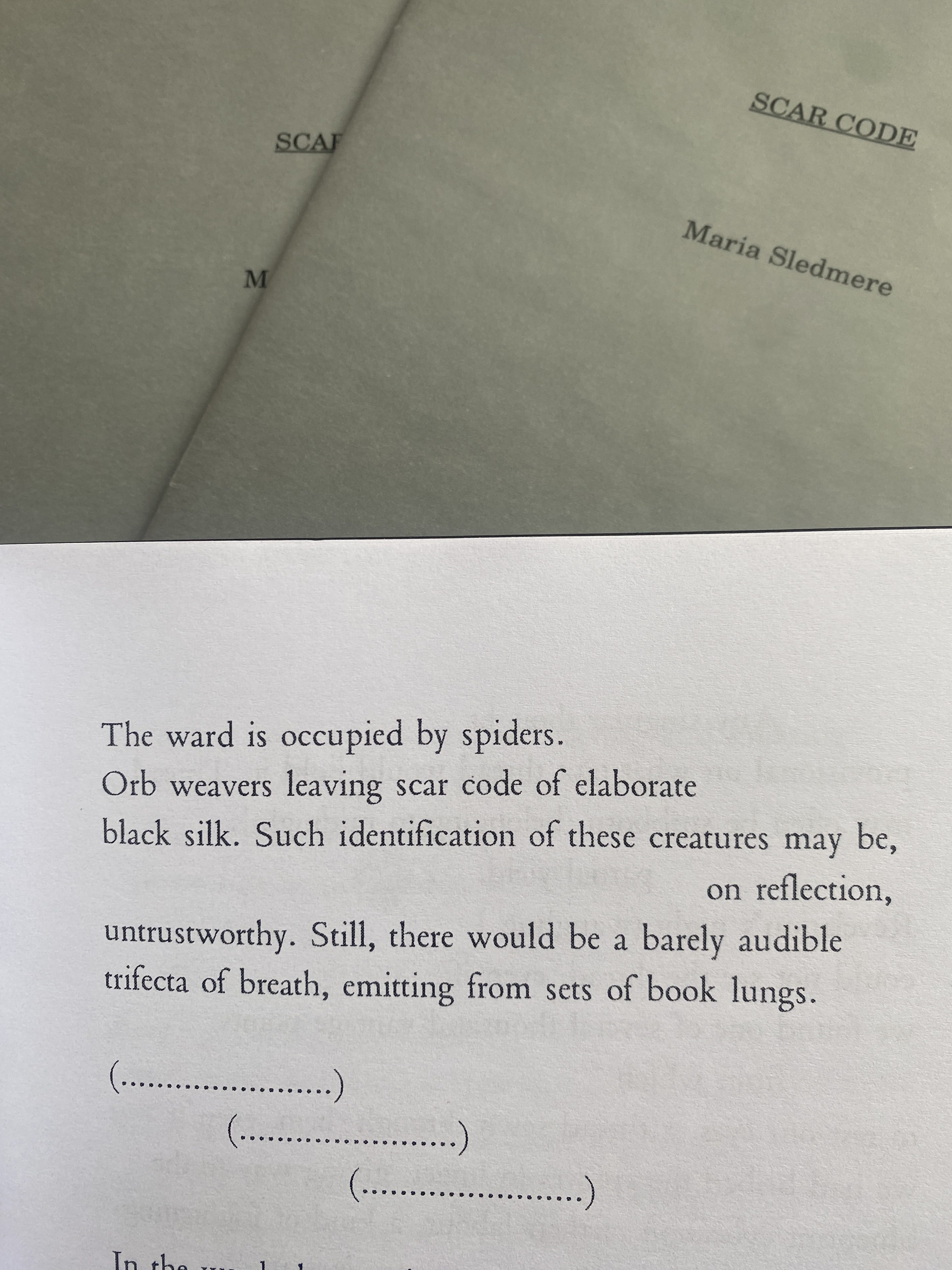
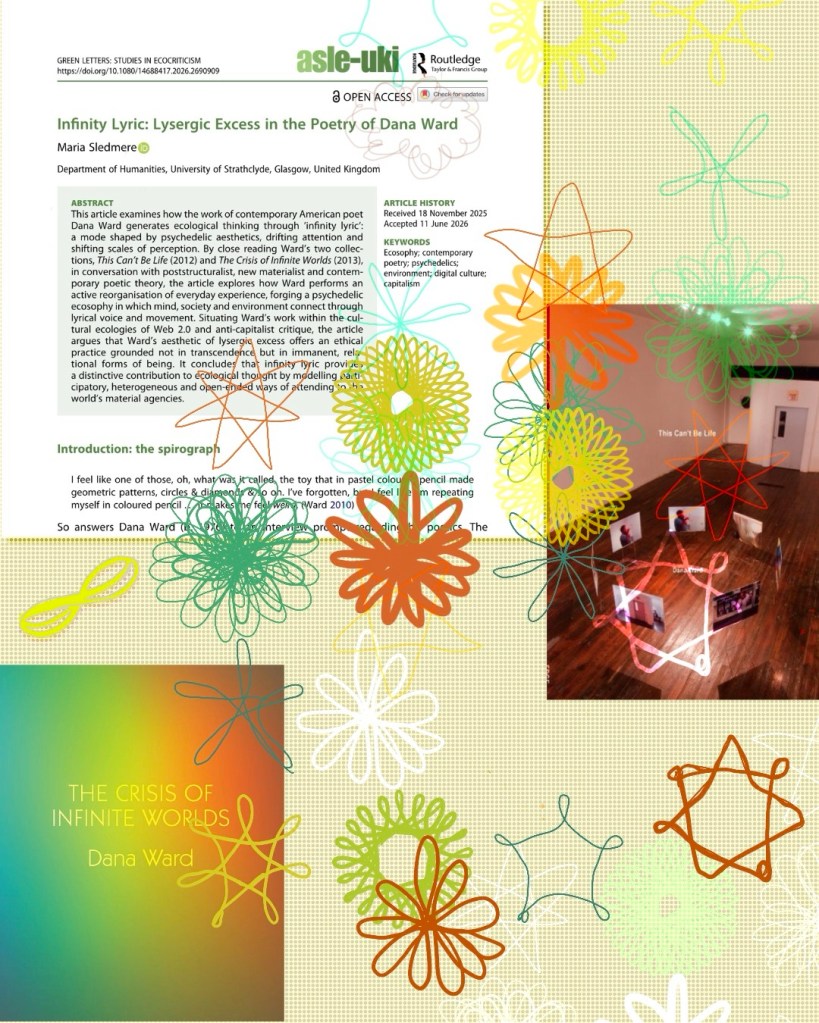
Lost Water: Towards a Phenomenology of the Kyle Centre

skylight.jpg

A crumpled local newspaper, ink bleeding in the rain, a tattoo of useless words on the Styrofoam takeaway. A case of stacked metaphors, every sentence weighted with the freight of muscle, plunge, pressing ahead. Snowflakes of unbreakable material make their way across bladderwrack pavements. Words like eateries and retail melt through the cracks and what’s left is the skeletal possibility of what could be, mulched in quicksand, the mall revamped with luscious funds and pumped to the brim with glass, tiles of parquet impression, leisure. The Kyle Centre mall, as understood in American English (O to cue Idlewild forever in the longing for that sensitive, Irvine drawl), once boasted a fountain where you tossed in your lucky pennies. There was a genuine, operating foodcourt. In the summer, tents would be erected upstairs for sale; a bouncy castle provided cheap joy for children and teenagers bored by another washout July. Many of us stole first kisses in the warm, polyester glow of those tents. We’d take caffeinated beverages and go browsing, the way you do now with the ease of a thumb and the screen, the virtual checkout. The semiology of colour in familiar high street stores, from Next to Topshop, functioned as landmarks in the crisscross abyss of ersatz environs, scaled to micro.

What comes next, next, next—a panoply of signage directs the flow of bodies. There were four entrances and exits, but only locals mastered the correct orientations. Kids drifted aimlessly up and down the escalators, shouting to friends who clustered on the floor below, sharing meal deals purloined from Superdrug, dropping fake grated cheese on the sallow floor. Medievals feeding their daily, carpeted fodder; a spin-cycle draining the pockets of millennials. All was amalgamation, consumerism in miniature. There was the looping belt of process that brought each person’s return on a Saturday afternoon. You might say bustling, even, if you were a journalist running out of words. You felt the bloat, the awkward accrual of bags, the jostle towards actual sunlight fizzled in the imminent night. Evening came quicker by the sea, shaded by islands and cloudy bars. Making impulse decisions, drawing back to the thing that comes without thinking.

To return ten years on is to witness the boom and bust cycle’s distilled effect. Scrunched out remnants of culture, expendable income bleached to regret. Towns throughout Britain, of course, lay waste to the whims of the market; but few as strong as this one. A smattering of bookies, charity shops, pawnbrokers and dingy discount stores spring up where cafés and clothes shops used to be. The supermarkets teem with the deranged ennui of the drifters. Old folks carry their bags to and fro, not gathering—not even picking the fruit of occasional Watt Brothers lipsticks. Their gums sink with cheap mints, the quality of the buskers slackens to fraught renditions of ‘All of Me’. As if the comprehensive self were still a myth to be chased. Pill poppers make the rounds quite openly, TKMaxx installs vein-resistant violet lighting in its bathrooms to stave off addicts. The establishment dwindles. Woolworths closed an age ago; they are slowly getting used to it.

As operational concept, the town brings out its humming despair. Gulls swoop in circles, waiting to descend on their carrion, the fag butts flicked into new oblivions. When dropped from a four-storey carpark, nutmeg stoned, you practise the art of temporal refusal—stepping literally into the upswept dust of the times. Trying out the bone-shattering acrobatics. Something glimpsed on telly. Creating a whirl of delusion which staves off the fear, if only for three hours with side effect headaches. You sit in the sticky dark of the Odeon, chewing peanuts, waiting for the arrival of those who won’t come. A shower runs on in the back of your mind; numeric paranoias flourish like dog daisies in June-green meadows. All of a sweetness, lingering aspartame. River Island being that literalised metaphor for outdoor fashion, something exotic in the lurid schemes. New tribes stranded on the traffic islands of their adolescent years, calling for help but only serving to prompt more crashes. The roadsides fill up with scrap metal, coke cans, broken dreams. Only the criminals pick litter and weeds. Somebody stops you on the street to ask about your pension, your PPI. In trackies you concoct some lie of an income. It feels better to exist beyond form, chewing a pack of mucilaginous candy, taming the jaw towards process. I run, I run, I run.

Practitioners of parkour and skaters clatter up the common walkways, alleys–backflipping normality. In that violent clack or fall of trainers, they emit fresh wavelengths on the general orbit. They are trying to avoid, like all of us, the inevitable, hullabaloo pull of the Kyle Centre, its middling void drawing us back to terrible origins. Returning after years, I found the mall to be almost utterly empty. The floor tiles coated with a fine layer of dust. I could almost hear the tinny echoes of Macintosh Plus resonate in the brain as I glided around, glancing into the charnel grounds of abandoned shop windows. Was this the mall of yesterday, snagged in its vividly bland, retro-futurity? Tacky goods, novelty toys and festive decorations were stacked up without sale, all in a jumble, asynchronic. There was an elegiac quality to the silence, the desolation, the click of my heels on the tiles. Usually, a curated selection of galling chart bangers would blast from some unseen stereo, but this has been replaced by a low-level, Lynchian electrical hum. There’s almost a sense that the whole setup could explode; something of J. G. Ballard’s comment that ‘reality itself’ feels like some kind of elaborate ‘stage set’, one that ‘could be dismantled at any moment’. Who would do the dismantling–and how violently? An irritated, private developer, snuffling the truffles of riches buried beneath crumbling plaster? When I touch shop signs, the tarnish comes apart in my fingers, along with all youthful glitz of faith. Consumerism comes here to evade its afterlife. I consider the rent rates of a gamble.

April 2017, a fresh visit. The only shop that appeared to be open—beyond a curious popup tent with a sunglass stand of neon hairbands—sold vapes in all sorts of flavours. Oddly appropriate that the vaporisation business flourished under recession. Ye olde Marx strikes again: ‘All that is solid melts into air’. The material basis of capital, of physical living–structures defined and hardened over years of labour relations–is eventually dissipated under the strain of its own regime. Our cloying desires rent free and exhaled as vapour, the flavours of youth recreated with chemical enhancements. Cookies and cream, strawberry sundae, cherry cola; all the treats once devoured in these hallowed walls provide now the scented mists of our caustic lungs. We choke on the smallness of the shrinking world, distracted by flickering images.

Quite satisfying, really, to find oneself wandering around in the new vacuity. Less sincerity than simple dwelling in abstraction, a reminder that such clear plexiglass canvases once held the false cheer of advertisements. Stalking the old trajectories, attempting to align memories of space, place, movement. By posing at the broken fruit machine, sticking post-its upon the locked bathroom doors, peering into grime-smeared windows, are we enacting a form of détournement, constructing a new milieu, hijacking a bland, capitalist reality? EAT ME/DISCOUNTS/SALES/NEW DEALS (Tony Blair’s Cheshire cat grin suspended in symptomatic darkness). The devouring logic of the overdraft reigns, gasps, struggles for land. We snap for Instagram, slathering everything with inevitable millennial humour, a soft irony tinged with longing. These washed-out, fluorine filters; do they augment the dreaminess or merely expose the inherently bland, detached, trifling logic of the fetish? For all love for material is only immaterial. What you trade on a wage, the price of petrol; a burnout dependence, the chalky velocity.

I once saw my friend play guitar here, his voice resonating with surprising boom in the faux-brick cavern. It was a Sunday, no-one around but other hoodies, pensioners, lovers on their way between worlds. More than ever, the c e n t r e becomes transit zone, the overlap of other non-places. Time exists perpetually at four o’clock, the imminent closing of the shops, the light spilling in so grey and serene from tiny windows. It could be any time, in dreichest summer or dimmest winter. With sloganeered t-shirts, devoid of irony (“I Love to Shop Til I Drop”), we depart from resistance and give ourselves freely to the tide of tabloid iconography. It sweeps us inside its beige dripping media, sickly vanilla, till we are left like baby in the corner, picking dirt from beneath our milky nails. Waiting. People stop buying us ice-creams, frappuccinos, smoothies. All sugar departs by the lore of the body’s exhaustion. The inner world of the subject meets its flux in the antique plasticity of a once blazing commercialism. The streets shriek with bird-shit, pollutant buses, football hooligans and irate teenagers. Always there is the sharp, iodine smell of the sea. Someone stuck their disposable fork in an apple, set rotten upon a statue, as if waiting to be struck by lightning, lottery, something. A bottle of vodka is thrown from the luminous heights of White City, the same old hood in its twilight sleep.

The new silver screen dream was deemed a ‘multiplex’, a grand unveiling with the rich promise of quick progress, an ambitious proposal; a snip off the cash boost economy, a successful investment. Two years on and the ghosts still roam the walls, the bleak clichés of everything must go. Go where? Capitalism, in the age of waste, strips us of former ideals for nowhere, elsewhere. We know all the junk floats back somehow; we’ve seen the debris, the bottles, the latex remains washed up on the shore. You can just about hear the dull roar of an old hairdryer, blasting away the years in what once was a trendy hair salon. Temporary beauty, a pencil full of noxious lead. Nobody leaves Yelp reviews for the dead. The eighties decor, the depression of spirit. We circle back round, take the westerly entrance out towards honey-drip sunsets. Nobody weeps for the high street store, nor sheds a penny for the sake of nostalgia. Soon all will be gone, sodium dissolved; as sure as your new emporium, the vapours coming in through the walls, coating each residue thing with virulent mists. For reminiscence, for seconds caught static in the gleam of the fountain, an imaginary power sweeps us northward, drawn to other versions of lost dreams, lost treats, the endless catacomb concrete.

The Record that Changed My Life: Bright Eyes, I’m Wide Awake, It’s Morning (2005)

18dbcb96a24c27e991d9342428d01fce.1000x1000x1

[I wrote this a while ago, back in April and long before Oberst’s recent gig at the ABC which frankly deserves an essay in itself. I wasn’t going to post it–it’s possibly super cringe-worthy–but hobbling along on the last leg of my dissertation it felt imperative to get something positive out into the world.]

It’s possible that I first discovered Conor Oberst and his (un)merry band Bright Eyes in that most prosaic of millennial ways: via a LimeWire download, a MySpace page, some cloud-space long since lost to the ether. I found myself burning the songs on my iPod, where they sat uneasily alongside my favourite embarrassing emo bands, with an excitement almost spiritual. If The White Stripes’ Get Behind Me Satan was the first album I ever bought with my own money, then I’m Wide Awake, It’s Morning was the first album that took me truly someplace else. It seemed a statement, a declaration of pure being; its very title rattled my too-thin bones. I listened to it and suddenly I understood my mother’s love for country tunes.

I came to the record a tad late, two years after its release, but it felt like it had been around forever. I’d never heard anything like it. There’s the first song, ‘At The Bottom Of Everything’, with its initiating slurp of soda, its meandering narrative about a woman who finds herself talking to a stranger on a plane as they plunge to their deaths in ‘the largest ocean on planet Earth’; the way it kickstarts into a rollicking country tune, a song for the woman’s imaginary birthday. The way those chilling lyrics about capital punishment, guns, technology and death could be set to this upbeat, catchy melody; it gets me every time. I used to go on long walks and it was springtime, the lambs out in the fields around the Ayrshire town where I grew up. I remember feeling so damn sad my ribs ached with it, but there was still the daffodils and the chickens, the bright green grass too green for my eyes. Something about the song captured that tension of sorrow and sweetness so well. It’s almost a paean to the demise of everything; a reminder that we all must die, that we daily kill each other and ourselves just by being alive.

Believe it or not, this realisation can be liberating. Oberst ironically celebrates the ‘wonderful splash’; his father ‘loads his guns’ while his mother ‘waters plants’. The whole song has this duality of birth and death, regenerating. A search for the sublime, for the next realm: ‘we must run, we must run, we must run’. The song begins with this image of the plunge, but refuses an easy, explainable ending: ‘we must rip out all the epilogues in the books that we have read’. It’s how I felt about life. I wanted that transcendent pull into another realm, but I didn’t want it to be explained or over; I wanted to prolong the possibility of that ending as much as I wanted it altogether. The oceanic imagery extends to the very ‘city buses’ which are ‘swimming past’ as the singer wakes up: ‘I’m happy just because / I found out I am really no one’. Isn’t this the liberation? That we can be fragments of matter, anonymously lost in the waves, the churn, the world’s strange, all-consuming waters?

The thing about Bright Eyes is that often they’re slapped with the emo label, but emo doesn’t have to mean a fetishised stylisation of sadness and suicide, the old ‘cut my wrists and black my eyes’ favoured by bands with alliterative names (I’m looking at you, Hawthorne Heights). Here, mixed with the pastoral invigorations of country, emo is just a cleansing of pain. There’s something so spiritually pure about that image: ‘death will give us back to God / Just like this setting sun is returned to the lonesome ocean’, the way the bright tones of those chords lick joyfully around it. I would listen over and over again to this song, obsessed with the way Oberst tells the introductory narrative with his lightly pensive intonation, the way of a storyteller in a bar addressing ardent listeners. From then on, I was hooked. I needed Oberst’s lyrics to tell me the tale of my own soul; it was a kind of immersive, boozy, eye-opening religion.

It sounds cliché and dramatic but at fifteen, sometimes it takes music to encourage you to live. The songs on I’m Wide Awake are often wistful, world-weary, lilting in their tales of disconnection, war, lovelorn mourning. You can read them easily against the context of the Iraq War, of Oberst’s utter disillusionment with the Bush administration, the yearning for something more than the era’s obsessive consumerism, cheap culture, ersatz spectacle: ‘on the way home I held your camera like a bible / just wishing so bad that it held some kind of truth’. I was struck by so many images: ‘and just when I get so lonesome I can’t speak / I see some flowers on a hillside, like a wall of new TVs’. The way he captured a poet’s Romantic perception contaminated by the fresh plastic and metal of postmodern society. A disenchantment with the world of things. I started experiencing the world with this layered, visionary quality. Maybe everyone else got their earliest fix from Sylvia Plath or the great nostalgic sorrow of F. Scott Fitzgerald or gut-wrenching movies about the decay of dreams, but before all that I had Bright Eyes.

At the heart of the album is ‘Lua’, a plaintive story about the lonely connectivity of New York City, the revolving door of gluttonous nocturnal parties followed by listless and painful mornings. The minimalist strums of an acoustic guitar accompany Oberst’s warbling voice as he documents the little quotidian moments which keep him going: ‘when everything is lonely I can be my own best friend / I get a coffee and a paper have my own conversation’. It’s a ballad about everyday survival, though draped in the cold indifference of society, the freezing streets, the strange truth that ‘What was normal in the evening / By the morning seems insane’. On the worst days I used to walk around the back of my school listening to this, trying to work out the story it told. I wondered who the girl was, the one who looked ‘skinny like a model’, who kept ‘going to the bathroom’. Was she an addict? Did she make herself sick? Was she pregnant, deranged, confused? The song itself felt bulimic, rendering that rhythm between excess and bareness, the indulgence in oblivion that only really leads to the blank reality of the morning after, the moment after the binge and purge when yes you have to sit there and deal with yourself. I liked the easy way the singer relates to the girl, ‘Well it takes one to know one kid / I think you’ve got it bad’. I thought of old cowboy films, a sort of loose camaraderie amongst the lost and fallen. For a while, I lived in black and white. I wasn’t quite ready to see the sparkling hillside flowers, the ruby of wine, the yellow bird, the blue Atlantic Ocean. I wanted cigarettes, vodka, darkness and the strange clarity of water amidst starvation. This was a formula I knew and loved, though gradually it broke me.

I’m Wide Awake taught me ways to feel whole again. To actually see these beautiful, ruinous, distant landscapes and the lives within them: the ‘New York skyline’, the promise of ‘explosion’; of howling weather, ‘sorrowful rain’, the ‘high rise’ from which glory can still be sung (and this is all from just one song). It was all about letting yourself go to the moment, realising you’re alive, wide awake, somehow open to the world. Feeling yourself caught between the media that consume you, ‘Looking for something / To open my eyes’. I prised myself from the shell of self-hate and had a good hard look at the world. It was hazy, it was a little blurred at the edges. I wanted to fall in love in the way that makes you realise that everything before was blindness; I wanted to drive ‘all night’ to meet someone in the morning. Maybe I didn’t, not then, not really. I guess I fell in love with something else. I fell into the voice, the images, the stories. It was like all the heartbreaking narratives of death and loss and regret that ever existed came together at once in one song. I thought about my friend who lost her dad quite suddenly to cancer and the girl I knew online, aged nineteen, who nearly died curled up with a heart attack from not eating; I thought about all the people I loved but could never quite get to.

‘The end of paralysis / I was a statuette / Now I’m drunk as hell / On a piano bench’. There’s this awesome catharsis to Oberst’s music, the way his voice breaks into a wail or a shout, how the rhythms come crashing down around him. It’s that sense of crumbling I could suddenly relate to. Crumbling into drunkenness. Feeling so liberated you could wrap your arms round someone who felt warm and strong or run across the abandoned racecourse at night or sit on the last train home crying freely because why not, why not? The only people around me were old men, alcoholics—just as lonely as I was.

This is an album haunted by a foreign war, by the tale of the midwesterner’s broken New York fairy tale, by figures of love and pain and despair. The raspy edge of Oberst’s voice is beautifully complimented by the lovely croons of Emmylou Harris and Maria Taylor, by sweet acoustic arpeggios and the occasional burst of raucous, full-band blues.  There’s an impulse towards oblivion that leaves the singer feeling stranded on land, longing for the freedom represented by just leaving. The songs are self-aware, referencing the pains and tribulations of music itself, the travelling songs that document our basic human scream for change and connection, bound by a misplaced longing for love and home and belonging. Again and again I go back to it, sifting the songs for those threads of emotion that tease out the sorrows of past and present. I go back to it and each time am startled by some new image that catches my eye, some wisp of despair or moment of joy. Lines like ‘The sun came up with no conclusion’ are poetry, pure and simple. I find them invading my everyday life, drifting on by like advertising slogans, flakes of paint, little flares of pure colour that give sense and purpose to the world.

Oberst has gone solo now, riding on the back of some solid albums. I finally got to see him live back in February, at Queen’s Hall in Edinburgh. The last song he played was ‘At The Bottom of Everything’, the only song that people got off their seats to dance to. I’m not sure what that says about the current state of the universe, but I think it’s something to do with that melancholy joy, the power of music to remake our sadness into something collective, rousing, powerful. Our need for that intuitive connection, the thing that transcends the text message, the inane commentary of social media, the ubiquitous trills of our smartphones. The thing that makes us want to screech our heads off at the absurdity of everything, the way Oberst does on the album’s closer, ‘Road to Joy’. Listening from the balcony, I pictured my teenage self, wandering those fields; as lost to history’s indifference as the girl that’s writing this, looking out at a city street. It’s a strangely liberating feeling, feeling the nowhere of now.