Category: art
Simultaneous Electric Foliage

a dust quota
& now it’s April, the cruelest month
for those open to snow storms,
cold promises for buried blood
& the vagueness of a blue sky,
a shipping forecast
etched in the stamp press
of a letter, the year’s first
daisy crushed
between two words
like that, like that
the time.
//
The Bog Girl’s Dark Ecology
My body was braille
for the creeping influences:
Seamus Heaney, ‘The Bog Queen’ (1975)
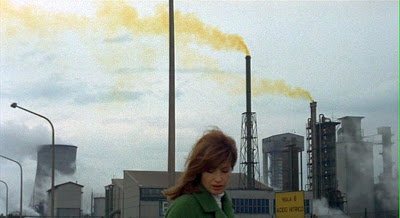
In Michelangelo Antonioni’s 1964 film Red Desert, loosely inspired by Rachel Carson’s groundbreaking ecological text, Silent Spring (1962), one of the characters complains that he was at a restaurant and the ‘eel tasted of petroleum’. This is a film landscaped by oil rigs, the persistent murmur of a dull grey dying sea, industrial structures whirring with eerie electricity. While there is a distinct sense of disconnection between characters, between humans and their environment, one connection that persists is between excess, waste and the body. While nowadays fish change genders due to oestrogen from the Pill being excreted and pumped from sewage into rivers, in Antonioni’s film, haunted by the apocalyptic backdrop of the Cold War, the characters worry about their food getting cloaked in some essence of what gets dumped and yet is also extracted from the sea. A perverse cycle of waste, energy, wasted energy.
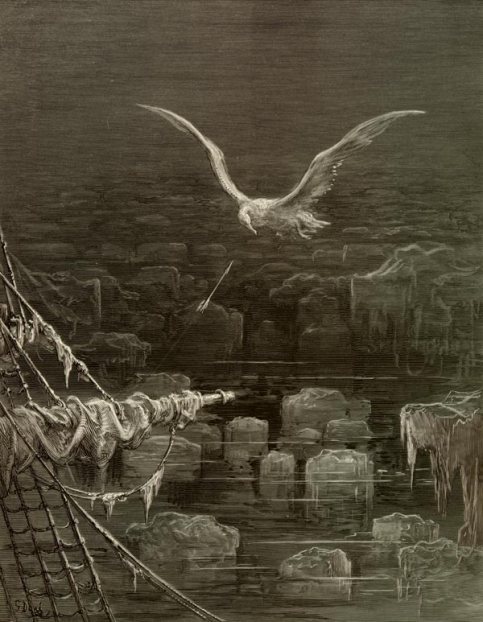
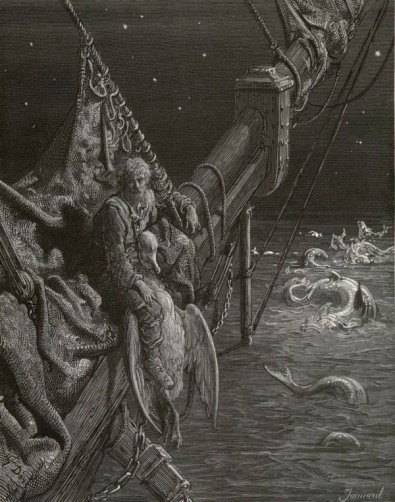
This early expression of ecological disaster as embedded in a fear of contamination, of sliminess mixing with toxic sliminess, has its roots even further back, in Samuel Taylor Coleridge’s poem The Rime of the Ancient Mariner (1798). After shooting the albatross and overcoming a terrible, supernatural (super as in extra nature, nature made unnatural by being its full strong self) storm, the mariner finds himself suspended in the aftermath, ‘as idle as a painted ship / Upon a painted ocean’ (Coleridge 2015). This sense of time frozen, of the environment refusing to yield to human command, is uncanny, a reminder that the land isn’t just something we can divide and conquer. The image of idleness and a ‘painted ocean’ recalls the experience of a crashed computer screen, hung or ‘frozen’ as the mariner is in the sheets of ice ‘green as emerald’ (Coleridge 2015). Think of a typical glitch, that which overlaps colour, blends unrelated materials together in a random, patchwork image. The ice is the colour of grass, yet still we are in the ocean. This is an environment without location, an ‘anywhere’ of strange displacement. This is the place of the ecological glitch.

Rosa Menkman describes a glitch as ‘a (actual and/or simulated) break from an expected or conventional flow of information or meaning within (digital) communication systems that results in a perceived accident’ (2011: 9). While we are dealing in poems like Coleridge’s with a ‘natural’ system as opposed to a digital one, the strange effect of ‘accident’ persists. ‘Nature’ is never as it seems, never ‘natural’ but always unexpected, strange. Systems follow patterns which glitch; the patterns themselves, like evolution, proceed often by a logic of chance, randomness. The weather in The Ancient Mariner is not just climate, a conventional flow of data to be charted and forecasted; but it is positively weird. Weird in the etymological sense identified by Timothy Morton as ‘a turn or twist or loop, a turn of events’, the ‘flickers [of] a dark pathway between causality and the aesthetic dimension, between doing and appearing’ (2016: 5). We question whether the crime of shooting the albatross instigates this ecological horror, which culminates in the monstrous appearance of ‘a million million slimy things’ which the mariner sees surrounding the ship. Like Antonioni’s petroleum eels, these slimy things are stuck with the human character, they have by proximity or digestion become enmeshed, to borrow another term from Morton, the idea that ‘nothing exists by itself, and so nothing is fully “itself”’ (2010: 15). The mariner realises his own surprising mortality, just as the slimy things ‘liv’d on – so did I’. His attempt to lump the slimy things as one gelatinous mass of gross matter leaves him realising that he can’t distance himself from the ugly parts of nature, because he himself is part of the mass, that mesh of beings.
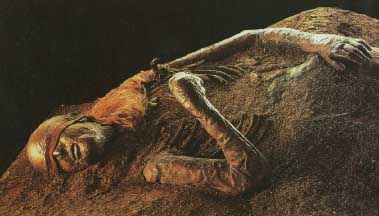
We might now describe Coleridge’s flirtation with the supernatural as a kind of magical realism, and the trend of using such weird elements to render ecological themes continues in a short story written by Karen Russell and published in the New Yorker in 2016. ‘The Bog Girl’ tells the story of a fifteen-year-old boy, Cillian, who works as a turf-cutter in the peatlands of some ambiguous ‘green island off the coast of northern Europe’, inflected with hints of Heaney’s hardy Irish pastoralism. Cillian falls in love with a young girl pulled from the bog; she is ‘whole and intact, cocooned in peat, curled like a sleeping child’ with ‘lustrous hair’ dyed ‘wild red-orange’ by the ‘bog acids’ (Russell 2016a). Crucially, there is a noose round her neck. She is young in appearance but probably 2000 years old; her flame-haired and gaunt appearance recalls Celtic/Pictish origins as well as a ragged Pre-Raphaelitism, which hints at Cillian’s weird fetishisation of her beauty. The story that unfolds can be read as a love story, a tale of caution against projecting your ideal fantasies onto ‘the mask of another person’s face’ (Russell 2016b); but here I will read it as a tale of ecological horror that warns of the dangers of industry and celebrates the sensuous mysteries of the peatlands as something that deserves preserving.
Our current era, the Anthropocene, is one of distorted scale, where constantly we deposit chemicals into the atmosphere and earth whose afterlife beyond our own we can barely even gauge as mortal humans. Russell’s story explores this (im)possible meeting of temporalities through an encounter with strangeness which allows us to mull upon our relationship with the earth, to realise our absolute enmeshment with the environment. No matter the narratives we construct through history and science, all human theory is at best the ‘most speculative fiction’; while improvements in science (‘radiocarbon dating, DNA testing’) allow us to trace the ‘material fragments’ as ‘clues’ about our ancestors’ experience, ‘their inner lives remain true blanks’ (Russell 2016b). At one point, Cillian decides it’s time he met the Bog Girl’s family, so he takes a ferry from the island to a museum. He scans the museum’s labels, which attempt to give context to the ‘pickled bodies from the Iron Age’, but is unsatisfied by these attempts to ‘surmise’ details about the ancestors’ lives based on material detail alone (Russell 2016:a). Their bodies are ‘fetally scrolled’ (Russell 2016a), suggesting that screeds more of history are inscribed on their skin like ink upon scrolls, a literal blending of flesh and text. The inadequacy of the museum labels allows Cillian to continue his fantasy that the Bog Girl appeared for him alone, that she ‘was an alien from a planet that nobody alive could visit—the planet Earth, in the first century A.D.’ (Russell 2016a); none of the other ancestors stir the same emotion as the Bog Girl. Love becomes a token, a talisman of magical power: ‘He told no one his theory but polished it inside his mind like an amulet: it was his love that was protecting her’ (Russell 2016a).
Russell’s narrative sustains this fantasy, resisting the natural outcome which would be the Bog Girl’s rapid decomposition upon exposure to air. This commitment to a magical realist effect allows her to explore problems of intimacy and otherness, which relate deeply to ecological issues. Take the bog itself. Russell describes it as a primitive hole, the ‘watery mires where the earth yawns open’, a place where time is suspended by a ‘spell of chemical protection’ which prevents the decomposition of matter: ‘Growth is impossible, and death cannot complete her lean work’ (2016a). Her rendering of the bog is crucial to the story for its associations with the suspended temporality embodied in the Bog Girl. We are told that much of the peat is cut away to turf, a key energy source still used by the islanders, and ‘nobody gives much thought to the fuel’s mortuary origins’ (Russell 2016a). Death, a haunting presence seemingly without telos, lingers in the earth, in the home; the Bog Girl weirdly embodies our paradoxical relationship to natural fuel sources: we consume them to produce energy, but our consuming instigates the loop of destruction—de-energising the earth—pumping poisons and coagulating into new forms of deadly matter. The peat bogs are a kind of charnel ground, already containing the detritus of bodies and time in a ‘disturbing intimacy […] that exists beyond being and non-being’ (Morton 2009: 76). The bogs are both ‘shit’ and ‘fuel’ (Russell 2016a), embodying the waste we must expel to maintain presence and order; but also refusing this separation, stickily gluing us through interdependence (the islanders need it for fuel) just like those slimy things reminding the mariner of mortality.
Moreover, the introduction to the bog includes the narrator’s address to the reader, the only such address in the story. The narrator remarks of the island, ‘it’s unlikely that you’ve ever visited. It’s not really on the circuit’. This seemingly throwaway comment interpellates (in Althusser’s sense of the word as a ‘hailing’ of subjectivity within ideology) the reader as a global consumer, whose ‘circuit’ references a sort of capitalist freeway (the places we drift through for pleasure) as much as it slyly hints at the cycles of life/death which are interrupted in the text. From the start, we are made to feel as outsiders in this community, which is self-consciously established as a wasteland of sorts, off the circuit, the beaten track; a charnel ground for exploring the mystical possibilities of strangeness and ecological intimacy.
What’s more, her association with primitivism and death links the Bog Girl to the past in a way that is queer, that disrupts the reproductive logic of heteronormative capitalism, a disruption that Cillian welcomes. Cillian ‘imagined, with a strange joy, the narrow life’ he and the Bog Girl ‘would lead. No children, no sex, no messy nights vomiting outside bars, no unintended pregnancies […] no promises’ (Russell 2016a). Note again that word, ‘strange’. The Bog Girl’s body is bounded; she will never consume nor produce waste, will never reproduce to bring more consumers upon the earth; with her, Cillian shrugs off the lusty masculinity of the ‘mouth-breathers’ (Russell 2016a) who help dig up the Bog Girl, he deviates from the established gender norms. Indeed, Cillian’s docility, his placid detachment from the rugged rural manliness of those who surround him (personified most perfectly in his uncle, who refers to the Bog Girl as a ‘cougar’ and has ‘a thousand beers’ laid out for himself at dinner) renders Cillian a queer figure, ‘so kind, so intelligent, so unusual, so sensitive—such an outlier in the Eddowis family that his aunts had paid him the modern compliment of assuming that he was gay’ (Russell 2016a).
Yet while the Bog Girl embodies a queer backwardness, more specifically she offers an openness of temporality, a strange oscillation between past and future rather than an obsessional projection towards the future. Derrida (1994) explains the promise as bound up in the logic of messianism, the guarantee of the future to-come of some saving force that would sweep up history. Remember the religious breathlessness which narrates Cillian’s discovery of the Bog Girl: ‘The bog had confessed her’ (Russell 2016a), as if she were a message passed on from a Neolithic age. Yet Cillian is oblivious to the fact that his love is itself the promise of an (unspeakable) secret, a promise of a present without future, a seamless overlapping of present and a past that can never again be as time demands its rupture, the Event of her eventual, unexpected awakening. The silence between them, the Bog Girl’s inability to speak, indicates his sense that love can be their pre-linguistic communication, an avowal without trace; but this originary language is impossible:
Invented for the genealogy of what has not happened and the event of which will have been absent, leaving only negative traces of itself in what makes history, such a pre-originary language does not exist. It is not even a preface, a foreword, a lost language of origin. It can only be a language of arrival or rather of the future (une langue d’arrivée ou plutôt d’avenir), a promised sentence, a language of the other, again, but entirely other than the language of the other as language of master or coloniser [and now I emphasise], although the two of them can sometimes announce between them, keeping them in secret or holding them in reserve, so many troubling resemblances.
(Derrida 1998: 61)
This ‘language of the other’ breaks down the classically patriarchal imposition of telos and closure upon the Bog Girl: she will be his forever faithful silent Angel in the House; that is, until she starts speaking. Cillian’s aphasia, ‘a stutter that had been corrected at the state’s expense’ (Russell 2016a), hints at his own problematised presence in the text, since commonly we associate speech with presence. He lacks the authoritative Word, is himself described as a queerish glitch in (human) nature, a ‘thin, strange boy’, ‘once a bug-eyed toddler’, whose grownup, ‘celery-green eyes’ (Russell 2016a) bely an inherent connection to both land and water—there’s a suggestion of his slightness, his precarious and translucent appearance in the world. The mutuality of recognised love he comprehends with the Bog Girl is this ‘secret’ which excludes his mother and friends, which makes others jealous; and yet it is also a source of troubling disruption, the threat that emerges in the master/servant dynamic symbolised by the noose round the Bog Girl’s neck, which Cillian tightens as his ‘fantasy life’ grows deeper (Russell 2016a). And what is ‘the language of arrival’? It is the Bog Girl’s coming-to-life, her messianic resurrection into present existence.
The irony of the story is that Cillian and indeed all the human characters in the story failed to predict this resurrection. The Bog Girl is adored or feared precisely because she skims with death; the body-conscious girls at Cillian’s school are ‘jealous of how little she ate’, the vice-principal sees her as shedding ‘an exciting new perspective on our modern life’ through her contrasting connection to the past (at this moment, the Bog Girl ‘had slumped into his aloe planter’), the fear among Cillian’s mother and aunts is that she will drag him away from the safety net of respectable surveillance: ‘“I’m afraid,”’ Gillian, the mother, confesses, ‘“if I put her out of the house, he’ll leave with her”’ (Russell 2016a). There is no suggestion of the Bog Girl’s autonomy here; rather, she is seen as embodying a terrifying strangeness that might contaminate ‘innocent’ Cillian. But then she wakes up. Her ‘radish-red’ lashes are vegetable (in the sense of passivity and organic matter) companions to Cillian’s ‘celery-green eyes’ (Russell 2016a); she too is an earthling, bound to the bog in an inexplicably deep, mournful way. Her awakening is erotic, marked by ‘a blush of primal satisfaction’; it is only at this point that their relationship emerges fully into what Donna Haraway calls that of companion species, whose interdependence is based on mutuality, in ‘forbidden conversation’ (Haraway 2008: 16). Haraway says of her relationship to her canine friend:
I’m sure our genomes are more alike than they should be. Some molecular record of our touch in the codes of living will surely leave traces in the world, no matter that we are each reproductively silenced females, one by age and choice, one by surgery without consultation. […] We have had forbidden conversation; we have had oral intercourse; we are bound in telling story on story with nothing but the facts. We are training each other in acts of communication we barely understand. We are, constitutively, companion species. We make each other up, in the flesh. Significantly other to each other, in specific difference, we signify in the flesh a nasty developmental infection called love. This love is a historical aberration and a naturalcultural legacy
(Haraway 2008: 16).
It is only when the Bog Girl awakens that the relationship becomes properly ‘in the flesh’; she has learned the communion of erotic love, is ‘tugging at his boxers’, but at this point Cillian is tipped into the abyss of signifying rupture: ‘something truly terrifying had happened: she loved him back’ (Russell 2016a). The nasty developmental infection called love’ rips apart his perfect communion of static silence. The Bog Girl’s language ‘was no longer spoken anywhere on earth’, it is a primitive cry from the depths of the peatlands, which Cillian cannot answer because he is indifferent to the Other as anything more than his own anthropocentric projection: ‘The past, with its monstrous depth and span, reached toward him, demanding an understanding that he simply could not give’ (Russell 2016a). We might think of the title from Jonathan Bate’s crucial ecological polemic, The Song of the Earth (2000), or a strange, aberrant passage from Virginia Woolf’s Mrs Dalloway (1925), where a vagrant woman whose ‘rude’ mouth is a ‘rusty pump’ (signifying, perhaps, the decay of industry, its material crudeness) singing a song of ‘love which has lasted a million years’ (Woolf 2004: 70-71). The idea of song suggests an ambient music that stretches onwards without climax and fall, echoing past and future in its rasping cry. The eerie, anthropomorphic crackles, growls, roars and howls that come from the ice in The Ancient Mariner. What would the earth sound like, speaking back? Surely it would be our own cry, endlessly deferred; the echolalia of life forms caught in this experience together, entangled in the rendering of a dark and dying world.
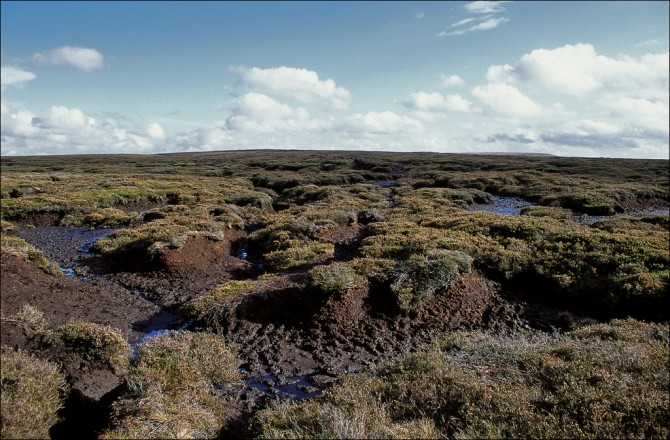
In many ways, the Bog Girl is animal, Other; she is not quite human. Better then to think of her as someone who embodies the terrifying intimacy of all life-forms, which brush up against one another, bearing their various sensations and temporalities. While the mariner comes to admire those gross ‘slimy things’, noting their ‘rich attire’ and blessing them with a whiff of Romantic kitsch as ‘happy living things!’ (Coleridge 2015), Cillian finds himself caught between the Bog Girl’s world and his own, ‘struggling to pay attention to his droning contemporaries in the cramped classroom’ (Russell 2016a). Referring to his classmates as ‘contemporaries’ reinforces their association with the present; juxtaposing with Cillian’s mournful retracing of steps, back ‘to the lip of the bog’ (Russell 2016a), the word ‘lip’ suggesting both spatial liminality and the erotic possibility of the temporal and primordial lacuna that lies within. We can think of the Bog Girl as what Morton (2010: 41) calls the ‘strange stranger’, a word for all life-forms which encapsulates the way that even those closest to us are inherently weird, because they remind us that we are not wholly ourselves, that we too are composites of life-forms, viral code, enmeshments of DNA.
Although the Bog Girl always seems close—we get vivid details of her ‘rhinestone barettes’, her ‘face which was void of all judgement’ (Russell 2016a))—indeed she becomes a vital component of Cillian’s life, ultimately he is forced to realise her absolute strangeness. Unlike the mariner he is unable to overcome that gap of Otherness and make peace with the uncanny experience of the ecological mesh. He goes down, enticed by the ‘lip’ of the bog, listening for the ‘primitive eloquence’ of ‘the air-galloping insects continu[ing] to speak the million syllables of [the Bog Girl’s] name’ (Russell 2016a). At the end, the narrative becomes ambient, with a distortion of inside/outside, self/other:
“Ma! Ma! Ma!” That night, Cillian came roaring out of the dark, pistoning his knees as he ran for the light, for his home at the edge of the boglands. “Who was that?”
(Russell 2016a)
My immediate assumption here is that Cillian is calling “Ma!” for his mother, a riff on the Irish references of the piece which are probably a nod to Seamus Heaney’s Bog Poems (1975). However, it’s not clear; elsewhere she is usually referred to with the Americanism, “Mom”. Cillian himself has adopted a primitive roar, which rips through the resonant chorus of insects as if refusing their incantations of the Bog Girl’s presence. The call for the mother seems vaguely directed, a generalised cry for help rising from pure terror as he runs for the light. ‘“Who was that?”’, embedded in the same line, seems to come from Cillian, but equally it could come from his mother back home, or even the boglands themselves, watching this skinny boy run off from the darkness. A mutual sharing of strangeness. This is an affective, fleshly and sensuous experience of horror that the written texts, the museum labels, cannot document. There is always a possible slippage, which Russell literalises in the Bog Girls’ figure. Nature has betrayed its accident, the glitched intrusion of the prehistoric past upon a modern present. While Red Desert more overtly projects the ecological breakdown of the external world through the increasingly disordered mind of its female protagonist, ‘The Bog Girl’ leaves us with an unsettling vision of lingering presence: the insects singing the elegy of her name, a name which tremors, sends nightmares to Cillian, which resonates with the bog, itself a microcosm of a wasting, gurgling, plundered world. Is this a haunted logic for future coexistence? We’ll have to take the plunge to find out…it’s going to be dark, sticky and maybe dangerous…
Bibliography
Bennington, Geoffrey, 2004. Other Analyses: Reading Philosophy (Bennington Books).
Coleridge, Samuel Taylor, 2015. The Rime of the Ancient Mariner. Available at: <http://www.bartleby.com/101/549.html> [Accessed 1/3/17].
Derrida, Jacques, 1994. Spectres of Marx: The State of the Debt, the Work of Mourning, & the New International, trans. by Peggy Kamuf, (London: Routledge).
Derrida, Jacques, 1996. Le monolinguisme de l’autre ou le prothèse d’origine (Paris: Galilée). [The translations I use from this text are Geoffrey Bennington, cited in Bennington, 2004.
Haraway, Donna J., 2008. When Species Meet (Minneapolis: University of Minnesota Press).
Menkman, Rosa, 2011. The Glitch Moment(um) (Amsterdam: Institute of Network Cultures).
Morton, Timothy, 2010. The Ecological Thought (London: Harvard University Press).
Morton, Timothy, 2013. ‘Thinking the Charnel Ground (The Charnel Ground Thinking): Auto-Commentary and Death in Esoteric Buddhism’, Glossator, Vol. 7, pp. 73-94.
Morton, Timothy, 2016. Dark Ecology: For a Logic of Future Coexistence (New York: Columbia University Press).
Red Desert, 1963. Directed by Michelangelo Antonioni [Film] (Milan: Rizzoli).
Russell, Karen, 2016a. ‘The Bog Girl, The New Yorker. Available at: <http://www.newyorker.com/magazine/2016/06/20/bog-girl-by-karen-russell> [Accessed 1/3/17].
Russell, Karen, 2016b. ‘This Week in Fiction: Karen Russell on Balancing Humour and Horror’, Interview by Willing Davidson in The New Yorker. Available at: <http://www.newyorker.com/books/page-turner/fiction-this-week-karen-russell-2016-06-20> [Accessed 1/3/17].
Woolf, Virginia, 2004. Mrs Dalloway (London: Vintage).
A Crisp Regret

A Crisp Regret
At the intimate fold of the day
you traced the triplet of burns on my wrist
like a clipped ellipsis, faint remainder
of yesterday’s cigarettes
still smouldering the layers of somebody else’s
epidermis.
Haunting the Capitalist Plaza: Making Sense of Vapourwave
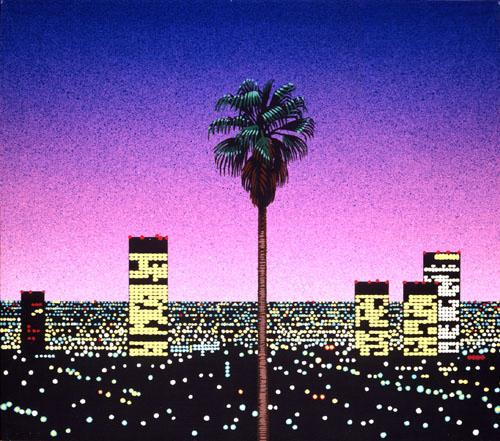
The resonance is a tinny vintage, anachronistic; tinselled with eighties synths and a vocal sample that never quite begins. That baggy voice, normally soft as milk, becomes jagged, inhuman. Creepily crystallised. Your aunty’s favourite easy-listening is stripped of all coherence and synthesis; the tacky detritus of Steve Wright’s Sunday Lovesongs repackaged for an ersatz world of sulphurous sunsets and crumbling metropolises imploding like the plastic dust of an Arizonan dead mall. Back to the dark desert highway, purple-skied and dripped in molten neon. This isn’t what you’d enjoy on a leisurely car trip to the drive through…Or is it?
Listen to : : :
death’s dynamic shroud.wmv // I’m at the point in the level where the road narrows, curves, swirls upside down. Death is imminent. You can see the gloved fingers slipping a compact disc into the slot of a monster, borrowed straight from the architectures of Digimon. I’m thinking: Elizabeth Fraser’s sweetly haunting soprano (imagine being ghosted by the purest aural distillation of beauty); the chilled techno-ambience resurrected from the nineties. There’s heartbreak ahead. If you jump too far—and you will, won’t you—the space around you will glitch. There you’ll be, suspended in the space twinkles. An empty swimming pool. Climb into the cracks. Why is everything so gleaming, so white? I’m obsessed with getting back to matter. The music restores the filth, the glitch. There’s a vast acceleration of beautiful colour. The soprano grows warped, the orb-like contortions are glowing off kilter, off rhythm. The seven lumps of Galaxy chocolate I’ve just eaten melt sticky bits of sugar in my mouth, refuse to dissolve. They’ll coat my teeth like that.
Vapourwave coats your teeth. God knows how or why you should define it. It’s like cheap candy, utterly sugary but filled with mysterious ingredients, mystic chemicals from another dimension. One minute I’m being instructed about the start of a sequence (it’s the eerie echoes of a sci-fi style video game)- – – loading loading loading – – – and then trap style beats come bouncing slowly in, delayed as if strained through some outpouring of weird gravity. There’s a purity to some of it, which feels more like an original composition; the ambient atmosphere of something along the lines of Aphex Twin’s Selected Ambient Works…There’s a sense of distortion, disorientation. Hyperreal landscapes lit in luminous pinks and purples. What’s that gleam, is it rain? Tokyo on a postcard, dipped in cross-processing chemicals, in violet acid. Then you’ve got a vague array of p a r a d i s e lighting up the screen. Palms and sand and cerulean sea.
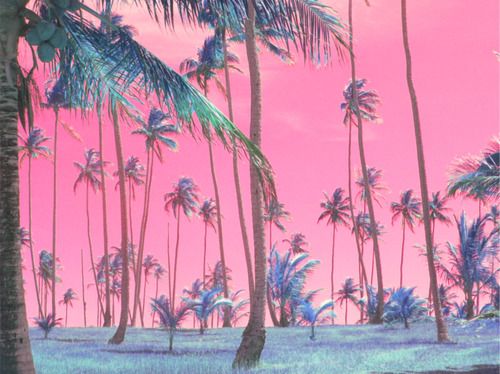
As soon as you get attached to a sample, you’re away. Rarely does the beat resolve. You’re like, totally always stuck on the pre-beat. To the point that human expression becomes a technological fault, a beep, a burp. Sometimes it sounds like waves are being pulsed through your brain, blurred in a malfunction of some tacky machinery cooked up for a pulp movie of the nineties. Do scanners really look like that? Coated in rhinestones, bathed in pink. Some of it’s dreamier. Arpeggios of bell-scented keyboards (what do bells smell like? Not musty old church bells, but the sonorous chimes of noughties computers). Arpeggios climbing and climbing, dissolving, rising. A pop melody shining through. I’m in a rainforest of futurist skyscrapers, cloud-surrounded, everything drenched in pastel-hued pixels. It’s so serene.
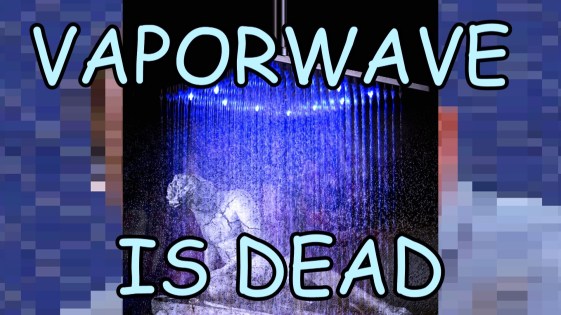
Vapourwave. What a joke, an internet meme. Didn’t it die a couple of years ago?
I’m so confused. What is this monstrosity that’s eked itself into my life like a viral code luxuriating in my brain? At once disdainfully ironic, crass, tacky as hell; but also painfully sincere, nostalgic, full of a misplaced longing. The metamodern paradox of postmodern irony and modernist authenticity cooking up an endless loop of misplaced longing. I find myself thirsty for shopping malls from the seventies, for grotesque cups of Diet Pepsi, for the glossy pop of the eighties and the apocalyptic reveries of the nineties. I’m drifting through a city stripped of its glitz and left with patches of bright matte colour, refusing to reflect the glass through which dreams have appeared and got lost. I remember polishing a CD with the back of my sleeve, watching the lines of rainbows beam. Slotting it into a computer that hummed and whirred at my touch. I remember when technology felt somehow homely.
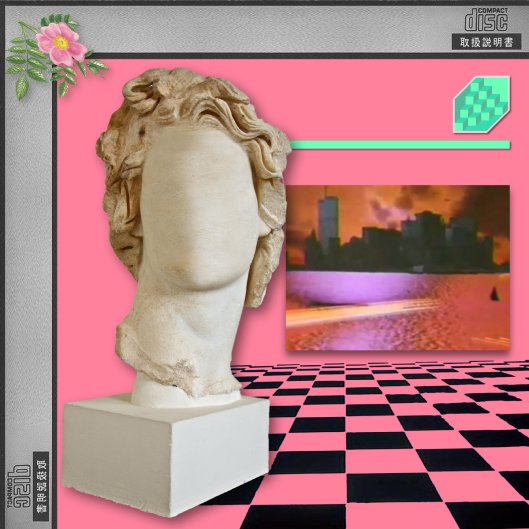
That comforting little Windows XP flourish, how friendly it was compared to the blasé boom of Apple’s triumphant C chord. Glitch, glitch, glitch. I pick the pixels out with my fingertips. The eerie keyed chords of MACINTOSH PLUS’ 地理 fill me with a sinister sense of urgency. It’s an entropic catastrophe of dissonance.
At the heart of vapourwave is a tension between the sweet and disturbing, between satisfyingly vacuous muzak and dissonant, deliberate glitching. This is related to its deterritorialising impulse, by which I mean (borrowing from Deleuze and Guattari lingo), the way it extracts and recontextualises some element of a thing, then placing it elsewhere in a different environment. Vapourwave is a sort of bulimic, abject, rhizomatic discourse. It gorges on the symbols of late capitalism (the glossy muzak and soft rock of the eighties, international brands like Nike or Microsoft, the aesthetics of corporate advertising and so on) and then expels them in a gross reinterpretation that seems to purge them of their original, seamless facade. It might be useful here to mention that sociologist/criminologist Jock Young (2007) once described late modernity as a ‘bulimic society’, where we are all (internationally) included in the dreamlike semiotics of the rich through the opulence and availability of global branding, advertising and popular culture, but increasingly we are structurally excluded from the means which would allow us to achieve such dizzying heights ourselves. This social anomie is jarringly rendered in vapourwave’s shameless embrace of corporate culture; at once poking fun at it but also monumentalising it in an ambiguous way. It’s by no means a didactic movement, but as Grafton Tanner tends to argue in his excellent book Babbling Corpse: Vapourwave and the Commodification of Ghosts (2016), it’s symptomatic of its times. The very poetics of vapourwave reflect the uneasy experience of being unable to escape the system, the uncanny effects of our perpetual cultural nostalgia—the celebration and denigration of late capitalist modernity and all its forms of post (post (post) post).
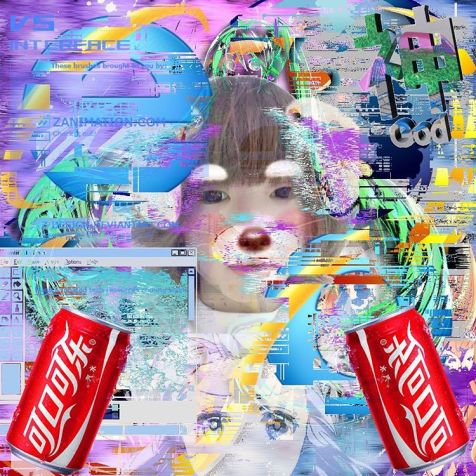
Outside of their usual contexts, corporate and commercial visuals (the vapourwave a e s t h e t i c) seem absurd, funny, strange, alienating. It hollows out the imagined ‘core’ of the brand and replaces it with a sort of free-floating lack of functionality, a disembodied eeriness. Chuck a logo in with a pastel-hued painting of palms and corny dolphins lifted from a SNES game and there you have it. Old Apple logos might be hovering over a pixellated ocean, waiting to plunge inexorably. Not only the aesthetics, but also the music itself, creates this sense of fragmented capitalism. Tanner talks briefly about the relevance of Derrida’s idea of hauntology to understanding the politics of vapourwave and this seems to me very astute. It’s the idea that the future is irrevocably haunted by the past; that culture and politics are also spooked with spectres from the past—from communism (Derrida’s book is called Spectres of Marx) to old technologies. It’s the idea that things are always-already obsolete, that there’s a sense of being itself as displaced and never quite fully present. It’s an ontology of difference, deferral, doubling, of objects which become ‘a little mad, weird, unsettled, “out of joint”’ (Derrida 1994). Derrida’s gloss on Marx’s analysis of the commodity-table gives us a sense on the ghostliness of consumer objects:
For example — and here is where the table comes on stage — the wood remains wooden when it is made into a table: it is then “an ordinary, sensuous thing [ein ordindäres, sinnliches Ding]”. It is quite different when it becomes a commodity, when the curtain goes up on the market and the table plays actor and character at the same time, when the commodity-table, says Marx, comes on stage (auftritt), begins to walk around and to put itself forward as a market value. Coup de theatre: the ordinary, sensuous thing is transfigured (verwandelt sich), it becomes someone, it assumes a figure. This woody and headstrong denseness is metamorphosed into a supernatural thing, a sensuous non-sensuous thing, sensuous but non-sensuous, sensuously supersensible (verwandelt er sich in ein sinnlich übersinnliches Ding). The ghostly schema now appears indispensable. The commodity is a “thing” without phenomenon, a thing in flight that surpasses the senses (it is invisible, intangible, inaudible, and odourless); but this transcendence is not altogether spiritual, it retains that bodiless body which we have recognised as making the difference between spectre and spirit. What surpasses the senses still passes before us in the silhouette of the sensuous body that it nevertheless lacks or that remains inaccessible to us.
(Derrida 1994)
Vapourwave, of course, exploits this ‘ghostly schema’ of consumer objects. ‘Woody and headstrong denseness’, the sheer materiality of the thing is ordinarily supplanted by its mystical, transcendent value as a commodified good or brand. When we think of Nike trainers, rarely do we care for their actual material structure; usually it is the symbolic resonance of the brand that captures us. In Vapourwave, materiality comes back, vicious and strange. Fredric Jameson laments the way that postmodernism presents us with a meaningless concatenation of cultural nostalgia, often without context—BuzzFeed’s noughties nostalgia lists perhaps being a case in point. Vapourwave takes this ‘out of context’ randomness and runs with it. Art objects, textures, corporate iconography and screen-saturated colours combine in a collage of irony and contrasts. The mishmash quality of the vapourwave aesthetic lends it to easy manipulation and re-creation. This is the DIY ethic of the movement, its impulse towards constant theft, the cut and paste fun of sampling, the wilful shredding of distortion which creates a contemporary rendering of William Burroughs’ literary cut-up method or the random-making ‘recipes’ of Dada poetry, as described by Tristan Tzara.
Now, the effects of this mixed-bag of internet treats aren’t just weird and humorous, but weird also in an unsettling way. The samples become points of focus in a manner that strips away the normal cultural values of the original song; the easy soft-rock of the eighties becomes haunted with lo-fi feedback and interruption, compression and echoes. It sounds like it’s being heard through a cave or the underwater atrium of an abandoned mall, after the apocalypse. One of vapourwave’s most prominent releases to this day remains Macintosh Plus’ Floral Shoppe (2011) and on this record the production warps its soul music with a surrealist synth-driven dreamscape, in which R&B beats become slow and trippy and human voices are dehumanised into drawls and robotic calls. Often a sample starts but never resolves its line, constantly stumbling over itself. Tempos are spliced and no song follows conventional structure, but instead runs on repetitions, overlaps, interruptions; completely jarring changes in rhythm and key with no transition. Funk and soul from the eighties are no longer smooth and satisfying radio filler, but are turned inside out, their inherent weirdness exposed. Some of the highlights include ‘It’s Your Move’ by Diana Ross and ‘You Need a Hero’ by Pages. The effect of listening to this album is sort of like pushing a shopping cart round a supermarket and gazing around in wonder at the saturated pastels, the pointless products, the detritus of cluttered consumer madness. Glitches, twinkles, the beats of unsteady feet. Random tannoy announcements like a call from some parallel universe, the underground, the flickers of the internet ether.
Tanner’s Babbling Corpse usefully makes a connection between the dehumanisation of human voices in vapourwave music and contemporary philosophical movements such as speculative realism and object-orientated ontology. Both movements share the fundamental rejection of correlationism (the dominant, anthropocentric idea in Western philosophy that views reality only in relation to and projection from the human perspective). Instead, they turn to the world experience of the nonhuman, the sentient and foreign perspective of matter and objects. They expose the contrived nature of our distinction between self and world, showing how we are world, entangled in a way that is inextricable and disturbing (Timothy Morton, for instance, points to the crustaceans that live in our eyelashes or the bacteria in our gut as examples of how we are the environment, rather than self-complete and separate beings). Vapourwave in some way manages to evoke this weird world of objects, at a level only barely accessible to humans. Its use of glitches and looped samples disrupts the ordering of people and things. As Tanner puts it,
Glitches interrupt our expectations while deceiving and annoying us. They undermine our notion of what the machine is supposed to do for us, not without us. In this way, our electronic machines take on lives of their own and appear capable of functioning perfectly well without humans – a complete transcendence into other-worldly sentience.
(2016: 11)
We might consider this in relation to Martin Heidegger’s (2008) idea that we only notice a tool as a thing when it stops working. A broken hammer suddenly becomes a strange entity in its own right, rather than just one chain link in the process of a means to an end. Chuck Persons Eccojams Vol. 1, for starters. The very name: Eccojams. It implies the jams are a product of this Other: the ecco, ecology, echo…The title derives from an old Sega Megadrive game called Ecco the Dolphin, an action adventure game which featured dreamy music and a very minimalist gameplay narrative. You made Ecco sing to attract and interact with other objects and cetaceans; you could evoke echolocation in order to unfold a map of your oceanic surroundings; you could call to special crystals (glyphs) which in various ways controlled Ecco’s access to different levels. There is a beautiful otherworldliness to this game, and not just because Ecco ends up at the City of Atlantis. It’s created its own mythology, and the emphasis on song (like The Legend of Zelda’s ocarina melodies, which initiate effects in the game) opens up the possibilities for a nonhuman conscious or logic. Music, perhaps more than language, has effects on nonhuman consciousness. At a certain pitch, it can shatter a glass, or cause buildings to rumble with bass. It opens up its own logic of cause and effect.
Hauntology, in a sense, is about being stuck on the loop of the end of history. Technology constantly dislocates our awareness of time and space, so that linearity is replaced with instancy, repetition and reiteration, the constant recycling of former styles and events. Repetition is uncanny partly because, as Freud argues in ‘The Uncanny’, it’s the structure of the unconscious. When we notice repetition, we notice how our whole psyches are built on the compulsion to repeat even that which is most traumatic to us. It also violates our sense of identity and experience as singular and unique (an idea that liberal democracy and consumer capitalism likes to perpetuate). Identical twins are uncanny for this reason, as is deja vu. We feel that the normal order of time and space has been distorted (this is of course made explicit in films like Donnie Darko, which deal with parallel universe theorems). Repetition is also uncanny because it suggests that things we thought were unique to a moment, imbued with their apparent transience, are actually lingering and potentially eternal. It’s unsettling to have the buried constantly disinterred and broken out into the open present. Tom McCarthy’s Remainder (2005) is a novel which explores the logic of repetition in relation to a trauma narrative in which the protagonist becomes obsessed with re-enacting events to the point of absurdity and violent conclusion. It’s that overlap of the real, where dreamlike remembrance meets actual performed repetition, that is the orgasmic satisfaction of the psyche.
Listening to vapourwave enacts this perfectly. We might start to recognise the songs from which these samples were drawn, but our recognition is distorted along with the samples themselves. The past floats uncannily into the future. Eccojams Vol. 1 drops its tinkling beats on a loop and the vocals from eighties ballads are stripped of their velvet and become mournful, minor, distorted. Inhuman, odd. There’s a sense in which our contemporary experience of reality in the face of apocalypse and pathological nostalgia is both dark and sweet. Morton’s branch of object-orientated ontology, dark ecology, perfectly captures this experience (in fact, in Dark Ecology (2016) he describes the process of dealing with this ‘grief’ as sharing the structure of a ‘dark ecological chocolate’). Vapourwave is at times incredibly saccharine, mapping itself through the cheerfully smooth loops of Muzak; but it is also jarring, dissonant, deeply unsettling. It takes dirty club techno, the complex tempos of intelligent dance music, and puts them through the cheap production of the GarageBand blender. Vocals echo like a broken tannoy machine. Vapourwave, as both visual and musical aesthetic, fundamentally opens an aural space in which past, present and future become a haunting echo chamber of one another. No longer is this the mere surface play of postmodern collage, but instead it’s the material manifestation of a specific cultural hauntology. As Tanner puts it, hauntology ‘is unlike Jameson’s pastiche in that it complicates the past (specifically, the past’s image of the future) in order to call attention to capitalism’s destructive nature as a subjugating force that only fools others into thinking it came to eradicate “history”’ (2016: 35-36). Capitalism is hollowed out, its signature brands become lost echoes in a vaguely recognisable, a hypnotically attractive yet alarming vision of our near-present future; blended with the figures of mall culture, the colours of early aughts internet webspaces and the abyssal possibilities of a Tumblr scroll.
I’m interested in how vapourwave re-enacts a different form of consciousness and how this might be ecological, even though the movement’s only obvious engagement with Nature as Such is through the proliferation of palms and potted plants that drift incongruously as consumer goods through some of its artwork. To get at its ecological sweetness, it’s like cracking open a crystal to see its lattice parameters (what a beautiful phrase), the places where the material cleaves (its lines of weakness), its cubic structure. The interplay between structure and embedded weakness is what motivates vapourwave; it contains its own failure, the undeveloped samples, the way a tiny snatch of a song is unfolded into a tranquil sequence of soporific, nonsensical sound. This is not music with a coherent logic. You look for lines and trends and vague traces of structure, but a song will become something more fluid and fragmented. Vapourwave’s material metaphors cannot be coherent; it’s at once free-floating, vaporous, seeping, gelatinous, oozing, splitting, cracking, choking, pulsing, dissolving. Hard matter, soft matter, chemical, vapour, waves and glitches and tiny explosions.
Sometimes, the structure is completely frustrating. On Person’s Eccojams Vol. 1, for example, the slowed-down, reverb-heavy sample from Gerry Rafferty’s ‘Baker Street’ repeats endlessly and never resolves itself into the next line: ‘another year and then we’ll be happy / just one more year and then we’ll be happy’. The twinkle signifies the glimpse of a transition and there’s a blip of the ‘b’ which should resolve into ‘but you’re crying, you’re crying now’ and yet here never does. Instead the song becomes an endless loop of implied futurity, the future conditional, ‘we’ll be happy’ that doesn’t get to complete itself but instead hangs. We’re taken out of time and left in this limbo. Here, the repetition isn’t soothing, it’s unsettling—mesmerising in a disturbing way. We question our longing for the song to resolve and before we have a chance it’s skipped to the next track. So we go back, search out the original version. Is it satisfying? Listening to Raferty’s original now feels weird in a way it didn’t before. It’s like this lost artefact from the past, spliced across the future ether rendered by Person’s eerie and hypnagogic album. While ‘Baker Street’ implies a specific place, now it’s thoroughly displaced, an effect of the internet’s rhizomatic possibilities.
As Morton puts it, ‘in order to have environmental awareness, one must be aware of space as more than just a vacuum. One must start taking note of, taking care of, one’s world’ (2002: 54). Ambient poetics disturb our assumed distinction between inside/outside, self/other; they show how we are entangled in a shared space of coexistence (Morton 2002: 54). Ambient music, in its sensuousness, its borrowing from the world—for example, by using samples of music concrète and field recordings from both nature and urban spaces—embeds us inside an environment in a way that is at once comforting and disturbing. It literally surrounds our senses. Brian Eno famously sets out a manifesto for ambient music by describing ambience as ‘an atmosphere, or a surrounding influence, a tint’, and ‘whereas conventional background music [i.e. Muzak] is produced by stripping away all sense of doubt and uncertainty […] from the music, Ambient Music retains these qualities. […] Ambient Music is intended to induce calm and a space to think’. As Morton puts it, ambient music as figured by Eno deconstructs the ‘opposition between foreground and background, or more precisely, between figure and ground’. In this sense, ‘ambience could be shown to resist the reification of space in capitalism’, ‘at once fill[ing] and overspill[ing] the ideological frame intended for it by the social structure in which it emerged’ (Morton 2001).

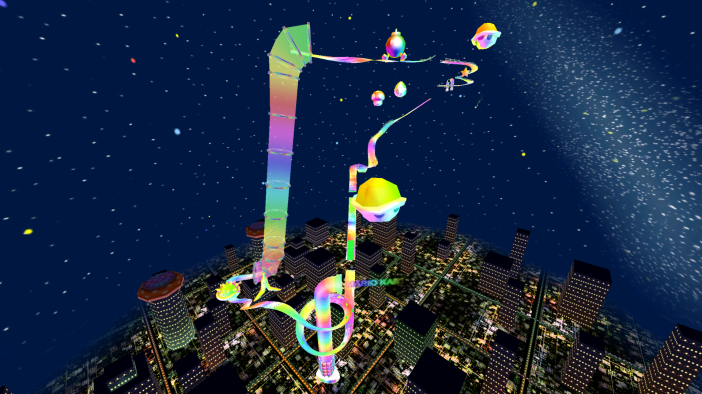
Think of it this way: could you get away with playing vapourwave in a mall or a supermarket or diner? Sure, it would ‘fill’ the space in one sense, but also exceed it, rendering all our cultural and material associations with this space uncanny and distorted. It would become a sci-fi space, a space displaced into the future. We would be inhabiting a doubled world, a doubled temporality. I tried playing Floral Shoppe in the restaurant where I work once (obviously when there were no customers) and the effect was actually very comforting. I felt like I wasn’t trapped in the familiar twenty-something existential limbo and instead inhabiting a plane of dreamlike contemplation, like the Rainbow Road level on MarioKart: Double Dash. I close my eyes and the scratched wooden floor spills out into a highway of colour; the tables I’m bumping against are bright yellow stars and fragments of unknown matter. I’m back in the supermarket, trolleys wheeling away from me and products falling off the shelf. I open my eyes and there’s the mirror and a reflection of someone that might be me, wearing a uniform, the chairs and tables flashing around me like holograms. I’m not exactly sure where that association sprung from (it’s been a long time since I’ve turned on the old GameCube), but I guess that’s the free associative impact of the music itself.
Like Jean-Jacques Rousseau’s Reveries of the Solitary Walker (1782), vapourwave is about an experience of travel and movement without necessarily describing that movement itself. Crucially, the emphasis is on slowing down, on dwelling in a moment; a moment which is looped, repeated, pondered over, exhausted, reflected on. ‘I undertook to subject my life to a severe examination that would order it for the rest of my days in such a way as I wished to find it at the time of my death’ (Rousseau 2011: 24). Vapourwave subjects the e v e r y t h i n g of capitalist late modernity to such self-reflexive inner scrutiny. This scrutiny enacts a slowing down of perception, a sense of looking around and absorbing one’s place in the environment. Through an uncanny distortion, doubling back and becoming the environment. Vapourwave allows us to adopt both a blasé and a highly perceptive attitude to the ad-saturated world in which we exist; the metropolis of the internet becoming some great labyrinth in which we linger at every turn, mesmerised by the neon palms swaying in time to the untimely music, to cans of diet coke and the universal resonance of that bold tick logo. Everything surrounds and coagulates, connects.
This aesthetic dwelling is crucial for ecology because it forces a recognition of the world which we are and in which we live, a recognition that notices patterns of interconnectedness and coexistence. For Gregory Bateson (2016), aesthetics means ‘responsiveness to the pattern which connects. The pattern which connects is a meta-pattern’; both cities and their parts form part of this pattern, of the patterned aesthetic of vapourwave. The metropolis, the mall, the fountain plaza, the computer screen, the window of a building, the burnished, pixellated sunset. All are the environs of sound and vision, the movement between figure and ground, the deconstruction of synecdoche. The part and the whole are constantly supplementing each other (the song, the sample; the symbolism, the surface aesthetic). It’s a bewildering, shape-shifting experience. It forces us to take notice of our world. There’s something about vapourwave which always suggests to me a sort of endless highway, where the vehicles move as if through some viscous substance that drags the experience of time and space. Our perception becomes blurred and starry, with blips of unconsciousness and moments of epiphanic reverie. Things around us fade or glow. The radio rumbles in the darkest cavity of our chest. Am I even breathing? I don’t feel human. Is this freedom?
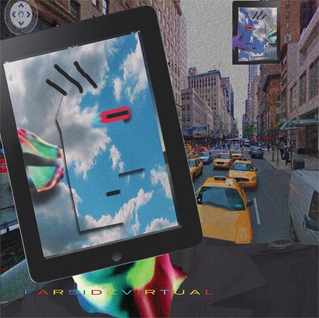
Alongside this dwelling is a certain playfulness of a way unique to vapourwave. James Ferraro’s Far Side Virtual (2011) might be the classic here. It blends together the inane and cornily flourishing samples from Muzak with automated audio speech stolen from corporate contexts and sound effects from everyday tech life—the message-send swoop, a mouse click, laptop crashing sounds and start-up tunes. The result is something that might reflect Jean-Francois Lyotard’s famous definition of postmodernism as ‘eclecticism’, the ‘degree zero of contemporary general culture [where] one listens to reggae, watches Westerns, eats MacDonald’s for lunch and local cuisine for dinner, wears Paris perfume in Tokyo and retro clothing in Hong Kong; knowledge is a matter for TV games’ (2004: 76). This eclecticism is made playfully manifest in Ferraro’s lively, atmospheric and at times downright trippy record, where twinkles of commercially-drenched, techy synths give way to stuttering keyboards, ringtone effects and twirls of familiar message noises which become maddeningly synced with finger clicks and conversations between robotic voices. A CONUNDRUM article argues that ‘since vapourwave functions namely as commentary, it loops, pitch-shifts and “screws” the utopia of the virtual plaza, creating a harsh, grating sound in away that brings each muzak sample’s faults to the forefront of the track’. This is certainly true of Ferraro, but I’d also suggest that vapourwave is more than mere commentary; Ferraro especially revels in the silliness of corporate culture (check out ‘Pixarnia and the Future of Norman Rockwell’, with its drink slurping sound effects and jingly, kids tv-worthy melody), at the same time as revealing its peculiar utopian unreality, a world of shimmering sound and holograms. There’s a self-consciously affective and pleasurable aspect to the music. Sometimes it sounds like the demonstration music on an art channel, to the point where I’m expecting some beautiful, sellotaped creation to materialise with every musical flourish.
On the other hand, there’s the total weirdness of ‘Palm Trees, Wi-Fi and Dream Sushi’, which takes us through a scintillatingly bizarre encounter with a ‘touchscreen waiter’ who explains the ordering process at a sushi restaurant—apparently in Times Square, with Gordon Ramsay as chef—to the backdrop of exuberant synths and glitchy effects which sound like a Windows 95 laptop gone haywire, or merely said customer making her selections from the menu software. The result is to render a future where restaurants and coffeehouses are devoid of human interaction, becoming impersonal encounters with creepily enthusiastic machine waiters (creepy not just because they’d put me out of a job). The contrast between this manic happiness, this constant focus on choice, with the maddening music is to create a deep sense of unease, to reveal the artifice of such utopian tech constructions. Do we really have a choice? Is life being boiled down to a series of computer menus? Is the future bound to the unsettling intonations of such robotic encounters? I can’t help but escape into the absurdity of the music and try to forget this hauntological disaster is always-already constantly happening…
The comparatively meditative ‘Bags’ weaves its entrancing ambience from an early Windows startup theme, dipping into sonorous caverns of sparkling synths and lifting for air bubbles and irregular, incongruous finger clicks. I am reminded here of a beautiful essay by Steven Connor on the magic of objects, specifically here bags: ‘because they are in essence such fleshly or bodily things, bags enact as nothing else does our sense of the relation between inside and outside. We are creatures who find it easy and pleasurable to imagine living on the inside of another body’. There’s an amniotic vibe to Ferarro’s ‘Bags’; the swaying, dreamy pace that makes us feel as though we are inside those palms, or encased within a glossy plastic number, bouncing away against some glamorous knee. Just as humans have a sort of supplementary, life-giving association with bags, we also have this relationship with the plazas of capitalism and the affective world they render. Ferarro has said that he conceived of Far Side Virtual as a series of ringtones, a musical form which inherently suggests consumer transience, tackiness, kitsch, the whims of passing fashions (not least because the polyphonic presets change with each phone upgrade). He’s also said that he loves the idea of the album being ‘performed b a Philharmonic Orchestra […] Imagining an orchestra given X-Box controllers instead of mallets, iPhones instead of violins, ring tones instead of Tubular bells, Starbucks cups instead of cymbals. All streamed online, viewable on a megascreen in Times Square’. That’s what’s special about vapourwave: its commitment to the endurance of art and the a e s t h e t i c alongside an ambiguous relationship with the ephemerality of corporate kitsch. The artistic rearrangement of these samples, alongside their visual presentation and marketing as alt music through sites like Bandcamp, completely reterritorialises their original framework of meaning.
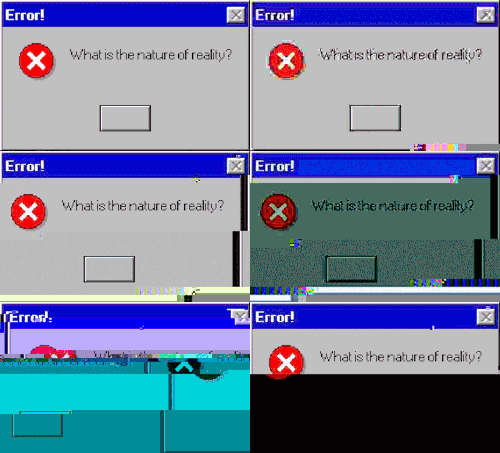
There’s a sense in which this music—with its self-conscious materiality, the recognisably tacky mattering of its samples, its embrace of the ambient disruption of foreground and background—is inherently committed to some kind of hauntological ecological project, the kind advocated by Tim Morton’s dark ecological poetics. As Ferarro himself says of his album, it’s a ‘rubbery plastic symphony for global warming, dedicated to the Great Pacific Garbage Patch’. Vapourwave recycles culture, proliferates both beauty and trash, endlessly parodies itself and its references. It renders explicitly what Marc Augé calls the ‘non-places’ of supermodernity: the anonymous malls, airports, offices and stations where cultures blend and collide and become foreign places of blank existence, of non-place, of disembodied temporality and physical and social experience. Places emptied out of cultural specificity. Places where one might eat Japanese sushi in a New York airport restaurant, concocted by a holographic rendition of a grumpy English chef and served by a robot developed and programmed by a Chinese tech company. Vapourwave is melancholy and strangely displaced. The frequent use of anonymity by many of its prominent artists (Xavier, for example, is responsible for more than just Macintosh Plus), alongside the Eastern characters for song titles, creates again a dehumanised, uncanny and culturally displaced understanding of identity. It weaves an almost Orientalist mystery through its art, so that we can’t quite geographically place the origins and players of this musical movement. It’s all about dissemination, reappropriation, the instancy of recycled production; but it’s also about slowing down to notice the flaws inherent in our everyday, consumer lives. The heavily sampled, rhizomatic nature of vapourwave forces you to become a more active consumer of both music and other forms of material pleasure, from picking your morning coffee to choosing your desktop screensaver. Perhaps it’s this recognition that gives vapourwave the vague trace of disruptive impulse; the way it strips away the uneasy pleasures and pink mist of the late capitalist plaza and replaces it with a mystique that haunts us back from the future. Objects and humans withdraw from our grasp and we are left with the surface detritus of crushed coke cans, defunct MacBooks, coffee cups and robot voices stuck on repeat, cleaning the floor of the mall to a vicious gleam that threatens to bounce back like a screen and remind us that we haven’t left the room at all – we’re still on the internet, chasing our dreams.
Bibliography
Augé, Marc, 2009. Non-places: Introduction to an Anthropology of Supermodernity (London: Verso).
Bateson, Gregory, 2016. Mind and Nature: A Necessary Unity. Available at: http://www.oikos.org/mind&nature.htm. [Accessed 22.1.17].
Derrida, Jacques, 1994. Spectres of Marx. Extracts available at: https://www.marxists.org/reference/subject/philosophy/works/fr/derrida2.htm [Accessed 22.1.17].
Eno, Brian, 1978. ’Music for Airports liner notes’. Available at: http://music.hyperreal.org/artists/brian_eno/MFA-txt.html [Accessed 22.1.17].
Freud, Sigmund, 2003. The Uncanny, trans. by David McLintock, (London: Penguin).
Heidegger, Martin, 2008. Being and Time, trans. by John Macquarrie and Edward Robinson, (New York: Harper Perennial).
Jameson, Fredric, 1991. Postmodernism: Or, the Cultural Logic of Late Capitalism (Durham: Duke University Press).
Lyotard, Jean-Francois, 2004. Postmodern Condition: A Report on Knowledge, trans. by Geoff Bennington and Brian Massumi, (Manchester: Manchester University Press).
Morton, Timothy, 2001. ‘“Twinkle, Twinkle, Little Star” as an Ambient Poem; a Study of a Dialectical Image; with Some Remarks on Coleridge and Wordsworth’, https://www.rc.umd.edu/praxis/ecology/morton/morton.html
Morton, Timothy, 2002. ‘Why Ambient Poetics? Outline for a Depthless Ecology’, The Wordsworth Circle, Vol. 33, No. 1, pp. 52-56.
Morton, Timothy, 2016. Dark Ecology: For a Logic of Future Coexistence (New York: Columbia University Press).
Rousseau, Jean-Jacques 2011. Reveries of the Solitary Walker, trans. by Russell Goulbourne, (Oxford: Oxford World’s Classics).
Tanner, Grafton, 2016. Babbling Corpse: Vapourwave and the Commodification of Ghosts (Winchester: Zero Books).
Young, Jock, 2007. The Vertigo of Late Modernity (London: SAGE).
The Weather Turns

[ a daily free write ]
The weather turns, ineluctable as that mist that mysteriously fogs up my glasses (Footnote: Why do I wear glasses? Something a man once said about parallax and the need for clarity of distance, the reassurance of one’s own substance). The city is a haze of something else today, foreign as a postcard marred with scratches of time and travel. Must I always be up to my neck in vapour, in unfinished melodies? They always catch: grooves on a record, gum on the pavement, hair snagged in a glue binding, specific as a bookmark; melody after melody. The notation would be very messy. I’m picturing spaghetti-tangles of quavers, misplaced on the staves with no home of their own. What of this note? oOoOooooooooOOOooOooaaAAAaaaaaAaoo……. Does it belong in the sonic realm of an F#? The problem is, I picture my life in A minor, every time. The soaring long echo of a siren call; so sad, so sad. Picture this, pretty fake glass vase, all containers of vapour, elaborated with black-printed Celtic patterns, impenetrable as ersatz ~internet~ Japanese.
One attempt at pottery is quite the attained luxury. I think I will try out something new. The raising of a blue hand in order to trace the pulse of purple veins. Not too bad for a hologram. This is sweet and clear and maybe okay. Like walking past the graveyard of pines. Must I call it that? Too long it has been since I’ve trailed through a cemetery. A habit picked up from my grandmother, I glance at the old headstones, my brain knotting in each line and crack and crumble. I forget dates; they fall away. When you realise that you are walking a few feet above the bodies of dead people, your heart does a turn and slips to your stomach. The ground is so soft and mossy. Flesh is a good fertiliser, it spreads lush bright vitamins to the soil. In fact, it might be quite nice to lie down in and dream.
If I slept in a graveyard, would I have reveries that channel the dead? It’s a distinct possibility, the amount of fragmentary matter that must float in the air like electricity. The hormone we release when we die: dimethyltryptamine, DMT. They say it makes us see fairies, elves and tunnels of light. Lost soulmates dwindling in the twining of shining limbs. Silver rings in a stranger’s nose. Near death, the liminal weirdness of the world crosses its own boundary. No wonder I have always loved the word psychotropic, its connotations of a spliced brain opening out like a Polly Pocket to uncover an island of swaying purple palms, a guava pink sea, an assortment of oozing neon beads. This great, gritty, sparkling geode. Would a brain like that bleed? Do brains in general even bleed? The lavish quality of this vision is undoubtedly a product of sugar cravings. The dangerous dip, the faint-headedness. Our bodies being an assortment of chemicals, it’s only natural that the synapses of our minds produce very queer imaginings indeed.
Pineal gland: essence of palm. The oil extract no longer lucrative in worldwide trade, though popular, cheap and downright nasty. Spread it on bread like honey and sweeten. It makes things swell, tighten.
Things to desire: serotonin, colour, daylight. There was a time where I substituted existence for an array of colours, the kind that come straight out the packet. The need for something pure and vivid, so vivid as to seem utterly distilled of all trace matter, was completely upon me. Splat after splat after splat. I could have squirted that colour on my tongue and hoped for the same result of a manic acid trip. I wanted to see the gravestones melt, the names shimmer and vaguely disappear, leaving scraps and lingerings of unfinished letters. Is it possible, really, that some expert kneeled in the moss and carved those names so beautifully?
Crack open the sky over the sea and tell me what you see. The bold aroma of a rainbow comes quickly and glows like some other sun is ripening behind it. A pale blue sun, perhaps, stolen from Mercury. Planets out there, swapping their radiations of time. Down below, the ocean groans under globules of oil, fat black spills which ooze and spread. Each secretion has its location hidden; sometimes gushing, sometimes slowly swirling. I think of butter melting into chocolate, ink being marbled in gelatinous jam. The favourite taste, all bonfires of strawberry. Some god is spinning the water with a cocktail stick, languid and bored like a hungry person in a bar, waiting for love. We hallucinate, don’t you see? There is a complete quality to what comes next, the fiery upturning of all this trace matter. Waste. Be flamboyant as an artwork. You pinch the thin skin of each of my fingers and the lightning shoots right through me.
Things to desire: rock pools of igneous glass, starfish, the dying white rose at the side of a grave.
I hear the knell from far away. Such tocsins call me back from the realm of the dead, though I am happy here, my body breaking down into succulent little pieces. The woman opposite me mutters litanies to herself; stickily, as if each word were cheaply enthroned in lipstick. Is there work still to be done? These days, I mix the colours. I like to see the vibrancy break down, meld into subtler hues, details you see only up close. The paint sticks in my brushes, the glitter of light in my lashes. It’s not mystifying anymore. The greyish haze is my outpourings of smoke, enough to cover the whole skyline, swallowing up what good is left of tomorrow. I inhale matter in wholes and halves. Like yesterday, it will be black (the city, that is): gilded, ink-ridden, brilliantly viscous. A whole ocean will roll from the distance and its golden ore will cover us, just so many bubbles of oil pasting our brains. For now, it rains.
***
Siamese
[…This is a story that has undergone many drafts in the past 6 years. It originated as the first piece I wrote (after not writing anything creative for over two years) for my Advanced Higher English Creative Writing Portfolio, which was (to the great frustration of my English teacher), altered about 500 times and in the end we decided it wasn’t quite suitable for submitting. So yeah, it was left alone on some dusty corner of an old harddrive until 2013 when I tried on a whim to redraft it again. What started as a gothic, emo-inflected horror story about the loathing of one’s body was fleshed out with some more character development, an unnecessary amount of diegesis and detail. When the opportunity came to submit a ghost story for GUCW’s Halloween Short Story Competition, I decided to revisit this strange tale again. This time, I didn’t just add or cut, I wrote the whole thing out from scratch. In a way it’s completely different, but the plot is mostly the same, and it takes place over the course of one day. I like when stories do that, because time is quite a stressful thing. Let me know what you think…]
Siamese
Every morning, the sunrise grew stranger; sometimes it was difficult to tell it apart from sunset, the distinction between day and night dissolving altogether. Recently, whole hours had been disappearing, afternoons and mornings lost like cells melting in the bloodstream heat of a vein under pressure. Before getting dressed for school, Maya got up very early and stood at her bedroom window to watch the sunrise. There was something about the queer, flesh-like light, pink clouds streaked with red, which made her skin tingle weirdly. While she watched the colours change, the clouds pull apart as if exposing a wound, she sometimes forgot that she inhabited a body at all.
Often she wondered if she was actually alive; if there wasn’t some other reason for her walking across the cold tile floor at six in the morning, looking over her shoulder, pulling the scratchy woollen socks above her knees, flipping open the lid of her laptop to check her emails. Such a pointless task, the checking of one’s emails, and yet…
There it was again. The email from herself. MAYA. No surname given. At first, she had found one in the depths of her Spam folder, but now it had bounced back to her inbox. She had received one of these emails every day for the past week. It was foolish to open such a message, which she knew could be nothing but some cheap, automatised attempt at tricking her into activating a virus…And yet. The house was still dark, her mother asleep. Only flickers of yellow gold from the sunrise oozed on the floor of the kitchen where Maya sat with her laptop, the shiny varnished floor which seemed to guzzle the light, crave it. It wouldn’t bounce back its heat. Shivering, she opened the email.
***
At school, the people who were and were not her friends called her Mad Maya. Mad Maya, Mad Maya. Leaving her house, she took the familiar route through the ancient copse of fir trees and across the village green, every morning rehearsing the childish chorus, rucksack thumping heavy against her back. Sometimes she heard her classmates’ whispers in the rustlings of the trees, as if the world itself regarded her with equal harshness. Today, the voices were louder than ever. It was impossible to draw sense from that chaos of lashing language. There was a familiar tone beneath the rasping exterior, a familiar tone that jarred unpleasantly with Maya’s attempts to forget the words that swirled up around her in flurry after violent flurry. By the time she had pushed open the school gates, bumped cigarettes off Dodgy John with her lunch money and followed the ring of the school bell, she was physically shaking.
In science class, the teacher was trying to explain how blood gets pumped around the body. The girl sat beside Maya was mindlessly scribbling love hearts all over her jotter. The teacher mouthed the words at them, but no sound seemed to come out; everything had slowed down, as if underwater. Words materialised on the board: atrium, Vena cava, tricuspid, ventricle, pulmonary artery, semilunar, aorta…Lush, intangible, otherworldly words. Every time Maya tried to write them down, her hands shook uncontrollably and the pencil fell from her fingers, clattering conspicuously on the floor. The more she learned about human biology, the more foreign she felt in her own body, as if she were discovering some hideous secret from all those diagrams and lists of words.
If she lifted her book off the desk at the end—which she must have done, because somehow she got out that class with her things—she would have seen the graffiti underneath, a kind of ancient inscription in jagged letters: M A D M A Y A. She did not recognise the handwriting, but it sent a jolt through her. It was possible that she had seen this before.
***
She found herself home early. The house was silent and her mother was still out at work. There was no car in the drive, not a single dish piled in the sink. Sometimes Maya worried that her mother would disappear. How little she ate! Then there were the useless prayers she still eked out before bed, kneeling by the living room window, where on clear winter nights you could see the moon, flooding the carpet with silvery light.
O, wash me, cleanse me from this guilt. Let me be pure again…Restore to me the joy of your salvation.
Sometimes, the susurrations and mutters of her mother’s prayers haunted Maya’s dreams. There was a time when she stayed out later and later, wandering the streets, just to avoid them. If only she knew what single guilty thing her pious mother had done in her life; that central act of transgression that seemed to define her, irrevocably, as this fragile, selfless being. Often the act pressed itself so heavily on Maya’s mind, massive and burning like some elaborate tapestry set fire to by Satan, that she could almost unpick its outline and form. But it was possible that she would never discover the truth as to why her father left soon after she was born, why on a daily basis her mother clutched God’s cross so tight around her neck.
She tried to sit down and do her maths homework, focusing slowly on the sums, as if each one were a special code she needed to disentangle, to find the kernel of meaning, the way they did with poems in English, scanning words on a page and picking at them, as if each one was a stitch. The problem was, each time she held a few figures in her head, they were snatched away—it literally seemed as if some force were wrenching the numbers and crushing them into some dark part of her unconscious. Some day in the future, perhaps, she would again encounter those fractions, sets of ones and twos, sixes and sevens, come to divide and splice her mind. The lines and figures appeared shakily on the page. Suddenly, the phone rang.
“H-hello?”
“Yes dear, it’s me!”
“Oh, Gran. Hi.”
“I’m just checking up on you dearie, it’s been so long.”
“Yes.”
“Are you busy just now, fancy a chat?”
“Doing my homework.” It was such an effort to talk at all; the words felt garbled in Maya’s mouth, like hieroglyphs.
“Oh, I’m dreadfully sorry—I didn’t mean to disturb you. I’ll let you get on then, I—”
“It’s fine.”
“You sound sad my child. You go and get yourself a wee biscuit or something. The sugar will help. I hope it’s not too difficult, what you’re doing, I—”
“Bye, Gran.” Maya clicked off the phone before her grandmother could finish speaking. She did not replace it properly on its hook and the cord dangled obscenely from the wall.
With mechanical obedience, she opened the cupboard and pulled out a packet of digestives, holding them in her hand as if they were some foreign food and she did not know what to do with them. Her hands were shaking again. Slowly she took out a biscuit, and tentatively bit it. She could not hold it in her mouth, and she ran to the sink, gagging. Some alien sensation seized her and she knew she could not eat, though something like hunger ached vaguely in her stomach, spreading up to her chest, settling in the centre as some unwelcome glow of pain.
Perhaps it was heartburn. She poured herself a glass of milk from the fridge, remembering an old trick of her mother’s to cure it. She lifted the glass to her lips but suddenly stopped. On the surface of the milk was a thin, quivering skin. Bile rose in Maya’s throat. She thought of jellylike scabs, wobbling with pus and blood underneath. The smell was gross yet oddly familiar, primordial somehow, like the smell of a womb. The glass dropped from her hand and shattered on the tiles, the milk bursting everywhere, sour and white, spraying itself on Maya’s clothes and skin, where it clung like some viral, viscous substance.
She slumped to the floor, momentarily paralysed. The sound of the phone off the hook resounded throughout the house, a pulsing, crackling sound that came from somewhere else: please check and try again.
***
As usual, she had met him at lunch, by the neck of the woods where the sycamores draped over the river, the river that wound round the whole village like an elaborate, snaking artery. Every Wednesday and Friday they would skive class together and nobody had ever noticed. He was two years older. They walked into the woods together, not clasping hands until they were shrouded in darkness, and even then, it was not clear how it happened, who made the first move. At this time of year, the mid-afternoon light was very white, shining down in strange beams through the thick canopy of trees. They would find their secret place. Each time it felt new to Maya, though she suspected that the boy hardly cared. If she came here alone, she would never be able to find the place.
Gently, he unravelled her from her school clothes, her hair coming loose in his fingers, her tights scrunched to a ball on the forest floor, crumpled like a shed skin. Her body was lily-white in the cool forest light, her shoulders exposed to the shivers of the trees and the tear-like glimmers that clung to the needles. Each time, he would run his hand automatically up her stomach; he would trace the long scar that ran up her left side. He would trace it slowly, lovingly, as if he were following the seam of a secret. The mark of ruined flesh. They never spoke of it, but each time he would reach down to trace it, to read it like braille, even as they kissed. Once, the sensation had given her delicious shivers, but now it meant nothing at all. Before, it had even been slightly painful, the scar so tender under his touch. Now, she could hardly feel it at all.
“I had a transplant,” she told him, the first time he asked. That was all she knew. She had never bothered to learn more of her own body; the boy had taught her all she wanted to know.
His flesh was pale and silver, a latticework of pulsing, blueish veins, but even as he pulled her over his body, she could not feel him. He was light as air and her body was not her body.
It was as if she were watching herself from afar, a child crouching behind a tree, stricken with terror and curiosity. She felt sick afterwards, and in fact even retched a little. He passed her a cigarette. She could hear the trees whispering again, and this time it sounded as if they were calling her name. Mad Maya, Mad Maya.
***
Possibly it was nightfall, sunset, the house so quiet, her mother asleep. The email lay open on the screen, its contents splayed out and glaring their strange incandescence across Maya’s bedroom. A chorus of acid colours spilled liltingly, tauntingly through the window. The ache had deepened in her chest, so deep it felt like her own veins were strangling her heart. It was difficult to breathe, with the dust of the room and the air that filled her lungs like spider webs mushed to molasses.
There was the collage of her entire life: comically vicious stick-figure drawings from her primary school jotters, school reports, doctor reports, notes to friends, reams and reams of texts, the carefully-typed emails she had sent to the nurse, impassioned diary entries scrawled in that distinct thirteen-year-old hand. Traces of the white powder devoured at weekends, the imprints of the boy’s kisses on her shoulders and neck, captured uncannily, impossibly, as polaroid photos, the bruises glowing through the skin like ghosts. Nothing felt real anymore. Maya hitched the laptop closer on her lap and peered at the pictures. Each one was a palimpsest, layered below streams of lurid red typewritten print: Mad Maya; parasite; murderer; the wrong child; sinner and sinner and sinful and sin. She shivered and gasped. She felt the screen start to shimmer, the pixels elasticating, blurring, the LCD surface beginning to compress and open, like a portal.
For a moment, the power cut off. A reflection appeared in the darkness of the screen: there were two Mayas, conjoined at the waist and the chest, struggling for breath. As the light flickered back on, the bodies flashed negative as if under x-ray, and in that second it was possible to glimpse the single aorta, throbbing like a terrible eel, tangled between the two bodies.
The laptop’s screen had cracked, but it didn’t matter. A silver moon beamed its single slice of light, guillotine thin, upon the glass.
***
How beautiful the world is! In the mirror the girl ran her hands through her hair, she felt the lovely inky glossiness of it, the way her skin was so soft and milky. A finger ran up the length of the scar on the right side of her body; in its crosslinks of knotted collagen she could read a virginal history. She picked up a notebook from the bed and felt its pages skim beneath her fingertips, delicate and full of possibility. A whole life to be written on those lines. The girl found herself at the window, yanking open the glass with fresh young limbs. The night air was cool and ambrosial; the air smelled of wild pines and the coming snow. The heat around her heart started to liquefy, spreading a pleasant warmth through her blood. Yes.
On the desk, a phone buzzed with a text: Where are you, why can’t I reach you?
Postcard from the Desert of Reverie

(part of a series of poems written in response to Ella’s paintings)
Postcard from the Desert of Reverie
Dearest, the insects have quivered
long enough in the hole in my heart.
If you were here, you could press
your hand against the skin
where it beats, uselessly.
I have collected enough Mexican sunsets,
enough blood orange dreams
of distant cities, to know
that you are not coming home.
The spider scatters relax
only at night, settling into spasms
like the aftermath of a birth.
In the wee hours, the acids hiss
for a burst of their petulant green.
I have tried to hide my desire
for your eyes of lilac;
I have shined my skin
to the gleam of shellac.
Still it beats.
Time still turns
on the axis of thorns
which circle my chest.
I have tried to confine my thoughts
to shapes, like a rosary;
but the worry bleeds out,
erodes the coating
I have grown to protect
this fragile feeling.
Side by side, with or without,
I know you now
as the virus that spreads in my bones,
the words that swizzle and twist —
and in the darkness without colour,
mean nothing.
— July 2016
Seven Songs from the Vault (1)
~ Seven Songs from the Vault (Version 1) ~
- Suzanne Vega – ‘Marlene on the Wall’, Suzanne Vega (1985)
Partly to blame for my writerly obsession with long, m-beginning girls names (Meredith, Meredana, Marianne), this song was one of the first tracks that brought me to music – brought me to music in the sense of listening to it and discovering something new about the world through it. It’s a story of a dangerous and probably ill-advised love affair, told through an impression of symbols; the singer urges the listener to ‘observe the blood, the rose tattoo and the fingerprints on me from you’. The line between desire and violence blurs here and there’s something about Vega’s cool, whispering voice: an intimacy that is at once conversational but also steadfastly aloof, refusing the self-aestheticising of vibrato and instead fixing itself on the delivery of its sharply observational lyrics. In an age where big, operatic voices dominate the popular music scene (think Adele), Vega’s vocal style seems comparatively and indeed curiously fresh. When she returns, angrily, to the chorus, there’s a real, mesmerising venom to her delivery.
The song was on an acoustic compilation CD I’d nicked from my Mum’s car and I used to play it over and over again, my nine-year-old mind trying to make sense of the song’s darkness; its ‘danger zone’, the urgent guitar strums and insistence on silence – ‘don’t talk about it later’. By successfully striking the experience of ambiguity in desire, twisting pop’s conventional picture of love to one more sinister, Vega draws you in and in again to her characters. Who’s Marlene? What does she mean by the wall? Who are the soldiers, and the ‘things I cannot see’? I still have no idea.
2) Bloc Party – ‘I Still Remember’, A Weekend in the City (2007)
Like a Roald Dahl novel, rife with endearing surrealism, you sink into this story of young love with a queasy mix of confusion and warm familiarity. The guitar riff that kicks in with all its clarity is a comfort, even now, listening back almost ten (!) years later, and the song lilts between the energy and languidness of longing. The relief that comes when Kele Okereke breathily sings that first line, ‘I / I still remember / how you looked that afternoon / it was only you.’ It’s a love that touches on the unspokenness of queer desire, the possibility of falling for your best friend: ‘we left our trousers by the canal / and our fingers, they almost touched’. It’s almost Blakean in its very pure, stripped-back articulation of innocence: ‘you said “it’s just like a full moon” / blood beats faster in our veins’. It’s draped in childhood nostalgia: ‘and on that teachers’ training day / we wrote our names on every train’. With all these images, you can’t help but remember such experiences from your own youth, those simple days and strange feelings.
When the song builds up with the thrashing drums and the insistent refrain, ‘I still remember’, all the campouts and nights out and beach drinking and endless hanging out come flooding back. Okereke’s love exists now only as a metonymic collection of details, sentimental objects and memories: the playgrounds and rooftops, park benches, school ties. There’s a terrible bittersweetness to the song, its sense of regret, of unrealised, forlorn desire: ‘You should have asked me for it / I would have been brave’. Sure, the album came out in January 2007, but in a way it’s a song for autumn: the aftermath of summer holidays, the return to school, the always problematic sense of fresh beginnings, of leaving a certain era behind. The golden haze of nostalgia, and all its futile longing. The dissolution of that final shining chord.
In my head, it’s inextricably tied up not just with my own adolescence but with that even earlier exposure to frustrated love. I think of the ending to Phillip Pullman’s His Dark Materials trilogy, with Mary’s endless stories, the ‘quantum leap’ that is love’s realisation, her talk of negative capability and the unravelling of Proustian memory, decades deep from a piece of marzipan; then Lyra and Will, after so many adventures across several universes, admitting they love each other, their first kiss like the taste of the ‘little red fruit’ and then the devastating revelation that they love each other and yet can literally never exist in the same world and live. I remember vividly sitting on my bedroom floor on a Sunday night, picking flakes of paint from the floorboards, anxiously devouring the last of book of the fantasy trilogy that had consumed both my summer and winter and feeling this weird immenseness of sadness and relief all at once. I think it’s the expression that counts; the only overcoming of such feelings. That’s why Bloc Party’s song’s so good. It’s cathartic.
3) Belle & Sebastian – ‘Dress Up in You’, The Life Pursuit (2006)
For me, The Life Pursuit is one of Belle & Sebastian’s most obviously ‘chamber pop’ albums, it’s lush and glossy and upbeat, featuring vocal contributions from both male and female members of the band. Its production is shiny and the mood (for once?) is cheerful.
Probably not surprising that the song I picked is one of the album’s most melancholy, however. We can all relate to ‘Dress Up in You’, in a way. It’s a song about jealousy, about our problematic relationship with the friend that always dazzled, the one with a ‘beautiful face’, that was always destined for great things, while you were stuck back home, ‘knitting jumpers’ and ‘working after hours’. There’s a bitterness to the song’s tone but at the same time the relaxing cadence of the piano riff and the upliftingly sweet horn solo keep the sadness in check: ultimately, the song’s message is one of admiration. The ‘singer in the band’ paints a vision of her friend, the one who ‘got lucky’, who forgot about her, as a beautiful idol: ‘if I could have a second skin I’d probably dress up in you.’
We’ve all wanted to be someone else at some point. It’s probably part of the human condition that we’re mostly doomed to be dissatisfied with our own skin, to long for where the grass is greener, where there are airplanes and style and ‘the essence’. What I love about this song is its contradictions: the bitter lyrics and the sweet music, the sense of absolute friendship (deals signed in blood, understandings, love, the sense of missing someone so much they give you stomach pain) and jealousy/resentment, the contrast between stardom and failure. It carries them off perfectly and there’s a satisfying relief in the way the song closes with the rallentando leading into ‘they are hypocrites, forget them / so fuck them too’ and then all those carefree la la la la las, harmonised lovingly with the accompanying brass.
It’s a song that reminds me of sitting up till 5am on friends’ sofas, passing round the laptop and its weighty iTunes library, drinking the dregs from a bottle of gin and feeling a bit miserable for ourselves but also kind of paradoxically content with the feeling of discontent.
Notably, it’s also the song that plays over the credits to Stuart Murdoch’s film, God Help the Girl, and I like that the film’s ending is pretty open, just like the outcome of the song—does the friend become an actress? Is she a success or a failure?
4) Frightened Rabbit – ‘Poke’, The Midnight Organ Fight (2008)
2009 and 2010. Two winters so cold the roads and rivers froze over; so cold we wore coats in our classrooms, the heating system of our leaky-roofed Victorian school building packing in in tandem with the collapse in temperatures. These years all a blur of computer screens and studies, of long walks round town and into the hills with friends. I had tickets to see Frightened Rabbit at the Barrowlands in December; I was in school, reading Sylvia Plath for my English dissertation, when from the windows of the computer suite I saw the first flakes of snow, falling from the sky like a promise. They came thick and fast and soon everything was draped in white. Something inside me soared, even with the sad knowledge that the trains were cancelled. I couldn’t go to the gig.
At parties, we would mockingly sing the words to each other: ‘poke at my iris / why can’t I cry about this’. Sometimes we’d mishear the lyrics. We wanted a reaction from each other, perhaps, a way of making sense of that weird desire to be poked in the eye, to be stilted from our drunken reveries. Or maybe it meant something deeper, weirder. Maybe that was our own ‘brand new language’, a semiotics of stupid expressions and warbling voices, the way we’d brush up against each other’s hands as if we wanted to hold them.
‘Poke’. It’s an elegy of sorts; an elegy for the disintegration of a relationship, the frustration of striving for closure, caught between an animalistic need for freedom and that enduring residue of whatever was there before: ‘Why won’t our love keel over as it chokes on a bone? / And we can mourn its passing / And then bury it in snow’. It’s that wintery, rural Scottish numbness, the refusal or even inability to admit feeling – ‘Why can’t I cry about this?’. There’s the tender, Burns-like romanticism of this love – ‘it’s got lots to do with magnets and the pull of the moon’ – kicked viscerally in the teeth with all that suppressed violence that we bury in the darkest dullness of our relationships: ‘Or should we kick its cunt in / and watch as it dies from bleeding?’. Scott Hutchison’s poetic, sometimes growling croon is softened in this song, even as he refuses to hold back on the emotion, it unravels perfectly in the expression of paradox that governs the end of a relationship: ‘But I hate when I feel like this / And I never hated you’. The sudden severance of that connection that was almost familial, blood-strong in its longing. The interludes where Hutchison sings his Ooooohs with that perfect, withdrawn sorrow are like the movements of the sea over the steady rivulets of the guitar picking. I always wanted to be able to play this song on guitar. It sounded so simple and sad and pure.
5) Wild Nothing – ‘Paradise’, Nocturne (2012)
I used to do double shifts most Saturdays and Sundays and it was a grim affair without the aid of some good music to brighten the restaurant where I found myself pacing endlessly, lifting plates, taking orders, polishing glasses, picking litter and leaves off the floor, scraping candle wax off tables, dusting the gantry, moving zombie-like between tables with the same forced fresh, maybe fragile smile.
My friend Douglas would bring stacks of CDs in and leave them for me on the bar top while he was away working in his section. In the midst of sensory deprivation, I would pore over those CDs like they were exquisite treasures (which, fuck it, they were). For one, it was lovely to find someone else who shared my passion for the actual tangibility of the compact disc. The sleeve and the notes and the design printed on the disc itself. I liked the sheen of plastic, which felt solid in my hands. It was 2013 and Douglas had a music taste that ranged from the up-and-coming heroes of alt-pop (Grimes, Lana Del Rey) to the more left-field and experimental/electronic; looking over those CDs reminded me of the world I had missed while immersing myself in nothing but literary theory podcasts and James Joyce audiobooks for two years solid. Now there was Bjork, Angel Olsen, Poliça, Wild Nothing.
I asked to take a few home to borrow, mostly based on my attraction to the album artwork and the titles of songs. I’ve always been drawn to song titles and artwork, probably because I am literary-minded but also because I love it when artists actually pay attention to building up a particular aesthetic that’s appropriate to, or even spins a whole new meaning on, their music. I love thinking about how the title of a song changes everything. It’s weird because I find it really hard to title my own work, but I guess that’s a common problem…
Anyway, one of those lucky albums was Wild Nothing’s Nocturne, which is a blissful array of buttery, colourful dream pop songs which mould together as perfect as the lunar cycle. The standout track for me is ‘Paradise’, a five-and-a-half-minute ambient starry-eyed disco epic which, if the album is meant to sort of capture ‘a sleepless state of mind’ (hence the album’s title, Nocturne), is that moment when the endorphins kick in and you reach that precise state of euphoria that occurs when you have not slept for say 40 hours solid. Maybe you’re travelling, airborne to distant lands. Maybe you’ve been boozing through the night and morning. Maybe you’ve just been on your feet all day and are reaching the 11th hour of your shift…
For me, this is sort of The Cure drenched in pastel tones; the meticulous crafting of those dark synths and celestial reverb; Joy Division staring into the refracted galaxies of a crystal ball that would predict a brighter future. Jack Tatum’s voice here acquires a much stronger, more sonorous quality than on most other Wild Nothing tracks, and there are definitely Ian Curtis comparisons to be made here. The mood perfectly balances its bouncy drums, uplifting synths and twinkly 80s guitar riffs with a controlled and almost majestic lyrical delivery which is rather melancholy in theme, the refrain ‘love is paradise’ framing most of the song, as if striving to reach some sublime point where paradise would be reached. If you check out the extended version online, with Michelle Williams doing spoken word in an interlude section, there is a definite sort of Allen Ginsberg/Beat generation vibe to the lines, moving to a sort of transcendent rapture: ‘The past was folded up and in the twinkle of an eye / and everything had been changed / And made beautiful and good’.
The song overall feels like a spiritual and spatial journey; it fades and builds and comes to fade again. It never indulges in elaborate solos but instead maintains its vibrant rhythm that moves between liveliness and a kind of soporific haze of drums and sparkling guitar and synths. Listening to it at work, for those five-and-a-half-minutes I felt weightless, bodiless, up in the air; free from the cutlery and crockery and bells tolling endlessly from the kitchen…
6) Bright Eyes – ‘Lua’, I’m Wide Awake, It’s Morning (2005)
A song that you carry with you somehow, that’s so engrained in your brain as to never leave you, each chord and lyric sedimented with years of memory. It’s a fragile song, sparse as a deciduous tree in winter. It’s a song about wandering, the dislocated sense of not exactly inhabiting the world, but somehow just drifting through. It’s a paean to solitude: ‘when everything is lonely I can be my own best friend / I get a coffee and a paper have my own conversations / with the sidewalk and the pigeons and my window reflection’. It explores the thinness of reality, the sheen of ‘polish’ that in the morning ‘looks like shit’, the false love sold in the evening, which by the morning ‘won’t exist’. It’s a candid admission of human frailty, the mercurial nature of our emotions. It’s a specifically metropolitan song: you have a sense of Conor Oberst’s warbling voice as he wanders the streets, lost protagonist in his solipsistic sadness. Yet the song spreads outwards, as a commentary on the human (or at least a generational) condition, a not-quite nihilistic exhaustion with the world – ‘we might die from medication but we sure killed all the pain’. We flit from one thing to another, our desires will oscillate as sure as the moon’s phases. Everything seems ‘so simple as the moonlight’ but no amount of incantation will render solid this refrain.
Thematically, the song is about addiction, depression, the everyday vacillations of sensation contained in a morning and evening. The random party at ‘some actor’s west side loft’ and the flask shared on the train, the person addressed who looks ‘skinny like a model’ and keeps escaping to the bathroom, ‘always say you’ll be right back’. In body, the people in the song waste away as easily as the time that contains them, surviving off coffee and moonlight and imaginary conversations.
Oberst, lyrically, is a genius at paradoxes and parallels and expresses them in a way that offers them as explanations or gestures of understanding which never quite satisfy but at least leave us pondering: ‘But what was normal in the evening by the morning seems insane’. The opening line, ‘I know that it is freezing but I think we have to walk’ so clearly establishes the tone of the song, the jar of realisation – we’re both forced upon this journey, nobody’s going to give us a ride – that it could be a line from a Wallace Stevens poem. It’s a cold song, whose play of end rhymes only half hit home – ‘walk/loft’ ‘off/gone’ – leaving us always longing for something more. No closure can be reached: the song can only end with the circular repetition of ‘so simple in the moonlight’, a childlike rehearsal of the beauty which cannot kill the complications of adult life, the self-destructive habits which inhabit the song’s lyrics.
In third year of high school, I used to listen to this every lunchtime, lying in the playground by the P.E block, feeling so light and empty, the world dissolving around me in a dull cacophony of kicked footballs, shrieking games and called-out names. It was a mysterious adult world, the one contained in that song, but I almost felt I was already there, dissolving what was left of matter.
[There’s a lovely version Oberst recorded with Gillian Welch for the album Dark Was the Night (2009) which gives it a flavour of melancholy Americana, a greater sense of dislocation, fusing the urban setting and Oberst’s minimalist delivery with Welch’s distinctly lilting, country voice and all its resonance of the prairie].
7) Muse – ‘Citizen Erased’, Origin of Symmetry (2001)
It seems insane to think that this album was released fifteen years ago, but maybe the timing was appropriate. There’s something uncanny about it: the paranoid, political and often surreal lyrics, howling soprano, bloated distortion of electric guitars, as if the music were forcing us to release the visceral eeriness and indeed grotesque weirdness of a reality that tried to cloak itself in the fairytales of gameshow tv and the financial greed offered by a fresh new century…
‘Citizen Erased’ is visceral, beautiful; at once tender and full of fury. It renders the experience of someone living in a fucked-up political state, the striving for freedom and confusion over what it means to be human, to be a person, at all. The thrashing drums give way to a thickly buzzing bass and the yearning swirls of screeching electric guitar solos. The song builds slowly and softly but the choruses are huge and operatic, with Bellamy’s distinctive wail crying out: ‘For one moment / I wish you would hold your stage / with no feelings at all / open minded / I’m sure I used to be, so free’.
The experience of this song is one of purification. You are exposed to music that is violent, lashing, angry, but like any good narrative, there is a turning point, a calming of the waves. The music becomes almost ambient. The key changes and Bellamy’s voice returns to its melodic, delicate expression, accompanied by ripples of piano and the fuzzy, spacey twanging of distorted guitars: ‘Wash me away / clean your body of me / erase all the memories / that will only bring us pain’. I’ve always felt purged somehow after listening to ‘Citizen Erased’. I think it chews you up a bit then leaves you, disembodied, drifting along the final tributaries of its current, back to a place of imaginary origin, more peaceful and pure than the harsh world it renders…
 mariaology