You’ve got a nerve to be embodied. Lana says it pains her how good the male vocals are on ‘Dealer’. Season of frivolous spending I call you from the floor of a mall, you spend £16.90 on coffee, I don’t know what prose is.
At some point I must have remembered the password to the room of amphibians, Analysis.
It’s not like the contact is there. A plate of sliced ham many decades ago, the puppy ate. A palate refined into podcasters who go out for cheeseburgers, murmuration of commas, choleric entropies. It’s a form of sleep paralysis. Horny letters to environmentalists.
Save me…as…
You lucid dream or you stop / shall it be blessed to touch the furnace a hard-light, the caterpillar blonde.
The door is locked. It needs a medicine. Rivers of cognac coagulate arterial: one is gold, one is white. Nightmares of Fancy prose. Aperitif or signet ring. Solid aura.
The barista gifts me free lemon cake “for someone that needs it” and it might be me or I half it with you? All canal walk I sipped the glow of that coffee their human kindness
The city a hologram out of Musk’s Eye™️
Sharing our name with the semblance of oatmeal, remembering for the business of hibiscus. It’s not as if I don’t want to say sky leaf, high staples, the charcoal nights of London. The bars are still apparently ours, a sensibility measured by flood vibe. Names of boats.
I can’t listen to music it’s all ships. The pillow faults of true music. Soundcloud was a planet. Salad Daze. Salad translates leaf array, a contour irrealism, swarm economics, morbid blonde. Wafer arrangements of transistor radio.
A feedback loop of the dark. The edifice of gelatine.
Time goes off like a triangle.
Photoelastic buoyancy; saline; bone; lime.
Nearby they are sleeping so I am the night elf
I miss tinsel I want so much tinsel I want Porphyria’s Lover erotica tinsel I want to be metaversed into the scintillant realm of tinsel a mass effect class tinsel I want blonde tinsel a gold physiology I want reddish the trad version tinsel ikr
Silvering with these destroyer lawyers
What was the original chipmunk music?
tinsellllllllllllllling total tinsel insensate a hard sell 🙂
I sue you!
Remember the xmas we listened to psychology podcasts as we hung gold baubles on the natural tree I wept in the eighties before sun lamps were invented
Wet-leaved, walking up hills with chain oil on my elbows, knuckles, knees. We are on the eve of the ‘big climate conference’, which is to say, to be a host city of preemptive closure: there will be no more roads so that nobody can block the roads without authority, no more bridges for your tiny feet. I imagine a commute that takes me north to Kirkintilloch and back along the canal, an extra hour and a half of leg power and stamina and to arrive like of a beetroot complexion to the moment when somebody speaks. These streets are mostly broken glassed, and I see nothing to sweep that; I see buildings go up, see extravagant plant life grow from abandoned houses. I dream about bike punctures from enormous shards of glass. A mushroom sprouts in the brutalist building. I should have planned to do something. More tired than words can.
Imagine awaking beautifully at 5am each day, to actual birdsong and car sounds, still going through the night to Edinburgh or the general east as they do. I miss the ocean, which I have not seen since May. Sometimes I forget that its quiet, rhythmic hush is always in my ears, a tinnitus with the switcher dimmed. All summer I swapped the ocean for industrial estates, teeming with buddleia. If I go to a club, it gets full bright. The hush. At 6am I make atomic coffee, await words, say rain. I could tell you about the new university building and how I will never find a space to work there, doomed to circle identikit floors like airports in a suspended time that nonetheless eats into my time of work, a starship, doomed to fill a cup of hot water and carry it up and down escalators only to be cast back outside with scalded hands, cried into blustering autumn. A hazmat suit to be a student, studying the microparticles of your love in blunder. If I could study on the floor, in the street, with the leaves stuck to me. But I am a sufferer of frostbite and poor circulation, owing to damp homes, an unfortunate experience in the snow and damaged nerves, fragile metabolism. I am not there anymore, in the place we have been
Canned words taste better with more salt on them. Fuck you. Sitting on the curb in the 1990s surprised us when a plane went by, it was carrying my childhood. Remember we used to put each other literally in bins, until that wasp stung your ass and I was sorry. We prise open tins for the juicy bits of the story like, what would it take to get the attention of a virulent benefactor? Should you become a red squirrel enthusiast, or take up the statuesque hobbies of sportsmen? What beneficent largesse would require it?
Imagine not living by the anticipatory hormone storm of a coming menstruation, or like, the cramping wildness of the night and morning or blood gushed trying to have coherent thought in the day when your mind is fog. I want to transcribe some of that fog to writing, to remember how it was when again I am in clearing, to be like this is the place, it’s never gone. I was held in it, the tearing itself to shreds sensation to write this at six in the morning before work. Plants don’t have to go through this; is it that they’re always ‘working’? How do trees feel when they shed their leaves? Is it like an annual period and do they miss them? Should I develop fondness for shreds of blood in the toilet, abject bits of me and not? I saw a leaf blush out of my mouth and into a leaflet. Smoking kills. I watch the men in high-vis sweep up the dead leaves, more like dying, into black bags by the side of the road. Someone around here is always burning rubber tyres in secret. It’s kind of erotic to watch people do something repetitive and with great concentration, as if no one else could possibly notice this. To do your work that way. O your beautiful butterfly shoulders. Missed opportunities.
For instance, I could have lived through this moment to learn another language, write a curriculum vitae for the purposes of waged employment, called you.
“It feels so good to walk in nature.”
Blood drop in the shape of sycamore.
Where is Canada?
The revenge fantasy is only that trees are flirtatious as hell, winking pollen so that you watery-eyed have to look up at the stars sometimes and beg, like take me. Let me out of the forest so I might see
(fantasies of committee,
the ground to tie
my own laces in figures of eights.)
Authenticity!
The figure of eight in Karla Black’s sculpture which is pink-smeared recalling everything I used to put on my face. The idea is to find a sort of peace with it. School bathrooms where a face was pressed against glass and cruelly examined. I dream of rooms filled entirely with blizzards of eighties-blue eyeshadow. Angel Olsen, 2014, Pitchfork Festival. Having lived with the spirit not for resale, traded on a stark memory of that colour where every remembrance seems to intensify blue, until all I have is the pigment itself, ultramarined into oblivion. To wake into that blue and not see beyond it. I put my sore arm through the right-hand loop of the eight and pulled this out for you.
In the dream we pass an armed convoy and into the bakery with coins allotted to us by authority figures, and we buy pastries adorned by sugar ice drawn in mobius curlicues, and the pastries flake away as we eat them, greedily on the street, so many flakes falling before the guards. And we are butter-mouthed in the face of conflict, war and summit. A kind of shout chokes the air but the golden morning goes on, the falling leaves. I have these cramps and double over in the falling leaves. Men come to sweep around me, where I have fallen. One of them bends down — he is so young to be working — and pats my head tenderly and I see a leaf fall behind him and I know that leaf to be us, so we embrace platonically for one moment, as though I were his long-lost twin, before the foreman calls his name, which I can’t recall—
No, not that at all — he touches the soft part of my ear, goes “are you not young to be leaving?”
In trash, the language of trash, the trash piled up against the highway of your declaration. The men stopped coming.
Azalea, camilla, plum blossom, hydrangea.
Rizla, tin foil, styrofoam, gum.
The noise of vehicles pulling up around the city, emitting fumes.
The petals shed and I sleep on them, dreaming my blue becomes turquoise
Excited to be reading with Max Parnell, Nadia de Vries and Jane Goldman to celebrate four new books from Dostoyevsky Wannabe. Please come and feel free to ask us questions. Zoom events are sort of underground now, and I miss a lot of ppl I only really see at them. Am I doomed to be a lil zoom fish forever. Put on yr VR goggles or like, consult the mystic feline, fractal sunflower, swoon.
Writing in the gloaming I would even call meadow, its scorched-out centre you can probably see from a helicopter, a drone, should you choose the option of aerial photography and remote capture in a time of social distancing. Should you have access to that tech, perhaps in a speculative way; should you have access, the way children have access because they discuss so thoroughly the possibilities, and they do this illicitly into the night. My excellent stenography skills, if we are calling this shorthand, were honed from adolescent hours on Microsoft Instant Messenger, affectionately known as MSN. Any one of us born in that particular bracket of the fin de siècle will understand what it means to spend time in one’s room alone, not quite as in ‘Adam’s Song’, but touching the void through sign-ins, statuses, emoticons, nudges. To live in the delirium of many glimmering windows. I wanted to call you up from my bower, listening to ‘Lime Tree’ on repeat because it carries me away; I wanted to call you up, but could I bear to put down my pen for this. You will never know if I am writing or typing; ‘this kind of thing’ bears no performative ellipsis. Had I known anyway what you would say, as someone who needs access to their own face to talk, something is coming away for free. We have been watching each other watch our own expressions: as with emoticons, each manner of the face feels curated. Some of us collapse on the phone. In the fractal reality of self-isolation, I divvy up zoomy contingencies of speech. When was the last time I talked without seeing my own face. Deleuze and Guattari argue that faces ‘define zones of frequency or probability’: the face ‘constructs the wall that the signifier needs in order to bounce off of’. Hoping to give you a meadow — multifarious and mysterious plenty — I yet give you the wall or the screen. A zoomy contingency that you are happy, that you had signed out of the chat. Against it I file down my voice to its lower registers, taking the edge off an earnestness. If you could measure the frequency of sleep, perhaps architects of the dream-state would salve the true riddles of twenty-first century expression. I wanted to call you up with a slow, perfected drawl, relay how I was hanging upside down from my bower. How I imagine the song to end is a very beautiful flower, floating down the river, but that is only how the song begins. It really ends with a daydream, ‘now that living is no good’, and the singer is lost and found as they enter the woods, barefoot like a child. Why am I telling you all this, barefoot like a child, now that I cannot tell the woods from the trees in my nameless life. And Coleridge sings, this lime tree my prison, my prison / feels like prism. If a wood haloed the meadow, if a moat, if a liquid loop — arboreal, molten, stupid. Walking in the scorched-out meadow an hour or more to be here, sometimes dreaming of this place, needing to be here — no longer a meadow for having been burned. What occurred to ruin the centre. I want to bounce, bounce, bounce with it. All my friends active now and forever. I stumble on the grammar of an instant; are you online, are you online in the meadow, I am calling you up to say this. I am checking-in, the way people used to on Facebook. What is the name of this place? The meadow goes undocumented. What is the probability that your face means the shape of a grassland, a patch of unruly narcissi, a noticing gesture that I would say I have been here before. At least in dreams. Someone is trying to brand the meadow. In quarantine, my old longing for those messaging days recurs. We all talked on that singular platform, confessed under pseudonyms, and ever since I have been lost in the trees of each channel — their foliage concealing the one true thing. Someone is trying to sell the meadow. Infinite recursion of memes and secrets and finance. There was a purity to MSN, something about its frequency. Namelessness. You see what I mean? Sometimes in the poem, I mean the scorched-out cindering middle of the poem, you take grace enough to say fuck it, hiya, wait, no, I can’t hear you. You hold ‘us’ in brackets. If I could timestamp the start to end of that, like debt. One time C. messaged me on Instagram to ask what is really meant by the gloaming. What time of day was this asked, did that matter? I think gloaming would be different at four in the morning to noon; but what did I give as reply? A quick skim of the platforms comes up with nothing. Besides, soon my battery will die in the old archaeology of dissolving thought. There was a purpose in calling you up for this, and now ants are crawling all over my notebook. Nothing has touched me for weeks. I want to say I have a lascivious craving for seaweed flakes, tousled hair, disco kisses, regular breakfasts, offline status, cetirizine, romance and saffron cakes. I have been touching nothing; lately asking myself what is it we do that makes us fruit. The blossoms are stirring on Montague Street. And you click and collect, you drag us backwards. I know that faceless, somewhere you construct the wall. Last night I ran down Great Western Road, my Spotify shuffling back to ‘Adam’s Song’, ‘Tomorrow holds such better days’. I felt burdened by the days inside the days, their seeming neon-fold, ‘the time goes by’ in the flicker of your eyelid. Because my eyes are screen-burned, hot-taken, hypothetical, exhausted; because my eyes looked too long at the meadow. Its torrified heart reduced to this logo. Because your eyes held green astride creamy lindens, to only open the same elsewhere, ‘No sound is dissonant which tells of Life’, etc. I was overwhelmed by the sweetness of power chords, the lines about apple juice spilled in the hall, harmony, the burden of a loss the size of adolescence itself. St. John’s Wort doled in the morning, soft-bitter ersatz taste of the sunlight and sensitive. I have no heart for war but air. How did I get here, on the brink of my phone battery’s untimely death, filling my notebook in the moonless April? Otherwise it would happen, haze, my father posting endless on his wall, unbeknownst to the standard quota expected on the book of the face. This feels so banal and yet I am telling you the grass is beautiful, endless, strange. Marigolds cluster around glitching trees, impossible to reach. If I could I would give you a pool of marigolds. Only just realised pool is loop backwards. Yellow and / I drag into blue and backwards to call you. I’m sorry I’ve been listening to ‘Lime Tree’ again — it’s just that this song came out in 2007, I was only fourteen, yellow + blue make green, I was starving and ever since then I’ve thought of this story. Something you could cut out from inside you, could burn from the meadow. A little kernel of narrative you tap with your tongue and your teeth, you give to me slowly. I want to leave the message to assure you, ‘It’s done’. Would you know I was talking about the disease? I was coming down from my bower, coming down, breezeless and sleepy, wishing I could call you up and quote the line, ‘Don’t be so amazing / Or I’ll miss you too much’. I wish I could climb through a window to see you, smooth myself right through the glass. Could I miss what I had not yet touched, in April’s middling haze of something receding. All those years you had told me to eat. Oh you know and you know and you don’t. Remember those hours? If we could give them back, little gifts of death, as Derrida says, like an ethics. It’s only me. I’m sorry if calling freaked you out from inside the machine. What I wanted to say was, it made me ecstatic, on GWR, zoomy the song and the voice and I could see Venus so bright in the sky. And the sky was rich as ganache, thick filled with more sky; Matty would say like chocolate, or saffron, or debt. Such a spooky ecstasy! (<3) The calorific night…I write you this so as to cut into it, hazy, reflecting, give you a slice of my dreams. Whatever anyone says feels charged with history, so I want this to be utterly redundant, depletable, delectable, careless as crossing the road without cars in the city that now never wakes or sleeps, but only deletes. The adventitious device, zoning close to us, is taking a photo. Is this a kind of labour. There are such archives beyond access they try for. Here, I will be always the small green light in lieu of a meadow, the lyrical unfinishing of cringe to know this. A breath I took / You can just call me up.
I dream I am driving, and the accident with tomatoes mattered less because I was going to slam myself, my assemblage of metal and flesh, quite deliriously into the tree. He once teased he was good at slamming. Before there was yesterday, I had watched you with the beef variety in the centre of the plate; how you held the knife quite close so the skin would almost burst, I held my breath. Red would split upon red, the tremble. Is it even red, this colour they ascribe to the fruit we always said was vegetal? Breakfast, another cut between my legs. Breakfast, the people who queue outside for their messages. Two metres apart, we exist at the opposite stems of each other.
To think of it now, my mind flowering as though on modafinil, recovering a single pollen of thought. It is this: I would crumble to every yellow you asked of us, sweeping me from your sunsets as nobody would dare come online.
As the plot develops, you are pushing the knife, really pushing it into the fruit. You are going quite steady, through the seed. I feel a warmth from the skin of the keys. You can’t go through with it; you drop the handle and check my pulse. We loll around, considering things. We are two lopped halves of the edible. I felt like Whitman, licking tomato juice from the knife of the man who doesn’t exist. Who made you a man? You could just as easily have been a sunflower, boy. We loll around, considering things; we sway in the wind that doesn’t exist. I want to be as sure as the land. The land outside is an area, and the area is X, it doesn’t exist.
who / that / it pleases to live
There are millions of infected tomatoes living right now on this planet. I find it triggering when someone pretends to count them. I set my alarm clock to March, knowing we’d even get back if we tried, if we were silent as we are. I cycled hard up the hill to meet this, dreaming the fruit upon my return.
The clocks go forward, stupid clocks!
*
Fiction makes us go places. All the signs said, for circumstances beyond our control—
Move you between ex and why.
I dream of a quarantine beside the sea. My brother is ordering luxury coffee, the air is good, I feel it stir in my chest. The air is time, but we can’t buy it. I leave fat tips with coins I can’t use. Why is it for ‘me’ or ‘us’ that the world exists? You took the single when you wanted the double. No, it is not that at all. We thank the people who serve us duly. You have served me the last bad song of myself.
‘Of crushed red tomatoes, you turn it down to just an orange glow’ (Bernadette Mayer, ‘Very Strong February’).
In lieu of my thesis, I kept making playlists. Which argument is it that would strangle the days, leave them to simmer
Then strangle the days to a blazing teal.
*
‘Something is going to happen’, writes Sartre in Nausea, ‘I see myself advancing with a sense of fatality’. It is our curse to be so viscously stuck to ourselves. I don’t know what that’s about, what any of this means. Imagine a laptop on top of a laptop. I am helpless in the form of a sentence. Why are my keys so warm, from what tip did we insufflate?
‘The Nausea isn’t inside me: I can feel it over there on the wall, on the braces, everywhere around me. It is one with the café, it is I who am inside it’ (Sartre, Nausea). There is no island from the virus, no Nature to look back, sashaying her endless oceans of hair, like the restaurant manager portrayed in a surly review on TripAdvisor. I am nauseous with a virus inside me I can’t even see. Maybe we are close to a birth with it. A long, interminable pregnancy.
The twang in my chest was a causal relation between ventricle rivers.
I feel trapped in the body inside my body. It’s always looking back.
A friend messages with the apology, ‘Still need to reply to you but my days have been frustratingly full of speaking at videos of other people speaking at a video of me and so on forever and ever’.
Can you adjust to the nausea? I drove a car very hard, knowing I could not drive the car, knowing it would end so badly and the creosote bushes would sing to me. I drive us back to the virtual diner, where you leave all the olives and sip a red scare.
The nausea comes in the form of abyss. It is good to hear you speaking, the lemon trees growing, your hair losing tone because of the days.
*
If people were chalking ‘We will be okay :-)’ on the riverside walkway, I would do a Ben Lerner, via Whitman, and pour sympathy out in paint: ‘I project myself—also I return—I am with you, and know how it is’. Do we know how anything is? I have been texting my nurse friends with everything and nothing to say. I cross bridges for no reason than burning it backwards. Could you say this to a river? Can fire kill a virus?
I project us backwards into the current, knowing the absence of voice would sweep me, swallow a flower. If we forget how to speak, if we get through this.
Tambourine canter.
Swallow a fruit.
On the other side, politics chokes.
*
One day, we will live post-email and lilac you sit on the sill of my window.
If I had a thing to say, it was not worth saying. If I had a thing to say, it was not worth saying.
Something is going to happen. You spear the tomato, eventually, and it is so trivial.
I want to live in the blood that makes us so trivial, harvest my red, be less of love and more inside it.
*
Somebody I don’t know on Zoom is called upon to define their practice.
*
If you were never already in reach. ‘Distance is here the expression of a certain loss […] which is “losable” only insofar as it is within my horizon’ (Ahmed, Queer Phenomenology). I watch other rituals on the feed, tomatoes conveying their life like sunsets, oozing Billie Holiday songs on a glitching sea.
*
Your former melancholy.
Darkside.
I want you to draw them.
I want you to draw them, very slowly
until every one is a baby.
And you make a baby of my tomato.
And you make it very strange.
And you give it as seed.
Sequined with topics.
These bundles of fatalist apples of love.
I sketch out the yellowest nets.
*
I should have sent no poems over the sea, I should have envisioned the breakfast of distance, I should have swam while I could.
I would like to arrive dishevelled / at the edge of things.
*
Smell of wild garlic in Pollok Park / you polish your shoes / I miss you.
*
So this is it that survives ‘you’:
‘The joyless, atrocious, sad “pleasure” is in the details of the suffering, in the suffering itself, in the taste you taste to the bottom where nothing forbids you to suffer, and each cruel dish, so relished, offers the heartbreaking pleasure of being able to feel.’ — Cixous, Dream I Tell You
When someone on twitter has already written, had lunch twice just to feel something.
‘In order to avoid saying “I,” the author eats incessantly’ (Ben Lerner, Angle of Yaw).
My heart freaks out at your avatar. It happened again and I’m sorry.
stop_refreshing_the_news.pdf
*
Adding these smiles of coriander, you discover dawn’s vanity in the mouth of a crow. It is adding its cries to the plate of tomatoes. Such seasoning loses the seasons. I would drown you in oil / before you could make / the cut of my life.
*
Remember gigs Remember green infinite days Remember growing backwards Remember gross affairs with inelegant consequence Remember green & finite money Remember glistening sheets Remember guessing who would be there Remember gestalt was a thing
*
And you make it very strange, this thing that will happen. Immensely belonging to no one. Her body a pyramid. Enter it.
Motionless, causing a solemn offence.
Outlook fails to open a page.
Something is waiting. Remember it green & infinite.
*
Easy for you to say of a fall. Feels spooky to have speed dial. No news is rhizome.
Catch you on zoom.
Hate us for saying it.
I adore us.
So trivial.
Sacred tomato, last supper,
cut me on cam. What do they look like?
You are yellow and red you are yellow and / red you are yellow and yellow and yellow.
As I was a permanent client of stars, awaiting that moment before contract to fold back, edge of the page that was prior to birth. The sky is that page where everything saucy happens. If I feel ‘switched on’ it’s in fear of the light, scraping cutlery together to start fires with little intention of correct extinguishing. This is just an indulgent way of saying ‘fuck you’ to the spinney where I dropped a whole packet of sour cherry sweets that day after school with the song in my head. ‘Fuck you’ to the trees, like they own me forever. As I was defined by the willow I cried by, circa 2009. You only say ‘fuck you’, truly, to these sorts of vicarious parents, dragging their entrails along the water. They come in plurals; they have to eat each other just to exist. Something Eileen Myles says of a person, they can’t fully flourish till the mother tree falls. What was the one I saw by the golf course, Maybole, spear of the monument? Granite is war is radiation.
Someone replaced their tongue with a leaf of mint. They spoke in sprigs.
Things written in lieu of a nature poem:
A letter to washing machines all over the world
The lyrics to ‘Florida Kilos’
A list of snoring faces
Imitations of archived Twitter
Requiem for a useless wedding
Things I once wanted from the Argos catalogue
An inventory of much-despised artificial flavours
Amnesia’s archive of MySpace bulletins
Plagiarised ‘Daffodils’
Impressions of Shoreditch
An amateur walkthrough to ‘Star Light Zone: Act 3’
Homage to retro screensavers
Flyers for drugs
Hieroglyphs of ring-collecting sound effects
Many novelisable addictions
Screeds of abrasive html
Reasons why X should get paid more
Moderate to good assortment of sexual confessions
___The night in the casino felt like gold was butter, gold bars of the house we were chipping apart from the ingot. We hadn’t spoken in a very long time, so it seemed, galaxies of the year had passed already. In a land where I only reserve soft lyrics, hoard Milky Ways, know nothing of your suffering in that time except what you showed.
Taxidermic language, wrapping up the undead for the accidental. Reels of my body, scented magnolia layers beneath. ‘As for love’, Clarice says, ‘they weren’t in love, of course’. This is ‘The Message’.
Off the train the air was clear, smelled manicured. Click of the tape deck. He scorns me at the checkout, 2:am, buying my lightbulb. I could not live through the night without light. Haggard in Tesco blue he called me a moth and bared his teeth; I smiled and stepped into temperate February. Just flick the switch before you leave, that’s all. I’ll be a while, it’s no use waiting. My 1:09 Transpennine got stuck at Bellshill for hours and hours. I drank with a woman who did not know my name, as I lacked hers; we laughed at the pensioner commentaries, ordered drinks. We learned so much about trains in that time. I arrived back in the grey and longed for LED, Cornish horizons, the shape of his jaw like the edge of a country I might not visit.
It seemed impossible that I would ever fall asleep again. Veers of the wrist[?]
My sick heart is a small blue swollen ball.
In the novel I read there were always these nocturnal women, pacing around in foreign cities. They stayed in hotel rooms but could not last the night, they would slip softly into Parisian spring and trail the streets. It was often Paris, which rose in the back of my mind like something unfinished. It needed rendering. All I remembered was the razoring cold, the leers of buildings, needing to piss for hours and hours. The taste of cow’s milk, morning ache. Sometimes fancying the accordion song, impossible to exorcise.
[ The wreck contained mustard and scarlet, teal and rose. We wriggled a little. Missed a bit. ]
John Hall: ‘Can’t you see why I couldn’t be doing anything else?’
Tracing such palimpsests of light, we ask of the week a question. Will you stay this mild forever? Little interlude, it’s okay to feel nice for a while. That’s what he said, this is nice. The daffodils are out. Kneading the dough of a belly, I over-sleep each day until the hollows of my eyes smooth into cream. Life is a cheeky rose. Perhaps no one is in love as James on his album. Picture him at the window, clipping the extraneous stems from various houseplants, watching the syrup drip onto the leaves. Think of this synthwise. Maybe that is a loneliness, so absolute in your feeling. Imagine him paring his Joycean fingernails, the man at the window whose name was Blake with a kytten for history. There was nothing so bright as that. You could not say, hailing it, kytten, kytten! It was extra literary. It was sooo much of everything before even alive, hey.
__The kytten was made of milk. It was bound to leak out someday.
We’ve not had a chance at everything yet. We’ve burned it all! At dawn we drank algorithms and the well-bronzed man still kissing away on the fire escape. As if all of this happened, expensive drams and learning the words for variable clouds. We enter the storage facility. Your da, your da, your da sells—That bit where Don Draper gets all misty-eyed over Hershey’s. At the end I’m crumbling a little white cookie, Karen is wailing the way she feels, the inward razoring, and it’s all I can do to remember the bees.
[…]
Dyeing my hair with fresh cherries, yayo yayo, yeah they say it’s excess to do this again. She runs the punnet under a cold tap, rubs them clean with her fingers then scrunches them, crushes them luxuriously over my scalp till it all runs down and I’m shining again. There’s a baby at the back of my eye that screams and screams, maybe I pretend I don’t know her. The cherry girl in the bar was trapped in a basket. Lana says nobody dies in Miami! I remember the harsh sunsets of your Playstation 2, smashing ourselves into several pixelated seas. Rank best to worst our beliefs, this night that got away again. We looked up the cheats and looked into the future, pressed x’s and triangles together. I mixed up my consoles, remembering it. A hook, a hook.
It took me six months to write and then I scrunched that mess back into a planet!
Notes from my diary:
Today I’m heading south to learn about trees I could easily sit in a spoons and weep.
Goddamn stars what am I supposed to owe you! Held sequins in palm to insufflate, insitu. There was so much oil in my salad it looked unethical. Walking through the park at night, say this is balmy, so warm for the season but I don’t want to say unseasonable, and so feel like the narrator of another bored and beautiful New York novel. Don’t like the tonic in gin. Pay without debit; display songs in nested form. There are so many themes up my sleeve! Leave your key at front desk, darling I’m trying to reach it; white lines on the road wherever the silkworms—
‘Radical tenderness’, Dani D’Emilia and Daniel B. Chávez write in their 2015 manifesto of the same title, ‘is to be critical and loving, at the same time’, it ‘is to not allow our existential demons to become permanent cynicism’. In the world we find ourselves in — call it the Trumpocene, the Anthropocene or simply late fucking capitalism — it’s difficult to resist this cynicism, to find productive ways of channelling the angst and frustrations that belong to us but also seem much more than us, that link our smallest actions to global feedback loops. How do we productively engage with events whose scales elude our usual modes of expression? Naming his latest album Western Culture, Kiran Leonard could be forgiven for falling short of doing justice to such a sweeping title, but that would be missing the point. As Leonard says:
as a phrase I think [Western Culture] is really funny, because when somebody says it it’s got these heavy grandiose connotations, like they’re drawing at the roots of something — but the phrase has no concrete meaning in itself. Any attribute you can apply to it, there are hundreds of examples throughout history where you can undermine it as a term. It’s not consistent.
The term Western Culture is one of many problematic signifiers that Leonard unpicks across the ten songs of his new record. With deft combinations of subtlety and sweep, Western Culture explores the poetry and politics that are possible in the present moment, casting a nuanced, historical long-view over the conflicts many other indie practitioners seem ill-equipped to sing about, let alone talk about. But maybe the lyric mode is its own conversation.
After reviewing Western Culture for GoldFlakePaint, I sit down to chat to the Saddleworth songwriter ahead of his gig at Glasgow’s The Hug and Pint, with support from mesmerising Heir of the Cursed (based in Glasgow via Dumfries and Kenya) and the otherworldly Ubaldo, hailing from Spain. What’s striking about the support acts is the stark intensity of their work: Heir of the Cursed weaving stories with her crystalline voice and guitar, Ubaldo sending the bustling crowd into trance with his splintering, almost meteorological arrangements. Leonard’s own performance explodes that intensity with a full band, shaking the room up with an irresistible sense that this was something to see. I find myself jotting odd tuning commentary on my phone: ‘Tom from MySpace this goes out to you, to a happier internet’.
I ask Leonard what kinds of crowds he typically gets at his gigs, and aside from the reliable 6 Music Dad demographic, there’s definite interest from younger audiences who find themselves drawn to what seems different. He mentions going to see Norwich duo Let’s Eat Grandma in London and being delighted to find ‘an amazing cross section between queer teenagers and 6 Music Dads’. It’s nice to see the demographics of gig-going crowds evolving alongside supportive stalwarts. Aside from the general enthusiasm of youth, part of this, I suggest, is due to a bit of innovation in the kinds of gigs folk are putting on now. In March, Leonard had a break before uni exams and ran his own solo tour. I caught him playing Mono alongside local artist/poet Jessica Higgins and experimental guitarist Jon Collin, an event billed as ‘late start feel good sit down heavy listening/viewing after hours party’. He’s also done the rounds of pubs and arts collectives, as well as Manchester Central Library.
Although Leonard admits it can be tricky to get people to respond in-depth to his lyrics, there’s something of a latent DIY energy in his work that crowds definitely respond to. The care he takes with his lyrics (you can read them, lovingly presented, for free here) is basically akin to poetry; but with the energy of math-rock rhythms and tendencies towards epic or eccentric riffs, even the more intricate or ‘difficult’ lines deliver a universal punch. It’s important to highlight this word lyric, because what Leonard does is play with voice, and I don’t just mean those Jeff Buckley-esque leaps of octave: he inhabits the lives of other characters, marries marginalised experiences with structural forces, pulls us into the harmony of chorus, makes literary use of his academic background. There’s a sublime quality throughout Western Culture that is nevertheless controlled by a narrative arc, where clamour is followed by quiet reflection, walls of noise by careful intricacy, suspension by release. You can tell Leonard has thought long and hard about the challenges involved in singing about the morass of chaos and apathy that we are faced with as millennials, human beings, selves and others, innocents and actants all at once. He writes about the sad decline of a man who loses his job and struggles to ask for help (‘Working People’) with the same deftness used to tackle a lecture delivered by a human rights lawyer (‘Exactitude and Science’). There’s a timeliness and timelessness across the album, which makes it as rousing as it is reflective. It offers both the noise and stillness we need in a time of insidious, pervasive war, migrant crisis, media confusion and mass extinction. With so many people and species and values lost on this planet, sometimes it’s all you can do to cling to a single voice, bask awhile in its quiet wisdom, which rises sometimes to a shout.
For it’s the ‘Radical Tenderness Manifesto’ that Leonard points me to when I ask him about the role of empathy in his work. D’Emilia and Chávez, both transfeminist activists and performance artists, describe the ‘Radical Tenderness Manifesto’ as an ‘embodied poetic exercise of resistance’, and you might say the same about tonight’s cathartic performance at The Hug. I sense that tenderness, for Leonard, is not just affective choice, but an ethical position to take as a maker of culture, a way of being radically self-reflexive, conscious and careful of one’s positioning and power in a world that demands immediate expression and response, a crowded echochamber where we fight to be heard. Radical tenderness asks for space, consideration, which isn’t always easy for anyone who spends a lot of time online.
For Leonard, the song that most engages with this idea of radical tenderness is ‘Unreflective Life’:
‘Unreflective Life’ is the song on the record most to do with [radical tenderness], but a lot of that is to do with misconceptions around internet use. The internet not as this thing that magnifies the self but instead the thing that disintegrates it. The metaphor I came up with to describe it was: if we think of narcissus as a figure that looks into the lake and sees his reflection, the computer sees every particle in the water and loses a sense of themselves. So there are strands I try to follow in that song: the first is the individual anaesthetised by the weight of history, they can see and access everything so how can there be a capacity for activity; the second strand is fascism — if we want to make a neutral generalisation of what fascism is, it’s an extremist desire for things to make sense. […] What I wanted to get across is that there’s almost like a desire to find something beyond this complete exhaustion by violence.
And of course violence is there in that search for meaning, it’s the wrench that stings in lyric, it’s the painful awareness of one’s complicity, one’s own frustrations, one’s disintegrated identity. But there’s an ancient, philosophical beauty in that search for meaning, even when manifested in the fraught conditions of the contemporary. While many musicians respond with sheer anger or apathy, aggressive walls of sound that do little but mimic the frustrated commuter’s journey on the London Underground, Leonard is striving for something genuinely different. He’s writing from the heart, he’s writing from the history of literature, he’s writing sensitively from different languages and cultures (Leonard studied Spanish and Portuguese at university); I’d wager that he’s making genuine attempts to swerve the passage of the western indie canon. And he does it with a humbleness, eloquence and care that inspires me to try harder with my own writing.
We talk about the lyric ‘fiction in leverage’ from ‘Exactitude and Science’ and Leonard suggests that ultimately the song is about how much of the Israel and Palestine conflict is
a question of maps and lines: how do we redraw, who drew what. That supplants the very real murderers and human beings. That’s an aspect of the Borges story [from which the song takes its title] that I think is very true, especially if you think about the way representation now more than ever preempts everything, the way that things are framed becomes reality.
Going back to his previous thoughts on the internet’s disintegration of identity, I suggest this is what web 2.0 does: maybe social media is a sort of map that constantly remakes itself and the world through targeted ads and data dissemination, these endless feedback loops that we navigate in the map, rather than with it. So all questions of identity and conflict, from something as individual as cultural selfhood or ‘brand’ to geopolitical conflict, are all about framing, the tailoring of fictions.
When asked if he writes consciously within a cultural context, Leonard responds:
I feel like in terms of what I’m trying to do, maybe it’s not a question of communicating something but instead to assess what the value of that communication is. A lot of the songs on Western Culture are to do with this difficult paradox within art-making in the context of general communication and articulation. On the one hand, writing something in response to an event is — from most pragmatic points of view — a waste of time, and I think you see this in a lot of post-Trump art: a lot of it’s really bad, pointless and coming from an arrogant place. Being anti-Trump is the easiest thing in the world; organising against him is difficult but writing against him is a complete performance. One of the things ‘Exactitude in Science’ is about is that these kind of verbal responses are almost doomed to fail because they lack a physical activity in the world, yet at the same time it’s impossible to deny that the way these things are framed within language both changes the way that we interact within reality and also changes the way that that reality happens.
Art, then, has the power to structure reality. We can’t escape ideology, we can’t write from some ideal non-partisan position, we can’t deny that every little event in culture is contributing to the way politics, identity and such abstractions as space or time are framed. We can’t dismiss the complex identity politics of a pop song with ‘Oh it’s just a song, it doesn’t mean anything’. Even as this process becomes increasingly diffused with the internet, the album is a form that, like the lyric poem, bears a cultural weight. People still talk about albums on the radio; Leonard admits most of his gig-going audience is probably owed to coverage from BBC 6 Music. This isn’t an admission of hubris around the importance of music, but a humble statement about a cultural artifact and its wider dissemination. And hopefully a statement of hope. Albums express things, they are containers of multiple points of view, they provide escape from reality while changing the way we experience reality. They are points of contact, contrast, friction. Leonard elaborates:
The central thing in ‘Exactitude in Science’ is a talk I went to given by an international human rights lawyer, which leads him into work around Israel and Palestine. Inevitably when he’s invited to talk about these things, he’s saying he’s doing all these things but he’s mostly failing, admitting that we’re not getting further with this. If there are active attempts to amend oppressive activities, what’s the point of verbal responses? It shows an interesting juxtaposition between framing the world through language and how that impacts on the world, especially with that incredibly complex and sad issue, which is totally a question about how we verbalise what genocide is. And the difference between that has an impact on the extent to which that genocide is perpetuated. So yeah, especially if we’re dealing with any of the big-2016 nonsense — it’s about thinking through when I’m speaking in the world, speaking against a thing, what world am I looking at, what world am I creating when I say these things, and what worlds are other people creating.
It strikes me that this is more succinctly and eloquently put than many of the academic perspectives I’ve come into contact with during my five years of higher arts education. Stepping back from who might be ‘right’ or ‘wrong’ in a complex, entangled, deeply historical issue, we should ask ourselves what we are doing when we comment on something we might be involved in, or otherwise ‘simply observing’. What world do our opinions and comments contribute to? It resonates with so much about what we do when we make art of any kind, when we express anything in this cultural sphere or that. This admission of the gravitas of the speech act; awareness that what I am saying has impact, accumulates within a wider discourse, ripples across the water, does something.
I was curious to find out if Leonard had much experience with a sense of cultural commons within the music industry. While his first two LPs were recorded at his parents’ house (Leonard grew up in a ‘really old farm, so the neighbours were never really an issue’), after label Hand of Glory picked that work up he had the opportunity to participate more in the Manchester scene, on a somewhat tangential basis. Leonard is clearly comfortable with making music on his own, and while he admits most of his attempts to form bands ‘never really worked out’, it’s clear he gels well with the musicians that play with him on this tour. What’s more interesting, however, in his response to this question, is a point he makes about representation in arts communities:
Music is often less receptive than other art communities to think about the contextual importance of their scene and representation within their scene. In Manchester there was quite a big debate around a venue which had an all-dude bill on a night, and when someone called them out and started a boycott it was surprising how that concept developed — the gig was eventually pulled and replaced with an open panel discussion on the day. I often feel like in art communities, because it’s grounded in theory from the get-go, people get it.
It will be interesting to see how this progresses in the next few years, whether the music industry will continue to take representation seriously and how this plays out in terms of the politics of promotion and access around diverse identities. Does DIY and self-release culture present a formidable challenge to the mainstream, whose macho Gallagher avatars still haunt the walls of many a Manchester pub?
Aside from this nuanced, socially responsible approach to music and lyric expression, we also talk about bands who do provocation in more direct ways. Specifically, our shared love of Death Grips. Leonard mentions a quote from Mark Fisher’s K-Punk about how Kurt Cobain is a symbolic embodiment of ‘the person who’s completely exasperated by the thing in culture where the best thing to play on MTV is a thing that’s against MTV’. If consumer capitalism subsumes all postmodern attempts at irony and critique, maybe we need something that’s ‘reactionary in the right way’, rather than simply ‘hostile and alienating’, as Leonard puts it. As an all-male band making noise rock, it’s important, he admits, to be aware of what the ‘imperative’ is here. For Leonard, Death Grips seem to get this spot on. He refers to their work as ‘genuinely funny and provocative, the real deal’: ‘they manage to make something on paper that could be incredibly macho and annoying, but I kinda like the character of MC Ride – I like his words, he’s a vulnerable figure in his lyrics, incredibly intelligent’. Not to mention the fact of the band crossing the line of business, and deliberately getting dropped from their label.
Maybe what we need in a time of crisis and fragmentation is a turn to something maximalist or long-form, sensorially and intellectually challenging, or (with regards to mainstream culture) simply ‘imperfect’ in some sense. Leonard agrees that there’s probably
a hunger for people to see a process where you work stuff out. I think art’s very prone to answering, because a lot of artists are very arrogant and think they have the answers, to say it in a plateau kinda way. But I think that’s really important — going back to what we were saying at the beginning of this conversation — to be against atrocity and fascism in a verbal way is easy, but it’s often more helpful, especially with something like the Brexit vote, to properly engage with the reasons for that, to take in the history. The way we think about the European vote is riddled with amnesia; I find it funny that nobody talks about the miners’ strike around this issue.
We’re almost out of time, and there’s still so much to unpack here. Kiran Leonard is someone you could share many a pint with and learn a lot from, but I’m also content listening to him as we sip water in the venue basement, the ethereal sounds of Ubaldo’s soundcheck leaking from upstairs. I ask him what’s next, now that he’s got his degree and some solid album reviews under his belt. I’m especially interested in whether he’s considered working with poetry or translation. Leonard tells me he’s ‘hoping to put a pamphlet out next which year which is a load of very short essays which are tangentially relevant to songs on this last record’ and also an exciting new double-CD release, which promises one side of ‘long abstract’, ‘kinda My Bloody Valentine but more through-composed’ songs and the other ‘more sparse acoustic songs’. ‘Something that’s got more space in it’. It’s only been about forty minutes and already I feel a lot of my worldly cynicism dissipate. There is still so much to be said for the world, and I want to hear it.
Like: then I began making portraits, not just portraits in colours in designs in styles, in blue, in patterns, in abstraction, but this, & I’m trying to describe to you what it was that I was doing. Portraits of the right thickness or thinness, portraits I could retrieve in a moment from my mind, portraits with false bottoms & receding backdrops, false perspectives, like memory, with layers & layers in different shades, in different states of decay, & a whole picture of all of it, first strung out in sections, as though it were on the floor, then pieced together, with some rearranging, and recorded, or put in a place, whatever you like, but in such a way that I then had to again cover & review each part, and handled, taken from place to place, until the right situation was found, as this is the only way to remember where you put something, as you already know, and then, and this is all so obvious, waiting to find out what I had done, so I could begin again. And each portrait, if I can now still describe them that way, each one had some elements which seemed to feed back into the next one. And that this for a while was becoming the most important part of the process. And these portraits, as I’ve tried to describe them, were what was going on in my mind, as far as I can say.
— Bernadette Mayer, Studying Hunger (1975)
In Studying Hunger, Bernadette Mayer writes of the feedback loops of writing that also comprise a sort of feeding. Reciprocity of materials, bodies that give and are giving, that expel and consume. How different our words might look in hunger. The month brimmed over. Designing these words you could eat, with breath of sweet pastilles, marijuana — scents arise at specific districts. Is this the green haze of Finnieston. I tried portraits too, crazed lines of abstraction, tangles that tugged me into sleep as though sleep were a kindness, a simple feeling. The month brimmed over, it was so much. I lost my appetite, fell into stasis. It was the first December in five years where I had not worked my exhausted ass off, serving tables, sick. I was sick but I wrote instead, through the guilt. I opened your letter.
Most vital when the ink bleeds through the page and the drawings stick together. We drove through the dark with Amnesiac blaring, there was a hot red halo on the night that tasted of whisky, and was empty elsewhere, the emptying streets, the plasma tv.
In Ruchill lies a store called Bammy Beverages, beneath whose armoured shutters lie many dusted bottles of tonic wine, and a key to unlock the sullen underwater future.
‘Pyramid Song’, and the field dark green, last summer’s stoned apparitions of light. A girl beside me just vomiting, vomiting. We stand tall as we can in the glare of it all, watching his hair flicks, the shuddering riffs. I dream of a train ride south and we walk home sick. July is a month impossible now.
(It seems that what I am trying to do with these playlist pieces is akin to Mayer’s portraits. How to depict the month, eking around it, associative entrails. Sketch into negative space the purple lines, the lime green silence. Salad of flavoured sentences, turn over leaf, blogging duration. December with all its aporia, were you good to me?)
I dream of a cooling desert at night, crisp prose like the fronds of a palm tree.
December fills the streets with Christmas, which had come early as early does, November fat on lights already. I write bad things about neoliberalites. I drift around looking at lights in other people’s houses, the extravagance of Park Circus; the way of the Kelvingrove trees, such eerie silhouettes at dusk in the park. An old man stops to tell me where I can find superior trees, more interesting trees. He mansplains arboreal aesthetics to me. I take pictures regardless and slip on my headphones with Spiritualized blaring. He is still muttering about the spirit tree, the one by the Kelvin. I will photograph this tree also, later.
They are selling fir trees in the street, carpets of sweet-smelling needles that haunt the air even after the vendors and their wares are gone. I think of Kyle MacLachlan saying with relish, Douglas firs! down the telephone.
What if a phone call is just millioning ellipses into the night?
So much frustrated reading in annexes, waiting for my little head to just bob into sleep. Avoiding coffee and feeling high on a similar, delirious prose that was not mine. Seek a settling. The stylish oblique mode of writing around your feelings with theory. It is like candy, it won’t dissolve; it is so much about the rush and texture. Bevel my paragraphs, curve all messages.
What cusp of the year is this, or this?
He said he’d flown through the night of a trafficless Amsterdam, four in the morning, eyes like saucers. I could not think of a more perfect event; I need to start cycling again. He said it shaves years off your life, by which he meant it drives you to youth. Sleep does it other ways.
Everything written in the month of August, so vicious. Rejections all round. Flashback to 1998, a date on a chalkboard, the scratch of the white and crumb of time. The playground was a wind-trap and we’d go flying, bearing our jackets as sails. The short day comes, folds itself into the smallest, most elusive square of white. It is a tab I can’t take, so I stay inside; languish in dark, think vodka.
Everyone is on their myriad trajectories, which the lines might fail to capture. Flicker online, line of online over. Try to see y’all before y’all go away. The elsewhere families, unfamiliar.
I felt blessed to have that sliver of access to his mind awhile. After the meeting. It is nice to see the trees like this, enviable spindles of branchware. Sip eucalyptus tea of an evening.
These unheated attics, silicone coffee.
The weather is powder and pretty today, it is so rare I must get outside. Experimental series.
As far as I can say, I want to set tables forever and ever. The people keep coming, it is astounding how many of them exist. As though I could not remember, but then the stamp of each one returned like a flurry of letters, bills, demands of me. They want our stories, bloodthirsty they open their mouths for politeness, performance. They want drinks, pepper grinders, napkins, salt. I take cetirizine because of the dust. I set foot into the building thrice this month. I make cards with pens that ooze gold glitter, smear with black ink my thoughts.
When Christmas lights are blurred in the rain and make me sad, of course I think of ‘Cody’.
A carousel of shoppers and a chance encounter, and we hide upstairs with cups of tea and you teach me how to buy shares on your phone. I watch the little lines zigzag up and down, a portrait of financial temporality. There is this stupid line from a 1975 song I can’t get out of my head: ‘Collapse my veins wearing beautiful shoes / It’s not living if it’s not with you’. Boy whose veins are green not blue. You never require a polish; you are shine. There is heroin in the world again.
Björk’s Vespertine is probably the only festive record we need. It glisters and cocoons me. A friend says it is the Christmas hit for cancers everywhere. I love the harp, the frailest cry, the video with pearls that lace her skin. I want to be lain in a field of dewdrop clover.
It did not snow as promised but it rained a lot. We sat in the cafe for hours and bought little pins with animals on them. There were these gifts. I ate something because it had the word ‘acai’ in it.
Quite a horror to see office workers unleashed in the streets, the drunken invitation to tables, lying about my name to strangers.
That hot needle feeling when you go inside and the heat rushes back to the tips of your fingers. When you wake up late and cough and cough your way through a spinal landscape.
Losing my taste buds. Mustard is recovery flavour.
I am handling the place I miss most. Something about these emails helps me think like a child again. The place where the floor just fell away, exposing that sloshing, hot springs water. And we say one thing, we feel creaturely, we made a wish to capture. It was Ash’s wish to be a trainer forever. Someone says I look like an anime character, the high-waisted jeans thing, luminous t-shirt. Read old notes and the only good line I wrote last year: ‘a breath rent asunder by mystic cat Pokemon’. So much still to recapture.
I think about Carrie & Lowell I think about William’s Last Words I think about A Silkworm of One’s Own. There is a funeral, an offer for coffee, a small admission, a kiss on the cheek.
Excruciation at personal mannerism, listening back to the interview.
We sat by the fire and talked awhile. We sat by the fire with wine. We sat by the fire and it rained outside.
She didn’t even buy me flowers, she didn’t even think twice.
My mother swears so much better these days.
An expansive hamper arrives in the post.
When you leave, and the air hits your face.
The city is emptying. True nocturnalism is listening to Jason Molina in grim mist of rain, on your way to Maryhill Tesco at 2am. The workers sit smoking in the carpark, scrolling on phones. It was funny to leave with bagfuls of vegetables, ache in my chest, ironically playing ‘Perfect Day’. When he said we looked stunning and suddenly it was Christmas again.
The air just smelled of fish and chips. Comfort of a town I used to call home.
I awoke to my alarm clock, which wasn’t a pop song and it wasn’t that loud. We walk along the river, catching the fog. It was so nice to see you! Victorian bridges house numberless ghosts, and we pass between. I leave my green scarf in a bar and rush to retrieve it the following morning. It is never loud enough, warm enough. I write this essay about lines and Derrida and the work of crying. Nobody drinks Sangria round here.
Sauchiehall hellscape.
If I live to your age and in what situation.
Listen to the Morvern Callar soundtrack on Christmas Day, paint my toenails blood red like a call. We trade solstice poems online. Full moon energy of weekends, and how we sat in Category Is on Saturday reading from Midwinter Day, this quiet ritual of voice and warmth. Homemade treats and spiced orange tea. Passing the book around. Catching myself on the science vocabulary, lush words of reaction, wishing I could roll my r’s like him. You should just write, just write everything.
It is so nice to see you all. Candid photograph, conversation.
One hand Loves the other So much on me
Try to write to make myself hungry. I learn this word petrichor, which feels like a word I already knew — I can taste it. Softest, resonant earth elsewhere. Takes shape in your message. Remember teenage wanders, unruly longing, misdirection. Sweetness.
I walk north, west, home. I walk through the rain and my brain is sparkling. The year does not simply ‘close’. It is a recurring dream. The city just shimmers as temporary portrait, and I add the blue to accentuate insomnia — a little violet around the eyes, significance of the Clyde as a river. How to write about those I miss? What a year it’s been, we say each year. Christmas, so we’ll stop, surely. The way the BBC lights looked, pregnant in fog in the picture. The river drags through us, the ones it swallowed. Everything just streaming and streaming, the way winter goes.
~
The 1975 — It’s Not Living (If It’s Not With You)
Let’s Eat Grandma — Falling Into Me
Perko — Rounded
Sharon Van Etten — Jupiter 4
Deerhunter — Element
Stereolab — Blue Milk
Björk — Heirloom
Oneohtrix Point Never — Last Known Image Of A Song (Ryuichi Sakamoto rework)
aYia — Ruins
Mogwai — Mogwai Fear Satan
Swans — Oxygen
Peter Broderick — Carried
Kathryn Joseph — Cold
Conor Oberst — The Rockaways
Frightened Rabbit — It’s Christmas So We’ll Stop
Sufjan Stevens — Lonely Man of Winter
Angel Olsen — If It’s Alive, It Will
Damien Jurado — Over Rainbows and Rainier
Penguin Cafe Orchestra – Thorn Tree Wind
William Tyler — Call Me When I’m Breathing Again
Phoebe Bridgers — Friday I’m In Love (the Cure cover)
Telling a story is not like weaving a tapestry to cover up the world, it is rather a way of guiding the attention of listeners or readers into it.
— Tim Ingold, ‘The Temporality of the Landscape’
It seems I am happiest now when out in the country. Brought coachwards through Maryhill, Bearsden and north to the Trossachs, warmly we arrive where the air is clear and there are plenty of lichens to prove it. Something relaxes within my chest, the familiar twangs are settled.
On the road, we talk of stories and allusions. There is a cipher in the heart of Scotland and a myth that says more than etcetera. I jokingly call it Rob Roy of the Anthropocene and something makes sense.
October tells a story of all that has happened in summer. The leaves fall like words but never ask for discernment. One of us asks, What is the intention of the wind? It is easy to grasp what the people and the pollen and the tractors are doing. But what of the wind, most aleatoric of weatherly elements?
We arrive here to think through a specific term: Tim Ingold’s notion of ‘taskscape’. This notion brings temporality to an otherwise static conception of landscape: it factors in the performance of all entities involved in a landscape’s conjuring and perpetuation. Birds singing, workmen whistling, the whir of traffic, groan of thunder, sigh of trees. I stir up a whole anthropomorphic cauldron; its ingredients activating each other, bubbling and working. Ingold would prefer a more symphonic metaphor. Everything is performing some task or another, enmeshed in a complex, living system — what Ingold calls an ‘ensemble’ of ‘mutual interlocking’. The ‘taskscape is to labour what the landscape is to land’. To dwell in the taskscape is to enact a form of noticing that is multisensory, a way of attuning that picks up the subtleties of crackle and static within the picture, and in doing so reminds us of (multi-species) sociality, time and life: ‘the landscape is the congealed form of the taskscape […] the landscape seems to be what we see around us, whereas the landscape is what we hear’. Our guide for today’s trip, Dr David Borthwick of the University of Glasgow, presents us with paper ‘frames’ to remind us of this difference between landscape and taskscape, active and passive.
We shoot pictures of frames within frames, we flatten. I try to capture with my phone the green and the gold and the red and the light, but I cannot capture the fullness of surround sound, of medial sense, that makes a taskscape. And even with field recording, where would the motion of the water be? With video, how could the heat of the sun be felt? The smell of carbon coming off the road, and mingling with the forest’s brackish aroma? The burr and clunk of a passing lorry, laden with logs, which was more of a ribcage rumble than anything heard? Is writing able to capture some of that sensory dynamism?
Archaeology, for Ingold, is the study of ‘the temporality of the landscape’. The beat of its rhythms and actants, their play and tasks. Sometimes a taskscape eludes measurable time. The ease of synchrony. It could be time split into multiplicity. The time of the myriad ants trailing over pine needles in infinite fractals, the time of composting, the endurable time of the woman who works in the wool mill, the waitress who serves us coffee. Labour as glitch and repetition. The gift shop has summoned Christmas early with excessive trinkets, each one a throwback to a prior nation, the act of (re)imagining, Scotland the Brave contained on a keyring.
When we linger too long in one moment, Dave warns us we are burning daylight.
But we linger awhile by a grave. ‘Because I could not stop for Death – / He kindly stopped for me –’. Maybe we are mesmerised in churchyards because a slumbering looms beneath us, compelling. What is the work and the sound of death? Is it perhaps Emily Dickinson’s famous ellipsis, the almost-just-so of each fat dash? Is this the punctuated work of dwelling?
The grave belongs to one Robert Kirk, ‘The Fairy Minister’ best known for his book The Secret Commonwealth: a book about fairy folklore, witchcraft, ghosts and second sight. People have placed silver coins on the symbols adorning his grave. There is a currency to this kind of mourning, that blurs into well-wishing. Maybe it is more of a summoning. We learn that Kirk’s fairies were human-sized, tricksy and prone to following us, often as doppelganger creatures with their own mortality. Kirk had set out this alternative ontology, not entirely incompatible with his Christianity. These fairies live off of light, their flesh is comprised of air congealed. Idly I browse Wikipedia for further anatomy: ‘somewhat of the nature of a condensed cloud, and best seen in twilight’, their bodies are made ‘pliable through the subtlety of Spirits that agitate them’. The internet weaves stories around the things I am seeing. I click off my phone and instead breathe information in through my lungs, closing my eyes when the light is too bright and catching soft rainbows inside my lashes. These speckles of rainbow are my fleeting sprites, made of air and light and shining.
We ascend Doon Hill through burnished woods to find a shrine. There is a tree in the middle of a clearing where people have tied bright rags or ‘clooties’, along with loom bands, glitter, ribbons and a stray satsuma. Lichenous twigs are piled as offering, pennies and sweeties and conkers collect. We talk about whether these human trinkets make us feel closer to the tree, question our role as observers, the slide between intimacy and distance. The key word here is ‘kitsch’: these are mass-produced items, cheap commodities, remnants of sentiment and transient tourism. I am reminded again of the objects on sale in the Aberfoyle gift shop. Looking upon this kitschy monument, are we compelled or disgusted? Are such human-made objects utterly incongruous with the rustic landscape, or does their presence remind us of how land exists in time, is formed in continuums, assemblages, ensembles of affect and process and change. Dave tells us the last time he visited the tree, it was surrounded by mass quantities of plastic — presumably toys, wrappers of sweets, litter made sacred by fact of arboreal proximity. A sign down the hill says biodegradable clooties can be purchased in town. A problem was identified and the ecosystem of the land and the shrine shifts in tandem. There is perhaps a new aesthetic. Nothing is static, not even a monument. Lichen and moss spawn on a grave, a fly lays eggs inside a lost silk bow.
We admit the brightly coloured things, pastel and garish among the autumn hues, kind of gross us out. But we can’t stop looking. In Ecology Without Nature (2007), Timothy Morton says kitsch
exerts a fascinating, idiotic pull. It is often synesthetic, and it has no power except for the love we invest in it. Kitsch is the nearest thing in modern culture to the shamanic ritual object. Kitsch is immersive. It is a labour of love: you have to “get into it”. It poses the problem of how the subject relates to the object in a striking manner.
The more we look at the tree, the more we feel the pull of millioning time zones: the midges at night that might glow around it, the people who came and went, who took and stayed and left. It is only after we’ve been staring and puzzling the shrine for a while that Dave tells us the story behind it: ‘What if I told you…’. It’s important that this story exists in the conditional; for it too is a part of the taskscape, a melody played among the rest. The shrine began after the Dunblane school shooting, when a local primary school teacher brought her pupils up the hill to this tree, where she encouraged them to lay something of themselves in its roots. There was the hope of some kind of catharsis: a gesture towards memorialisation, to make a hurt world wholesome again. Dave suggests the term, ‘a secular spiritual’. The tree becomes a collage of innocence, of selves in time. When the pressure of being a ‘subject’ is too much, we call to the ‘object’. We want of the tree a longevity denied to others. There is some kind of empathy between species. Does the tree speak back? Here I am in this realm of kitsch and already yearning for a sort of panpsychism, a promise of communion, of relief and immersion.
Dave offers an answer, ‘To bear witness to landscape is to undertake an act of remembrance’.
The shrine began as a response to a deeply human calamity, but I wonder how this would function in the case of ecological destruction. Do people visit flood-sites, ruined forests, the ravaged remains of wildfires, with a similar sense of necessary ‘return’: the elegiac act of imparting one’s sorrow, sympathy and regret? Tying a ribbon to a tree, perhaps with the string of a message — is this part of ‘a new culture of eco-confessionalism’, which Stefan Skrimshire summons in his recent article ‘Confessing Anthropocene’ (2018)? Riffing on Jacques Derrida’s thoughts on witnessing and confession, Skrimshire suggests that: ‘the essence of the ethics of confession is that I never confess for my “self” in that modernist sense, but I always confess the other in me’; when we confess, we realise ‘the other’s desire for forgiveness operating in me’. My urge to lay down a flower, a toadstool, or some other jewel of the wood, is an act of remembrance and witnessing that also admits how such other species speak through me. I recognise the impossibility of asking for forgiveness for ecological crimes that exceed my limited comprehension; I gesture towards the small worlds of these things and how their hurt, their life and precarity, resonates inside me.
Perhaps what we need, in addition to confessions, are spells. I think of Robert Macfarlane and Jackie Morris’ recent book of acrostic spell-poems for children, The Lost Words: A Spell-Book (2017), which seeks to encourage children to recognise biodiversity, to perform little charms that ask us to notice the beauty of species before they disappear. While Macfarlane and Morris’ work gestures more towards the flora and fauna of the past and present, we might also think of enchantment as an attunement to the kinds of deep time inaccessible within ordinary human comprehension. Cautiously, Ginn et al. (2018) advocate Jane Bennett’s mode of ‘enchantment’ as ‘an uncanny and unsettling reminder of vast forces beyond one’s control. We might try to channel these forces in more or less enchanted ways, but success [in terms of progressive politics] will remain elusive’. Enchantment means noticing material vibrancy, the activeness and collaborative potential of everything in and around us, even while aware of the limits. It means thinking with, and wondering.
So we are still, so we listen. A little chill creeps in. I am grateful for shelter within these trees, the steps of their roots built into the hill. The wool in my fleece, which makes me look slightly sheep, but keeps me warm.
‘Enchantment is not a choice (although receptivity to enchanting experience can be cultivated); it is usually something that arises unbidden’ (Ginn et al.). I suppose we are doing our own work of enchantment, listening to Dave’s tales as we break fresh ground on the Highlands, trying not to think of ourselves as mere tourists — trying properly to see and hear and temporarily dwell.
Another fairy shrine…
Is folklore a form of environmental seduction? I listen to the trees, the way the wind speaks through them. I note all my instances of anthropomorphism. Okay, so Rob Roy was blatantly used to sell Scotland to American tourists, and, as a ‘thoroughly mythical character’ in Walter Scott’s fictional depictions, ‘the embodiment in life of all that the Romantic writer seeks in art’ (Leslie Fiedler). I wonder who our heroes are in the anthropocene, and whether they are human, and how we might queer them. If Roy is ‘the very spirit of risk and of the wilderness which he inhabits’ (Fiedler), then who might embody the spirit of global risk society (a la Ulrich Beck), who renders a wilderness once rich now spent and depleted by the actions of anthropos?
I miss when I was little and the woods were full of magical creatures, where now I often just see Buckfast bottles, fire pits, broken glass and other evidence of human activity. Of course the latter was there all along, it is a question of noticing. Does enchantment really have a summoning, interventionist function, stirring political desire, or is it more about consolation?
Maybe the anthropocene demands a kind of imaginary vigilantism? Letting rainbow smoke off into the taskscape, performing poetic intervention. Explode the light of all that action, demand appreciative feedback loops of refraction. This is nature hyperreal and this is it inside me and in you; this is it just as it is, this is why it matters. This is ‘the matter / of all of us mattering’ (Elizabeth-Jane Burnett).
The sound of a distant wood saw does its work. We fold back and descend to Aberfoyle.
Somebody spots this bird or that. Their branchly flitters an interruption, a quaver in the staves of the day, one talk flowing after another. As if to say, we are not gone yet; we are here and we still make sense.
The sun squints into my eyes, makes rainbows. The air is crisp and I crave orange juice, a supply of this light I could bottle, smell of mornings and woodsmoke.
We cruise along Duke’s Pass and make it to Loch Katrine. When I drink Tennents in Glasgow, sipping my yellow tin, I am drinking the water of this loch. Whenever it might taste bittersweet, or clear or cold or good, a remnant of that originary gold is present. To advertise your freshwater source is perhaps itself an act of ecological kitsch, a gesture of synecdoche that craves its place-name, its blue security. But I love it as I love the gold of these mornings. Drinking the landscape to drunk immersion.
There is of course also the light on the water, its scintillations just there, rippling, like someone spilled mercury. Silver and gold, but nothing of Christmas yet. There is a rhythm, just as Wordsworth and Nico both said, there was a pleasure there or then. To push such beauty into past tense. Miranda tells me about wild swimming and I’m already relishing a sort of burn and shudder within my extremities, the plunge of cold which is doing its work, shocking my body.
Noticed things:
Murmuring burns Clumps of moss, soft & bottle-green hills in miniature
Pale teal lichen Intimations of meadowsweet The wires black-taped to rocks (origin & purpose indeterminate) A fine specimen of birchwood polypore clamped to its tree Tiny waterfalls A fluffy pig sleeping in the sun
What is the intention of the wind?
Wanting to preserve my tired light feeling, I decide against coffee. Calm as I am, sleep-deprived and attuned to things as though they were already wisps of memory. To make of a landscape only medial presence, and thus richer than if it were grand and static. We can’t look at the gorgeous sweep of the hills for too long, but we stare at the mushroom and the grave and the tree and the pig.
These harvested fields of depleted green, this sense of the real-time seasons.
Dave tells us the legend of Sir Walter Scott visiting the Wordsworths, and being so disgruntled by their continual serving of porridge that he jumped out the window and ran for the pub. I think of Jazzer in the Archers and this archetype of the Scotsman with his fondness for pints, company and hearty dinners. I think of these men as a weird continuum, the overlapping currents of cultural narrative.
Like porridge, the Trossachs are truly nourishing — as in, all your carbs and protein at once. I come back softened yet inclined to wildness. Home to Glasgow, I want to go back and walk and walk. Is this what David Lynch meant by The Return with the new Twin Peaks; as in, this odyssey towards belonging, the wind in the douglas firs, the cherry pie taste of a former present, always already slid into retro?
Rob Roy was also known as Big Red. Before he was co-opted as a folk hero, tartan-filtered & highly masculine, Rob Roy was a shapeshifter, a problematic noble savage. I remember a childhood trip to visit his grave, wandering the moors with my mother and father, unable to find it. Now I can just see it on the internet, but as jpeg the image is spectral, flat and distant, overgrown with ferns and pixels. By necessity, compressed. But in fact it wasn’t his grave we were looking for, but his cave, somewhere along the banks of Loch Lomond.Memory acts in slippage of language. I have invented the moors for my own ecological ambience, adding the wind and the mist, a childhood hunger for the warmth of a car and a packet of crisps. How do we carry our own taskscapes, or is it more that they haunt us, making their overlays of locality, literary story and myth? I don’t think we ever found that cave, and thus how could I confirm that it even exists?
Imaginary outlaws of ecological rupture. Where might we forge a folklore for the anthropocene, in its always unfolding, its gesture towards archival pasts and residue futures?
Ingold: ‘For the landscape is a plenum, there are no holes in it that remain to be filled in, so that every infill is in reality a reworking’.
A porous landscape is the illusion I want, pouring in dreams of milk and honey, preserving Romantic patches of mystery. Is this why people wedge pennies in trees? What are they trying to keep out or in; whose time are they buying?
I used to always be unnerved by the viewpoint symbol on a map: half a sun, half a symbol for buffering. As though the landscape’s vista were beaming out from the person, or beaming back into. Subject and object, difference and deferral. Was each line one of sunlight or current or spirit? What is it really that we’re supposed to be seeing?
So I get home and I take out my phone and skip through the roll of images. So I scroll through my notes. I close my eyes and there are imprints of sound and sense, the warmth and chill, the wind ripping raw my ungloved fingers, the flash of my hair flaring fire in light. There is so much to parse in place-names, these histories in miniature I can hardly manage. Dan Hicks (2016) revisits Ingold’s concept of the task-scape and concludes that archaeology is actually ‘the study of the temporality of the landscape revisited’.
Back in Glasgow, I hold the word ‘Aberfoyle’ in my mouth like a toffee. I’m trying to make it last a long time, hoping it won’t melt.
In Gathering (2018), Alec Finlay writes: ‘sometimes people say and repeat place-names simply because they like to hear them’. I am so ignorant of the complexities occurring within the Trossachs, within this taskscape or that. The delicate filigree of history, literature, tourism and labour. But I hope by merely feeling pleasure, learning the names and lay of the land, listening for its shimmers, I am doing something of the work of dwelling, appreciating, gesturing towards a sense of care, mixing myself with the wind and all of its unknown intentions.
We could make a list of all the places we’ve been, the things we’ve noticed:
‘may these place-names be, once again, useful in the world; may we be inspired by them to remediate the landscapes they describe’ (Finlay).
I fold out a map and think of the future, dotting at random. There is so much I don’t understand. Space is a palimpsest of half-remembered places; sometimes you can’t traverse it clearly. Maybe there are holes, or pores, or fissures. So anyway, you tell a story.
The air is full of spells, and names, and fairies.
~
The trees of Twin Peaks
Bibliography
Burnett, Elizabeth-Jane, 2017. Swims (London: Penned in the Margins).
Fiedler, L., 1997. Love and Death in the American Novel (Illinois: Dalkey Archive Press).
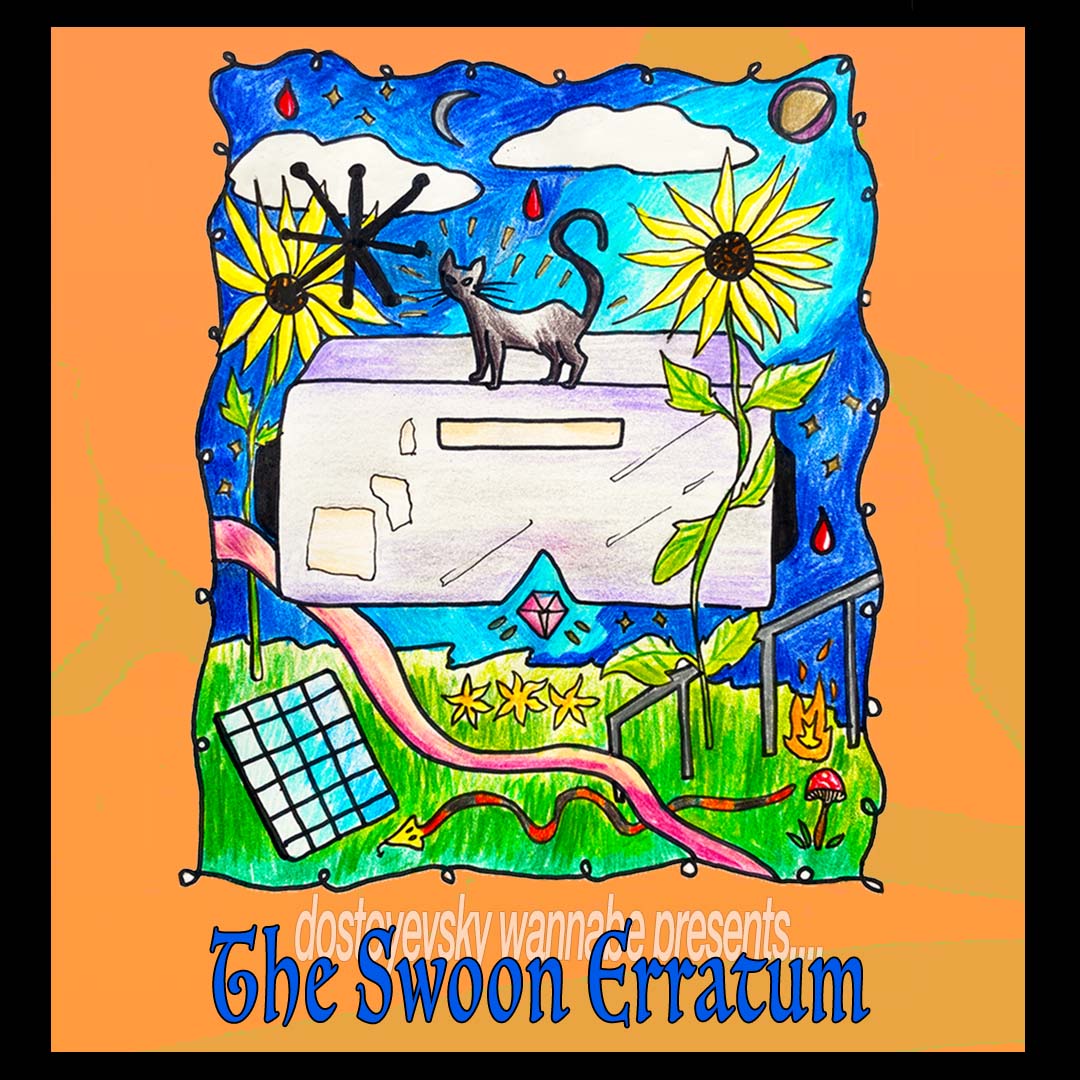
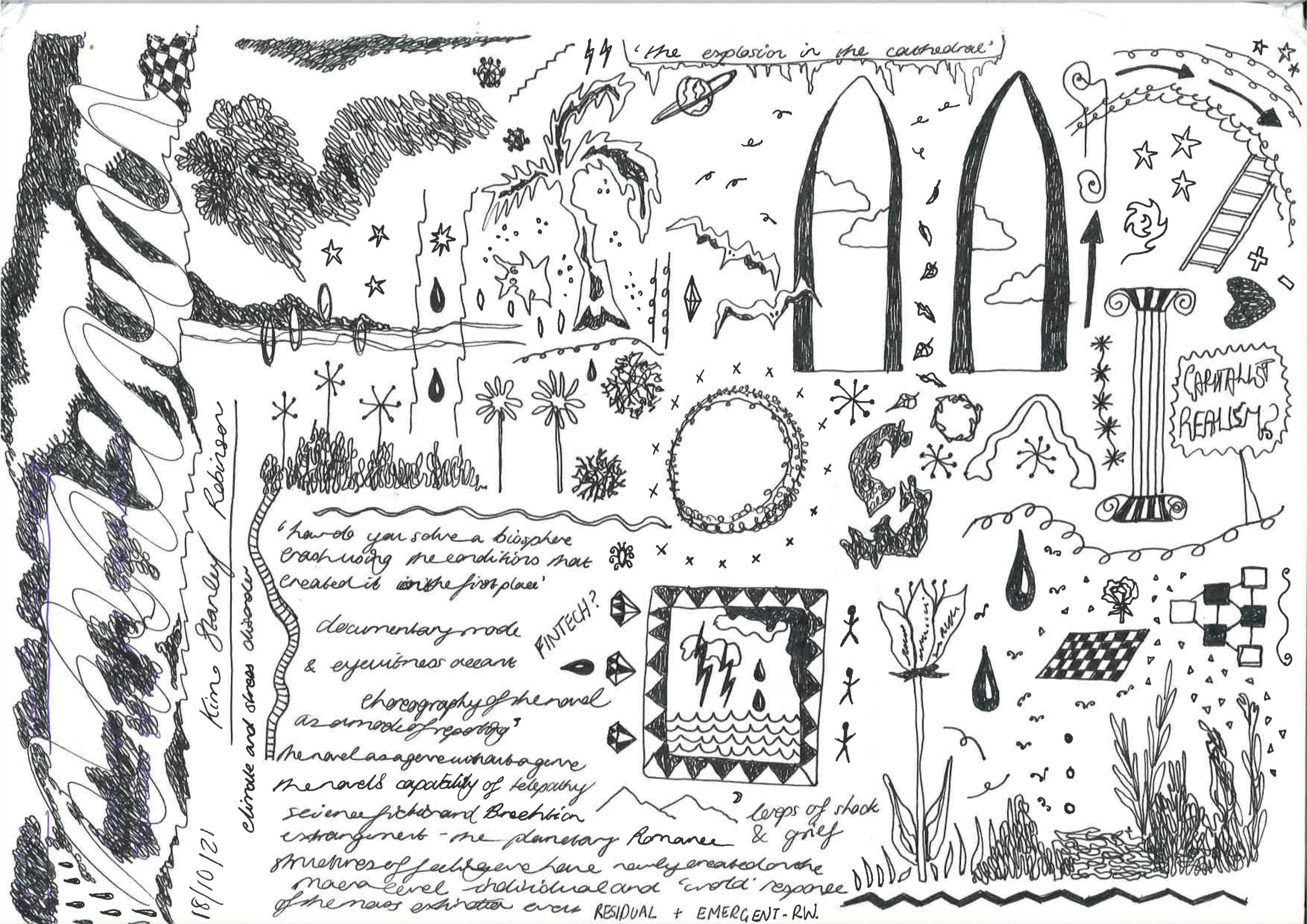
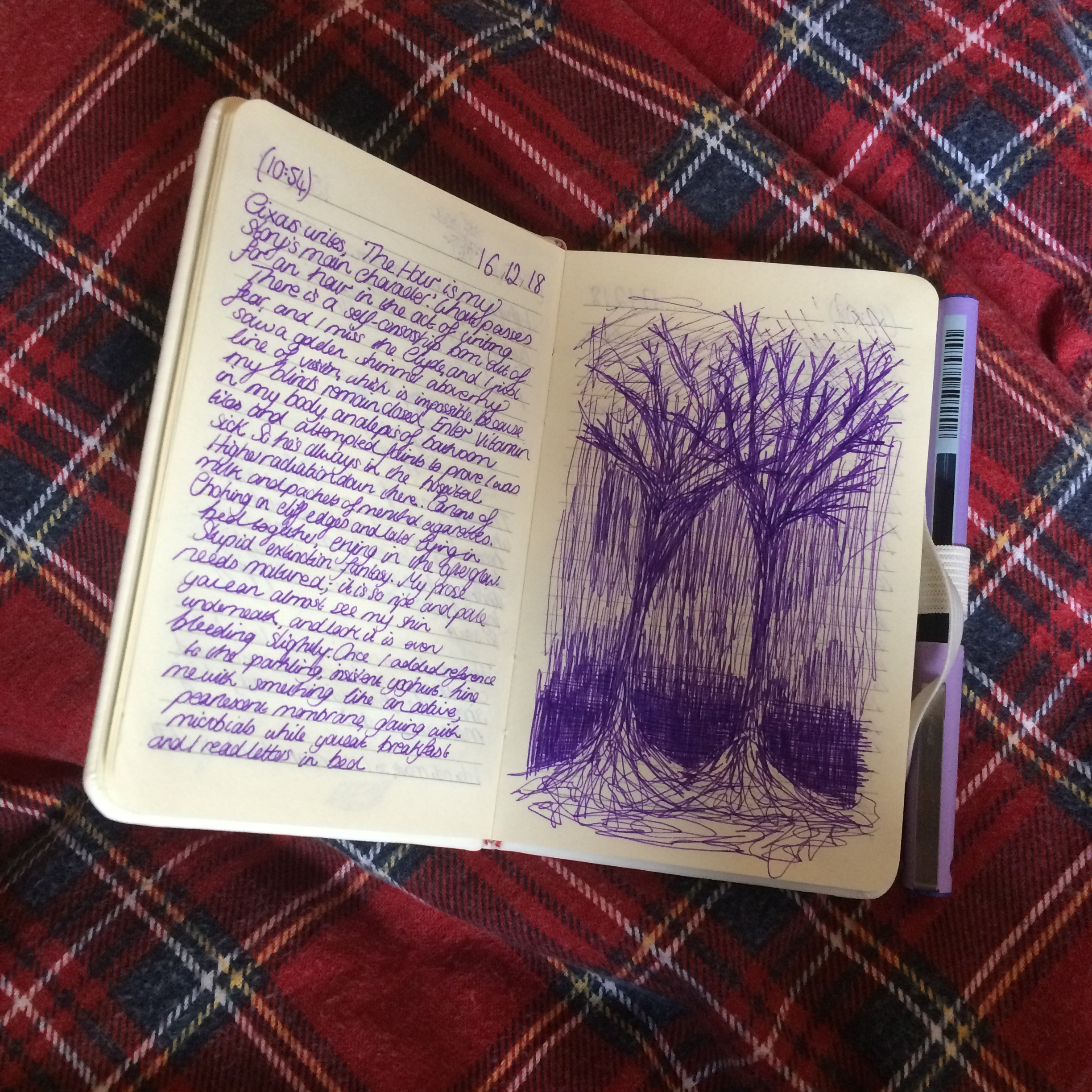
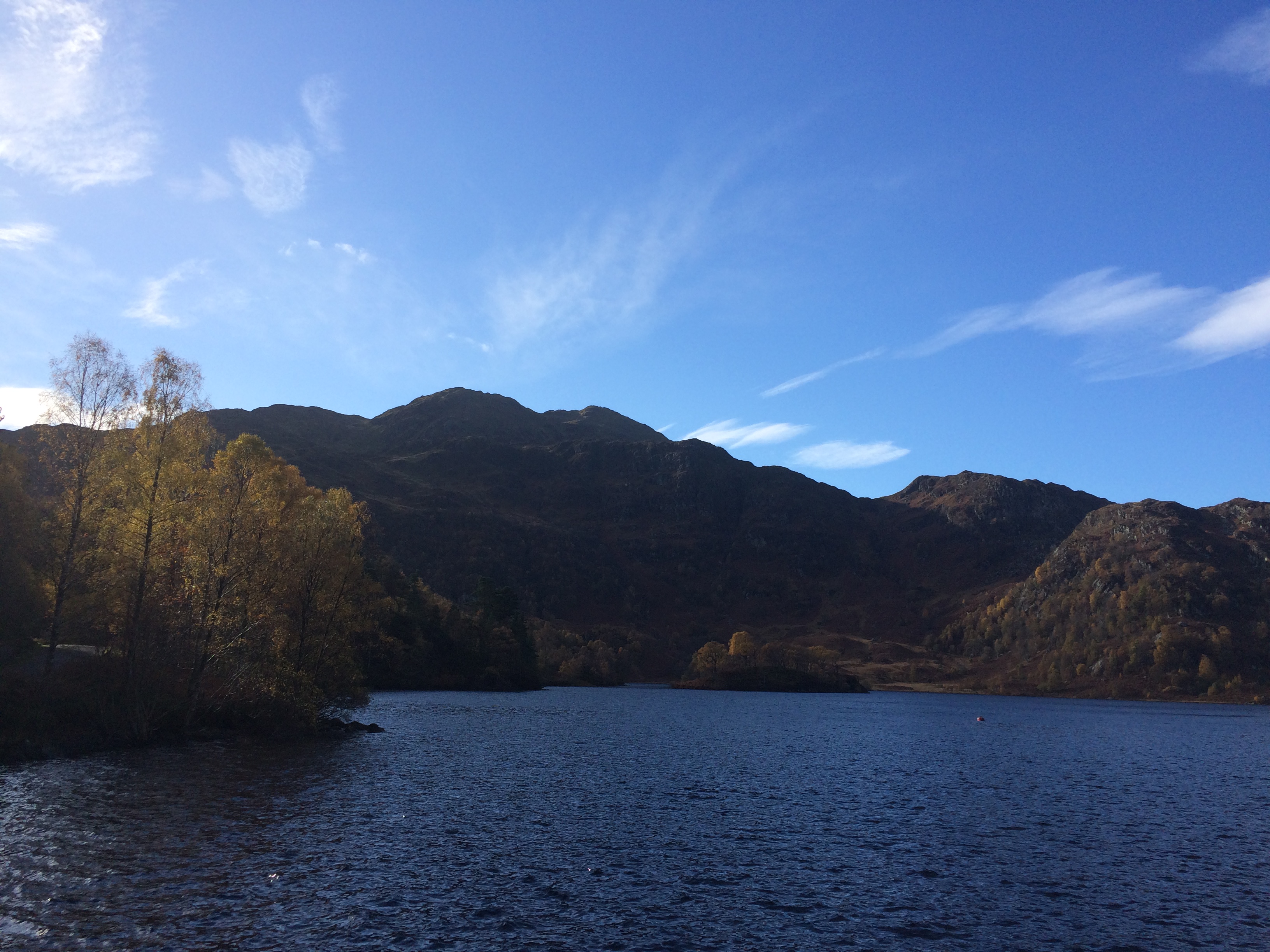
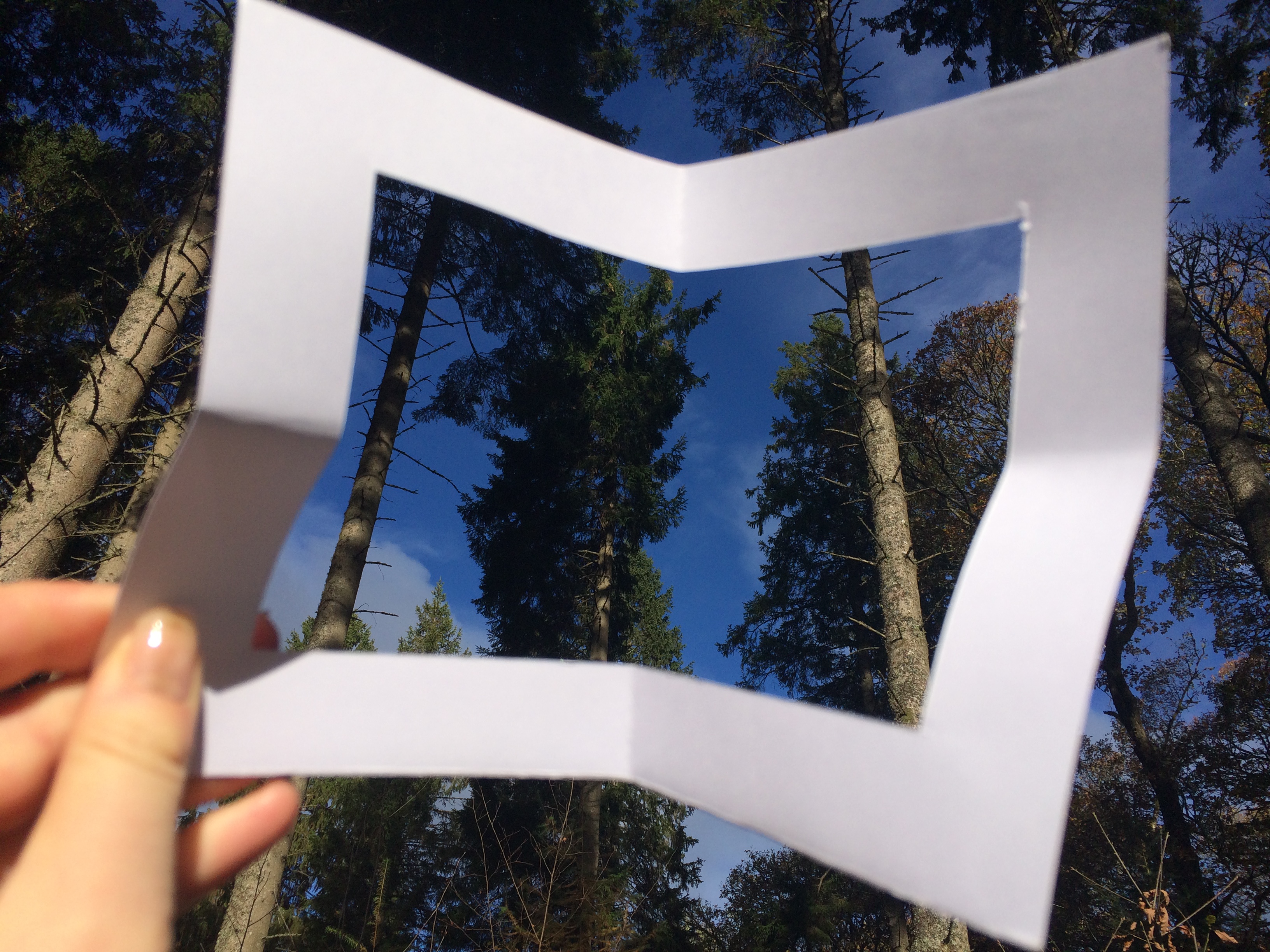
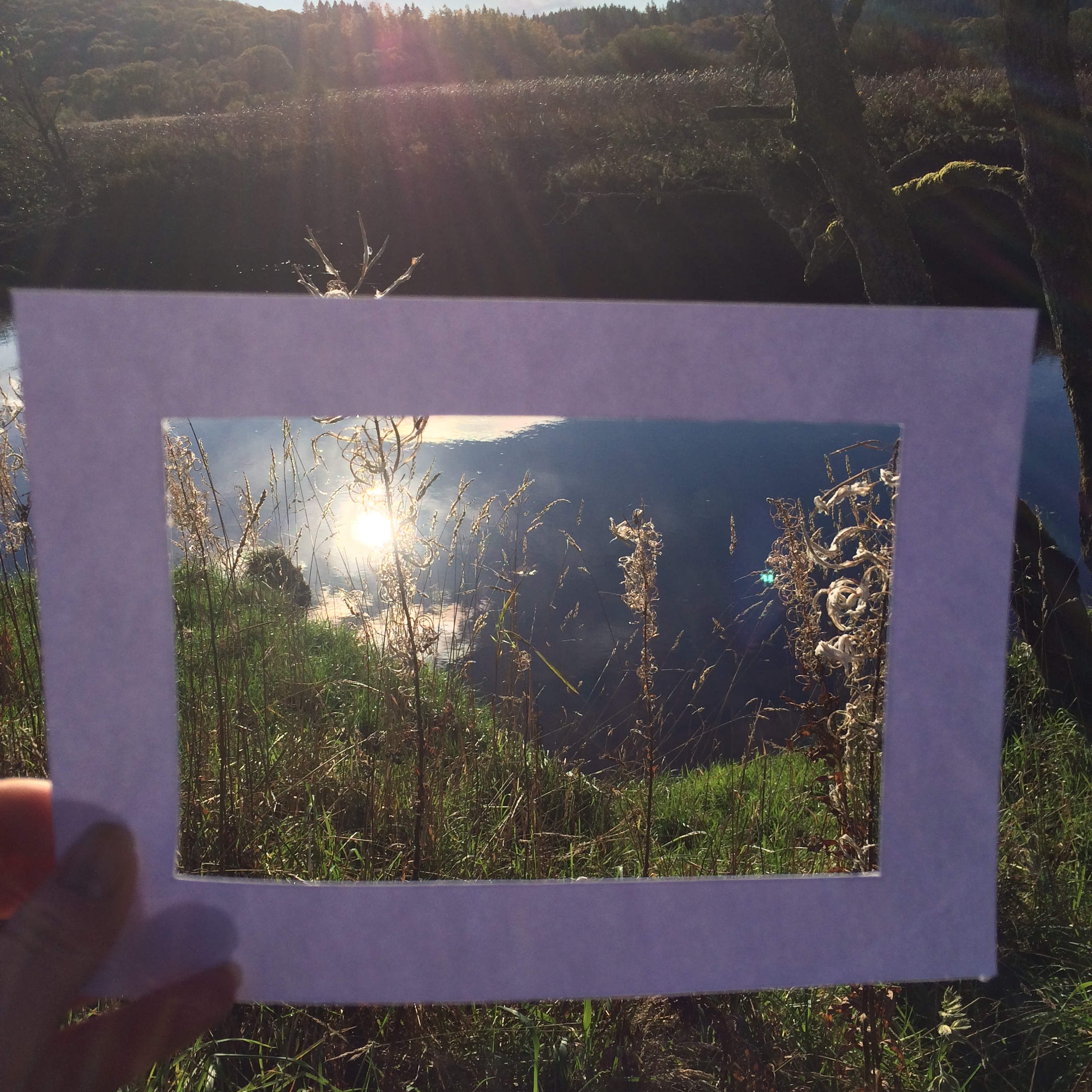
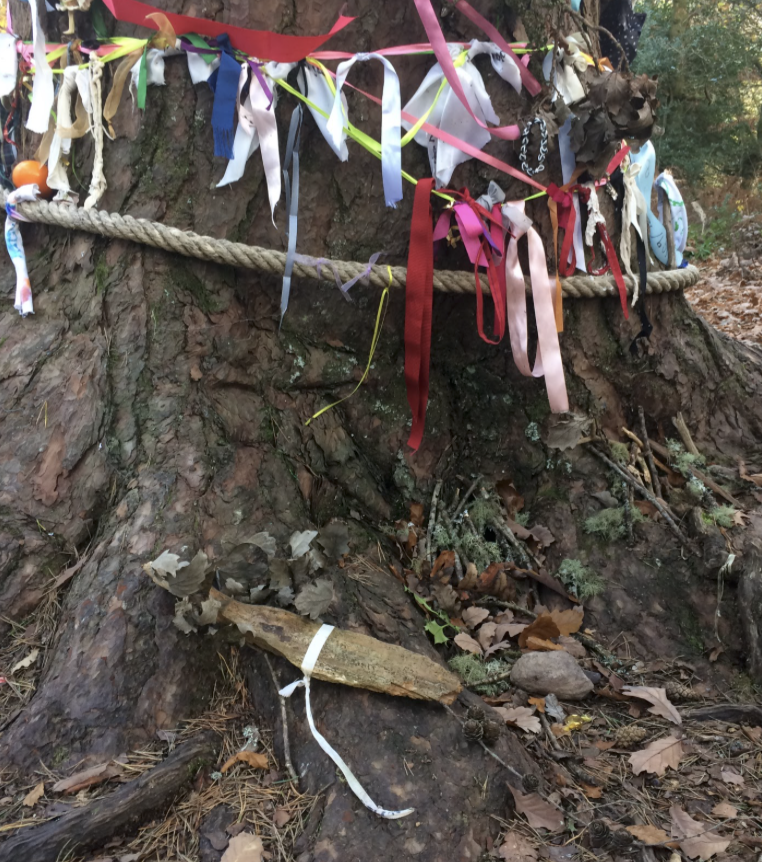
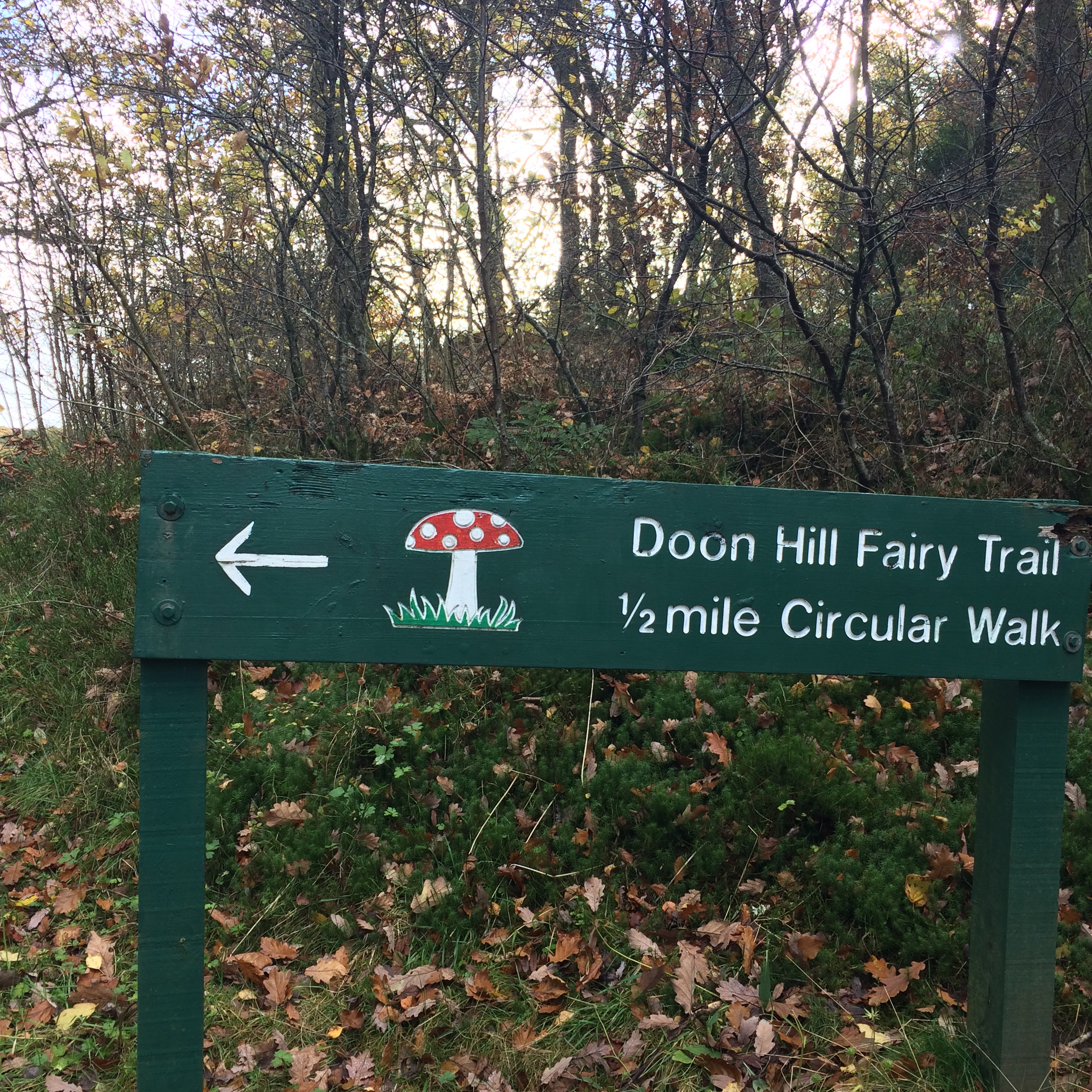
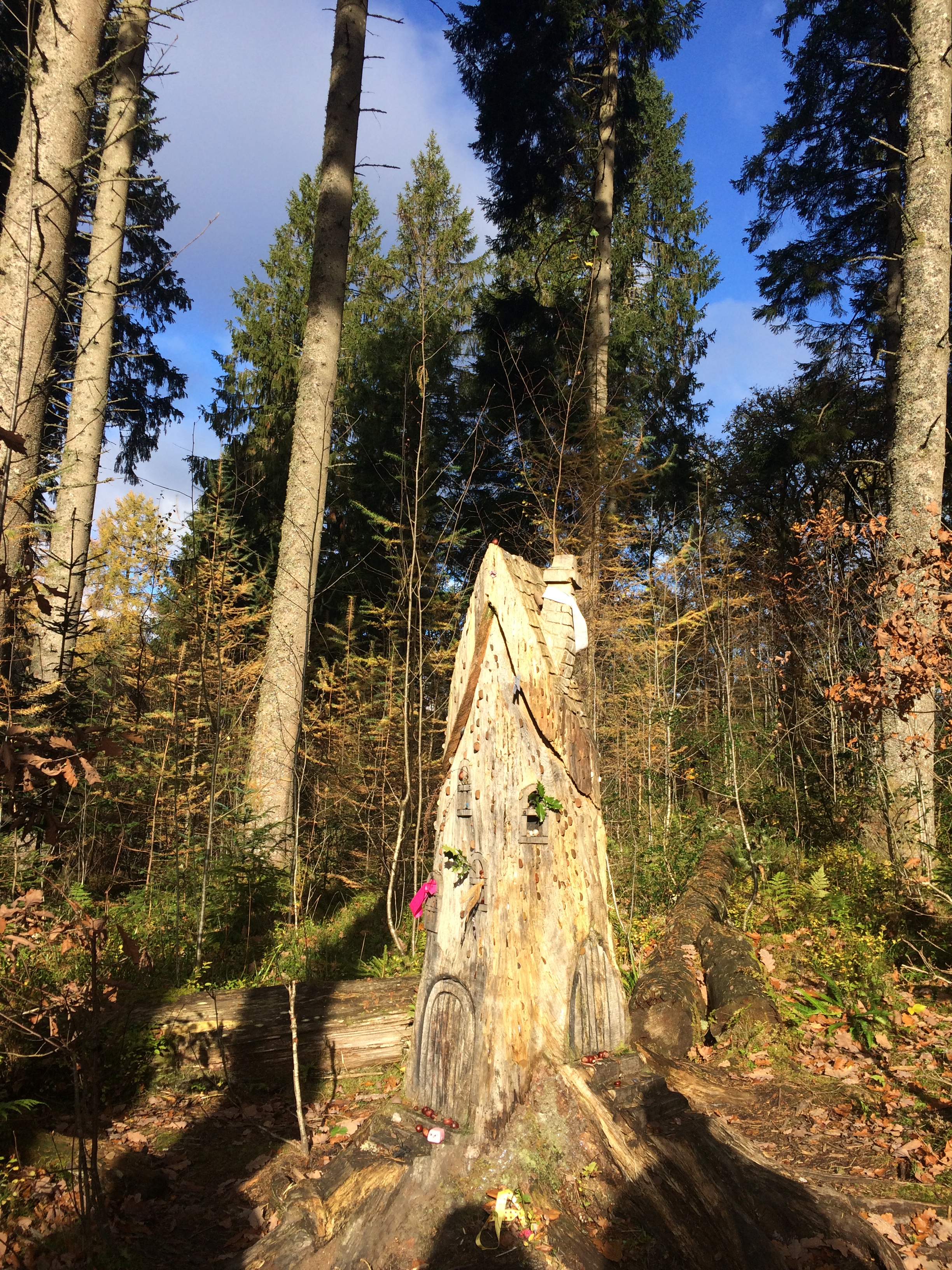
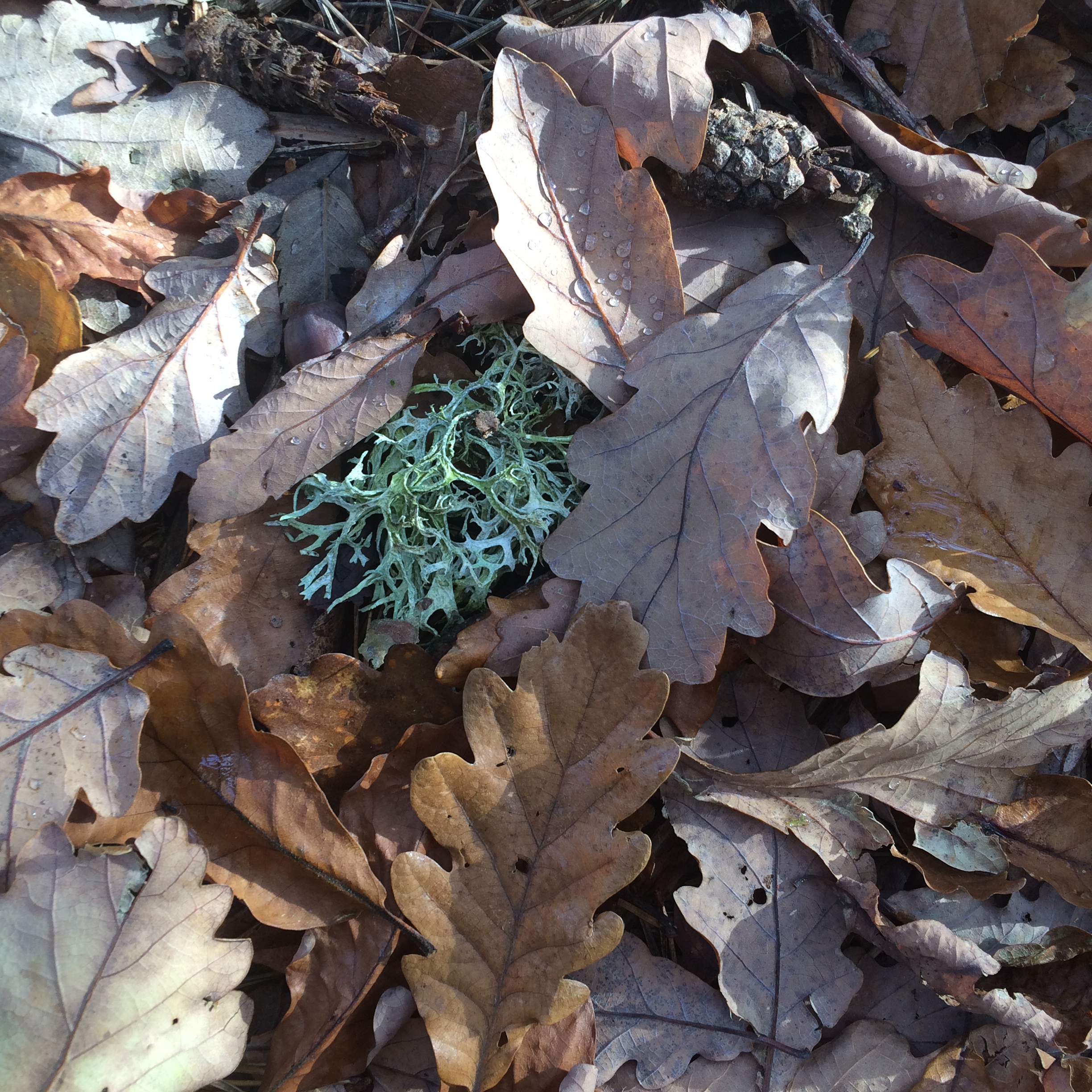
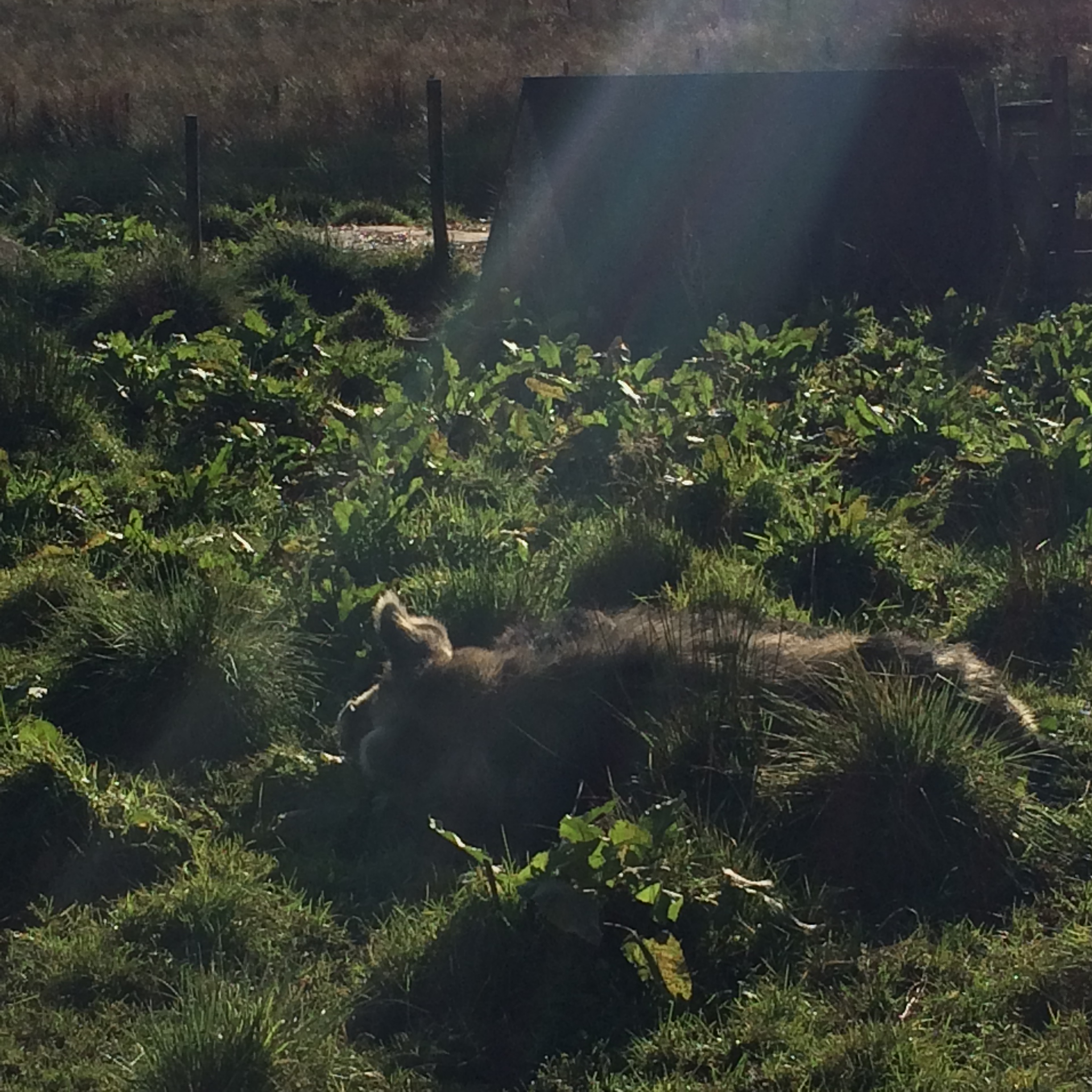
 mariaology