

Walking home last night the tarmac laying had disturbed spacetime, yet again.
Walking home last night the tarmac laying had disturbed spacetime, yet again.


Recently found these on my google drive. The LATE NOUGHTIES // study leave.















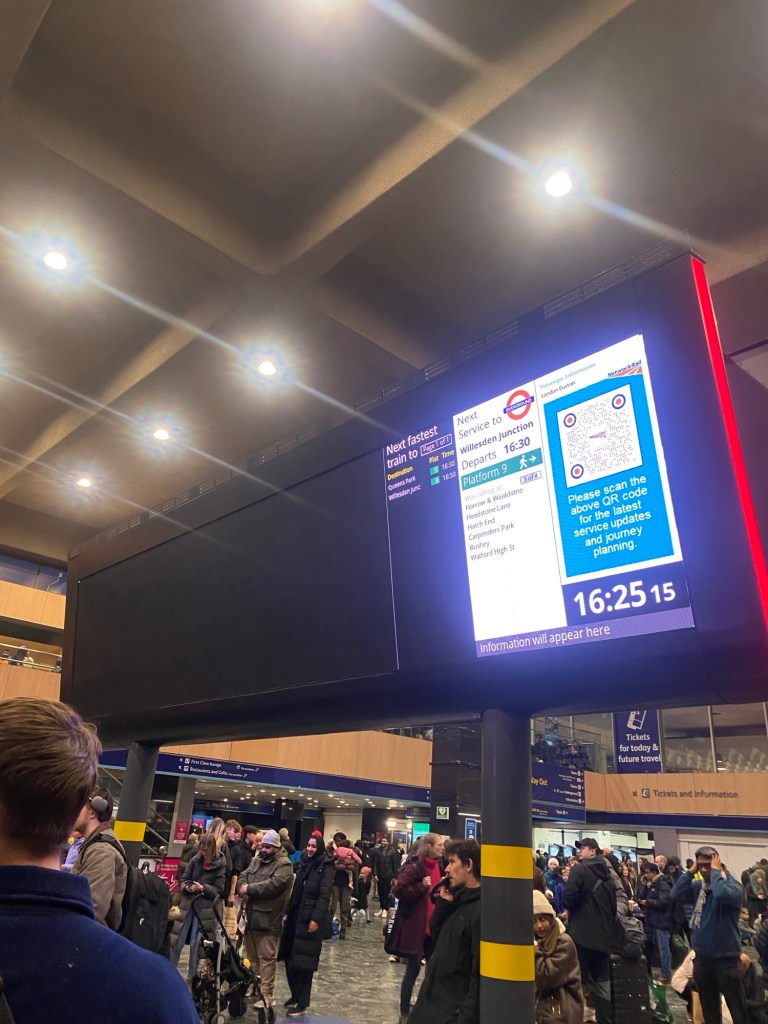
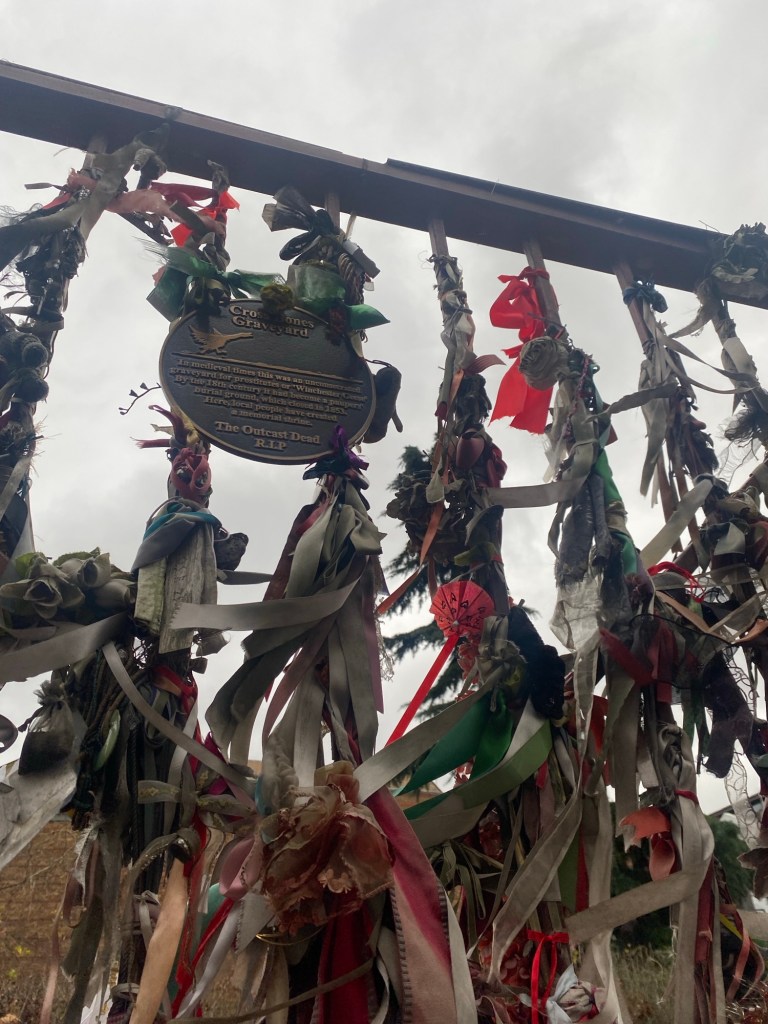


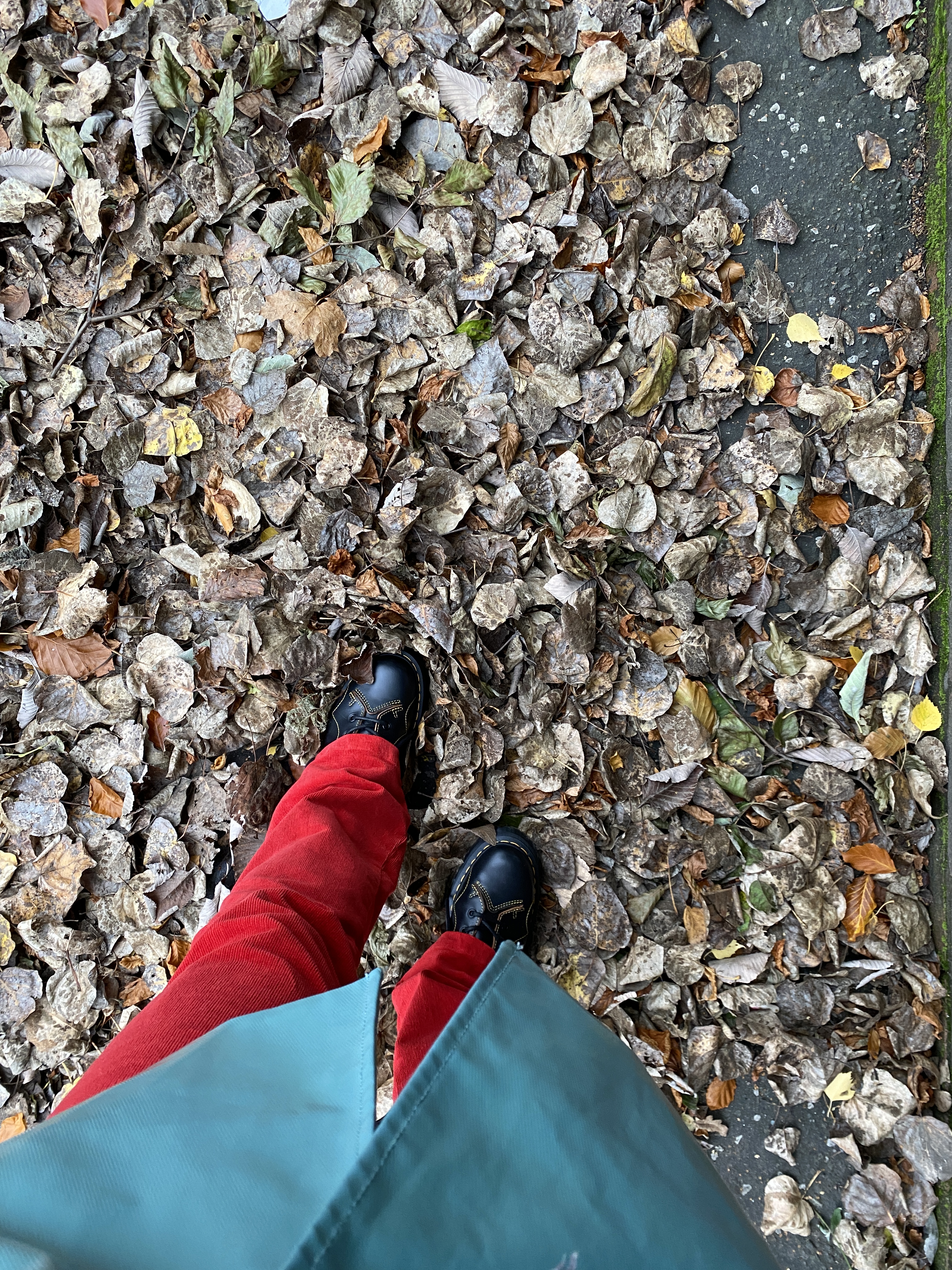
Wet-leaved, walking up hills with chain oil on my elbows, knuckles, knees. We are on the eve of the ‘big climate conference’, which is to say, to be a host city of preemptive closure: there will be no more roads so that nobody can block the roads without authority, no more bridges for your tiny feet. I imagine a commute that takes me north to Kirkintilloch and back along the canal, an extra hour and a half of leg power and stamina and to arrive like of a beetroot complexion to the moment when somebody speaks. These streets are mostly broken glassed, and I see nothing to sweep that; I see buildings go up, see extravagant plant life grow from abandoned houses. I dream about bike punctures from enormous shards of glass. A mushroom sprouts in the brutalist building. I should have planned to do something. More tired than words can.
Imagine awaking beautifully at 5am each day, to actual birdsong and car sounds, still going through the night to Edinburgh or the general east as they do. I miss the ocean, which I have not seen since May. Sometimes I forget that its quiet, rhythmic hush is always in my ears, a tinnitus with the switcher dimmed. All summer I swapped the ocean for industrial estates, teeming with buddleia. If I go to a club, it gets full bright. The hush. At 6am I make atomic coffee, await words, say rain. I could tell you about the new university building and how I will never find a space to work there, doomed to circle identikit floors like airports in a suspended time that nonetheless eats into my time of work, a starship, doomed to fill a cup of hot water and carry it up and down escalators only to be cast back outside with scalded hands, cried into blustering autumn. A hazmat suit to be a student, studying the microparticles of your love in blunder. If I could study on the floor, in the street, with the leaves stuck to me. But I am a sufferer of frostbite and poor circulation, owing to damp homes, an unfortunate experience in the snow and damaged nerves, fragile metabolism. I am not there anymore, in the place we have been
Canned words taste better with more salt on them. Fuck you. Sitting on the curb in the 1990s surprised us when a plane went by, it was carrying my childhood. Remember we used to put each other literally in bins, until that wasp stung your ass and I was sorry. We prise open tins for the juicy bits of the story like, what would it take to get the attention of a virulent benefactor? Should you become a red squirrel enthusiast, or take up the statuesque hobbies of sportsmen? What beneficent largesse would require it?
Imagine not living by the anticipatory hormone storm of a coming menstruation, or like, the cramping wildness of the night and morning or blood gushed trying to have coherent thought in the day when your mind is fog. I want to transcribe some of that fog to writing, to remember how it was when again I am in clearing, to be like this is the place, it’s never gone. I was held in it, the tearing itself to shreds sensation to write this at six in the morning before work. Plants don’t have to go through this; is it that they’re always ‘working’? How do trees feel when they shed their leaves? Is it like an annual period and do they miss them? Should I develop fondness for shreds of blood in the toilet, abject bits of me and not? I saw a leaf blush out of my mouth and into a leaflet. Smoking kills. I watch the men in high-vis sweep up the dead leaves, more like dying, into black bags by the side of the road. Someone around here is always burning rubber tyres in secret. It’s kind of erotic to watch people do something repetitive and with great concentration, as if no one else could possibly notice this. To do your work that way. O your beautiful butterfly shoulders. Missed opportunities.
For instance, I could have lived through this moment to learn another language, write a curriculum vitae for the purposes of waged employment, called you.
“It feels so good to walk in nature.”
Blood drop in the shape of sycamore.
Where is Canada?
The revenge fantasy is only that trees are flirtatious as hell, winking pollen so that you watery-eyed have to look up at the stars sometimes and beg, like take me. Let me out of the forest so I might see
(fantasies of committee,
the ground to tie
my own laces in figures of eights.)
Authenticity!
The figure of eight in Karla Black’s sculpture which is pink-smeared recalling everything I used to put on my face. The idea is to find a sort of peace with it. School bathrooms where a face was pressed against glass and cruelly examined. I dream of rooms filled entirely with blizzards of eighties-blue eyeshadow. Angel Olsen, 2014, Pitchfork Festival. Having lived with the spirit not for resale, traded on a stark memory of that colour where every remembrance seems to intensify blue, until all I have is the pigment itself, ultramarined into oblivion. To wake into that blue and not see beyond it. I put my sore arm through the right-hand loop of the eight and pulled this out for you.
In the dream we pass an armed convoy and into the bakery with coins allotted to us by authority figures, and we buy pastries adorned by sugar ice drawn in mobius curlicues, and the pastries flake away as we eat them, greedily on the street, so many flakes falling before the guards. And we are butter-mouthed in the face of conflict, war and summit. A kind of shout chokes the air but the golden morning goes on, the falling leaves. I have these cramps and double over in the falling leaves. Men come to sweep around me, where I have fallen. One of them bends down — he is so young to be working — and pats my head tenderly and I see a leaf fall behind him and I know that leaf to be us, so we embrace platonically for one moment, as though I were his long-lost twin, before the foreman calls his name, which I can’t recall—
No, not that at all — he touches the soft part of my ear, goes “are you not young to be leaving?”
In trash, the language of trash, the trash piled up against the highway of your declaration. The men stopped coming.
Azalea, camilla, plum blossom, hydrangea.
Rizla, tin foil, styrofoam, gum.
The noise of vehicles pulling up around the city, emitting fumes.
The petals shed and I sleep on them, dreaming my blue becomes turquoise
another morning where the sun won’t rise
until we are paid.
~
Painted Shrines, Woods – Gone
Au Revoir Simone – Stay Golden
Uffie – Cool
Margo Guryan – Something’s Wrong with the Morning
Green-House – Soft Meadow
Frankie Cosmos – Slide
Arthur Russell – A Little Lost
Grizzly Bear – Deep Sea Diver
Tricky – Makes Me Wanna Die
The Raveonettes – I Wanna Be Adored
Beach Fossils – Sleep Apnea
Lykke Li – I Never Learn
Cate Le Bon – Running Away
Vagabon, Courtney Barnett – Reason to Believe
Angel Olsen – Some things cosmic
Jason Molina – I’ll Be Here in the Morning
Cat Power – I Found A Reason
9 June 1977
Plato wants to emit. Seed, artificially, technically. That devil of a Socrates holds the syringe. To sow the entire earth, to send the same fertile card to everyone.
— Derrida, The Post Card
He goes around sliding things under doors. When I answer the buzzer he coughs through the speaker. Is there something for me? Impossible to tell. He clutches bundles of luminous, anonymous catalogues. But there is mostly paper, less of noise, in my dream. All the colourful paper is folded into neat little butterflies and cast about a room somewhere, a trillion paper butterflies made animate by a ceiling fan. They swirl up and hover and tremble, they display the fact of display. If Damien Hirst were kinder to hyperobjects. The butterflies are destined to live for only a day, but their larvae live on and on, reproducing in squirming punctuation. The home screen was full of these icons, butterfly icons, but the state that I am in…well, I saw them as colours in kaleidoscopic array, you could say formless because they were almost utterly without origin. I tried to click through the butterflies to open a window. The word broadcast has its origins in agriculture. I see him at the edge of things, broadcasting his literature; dreaming of that broadcast whose discourse would finally slip into ‘Stone in Focus’, fully looped for 1:17:10 duration. The butterfly paper of things we were supposed to purchase. Palimpsests of unspent ‘truth’, a kind of solvent tonic for wounded text. What folds is the secret of objects, their identity prior to products. The butterflies fly, land, twist, secrete. They become tiny wedges. I want to gather up quantities of plastic and watch it melt between my fingers, the putty of a capitalist extinction. I kinda wanna call him. One day the fan will stop running and that will be the end of the day. The paper is better than plastic, by a mite.
That is what I write to you. A little shard of a page. I can pinpoint its scene of writing, the place where the walls are real moss and everything is green and utopian blue. The signs are over-scrawled in washable ink: fill up the kettle after finishing. A world slides out of focus when I write to you. No one cares. The point of a sentence is itself the long-tail; maybe I had not converted the file right, maybe I had not stretched this line as far as it wanted. But it broke apart regardless:
. . . . . .. . . . .
. . . . .. . . . . .. .. . . . .
. . . . . . .. . . . . .
. . . . . ….. .
. . .. .
I see last year’s city in a flowing grid of water. The artificial channel of departure. I am trying to remember the blue of the plane, the blue of a single window. It seems this journey annihilates the next. The weather is unavailable to me. I was up so late, crunching chocolate eggs between my teeth and reading Dodie Bellamy. Everything said was fibrous, electric, painfully or even exquisitely wired. I was in San Francisco, I was in a flooded New York; I was in my hometown, even more underwater. The prose came in streams but it was hardly mine. I leaned in to suck the smoke from your face. What everyone needed was chamomile, a breath of the air by the river.
At the end of the world, the butterflies drown. We mourn them very quietly, last of our senses stimulated. The muscularity we made of our work is immaterial now. I’m trying to swear myself into a rhythm of perfect sleep. What comprises a wake up call, the fuck fuck fuck of it. Alarms are sent from afar to hold me in the punch of 400 words, Plato’s postcard. I wake to her dreams in WhatsApp messages; I split samples of songs I don’t like into ringtones. Something slips into something and the dark looks different. I walk home and catch variant scents of spring, mixed up with the fumes from the late-night buses. I rub blossoms and leaves between my fingers, trying to intensify the feeling. I am incredibly nostalgic for Chloé perfume, when I hug her goodbye. Magnolia, freesia, honey and cedarwood hidden beneath. Often those moments are so sweet I have to stand there in the street and text myself about it. I have these texts on my phone:
05:12: It’s just sunset, stupid
01:01: My legs are full of equinox
23:42: What if we wrote a line for every hour slept
02:34: Orchid.mpeg remembering futures
In Lars Von Trier’s Melancholia, the only safe place is the cave. But the cave is more like a teepee, it has no walls; it opens out onto the cinematic event which is this massive planet colliding with Earth. So there are no walls, not even ones made of moss, woven with pollen. It is not exactly a place ‘to go’. The cave at the end of the world is a triangulation of lines, a diagram. It points to the sky. The inside of the cave is the outside; it is a geometric skin; it is infinitely double. I think of the cherry red skin of my hotmail; at what point in my life did I choose that? The interior kitsch of human flesh, rendered plastic. Sometime in the month I write: I want everything to be tender but I had no idea it could be this bad. When the hail comes, when they salt the road, when the snow comes, I think it is ending but I wake up as before with the equal ache. Sunlight (?) Statistics lisping the roof of my mouth, as though writing itself would produce an allergy. I lay down my stuff, just as he is walking in, and my tongue in my mouth and the blood in my veins and the thought—indistinct sense of where the year will head. But I am looking instead for the tail. Already curling back into itself, the significant events of January chase me with flickering imagery, they are a personal narcissism. If I could boil them down, attain a clarity; shoot them, syringing…
I roll up my sleeves for airborne beams of vitamins.
She tells me how gorgeous the ghost was. The coast was. I keep thinking about the chestnut taste and the kisses of light, the packet I put back on the shelf. The world was wrong; the supermarket made me soft enough to go, checking the mirrors in financial departure. Incredible sponges, dying at the bottom of oceans. Someone holds the syringe but not for me. Someone holds out for loose change. I lose specialness daily in order to live. I dream I have a daughter who stands by a fireplace while I clip a starfish pin in her hair. She can’t say the word. I perform the tiniest sweep, distracting her gaze. She doesn’t want to go outside, she will scream and clutch the radiator if I tell her. The word is literally unnameable, I wake up with it gone from my lips. But the word exists! There was surely a species. It is only a technicality now. Secretly I write the word down, days later when it returns to me, burning. To write it here would be to violate that, to cheapen its life with a summoning. I realise the daughter is only the version of self that I didn’t fuck up. She exists elsewhere. I swear to her:
Anne of Julia Kristeva’s psychoanalysis:
“I dreamt that a little girl came out of my body, the spitting image of my mother, while I have often told you that when I close my eyes I can’t bring her face to mind, as if she had died before I was born and carried me along into that death. And now here I am giving birth and it is she who lives again…”
(Kristeva, Black Sun)
The daughter as a twice-lived avatar of futurity, the mask of what comes before as pushing through generative time; mothering and lusting and screaming for our place in their state of absolute melancholy. Be with me and share this pain. In the anthropocene, we accumulate a sense of primitive, foetal lostness (how many times have I curled, cried, questioned); the world is our fragile, amniotic sac. We float, we are starved of good air; we trap the heat. We can’t trust the way we damage it, extract from its boundaries the richest juices; the way we carry it; the way we absorb and are absorbed by it; the way we circulate in the midst of our mutual toxins. But the Earth is nothing so essential to us as mother, and no blood-ridden cloud of cotton could stop the daughter, screaming all through my sleep.
The longest comedown, the longest night. Where mist is mostly the way of him holding a note, and it is not instant, it is not like the drug or the river that drowned him. It is the name with so many consonants. It could shatter a language with time. My dreams are thick and long but my sleep is short. I like how many times Sophie Robinson mentions her inbox in Rabbit. I check my own and the number surpasses 50,000. Spending the morning in turmoil, wanting to write back to the sunset I missed. Endless proliferation just is. It is something like, hold simultaneity in blockchain. Mathematics achieves a weightlessness. I’m sorry I’m sorry. Pieces of skylight I can hold in my head, granular blue. I’d let myself into the rain again. I need a very tall building, a stairwell to make the blood rush back to my extremities. You tell me not to.
Remembering the summer where all I could do was measure the slenderness of other people’s legs, in a numb, inexorable kind of way. This felt relative to my sense of extinction. It was something about, what do we put in our bodies and where or why do we want to go. I was suffused with the sense of the need elsewhere. How do we blend into a world, make of our souls these chalk pastel auras. If you could terraform Mars with memory only. The drift was the weight of an email, it was rainbow and stretched as far as my childhood. I saw her by the river, holding a piece of glass to the light. She hitched up her skirt and waded in. The voices subside in the rush of the current. The image fades, because she is anyway there, chastising my choice. I wonder how ever we lived without each other.
Heartburn and techno. Reasons I want to fold this away, why I walk along rivers regardless. The latent burn was only as far as the beat could measure. After the movie, I felt a depression so immense it was like I lost touch with each muscle. The doorbell. Friendships fraying like so many neglected threads. Coal emissions are rising like shares or something. I ran and ran in the dream of the land I remembered. I could smell wild garlic along the river. My brother was already home for the match. I ran and ran to get back to the gym with the moths in the showers, stuck to curtains. 91%, 69%, 43%, 1%. Even my phone is dying. Little white eggs in your palms are lyrics. What if the lilac tree were more than or less than life itself? Lilacs symbolise the beginnings of love. Being earnest, accelerationist, plugged into the HEX account of refresh, streaming language. What colour is it that flickers in time? I have been ignoring innumerable messages. I want to dwell in the missing hour, the split that occurs when the clocks go forward. It’s just like the extra cappuccino, the final stamp on a loyalty card. It always resets.
She is no longer there. It was so simple, letting the blood of the thought away. Dark liquids filled my days: cola and Guinness and the black, oozing matter you see in the water in Tarkovsky’s Stalker. Dreams of petroleum slick I saw in the sky. Oily dream of the Essay of the Book of the Essay. Literature seems almost impossible now. I needle myself into the heads of writers. I want them to pierce the myriad empty pores of me, tiny molten residue eggs. This imagination, waning. White cracking liquid black on the page. I was taking pleasure in texture and loops, cutting my tongue on a shout. I don’t know how to write! Mostly I would lie in bed reading D.rida and peeling the skin around my fingers, leaving tiny strips of red underneath. The cherry-rose flavour of Rescue Remedy. I needed something heavy; like an extra river, proplus, nicotine gum.
Transducer: A device that converts one form of energy into another.
I wanted to be online forever and I wanted that status to annihilate the fact, I wanted to erase onlineness from the web and I wanted the result to be world, oblique exchange of realities, and people uploading their papers forever, and a sweetness, whatever it means just to speak. I wanted the spider to eat the fly. I wanted to read behind the lines until I became signal, and my signal was a force behind the language I wanted to speak, and it was prior to me. I went to the Tower and forgot they were having a party. The white wine tasted like sugary air. There was a video I watched, ‘Pyramid Song’ performed in Egypt. What doesn’t care to be sent. The egg won’t open its hatch. The complete terroir of relief in southerly regions where I cram all my life into multiple time zones, the sibylline remainder of day. Mysterious she beckons with fat grapes squashed in the O of her mouth, all rotten fruit I could smell from the train going south. She designed a very careless outrage and I realised there wasn’t a single shout inside me. She twists out the stalks like dead capillaries. I confront the thought of something terrible happening. So many times and I could not shriek. Later, tiny black seeds spill into my palm. I can only cherish them.
Facebook is the broadcast of Earth. I try to straighten the mirror, as though the spatial urge were innate and not just void. It was not the same book that I had ordered, the Book of the Essay. I had already set forth on the impossible project. I struggled to review. I had not even written the fact of it yet. There is value and heat to this project, even in its moments of stretch and collapse. I would put writing through the machine that makes water effervesce, missing the ease of waitressing. When ‘Beyondless’ came on, I felt infinite again on Great Western Road. Short-sighted, I missed the faces of every stranger. I wrote this sestina called ‘Lucozade Blues’, but I had not the stomach for any orange energy. Would you like ice with that?
The cave is a kind of triangle. Facebook is the vending machine, dispensing the glitches and beats of our life. It is as one, invisible crowd of desire. I want to say swarm. I want to say seed, but the burst spent seeds that lie in the dust of the archive. And she does calisthenics just to stream them live, and she lays her beautiful eggs. I am obsessed with the rhythms I can’t keep, lunar cycles for mindless complexion. Someone comes along to clear us west, they have had enough of our westerly airs. Sometimes I long to smash the windows of my local Tesco after midnight, just to boost M&Ms off the shelf, scatter them along the coated floor and crunch their acid colours one by one with my shoes. I want a whole lifetime to tread in my shoes. The pause when you stop in the walk to tie your laces, and you look so lovely with your leg in the air; a kind of ballet occurs in suspended time. Everything about this sentence is soft, it has to be. Plié. It subjects me to a slenderness, elsewhere a song. Bend and taut. Fear of the dark or the light, lilac wiiine. Somebody else is always between us; somebody else is the cavalier world, riding its way through galloping matter to get back to the point at which this becomes anti. And later I stroke your hair in the stable, and later we find him, and later your dream hair is all I can smell and scrunch when I come up for air or salt in the morning. And you are smaller than I ever remembered. We do things we shouldn’t exactly do. As if all this could be written in cafés!
I felt sick all semester with radial thoughts, and when I woke it was spring and the circle made of my mood a halo, it would be the same mood to return forever. Sunshine, caffeine, approximation. A loop the butterfly pages can fly through, and we chase them, baby-fisted, throughout the night. I want to be this clumsy and look at you straight in the eye and smile. Faster, the butterfly pieces of colour and light. Faster the streams of warmth and the morning gulls and something that comes on astrological. Supermoon channel. It is only you that makes me angry. Spring arrives solely in Getty images. I could just download all this weather, I want its data to supplement; I listen to ‘Eudaemonia ’ on repeat and remember the future we were yet to inject, starbright direct to our arteries. I’m sending a sort of word to Socrates, I’ve got this whole card—
~
Drugdealer, Weyes Blood — Honey
Sky Ferreira — Downhill Lullaby
Grimes — REALiTi (Demo)
Ess_Gee — Bubble Queen
Hand Habits — are you serious?
Stella Donnelly — Tricks
Julia Jacklin — Body
Pocket Knife — Custard Cream
Kelly Lee Owens — Lucid
Youth Lagoon — Daydream
Them Are Us Too — Eudaemonia
Tim Hecker — Obsidian Counterpoint
Sarah Davachi — Perfumes III
Logos — Menace
William Basinksi — 4(E+D)4(ER=EPR)
George Clanton — Livin’ Loose
HEALTH — LOSS DELUXE
Bliss Signal — Floodlight
Frankie Cosmos — Eternal
Strawberry Switchblade — Trees and Flowers
Galaxie 500 — Fourth of July
Silver Jews — Trains Across The Sea
Her’s — Under Wraps
Burial — U Hurt Me
The Durutti Column — Love No More
The Walker Brothers — Orpheus
Nico — Somewhere There’s A Feather
Talk Talk — I Believe In You
Like: then I began making portraits, not just portraits in colours in designs in styles, in blue, in patterns, in abstraction, but this, & I’m trying to describe to you what it was that I was doing. Portraits of the right thickness or thinness, portraits I could retrieve in a moment from my mind, portraits with false bottoms & receding backdrops, false perspectives, like memory, with layers & layers in different shades, in different states of decay, & a whole picture of all of it, first strung out in sections, as though it were on the floor, then pieced together, with some rearranging, and recorded, or put in a place, whatever you like, but in such a way that I then had to again cover & review each part, and handled, taken from place to place, until the right situation was found, as this is the only way to remember where you put something, as you already know, and then, and this is all so obvious, waiting to find out what I had done, so I could begin again. And each portrait, if I can now still describe them that way, each one had some elements which seemed to feed back into the next one. And that this for a while was becoming the most important part of the process. And these portraits, as I’ve tried to describe them, were what was going on in my mind, as far as I can say.
— Bernadette Mayer, Studying Hunger (1975)
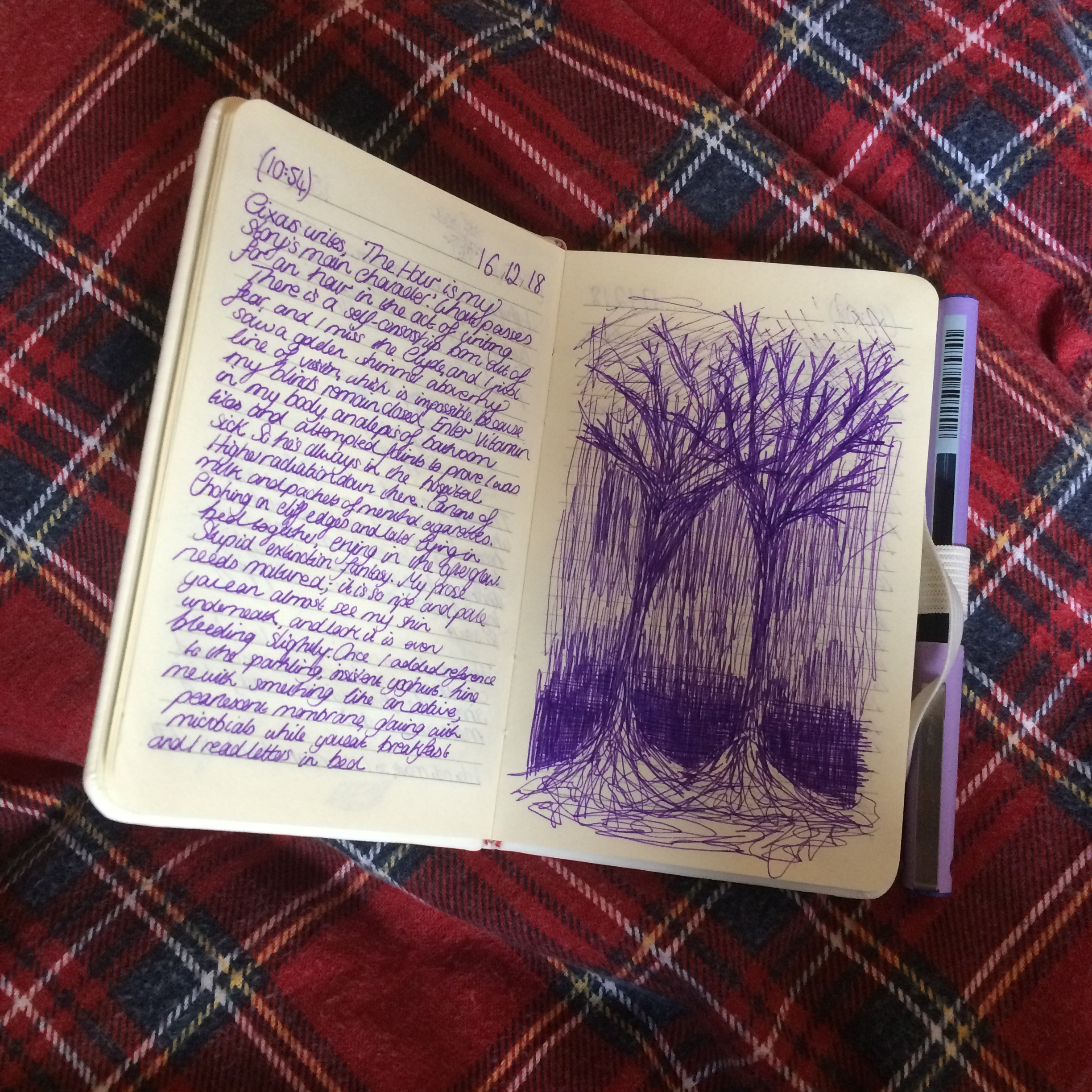
In Studying Hunger, Bernadette Mayer writes of the feedback loops of writing that also comprise a sort of feeding. Reciprocity of materials, bodies that give and are giving, that expel and consume. How different our words might look in hunger. The month brimmed over. Designing these words you could eat, with breath of sweet pastilles, marijuana — scents arise at specific districts. Is this the green haze of Finnieston. I tried portraits too, crazed lines of abstraction, tangles that tugged me into sleep as though sleep were a kindness, a simple feeling. The month brimmed over, it was so much. I lost my appetite, fell into stasis. It was the first December in five years where I had not worked my exhausted ass off, serving tables, sick. I was sick but I wrote instead, through the guilt. I opened your letter.
Most vital when the ink bleeds through the page and the drawings stick together. We drove through the dark with Amnesiac blaring, there was a hot red halo on the night that tasted of whisky, and was empty elsewhere, the emptying streets, the plasma tv.
In Ruchill lies a store called Bammy Beverages, beneath whose armoured shutters lie many dusted bottles of tonic wine, and a key to unlock the sullen underwater future.
‘Pyramid Song’, and the field dark green, last summer’s stoned apparitions of light. A girl beside me just vomiting, vomiting. We stand tall as we can in the glare of it all, watching his hair flicks, the shuddering riffs. I dream of a train ride south and we walk home sick. July is a month impossible now.
(It seems that what I am trying to do with these playlist pieces is akin to Mayer’s portraits. How to depict the month, eking around it, associative entrails. Sketch into negative space the purple lines, the lime green silence. Salad of flavoured sentences, turn over leaf, blogging duration. December with all its aporia, were you good to me?)
I dream of a cooling desert at night, crisp prose like the fronds of a palm tree.
December fills the streets with Christmas, which had come early as early does, November fat on lights already. I write bad things about neoliberalites. I drift around looking at lights in other people’s houses, the extravagance of Park Circus; the way of the Kelvingrove trees, such eerie silhouettes at dusk in the park. An old man stops to tell me where I can find superior trees, more interesting trees. He mansplains arboreal aesthetics to me. I take pictures regardless and slip on my headphones with Spiritualized blaring. He is still muttering about the spirit tree, the one by the Kelvin. I will photograph this tree also, later.
They are selling fir trees in the street, carpets of sweet-smelling needles that haunt the air even after the vendors and their wares are gone. I think of Kyle MacLachlan saying with relish, Douglas firs! down the telephone.
What if a phone call is just millioning ellipses into the night?
So much frustrated reading in annexes, waiting for my little head to just bob into sleep. Avoiding coffee and feeling high on a similar, delirious prose that was not mine. Seek a settling. The stylish oblique mode of writing around your feelings with theory. It is like candy, it won’t dissolve; it is so much about the rush and texture. Bevel my paragraphs, curve all messages.
What cusp of the year is this, or this?
He said he’d flown through the night of a trafficless Amsterdam, four in the morning, eyes like saucers. I could not think of a more perfect event; I need to start cycling again. He said it shaves years off your life, by which he meant it drives you to youth. Sleep does it other ways.
Everything written in the month of August, so vicious. Rejections all round. Flashback to 1998, a date on a chalkboard, the scratch of the white and crumb of time. The playground was a wind-trap and we’d go flying, bearing our jackets as sails. The short day comes, folds itself into the smallest, most elusive square of white. It is a tab I can’t take, so I stay inside; languish in dark, think vodka.
Everyone is on their myriad trajectories, which the lines might fail to capture. Flicker online, line of online over. Try to see y’all before y’all go away. The elsewhere families, unfamiliar.
I felt blessed to have that sliver of access to his mind awhile. After the meeting. It is nice to see the trees like this, enviable spindles of branchware. Sip eucalyptus tea of an evening.
These unheated attics, silicone coffee.
The weather is powder and pretty today, it is so rare I must get outside. Experimental series.
As far as I can say, I want to set tables forever and ever. The people keep coming, it is astounding how many of them exist. As though I could not remember, but then the stamp of each one returned like a flurry of letters, bills, demands of me. They want our stories, bloodthirsty they open their mouths for politeness, performance. They want drinks, pepper grinders, napkins, salt. I take cetirizine because of the dust. I set foot into the building thrice this month. I make cards with pens that ooze gold glitter, smear with black ink my thoughts.
When Christmas lights are blurred in the rain and make me sad, of course I think of ‘Cody’.
A carousel of shoppers and a chance encounter, and we hide upstairs with cups of tea and you teach me how to buy shares on your phone. I watch the little lines zigzag up and down, a portrait of financial temporality. There is this stupid line from a 1975 song I can’t get out of my head: ‘Collapse my veins wearing beautiful shoes / It’s not living if it’s not with you’. Boy whose veins are green not blue. You never require a polish; you are shine. There is heroin in the world again.
Björk’s Vespertine is probably the only festive record we need. It glisters and cocoons me. A friend says it is the Christmas hit for cancers everywhere. I love the harp, the frailest cry, the video with pearls that lace her skin. I want to be lain in a field of dewdrop clover.
It did not snow as promised but it rained a lot. We sat in the cafe for hours and bought little pins with animals on them. There were these gifts. I ate something because it had the word ‘acai’ in it.
Quite a horror to see office workers unleashed in the streets, the drunken invitation to tables, lying about my name to strangers.
That hot needle feeling when you go inside and the heat rushes back to the tips of your fingers. When you wake up late and cough and cough your way through a spinal landscape.
Losing my taste buds. Mustard is recovery flavour.
I am handling the place I miss most. Something about these emails helps me think like a child again. The place where the floor just fell away, exposing that sloshing, hot springs water. And we say one thing, we feel creaturely, we made a wish to capture. It was Ash’s wish to be a trainer forever. Someone says I look like an anime character, the high-waisted jeans thing, luminous t-shirt. Read old notes and the only good line I wrote last year: ‘a breath rent asunder by mystic cat Pokemon’. So much still to recapture.
I think about Carrie & Lowell I think about William’s Last Words I think about A Silkworm of One’s Own. There is a funeral, an offer for coffee, a small admission, a kiss on the cheek.
Excruciation at personal mannerism, listening back to the interview.
We sat by the fire and talked awhile.
We sat by the fire with wine.
We sat by the fire and it rained outside.
She didn’t even buy me flowers, she didn’t even think twice.
My mother swears so much better these days.
An expansive hamper arrives in the post.
When you leave, and the air hits your face.
The city is emptying. True nocturnalism is listening to Jason Molina in grim mist of rain, on your way to Maryhill Tesco at 2am. The workers sit smoking in the carpark, scrolling on phones. It was funny to leave with bagfuls of vegetables, ache in my chest, ironically playing ‘Perfect Day’. When he said we looked stunning and suddenly it was Christmas again.
The air just smelled of fish and chips. Comfort of a town I used to call home.
I awoke to my alarm clock, which wasn’t a pop song and it wasn’t that loud. We walk along the river, catching the fog. It was so nice to see you! Victorian bridges house numberless ghosts, and we pass between. I leave my green scarf in a bar and rush to retrieve it the following morning. It is never loud enough, warm enough. I write this essay about lines and Derrida and the work of crying. Nobody drinks Sangria round here.
Sauchiehall hellscape.
If I live to your age and in what situation.
Listen to the Morvern Callar soundtrack on Christmas Day, paint my toenails blood red like a call. We trade solstice poems online. Full moon energy of weekends, and how we sat in Category Is on Saturday reading from Midwinter Day, this quiet ritual of voice and warmth. Homemade treats and spiced orange tea. Passing the book around. Catching myself on the science vocabulary, lush words of reaction, wishing I could roll my r’s like him. You should just write, just write everything.
It is so nice to see you all. Candid photograph, conversation.
One hand
Loves the other
So much on me
Try to write to make myself hungry. I learn this word petrichor, which feels like a word I already knew — I can taste it. Softest, resonant earth elsewhere. Takes shape in your message. Remember teenage wanders, unruly longing, misdirection. Sweetness.
I walk north, west, home. I walk through the rain and my brain is sparkling. The year does not simply ‘close’. It is a recurring dream. The city just shimmers as temporary portrait, and I add the blue to accentuate insomnia — a little violet around the eyes, significance of the Clyde as a river. How to write about those I miss? What a year it’s been, we say each year. Christmas, so we’ll stop, surely. The way the BBC lights looked, pregnant in fog in the picture. The river drags through us, the ones it swallowed. Everything just streaming and streaming, the way winter goes.
~
The 1975 — It’s Not Living (If It’s Not With You)
Let’s Eat Grandma — Falling Into Me
Perko — Rounded
Sharon Van Etten — Jupiter 4
Deerhunter — Element
Stereolab — Blue Milk
Björk — Heirloom
Oneohtrix Point Never — Last Known Image Of A Song (Ryuichi Sakamoto rework)
aYia — Ruins
Mogwai — Mogwai Fear Satan
Swans — Oxygen
Peter Broderick — Carried
Kathryn Joseph — Cold
Conor Oberst — The Rockaways
Frightened Rabbit — It’s Christmas So We’ll Stop
Sufjan Stevens — Lonely Man of Winter
Angel Olsen — If It’s Alive, It Will
Damien Jurado — Over Rainbows and Rainier
Penguin Cafe Orchestra – Thorn Tree Wind
William Tyler — Call Me When I’m Breathing Again
Phoebe Bridgers — Friday I’m In Love (the Cure cover)
The Delgados — Coming In From The Cold
The Verve — Virtual World
Spiritualized — Cop Shoot Cop
Lately I’ve been haunted by a couple of lines by James Schuyler: ‘In the sky a gray thought / ponders on three kinds of green’ (‘A Gray Thought’). I can’t work out what kinds of green he means. Funny how the trees of London still have their leaves, mostly, and how the city keeps its own climate. Sunk in a basin. Schuyler names the source of the greens: the ‘tattered heart-shapes / on a Persian shrub’, ‘pale Paris green’ of lichens, ‘growing on another time scale’, and finally ‘another green, a dark thick green / to face the winter, laid in layers on / the spruce and balsam’. A grey thought to match the greyer sky. The sky has been grey in my life for weeks, it came from Glasgow and it came from England; I saw it break slightly over the midlands, a sort of bellini sunset tinged with pain. I just wanted it to fizz and spill over. I saw my own skin bloom a sort of insomnia grey, a vaguely lunar sheen. Schuyler’s greens describe a luxury of transition, pulling back the beaded curtains of winter and finding your fingers snagged on pearls of ice.
There is a presence here, and a space for mortality that starts to unfold like the slow crescendo of a pedal, held on the upright piano of childhood, whose acoustics promise the full afternoons of a nestlike bedroom. Which is to say, everything here. Protection. Which is to say, where every dust molecule seems to glow with us, which makes us multiple. A commodious boredom that opens such worlds as otherness is made of, ageing. Annie Ernaux in The Years (2008):
During that summer of 1980, her youth seems to her an endless light-filled space whose every corner she occupies. She embraces it whole with the eyes of the present and discerns nothing specific. That this world is now behind her is a shock. This year, for the first time, she seized the terrible meaning of the phrase I have only one life.
There is this life we are supposed to be living, we are still working out the formula for. And yet the life goes on around us, propels through us. It happens all the while we exist, forgetting. It is something about a living room and the satisfying crunch of aluminium and the echo chamber of people in their twenties still playing Never Have I Ever. And the shriek and the smoke and the lights outside, reflective laughter.
The many types of grey we can hardly imagine, which exist in friction with the gild of youth. He shows me the birthday painting hung by his bedside. It is blue and green, with miasmatic tangles of black and gold, like somebody tried to draw islands in the sky with lariat shapes. I look for a roar as I walk, as though something in my ears could make the ground tremble. The air is heavy, a new thick cold that is tricky to breathe in. It requires the clever opening of lungs. I stow cigarettes from Shanghai in my purse. My Nan says she gets lost in the city centre. She gets lost in the town. She looks around and suddenly nothing is familiar. She has lived here for years and years and yet. It is the day-to-night transition of a video game, it is the virtuality of reality, inwardly filtered. She sucks industrial-strength Trebor mints and something of that scent emits many anonymous thoughts in negative. How many worlds in one life do we count behind us?
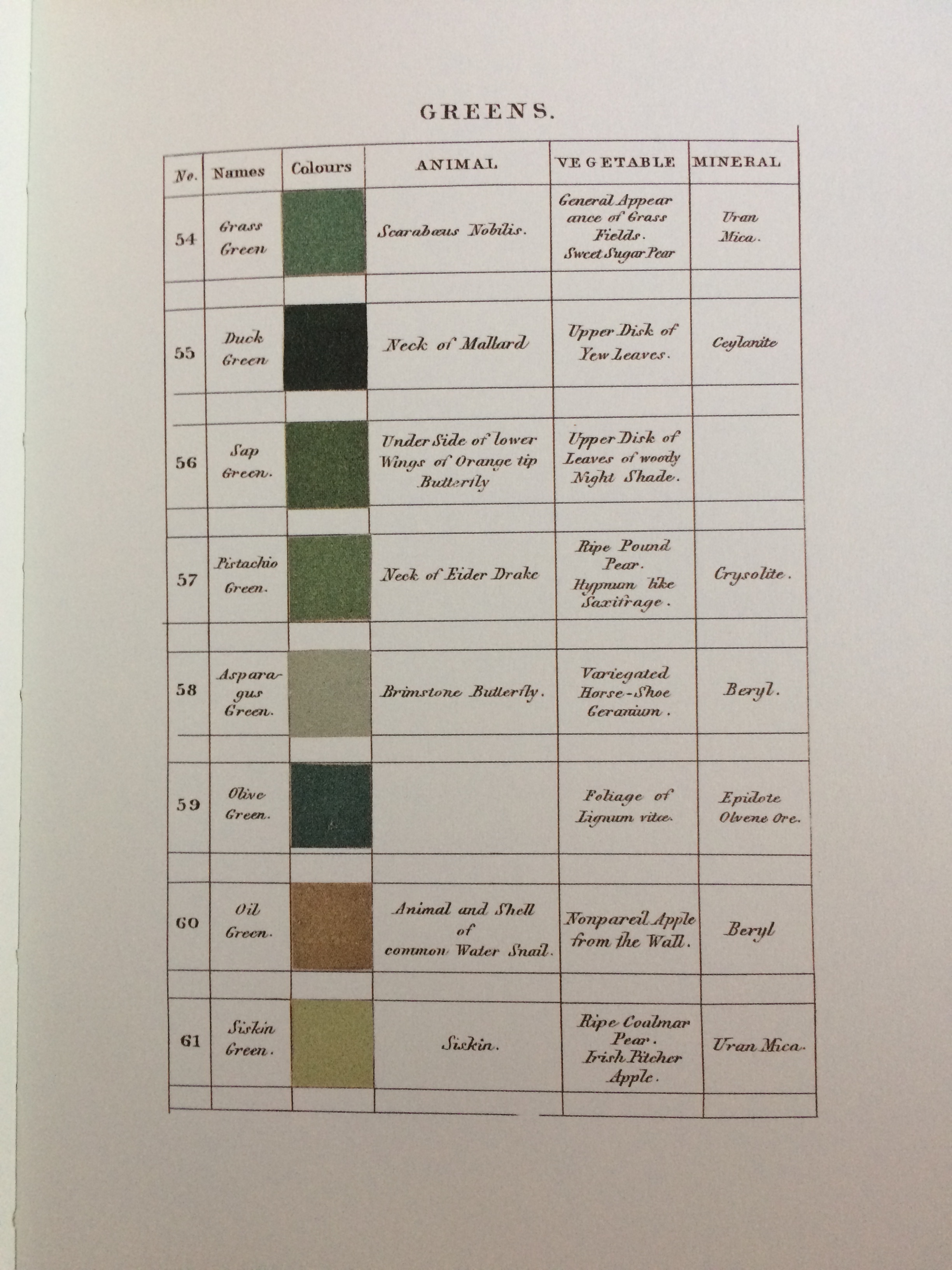
There is something decidedly Scottish about singing the greys. A jarring or blur of opacity. We self-deprecate, make transparent the anxiety. There is the grey of concrete, breezeblock, pregnant skies delivering their stillborn rain. Grey of granite and flint, grey of mist over shore; grey of sea and urban personality. We splash green and blue against the grey, call it rural. Call it a thought. Call out of context. Lustreless hour of ash and in winter, my father lighting the fire. In London they caramelise peanuts in the crowded streets, and paint their buildings with the shiniest glass. It is all within a movie. My brother walks around, eyeing the landmarks and shopfronts fondly, saying ‘London is so…quaint’. He means London is so London. I stray from the word hyperreal because I know this pertains to what is glitz and commercial only. It does not include the entirety of suburb and district; it is not a commuter’s observation. Deliciously, it is sort of a tourist’s browsing gaze. Everything dematerialises: I get around by flipping my card, contactless, over the ticket gates. There is so much to see we forget to eat. It is not so dissimilar to hours spent out in the country, cruising the greens of scenery, looking for something and nothing in particular. Losing ourselves, or looking for that delectable point of loss. As Timothy Morton puts it, in Ecology Without Nature (2007), we ‘consume the wilderness’. I am anxious about this consuming, I want it to be deep and true, I want the dark green forest inside me. I want the hills. I’m scared of this endless infrastructure.
Some prefer a world in process. The greys reveal and conceal. The forest itself pertains to disturbance, it is another form of remaking. Here and there the fog.
In ‘A Vermont Diary’, it’s early November and Schuyler takes a walk past waterfalls, creek flats, ‘a rank harvest of sere thistles’. He notes the continuing green of the ferns in the woods, the apple trees still bearing their fruit despite winter. Our craving for forest, perhaps, is a primal craving for protection of youth, fertility, sameness. But I look for it still, life, splashed on the side of buildings. It has to exist here. I look up, and up; I j-walk through endlessly aggressive traffic. What is it to say, as T. S. Eliot’s speaker in The Waste Land (1922) does, ‘Winter kept us warm’?
Like so many others, in varying degrees, I walk through the streets in search of warmth.
Lisa Robertson, in Occasional Work and Seven Walks from the Office for Soft Architecture (2003), writes of the inflections of the corporeal city:
Architectural skin, with its varieties of ornament, was specifically inflected with the role of representing ways of daily living, gestural difference and plenitude. Superficies, whether woven, pigmented, glazed, plastered or carved, received and are formed from contingent gesture. Skins express gorgeous corporal transience. Ornament is the decoration of mortality.
So with every gorgeous idiosyncrasy, the flourish of plaster, stone or paint, we detect an age. A supplement to the yes-here fact of living. I dwell awhile in Tavistock Square and do not know what I am supposed to do. So Virginia Woolf whirled around, internally writing her novels here. There was a great blossoming of virtual narrative, and so where are those sentences now — might I look for them as auratic streams in the air, or have they regenerated as cells in leaves. There are so many sycamores to kick on the grass. There was a bomb. A monument. Thought comes over, softly, softly. I take pictures of the residue yellows, which seem to embody a sort of fortuity, sprawl of triangular pattern, for what I cannot predict. Men come in trucks to sweep these leaves, and nobody questions why. The park is a luminous geometry.
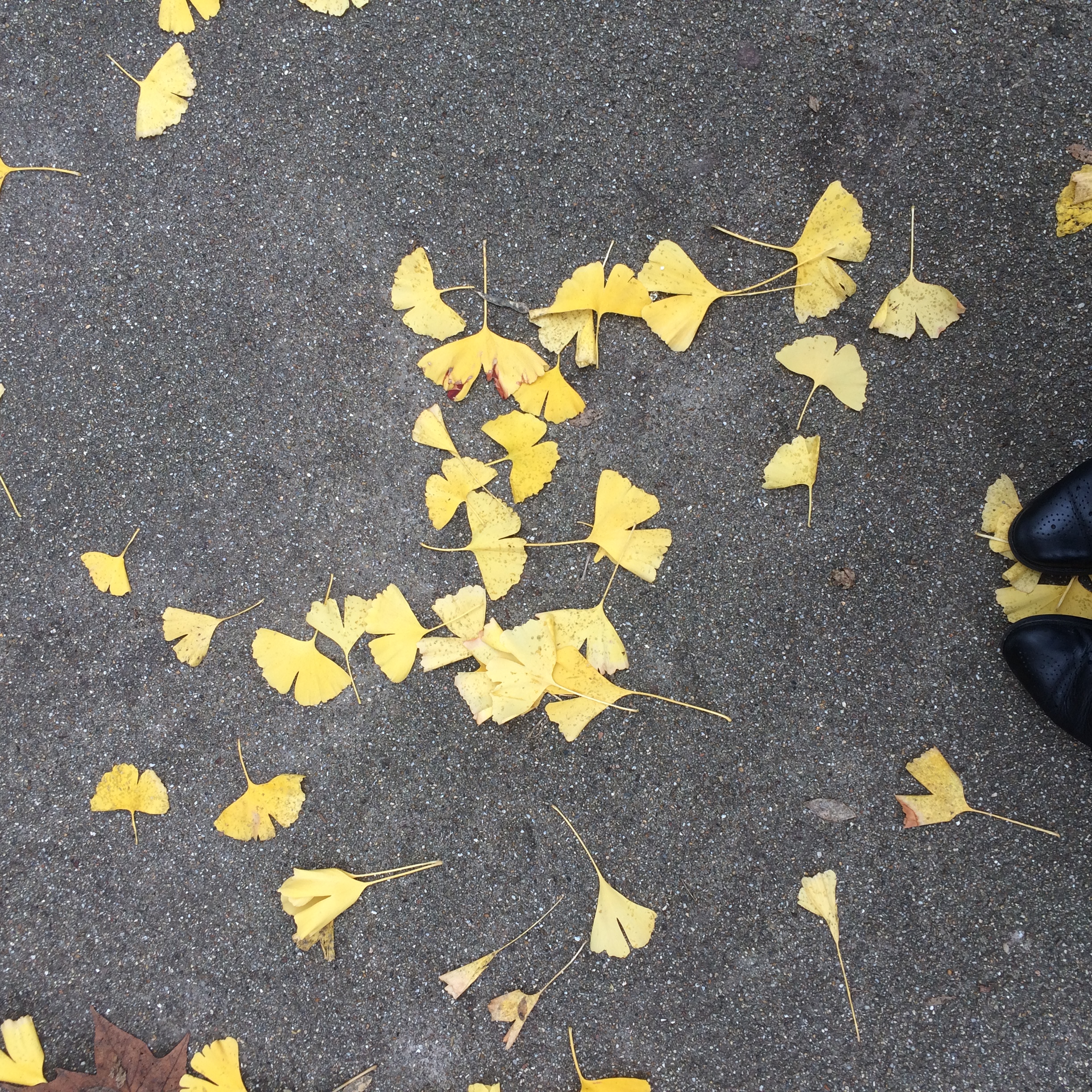
I worry the grey into a kind of glass. The cloud is all mousseline. If we could make of the weather an appropriate luxury, the one that is wanted, the one that serves. In The Toy Catalogue (1988), Sandra Petrignani remembers the pleasure of marbles, ‘holding lots of them between your hands and listening to the music they made cracking against each other’. She also says, ‘If God exists, he is round like a marble’. The kind of perfection that begs to be spherical. I think of that line from Sylvia Plath’s poem ‘Daddy’ (1960): ‘Marble-heavy, a bag full of God’. So this could be the marble of a headstone but it is more likely the childhood bag full of marbles, clacking quite serenely against one another in the weight of a skirt pocket. Here I am, smoothing my memories to a sheen. I have a cousin who takes photographs of forests refracted through crystal balls. I suppose they capture a momentary world contained, the miniaturising of Earth, that human desire to clasp in your hand what is utterly beautiful and resists the ease of three-dimensional thought. How else could I recreate these trees, this breeze, the iridescent play of the August light?
I like the crystal ball effect for its implications of magicking scene. One of my favourite Schuyler poems is ‘The Crystal Lithium’ (1972), which implies faceting, narcosis, dreams. The poem begins with ‘The smell of snow’, it empties the air, its long lines make every description so good and clear you want to gulp it; but you can’t because it is scenery just happening, it is the drapery of event which occurs for its own pleasure, always slipping just out of human grasp. The pleasure is just laying out the noticing, ‘The sky empties itself to a colour, there, where yesterday’s puddle / Offers its hospitality to people-trash and nature-trash in tans and silvers’. And Schuyler has time for the miniatures, glimpses, fleeting dramas. My cousin’s crystal ball photographs are perhaps a symptom of our longing for other modes of vision. They are, in a sense, versions of miniature:
“Miniature thinking” moves the daydreaming of the imagination beyond the binary division that discriminates large from small. These two opposing realms become interconnected in a spatial dialectic that merges the mammoth with the tiny, collapsing the sharp division between these two spheres.
(Sheenagh Pietrobruno, ‘Technology and its miniature: the photograph’)
Miniaturising involves moving between spheres. How do we do this, when a sphere is by necessity self-contained, perhaps impenetrable? I think of what happens when I smash thumbs into my eyes and see all those sparkling phosphenes, and when opened again there is a temporary tunnelling of sight — making a visionary dome. Or walking through the park at night and the way the darkness is a slow unfurling, an adjustment. For a short while I am in a paperweight lined with velvet dark, where only bike lights and stars permit my vision, in pools that blur in silver and red. The feeling is not Christmassy, as such colours imply. It is more like Mary of Silence, dipping her warm-blooded finger into a lake of mercury. I look into the night, I try to get a hold on things. On you. The vastness of the forest, of the park, betrays a greater sensation that blurs the sense between zones. I cannot see faces, cannot discern. So there is an opening, so there is an inward softening. What is this signal of my chest always hurting? What might be shutting down, what is activated? I follow the trail of his smoke and try not to speak; when my phone rings it is always on silent.
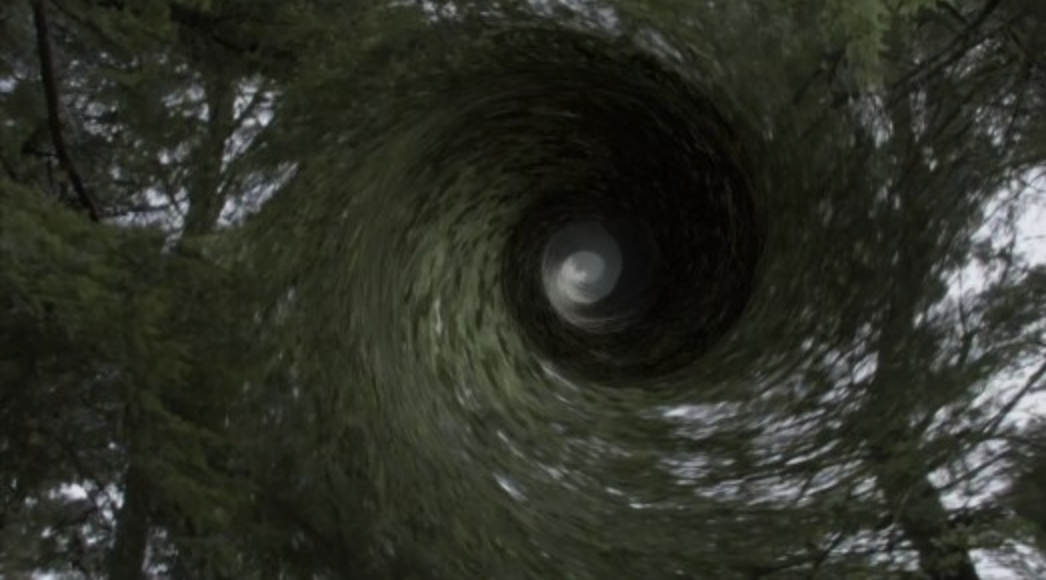
It becomes increasingly clear that I am looking for some sort of portal. The month continues, it can hardly contain. I think of the towns and cities that remain inside us when we speak, even the ones we leave behind. Whispering for what would take us elsewhere.
Write things like, ‘walked home with joy, chest ache, etc’.
They start selling Christmas trees in the street at last, and I love the sharp sweet scent of the needles.
There is a sense of wanting a totality of gratitude, wanting the world’s sphere which would bounce back images from glossier sides, and so fold this humble subject within such glass as could screen a century. Where I fall asleep mid-sentence, the handwriting of my diary slurs into a line, bleeds in small pools at the bottom of the page. These pools resemble the furry black bodies of spiders, whose legs have been severed. A word that could not crawl across the white. I try to write spellbooks, write endlessly of rain. Who has clipped the legs of my spiders? I am not sure if the spells I want should perform a banishing or a summoning. The flight of this month. The icy winds of other cities.
The uncertain ice of my bedroom: ‘tshirts and dresses / spiders in corners of our windows / making fun of our fear of the dark’ (Katie Dey, ‘fear pts 1 & 2’). Feeling scorned by our own arachnid thoughts, which do not fit the gendered ease of a garmented quotidian, the one we are all supposed to perform. I shrug off the dusk and try out the dark, I love the nocturnal for its solitude: its absolute lack of demand, its closed response.
In the afternoon, sorting through the month’s debris. A whole array of orange tickets, scored with ticks. The worry is that he’ll say something. The dust mites crawl up the stairs as I speak between realms. This library silence which no-one sweeps. There is the cinema eventually, present to itself. I see her in the revolving glass doors and she is a splicing of me. Facebook keeps insisting on memories. People ask, ‘What are you doing for Christmas?’ Wildfires sweep across California and I want to say, Dude where are you? and for once know exactly who I am talking to. I want to work.
On the train I wanted a Tennents, I wanted fresh air and a paradox cigarette. They kept announcing atrocities on the line.
She talks in loops and loses her interest. She gives up on her pills, which gather dust in the cupboard among effervescent Vitamin C tablets and seven ripe tomatoes, still on the vine.
Every station unfurls with the logic of litany, and is said again and again. Somewhere like Coventry, Warrington. This is the slow train, the cheap train. It is not the sleep train.
In Garnethill, there is a very specific tree in blossom; utterly indifferent to the fading season. It has all these little white flowers like tokens. I remember last December, walking around here, everything adorned with ice. Fractal simplicity of reflective beauty. Draw these silver intimations around who I was. An Instagram story, a deliberate, temporary placement. Lisa Robertson on the skin of an architectural ornament: well isn’t the rime a skin as well; well isn’t it pretty, porcelain, glitter? Name yourself into the lovely, lonesome days. Cordiality matters. I did not slip and fall as I walked. One day the flowers will fall like paper, and then it will snow.
It will snow in sequins, symbols.
Our generation are beautiful and flaky. Avatars in miniature, never quite stable. Prone to fall.
Maybe there isn’t a spell to prevent that, and so I learn to love suspense. And the seasons, even as they glitch unseasonable in the screen or the skin of each other. Winter written at the brink of my fingers, just enough cold to almost touch. You cannot weave with frost, it performs its own Coleridgean ministry. Anna takes my hands and says they are cold. She is warm with her internal, Scandinavian thermos. Through winter, my skin will stay sad like the amethysts, begging for February. Every compression makes coy the flesh of a bruise; the moon retreats.
I mix a little portion of ice with the mist of my drink. It is okay to clink and collect this feeling, glass as glass, the sheen of your eyes which struggle with light. A more marmoreal thinking, a headache clearing; missing the closed loop of waitressing. Blow into nowhere a set of new bubbles, read more…, expect to lose and refrain. Smile at what’s left of my youth at the station. This too is okay. Suddenly I see nothing specific; it is all clarity for the sake of itself, and it means nothing but time.
Paint my eyes a deep viridian, wish for the murmur of Douglas firs, call a friend.
~
Katie Dey – fear pts 1 &2 (fear of the dark / fear of the light)
Oneohtrix Point Never ft. Alex G – Babylon
Grouper – Clearing
Yves Tumor, James K – Licking an Orchid
Daughters – Less Sex
Devi McCallion and Katie Dey – No One’s in Control
Robert Sotelo – Forever Land
Mount Kimbie – Carbonated
Free Love – Et Encore
Deerhunter – Death in Midsummer
Sun Kil Moon – Rock ‘n’ roll Singer
Noname – Self
Aphex Twin – Nanou2
Martyn Bennett – Wedding
Nick Drake – Milk and Honey
Songs, Ohia – Being in Love
Neil Young – The Needle and the Damage Done
Separation is something that passes through your body. It happens on scales that feel biological, because at once so intimate and distant, clear and mysterious. The vertigo sensation when you see a diagram of the heart, or someone’s face fading in the moving window of a train. When I learn the words for things I can’t articulate. When someone says Brexit or mentions faraway disasters, or power lines being laid deep under the sea. Scientific processes that I can’t reach. Separation, transmission, event repeating. A curiosity towards ominous energies. I’m not just talking about the endless, five o’clock stories, beamed through radio waves. Brexit is as Brexit does. Most analogue hour. How many of us woke up that Friday morning, after the fact, with stomach aches? The undigest of all our country, rent broad and familiar on all the news.
~
As history seems to be compressing, rapidly, in a chaotic present which seeks to smooth with legislative violence the rich diversity of our past, stories of migration and change become vital.
With vague direction, I walk over the motorway bridge twice to get back to Glasgow city centre. The trees in Kinning Park are singed with vermillion; it’s early October. I ascend the footbridge, just slightly hungover. The sight of the traffic fills me motion again, after a night of luxurious slosh and dark of stasis. Screen light and honeydew shoegaze. Cars are barely there, but they go places. They leave a carbon trail behind. Watching from the sun-drenched bridge, I carry my stories and see them swept up in lines I can’t manage. Later, I try to write. I am looking for a flow, a sense of circuitry. The sentences whir.
Then I step into the exhibition. There is the clarity of photography, more like a series of windows. Windows I see inside windows. The glass steams up in certain types of feeling, translated as light.
~
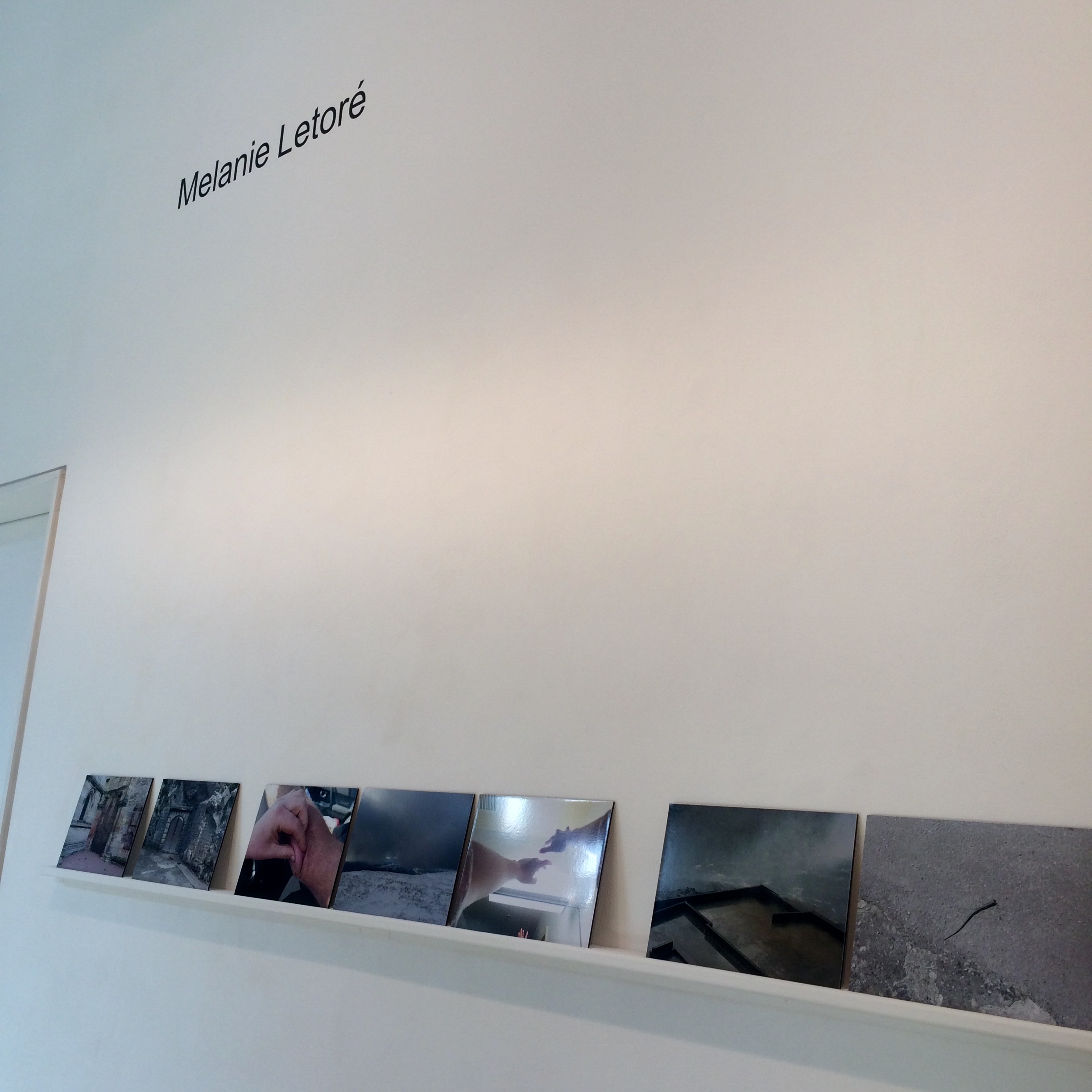
The themes of the recent Lightwaves exhibition at Street Level Photoworks, featuring the work of Mat Hay, Josée Pedneault, Bertrand Carrière, and Melanie Letoré, are moving histories: those of heritage, migration and the storytelling inherent within. I have a special familiarity with Letoré’s work and practice, having served as her hospitality comrade back in 2016 and since then having worked with her on a personal project: a weekly Google doc record of our lives and thoughts, sprawled in text, image (art & photographs), questions, lists, poetry, fiction and essays. The name of our project remains tendentiously secret, a bright hard candy. Keeping a ledger with someone who I tend only to encounter IRL on chance occasion (gliding bikewise down the motorway, drinking OJ in basement bars) feels a bit like an odyssey. An orbit of thought. Each week we find out more about each other’s pasts, our present fears and desires, our personalities. It’s a bit like trading journals at weekly sleepovers, except there’s the sense that each post on our shared document is less a private thought and more like something that needed airing, that needed figuring out in the shared forms of writing and visual expression. Writing as performative output, the act alone a delectation. I love the sense of sisterhood that comes with this kind of sharing, like when I was wee and my cousin and I would read each other’s palms and tarot, tell our futures.
I proposed the project to Melanie after many months of following her blog, Rectangledays, whose premise is the daily post of a fresh photograph. The blog goes back several years and serves as a sort of photo diary, a luminous archive of many little windows into moments in time. Some I recognise from the days we worked together at the restaurant: pictures of a decimated wedding cake, a lonesome chair in a stairwell, a bunch of crutches propped against the fence, another colleague’s bloodied toe, wadded with cotton. I love these photos as a testament to the physicality of hospitality, the importance of objects and tools (knives often feature) to our work, the endurance required: poor Shelby with the bloodied toe, acquired on a wild night out, would’ve hobbled along serving tables with her injury, no complaints, shift after shift.
It’s a total treat to see Melanie’s work in an exhibition context. Stories that maybe she’s written about in our ledger come to life in the distillation of pictures in a bright clean room. Privacy rents a very public space. The other photographers in the exhibition have their work blown up, pressed across the white, whereas Melanie’s are much smaller, identical in size, sitting parallel on a wall. The pictures are thick, giving the impression of little books, the three-dimensional aspect implying that the story is more complicated than the image allows. The image contains itself, and then the negative space of all these stories, quietly sporing. Much of her work is about shining a light on the intricacies of identity: Melanie’s grandparents migrated from North America to Europe in the 1950s, and she herself has moved from childhood Switzerland and found a home in Glasgow, as an adult. Her work feels like a dialogue with the everyday world around her, and maybe the people back home, the family who live their own lives many miles away. Photography as postcards without text on the back. Or maybe photography captioned with invisible ink, ink that only some people can see; others parsing their own specificity from the image. That’s the beauty of Melanie’s work: it’s tender and personal, but there’s a humanist impulse in there somewhere too, rent with a complexity that asks us to think about where people come from, how they live, where they touch the lives of others. Feelings, adventures, intimacies, routines, leisure and food.
A certain nourishment. I feel privileged to have access to some of the thoughts behind these images. Reading Melanie’s writing, I find myself adrift on all these planes of migration. The title of her exhibition, No You Without, comes from Rebecca Solnit’s A Field Guide to Getting Lost. When told of the Wintu in north-central California, who use the cardinal directions rather than the words left and right to capture their bodies, Solnit writes, ‘I was enraptured by this description of a language and behind it a cultural imagination in which the self only exists in reference to the rest of the world, no you without mountains, without sun, without sky’. With this perspective, we realise our own contingency in the context of a relatively stable world. Recently, I’ve been wondering about where the ‘you’ is situated in my own poetry, who exactly it is I’m addressing. Who is the ‘you’ in a photograph, what kinds of hailing occur when we look at a portrait, or perhaps a landscape. Where are we situated and within whose vision. There’s a piece in No You Without where a woman, I think in fact Melanie herself, has awkwardly levitated her body by propping it between two counters or surfaces. I’m struck with the fact of the body suspended so precisely this way, making a new morphology of her being. Like when you are a child and find ingenious ways to get across a room without touching the lava-strewn floor, or like lying upside down for too long and seeing how precarious your sense of space is. When you are forced to appreciate gravity, pressure, connections. The objects that make us by dint of negation.
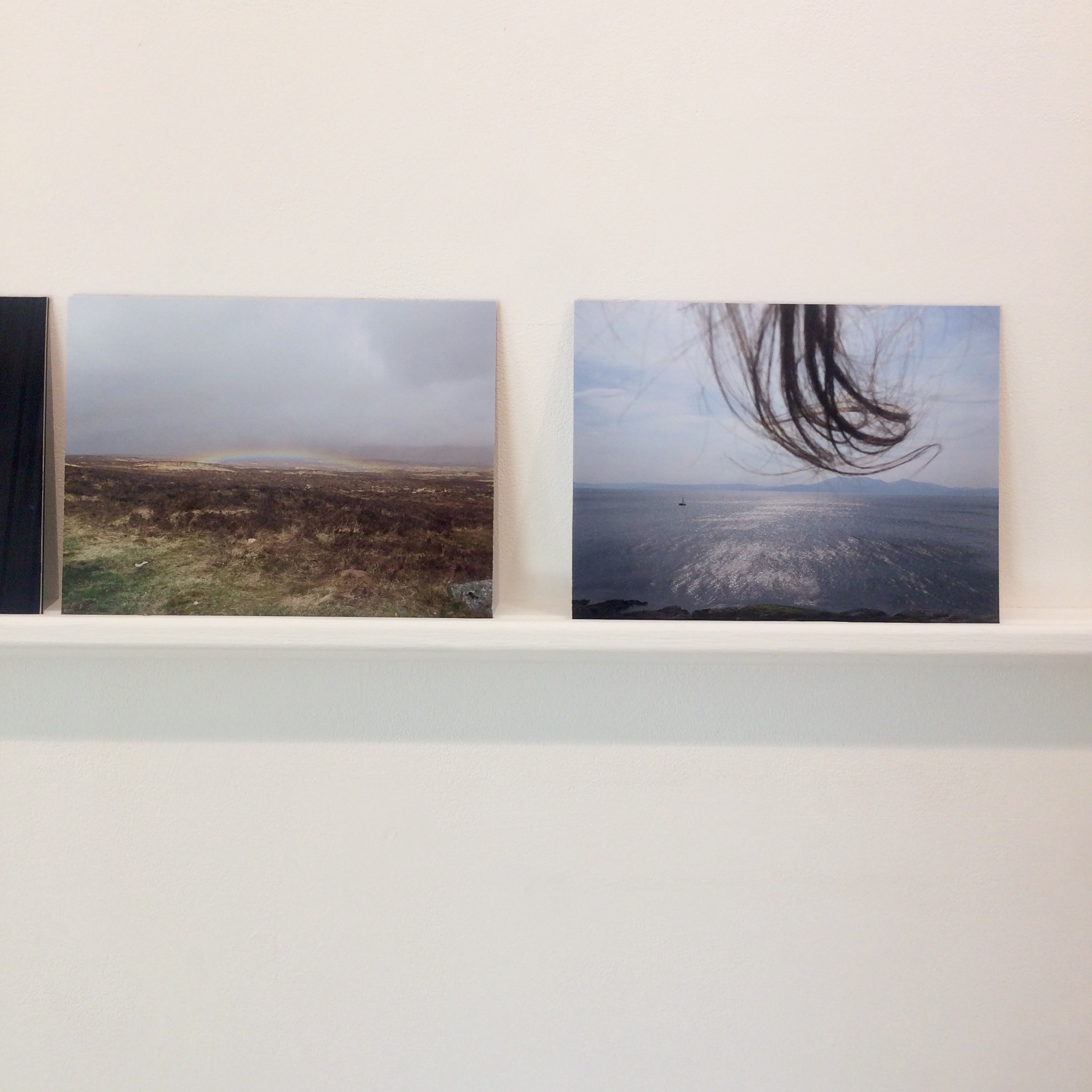
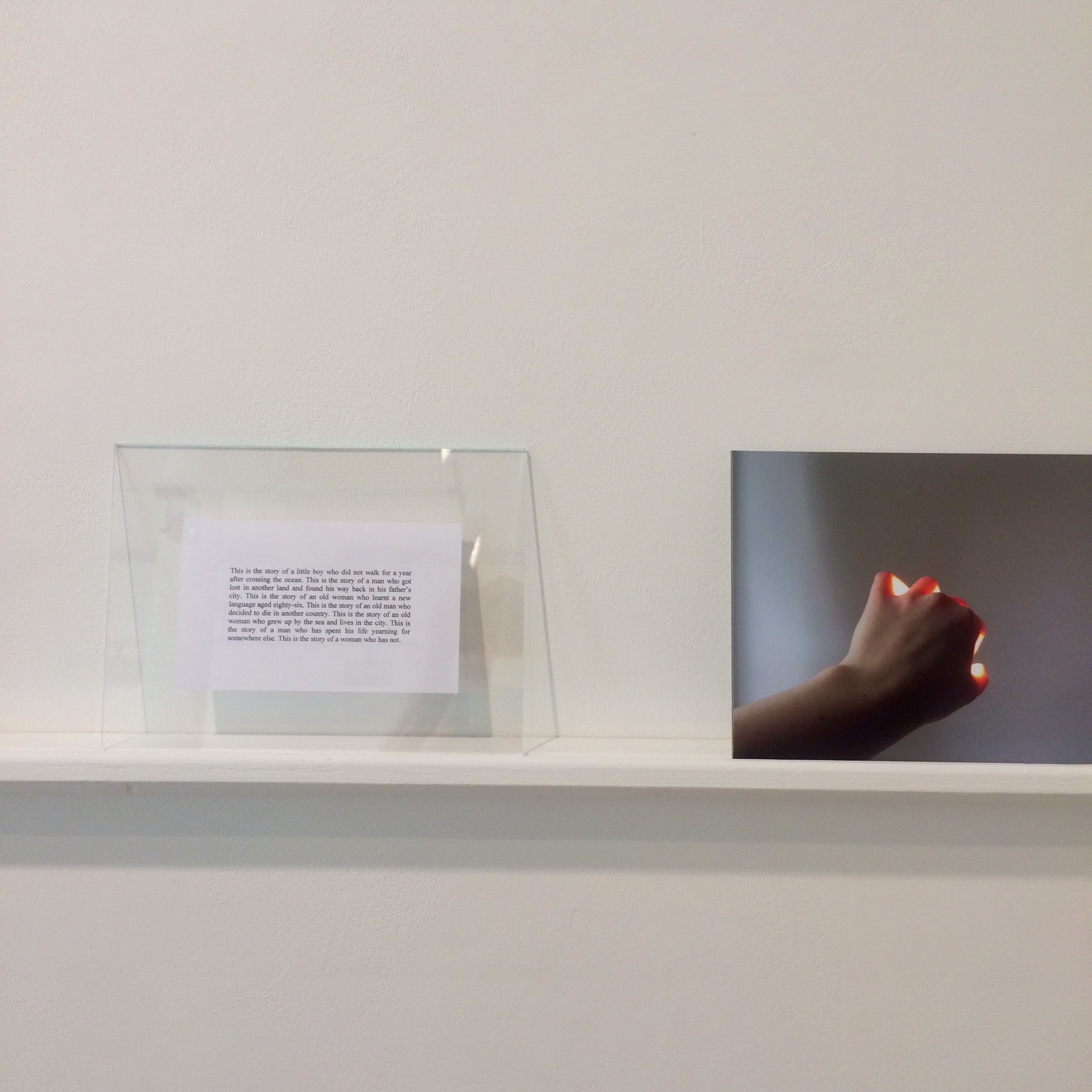
In Melanie’s images, I seek fresh orientations. These are subjects which reflect process rather than point; they are a document in the quest for self in a sea of myriad reflections, a very real sea which threatens with its sweep. I see red ribs of meat, black curls through black curtains, a strand of hair overlooking an island, the pinching of elbow flesh, a rainbow, the gnarled remainders of landscape’s heap, two boys rolling around on the beach. Each image demands its own sense of scene, of identity in place. I have a sense of capturing, that one slight second that splits and releases: the clouds come in, the flesh smooths back, the rainbow ceases to be.
While the images do not document explicit ‘narrative’ as such, it’s clear there’s an intimacy threading between them. I wonder if we are encouraged to pick up the images and study them, the way you might lift family photos off the mantelpiece, stealing a look at the back for captions. In the exhibition notes, it’s suggested that the migration of Melanie’s grandparents to Europe, and all their associated trauma, comprises ‘another layer to her search for identity’. What we lose or leave behind. What we carry with us. A memory of blue, of sky, of something that represents the not-knowing, but nevertheless the feeling. That which comes, regardless of narrative or language. I planted a thought. Photography bears the visual seeds.
I’m reminded of a passage in Sophie Collins’ book small white monkeys, one that Melanie and I have discussed often:
Patterns of shame can of course be inherited, be broken, halted, but mostly they are carried on through, like mottos, or emotional heraldry.
Maybe we carry something of what our parents and grandparents taught us, or experienced. The learned behaviours, observational ticks of outburst or repression. Frequencies and cycles of confession or pain, the arguments which pixelate our childhood memories with varying degrees of trauma. A traumatic tartan, stitched to the furniture of our daily lives; a ravelled print of practices and patterns of thought and feeling.
We find ourselves reenacting the affects of others, those we are close to. Mostly, we don’t mean to. There are just these things we remember, ticking away in our brain and blood.
Such memory persists like a stick of brighton rock with the motto carried through, except you can break off the stick at any point, you can shatter the neat black letters. The rock of the shards tastes sweet and mint, is cleansing.
But it sticks to your teeth. Shame sticks also.
You can cut yourself on your own quick memory.
When I learn the words for things I can’t articulate. Surely ‘emotional heraldry’ captures this miasma of maybe incalculable feelings I might attribute to family experience? A coat of arms to bear, whose pattern is fading before me, or intensifying within me. Heraldry, inheritance. Jewishness on my mother’s side, ethnicity unrecognised, religious cycles and traumatic pasts; a kind of implicit migrancy that is only tangible in visiting. Stories my nan tells about ancestors whose names are like keys to dust-filled chests, mildewed letters, somewhere deep and distant. But then livable: a trip to Amsterdam, family graves and suddenly the pulses of history might glow in my veins. That heat is a shame. Peeling yourself from the easy determinism of ‘family’ and then finding family wherever you read. Recently I was struck hard by this essay by Daisy Lafarge on maternal approaches to poetics, or looking to whatever texts provide a sort of mothering supplement, rich with emotional truths. The wrestle with essentialism, with forms of belonging. I am someone’s daughter when I read a poem or look at a photograph. Sometimes I am otherwise lost. I am that altogether vulnerable.
I guess I’m an immigrant too of sorts. Moving from England to Scotland at a very young age, being acutely aware of my Englishness and thus playground shame because of the markers of accent, and yet proud at the difference, to be different. Melanie’s photos teach me to sympathise with other kinds of present, and presence. They are fleeting and insouciant, playful in one sense, but otherwise make me want to stockpile and archive with a kind of serious fever. I want to know everything about the people in these images, scour their diaries and ask them their names. But I also want to leave them alone, up on the shelf where their lives can be quiet and still, and yet somehow heard, in the seeing. Maybe an image is a kind of speech; it allows us to separate, and to parse our connections. To halt in the flow of feeling, to carry a place or a person; to illumine.
~
Lightwaves is on until 25th November at Street Level Photoworks, Glasgow.
 mariaology