The Bluebell Cliffs

cherry melancholic's avatarGUCW

401136_10201122285129666_1925696498_n 2

The woods are very calm and still.

We used to come here at dusk, taking the car out after work, driving along the coast road. There were days when I could so easily give up my worries to nature. I thought I was a forest child; I thought at heart, like you, I was something free and wild.

As you walk, the sea is on your right, the woods on your left. The light comes down in gold cascades, catching the gold green filter of the leaves, casting dapples dancing on the path before you. In some memory it is June and the bluebells are out. They spread across the forest floor, tipped with pink and gold, swaying in the haze of a mystical dream. It is so easy to retreat into the trees, their sleepy sigh of imminent twilight. I took a picture of you once, with the bluebells…

View original post 297 more words

Electric Blue

cherry melancholic's avatarGUCW

Electric Blue

The bedroom swirls in plumes of dust. This is what she loves: spinning and lifting her skirt, eyes rolling back in mock ecstasy. Nobody has entered her room for a long time. The curtains have been drawn since April. In here, there was no summer.

The music skips, judders between trance and breakbeat. It is maddening, a trip of rhythm, of time signatures. She loves it. She spins and lifts her skirt. 4/4 drums and looping synths. Eyeshadow electric blue meeting the glow coming from the corner, by the bed. She will let no stranger into her bed. The glow is unnatural. The sheets are pristine, though everything else is trash. Broken crockery, smashed glass. She cuts her feet as she twirls and leaps, but feels nothing. She is waiting for the cry on the other side.

Blood spatters everywhere, quietly on the carpet.

She rises for her…

View original post 151 more words

Apple Blossom

Apple Blossom

April, the sweetest candy of a pink-tinged sky blessing the late afternoon. Rebecca has sat in the garden for hours, watching the birds nibble from the feeder and splash around by the pond. This is her Grandpa’s garden, though he no longer enjoys it. They have him cooped upstairs on a dialysis machine, in a bedroom that smells of sweat and death. Rebecca is not allowed up there: the air, her mother says, is not fit for a young and blooming girl.

She misses her Grandpa. She remembers him mowing the lawn on Sunday afternoons, stooping with his bad back. She remembers him commending the shapes of his moon-faced daffodils. She remembers him singing Frank Sinatra in velvet baritone while pruning the roses.

The roses are now out of control. They cluster all over the flowerbeds along the path, dangling out with their swollen, sumptuous heads. They have grown so tall that they bend over, crippled with the excess weight, the stems stretching to breaking point. Grandpa would be so disappointed if he witnessed the state of his roses.

Sometimes, Rebecca liked to peel off a petal or two. It was hard to resist; once she took the first few, the others came off so easily and they just slid softly into her fingers. Vivid trails of pink and red petals are now strewn along the gravel path, where Rebecca has walked like a bridesmaid.

At the back of the garden is the apple orchard. In winter the trees are gnarled and bare silhouettes, and not a soul would dare enter the darkness between them. Now that spring has arrived they boast their pretty bows of white, flaky blossom. Every year, Grandpa used to send glossy photographs of the apple blossoms to Rebecca and her parents, who lived far away down in London and rarely made it up to visit. The sight of those lovely trees was always a dream to the young girl who yearned for the country.

“When can we go and see them for real?” Rebecca would sigh.

“Oh, sometime in summer. Maybe Christmas.” They were so often dismissive like this. They had waited too long to see him and now he was dying. Even Rebecca knew it.

She was growing quite bored now, in the garden with no-one to play with. She knew there would be supper soon: hot buttered crumpets with a dark smudge of Marmite melting inside them. Real Earl Grey (loose leaf) because that was the only tea Grandpa had in the cupboard. Rebecca thought it smelt a bit fusty, but you could read the tea leaves at the bottom of the cup afterwards. She thought she saw a bird in hers that morning.

Yes, she was quite bored. The hula hoop which she had brought up from London lay abandoned on the lawn. She had tossed away her tennis racket somewhere into a dense clump of shrubs, because it was no fun to play by yourself, hitting a ball against the shed wall. A bag of marbles had burst open on the patio, the little glass balls having long rolled away, to settle amongst their brethren of grass and gravel. Rebecca had no toys left and besides, she was so tired of them all.

Even the insects had bored her, with their slimy indifference to her existence, their urgent desire to escape her clasping girlish fingers. She couldn’t give a toss about snails and slugs, or even butterflies anymore.

It was in this moment of tedium that she spotted the boy through the hedge. She couldn’t believe she had never seen him before. It was a difficult thing not to be spotted, not to make a peep, but Rebecca crawled expertly into a gap and tried not to breathe as she watched him. He was lying on his front, kicking his long legs back and forth. From this angle, he looked about fourteen. His hair was sort of ginger but also sun-bleached, as if he had spent a long time outside in a streak of good weather that Rebecca must have missed. He looked like something the sun had offered as a blessing. She could see his freckles, the concentrated curl of his lips. He was drawing in a big sketchbook which was flipped open, so that sometimes the breeze rippled the pages. Rebecca felt her heart hum and flutter in the cage of her chest, like some swarm of insects had trapped itself deep within her. He was so beautiful.

She wanted to crawl right out of the hedge into the next-door garden, step into the other world where he existed. She wanted to talk to him, ask for his name. See what it was that he was drawing. She felt like the secrets of the world would unlock themselves once she had learned his name. The sapling of herself would unfurl and a bounty of happiness would overflow from her body like the golden leaves in autumn.

“Rebecca!” she froze. It was her mother calling. She had been searching all over the garden for her daughter and now here she was, discovered in the hawthorne with white blossoms caught in her hair and a strange smile on her lips. She saw there were tears in her mother’s eyes, clinging and spilling like rain from the knots of tree trunks. How could there be tears at a moment so pure, so lovely?

“It’s Gramps,” she gushed, “he’s, he’s gone!” And so her mother pulled her out of the hedge and clutched her in her arms, held her so tight Rebecca thought she would burst. It didn’t make sense: he’s gone, he’s gone. As her mother sobbed into her hair, she watched the apple blossoms being blown away by the gathering night wind. Next-door, the boy stretched out his long limbs, packed up his things and disappeared.

(This little story emerged out of a longer short story project combined with prompts from Glasgow Uni Creative Writing Society’s Flash Fiction February challenge (‘renewal’ & ‘orchard’)). 

Road Trip

highalnds

Picture the scene. You pass sea after sea of pines, their tall green points misted with a fine web of vapour, a greyness that stretches over, concealing the tips and the distance, and you are not sure whether it is fog or woodsmoke, the wisps of early morning or perhaps the smoulders of a landfill. Probably you’re somewhere deep in the moorlands, glens and peat bogs of the Highlands; or maybe not that far yet, maybe just the Trossachs. If you open the car window a tad, you can almost smell the midges, their damp, thirsty breath in the air. This is air so clean that its purity counts as a flavour, claimed by many who have flogged the native whisky or bottled water. You would leave the window open, indulge yourself, but there is a sharp cold breeze that tickles the fine hairs on your neck, waters your eyes. It is always windy here; or else deathly still, like a valley out of time. Mountains rise up around you, growing closer and grander as the car turns another corner. They seem monstrous, towering over your small car, and you feel like William Wordsworth (the boy version, out of The Prelude) plodding along in his stolen boat, gazing fearfully up at the mountain peak beyond the lake, the peak that gazes back like an animal: ‘a huge Cliff / As if with voluntary power instinct / Upreared its head’. You can’t help but stare at the streams which splash down from each hillside like silver belts, which glimmer in the pale light which makes it through the misted sky. They catch your eye, pull you in myriad directions. You know that rain is imminent; its scent is as clear as the water that runs on the burn alongside you.

There is always birdsong, even in the evening. You can hear the cacophony of many different species as the car rumbles on in the silent space between two tracks passing on the stereo. You and your friend spent a whole day curating the playlist for this trip. Curating. She said that word, jokingly; but even so, it makes you feel special. This isn’t just any trip. It isn’t like you get out like this all the time, free from the bustle and smoke of the city, the people lingering outside pubs, the strangers drifting through in street-lamp darkness.

You spent a childhood in the back of your mother’s car; the smell of her cigarettes always blowing straight back into your face, rolling down the window to snatch breathfuls of that sharp, fresh air – an escape. You scrambled alongside rivers which rolled on over gleaming boulders; you scrabbled together heaps of stones and logs and built dams, pools and waterways. You fell over, bruised your knees, skelfed your fingers on the pine branches. You watched the water for hours, while your mother smoked and your big brother showed off, scaling rock after rock, cliff after clifftop. You ate cheese and pickle sandwiches made soggy by the damp that seeps in everywhere, through the aluminium and glass, the plastic glovebox and the silver foil. Midges clung to your neck; constantly you felt their hot, sticky itch. Sometimes the car smelt of engine oil. The food made your cheeks flush afterwards, as you washed your lunch down with bottles of flat lemonade that had lingered on the backseat for days.

There was an innocence to those holidays which literally makes you ache to think of. You would do anything to be that small again, crouched by a river, dipping your toes into the freezing water while your brother splashed you from afar, shouting declarations of war. His always taunting words, his grand arrogance. The way your mother scrunched up the sandwich foil into tiny, crumpled balls, collected them in her purse. The day you found them all, still there, when you were digging for lunch money.

Fog coming in thick and deep from a distance. You saw it roll over the mountains like God’s own shroud. It was comforting, feeling the moisture prick in the air, seeing the landscape slowly disappear. When you retreated back into the car, packed up the camping gear, fought with your brother over the radio. He always wanted the sport – Five Live – and you wanted the songs, the music. The stereo pumped, crackling and loud, audible even through the walls of the car, drifting in and out of signal, static…

Her sadness, leaning against the bonnet, sipping from a flask of coffee, staring out into the distance. The tears that you couldn’t see – not from behind – but you always knew they were there.

And why are you going? Why set forth again into the world of fog, of deep enveloping glens and silver rivers? The soft moss and the heather, the greenness that haunts your sleep. Was there some mystery you thought you could solve? She said it would be cathartic, your friend, her name irrelevant. Anyway, it’s Eilidh. When you met her, you didn’t understand the silent letters.

The playlist comes from an iPod, the classic one with the spinning wheel and the white casing. You were going to sell it, after you lost your job and faced the end of things, but something pulled you back. Gone were the Nike trainers instead, and now you are here in the car with your best Sports Directs. What sounds pass through your head? There are many conversations you always wanted to have with Eilidh. You wanted to ask about her purple hair, the bright lilac colour of heather. What did it mean? You wanted to ask whether she was still seeing that guy she met at uni, the one who studied law and played cello for an orchestra; who spoke French in a way that defied the limits of his Edinburgh accent. But you had known her five years, and still you could not speak.

The songs were lovely, dark and deep. Miles were consumed by the roar and pulse of the engine, roadsides slipping away as easily as signs fading into hill fog. You were long gone from the city, its tall grey buildings a mere memory, the pillow of mist you sank into at night. Remember the times you shaved an inch from your life? The bus turning the corner, sharp; the tiny sliver of razor on the white bathroom china. The dark colours flowering out in water, as you watched your ex-girlfriend wash her paintbrushes in the sink. Shades of crimson, violet, blue and scarlet. You were slipping through all these images, the shock and the bruising; the little jolt to your heart as the car passed over a pothole. You were driving, then she was. It’s difficult to remember.

There’s a lot of Mogwai on this playlist. When you first hear ‘Heard About You Last Night’ it’s a bit like waking up for the first time, the blinking beat and slow entry of bass bringing into colour a brave new world of beauty and fear. So many people, you suppose, have died out on those mountains. Battles fought and lost and won. Rain that fell for so long, it seemed the whole landscape might be swallowed up in shadowy puddles. Then there’s the anxiety of ‘Hungry Face’, those infuriating repetitions which build up to the twinkling innocence of the xylophone against those quietly thundering drums. It gets in your head; you can’t help but think of ghost ships disappearing over the Clyde, a set of yellow eyes opening and closing, suspended in the dark, clouded air like the smile of a Cheshire cat. The sound of soft, steady bleeping. Eilidh says something funny about the sheep. They have an absurd look about them out here, she says, but then so do pretty much all sheep. They glance up at you, but instantly their expression fades into blasé. They have only two emotions: indifference and fear, the fear coming out when they jolt their necks back and scarper.

Soon you fall into the melancholy of ‘Cody’, so slow and serene you might as well be stoned, sinking away from your thoughts like being pulled out into a vast, shimmering ocean. The bass echoes slow through the car, its thick walls. You press your face against the glass, leaving steam marks which fog up the world outside, the tall green mountains now coated with your breath. Reality blurs with the material of sleep. And would you stop me? If I tried to stop you? You imagine this is what heroin feels like, plunging into a slow, majestic ecstasy, the kind that drags eons of time through your veins; and from all those hours draws out this kind of awesome mournfulness even as your whole body tingles with euphoria. You could sleep forever in blissful, evil dreams. When I drive alone at nights, I see the streetlights as fairgrounds / And I tried a hundred times to see the road signs as Day-Glo. So slow, the car turning corners. An elegy to a lost raver, stumbling through the darkness of some urban labyrinth, the upturned bins, old condoms and leaking glowsticks spilling out the wasted remainders of another good night, another goodbye to childhood. Would you care at all? Eilidh rests her hand on your leg.

“Stop crying,” she says. It’s a statement, not an instruction. You are still staring out the window.

Your mother used to listen to The Waterboys, maybe even Primal Scream in her more rebellious phase. She liked to dance around the living room doing the dusting to ‘Fisherman’s Blues’, all the dust motes swirling up in a maelstrom of childish untidiness and neglected housekeeping. Her voice would crack and she would laugh at herself, breathless, collapsing onto the sofa. Make me a cup of tea, eh boys?

You were at a house party once, at uni – not that long ago really – and this girl was playing a song that stirred something familiar in your memory. You knew that voice, its growl, the twists of electric guitars.

“What is this?” you asked, the joint smouldering between your fingers.

“Oh, it’s The Waterboys actually.” You resented her showiness, of course, but this was interesting. “I know, so lame right? I like it though. They put Yeats to music. You know the poet, W. B. Yeats? ‘The Lake Isle of Innisfree’. It’s a lovely poem.” She was drinking port, of all things – you remember that too.

You inherited, perhaps, a gloomier tradition of the nation’s music. There would be no Proclaimers on this playlist.

Arab Strap, the disco beats, spat poetry and everyday apathy.  The sort of post-hardcore or drum-soaked indie that felt like having the rotten parts of your brain stripped out as you lay on a boat, slowly being drenched in dreich Scottish rain. You were always a fan of Frightened Rabbit, ever since you saw them at a festival once, danced yourself into a frenzied ceilidh of mud and tangled feet, even as the songs sung of sadness and bleakness and heartbreak. The endless drone, the refrain: it takes more than fucking someone to keep yourself warm. Teenage campouts in Loch Lomond, worried you would all die of the cold, of the rain and the midges. Drunk out your minds, desperate and scared of the river which burst its banks sometimes even in summer. The expectations of nothing but the prospect of falling into the same abyss as everyone else. Fag butts drifting by the edge of the river, the scorched remainders of a bonfire. Listening to it again now, well, you can’t help but think of how this seems to be coming true somehow. The same abyss. Even as the drums collapse over the screaming words, there’s a waterfall out there somewhere, maybe the one you floated in once, upside down on weird pills with the cold so deep in your bones that you didn’t feel the punches of your best friend who hated you because you kissed — no. That was another time. You are driving forward now, you are at the wheel.

Maybe there is something that you know that I don’t. 

“We should stop soon, you look like you need a rest.” The world outside is almost darkness; it is twilight spinning webs of navy and sapphire gold around the edges of trees and mountains. Trees with their shimmering leaves. Clusters of stars emerge from the velvet blackness. You wouldn’t stop for anything.

Next: There Will Be Fireworks, ‘From ’84’. The simplicity, the sorrow which isn’t yours; for how could you feel so much nostalgia for a year, a thought, that came before your time? The not-belonging is what makes you feel lonelier, the minor chord, the rustle of Eilidh in her woollen tights turning the page of a cheap magazine. Just a kid, in his room / No-one hears him howling at the moon. But you have lost touch with friends too, you have felt the strange pain that comes from seeing people you love change, grow apart. You cannot hit the high notes; you cannot sing along. So we’ll put it down to fate or bad luck. The plain, bare strumming pattern haunts you, even after the song finishes and something new comes on. You’re thinking of another lyric – sad song in a minor key – and wondering how you ever heard of this band in the first place. Why is it you love them so? Whether they’re actually any good, or just another expression of bleak Scottish winters, the lack of sunlight, the endless, down-pouring rain…but isn’t that beautiful too?

Eilidh has, perhaps, more interesting taste. The next song is hers: Cocteau Twins of course. She mutters on about how their best album was Milk and Kisses, though everyone thinks it’s Heaven or Las Vegas. Elizabeth Fraser’s dreamy soprano takes you straight through the night and into the morning; you could both listen for hours and hours, not realising that the songs were changing or repeating, just drifting into the dissonant guitars and distorted lyrics, the hypnotic drum machine loops, better than sex. You would like to float, suspended in a disco somewhere, each song playing out the pattern of a strange, intense kiss. You suppose these are all the 1990s discos your mother would’ve went to (if she hadn’t had you). What does it matter now? The sky before you bursts through in pastel smudges, which break up the dark silhouettes of the Trossachs mountains. In the distance, through the windscreen, sparkles of sunlight play upon a pale blue pool, the first loch you have seen since yesterday. There is something about the shape of the peaks, the space of the valley. You have been here before. 

The Twilight Sad come on the car stereo. There’s no mistaking the intensity of that voice, the thick accent and its distinctive rolls and howls. Each song with its own atmosphere, a haunted quality reminiscent of The Cure.

“Let’s stop here.”

The loch is so close now. You can feel something inside you, a tension breaking, the rapid increase of the beat from the heart that burns in your chest. Eilidh is humming along, though her voice crackles and breaks as easily as the gravel on the road below your tyres. When you climb out the car, cold air sucks your breath away as you slam the door. Suddenly, the signal floods back to your phone. Three missed calls from your brother, and you know what that means. Another night, another row of bottles slowly emptying, slowly being broken in a dive bar of old men, the black hole at the bottom of every street in every Scottish city. Once he was an eagle, soaring down those hillsides, ready to leap out and scale the lake with legs made strong by football, with arms that could reach out for anything they wanted. He couldn’t save her, any more than you could, weak and pathetic, wrapped up in all that suppressed panic. Hidden in your room, even when it happened. It rolls through you, the realisation. This loch, like a terrible mirror. This beautiful loch, the very one you all picnicked by, the year your brother finished high school, the year of your first kiss, the year she —

‘There’s a Girl in the Corner’ on the stereo, and Eilidh is speaking, but her words are muffled through the window, the pounding drums and resounding lyrics. She’s not coming back / And she’s not coming back again. Standing here, the cold wind at your neck, another summer nearly ending and here you are – you finally feel it.

(all embedded lyrics attributed to respective artists).

Tempest

Out from a colourless tundra
comes the turning wind, the wind
that rattles the glass of a window
knife-thin,
willing outside the world within.

Down in the park the pathways flood,
so gurgling glugs
of chocolate water swirl and seep
and spill from the river,
like blood burst from an artery.

Across a sky of aching grey
the flock of blackbirds fly,
showering outwards in sparks of darkness—
a blink and they will fade.

Turn around in sparkling rain:
the glaze that clings to twigs and leaves,
saliva soft and silver glinting,
like water on a house’s eaves,
lushly splashing
the webs of spiders.

Behind the sway of hollow trees,
their million fingers twinkling,
there is a spread of endless green,
a distant summer—
the luxury, my own decision.

Here, out of the storm you now appear,
a tangle of whiteness: white scarf,
white floss of hair. Your sadness
lost to me now, a fragment
as the rain blinks on and off
and loses my vision.

Top 15 Albums of 2015


(in alphabetical order…)
beach-house-depresssion-cherry-album1

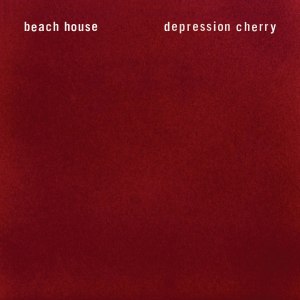
Beach House, Depression Cherry 

It’s moody and melancholy and perfect for Sunday afternoons in winter, where hardly an hour of light graces us with its presence. The singing is woozy and lush, the track titles are typical Beach House (‘Wildflower’, ‘Levitation’, ‘Days of Candy’) and a mellow, dissonant drone seems to drift over most of the songs. There’s a whispery feeling to the vocals and a scratchy-sounding organ keyboard. Also, the album is coated in soft red velvet, so the physical copy is pretty beautiful, and there’s definitely a ‘tactile’ sense to the music itself, with all the sparkling effects and the echoing texture of Legrand’s voice. I like Beach House for the same reason I like Cocteau Twins: the music enfolds you like the atoms (or pixels?) of another world – it doesn’t sound 100% human, there’s something too mystical about it. The band released a website with typed lyric sheets, which adds to the sense that the whole album is a hazy collection of dream poems. It was released in late summer but I have listened to it a lot more in winter; it’s like the sound of  Victoria Legrand’s hazy, drifting vocals is better suited to the cold weather, the whiter light, the sheen of ice.

Favourite tracks: ‘Space Song’,  ‘Levitation’, ‘PPP’.
beirut-no-no-no

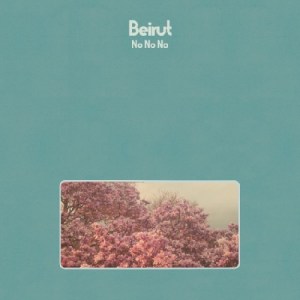
Beirut, No, No, No

There were a few weeks where I sort of just played this album on repeat in the restaurant where I work. Generally it was pretty harshly reviewed and there is a sense that single tracks stand out more than the whole. Still, I appreciated that cheerful continental folk vibe to get me through the autumn and winter with its remnants of pastel-hazed summer. Even though the songwriting might not be as *original* or *inventive* as 2011’s The Rip Tide, you can have a lot of fun with some staccato beats and percussion. Plus I love a bit of brass.

Favourite tracks: ‘No, No, No’, ‘Gibraltar’, ‘Perth’.
packshot

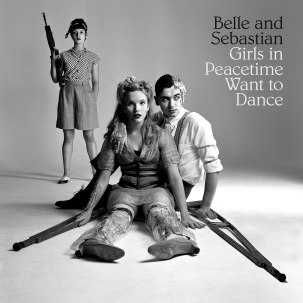
Belle and Sebastian, Girls in Peacetime Want to Dance

Just the sort of lively pop weirdness you need to brighten your January, when the album was released. I love Belle and Sebastian, the way they create simple catchy folk-pop but base it around stories and characters and inventive lyrics about lost girls and ~cutely~ wayward indie kids. There’s a bit more experimentation than usual on this one: from the funky disco atmosphere of ‘The Party Line’  and ‘Perfect Couples’ to the epic near-7-minute dance track ‘Enter Sylvia Plath’, there’s something for everyone. ‘Nobody’s Empire’, which approaches the subject of lead singer Stuart Murdoch’s MS, reveals Murdoch’s general genius for lilting melodies punched through with a weightier-than-usual buildup and bass line. ‘Ever Had a Little Faith’ is maybe the closest song to old-school Belle & Sebastian. Generally this album is full of interesting licks and typically witty lyrics, and its experimentation lends well to repeated listening.

Favourite tracks: ‘Nobody’s Empire’, ‘The Party Line’, ‘Enter Sylvia Plath’.

1035x1035-MI0003841720

Blur, The Magic Whip

Blur’s first album since 2003, The Magic Whip is kind of a mystical, surreal experience. Along with the artwork (a neon ice cream and some Chinese lettering), the album’s whole vibe sort of reminds me of this weird game I used to have for Sega Megadrive where you could do fight scenes on top of an apartment roof in the depths of Tokyo. Everything was blurry and glitchy and full of bright lights against the backdrop of glittering darkness. The Magic Whip is set in Hong Kong rather than Tokyo, but it has that strange sense of futuristic metropolitan darkness. It takes away the grunginess of Blur and sonic spaciness of 13 and enters a more self-aware, perhaps even ‘postmodern’ (ugh, the implications of that term) territory.

Well, for one there’s the obvious cultural borrowing from Hong Kong, where the album came together; there’s also the sense of meta-britpop on songs like ‘Lonesome Street’ and ‘I Broadcast’ which update the whistle-along laddish bounce of 1990s culture for a more accelerated version of the jaded digital and cosmopolitan era (‘Lonesome Street’ is overlaid with the sound of someone reporting – on the news? – sparkling synths and echoing city street noises). The sense of absurdity and collapse, like in ‘I Broadcast’ where the chorus falls into the repeated line: I’m running being played over Graham Coxon’s sharp guitar. It’s a complex and intriguing album with some sweet bass lines and dreamy Damon Albarn vocals. Listening to it really does sort of take you somewhere else. Also, ‘Mirrorball’, the record’s final song, sounds almost like it belongs on a David Lynch soundtrack.

Favourite tracks: ‘Ghost Ship’, ‘Pyongyang’, ‘My Terracotta Heart’.
clarence_clarity_-_no_now

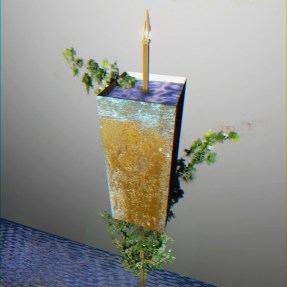
Clarence Clarity, No Now 

From the glitchy, 90s Windows computer aesthetic of its videos to the vibrating bass, disco rhythms and shrieking guitars and falsetto vocals, this is one crazy good album. Not many folk are brave enough to put out 20 tracks on their debut album, but the effect of doing so sort of drags you underwater into a world of sound that’s electric as a field of lightning, as shrieking neon as that purple lava you get in Sonic the Hedgehog 2, Chemical Plant Zone. Sorry, is that mixed metaphors? Who cares, with music like this, everything is mixed to fuck. 

Some of the songs have a cinematic feel, which is hard to define except for a sort of atmosphere created by all the glitchy sound effects and samples (listen to the start of ‘The Gospel Truth’, for example). It’s a relief when Clarity strips back into ‘purer’ or softer vocals (see ‘With No Fear’), but also a great feeling when the effects pedals step on again, like having water thrown over you. Cold, shocking, refreshing. Kinda like the whole album. You’ve got references to ‘worm holes’ and ‘cancer™ in the water’ and all sorts of surreal cyber imagery and staccato vocals in reverse (‘Tathagatagarbha’ is straight out of Twin Peaks’ Red Room, right?). ‘Those Who Can’t, Cheat’ is the kind of psycho disco death funk they would play at the end of the world. I was lucky enough to see Clarence supporting Jungle in Edinburgh this year and I can say that it all sounds sweet as hell live – the band’s energy really plays out the craziness of the album – which isn’t always always the case when the production is one of the best parts.

Favourite tracks: ‘Those Who Can’t, Cheat’, ‘Bloodbarf’, ‘Will to Believe’.

(Also, I think ‘Hit Factory of Sadness’ is one of my favourite song titles ever).

FoalsCover

Foals, What Went Down 

I guess the critical/commercial success of Foals’ fourth album (in October they were voted ‘Best Act in the World Today’ at the Q Awards) means I don’t need to say much to justify my choice. I’ve been with Foals ever since they were bouncing out math rock on early Skins, and this album was no letdown. For one, it has several tracks which follow in the footsteps of ‘Spanish Sahara’: ‘London Thunder’ is a beautiful, atmospheric track with a lovely build, and even Lana Del Rey has sung her praises for ‘Give It All’, which addresses love as a kind of fragile presence/absence, of digital melancholia – ‘Give me the way it could have been / Give me the ghost that’s on the screen’. ‘Birch Tree’ has that sort of upbeat, syncopated feel reminiscent of ‘My Number’ (from Holy Fire). Other than the softer tracks, it’s a whole lot rockier than previous albums, especially on the frenzied ‘What Went Down’ and jangly guitar rhythms of ‘Mountain at My Gates’. I listened to this all throughout the month it took to move from my old flat, so it will always have that sense of dislocation and haunting futurity for me… (plus the stress of shifting boxes and scrubbing kitchens).

Favourite tracks: ‘Mountain At My Gates’, ‘Birch Tree’, ‘London Thunder’.

music-gaz-coombes-matador-cover-art_1422624416

Gaz Coombes, Matador

I have to confess that while Matador was released in April, I didn’t actually listen to this album until about a month ago, when I found out my cousin (the lovely Hannah Lou Clark) was supporting him on his UK tour dates. I saw Supergrass a long time ago when they supported Coldplay at Bellahouston Park, but I don’t remember much of it, especially as I was right at the back! This is such a gorgeous album though, I swear I’ve listened to ‘Matador’ on repeat to and from work for the last fortnight at least. It has great range and depth, another fine example of the maturity that can come out of the Britpop era. Coombes can sound both delicate and powerful, and there’s a certainty, a sureness, to this record. There are songs whose haunting atmosphere is complimented by stunning but simple lyrics (‘Worry fades the soul away / I’ll take the hurricane for you’ – ’20/20’) and climactic choruses. If I close my eyes I imagine this song being played over a dramatic film scene, like someone running through city streets, a breakdown, things exploding, changing. Something like that. I know it’s cheesy but there are definitely songs on this album which you could call sublime in the true sense of the word. Disorientating, awesome, majestic, powerful. Gospel influences, electronic beats, acoustic guitar. I’m still in love with it.

Favourite tracks (this was difficult, and may change): ‘The Girl Who Fell to Earth’, ‘Matador’, ’20/20’.

5f30eab1

Kurt Vile, B’lieve I’m Going Down

Aw man, there’s just this beautiful twang to Kurt Vile’s music that is so addictive. It’s not just his hair. The country twang of guitars, his sweetly droning, idiosyncratic voice. You can see the influence of Nick Drake, maybe a touch of Dylan, but also a very modern sense of disconnectedness, of goofiness even – the sense of being very self-aware but at the same time alienated from who that self is. Some of the songs sound a bit ballad-like, but there’s always a kind of dissonant, bluesy twist. He really nails his lyrics and imagery too: ‘I hang glide into the valley of ashes’, ‘A headache like a ShopVac coughing dust bunnies’. The twinge and stuffed wordiness of ‘Pretty Pimpin’ proves strangely addictive, as does that developing, repeating, turning, twanging guitar riff. ‘That’s Life, tho (almost hate to say)’ is a darker, sadder sort of folk ballad. Generally, it’s an album to listen to dreamily, maybe on a car journey, but also one that goes well in the background of bars, because it’s lively enough, and pretty damn cool.

Favourite tracks: ‘Pretty Pimpin’, ‘That’s life tho (almost hate to say)’, ‘I’m an Outlaw’.

Lanadelreycapa

Lana Del Rey, Honeymoon

I could rave about Lana all day. She has the genius of Lady Gaga, Bowie and Madonna in her creation of the ‘gangster Nancy Sinatra’ persona, but an old-school Hollywood voice that haunts and croons and glides over dark, sweet melodies. Honeymoon is very much a coherent piece of art. It’s a very visual album, much in the tradition of Del Rey’s previous work (the monochrome vibe of Ultraviolence played out in the gloomy, stripped back energy of the Dan Auerbach produced songs). Picture a summer-hazed beach with pastel huts and neon-signed strip clubs, peeling paint. Lana writhing about in her mint green muslin in the video for ‘High By the Beach’. It’s her dark paradise, a retro realm of sweet pop richly infused with jazz, blues, R&B, trap, disco and poetry. The loveliest recital of T. S. Eliot’s ‘Burnt Norton’ I’ve ever heard, soft and haunting. A Nina Simone cover. Tracks like ‘Salvatore’ and ‘Terrence Loves You’ really demonstrate the crystal clarity of her voice, as well as the strength of her range. The title track can be described in many ways, but I prefer the terms glimmering and cinematic. Really, it was the perfect soundtrack for a melancholy, post-graduation summer — except I swapped the retro cars and ice cream for long walks in Glasgow rain.

Favourite songs (again, so hard): ‘Terrence Loves You’, ‘Honeymoon’, ‘The Blackest Day’.

7af7acd9

Laura Marling, Short Movie 

It’s quite lovely to witness Laura Marling’s music maturity. From the honest folk pop of Alas I Cannot Swim to the stronger, mythological tones of Once I Was an Eagle, she has really developed and expanded her sound, not just in a literal sense but in a metaphysical one too. Does that make sense? I mean the way that her music opens worlds up. Eerie, dark soundscapes and cessations of space, interruptions and pauses and softly twangling guitars. Opening track ‘Warrior’ is spellbinding, allusive and elusive; full of echoes and misty vocals, guitar licks that curl round and round. It feels distinctively American, as opposed to, for example, the Englishness, countryside sweetness of I Speak Because I Can. There’s a sense of being lost, looking for something (‘the warrior I’ve been looking for’), of endlessly journeying.

For most of the record Marling steps away from the acoustic songwriting (delicate, but sometimes forceful) which won her fame in earlier records; her electric guitar simmers through the tracks, building around her increasingly impassioned vocals. On ‘False Hope’, a track about Hurricane Sandy, she steals us away from the vague landscapes of ‘Warrior’ to the metropolis, the Upper West Side, where darkness falls and electricity fails as she tells us of the storm. The weather plays pathetic fallacy to the storminess of the singer’s mind: ‘Is it still okay that I don’t know how to be at all? / There’s a party uptown but I just don’t feel like I belong at all / Do I?’. ‘False Hope’ slides into a more traditional Marling track, ‘I Feel Your Love’, which rolls along like a nice old folk song, a bit Staves-like maybe, but more haunting. Her more ‘spoken’ delivery of vocals, intertwined with some searingly brief high notes, in ‘Strange’ for example, bring to mind Joni Mitchell. At times she addresses different characters: spurned lovers, young girls who mirror herself, the ‘woman downstairs’ who’s lost her mind. The overall effect is less introspective, and more fleeting, transient: the self behind the voice slips in and out of view, through various narratives and images. There’s a restlessness which contributes to the Americana vibe, but one which is perhaps also simply the natural expression of a successful singer songwriter still only 25, trying to find her way in the world…

Favourite tracks: ‘Warrior’, ‘False Hope’, ‘Worship Me’.
large

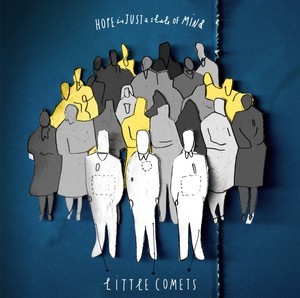
Little Comets, Hope is Just a State of Mind

My favourite band for kitchen sink indie…I like how Little Comets ease you into their changes in sound through various EPs released throughout the year. With the tingly guitars released on ‘Salt’ and the earnest lyrics, a ballad (‘The Assisted’) and emphatic drumming (‘Ex-Cathedra’) of ‘The Sanguine EP’, listeners were prepared for what was to come on Hope is Just a State of Mind, which seems to head towards what might be called a more eccentrically pop direction. One of my favourite things about this band is how they delve into the political and there’s certainly no avoiding it on this album, from the dig at Robin Thicke’s gender politics in ‘The Blur, the Line, and the Thickest of Onions’ to the lethargy of rock and roll in ‘Formula’ and the cultural demonisation of single motherhood in ‘The Daily Grind’: ‘You must feel so proud / Stigmatising every single mother / While your own world’s falling down’. Songs like ‘The Gift of Sound’ and ‘Formula’ have a more straightforward energetic pop vibe, whereas ‘B&B’ begins with an accapella moment and revolves around the repeated line: ‘my own mother cannot take me back’. There’s lots of thudding drumming and a swinging sort of emphatic, repetitive melody. The song, incidentally, is about bedroom tax and Robert Coles has eloquently said of the lyrics:

‘Lyrically the words came quite quickly as I always had the “even my own mother cannot take me back” line in my head from writing the melody. I knew it was going to be about politics: specifically the patronisation of people by the political class in both ideology and delivery, and the way that my own region has been altered by the blue hoards of conservatism.

The title stems from a tweet by Grant Shapps regarding the last budget – “budget 2014 cuts bingo & beer tax helping hardworking people do more of the things they enjoy. RT to spread the word”. Beer and Bingo – because there’s nothing else to do.

I think the first verse is just frustration with the attitude put across by politicians that suggests that they think people are total idiots – policies light on detail, simplistic ideology, framing debates in headlines, constant ill behaviour. Plus from the other end of the scale the total demonisation of the less well off in the swingeing benefit cuts typified by the bedroom tax. I just think it is bizarre and to treat us with this brazen amount of contempt.

It really got me thinking about the north east getting so bashed up in the time of Thatcher – destroying lives and communities because of a need to dominate on an ideological level. I think the second verse tries to convey the depressing notion that beyond this pain, she also eradicated trades and skillsets that had been built for hundreds of years without the prospect of anything new, or transferability. To extinguish a trade, a way of life…. Wow….. That’s a pretty crazy course of action.

It’s almost like she stole those years from us – and it feels a little like it is being echoed now. Taking away what someone relies on is oppression, and this is being felt in communities across our country today – horrified in the knowledge that it will continue until people are so battered that they accept it. The worst part is if you look closely enough, past Grant’s apparent carrot you can see the joy in the eyes behind the ghastly stick, and they look frighteningly familiar” (Source: Little Comets’ Lyric Blog).

I guess I’ve included the quote because I think the politics have become more direct in this album and it’s interesting to flesh out the backstory here. Sure, there have been plenty of ‘northern’ bands before, but rarely have I listened to a pop or indie band who engage with their politics so directly and so articulately (usually this space is reserved for punk or rock – Manic Street Preachers of course, representing a ‘marginalised’ Welsh perspective). Aside from lyrical content, you’ve got the usual pleasures of Little Comets harmonies, shredding guitar licks and bouncy rhythms. ‘My Boy William’ is wonderful live, the way it builds up and everyone following the drum rhythm. ‘Little Italy’ is great fun too, with its cascading melodies (liiiittalll iiiitaaalllyyyyy I reeAAd heeEre) and syncopated rhythm. It’s true, on this album (especially on ‘Salt’), the songs are very up and down, rarely straightforward and often lines are lyrically and melodically convoluted; this isn’t a criticism but more a reflection of what seems to be a desire to push the formulaic boundaries of pop, to infuse guitar chords with lush vocal harmonies and ringing percussion. To represent detailed, difficult subjects in pop is never going to be easy, but Little Comets nail it in their own unique, beautiful way. Look forward to seeing them again live next year!

Favourite tracks: ‘Don’t Fool Yourself’, ‘Little Italy’, ‘The Blur, the Line & the Thickest of Onions’.

The-Maccabees_Marks-To-Prove-It_cover

The Maccabees, Marks to Prove It

Well, to be honest I never would’ve thought I’d be including The Maccabees on my 2015 albums of the year. Over the last few years, I haven’t spared much thought for the band other than as another soundtrack to the general indie trend of the last ten years: a band mentioned frequently in NME perhaps, soundtracking lovelorn scenes in movies, but nothing particularly distinct other than in their creation of twee indie pop. However, one night after work I was lying on the floor recovering from a terrible shift with the radio on, listening to X-Posure With John Kennedy on what used to be XFM. The Maccabees were talking through their new album and playing the songs, and I was pleasantly surprised by how intriguing the sound was, as well as how articulate the band were in talking through the writing process and the stories behind the songs. I guess the next day I went out and bought the album. It definitely sounds a long way away from ‘Toothpaste Kisses’, though the added kazoos and varied percussion doesn’t spoil the simple joy of good plain songwriting. The songs have a weight to them, a grander atmosphere, especially the weird dissonance on the likes of ‘River Song’. ‘Silence’, however, is quietly beautiful, drifting along soft piano notes, subdued vocals and a somewhat eerie sample of an answering machine voice.

Where once you would recommend The Maccabees mostly to fans of The Mystery Jets, Pigeon Detectives or Futureheads, this album feels much more grownup, darker somehow, wilder and expansive. The lyrics vary in subject from the gentrification of London’s Elephant & Castle (the band’s hometown) to heartbreak (‘When you’re scared and lost / Don’t let it all build up’) and well, happiness (‘Something Like Happiness’). It’s refreshing to have a song that does just feel like at times like a gentle old ode to joy: ‘If you love them / Go and tell them’. ‘Marks to Prove It’, the opening track, feels confident and bouncy, with a sharp riff and assured vocals. It would fit in with a fast pop set from The Futureheads, but the rallying battle cry that precedes Orlando Weeks’ voice announces something slightly stranger, a record with new edge.

Favourite tracks: ‘Silence’, ‘River Song’, ‘Something Like Happiness’.
Currents_artwork_(Tame_Impala_album)

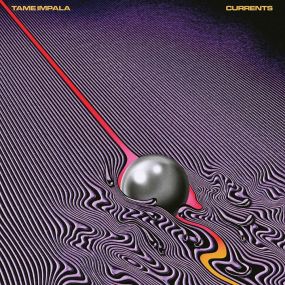
Tame Impala, Currents 

I was introduced to Tame Impala mostly from one of the chefs at work playing it in the kitchen on Sunday mornings, and weirdly enough his psychedelic brand of synth pop seems appropriate preparation for a day serving Sunday roasts to hungover customers. It’s the swelling bass and brilliant synths that really catch you, the smooth falsetto and tingling production. You can tell Kevin Parker is a dream at studio magic, with flawless instrumental arrangement that makes for a sound that could be big or chilled, depending on how you play it. There’s some dark keyboard drama, there’s a lovelorn anthem (‘Eventually’) and what might tenuously be described as weird disco funk. For some reason (maybe all the synths, gossamer vocals and vintage-sounding guitars?) has a ‘bedroom-made’ feeling, but with a much slicker production than the DIY element might suggest. Some songs sound like they belong on a long, atmospheric train journey across a space desert; others sound like they’d fit on the cuts of drama interspersing a video game. There’s a dreaminess to songs like ‘Yes I’m Changing’, but a more radio-friendly funkiness to the likes of ‘The Less I Know the Better’, or even ‘Love/Paranoia’, with its silky beats and finger clicks. As the album progresses, the theme of heartbreak starts to really solidify and I guess that’s the overriding drive of the songs – a heartbreak that slows and stifles, morphs between introspection and the temptation of mild bombast.

Favourite tracks: ‘Yes I’m Changing’, ‘The Less I Know the Better’, ‘Love/Paranoia’.

81-uo32700L._SL1500_

Stornoway, Bonxie

This was a lovely album to enjoy in spring, from the hopeful folksiness to the cute origami bird on the cover. I guess it got me through that period of hell in my life that was finals. I would go on walks around Kelvindale where all the cherry blossoms were, listening to the soft acoustic licks and all the soothing bird sound effects. It’s an album to enjoy by the sea perhaps, full of a sort of longing. There’s the noise of distant foghorns, the rolling harp-like guitar and sparkling xylophone over the drifting shimmer of a wave-like cymbal. This is probably my favourite Stornaway album, or at least equal to the debut, Beachcomber’s Windowsill because of its more folksy atmosphere, its immersion in nature — the sense of being lost, deliciously lost by the edge of the ocean. ‘The Road You Didn’t Take’ especially boasts a shanty-like chorus which adds to the nautical theme and sort of swells up like you’re caught at sea, singing along irrevocably. Melodies build up to climaxes and fall back down into subdued, slower choruses, as if the speaker tries to articulate something about his surroundings (the beautiful environment) but fails to express them entirely. Sweet, comforting guitar licks glide us through (e.g., the start of ‘Sing With Our Senses’). Vocals are never aggressive, only sometimes shrill and generally soothing – like a bird’s? Apparently over 20 types of bird donated their song to the album, and let’s not forget that singer Brian Briggs is a Dr. of Ornithology! It’s just a lovely escapist sort of album, reminding you of seaside holidays from years ago, that childlike ability to sink into your surroundings and find wonder in a leaf, a taste of salt air, a bird call.

Favourite tracks:  ‘The Road You Didn’t Take’, ‘We Were Giants’, ‘Between the Saltmarsh and the Sea’.
81HZecd+uwL._SL1500_

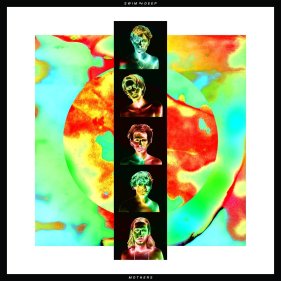
Swim Deep, Mothers

It seems everyone has been describing this album as Swim Deep’s foray into psych-pop. You only have to take a glance at the warping colour bleed of the cover art to pick up those vibes. The honey sweet guitar pop of Where the Heaven Are We has morphed into something heavier, more saturated. There are so many influences, but I suppose you could start with psychedelic music, house and kraut rock. Lots of bursting, colourful synths. It reminds me of The Horrors’ Primary Colours, not only because it’s a ‘change-around’ album, but also the subdued, atmospheric reworking of prior image and musical style. Songs like ‘Honey’ and ‘The Sea’ from their debut album were chilled and loose with catchy melodies, and while Mothers retains the catchy melodies, its style has tightened up a bit. The instrumental elements are more complex; songs open up a multilayered world rather than the silver stream of a simple pop tune. ‘To My Brother’ has an epic quality, building up to the chorus with some extravagance – weirdly, the sort of mistiness of the vocals and quirky synths remind me of Seal. I’m not sure why, or whether that’s even an accurate comparison, but the link just popped into my head. I love the way critics have compared ‘Namaste’ to discordant game show music, which obviously fits in with the 1990s vibes of the video. All that beige, those glasses, the sense of mania reflected in the music! It’s more mature maybe, but still fun.

Favourite tracks: ‘To My Brother’, ‘Namaste’, ‘Imagination’.

A few others…

  • Beach House, Thank Your Lucky Stars (two albums in one year, ‘nuff said)
  • Florence & the Machine, How Big, How Blue, How Beautiful 
  • The Libertines, Anthems for Doomed Youth (listening to it to drag up the old nostalgia of discovering the first albums, for the lovely production and Doherty vocals on ‘You’re My Waterloo’ and Carl Barat’s very English swagger).
  • Prides, The Way Back Up (Stewart Brock has come a fair way since Drive-By Argument (big up a band from Ayr!) but the wide, electronic sound of Prides has its heart in the original synthiness of Drive-By Argument which developed into more distinctly electronic side-project, Midnight Lion. Obvious comparisons are to Chvrches, but maybe also a bit of Daft Punk. Radio-friendly but I’d imagine really big and energetic live, plus whenever I hear them I get sweet teenage nostalgia for Drive-By Argument).
  • Sufjan Stevens, Carrie & Lowell 
  • Years & Years, Communion (sparkly EDM pop with plenty of pluck, from a band whose singer starred in Skins and Stuart Murdoch’s indie flick, God Help the Girl).

Hyperreal Lives: Made in Chelsea and The Seductive Politics of Boredom

There’s a certain uneasy, shifting quality at the centre of Made in Chelsea that reminds one of the later work of Samuel Beckett.

Martha Gill

For a show in which a character actually says “Charles Dickens wrote Winnie the Pooh. No, Pride and Prejudice,” you might be shocked at any comparison raised between Made in Chelsea and the world of literature. And yet, there is a sense of unease that haunts the famous Channel 4 show which documents the financially-flushed lives of trendy twenty-somethings partying and gossiping themselves around London. A sense of unease that is usually reserved for the realm of the literary text, specifically the postmodern literary text, which evades fixed meaning and narrative closure. That leaves us in some sort of existential crisis. And so what is this Beckettian quality that haunts the flashy world of ‘yahs’, of immaculate blow-dries and fancy cars? Is it the sheer vacuity, the absurdity, the meaningless and endlessly repetitive plot lines? The bizarre seduction of its pointlessness and dragged-out pacing, the lingering shot on a face of shaky acting that aims to convey some kind of deep significance, but instead trails us into nowhere?

There is something strangely seductive about Made in Chelsea. I thought maybe I’d struggle to write this article, given that I have only watched a handful of episodes from a show that has run for seven seasons. My mother watches it, my brother watches it. They don’t watch much else on telly, so there must be something in it that lures them in. That lures us all in. Indeed, maybe there are people out there who genuinely anticipate new episodes, as if there really was some plot development to look forward to. There must be some reason why Channel 4 bother advertising narrative ‘tensions’ in their new episode teasers. Yet I find it difficult to establish the significance of any story arc in Made in Chelsea: each episode rolls over with an intrigue that evaporates like the champagne sucked so readily from its characters’ glasses.

But wait, you may say: Made in Chelsea is not meant to be television drama, it is reality, albeit ‘structured reality’. We are, supposedly, watching a show about ‘real’ lives; these are ‘real’ people acting out things that have ‘really’ happened to them. Reality does not readily provide us with such arcs of climax and resolution that fictional scripts tend to yield up; reality is all about interweaving story-lines, little tensions that burst and dissipate under hushed storms of gossip – the sheer joy of calling someone an idiot behind their back. I suppose this is what Made in Chelsea really is: grownup children bitching and dissecting one another against the backdrop of glittering cocktail glasses and an effortlessly hip soundtrack.

Because of course, this is no ordinary ‘reality tv show’. The cast of Made in Chelsea are rarely seen smoking, vomiting, shagging. The ordinary things folk tend to do on reality tv shows; you know, Big Brother and the like. The world of Chelsea is one of perfected physicality: sculpted bodies, stylish clothes, the cool gaze of another blasé conversation, another stilted standoff between two characters. For this show is all surface, all talk. Not much changes, except for the setting: from beautiful London gardens with the perpetual tinkle of glasses to throbbing club scenes and the stunning backdrops of Venice and Versoix, from gleaming storefronts to pheasant shoots and country-club chic. We are invited to revel in the gorgeousness of panoramic camera shots, the afternoon light as it flickers from the sun between leaves to the glint of a wine glass. Perhaps we could watch this show on mute, with the characters becoming a kind of tableau vivant, and we may sate ourselves on the images of their flawless skin, their achingly white teeth. These are characters whose personalities shift with the wind of each new season, who perform themselves as they please.

And of course, there is the British obsession with class, particularly the surface forms which class may take. We have always loved observing the lives of the super-poor and hyper-rich, and from Dickens to Evelyn Waugh readers have been drawn in by artistic representations of both the struggling underclass and the excesses of the wealthy. Watching or reading about the extremes of poverty or richness makes us feel better: it allows us to reaffirm our own position, as somehow ‘normal’. We’re never that bad; we’re comfortably in-between. In a sense then, Made in Chelsea shares with shows like the BBC’s documentary-style show The Scheme its status as a form of class porn. Watching the ‘feckless’ lives of those in poverty makes people feel better; superior, even. Careful editing enhances the drama, adds turbulence to the characters’ lives and cuts out the ordinary hard work that may go on behind the scenes. Watching Made in Chelsea, I suggest, deflects the structural issues underpinning the status of the super-rich onto a series of mundane story-lines that focus almost exclusively around love interests. There is very little in the show to tell us how so-and-so got his or her fortune. And if the university degree, modelling career or entrepreneurship features at all, it is usually as a mere prologue to some form of romantic or consumerist intrigue. We are told to sit back and enjoy this form of lifestyle porn, without bearing a thought for the opportunities these people received to get where they are now.

Also, there is a certain pleasure in indulging in one’s prejudices. The cast of Made in Chelsea embody a certain form of gap yah privilege that many of us enjoy mocking in this day and age where the class divide is wider than ever. While watching shows about the ‘underclasses’ often makes uncomfortable viewing, documenting the frequently distressing scenes of life on the breadline, watching Made in Chelsea involves both succumbing to the passive pleasures of spectacle and an exercise in mockery at the dandified lives of its characters. We may poke fun at the absurdity of some of their dialogue: the accent, the ‘totes’, the ‘yeah boi’, the gestures that seem to separate these people from the rest of the human race. As the notorious Mark Francis quips, ‘I once knew someone who owned a sleeping bag’. Yes, quite: a sleeping bag; those cave animals from the world beyond, with their horribly proletariat existence. Indeed, these beautiful beings, the Chelsea Set, are not like the rest of human kind. Not like the rest of us watching, half allured and half bemused.

Onscreen we watch these glimmering cyborgs, as they fashion their real lives right before our eyes.

And yet, the Chelsea Set are not untouchable beings. They splash themselves over pop culture: doing photo shoots, exclusive interviews, making innocuous appearances as guest-star DJs in clubs. We are asked to see them in the flesh, as if we too can reach out – if only briefly – to touch their precious stash, the solid gold of their lifestyles.  We may look them up on Wikipedia to find out more; these characters are hypertexts, whose ‘real’ lives are perhaps preceded in a Baudrillardian sense by the simulations they portray onscreen. They have built up their empires of personality which branch out from the TV series to magazines and online articles documenting details of their fabulously elaborate yet ultimately vacuous existence. As Jon Dovey puts it: ‘reality TV is the ultimate expression of the simulacrum in which the insistence upon realism is in direct proportion to the disappearance and irrelevance of any referential value’. Yes, the disappearance of any worthwhile meaning; that sounds familiar. Are these ‘real’ people, or mere masks – postmodern burlesques of the generation of ‘bright young things’ which once lit up the 1920s Jazz Age, but now dissipate into the no-place of mundane conversation? The sexiness of Made in Chelsea is perhaps undermined by the sheer obviousness of its facade.

Yet when we watch these individuals perform their ‘selves’, do we passively absorb their world as if it were merely a stage-set, or can we pierce this world, burst the bubble on their champagne-scented version of reality? If there is an almost erotic allure in the mere spectacle of the lives of the rich, then allowing ourselves to be sucked into the simulacrum of this show constitutes a new, if slightly sickly, opium for the masses (or at least, those who bother watching). So, perhaps, let us covet the aura of affluence, of shimmering lives and expensive spaces, while at the same time reminding ourselves of the poverty and inequality that must exist to support the glamorous boredom of the rich and famous. Or maybe we could turn off the telly, and go camping instead.

Sources: 

John Dovey (2000). Freakshow 

Martha Gill, http://www.newstatesman.com/culture/2013/05/made-chelsea-totes-postmodern

My Difficulty(ies) with Sex and the City 2

Image
Image source: fanpop.com

I really don’t know what convinced me to watch Sex and the City 2. I suppose it was a case of finding something that wouldn’t require much brain power; some easy viewing for after exams. Little did I know the film would prompt some serious feminist and post-colonial rage.

Sex and the City 2 is, like the show that ran from 1998-2004, a romantic comedy. It follows Carrie, Samantha, Charlotte and Miranda as they travel abroad to a holiday in Dubai. Like the show, the film engages with the issues of being a woman in a ‘post feminist’ age, but also involves itself in questions of cultural difference and orientalism. Sex and the City 2 was released in 2010, in the midst of the turbulent relations between the West and East defined by the on-going war in Afghanistan.

Firstly, the question of feminism. Sex and the City 2 is a salient example of a ‘post feminist’ film. According to Angela McRobbie, in her work ‘Post Feminism and Popular Culture’, popular culture of the 1990s reflects a turn away from the gains made in the second wave feminist movement, through an exhibition of what McRobbie calls ‘post feminism’. Post feminism, for McRobbie, entails the notion that contemporary culture relies on the achievements of second wave feminism. Indeed, it takes these achievements – equal rights, liberated sexuality, economic independence etc – for granted, takes them as socially ‘obvious’ and in existence without need for critical reflection. The widespread assumption that women are sexually, economically and socially ‘liberated’ allows popular culture to represent female characters who embody an autonomous, self-reliant and empowered lifestyle: this includes having high-flying career women, sexually-liberated women; women with choice, education, power. It doesn’t take much effort to see that Sex and the City is a prime example of this: there’s Samantha the PR businesswomen, Carrie the writer, Miranda the lawyer.

Nevertheless, the empowered women portrayed in popular culture do not fit the aims of feminism, even though on the surface they appear strong and ‘free’. These women are presented as self-made, fully in control of their own destinies, fully unshackled from the chains of patriarchy and power and also the feminist movement itself. Their achievements are represented as examples of personal triumphs rather than identified as part of wider shifts in female employment and gender roles enabled by the feminist movement and its transformation of the systems of power and social mores which formerly would have constrained them. Since these women are depicted as independent and disengaged from feminism, their representation contributes nothing to the political ambitions of feminism, and also undermines the need for any contemporary feminist movement. Indeed, many popular renderings of the modern, empowered women (the post feminist female subject) in fact not only detract from the political weight of feminism but they also associate this new freedom with certain practices which actually restore traditional gender roles – the gendered behaviours that feminism set out to radically change.

In Sex and the City, both the show and the films, female liberation and empowerment is predominantly expressed through sex and consumption. Yet it is debatable as to whether these practices actually enable the women to free themselves from conventional gender norms or whether they in fact throw the characters back into the cycle of cultural constraints that rigidly define ‘women’ and ‘feminine behaviour’. Samantha, for example, is frequently depicted as the most sexually voracious of the four women. She enjoys the kind of sexuality – one night stands and the like – that men have been enjoying for centuries; she offers no apologies for her behaviour; it is, at least from the two films I have seen, seemingly morally accepted. Moreover, as a successful businesswoman, Samantha enjoys an economic independence which allows her to splurge on clothes, holidays and anti-aging products. It isn’t difficult to see where post feminism fits in here: while Samantha does have an assertive sexuality and personality, her empowerment is presented chiefly through consumption. Rather than making any significant political statement about female power or positioning, the show and films seem to reaffirm the status quo by confirming consumption as not only the vital source of contemporary identity but also the glittering route to status and power; yet a route that leads continually to traditional female objectification, with the body becoming a cultural mannequin, dressed up with the latest dresses, shoes and anti-aging potions to create the perfect sexualised subject. Of course, there is an inherent ambiguity about whether the woman is in control of herself, as she travels down this route of credit cards and department stores, or whether she is pressured by the powers of female-directed advertising and capitalism.

In any case, Sex and the City may appear feminist but it certainly contributes very little to the political movement of feminism. The girls may spout their girl power in a karaoke session singing second-wave feminism’s theme song ‘I Am Woman’, but their empowerment is arguably a superficial concealment of how they are trapped by the mind-numbing machines of advertising and the fashion and beauty industry which continue to pressurise and mould women’s sense of self, perpetuating gendered regimes and practices. Samantha, the only unmarried character, uses her economic power in ways that confirm her adherence to standards of femininity that are perpetuated by the beauty industry in order to exploit and extend female insecurities. She enhances her libido in the wake of menopause through guzzling handfuls of pills, to ‘trick [her] body into thinking it’s younger’, to which Miranda adds: ‘I’ve tricked my body into thinking it’s thinner – Spanx!’. While feminism as a movement attempted to open up new kinds of beauty, which included those who were not young, white and skinny, the characters are depicted as mindlessly striving towards and approving the stereotype, rather than in any sense shattering it. As Hadley Freeman of The Guardian astutely describes this scene: ‘it’s like being lobotomised with a pink teaspoon’.

Well this is all fair enough: perhaps you could argue that she is making the conscious choice to do so. Other characters have different means of empowering themselves, after all. There’s Miranda, the lawyer, and Carrie, the fashion-crazed newspaper columnist. Yet all these women are privileged: rich, often from affluent backgrounds or have wealthy husbands. They are friends for one thing because they have a shared class position. Their empowerment through shiny New York careers and the shopping is more of a class privilege than a political statement about girl power, and in this sense I would argue that the show is highly problematic in its potential to be cast as ‘feminist’.

While the issue of feminism and Sex and the City is ambiguous, I would argue the sequel film leaves little ambiguity about the issue of racism; or, more specifically, orientalism. The film follows the four girl’s holiday escapades in Abu Dhabi, the second biggest city of the United Arab Emirates. Hadley Freeman contrasts the ‘smart, funny, warm and wise’ TV show with the ‘pink-fringed, cliché-ridden, materialistic, misogynistic, borderline racist’ film; while the show ‘had genuine emotional truth’, the films are all about the ‘sex and shopping’.  I’ve never watched the shows, so cannot make a judgement other than my impression of the films. And my judgement is that their vision of women, homosexuality and ‘the East’ is distinctively narrow, shallow and hollow.

With Carrie, Samantha, Miranda and Charlotte sent off to Abu Dhabi, the film immerses itself in a world of blatant, unapologetic orientalism. Edward Said in his book Orientalism described orientalism as a concept which encompasses the binary distinction often made between West/East. This distinction comes with other stereotyped and hierarchical binary pairings such as civilised/uncivilised, us/them. Charting the history of colonisation, Said suggests that Europeans have for many years set up Eastern countries as ‘oriental’, as exotic Others by which they may define themselves against. For Europeans, whatever the Orientals were defined as, they (the occidents) were not. This allowed the West to position themselves as an inherently superior ‘race’, which in turn provided the justification for colonisation by using the ‘white man’s burden’ of civilising the ‘uncivilised’ world to legitimise their imperial domination of Eastern countries. As with most stereotyping and binary oppositioning (think man/woman), this process involved enormous cultural and social simplifications and generalisations which shaped prejudices against the ‘orient’ commonly held in the West. You only have to take a glimpse at today’s papers, with the generalisations about Islam and terrorism, to see how Orientalism still operates. Indeed, the USA in particular has frequently justified its occupation and invasion of Iraq and Afghanistan in terms of tackling the women’s rights records of these countries; but it is possible that this constitutes an imposition of Western norms on different cultures, and moreover, the USA’s record for women’s rights is itself questionable, as it is one of the few countries that has refused to ratify CEDAW, the UN’s Convention to Eliminate All Forms of Discrimination Against Women. This is just one contemporary example of how the West stereotypes Eastern cultures in opposition to its own cultural model, and reflects a complex entanglement of neo-imperialism, orientalism and feminist issues.

Back to Sex and the City 2. The representation of the Middle East is highly stereotypical, and makes a great effort to exoticise Middle Eastern men and women into characters which perpetuate traditional oriental images of the East found in films like Arabian Nights. The men are presented with a glamorous strangeness: with the mundane, clichéd dialogue and the glittering, stereotypical oriental music that accompanies their appearance. Upon arrival, the American women are treated like queens, each getting their own taxi and personal man-servant who stays up all hours to service their every petty whim. This sets up a kind of neo-colonial relationship where the ‘respectable’ Eastern characters are represented as intrinsically deferential to their Western ‘superiors’.

Additionally, the cultural status of sex is clear-cut into a binary issue, with Western liberation contrasted with a complete repression in the East – Samantha’s kissing on the beach is met with armed response and a permanent criminal record. Rather than acknowledging the nuances that characterise how sex is accepted and perceived in different contexts, the film forces the issue once again into stereotypical binaries.

Perhaps most significantly, the film also cashes in on stereotypes of the mysterious veiled Muslim women. Carrie and co ruminate over the sartorial restrictions of wearing a veil, and watch in awe as one eats her chips underneath the burqa. The Muslim woman is thus shown as an object of curiosity, and we viewers are forced to voyeuristically observe her eating chips as if she is some strange, voiceless creature. By minimising the actual interaction between the American women and the Middle Eastern women, the film negates any possibility for exploring the unique subjectivity of Muslim women and their experience of wearing a burqa as well as their religious beliefs. Instead, they remain Oriental objects of Western curiosity. Rather than respected for having their own minds, they remain quite obviously in this film, to borrow Chandra Mohanty’s phrase, under western eyes.

And indeed the moment that really struck me was when the Muslim women were given a voice. After helping the four girls escape a mob of angry Arab men (who Samantha has offended by spilling condoms all over the floor and announcing loudly that ‘yes, [she] does have sex!’, so yes – another stereotype about all Arabian men as women-haters) a group of Muslim women shed their niqabs to reveal they are wearing the latest New York runway collection. Delighted, the four American women laugh and praise their fashionable style. This is so obviously patronising that even after a film peppered with references to magic carpets and other Middle Eastern myths I was shocked. Being the primary scene where the main characters actually interact with Muslim women, it states, quite clearly, that Western and Eastern integration can only occur through consumption. Moreover, Muslim women can only be liberated from the ‘shackles’ of their own culture and religion (defined in the film by the recurrent veil image) by conforming to Western stereotypes of beauty and fashion. It’s a sickening simplification of the complexities of female identity within different cultural contexts, and seems to send out the message that globalisation (or rather, Westernisation) can only be a good thing because it is spreading a ‘liberated’ (or rather, shackled to consumerism) Western femininity to the poor, silenced Muslim women, who live in a culture that remains ‘backwards’. In doing so, it leaves out other more critical consequences of globalisation that could be explored, such as migrant labour in the Gulf, which is only skimmed over in Carrie’s conversation with her Indian servant Gaurav – who she benevolently bestows her money upon, as if this single lavish expenditure makes up for the capitalist restructuring which has necessitated Guarav’s move abroad away from his wife in the first place. Another example is in the nightclub where ironically the girls play karaoke and sing ‘I Am Woman’ while at the same time they are probably in the company of trafficked sex workers. Charlotte asks why the club’s belly dancers are allowed to show lots of flesh while every other woman in the East seems to cover up, and Miranda provides the pathetic response that there is a ‘nightclub loophole’. Many of the single women in Emirati nightclubs are indeed trafficked sex workers, but the film completely glosses over the possibility of critically engaging with this.

Finally, the wedding opens with another obvious stereotype that should’ve prepared me for the cliché trail that characterises the rest of the film. The wedding of two gay characters involves many stereotypes attached to homosexuality – infidelity, flamboyance, the pomp of a completely OTT ceremony, complete with boy choir and Liza Minnelli performing ‘Single Ladies’. It’s utterly cringeworthy and I had to temporarily mute the film so that my flatmate didn’t have to wonder what the hell I was watching. A fitting beginning to a film rife with caricature, condescension and cartoonish representation.

I can’t, however, completely make my mind up how I feel about the representation of women in this film. While there are many simplifications and the fact that the women conform to gender stereotypes through shopping, there are some moments where the difficulties of trying to ‘have/do it all’ are reflected. It is possible to look upon Samantha with pity, as a character who isn’t liberated but sucked too far in to the rigid, gendered standards of the beauty industry, and perhaps the patriarchal expectations of the area she works in – PR – which is based so much on appearance. Another example is the scene where Charlotte cries in the cupboard, hiding from her screeching children in a moment of genuine motherly breakdown. Nevertheless, these remain very limited representations, in that Charlotte’s troubles are the troubles of a privileged housewife. She’s crying because she worries about her husband having an affair with the nanny (an idea bizarrely stemming from the fact that the nanny doesn’t wear a bra) and because her daughter messed up her designer jeans. Not because she doesn’t know where her children’s next meal is going to come from, or because she’s overworked with three jobs to make ends meet.

So while the film touches on feminist issues, its dealing with class and ethnic difference is shockingly narrow. I couldn’t even enjoy it as a slice of indulgent consumerist fantasising, because the racial, sexual and cultural stereotypes, and the flat script and conventional female behaviour ascribed to many of the characters were so obvious and unsettling. It almost makes you feel guilty to watch. Of course, it all ends happily, with Charlotte’s nanny turning out to be a lesbian and thus in no danger of seducing Charlotte’s husband, and with Samantha finally consummating her passion for the Danish guy she got arrested for kissing in Abu Dhabi. Well, of course, the film suggests, everything happens correct and best in the West. Yet I’m not sure that all’s well that end’s well: the film prompts more questions about the implication of its depictions of women, homosexuals and the Middle East than it answers.

Bibliography:

McRobbie, A. (2004) ‘Post Feminism and Popular Culture’ in Feminist Media Studies, vol. 4, no. 3 , pp. 255–264.

Said, E. (1977) Orientalism. 

Sex and the City 2: Orientalist Boogaloo

http://www.guardian.co.uk/film/2010/may/23/sex-and-the-city-film-terrible

http://feministing.com/2010/06/03/sex-and-the-citys-women-of-color-problem/

Image