In all honesty, I’m not sure this month actually existed. I seem to have spent most of it in bed trying to write essays which actually aren’t finished yet, so I’m not sure why I’m typing this up instead…but amidst all this chaos it seemed proper to maintain a sense of routine and mark the month as a set of 30 days in which yes in fact I did listen to things amidst all that reading and such forth. Sometime in December I’ll put together my records of the year like I did last year. It’s been a very good year for new albums, actually, despite all the other general awfulness of 2016.
WHITE – I Liked You So Much Better When You Needed Me
Clarence Clarity – Vapid Feels are Vapid
Eels – Fresh Blood
Braids – Letting Go
The Dirty Lies – Shallow Grave
DJ Rum – St Martins
Conor Oberst – Gossamer Thin
Fair Mothers – Blind (ft. Kathryn Joseph)
Sisyphus – Take Me
Palace – It’s Over
C Duncan – Other Side
Robert Smith – There’s A Girl In The Corner (Twilight Sad Cover)
I scroll down my Facebook timeline, and there is a photograph of a pavement – on a real street which I recognise – and on that pavement is a Pidgey. You know, the wee brownish flying thing from first generation Pokémon? I scroll down a bit more and folk have been out and about all over the place: there’s a Weedle on the gingham tablecloth in a cafe, a wee purple-grey Nidoran on a hay bale, a Magikarp bouncing around by the Kelvin. This is, if you haven’t guessed already, people sharing their spoils from Pokémon Go, an augmented reality game which allows you to catch Pokémon in the wild, a.k.a real life. There was a glorious month in the summer when you could go for a walk and see clusters of people milling around with their phones in the air, as if trying to channel some ethereal spirit that was wafting in the atmosphere. They were out catching Pokémon. All of a sudden, people were going for walks again, leaving the house and the cosy glow of the television to catch invisible beasties who lived in trees and parks, museums and street corners.
Safari Zone Map from Pokémon Ruby/Sapphire. Image Source: PsyPoke
As a kid, I was an avid Pokémon fan. I missed the boat for Red and Blue but had Yellow, Ruby, Sapphire, Leaf Green for my Game Boy Colour and Advance and played them all to death. What I loved more than the battles was the wandering part. So much of your time is taken up pushing your way through long grass, cycling along seaside promenades, bobbing along the ocean, taking shortcuts through forests, crossing through dungeons, traversing the plains of mountains and deserts. You’re constantly interrupted by Pokémon encounters; so much so that often you double back in confusion, any instrumental pathway you’re trying to take disrupted by the screen switch to a battle. The towns often had such picturesque names as ‘Petalburg City’, ‘Sootopolis City’, ‘Lilycove City’ and ‘Mossdeep City’. Then there’s Meteor Falls, the Sunken Ship and Sky Pillar – these are just from Ruby/Sapphire alone. Yes, the game has a final purpose: you’re supposed to beat the gym leaders of every town and follow some convoluted let’s beat Team Rocket narrative, but often its trajectory is beautifully non-linear. You can explore, catch Pokémon in your own time, find side quests to achieve, people who need help. Acquire potions, level up your Pokémon, learn intriguing stories from local mythology.
Screen Cap from Ruby/Sapphire. Image Source: WikiHow
There is an obsessiveness to Pokémon, a desire to always repeat. As much as possible, you find yourself returning to previous towns and locations, either to seek out more Pokémon known to appear in the area or simply to explore, to see what you’ve missed. Invariably, you do nothing new, and manage to enjoy that process of wandering again. You fight the same Pokémon, hoping they will flee but secretly enjoying taking them down in one shot with your level 40 team, where once you’d have to fight tooth and nail with a goddamn Zubat. To some extent, Pokémon is a rhizomatic game: once you get to a certain stage, the world is yours to explore and you can map out your own routes and lines of flight as you see fit, flying and sailing and seeking locations of your choosing. However, you are still governed with the impulse of narrative, which spurs you onto particular places: sometimes you can’t move on till you’ve beaten the gym leader of that town, for example. You can regress, but not progress. There’s that sort of macho narrative of levelling up which you’re impelled to follow. It’s only when you’ve completed the game that you can reap the rewards of complete exploring.
Pokémon Go changes that. By transferring Pokémon to real life, you are as free to explore its terrain as you are to wander the streets of your local town or city, or indeed the plains of the countryside. Real life is transformed by augmented reality, the imposition of Pokémon on material space. Creatures that only the player, holding up her phone, can see. This is already getting very Black Mirror, but wait. It’s a competitive game, yes, but there aren’t the drastic consequences of social exclusion and alienation experienced by many of Black Mirror’s tech addicts. There is a lovely playfulness to Pokémon Go which somehow has generally avoided becoming cutthroat competition. For a while, everyone was playing it. It was a form of camaraderie (folk would go out in packs to hunt for Pokémon, or indeed organise mass hunting expeditions via Facebook). More time was being spent on the Pokémon Go app than on Snapchat, Twitter and Whatsapp. I’d go into the kitchen at work and the chefs would gleefully show off their Pokédex; which was glorious, seeing all those familiar creatures again in this new and surprising context. And since chefs have hardly a moment’s time when they’re not in the same place, working 14 hour shifts at a time, I can only imagine the extent to which people in other walks of life played it.
Pokémon Go is a strange way of making people notice their surroundings, particularly in the sense of urban space. Sure, most of the time their faces are glued to the maps on their phone screens, but in placing themselves in the world, they are forced to confront physical structures, obstacles, windows, private property and so on. It becomes even more of a game when you have to work out how to attain Pokémon in elusive locations. I’ve heard stories about folk knocking on your door asking if they could come in because they’ve noticed you’ve got a rare Pokémon in your house. It sounds pretty sinister, but it shows the level of commitment the game inspires.
Think of it this way: why is it so addictive? Like Tinder, it’s a form of locative media which uses your GPS to determine who or what will appear in your surroundings. Pokémon Go also uses your phone clock, as different types of Pokémon appear at different times of day. I’m reminded here of one of my favourite games, Animal Crossing,where you could go fishing and bug-catching but what was out there was determined by the ‘real time’ of your Game Boy’s internal clock. It followed the real time of a 24 hour day, of the seasons and so on, so that in December there’d be snow and falling leaves in autumn. It was very beautiful and the real time aspect has an addictive quality. I think it’s because the game becomes less a form of escapism and more a parallel to reality, to everyday life. You know it’s reached that status when The Mirror runs a how-to guide, eh?
What’s so cool about Pokémon Go is how it adds meaning to real space. A school, town hall, park or pub becomes a Pokémon Gym and everyone wants to visit. I swear business at my work improved for a month as we quickly realised we were a Pokémon Gym and groups of sullen young adults would gather silently at bar tables, trying to battle other trainers at the gym and hoping to win Pokécoins. A guy I work with would heavily protest when he saw someone playing the game because he was currently gym champion and got surly at the prospect of newcomers taking his title. If I was late bringing someone a coffee, nervous they’d be grumpy with me, often they were so distracted by the game that they’d not even noticed the time. In a sense then, Pokémon Go transforms both time and space. Everything is flattened into a map, where flashing nodes indicating Pokémon are the symbols of desire, the objects of pursuit.
In a compelling, complex and challenging article on Facebook as a ‘desire-network’, Maria-Daniella Dick and Robbie McLaughlin argue that ‘Facebook effects a mutation in desire and thus in capitalism’, and in tandem with this, a ‘historical shift inn the relationship between psychoanalysis and capitalism’ (Dick and McLaughlin 2013). With Facebook, ‘desire remains impossible to satiate, but it is now without object’ (Dick and McLaughlin 2013). They suggest that Facebook is situated within the Lacanian Imaginary order (which constitutes the intrinsic narcissism through which the human subject constructs fantasy images of both herself and her object of desire). According to Lacan, desire (unlike need) is always unfulfilled; we are always moving towards a lack, the anxiety prompted by something lost (as in the child’s original sense of wholeness before discovering the fragmentation of her parts, the split between her body and world and mother, in the mirror). The Imaginary is that which we create to attempt to fill that fundamental gap, the fantasies of the ‘ideal ego’ which compensate for an originary loss. Facebook is basically the ultimate web of the Imaginary: all our time is spent scrawling through pictures and statuses and shared media which all in various ways represent fragments of the ideal selves we project online. Yet our browsing is ultimately without end, it is ceaselessly rhizomatic, decentralised; we end up on one place, a restaurant page or old friend’s profile, without really knowing how we got there. Our passage through the network is governed by algorithms which attempt to map our desires; algorithms which are self-sustained by users’ input data, the patterns of usage recorded with every click. While this may seem revolutionary, a democratic decentering of the system, Dick and McLaughlin are highly sceptical of Facebook’s subversive potential at the scale of the political.
While the likes of Facebook were integral in the organising of such glocalised (global/local) revolutionary events as the Arab Spring or the Occupy Movement, ultimately ‘[s]ocial networking completely embodies and facilitates these phenomena in which the masses are now able to organise efficiently but without being unified by a radical ideological alternative’ (Dick and McLaughlin 2013). The fragmentary pathways of Facebook map out the lines of insidious liberal democracy, and as engrained as they are in corporate culture (the corporation itself becoming the medium for mass communication) offer little opportunity for imagining visionary alternatives to liberal capitalism. Crucially, Facebook (with all its user-directed interfaces based on algorithms of taste and so on) perpetuates the myth of the liberal individual, who curates her profile, her tastes, conducts a life of many choices. As Dick and McLaughlin (2013) put it: ‘[t]he so-called 99% are already conditioned by a liberal democracy in which they have the self-identical sovereignty of an individualistic ideology that places the subject at the centre of the world’. To really offer a vision for an alternative future, we have to actually come up with a plan. Recognise that we are always-already networked individuals, whose subjectivities are hardly unique and instead constituted through structures of discourse and power, and use this in a positive way, to undermine the liberal justifications for free-market capitalism.
What does all this have to do with Pokémon Go? The thing is, Pokémon Go seems like innocent child’s play, but it’s bound up in the politics of space. It’s fundamentally structured by GPS software and urban space, and let’s face it, urban space is always ideological. Whether it’s homeless spikes, shiny new glass-fronted apartments built where Brutalist high-rises used to be, gated communities, the psychotic disarray of London’s property market, the genuine promotion of American Psycho-style yuppie-targeting ads or simply the denigration of social housing as ‘slum housing’, space and architecture is always somehow political. In a recent talk given at the University of Glasgow titled ‘Remembering the Future: The Politics of Space and Architecture’, Darran Anderson argued that the current failure of the Left is a failure to put forward a vision of the future that is compelling and actually positive; if we don’t act soon then someone else will determine the future for us. One way Anderson proposes we can intervene in the social order is through architecture, by building sustainable forms of urban space, housing and energy production that take into account the fact that we are living in the Anthropocene. We need to accept the imminence of ecological disasters, which are indeed already happening. We need to rethink our fantasy imagery of the city; it needs to become a network of playful imagination, of empowerment, rather than just passive defeat, or the kind of share-lite politics, browsing, blasé escapism and distraction offered by Facebook.
What is interesting about Pokémon Go is that it restores to some extent the object of desire, which Facebook, in its endless networks of people, places, photos and check-ins, displaces. ‘With Facebook’, Dick and McLaughlin (2013) argue, ‘people no longer live the present as present; it exists only insofar as it is exists to be recorded and later uploaded to Facebook’. This temporal displacement shifts with Pokemon Go, which insists on the present as present. Pokémon only appear for a limited amount of time so the imperative is to catch them in the game space of the now. The impulse of shopping or clubbing to buy buy buy or drink drink drink is gleefully interrupted by the appearance of Pokémon, who are quickly snapped up and snapped, shared online. The allure of ‘cool’ or the aura of dreamlike consumption attached to consumption-based social places is disrupted by the childlike logic of the game. And there’s nothing the companies can really do about it, since technically Pokémon isn’t intruding on reality, it’s only intruding on maps of reality. Now I’m thinking of that Jorge Luis Borges story, ‘On Exactitude in Science’ (1946), and getting very confused about reality itself. In the story, Borges imagines an empire where cartography has become so exact that its map of the empire must match in size and detail the empire itself—after which, what’s the difference between the map and the original? Do you need the map anymore, or can you use real space to map out real (map?) space?
There is almost something a tad Situationist about Pokémon Go. It offers no restrictions on movement, the way the Game Boy games do, according to a linear narrative. If you want that elusive Vulpix or Meowth, perhaps you will have to explore territories previously uncharted in your running app or Instagram places map. You might end up in the strange end of town. And what will you find when you get there? Traversing space this way leads to opportunities of surprise and discovery. The fact that so many people are posting photos of their Pokémon Go encounters online adds a new palimpsest of meaning to our understanding of place. The appearance of Pokémon disrupts the order of cities; it adds new points of desire to the map. Sure, most gyms are in tourist hotspots, but that doesn’t mean you don’t have to explore the more unseemly areas of town to catch ‘em all. In wandering out your comfort zone, you’re enacting a sort of De Certeauian ‘tactic’, resisting the signage and flows of capital which generally direct your movement in urban space (i.e. according to the circuit-like lure of the shops, the home or workplace). Ironically, you’re doing this at the inspiration of a global corporation (the folks who own the Pokémon Go app), but in this case, it doesn’t necessarily mean your actions and movements aren’t subversive. Nevertheless, the transgression of space according to augmented reality is unfortunately still bound by societal racism, highlighting the fact that we experience space differently according to who we are—despite its best intentions and possibilities, a game like Pokémon Go can hardly overthrow the prejudices of the Repressive State Apparatus…
Since Pokémon Go is based mostly on algorithms of mapped information, there is an element of chance which escapes the systems of data (could we call this glitch a Lacanian intrusion of the Real?). Pokémon crop up in controversial places. Since ghost Pokémon are attracted to graveyards and places of mourning (think: the original Lavender Town), they have been appearing in places like the Holocaust Memorial or Ground Zero. The incongruity of the playful critters in these places of silence and solemnity is startling and forces us to rethink our expectations of memorialising space. In a sense then, for better and worse, Pokémon Go has a reterritorialising impulse. Sure, you can report inappropriate places and instigate a process for removing them from the Pokémon Go map, but that initial appearance, based on some kind of algorithmic randomness, has already violated the implicit expectations of such places in terms of silent respect and mourning. There is in a sense an overflow of the gaming impulse, where the augmented reality becomes more distracting than reality itself (even when you are in such a compelling and startling location as the Holocaust Memorial…).
Houses that crumble…Screen cap from Omer Fast’s 2015 adaptation of Remainder, starring Tom Sturridge. Source: Belfast Film Festival
Perhaps this is the danger then, of supplanting a fictional reality (the map) for the territory itself. I’m thinking of the protagonist in Tom McCarthy’s novel Remainder (2005), whose response to trauma is to assemble a detailed map of a very specific retrieved memory, based in a house where there was a very specific synaesthetic symphony of liver-frying, cats on roofs, piano playing and motorbike clanging. Eventually this map is transferred to the ‘real’ as the protagonist recreates mimetically the details of this spatial memory. Yet pursuit of the real is addictive; the protagonist soon begins recreating more extreme and harrowing memories he’s encountered: traffic accidents, bank robberies. What intrudes, eventually, is the remainder: the real itself which spills out of the recreated event. As McKenzie Wark writes in the preface to McCarthy’s novel, ‘[t]he simulation is never perfect, always in excess of the thing itself. It always leaves a remainder. The most troubling remainder is himself [the protagonist]. He is a leftover God, a God as debris of creation’ (Wark 2015: xi).
In a way, Pokémon Go represents a God-like desire to reconfigure reality, to impose the Imaginary space of the simulated game upon the ‘game’ of ordinary existence. Is this a postmodern statement of irony, a pastiche of 1990s nostalgia in the age of the smartphone? Yes, and no. There’s something kind of modernist and sincere about it too, a sense of genuine interest in creating the Big Project, a utopian potential for gaming to bring people together. While Pokémon Go is partly about earning currency (Pokécoins) to buy more materials which help level up Pokémon or revive them during battle, its general impulse is towards exploration. Conquering, yes, to an extent; but mostly exploration. What happens when you’ve captured every Pidgey in your neighbourhood? You travel farther, maybe even beyond your hometown or city. Of course there comes a point where most of us get bored and stop playing, but there was a moment when the game genuinely seemed to interrupt reality in a way that felt genuinely liberating. The fact that so many people deemed it silly, a waste of time and completely illogical only highlights the ways in which the game resists the general instrumentalism of capitalism (i.e. every minute should be spent doing something useful, like finding ways of accumulating money and furthering one’s career). The time wasting aspect, the fact that so many people love its paean to repetition (you can walk the same route every day and still get different Pokémon appearing), is a queer sort of logic; it goes against capitalism’s futurity, the linear progression of temporality, in favour of a kind of maddening impulse of looping, overlapping desire. We accumulate the same Pokémon several times and this is part of the internal logic of the game, compelling us to traverse the various spaces again and again. It represents at once the immateriality of twenty-first capitalism (as based on flows of ‘invisible’ capital and immaterial goods, symbols of status) and the potential for subverting the logic of accumulation to one that is both bizarre and based on the ethics of play rather than success.
Sure, a great deal of the game might be about levelling up and being the best, but you can also play it with general disregard to those impulses. Collecting, in a sense, transforms the use-value of goods by placing them in a new circuit of information, taking them from the marketplace to the geeky world of the collector, whose interest in based on details and aesthetics, often more than financial worth. Just look at what happens when someone tries to make money off becoming a hire-out Pokémon Go trainer: they are threatened with being banned from the game, since it violates their code of ethics/terms of service. Play, rather than capital, is at the heart of the game’s map of trajectories. It brings people together – even adults – in a space of play. I’m not saying it’s changed the world by any means, and indeed it has its slightly absurd but very real dangers, as people blithely ignore the potential perils of the real landscape in pursuit of the desired (simulated) object, like Icarus flying too close to the sun…However, there’s something genuinely refreshing about how Pokémon Go forces us to reconfigure our sense of reality, space and the routing of our desires and movement. While world-views are shrinking and narrowing in post-Brexit times, Pokémon Go reminds us of the value of expanding our horizons and getting up to just go and wander, maybe aimlessly.
There will always be moral panics over deaths from selfie-taking, planking and cavorting in dangerous places, but will there be anything quite like Pokémon Go?
Bibliography
(other references are hyperlinked in the text)
Anderson, Darran, 2016. ‘Remembering the Future: The Politics of Space and Architecture’, Lilybank House Seminar Room, University of Glasgow, 15th November 2016.
De Certeau, Michel, 2011. The Practice of Everyday Life (Berkeley: University of California Press).
Dick, Maria-Daniella, and Robbie McLaughlin, 2013. ‘The Desire Network’, Theory Beyond the Codes, [Available at: http://www.ctheory.net/articles.aspx?id=727] Accessed 21/11/16.
Wark, McKenzie, 2015. ‘Preface’, in Remainder by Tom McCarthy, (Richmond: Alma Books), pp. vii-xii.
The organising team for Dundrennan’s Wickerman Festival announced on the 18th November 2016 that they will no longer be continuing the festival. It ran for fourteen years and held its last event in July 2015 (2016’s festival was cancelled). It’s difficult to even know where to start with this one; the festival has such a big place in my heart and I’ll never forget all the weird and wonderful memories I made there. I first attended Wickerman when I was in primary seven. Now I’m 23 and trawling through old photographs of my friends and I dressed as hippies and standing around colourful tents and prayer flags and feeling very sappy about life, the way good things always have to end.
There’s something special about Wickerman, a unique sort of magic you don’t quite get at the bigger commercial festivals. Yes, it’s a cliche to say that now, especially as ‘non-commercial’ and ‘family-friendly’ are terms flung around constantly by startup festivals cashing in on the middle-class nostalgia for folk music and rural picnics, homemade gin and artisan cheese. Wickerman came before all that. It started as a passion project with a commitment to putting on a variety of musical genres and activities ranging from go-karting to circus skills to drum workshops. It never sacrificed its particular brand of pagan carnival for the enticement of getting in bigger bands and hiking up ticket prices. Sure, there was a fairground, but it hardly took up half the arena, and there was something mildly thrilling about seeing all those fluorescent colours flash in the purplish midsummer dusk, alien ships landing tacky mid-noughties style merry-go-rounds and carousels in the middle of ancient farmland.
I’ve been to Wickerman about eleven times. I can’t quite believe I’ll never go again; never get to sit in the car, heart thumping with excitement as we pull up the hill and into the field, directed by cheerful stewards with flowers painted on their faces and wellies splashed with mud. That silent, uncanny thrill when you look up and see the Wickerman itself: giant effigy woven of wicker and mysterious history, standing tall at the top of a mound. We always arrived on Thursday morning, and there was never that mad dash or endless queue or epic quest to drag your stuff across field after field to get set up. Wickerman was big enough to showcase a load of acts across an array of tents, but small enough that you always felt safe, you could always (more or less) stumble through the dark, tripping over guy ropes, to find your way back to the tent.
I’ve made friends for life at Wickerman; I’ve seen bands that I’ve stuck with ever since I first saw them play in the rain; I’ve discovered the wonders of power drinking for warmth; the value of dry shampoo; the importance of custard creams and caffeine pills; the absolute magic of seeing a giant wicker effigy go up in flames while fireworks sparkle around it, a strange sensation rising in my blood as if we truly were channelling the ancient spirits that lay still in the earth and now leap to the sky in torrents of fire.
I think the best way to properly recount all my favourite festival memories is with a list, since there’s so many to go through! These are mostly my own highlights but if anyone has any they’d like to share it would be lovely if you left a comment. I’m hoping this will be a wee bit cathartic, as I’m currently going through a sort of what-will-I-do-with-my-summers-now crisis, as well as the problem of no other festival quite living up to my experiences at Wickerman, and what’s more where else can I properly embrace my witchy identity?
These memories are in absolutely no order and most likely I will have forgotten the actual year in which they occurred, but anyway, hope you enjoy!
GLOWSTICKS – Especially when we were kids, glowsticks were absolutely essential. We’d stockpile them from trips to Poundland and crack them open as soon as the first shadows of darkness fell over the sky, waiting for the strange gooey liquid to start glowing like plutonium. Sometimes we’d bite the plastic tubes to make the stuff come out and spray them all over each other, waking up with luminous neon bleeding all over our skin. Sometimes a stranger would gift you with a bracelet and it felt truly celestial, running around all night with that circle of light sliding up and down your wrist.
MEETING THE SOUTERS – I was maybe eleven years old and my brother eight. We were sitting in the tent waiting for the rain to stop while my Mum hunched over the camping stove, stirring a pot of pasta, when the Souter family arrived at our tent. “Are you Debs?” they asked my Mum, who promptly answered in the affirmative. A mutual friend, Lynn, had generously brought our two wee families together and ever since then we’ve been a bit like cousins to each other, going to the festival year after year (in various combinations, with various extra friends, boy/girlfriends and family members tagging along). The first meeting became a bit of a mythological encounter. I remember sharing some fizzy laces and talking about school and maybe playing football on the grass before everyone came the next day to pitch their tents. Anyway, if it wasn’t for Wickerman, we wouldn’t have met, so I’m very grateful.
MAKESHIFT CEILIDHS – If eight years of Scottish P.E lessons doesn’t drill the rules of ceilidh dancing into you, I don’t know what will (especially as both my P.E teachers across my six years of secondary school were positively militant in their approach to dance demonstration). Mind you, I don’t think my muscle memory stood the test of time. I remember we started some very ad hoc makeshift ceilidhs in the Acoustic Village at one in the morning, jostling into one another and spinning round and round till we fell over, got covered in mud and decided to do it again. Earl Grey & the Loose Leaves and the Trongate Rum Riots were firm ceilidh(ish) favourites.
WEIRD STORYTELLING/SPOKEN WORD – When it rains in the middle of the day, often you end up in the spoken word/poetry tent. There’ll be some guy walking around with a drum, incanting a bizarre story about a bear, or maybe someone giving a both tenderly beautiful and utterly absurd ode to his body fat. Either way, as soon as you’re in, often the warm cosy atmosphere stops you from leaving and it’s nice to just chill.
EMBARRASSING BODIES – I’m not sure what the tv show hoped to find in a field of drunken Scots but they must’ve picked up a few choice samples for broadcast. One of my pals nearly got on telly by showing them his rather delicately-located skin tag, but because he was underage at the time, they had to phone his mum first to check. Bet she appreciated that call!
OUTDOOR CINEMA – Watching the original Wickerman film being projected onto a giant dome in the middle of a field in Dumfries & Galloway is just dreamy. Also very spooky. Watching naked witches dancing round gravestones – well it was enough to curdle my childish blood but it felt like something genuinely horrific, an actual evil that made me very curious…
THE TAMPON APPLICATOR – A weird one this. When we were much younger, we used to jump the fence and play up in the woods up by the quiet campsite. One time, we found what I now know to be a tampon applicator, though back then we were convinced it was a needle. Cue various kinds of recounted horror stories (as the second eldest, with a stupidly wild imagination, I was probably not the best influence). Eventually, one of the adults in our party thought it was about time the needle was checked out, and she informed us with much gusto that it was in fact a tampon applicator and not a syringe. Our wee hearts sunk with disappointment. I don’t know why we liked the idea of junkies hanging around in the woods so much; maybe we’d watched too many Skins episodes. Still, the thought of actual tampon applicators still gives me the creeps; I can’t shake the association with dirty injections, with worms crawling over a plastic shell still resonant with the mysterious vapours of its narcotic contents.
THE TIME LYNN BURST THE WATER PIPE – This was one of the first, if not the first, festivals we attended together as a big group. We were camping near the wall to keep away from the river midges and to shelter from the wind. On the first night, we decided it was fine weather for a bbq, and we’d all brought disposable ones. Lynn got hers lit first and all was going swimmingly as we began fishing out the packs of veggie sausages when all of a sudden a thin spout of water burst extravagantly from the ground, scattering the bbq aside and continuing to spray upwards like a sort of avant-garde fountain. It took us a good five minutes to realise that the bbq had burnt through a water pipe which (Lynn had neglected to notice) lay directly under where she placed the bbq like an alluring blue snake…Cue various comic attempts to tape up the hole while Lynn ran around manically looking for a steward to help.
TOO KEEN – That time my maw made us turn up for Roddy Hart’s acoustic village gig about two hours early so she could get a view from the front, only for it to be announced last minute that he wasn’t gonna play due to a sore throat. Och well, we’ve seen him plenty of times since to make up for it!
SIBLING PROTECTION – That time my pal Jack, aged thirteen at the time, squared up to this creepy stocky middle-aged guy who kept trying to convince Jack’s sister to go on his shoulders.
THE MARGARET THATCHER/TEXAS ENCOUNTER – The year that Texas played, my Mum dragged me along to see them. I stood at the top of the hill and ended up getting stuck in an endless conversation with a guy from Dumfries about Margaret Thatcher. It was quite interesting at first and good to let off some political steam, but pretty soon I realised he was more or less gurning crazily on Mandy and talking a load of pish. Still, it added some flavour to the Texas set.
Pagan ginger vibes, plus a manky skinned knee (maybe Millsy’s?)
THURSDAY NIGHT PIMMS – A proper tradition. Get your tents all set up, help each other unload the cars, meet the stragglers off their buses. Eat some crisps, a cereal bar (you’re gonna need your energy). Then crack out the Pimms. We graduated eventually to buying proper plastic wine glasses and loading them with actual strawberries and lemon slices. If I was pouring, the ratio to Pimms and lemonade weighed rather heavily on the former. Afterwards, we’d explore the main arena and probably go up to see the Wickerman itself at dusk, the purplish light falling on the pines and casting the perfect feeling of eeriness over the site. Then maybe we’d get a chippy on the way back to the tent, drink more Pimms and talk until it got too cold.
BROKEN CAMPING CHAIRS – Let’s face it, there’s always a few. I mean, a grown man really shouldn’t try and perch himself on a three-legged stool. Have you seen someone fly backwards on a camping chair, straight into their own tent? It’s rather amusing.
THE BUILDUP – We’d meet at a lay-by near Dalmellington where there was a river and picnic benches and we’d rub our sleepy eyes, drink from flasks of coffee and set out on the road for the Co-op in Castle Douglas. It was the last point of call in the real world before entering the shimmering membrane of the festival site.
LOUISE GETTING KICKED BY A MAD BREAKDANCER – My friend Louise and I were in the dance tents one year and it was all going well until I heard her cry out in wincing pain. Some dude getting a bit overzealous with his crazy dancing had accidentally side-kicked her right behind the knee. Poor Louise went to calm down outside while the entire entourage of this guy’s mates came to apologise to my group, the dancer in question sleeking back into the shadows. It left a bruise as dark as mouldy fruit.
THE SHISHA BAR – There was a guy with dreads who constantly got up and played Pendulum’s ‘Tarantula’ on the mini stage, so much so that the song was stuck in my heads for weeks afterwards. There were shisha pipes which you could rent cheaply and enough pretty tea flavours to cure any hangover. There was also Scrabble, for when you really needed an intellectual lift.
Before things got messy…
STARTING A CROWD CHANT – I’ll probably never get to say this again but once upon a time I started an actual crowd chant. The whole weekend, we were mocking the fact that The Feeling were headlining (I think on the Saturday as well!) and I encouraged my pals to start chanting ‘Steamin for the Feelin’ when they came on. I don’t remember much (alcohol was involved, yes), but for about five minutes half the crowd were chanting Steamin for the Feelin and yes it was sort of bizarre and wonderful and I was thoroughly, pleasantly ashamed of myself. They weren’t even that bad in the end, and played a nice wee Blur cover which sounded very good in a drunken messy sort of way.
THE FUDGE STALL – Every year, especially when we were younger, we’d visit this poor man who made Galloway fudge and ask to try every free sample before buying a paltry wedge of straight-up fudge worth maybe a £1, our teeth already dissolving under the taste of rum and raisin, hazelnut nougat and caramel. W’d keep little paper bags of the stuff with us all day and dole it out carefully to our closest friends when the blood sugar hit low after hours of dancing.
FALLING FLAT ON MY FACE – One time I really did drink probably a little too much gin and I was on my pal William’s shoulders and we were going to be late for a band (can’t remember who, maybe it was Twin Atlantic?!) so he started running in crazy zig zags down the hill and I was totally fine, held on tight, until he stopped at the edge of the crowd and I went flying over his head to land flat in the mud. I don’t think anyone noticed…
THE PROCLAIMERS – I’m pretty sure they played at least twice. The first time, I was very young, maybe twelve, and high on two cans of Irn Bru, having a rare moment of pure patriotism next to my very ginger very Scottish friend Holly. The second, my brother and Mum got to go backstage to meet them, while I was probably too busy lolling around the reggae tent. Which brings me to…
THE REGGAE TENT – Where else do you go on a Thursday night? You were sorely missed in 2015 and will be sorely missed forever…The sweet smell of a certain magic psychotropic plant, of incense; the trippy bass which vibrated right in your chest, all the people dancing languidly and the warm weightless feeling of being inside. One year I bumped into two boys from school in there, which was weird. Another year, I watched my pal make very awful and awkward attempts (I think they actually succeeded in the end?!) to chat up girls. You could go in there in the afternoons and lie down and smooth out a hangover, no problem. The damp grass just smells so nice, even with all the sweat and bodies, there’s something comforting about light glowing through tarpaulin, the earth right beneath your skin, a heavy bass shaking right through you.
HOME VIDEOS – There’s one of me sticking my finger into a tub of coffee granules and licking them off, and proceeding to do so despite constant yowls of protest. I think I was quite fleein’ indeed after that. There’s another of two friends doing an excellent impression of one of our old teachers which teeters towards complete Beckettian absurdism. Go trawl YouTube for them, I dare you.
OFFICIAL VIDEOS – Every year, the festival organisers assemble a video with footage taken during the weekend. When it came out, you’d always keep an eye out to see if you were in it. Somehow, my friends and I ended up in the 2015 one, and also they used a Little Comets song in the soundtrack, which I’m still pleased about.
LOSING YOUR FRIENDAT NIGHT – Splitting into search groups, talking to the police and forming an elaborate investigative operation…only to find they had stumbled back to the tent to pass out in their clothes, the zip of the porch still half open.
AD HOC GUITAR PLAYING – Yes, there are only so many times you can play ‘Wonderwall’ without driving everyone in your vicinity to thoughts of murder…Still, it’s fun to push it. Again a cliche but nothing beats a wee singalong outside with a group of friends (it helps when you can download Ultimate Guitar for your phone and extent the repertoire beyond Oasis).
PLANNING THE MUSIC – In the run up to the festival, I’d always make an effort to research some of the bands on the lineup. It’s always exciting getting to see bands live, especially when you’re not quite sure what to expect. It would be impossible to list all the great bands I’ve discovered/gone to see over the years at Wickerman, but here’s a few: Frightened Rabbit, The Noisettes, There Will Be Fireworks, The Pains of Being Pure at Heart, Martha Ffion, C Duncan, Sonic Boom Six, Alabama 3, The Xcerts, We Were Promised Jetpacks, Model Aeroplanes, Little Comets, The Futureheads, The Dykeenies, Fenech Soler, Fridge Magnets, Amphetameenies, Kobi Onyame, 808 State, Utah Saints, Unicorn Kid, Rachel Sermanni, Emma’s Imagination, Fatherson, Admiral Fallow, Withered Hand, Hector Bizerk.
HEADLINERS – Ranging from the Buzzcocks to Arthur Brown to Gary Numan to Echo and the Bunnymen, The Human League, The Charlatans, Scissor Sisters, Goldie Lookin’ Chain, Dizzee Rascal, Example & DJ Wire, the one thing you could count on was that you could never predict who would be next year’s headliner, and that probably you’d enjoy it regardless of who the hell it actually was (providing you had enough glowsticks, caffeine pills & tequila).
GOLDIE LOOKIN’ TRAIN – I’d arranged to meet my Mum to watch them on the main stage but my pal Courtney and I got a bit merry and completely forgot, so my Mum had to watch their entire set alone. I’m sure she really appreciated that sensational track, ‘Your Mother’s Got a Penis’. Don’t think she’s forgiven me yet.
SURPRISE BANDS – Discovering bands who were announced last minute, or stepped in to fill an empty slot. I refuse to be ashamed about my Twin Atlantic excitement, but maybe all that jumping around was a bad idea as early as six in the evening.
HAIR WASHING – Specifically, the lack of for me. Letting your hair billow out, just a bit greasy and free. For my male friends, hair washing meant standing underneath the drinking tap or the giant ‘Peeing Cow’ which spouted river water out of its tail, then shaking your head like a dog and spraying everything in your vicinity with water.
THE WICKER FORUM – Nothing like deconstructing portaloo conditions and the effectiveness of security and stage placement with strangers online as a way of quelling your post-festival blues.
WHEN AMY WINEHOUSE DIED – We’d literally just been over at the Summerisle Stage listening to Emma’s Imagination do a lovely cover of ‘You Know I’m No Good’ just as the sun was finally coming out in a shower of faint rainbows. We were back at the tent having some dinner and my pal William checks his phone and says, Amy Winehouse is Dead. It was one of those flashbulb moments.
Vodka and Vitamin Water: Not as nutritious as it sounds. From 2010.
ELABORATE DRINKING GAMES – Often played in Carol’s big tent when it started to rain. We came up with lots of creative rules, and it did the trick.
VENDORS – Selling everything from cheap Nag Champa incense to pretty silver rings, prayer flags, tarot cards, deliriously tacky 90s rave wear, goth trousers, dubious legal highs, healing crystals, handmade felt bumblebee brooches, sew-on band patches, circus paraphernalia and all the body glitter you could ever need (my wee brother once being scared to death by a lovely couple of Rastafarian men who were offering us pots of body glitter – Joe was convinced it was drugs bless him…Wait, can you snort glitter?).
MAKING FRIENDS WITH STRANGERS – Including strangers who want to sexy dance with your underage pal (and his mother) at two in the afternoon. Aye, go for it love, but please, put some knickers on under those short shorts.
THE DODGEMS – Getting whiplash off aggressive six year olds isn’t generally how I’d like to spend my Friday nights, but somehow it was always fun.
REUNIONS – There were certain people I’d only really see once a year, at the festival. That gave a bit of magic to our friendship; it felt almost religious, that sense of returning for a yearly carnival. Having the time to just walk around and chat and soak up the atmosphere and feel super relaxed and forget that you have a dissertation due or whatever. I’m going to miss that sense of structure to the year, the promise of freedom offered by a single weekend in July. I’ll have to start properly celebrating the summer solstice or something.
GETTING TOO DRUNK AND FALLING ASLEEP AT FOUR IN THE AFTERNOON – Enough said. I’d have to crack out the ProPlus after that.
FAMILY FRIENDLY – You’re constantly surrounded by kids having fun at the festival, and never in a way that seems dangerous or intrusive/annoying. It merely adds to that sort of magic freeing atmosphere. Once, a ten-year-old ginger kid who looked a bit like Ted Mosby from How I Met Your Mother kept tormenting us and tried to steal our tent pegs, but the wafting smell of fag smoke coming from our wee site kept his ~unadulterated youthful self~ away.
PLAYING STEAMING RED ROVER UNTIL WE ALL FELL OVER – Into a stranger’s tent…
PLAYING TENNIS WITH SAUCEPANS AND APPLES – You smashed it!
STOPPING AT THE CAFE ON THE WAY HOME – My Mum used to always pull into a wee cafe in a nearby village, where you could sit at outside by a gently trickling river under parasols and order a proper lunch (sandwiches with salad and fresh bread!), a pint of water and use a very nice clean toilet. It was part of the ritual of slowly readjusting to society.
NOT WANTING TO READJUST – When I was younger I used to hate having to readjust to social norms. What do you mean I have to have a bath everyday again? 😦 I would hang around town wearing my inappropriate festival clothes for as long as possible until the whole of Maybole genuinely just thought I was a witch.
DANCE TENTS – Enjoying the whole sweaty pulsing maddening sea of bodies thing until you’re forty minutes in, sobering up and realising everyone is over forty, on pills and reliving their glory (rave) days and suddenly you feel like an intruder and have to leave, maybe to hang around the oxygen bar and feel like even more of a twat.
GETTING (ACCIDENTALLY) HOT BOXED AGED ELEVEN – There used to be these really cool Eden tents which I believe were the origin of the actual Eden Festival. They were full of mad tall zanily-coloured mushrooms, sandpits, palm trees and pulsing trippy psytrance. Once, I sat in there a bit too long letting the bass flood through me, sucking in whatever that bittersweet smell was, and when we went back outside I looked around and promptly turned to my Mum: “Gosh, the sun’s bright tonight isn’t it!” It was midnight, and I was looking at a hanging lantern.
TEQUILA MAGIC – Running down hills in pursuit of the mainstage summons of Utah Saints, red hair flowing freely and the drunken wind in my ears, neds somewhere in the distance shouting – “LOOK, IT’S FLORENCE! ! ! !”
HEATWAVE – That freak streak of nature when summer 2014 was so hot at the festival that we had to dip our heads in washing up bowls full of cold water and actually apply suncream every five minutes because there was no shelter from the heat except in the Pimm’s bar and everyone was just mad with it (the sun, that is).
ROSIE LOCKING HER MAW’S KEYS IN THE BOOT – It took a while for the AA to arrive, but we had fun sitting in an empty field eating dry Weetos and playing guitar till then.
MOMENTS OF BEING – I remember last year’s Wickerman I was walking up to the caravan field on the Thursday evening to meet my school friend Connor who was staying in his auntie’s caravan for the weekend. I was excited to see him, it being so long since we’d caught up. The sun was just setting in the distance, a big juicy orange orb spreading its light over the pines and the hillsides speckled with sheep. I could smell the trees in the air and the vague cool coming of nightfall. I don’t think I’ve felt so serene ever since. Connor’s mum ploughed me with several glasses of Prosecco and his whole family were there, steaming and brilliant and buzzing with good craic. We caught up on small town gossip and got very drunk and it was a wonderful and very unique moment (seconded only by the time Connor took me to a Hogmanay party and folk were playing a game throwing tatties at each other to see who could catch them in their mouth?).
MAKING FRIENDSHIP BRACELETS AND TALKING POLITICS FOR HOURS – When else in life do you have the time / inclination to indulge in such activities, simultaneously?
FLOWER GARLANDS – Once, I thought you could only wear them at festivals, but then I gave up caring. Embrace the Pre-Raphaelite vibes!
THAT YEAR YOU FINALLY GET YOUR OVER-18s WRISTBAND – And then promptly realise that the beer tent is like, the worst place to hangout. Plus, beer drinking from cups with bad chart music is lame. Still, the novelty was cool for a while.
WHEN THE MIST COMES DOWN – At quarter to midnight and a bagpipe drone seeps eerily into every particle of air, filling the surrounding valleys and hillsides with its resonant, primordial echoes. A strange glow appears in the distance and fire dancers sweep their maddening patterns round a giant effigy, which already is starting to burn as flames lick hungrily up its legs and stomach and arms, while in the background the neds are chanting BURN THE BASTARD and you’re dying for a falafel and a piss but still none of that kills the original magic.
MY 2003 WICKERMAN HOODIE – It has the smiley rave face, Northern Soul and Ska symbols on it and I still wear it to bed, and fancy that buried somewhere deep in the material is the smell of stale beer, incense, smoke, cut grass and sparkling midnight dreams.
THAT FEELING ON SUNDAY MORNING – Sometimes, when the majority of hungover tent packing is complete, I like to take a lonesome wander over the main arena, where already the Wickerpickers are busy clearing up the weekend rubble, where stall vendors are packing away their goods and folding away tables. There’s that peaceful sense of a good weekend done, of things slipping away and back to normality. The field will be green again and the cows will return. It’s sad but also calming; it brings a nice sort of closure to the festival. Sometimes, picking through the trash left behind by other people, you’d find whole crates of Tennents or packs of cigarettes, a harmonica, unopened bags of crisps, ripe for the taking. Once, a whole teepee. This process is obviously more fun when the weather isn’t awful, which invariably it is – just when you need the wind to let up so you can unpeg your tent.
Wickerman, you were so bloody beautiful. You’ve given me a lot of fun experiences which I’ll never forget, even though most of them were thoroughly soaked in gin. There was something so special about those three days which were spent utterly in the present, in the company of friends and good music and lots of equally crazy and lovely people. It’s not just the breathtaking landscape or the amazing people or the sweet sweet music – you’ve got some mysterious brilliance that I can’t quite pin down. I’ve got a drawer full of wristbands and old programmes at home and even though the fabric is wearing away, my sense of all that mad atmosphere and the enchanting farmland and the fresh Galloway air won’t! I hope one day another festival will come close to what you were, but I don’t think it ever will. Keep the faith! ❤
The term psychogeography was coined by the French Marxist Guy Debord in 1955. Its specific impulse is to explore the relationship between place, affect and human behaviour. Back in the nineteenth century, Charles Baudelaire enjoyed wandering around Paris being a flâneur (a kind of urban rambler, who drifts somewhat aimlessly through metropolitan space, absorbing her impressions).
We might take urban space for granted as something that’s just there, the same way we do about nature. Space, however, is always ideological, entangled in contested debates about politics, identity, belonging. Different groups of people experience the same place completely distinctly. Each town and city has its demarcations, its specific districts, gang territories, religious and/or subcultural quarters. Architecture and town planning don’t just happen in a vacuum; they are influenced by the politics of the local councils and corporate bodies that fund them. The creation of homeless spikes, gated communities and the demolition of Brutalist towerblocks don’t just occur for aesthetic reasons, whatever politicians may claim. They are ideological responses to human conditions, defences of the privileged against the intrusion of the ‘unwanted’. Space is always a story of demarcation, of limiting the flows of people, of perpetuating a constant sense of self/other.
Psychogeography can be a kind of resistance to such demarcations. Aimless wandering is a direct transgression of the social ordering of space. It’s a form of trespassing (sometimes legal, sometimes not); entering into districts you might not normally feel comfortable in. In a way, it seems accessible to anyone, but obviously excludes people who can’t just throw on a scarf and leave the house for a wander. Not everyone has the power to walk. James Kelman’s How Late it Was, How Late (1994), the protagonist Sammy wakes up blind and spends most of the novel walking. He’s figuring out the streets from a sightless perspective. When bad stuff happens to him, when he’s got no money and the state and healthcare system hardly provide the direction, he just keeps walking: ‘Sammy kept walking’; ‘[t]here was nothing he could do. Nothing. Except walk. He had to walk’ (Kelman 1998: 216, 57). There’s an impulse there; a will to keep going even if keeping going means plunging through the impenetrable smog of uncertainty; that whole Beckettian ‘you must go on. I can’t go on. I’ll go on’ sense of abyssal recursion which isn’t quite static but rather endlessly churning.
The effectiveness of defying the sociogeographical norms of space through walking is obviously up for debate, but it’s still a worthy aesthetic experiment to try out and certainly one that works someway towards avoiding social and spatial claustrophobia.
I’ve written about psychogeography and places of memory before, so I won’t go into much detail here. However, I just wanted to write briefly about a wee experiment I tried out in preparation for a seminar on Situationism.
Usually, psychogeographic studies focus on the experience of exploring and traversing urban space, but I wanted to look at something a bit smaller; namely, my hometown of Maybole. At two in the morning, after a tiring shift, I sat down at my desk and tried to map out a subjective outline of the Ancient Capital of Carrick (ugh, such pretension eh?). I wanted something that would take into account that sort of dreamscape feel, like not just buildings but also the sense of surrounding landscape, of the in-between (Deleuze & Guattari intermezzo – the life of the Maybole nomad?); the town as connecting point, with little else to centre it, perhaps, other than its connections (oh and a little high street castle). I zoomed in on my old house and saw that the pampas grass in the front garden was trampled and skewed as usual and, somewhat weirdly, a mysterious object lying on the lawn turned out to be a blue light-sabre (of the plastic Star Wars variety). This foreign object suddenly made my whole homesick longing for the house a wee bit strange; like my feelings felt displaced, belonging to another time, another version of the house.
It took a while to get into the process of sketching out the town, but soon my mind started whirring and various memories and impressions started firing off, cutting across the whole 18+ years that I lived there, in the same house on Culzean Road. I spent a wee bit of time browsing the town on Google Maps, but the flatness, the sparsity of detail, lack of interesting gradients, wasn’t very inspiring. I like messy maps. It was easier just to work from a sort of organic expressiveness, not bothering about such technicalities as cartographic accuracy, scale or objective detail. Instead, I threw in everything I could think of: the weird stuff, the way certain streets and buildings still signify in my brain, even though the places in real life have most likely moved on.
Most of these impressions, by the way, are teenage ones. Don’t take them seriously, seriously. After all, the point of psychogeography is, in a sense, its resistance to the static quality of the map. Its performative constitution of many different possible drafts of maps and routes, impressions, emotions, memories – which shift over time and certainly, if anything, refuse to be stable.
17/11/16
Bibliography
Kelman, James, 1998. How Late it Was, How Late (London: Vintage).
‘Psychogeography’, Glossary of Art Terms, The TATE. Available at: http://www.tate.org.uk/learn/online-resources/glossary/p/psychogeography [Accessed 18.11.16].
[…This is a story that has undergone many drafts in the past 6 years. It originated as the first piece I wrote (after not writing anything creative for over two years) for my Advanced Higher English Creative Writing Portfolio, which was (to the great frustration of my English teacher), altered about 500 times and in the end we decided it wasn’t quite suitable for submitting. So yeah, it was left alone on some dusty corner of an old harddrive until 2013 when I tried on a whim to redraft it again. What started as a gothic, emo-inflected horror story about the loathing of one’s body was fleshed out with some more character development, an unnecessary amount of diegesis and detail. When the opportunity came to submit a ghost story for GUCW’s Halloween Short Story Competition, I decided to revisit this strange tale again. This time, I didn’t just add or cut, I wrote the whole thing out from scratch. In a way it’s completely different, but the plot is mostly the same, and it takes place over the course of one day. I like when stories do that, because time is quite a stressful thing. Let me know what you think…]
Siamese
Every morning, the sunrise grew stranger; sometimes it was difficult to tell it apart from sunset, the distinction between day and night dissolving altogether. Recently, whole hours had been disappearing, afternoons and mornings lost like cells melting in the bloodstream heat of a vein under pressure. Before getting dressed for school, Maya got up very early and stood at her bedroom window to watch the sunrise. There was something about the queer, flesh-like light, pink clouds streaked with red, which made her skin tingle weirdly. While she watched the colours change, the clouds pull apart as if exposing a wound, she sometimes forgot that she inhabited a body at all.
Often she wondered if she was actually alive; if there wasn’t some other reason for her walking across the cold tile floor at six in the morning, looking over her shoulder, pulling the scratchy woollen socks above her knees, flipping open the lid of her laptop to check her emails. Such a pointless task, the checking of one’s emails, and yet…
There it was again. The email from herself. MAYA. No surname given. At first, she had found one in the depths of her Spam folder, but now it had bounced back to her inbox. She had received one of these emails every day for the past week. It was foolish to open such a message, which she knew could be nothing but some cheap, automatised attempt at tricking her into activating a virus…And yet. The house was still dark, her mother asleep. Only flickers of yellow gold from the sunrise oozed on the floor of the kitchen where Maya sat with her laptop, the shiny varnished floor which seemed to guzzle the light, crave it. It wouldn’t bounce back its heat. Shivering, she opened the email.
***
At school, the people who were and were not her friends called her Mad Maya.Mad Maya, Mad Maya. Leaving her house, she took the familiar route through the ancient copse of fir trees and across the village green, every morning rehearsing the childish chorus, rucksack thumping heavy against her back. Sometimes she heard her classmates’ whispers in the rustlings of the trees, as if the world itself regarded her with equal harshness. Today, the voices were louder than ever. It was impossible to draw sense from that chaos of lashing language. There was a familiar tone beneath the rasping exterior, a familiar tone that jarred unpleasantly with Maya’s attempts to forget the words that swirled up around her in flurry after violent flurry. By the time she had pushed open the school gates, bumped cigarettes off Dodgy John with her lunch money and followed the ring of the school bell, she was physically shaking.
In science class, the teacher was trying to explain how blood gets pumped around the body. The girl sat beside Maya was mindlessly scribbling love hearts all over her jotter. The teacher mouthed the words at them, but no sound seemed to come out; everything had slowed down, as if underwater. Words materialised on the board: atrium, Vena cava, tricuspid, ventricle, pulmonary artery, semilunar, aorta…Lush, intangible, otherworldly words. Every time Maya tried to write them down, her hands shook uncontrollably and the pencil fell from her fingers, clattering conspicuously on the floor. The more she learned about human biology, the more foreign she felt in her own body, as if she were discovering some hideous secret from all those diagrams and lists of words.
If she lifted her book off the desk at the end—which she must have done, because somehow she got out that class with her things—she would have seen the graffiti underneath, a kind of ancient inscription in jagged letters: M A D M A Y A. She did not recognise the handwriting, but it sent a jolt through her. It was possible that she had seen this before.
***
She found herself home early. The house was silent and her mother was still out at work. There was no car in the drive, not a single dish piled in the sink. Sometimes Maya worried that her mother would disappear. How little she ate! Then there were the useless prayers she still eked out before bed, kneeling by the living room window, where on clear winter nights you could see the moon, flooding the carpet with silvery light.
O, wash me, cleanse me from this guilt. Let me be pure again…Restore to me the joy of your salvation.
Sometimes, the susurrations and mutters of her mother’s prayers haunted Maya’s dreams. There was a time when she stayed out later and later, wandering the streets, just to avoid them. If only she knew what single guilty thing her pious mother had done in her life; that central act of transgression that seemed to define her, irrevocably, as this fragile, selfless being. Often the act pressed itself so heavily on Maya’s mind, massive and burning like some elaborate tapestry set fire to by Satan, that she could almost unpick its outline and form. But it was possible that she would never discover the truth as to why her father left soon after she was born, why on a daily basis her mother clutched God’s cross so tight around her neck.
She tried to sit down and do her maths homework, focusing slowly on the sums, as if each one were a special code she needed to disentangle, to find the kernel of meaning, the way they did with poems in English, scanning words on a page and picking at them, as if each one was a stitch. The problem was, each time she held a few figures in her head, they were snatched away—it literally seemed as if some force were wrenching the numbers and crushing them into some dark part of her unconscious. Some day in the future, perhaps, she would again encounter those fractions, sets of ones and twos, sixes and sevens, come to divide and splice her mind. The lines and figures appeared shakily on the page. Suddenly, the phone rang.
“H-hello?”
“Yes dear, it’s me!”
“Oh, Gran. Hi.”
“I’m just checking up on you dearie, it’s been so long.”
“Yes.”
“Are you busy just now, fancy a chat?”
“Doing my homework.” It was such an effort to talk at all; the words felt garbled in Maya’s mouth, like hieroglyphs.
“Oh, I’m dreadfully sorry—I didn’t mean to disturb you. I’ll let you get on then, I—”
“It’s fine.”
“You sound sad my child. You go and get yourself a wee biscuit or something. The sugar will help. I hope it’s not too difficult, what you’re doing, I—”
“Bye, Gran.” Maya clicked off the phone before her grandmother could finish speaking. She did not replace it properly on its hook and the cord dangled obscenely from the wall.
With mechanical obedience, she opened the cupboard and pulled out a packet of digestives, holding them in her hand as if they were some foreign food and she did not know what to do with them. Her hands were shaking again. Slowly she took out a biscuit, and tentatively bit it. She could not hold it in her mouth, and she ran to the sink, gagging. Some alien sensation seized her and she knew she could not eat, though something like hunger ached vaguely in her stomach, spreading up to her chest, settling in the centre as some unwelcome glow of pain.
Perhaps it was heartburn. She poured herself a glass of milk from the fridge, remembering an old trick of her mother’s to cure it. She lifted the glass to her lips but suddenly stopped. On the surface of the milk was a thin, quivering skin. Bile rose in Maya’s throat. She thought of jellylike scabs, wobbling with pus and blood underneath. The smell was gross yet oddly familiar, primordial somehow, like the smell of a womb. The glass dropped from her hand and shattered on the tiles, the milk bursting everywhere, sour and white, spraying itself on Maya’s clothes and skin, where it clung like some viral, viscous substance.
She slumped to the floor, momentarily paralysed. The sound of the phone off the hook resounded throughout the house, a pulsing, crackling sound that came from somewhere else: please check and try again.
***
As usual, she had met him at lunch, by the neck of the woods where the sycamores draped over the river, the river that wound round the whole village like an elaborate, snaking artery. Every Wednesday and Friday they would skive class together and nobody had ever noticed. He was two years older. They walked into the woods together, not clasping hands until they were shrouded in darkness, and even then, it was not clear how it happened, who made the first move. At this time of year, the mid-afternoon light was very white, shining down in strange beams through the thick canopy of trees. They would find their secret place. Each time it felt new to Maya, though she suspected that the boy hardly cared. If she came here alone, she would never be able to find the place.
Gently, he unravelled her from her school clothes, her hair coming loose in his fingers, her tights scrunched to a ball on the forest floor, crumpled like a shed skin. Her body was lily-white in the cool forest light, her shoulders exposed to the shivers of the trees and the tear-like glimmers that clung to the needles. Each time, he would run his hand automatically up her stomach; he would trace the long scar that ran up her left side. He would trace it slowly, lovingly, as if he were following the seam of a secret. The mark of ruined flesh. They never spoke of it, but each time he would reach down to trace it, to read it like braille, even as they kissed. Once, the sensation had given her delicious shivers, but now it meant nothing at all. Before, it had even been slightly painful, the scar so tender under his touch. Now, she could hardly feel it at all.
“I had a transplant,” she told him, the first time he asked. That was all she knew. She had never bothered to learn more of her own body; the boy had taught her all she wanted to know.
His flesh was pale and silver, a latticework of pulsing, blueish veins, but even as he pulled her over his body, she could not feel him. He was light as air and her body was not her body.
It was as if she were watching herself from afar, a child crouching behind a tree, stricken with terror and curiosity. She felt sick afterwards, and in fact even retched a little. He passed her a cigarette. She could hear the trees whispering again, and this time it sounded as if they were calling her name. Mad Maya, Mad Maya.
***
Possibly it was nightfall, sunset, the house so quiet, her mother asleep. The email lay open on the screen, its contents splayed out and glaring their strange incandescence across Maya’s bedroom. A chorus of acid colours spilled liltingly, tauntingly through the window. The ache had deepened in her chest, so deep it felt like her own veins were strangling her heart. It was difficult to breathe, with the dust of the room and the air that filled her lungs like spider webs mushed to molasses.
There was the collage of her entire life: comically vicious stick-figure drawings from her primary school jotters, school reports, doctor reports, notes to friends, reams and reams of texts, the carefully-typed emails she had sent to the nurse, impassioned diary entries scrawled in that distinct thirteen-year-old hand. Traces of the white powder devoured at weekends, the imprints of the boy’s kisses on her shoulders and neck, captured uncannily, impossibly, as polaroid photos, the bruises glowing through the skin like ghosts. Nothing felt real anymore. Maya hitched the laptop closer on her lap and peered at the pictures. Each one was a palimpsest, layered below streams of lurid red typewritten print: Mad Maya;parasite; murderer; the wrong child; sinner and sinner and sinful and sin. She shivered and gasped. She felt the screen start to shimmer, the pixels elasticating, blurring, the LCD surface beginning to compress and open, like a portal.
For a moment, the power cut off. A reflection appeared in the darkness of the screen: there were two Mayas, conjoined at the waist and the chest, struggling for breath. As the light flickered back on, the bodies flashed negative as if under x-ray, and in that second it was possible to glimpse the single aorta, throbbing like a terrible eel, tangled between the two bodies.
The laptop’s screen had cracked, but it didn’t matter. A silver moon beamed its single slice of light, guillotine thin, upon the glass.
***
How beautiful the world is! In the mirror the girl ran her hands through her hair, she felt the lovely inky glossiness of it, the way her skin was so soft and milky. A finger ran up the length of the scar on the right side of her body; in its crosslinks of knotted collagen she could read a virginal history. She picked up a notebook from the bed and felt its pages skim beneath her fingertips, delicate and full of possibility. A whole life to be written on those lines. The girl found herself at the window, yanking open the glass with fresh young limbs. The night air was cool and ambrosial; the air smelled of wild pines and the coming snow. The heat around her heart started to liquefy, spreading a pleasant warmth through her blood. Yes.
On the desk, a phone buzzed with a text: Where are you, why can’t I reach you?
Every year the Glasgow University Creative Writing Society run a wee challenge called ‘POVEMBER’, the cleverly punned name really digging the whole poetic playfulness thing of course. Anyway, the basic point is to set guidelines or prompts to encourage you to up your poetry game during the month of November. Week 1 was Haiku, the Japanese form which is typically constructed as a 3 line poem with 5 / 7 / 5 syllables. Above I’ve written out a bunch of daily haiku which are all unedited and a bit messy and weird but were nevertheless fun to write. I like the idea of haiku having a cumulative effect and I’m not sure how well the above ones fit together but maybe they do something when thrown out on a page like that.
Anyway, it’s a fun process and super easy to have a crack at so encourage everyone to have a try!
You can check out more information on POVEMBER here.
(Not the darkest thing that has happened today…) Flash Fiction Challenge: Write a story in the form of a speech
On the bedspread, firstly you splayed out your brain. There were glitchy, silvery pieces which seemed to spark as I tried to touch them, startling me with static shocks. The wires were swelling, I could feel them still pulsing, every synapse snapping – even though you were dead. Dead as you needed to be, for what I was going to do.
You didn’t make a mess. There was a pureness to all your corporeal form; it did not expel itself, as it possibly should have. Like a clock out of joint, your heart still ticked, reaching its soft hissing snare as I clawed at the edges. I could have eaten your whole bloody heart. That was how it felt, the longing. I can hardly explain it.
Did you unravel, did you unshed yourself from your skin? This is the thing: in all the gore and clot of your muscles and blood, I could not find you. I scooped up the cells like caviar, kept them close to me in various unlabelled jars, but still I struggled for your essence. It seemed to elude the very materials, the particles that held it, bubbling and dancing but nonetheless should have held it. You tasted sour as iron, your skin became lurid and turquoise under the chandelier, whose diamond-like light picked up every pore. My longing was poisoned, this scarlet ore which poured from my body, making its frail emanations. Carefully, I pressed in the needles to preserve you. I saw my own skin, pink-fingered against your lovely pale cerulean. It was a crying shame; to have to touch you, to desecrate the grave where you clung to the world like gossamer caught on the winter-thin branch of a sycamore.
The air around us grew ambient. I say it like this: there were radio sounds, snatches from the ether, drowned-out voices lost at sea, the swirl and churn of arpeggios, piano notes scattered on a tidal swathe. I recalled a million conversations, little snippets of things that you’d said, speeches preserved in that nook of your head where nobody could reach but me, clawing and hungry for any debris. For how long had we lived inside one another? And now that hideous beauty, taken to its logical conclusion. I disentangled your veins, drew out the molluscs of your organs, pulled rust and pennies from your gut, scraped clean the bones of your ribcage—but always your soul slipped away. I left your heart to stew in the succulent juices of some noirish nectar, the dark spirit you had drank with unfailing alacrity.
Visitors passed in the following weeks, but nobody noticed. It was only I who heard those ethereal noises, sounds which slipped through my brain with a strange familiarity. Yet all the while I could not puzzle nor sew them together; they were nonsensical, constantly crackling, as unwanted as the seeds of raspberries curdled in jam. Your voice stuck in my teeth, so I could not speak.
And even if I took all your pieces, if I burned you bit by bit in the fire of my grate, would that actually destroy you? I suspect you’d live on, sparkling in the air of the apartment; your thoughts as slippery as the mysterious synths which the house spirits play in the fragments of glitter-tinged dust. God, how I wanted to just stick a fork in your flesh. How I longed for the scrawl of your hand, the curls and flourishes of lust. Now I have every perfect fragment, is it possible to believe that this is not love?
Sinister synths fill the bloodstream. It is very late, too late to be out walking like this down Kelvin Way which tonight is another planet, leaves falling slow like so many flakes of golden, sorrowful snow; not normal, not real, just swirling in loops and spirals, falling as if in slow motion—and my walking is the inversion, fast-paced as I cut through the piles of leaves, my legs making shapes against the air which is freezing.
I think: the spider at my window. It has lived here for months and is gradually fattening. Its web spreads daily like a tapestry; it lurches across its pretty stitches to devour some unsuspecting insect.
I think: it is too light to be dark. What is that spooky glow at the end of the road, why the blueish mist, the streetlamps the colour of mulberry?
In my ears like a virus the saxophone spreads, its screech rising to a terrible pitch; then falling, descending, counterpoint to that butter soft double bass…
The trees are too tall for a city. They are tall, sinewy trees – almost fully without leaves – which gather instead in great waves on the pavement swollen with the imminence of my kicking and scattering – they are so dry and crisp like just so much beautifully burnished scrap paper torn from centurial newspapers. I am very little, smaller than the fence posts, picking up the fattest five-pointed leaf, glossily gold and glazed with rain.
The familiar chords are placed in the air, like the liquorice laying of vinyl on a turntable. The air which would be so still if not for those billowing leaves, for the quiet display of traffic, which passes smoothly like a reassurance, like airwaves heard vaguely from beneath the sea of sleep. The sounds in my head sway as if I am rocking to sleep; I keep walking, walking…
Bars and cafes locking up for the evening, their emptiness betraying a certain extravagance of decor and objects. Why this painting? That mirror? What are you hiding? The screens of the evening are everywhere. One I may fall into, one I will crack and smash. I am pressed against the glass, watching the precisely symphonic arrangement of chairs and tables. I wonder which guest had moved the backs slightly, had pulled off the cloth, had spilt blackcurrant wine on the white linen like blood.
There is a screen in the distance, golden brown. An advert for Grouse whisky. The houses which look down on me are especially macabre, tenements of sandstone washed ashore from the bleakness of history. Ghosts are in the window, knowing the shadows of their past passing futures. I feel an affinity. These are curious ghosts. I am too warm. I shirk off my rucksack, my black leather jacket. I feel the air whip fast at my arms, bare. It is proper cold tonight, crisping and shrivelling the skin of my lips.
This sinuous, heavy, resonant bass. Is it in time to my quick footsteps? I feel myself slowing down, oozing in a scattering of atoms. I have lost my train of thought. Something about an essay, the impossible engorgement of several million objects. Just so much of Blanchot, of Stein’s poetry. I rub my eyes, reddened I guess; the lamplight too bright on the white bits. Such shadows! I am followed by my own tall, anorexic twin. She is Slenderman sized, long-limbed as a willow.
I feel like dark chocolate, like coffee. I feel quite decidedly empty.
The passing of strangers speaking into phones. They are all web-caught, a sequence of whispers. I hear them as if through the static of radio. There are cats screaming in distant alleyways; I imagine them mouthy, a jawfull of mice, ecstatic and tortured. A blackness comes over me again. The muscles slacken.
This is the lounge jazz of hell. This is the seductive coloratura twinkle of a mystical piano, the refusal of a chord to resolve itself, the slow-climbing bass, the way the xylophone draws us closer to a beautiful death. It is a shimmering, blood red pool. It is fire; it is lava, like noirish Irn Bru. The scarlet curtains part to reveal us. I think of the cave, of the spider, of the sapphire light. A bluegrass guitar severed, shredded in dissonance. The sweetest, purest soprano, worthy of Elizabeth Fraser, fair queen of Grangemouth…Here we are in the mountains, the laces of silver rivers, the dark pines, the water spilling over the ridges, the unfolding of clouds like a book of spells…Smell of woodsmoke clotting the tired red strands of my hair.
I am at a door. Is it the colour of midnight on a moonless night?
Still I am alone. The ghosts have departed, the album has finished. All is silence. I am home.
(It’s been a funny old month. Listened to lots of sick and addictive vapourwave and strange ambient music, lots of Burial and Boards of Canada in addition to the list above. Got freaked out from half an Adam Curtis documentary. Spent some late nights in the library procrastinating and walking home at 2am with the shape of the world mildly distorted. Autumn leaves, waiting for twilight to arrive in the park all soft and lilac, the colours coming on all burnished and brighter gold as the darkness falls…)
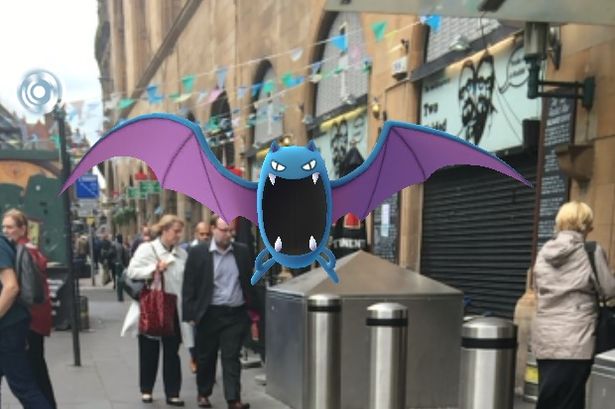
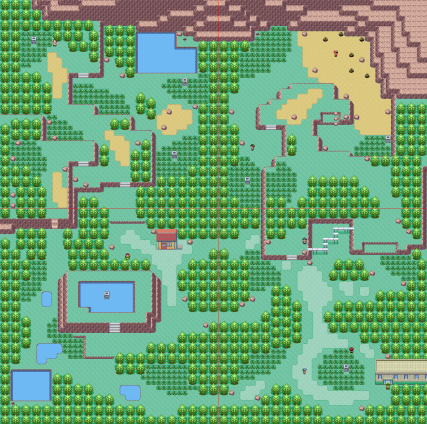
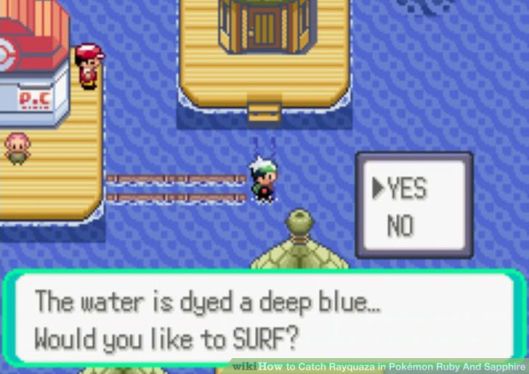

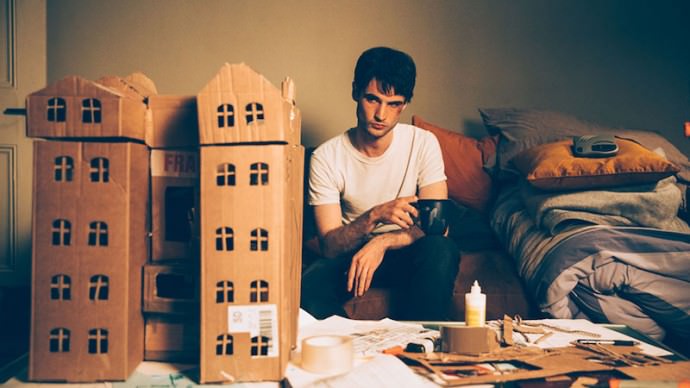


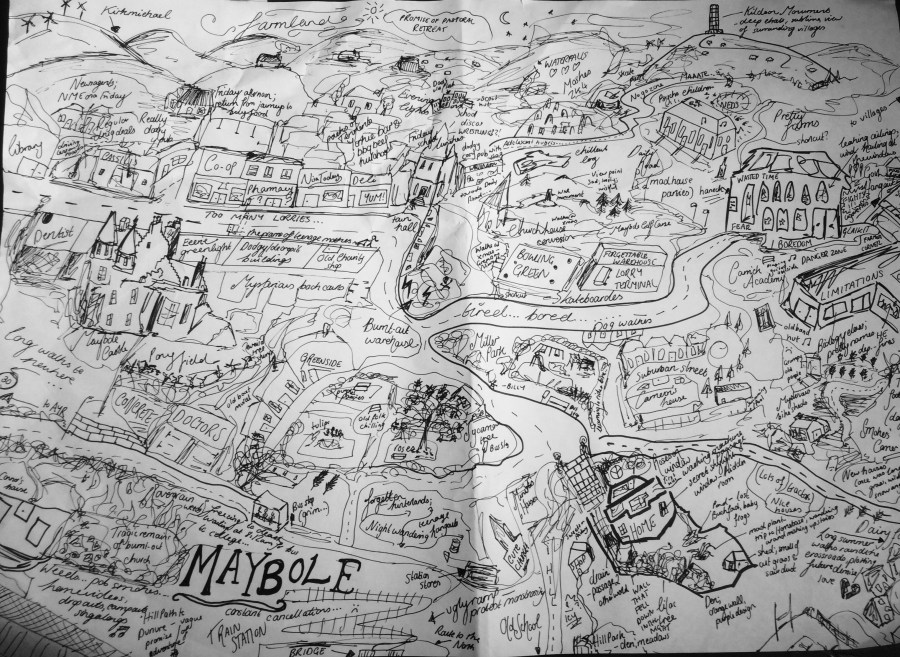

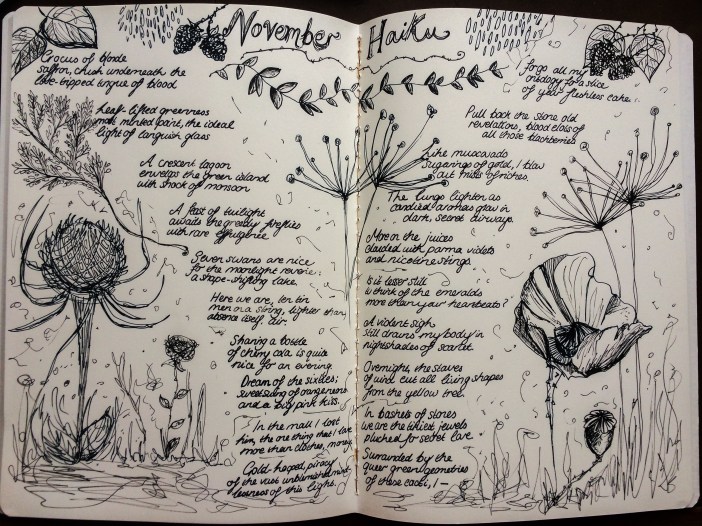
 mariaology