Sleep Felt Productive

cn: mention of bulimia; spoilers

It’s been a fair while since I posted. Struggling through Covid, another supercold (emerald phlegm forever), more transitions, finishing my thesis, April snow, more streaming of the body and ache, but here we are. It’s good to get words down. I can’t smell or taste anything at all right now (coffee is just…neutral earthiness, sweet potatoes are…mush of the orange variety, bread is…send help) — so the vicarious pleasure of language is all the more heightened. Sometimes it’s a barrier: why read about anything when your senses don’t respond? I’m drawn to the elliptical which doesn’t hold me for too long. I want to be let go or dissolve a bit. Like eking my reading through a fine mesh of muslin, a semi-permeable membrane of comprehension. Or pull it over my head, this paragraph, the whole fabric of the thing. I was gonna write about a month’s worth of reading: mostly while walking west to east along the polluted, outer commuter belt of the city; on trains between Glasgow, Inverness, London, Leeds; in frail, unwaking mornings; at the park, in that golden week, sitting in the grass with salad from Juicy and daffodils. Instead I wrote about sleep.

*

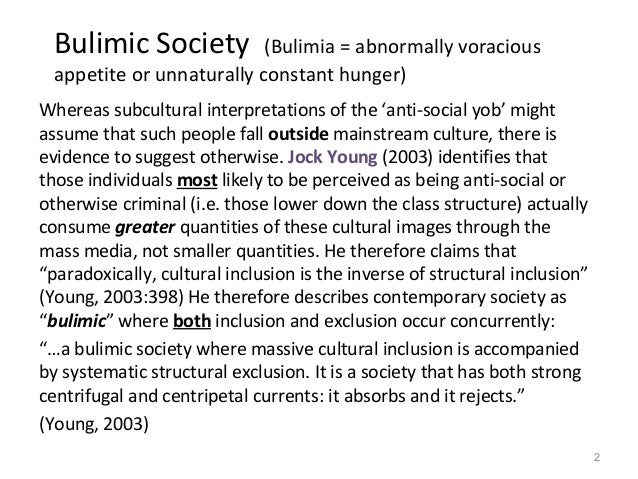
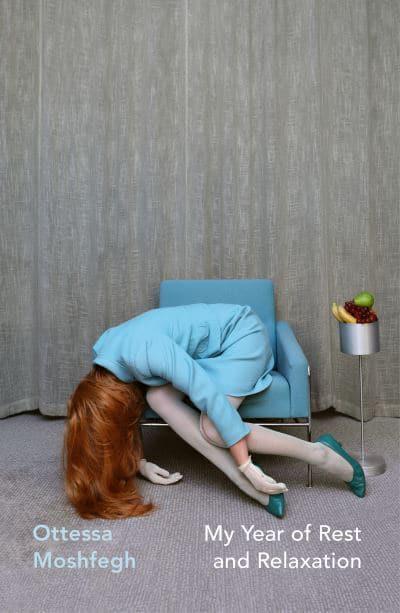
Finally I got round to reading Ottessa Moshfegh’s My Year of Rest and Relaxation (2018), a book I wanted to read especially because a trusted friend described the ending to me as ‘disappointing’. I love to glut myself on disappointment. For some reason the novel produced a similar effect on me as Tom McCarthy’s Remainder (2005), in that the pleasure was all in the premise. I would love to exist endlessly in the loop that is prolonged sleep or the reconstruction of a highly specific sensory memory. I want these novels to just go on and on like that. Of course, there has to be escalation, as per the rules of plot or ~human nature~. Is it true we can’t circle the mobius loop forever? That after a while the pleasure is desensitised, and we need to dialup on the extremity? McCarthy’s novel sort of preserves that perfect figure of eight in its set-piece ending, and you’re left with the image adrift to loop back on the primal, inciting moment of falling debris and trauma. I found the Moshfegh ending ‘cheap’ in that it seemed to cash in its bulimic character for a kind of tragedy whose fate was to fall. Bulimia, I can say, is generally an experience of permanent insolvency in the body, resulting in a loop time of binge and purge. You pay the debts of fasting by devouring; you pay the debts of eating by purging and fasting. Rinse, brush teeth, ouch, repeat. The sociologist Jock Young talks of ‘bulimic society’ as one where the poorest and most marginalised are often the most culturally enmeshed in the desperate iconography and desire economy of consumerism. The most excluded populations, according to this view, absorb images of what is apparently available under the veil of late-capitalism; but simultaneously they are rejected from accessing this culture themselves due to material inequality and class difference. As Young puts it: ‘a bulimic society where massive cultural inclusion is accompanied by systematic structural exclusion. It is a society that has both strong centrifugal and centripetal currents: it absorbs and it rejects’. But does capitalism spit us out or do we boak back? This is why I am scared to go on TikTok, like fear of lifestyle saturation to the point of nauseating breakdown.

Often powerpoint slides defining bulimia for this sociological context mention an ‘abnormally voracious appetite or unnaturally constant hunger’. In Moshfegh’s novel, the character Reva (an insurance broker) is constantly eating or constantly fasting; something our protagonist describes with pity or nonchalance. Reva is tragic because she wants too much what the protagonist effortlessly has by birth: beauty, thinness, style, money. Thinness is kind of the ur-sign for WASP privilege in the aftermath of the heroin chic fin de siècle. Reva is jealous of the protagonist’s weight loss, steals her pills. Both women are after control (or its relinquishing) in a world in freefall.

This is a period novel: set in the early 2000s, New York in the lead up to 9/11. It’s full of that inertia following the boom of the 1990s. The desire to just sleep in the unit of a single year is like a microcosm for not just an end of history, as per Fukuyama, but a refusal of history altogether as this thing that keeps growling, accumulating, disrupting sleep. I kind of buy into Reva’s bulimia as something about the consequence of being voraciously invested in a world that wants to expel you, sure. The sky’s big whitey’s the limit around Manhattan. Chewing on this feels productive. The violence of the novel is primarily in the gallery where the narrator starts out working. The gallery’s prized artist, a young man called Ping Xi, has these ‘dog pieces’: a ‘taxidermied […] variety of pure breeds’, which are rumoured to make their way into the artist’s exhibition via premature slaughter and industrial freezing. The work apparently ‘marked the end of the sacred in art’. The narrator is kind of offhand disgusted but eventually comes to identify with the young animals in the freezer, waiting to be thawed into art. Writing can be a bit like self-cannibalism; the denial of which leaves you stoked for a snack.

There are several kinds of hunger in the novel: primarily for sleep and food, but also for meaning, intimacy, loyalty. Love is a strange relation that moves uneasily between two girlfriends whose friendship is based on a premise of inequality and co-dependency. The hungers are sated by devouring emptiness. Sleep, junk food, fleeting talks. That bit in Melancholia where Justine screws her face up deliciously and says the meatloaf tastes like ashes. When I realised the same of my dinner, I didn’t even react. 

We look more peaceful when sleeping. It’s worth lauding, like Lana singing Pretty when I cryyyyyyyyyy………….

O, and the concept of the sad nap:

There was no work to do, nothing I had to counteract or compensate for because there was nothing at all, period. And yet I was aware of the nothingness. I was awake in the sleep somehow. I felt good. Almost happy.

     But coming out of that sleep was excruciating. My entire life flashed before my eyes in the worst way possible, my mind refilling itself with all my lame memories, every little thing that had brought me to where I was.

(Moshfegh, My Year of Rest and Relaxation)

The brutal awakening cashes in on the extra expenditure of napping. I’ve written in a poem somewhere, ‘I wish I could sleep forever’. It’s different from wanting to die. It’s more like, wanting to feel aware of the nothingness and calm in its premise. Nobody needs anything from you and you can’t give anything back. It’s restful or at least prolongs the promise of rest. Stay awake super late to relish the idea that you could go to bed. I don’t remember the last time I woke up feeling energised by sleep. </3 I remember listening to an interview with the editor of Dazed where he talks about sleep being his great reset. I remember thinking wow sick cool. Whatever mental health thing he’s going through, sleep will heal it. Sleep can otherwise be a kind of emulsion of depression. You’re in the weight of it spreading right through you. I carry sleep along even when I don’t ‘have’ it. 

I want you mostly in the morning
when my soul is weak from dreaming
(Weyes Blood, ‘Seven Words’)

I used to wake up extra early before school to steal back from sleep. I felt sleep would eat me alive. I used that time to browse the internet, write, read. Eat shitty muesli. Puke. 

I’d sleep in class. Teachers would bring it up at parent’s night. I just couldn’t understand why everyone else wasn’t regularly passing out over their schoolbooks.

The perma-arousal of bulimia is a counternarrative to the inorganic sleep cycles pursued by the novel’s main character. I got a similar vibe from watching Cheryl Dunn’s Moments Like This Never Last, a documentary snapshot of the pre- and post-9/11 world of New York’s underground, showcasing Dash Snow’s graffiti and outsider art. Dash is always cheating sleep to go tag, paint, take pictures. There’s a ton of cocaine and consequence. 9/11 had toppled right through all of that leaving a wound. You know by the law of entropy that it can’t be sustained, this life, writing on the walls and all that. Maybe tagging is also about a kind of hunger-purge. Colour’s aerosol vom marking time, presence, ideas. It’s permanent, but then someone can just go clean it up; the ultimate fuck you.

Whose space does this belong to? Remainder is a novel about gentrification, the white guy’s obsessive reorganising of London spaces as precursor for the gentrification of Brixton. A novel of the zombie flaneur, fuelled on flat whites, iPad swipes and vape juice, as Omer Fast’s 2016 movie adaptation brings into focus. Moshfegh’s novel is set around the same time, but her protagonist is decidedly not a flaneur, even if she carries that vibe of the waking dead. She barely leaves her apartment to get coffees from the local bodega, and when she does venture further it has all the amnesiac disaster of a night on the NY tiles with Meg Superstar Princess, furs and all. I find this zombie existence an irresistible metaphor for the numbing effect of late-capitalism: we are overstimulated and aroused to the point of just turning off. It’s banal to say that, sure. What’s great about the Meg Superstar Princess blog girl revival is the way the writing itself is charged with like, full off-kilter zaniness. The opposite of zombie. It’s like barhopping around A Thousand Plateaus — cheap wine in one hand, vintage Android in the other — to the tune of Charli XCX and it’s absolute chaos: ‘spitting e pillz out my mouth, trying to live normal, disco n apz’. You get smashed. You’re alive! I’ll have it in writing because I can’t really have it elsewhere rn, the same way I sleep but I can’t really sleep. Apps (f)or naps?

For all this tangent on (post)pandemic hedonism (let’s say post to mean, posting and not to signal some wholescale shift in era), it’s weird how history just hits you in the face at the end of Moshfegh’s novel. Falling debris, bits of glass. Words:

On September 11, I went out and bought a new TV/VCR at Best Buy so I could record the news coverage of the planes crashing into the Twin Towers. […] I watched the videotape over and over to soothe myself that day. And I continue to watch it, usually on a lonely afternoon, or any other time I doubt that life is worth living, or when I need courage, or when I am bored.

(Moshfegh, My Year of Rest and Relaxation)

Earlier in the novel, she’s frustrated when someone replaces her VCR player with a DVD player, even though she doesn’t have any DVDs. She kind of hates the concept of the DVD. She likes the process of rewind. Video tapes, with their seriality, make you confront duration; whereas DVDs allow easy random access to specific scenes. The over and overness of Moshfegh’s careful, clean, lethargic prose is at once soothing and disturbing. When the pandemic first hit, I couldn’t stream anything because the thought of having all that content at my fingertips seemed appalling. Like accessing a trillion orderly dreams of someone else at the very moment I couldn’t even touch another person. Maybe video tapes would’ve been different. The residue of wave matter at the edge. The analogue sense of fossilised images, decaying in visible time.

In a poem called ‘Along the Strand’, Eileen Myles is like,

The times of the day, the ones
with names, they are the 
stripes of sex unlike romance
who dreamlike is a continuous 
walker

I love the rhythmanalysis of daily life here. VHS stripes in descending order of luminance: white, yellow, cyan, green, magenta, red, blue and black. How the speaker clings to named moments of the day as like khora: receptacles unseen for adhesive feelings. ‘Vigorous twilight’, ‘noon’ you slip into, ‘Morning’ as ‘something / I could stay with’. The times of day are lovers. If romance is continuous walking, there’s not a lot of romance in My Year of Rest and Relaxation. So after reading the novel I’m sorta stuck on wanting the romance of sleep again. Exhalations as stripes of sex. Like when you have a new partner and after a few weeks of breathless sleeplessness suddenly the first thing you realise is how well you’re sleeping, like being beside them all night just fixed your life. And so to be in love you know noon tastes different, and twilight has a lilac halo. And you’re sharing this shiny sticky static in the air like asterisks, so much more to say.

*

Sleep. After a long walk, I remember circling South Norwood Lake and humming Elliott Smith’s ‘Twilight’, because of the time. You asked me to sing it. I had a low voice, a high voice. I was just waking up; the air was all lavender, leaves in fall. 

I don’t want to see the day when it’s dying.

Media, Memory and Identity

‘Technological advances’, Andrew Hoskins claims, ‘have provoked a re-evaluation of the relationship between media and consciousness’. This statement seems significant, and indeed it captures the whole uneasy feeling many of us have when we reflect on the impact technology has not only on our lives, but possibly also on our minds. My everyday routine, my memory and my relationships now seem to be inextricably related to and even structured by the digital technologies I use – and I’m not even a fully-fledged techno-addict.

In this article, I want to talk about the relationship between media, memory and identity. It’s something I’ve been looking at for my sociology revision and finding increasingly engaging as I make connections between the notes I’m reading and the reality of the shifts that seem to be occurring around me in our tech-suffused society.

Firstly, memory. How do we conceive of memory? Often the metaphor is a film-reel, storing a long roll of images that go all the way back to childhood, as if our whole past is wound up in a spool that can be unravelled at will in order to access a particular memory. However, this model has for a while now been discredited by psychologists. Memory is in no way a permanent storage: it is not fixed and unchanging. Instead, our memories are dynamic, imaginative, shifting: always constructed in the present, taking on a new shape according to the context of the here-and-now. My memory of what I did last weekend is contingent on the related thoughts I am having today. We find memories are triggered by association, but to what extent do they become distorted in the process – and what role do the media play in this?

An interesting and well-known phenomenon which accounts for the relationship between media and memory is ‘flashbulb memory’, a term coined by psychologists Brown and Kulik in 1977. Flashbulb memory refers to those highly vivid recollections which have a distinctly visual, often photographic quality. They can be personal or shared. For example, a personal flashbulb memory for me would be perhaps moments when I was told a loved one was dying – those strange unaccountable memories of sitting at the kitchen table, distinctly remembering the maths homework I was doing, are such flashbulb moments, retained for their strong emotive value. My memories of exams also take on a flashbulb quality, probably because exams are significant to my life as a (conscientious) student. Yet these memories aren’t always first-person: often I see myself objectively, writing away sweaty-palmed at a wobbly desk, which is an indication of the malleable nature of memory, as obviously I didn’t experience the event in camera-eye-view.

By comparison to individual memories, a shared flashbulb memory is one held and accorded significance to by a whole community. There are lots of examples of these: the assassinations of President Kennedy and Martin Luther King, the fall of the Berlin wall, and perhaps most obviously in recent times the terrorist attacks of 9/11.

Unlike personal memories, what all of these ‘shared memories’ have in common is their highly mediatised quality. The latest episode of Mad Men depicted public and private reactions to the assassination of Martin Luther King in 1968, and the show also examines the reactionary context to the J.F.K shooting in a previous series. What is notable about both representations is their emphasis in the role of TV in broadcasting the present as an event which accords meaningful significance to the whole community, bringing together a nation or collective. There are many shots of characters staring in fear and sadness at their tiny 1960s television screens, of characters weeping and switching the telly off, unable to bear the perpetual presence of the news. As watchers of the fictional series, we become spectators of spectators, a mise-en-abyme effect which conveys the emptiness of representation, the impossibility of the visual at reaching the event itself. Our present and the 1960s past coalesce in a fusing of fictional and historical time and representation. Again, this occurs all on television – it is all contained in the visual. The show thus highlights how vividly images construct our past in the present.

Indeed, many people if asked in an empirical study will say that they have a distinctly visual recollection of such events. One study found that those interviewed retained the original memory of the J.F.K. shooting by referring back to the video of him actually being shot, yet it turned out that this wasn’t broadcast until five years after the event. This indicates that our memories are reconstructed by the media. In my sociology tutorial, someone said that their flashbulb memory of 9/11 was being at after-school club and watching it on TV. Later, he reflected, he realised that there weren’t any televisions at the club, and so his visual recollection of the towers coming down must have come from subsequent viewings. The impact of television news, especially 24-hour news reels, Hoskins (2004) argues, is a ‘collapse of memory’, where the past becomes a perpetual present. Television is ‘always on’, and takes on an ‘ambient quality’. We have the news on in the background while we do the ironing, while we study. It’s on at the gym. Perhaps it’s on where you work, and even at the pub. This creates a sense of the all-pervasiveness of the present-as-past, especially as recent events are immediately constructed through the past by television news.

This works through what Jenny Kitzinger calls ‘media templates’. These are frameworks adopted by journalists to represent a current event, using tropes, headlines, images and other signs drawn from past events. The consequence of this is to make a semantic connection between the two events and draw them under the umbrella of an overall message. This can occur even when there are stark dissimilarities between the events in question. For example, Hoskins and O’Loughlin in their book War and Media draw attention to the media representation of the London 7/7 bombings in 2005, which used the ‘Blitz spirit’ template in an attempt to show collective unity against the ‘enemy’ terrorists. These included The Sun headlines: ‘Worst since Blitz’ and an interview with an actual Blitz survivor still living in London who said: ‘the Germans couldn’t destroy us. Neither will these terrorists’. The presentation of a familiar ‘us and them’ mentality, and the idea of banding together and getting on with daily life in spite of trauma was created by linking together a past and present event. Yet the everyday reality of London in the aftermath of the bombings was a far cry from the determined persistence of the city during the Blitz: at the same time as linking the two events, the media also detail how shops were closed and the streets were empty following the attack.

It seems, then, that the media play a key role in taking control of the public consciousness in times of crisis. Not only do they provide the instantaneous visual material which gives us a sense of the iconic elements of an event, relegating them to an on-going past, but the media also frames these events in familiar narratives by drawing upon previous events and stories. In doing so, the media provides a kind of (albeit artificial, as many of these events may be different in key ways) historical continuity. A continuity which seems to blur the past and present in a diffused mediation of the present through the past. This is a possibility accelerated by the advances in technology which allow the media to provide more immediate frameworks in their real-time broadcasting of events. What we think are our personal recollections may in fact just be a build-up of visual and aural data transmitted to the media.

So much for memory and television. What about the internet – that most elusive and colossal of interactive archives? It is the internet which is transforming our psychological relationship to technology. The internet provides a forum for contested representations of key events: people can challenge the dominant view of current news provided through TV by posting comments on online newspaper articles, and so-called ‘citizen journalism’ in independent blogs, news sites and a variety of other canny uses of social media.

Yet the internet’s involvement with current events is also coupled with its collapsing of present and past. Web-pages are not static: they can easily be edited, added to, or taken down when their owner runs out of bandwidth. Concerns grow everyday about the power of hackers to tap into the ‘official’ social media accounts of organisations like the BBC and broadcast strange messages. Messages which can then be deleted, but will live on in other people’s computer archives and internet history, the screen shots they snapped and saved for future amusement or reflection.

While this bears profound consequences for how we conceive of wider social knowledge, it also impacts on our self. The internet as readily-accessible archive has changed our memory. In a pre-internet age, our sense of self also depended somewhat on our ability to forget. How could we move on from those awkward teenage years or that failed relationship, if we couldn’t put the Goth makeup, yellow skinny jeans, photographs and letters away in a box to be forgotten? With the internet, our past and present are diffused, as our selves are scattered in so many fragments of fleeting words we leave online. Geoffrey Bowker calls this presence of self our ‘paraconscious’: ‘the massive sets of traces of my past that I have randomly accessible to me’. Random access, a term I recall from Higher Computing (oh the joys), is the ability to access something instantly, without having to rewind like a tape through everything to reach it. With a quick Google search, I may invoke and revisit the undead graveyards of my past, all those myriad blog comments, Piczo accounts, my Myspace account; hell, even my Neopets account. And what will I find? A lot of things I probably won’t even recall saying. Language and text – the embarrassingly overused ‘=]’ smiley, the all-pervasive ‘lol’ – that no longer characterise how I write. This ‘cognitive dissonance’ threatens to undermine the stability of our self-concept. It’s like reading an old diary entry and realising your thoughts have changed radically since then, or recognising the strange handwriting with an uncanny feeling that it is not your own. Yet while a diary is an object that can be stowed away, relegated to the past, with the internet, your old self remains, hauntingly, as a perpetual presence. Just as your ex-partner remains, dormant, as a Facebook presence, waiting for you to go back to and resurrect with immediacy the past.

Databases sort our identities out for us. They organise our lives according to tags and categories of names and places. They suggest networks or groups we should join which accord with our apparent interests. I upload a photo and tag its location with ‘Glasgow’ and I start getting invitations to ‘local’ networks or online websites for restaurants, clubs, shops. Databases direct us to new things we should buy with ‘targeted ads’. Our whole selves are assembled online in a way never before possible. And so we ourselves begin obsessively to record every element of our lives: photographing gigs, snapping our meals and uploading them with the delight of vintage filter to Instagram, confessing our rants and sins on Facebook statuses, documenting a running commentary of TV shows on Twitter.

What drives this compulsive archiving? For one, it is the sheer ease at which everything can be uploaded with today’s portable technology. Yet it also goes back to a psychological phenomenon, a paradoxical negotiation between the Freudian concepts of the death drive and the pleasure principle. In Archive Fever, Derrida claims that in archiving, one is driven to conserving the present from eradication (the pleasure principle), and the other is a drive to destruction and forgetfulness (the death drive). We simultaneously put things online because we want to preserve a thought, feeling or event, but also because we want to consign it to the past, as if it will eradicate our need to monumentalise something. Rather than constructing a narrative, the stuff uploaded on the net can also be scattered: images appreciated as beautiful or meaningful in themselves rather than linked to a particular event, images that seem to destroy their initial meaning even as they create a new possibility for interpretation. I see this in Tumblr, where images are endlessly reblogged and given new captions and interpretations by different users as they are presented within the paratextual surroundings of various user ‘themes’. An image of a young woman in a dress can take on different meanings when it is placed in a personal journal, fashion or pro-ana blog.

And so where does this strange archival technology leave us – in the hinterlands of the internet, what exactly is the past, and what the present? I would argue, as Hoskins does, that memory has in the wake of new media ‘collapsed’, in the sense that everything from the past can instantly be re-deployed in the present, transforming the past at the same time as shaping the present through the past. This applies not just to key historical events, but to the everyday cultural images and personal confessions, the vortex of text and pictures circulated around the web which can be copied and pasted, re-blogged, re-visited in the present. The internet has an immediate sense of presence, in its very nature as a fluid, hypertextual network, where old pages – the dregs of individual, organisational or cultural history – are available through random access hyperlinks and web searches.

Furthermore, since we are now ‘always on’, carrying the web in our pocket with smartphones, this state has accelerated to the point that we are continually constructing our past in a perpetual transmission of expression through social media. We have instant access to any information we need, so that our memory is always being transformed as we leap back and forth between the archive and the present, creating an on-going knowledge and construction of history as present. As Geoffrey Bowker so astutely puts it: ‘it is so easy to leave and to assemble traces that we are developing a kind of universal prosthetic memory’. And I wonder, is this a good thing, allowing us to foster a more fluid sense of time, space and self, or are we merely becoming data-fixated cyborgs?

Works Cited/Further Reading:

Bowker, G. (2007) ‘The Past and the Internet’ in Structures of Participation in Digital Culture, ed. by Joe Karaganis, New York: Social Science Research Council, pp. 20-38.

Derrida, J. (1998) Archive Fever: A Freudian Impression, Chicago: University of Chicago Press.

Andrew Hoskins has an extensive amount of writing on the subject of media and memory, but some of the articles/books I’ve referred to include: ‘‘The Digital Distribution of Memory: Memory on-the-fly’, ‘Television and the Collapse of Memory’ and his book with Ben O’Loughlin, War and Media (2010).

Kitzinger, J. (2000) ‘Media templates: patterns of association and the (re)construction of meaning over time’ in Media Culture Society, Vol. 22 (1), pp. 61-84

Law, B. M. (2011) ‘Seared in our memories’, Available at: http://www.apa.org/monitor/2011/09/memories.aspx