You used to worry about the palms: there was something wrong,
you said,
if the palms weren’t sighing.
You relished the soft peel of the wind through those palms,
the ones by the hotel garden.
We’ve been here every year
since Dad died.
The white beach sand is a mouthful of moonlight.
We sit up late drinking crushed fruit
and you say strange things, as you always do—
have you ever eaten a mango in the bath?
You would live your life like that,
all the time you said, eating mangoes in the bath.
All that pulp and mess, all that flesh.
Dad died in the spring, when blossoms
of soft pink cherry gathered on my lawn.
The baby lolled around in it like April snow
and we watched her giggle, ribbon
flying out from her hair. He would’ve loved that,
seeing her there.
The cancer took the green out his eyes,
ate the skin of his face.
Even when they pumped him full of fat and creamy vitamins,
the bones kept poking, pointing.
His face was a mask of something;
I couldn’t let the baby near it.
I imagine you prefer it here
to back home. You like the ooze
of the days, the way the maids make the beds;
the emerald green of the parakeet,
early mornings where the tide sparkles. Still,
you saw signs in everything.
Dad used to come visit during monsoon season.
He wrote reams of prose,
lapping up slushfuls of rain. He wrote
in the small hours, when he wasn’t working.
We lost the notes.
We’ve only the stuff on his business trips,
lost code on his laptop.
We haven’t a sense
of what to him was sharp or clear, what it was
that brought him over.
Just the whispering palms, the sleepy tense—
one day I’ll take the baby here.
Every time I close my eyes, It’s like a dark paradise
There’s something apocalyptic about a Blood Moon. The sense of waste and transient beauty, light and life shedding away. The moon takes its thirty-year delayed menstruation; red cloud wisps over its shining face like clots of blood being pulled across a pool of silver. Somewhere out there, lovers are lying in lush paradise, staring up at this white eye opened by god; far away, drowned in stars. A voice swirls like smoke over soft, shimmery guitar. It’s the eclipse, sometime about now, then, yesterday, and I am or I was listening to Lana Del Rey.
Honeymoon, then going back to Dark Paradise. Insomnia in the space between night and day; between one universe and another, always afloat in claustrophobia. Returning to this song again and again, its repetition, invoking the familiar sadness and masochism that Lana dreamt up only a few years ago, you’re surrounded by an eternal world of neon palms, boulevards dripped in milky dusk, the sickly excess of tequila sunrise against soaring choruses and stripped-back lyrics. In a way, you fall or sink into Lana Del Rey’s music. Like Kubla Kahn, the eponymous Chinese emperor of Coleridge’s opium-provoked fragment poem, you are sucked dreamily into the sultry visual world of dark objects, consumer heaven, the young and beautiful place of honeydew where you are invited to drink ‘the milk of paradise’. Lana’s swooning melodies charm over time, drawing you into an atmosphere of narcotised darkness which evokes a silent movie – even as the interplay between sound and image is as crucial a set of semiotics as anything Roland Barthes might analyse. You could fall back into the darkness, be seduced by the languid timeless sigh which slides over memories, nostalgia for lost evenings, red dresses and cigarettes, lost girls pressed up against bad boys in clubs, feeling like their whole existence is just a vision, propelling their electric bodies on and on as if in tune to Freud’s death drive.
Much of Lana’s music is about desire: the kind of desire that doesn’t leave you cut-up on the kitchen floor in crude emotion (a la Natalie Imbruglia, ‘Torn’), but passes through that place in the heart of culture that falls into absence and darkness. The secret hollow of modernity. It makes sense that she sung the sultry standout track for Baz Luhrmann’s 2013 The Great Gatsby adaptation, ‘Young and Beautiful’. Del Rey’s America is so Art Deco, from the typeface of her new album, to her obsession with cars and jazz and girls called Carmen, the fragile magic of Hollywood glamour which often bleeds at the seams. Lana returns to that dull wound and picks at it, indifferently, till it’s fresh again – a more ethereal thing that transcends the rotting body of America’s culture. Sex, violence, money, power, charisma; they all blur together in Lana’s fixated, addictive lyrics. In her performance, she already knows the irrelevance of authenticity; it makes her internet-immune, a kind of perfect. Nobody can critique her, because she’s always one step ahead. Despite the success of Lady Gaga, who wears her gender performativity on her sleeve, American culture remains obsessed with the cult of authenticity. Lana has been attacked for ‘making up’ the stories portrayed in her songs, the easy-love lifestyle she presents; for having plastic surgery and performing under an alias that nods more to Hollywood mythology than the girl-next-door vibes of her real name, Elizabeth Grant. Remember James Frey, the ‘man who rewrote his life’ and was subsequently attacked by Oprah when she discovered he’d fabricated and exaggerated a hefty chunk of his memoir of drug addiction? Lana, like James Frey, like Hemingway, is interested in the interplay between real life and fantasy, performance and authenticity; importantly, however, she shows how real life is itself played out and realised through the lens of mediated fantasy. Her songs betray a Baudrillardian ecstasy of communication, simulacra and simulations, updated for an age where the past is showered with the longed-for shroud of Hollywood glamour, where the present is fragmented, split across the Internet (where Lana first made her success, sensation).
***
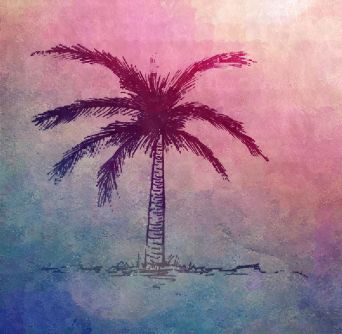
Isn’t it lovely when somebody makes albums that really feel like art? From Born to Die’s glamorous sadness draped in an American flag, to the monochrome somnolence of Ultraviolence (produced, appropriately, by Dan Auerbach of The Black Keys), each of Lana Del Rey’s records captures a persona, but one which shifts and gathers nuance in the filters of crooning choruses and soft guitars, the distinctive colour charts of an album cover. Born to Die: pastel blues and palm trees, red lips and smoky eyes; the glossy, time-travelling Americana of her short film Tropico (2013), whose flashy symbolism mixes purity with moral pollution, the Garden of Eden with unicorns and gangsters. Ultraviolence: black and white, the spare sex of sorrow. Her latest offering, Honeymoon, sinks deliciously a familiar aura of daydreams, heartache and a sense of mesmerising stasis captured in Lana’s recital of ‘Burnt Norton’ from T.S Eliot’s Four Quartets, which evokes an abstracted and absent conception of time, slipping away into endlessly echoing, impossible memory…
Footfalls echo in the memory. Sound effects; quiet sirens, the soft familiar crackle of static, reminding us of the temporal duration, the space of presence that opens up with each play of the song, then closes again in silence – but always there, always there waiting in possibility, for the next click, the next play. Down the passage which we did not take.
In the album sleeve, the white printed lyrics to ‘High By the Beach’ flicker and disappear in the yellow-gold light of a glossy photo depicting a tree-lined avenue. Lana Del Rey songs always paint little vignettes of stories, but her characters frequently disappear from view, their situations dreamlike, slanted towards death but never reaching conclusion. Like any avant-garde novel worth its salt, Lana Del Rey’s music often bears a slightly creepy, unsettling quality, a sense of never being quite finished, a sense of repetition, frustration and surrealist reality. While she can master a good pop tune, Lana never gives us that self-satisfied pomp and narrative closure of a Taylor Swift song; there is an almost uncanny quality to her musical arrangements: the drifting melodies, tinges of trip hop, strings, rippling snares and minimal beats. Literary references abound: from that iconic reading of Allen Ginsberg’s Howl in Tropico, to the album title Ultraviolence (alluding to the random acts of ‘ultra-violence which the teenage protagonist of Anthony Burgess’ dystopian novel A Clockwork Orange is addicted to) and all that sinister seduction of ‘Carmen’: ‘It’s alarming, honestly, how charming she can be’, in a nod to Vladimir Nabokov’s Lolita. In ‘Ride’ she references the sexual plight of Tennessee Williams’ Blanche DuBois, drifting through life by ‘relying on the kindness of strangers’; in a way, Blanche is a perfect Lana Del Rey heroine. Not only is she a ‘fallen woman’ but she is also an alcoholic, guzzling bourbon and symbolically-charged cherry soda (My pussy tastes like Pepsi-Cola, / My eyes are wide like cherry pies – ‘Cola’), and longs to die in a most extravagant way, conflicted by her desire for purity and her sexual appetite: first, she will eat an ‘unwashed grape’ (the poisoned fruit of Eden, the rotten core of carnal pleasure) then be ‘buried at sea sewn up in a clean white sack and dropped overboard—at noon—in the blaze of summer—and into an ocean as blue as my first lover’s eyes!’.
Southern belle; Vivien Leigh as Blanche DuBois in Eliza Kazan’s film adapation of Streetcar
***
My baby lives in shades of blue
Blue eyes and jazz and attitude
Well New Orleans – the setting of A Streetcar Named Desire – is a city rich enough in jazz and attitude, especially in the 1940s. In a way, all of Del Rey’s characters are caught up on the deathward drive of streetcars named desire, only her streetcars have morphed into getaway vehicles and limousines, or else the rides of suburban rockstars: I spend my whole life driving in cars with boys / Riding around town, drinking in the white noise. The white noise? The ever-present static reality of radio and television, life flickering on amidst its background hum and rush. It’s an edgier version of Lorde’s ‘400 Luxe’, a delicate, pulsing tribute to the romance of small-town time wasting on roads where the houses don’t change:
We’re never done with killing time Can I kill it with you? Till our veins run red and…blue We come around here all the time Got a lot to not do, let me kill it with you
You pick me up and take me home again Head out the window again We’re hollow like the bottles that we drain You drape your wrist over the steering wheel Moses can drive from here We might be hollow, but we’re brave
On the subject of heroines, Lana is constantly critiqued for her portrayal of women; namely, her ensemble of doomed and lovelorn characters who lavish over their hopeless agony and fail to resist the anonymous bad boys which recur in her songs. Yet there is an irony to this critique, because critics seem to forget that it is a woman who is pulling the strings over all these puppets. Lana slips in and out of her roles as easily as she slips between haunting, orchestral notes. She is always in control, her voice brilliant as smoky quartz crystal, even as she sings about being out of control. There is a litheness to her performance that indicates the strength of her fiction: Lana is like a novelist, fabricating a shadow world which shows up the underbelly of American culture, from its Golden Age of 1950s glamour to the fractured present, where alcohol and club culture meet the melting pixel pot of the Internet. I wish I was dead already, she can say in a Guardian interview, incanting it like a spell, letting Twitter fall on its knees with spits and stirs of protest and loathing. Prostitutes, gangsters, trailer trash alcoholics. These people, these liminal figures on the margins of society – stereotypes, yes, but vivid ones nonetheless – are the lifeblood of Lana’s music and as she renders them, they have emotional depth, a soulless soul, unlike hiphop’s deadpan delivery of gangster vocabulary. As her voice swells to a pitch we realise that Lana has already dismissed something as ‘crude’ as identity politics, embracing instead the freedom land of the seventies, free because America, land of opportunity (for white women, at least) had then opened up a new lifestyle, a new kind of being. There is power in being a sad girl, nasal and depressed but somehow free, as in the paean to glamorous dishevelment, ‘Cruel World’ (from Ultraviolence): I like my candy and your heroin, / And I’m so happy, so happy now you’re gone. / Put my little red party dress on, / Everybody knows that I’m a mess, I’m crazy … ‘Cause you’re young, you’re wild, you’re free, / You’re dancing circles around me. There’s that cliché of Americana: being young and wild and free – think of Bruce Springsteen’s celebration of wild youth – and again, Lana places her voice in the hullabaloo of this tornado of deathly ecstasy, making herself the static one in the centre, languishing over her candy and heroine while everyone else dances circles around her.
***
‘I felt very still and empty, the way the eye of a tornado must feel, moving dully along in the middle of the surrounding hullabaloo’ — Sylvia Plath, The Bell Jar.
Hiphop melancholia, narco-swing, vintage pop; whatever you wanna call it, Lana always kinda slips the net. Its her characters, her musical and metaphorical landscapes that draw you in. In a way, her songs are just as literary as any old poem.
Crying tears of gold, like lemonade. Here we are on ‘Ultraviolence’, drowning in violins and vats of sadness, relishing the salt taste and thinking of the ocean. The ocean haunts Honeymoon too. It’s there in the California blues, the ‘blue nail polish’ that’s her ‘favourite colour’ and ‘favourite tone of song’ in ‘The Blackest Day’, the sultry ice cream gleam of ‘Salvatore’ which glides in and out of languid Italian and consumable nouns (cacciatore, limousines), perhaps like a narcotised, Sinatra-style swing version of the Red Hot Chili Peppers’ ‘By the Way’ (the bit where they seem to throw a demented grocery list at you). Shady blue, summer rain, sparkling lights; it’s a beautiful snowflake of a song, catching its glitter in the strings and the la-da-da-da-daaaas which fall around you, soft and sad yet somehow delectable. The ocean is the darling of the suicidal American woman: it is the world’s womb, the waves that embrace desire, the space of endless multitude, escape from restrictive culture. In ‘Dark Paradise’, the singer is lying in the ocean singing your song – is this a meta statement, one persona talking back to the distant maker? All of Lana’s heroines are looking for that dark paradise; that refrain, But I wish I was dead.Think of Edna in Kate Chopin’s 1899 (later banned) novel of sexual awakening, The Awakening: Chopin’s impressionistic purple prose isn’t so far from the poetic melodrama of Lana’s lovelorn world: ‘The voice of the sea is seductive, never ceasing, whispering, clamouring, murmuring, inviting the soul to wander in abysses of solitude’. Chopin’s onomatopoeic prose chimes with Lana’s frequent use of sound effects, from the Fourth of July fireworks which open ‘National Anthem’ to the glitchy blips of ‘Video Games’ and twinkling bird sounds of the Hollywood hills in ‘Is This Happiness’…Expressions of desire flicker with the imagined bliss of paradise.
In the conclusion to The Awakening, Edna steps out into the ocean, never to return, remembering as the horizon catches her eyes the sounds and scents of her childhood: the simple ‘hum of bees’ and ‘musky odour of pinks’ which fill the air narcotically. Walking into the ocean as Lana’s heroine writhes on her bed and balcony, longing to just get high by the beach, longing for that preserved moment of perfect stasis, the endless waves, the endless boulevard leading to a distant horizon of fathomless dark glass, tall buildings rising up amidst pink flamingoes like surrealist paintings. Haze of smoke, daytime closing.
***
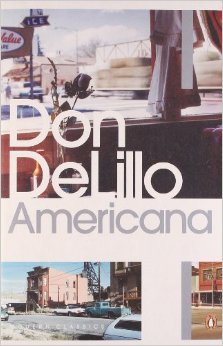
There is a passage from Don DeLillo’s debut novel, Americana (1971) which David Foster Wallace happened to underline in his copy of the book:
“David, I truly love you and hate you. I love you because you’re a beautiful thing and a good boy. You’re more innocent than a field mouse and I don’t believe you have any evil in you, if that’s possible. And I hate you because you’re sick. Illness at a certain point inspires pity. Beyond that point it becomes hateful. It becomes very much like a personal insult. One wishes to destroy the sickness by destroying the patient. You’re such a lovable cliché, my love, and I do hope you’re found the centre of your sin”.
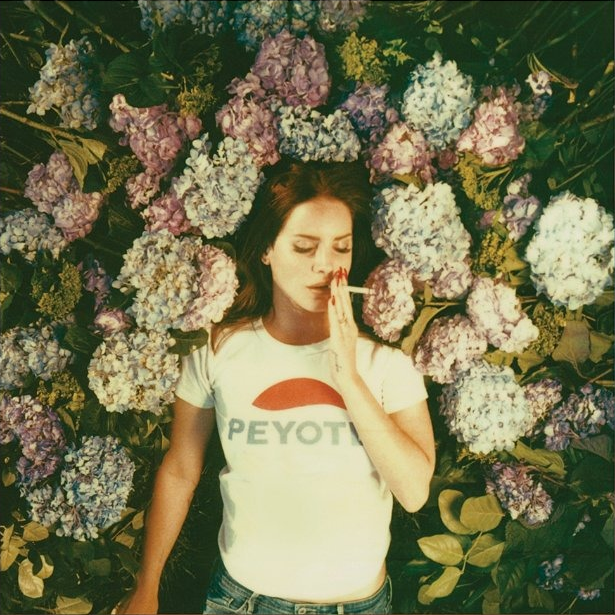
A ‘lovable cliché’: the sort of thing Lana embraces, makes raw and coats in her voice of smoke and silk. The antithesis of beauty and disgust, love and hate; how our attempts to disinfect the one from the other are doomed to fail. Culture is a contradiction. In Americana, the protagonist David Bell is a TV executive who finds himself deeply apathetic, despite being attractive, sharp and popular with the ladies. He frequently articulates his experiences, his life at large, as if they were a film. He becomes obsessed with finding meaning, embarking on a Kerouac-esque quest at getting to the nitty-gritty of America’s heart of darkness, but this documentary gets messed up in his attempts to re-stage and re-enact events from his past. I guess it’s true that the novel is all about unattainable desire, whether this is desire for meaning, personal fulfilment or something more carnal – the search for the centre of your sin which could easily be a Lana lyric. What’s more, this pathological fixation of DeLillo’s David Bell to some extent parallels Del Rey’s obsession with the silver screen version of America; the photography of Honeymoon’scover even resembles a sexier version of the Penguin cover for Americana:
While Del Rey’s female characters languish in their statically trapped daydreams of love and violence and Hollywood glamour, DeLillo’s version of Americana is largely embodied in the road myth and its cult of masculinity:
There is a motel in the heart of every man. Where the highway begins to dominate the landscape, beyond limits of a large and reduplicating city, near a major point of arrival and departure: this is most likely where it stands….Men hold this motel firmly in their hearts; here flows the dream of the confluence of travel and sex.
This kind of commentary permeates the book, often arriving at a kind of religious, anthropological rapture which lacks the self-consciousness of DeLillo’s later novel White Noise, but provides a rambling cultural landmark that paves the way towards the sort of position Del Rey occupies in the mainstream. The Beats, protesting consumerism even as they gorged on apple pie; Bret Easton Ellis, with his deeply despairing coterie of psychopathic, serial-killer yuppies and sexually-violent, chronically-bored L.A teenagers; Lana Del Rey, voicing the glorious wastage of our postmodern wasteland, our beaten bodies and minds, voicing her vision through scenes of sun-drenched nostalgia which evoke a beautiful and terrible America, made glossy and pure through stars and stripes, a delicate riff; drifts of strings, jazz, Instagram filters. That golden period where love suffuses with the candy-flavoured stuff of daydreams, movies: Honeymoon. The whole album renders a narrow reality of the past and present: it’s pastel-shaded afternoons lost to the call of the ocean, sad ballads of frustrated love (I lost myself when I lost you), electro blues; it’s The Blackest Day, with Billie Holliday, palm trees and prescription pills, throwing up the lilac and cinnamon-scented ash of society’s ills – emotional debris, disconnection, slowing tempos, the hullabaloo of static thrills.
Screen cap from Tropico (2013). Source: popoptiq.com
The wedding was held on the first of October, that first fresh fling of a spring day with cherry blossoms lining the avenue and the smell of sunlight in the air. Marianne had chosen this day because on the calendar it had glowed up like a promise, the hope of something clean and new that wasn’t tarred with the silliness of April Fools or the bloat of British summertime. It was luck, really, that brought the good weather to New Zealand on that uncertain spring morning. It was also luck that bagged them the venue. She and Ethan had spent weeks debating where to get married, pouring over glossy brochures featuring medieval castles, luxurious hotels with honeymoon suites, country houses and converted churches which allowed you to toss your bouquet extravagantly from the bell tower. Arguing about the cost of fancy desserts and appropriate champagne. It was all very expensive and a little vulgar for Marianne’s liking. She was raised to believe that the most enchanting things in life were free. She had insisted for years and years that if she ever got married she would do it smack bang in the middle of Oxford Street for all it mattered. The best part of a wedding, Marianne had thought as a child, was the cake. I will find the best cake in the world, she would boast to her mother, because everyone likes cake, and not everyone likes a wedding. You can always, as Marie Antoinette put it, let them eat cake.
Growing up, Marianne found it to be true that not everyone likes a wedding. Or, at least, a wedding doesn’t do well for everyone. At the age of twenty-six, Marianne had dragged herself through enough of her friends’ weddings to know that the occasion prompted flourishing happiness for some, and hours of breakdown for others. Only last year, she had been drinking with her old roommate Bill at a colleague’s wedding and over the slurry candlelight he confessed to her his deep desire to kill himself.
“I just can’t stop thinking about it,” he had said quietly, refilling his wine glass, wiping the sweat from his eyes.
“William, William I had no idea.” And as the confetti swirled about the crowd, queer as a summer snowdrift, Marianne felt like she’d been chained to something dark and profound. Some sense of the underworld that she needed to get rid of. Bill had left soon after, taking a cab back to the hotel, and Marianne had gorged herself on the cheeseboard to cheer herself up, because it seemed there was nothing else she could do but stuff away her dreams with sticky lumps of brie. In the midst of all the magic, there was still all this sadness that seemed to coat the world in fear. When the bride passed her, Marianne smiled brightly, but later on she called Ethan in tears.
“Don’t worry,” he’d said, “he’ll be alright. Weddings bring out the best and the worst in people—”And yes, Bill was still alive, but he and Marianne had not spoken since. In all the chaos of organising her own wedding, she had forgotten.
Eventually, she and Ethan found their perfect venue in New Zealand, of all places. It was a rare corner of the world, special in its simple charm of rolling hills and friendly faces. Yet Marianne had a great deal of trouble convincing Ethan’s family to fly out there, even for just one weekend. Ethan’s mother suffered from bouts of depression and an event like a wedding, he said, could prove difficult – if not debilitating – to her state of mind, which had been fragile since his childhood. What’s more, Ethan’s father (they were divorced) seemed to drag himself through life with the sole intention of avoiding tricky situations such as these. He was a plumber who worked hard and spent most of his spare money down the pub, with people he’d known since high school. A cosy existence, free of the kind of complications that Marianne’s parents liked to pick over for a living. Marianne’s parents were academics, the kind of academics who relished a wedding, if only for the excuse to drink nice wine. She and Ethan were very worried about the whole occasion, about their parents coming together for only the second time, about the cost and the question of religion and whether it was weird to give people Love Heart sweets as favours.
“Shouldn’t we try for something more…intellectual?” It was him that said it first, not her.
On the last day of September, they landed crisp and safe on New Zealand ground, ready for rehearsal. To their surprise, they found the priest getting baked under a cabbage tree.
“My god, look at you two!” he exclaimed in his thick Kiwi accent, scrambling to his feet to greet them with a dazed look on his face. “Why I’ve never married such a beautiful couple!” He kissed them both on the cheek with enthusiasm.
“When do the family arrive?” he asked, walking them towards the church.
“Tonight,” Ethan glanced at his fiancé, expecting the nervous expression to show on her lips. She was, however, remarkably composed.
They were being married in a church made of trees. A brand new church, constructed in imitation of a similar design which went viral on the Internet a few years ago. The venue had appeared quite randomly in Marianne’s inbox, with all the sparkle of a super-charged Groupon offer, and she was quite enchanted by its strange beauty, its sense of the ephemeral. She did not want her marriage to be stone-cold and static, confined to a church, but to evolve and shift with the seasons, like this lovely temple.
Ethan and Marianne were just the seventh couple to get married under its bowers.
Silently, they stepped inside the iron framework and stood under the greenery, marvelling at the dappled light playing along the carpet of grass.
“Amazing,” Ethan whispered.
“It’s better than I ever dreamed of.” Marianne turned to him and gave him a long, satisfied kiss. They felt like they could stay here forever, dreamy and alone in this virescent version of heaven. The priest ushered them through their vows before leaving to meet his next clients. They delayed going to the airport to meet their parents, preferring to sit on one of the pew benches, scuffing their bare feet in the soft soil and laughing as they shared their secrets.
“All I want,” Marianne said to her fiancé as they sat later in the back of a cab, “is a few days of harmony. D’you think we can manage it?”
“All I want,” Ethan replied, “is our parents to get on okay. God knows I’m dreading the next few hours.”
“Don’t,” Marianne kissed him quiet. “It will be fine. They love us.”
To their surprise, it was fine. Fine as dinner and mumbled wisps of conversation could ever be. At the end of the meal, Ethan’s father stood up to deliver a drunken speech, exposing an embarrassing array of Ethan’s ex-girlfriends and childhood habits, enough for Marianne’s parents to speculate on for months to come. Ethan’s mother complained about the food and how warm it was for this time of year, her jet lag and sore head, then retired early to her room. Marianne worried, but Ethan knew better.
After dinner, they drank coffee in the restaurant lounge and all talked quite civilly about married life. Brian, Ethan’s father, had consumed a little too much wine and was already slurring off with jokes about how marriage was always a ‘two-way street’ with ‘no exits except death’. He wouldn’t stop, no matter how much Ethan tried to hush him. He teased the young couple about their choice of venue, speculating on all sorts of disaster scenarios which could disrupt the ceremony: lightning storms, forest fires, a rain shower. Marianne’s parents remained very quiet through all of dinner; so quiet, in fact, that Marianne worried there was something on their mind that they were choosing not to share.
Under the cool spring moon, they walked Marianne back to the hotel, leaving Ethan and Brian to have a last-minute tête-à-tête, which Ethan clearly didn’t appreciate. In the hotel garden, Marianne nuzzled herself into her father’s arms like she used to do as a child, feeling small and safe. It was different from how she felt with Ethan.
“Are you going to be okay?” Her father asked her. She thought about the day she first met Ethan, walking up the campus steps to her morning lecture, the sun breaking through a rain shower and the look on his face, concentrated and expectant. He wore his hair very short then – even shorter than it now was – clipped and cool in his blazer, a third-year law student.
“I think so,” she whispered back. The crickets purred around them.
“Just remember, everything is your own decision,” he said cryptically, ruffling her hair gently as he turned to enter the building.
“Goodnight love,” her mother echoed.
She and Ethan spent the night achingly in separate rooms, sleepless and fearful and eager. Marianne took out a pad of paper from the desk drawer and under the header with the hotel logo she wrote a list of all the reasons she was getting married: Love, dreams, sex, money, future, Sunday mornings, love. She laughed at how easily the cliches buoyed up in her mind. Brian’s words had awakened some tiny, irritable worm inside of her, a worm that wriggled with uneasiness. Yet she waited for it to rest and eventually fell asleep, letting the magic of the words she had written take shape in her dreams.
In the morning the sun bathed the grass in golden light and it was just as the first day of spring should look like, so different from October back home, where the streets were bronzed with glossy rain and fallen leaves. Ethan waited among the bright green bowers until Marianne appeared half an hour later, shrouded by the vines and only gradually entering his vision as she stepped through the knitted trees.
“How long?” he mouthed at her. She gave him a funny look as she slowly glided down the aisle, trailing her lacy dress. The church could only seat fifty guests, but there were very few people there. None of Ethan’s friends could afford the New Zealand flight, and Marianne hadn’t wanted to invite so many of her own that the bride’s side would outweigh the groom’s.
“What?” she asked him as they got closer.
“Why have we waited so long for this?”
She stood opposite him over the simple altar and as the priest approached Ethan added:
“I would’ve married you at uni, I would have married you so long ago.” He couldn’t help but grin then, and it was the kind of grin that unravelled the tight poise of his face and showed the fine lines around his eyes, the sparkling hazel eyes that she knew as mirrors of her own soul. She loved him, then, for that fragile smile alone.
“Don’t kid with me,” she murmured. She then looked up to face who they would be soon; who they would be after the magic words and the kiss that sealed them. She stood tall in her crystal heels and white gown, her light hair tumbling long down her shoulders, secured by the flower garland that her little niece had assembled for her that morning from the field of daisies. It was funny, she didn’t feel quite grownup; it was like being a child again, playing dress-up, playing at something that all of a sudden she knew nothing of. The priest stood over them in his robe, casting a shadow into the space around the altar. Marianne imagined that in winter the ground beneath their feet would be scattered with old seedpods and stray leaves fallen from the trees. Were they evergreen? She could not tell; she was no scholar of nature. How different the place would look, all wiry and skeletal. It was a chance vision, the fleeting kind gifted to the mind from a wisp of wind, cold and coming northwards. A fantasy of life at another time, caught in the secret culverts of the land around them.
She smiled as he slipped the ring on her finger, looking into the clouded space of his eyes and enjoying the blind joy that enveloped her.
After the ceremony, they led the guests down the aisle and out of the sparkling world of green onto the garden plains with the ornate shrubbery and the guesthouse lodge in the distance. Marianne’s mother, in her yellow hat, approached her and dutifully kissed her daughter on each cheek.
“It’s been a pleasure,” she said warmly, simply. Her father came and clasped each of her hands in his.
“You look wonderful love,” he told her. “I’m sure you’ll be very happy.” But she felt the clamminess of his fingers in hers, and slipped away. It was as she had felt at her friend’s wedding, that sudden moment talking to William, his face cloaked in cigarette smoke. There was something strange about the way her parents were so keen to share in her joy; it didn’t seem real.
What she would remember most about that day was not the party afterwards, with the sunlight dancing in her hair and the lilting joy of the violins and the woman that sung for them from a makeshift podium. It was not the fairy lights strung across the trees at night, or the sad sighs of the children told they had to go to bed. Not the crumbling wedding cake and the sugared strawberries eaten secretly in the grove by the river, or the sweet laughter of Ethan’s parents as they sat together sharing a bottle of wine and loudly reminiscing. Not the restless, whisky kisses pressed between the sheets in the cool summer evening, with the starriness of midnight pouring through the window. What she remembered most, now, was the feeling of her father’s fingers: cold and foreboding as she pulled away from him and out of her old world altogether.
Yet in the haze of those joyful days, it seemed obscene that in a few more hours they would be returning to a bleak, British winter, leaving behind the Kiwis and their colourful summer.
And love was all, love was all. That was what they said, what everyone kept saying, not knowing what it meant. The daydream of that day, its harmony draining slowly away in the time that was passing, the prickling chaos of day after day in each other’s company. Years flaking from them; precious layers of what they had always wanted to be, sloughing off and collecting in piles on the bedroom floor. There was then the new house, the miscarriage, the man in the white coat who talked to them as if they were children. The strangeness that grew between them. When they had argued, falling back into bed with tired passion, her father’s words flashed back to Marianne: everything is your own decision. And yet.
Here she was at her desk with the wads of paper blocking her view of the window, with the mirror glass behind her and that silver strand in her hair exposed for all to see. They had waited too long; too long they had waited to let happiness wash over them like a morning shroud of marijuana dreams. Marianne sat at her desk because it was the only place she knew where she was. Her head was full of the smell of hospital chemicals and the sound of dogs barking down the lane, old women nattering at bus stops. Blood being sucked through a plastic tube, the soft groan and the closing of his eyes, the shadow self that came over him in those moments. Pale and loitering. Loosely, the memories unravelled from her grasp, so that sleeplessly she would lie awake seeing her mother-in-law’s tormented face, the frown she pulled when she heard the news, the devastation in her eyes. There were too many pieces, too many pieces to pick up, replace.
Marianne lit a cigarette and stared at the ceiling.
In June she boarded the flight to New Zealand – the one she had booked only a week ago – the one her mother had paid for because Marianne was bogged down with the debts he’d kept secret.
Up in the air, suddenly the world no longer appeared in cut glass fragments of what she had lost. The blue sky was open and wide, the land below long and solid. When she landed, this time there was no priest to greet her, no summer insects singing in the grass.
She stepped off the road and made her way into the gardens without stopping, because there was no longer an attendant at the gate asking for an entry fee, a charity donation.
The land was starved. Ten years had passed, and here was the place where his parents had sat looking healthy for once, here the river where the children played, there the place with the daisy ring and the standing stones, the spot where they took their first dance under the virgin moon. The grass was now dry and yellowed underfoot, the breath of winter bitter on her cheeks, like ice kisses left by a dead lover. The irony was not lost on her. As she paced around, traces of litter – plastic rings, bottle tops and molten cardboard – lingered on from summer picnics. There were charred places where bonfires had burned, and Marianne imagined the fatty air filled with ash instead of confetti snow.
From the sky, the rain fell cold and slow. It seemed there was no money to be made from love, not here, not anymore.
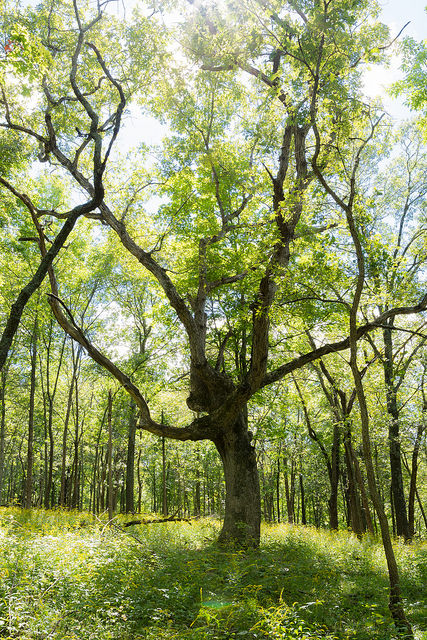
The trees which had once flourished together protectively were now gnarled and thin and lonesome-looking, like trees from a fairy story.
How long had they waited for this? The last gasp of a feeling: not everyone likes a wedding. A ghost doesn’t like a wedding; a ghost resents its solidity, she thought, its promise of new absolution. Or was it the dreamy quality? Marianne had forgotten. They had waited too long, and it had cost them.
She sat under the skeleton trees, on the same bench where ten years ago she had dug her toes into the soft earth, sighing. And with the violins sounding sweetly in her ear, she took her shoes off; but the earth was too hard at her touch, encrusted in hoar frost and the dust of other memories, other dreams floating free.
(from a Creative Writing Society freewrite with the prompts ‘fireworks’ and ‘oranges’)
She remembers the days when she and her brother popped over to the neighbour’s house for Bonfire Night. She’d climb over the garden wall, wearing her wellies and her dad’s itchy jumper that came down to her knees and a hat her mother had pulled over her fringe. They’d play with the children next-door because they were good friends and the same age, more or less. Even though it was pitch dark in the November night, they’d dance around the garden, shrieking and playing tig or hide and seek while they waited for the fireworks to be set up. They were cheap fireworks, bought from the local store, which ordered them from some chemistry enthusiast in the city. This was, of course, before The Internet.
She can’t remember his name, the man next-door; the dad who told the kids off for laughing too loud and who’d sneak off for fags in the greenhouse while his wife did the washing up. She remembers the blur of his bearded face. His yell as he stepped back from the firework he’d just set up. She remembers the mum better; the mum used to bring out steaming mugs of soup and carrier bags loaded with oranges. She remembers standing in the cold bright air, peeling with the stubs of her fingernails the rind that came away like thick flakes of skin. Biting into the soft flesh as a flame-coloured Comet rippled above her. The sour sting of the juice squirting in her eye; the sweetness seeping over her tongue. Stickiness on her fingers. She’d toss most of it away, into the rhubarb patch. She wanted to save her appetite for the chocolate log and lollypops that awaited them inside.
There’d be the rockets, soaring and screeching in her ears like banshees, sizzling in her belly. The wheeeEEeeeee like electricity. She hated them, but they were a thrill. She’d look up to catch them but they’d be gone already. Then there were the pretty ones. She read their names off the cardboard box, discarded on the porch: Crosettes, Dragons’ Eggs, Ice Fountains and Blossoms. She watched them go off with the other children, trying to identify each one as if they were flowers in a biology textbook. Only, they were always too quick; their beauty dazzled her vision and then evaporated. There were the ones that overflowed like ocean spray, showering and spitting flickers of white and silver, like a jeweller soldering a giant diamond. Rainbows would spread out across the smooth sky, raining colours across the tall trees at the back of the garden. Her favourite was the Catherine Wheel. It took ages to set up, but it was magical. It spiralled like a wild thing from the pole of the washing-line, sparks flying around it with the craziness of broken machinery, or hypnosis. She adored the Catherine Wheels. They made her feel strange and unreal, as if she were looking into an abyss.
After all the fireworks were gone, the children were doled out sparklers, which they were only allowed to use with gloves. The sparklers let them write their names in the air, as if they were inscribing their thin identities into the vast constellations of the night sky, the atoms of the air around them. She misses how back then in the country you could always see the stars and the sky achieved a proper dark. In the city where she lives now the sky is always a murky brown, the colour of Coca Cola or dirty rivers.
She used to hate how eventually they’d have to go inside. She used to want to stay out in the garden forever, sucking in the lovely coldness of November night. She hated how the sparklers had to be chucked into water buckets, where they’d snuff out with a quick hiss. The adults would always check that they hadn’t burned their little fingers. She remembers the faint char marks that stained her gloves. Remainders. She found those gloves, only a few months ago, when she’d gone home to help clear the house. They were in that same yellow jacket she used to wear, and even just touching the plasticky fabric brought back glimmers of firework enchantments. But the gloves were full of holes, the stitches became undone in her hands. Everything was to be given away, sold or donated to charity, after her mother died and now that the house was to be sold as her father left for business in America.
He’d phone her from new places and his voice would crackle over the phone like a fading sparkler. She closes her eyes and still she smells the warm soup, the tickle of gunpowder.
And oranges. She remembers the oranges. She never liked oranges.






 mariaology