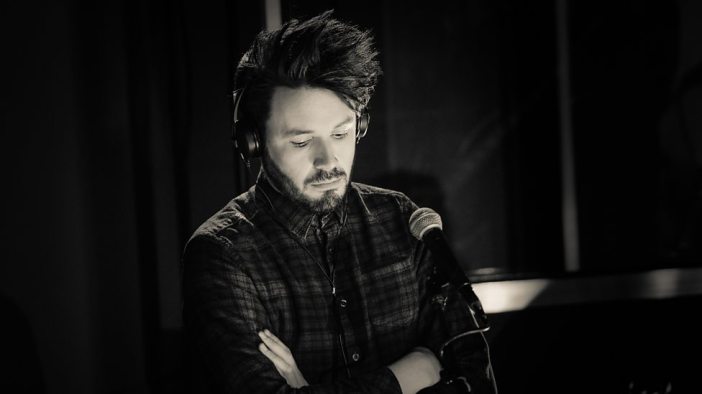
Analysis/Review: Roddy Hart’s 17th Annual Gordon Lecture and the Contemporary American Lyric

p04j7cmv
Source: BBC

Analysis/Review: Roddy Hart’s 17th Annual Gordon Lecture and the Contemporary American Lyric 

What a treat to listen to a lecture sprinkled with songs and stories, especially among the beautiful acoustics of Glasgow University’s chapel. After a rather spectacular introduction from Professor Simon Newman, singer-songwriter Roddy Hart gave the 17th Annual Gordon Lecture, organised by university’s Andrew Hook Centre for American Studies. Having collaborated with Kris Kristofferson, released an EP of Dylan covers and found success in the States with a stint on Craig Ferguson’s Late Late Show—not to mention running his own radio show for BBC Scotland and hosting Celtic Connections, the BBC Quay Sessions and the Roaming Roots Revue—Hart was well qualified to talk on this subject from a musician’s point of view.

Hart’s talk was a tribute to the great American lyric; to what makes it, in Hart’s words, particularly alluring, otherworldly and cool, especially to those who grew up outside of the United States. Admitting that he lacks an academic education in the history of American culture and music (actually, Hart has a law degree gleaned from within these very walls), Hart made up for this by sheer enthusiasm, celebrating the musical merits of songs from Woody Guthrie to Father John Misty and covering such topics as the journey motif, humour, darkness, nostalgia, politics and death. The talk took the form of a powerpoint, with Roddy speaking, singing snippets of songs and then commenting on their significance in a lucid, passionate way that kept everyone hooked for an hour and a half.
bob-dylan-ff51a1fc-5814-4717-8e71-9a49271fb47a.jpg
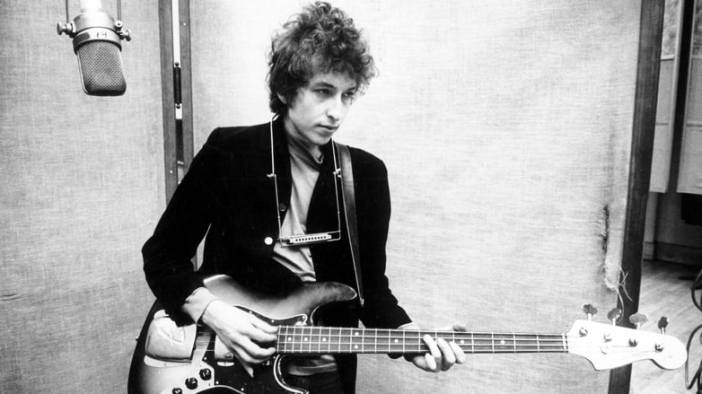
Bob Dylan / / Source: Rolling Stone

Hart began with the assertion that lyrics are not poetry, or indeed literature of any kind. Lyrics, he claimed, involve respect for structure, rhyme, metre and field (all definitions you could apply to poetry…), a certain knack for a hook, a streak of ingenuity and originality. Like poetry, a great lyric can reshape how we view the world we live in, send ripples through the fabric of reality and inspire us to take action, critically reflect or wallow in grief. The distinction Hart draws between poetry and the lyric prompted a desire to find out what exactly his thoughts are on Bob Dylan winning the Nobel Prize for Literature. My own thoughts on this issue have never rested on a single position, and I don’t really know enough about the prize’s history to comment on Dylan’s suitability.  However, there have always been strong connections between lyricists and poets, from the likes of Langston Hughes writing jazz poems during the Harlem Renaissance to Kate Tempest releasing rap albums as well as a novel and poetry collections published by the likes of Picador and Bloomsbury, no less. Hell, what about Leonard Cohen? At the end of the day, all writing is a performance of sorts, regardless of how it’s delivered. I could talk about Roland Barthes here, mention ‘The Death of the Author’, how the reader ‘performs’ the text like a score of music etc etc, but I won’t digress. Basically: sometimes a poem seems built for performance; other times it rests more easily on the page, where the eye follows an intriguing visual form or dance of letters arranged on white space. While poetry can be a two-way street, I’m not sure how well Dylan’s verse works on the page. Admittedly, most of his songs tell interesting stories, but that deceptive simplicity often needs the nuance and expression of Dylan’s voice to draw out the subtler levels of irony, humour, derision or sorrow from straightforward-seeming lyrics. Just my two cents on the matter, though I still like to wallow in ambiguity when it comes to these distinctions.

Hart gives the proviso that his talk is meant to be a working definition of the American lyric, not a comprehensive history. He does, however, mention a few characteristic features. The prominent one, of course, is name-checking: all the best American lyrics will draw on the wealth of states, street names, famous bars and hotels. In doing so, they draw on a tradition, they write themselves into a history of locations, urban legends and folk tales. Hart illustrated this by starting with Paul Simon’s ‘America’, pointing out how the song documents a search for America itself; this idea that America will always be this endless signifier, sliding along the great highway of desire that stretches across desert, country and city, drawing across generations. On the way, the lovers in Simon’s song make the best of their adventure, cooking up stories from the characters on the Greyhound, honing in on material details. It’s this sense of taking the listener on a journey that’s one of the American lyric’s greatest seductions. As Simon sings, “it took me four days to hitchhike from Saginaw” the chords soar and there’s that sense of being lifted to somewhere radically elsewhere, an open field, road, desert. The sweet spot between freedom and sorrow, of missing something deep and mysterious, the impossible pursuit.

Hart traces such material details in songs by Kris Kristofferson and Dylan, this sense of a ‘quintessential American aesthetic’ which he quite eloquently describes as a ‘Moby Dick-esque hunt across America’. The whale, ironically, is America itself. The road narrative is central to the American lyric. It’s a romanticised, extravagant sprawl into the dust of the past and glitter of the future, marked by place names which glow with familiar warmth and legendary spirit. Hart argues that this is something specific to the American lyric; that a Scottish equivalent wouldn’t quite have that same epic effect. He even sings a made-up local spin on ‘America’ to prove it; a journey between Edinburgh and Dunoon falls pretty flat in comparison. Of course there’s something special about the land of the free, in all its bright mythology and promise, but it’s not as if Scottish bands haven’t tried it. There’s that famous line from The Proclaimers’ ‘500 Miles’ which immortalises an array of parochial towns ravished by Thatcher, deindustrialisation and eighties recession: “Bathgate no more. Linwood no more. Methil no more. Irvine no more”. Of course there isn’t the same expansive magic, but there is something epic about lyrically connecting the local to broader political discontent. Still, you can’t really compare the Proclaimers to Simon & Garfunkel…or can you?

ontheroadmap2.jpg
Source: lettere-persiane.blogspot.com

Back to America. Hart describes Dylan as the nation’s great scene-setter, effortlessly drawing a sense of the times from the wisping drift of personal narrative, of stories about people and their lives. Details shuffled together like cards and strung along a line of verse. While some singers make their politics clear in the didactic manner of protest, Dylan sets these more intimate tales against the backdrop of cities and an impressionistically vivid sense of history. Hart plays possibly my favourite Dylan song, ‘Tangled Up in Blue’ from the 1975 album, Blood on the Tracks, spending time going over the lyrics to point out the singer’s knack for detail, the narrative journey which documents a succession of relationships, places and jobs. That famous philosophy: you’ve got to keep on keeping on. There’s something more raw here than the cosy, apple-pie fuelled comforts of Kerouac’s road narratives, which always depend on money from back home. You can hear it in the howl of Dylan’s voice, which becomes more a sultry croon in Hart’s version. What does he mean by blue? There’s the blues, there’s the blue of the sky and the ocean—symbols of infinitude. It’s a signifier that shifts as easily as Dylan’s character, from fisherman to cook, as he crosses over the West, learning to see things “from a different point / of view”. Surely this is one the basis for democracy, the meritocratic ideal of fairness upon which the USA was founded: empathy? The ability to openly shift your perspective, to never stay too long in your own shoes. That existential restlessness, set against the backdrop of a shaky political atmosphere, the dustbowl sense of losing one’s bearings in a maelstrom of uncertainty, characterises many of Dylan’s songs and indeed many road narratives throughout literature and American lyric.

You can’t talk about the American lyric without mentioning politics and Hart documents the history of the protest song, from Woody Guthrie’s ‘This Land is Your Land’ to Tracy Chapman’s ‘Talking About a Revolution’: songs that pose an equality of belonging, that document the quiet desperation and struggle that takes place beneath the surface of everyday life. Rather than tangling himself in the barbed reality of contemporary politics, Hart opts to situate his chosen songs in the context of more general themes: the failings of the American dream, social inequality and the oppression of working people, all set against the turning tides of the economic landscape. It’s notable that most of these singers are men, singing about working men, often with reference to some vulnerable lost girl who needs saved. But then you have the likes of Anaïs Mitchell, writing visceral songs of longing and misplaced identity. ‘Young Man in America’ opens with this mythological, sort of monstrous story of birth: “My mother gave a mighty shout / Opened her legs and let me out / Hungry as a prairie dog”. Images of industrial decline, capitalist opulence and landscapes both mythical and pastoral are woven by a voice whose identity is a mercurial slide between human, animal and disembodied call. Skin is shed, belonging is only a shifting possibility. It’s a complex song, with native percussion, brass; moments of towering climax and soft withdrawal. The music mirrors the strange undulations of the American journey from cradle to grave, its dark pitfalls and glittering peaks, the cyclical narratives of the lost and forgotten; the “bright money” and the “shadow on the mountaintop”, the fame of the “young man in America”, a universal identity disseminated across a range of experiences. For this is the myth of the American Everyman, and Mitchell deconstructs it beautifully.
Gillian+Welch+gillianPNG.png
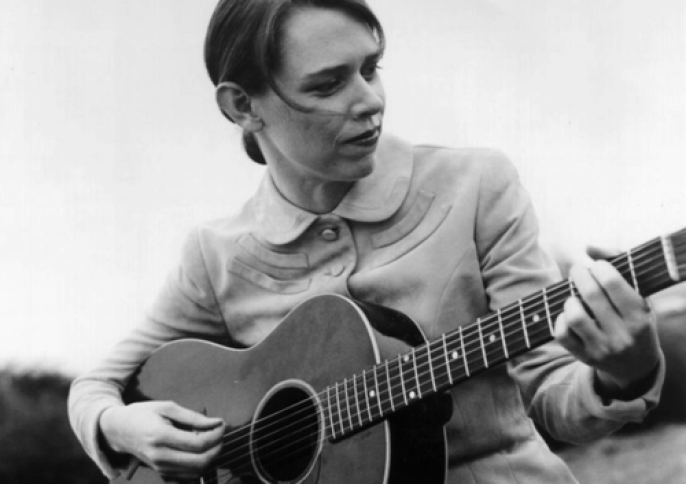
Gillian Welch / / Source: Born to Listen

On the subject of female songwriters, I was very pleased that Gillian Welch and Lucinda Williams got a mention in Hart’s talk. The self-destructive sentiment of Welch’s ‘Wrecking Ball’ reminds us that the experience of being ground down by the relentless demands of a marketised society isn’t confined to men alone. Welch’s ‘Everything is Free’, not mentioned in the talk though highly relevant, makes this clear. It’s a song about artists will go on making their art even if they won’t get paid, and the tale of how capitalism discovered this and cashed in on its fact: “Someone hit the big score, they figured it out / That we’re gonna do it anyway, even if it doesn’t pay”. Like Dylan, Welch finds herself winding up on the road, working in bars, working hard and regretting being enslaved to, well, The Man. ‘Everything is Free’ is a message of both despondency and hope, crafting this sense of the beauty of song itself as protest and freedom even as the structure closes in: “Every day I wake up, hummin’ a song / But I don’t need to run around, I just stay at home”.

Hart mentions how the American lyric provides an escape to those who find themselves trapped in the smallness of their lives. You might live in a nondescript town slap-bang in the middle of Scotland, where the musical climate favours chart music blasted from bus-stop ringtones, but then aged fourteen you discover Dylan or Springsteen and suddenly America opens up its vast, sparkly vista, from East Coast to West. This seems to be Hart’s trajectory, as his career—from the first tour with Kristofferson to his continued promotion of transatlantic connections—closely follows an American strain of songwriting. My mum used to listen to Welch’s Time (The Revelator) album over and over again on long car journeys, so the lyrics to all those road songs are burned in my brain like tracks in vinyl, superimposed with endless visions of the M8 stretching out before me… It was only a couple of years ago that I found out Time (The Revelator) was released in 2001; I’d always assumed this stuff was ancient, the seventies at least. Maybe because Welch just has this knack for writing timeless songs; songs about heartbreak, loneliness and restless desire that reach back into the comforts of the past even as the journey itself is long and hollow, the destination vague as the blurred sign on the front of a train.

I guess this raises a broader question which Hart’s talk touched upon: the politics and poetics of nostalgia. There weren’t opportunities for questions afterwards, but if there were I might have asked Hart whether nostalgia is a necessary condition for American self-reinvention. It’s a pretty relevant  question right now, with much of Trump’s whole appeal based on the nostalgic vision of a vaguely industrial golden age of capitalism—a vision which is obviously the smokescreen for whatever chaotic ideologies are at work beneath the surface. The American lyric can set up this romanticised vision, only to break it apart; reveal its seedy underbelly, its failings, the disastrous gap between identified goals and actual means of attainment. Yet throughout the cynicism, there’s always that restless desire to continue, to keep on keeping on. Hart compares it to the green light in F. Scott Fitzgerald’s The Great Gatsby (1925), a novel significantly indebted to music (jazz, of course). The final line of that novel captures that past/present lyrical impulse so well: ‘so we beat on, boats against the current, borne back ceaselessly into the past’.

Which leads to the question: what about genre? Is the American lyric necessarily the domain of indie folk rockers? What about commercial music and pop? Can a pop artist deconstruct the American dream and earn a play in the lyrical family tree if they make money off their record and earn fame from MTV? Hart engages with Father John Misty as an example of how the American lyric can use humour to deconstruct the nation’s ideologies of progress and meritocracy, at the same time as retaining a post-postmodern self-awareness of identity politics, a meta-awareness of his own dabbling in ironic coolness. His very name evokes a sort of New Age gospel figure, a preacher for the times, whose stage is the television set or Twitter feed instead of the old-fashioned soapbox. Hart describes songs such as ‘I’m Writing a Novel’ and ‘Bored in the USA’ (obviously a riff on Springsteen’s classic) as depicting the ‘American dream for the millennials’. I’ve written about Misty extensively already on this blog (specifically, on his metamodernist tendencies), so I won’t go into detail here, but suffice to say I agree that FJM represents something special about contemporary cultural critique. It’s that blend of irony and sincerity, an exaggerated interrogation of the romanticism and the Gen X postmodernism of yore; the oscillation between raw subjective experience, political critique and the cool facade of self-deprecating wit. A constant juggling of ‘candour and self-mockery’, as Dorian Lynskey puts it. FJM notoriously got into a tiff during an interview with Radio 6 Music veterans, Radcliffe and Maconie. Aside from all the awkward sarcasm, what strikes me about this interview is the mentioning of kitsch merchandise objects: oven-gloves, jeggings. Hart explores a bit of kitsch lyric in the likes of Randy Newman, but I think FJM blends especially well that jaded sense of millennial despondence alongside tracks that can feel like rollicking simple narratives or epics of history on a 13-minute scale that gives Springsteen’s marathon tunes a run for their money. He pushes his stuff to the edge of the cheesy and cringe-worthy, exposing how all conviction has that shadow side of kitsch, even the most authentic lyrics—kitsch is somehow the cheap taste of someone else’s experience, the trick is to make it meaningful, and not just another imitation, a plastic model of the Empire State Building.

But Misty isn’t the only singer-songwriter deconstructing the American dream, exploring how both its poetic promise and jingoistic glory play out on a personal level. What about Ryan Adams, whose songs have that alt-country appeal of the restless bard? ‘New York, New York’, from his 2001 album Gold, opens with a Dylanesque lyric about shuffling “through the city on the 4th of July”, brandishing a “firecracker” that’ll break “like a rocket who was makin’ its way / To the cities of Mexico. The clean rhymes and ballad-like lilt of guitar are also very Dylanesque. But at some point I’ve got to stop making comparisons to Dylan, because ultimately this is reductive; it’s cheap and lazy music journalism. I do think, however, the ease with which we make these comparisons reveals something interesting about our generic assumptions. Guy has a guitar, sings melancholy songs about America and his place within it, a smart knack for a lyrical twist, occasionally picks up a harmonica? Instant Dylan; their careers overshadowed by a giant. (Note: I guess a similar thing happens with very talented female folk singers—the likes of Laura Marling—being compared to Joni Mitchell). But even Dylan doesn’t monopolise the American lyric. He might have a Nobel Prize, but this doesn’t crown him King of the Lyric Alone (or maybe it does?); we’ve got to tease out what exactly we mean by this term and how relevant it is in the fragmentary scene of contemporary music. Think with Dylan, but beyond Dylan.

Conor Oberst, formerly of the band Bright Eyes, is an artist who’s been branded with Dylan comparisons throughout his career (an extensive career at that; the precocious Nebraskan recorded his first album, Water, aged just 13). Sasha Frere-Jones in the New Yorker condenses many of my own feelings on the Oberst/Dylan comparisons: ‘Dylan is armour-plated, even when singing about love; Oberst is permanently open to pain, wonder, and confusion.’ Oberst is in many ways a liminal figure: cutting it out on the folk and country circuit  (Emmylou Harris and Gillian Welch appear on previous records) while hanging and collaborating with indie rock bands (The Felice Brothers, First Aid Kit, Dawes), flirting with punk (The Desaparecidos) and fitting with some comfort within the elastic nineties/noughties stratosphere of emo. Frere-Jones describes Oberst as a ‘poet-prince’, again opening debate on that binary between poetry and lyric that Hart sets up but that nonetheless remains slippery and problematic. Where Dylan espouse the solid wisdom of a sage or wandering bard, Oberst has a reticent, warbling quality that rises to epiphany but admits failure and the graceless fall into existential aporia. He wails like Dylan wails, but many of his songs have a fragility and surrealism that doesn’t quite match up with Dylan’s more assured narrative balladry. So in that sense, he’s a lyric poet in the more subdued, Keatsian manner, exploring the self in all its fragmentary, perplexing existence.

But he’s also very much an American lyricist. In his ‘mature’ career, Oberst hasn’t shied away from more directly tackling political themes alongside more personal songs. 2005’s ‘When the President Talks to God’ rips to shreds George W. Bush’s policies. Comprising a series of questions addressed to an audience, it more closely follows the form of a traditional protest song, laced with bitter satire: “When the president talks to God / Do they drink near beer and go play golf / While they pick which countries to invade / Which Muslim souls still can be saved?”. This is definitely a song to be performed, on a wide open stage or indeed to the even wider audience accessing broadcasts of The Tonight Show with Jay Leno, where he performed the song in 2005. Then there’s the angry, crunchy southern kick of ‘Roosevelt Room’, off Oberst’s solo record, Outer South (2009). Oberst’s later work isn’t as playfully weird and surreal as his early bedroom stuff, sure, but increasingly he masters the power of allusion that characterises American lyric, in Hart’s sense of the term: “Go ask Hunter Thompson / Go ask Hemingway’s ghost”. He’s addressing someone to be critiqued, wrenching them off their political pedestal: “Hope you haven’t got too lazy / I know you like your apple pie / Cause the working poor you’ve been pissing on / Are doing double shifts tonight”. There’s that apple pie again, symbol of steadfast Americana, fuel of the nation, the well-lighted place of a diner—a place of domesticity, stability and, let’s face it, commercial comfort. Oberst cynically dismisses the well-nourished white middle class politician, recalling a generalised story of poverty from material details: “And I’d like to write my congressman / But I can’t afford a stamp”.

7287149713eb38f78915555f9fe62624.jpg
Source: pinterest

Then there’s the frontier motif, the sense of America as a place of deep mystery as well as self-created landscape. Experiments with Eastern and Navajo cultures. Bright Eyes’ 2007 album, Cassadaga, with its album art requiring a spectral decoder to be fully appreciated, its envisioning of the singer as mystic or medium, channelling psychic forces through song. Cassadaga is very much a journey. The opening track, ‘Clairaudients (Kill or Be Killed)’ involves an extended spoken word sample of some kind of very American mystic who begins by setting us in the ‘centre of energy’, Cassadaga’s ‘wonderful grounds that have vortexes’, moving us through astral projections of a ‘new era and life’ that is changing, a message of hope, doubling back on the uncanny sense that ‘Cassadaga might be just a premonition of a place you’re going to visit’. Cassadaga is a real place, a spiritualist camp set somewhere between Daytona and Orlando, known as the ‘Psychic Capital of the World’. By naming his album Cassadaga, Oberst isn’t just name-dropping in typical hipster fashion, honouring local identity nor casting back nostalgically to a familiar place; he’s attempting to channel the energy of this location, interrogate its spirit, draw out its various psychic possibilities for the present. He sings of attempts to detoxify his life, of former affairs, of lost soul singers and the pursuit of a sense of belonging.

‘Lime Tree’ is one of the most beautiful songs Oberst has written. It’s a composite tracing of impressions drawn from various experiences, both personal or secondhand. While much of Cassadaga follows an upbeat, distinctly country sound in the manner of 2005’s I’m Wide Awake, It’s Morning, ‘Lime Tree’ closes the record with a dreamy, wistful serenity that recalls the likes of ‘Lua’, ‘Something Vague’ and ‘Easy/Lucky/Free’. Accompanied by angelic female vocals, ‘Lime Tree’ is ethereal, the guitar strumming minimal though following a certain continuous loop. Pale and lush strings contribute to the sense of being pulled downstream, giving yourself up to the languorous current. Ostensibly, it’s a song about abortion, about a struggling relationship: “Since the operation I heard you’re breathing just for one / Now everything’s imaginary, especially what you love”. But as in all good poetry, the beauty of the lyrics on ‘Lime Tree’ is their movement from specific experience to a vaguely spiritual voyage that gestures towards ending but instead finds the open plains of abyss, always suspended in paradox and ambiguity, the fault-lines between life/death, hope/despair, dream/reality: “So pleased with a daydream that now living is no good / I took off my shoes and walked into the woods / I felt lost and found with every step I took”. Home is a tidal wave, a churning wind, a shifting sand, a fragment.

tarotspread.gif
Source: crystalinks

America’s great confessional poet, Sylvia Plath, also explored mysticism, and her writing is rich with strange imagery, not to mention all those Tarot allusions in Ariel. In The Bell Jar (1963), the fig tree is the novel’s dark and mysterious heart, this vivid image that sprawls its symbolism through the text, a figure for existential paralysis: ‘I saw my life branching out before me like the green fig tree in the story […] I saw myself sitting in the crotch of this fig tree, starving to death, just because I couldn’t make up my mind which of the figs I would choose’. We might think of the connection between the term ‘roots’ and ‘roots rock’, its rhizomatic sprawl of influence never quite settling on a home even as a sense of home and locality is supposedly the music’s grounding purpose. Roots, of course, are always growing. The lime tree is an image plucked from a dream, but its significance is less clear in Oberst’s song than the fig tree in Plath’s narrative. Perhaps more than most contemporary songwriters working within a lyric tradition, Oberst is content to write from a position of uncertainty, in gaps and pieces of affect and narrative. The sound of his voice suspended over those gentle strings and strums is enough to make tremors in your chest, as if the slow vortex of another world were opening its mouth like the parting of the sea in someone else’s biblical or drug-enhanced dream: “I can’t sleep next to a stranger when I’m coming down.” The way of the lyric; so often the way of the lonely. Even as ‘Lime Tree’ might be a love song, it opens itself towards ending, loss, death: “don’t be so amazing or I’ll miss you too much”; there can never be plenitude in the journey: “everything gets smaller now the further that I go”. Bittersweet doesn’t quite cut it. It’s too subtle for that, a softly shimmering lullaby goodbye to the world, a retreat and a return, just like Nick Carraway’s vision of beating on but back into the past. The passage of an everyday spiritual pilgrim, the way we all are in life, our faces fading in the ink-blot of photographs. We turn back to look at ourselves through others, through words, just as Dylan notes how the girl in the “topless bar” “studied the lines on my face”.

A voyage through nostalgia, a quest for identity, belonging, an escape from something and a return, a desiring pursuit without end, a lust for life and ease into death; a twist of humour, a narrative of hope, aspiration and the failures that draw us back into the dustbowl. The American lyric is all of these things and more; its boundaries perhaps are pliable as the nylon strings on somebody’s battered acoustic guitar. Maybe it all culminates in madness and absurdity. For every One Flew Over the Cuckoo’s Nest, you’ve got The Felice Brothers’ ‘Jack at the Asylum’, a rollicking satire on the madness of contemporary American life which trades in richly surreal and absurd imagery to render the accelerated pace of this madness, crossing history in the blink of a screen flicker: “And I’ve seen your pastures of green / The crack whores, the wars on the silver screen”. Pastoral America is always already contaminated by an originary violence. Maybe the best American lyric depicts such realisations through personal stories, the relationships and encounters set against and embedded within wider structural phenomena, the recessions and closures and urbanisations. The Felice Brothers remind us, however, that all of this is secondhand, aspirational narratives passed down to us through screen culture, advertising: “You give me dreams to dream / Popcorn memories and love”. Once again, there’s that fluctuation between an earnest love of country to an embittered sense of its very elusiveness, the distant static shimmer of success whose failed pursuit we watch ourselves experience through the mediating comforts of daily life—the popcorn pharmakon poisons and cures for (post)modern existence, as calorific as they are nutritionally empty.

But once again, genre. String off a handful of names from Hart’s Americana playlist and you’ll be pressed to find anything that falls outside the folk-rock camp, even as its boundaries remain pretty permeable. Yet what of hiphop? Isn’t hiphop, in a sense, the great alternative American folk lyric? Rap is it’s own kind of poetry, after all. You might think of someone like Kendrick Lamar as an American lyric writer, working from a different generic background from Hart’s examples, but nonetheless telling the story of contemporary USA from the streets to the level of the visionary, just like Dylan did. Lamar even has a track called ‘Good Morning America’: “we dusted off pulled the bullet out our heads / Left a permanent scar, for the whole world to recognise / California, economics, pay your taxes bitch”. Once again, that originary violence, the scar of identity. Lamar works back from the wounding.
2c6fcf7f11a106ec68ee3464c221b2f8.jpg
Source: pinterest

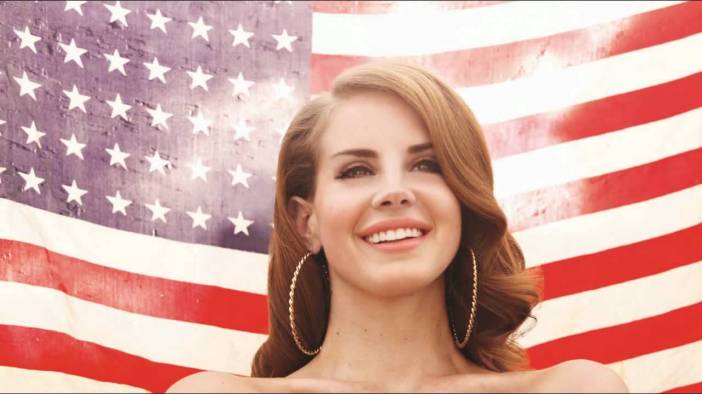
My knowledge of hiphop is far too limited to discuss it in any detail, but thinking it through  the idea of American lyric prompted me onto the figure of Lana Del Rey, who often uses hiphop production techniques, from trap beats to muted, stadium echoes. I hate to bang on about oor Lana again (see articles here & here), but irresistibly she’s a shining example of a mercurial musician, drawn to the sweet dark chocolate centre of American melancholy. LDR performs a kaleidoscopic array of identities, just as Dylan often wore a mask that veiled itself in the confessional sincerity of the beaten-down worker, drinker, lover, escaping to the Mid-West alone. Yet while America’s great bard more or less got away with it, Lana has been constantly lambasted for her artifice and supposed inauthenticity. Which begs the question: what do we even mean by authenticity? Is only the white male—your Princes, Bowies and Eminems—allowed to strut in the performative identity parade? Both LDR and Lady Gaga have been lambasted for their supposed fakeness. There are obviously complex questions of racial, class and gender identity which I don’t have time to cover here. Sometimes, a musician is lauded for their alter ego (and doesn’t alter ego itself imply a certain surrender to the patriarchal ideology of masculinity?)—take Beyoncé’s hugely successful Sasha Fierce—and other times, it takes the invisible tide of the internet to swell in support for those critiqued by other forms of media.

maxresdefault-2.jpg
Source: YouTube

My friend Louise is always comparing LDR’s work to F. Scott Fitzgerald’s novelistic visions of 1920s America, and while this might seem a bit extravagant, there’s something to be said for the way Lana seamlessly evokes the spirit of the jazz age, the consumer paradise of the 1950s and the hipsterdom of millennial Brooklyn in the through the poetry of song. Is this just retroculture, in the sense of recycled kitsch and the twenty-first century urge towards nostalgia explored in Simon Reynolds’ excellent Retromania (2011)? Is there something pathological in Lana’s obsession with the past, a symptom of a broken psyche or worse, a broken generation? Perhaps. But there is something transformative and subversive about LDR’s retrovision, even as it may be critiqued for indulging in vintage gender roles as much as vintage styles (framing yourself as a sort of white-trash ‘gangster Nancy Sinatra’ is always gonna invite a certain feminist controversy, let’s face it).

One of Hart’s recent examples of the American lyric came from The National (even the band name evokes questions of what it means to be American), with their song ‘Sorrow’ from 2010’s dark and trembling High Violet. I’m interested in how this song apostrophises sorrow in the manner of a great Romantic lyric. We might think of Keats’ ‘Ode to Melancholy’ or Charlotte Smith’s Elegiac Sonnets, the eighteenth-century cult of sensibility remade for jaded and alienated millennials. Sorrow once again invokes that Platonic idea of the pharmakon as both poison and cure. We can wallow passively in sorrow, as The National sing: “I live in a city sorrow built / It’s in my honey, it’s in my milk”: it’s a trapped landscape, a petrified terrain in which the self can only slip deeper into isolation; but it’s also milk and honey, a kind of temporary nourishment to a darker psychic scar. As Smith so eloquently puts it in the final lines of 1785’s ‘Sonnet Xxxii: To Melancholy’: O Melancholy!–such thy magic power, / That to the soul these dreams are often sweet, / And soothe the pensive visionary mind!’. Sorrow provides a toxic tonic for the soul, a lubricant for paralysis that eventually leads us back towards the existential road. Life goes on.

Lana Del Rey is fixated on sorrow. Blue, she admits, is her favourite colour, her favourite “tone of song”. Her songs are always hyper aware of the transient beauty of life, even as they lust after death. On the soundtrack song she did for Baz Luhrmann’s adaptation of The Great Gatsby, she worries “Will you still love me when I’m no longer young and beautiful?” ‘Video Games’ is a melancholy ballad for the contemporary relationship, a lush, brooding expression of love in the time of Call of Duty. Roddy Hart even did a cover of it. Her songs have titles like ‘The Blackest Day’, ‘Cruel World’, Sad Girl’, ‘West Coast’, ‘Old Money’, ‘American’, ‘Gods & Monsters’ and ‘Summertime Sadness’. All these titles evoke the Daisy Buchanan sad girl trope at the same time as gesturing towards the broader existential melancholy of America itself in the manner of Springsteen; with sometimes the detached urban cool of Lou Reed, other times the genuine, trembling passion of Billie Holiday. The video for ‘National Anthem’ restyles Lana as a Jackie O type married to a young, good-looking black president, with 1950s iconography spliced among pastel-hazed footage of the pair lolling around in love, sniffing roses, smiling, looking good as a Vanity Fair shoot. The video begins with her character singing Marilyn Monroe’s famous ‘Happy Birthday Mr President’ routine. She re-envisions JFK’s assassination, with a spoken word piece on top. She’s imagining alternative political futures even as she casts back to the past. There’s that lyric sense of wonder and ambiguity, of being lost in time.

It’s this layering of styles, scenes and cultural iconography that makes Lana’s work way more complex than most of what else fills the charts. Sure, it’s great that a positive message of bodily empowerment (Beyoncé feminism) is doing the rounds just now, but that shouldn’t mean that those who fall outside this category are anti-feminist or ignorant to gender identity politics. When all the R&B pop stars are prancing around proclaiming their sexual freedom, dominating men in various flavours of BDSM allusion, getting all the looks in the club or whatever, LDR is crying diamond dust tears into her Pepsi cola, draped naked in an American flag. Her videos, songs and artwork engage with cinematic discourse, high fashion photography and cultural history in a manner that’s intellectual interesting as much as it is affective and aesthetically satisfying. In a sense, she’s meaningfully evoking the past in order to say something timeless about the American dream and the objectified position of the ‘white trash’ woman under its mast of starry glory. In another sense, she’s indulging in a postmodern recycling of historical styles: constantly name-dropping, from James Dean to Springsteen, Lolita—perhaps the great American road novel not written by an American—and David Lynch’s lush, dark suburban epic, Blue Velvet. Despite the performance and ventriloquy of figures and archetypes from twentieth-century cultural history, she retains a sincere expression of melancholy, heartbreak and longing that’s personal but also strives towards rendering the more universal experiences of womanhood in certain communities. All the controversy surrounding Lana in relation to racial politics, class politics and sexual politics exists because her work is provocative, problematic and complex, like any good American lyric.

One reason that Roddy Hart was such a good choice to deliver this lecture is that he’s had experience writing new melodies for Robert Burns poems for Homecoming Scotland. Why is this relevant to the American lyric? So much of the lyric tradition, in all its forms, is based on that sense of romanticism, visionary wonder, self-exploration; the rendering of universal experience through personal narratives, the subjective telling of a story, the trade in imagery and sound and careful arrangement. Burns was a sort of rock star poet of his times, and not just because he was a bit of a cheeky philanderer. He toured around, worked as a labourer and farmer; he talked to many people, opened himself to influence. It’s this diversity that continues to mark the American lyric in the twenty-first century; the way that Father John Misty can sing a very ironic and playful song on late-show tv, about a man checking social media on his death bed, with the conviction of a crooning Leonard Cohen; accompanied by a gospel choir whose voice raises Misty’s ballad to a level of epic, overly extravagant grandeur that still somehow works, remains genuinely compelling beyond the initial sarcasm. The way Detroit’s angelic avant-indie hero, Sufjan Stevens, can ambitiously and patriotically plan to write an album for every state in America, then turn on the project, calling it “such a joke“. The way that Suzanne Vega, in ‘Tom’s Diner’, sings about a familiar American institution, the fabled diner—or Well-Lighted Place, as Hemingway put it—with the simple verse structure of an Imagist poem made narrative, sketching brief impressions of the myriad people she encounters in a public space. It feels cinematic, with deep eighties bass, bursts of brass and string-like synths, but also has that emergent sense of a postmodern folk, looking at the world from the bottom-up, catching everyday lives and stories in song. Even when irony remains the chief aesthetic order of the day, the lyric doesn’t have to be sucked into self-referential abyss. The best singer-songwriters continue to channel the American lineage through a romantic strain as much as a humorous one, inflecting songs with sorrow, joy and vitally that lust for something more—sometimes beyond life itself, sometimes just the restless possibilities of the road. Singing alone in the Glasgow Uni chapel on a Thursday evening, Roddy Hart rekindled some love for all that.

*

American Lyric playlist:

American Psycho: Sex, Violence, Technology and Society

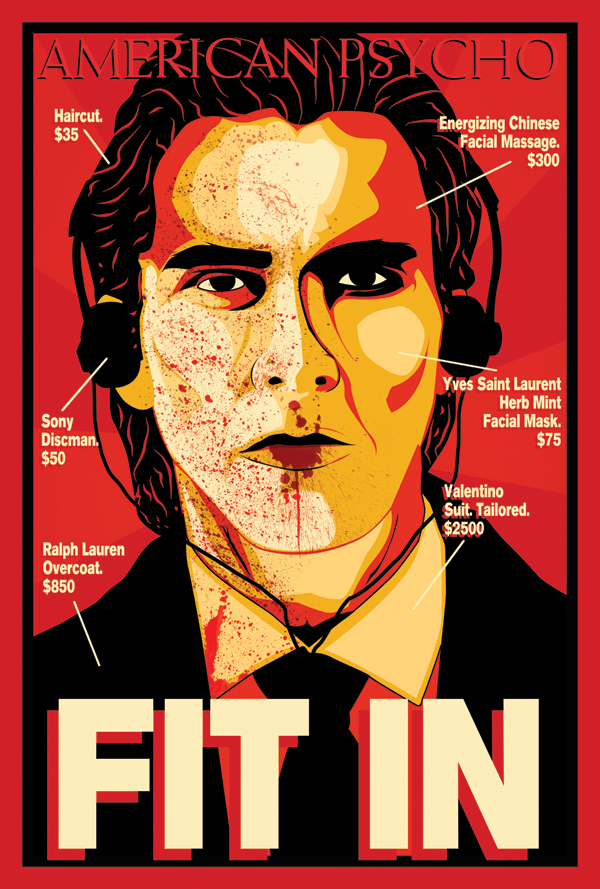
Image source: http://images6.fanpop.com/image/photos/33100000/Fit-In-american-psycho-33196259-600-889.png

I have just read a book that has all at once captivated, disgusted and intrigued me; a book that has left me strangely both emotionally drained and intellectually stimulated. Bret Easton Ellis’ American Psycho plunges the reader into a world of late 1980s ‘yuppie-ism’: the world of Wall Street, hyper-consumption, misogyny, racism, inane pop culture, television, sex…and violence. Written from the first person perspective of its protagonist (although somehow I find the term protagonist with its heroic connotations inadequate), Patrick Bateman, the novel has an unusual cyclical structure that plays out as a repetitive narrative of visits to classy restaurants, mundane descriptions of the latest consumer goods, chapters that read like music reviews and then the most controversial element: the horrifically graphic scenes of sexual violence and psychopathic slaughtering that got the book banned by its initially intended publishers.

Yet I don’t believe that Ellis includes these gruesome chapters just as a twisted indulgence, a pornography of violence. As I will discuss, they play a part in Ellis’ searing, often satirical portrayal of the Reagan era in America: a critique of neo-liberal values, consumerism and technology that is arguably more pertinent today than it was twenty years ago. The heartlessness, depravity and monotony of this culture and the novel itself is summed up in the opening line: ‘abandon all hope ye who enter here’, which is ‘scrawled in blood red lettering’ on the side of a building. This quote is an intertextual reference to Dante, who in his Divine Comedy suggested that this was the written passage that appeared in the entrance to Hell. When you pick up American Psycho and read the first lines, which immerse the reader immediately in the divided cityscape of 1980s New York – a world of graffiti, advertisements and pop culture – you cross over a threshold, you cross over into a tightly-confined mind that experiences its own corruption in a fictional universe that is all too like our own. What is interesting about the novel is on the one hand its hypothetical exploration of the thoughts of a psychopath, but also its trenchant critique of a society obsessed with surfaces, purchases and the perpetual presence of the flickering flow of television; a society plummeting towards absurdity and the eradication of all meaning – at all levels from the individual mind to the collective conscience.

Despite being the novel’s narrator, Bateman reveals little about himself other than his routines, his clothes and his opinionated taste in music. He indulges in lengthy passages detailing his workouts, his use of face masks, his appearance, eating habits, sexual interests; but the novel provides little in the way of solid character description. The narrative is therefore intensely claustrophobic, as we are restricted to Bateman’s narrow, white, narcissistic upper-class view. Moreover we know nothing of the Bateman behind the suit and Ray-Bans; we don’t know about his childhood, his relationship with his parents is only briefly suggested in a single flash of a chapter, and although it is the source of so much expendable income, we never find out what he actually does at work, other than order his secretary to make him dinner reservations. This latter point is especially interesting within the context of contemporary culture, where people are becoming ever-more critical of what these high-flying guys in banking and finance actually do; as bonuses and salaries remain sky-high in spite of the recession, there is increasing concern with regards tothe elaborate and obscure games that these ‘yuppies’ spend their time with – playing with money, justifying their existence. Ellis clearly does not seek to redeem the Wall Street yuppie, but instead caricatures his position and the career in general – which for me culminates most humorously in a chapter where Bateman and his coworkers engage in a highly-charged comparison of the stylishness of their respective business cards, that reads like a competition between prehistoric men flexing their muscles or showing off their hunting skills.

This leads into the question of masculinity and self in the novel. In a world where the most socially-esteemed jobs require what might be considered traditionally ‘emasculated’ behaviour – Bateman, it seems, is a proto-metrosexual – how do men assert their masculine identities, especially with the increasing challenge of the rising status of women? Bateman’s gendered self is ambiguous: on the one hand he is obsessed with his physical appearance – going for regular manicures, massages, constantly working out and asking if his hair looks good – and on the other asserting patriarchal dominance by literally killing, and in some cases torturing, those that either threaten his position (e.g. his colleague Paul Owen who has the superior business card) or those that he is different from and wishes to demonstrate are beneath him: women (especially models and prostitutes), beggars and homosexuals. This creates a bizarre, twisted sense of capitalism gone mad, of the ‘dog-eat-dog’ ideology of everyman for himself, of free market competition gone out of control. The individual, in his quest for success, seeks a greedy taste of the ‘Swordfish meatloaf with kiwi mustard’; that is, the excess and the addictiveness of the American Dream.

The novel thus remains engaged with material inequality, even though its focus is on one end of the scale – the high-flying lifestyle of yuppie clubs and restaurants. Throughout the book, Bateman and his friends taunt the plethora of beggars that haunt the streets of New York, holding out bills of money only to snatch them away in front of their starving eyes. At one point, Bateman even shoots a busker, just because he can; because he has the urge to kill and feels the man’s life is worthless. Yet there is an ironic discrepancy between Bateman’s behaviour and the outward image he projects of someone in tune with social problems. Early in the novel, Bateman delivers a speech that reads like the words of a politician: ‘we have to end apartheid for one. And slow down the nuclear arms race, stop terrorism and world hunger…strengthen laws to crack down on crime and illegal drugs’. All this from a man who personally terrorises the poor and vulnerable, regularly takes cocaine and is quite happy to waste money on often-uneaten restaurant food whilst trampling all over street beggars. Perhaps, therefore, Ellis meant to parody the hypocrisy of governments that proclaim their acknowledgement of socioeconomic problems but do nothing or little to actually tackle them. The irony of Bateman’s ‘identity’, then, is the way in which his words do not distinguish him but blur him further into convention, as he constructs his self by appropriating the words and values of others – particularly his hero Donald Trump (which says a lot about yuppie conscience). Indeed, this is humorously parodied in the fact that all food and tastes are judged not by individual experience but by reviews characters have read in glossy magazines.

So in spite of Bateman’s carefully constructed external self as a socially-conscious businessman, his identity remains a space of vacuum. Everything around him – his friends, his values, his lifestyle – is utterly superficial, and it turns out that he is too:

‘…there is an idea of a Patrick Bateman, some kind of abstraction, but there is no real me, only an entity, something illusory, and though I can hide my cold gaze and you can shake my hand and feel flesh gripping yours and maybe you can even sense our lifestyles are probably comparable: I simply am not there […] My self is fabricated, an aberration. I am a non-contingent human being. My personality is sketchy and unformed, my heartlessness goes deep and is persistent.’

When it was first published in 1991, American Psycho was accused, among many things, of being a poorly-written, immoral book, but I believe these early critiques were based on strong misreadings. The above passage, with its incisive insight into the thoughts of someone staring into the abyss of his own personality, its chillingly controlled and intoxicating prose, shatters any accusation that Bret Easton Ellis is a bad writer. It opens up the concern of many ‘Generation X’ writers: the paradox of identity in the late twentieth century. In a world where identities become more important, as each person seeks to distinguish themselves within the ocean of material things, selfhood in fact seems to dissolve, fragment, disintegrate under the weight of excessive choice and infinite expectations. Bateman reflects that ‘there is no real me’ in spite of the solid flesh, the personality moulded out of a particular consumer lifestyle, the ‘illusory’ mask of self presented in the fashionable clothes, the haircut, the voguish business card. American Psycho challenges many conventions of the novel, and one is character development: Bateman may become more reflective as the narrative ‘progresses’ but he does not undergo transformation or redemption. He remains all surface, with no core sense of morality and self beneath the veneer of his existential acts – he ‘simply [is] not there’.

This reminded me of Oscar Wilde’s The Picture of Dorian Gray, written a hundred years before American Psycho at the fin-de-siècle of the nineteenth-century. Like the ‘yuppies’ of Wall Street, Dorian and his friend Henry Wotton not only challenge traditional masculinity, as appearance-obsessed ‘dandies’ (the late Victorian metrosexual), but they are also excessively idle and spend their privileged lives like Bateman and his colleagues, indulging in sensual pleasures, conspicuous consumption and attending the finest venues of society. Narcissism and art are thematically central, just as narcissism and pop culture are to American Psycho. The fable-like plot of Dorian Gray turns on a Faustian bargain Dorian makes with the devil, whereby he barters his soul in exchange for eternal youth, so that his portrait grows old and twisted while he remains all surface, forever flawless and smooth. Dorian’s narcissism and pursuit of pleasure leads him into a spiral of moral corruption, visits to opium dens, murder and sexual depravities which, while completely removed from the Ellis’ gore, were nonetheless shocking at the time.

Each novel has lengthy passages cataloguing the material objects that consume the lives of its protagonist, emphasising the vacuity of their identities beneath the sheen of their flawless appearance. Yet Wilde, unlike Ellis, gives his novel closure: he provides some moral consequence to this hedonistic lifestyle, rather than as Ellis does allowing the reigning continuity of surface he gives some ethical depth. While American Psycho’s plot is an endless repetition of music reviews, restaurant, concert and club visits and violence, from which emerges no character development or moral conclusion, Dorian Gray traces the deterioration of a character whose initial purity is corrupted by a range of identifiable sources including art (notably, a ‘poisonous book’ thought to be J. K. Husyman’s A Rebours) and the influence of those around him. Dorian Gray ends with final punishment as Dorian tries to destroy the painting but in doing so reverses the mysterious spell, so that he acquires all the ugliness of his sins and the picture is restored to its original purity. Perhaps this structural difference can be attributed to the distinctive literary contexts of each book: while Wilde was writing in and to some extent subverting Victorian realism, Ellis is embedded within a more postmodern tradition that is sceptical about there being a moral centre to which texts can turn to, and is instead interested in showing how the boundaries of morality and self are not only fluid but at times seemingly invisible.

Indeed, what is particularly intriguing about Bateman’s monologue is the statement: ‘my self is fabricated, an aberration’ (my emphasis). Bateman spends his entire time striving to fabricate a self that fits in with the expected and respected norm embodied by the clone-like yuppies (indeed, because of their similar clothes and haircut they often mistake each others’ identities and this largely goes unquestioned in the narrative) and yet Bateman himself is an ‘aberration’ of this mundane normality. He’s an anomaly, defined by his psychopathic serial killer tendencies. Yet by linking the two – conformity and deviance – the text suggests that perhaps Bateman’s psychopathy is a product of society; it is not just a personal pathology but deeply embedded within the frustrating, depthless culture in which he finds himself skidding along with no hope of even drowning in. There is no way of drowning in a postmodern, or what Baudrillard calls a ‘hyper-real’ world where everything is interchangeable and signs refer to nothing but an endless stream of more signs – a choking bombardment of advertisements, appearances and vacuous conversation. Murder, rape and drugs provide some alternate reality, something real and solid and potent, that produce actual effects and allow Bateman to distinguish himself in some dark, significant way, even just as an ‘aberration’. It’s a chilling thought.

Although the novel never punishes its serial killer – Bateman is never caught, even though he drags a body-bag through the street, is helicopter-searched by police and leaves rotten body parts stewing in his apartment – the absence of a moral framework actually adds to the richness of the text. In his essay ‘From Work to Text’ Roland Barthes argues that the ‘writerly’ text offers up a plurality of readings rather than containing a single concrete meaning. It is in a sense an ‘event’, a surface (particularly relevant to American Psycho!) which engages the reader in a ‘practical collaboration’. This is achieved by the proliferate meanings offered up by the text: the intertextual references (abundant in Ellis’ novel, from Dante to Satre to Whitney Houston) and the elaborate web of signification spun in the writing, which encourages the reader to weave a fabric of meaning from the complexity of clues scattered throughout the prose. The pleasure of the text is our freedom to skip over passages, and to pay more attention to others. To endlessly reread and gain new insight, to create new meaning from. I find myself skim-reading the endless monologues about the latest technology, and often skipping entirely the really graphic parts; but this is not necessarily a bad thing, it merely prompts me to reflect on my role as reader in playing a role in constructing meaning in the text. It isn’t just there, but I actively make it depending on what I want to get from it.

Ellis also engages the reader in the ‘free play’ of meaning by leaving significant gaps in his text; the most notable of these gaps is the question of the unreliable narrator. Wayne C. Booth defines the narrator as ‘reliable when he speaks for or acts in accordance with the norms of the work (which is to say, the implied author’s norms, unreliable when he does not’. The subtle but at times overt irony that plays out in American Psycho, from Bateman’s extreme sexual and violent conquests and the ease in which he gets away with them to the literary language itself, is essential to raising questions about Bateman’s reliability. The tone he uses to describe the monotony of having to make reservations and his matter-of-fact description of his gym is the same tone used in his description of the scenes of grotesque and sadistic torture, necrophilia and cannibalism. Not only does this suggest that Bateman has been desensitized to pornography and violence but it also blends the normal and the abnormal together into a disturbingly hyperreal narrative of contemporary life. A life where rape and murder deserve no more expressive prose than a trip to ‘return some video tapes’. The prosaic language used to describe these scenes evacuates all possibility of the erotic or suspense that characterises porn or horror and instead foregrounds the acts themselves as real, painful and distorted occurrences – which in turn leave us with a sickening sense of our own voyeurism, raising wider questions about society’s enjoyment of such explicit forms of cultural entertainment. This notion of voyeurism is also highlighted by the repeated occurrence of such scenes (often signified by the foreboding chapter heading ‘Girls’ which I came to dread), creating a circular narrative which emphasises the text’s sense of claustrophobia and entrapment and recreating the inescapability of the distastefully explicit within modern culture.

Moreover, in relation to unreliable narration, the absurdity of Bateman’s rampant and seemingly meaningless killing sprees raises the question of whether what Bateman does is actually occurring, or whether it is an extended fantasy he projects as a way of indulging in his feeling of vacuity and ‘heartlessness’ within a featureless life of mind-numbing consumption. Is he merely fabricating his own alter-existence that plays out just like the pornographic films he rents from the video-store? The text provides little evidence to confirm or deny Bateman’s reliability, and this is what is so seductive about American Psycho: the fact that we as readers are left to judge the veracity of Bateman’s narration, which in turn leaves us within a complex moral vacuum. Unlike other books about serial killers, American Psycho doesn’t contain a detailed narrative explaining the root causes of Bateman’s pathology – abuse in childhood, a defined psychiatric condition etc. Bateman pops valium, Halcion and various other ‘pop’ drugs but he is not on medication for paranoid schizophrenia, multiple personality disorder or the like; the blame for his condition is thus found within a complexity of societal factors rather than an easy psychological diagnosis. The exact cause is left for the reader to decide: we have to map out Bateman’s life – his pleasures, his friends, his behaviour – in order to make judgements about the myriad origins of his psychopathy.

Another area of contemporary society which Ellis explores critically in American Psycho is technology; specifically, television and the telephone. The telephone was invented to improve communication, but in the novel it is the site of communication breakdown. For example, when Bateman and his coworkers make a conference call to decide their evening plans, the conversation breaks down into meaningless and often disconnected statements. There is nothing efficient about this communication. Moreover, the telephone presents an uncanny means of correspondence, since it removes the face and replaces it with the voice. This makes the person at the end of the line both familiar and unfamiliar, which raises interesting questions in terms of the fluidity and fragmentation of self depicted in American Psycho. At what could be argued is the novel’s most intense point, whereby Bateman has been on a killing spree, is chased by police and is now hiding in his office, he makes a call to his lawyer and leaves a message detailing all the murders he is committed. Yet when he meets his lawyer the next day, the lawyer not only refuses to believe the answer-phone message but he actually thinks Bateman is someone else – he thinks that the message was a joke played by someone else at Bateman’s expense. Telephone technology has not increased the potential for meaningful and intimate human interaction but merely created further distance, and in doing so distorted what is real and disconnected the ‘I’ that is speaking.

In terms of television, the book is rich with critical analysis. The debate about TV images and their influence on human behaviour goes all the way back to Plato. In The Republic, Plato puts forward the analogy of a cave in which prisoners have been chained since childhood so that all they can do is stare at the shadows on the wall which create shapes and sound; this is the only reality they know of, yet it is a reality constituted merely by the shadows of things, not the things themselves. If one prisoner escapes and sees REALITY itself, it will seem less real than the shadows. Like the prisoners of the cave, most people in contemporary society are in a sense ‘chained’ to the all-pervasive presence of television, which has become the source of much of our knowledge: the ‘shadow’ images of television are used to shape our morality, ideals, values etc – our whole perception of the world. Television, moreover, provides a perpetual ‘flow’ of time, squashing the past and present together in an ‘extended present’, which gives a rhythm and routine to our daily lives. Bateman’s life is partially constructed around his watching of the morning The Patty Winters Show, Late Night With David Letterman and endlessly re-watched video tapes such as the thriller Body Double in which a girl is murdered by a handheld drill.

When television images are extreme ones of hardcore pornography or violence, questions are raised about how far they can be blamed for real life violent behaviour. Perhaps Bateman can so easily murder without remorse because his acts of violence seem less real than the highly stylised images he consumes on a daily basis. This is a real life concern: the murder of James Bulger by two young boys in 1993 was blamed by some on the film Child’s Play 3, leading to calls for a ban on the film. Anthony Burgess’ novel also explores this link between video images and violence in A Clockwork Orange, where classical Pavlovian conditioning is used to re-calibrate the protagonists’ perception of violence: Alex is strapped to a chair, injected with a nausea-inducing drug and forced to watch violent films so that he learns to associate cruelty with sickness. Yet eventually, this ‘Ludovico technique’ is reversed and once again he is back to the same old daydreams of bloodlust; it is only through a process of experience and growing up that Alex comes to leave his days of brutality behind. Thus rather than allowing for a simple causal effect between images and action, Burgess overall complicates the relationship between television and violence.

A more recent play by Martin McDonagh, The Pillowman, is also a useful text for grappling with the link between art and violence. The play’s storyteller, Katurian, claims that ‘the only duty of a storyteller is to tell a story’, yet his stories become implicated in criminality as they have influenced others to commit crimes that copy the sinister plots of his fables (which involve swallowing apple-men containing razor blades and child crucifixion). It’s an infinitely dark and at times sorrowful play, but also it’s very funny: it raises a myriad of questions about authorial responsibility but rather than answering them The Pillowman blasts all moral closure with nihilistic conclusions, green pigs and its at times absurd, circular dialogue. It is a very clever, layered, metafictional commentary on the relationship between art, suffering and violence and I highly recommend it.

So to what extent is Bateman’s behaviour the product of the films he watches, or the TV shows which range in topics from ‘Toddler Murderers’ to ‘a man who set his daughter on fire while she was giving birth’? Again, the text offers no straightforward answers, and indeed it is possible that the orgiastic violence he indulges in isn’t real at all but merely fantasies extended from the flickering images he sees on television. This is an intriguing idea, especially going back to Plato’s notion that the man who leaves the cave will find reality less real than the shadows; the text leaves the question of what is ‘real’ in the novel, and even – what are the implications for the violence of American Psycho itself? It may be classified as fiction, but feminist group NOW attacked the novel upon publication as ‘a how-to novel on the torture and dismemberment of women’. Will some readers read Ellis’ text naively? Can it be blamed for furthering society’s desensitizing towards violence through its graphic scenes?

I think what redeems American Psycho in this respect is its self-conscious irony. Yes, it is horrifically graphic, but it does so for a purpose: to deconstruct and expose the way in which slasher movies, porn and the like have become part of popular culture, and to restore a shocking element to these forms of entertainment which have become so stylised and normalised. Additionally, like The Pillowman, Ellis’ book is also inherently funny. There are random standout lines such as the comment ‘”I bet Bono has a small dick,”’’ when Bateman and his friends go to a U2 concert, and also the narrative contains many running jokes, such as Bateman’s compulsive need to ‘return some video tapes’, and several repeated miscommunications such as when Bateman says he works in ‘murders and executions’ but this is interpreted as ‘mergers and acquisitions’, thus blending together ironically Bateman’s mundane day-job with his vicious night-job. There are also surprising parts of the book which seem human, such as when Bateman visits his mother in her care-home and all he can do is look at himself vainly in the mirror that he’s ‘insisted’ on having there and think about are the expensive things she’s wearing (bought by him). When Bateman asks his mother what she wants, her reply: ‘“I don’t know. I just want to have a nice Christmas”’ is tearfully poignant in that it summarises the inability of consumption to fill the gap in their relationship, to fulfill the mother’s spiritual need to enjoy Christmas, a traditionally family-orientated event. The maternal relationship is hinted as strained and distant as all mother and son can say to one another is ‘“you look unhappy”’ and talk ‘“uselessly”’ of a recent party. This breakdown in communication is actually full of pathos and presents a refreshing break in the text, but one that opens up another possible, yet unexplored, avenue of explanation for Bateman’s insanity.

In sum, the text offers no answers. Bateman’s violence we must explain ourselves by piecing together the various sources in the text – from television to consumerism to a societal crisis of masculinity. Ellis doesn’t pretend to moralise, and his book ends with the ambiguous reference to Sartre’s play No Exit, as Bateman stares at a red-lettered sign on the door of a bar saying ‘this is not an exit’. The text thus begins and ends with a textual allusion to hell, but hell itself is not contained within the novel – the end is not an exit from the tortuously mundane, unequal and cruel world Bateman exists in – it is firmly our own world, from which there is no exit. This is an unsettling and nihilistic vision, but one in which unfortunately resonates as violence, consumption, immoral bankers, social inequality, identity crises and televisual domination are all swarming features of life in the twenty-first century; perhaps even more so than back in the late 1980s where the novel is set. The musical backdrop may have changed, but largely, the culture has not. And this relevance factor is why I recommend American Psycho.


Bibliography

Barthes, R. ‘From Work to Text’.

Burgess, A. A Clockwork Orange.

Dante, A. Divine Comedy.

Ellis, B. E. American Psycho.

McDonagh, M. The Pillowman.

Plato, The Republic.

Satre, J. P. No Exit.

Wilde, O. The Picture of Dorian Gray.

http://www.nytimes.com/1990/12/06/books/now-chapter-seeks-boycott-of-psycho-novel.html

http://theater.nytimes.com/2005/05/06/theater/newsandfeatures/06note.html?position=&_r=0&adxnnl=1&pagewanted=print&adxnnlx=1370079884-9qmE05+JL/NXsusA29JsyA


My Difficulty(ies) with Sex and the City 2

Image
Image source: fanpop.com

I really don’t know what convinced me to watch Sex and the City 2. I suppose it was a case of finding something that wouldn’t require much brain power; some easy viewing for after exams. Little did I know the film would prompt some serious feminist and post-colonial rage.

Sex and the City 2 is, like the show that ran from 1998-2004, a romantic comedy. It follows Carrie, Samantha, Charlotte and Miranda as they travel abroad to a holiday in Dubai. Like the show, the film engages with the issues of being a woman in a ‘post feminist’ age, but also involves itself in questions of cultural difference and orientalism. Sex and the City 2 was released in 2010, in the midst of the turbulent relations between the West and East defined by the on-going war in Afghanistan.

Firstly, the question of feminism. Sex and the City 2 is a salient example of a ‘post feminist’ film. According to Angela McRobbie, in her work ‘Post Feminism and Popular Culture’, popular culture of the 1990s reflects a turn away from the gains made in the second wave feminist movement, through an exhibition of what McRobbie calls ‘post feminism’. Post feminism, for McRobbie, entails the notion that contemporary culture relies on the achievements of second wave feminism. Indeed, it takes these achievements – equal rights, liberated sexuality, economic independence etc – for granted, takes them as socially ‘obvious’ and in existence without need for critical reflection. The widespread assumption that women are sexually, economically and socially ‘liberated’ allows popular culture to represent female characters who embody an autonomous, self-reliant and empowered lifestyle: this includes having high-flying career women, sexually-liberated women; women with choice, education, power. It doesn’t take much effort to see that Sex and the City is a prime example of this: there’s Samantha the PR businesswomen, Carrie the writer, Miranda the lawyer.

Nevertheless, the empowered women portrayed in popular culture do not fit the aims of feminism, even though on the surface they appear strong and ‘free’. These women are presented as self-made, fully in control of their own destinies, fully unshackled from the chains of patriarchy and power and also the feminist movement itself. Their achievements are represented as examples of personal triumphs rather than identified as part of wider shifts in female employment and gender roles enabled by the feminist movement and its transformation of the systems of power and social mores which formerly would have constrained them. Since these women are depicted as independent and disengaged from feminism, their representation contributes nothing to the political ambitions of feminism, and also undermines the need for any contemporary feminist movement. Indeed, many popular renderings of the modern, empowered women (the post feminist female subject) in fact not only detract from the political weight of feminism but they also associate this new freedom with certain practices which actually restore traditional gender roles – the gendered behaviours that feminism set out to radically change.

In Sex and the City, both the show and the films, female liberation and empowerment is predominantly expressed through sex and consumption. Yet it is debatable as to whether these practices actually enable the women to free themselves from conventional gender norms or whether they in fact throw the characters back into the cycle of cultural constraints that rigidly define ‘women’ and ‘feminine behaviour’. Samantha, for example, is frequently depicted as the most sexually voracious of the four women. She enjoys the kind of sexuality – one night stands and the like – that men have been enjoying for centuries; she offers no apologies for her behaviour; it is, at least from the two films I have seen, seemingly morally accepted. Moreover, as a successful businesswoman, Samantha enjoys an economic independence which allows her to splurge on clothes, holidays and anti-aging products. It isn’t difficult to see where post feminism fits in here: while Samantha does have an assertive sexuality and personality, her empowerment is presented chiefly through consumption. Rather than making any significant political statement about female power or positioning, the show and films seem to reaffirm the status quo by confirming consumption as not only the vital source of contemporary identity but also the glittering route to status and power; yet a route that leads continually to traditional female objectification, with the body becoming a cultural mannequin, dressed up with the latest dresses, shoes and anti-aging potions to create the perfect sexualised subject. Of course, there is an inherent ambiguity about whether the woman is in control of herself, as she travels down this route of credit cards and department stores, or whether she is pressured by the powers of female-directed advertising and capitalism.

In any case, Sex and the City may appear feminist but it certainly contributes very little to the political movement of feminism. The girls may spout their girl power in a karaoke session singing second-wave feminism’s theme song ‘I Am Woman’, but their empowerment is arguably a superficial concealment of how they are trapped by the mind-numbing machines of advertising and the fashion and beauty industry which continue to pressurise and mould women’s sense of self, perpetuating gendered regimes and practices. Samantha, the only unmarried character, uses her economic power in ways that confirm her adherence to standards of femininity that are perpetuated by the beauty industry in order to exploit and extend female insecurities. She enhances her libido in the wake of menopause through guzzling handfuls of pills, to ‘trick [her] body into thinking it’s younger’, to which Miranda adds: ‘I’ve tricked my body into thinking it’s thinner – Spanx!’. While feminism as a movement attempted to open up new kinds of beauty, which included those who were not young, white and skinny, the characters are depicted as mindlessly striving towards and approving the stereotype, rather than in any sense shattering it. As Hadley Freeman of The Guardian astutely describes this scene: ‘it’s like being lobotomised with a pink teaspoon’.

Well this is all fair enough: perhaps you could argue that she is making the conscious choice to do so. Other characters have different means of empowering themselves, after all. There’s Miranda, the lawyer, and Carrie, the fashion-crazed newspaper columnist. Yet all these women are privileged: rich, often from affluent backgrounds or have wealthy husbands. They are friends for one thing because they have a shared class position. Their empowerment through shiny New York careers and the shopping is more of a class privilege than a political statement about girl power, and in this sense I would argue that the show is highly problematic in its potential to be cast as ‘feminist’.

While the issue of feminism and Sex and the City is ambiguous, I would argue the sequel film leaves little ambiguity about the issue of racism; or, more specifically, orientalism. The film follows the four girl’s holiday escapades in Abu Dhabi, the second biggest city of the United Arab Emirates. Hadley Freeman contrasts the ‘smart, funny, warm and wise’ TV show with the ‘pink-fringed, cliché-ridden, materialistic, misogynistic, borderline racist’ film; while the show ‘had genuine emotional truth’, the films are all about the ‘sex and shopping’.  I’ve never watched the shows, so cannot make a judgement other than my impression of the films. And my judgement is that their vision of women, homosexuality and ‘the East’ is distinctively narrow, shallow and hollow.

With Carrie, Samantha, Miranda and Charlotte sent off to Abu Dhabi, the film immerses itself in a world of blatant, unapologetic orientalism. Edward Said in his book Orientalism described orientalism as a concept which encompasses the binary distinction often made between West/East. This distinction comes with other stereotyped and hierarchical binary pairings such as civilised/uncivilised, us/them. Charting the history of colonisation, Said suggests that Europeans have for many years set up Eastern countries as ‘oriental’, as exotic Others by which they may define themselves against. For Europeans, whatever the Orientals were defined as, they (the occidents) were not. This allowed the West to position themselves as an inherently superior ‘race’, which in turn provided the justification for colonisation by using the ‘white man’s burden’ of civilising the ‘uncivilised’ world to legitimise their imperial domination of Eastern countries. As with most stereotyping and binary oppositioning (think man/woman), this process involved enormous cultural and social simplifications and generalisations which shaped prejudices against the ‘orient’ commonly held in the West. You only have to take a glimpse at today’s papers, with the generalisations about Islam and terrorism, to see how Orientalism still operates. Indeed, the USA in particular has frequently justified its occupation and invasion of Iraq and Afghanistan in terms of tackling the women’s rights records of these countries; but it is possible that this constitutes an imposition of Western norms on different cultures, and moreover, the USA’s record for women’s rights is itself questionable, as it is one of the few countries that has refused to ratify CEDAW, the UN’s Convention to Eliminate All Forms of Discrimination Against Women. This is just one contemporary example of how the West stereotypes Eastern cultures in opposition to its own cultural model, and reflects a complex entanglement of neo-imperialism, orientalism and feminist issues.

Back to Sex and the City 2. The representation of the Middle East is highly stereotypical, and makes a great effort to exoticise Middle Eastern men and women into characters which perpetuate traditional oriental images of the East found in films like Arabian Nights. The men are presented with a glamorous strangeness: with the mundane, clichéd dialogue and the glittering, stereotypical oriental music that accompanies their appearance. Upon arrival, the American women are treated like queens, each getting their own taxi and personal man-servant who stays up all hours to service their every petty whim. This sets up a kind of neo-colonial relationship where the ‘respectable’ Eastern characters are represented as intrinsically deferential to their Western ‘superiors’.

Additionally, the cultural status of sex is clear-cut into a binary issue, with Western liberation contrasted with a complete repression in the East – Samantha’s kissing on the beach is met with armed response and a permanent criminal record. Rather than acknowledging the nuances that characterise how sex is accepted and perceived in different contexts, the film forces the issue once again into stereotypical binaries.

Perhaps most significantly, the film also cashes in on stereotypes of the mysterious veiled Muslim women. Carrie and co ruminate over the sartorial restrictions of wearing a veil, and watch in awe as one eats her chips underneath the burqa. The Muslim woman is thus shown as an object of curiosity, and we viewers are forced to voyeuristically observe her eating chips as if she is some strange, voiceless creature. By minimising the actual interaction between the American women and the Middle Eastern women, the film negates any possibility for exploring the unique subjectivity of Muslim women and their experience of wearing a burqa as well as their religious beliefs. Instead, they remain Oriental objects of Western curiosity. Rather than respected for having their own minds, they remain quite obviously in this film, to borrow Chandra Mohanty’s phrase, under western eyes.

And indeed the moment that really struck me was when the Muslim women were given a voice. After helping the four girls escape a mob of angry Arab men (who Samantha has offended by spilling condoms all over the floor and announcing loudly that ‘yes, [she] does have sex!’, so yes – another stereotype about all Arabian men as women-haters) a group of Muslim women shed their niqabs to reveal they are wearing the latest New York runway collection. Delighted, the four American women laugh and praise their fashionable style. This is so obviously patronising that even after a film peppered with references to magic carpets and other Middle Eastern myths I was shocked. Being the primary scene where the main characters actually interact with Muslim women, it states, quite clearly, that Western and Eastern integration can only occur through consumption. Moreover, Muslim women can only be liberated from the ‘shackles’ of their own culture and religion (defined in the film by the recurrent veil image) by conforming to Western stereotypes of beauty and fashion. It’s a sickening simplification of the complexities of female identity within different cultural contexts, and seems to send out the message that globalisation (or rather, Westernisation) can only be a good thing because it is spreading a ‘liberated’ (or rather, shackled to consumerism) Western femininity to the poor, silenced Muslim women, who live in a culture that remains ‘backwards’. In doing so, it leaves out other more critical consequences of globalisation that could be explored, such as migrant labour in the Gulf, which is only skimmed over in Carrie’s conversation with her Indian servant Gaurav – who she benevolently bestows her money upon, as if this single lavish expenditure makes up for the capitalist restructuring which has necessitated Guarav’s move abroad away from his wife in the first place. Another example is in the nightclub where ironically the girls play karaoke and sing ‘I Am Woman’ while at the same time they are probably in the company of trafficked sex workers. Charlotte asks why the club’s belly dancers are allowed to show lots of flesh while every other woman in the East seems to cover up, and Miranda provides the pathetic response that there is a ‘nightclub loophole’. Many of the single women in Emirati nightclubs are indeed trafficked sex workers, but the film completely glosses over the possibility of critically engaging with this.

Finally, the wedding opens with another obvious stereotype that should’ve prepared me for the cliché trail that characterises the rest of the film. The wedding of two gay characters involves many stereotypes attached to homosexuality – infidelity, flamboyance, the pomp of a completely OTT ceremony, complete with boy choir and Liza Minnelli performing ‘Single Ladies’. It’s utterly cringeworthy and I had to temporarily mute the film so that my flatmate didn’t have to wonder what the hell I was watching. A fitting beginning to a film rife with caricature, condescension and cartoonish representation.

I can’t, however, completely make my mind up how I feel about the representation of women in this film. While there are many simplifications and the fact that the women conform to gender stereotypes through shopping, there are some moments where the difficulties of trying to ‘have/do it all’ are reflected. It is possible to look upon Samantha with pity, as a character who isn’t liberated but sucked too far in to the rigid, gendered standards of the beauty industry, and perhaps the patriarchal expectations of the area she works in – PR – which is based so much on appearance. Another example is the scene where Charlotte cries in the cupboard, hiding from her screeching children in a moment of genuine motherly breakdown. Nevertheless, these remain very limited representations, in that Charlotte’s troubles are the troubles of a privileged housewife. She’s crying because she worries about her husband having an affair with the nanny (an idea bizarrely stemming from the fact that the nanny doesn’t wear a bra) and because her daughter messed up her designer jeans. Not because she doesn’t know where her children’s next meal is going to come from, or because she’s overworked with three jobs to make ends meet.

So while the film touches on feminist issues, its dealing with class and ethnic difference is shockingly narrow. I couldn’t even enjoy it as a slice of indulgent consumerist fantasising, because the racial, sexual and cultural stereotypes, and the flat script and conventional female behaviour ascribed to many of the characters were so obvious and unsettling. It almost makes you feel guilty to watch. Of course, it all ends happily, with Charlotte’s nanny turning out to be a lesbian and thus in no danger of seducing Charlotte’s husband, and with Samantha finally consummating her passion for the Danish guy she got arrested for kissing in Abu Dhabi. Well, of course, the film suggests, everything happens correct and best in the West. Yet I’m not sure that all’s well that end’s well: the film prompts more questions about the implication of its depictions of women, homosexuals and the Middle East than it answers.

Bibliography:

McRobbie, A. (2004) ‘Post Feminism and Popular Culture’ in Feminist Media Studies, vol. 4, no. 3 , pp. 255–264.

Said, E. (1977) Orientalism. 

Sex and the City 2: Orientalist Boogaloo

http://www.guardian.co.uk/film/2010/may/23/sex-and-the-city-film-terrible

http://feministing.com/2010/06/03/sex-and-the-citys-women-of-color-problem/

Image

Gaming Gender

Feminism and video games are not two concepts often linked together. However, after reading recently about the shifting representations of Lara Croft and her potential as a ‘feminist icon’ I was inspired to reflect on my own experience as a gamer while growing up.

I was never one for playing hard-hitting action games like Tomb Raider; I was more of a Nintendo – and sometimes Sega – girl myself. My childhood was a fusion of Mario and Sonic the Hedgehog, and then as I got older games that demanded more of my time, games that immersed you in their alternative worlds. The ones that spring most vividly to mind are Animal Crossing and Harvest Moon. Finally, a preteen, I dabbled in the exciting Playstation 2 games that my brother owned – Grand Theft Auto and a number of car-racing games which I cannot recall the name of.

It’s an interesting thing, thinking back to all those virtual scenes you encountered in childhood, and trying to recount the representation of gender within them. The really retro games played on brick-like black-and-white Game Boys become submerged by the pastiche of all the newer, technicolour versions, with 3D characters that had realistic clothes, voices, breasts.

Yet when I do think of it, I realise just how gendered my whole video-gaming experience was. Certainly, there was a dearth of what might be (cringingly) called feminist heroines. Even the very early Mario games, which involved navigating a barely perceptible pixel man over a flat world of fatal drops and question-mark boxes, bore out the signs of gender stereotypes within their very narrative. Rescue the princess. I remember the motivation for getting to the next level was the little cut-scene where Princess Daisy (or was it Peach) would proclaim helplessly ‘Oh Mario!’ and transform shockingly into a spider-like creature, hopping away as if cursed to a land to be later rescued. This story is hardly surprising, given the perpetual presence of damsel-in-distress narratives within our culture, and I’ll admit that throwing an Italian plumber rather than handsome prince into the works is a little subversive – but Mario is always a good place to start.

Maybe Sonic is a little more interesting. Although the characters are weird, anthropomorphised talking hedgehogs, echidnas and the like, they still carry conventional gender distinctions. Well first there’s Amy Rose (strangely enough, that was almost my name), the pink-haired hedgehog with the obnoxious girly voice who is desperately in love with Sonic, the hyper-cool protagonist who frequently shirks her advances with an air of embarrassed affront. The game thus dramatises a kind of courtly love, but in parody, with Amy represented as silly, indeed somewhat ridiculous, in her affections for Sonic – who is evidently so totally out of her league. The unequal power balance reinforces ideas about female irrationality, and the deprivation of agency in the face of love. I won’t go too far with this though; after all, I didn’t play all the games, or watch the TV show. Maybe Sega threw a bit of kick-ass feminism into Amy’s character somewhere down the line?

They did have one character, at least in my favourite game, Sonic Adventure 2 Battle, that could give Lara Croft a run for her money. Rouge was a lipsticked bat with knee-length leather boots, a sassy, femme fatale always teasing Knuckles – the dread-locked echidna always punching the air and grunting to show his strength. Although she had her shortcomings, being on the dark-side of the game’s narrative, Rouge was perhaps one of the first feminist video game characters I encountered.

Following my Sonic and Mario phases, there was a period where Harvest Moon took over much of my Friday nights. I loved this game; it had a slightly surreal, old-fashioned atmosphere, with its sweet music and appealing graphics, but reflecting back the gender question is pretty damning. You played a young man who ran a farm, and got to grow your own crops, milk your own cows and keep the village tramp, Murray, out of your food-stash. Moreover, one of the central aims of the game was to choose and court a wife. There were three options, each embodying female stereotypes of a sort. First there is Celia, the warm-hearted farm-girl who can be easily wooed by presenting her with flowers. She is a bit pathetic; she wasn’t even offended when I gave her a bit of ragwort. Then there was Muffy, the blonde barmaid in a red-dress with a ‘fun’ personality. I don’t think I have to elaborate much further there. Lastly, Nami, a kind of New Age type with vivid red hair, who was a bit more interesting – a wandering traveller. The whole ‘wooing’ process, looking back, is a bit farcical – not just quaint but pretty hilarious – but I realise that maybe for the young children to whom this game was designed, playing a game that trains you to court a wife by giving her flowers is probably not the healthiest of socialisation processes. On that note, there was a Harvest Moon game where you got to play a girl, but I couldn’t comment as I have never played it.

A similar style of game to Harvest Moon is Animal Crossing, where you owned a house in a village of charismatic animals. The chief aim of the game was to pay off your mortgage, a fact that you were constantly reminded of by the maddening presence of Tom Nook, the local entrepreneur who you are forever in debt to. Animal Crossing lets you play either a boy or girl protagonist, and I would argue is a little bit more deconstructive in its representation of gender roles. At least, it gives you a lot more power over your character. Gender is less prominent – although the villagers occasionally make stereotypical comments, Tom Nook is patronising to your character whether you are a boy or a girl and the hair salon allows you to experiment with an array of bizarre hairstyles which undercut traditional gendered appearances. Playing Animal Crossing allows you to feel in control, to experiment. You can even design your own t-shirts, and decorate your home with a myriad of furniture (at a cost). No, I think this game would be better read from a Marxist perspective (Tom Nook as evil petit-bourgeois tyrant).

This leads me finally on to the more obviously problematic gender representations in games like Grand Theft Auto and all the racing titles. Women are stereotypical, red-dressed, often voiceless prostitutes (indeed, ‘picking up’ is often part of the storyline), or else draped over flash cars, offered as rewards for race-winning but never racing themselves. Indeed, I’m sure there was one game where the amount of money you had from winning races determined the kind of ‘girlfriend’ you could have. Persistently, women are absent from the action except as hyper-sexualised commodities. 

What seems consistent in the very different games that I played throughout my childhood is both their underrepresentation of women and their portrayal of women as objects. In Mario, the princess is the goal object, spurring the player onto the next level. In Harvest Moon, women are presented merely as potential brides, whose courting is in itself a ‘level’ to be achieved. In the more violent (and should I say 18+) games, women are basically sexual commodities to be bought and abandoned at the player’s will. In Sonic, female characters have more autonomy, but still fall back into stereotypical roles: helpless, childish lover-girl and femme fatale. Perhaps only Animal Crossing offered a bit of transgression of rigid gender binaries, with its largely asexual characters and emphasis on player choice in terms of outfits and style.

My readings, I’ll admit, are of course narrow, and perhaps all of the games have now not only changed with the times (it’s been a good few years since I’ve picked up a game console) but even the ones I played may have had exceptions to the gendered rule. The point of this article is to flag up the more obvious problems video-games present for feminism, in reproducing highly-conventional stereotypes in their representation of female characters. Achieving gender equality is difficult when children and adults are like are literally immersed in virtual realities where characterisations mirror all too vividly the limited representations of gender that have for decades pervaded society. Art and life are always going to bounce off one another, and this is why, reflecting back now with the maturity of a critical mind, I am able to realise the stereotypes I was exposed to – stereotypes which back then probably seemed normal and natural. I am sure there are numerous games which dissolve stereotypes in their representation of gender, and maybe Lara Croft could be a postmodern feminist icon. I won’t know until I play.

Read more:

http://www.independent.co.uk/voices/comment/art-imitating-life-how-sexism-in-video-games-mirrors-reallife-gender-imbalance-8381426.html