Things Enchanted

Source: https://www.flickr.com/photos/mshipp/

The wedding was held on the first of October, that first fresh fling of a spring day with cherry blossoms lining the avenue and the smell of sunlight in the air. Marianne had chosen this day because on the calendar it had glowed up like a promise, the hope of something clean and new that wasn’t tarred with the silliness of April Fools or the bloat of British summertime. It was luck, really, that brought the good weather to New Zealand on that uncertain spring morning. It was also luck that bagged them the venue. She and Ethan had spent weeks debating where to get married, pouring over glossy brochures featuring medieval castles, luxurious hotels with honeymoon suites, country houses and converted churches which allowed you to toss your bouquet extravagantly from the bell tower. Arguing about the cost of fancy desserts and appropriate champagne. It was all very expensive and a little vulgar for Marianne’s liking. She was raised to believe that the most enchanting things in life were free. She had insisted for years and years that if she ever got married she would do it smack bang in the middle of Oxford Street for all it mattered. The best part of a wedding, Marianne had thought as a child, was the cake. I will find the best cake in the world, she would boast to her mother, because everyone likes cake, and not everyone likes a wedding. You can always, as Marie Antoinette put it, let them eat cake.

Growing up, Marianne found it to be true that not everyone likes a wedding. Or, at least, a wedding doesn’t do well for everyone. At the age of twenty-six, Marianne had dragged herself through enough of her friends’ weddings to know that the occasion prompted flourishing happiness for some, and hours of breakdown for others. Only last year, she had been drinking with her old roommate Bill at a colleague’s wedding and over the slurry candlelight he confessed to her his deep desire to kill himself.

“I just can’t stop thinking about it,” he had said quietly, refilling his wine glass, wiping the sweat from his eyes.

“William, William I had no idea.” And as the confetti swirled about the crowd, queer as a summer snowdrift, Marianne felt like she’d been chained to something dark and profound. Some sense of the underworld that she needed to get rid of. Bill had left soon after, taking a cab back to the hotel, and Marianne had gorged herself on the cheeseboard to cheer herself up, because it seemed there was nothing else she could do but stuff away her dreams with sticky lumps of brie. In the midst of all the magic, there was still all this sadness that seemed to coat the world in fear. When the bride passed her, Marianne smiled brightly, but later on she called Ethan in tears.

“Don’t worry,” he’d said, “he’ll be alright. Weddings bring out the best and the worst in people—”And yes, Bill was still alive, but he and Marianne had not spoken since. In all the chaos of organising her own wedding, she had forgotten.

Eventually, she and Ethan found their perfect venue in New Zealand, of all places. It was a rare corner of the world, special in its simple charm of rolling hills and friendly faces. Yet Marianne had a great deal of trouble convincing Ethan’s family to fly out there, even for just one weekend. Ethan’s mother suffered from bouts of depression and an event like a wedding, he said, could prove difficult – if not debilitating – to her state of mind, which had been fragile since his childhood. What’s more, Ethan’s father (they were divorced) seemed to drag himself through life with the sole intention of avoiding tricky situations such as these. He was a plumber who worked hard and spent most of his spare money down the pub, with people he’d known since high school. A cosy existence, free of the kind of complications that Marianne’s parents liked to pick over for a living. Marianne’s parents were academics, the kind of academics who relished a wedding, if only for the excuse to drink nice wine. She and Ethan were very worried about the whole occasion, about their parents coming together for only the second time, about the cost and the question of religion and whether it was weird to give people Love Heart sweets as favours.

“Shouldn’t we try for something more…intellectual?” It was him that said it first, not her.

On the last day of September, they landed crisp and safe on New Zealand ground, ready for rehearsal. To their surprise, they found the priest getting baked under a cabbage tree.

“My god, look at you two!” he exclaimed in his thick Kiwi accent, scrambling to his feet to greet them with a dazed look on his face. “Why I’ve never married such a beautiful couple!” He kissed them both on the cheek with enthusiasm.

“When do the family arrive?” he asked, walking them towards the church.

“Tonight,” Ethan glanced at his fiancé, expecting the nervous expression to show on her lips. She was, however, remarkably composed.

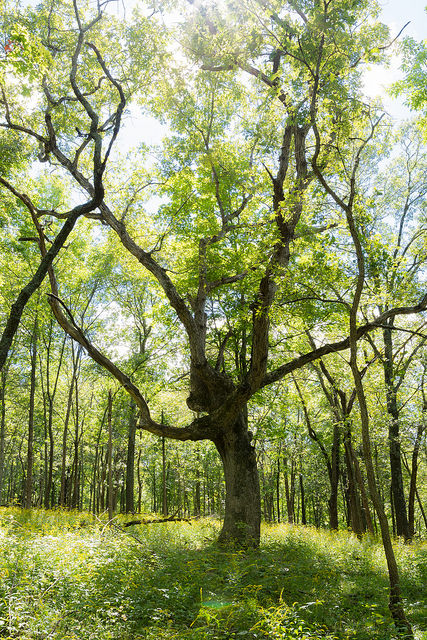
They were being married in a church made of trees. A brand new church, constructed in imitation of a similar design which went viral on the Internet a few years ago. The venue had appeared quite randomly in Marianne’s inbox, with all the sparkle of a super-charged Groupon offer, and she was quite enchanted by its strange beauty, its sense of the ephemeral. She did not want her marriage to be stone-cold and static, confined to a church, but to evolve and shift with the seasons, like this lovely temple.

Ethan and Marianne were just the seventh couple to get married under its bowers.

Silently, they stepped inside the iron framework and stood under the greenery, marvelling at the dappled light playing along the carpet of grass.

“Amazing,” Ethan whispered.

“It’s better than I ever dreamed of.” Marianne turned to him and gave him a long, satisfied kiss. They felt like they could stay here forever, dreamy and alone in this virescent version of heaven. The priest ushered them through their vows before leaving to meet his next clients. They delayed going to the airport to meet their parents, preferring to sit on one of the pew benches, scuffing their bare feet in the soft soil and laughing as they shared their secrets.

“All I want,” Marianne said to her fiancé as they sat later in the back of a cab, “is a few days of harmony. D’you think we can manage it?”

“All I want,” Ethan replied, “is our parents to get on okay. God knows I’m dreading the next few hours.”

“Don’t,” Marianne kissed him quiet. “It will be fine. They love us.”

To their surprise, it was fine. Fine as dinner and mumbled wisps of conversation could ever be. At the end of the meal, Ethan’s father stood up to deliver a drunken speech, exposing an embarrassing array of Ethan’s ex-girlfriends and childhood habits, enough for Marianne’s parents to speculate on for months to come. Ethan’s mother complained about the food and how warm it was for this time of year, her jet lag and sore head, then retired early to her room. Marianne worried, but Ethan knew better.

After dinner, they drank coffee in the restaurant lounge and all talked quite civilly about married life. Brian, Ethan’s father, had consumed a little too much wine and was already slurring off with jokes about how marriage was always a ‘two-way street’ with ‘no exits except death’. He wouldn’t stop, no matter how much Ethan tried to hush him. He teased the young couple about their choice of venue, speculating on all sorts of disaster scenarios which could disrupt the ceremony: lightning storms, forest fires, a rain shower. Marianne’s parents remained very quiet through all of dinner; so quiet, in fact, that Marianne worried there was something on their mind that they were choosing not to share.

Under the cool spring moon, they walked Marianne back to the hotel, leaving Ethan and Brian to have a last-minute tête-à-tête, which Ethan clearly didn’t appreciate. In the hotel garden, Marianne nuzzled herself into her father’s arms like she used to do as a child, feeling small and safe. It was different from how she felt with Ethan.

“Are you going to be okay?” Her father asked her. She thought about the day she first met Ethan, walking up the campus steps to her morning lecture, the sun breaking through a rain shower and the look on his face, concentrated and expectant. He wore his hair very short then – even shorter than it now was – clipped and cool in his blazer, a third-year law student.

“I think so,” she whispered back. The crickets purred around them.

“Just remember, everything is your own decision,” he said cryptically, ruffling her hair gently as he turned to enter the building.

“Goodnight love,” her mother echoed.

She and Ethan spent the night achingly in separate rooms, sleepless and fearful and eager. Marianne took out a pad of paper from the desk drawer and under the header with the hotel logo she wrote a list of all the reasons she was getting married: Love, dreams, sex, money, future, Sunday mornings, love. She laughed at how easily the cliches buoyed up in her mind. Brian’s words had awakened some tiny, irritable worm inside of her, a worm that wriggled with uneasiness. Yet she waited for it to rest and eventually fell asleep, letting the magic of the words she had written take shape in her dreams.

In the morning the sun bathed the grass in golden light and it was just as the first day of spring should look like, so different from October back home, where the streets were bronzed with glossy rain and fallen leaves. Ethan waited among the bright green bowers until Marianne appeared half an hour later, shrouded by the vines and only gradually entering his vision as she stepped through the knitted trees.

“How long?” he mouthed at her. She gave him a funny look as she slowly glided down the aisle, trailing her lacy dress. The church could only seat fifty guests, but there were very few people there. None of Ethan’s friends could afford the New Zealand flight, and Marianne hadn’t wanted to invite so many of her own that the bride’s side would outweigh the groom’s.

“What?” she asked him as they got closer.

“Why have we waited so long for this?”

She stood opposite him over the simple altar and as the priest approached Ethan added:

“I would’ve married you at uni, I would have married you so long ago.” He couldn’t help but grin then, and it was the kind of grin that unravelled the tight poise of his face and showed the fine lines around his eyes, the sparkling hazel eyes that she knew as mirrors of her own soul. She loved him, then, for that fragile smile alone.

“Don’t kid with me,” she murmured. She then looked up to face who they would be soon; who they would be after the magic words and the kiss that sealed them. She stood tall in her crystal heels and white gown, her light hair tumbling long down her shoulders, secured by the flower garland that her little niece had assembled for her that morning from the field of daisies. It was funny, she didn’t feel quite grownup; it was like being a child again, playing dress-up, playing at something that all of a sudden she knew nothing of. The priest stood over them in his robe, casting a shadow into the space around the altar. Marianne imagined that in winter the ground beneath their feet would be scattered with old seedpods and stray leaves fallen from the trees. Were they evergreen? She could not tell; she was no scholar of nature. How different the place would look, all wiry and skeletal. It was a chance vision, the fleeting kind gifted to the mind from a wisp of wind, cold and coming northwards. A fantasy of life at another time, caught in the secret culverts of the land around them.

She smiled as he slipped the ring on her finger, looking into the clouded space of his eyes and enjoying the blind joy that enveloped her.

After the ceremony, they led the guests down the aisle and out of the sparkling world of green onto the garden plains with the ornate shrubbery and the guesthouse lodge in the distance. Marianne’s mother, in her yellow hat, approached her and dutifully kissed her daughter on each cheek.

“It’s been a pleasure,” she said warmly, simply. Her father came and clasped each of her hands in his.

“You look wonderful love,” he told her. “I’m sure you’ll be very happy.” But she felt the clamminess of his fingers in hers, and slipped away. It was as she had felt at her friend’s wedding, that sudden moment talking to William, his face cloaked in cigarette smoke. There was something strange about the way her parents were so keen to share in her joy; it didn’t seem real.

What she would remember most about that day was not the party afterwards, with the sunlight dancing in her hair and the lilting joy of the violins and the woman that sung for them from a makeshift podium. It was not the fairy lights strung across the trees at night, or the sad sighs of the children told they had to go to bed. Not the crumbling wedding cake and the sugared strawberries eaten secretly in the grove by the river, or the sweet laughter of Ethan’s parents as they sat together sharing a bottle of wine and loudly reminiscing. Not the restless, whisky kisses pressed between the sheets in the cool summer evening, with the starriness of midnight pouring through the window. What she remembered most, now, was the feeling of her father’s fingers: cold and foreboding as she pulled away from him and out of her old world altogether.

Yet in the haze of those joyful days, it seemed obscene that in a few more hours they would be returning to a bleak, British winter, leaving behind the Kiwis and their colourful summer.

And love was all, love was all. That was what they said, what everyone kept saying, not knowing what it meant. The daydream of that day, its harmony draining slowly away in the time that was passing, the prickling chaos of day after day in each other’s company. Years flaking from them; precious layers of what they had always wanted to be, sloughing off and collecting in piles on the bedroom floor. There was then the new house, the miscarriage, the man in the white coat who talked to them as if they were children. The strangeness that grew between them. When they had argued, falling back into bed with tired passion, her father’s words flashed back to Marianne: everything is your own decision. And yet.

Here she was at her desk with the wads of paper blocking her view of the window, with the mirror glass behind her and that silver strand in her hair exposed for all to see. They had waited too long; too long they had waited to let happiness wash over them like a morning shroud of marijuana dreams. Marianne sat at her desk because it was the only place she knew where she was. Her head was full of the smell of hospital chemicals and the sound of dogs barking down the lane, old women nattering at bus stops. Blood being sucked through a plastic tube, the soft groan and the closing of his eyes, the shadow self that came over him in those moments. Pale and loitering. Loosely, the memories unravelled from her grasp, so that sleeplessly she would lie awake seeing her mother-in-law’s tormented face, the frown she pulled when she heard the news, the devastation in her eyes. There were too many pieces, too many pieces to pick up, replace.

Marianne lit a cigarette and stared at the ceiling.

In June she boarded the flight to New Zealand – the one she had booked only a week ago – the one her mother had paid for because Marianne was bogged down with the debts he’d kept secret.

Up in the air, suddenly the world no longer appeared in cut glass fragments of what she had lost. The blue sky was open and wide, the land below long and solid. When she landed, this time there was no priest to greet her, no summer insects singing in the grass.

She stepped off the road and made her way into the gardens without stopping, because there was no longer an attendant at the gate asking for an entry fee, a charity donation.

The land was starved. Ten years had passed, and here was the place where his parents had sat looking healthy for once, here the river where the children played, there the place with the daisy ring and the standing stones, the spot where they took their first dance under the virgin moon. The grass was now dry and yellowed underfoot, the breath of winter bitter on her cheeks, like ice kisses left by a dead lover. The irony was not lost on her. As she paced around, traces of litter – plastic rings, bottle tops and molten cardboard – lingered on from summer picnics. There were charred places where bonfires had burned, and Marianne imagined the fatty air filled with ash instead of confetti snow.

From the sky, the rain fell cold and slow. It seemed there was no money to be made from love, not here, not anymore.

The trees which had once flourished together protectively were now gnarled and thin and lonesome-looking, like trees from a fairy story.

How long had they waited for this? The last gasp of a feeling: not everyone likes a wedding. A ghost doesn’t like a wedding; a ghost resents its solidity, she thought, its promise of new absolution. Or was it the dreamy quality? Marianne had forgotten. They had waited too long, and it had cost them.

She sat under the skeleton trees, on the same bench where ten years ago she had dug her toes into the soft earth, sighing. And with the violins sounding sweetly in her ear, she took her shoes off; but the earth was too hard at her touch, encrusted in hoar frost and the dust of other memories, other dreams floating free.

Time present and time past are both perhaps present in time future: A Year in Review

10350989_10152268098521309_5656240328826622387_n

How are you meant to review a year when the year itself isn’t quite over? You try and think of it as a block of time: a chunk of events lumped together to form some kind of history. You’re always reaching out for connections, trying to box things and label them as such. This was the year I got divorced and found my freedom; the year I graduated and stepped onto my career path to success; the year I lost someone dear to me and found solace in a new hobby. The movies have it all mapped out for us, the way we’re supposed to review the events in our lives. Facebook, Flickr and other social networks that we rely on help us with this theatre of memory, by archiving everything together in chains of photograph albums and status updates. Events are strung together in relation to chronology and names and computer-configured faces; what happened to who, who was tagged where, who liked this and who got married and who had a baby and who got promoted. Every element of time is rendered orderly, linear. Compartmentalised to make us all competitive, individual, empathetic, jealous. We’re moving on a straight line towards goals, achievements – more notches to add to our timeline.

But what end are we moving to? A timeline cannot flow on indefinitely; or can it? Surely it’s meant to document an A to B, a fixed period in time with all the events this period contains (contained). Life, as we commonly think of it, is a series of events strung together only by their relationship to the future, to development and change. We hate stasis; we love drama. Really, as Freud put it, what we desire is death.

Desire, however, isn’t quite as simple as this. Freud, as Deleuze and Guattari argued, ignores the basic tenants of capitalism. The need for more, more, more which arises not solely out of some psychoanalytic lack, but out of production itself. The act of purchase, the mesmerising experience of lifting up some pretty snow globe and spinning it in one’s hand and thinking I would like to buy that. The flicker of a giggle as we take it home, imagining how our new product is going to enhance the life that fills our fragile hours. Fill a room and create new topographies of mental space. For everything we see disrupts our schemas of reality, even if only slightly. The snow swirls up and covers the landscape and for that moment we are free from the chaos around us.

What we are looking for is T. S. Eliot’s ‘still point in the turning world’: that perfect moment where we are at peace with ourselves, where we see through to the present itself amidst all the churning miasma of the world we exist in. The wars and media images, the headlines and celebrity photographs and radio crackle and dance music beating and phones ringing and Blackberries bleeping and all the million signals that flicker in our brain as we gaze into a computer screen. For we are multiple, divided, networked creatures, always-already caught up in swarms of information. Time is not a static archive, but a rhizome of interconnected possibilities that flash and shift and click in our minds.

And what’s more, events in time always come back. The logic of the return. Write a sentence and press the Enter key. We aren’t just running forward into the bright light at the end of some metaphorical tunnel. We follow our lives in a loop. Spilling over and retracing our steps. Think, for example, of a book: meaning is made not from a linear plot, but from the intricate play of signifiers and motifs which weave a melody of meaning throughout the narrative, linking the past and present with a possible production of future. That old New Critical interplay between Fabula and syuzhet.

Real life too. Wars return and people die in the same way, as if re-enacting the past in some big-budget film, tracing archives of pain that carve out a bitterness in history. We stand in the mirror at roughly the same times each morning and perform the same routine. Routine, like it or not, structures our whole mentalities. That’s why culture is formed on the basis of habit and ritual. Religion falls in here too. Are we always waiting, as Yeats suggested, for the Second Coming? The ‘revelation’ that is always ‘at hand’, ‘surely’? Let’s circle back to the start – of the twentieth century, to be specific. Freud says our personalities are determined by the first few years of our lives. Our anxieties now repeat the biological functioning of our infant bodies. Are we so caught up in ourselves that we cannot think beyond our bodies?

***

What does it mean to be in simultaneous temporalities? I write this sitting by my newly-decorated Christmas tree, in the living room where I spent almost every Christmas of my life since the age of three. The smell of pine and the reflection of fairy lights through the window lighting up the pampas grass in the garden. Everything wondrous and dark. Remembering lying on the floor after a day in town drinking Jack Daniels and shivering cold on the bus and listening to Muse’s ‘Butterflies and Hurricanes’ and dreaming of another night so unlike this. The frozen park in November with the roundabout and fireworks and the tall black shadows of the distant trees. Now the steady showering of rain at the window, spraying like glitter under the orange lamp light. Once there were family members sitting where I sit now, all laughing and ripping open presents and drinking sherry. My dog Bella climbing over everything, whining and wreaking havoc with the whip of her tail. I slip through all these memories until they feed my present. I cannot focus on one thing alone. I feel like I am several people at once. I am no longer singular. No longer a statistical person.

What happens when you are no longer one person? There is a politics to this. There are the people that believe in return and repetition. People whose whole religion is based around recurrent events and cyclical time. The solstices of Paganism, then the spiritual systems of the Mayans and Aztecs. This contrasts with the Judaeo-Christian vision of linear time, which starts with Creation and ends with the Second Coming. But what if this Second Coming was always coming? To come? Since the present is contaminated with the future (unconsciously or not, the things we think and do are always shadowed somehow by some possibility to-come), doesn’t this render the idea of ‘the present’ almost impossible? Do we slip into the spirals of Yeats’ gyre and Derrida’s spectrality?

Are we on a road or an ocean? A stream or a snowball?

Capitalism and heteronormativity set out a life plan for us. Find a mate, get married, reproduce, recreate the system. Work, earn money, pay your way. Consume. These are all instrumental processes which work towards goals. Inside these events we make our own histories, certainly, and there is a degree of creativity and fulfillment. We aren’t just pawns. But this isn’t the whole story. Here comes in Judith Halberstam’s queer temporality. What happens to the temporal experience of those who do not follow this conventional route to eventual death? Who fill their lives with more entangled possibilities which are fraught with uncertainties and questions rather than fixed narratives and clear answers…

Remembering his lover’s death from AIDS, Mark Doty says: ‘all my life I’ve lived with a future which constantly diminishes but never vanishes’. The looming possibility of a non-future, a future without hope or action or life, shifts the focus back to the present. Gone are the regular goals of ‘making a living’, ‘providing for the future’, ‘putting something away’ for one’s children. The next generation are often invoked in political discourse. Global warming is dangerous because it will spoil the world for the children of the future. Non-heterosexual relationships are supposedly dangerous because they don’t follow the capitalist ethic of (re)production in the strict sense. Atheists threaten the idea of progression because they do not believe in a future beyond. The list goes on. Sometimes we are unaware of how important time is to politics. If we ‘queer’ time by questioning the validity of its conventional Western linear conception, what kinds of lives can we live in our present political realities? How can we change – perhaps even revolutionise – the system. There’s the old doctrine of Hedonism – live out your pleasures in the present with a general disregard for others and the future. But the present isn’t inherently selfish. It’s a place where people can come together and change things, without being bound to the very isolated narratives of old age and death.

Drugs, jobs, relationships and illness all alter our experience of time: slowing it down, speeding it up, blurring it, erasing memory, making us fearful for the future. As these things become less stable and more unpredictable, how will this affect the future?

Will we have a future, or will it be a series of presents? Can we really look to the future?

Maybe the answer is in science fiction.Think of Ursula K. Le Guin’s The Dispossessed (1974), which explores the concept of anarchist politics through ideas of simultaneous temporality and cyclical return. Revolution and repetition are in operation at the level of both form and content: story and narrative, narrative and story. Time revolves in curious ways around and between two planets, just as a moon revolves around the Earth…but what does the Earth do when you are on the moon? Einstein’s relativity comes to disrupt the easy narrative of linear time, even at the level of science…

Maybe the answer is also in our own experience. Think of a memory. Any memory you have: the first time you rode your bike, the time you fell over while dancing drunkenly on a beach in the freezing winter, the time you lost your first pet to the grovelling paws of death. All these memories do not stand alone in our minds like a physical photograph stuck and labelled in an album; but are rather bloated and blurred with the original anticipation of the event itself, and of the aftermath – the events which have happened since and in turn coloured the original. Repetition is not static but transformative. Moreover, human beings revel in repetition. The simple pleasures of revisiting an event, even if just to experience the same emotions again as they recur in a faded form like a polaroid misted by the breath of time. Maybe that’s why people have children, so they can do the things they miss doing as a kid. And as Fredric Jameson points out, in the postmodern condition of consumer capitalism, nostalgia becomes an industry itself, shaping culture from advertising to film and literature. As our lives get more complicated, faster, information-saturated – we return to an idealised, rosy history that is often removed from any genuine meaning.

***

I always find Henri Bergon’s work fascinating, when I can get my head around it. He was writing around the same time as William James, the psychologist that first coined the term ‘stream of consciousness’, which is still widely used today to describe the workings of our minds but also how these workings are depicted in certain kinds of literature. Yet a stream has linear connotations, assuming that our mind is always ‘in flow’ – moving forwards and never stopping or growing, just streaming onwards. Bergson, however, figured consciousness as an experience of ‘duration’. Think of any moment, any moment as it happens. As soon as you think of it, with a milli-gasp of a second, it’s gone again. Time is always shifting and never static or complete. While science might attempt to chart time in a linear, measured fashion with clocks and calendars and equations, in our psychological experience; time does not easily fix itself to such points. It can only be grasped by imaginative intuition; it is always fallible and contingent, never the same as each moment reconfigures the last, endlessly shifting our experience of the world and ourselves: ‘my mental state’, as Bergon puts it, ‘as it advances on the road of time, is continually swelling with the duration which it accumulates: it goes on increasing – rolling upon itself, as a snowball on the snow’. And so where does that lead us, if not to the icy abyss of our certain deaths?

Well, for one thing, it actually confirms that we are not mechanical beings, destined to follow the path that time lies out for us. Sure, we will probably all die. But importantly, if Bergson’s theory works, we have free will; imagination plays a significant role in determining our relationship to the past and future. The moment is always an evolution, and this gives us a kind of freedom.

There are, of course, a multiplicity of links between return, recurrence, rupture and revolution. The breaking free of history as history is understood in a linear manner, read from front to back like a traditional book.

Literature has a long history of delving into irregular conceptions of time. An example might include Tom McCarthy’s Remainder (2005), in which an unnamed protagonist decides to reconstruct a series of memories after coming into a large sum of money following a mysterious accident. These reconstructions are performed down to the smallest of details: the expression on an old lady’s face as she takes out the bin, the cats that prowl the rooftops, a crack in the wall, the pattern of floor tiles, the sound of liver frying in the flat below. What follows is a topography of static memory, caught in the narrator’s imaginative present. Time loses its linear quality as the past plays out in ‘real time’ with the narrator switching his memory scape into ‘on mode’, hiring ‘re-enactors’ to perform the roles of the people in his memory. And yet an amnesia and aporia haunts the narrative, as we are never quite sure where these memories originally came from; whether they even belong to the narrator. With a book like this, we lose the certainties of the traditional realist novel and the linear movement which often ended so finally with the closure of marriage or death – the first promising reproduction and progression, the latter an ultimate extinction that ends the line. There is something about the novel form in general that links it irrevocably to time; it is not contained in a performative moment like poetry, but must be read over a series of hours or days or even weeks. We physically must turn the page. Days pass in the novel, or maybe they don’t, as in the one-day novels of Woolf and Joyce (Mrs. Dalloway and Ulysses). Novels often concern themselves with memory and futurity; the sheer arrangement of sentences on a page, moreover, takes us through time. Time flows as we read. We make connections and go back again; we are at once linear and circular as we exist as minds in a novel.

But we are now in the era of the great hypertext, which denies all paths to origin in its networks of complex code and multiple nodes. The Internet exists largely in a state of simultaneity, connecting various presents from around the globe. And yet, like Bergsonian duration, it resists a static conception of time; everything about a webpage is always changing as new file paths are forged, different visitors leave their online traces, new links and reposts alter the original location. Life is a labyrinth, but we would do well to forget thinking about what lies at the end. Maybe we should focus on the here and now, and give ourselves the freedom to transform the present.

***

And this year? Well, this year started with a parting: losing my most beloved pet to death. All life is a natural cycle though, as the year ended with two new births in our family. On New Years Day 2014, I went for a walk to refresh my head from working the night before. A man stepped out of the 24 hour newsagent with a bottle of Mad Dog 20/20 and cracked open the screw top to a dream of futurity that ended in drunken oblivion. I feel this is somehow fitting.

Most of my months passed in the library with the seductive glow of the computer stopping me from doing much other than reading and essay writing. I fulfilled both of my somewhat humble resolutions to a) do more creative writing and b) grow my hair down to my hips. I passed my exams and spent my 21st birthday hanging upside down at the park. Went to Dublin and even got a bit tanned and kind of liked Guinness. Saw Little Comets twice, first at Cabaret Voltaire and then Liquid Rooms in Edinburgh. Spent quite a bit of free time in Edinburgh actually; explored the Botanic Gardens and the beach at Portobello and went for walks at Dean Village. Listened to lots of Belle & Sebastien, Manic Street Preachers, the new Bright Eyes album and a heap of other stuff. Bagged an iPod classic before Apple stopped doing them. Had one of my best Wickerman Festivals and ate coffee granules for the first time. In August I went down to England to see family and ended up at Stepney Green, going ‘back to the ancestors’. Drank a lot of ginger tea and did some yoga. Went to Loch Lomond. Averaged about a kilo of chocolate a week, mostly Dairy Milk. Got a blog article put up on WordPress’ Freshly Pressed which was lovely. Went through the referendum and came out a little deflated but unscathed. Also enjoyed the spirit of the Commonwealth Games, even if I couldn’t really give a toss about sport. Saw an amazing sunset on Ayr beach, all alcopop pinks and oranges burning and sinking into the silver sea. Wrote three times my dissertation then another proper word-count-conscious dissertation and didn’t go completely insane. Served Alasdair Gray some brandy and a few months later . Started playing trombone again. Enjoyed one sip of red wine and dyed my hair strawberry copper. Went to a conference call to Peter Singer. Changed my favourite study space in the library…

Yep, as you can probably tell, my 2014 hasn’t been exciting by most people’s standards. But you know, it was a very good year overall. God knows where I’ll be a year from now, having graduated and moved out and hopefully made some provisions for the future. But even if I haven’t, even if it seems that not much has changed, what does it matter when everything dissolves in a series of moments? 😉

10489865_10152315313756309_3620620074657700141_n

Some Reading:

Deleuze, Gilles, and Felix Guattari, Anti-Oedipus: Capitalism and Schizophrenia.

Bergson, Henri. Creative Evolution.

Eliot, T. S. Four Quartets.

McCarthy, Tom, Remainder.

Halberstam, Judith, In a Queer Time and Place: Transgender Bodies, Subcultural Lives.

Mushrooms at Dusk

mushroom

She found the quality of light at this time of year awfully confusing. Dull grey in the morning, silver streams of mist that lick the sky like butter from your fingers. The twilight haze of three o’clock, where the amber lamps come out like fireflies and shadows gather ominously across the sky. Maybe a wisp of some foreign wind, darkling in the fade towards four, where she’d be sitting at her window, wondering. It was the time of year to tend to the garden, pile up the heaps of leaves, clusters of rotting pinecones and acorns that clotted in the soil. The earth was hardening for winter, and soon the frost would come, eating into the grass like a glittering poison. She’d see it as she dressed in 7am sunlight, the whitish mist making crystals at her window. Everything still and beautiful.

It was a luxury, to be home now. She waited for the seasons to change, right at the hinge between autumn and winter, before she made her journey. Asleep on the train, dreaming of being small again, so small in the bubble of childish memory. She could smell the peanut crunch of M&Ms, the sparkling particles of someone’s perfume. Soon, soon she’d be home. The place grew tighter every year, as she grew fatter on the milk of new years and their offerings of plastic joys and flattened dreams. She stood in the kitchen, watching the steam swirl out of her first cup of tea. No new mugs, of course. Later, she would press her face to the window and her breath would fog a dewy canvas, and with one finger she’d draw pentagrams, like she always used to. There’d be the rubbery squeak of skin on glass.

No-one was at home now, just her in the wide archives of the house. In the dusty shelves that made her sneeze, and the picture postcards, she imagined a thousand phantoms. They were pretty phantoms, ornamented with the smiles of children and the pinkish sheen of memory. They did not speak to her, but she was somewhat comforted by their silence. What counted was the presence, the ghosted sigh of a skin-prick or coldness. She would wait till her parents got home and read books, in that nook between the banister and the cabinet on the landing. Imagining herself as Jo in Little Women, taking great bites out of Braeburn apples, lines of prose flying before her eyes. She did not fit there as well as she did as a child. The wood cut into her arm as she read the strange poems covered in gold-frosted dust. Somebody had been spraying glitter in the study, making Christmas decorations. That was a long time ago.

***

Morning came like a murmuring of starlings, and slipped away again just as quickly. Her body was heavy, her limbs tree-trunks of aching muscle. She felt she had been away again, and the new hours were another return. She worked them over in her mind, pondering the way their shapes formed with her hunger and sleepiness. Moulding, slowly. At the window she stood and yawned. Some machine was whirring away, making her coffee. The smell dissipated through the room with its warm opulence, stirring her brain to life. Yes. She peered closely into the garden, staring at strange dark shapes which clumped in the fronds of long grass. Most peculiar. Later she would investigate. She ate her breakfast of burnt toast with the radio humming in the background, speaking of a war somewhere, and then advertisements for hair salons and special restaurants. Onto her toast she spooned pools of blackberry jam that looked like crushed rubies, and the soury sweetness bit at her tongue between her teeth. She chewed loudly and grinning, the wine-coloured juice staining her lips. Afterwards, she left everything on the table: the crumbs peppering the wood like a pixie’s debris.

It was almost enough just to be here, out of the shouting sirens, the madness of the city. Home, she supposed. She sat at her laptop, fingers clicking ruthlessly at the keys. She was writing a message to someone, a sad story about why she would no longer remember them. She would keep it saved, locked deep in her computer’s hard-drive, and then one day send it. When she had the person’s address. When the time was right; which it wasn’t just yet.

Everything stretched out like the languid yawn of a giant, just a long morning and the gape of afternoon, uncertain evening. The sheerness of time was narcotic, rendering tiny signals that pulsated in her brain. She was at once sleepy and electrified. She rushed up the stairs to check something in her room, but her phone was dead and all that was there were her clothes strewn across the carpet. She messed around looking for things to read. She highlighted her favourite words in the dictionary. It was a big dictionary, and a whole hour shed away like the flake of skin that layers the top of a scar. She remembered only a handful of this vocabulary: sapphire, salience, stardust, Saprotrophic. She was cleaning the window with lemon vinegar, making sweeping lanes in the film of dirt. A thin moon peered out of the weary sky like a wink. Saprotrophic…she had forgotten something. Ah…the mysterious clumps in the garden! Of course, they were mushrooms, only mushrooms…

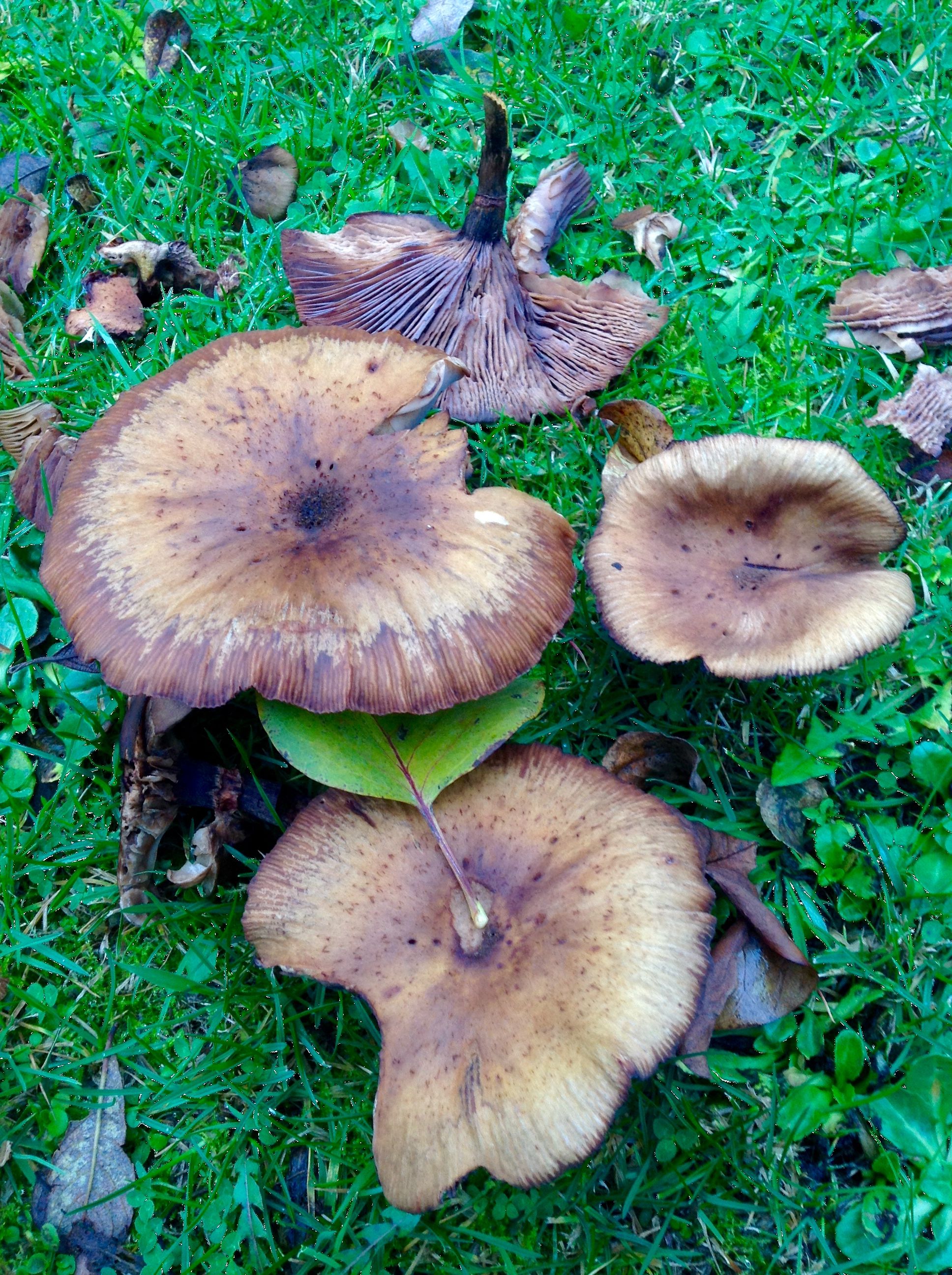
She pulled on her mother’s wellies and trod out into the garden, up the concrete steps. The air was very still; mournful, even. It smelled of wood-smoke, and somewhere she could hear the crackling snaps of burning tinder. Plumes of it rose against the blueish dusk in dark arabesques. She sighed contentedly. The clumps were even more abundant than she’d thought; the whole garden was teeming with their shadowy figures. She knelt down to inspect some. She thought of the honey fungus they’d found out in a forest once, clinging prettily to a rotting stump. In the sunset glistenings that glazed the silhouetted trees, she had thought she could almost see fairies, fluttering above the mushrooms. They were lovely mushrooms, with their smooth peachy caps. Her friend had said they were edible; but you could not be sure with wild ones, so they left them alone, like a living relic, noting their path. The toadstools she saw now in the garden were a putrid brownish colour, etched with black lines and little white spots. They were ugly in a kind of otherworldly way. Ethereal, even.

Her knees were going numb from bending so she stood up and did a lap of the garden to get her circulation back. She was recalling things. The party where a boy brought out a sandwich bag of suspicious-looking vegetables, frying them on somebody’s pan. She’d stood in the doorway of the kitchen, her mind full of cheap red wine, watching the way the little things unfurled in the buttery oil, their spindly stalks stretched out like tentacles, their heads jiggling like jellyfish. As they started to sizzle and wilt, they let out a curious, bitter smell. The boy had shared them among his friends and then they had disappeared for most of the night. Later, one of them was hanging upside down in a tree at the village park, and he was reciting streams of Byron’s poetry. Sometimes, she still heard his voice, even now, reverberating through the dark.

The cold was coming out of its slumber and creeping into her bones. She stood still, wrapping her cardigan tight around her. She crouched down again and dug her nails into the earth. A weird feeling gripped her, a feeling tinged with homesickness. She pulled nothing out of the ground, no trace of seed or root. She stood up again. The quietness made her feel smaller than ever, but her mind was huge and overbearing, stretching itself across the matter of the garden. It all glared in her vision like the close-up shots of a dream. She wished some sound would break the silence. A bird-cry, even. But the little creatures were so quick with their wings that they made no noise as they flew between branches. She was trembling now, remembering everything.

The fungus at her feet now looked like the severed heads of something. She had to breathe.

If only a car would start in the drive, or a plane fly overhead…something, something!

They say that magic makes you happier. And she thought there was a thing she could do, before going inside again to the womblike comforts of heat and sleep. She brushed through the grass with her wellied feet, and stood in the centre of one of the fairy rings. It was a near perfect circle. She stared first at the mushroomy clumps at her feet, then up at the sky. It bore the dramatic flashes of an expressionist painting: great bolts of violet wounded the blue, and rivulets of yellow broke away from the horizon, approaching amber and spiralling, spiralling. Then she found again the moon. Brighter now, it was a sharp crescent, the fold of an eyelid. She waited, waited. Her body was cold and her skin prickled like coral on a sea-washed rock.

The clouds began to gather, slowly at first then fast like an army.

You could smell it in the air, the sourish dampness that held as a breath.

She closed her eyes and the rain came. She felt the initial sprinkles that bounced off her skin, the cries of birds as they darted into the hawthorns for shelter. Drizzles of silver slashing the landscape. A downpour of water and chilly air. She stuck her tongue out for the cold shock and the sharp taste. The crescendo sound of it showering louder, coming down thick and heavy from the west in globules fat as teardrops. She opened her eyes and her hair streamed down her face like seaweed, clinging to the marble of her skin. She felt it surge within her, the waterfall sounds of this injured nature. A grumble of thunder. Something stirring in her chest, a rush in her pulse. Almost like someone was watching her, a million things flashing around her. Her laughter was lost in the cavernous sound of the rainstorm, another echo pirouetting through the chambers of memory. And as she stood there, the fungus and mushrooms soaked up their nectar, before crumpling to a wasted doom. The rain had poured through and through her, and she felt hollow and purged as a mermaid tossed from the sea to a tomb. And she was the still point in the tempest around her, her body soft and sad with its sickness. This was it; home was just this, wild and true, the beatific glow of a hullabaloo.

Mould

10155541664_fdbdb1532e_z

It was a moon-scape she saw, peering into the mug in her mother’s study. Yes, a moon-scape with little lumps of perilous blue and grey, seeping into one another. Or maybe it was another kind of space terrain: she imagined the ground of Pluto, with its eye-like holes and fissures. She gave it a shake, and watched the particles break up and drift away, flotsam on some unreal ocean. A polluted ocean; maybe the earth’s oceans in a hundred years’ time. They told her in school that the world was filling up with waste and one day everything would melt away, like those paintings of dissolving clocks she saw when her mother took her to the museum. You could already tell it was happening, her teacher had said, the way that it gets so warm these days. The mildness of winter. It wasn’t right.

Well, the moon wasn’t right either that night. No; she could not stop thinking about what she saw in that mug. Another world, was it? She wished she could go back and count the dots, knowing that if she did she could start to chart this new universe, and in knowing it better she could sleep. She could enter its landscapes, drift across it with the powers she had in her dreams. Her mother put a sachet of lavender under her pillow and she could smell it through the cotton, soft and sweet…but it was not enough distraction. She needed to know what she had seen. But her mother might hear her and send her back to bed. It had to be worth a try. Sucking in her breath, she tip-toed back into the study, closing the door quietly behind her and flicking on the light. It was an energy-saver bulb, that took ages to properly glow. So she stood in the dull orange light, watching the wall till it got brighter. Then she would pick up the mug and see. Then she would know again.

Finally it was bright enough and so she went to pick up the mug…but this time, oh how the smell caught her! It was sharp and evil like the stench of seaweed, only worse, like the most rotten thing in the world, slowly fermenting. Yes, she smelt it and was knocked backwards almost. But it was fascinating. She let her nostrils quiver and sniff deeper as she held the mug to her nose. The she looked into it again and saw how the dunes and lumps had mushroomed and the blue was turning greenish, or maybe that was just the duller light. Still, these were definite changes. And she was thinking of the clumps of toadstools she’d seen in the school playground, while they were out measuring soil quality and watching the teacher bending in the grass with a thermometer. They were big brown flat things, ugly and intriguing, and she knew that some of them were poisonous, and some of them if you poked them let out a puff of steam. She wished she could touch these mushrooms but the thought of putting her finger in the mug was repulsing. It was kind of like a horror movie, she thought, where they showed you somebody’s festering wound, only it never looked quite real. Still, you would not like to touch it, it was just sort of funny to look at. No, she would not touch it; instead she shook it again, and this time the dunes did not dissolve, but she could see little fissures rippling across them. Her stomach turned over as if emptying something, and she felt a surge in her gullet. She put the mug down and breathed in deeply, trying to rid herself of the awful smell that clung to her like a disease.

She wondered what it was that these microbes loved so much about her mother’s tea. She considered if they’d accept her into their colony. Like them, she was partial to a glass of milk, but maybe not tea, unless it was laden with sugar. She wondered how they’d order themselves, scattered about as they were like that. Bulbous, growing over each other. It would be a ruthless economy. She sat down on the comfy office chair and span around slowly. The queasiness was leaving. She liked how all the objects rushed around her, melting into long white and orange lines. She stifled a giggle; she must not wake her mother up. She whispered stories to the mug. Telling them about the boy she wrote a letter to once in class and the time she left her homework on a bus. Soon she would say goodbye to her mother. She knew that it could not be long before she was ready to join them. They would be like ants, or the tiny people in Gulliver’s Travels – Lilliputions – running all over her body. Only, they were so small you could not see them. You could just imagine them, growing and multiplying, all over her skin.

They made the moon rocky and bumpy, like that boy whose skin was cratered with pimples. She had seen on television once two fat ladies in white coats scrubbing away green things from the corners of a bathtub. She and her mother didn’t have a bathtub, but sometimes she saw things come out of the plughole in the shower. Great streams of wiry hair that poked out, or smeared themselves upon the porcelain. Once a huge spider. She heard its legs patter and she screamed, and her mother tried to lift it out with a gardening trowel. Sometimes there were little black seeds all over the bath, and the first time she thought maybe a plant had vomited up all its babies (in class that morning she had been drawing diagrams of sepals and stigmas and filaments and seed-pellets), but then her mother told her it was just exfoliating beads from some lotion she had. She tried the lotion and it made her skin burn, but it was not unpleasant; kind of like the scratch of dry sand. It left a pinkish blotch on her legs. She was wondering if the moon was like that: all pastures of dry sand. Were there lakes or ponds or waves? Trees, even? In the mug she could not see any trees, and the only waves were from when she rippled the sticky liquid with the swirl of her wrist. She thought maybe if she lived there she’d have to invent some more things, to keep her interested. There would be a gift shop, for one thing. You could buy t-shirts with maps of the land on them, with close-up details of the blue-green growths and the tea-stains that ringed the china walls. It was like a whole continent splayed out, with all the countries slotted together, their landmasses enveloping each other. A strange thing.

She would take the mug into school on Monday, for show-and-tell. It was the right thing to do. Everybody else would bring in their cinema tickets, their remote-controlled helicopters, Pokemon cards, a book they had read over the weekend. And they would talk about themselves, nattering away about this thing that had brought them  their childish joy. Then she would take to the stage, like the prime minister on the telly, clasping her precious mug, and she would tell them how she had found the moon. At first they would laugh, she recognised that, but then they would realise how clever she was. How amazing was her discovery. She giggled just thinking about it. But I must let it rest, she reflected. After all, she needed to let her colony expand, for the spores to pile up higher upon one another until they were spilling over the edges of the mug. She wanted her colony to be huge and impressive. I mustn’t let them escape. She took a postcard from the wall – it was a painting of a lemon and a teacup by Francis Cadell – and she placed it over the mug. The moon was safe, and its surface would continue to bubble and grow in their new warmth and darkness. So she tip-toed back to bed and lay awake, her mind floating around this wondrous space. Each star was a point of contact, a possibility.

And she spoke to the stars, even as she jumped between them, as you jump between chairs and tables and sofas when you play ‘The Floor is Lava’. Each one told her a story, and she basked in the glow of all those words weaving a tapestry around her. Soon she could slip into sleep, soon, soon, soon…she closed her eyes to a new darkness, felt the warmth of the space beneath the sheets. The smell of mould dissipated from her brain, and now there was only silence, the scent of lavender, wafting in delicate waves…

When tomorrow arrived, it was Monday, so she got dressed for school and went downstairs. To her horror, she saw the mug up-ended on the draining board. What on earth…? Mummy? Her mother came down to boil the kettle and make her porridge, but was startled to see her daughter crying so early in the morning. What is it, darling? She was already late for work, and starving. She threw her handbag on the table and brushed down her jacket. What is it? she repeated. The child was pointing at something next to the sink. Mummy! she wailed, you’ve killed the moon! 

14999083677_30927ae383_z

Oranges for Bonfire Night

IMG_0027

(from a Creative Writing Society freewrite with the prompts ‘fireworks’ and ‘oranges’)

She remembers the days when she and her brother popped over to the neighbour’s house for Bonfire Night. She’d climb over the garden wall, wearing her wellies and her dad’s itchy jumper that came down to her knees and a hat her mother had pulled over her fringe. They’d play with the children next-door because they were good friends and the same age, more or less. Even though it was pitch dark in the November night, they’d dance around the garden, shrieking and playing tig or hide and seek while they waited for the fireworks to be set up. They were cheap fireworks, bought from the local store, which ordered them from some chemistry enthusiast in the city. This was, of course, before The Internet.

She can’t remember his name, the man next-door; the dad who told the kids off for laughing too loud and who’d sneak off for fags in the greenhouse while his wife did the washing up. She remembers the blur of his bearded face. His yell as he stepped back from the firework he’d just set up. She remembers the mum better; the mum used to bring out steaming mugs of soup and carrier bags loaded with oranges. She remembers standing in the cold bright air, peeling with the stubs of her fingernails the rind that came away like thick flakes of skin. Biting into the soft flesh as a flame-coloured Comet rippled above her. The sour sting of the juice squirting in her eye; the sweetness seeping over her tongue. Stickiness on her fingers. She’d toss most of it away, into the rhubarb patch. She wanted to save her appetite for the chocolate log and lollypops that awaited them inside.

There’d be the rockets, soaring and screeching in her ears like banshees, sizzling in her belly. The wheeeEEeeeee like electricity. She hated them, but they were a thrill. She’d look up to catch them but they’d be gone already. Then there were the pretty ones. She read their names off the cardboard box, discarded on the porch: Crosettes, Dragons’ Eggs, Ice Fountains and Blossoms. She watched them go off with the other children, trying to identify each one as if they were flowers in a biology textbook. Only, they were always too quick; their beauty dazzled her vision and then evaporated. There were the ones that overflowed like ocean spray, showering and spitting flickers of white and silver, like a jeweller soldering a giant diamond. Rainbows would spread out across the smooth sky, raining colours across the tall trees at the back of the garden. Her favourite was the Catherine Wheel. It took ages to set up, but it was magical. It spiralled like a wild thing from the pole of the washing-line, sparks flying around it with the craziness of broken machinery, or hypnosis. She adored the Catherine Wheels. They made her feel strange and unreal, as if she were looking into an abyss.

After all the fireworks were gone, the children were doled out sparklers, which they were only allowed to use with gloves. The sparklers let them write their names in the air, as if they were inscribing their thin identities into the vast constellations of the night sky, the atoms of the air around them. She misses how back then in the country you could always see the stars and the sky achieved a proper dark. In the city where she lives now the sky is always a murky brown, the colour of Coca Cola or dirty rivers.

She used to hate how eventually they’d have to go inside. She used to want to stay out in the garden forever, sucking in the lovely coldness of November night. She hated how the sparklers had to be chucked into water buckets, where they’d snuff out with a quick hiss. The adults would always check that they hadn’t burned their little fingers. She remembers the faint char marks that stained her gloves. Remainders. She found those gloves, only a few months ago, when she’d gone home to help clear the house. They were in that same yellow jacket she used to wear, and even just touching the plasticky fabric brought back glimmers of firework enchantments. But the gloves were full of holes, the stitches became undone in her hands. Everything was to be given away, sold or donated to charity, after her mother died and now that the house was to be sold as her father left for business in America.

He’d phone her from new places and his voice would crackle over the phone like a fading sparkler. She closes her eyes and still she smells the warm soup, the tickle of gunpowder.

And oranges. She remembers the oranges. She never liked oranges.