‘Do something pretty while you can’: The Magic of Belle & Sebastian

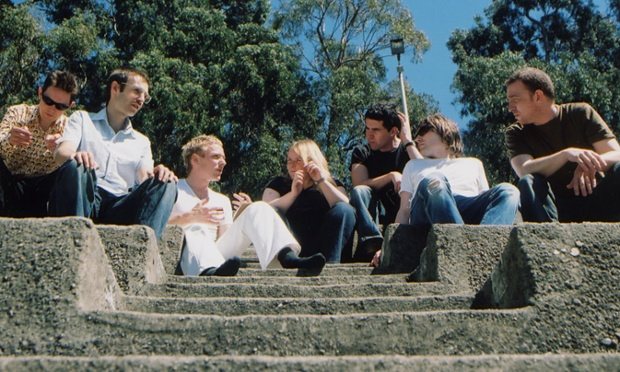
aa037da0-a17c-47f3-9e82-4639aeba279e-620x372
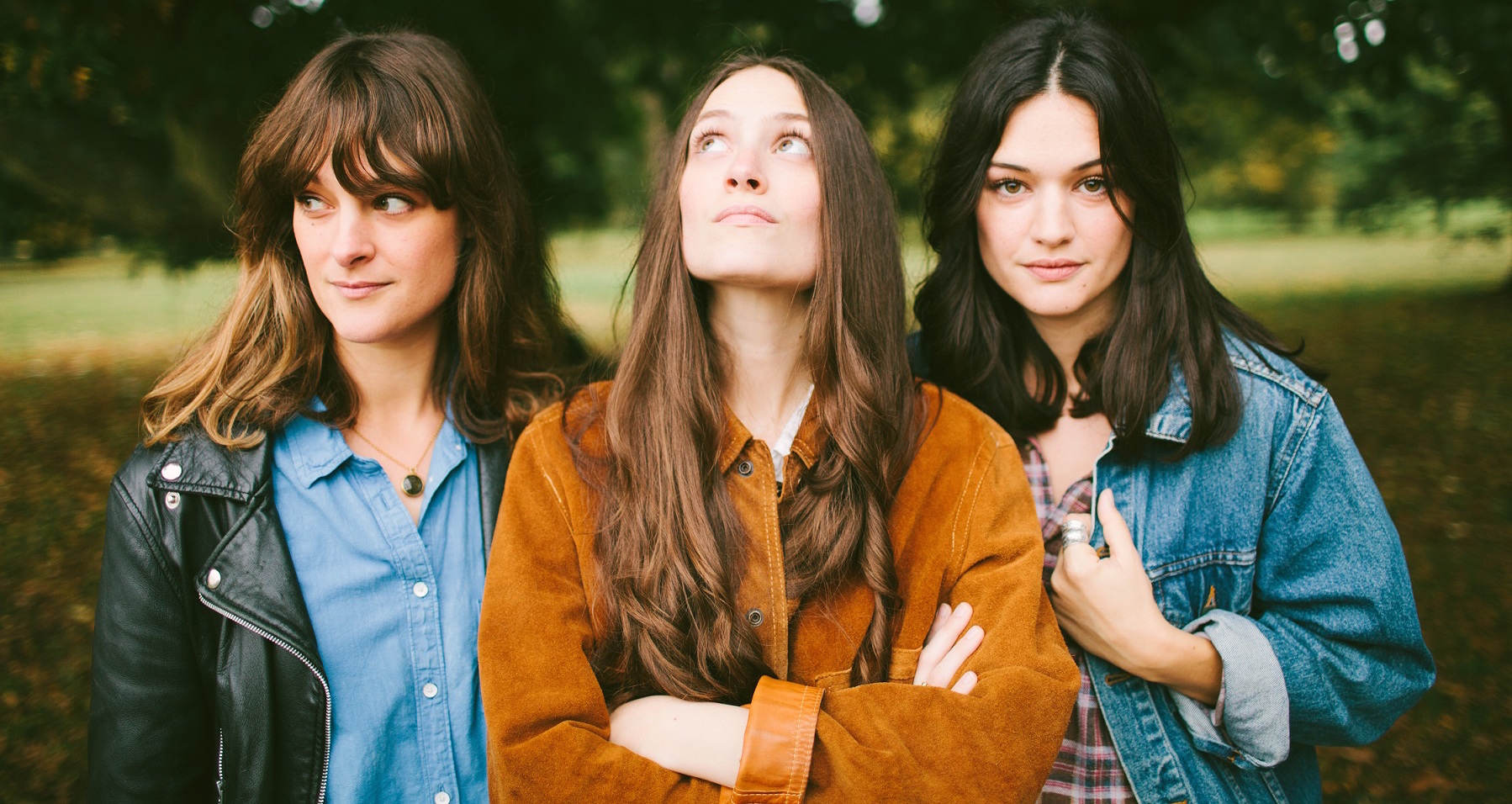
image source: The Guardian

Belle & Sebastian are one of those bands that give you a warm, fuzzy and nostalgic feeling. As much as they’re often lazily attributed to the cultural realm of the ‘indie kid’ or the ‘Glasgow hipster’, this neglects the fact of their wider popularity. They are, after all, a band who’ve been around for over 20 years now. I’ve played their tunes in the restaurant where I work and witnessed middle-aged folks who look like they’re off to a Springsteen concert humming along to ‘The Boy With the Arab Strap’. Their songs have popped up on plenty of popular tv shows and films (‘I Don’t Love Anyone’ on Girls, ‘I’m a Cuckoo’ on The Inbetweeners, ‘Piazza, New York Catcher’ in Juno – to name just a handful). Like a sweet, familiar honey, their music just sticks to you, whether you wanna spread it on your toast or not. Sure, they get a lot of hate: their songs are cloying, the singing a bit too saccharine at times, the lyrics silly, the sound the same on each album. I’ve heard them being called ‘beige’ music.

For me, Belle & Sebastian make pastel coloured music. I don’t know, maybe it’s a touch of the old synaesthesia but I’ve always imagined their songs awash in delicate shades of blue and pink, green and yellow and orange – a bit like the colours of sorbet. They’re just the perfect summer band. Some bands it’s easy to have a colour for, or even a texture: Mogwai are deep deep green and black, LCD Soundsystem are bright, shiny white, Mac DeMarco all denim blue and dirty mustard yellow, Kate Bush is a luscious kind of cherry red, Bjork is all the hues of a pearl, Tame Impala are psychedelic greens and blues and oranges, Aphex Twin is ink black, but sometimes yellow, blue or bubblegum pink. In the same vein, Belle & Sebastian to me are all about pastels, sometimes a wee bit brighter but never beige, except when it’s that classy kind of chino beige that you might see paired with a yellow blouse and pink ribbon. I want to be dressed up with a funny hat, a mini skirt and retro sunglasses when I listen to them. Something lilac, a stick of ice lolly. Hell, maybe even rollerblades. I find myself immersed in the stories of the songs; I sort of want to be a character in one of them – a lost twenty-something with her school days long behind her, figuring out how to deal with the world and enjoying living in the city.

DearCatastropheWaistress

Listening to them involves a kind of camaraderie: you’re sharing the world with them, with all the voices of each song’s narrator; sharing Stuart Murdoch’s hazy, romanticised version of Glasgow, the lives of the quirky characters he writes into his lyrics. The musical arrangements in their songs vary between stripped back and fragile, sometimes very much Smiths-influenced (inherently, B&S are an ‘urban’ band, right?), with pretty melodies adorned with piano, acoustic guitar, maybe a bit of bass (‘We Rule the School’, ‘It Could Have Been a Brilliant Career’, ‘Dress Up in You’ – these are some of my favourites), to zany and fun and maybe even lovably chaotic, with some of the earlier songs sporting surf rock guitars (‘La Pastie De La Bourgeoisie’) or (in the early days, Cubase-arranged) electronic numbers (‘Electronic Renaissance’, or, later on, the near seven minute ‘Enter Sylvia Plath’ which frames its tribute to the late great poet inside a Europop epic), as well as the Beatles-influenced ‘chamber pop’ (of which they share the influence mantle with Camera Obscura) – see, for example, The Life Pursuit. Their songs are often self-conscious, writing about the importance of losing yourself in books and songs (the final song of Tigermilk, ‘Mary Jo’, references the fictional book that titles the album’s first song: ‘You’re reading a book, “The State I Am In”’), referencing themselves, other ‘indie’ bands (Arab Strap being the most obvious), creating this whole dreamworld of literary and musical references which itself becomes the fantasy world of the songs. When you listen to them, it’s impossible not to lose yourself slightly to this pastel-saturated universe. It’s not just twee; it’s bittersweet happiness, nostalgia, personal and cultural reflection – they began making music in the 90s, after all. That’s why I smile when I see someone sporting a wee Belle & Sebastian tote bag or t-shirt: you know there’s someone else out there who shares that sweet and silly, slightly sad but hopeful little world.

In a way, they’re a band for the underdogs. They cut their teeth on the Glasgow open mic circuit, with its crowds veering between adoration or ruthless indifference. Every Saturday, under the guise of various band or solo arrangements, Stuart and his pals would appear in the Halt bar on Woodlands Road (sadly it no longer exists) – you can read all about it in bass/guitar player Stuart David’s memoir, In the All-Night Café, which geekily delves into early musical experiments, the songwriting process and all the crazy moments that brought the band together in their formative year. So yeah, it’s worth a read if you’re a B&S fan or even just a musician. It’s important to remember that the band produced and recorded all their early songs (came together, essentially) at Stow College’s now slightly legendary Beatbox course, which at the time was more or less a course that unemployed musicians in the area took to ensure they kept receiving the dole: ‘From what I could tell,’ Stuart writes of his first impression of the course, ‘[Beatbox] was a total shambles. Just scores of unemployed musicians sitting around in a dark, airless labyrinth, doing nothing. […] I wandered around on my own trying to work out what was what, while people scowled at me, or just stared blankly into space. A thick cloud of cigarette smoke pervaded the place, and something about the absence of daylight and the lack of fresh air made me wonder if the place was actually a detention centre set up by the government to incarcerate all the people they’d caught using Social Security benefit as an arts bursary’ (In the All-Night Cafe, pp. 10-11). This is probably an impression of college hallways and classrooms that most young adults of Generation X or millennials growing up in Britain can relate to: the flickering strip lighting, the apathy amongst both staff and pupils, the sense of suffocating bureaucracy, of life in suspension. And yet out of that dark and maybe even Kafkaesque environment, sometimes the magic happens. People come together and make the best of things – it’s inspiring.

For me, it’s also inspiring that Stuart Murdoch is actually from Ayr. The only other celebrated artist I can think of off the top of my head that hails from Ayr is none other than Robert Burns, so yeah, it’s been awhile since the place has been put on the map, artistically speaking. Belle & Sebastian are usually associated with Glasgow (especially the West End), but for me it’s important to remember their humble beginnings. Ayr still has a pretty cool music scene in terms of acoustic nights in local pubs, but there’s definitely a dearth of actual decent gig venues, especially when it’s producing so many talented musicians through, for example, the well-respected Commercial Music course at the UWS Ayr Campus (see for example Bella and the Bear and the wonderful Shanine Gallagher).
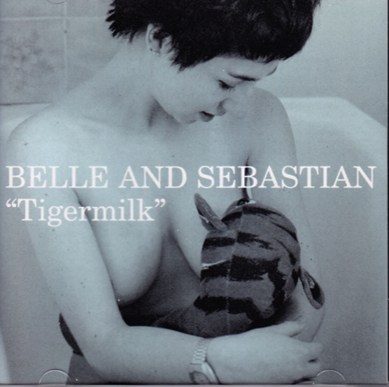
Belle-And-Sebastian-Tigermilk

ANYWAY,  back to Belle & Sebastian. I wanted to talk about Tigermilk as an example of their oeuvre in general – as the raw, often forgotten diamond. It’s their debut album, though I actually came to B&S first through If You’re Feeling Sinister, having picked it up from Fopp when I moved to the West End for university and decided a B&S CD was a good way of immersing myself in local culture. Tigermilk reminds me of that lost and lonely summer feeling, walking around the city killing time before going to work, worrying about all the books I had to read before September, the people and things and memories I was in love with, that paranoid and desperate desire to write myself and indeed keep writing. It’s a lo-fi sort of album; it feels sweet and magical in that simple way, and you can tell that it marks the moment when the band discovered they had something special going on.

Sometimes the lyrics are a wee bit strange and surreal; the cast of characters Murdoch evokes in his lyrics can be pretty bewildering. The band’s slightly surreal vibe is indicated by the cover art for Tigermilk: a black-and-white picture of Murdoch’s then girlfriend, Joanne Kenney, apparently breastfeeding a toy tiger. Then take a look at the lyrics to ‘My Wandering Days are Over’ for example: ‘Six months on, the winter’s gone / The disenchanted pony / Left the town with the circus boy / The circus boy got lonely / It’s summer, and it’s sister song’s / Been written for the lonely / The circus boy is feeling melancholy’. You’re never sure if the characters are metaphors for existentially pained middle-class indie kids (lost in the job market/lost in the adult world circus of mad capitalism??), or actual protagonists in B&S’s musical universe. That’s the poetry of it – you get to decide. It all sort of makes sense, this girl with spiky black hair nourishing a toy tiger; sure, you can take it as symbolic, but it’s also just intriguing and slightly controversial enough to draw attention to a debut album.

One of B&S’s unique selling points is the whimsical fictions they weave through their ‘brand’ as a band. Take, for example, the sleeve notes to Tigermilk: they detail a cute little tale about Sebastian and Isabelle, the namesakes for the band.

Sebastian met Isabelle outside the Hillhead Underground Station, in Glasgow. Belle harassed Sebastian, but it was lucky for him that she did. She was very nice and funny, and sang very sweetly. Sebastian was not to know this, however. Sebastian was melancholy.

He had placed an advert in the local supermarket. He was looking for musicians. Belle saw him do it. That’s why she wanted to meet him. She marched straight up to him unannounced and said, ‘Hey you!’ She asked him to teach her to play the guitar. Sebastian doubted he could teach her anything, but he admired her energy, so he said ‘Yes’.

It was strange. Sebastian had just decided to become a one-man band. It is always when you least expect it that something happens. Sebastian had befriended a fox because he didn’t expect to have any new friends for a while. He still loved the fox, although he had a new distraction. Suddenly he was writing many new songs. Sebastian wrote all of his best songs in 1995. In fact, most of his best songs have the words ‘Nineteen Ninety-five’ in them. It bothered him a little. What will happen in 1996?

They worked on the songs in Belle’s house. Belle lived with her parents, and they were rich enough to have a piano. It was in a room by itself at the back of the house, overlooking the garden. This was where Belle taught Sebastian to put on mascara. If Belle’s mum had known this, she would not have been happy. She was paying for the guitar lessons. The lessons gave Sebastian’s life some structure. He went to the barber’s to get a haircut.

Belle and Sebastian are not snogging. Sometimes they hold hands, but that is only a display of public solidarity. Sebastian thinks Belle ‘kicks with the other foot’. Sebastian is wrong, but then Sebastian can never see further than the next tragic ballad. It is lucky that Belle has a popular taste in music. She is the cheese to his dill pickle.

Belle and Sebastian do not care much for material goods. But then neither Belle nor Sebastian has ever had to worry about where the next meal is coming from. Belle’s most recent song is called Rag Day. Sebastian’s is called The Fox In The Snow. They once stayed in their favourite caf’ for three solid days to recruit a band. Have you ever seen The Magnificent Seven? It was like that, only more tedious. They gained a lot of weight, and made a few enemies of waitresses.

Belle is sitting highers in college. She didn’t listen the first time round. Sebastian is older than he looks. He is odder than he looks too. But he has a good heart. And he looks out for Belle, although she doesn’t need it. If he didn’t play music, he would be a bus driver or be unemployed. Probably unemployed. Belle could do anything. Good looks will always open doors for a girl.

You’ve got it all here: the playful and ultra twee imagery ‘(she is the cheese to his dill pickle’), the hint of queer culture and crossdressing that sometimes runs through B&S songs (‘This was where Belle taught Sebastian to put on mascara’), the DIY elements, the spatial immersion in Glasgow’s West End as a kind of leafy wonderland where people own pianos in airy rooms overlooking gardens. It’s honest and cute and totally unashamed, totally uninterested in being cool. Compared with the stylised, rock’n’roll swagger of Britpop, this album (originally released in 1996 then rereleased in 1999) is so refreshing. The tale of Belle and Sebastian is a short story, more than an explanation of the album’s lyrics or ‘concept’; it’s a bit ambiguous, a touchstone for all the other B&S characters who populate later LP – it’s perhaps, most importantly, an indication of the band’s consistent literary bent.

‘Sebastian was melancholy’. Well, melancholy is probably the overriding emotion on Tigermilk. Melancholy being that feeling of sadness, yearning and inexplicable loss. An indulgent feeling, a languid and probably narcissistic feeling that is almost pleasurable despite lolling around in the negative. Freud, in Mourning and Melancholia (1915[17]) famously distinguishes mourning and melancholia thus: ‘In mourning the world has become impoverished and empty, during melancholia, it is the ego itself’.  Mourning is about the loss of a specific object, whereas melancholia is a vaguer feeling, a depression with no apparent or obvious source, a swallowing up of selfhood into narcissistic darkness. One of the reason’s I really like ‘I Don’t Love Anyone’ is its in-your-face rejection of the Coca Cola style let’s-all-hold-hands-and-be-happy version of love, the assertion of personal endurance and the often denigrated value of independence in a world where we’re all supposed to follow the crowd: ‘But if there’s one thing that I learned when I was still a child / It’s to take a hiding / Yeah if there’s one thing that I learned when I was still at school / It’s to be alone’. I was that kid who sometimes liked to walk around the playground alone, making up stories in my head – adults just assume it’s because you’re being bullied but there’s a golden value to imagination and it’s easier to forget that as an adult, easy to forget that sometimes you need time out from your friends to be in your own mind.

A lot of Tigermilk is about trying to negotiate personal identity in an often problematic adult world with few opportunities for anyone vaguely creative. It’s worth quoting a hearty chunk of ‘Expectations’ to demonstrate this:

Monday morning wake up knowing that you’ve got to go to school
Tell your mum what to expect, she says it’s right out of the blue
Do you want to work in Debenham’s, because that’s what they expect
Start in Lingerie, and Doris is your supervisor

And the head said that you always were a queer one from the start
For careers you say you went to be remembered for your art
Your obsession gets you known throughout the school for being strange
Making life-size models of the Velvet Underground in clay

In the queue for lunch they take the piss, you’ve got no appetite
And the rumour is you never go with boys and you are tight
So they jab you with a fork, you drop the tray and go berserk
While your cleaning up the mess the teacher’s looking up your skirt

We’ve all known (or been ourselves!) the weird kid obsessed with music, inviting abuse with every strange word spoken. Wear something black, a bit of eyeliner and you’re inviting folk to ask you if you “shag dead folk”. There’s always the one of many that has a whole collection of cool things to say, to contribute to the world, but ends up in retail, in a call-centre, maybe waitressing. Again, Belle & Sebastian are the band of the underdog, the folk (and there are a lot of them) who slog away at day jobs but don’t give up on their dreams – whether those dreams involve becoming a star of track and field, a model, artist, musician, writer.

Tigermilk, then, isn’t just a melancholy album; there are some feel good moments, such as ‘You’re Just a Baby’, which features handclaps and a nice rock’n’roll beat with a simple, serenading refrain: ‘You’re just a baby, baby girl’. Fundamentally, Belle & Sebastian are a pop band, and a damn good one at that. Stuart Murdoch recently wrote and directed his own film, God Help the Girl, which more or less demonstrates his near-religious philosophy of pop music, as the character James (fittingly played by the singer from pop/electronic band Years & Years) proclaims:

A man needs only write one genius song, one song that lives forever in the hearts of the populous to make him forever divine. […] Many women and men have lived empty, wasted lives in attics trying to write classic pop songs. What they don’t realise is it’s not for them to decide. It’s God. Or, the god of music. Or, the part of God that concerns Himself with music.

This is some fairly interesting religious imagery coming from a singer (Murdoch) who has always been openly Christian. And of course, the hyperbolic emphasis on music’s divine significance here is perhaps a cheeky dig at the ego of the pop star, but it also touches on the importance of universalism for pop. It’s easy to consume, it should transcend generations, it should be technically perfect – the satisfying work of a ‘genius’. But good pop, as Belle & Sebastian demonstrate, isn’t all bubblegum songs about loving your sweetheart – it also has that spark of something else. For me, B&S capture a very specific experience of existential bewilderment in the modern world, combined with the right amount of romance, comedy, storytelling and a healthy streak of cynicism. God Help the Girl is twee as hell, but it’s also a loving portrait of Glasgow, of the early days of being in a band, the freedom of summer days drifting down the canal with the world shining bright around you. It’s maybe also a portrait of unrequited love. And, crucially, it transforms that cliche, the power of music, into something sparkly and fun as well as serious and uplifting – it is a musical after all. Its ambiguous ending, with the heroine (significantly called Eve – more religious imagery!) finally leaving the city and on a train ride to London where she intends to try and make it ‘alone’ after her existential rebirth and artistic awakening in Glasgow, is perhaps its strongest point – it’s a feminist assertion of personal creative desire as opposed to remaining tied down to the things your friends want.

god-help7
The protagonists of GHTG: James, Eve, Cassie

Once again, Murdoch puts complete faith in his slightly damaged protagonists; he encourages us to just trust our creativity. Maybe that’s why I love Belle & Sebastian so much, because sure, their songs are mostly golden, pastel-hazed pop, but it’s not that simple; they embrace that wavering, magical and sad place between warm dreams and cold reality, and represent all the poor souls who live there in that limbo, such as the eponymous heroine from ‘Mary Jo’: ‘Your life is never dull in your dreams / A pity that it never seems to work the way you see it’. And even though such songs are full of melancholy, you’re still treated, as in an Arctic Monkeys song, to some brilliant lyrical candy: ‘Cause what you want is a cigarette / And a thespian with a caravanette in Hull’. So maybe that’s the special element, the thing that makes the everyday divine, that elevates the ordinary into a valid subject for pop music. And maybe, pleb that I am at heart, that’s why I love it.
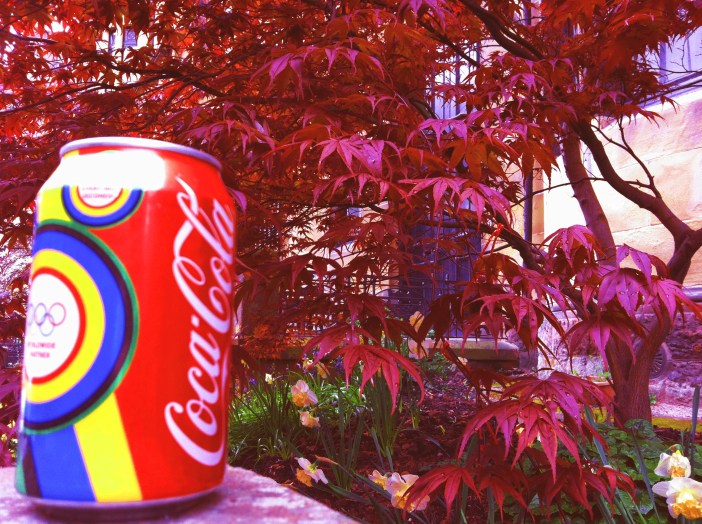
Hillhead St.

IMG_0485

Springtime, 2012; first spring in the city. Living on Hillhead Street, with the cat, Miller, who used to mill around and curl his sleepy tail round your ankles at lunchtime, purring at the sun. It was sunny all through April and May. Early mornings in the library, level eight and nine with the light flooding the windows warming and pure, a dish of sun butter melting over sandstone buildings. The best seats, the computer screen a dull mist of unimportant philosophies. Walks along the Kelvin, tangles of fern and wild garlic and the solitaries who wander, sometimes stumbling, always clutching a spliff or a bottle of Bell’s or Buckfast. Coughing their pearls of greenish spit into the river. Summer of the Olympics, no care at all, sugar rush of coke and chocolate buttons and long evenings staring insomniac out of a tiny dorm window. The Decemberists, or Conor Oberst’s croon in the wanderings out to town, to the station or the Necropolis. Smell of cigarettes wafting from rooms below. So far, but not so far, from home. The red glow of the sun at dusk, the silhouettes of house plants, the sound of footsteps.

Road Trip

highalnds

Picture the scene. You pass sea after sea of pines, their tall green points misted with a fine web of vapour, a greyness that stretches over, concealing the tips and the distance, and you are not sure whether it is fog or woodsmoke, the wisps of early morning or perhaps the smoulders of a landfill. Probably you’re somewhere deep in the moorlands, glens and peat bogs of the Highlands; or maybe not that far yet, maybe just the Trossachs. If you open the car window a tad, you can almost smell the midges, their damp, thirsty breath in the air. This is air so clean that its purity counts as a flavour, claimed by many who have flogged the native whisky or bottled water. You would leave the window open, indulge yourself, but there is a sharp cold breeze that tickles the fine hairs on your neck, waters your eyes. It is always windy here; or else deathly still, like a valley out of time. Mountains rise up around you, growing closer and grander as the car turns another corner. They seem monstrous, towering over your small car, and you feel like William Wordsworth (the boy version, out of The Prelude) plodding along in his stolen boat, gazing fearfully up at the mountain peak beyond the lake, the peak that gazes back like an animal: ‘a huge Cliff / As if with voluntary power instinct / Upreared its head’. You can’t help but stare at the streams which splash down from each hillside like silver belts, which glimmer in the pale light which makes it through the misted sky. They catch your eye, pull you in myriad directions. You know that rain is imminent; its scent is as clear as the water that runs on the burn alongside you.

There is always birdsong, even in the evening. You can hear the cacophony of many different species as the car rumbles on in the silent space between two tracks passing on the stereo. You and your friend spent a whole day curating the playlist for this trip. Curating. She said that word, jokingly; but even so, it makes you feel special. This isn’t just any trip. It isn’t like you get out like this all the time, free from the bustle and smoke of the city, the people lingering outside pubs, the strangers drifting through in street-lamp darkness.

You spent a childhood in the back of your mother’s car; the smell of her cigarettes always blowing straight back into your face, rolling down the window to snatch breathfuls of that sharp, fresh air – an escape. You scrambled alongside rivers which rolled on over gleaming boulders; you scrabbled together heaps of stones and logs and built dams, pools and waterways. You fell over, bruised your knees, skelfed your fingers on the pine branches. You watched the water for hours, while your mother smoked and your big brother showed off, scaling rock after rock, cliff after clifftop. You ate cheese and pickle sandwiches made soggy by the damp that seeps in everywhere, through the aluminium and glass, the plastic glovebox and the silver foil. Midges clung to your neck; constantly you felt their hot, sticky itch. Sometimes the car smelt of engine oil. The food made your cheeks flush afterwards, as you washed your lunch down with bottles of flat lemonade that had lingered on the backseat for days.

There was an innocence to those holidays which literally makes you ache to think of. You would do anything to be that small again, crouched by a river, dipping your toes into the freezing water while your brother splashed you from afar, shouting declarations of war. His always taunting words, his grand arrogance. The way your mother scrunched up the sandwich foil into tiny, crumpled balls, collected them in her purse. The day you found them all, still there, when you were digging for lunch money.

Fog coming in thick and deep from a distance. You saw it roll over the mountains like God’s own shroud. It was comforting, feeling the moisture prick in the air, seeing the landscape slowly disappear. When you retreated back into the car, packed up the camping gear, fought with your brother over the radio. He always wanted the sport – Five Live – and you wanted the songs, the music. The stereo pumped, crackling and loud, audible even through the walls of the car, drifting in and out of signal, static…

Her sadness, leaning against the bonnet, sipping from a flask of coffee, staring out into the distance. The tears that you couldn’t see – not from behind – but you always knew they were there.

And why are you going? Why set forth again into the world of fog, of deep enveloping glens and silver rivers? The soft moss and the heather, the greenness that haunts your sleep. Was there some mystery you thought you could solve? She said it would be cathartic, your friend, her name irrelevant. Anyway, it’s Eilidh. When you met her, you didn’t understand the silent letters.

The playlist comes from an iPod, the classic one with the spinning wheel and the white casing. You were going to sell it, after you lost your job and faced the end of things, but something pulled you back. Gone were the Nike trainers instead, and now you are here in the car with your best Sports Directs. What sounds pass through your head? There are many conversations you always wanted to have with Eilidh. You wanted to ask about her purple hair, the bright lilac colour of heather. What did it mean? You wanted to ask whether she was still seeing that guy she met at uni, the one who studied law and played cello for an orchestra; who spoke French in a way that defied the limits of his Edinburgh accent. But you had known her five years, and still you could not speak.

The songs were lovely, dark and deep. Miles were consumed by the roar and pulse of the engine, roadsides slipping away as easily as signs fading into hill fog. You were long gone from the city, its tall grey buildings a mere memory, the pillow of mist you sank into at night. Remember the times you shaved an inch from your life? The bus turning the corner, sharp; the tiny sliver of razor on the white bathroom china. The dark colours flowering out in water, as you watched your ex-girlfriend wash her paintbrushes in the sink. Shades of crimson, violet, blue and scarlet. You were slipping through all these images, the shock and the bruising; the little jolt to your heart as the car passed over a pothole. You were driving, then she was. It’s difficult to remember.

There’s a lot of Mogwai on this playlist. When you first hear ‘Heard About You Last Night’ it’s a bit like waking up for the first time, the blinking beat and slow entry of bass bringing into colour a brave new world of beauty and fear. So many people, you suppose, have died out on those mountains. Battles fought and lost and won. Rain that fell for so long, it seemed the whole landscape might be swallowed up in shadowy puddles. Then there’s the anxiety of ‘Hungry Face’, those infuriating repetitions which build up to the twinkling innocence of the xylophone against those quietly thundering drums. It gets in your head; you can’t help but think of ghost ships disappearing over the Clyde, a set of yellow eyes opening and closing, suspended in the dark, clouded air like the smile of a Cheshire cat. The sound of soft, steady bleeping. Eilidh says something funny about the sheep. They have an absurd look about them out here, she says, but then so do pretty much all sheep. They glance up at you, but instantly their expression fades into blasé. They have only two emotions: indifference and fear, the fear coming out when they jolt their necks back and scarper.

Soon you fall into the melancholy of ‘Cody’, so slow and serene you might as well be stoned, sinking away from your thoughts like being pulled out into a vast, shimmering ocean. The bass echoes slow through the car, its thick walls. You press your face against the glass, leaving steam marks which fog up the world outside, the tall green mountains now coated with your breath. Reality blurs with the material of sleep. And would you stop me? If I tried to stop you? You imagine this is what heroin feels like, plunging into a slow, majestic ecstasy, the kind that drags eons of time through your veins; and from all those hours draws out this kind of awesome mournfulness even as your whole body tingles with euphoria. You could sleep forever in blissful, evil dreams. When I drive alone at nights, I see the streetlights as fairgrounds / And I tried a hundred times to see the road signs as Day-Glo. So slow, the car turning corners. An elegy to a lost raver, stumbling through the darkness of some urban labyrinth, the upturned bins, old condoms and leaking glowsticks spilling out the wasted remainders of another good night, another goodbye to childhood. Would you care at all? Eilidh rests her hand on your leg.

“Stop crying,” she says. It’s a statement, not an instruction. You are still staring out the window.

Your mother used to listen to The Waterboys, maybe even Primal Scream in her more rebellious phase. She liked to dance around the living room doing the dusting to ‘Fisherman’s Blues’, all the dust motes swirling up in a maelstrom of childish untidiness and neglected housekeeping. Her voice would crack and she would laugh at herself, breathless, collapsing onto the sofa. Make me a cup of tea, eh boys?

You were at a house party once, at uni – not that long ago really – and this girl was playing a song that stirred something familiar in your memory. You knew that voice, its growl, the twists of electric guitars.

“What is this?” you asked, the joint smouldering between your fingers.

“Oh, it’s The Waterboys actually.” You resented her showiness, of course, but this was interesting. “I know, so lame right? I like it though. They put Yeats to music. You know the poet, W. B. Yeats? ‘The Lake Isle of Innisfree’. It’s a lovely poem.” She was drinking port, of all things – you remember that too.

You inherited, perhaps, a gloomier tradition of the nation’s music. There would be no Proclaimers on this playlist.

Arab Strap, the disco beats, spat poetry and everyday apathy.  The sort of post-hardcore or drum-soaked indie that felt like having the rotten parts of your brain stripped out as you lay on a boat, slowly being drenched in dreich Scottish rain. You were always a fan of Frightened Rabbit, ever since you saw them at a festival once, danced yourself into a frenzied ceilidh of mud and tangled feet, even as the songs sung of sadness and bleakness and heartbreak. The endless drone, the refrain: it takes more than fucking someone to keep yourself warm. Teenage campouts in Loch Lomond, worried you would all die of the cold, of the rain and the midges. Drunk out your minds, desperate and scared of the river which burst its banks sometimes even in summer. The expectations of nothing but the prospect of falling into the same abyss as everyone else. Fag butts drifting by the edge of the river, the scorched remainders of a bonfire. Listening to it again now, well, you can’t help but think of how this seems to be coming true somehow. The same abyss. Even as the drums collapse over the screaming words, there’s a waterfall out there somewhere, maybe the one you floated in once, upside down on weird pills with the cold so deep in your bones that you didn’t feel the punches of your best friend who hated you because you kissed — no. That was another time. You are driving forward now, you are at the wheel.

Maybe there is something that you know that I don’t. 

“We should stop soon, you look like you need a rest.” The world outside is almost darkness; it is twilight spinning webs of navy and sapphire gold around the edges of trees and mountains. Trees with their shimmering leaves. Clusters of stars emerge from the velvet blackness. You wouldn’t stop for anything.

Next: There Will Be Fireworks, ‘From ’84’. The simplicity, the sorrow which isn’t yours; for how could you feel so much nostalgia for a year, a thought, that came before your time? The not-belonging is what makes you feel lonelier, the minor chord, the rustle of Eilidh in her woollen tights turning the page of a cheap magazine. Just a kid, in his room / No-one hears him howling at the moon. But you have lost touch with friends too, you have felt the strange pain that comes from seeing people you love change, grow apart. You cannot hit the high notes; you cannot sing along. So we’ll put it down to fate or bad luck. The plain, bare strumming pattern haunts you, even after the song finishes and something new comes on. You’re thinking of another lyric – sad song in a minor key – and wondering how you ever heard of this band in the first place. Why is it you love them so? Whether they’re actually any good, or just another expression of bleak Scottish winters, the lack of sunlight, the endless, down-pouring rain…but isn’t that beautiful too?

Eilidh has, perhaps, more interesting taste. The next song is hers: Cocteau Twins of course. She mutters on about how their best album was Milk and Kisses, though everyone thinks it’s Heaven or Las Vegas. Elizabeth Fraser’s dreamy soprano takes you straight through the night and into the morning; you could both listen for hours and hours, not realising that the songs were changing or repeating, just drifting into the dissonant guitars and distorted lyrics, the hypnotic drum machine loops, better than sex. You would like to float, suspended in a disco somewhere, each song playing out the pattern of a strange, intense kiss. You suppose these are all the 1990s discos your mother would’ve went to (if she hadn’t had you). What does it matter now? The sky before you bursts through in pastel smudges, which break up the dark silhouettes of the Trossachs mountains. In the distance, through the windscreen, sparkles of sunlight play upon a pale blue pool, the first loch you have seen since yesterday. There is something about the shape of the peaks, the space of the valley. You have been here before. 

The Twilight Sad come on the car stereo. There’s no mistaking the intensity of that voice, the thick accent and its distinctive rolls and howls. Each song with its own atmosphere, a haunted quality reminiscent of The Cure.

“Let’s stop here.”

The loch is so close now. You can feel something inside you, a tension breaking, the rapid increase of the beat from the heart that burns in your chest. Eilidh is humming along, though her voice crackles and breaks as easily as the gravel on the road below your tyres. When you climb out the car, cold air sucks your breath away as you slam the door. Suddenly, the signal floods back to your phone. Three missed calls from your brother, and you know what that means. Another night, another row of bottles slowly emptying, slowly being broken in a dive bar of old men, the black hole at the bottom of every street in every Scottish city. Once he was an eagle, soaring down those hillsides, ready to leap out and scale the lake with legs made strong by football, with arms that could reach out for anything they wanted. He couldn’t save her, any more than you could, weak and pathetic, wrapped up in all that suppressed panic. Hidden in your room, even when it happened. It rolls through you, the realisation. This loch, like a terrible mirror. This beautiful loch, the very one you all picnicked by, the year your brother finished high school, the year of your first kiss, the year she —

‘There’s a Girl in the Corner’ on the stereo, and Eilidh is speaking, but her words are muffled through the window, the pounding drums and resounding lyrics. She’s not coming back / And she’s not coming back again. Standing here, the cold wind at your neck, another summer nearly ending and here you are – you finally feel it.

(all embedded lyrics attributed to respective artists).

Tempest

Out from a colourless tundra
comes the turning wind, the wind
that rattles the glass of a window
knife-thin,
willing outside the world within.

Down in the park the pathways flood,
so gurgling glugs
of chocolate water swirl and seep
and spill from the river,
like blood burst from an artery.

Across a sky of aching grey
the flock of blackbirds fly,
showering outwards in sparks of darkness—
a blink and they will fade.

Turn around in sparkling rain:
the glaze that clings to twigs and leaves,
saliva soft and silver glinting,
like water on a house’s eaves,
lushly splashing
the webs of spiders.

Behind the sway of hollow trees,
their million fingers twinkling,
there is a spread of endless green,
a distant summer—
the luxury, my own decision.

Here, out of the storm you now appear,
a tangle of whiteness: white scarf,
white floss of hair. Your sadness
lost to me now, a fragment
as the rain blinks on and off
and loses my vision.

Live Review: The Staves @ The Old Fruitmarket, Glasgow

source: www.thestaves.com
source: http://www.thestaves.com

My first encounter with The Staves was in the most mundane of places: a lift. It was a couple of years ago and they were playing downstairs in the venue where I work, and I remember being pretty gutted that I was working that Saturday night and couldn’t go and see them. Anyway, I’d mostly forgotten that they were playing by the time I was actually on shift. I got in the lift with my stack of glass trays and as the lift stopped at the next floor, three young women stepped in. I recall being in awe of their beautiful hair, dresses and denim and I knew instantly that they must be The Staves – they seemed even cooler in real life. I had a burning urge to blurt out I love your music but instead I stared down at my crates of dirty glasses, listening to them chat casually about where they were going to go for dinner that night. Rock and roll, huh?

Well last night I got to see them live (properly). When they played a couple of years ago, I got to nip downstairs for a quick look once service had quietened down. Instantly I was hooked by their soaring harmonies, and it was pretty rubbish having to drag myself back upstairs to work. With a full set, the spell never breaks. A venue like The Old Fruitmarket seems perfect for them, with just the right amount of nostalgic quaintness mixed in with a kind of gritty city cool: colourful fairy lights but also decent spirits behind the bar, a balcony which you can watch the stage from. They had support from Gabriel Rios who played this sort of expressive, beat-heavy folk music. Each song seemed to tell a story, and Rios himself was very comfortable chatting away between sets about Scotland’s breathtaking scenery and the even more breathtaking brownie he had sampled nearby before the show. I should add that the beats were made on a gorgeous big double bass; you know, the kind of fist-tapping thwack that echoes beautifully, syncopating with sweet strings to have you hooked. Anyway, it was a really interesting dynamic, with neat guitar playing and the strings and the rocky/hiphoppy/folky vocals. Yeah, something like that.

The Staves themselves arrived onstage not long after. Up amongst the blue plumes of smoke, they seem so ethereal, their voices suddenly soaring through the silent air, shimmering drum rolls and percussion accompanying but only after a while, like a rain shower after the first burst of sunlight. You can’t help but think of all sorts of mythical sisters: those of the tv show Charmed, for one. Especially when they do that thing where they gather round the mic and sing all these amazing, breathtaking harmonies which even the adoring crowd refuses to interrupt (till all the whooping cheers afterwards). They played lots of familiar songs, with key tracks from the new album, If I Was, like ‘Black and White’ and ‘Blood I Bled’ mixed in with shorter songs, samples of harmonies and snatches of tracks the audience hasn’t heard before. In-between songs, they lit up the stage with bits of sibling banter, telling us about how as kids they bonded together as a “triad/tripod/tricycle” and shut out their parents by developing a dialect borrowed from The Simpsons, Clueless and various other random films and tv shows. While one of them wistfully dedicates the next song to their parents, “wherever you may be”, another retorts “I’m pretty sure they’ll be in Watford right now” – cue giggles and mock gazing out over the ocean of dry iced audience. There are a lot of giggles and chat and you can tell they’ve really grown relaxed with their stage presence, and it really draws the audience in too. Just the right balance between ethereal and down-to-earth politeness, with that very English way of complimenting everything – the crowd, venue, support act – whenever they can: “This venue is fucking amazing”.

It all flows together perfectly, and the enchanting quality of their music comes through most, perhaps, on the handful of sweeter, more pared-down tracks they played from their debut album, Dead & Born & Grown. You get that sense of their pure, raw talent on more stripped-back tracks like ‘Eagle Song’, which has haunting sort of folky lyrics and there’s a sense of nostalgia to it: Oh, to be lost, / Oh, to be wasting my time. There’s also a feeling of deep history and time – Of old battles lost, battles won – and then the hopeful kick: Call me in the morning I’ll be alright. It’s a comforting song; one of my favourites. The new tracks have a bolder edge, but they have kept earlier material fresh with a more upbeat version of the lovely ‘Mexico’ from Dead & Born & Grown. It all just sounds amazing: clear, vivid, strong and tight. You can tell they are really great musicians, experimenting with loops and percussion and again firing out those haunting harmonies. They even threw in a cover of Bombay Bicycle Club’s ‘Feel’, which was really cool and successfully reworked the poppy Bollywood mashup feel of the original using their signature strings, sparkling guitar and those crystal clear, melodic voices.

There’s something I recall Conor Oberst saying about First Aid Kit in an interview/some video online, commenting on how they have this mystical sisterly quality about them that carries through in their voices. You really feel that too with The Staves. They have this lovely innocence in their earlier songs, which have a deep folkiness, a softer kind of choral vibe (a bit like Fleet Foxes) which is steeped in landscape (‘Winter Trees’ will forever remind me of one of my first winters at university, wandering around Kelvingrove in the crunching snow). Their cover of ‘Silver Dagger’ (unfortunately it wasn’t played last night) is just as lovely as Fleet Foxes’ and perhaps a fitting tribute to older folk legends: Joan Baez and Bob Dylan, for one example. The new album is certainly edgier and perhaps more fun (rock’n’roll?), but also has its dark, lonesome moments (fittingly, it was produced by Bon Iver), approaching more bitter subjects like relationships (Suffer me as I suffer you, ‘Blood I Bled’) and heartache (‘Don’t You Call Me Anymore’, which incidentally, they made a good joke saying that it was a song about cold callers). They play with silence and soft, lush melodies which build through rising harmonies, and not only is this a dream to listen to on CD (taking you back to the sleepy world of a Bon Iver album) but also a real kick live. All in all, The Staves at the Old Fruitmarket Glasgow was a gorgeous gig, the with an encore where they played new track (with lots of good hearty mmmmming) ‘Tired as Fuck’ and then a grittier version of ‘Teeth White’, where already you can feel their growing sense of rock’n’roll excess…And I wanna know / When I can start taking it slow / Cause I’ve had enough. Keep it coming!

Thinking about Exams

11205987_10206431692461531_6584269533734853547_n

Exams and I have a fair degree of history together. From that fateful first day in third year when I waited anxiously outside a gym hall to sit my Standard Grade English, to desperately scouring the labyrinth that is Glasgow Uni, trying to find my Honours English Literature exams, or waiting in the rain outside the OTC building, trying not to get run over by passing cars as rain splashed onto my notepad, exams and I have gone through hell and back together.

And they’re a funny thing, exams. Subject to much controversy too, especially in recent years with the dominance of technology over almost all other forms of learning and examination (who hands in a handwritten essay these days? is it even allowed?). Exams suddenly seem awfully old-fashioned. Individual (wobbly) desks, ink spilling everywhere, people writing with fury in an echoey hall. It seems a strange idea, to sit you in a room at the end of the year, thrust a piece of paper in front of you and force you to desperately pour out something resembling an essay in response to a set of unseen questions. I’ve thought about them long and hard over my time at school and college and uni, and come up with some pros and cons:

Pros: 

  • The fear forces you to study, to recap the information learned over your course.
  • The early stages of studying can be fun. You’re relearning and rereading, and in the process making interesting connections between texts, based on a more mature understanding of the course gained from reflection.
  • It can be an opportunity to shine, to show that you can come up with something original in a very short space of time.
  • You learn the value of concision.
  • If the questions are well-designed, the exam can be a true test of your analytical abilities and skill for quick-thinking – there are not many other times when you have the adrenaline necessary to formulate a coherent piece of writing in such a short period.
  • It’s nice to realise that you’ve learned chunks of poetry by heart. Even if they begin to slip away fairly quickly once you’ve left the exam…

Cons: 

  • Risk of being a memory test. While remembering and recalling information is important for lots of subjects from law to physics, English Lit and other humanities subjects is often about critical thinking skills rather than just remembering ‘data’ aka quotes. Lots of students memorise whole essays and go into the exam, then shoehorn and regurgitate what they’ve stored in their head. Sometimes this works, other times it ends badly. Either way, it isn’t testing much more than your ability to write fast and repeat.
  • Anxiety. This is a real problem for some people and can really hinder their performance in an exam, even if they’ve studied hard.
  • Breadth vs. depth. In an essay, with the advantage of time and access to material, it’s a lot easier to formulate a response which balances careful close reading and discussion of relevant secondary criticism and theory. In an exam, it’s too easy to fall back into the trap of plot summaries, even though you’re perfectly capable of analysis. Exams don’t always reflect your ability to synthesise material, or the extent of the research you’ve done.
  • Too much weighting. In my degree, exams are worth 50% of each course grade. There’s a lot of stake in those two hours, and if you have a brain freeze or something goes wrong, you can really drag down all that hard work you put in during the semester.

There are probably lots more, but here are the ones that immediately spring to mind. My solution would be not to scrap exams entirely, but to use them more effectively. Perhaps have mid-term close reading tests, which would examine your ability to respond ‘naturally’ to a text and your critical skills, rather than just your memory. Maybe also a 25% end of term exam, replacing the other 25% with another 3000 word essay. Maybe it will go that way in the future with credit standardisation; some universities don’t have exams for English Literature at all. The problem of course is that unlike subjects such as law and medicine and business, exam conditions are more unlikely to be part of any aspect of a future career sprung from a literary subject. While some jobs will require you to do set tests e.g. solving financial problems as part of the interview process, you are unlikely to encounter something like that in journalism, academia, publishing and so on. An essay with a deadline seems more akin to the work English Lit tends to lead to.

I can’t remember the worst thing that’s ever happened to me in an exam. There’s always that brief five minute panic when ‘your questions’ haven’t come up, and you have to radically rethink your answers and quickly choose a question; but usually in turns out in the end, and often the most spontaneous answers get the best mark. I guess one of the hardest exams I’ve ever done is Higher Music Listening. I mean, it shouldn’t be, but it just seems to be this horrible trail of riddles, where you have to discern different instruments out of tangles of sound in a very short space of time before the clip stops playing. Also, because you have to maintain concentration as a room of people listening to the same tape, your brain gets pretty muddled. And you can get distracted: I was so excited when the tape played The Strangler’s ‘Golden Brown’ that I made such a hasty decision about which rhythm change it contained that I put the wrong answer down. The coding sections of Higher Computing were also tricky, and writing four essays in an hour and a half for Higher Modern Studies is always the bane of your fifth year existence. Every student in Scotland who did languages will probably remember the terrifying voice that blasted the announcement about this being the STANDARD GRADE FRENCH LISTENING exam through the crackly stereo at the back of a gym hall, with all the aggression of someone holding you up in an armed robbery.

***

There was a golden moment towards the end of my last exam, when I realised there was less than ten minutes to go, and I was onto the conclusion, and soon that would be me – done forever. I definitely wouldn’t say that I’ll miss exams (hopefully, I’ll never have to do one again unless I decide to take up driving), but there’s something completely rewarding about the adrenaline rush and the nerves and the exhausting release afterwards that seems pretty unique. A bit like doing the Olympics, but for your brain (and your wrist). To anyone who still has exams to sit, good luck and remember it’s not the end of the world; and ultimately, they are always going to be a somewhat artificial test of your ability!

(Also, I’d love to hear your thoughts on whether exams are a good means of assessment or not for literature-based subjects).

12 Types You See in the Library: A Study of Students in their Native Habitat

source: pixabay.com
source: pixabay.com

So with finals approaching  I’ve been spending nigh on every day in the depths of my university’s library. I thought, therefore, that it would be appropriate to report my observations on human life as it seems to occur in this environment…

I’ve identified 12 subtypes which emerge amidst the Darwinist conditions of computer shortages, desk squabbles, bright lighting and excess caffeine…

  • The sleepers: always a good start to a list, these types are keen on the trend for daytime napping. You will find them either tucked in a comfy chair, their legs propped on the nearest table, or else face down over their keyboard. Probably the source of much resentment, but perhaps it does increase productivity. Still, there could be beds provided, when desks are in such scarce conditions at this busy period…
  • The chatterers: they come in pairs. Often they arrive around 9-10 in the morning and stay till 5, interrupting each other’s study constantly and engaging in joint Facebook stalking and looking up photographs of famous people on Google Images and giggling without much hush. Tend to take 2 hour lunch breaks and leave all their stuff to hog the desks.
  • The fortress builders: you rarely glance a peek at these specimens, as they tend to erect large towers of hardback books on their desks. It is unlikely that the books themselves will be opened, but the careful assemblage of pens, paper, notepads and books is very important to their sense of zen. 
  • The aggressive opportunists: to be found hovering about on every level, clutching their phones to their faces and occasionally hesitating an anxious glance around them, as if they were bird-spotting. These types basically scour every floor desperately waiting for someone to vacate their computer so they can dive in. You’ve got to feel sympathy for them, though there is something rather alarmingly aggressive about the way they rush to your desk as soon as you have clicked ‘log off’. It’s like they have super vision.
  • The stressor: he or she will either be a weepy type, or a sweary type. The weepy type invites deep sympathy, as it is awful to see a fellow human reduced to the state of tears or panic attack over university work. To be honest though, I have encountered more of the latter. In particular, it is common to see finance students sweating it out in the upper levels, swearing under their breath at a screen of what I assume to be frustrating figures, occasionally slamming their fist down upon a hefty textbook.
  • The gruesome eater: disappears for an hour, comes back with some disgusting excuse for a lunch gleaned from any number of surrounding convenience stores or supermarkets. They favour the more odorous of foodstuffs, and are inclined to make vile slurping noises as they lick their tub of oily pasta or packet of tuna sandwiches. The worst, perhaps, is the Monster Munch crunch.
  • The early bird endurance workers: these more elusive types tend to congregate in the upper floors with the segregated desks and rule of silent study. They arrive around 8am to get their favoured seat (the same one every day it seems) and are there for most of the day, working away like beavers. Will disappear occasionally for a coffee or cigarette, but rarely leave their desks, which begin piling up very quickly with masses of paper and scribbly notes.
  • The portable secretary: seems to get a phone call at least once an hour. Will either proceed to talk freely about a mate’s sex life with the entire floor listening, or else make a panic dash to the nearest ‘quiet zone’, leaping heroically over trailing cables. Sometimes is away and the phone will ring unanswered for twenty minutes until a brave stranger plucks up the courage to turn it off in his or her absence.
  • The rebel: turns up mid-afternoon and somehow still manages to blag a seat somewhere. Pulls the plug out of a PC to stick their laptop on charge. Doesn’t care. Eats trifle on level 8. Whose gonna challenge ’em? Snorts heartily with laughter watching silly Youtube videos in the middle of the day whilst anxious students rush around looking for a computer they can study on.
  • The drifter: seems not to ever do actual work, but to spend all day scanning every level for anyone he or she happens to be acquainted with, stopping, in an elaborate trail of procrastination, to gabber and pester said acquaintances. Tends to wear a school leavers’ hoodie, and very soft cotton joggers.
  • The library lightweight: most likely in first year, though the trait can continue up into honours sometimes. Tends not to venture beyond level 3. Dips into the library between classes and sits on Facebook for an hour or so whilst gobbling a sandwich loudly.
  • Lastly…(perhaps the worst) the foot shuffler: Need I say more? – Takes 10 minutes to walk 10 metres, owing to the way he or she drags their feet across the carpet. Pick your feet up when you walk, for God’s sake!

Easter Dreams

IMG_0488

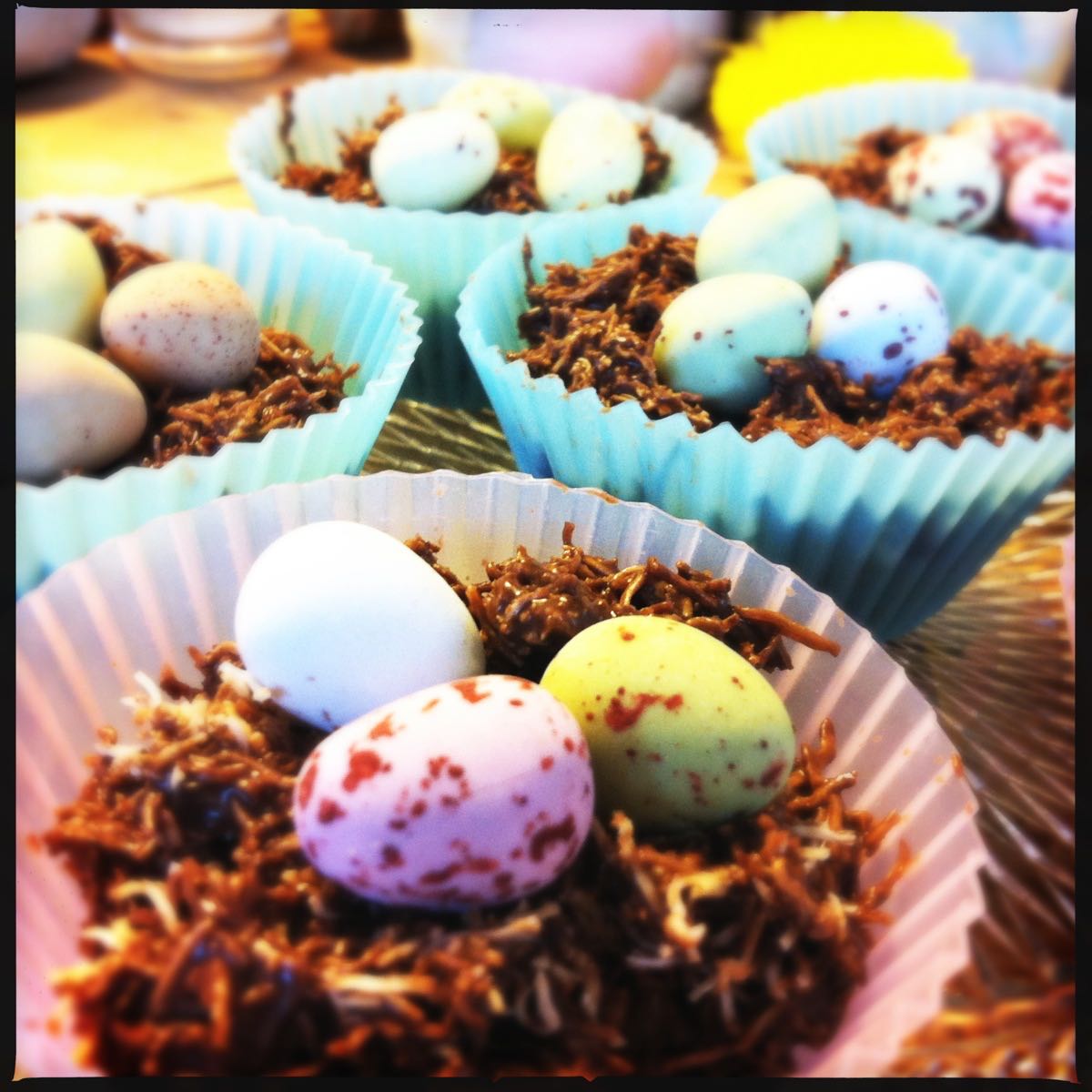
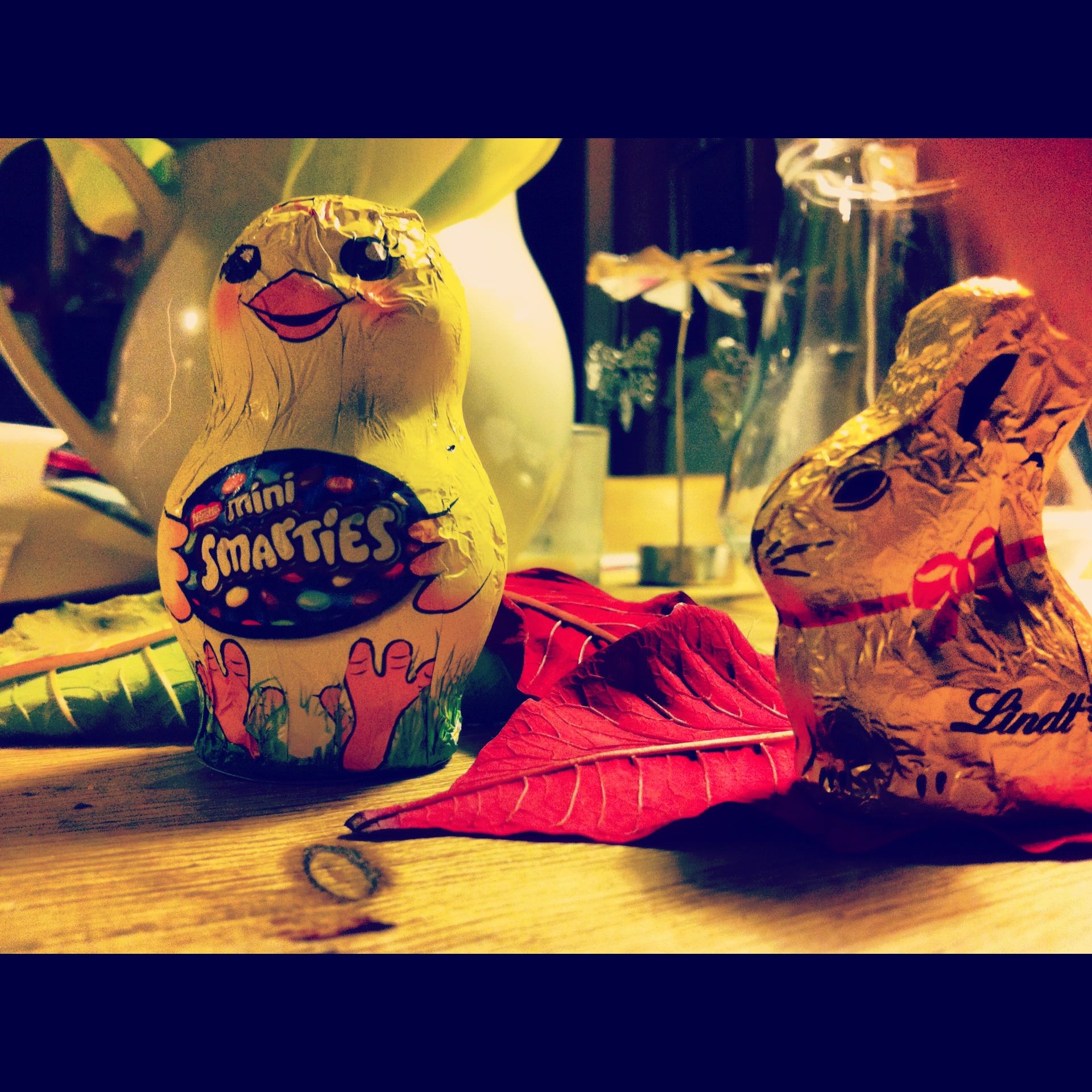
How old am I here? I’m somewhere in England, awake early as usual from sleeping on the floor, stripping away the remnants of another dream about chocolate. A dream about chocolate? Oh wait, it’s Easter. The very word Easter sounds confectionary; like ‘viscount’ – a name recalling the little minty biscuit I used to have in my packed lunches – Easter connotes the crack of a thick chocolate shell, a glut of pastel colours, the consuming of cuteness. Maybe I’m seven. My mum is away in Brighton for the day and comes back with two beanie babies: a fluffy yellow chick and a pale blue bunny. Maybe I’m seventeen, walking out to Kildoon monument just to see the lambs in the fields and hope for a happier existence. You know, that’s Easter too.

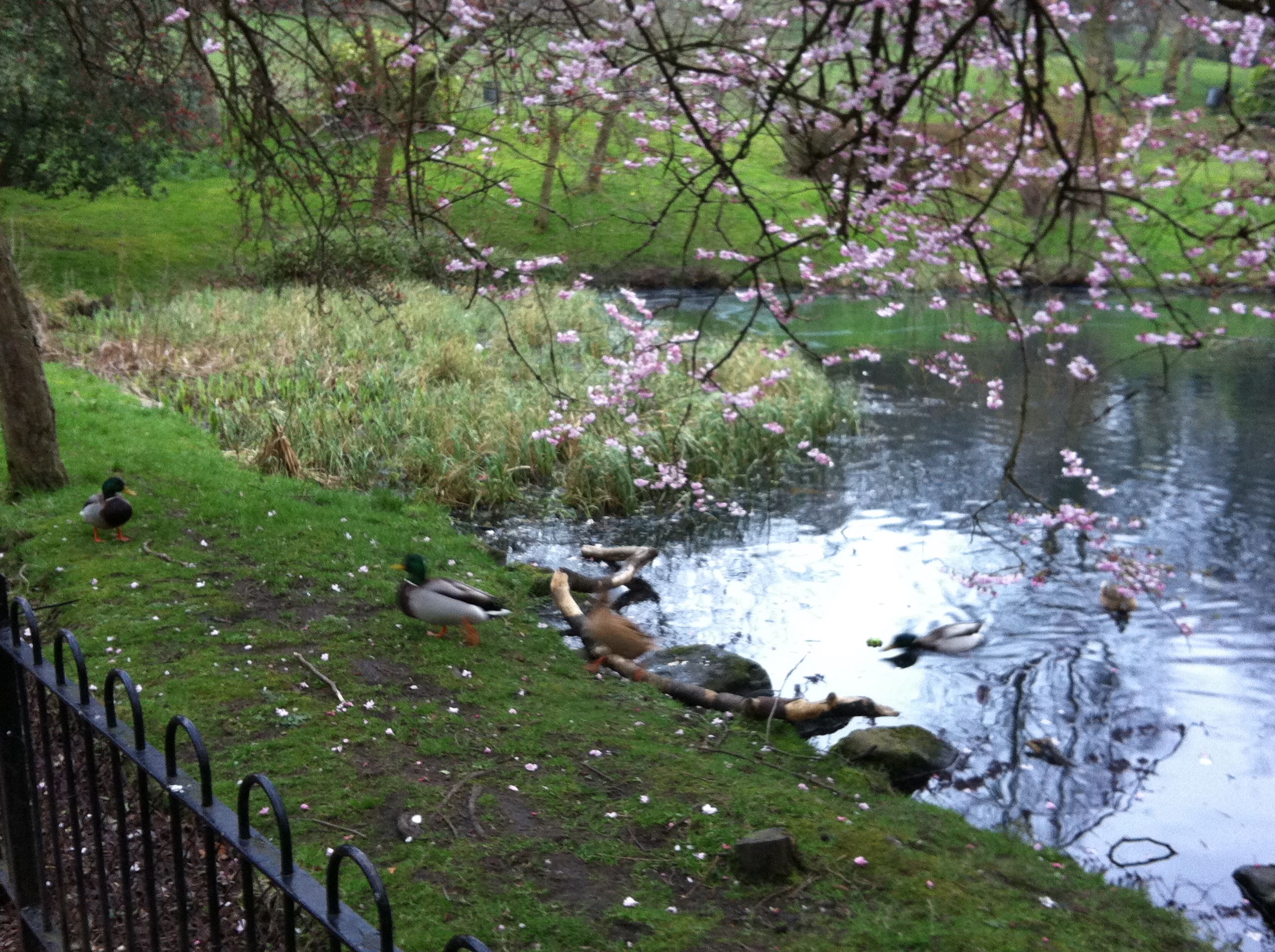
cherry blossoms at Kelvingrove

Those who condemn reckless consumerism bewail the fact that Easter has forgotten its true message: the sacrifice of Christ, the promise of rebirth. It is a solemn hope that perhaps may only be touched by those with faith; it bears the risk of becoming kitsch in the Easter Story worksheets we used to cut out at school with those zigzag scissors. You know, ‘assemble the story of Jesus and the tomb’, where pupils tended more to desecrate Christ with bunny ears more than celebrating his existence. I remember as a child going to church on Easter Sunday and falling into the soft ambience of everyone’s prayer and the familiar stories about The Stone that Rolled and Jesus’s last day and all the other things that have slipped from my brain. I remember being given a Creme Egg by the priest on the way out and thinking he had handed me something precious and holy – but later eating it anyway. Did I feel guilty, biting into this symbol of the blood and sweat and sacrifice of Christ? The problem is, consumerism is good at assuaging such guilt with feelings of pleasure. Everyone’s doing it; everybody’s merry. And after the church ceremony I remember late afternoons watching a certain family member fall asleep after a generous glass of sherry…

Is it wrong that we value booze and chocolate eggs more than the faith and the story? Perhaps…but there is a certain gratitude in the exchange of happiness, the sweet serotonin glow of too much chocolate and a long Sunday afternoon spent with one’s family.

IMG_0429

How did we used to spend our Easter Sundays? Painting boiled eggs and rolling them down the hill at Miller Park. Fighting with my brother over who got to lick the bowl of melted chocolate, leftover from making crispy cakes. A walk to another park, somewhere in Burgess Hill or Milton Keynes, watching our dog do long jumps over a river filled with old trollies and sofas. Munching fizzy belts and trying to do loop-the-loops on the swing, never feeling sick but still exhilarated (I wouldn’t mind doing all that now, but I’d probably vomit rainbows). These were the good old, carefree Easters.

IMG_0134 IMG_0086 IMG_0085

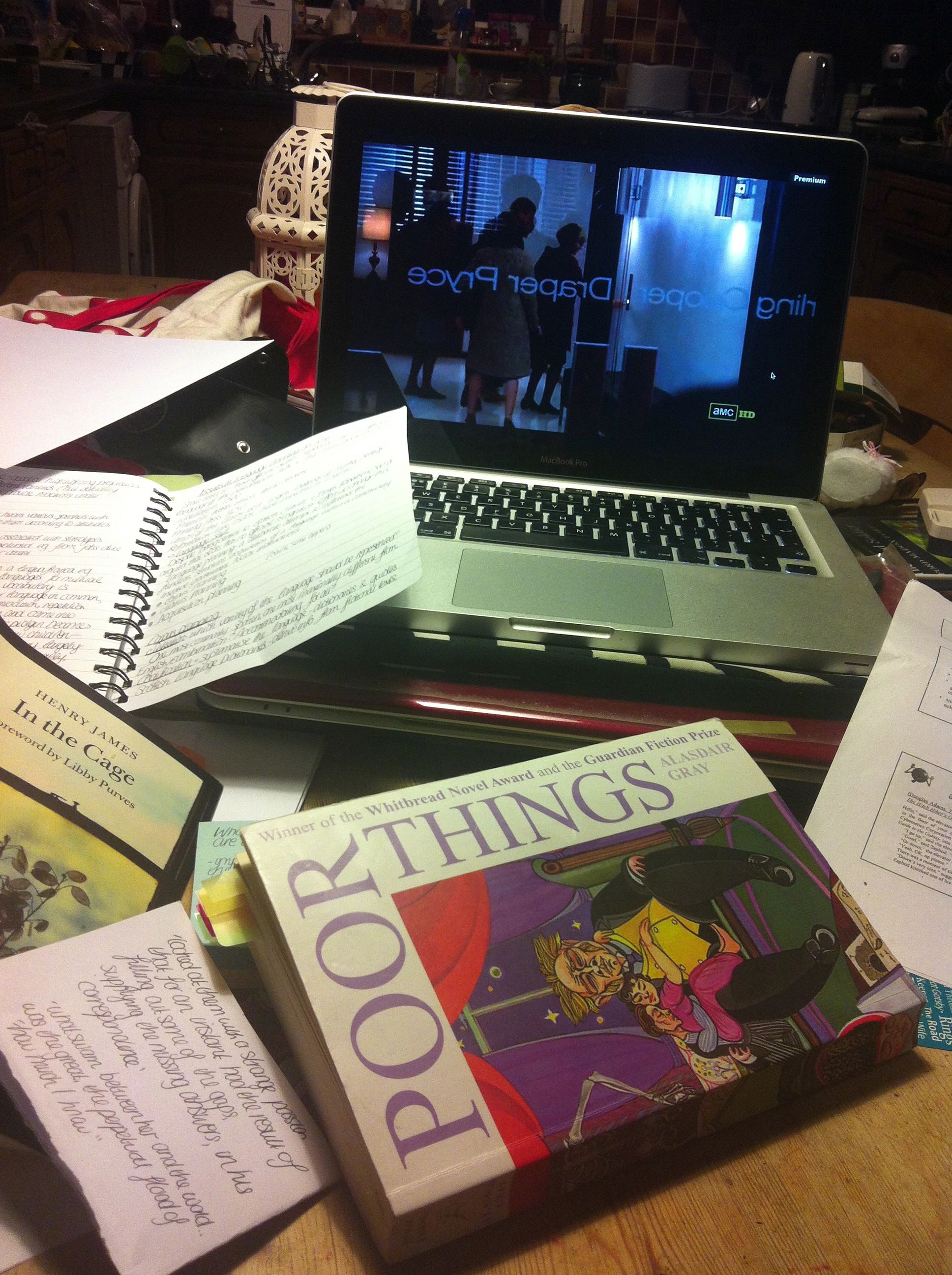
When you hit fifteen, suddenly the Easter holidays are all about studying (or they are in theory). The endless, six am days spent copying diagrams for Biology or churning out practice essays for Modern Studies, or falling asleep in the sun with a Computing textbook over my head. Cooking some complex casserole in the evening and doing the washing up afterwards while my brother messes about with his playlist of ‘doing dishes’ music (or maybe it was the other way round; I always had the better iPod). The Easter of first year where I had a weekend down in Suffolk for my Grandpa’s 90th birthday, and got so excited about staying in the countryside that I went for a walk every morning at 7am, just to glimpse the pretty English fields and flowers. Oh, and the postman I accidentally saw peeing in the river – but that’s another story. The Easter afternoon where I laboured over a terrible wee screenplay for Advanced Higher English; or the one I spent laid up watching crappy old films because I had the house to myself for a week and it seemed a waste to bother with ceremony. That was, incidentally, a very good week: I watched three series of Mad Men back to back and walked up a hill and got my hair dyed and wrote about twenty practice essays for my uni exams. There is great productivity to be had in solitude.

Productivity in action...
Productivity in action…

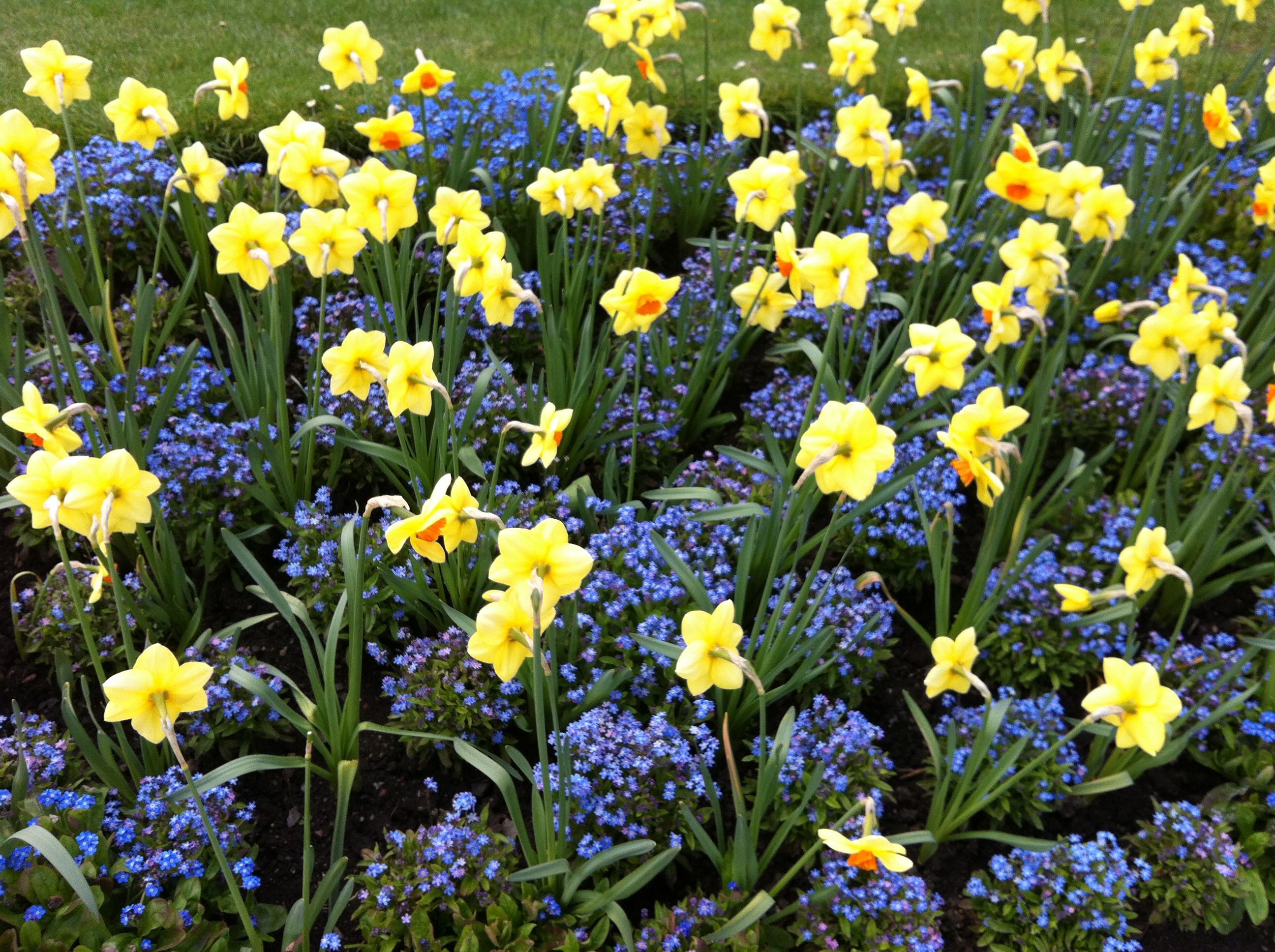
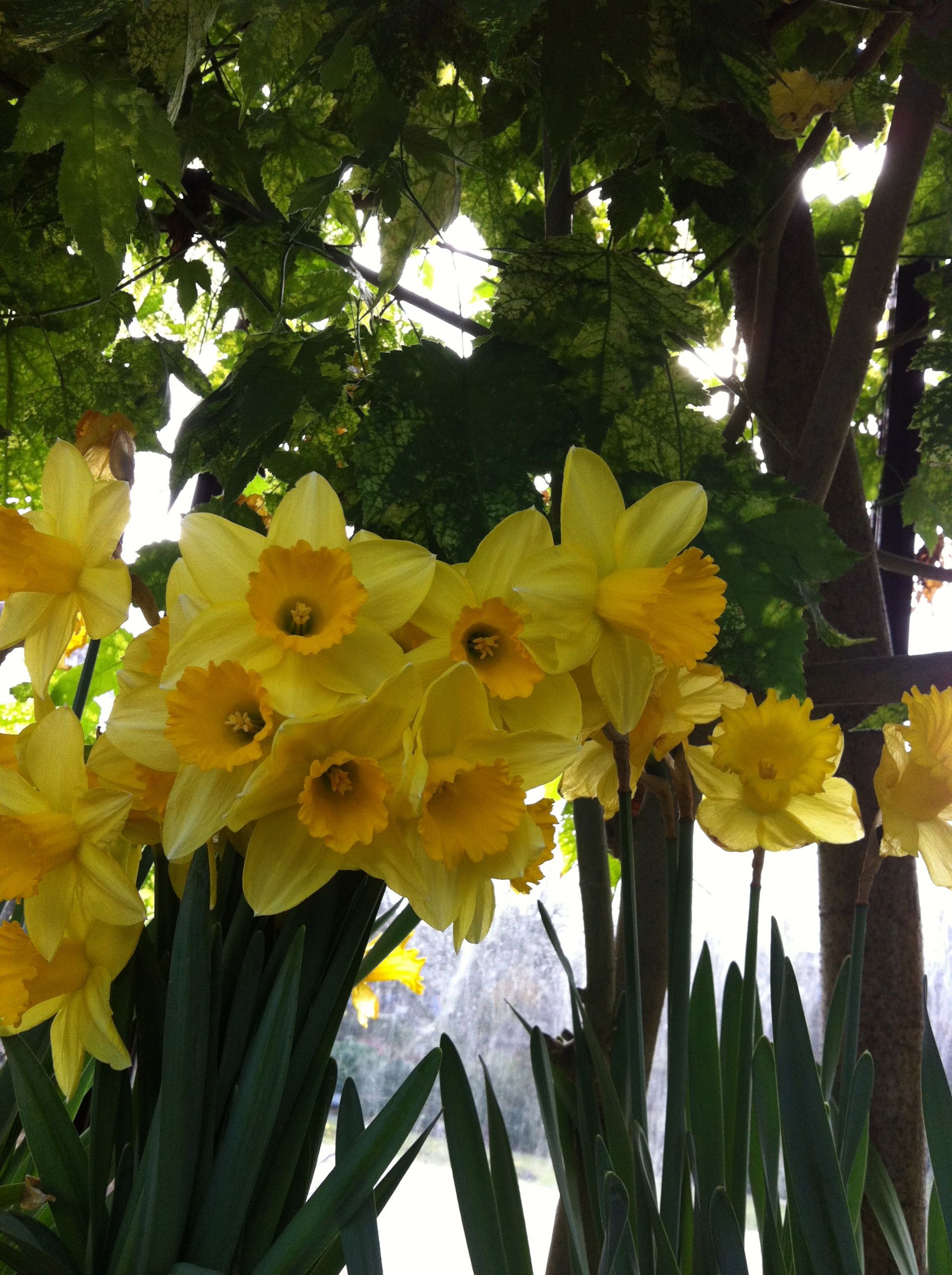
The things I love most about Easter are basically the things I love about spring. As all the songs and hymns might sing, there is a simple joy to seeing the first daffodils and blossoms and lambs in the fields. Seeing everything through the spectrum of pastel colours, wearing lavender jumpers and polishing my nails mint green. At uni, I was too stingy to buy Easter flowers, so I would walk all the way along the Kelvin (halfway to Milngavie) just to find loose daffodils to purloin from their ungraceful state, where they were scattered along the path by wayward children.

IMG_1886

Back at school, Easter signalled the season of study leave; of long lunchtimes sitting on the hill gossiping while people were screaming at their football behind us. Bunnies are also very cool. I think I believed in the Easter Bunny more than I believed in Santa Clause. Maybe it’s the animal factor; there’s something creepy and alluring about anything anthropomorphic, reminding us of the fragility of our status as humans. The Easter Bunny, moreover, gets less visual representation than Santa in popular culture, leaving the onus on the child’s imagination to conjure what he (or maybe she; or should Easter Bunnies even have a gender?) looks like. One upon a time, my Easter Bunny was soft and probably adorned with buttons and ribbon, juggling a multitude of eggs with his paws and vanishing without trace at dawn (unlike Santa who takes his fill from a mince pie and carrot). Now, I can’t help but think of the horrifying rabbit, Frank, from Donnie Darko. The one that appears either as a schizophrenic vision or some weird spirit guide from the near-possible-present-future. Maybe that’s growing up; realising the terror in your favourite childhood memories. Pulling the latent darkness out of cultural myths and fairy tales. Still, there’s a pleasure in that too.

So yeah, today I won’t be doing much for Easter. I can hear the church bells ring for the morning service, and there are a few birds tentatively weaving their melody into the stiff Sunday silence. As far as I know, there aren’t any lambs in Glasgow, and that lovely lecturer who used to praise heavily the wonders of ‘curved chocolate’ is sadly retired. Today I will have to drag myself out of bed at some point to fall back into the world of studying, swapping festive joy for Johnson’s Rasselas, and juvenile pleasures for The Bell Jar. The only chocolate I have in the flat might be Tesco’s 30p Value, but secretly I’ll be celebrating Easter, if only in nostalgia.

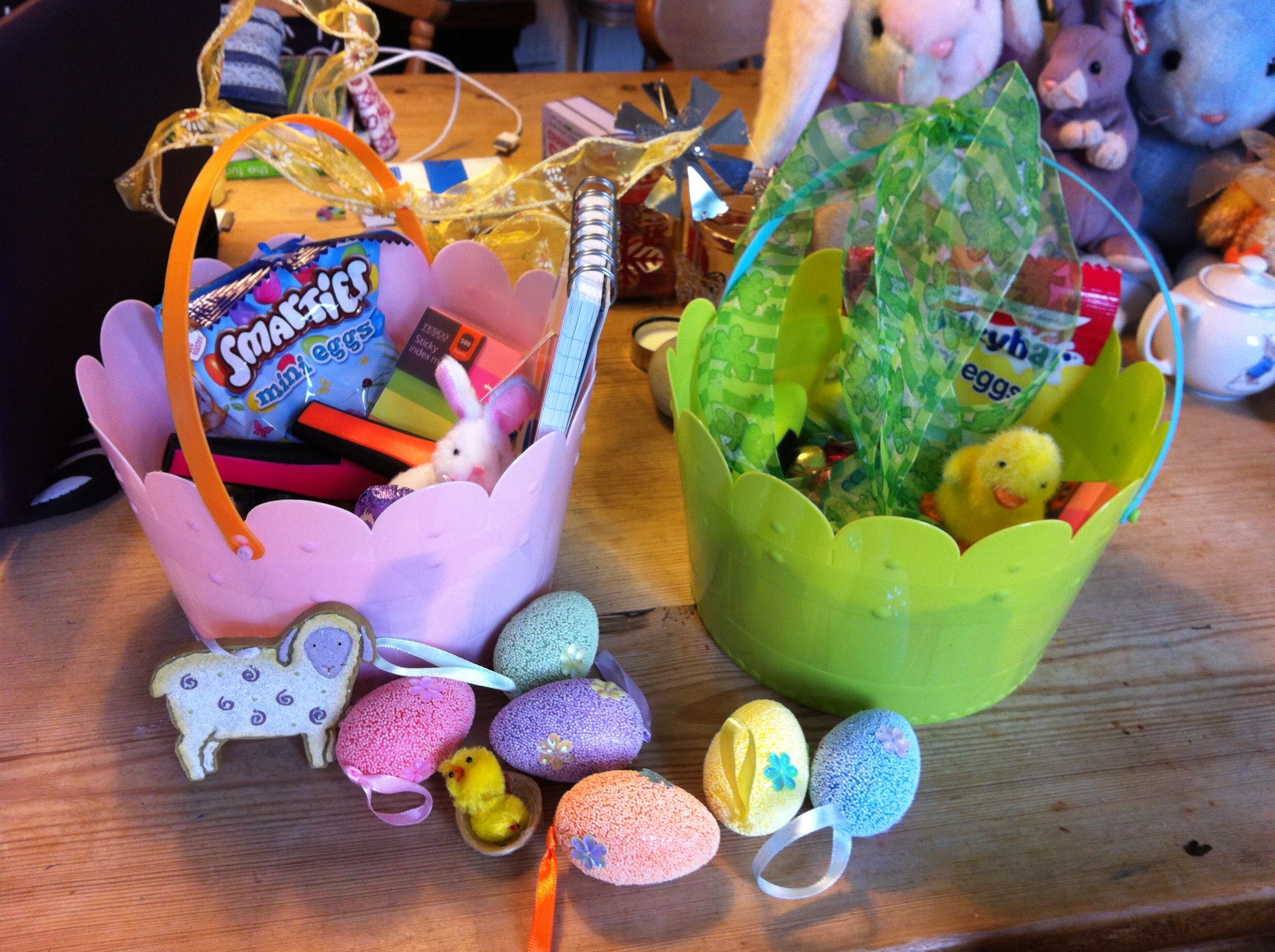
My Mum gets extra parent points for always making us Easter baskets

On Finishing University

2

Well yesterday I handed in my final essays: the last pieces of coursework ever in my undergraduate degree. I expected to feel triumphant but instead I felt a little empty and sad and probably nostalgic. After all those years and sleepless nights and thousands of words painstakingly wrought out on laptop screens, it all boils down to two more essays and three exams. And then it’s over.

Photo from Fresher's Week!
Photo from Fresher’s Week!

It’s difficult to know where to begin with reflecting about my university experience. Everything is usually divided between academic and social life. Employers and scholars, politicians and journalists all frequently debate which of the two is most useful for getting a job. Any careers event you attend will churn out the hackneyed refrain that ‘university isn’t just about academia’. They encourage you to get involved in societies, sports clubs, volunteering, student media. And all this is great, but we mustn’t completely neglect the whole reason we’re at university – some of us paying thousands of pounds a year to do so – to learn. And this learning isn’t all about getting a job (not for me at least), but about learning for education’s sake – for widening your perspective on the world.

The first essay I had to write was on Descartes for Level 1 philosophy. I believe the question was something like ‘Should we be worried by Descartes’ scepticism?’. This kind of question was a whole new ball-game for me. I was used to plain old terminology like ‘Discuss’, ‘to what extent’ and ‘examine/evaluate’. Not should we be worried? Should we? Are philosophical thought experiments really that important? Of course, the essay question was roundly subjected to confusion and piss-take amongst my fellow first year students, but I suppose it was a good way into a career in philosophy. You know, it was the kind of question that makes you think, that challenges your assumptions about what an essay should do. It’s easy to say that now, but at the time I was pulling my hair out. I remember maybe the worst library session I’ve ever had was one rainy Saturday afternoon, where I stared at a blank screen for four hours straight, glancing from book to book and desperately Google searching everything I meticulously typed up, in case it was similar to something else that had been written.

First years are constantly subjected to sermons on the sins of plagiarism. Whilst this is of course a vital academic lesson, it also makes essay-writing for the paranoid nigh on impossible. I remember for my English Literature essay, I decided to scour the internet for every form of critical interpretation available on my primary texts, just to check that I wasn’t repeating the same arguments as everyone else. I had still to learn that plagiarism is more about intellectual integrity, about learning to reference properly and using existing sources in an original way, than coming up with something that is wholly unique. One thing you learn from English Literature – in fact, probably any arts subject – is that the notion of pure originality is somewhat a myth. And that’s actually liberating, because it takes away the equation of creative genius; you’re suddenly allowed to see how authors frequently influence/borrow/steal/subvert one another’s ideas, and you no longer have to imagine essay-writing as an outpouring of wonderful, effortless analysis. It’s allowed to be a difficult process, built up from hours of reading, planning and collated note-taking. Not just something you fire out in an hour at the back of a high school English class.

To the eighteen-year-old me, that Saturday in the library, I wasn’t quite acquainted with all this. I was sitting next to a boy who was typing away furiously, producing what looked like three essays in the space of a few hours (the time it took me to write one paragraph that I eventually cut from the essay).

Philosophy, to be fair, is a subject notoriously confusing when it comes to essays. It shouldn’t be; it’s just that a philosophy essay is distinct from other kinds of critical analysis that I was familiar with through my hitherto social-sciency background. That tutorial we had, waiting to get our essays back, was really hellish. Everyone was telling each other how badly their friends in other tutorials had done. How harsh the marking was. Nobody knew what a philosophy essay was meant to be. We all expected D’s.

When my tutor read out my student number and I went up to collect my essay, I have never been so pleasantly surprised at a grade. An A3! I can tell you, that was the first and hardest earned A3 I have ever received at university.

The end of first year

Looking back, I think I probably spent most of my first two years at university in a vague state of panic. The thing is, most of the time you have no idea what you’re doing and what’s expected at you (I still don’t, but that’s now a good thing – again, liberating). There are rarely any rigid guidelines, especially in a subject like English Literature, and initially that seems terrifying. You are suddenly surrounded with all these people who went to better schools, all these people who’ve read The Complete Works of Shakespeare and can quote Byron and Shelley off the top of their heads. I would spend whole days in my little dorm room trying to get my head around basic terminology like iambic pentameter, chiasmus, ode, Ottava Rima, trochees, lyrics. I’m still terrible at counting metre in poetry, even though I have a background in music and am perfectly capable of keeping time when there are notes and staves involved. But I like to think that I’ve finally found some kind of ‘footing’ in the mountainous landscape of centuries of literature that I was first confronted with that sunny September in 2011.

As with anything, a big part of university is trial and error. You are going to do better under the guidance of some tutors more than others. You are going to write essays that you aren’t very sure of, and sometimes this will pay off, and sometimes it won’t. There are essays that you feel genuinely proud of, not even for the grade but because you know that all the research that went into them widened your intellectual horizons, and all that editing really did pay off in terms of style. It’s nice when you can read back an essay and not cringe at your choice of phrasing, or all those hiccups in grammar and punctuation. There are going to be nights in the library where you get the fright of your life from the tannoid telling you the reception desk is closing. There are going to be times when the library makes you sick, stressed, exhausted. Like when I had to sit next to a man who was eating raw, mud-covered mushrooms straight from the punnet and dipping them in hummus; or the time when the only computer I could find was next to someone who was licking and slurping the oily remains of his spaghetti from the bottom of a massive plastic tub. Times when there are tears involved; either yours or someone else’s. Fights witnessed and blows exchanged; where else but in the sleep-deprived environment of a university library would two people start brawling over a grubby old Dell with a greasy keyboard?

But then there are the best times, the late nights and early mornings and holidays when the library is lovely and quiet. You are free to roam the endless shelves and pick the desk on level 11 that looks out over a beautiful city view. When you finish an essay and print it and the paper is still warm in your hands as you leave to hand it in. When you stumble across a book that you weren’t exactly looking for, but it’s on long-term loan and looks very interesting.

I guess the semesters go so quickly that you hardly notice the time slipping. Sometimes, they seem like little footnotes to a long and formidable summer, with nothing to do but work and plough through the reading list and wish you had more money. If I could go back and do one thing I guess it would be making more use of my time. But then, I don’t regret all the evenings I spent immersed in journal articles and books, because that’s what’s shaped my mind. Sure, I might not have a degree with immediate career prospects beyond journalism or teaching, but I wouldn’t swap my education for the world. And I’d recommend Glasgow Uni English Lit to anyone, especially because it’s so steeped in critical perspectives and literature beyond the obvious canon. Where else would you start off a second-year semester reading Martin McDonagh’s gruesome play The Pillowman, or have a fourth-year seminar on Gone Girl and a course on Urban Spaces which divides its programme under mysterious headings like ‘Airport’ and ‘Shopping Mall’ rather than the tired titles you see across typical course Moodles. My degree (well, let’s hope I actually get it!) hasn’t just been about Shakespeare and Dickens and Austen, though they have all quite rightly featured. It’s about expanding the canon, and helping you sharpen as well as complicate and reflexively challenge your critical approach to all literature.

Last year’s exam revision
If anything, I've learned to keep a slightly tidier desk.
If anything, I’ve learned to keep a slightly tidier desk.

On Tuesday morning, it was spring all of a sudden. I walked to campus feeling warm and happy, remembering the first spring I spent in the city. All those daffodils and the cherry blossoms around Hillhead, and the cheerful experience of the semester ending, everyone gathering for picnics at Botanic Gardens. Optimistically sleeveless, I sat on a stone by the Kelvin River reading Keats, feeling like this is what university is best at. The kind of magical experience unfortunately made cliché by campus films. When you’re in the sunshine reading poetry and you’re about to go in for one of your last tutorials. Sure, I still have three nasty exams to get through, but once they’re over, I’ll hopefully come out a little bit smarter, a little bit happier and a tad more employable. University, both at the academic, social and creative level, has definitely been the best experience of my life. I swear I won’t get sentimental; I’ll come back and do a Masters instead. (Let’s hope; if only).

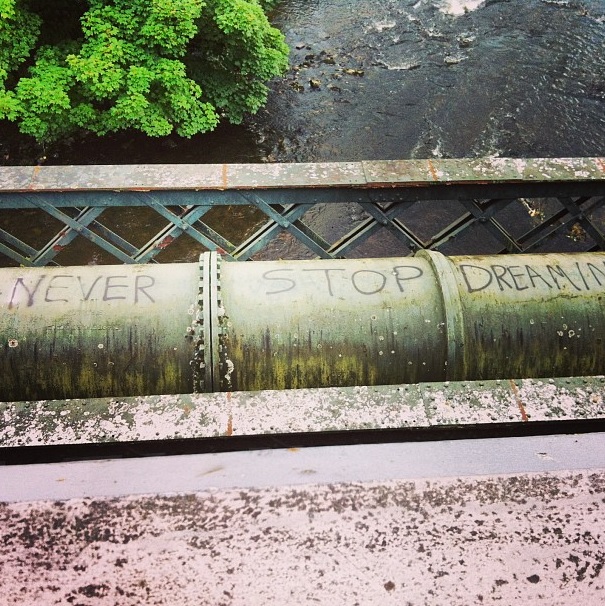
Inspirational Finnieston Pipe (!)

All the Love for Little Comets

Paddington coats are just wonderful, you know?

I first saw them at Wickerman Festival, god knows how many years ago now, and we went to see them on recommendation of my brother. It was probably raining a bit but maybe there was sunshine coming out there from behind us as we stood at the stage. I think they were on before or after Fenech Soler, who you should check out if you like electropop, Friendly Fires, White Lies and all things with synths. Anyway, the band in question who we were watching are called Little Comets, and they play what can only really be described with any accuracy as ‘kitchen sink indie’. I’ve seen them so many times since – basically any time they come to Scotland, which is usually twice a year.

A cold windy Glasgow Monday and I’m sitting in Slouch on Bath Street, watching the snow fall down behind a window of fairylights. We’re discussing what songs they might play. We’re reminiscing about old festivals and terrible and great music from the past. The walk to King Tuts is short from here.

I’ve been to King Tuts many a time before. Embarrassing to admit though it is, the first gig I saw there was You Me At Six. There’s an energy to the place that seems to billow about like the dust off the walls. It’s a wonderfully tiny basement venue with clean toilets and a decent bar and lots of posters from bands that have played there before. There’s Belle & Sebastian and The White Stripes and Pulp on the wall. We go down the stairs and the air is close and thick and hot. We watch two support acts, one of which was the Dundee band Model Aeroplanes, who have a nice amount of energy and lots of lovely, floppy, sweaty hair and bouncy guitar riffs. Oh, and we sussed that the bassist looks kind of like Adam Driver from Girls. 

Reasons why I love Little Comets: 

  • They sing about so many different subjects, from adultery to love to fatherhood to sadness and hope and sorrow and domestic violence and corrupt politicians and poverty and girls named Joanna, Matilda and Jennifer.
  • They tour the U.K all the time and always come to Scotland.
  • They write lovely little blog posts about their lyrics.
  • They seem to genuinely care about the music over everything else and even founded their own record label to avoid being sucked into corporate pressures.
  • There are little snippets of poetry which adorn their songs: ‘tension in the twisted silence of our sheets’ (Isles). They like to talk about metaphors and similes and often their songs tell stories.
  • After gigs they sometimes give out cards for fans and they write nice silver messages on EPs when you order them.
  • They sound so tight live, with amazing harmonies and clear, bouncy percussion.
  • ‘Dancing Song’ is just the best thing ever to jump around too, even if it means you’ll get trodden on and elbowed in the ribs by teenage boys.
  • They write political lyrics without being remotely sanctimonious about their status as musicians writing about politics.
  • Their artwork is really cool and they do it themselves.
  • They are maybe the best male feminists in the music industry of this period, at least as far as lyrical content goes. I don’t know, show me anyone better.

LC_bigcartel_sanguine_EP

Well last night they opened with a track off their new album, ‘The Gift of Sound’, which in a corny kind of way was appropriate because that’s what musicians do, give us the gift of sound. They moved through a few new songs off of Hope is Just a State of Mind and also I was pleased to hear them play ‘Isles’ off the first album because it’s been a while since I’ve heard it. The gig was over-14s and standing there behind rows of fourteen-year-old girls and far-too-tall fourteen-year-old guys, listening to those opening lines ‘Economic downturn you can get a job | Apologetic parents you can get a job’ and I’m thinking god I’m so old that when the economic downturn was happening back in 2008 I was about fourteen and probably discovering Little Comets for the first time.

The last couple of Scotland gigs have been in Edinburgh and you could definitely tell that this was a Glasgow crowd. There were a bunch of lads around us who were giving it the ‘oggy-oggy’ football-match style chanting in imitation of the songs which was actually quite sweet (and funny and annoying) and the band looked sort of bemused and taken-aback; Rob at one point finished the song (can’t remember exactly but I think it was ‘Little Italy’) then said in wonder, “nobody’s ever done that before”. I spent half the gig sort of laughing at the absurdity and magic of it all, that strange reaction people have. I mean, it’s amazing to listen to ‘burly’ (haha) young (and middle-aged) guys with tribal tattoos shout out lyrics like: ‘And like for every victim | It seems the pain will not subtract or even calm | All this protracted by a state | In which the poor conviction rate for rape | Can often leave a woman feeling | More at blame than able’. And even if it’s just words being thrown out, at least they’re being thrown out into a room full of likeminded people who believe in the words that the band are singing; even if just for the melodies being woven, even if just because it plants that tiny seed of thought in their heads. It feels empowering, somehow.

Well they fired into well-loved tracks like Joanna and Dancing Song which got everyone jumping about like crazy. One of my favourite things about Little Comets gigs is that you get gorgeous ballads and also songs you can jump about and dance to. I saved my Converses from being pulled off, survived a mosh pit and did my fair share of hair swooshing. It wasn’t all that pleasant being flung against guys who stank of sweat and cheap aftershave and hair that reeked of Chilli Heatwave Doritos, but that’s just a gig curse and the music makes it worth all the stitches.

A highlight was everyone singing along to ‘Coalition of One’, which is probably my favourite track off their last couple of EPs. It’s a song that opens with the lines: ‘food banks spring open | like jaws dropping in time | the weight of man is measured | by the depths of a carrier bag’. It’s simple and powerful and it hits you and makes you think how wrong everything is in the world right now; specifically in Britain. In comparison to the heartbreak-heavy lyrics of other ‘indie’ bands, Little Comets are genius. In fact, you get the sense that people can’t believe they’re singing along to it. It’s almost like a surrealist image, dragging up some common found object and assigning a kind of tragic beauty to it, and then getting such a mix of people to sing it back to you, to throw it out into the air like a lost plastic bag drifting in the wind. There’s a frailty to many of Little Comets’ images: you only have to look at songs like ‘Waiting in the Shadows in the Dead of Night’ (It’s like barbed wire, this crucial touch | That holds me here, expects so much) and ‘Early Retirement’ (‘the promises you sew are | shallow footsteps in the snow | that you cover up’) to feel their concern with the beautiful ephemerality of experience, the soft alliteration that slips between their words. Watching Rob, lead singer and guitarist, standing over his keyboard, drenched in stage smoke and blue light, singing ‘The Blur, the Line, and the Thickest of Onions’, is enchanting and inspiring. I don’t mind throwing those cosy words around because these guys deserve it, they’re so dedicated and passionate. What other band has the guts to take on Robin Thicke-style sexism in the industry with lyrics like this:

But this filth stands on a quicker sand

Next to cold hard fear and the deeds of man

The abuse of body image as a form of control

And the typical portrayal of the feminine role

I have never been more appalled.

Pick me up with rhythms and waveform

That can symbolise a culture lost

Sing about the future like you mean to

I’m never going to count costs

Question the agenda of an industry

That only can objectify

You write about a non-existent blurred line

But not about abortion rights.

OK, so this might not be Mary Wollstonecraft or Virginia Woolf, but for an all-male band to write these lyrics and perform them gig after gig with heartfelt expression is a victory for any kind of feminism in the modern age. It’s questioning an industry from within and writing about issues that are hugely important to women and men – abortion, media objectification and so on – without framing them in a kind of gratuitous ‘pity’ narrative or ignoring them altogether. Music can be political without a band having to tie politics to their t-shirts, and Little Comets demonstrate this perfectly.

Indeed, the feminist content of their lyrics is also evident in ‘Violent Out Tonight’, which I would argue is a masterpiece of a song. With elegant, soaring harmonies (performed so well onstage too), a thumping, emphatic heartbeat of a drum rhythm, and haunting sliding guitar, it conjures a dark story that follows a brutal encounter between a man and a woman on a lonely street. It’s filled with poetry that shifts between the subtle and stark and by the end we too are left bruised and battered by the sad narrative it tells:

As they step into the dark

Only moonlight hides his treason

And the shadows skip like sharks

Through the gasps of air between them

She says: ‘Becalm your hands boy I thought

restraint was now your sentiment of choice?’

But as his fingers strike her blouse

All the words that he espoused

Lie deftly scattered on the ground amidst

the buttons he’s torn open

When sung aloud, the rhyming works here in a really interesting, disturbing and dissonant way. It’s a song that can silence a rowdy crowd into awed absorption. You let the sounds slide through you and you listen, as Rob’s voice ranges from painful constraint to effortless flowing notes. There is a tension and a release. You feel this release with more uplifting songs like the opening track from Hope is Just a State of Mind, ‘My Boy William’, which Rob describes on the Little Comets blog  as ‘really the most emotionally honest song that I’ve ever written, and also one of the simplest – it is just a message to my little boy William: my hopes for him’. You could tell the crowd loved every minute of the gig from all the clapping and shouting and singing along and jumping (might I remind you how rare it is to see people actually dancing at all at an ‘indie’ gig), but especially with these numbers you could tell how much everyone really respected these songs for what they were and the sort of joyful simplicity of innocence they evoke. It’s all fuzzy and you get that great feeling when you’re in a crowd and lots of other people are experiencing similar things to you and even though you might not be a father or mother yourself, you still feel that raw sort of love shine through, in a way that feels uniquely authentic rather than cheesy or sentimental. As the hard-looking bald guy with the tattoos chanted at the end of ‘My Boy William’: ‘he’s going to be a superstar when he grows up, just like you Rob!’. And well, if that’s not cute I don’t know what is.

One of my favourite parts of the night was when they were chatting between songs and Rob said that Matt (the bassist) had just noticed some wires on a bar above the stage which were still there from years ago when they last played. The band used to bring an assortment of pots and pans with them which they hung above the stage and used with their percussion, which I suppose justified the ‘kitchen sink indie’ label in addition to the soap-like drama and domesticity of songs like ‘Adultery’ and ‘One Night in October’ (I’m never going to get over the lines: ‘So I sit her down | And say this must stop | ’Cause all we do | Is argue and shop | She goes to Boots | I go to Argos | Complete with deceit | We stalk each aisle’). Well I thought it was very sweet that this little mark of days gone past was still there, even though King Tuts (mostly the bar) has undergone some renovation since. I remember that gig very vividly; I was in second year at uni and had just finished my horrible essay on The Tempest and Heart of Darkness and I was drinking Jack Daniels alone in my room and doing cartwheels I was so excited. My favourite album so far is the second one, Life is Elsewhere. I think it works best as an album (I need to give the new one some more listening to judge though) and the lyrics are sweetly dark and just the right level of mournful, joyful and sentimental. And I like the line: ‘I’d rather starve than become a member of your old boys’ club’ in a dig at Oxbridge culture which permeates the top levels of governance in Britain. All these songs have a double layered nostalgic quality for me now, reminding me of feeling a bit more lost and hopeful and innocent as I stumbled through my first years at uni. Now I’m coming to the end it feels right that there should be more songs to form associations with. It’s actually pretty weird because they tend to release a new EP with every semester, so it’s almost like a kind of diary where I remember things through Little Comets releases. Oh well, if you’re going to support your memory with techne then maybe it’s better that it’s music from one of your favourite bands rather than just shallow social media statuses…oh well, just my two cents to future generations… (and I should stop trying to understand Heidegger).

It’s also fitting that before their last song (well, I think it was their last song unless there was an encore – which they usually resist doing due to the arrogance and cheesiness of encores – we had to leave early so the troops could get the last train home), Rob was telling the audience that he likes this song because it reminds him of their early days of playing. ‘In Blue Music We Trust’ is one of my favourites off Life is Elsewhere: again it has that haunting, nostalgic quality that builds and swells as the song progresses and proves the perfect ending to an awesome gig. How magical too that it was so cold and crisp outside, and that I walked home through Finnieston in a snow storm with all those swirling flakes glowing orange under the lamplight, and feeling so calm and serene and dreamy because it’s rare that things in life can make you so happy, but I guess good music can, and feeling fresh and freezing after a steaming hot gig.

‘I suppose the thing I am proud of with our music is the fact that we’ve always followed our hearts and stayed true – we do what we love, and we work very hard but we’ve never compromised ourselves for it. If I could pass one message onto my little boy, other than how much we love him, is just to be true to himself and keep an open mind – there’s always more to learn…’ (Little Comets blog).