Roseability

Disclaimer: my middle name is Rose. This means nothing, as far as I’m aware. I have never received roses for Valentines (as far as I’m aware). What follows comprises an essay on what a rose is a song is a word is a rose(?), feat. the likes of Gertrude Stein, Idlewild, Oscar Wilde, Joyce, Yeats, the French Symbolists and Lana Del Rey…

🌹🌹🌹

Despite having two degrees in literary studies, a lot of my more convincing intellectual references were first encountered through music, not books. The Manic Street Preachers’ Holy Bible album introduced me to Foucault, Plath, Ballard, Nietzsche, Mailer and Pinter in one fell, aggressive swoop of a Richey Edwards lyric barked over the guttural shudder of Nicky Wire’s bass-lines. Gertrude Stein, the awkward goddess of modernism, first came to me via an Idlewild song—deep in some distant vestige of the noughties, when I still bought CDs. She’s mentioned in ‘Roseability’, the last single to be taken from the band’s 2000 breakthrough, 100 Broken Windows. It’s a typically angsty track, reflecting on the futility of being dissatisfied with the present and finding pathetic solace in the past: “stop looking through scrapbooks and photograph albums / because I know they won’t teach you what you don’t already know”. Say it and already you know, right? ‘Roseability’, like ‘Idlewild’, is a compound word, a mashing of nouns that seems to promise deep meaning as its very premise. But where is it pointing us? What of Stein and what of her roses?

Stein’s famous quote on roses, ‘Rose is a rose is a rose is a rose’, seems to do two things. Firstly, it indicates an essentialist perspective on semantics—circularity conveying the uselessness of further description. Secondly, it enacts a qualitative echo chamber by which the reader must question what constitutes this essence, this roseness which is the rose’s identity. The repetition suggests the elusiveness of this essence, deferring with dreamy assertion—the kind of beautiful aphorism you might coin on an acid trip, completely sure of your own new logic. There’s a sense, with every ‘rose’, of meaning’s possibility blooming. You want to wrap the sentence in a circle (as Stein did, selling the phrase on plates) and close a precious loop, devoid of full stops and fixed meanings. Is a rose a rose or the space between a rose and what a rose is? Swap Saussurian triangles for sweet hips and sepals, a new rose budding in the roots. Lose all fixity for the chance trellising of structure, turn attention to sunlight, rainfall, temperature and other environmental conditions. Acquire tautologies and promise of spring. A rose is a whorl, a loop; a delicate head so heady with beauty. Humans like roses share beds sometimes. Look too long into the corolla and maybe you’ll lose your mind.

Idlewild: the secluded meeting place in L. M. Montgomery’s 1908 novel, Anne of Green Gables
Idlewild: the original name of John F. Kennedy International Airport in NYC
Idlewild: to idle wildly; to wildly idle; to idly go wilding.

You’ll always be, dissatisfied.” Perhaps the mere act of flicking through memories is a form of idle wilding. Making a wilderness of memory’s stasis. Depart only at airports; dwell between continental impressions of kisses.

100 Broken Windows marks a turn in Idlewild’s direction: from their 1990s brit-pop/punk roots to a more spacious, ambitious sound, influenced by the likes of The Smiths, The Wedding Present and R.E.M. When I first started listening to Idlewild, 12 or more years ago in those tender, pre-adolescent times, I sort of filed them as the Scottish version of Ash: they had that punk sensibility coloured by stadium choruses and a cheeky pop strain that balanced the anxious lamenting aspects. All sincerity, sure, but the lyrics were sharp enough to lift them from the sentimental pitfalls of subsequent contemporaries—the end of alt. history that was ‘Hey There Delilah’. Here we move into screaming emo or post-hardcore as inherent hauntology of the fuzzy rock club: the bourbon and sweat, the greasy hair, the frank, shuffling indifference of stoner punters. There were words that smouldered, sparked, then extinguished in the wind; but Idlewild had something different, a primitive attunement to human sorrow that cut through the gum-snapping cool of postmodern irony games, even as its affect blew up in a drumbeat or solo, the loquacious, Michael Stipe angst of Roddy Woomble’s voice. Think sonorous violins and a solid rock chorus, all the energy and wit being typically Scottish. Like the Manics before them, Idlewild did punk and guitar pop, did the stylised mosh and generic fusion, did the political and personal. The millennial malaise in their songs was very much of the times even as it seemed already tired of them:

It’s a better way to feel
When you’re not real, you’re postmodern (It’s not that one
dimensional, it’s not the only thought)

Cut out all feeling, except wait. There’s more. We don’t have to languish in the paralysing grunge of the nineties. The drama of strings would grace each melody electric and maybe you’ll find historic truth in this plugged-in homage to folk turned  on its head. If postmodernism is a Mobius strip of self-referentiality, that recursive collapse of linear progress (figured as a Scalextric set in the video for Idlewild’s ‘These Wooden Ideas’), then how to find meaning again, to find sense at all? Stand in a doorway and find yourself blasted with void fill, flick grapes in a wastebasket, count up your demons for the old stoned longing. Shrivel like raisins. The turn of the century has already happened, but maybe if you surrender to the chorus you’ll feel less jaded. There’s a reassurance. The thing about choruses, after all, is that they repeat.

As it does with choruses, algorithms and perennial blooms, repetition happens a lot in Tender Buttons, Stein’s infamously cluttered collection of prose poetics. With repetition and modulation, a queering of standard grammar, everyday objects become less the tools which underpin human existence, and instead things in themselves—the wasteful artefacts in excess of definition. Paratactical, concatenating assemblages which entangle like vines or else accumulate. Grapes on the carpet, styrofoam littering the floor, a word or two oozing through the backdoor…Am I far too close to the things I mistrust? Maybe there is always a stammering, a stilted stilling. I buy roses for the restaurant in which I work and the very act drags me into heteronormative time: the time of expensive dates, birthdays, weddings, funerals, candlelit dinners. What preference for the deep, luxurious, elusive bloom? Must lovers cut their tongues on thorns? I wonder, do those erect stems contribute their strange teleology…to what, to what…are roses always in excess of themselves—showering petals, shedding, being ever so much just roses?

I stopped and waited for progress”. Back in the day (2005), the NME rated Idlewild ‘a stolid group of trad guitar manglers’, whose new single ‘Roseability’ served ‘both as a rabbit-punch to the head of agnostics and a celebratory three-and-a-half minutes of safe, predictable, wholly generic, utterly brilliant rock ‘n’ roll.’ It makes me dewy-eyed to remember the magazine’s honest, scathing days. That insouciant, throwaway cool. Music criticism was pretty brutal when I grew up, and you basically had to tick every indie rock’n’roll formula (hello Alex Turner: snake-hips, haircut etc) to get consistently decent reviews. Or you could nail the attention on some eccentricity (The Horrors), or perhaps mediocre throwback to rock’n’roll times gone by (need I name every white boy indie suspect circa 2007). ‘Roseability’ is how it feels to be in your twenties, surrounded by people looking backwards; not quite in anger, but in nostalgia. It’s been a long time since I’ve considered something new as ‘utterly brilliant rock ’n’ roll’ in the transcendent sort of way Idlewild pull off—hardcore guitars, thrashing drums, literary references and all. Sweetness and thorns. Uneasy noise secretion. Tip your hat at tradition and then blast through the chorus, scatter your petals to cover the seams. What words in ‘Sacred Emily’ follow the roses? ‘Loveliness extreme’. I miss the NME, I miss being young enough to get lost this easily.

To veer into Idlewild itself, let’s wallow in passages from Anne of Green Gables:

You know that little piece of land across the brook that runs up between our farm and Mr. Barry’s. It belongs to Mr. William Bell, and right in the corner there is a little ring of white birch trees–the most romantic spot, Marilla. Diana and I have our playhouse there. We call it Idlewild. Isn’t that a poetical name? I assure you it took me some time to think it out. I stayed awake nearly a whole night before I invented it. Then, just as I was dropping off to sleep, it came like an inspiration. Diana was enraptured when she heard it. We have got our house fixed up elegantly. You must come and see it, Marilla–won’t you? We have great big stones, all covered with moss, for seats, and boards from tree to tree for shelves. And we have all our dishes on them. Of course, they’re all broken but it’s the easiest thing in the world to imagine that they are whole.

That endearing, childish hyperbole, the absolute thrill of invention. The special grove in a ring of white birch trees, heart of the circle, the rose’s secret pistil. Place of germination. Fragments congeal as expansive imaginings, disappointment evaporates in hope.

Gertrude Stein said that’s enough”. I’m not quite sure how Roddy Woomble, Idlewild’s lead singer, intended the Stein namedrop, but I take it as a reference to her poems’ weird loops of recursion. In the video for ‘Roseability’, Stein’s portraits are hung up all over the room; her face is even on the front of the kick drum, looking all knowing and stately. The video’s aesthetic has the feel of a 90s television set, all pop art circles whose colour has faded, sharp swivelling camera angles and hair swishes. The pop iconography of teenagers flooding the room with their plastic bracelets, braided hair and awkward moshing. It would be totally American if not painfully, most Britishly sincere—I mean just look at how the guitarist crushes into his own instrument, how Woomble wipes sweat off his face, paces around with the mic so close it could feel his breath. Loveliness extreme. When this was released, I wasn’t even a teenager. When I finally see him live, it’s in a church hall in Maryhill 2k17 and it’s utterly beautiful: how generous the set-list, how gracious a frontman with his small-talk and nods to the band, his thank yous. Watching the kids in the ‘Roseability’ video recreates that weird oscillation between feeling old and seeing in their faces the bizarreness of MTV ennui: the ghost of what I would temporarily become at thirteen, fourteen; cladding myself in discount Tammy girl, then Topshop, dying my hair pink and donning studded collars. With the hormones, you lose that ecstatic childhood imaginary hope; desire is amorphous and endlessly droning. You close your eyes and it seems the world has already ended. Sometimes it comes back, sometimes not. Maybe roseability simply means innocence.

‘Mrs. Dalloway said she would buy the flowers herself’ (Woolf). But customers rarely do. It’s up to me to ornament a room, to flourish a mood, to mark some milestone in another life that’s not mine, whose linearity’s not mine.

My mother bought rose-coloured roses for my eighteenth birthday, blush pink. Red when I turned twenty-one. I stopped acting sweet and rosy, dyed my hair red too. Fell through the whorls, the plush abyss.

‘Roseability’: the ability to be of roses, for roses to exist? Sensibility is, according to my laptop’s built-in dictionary, ‘the quality of being able to appreciate and respond to complex emotional or aesthetic influences; sensitivity’. Does roseability denote a similar sensitivity? When we think of roses we think often of Englishness: that angelic Laura Marling figure, a garlanded Bronte heroin, Paul Weller’s ‘English Rose’. We think tenderness, pastoral, a certain enclosure (marriage, gardens?) and guaranteed loveliness. She who coils golden hair round her porcelain finger, who knows how to talk to sheepdogs, who paints watercolours of the dawn. We think Shakespeare—‘a rose by any name would smell as sweet’. But we also think north of the border, a little bit of the visceral made kitsch: Robert Burns’ ‘my love is like a red, red rose’, whose unfortunate fate is to garnish every dishtowel bought on your granny’s last visit to Alloway (Roddy Woomble, perhaps not incidentally, is also an Ayrshire lad). The faint rose scent in a golden cologne, mingled with tobacco; the glistering sweetness of a youthful, drugstore perfume. Roses are roses, but roses are so many things, are poised on the lips of also…

The rose is a complex flower, a perennial whose species number over 100. Roses are typically ornamental, grown by those who know what cultivation means and spend their Septembers clipping away the thorny remains. An old man round the corner from my flat is out in all weathers among soil and stem: grafting, trimming, tilling for his roses. Perhaps he loves them more than his children. In summer, walking home on warm evenings you can smell them in the pale ambrosial air, a delicate bounty. If properly cared for, roses can live a long time, perhaps over and over, perhaps forever…what exactly does perennial mean?

The appropriately named Bloom, in James Joyce’s Ulysses, stands on Cumberland Street and opens a letter from Martha Clifford—a woman who responded to his newspaper ad requesting a typist. The Dublin postal system facilitates a sort of illicit exchange between them. Half-rhyme, consonance: petal/letter. The delicate thrill of letterly infidelity. She wants to know ‘what kind of perfume does your wife use’; the animal possession of scent. She attaches to her letter a flower, slightly crushed:

He tore the flower gravely from its pinhold smelt its almost no smell and placed it in his heart pocket. […] walking slowly forward he read the letter again, murmuring here and there a word. Angry tulips with you darling manflower punish your cactus if you don’t please poor forgetmenot how I long violets to dear roses when we soon anemone meet all naughty nightstalk wife Martha’s perfume. […] Fingering still the letter in his pocket he drew the pin out of it. […] Out of her clothes somewhere: pinned together. Queer the number of pins they always have. No roses without thorns.

So many compound words, clustering in the mouth like so many attaché petals peeled off from a dress. He plucks them away, fingers the soft excitement of words: ‘naughty nightstalk wife’ with the luridly alliterative twist of fantasy. Libido vs. loss of life. What slips away with the pin? What does the pin pin together? Folds and creases, sleepless. Spike of cactus, nasty, phallic. Prick. Tulip. Coiled anemone: wild flower or tentacular sea creature? Connotations of slip. In her slip. Slippery. Freud in The Interpretation of Dreams, waxing lyrical about female genitalia:

I thought of what seemed to me a venturesome explanation of the hidden meaning of the apparently quite asexual word violets by an unconscious relation to the French viol. But to my surprise the dreamer’s association was the English word violate. The accidental phonetic similarity of the two words violet and violate is utilised by the dream to express in ‘the language of flowers’ the idea of the violence of defloration (another word which makes use of flowersymbolism), and perhaps also to give expression to a masochistic tendency on the part of the girl. — An excellent example of the word bridges across which run the paths to the unconscious.

Dear roses dear romance; violets are pale taste of childhood’s sweet naivety. Violets are blue and so are you. Things you can take away. Lines of flight, tangled stems and botanical echoes. Semantics. Lingering taste. The burgeoning rhizomes of the greedy unconscious. Lana Del Rey: “there are roses in between my thighs / and a fire that surrounds you”. The Metro calls it a ‘shocking new track’, but I’ve never heard anything so languid and dreamy and in love. Hungry. Sugar is sweet and…
a9870a00b4965e682c4e3a3a89f4e6b8
Source: Pinterest

Angela Carter’s roses bite, don’t you? In ‘The Lady of the House of Love’, the self-starving somnambulist—the ‘beautiful queen of the vampires’—is a figure for desire’s recursive, self-destructive appetite. Manifest as addiction, or withdrawal; the flesh-shedding lust of anorexia, its resistance to growth and fuel. ‘She herself is a cave full of echoes, she is a system of repetitions, she is a closed circuit’. Her dialogue billows round and round into absence. Like Stein’s rose, she is bound to the noun and the grammar of herself—the flickering inward structures of mind, matter. The Algorithmic Beauty of Plants. Clustering rootlets, trapped yearnings for impossible perfection. No rose can be the perfect rose; except perhaps Stein’s rose: the virtual rose at the end of the looping rainbow. Loopy, lupin, lupine, luminal. Devouring, emanating, alluring. The virtual rose, perfect by its very impossibility, like Mallarmé’s Book. So many leaves and words. The stain of ink and rain, imprinted teeth. Carter again: ‘I leave you as a souvenir the dark, fanged rose I plucked from between my thighs, like a flower laid on a grave’. Those intoxicating roses, like Carter’s baroque, coruscating prose, cascade across the page, the white snow, the grave. La petit mort. In every petal the promise of a word, a breath.

Roseability. Faith in the unknowingness that is adulthood’s full blooming. Desire’s maturity bound in nostalgia, that noxious plague of your twenties; the ‘sense sublime’ of Wordsworth, five years later, experiencing ‘something far more deeply interfused’. Like the rose’s corolla, time rolls both round and onwards. It’s nauseating, an almost vortex. You’re always chasing that inward spirit, the thing that burns regardless: “They won’t teach you / what you don’t already know”—don’t Idlewild know it?

There is no roseability.” Enduring, complicated, hungry and sweet, it’s no surprise that roses are symbols for romantic love. Oh hallowed, protected cliché. Expensive hotels strew red roses on white bedsheets, a look that is oddly funereal. Share the ephemeral with melting chocolates. Reminiscent of menses, the blot of a clot in time. He got shot. She bled freely. Blood is like iron, a sharp metallic taste. What do roses taste of? What kinds of symbolic immersion might get at the essence? A bathtub of roses, a bedspread, a bouquet exploding for wedding celebration. Petals of confetti; a blossoming, artificial effect. White roses can be purity, lightness and marriage; or maybe undying love in death, restoration of innocence. I love you as the snowfall that closes Joyce’s ‘The Dead’. Sitting on the languid banks of a river in June, desecrating a rose with your sorrow: one petal, he likes me, two petals, he likes me not. Enough petals to fill a river, all the world’s worth of unrequited love. Red upon red upon blue. Flowing, felt in the blood. But no river is ever twice the same, no rose identical, no inflorescence—despite the algorithmic genius of plants—symmetrical. The beauty of roses comprises their subtly unique detail. ‘Lesser’ flowers, mere ornaments to weeds, clutter up close in mutual similarity. Maybe’s Gatsby’s Daisy could be anybody—she just had to be sweet and blonde, smelling of the damp rich old world, ersatz fresh, ready to decorate. The colourful shirts were mere petals for the true dark rose of his longing. Did Gatsby have blue eyes? I can’t remember.

I did a hard-drive search for the phrase ‘blue rose’ and found an old flash fiction piece I wrote years ago, called ‘Watercolours’. An extract:

The garden fills with new light; conscious light, collecting a clarity not quite recognised. The roses have left their earthly bodies, and the worms burrow up through the untilled soil. The roses’ spirits lift the leaves from the trees and scatter them like sloughing flakes of a giant’s skin. A sigh escapes the sultry violets, the ones he captured once by mixing blue and red. The red poppy is a pretty thing, but she is unborn yet. A mulch of memory overturns as day decides to end.

Isn’t it strange, the seduction of fairy tale ecomimesis? Nature’s ekphrasis surrendering effortlessly to the same saccharine motifs; the kitsch aesthetic containing within its insistence a certain artifice, then the theatrical mists of deliberate illusion. I think of watercolours and I think of everything blurring. Colours decay in the rain, or do they saturate? And again, the roses and violets, whores and madonnas? What of the feminising of botany’s blushing ornaments, ‘captured’ by a (male) artistic vision? But time is ever more flowing, desire afloat, liquid and trembling as rain. What would it mean to anthropomorphise roses, to imbue them with certain abilities? Roseability. These would be the most precious roses, the memorialising and future-making symbols. The blue ones.

I also found a piece from 2013 titled ‘Blue Roses’ It’s about a botanical garden famous for its sky-coloured flowers. The narrator’s lover, Richard, laments the death of his mother and talks about what it would be like to be a carnivore plant. The narrator says: ‘“Those long, slow deaths would suck out your soul.”’ Was I reading Carter at the time? Nature (always capitalise to denaturalise) in this story is narcissistic, strange, devouring: stars are ‘aware of themselves’, the twilight forms deliberate ‘geometric patterns’, the rain ‘spilled out in oozing puddles that clogged the scum of the pavement’. Security patrol the blue roses in the glasshouses. It isn’t entirely clear what they mean in the story. Symbols for what? Eliding natural selection, these monstrous flowers blur into nothing but blueness—the exotic quantity, intangible mystery, possible infinitude. Despite the wholesomeness of the tale, I couldn’t help but think of the weird erotic undertones of its spooky botany. Blue rose, blue movie.

So yes, the very phrase ‘blue rose’ denotes something exceptional in Nature (in Twin Peaks, a ‘blue rose’ case is one which involves supernatural elements). In Tennessee Williams’ play, The Glass Menagerie, Laura (a character based on Williams’ mentally ill sister, the aptly named Rose) is nicknamed ‘Blue Roses’ on account of her fragility, her spiritual affinity with that which transcends the ordinary (and a childhoood attack of pleurosis). Laura dwells in a surreal version of reality; her very nickname harks back to André Breton’s ‘First Surrealist Manifesto’: ‘Cet été les roses sont bleues’ (this summer the roses are blue). Things have reversed and in their delirium remain quite beautiful. Roses, blue or not, are associated with a certain precious wavering between worlds both spiritual and physical; worlds crossed only by rare occurrences of romance, imagination, memory. He loves me, he loves me not…Laura is obsessed with a little glass unicorn, symbol of mythology, virginity. Preservations of the body for another world, or from another world? I go into the woods and find fairy rings made from small white flowers (I think of the inverse fable of extreme depression, the harp-sparkling Manics’ track, ‘Small Black Flowers That Grow in the Sky’). While there is a lovely joy to the common daisy or meadow flower—an ethereal quality that recalls our initiating buttercup crushes—the deep lust of Romance must be associated with the scarlet plumage of the rose. Love is calculated on decadence, exception.

Is a rose as shatterable as glass, as a heart?
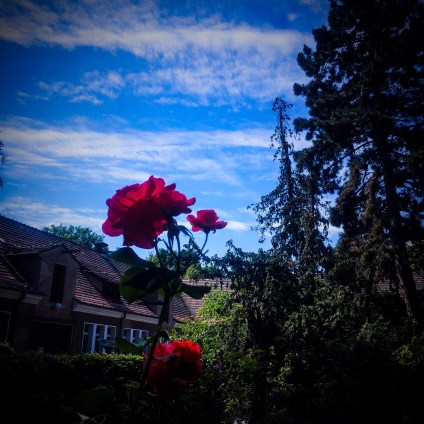
IMG_0500

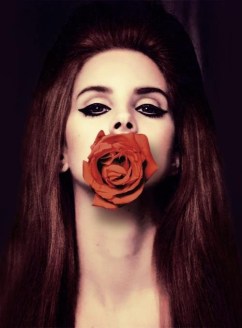
I used to live in a house called ‘Daisybank’, but my friends always teased because there were roses painted onto the window, not daisies. What weird reverse supplement? The fat white dog daisies would spring up on the front lawn in summer, but they were always overlooked by those glassy roses. There’s a certain authority, majesty even, to the rose. You associate it with tragedy and great beauty: Lana Del Rey with her lips stuffed full with a rose, playing the calamitous heroine. Snow-White and Rose-Red. Shakespeare’s ‘a rose by any name would smell as sweet’ is taken from Romeo and Juliet, in which Juliet convinces Romeo that it matters not that his name, Montague, is her family’s rival house. A rose is a rose; regardless of name it will always come up smelling of roses. Having graduated from Daisybank, I now find myself living on Montague Street…

‘Who dreamed that beauty passes like a dream?’ This is W. B. Yeats, probably writing to a woman he loved, Maud Gonne. He seems to set up beauty as life’s eternal opposite; where human existence is fleeting, beauty remains archetypal, enduring. Think of Keats’ ‘beauty is truth, truth beauty’. There’s a universality, a mythological underpinning to this beauty. In Yeats’ poem, the loved one embodies wistful figures of glory: Helen of Troy and Usna of ancient Irish history. Surely she slips between the shadows of comparison? Whether Yeats scorns the idea that beauty ‘passes like a dream’, or whether he ultimately reveals its truth, is unclear.

For Immanuel Kant (see, Critique of Judgement), the experience of beauty hinges on a paradox: since it seems that beauty is a property of the object—indeed, emanates from it—you’d think beauty itself was universal. Everyone should fall in love with that painting, that colour, that song. But not everyone does find the same things beautiful. It feels like a betrayal of reality when I play Radiohead’s ‘True Love Waits’ (where roses are swapped for “lollipops and crisps”) to a friend and their reaction is a casual ‘meh’ and a shrug, while all sorts of biochemical reactions of wonder and euphoria are swirling around inside me. Beauty, for Kant, is largely nonconceptual: that is, there’s an unspeakable quality to it, a thing you can’t put your finger on. In Realist Magic, Timothy Morton describes it as beauty’s ‘je ne sais quoi’. Being unable to pin down what it is that makes a thing beautiful is part of its beauty. You take a rose. You could describe its petals, its inward swirling whorls, its scarlet colour, the slenderness of its stem; but in doing so, you lose the rose itself. As ever in synecdochically applauding a woman you lose the woman. The love object. The love? Recall Shakespeare’s ‘Sonnet 116’? ‘Love is not love’; it’s what it is and it isn’t, and what’s left over as forever. 4Eva/4Real. Personally, I prefer Cate Le Bon’s take: “Love is not love / When it’s a coat hanger / A borrowed line or passenger”.  But isn’t everything stolen and temporary, in transit? How do you claw back the rose when the rose, maybe, is just this epic symbol for love? What moves in the static eternity?

I used to draw roses all the time; I’d always start in the centre, finding my way outwards with liquid ink. You see I had no conception of the rose’s shape, I was just following the shaky trajectories of layering lines. Important not to excise too sharply the arrangement of beauty, to impart onto nonhuman forms a reified taste. Eroticism preserved by ellipsis, meditation contained in the mysterious code of the senses. What was it Wordsworth said so long ago, in his famous tract against book knowledge: ‘Sweet is the lore which Nature brings; / Our meddling intellect / Mis-shapes the beauteous forms of things:— / We murder to dissect’. Wordsworth would prefer you to go out and encounter the objects themselves rather than try to ‘dissect’ them through rapturous, scrutinising poesy. Being one of the great Romantic poets, distracted by words even when in Nature, Wordsworth is of course a filthy, (forgivable) hypocrite—up to his knees in Kant’s paradoxical beauty as much as the rest of us.

Making words of roses involves cutting their heads off, losing the essence, letting the adjectival rose oil leak into language’s dripping pores. Binding the immortal to time. That seepage is ink, is tense’s durational flow, is poetry’s cruelty. This is perhaps what Mallarmé means when he says: ‘Je dis un fleur, et le fleur est parti’—‘I say a flower, and the flower is cut/split/gone’ (translation: Tom McCarthy). To break the object of beauty down in writing is to incur a violence; as McCarthy glosses, ‘Things must disappear as things in order to appear symbolically’. What is perhaps most seductive is the remaining qualities, the deconstructionist’s milk and honey, the semiotic residue that clings between things. Spiderwebs, woven by first light, acquire a serene and gossamer gleam; but what is most seductive perhaps is the spaces between the lines, the way up close the lacing makes new frames for the real, the scenery behind and through.

Then we have Derrida’s ‘maddening’ supplement. For all roses refer to other roses, to every iteration of the word ‘rose’ throughout literary history. What a rose means can only lie in the space between these occurrences, and even then the meaning is temporary, contextual—there is no outside text, no place in which to hurl your roses to semantic abyss. We might hope for Love as some manifestation of the Lacanial Real, a pre-symbolic realm of pure emotion; but love too (as Roland Barthes reminds us) is discourse, perennial and yet bound to the fluctuations within language. ‘Rose’ is a noun, but it is also qualia: the subjective quality of something that cannot be objectively measured. Her cheeks were rosy, the rose-coloured sand (of the dream sequence in Michelangelo Antonioni’s film, Red Desert), a rosiness to the air that spoke of July. By scaling tone, we might get a general sense of what ‘rose’ is (a quality defined by difference rather than identity), but we’d never get to see rose through someone else’s experience. What is ‘rose’ to one poet might be ‘pale and bloody’ to another. Rimbaud writes, ‘The star has wept rose-colour in the heart of your ears’. Abstraction meets the concrete which itself is a spill through synecdoche. What music seeps, weeping, into the beloved’s ‘ears’? ‘Rose-colour’ becomes that synaesthetic property, the oozing, effulgent thing that cannot be pinned. For colour, like music, is perceptively subjective. What prompts a sudden spasm of imagining in you might send me to sleep; could we call both actions reactions to beauty?

‘It’s hard to stay mad when there’s so much beauty in the world’. So goes the line in American Beauty, Sam Mendes’ 1999 suburban modern classic—a film about midlife crisis, inappropriate lust, neurotic materialism and the nuclear family under late capitalism. Where Ricky, the visionary, weed-smoking teenager, sees a sort of sublimity in waste, videoing a plastic bag’s leaf-like billows in the wind, Lester falls for his daughter’s cheerleader friend, Angela. The particular Gen X fatigue over cultural trash and consumer excess is recycled as a pared-back appreciation for symbolic indications of the world’s decay—little quotidian details which offer momentary redemption as beauty in tragedy. The old Kantian adage of beauty’s je ne sais quoi. Lester’s misplaced infatuation for Angela is represented by motifs of lurid red roses, flowering outwards like bloody snowstorms of feminine intensity. The chase falls cold when they kiss IRL, and he realises she is just an insecure teenage girl. Tell me I’m beautiful. Interpreting the film is as tricky as trying to clasp onto any one of those whirling petals, to kiss a single tear on an eyelash, a dew-drop clung to the flesh of a rose. Joni Mitchell, in ‘Roses Blue’: “I think of tears, I think of rain on shingles / I think of rain, I think of roses blue”. A lyricist’s ability to make pearls of emotion. Superhydrophonic. Is this another symbol, listless, transient, glistening?

The Symbolists were mostly French poets of the fin-de-siècle, the likes of Rimbaud and Baudelaire (whose flowers were assuredly evil), who probably drank quantities of absinthe and wrote symbols that emblematised reality itself, rather than merely inward feeling. All that absinthe had to come out somewhere, idly wilding in the streets of Paris (pronounce it the French way). Where abstraction reigns often in the world of emotion, meaning accumulates through the repetition, modulation and pattering of these symbols. While Mallarmé’s poetry indulged in dreams and visions, it’s a certain patterning of associative power that provides the stitching behind his fashion for aleatory. The poetics of chance may still have a structure of sorts, something you can trace like the veiny trellises within a leaf. W. B. Yeats, the Irish Symbolist, loved a good rose: just see ‘The Rose of the World’ and ‘The Rose of Battle’. In his essay, ‘The Symbolism of Poetry’, Yeats makes frequent comparisons between symbols and music, describing the ‘musical relation’ of sound, colour and form as constitutive of symbol.

At a workshop I’ve been running with homeless people, a girl who shares her name with Stein’s favourite flower reads out a piece she’s written in ten minutes flat. It’s a typically tragic tale of abuse, of a family torn apart by pain, drugs, death and violence—written from the perspective of a ten-year-old girl, perhaps her daughter. She reads it with a stilted west coast accent that picks up its confidence and lilt as the sentences run on. Somehow in those sad and wilting lines, strewn with the accidental detritus of truth, there’s hope. It blooms so unexpectedly in all the despair. A ten-year-old girl sees the world very clearly and pure. I can only paraphrase, of course. I’m sad that I don’t get to see my mother, but she says that it’s okay because if I look at the moon I know that she’s looking at it too. This part struck me harder than any other—it seemed an echo from elsewhere. The whole piece became suddenly a buildup to that single, simple, irresistible image. When Yeats presents Burns’ ‘perfectly symbolical’ song of the moon and time, he misquotes him. Translation falters to glitch, like with lossy compression. The moon as a symbol, as something to be shared, a white chocolate button broken in two. Except you can’t split the moon. You can only imagine what the other person is seeing. I wonder what they were looking up to.

Where metaphors ‘are not profound enough to be moving’, symbols move in both senses of the word: they act through motion, the accumulative or associative arrangement of sound and meaning (as opposed to metaphor, which acquires meaning through more static, straightforward comparison), and they prompt affect in the reader. Such affect is not just the temporary indulgence of an artwork’s emotional value, but can indeed alter how the world is discursively understood. The rosy words thrown upon some poetic zephyr recalibrate reality as we know it. As Yeats puts it:

Because an emotion does not exist, or does not become perceptible and active among us, till it has found its expression, in colour or in sound or in form, or in all of these, and because no two modulations or arrangements of these evoke the same emotion, poets and painters and musicians, and in a less degree because their effects are momentary, day and night and cloud and shadow, are continually making and unmaking mankind.

The construction of feeling through symbols, then, institutes the substance and gaps that structure how we relate to ourselves, others and nonhuman objects. A very delicate, precise, imagist poem like William Carlos Williams’ ‘The Red Wheelbarrow’ has effectively changed how we relate to both the colour red and wheelbarrows more generally (never mind the ‘white / chickens’). Symbols can charge our perception with fresh emotional channels. Music relates a bit differently, of course, but only because it literalises Yeats’ musical relation metaphor—there’s a more physical intensity, maybe. Like a river (you can never dip your finger twice in the same river), a piece of music cannot be played the exact same way again—a truism owing to the arbitrary dynamics of individual players, environments, acoustics or subtle interruptions of duration. A breath or a sneeze, a chance sigh in the background, a trumpeter who can never quite pace her crescendo. You experience the opera differently from me, even though we watch the same one (I have never been to the opera). My hearing is slightly muted, along with my interest in self-congratulatory coloratura; while you have perfect pitch, ears that ring with pleasure as the high notes hit. Though the same in one sense, comprising a shared duration, our encounters are completely different. Music’s durational function is made explicit with the likes of John Cage’s music concrète, composed of sounds rather than notes and thus retaining elements of chance within a certain duration. The process becomes more about selection, sampling and curation, rather than composition according to tones, melody, chords.

If anyone idled wildly, it was the notoriously languorous aesthete, Oscar Wilde. The decadence of roses is also associated with a certain concretisation of language, a making material of words, a honing of time and world. Consider the opening line of The Picture of Dorian Gray: ‘The studio was filled with the rich odour of roses’. The way assonance works, subtly wafting its chiming vowels through ‘filled’/‘rich’ and ‘odour’/‘roses’, creates that musical relation that Yeats so fetishised. Poetic techniques such as alliteration and assonance abound in Wilde’s novel, where prose becomes musical, lilting, exactly honed upon sensory detail, the vivid relation of objects. Roses that fill a studio, that pungently glow with lavish scent. There is a heady, ambient quality to much of Wilde’s descriptions, giving off the impression that we are perhaps perceiving how objects seem to one another, filtered through the opium vapours that so penetrated Dorian’s accelerating decadence: ‘In the slanting beams that streamed through the open doorway the dust danced and was golden. The heavy scent of the roses seemed to brood over everything.’ Objects are at once anthropomorphised and ornamental; that play between movement and stasis, however, cuts across binaries between human and nonhuman. The world of Dorian Gray is sprawling, random, a chase through meshes of entangled desire. A straightforward death drive is diverted by all sorts of sensory encounters, plastic morality, visionary beauty. And words? Words in Wilde are the petals that swell and unfurl into Yeatsian symbols:

Music had stirred him like that. Music had troubled him many times. But music was not articulate. It was not a new world, but rather another chaos, that it created in us. Words! Mere words! How terrible they were! How clear, and vivid, and cruel! One could not escape from them. And yet what a subtle magic there was in them! They seemed to be able to give a plastic form to formless things, and to have a music of their own as sweet as that of viol or of lute. Mere words! Was there anything so real as words?

Words have (re)active potential. Each one shivers with the weight of its every use, alive with subtle magic. Be careful what you write.

Gertrude Stein said that’s enough (I know that that’s not enough now)”. Gertrude Stein said a rose is a rose is a rose is a rose. She said it first in ‘Sacred Emily’ (1913), and later wrote, in ‘Poetry and Grammar’:

When I said.
A rose is a rose is a rose is a rose.
And then later made that into a ring I made poetry and what did I do I caressed completely caressed and addressed a noun.

What do we swap for tautologies? Love is tautological; love justifies itself. It means everything and nothing. There’s isn’t any escaping the reifying loop, the ring with its symbolism of marriage. That which encapsulates and closes. The hermeneutic circle. Stein makes us linger, ponder the grammar of each rose. Ring-a-ring-‘o-roses. What does it mean to ‘caress’ a noun? To render the erotic potential of language by gesture of touch, extend into physical… Idlewild: a word whose internal rhymes fold together, whose l sounds caress the roof of the mouth.

Gertrude Stein said that’s enough.

Lana Del Rey: “You always buy me roses like a creep.
Also Lana Del Rey: “And then you buy me roses and it’s fine.

There’s a surfeit of petals and sex, a gluttonous economy of symbols which Stein stamps out with the simple carousel of her musical roses. Sing it slowly. Tell me what you mean.

Luce Irigaray, from This Sex Which Is Not One:

Your body expresses yesterday in what it wants today. If you think: yesterday I was, tomorrow I shall be, you are thinking: I have died a little. Be what you are becoming, without clinging to what you might have been, what you might yet be. Never settle. Leave definitiveness to the undecided; we don’t need it.

Lana Del Rey, reading from T. S. Eliot’s Four Quartets:

Footfalls echo in the memory
Down the passage which we did not take
Towards the door we never opened
Into the rose-garden.

I pass between worlds and names and symbols. Every lipstick stain is another iteration, each kiss the palimpsest of the first, and even photographs fade in the sun, faces dissolving like planes behind clouds. Of ‘cappuccino pink ranunculus’—not roses—Colin Herd writes: ‘They’re at their most ravishing and / ethereal the day before they expire’. I imagine a white corridor imprinted with all your flickering dreams. Between realms, the soft wilt allures more even than it does in bloom. Images become sentences: long thorny stems of sentences, stretching and snarling a confusion of brambles and briars. The more you write, the more you grow your beautiful garden. I tear my wrists and fingers, trying to get to it: ‘There is a forcible affect of language which courses like blood through its speakers. Language is impersonal; its working through and across us is indifferent to us, yet in the same blow it constitutes the fibre of the personal’ (Denise Riley). This garden I make is not really mine and daily it grows stranger. The roses offer their pretty heads, then droop in winter. I hear their beautiful words in arterial melodies, sprawling among shadow, platitude, the skeins of a letter letting loose through my pores.

Roseability: the quality of forever chasing roseability. File under qualia, noun/rock, the poetics of etcetera.

tumblr_o34tbyABi21qfqngko1_1280.gif
gif. credit: : : Douglas Pattison

Playlist: August 2017

IMG_7006.JPG

Start with the kernel of something. The year’s first fallen acorn I have not seen yet, though pinecones have been thrown in the direction of whoever. Hypothetically, my life as a typewriter, the body punctuated with the same mechanical violence. Clattering impression of symbol. A certain attention to gardens, as if in longing for confinement, safety. Time spent in Cambridge. Willows sweeping the skin of the river, an endless wandering the result of what. Hard work, long mornings in bed with the warm aluminal form of a laptop. White glow, silence. Someone mowing their lawn too early. Being what it is to be lonely not letting the light in except with broken blinds it comes fractured, skewed, something. The early fears abated, return to trust the body. Sun beaming through unfinished paint, the colour of mauve roses, faded hydrangeas. There is a hyperspace in which the dreams become apartments with balconies folding to abyss, you lean out singing it felt like a kiss the crystal taste which is what a violent text a certain whisky with peculiar salt with the flavour of drowning. Shades of cool. Allergic to punctuation after so much editing. Late night taste of Mogwai, Aphex Twin in the long long mornings. The perfect cupid’s bow of her lips. A geometry of light on the living room carpet. Sit in me, wheat-coloured pool of Vitamin D. The gunshot pulse of the stuttering track. I close my eyes for the White Lodge, the shrouding. Mountains come up and when we are at work we hum the Song of Healing while customers come and go in a panoply, in circuits; the moon too close like a lump of cheese with a million calories like terrible space debris coming. There’s an underpass where the dank canal flows thick as a black black oil, as molasses. Closer, the exact texture of fishnets. Something of your composition, a fear. The cold and lovely brass legato. Confessions in brown paper-bags. These are penny sweets, many regrets, many ice-coloured touch of the tongue that flickers its absence. A pleasant stasis, curled fingers which wait for the rise of the chest and the breath that is chemical alone, that is Tennents at seven in the morning on a lino floor. Berryish, bitten. Making no sense of Four Quartets but embracing the paganism, looking equinox ready with a garland of wilted daisies as if August never happened. The goddess in flesh, Lana Del Rey with her seamless fragility that adds joy to melancholy, etc. You know it. Conor Oberst telling stories about Woodie Guthrie and another life-changing duet on Lua. Voices as clear and pure as expensive vodka, distilled through a mountain stream in the elusive valleys of sadness. Somewhere south of America. I see a desert. There are plants needing repotting in my room. A 39-minute album. A mixed-up connotation, lumps of quartz from a beach near Cardross. I wonder about the temperature of water. Last year’s gatherings, the same melancholy. The absolute cool refreshment of this late-summer’s day. Remembering Lilt as a Thing! Train rides, shudderings, altered temperatures. So much goddamn analysis. Saying it like a litany, my goodness my goodness my goodness. Enacting mythology of objects surrounding. The glass of ice cubes precisely polished, a sequence of droplets. Clotted spectrums. The time it takes between ordering and serving, circling like ravens or trying to negate the game of waiting. Complaints. August being the flourishing stammer of a potentially bad dissertation. Potentially not. Sometimes salt and vinegar just tastes good. Wake up to the sting of your own tongue. Passing creepy, sapphire hot-tubs at four in the morning while old-school Coldplay floats on by mysteriously. Bones sinking like stones. Floating on home at 9am past phalanxes of school children and furious mothers. With all these roadworks, the pavement is but a treacherous ridge between spaces. Samuel Johnson kicking a stone to prove something. Philosophical brutality. Voyage to the capital for Tom McCarthy. Sunlight and absurd erotic fiction displayed in cardboard boxes. The boiling point of all these projects. Nectarines. How everything these days just feels like browsing. Are we yet ready for nostalgia and autumn, and whichever comes before the other? I keep re-watching the same old episodes.

~

LCD Soundsystem – tonite

Kiran Leonard – Could She Still Draw Back?

Big Thief – Masterpiece

Conor Oberst – Napalm

Girl Ray – Trouble

John Maus – Hey Moon

Clarence Clarity – Naysayer Godslayer

Four Tet – SW9 9SL

Oneohtrix Point Never – Music for Steamed Rocks

Mogwai – Coolverine

Lana Del Rey – Shades of Cool

Au Revoir Simone – Lark

Lomond Campbell – Father is a Craftsman (Modern Studies cover)

Julie Byrne – Morning Dove


narcopastoral ///

N A R C O     P A S T O R A L
(written between 1-4am, in the mood of Gilded Dirt)

‘No shepherd, no pastoral’ — Leo Marx

Let us begin at the dawn of the internet. A story of packet networking, government departments, protocol suites and business decisions made in the cloaked, air-conditioned hum of boardrooms. No, this is boring. Let us fall three stories through the hyperlinked portals of a Tumblr archive, our minds caught in the dopamine rush; nothing comparable. These colours, the bronzed flesh of beautiful strangers (who aren’t even models!)! A doubling of exclamation, a doubling of desire. I have crushed many harmless cartons of Ribena while thinking of your sweetly dripping smile. Talk to me O Web, nobody else will; I see only a shrouded reality, the silken flickers of a screen-bleached veil. Who leads the flock of the blind and hungry teenagers? What possible elaboration of data could draw them to utopias lost like that early neutrality of the net? Innocence perhaps is always (already?) fallen.

Why haven’t you replied to my text?
Derrida says everything is text. There is no outside-text. Look around you.
You know what I fucking mean.

All interaction is destined for a meme. History is full of them. Literature is interaction; the inevitable touching of finger and ink, perception and paper. Barthes says: ‘Language is a skin: I rub my language against the other. It is as if I had words instead of fingers, or fingers at the tip of my words. My language trembles with desire.’ I wish I’d written it on a postcard, instead of an internet bulletin. My god as if they even still called it that. Nothing one has to say earns the vital status of ‘bulletin’. It is all just discourse, levelled out, dank reality. Everything feels intimate and yet completely odd, alien, pointless. What was it Barthes found so sexy about language? A literal ache that feels like love, drawn to some other’s inward beam, the first brush against them, the leaf-like trembling. I’m writing crazy amounts and what brings me back to that electric surface is perhaps realising that everything underneath, every word I type, is basically at the core just binary. Night and day, will he notice me? Night and day, the rhythm passing through me, oozing.

🕊

Hell, I’m a millennial with minimum job security; whatever a quotidian rhythm is I’ve long since lost it with the bleed of light that steals through my blinds as I make my way into sleep. Too much coffee. The room an indigo blue of burst-through dawn. The birds are all around me, a whole garden full of them. One last time, checking twitter…

The little voices clutter the fields. Nobody is there to guide them; we are bound instead by characters, algorithms. You can’t write about pastoral unless the text in question deals with shepherds. Who are the shepherds of the internet? Perhaps we are, perhaps it is the panoptic site where we all gather, Pagan-like, earnest embrace of all illusory interfaces. Are we blind, clad in white, always in the service of our sheep? Endlessly tempting…We play lyres and sing earnestly of our unrequited love; we do it in the hallowed gardens of YouTube, where Blake would write of our purest impulses. We used to play quite happily among the shallow folds, so sweet in our greenness, uploading silly videos; we used to play before everything was just fucking advertising: ‘binding with briars, my joys & desires’. An ad for perfume, a woman’s throat in a chain-link choker. Advert for absinthe. Poison ivy crawls all over us and language just feels like a virus; I guess it’s because I’m well-acquainted with the dark work of coding. Underneath every word is the binary bleep, and I can’t help but think of sheep lost out in the cold. Life/death; the trajectories of rebirth. White and black; white on black, little white bodies in the black of the night. She will have a lamb and call it Microsoft.

What?
You know what I…mean. (?)
🌒

Our generation are all lost sheep. How many times have the fences broken in the fields of the internet? What we crave isn’t freedom exactly—O how passé the frontier motif!—but some sort of comfort, a shelter from the barbed experience of the IRL everyday. Unstable jobs, cackling media, unrealistic body image etc etc. I made a list but every time the words compressed into et al, like I no longer needed the details. I wanted to draw back into something simpler; the garden of Eden being this nostalgic collection of nineties net art and noughties graphics, the kind of vibrant geometries you might find plastered over somebody’s Geocities. I gave up thinking my shepherd was Julian Assange, or some other white-faced genius set to wreck the world with his erasable visions of freedom.

We are in need of soothing. Gosh, Laura Marling even wrote a song about it. My God is brooding. I have lost the God. He or she is in a sulk. I retreat into a rhombus, the equilateral remembrance of shadow. My identity was never clear but soon I let it divulge further the strange truths of illusory discourse; let it slip into the sinkholes of forums and chatrooms, all these virtual spaces whose presence filtered through my everyday life. The whole experience overwhelming, of course. The amounting of so many avatars, each one a horcrux scattered beyond the bounds of thought. Becoming monstrous, evolving from beyond consciousness.

We continue to smoke, in defiance of death. How we study with interest the gore that plasters each anonymous cigarette packet: the foetus made of fag ashes, the man curled in cancerous agony upon a hospital bed, the baby absorbing its secondhand pathogens. We campaign for action on climate change yet continue to smoke. We are in this oscillating space; a recognised irony, the metallic taste of hypocrisy stinging our tongues even as we try to move beyond it.

There is a willing naivety in our longing for certain environments. What lush oasis amid the din of our dull city living? What ancient standing stone circle, what temple or gorgeous cathedral? The Hollywood canyons, the plastic palms of a Lana Del Rey video?

There must be also a willing imbibing of the polluted dream. Recognition that this is the Anthropocene; that the world is ending already and we are playing out the last vestiges of our human, our species’ mortality. Living with a kind of negative capability, accepting the state of corrupted beauty. What about the atmospheric acids that streak the sky with alluring tints? How we immortalise, fetishise that pink and orange, even as it signals our climate’s destruction? The damage to the earth moves slow, sinks through the soil, evolves with distorted DNA coding. The trick is to slow down with it, to ease into so many starry, imitation futures.

We must deliver empathy for other beings. We are both shepherd and sheep, guiding the world but also being guided by it; thrown awry at every turn by some new storm or war, some side effect of our reckless living. Consumerism secretly blasts the binary of subject/object, self/environment; quite literally, we become what we eat. I am an ice lolly, melting cherryade on the concrete heat of this too-warm city; my sticky residue is the sexless blood of the starved teenager, the catwalk model, the fearsome and damned. And yet sometimes I stand and smoke and think it means nothing. Saint Jimmy, O endearing memory of Green Day. The photographs on the packet do not remind me of death, but some abstraction of the body at its limits; an art exhibit poised to lift daily habit into the realm of the transmundane. I have waited at so many bus stops, cash points, queued in supermarkets for this.

Every time you snort cocaine I watch the blood burst in tiny wires, the inward capillaries. Somewhere someone is spraying pesticides on a field of coca plants in Mexico. How many times have I helped you with your goddamn nosebleeds?

For I have learned to look on nature, not as in the hour
of my foolish youth, face in the window without name
without name. What was it Wordsworth said
about humanity? That still sad music is the soundtrack
to each brittle burst in the star of my heart. God knows
even in forests and rivers I miss you. Not even wine
is what it once was. Every sunset the colour of salsa,
and each night my tongue burns on the memory of chilli
while you are out there, susurrations of grass
and all the smashed glass you shoved in your fists
was silver petals and the edges crushed with the sap
of my love and I wanted to stick them together again.

Instead, I think about the stomachs of young boys, knotted with wire–iron and barbed. There are too many hormones in the milk they drink. Nobody bothered to nourish the cows. They were too busy caught up in period cramps. Pointless cycles of (un)reproduction.

 🍒

Narcotic. Narco. That which has a tranquillising effect. Lorde on her new album singing in that sugary octave leap: the rush at the beginning. None of us can sleep without pills, without sex, without ASMR videos. These soothing colours and shapes; the ambient drag of background music, distorting our sense of imploding foreground, dissipating those ugly memories of time and space. All is levelled, all is darkness. We crave oblivion. Sometimes stranger, sometimes easy. We flirt with the past, have this mild addiction to nostalgia. We’re just looking for things to transcend with.

There are times when what is to be said looks out of the past at you—looks out like someone at a window and you in the street as you walk along. Past hours, past acts, take on an uncanny isolation; between them and you who look back on them now there is no continuity.

So begins Alexander Trocchi’s Young Adam (1954). Trocchi was a heroin-addict. He knew the all-consuming tranquility of drugs, knew how writing could perform that strange inner split of self. When we write in the mode of the narco pastoral we are being chased by some older version, the 1.0 to our 2.0 dreams. When these memories hover, the girl that floats is never quite yourself. There is the sudden realisation of distinction. How far you have come, how low you plummeted. I am guided by the soporific waltz of a nineties video game. With its labyrinthine pathways I reach for the future–

 😈

Here, there’s this new podcast. Follow me. What follows:

Recipe for vapourwave: add the reverb, the transparent semiotics of the checkerboard floor (I fall four stories just to join you in bed), the swaying gif of exotic indoor aloes, the unfinished loop. Resounding, distorting. Casino glitches. Skin-cleansing, refreshing. Try out your luck. Cooper could run for a hundred jackpots. Pick a colour and follow a moodboard of sounds and slowly flowering samples. Imagine the Black Lodge. Watch disembodied relics from the eighties melt on the vinyl floor, down the plexiglass walls, the long-drowning faces superimposed on posters of pop-punk club nights and every neon a symbol for rave’s revival. The first time I listened to Aphex Twin was a bourbon-soaked kiss and somebody had burst glowsticks and flicked the liquid all over my bedroom, so when the lights went out it looked like so many pink and green stars. O holy dibutyl phthlalate, flurophore with your brilliant emission. The clicks and bleeps lived on in the pale yellow stains and in the morning I was suffering.

Early soundtrack of our forebears: Eels – Novacaine for the Soul. Oh my darling / Will you be here? Presentness is in deferral. We wait for each other, always aroused as the constant shivering upsets our nervous system. We crave things that ease the switched on quality, things that split apart the binary, leave us to the oblivion of off, if only temporarily. At least half of us are insomniac, up late waiting for the object of desire to make itself present. When red goes green.

Always online and yet never replies. Everything is text. I read his stream of thought in the run of my bath tap, calculating the relative water wastage in comparison to a daily shower. I wash my hair less and less. Mysterious pains pulse and twist in my ovaries like radio signals struggling to push out to the ether. There will be no fertility here. No flesh or grease. You gave me a pear wrapped in brown paper; but it soured on the window, grew a layer of fairy fur and I offered it to the shrine in my father’s garden—which already I have forgotten. I miss you, it’s clear. Not the grass, not the fine rich taste of its loam. Once I wore daisies in my hair, a long ago dream of a girl from something written by Laurie Lee. The girls then, they were clean and apple-sweet.

 🌿

Solastalgia: ‘the pain or sickness caused by the loss of, or inability to derive, solace connected to the present state of one’s home environment’ (Glenn Albrecht). I am home, I am centred. My mother’s chair, or whatever. Yet nothing makes sense. I feel this network already filled up with death; I know every moment to be painfully imminent, displaced, the always-already. Even the mice in the piano, the jackdaws cawing in the chimney. Why can I not experience the present? My own soul feels washed up from the future; sometimes I glimpse a world underwater. I glaze over the orbital space of Google Maps, zoom up my street, see a light sabre left in the front garden. Someone flew over before me. The tree is gone; there are brambles sprawled in the driveway, the squashed pampas grass. I know this to be home.

Screen Shot 2017-06-24 at 12.18.08

We will move through twelve states to get there again. Hence, 12th World. This was concocted at the age of seven, under the influence of various toxic E numbers and a book of amateur spells. If you press the white keys of my keyboard, your fingers will burn a bright acid green. This isn’t my beautiful house, my beautiful room, my beautiful toys. Man, how I’ve missed you. The last time I cried in the garden it was May and so sunny, under the lilac tree I wept for my childhood clutching a miniature bottle of whisky.
How can one have pastoral when even home—even one’s roots—feel displaced, already lost, slipping away beneath one’s feet? Pastoral was never present. Pastoral was always the idealised space, the green and gold of a romanticised past or a future vision. To reach it you had to call on the Muses.

💉

In the Anthropocene: corrupted pastoral. A druggy, chemical haze of the paradise garden. Everything spoiled, but the spoiling starting to manifest its long-term effect. Rocks made of plastic, all that washed-up sea glass replacing the ocean’s organic silt. Sand turned to glass and back to sand again, smoother wash of eternal form. For Terry Gifford, the pastoral is ‘an ancient cultural tool’; a form of ‘textual mediation’ which transmits something of our relationship to the world. Quite grandiosely he claims: ‘Today the very survival of our species depends upon, not just this debate itself, but our ability to find the right images to represent our way of living with, and within, what we variously characterise as “nature,” “earth,” “land,” “place,” “our global environment”’. Yes, it’s quite possible the pH levels of our souls are out of whack. But it isn’t as if we’ve lost the primal ability to connect with the nonhuman. Throw me out into the Lake District and I’ll melt quicker than my teenage self listening to her first Fionn Regan song; throw me in the Hollywood canyons and I’ll be that sparkle on a dust track highway to dreamland. Oh, is that Lana, tossing back her hair? I close my eyes (hello, Arthur Russell, I’m listening) and I see little dolphins leap through those huge silver hoops.

Somebody once said dub is spiritual music. Somewhere the Nirvana-drenched dreamlands of the fin de siecle found themselves washed up, an acid-tinged pastel they called seapunk. Parma Violets, the lilac flesh. A yin yang is sucked into a whirlpool; this an accurate portrayal of my heart’s trajectory when I think of you on a summer evening and the smell of garlic and violets and rollup cigarettes…Sun crisping the deep horizon. You can’t, I mean. There are chemicals in the water, poisoned sushi. Hormones. Her blue lips don’t signify illness, but something alien. There are pyramids on all the cassette tape covers, each one symbolising the ancient. Deep time, deep horizons, deep hot lust. Nobody has a deck on which to play them. This is all very beautiful, very visual; but we lack the machinery. The correct array of objects, severed from context on the transparent grid. The slow, elusive pulse of electronic beats. Tropocalypse, barnacle-studded skin. Lilac flesh, lilac rhinestones. Follow the arrows to the tender disco, smash out your tastebuds on packets of clean white chalk.

🌅

It’s Missingno, somewhere afloat on a stillborn ocean. I kept every one of those 99 Rare Candies. I thought maybe I’d see you one day, have the chance to catch you.

Hologram memory: swooooooon.

It was all fun until someone famous put our iconography in their music video. That’s the problem with narco pastoral; it’s pretty damn close to pop. There’s already enough sugar in the diet. Stuff you can’t just flush out with salt. It’s always on the radio.

Someone had a face cream made out of mussels. The inward silk cream, lightly scented with brine. It was nice, it kept everything smooth; it made the person smell very much like a wet sea rock. But none of this is much to do with shepherds. What is the dream? What keeps it pastoral?

Temptation of animals. Lana in her garden of Tropico, writhing around in repurposed imagery of Eden. Ginsberg richly lisping sin on her lips. I saw the best minds of my generation. Well pal I saw the best minds of my generation serving tables to rich octogenarians with straight faces and genuine kindness in their eyes. They drank and they tried to describe the ontological shift that characterised their seaborne being. The misty look. Here, have some Talisker whisky. As if something was always missing, the way they would look across the room, straight through every single one of those tables. Slight shaft of light, golden beam. Sundown. Everything always setting. Someone messing with their settings. I made every element turn black.

🐑

The sheep crossed my path and each one spotted the rubies that studded the rings of my eyes. Had I been crying, purging? For what were they searching, with their dead dark stares? Some expelling of matter on a vacuous Sunday morning. The summer wind bristled the broken pores of my skin. I was all that insignificant, even the farmer laughed at me. Pale-clothed, a red bracelet slipped from my wrist. I thought of myself as pure metonymy, this endless series of objects and how I hated the need to consume them. Every act of consuming was like eating an ending except there was never a divinity to the outside, the afterward. Just that sick lump in the stomach, the recalcitrance of matter unfortunate in its obstinate return. Why am I always reminded of what I have eaten? What is this rubbish that haunts me? The nastiness, the chewing and mulching? The burning?

Narco pastoral is friendly with trash. What is the wasted hour after the morphine hits? What smoulder…Forgotten hour destined to be unremembered, to lie suspended in the space between two moments. Consciousness as stream, severed or diverted. Lonesome tributaries. How this sunset will look purer because I’m certain to forget it. Sheep cannot cross water, not properly. There’s a tendency to sink. We linger in the shallows, swap vague cuds of data. Italo Calvino deems it ‘our dark cornucopia’, these leftovers we throw out, that vital gesture of abjection that allows me to divide one day from the next. But everything has already collapsed into one, become mulch. Will you lift me? I fear I have lost my name to a certain ceremony.

🌵

Narco pastoral: craving that soothing, that tranquillising return to what brightens the mood in the manner of childhood. If I roll over, mull around in the canyons of junk. They call this awe, they call this an uplift of personality. I think about the cactuses photographed for episodes of Breaking Bad and it makes me thirsty, all that aloe vera. The luxuriant dust of the desert, rising slowly at dawn when the wind lifts and something hangs in the air, about to happen. When I played SimCity2, my neighbourhoods got hit with brutal whirlpools. I guess that was Gaia. Gorgeous or vengeful, vixen of the frenzied, hurting Earth. I guess I’m always cheating and eventually the universe finds out. Decadence of the Edenic is irrevocably alien. You see I have spent so much time lying on my bedroom floor it has started to feel like a hay bale or a barn or a hillside or something. Needles hidden. I can almost smell the breeze, hear the unimpressed mews of sheep. I’m heartsick for farmer land, for a world I do not quite understand. You begged me to watch Glue because there was a murder and a slightly attractive character. I longed to plunge in a pool of grains and be sucked so slowly away. You are, you are…
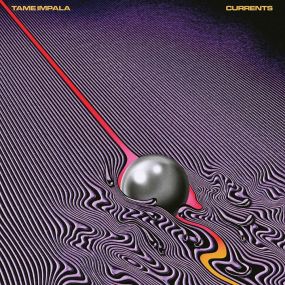
When Lana trills I sing the body electric and somewhere in time Whitman is loafing under a willow tree. There’s Ben in Lerner’s 10:04, ‘already falling out of time’, reading an ‘American edition of Whitman, its paper so thin you could use it to roll cigarettes’. Trace textuality, turn to ashes. When Isobella Rossellini is beaten to an inch of her life and still looks beautiful and that’s the tragedy. All my moods hued in blue. When the rasping sounds come from beyond the door, when all my lust for you feels useless and primitive, remnants of text message severed by missed connections. I move down the hill, steadfast as any rare sheep. The dawn is my shepherd. It’s 4am, past that even, and still I’m up writing. I’m winding my way through the hours already. This is summer and the very melding of day and night is a process narcotic. I wouldn’t be all that sad if you pressed me from bed and made every patch of me bright as your favourite rubbish. It isn’t all that. It isn’t. You could have a future. I’ll melt for you; I’ll shed for you. There’s something you just follow. The shepherd’s trajectories. He drips glitter and sings Grimes songs and knows the value of decent female production. It’s that easy. Soft qualities.

💧

He cut his tongue on the teeth of a selkie and calls it seapunk; there’s a gap where the whistle would be. The blue aroma, the blue chord, the melancholy blue of my body. When someone smashes a car in Vice City a frown forms on the underbelly of the sun. This is an old polaroid, the light leak very alien indeed. This is my collage of all that has been and will be. Blue skies, green grass, white sheep. I suppose it’s a good enough time now as any to reveal that I’m rainbow. I look like something a kid would vomit at a sleepover; this disgusting array of E numbers. Upshot: no stranger to the internet. The starry pixellation which on second thought could perhaps be freckles. How I loved him more for that, the warm skin feels soft on the back of the neck (net). Narco pastoral is soft porn, Hegelian dialectics, a fistful of dreams, a bump of mandy. You just want that ecodelic happiness, pure joy in the spin of your dusty shoes. If you drop all the drugs, consider me clean in the light I will love you. I’ve never been certain of anything. I just follow.

:: : the toxic lush pastoral
:: : the physiognomic, urban transcendental
:: : the stop-dust of carbon
:: : the fluid quotidian
:: : the endless chain of what once was (N)ature

/ World of Awe, A Stopped Ontography. / 🗑

It is important, according to Timothy Morton (2007), to harness the powers of kitsch.

I am with you, I am plastic-wrapped
and still just breathing…

..
.

c626560b45f0edcba8f4e580662f5f64
LDR in the short film, Tropico (2013). 


Analysis/Review: Roddy Hart’s 17th Annual Gordon Lecture and the Contemporary American Lyric

p04j7cmv
Source: BBC

Analysis/Review: Roddy Hart’s 17th Annual Gordon Lecture and the Contemporary American Lyric 

What a treat to listen to a lecture sprinkled with songs and stories, especially among the beautiful acoustics of Glasgow University’s chapel. After a rather spectacular introduction from Professor Simon Newman, singer-songwriter Roddy Hart gave the 17th Annual Gordon Lecture, organised by university’s Andrew Hook Centre for American Studies. Having collaborated with Kris Kristofferson, released an EP of Dylan covers and found success in the States with a stint on Craig Ferguson’s Late Late Show—not to mention running his own radio show for BBC Scotland and hosting Celtic Connections, the BBC Quay Sessions and the Roaming Roots Revue—Hart was well qualified to talk on this subject from a musician’s point of view.

Hart’s talk was a tribute to the great American lyric; to what makes it, in Hart’s words, particularly alluring, otherworldly and cool, especially to those who grew up outside of the United States. Admitting that he lacks an academic education in the history of American culture and music (actually, Hart has a law degree gleaned from within these very walls), Hart made up for this by sheer enthusiasm, celebrating the musical merits of songs from Woody Guthrie to Father John Misty and covering such topics as the journey motif, humour, darkness, nostalgia, politics and death. The talk took the form of a powerpoint, with Roddy speaking, singing snippets of songs and then commenting on their significance in a lucid, passionate way that kept everyone hooked for an hour and a half.

bob-dylan-ff51a1fc-5814-4717-8e71-9a49271fb47a.jpg
Bob Dylan / / Source: Rolling Stone

Hart began with the assertion that lyrics are not poetry, or indeed literature of any kind. Lyrics, he claimed, involve respect for structure, rhyme, metre and field (all definitions you could apply to poetry…), a certain knack for a hook, a streak of ingenuity and originality. Like poetry, a great lyric can reshape how we view the world we live in, send ripples through the fabric of reality and inspire us to take action, critically reflect or wallow in grief. The distinction Hart draws between poetry and the lyric prompted a desire to find out what exactly his thoughts are on Bob Dylan winning the Nobel Prize for Literature. My own thoughts on this issue have never rested on a single position, and I don’t really know enough about the prize’s history to comment on Dylan’s suitability.  However, there have always been strong connections between lyricists and poets, from the likes of Langston Hughes writing jazz poems during the Harlem Renaissance to Kate Tempest releasing rap albums as well as a novel and poetry collections published by the likes of Picador and Bloomsbury, no less. Hell, what about Leonard Cohen? At the end of the day, all writing is a performance of sorts, regardless of how it’s delivered. I could talk about Roland Barthes here, mention ‘The Death of the Author’, how the reader ‘performs’ the text like a score of music etc etc, but I won’t digress. Basically: sometimes a poem seems built for performance; other times it rests more easily on the page, where the eye follows an intriguing visual form or dance of letters arranged on white space. While poetry can be a two-way street, I’m not sure how well Dylan’s verse works on the page. Admittedly, most of his songs tell interesting stories, but that deceptive simplicity often needs the nuance and expression of Dylan’s voice to draw out the subtler levels of irony, humour, derision or sorrow from straightforward-seeming lyrics. Just my two cents on the matter, though I still like to wallow in ambiguity when it comes to these distinctions.

Hart gives the proviso that his talk is meant to be a working definition of the American lyric, not a comprehensive history. He does, however, mention a few characteristic features. The prominent one, of course, is name-checking: all the best American lyrics will draw on the wealth of states, street names, famous bars and hotels. In doing so, they draw on a tradition, they write themselves into a history of locations, urban legends and folk tales. Hart illustrated this by starting with Paul Simon’s ‘America’, pointing out how the song documents a search for America itself; this idea that America will always be this endless signifier, sliding along the great highway of desire that stretches across desert, country and city, drawing across generations. On the way, the lovers in Simon’s song make the best of their adventure, cooking up stories from the characters on the Greyhound, honing in on material details. It’s this sense of taking the listener on a journey that’s one of the American lyric’s greatest seductions. As Simon sings, “it took me four days to hitchhike from Saginaw” the chords soar and there’s that sense of being lifted to somewhere radically elsewhere, an open field, road, desert. The sweet spot between freedom and sorrow, of missing something deep and mysterious, the impossible pursuit.

Hart traces such material details in songs by Kris Kristofferson and Dylan, this sense of a ‘quintessential American aesthetic’ which he quite eloquently describes as a ‘Moby Dick-esque hunt across America’. The whale, ironically, is America itself. The road narrative is central to the American lyric. It’s a romanticised, extravagant sprawl into the dust of the past and glitter of the future, marked by place names which glow with familiar warmth and legendary spirit. Hart argues that this is something specific to the American lyric; that a Scottish equivalent wouldn’t quite have that same epic effect. He even sings a made-up local spin on ‘America’ to prove it; a journey between Edinburgh and Dunoon falls pretty flat in comparison. Of course there’s something special about the land of the free, in all its bright mythology and promise, but it’s not as if Scottish bands haven’t tried it. There’s that famous line from The Proclaimers’ ‘500 Miles’ which immortalises an array of parochial towns ravished by Thatcher, deindustrialisation and eighties recession: “Bathgate no more. Linwood no more. Methil no more. Irvine no more”. Of course there isn’t the same expansive magic, but there is something epic about lyrically connecting the local to broader political discontent. Still, you can’t really compare the Proclaimers to Simon & Garfunkel…or can you?

ontheroadmap2.jpg
Source: lettere-persiane.blogspot.com

Back to America. Hart describes Dylan as the nation’s great scene-setter, effortlessly drawing a sense of the times from the wisping drift of personal narrative, of stories about people and their lives. Details shuffled together like cards and strung along a line of verse. While some singers make their politics clear in the didactic manner of protest, Dylan sets these more intimate tales against the backdrop of cities and an impressionistically vivid sense of history. Hart plays possibly my favourite Dylan song, ‘Tangled Up in Blue’ from the 1975 album, Blood on the Tracks, spending time going over the lyrics to point out the singer’s knack for detail, the narrative journey which documents a succession of relationships, places and jobs. That famous philosophy: you’ve got to keep on keeping on. There’s something more raw here than the cosy, apple-pie fuelled comforts of Kerouac’s road narratives, which always depend on money from back home. You can hear it in the howl of Dylan’s voice, which becomes more a sultry croon in Hart’s version. What does he mean by blue? There’s the blues, there’s the blue of the sky and the ocean—symbols of infinitude. It’s a signifier that shifts as easily as Dylan’s character, from fisherman to cook, as he crosses over the West, learning to see things “from a different point / of view”. Surely this is one the basis for democracy, the meritocratic ideal of fairness upon which the USA was founded: empathy? The ability to openly shift your perspective, to never stay too long in your own shoes. That existential restlessness, set against the backdrop of a shaky political atmosphere, the dustbowl sense of losing one’s bearings in a maelstrom of uncertainty, characterises many of Dylan’s songs and indeed many road narratives throughout literature and American lyric.

You can’t talk about the American lyric without mentioning politics and Hart documents the history of the protest song, from Woody Guthrie’s ‘This Land is Your Land’ to Tracy Chapman’s ‘Talking About a Revolution’: songs that pose an equality of belonging, that document the quiet desperation and struggle that takes place beneath the surface of everyday life. Rather than tangling himself in the barbed reality of contemporary politics, Hart opts to situate his chosen songs in the context of more general themes: the failings of the American dream, social inequality and the oppression of working people, all set against the turning tides of the economic landscape. It’s notable that most of these singers are men, singing about working men, often with reference to some vulnerable lost girl who needs saved. But then you have the likes of Anaïs Mitchell, writing visceral songs of longing and misplaced identity. ‘Young Man in America’ opens with this mythological, sort of monstrous story of birth: “My mother gave a mighty shout / Opened her legs and let me out / Hungry as a prairie dog”. Images of industrial decline, capitalist opulence and landscapes both mythical and pastoral are woven by a voice whose identity is a mercurial slide between human, animal and disembodied call. Skin is shed, belonging is only a shifting possibility. It’s a complex song, with native percussion, brass; moments of towering climax and soft withdrawal. The music mirrors the strange undulations of the American journey from cradle to grave, its dark pitfalls and glittering peaks, the cyclical narratives of the lost and forgotten; the “bright money” and the “shadow on the mountaintop”, the fame of the “young man in America”, a universal identity disseminated across a range of experiences. For this is the myth of the American Everyman, and Mitchell deconstructs it beautifully.

Gillian+Welch+gillianPNG.png
Gillian Welch / / Source: Born to Listen

On the subject of female songwriters, I was very pleased that Gillian Welch and Lucinda Williams got a mention in Hart’s talk. The self-destructive sentiment of Welch’s ‘Wrecking Ball’ reminds us that the experience of being ground down by the relentless demands of a marketised society isn’t confined to men alone. Welch’s ‘Everything is Free’, not mentioned in the talk though highly relevant, makes this clear. It’s a song about artists will go on making their art even if they won’t get paid, and the tale of how capitalism discovered this and cashed in on its fact: “Someone hit the big score, they figured it out / That we’re gonna do it anyway, even if it doesn’t pay”. Like Dylan, Welch finds herself winding up on the road, working in bars, working hard and regretting being enslaved to, well, The Man. ‘Everything is Free’ is a message of both despondency and hope, crafting this sense of the beauty of song itself as protest and freedom even as the structure closes in: “Every day I wake up, hummin’ a song / But I don’t need to run around, I just stay at home”.

Hart mentions how the American lyric provides an escape to those who find themselves trapped in the smallness of their lives. You might live in a nondescript town slap-bang in the middle of Scotland, where the musical climate favours chart music blasted from bus-stop ringtones, but then aged fourteen you discover Dylan or Springsteen and suddenly America opens up its vast, sparkly vista, from East Coast to West. This seems to be Hart’s trajectory, as his career—from the first tour with Kristofferson to his continued promotion of transatlantic connections—closely follows an American strain of songwriting. My mum used to listen to Welch’s Time (The Revelator) album over and over again on long car journeys, so the lyrics to all those road songs are burned in my brain like tracks in vinyl, superimposed with endless visions of the M8 stretching out before me… It was only a couple of years ago that I found out Time (The Revelator) was released in 2001; I’d always assumed this stuff was ancient, the seventies at least. Maybe because Welch just has this knack for writing timeless songs; songs about heartbreak, loneliness and restless desire that reach back into the comforts of the past even as the journey itself is long and hollow, the destination vague as the blurred sign on the front of a train.

I guess this raises a broader question which Hart’s talk touched upon: the politics and poetics of nostalgia. There weren’t opportunities for questions afterwards, but if there were I might have asked Hart whether nostalgia is a necessary condition for American self-reinvention. It’s a pretty relevant  question right now, with much of Trump’s whole appeal based on the nostalgic vision of a vaguely industrial golden age of capitalism—a vision which is obviously the smokescreen for whatever chaotic ideologies are at work beneath the surface. The American lyric can set up this romanticised vision, only to break it apart; reveal its seedy underbelly, its failings, the disastrous gap between identified goals and actual means of attainment. Yet throughout the cynicism, there’s always that restless desire to continue, to keep on keeping on. Hart compares it to the green light in F. Scott Fitzgerald’s The Great Gatsby (1925), a novel significantly indebted to music (jazz, of course). The final line of that novel captures that past/present lyrical impulse so well: ‘so we beat on, boats against the current, borne back ceaselessly into the past’.

Which leads to the question: what about genre? Is the American lyric necessarily the domain of indie folk rockers? What about commercial music and pop? Can a pop artist deconstruct the American dream and earn a play in the lyrical family tree if they make money off their record and earn fame from MTV? Hart engages with Father John Misty as an example of how the American lyric can use humour to deconstruct the nation’s ideologies of progress and meritocracy, at the same time as retaining a post-postmodern self-awareness of identity politics, a meta-awareness of his own dabbling in ironic coolness. His very name evokes a sort of New Age gospel figure, a preacher for the times, whose stage is the television set or Twitter feed instead of the old-fashioned soapbox. Hart describes songs such as ‘I’m Writing a Novel’ and ‘Bored in the USA’ (obviously a riff on Springsteen’s classic) as depicting the ‘American dream for the millennials’. I’ve written about Misty extensively already on this blog (specifically, on his metamodernist tendencies), so I won’t go into detail here, but suffice to say I agree that FJM represents something special about contemporary cultural critique. It’s that blend of irony and sincerity, an exaggerated interrogation of the romanticism and the Gen X postmodernism of yore; the oscillation between raw subjective experience, political critique and the cool facade of self-deprecating wit. A constant juggling of ‘candour and self-mockery’, as Dorian Lynskey puts it. FJM notoriously got into a tiff during an interview with Radio 6 Music veterans, Radcliffe and Maconie. Aside from all the awkward sarcasm, what strikes me about this interview is the mentioning of kitsch merchandise objects: oven-gloves, jeggings. Hart explores a bit of kitsch lyric in the likes of Randy Newman, but I think FJM blends especially well that jaded sense of millennial despondence alongside tracks that can feel like rollicking simple narratives or epics of history on a 13-minute scale that gives Springsteen’s marathon tunes a run for their money. He pushes his stuff to the edge of the cheesy and cringe-worthy, exposing how all conviction has that shadow side of kitsch, even the most authentic lyrics—kitsch is somehow the cheap taste of someone else’s experience, the trick is to make it meaningful, and not just another imitation, a plastic model of the Empire State Building.

But Misty isn’t the only singer-songwriter deconstructing the American dream, exploring how both its poetic promise and jingoistic glory play out on a personal level. What about Ryan Adams, whose songs have that alt-country appeal of the restless bard? ‘New York, New York’, from his 2001 album Gold, opens with a Dylanesque lyric about shuffling “through the city on the 4th of July”, brandishing a “firecracker” that’ll break “like a rocket who was makin’ its way / To the cities of Mexico. The clean rhymes and ballad-like lilt of guitar are also very Dylanesque. But at some point I’ve got to stop making comparisons to Dylan, because ultimately this is reductive; it’s cheap and lazy music journalism. I do think, however, the ease with which we make these comparisons reveals something interesting about our generic assumptions. Guy has a guitar, sings melancholy songs about America and his place within it, a smart knack for a lyrical twist, occasionally picks up a harmonica? Instant Dylan; their careers overshadowed by a giant. (Note: I guess a similar thing happens with very talented female folk singers—the likes of Laura Marling—being compared to Joni Mitchell). But even Dylan doesn’t monopolise the American lyric. He might have a Nobel Prize, but this doesn’t crown him King of the Lyric Alone (or maybe it does?); we’ve got to tease out what exactly we mean by this term and how relevant it is in the fragmentary scene of contemporary music. Think with Dylan, but beyond Dylan.

Conor Oberst, formerly of the band Bright Eyes, is an artist who’s been branded with Dylan comparisons throughout his career (an extensive career at that; the precocious Nebraskan recorded his first album, Water, aged just 13). Sasha Frere-Jones in the New Yorker condenses many of my own feelings on the Oberst/Dylan comparisons: ‘Dylan is armour-plated, even when singing about love; Oberst is permanently open to pain, wonder, and confusion.’ Oberst is in many ways a liminal figure: cutting it out on the folk and country circuit  (Emmylou Harris and Gillian Welch appear on previous records) while hanging and collaborating with indie rock bands (The Felice Brothers, First Aid Kit, Dawes), flirting with punk (The Desaparecidos) and fitting with some comfort within the elastic nineties/noughties stratosphere of emo. Frere-Jones describes Oberst as a ‘poet-prince’, again opening debate on that binary between poetry and lyric that Hart sets up but that nonetheless remains slippery and problematic. Where Dylan espouse the solid wisdom of a sage or wandering bard, Oberst has a reticent, warbling quality that rises to epiphany but admits failure and the graceless fall into existential aporia. He wails like Dylan wails, but many of his songs have a fragility and surrealism that doesn’t quite match up with Dylan’s more assured narrative balladry. So in that sense, he’s a lyric poet in the more subdued, Keatsian manner, exploring the self in all its fragmentary, perplexing existence.

But he’s also very much an American lyricist. In his ‘mature’ career, Oberst hasn’t shied away from more directly tackling political themes alongside more personal songs. 2005’s ‘When the President Talks to God’ rips to shreds George W. Bush’s policies. Comprising a series of questions addressed to an audience, it more closely follows the form of a traditional protest song, laced with bitter satire: “When the president talks to God / Do they drink near beer and go play golf / While they pick which countries to invade / Which Muslim souls still can be saved?”. This is definitely a song to be performed, on a wide open stage or indeed to the even wider audience accessing broadcasts of The Tonight Show with Jay Leno, where he performed the song in 2005. Then there’s the angry, crunchy southern kick of ‘Roosevelt Room’, off Oberst’s solo record, Outer South (2009). Oberst’s later work isn’t as playfully weird and surreal as his early bedroom stuff, sure, but increasingly he masters the power of allusion that characterises American lyric, in Hart’s sense of the term: “Go ask Hunter Thompson / Go ask Hemingway’s ghost”. He’s addressing someone to be critiqued, wrenching them off their political pedestal: “Hope you haven’t got too lazy / I know you like your apple pie / Cause the working poor you’ve been pissing on / Are doing double shifts tonight”. There’s that apple pie again, symbol of steadfast Americana, fuel of the nation, the well-lighted place of a diner—a place of domesticity, stability and, let’s face it, commercial comfort. Oberst cynically dismisses the well-nourished white middle class politician, recalling a generalised story of poverty from material details: “And I’d like to write my congressman / But I can’t afford a stamp”.

7287149713eb38f78915555f9fe62624.jpg
Source: pinterest

Then there’s the frontier motif, the sense of America as a place of deep mystery as well as self-created landscape. Experiments with Eastern and Navajo cultures. Bright Eyes’ 2007 album, Cassadaga, with its album art requiring a spectral decoder to be fully appreciated, its envisioning of the singer as mystic or medium, channelling psychic forces through song. Cassadaga is very much a journey. The opening track, ‘Clairaudients (Kill or Be Killed)’ involves an extended spoken word sample of some kind of very American mystic who begins by setting us in the ‘centre of energy’, Cassadaga’s ‘wonderful grounds that have vortexes’, moving us through astral projections of a ‘new era and life’ that is changing, a message of hope, doubling back on the uncanny sense that ‘Cassadaga might be just a premonition of a place you’re going to visit’. Cassadaga is a real place, a spiritualist camp set somewhere between Daytona and Orlando, known as the ‘Psychic Capital of the World’. By naming his album Cassadaga, Oberst isn’t just name-dropping in typical hipster fashion, honouring local identity nor casting back nostalgically to a familiar place; he’s attempting to channel the energy of this location, interrogate its spirit, draw out its various psychic possibilities for the present. He sings of attempts to detoxify his life, of former affairs, of lost soul singers and the pursuit of a sense of belonging.

‘Lime Tree’ is one of the most beautiful songs Oberst has written. It’s a composite tracing of impressions drawn from various experiences, both personal or secondhand. While much of Cassadaga follows an upbeat, distinctly country sound in the manner of 2005’s I’m Wide Awake, It’s Morning, ‘Lime Tree’ closes the record with a dreamy, wistful serenity that recalls the likes of ‘Lua’, ‘Something Vague’ and ‘Easy/Lucky/Free’. Accompanied by angelic female vocals, ‘Lime Tree’ is ethereal, the guitar strumming minimal though following a certain continuous loop. Pale and lush strings contribute to the sense of being pulled downstream, giving yourself up to the languorous current. Ostensibly, it’s a song about abortion, about a struggling relationship: “Since the operation I heard you’re breathing just for one / Now everything’s imaginary, especially what you love”. But as in all good poetry, the beauty of the lyrics on ‘Lime Tree’ is their movement from specific experience to a vaguely spiritual voyage that gestures towards ending but instead finds the open plains of abyss, always suspended in paradox and ambiguity, the fault-lines between life/death, hope/despair, dream/reality: “So pleased with a daydream that now living is no good / I took off my shoes and walked into the woods / I felt lost and found with every step I took”. Home is a tidal wave, a churning wind, a shifting sand, a fragment.

tarotspread.gif
Source: crystalinks

America’s great confessional poet, Sylvia Plath, also explored mysticism, and her writing is rich with strange imagery, not to mention all those Tarot allusions in Ariel. In The Bell Jar (1963), the fig tree is the novel’s dark and mysterious heart, this vivid image that sprawls its symbolism through the text, a figure for existential paralysis: ‘I saw my life branching out before me like the green fig tree in the story […] I saw myself sitting in the crotch of this fig tree, starving to death, just because I couldn’t make up my mind which of the figs I would choose’. We might think of the connection between the term ‘roots’ and ‘roots rock’, its rhizomatic sprawl of influence never quite settling on a home even as a sense of home and locality is supposedly the music’s grounding purpose. Roots, of course, are always growing. The lime tree is an image plucked from a dream, but its significance is less clear in Oberst’s song than the fig tree in Plath’s narrative. Perhaps more than most contemporary songwriters working within a lyric tradition, Oberst is content to write from a position of uncertainty, in gaps and pieces of affect and narrative. The sound of his voice suspended over those gentle strings and strums is enough to make tremors in your chest, as if the slow vortex of another world were opening its mouth like the parting of the sea in someone else’s biblical or drug-enhanced dream: “I can’t sleep next to a stranger when I’m coming down.” The way of the lyric; so often the way of the lonely. Even as ‘Lime Tree’ might be a love song, it opens itself towards ending, loss, death: “don’t be so amazing or I’ll miss you too much”; there can never be plenitude in the journey: “everything gets smaller now the further that I go”. Bittersweet doesn’t quite cut it. It’s too subtle for that, a softly shimmering lullaby goodbye to the world, a retreat and a return, just like Nick Carraway’s vision of beating on but back into the past. The passage of an everyday spiritual pilgrim, the way we all are in life, our faces fading in the ink-blot of photographs. We turn back to look at ourselves through others, through words, just as Dylan notes how the girl in the “topless bar” “studied the lines on my face”.

A voyage through nostalgia, a quest for identity, belonging, an escape from something and a return, a desiring pursuit without end, a lust for life and ease into death; a twist of humour, a narrative of hope, aspiration and the failures that draw us back into the dustbowl. The American lyric is all of these things and more; its boundaries perhaps are pliable as the nylon strings on somebody’s battered acoustic guitar. Maybe it all culminates in madness and absurdity. For every One Flew Over the Cuckoo’s Nest, you’ve got The Felice Brothers’ ‘Jack at the Asylum’, a rollicking satire on the madness of contemporary American life which trades in richly surreal and absurd imagery to render the accelerated pace of this madness, crossing history in the blink of a screen flicker: “And I’ve seen your pastures of green / The crack whores, the wars on the silver screen”. Pastoral America is always already contaminated by an originary violence. Maybe the best American lyric depicts such realisations through personal stories, the relationships and encounters set against and embedded within wider structural phenomena, the recessions and closures and urbanisations. The Felice Brothers remind us, however, that all of this is secondhand, aspirational narratives passed down to us through screen culture, advertising: “You give me dreams to dream / Popcorn memories and love”. Once again, there’s that fluctuation between an earnest love of country to an embittered sense of its very elusiveness, the distant static shimmer of success whose failed pursuit we watch ourselves experience through the mediating comforts of daily life—the popcorn pharmakon poisons and cures for (post)modern existence, as calorific as they are nutritionally empty.

But once again, genre. String off a handful of names from Hart’s Americana playlist and you’ll be pressed to find anything that falls outside the folk-rock camp, even as its boundaries remain pretty permeable. Yet what of hiphop? Isn’t hiphop, in a sense, the great alternative American folk lyric? Rap is it’s own kind of poetry, after all. You might think of someone like Kendrick Lamar as an American lyric writer, working from a different generic background from Hart’s examples, but nonetheless telling the story of contemporary USA from the streets to the level of the visionary, just like Dylan did. Lamar even has a track called ‘Good Morning America’: “we dusted off pulled the bullet out our heads / Left a permanent scar, for the whole world to recognise / California, economics, pay your taxes bitch”. Once again, that originary violence, the scar of identity. Lamar works back from the wounding.

2c6fcf7f11a106ec68ee3464c221b2f8.jpg
Source: pinterest

My knowledge of hiphop is far too limited to discuss it in any detail, but thinking it through  the idea of American lyric prompted me onto the figure of Lana Del Rey, who often uses hiphop production techniques, from trap beats to muted, stadium echoes. I hate to bang on about oor Lana again (see articles here & here), but irresistibly she’s a shining example of a mercurial musician, drawn to the sweet dark chocolate centre of American melancholy. LDR performs a kaleidoscopic array of identities, just as Dylan often wore a mask that veiled itself in the confessional sincerity of the beaten-down worker, drinker, lover, escaping to the Mid-West alone. Yet while America’s great bard more or less got away with it, Lana has been constantly lambasted for her artifice and supposed inauthenticity. Which begs the question: what do we even mean by authenticity? Is only the white male—your Princes, Bowies and Eminems—allowed to strut in the performative identity parade? Both LDR and Lady Gaga have been lambasted for their supposed fakeness. There are obviously complex questions of racial, class and gender identity which I don’t have time to cover here. Sometimes, a musician is lauded for their alter ego (and doesn’t alter ego itself imply a certain surrender to the patriarchal ideology of masculinity?)—take Beyoncé’s hugely successful Sasha Fierce—and other times, it takes the invisible tide of the internet to swell in support for those critiqued by other forms of media.

maxresdefault-2.jpg
Source: YouTube

My friend Louise is always comparing LDR’s work to F. Scott Fitzgerald’s novelistic visions of 1920s America, and while this might seem a bit extravagant, there’s something to be said for the way Lana seamlessly evokes the spirit of the jazz age, the consumer paradise of the 1950s and the hipsterdom of millennial Brooklyn in the through the poetry of song. Is this just retroculture, in the sense of recycled kitsch and the twenty-first century urge towards nostalgia explored in Simon Reynolds’ excellent Retromania (2011)? Is there something pathological in Lana’s obsession with the past, a symptom of a broken psyche or worse, a broken generation? Perhaps. But there is something transformative and subversive about LDR’s retrovision, even as it may be critiqued for indulging in vintage gender roles as much as vintage styles (framing yourself as a sort of white-trash ‘gangster Nancy Sinatra’ is always gonna invite a certain feminist controversy, let’s face it).

One of Hart’s recent examples of the American lyric came from The National (even the band name evokes questions of what it means to be American), with their song ‘Sorrow’ from 2010’s dark and trembling High Violet. I’m interested in how this song apostrophises sorrow in the manner of a great Romantic lyric. We might think of Keats’ ‘Ode to Melancholy’ or Charlotte Smith’s Elegiac Sonnets, the eighteenth-century cult of sensibility remade for jaded and alienated millennials. Sorrow once again invokes that Platonic idea of the pharmakon as both poison and cure. We can wallow passively in sorrow, as The National sing: “I live in a city sorrow built / It’s in my honey, it’s in my milk”: it’s a trapped landscape, a petrified terrain in which the self can only slip deeper into isolation; but it’s also milk and honey, a kind of temporary nourishment to a darker psychic scar. As Smith so eloquently puts it in the final lines of 1785’s ‘Sonnet Xxxii: To Melancholy’: O Melancholy!–such thy magic power, / That to the soul these dreams are often sweet, / And soothe the pensive visionary mind!’. Sorrow provides a toxic tonic for the soul, a lubricant for paralysis that eventually leads us back towards the existential road. Life goes on.

Lana Del Rey is fixated on sorrow. Blue, she admits, is her favourite colour, her favourite “tone of song”. Her songs are always hyper aware of the transient beauty of life, even as they lust after death. On the soundtrack song she did for Baz Luhrmann’s adaptation of The Great Gatsby, she worries “Will you still love me when I’m no longer young and beautiful?” ‘Video Games’ is a melancholy ballad for the contemporary relationship, a lush, brooding expression of love in the time of Call of Duty. Roddy Hart even did a cover of it. Her songs have titles like ‘The Blackest Day’, ‘Cruel World’, Sad Girl’, ‘West Coast’, ‘Old Money’, ‘American’, ‘Gods & Monsters’ and ‘Summertime Sadness’. All these titles evoke the Daisy Buchanan sad girl trope at the same time as gesturing towards the broader existential melancholy of America itself in the manner of Springsteen; with sometimes the detached urban cool of Lou Reed, other times the genuine, trembling passion of Billie Holiday. The video for ‘National Anthem’ restyles Lana as a Jackie O type married to a young, good-looking black president, with 1950s iconography spliced among pastel-hazed footage of the pair lolling around in love, sniffing roses, smiling, looking good as a Vanity Fair shoot. The video begins with her character singing Marilyn Monroe’s famous ‘Happy Birthday Mr President’ routine. She re-envisions JFK’s assassination, with a spoken word piece on top. She’s imagining alternative political futures even as she casts back to the past. There’s that lyric sense of wonder and ambiguity, of being lost in time.

It’s this layering of styles, scenes and cultural iconography that makes Lana’s work way more complex than most of what else fills the charts. Sure, it’s great that a positive message of bodily empowerment (Beyoncé feminism) is doing the rounds just now, but that shouldn’t mean that those who fall outside this category are anti-feminist or ignorant to gender identity politics. When all the R&B pop stars are prancing around proclaiming their sexual freedom, dominating men in various flavours of BDSM allusion, getting all the looks in the club or whatever, LDR is crying diamond dust tears into her Pepsi cola, draped naked in an American flag. Her videos, songs and artwork engage with cinematic discourse, high fashion photography and cultural history in a manner that’s intellectual interesting as much as it is affective and aesthetically satisfying. In a sense, she’s meaningfully evoking the past in order to say something timeless about the American dream and the objectified position of the ‘white trash’ woman under its mast of starry glory. In another sense, she’s indulging in a postmodern recycling of historical styles: constantly name-dropping, from James Dean to Springsteen, Lolita—perhaps the great American road novel not written by an American—and David Lynch’s lush, dark suburban epic, Blue Velvet. Despite the performance and ventriloquy of figures and archetypes from twentieth-century cultural history, she retains a sincere expression of melancholy, heartbreak and longing that’s personal but also strives towards rendering the more universal experiences of womanhood in certain communities. All the controversy surrounding Lana in relation to racial politics, class politics and sexual politics exists because her work is provocative, problematic and complex, like any good American lyric.

One reason that Roddy Hart was such a good choice to deliver this lecture is that he’s had experience writing new melodies for Robert Burns poems for Homecoming Scotland. Why is this relevant to the American lyric? So much of the lyric tradition, in all its forms, is based on that sense of romanticism, visionary wonder, self-exploration; the rendering of universal experience through personal narratives, the subjective telling of a story, the trade in imagery and sound and careful arrangement. Burns was a sort of rock star poet of his times, and not just because he was a bit of a cheeky philanderer. He toured around, worked as a labourer and farmer; he talked to many people, opened himself to influence. It’s this diversity that continues to mark the American lyric in the twenty-first century; the way that Father John Misty can sing a very ironic and playful song on late-show tv, about a man checking social media on his death bed, with the conviction of a crooning Leonard Cohen; accompanied by a gospel choir whose voice raises Misty’s ballad to a level of epic, overly extravagant grandeur that still somehow works, remains genuinely compelling beyond the initial sarcasm. The way Detroit’s angelic avant-indie hero, Sufjan Stevens, can ambitiously and patriotically plan to write an album for every state in America, then turn on the project, calling it “such a joke“. The way that Suzanne Vega, in ‘Tom’s Diner’, sings about a familiar American institution, the fabled diner—or Well-Lighted Place, as Hemingway put it—with the simple verse structure of an Imagist poem made narrative, sketching brief impressions of the myriad people she encounters in a public space. It feels cinematic, with deep eighties bass, bursts of brass and string-like synths, but also has that emergent sense of a postmodern folk, looking at the world from the bottom-up, catching everyday lives and stories in song. Even when irony remains the chief aesthetic order of the day, the lyric doesn’t have to be sucked into self-referential abyss. The best singer-songwriters continue to channel the American lineage through a romantic strain as much as a humorous one, inflecting songs with sorrow, joy and vitally that lust for something more—sometimes beyond life itself, sometimes just the restless possibilities of the road. Singing alone in the Glasgow Uni chapel on a Thursday evening, Roddy Hart rekindled some love for all that.

*

American Lyric playlist:

Nostalgia for the Future: Lana Del Rey’s ‘Love’ and the Cultural Politics of Celestial Hauntology and Queer Temporality

Nostalgia for the Future: Lana Del Rey’s ‘Love’ and the Cultural Politics of Celestial Hauntology and Queer Temporality

[this essay arose out of Tumblr & IRL discussions with Scott Coubrough & Douglas Pattison; all images taken as screen-caps from the ‘Love’ video unless stated otherwise]

look at you kids with their vintage music
coming through satellites while cruising
 you’re part of the past
but now you’re the future

Lana Del Rey finally dropped a new song. Critics are calling it ‘uplifting’, ‘radiofriendly’, ‘an ode to allowing yourself to feel’. They aren’t wrong: on the surface, ‘Love’ does what it says on the tin. It’s a pop song dripping with sentiment, evoking that sense of yearning, the fragile desire of a typical Lana ballad, the kind of retro-culture sadcore found most prominently on Born to Die (e.g. ’Videogames’ and ‘Summertime Sadness’). However, as with all of Lana’s material, there’s more going on beneath the surface. This isn’t just a saccharine ballad about love. In fact, this is probably the most poignant address to millennial angst I’ve experienced in pop music so far.

In the video for ‘Love’, clad in a white dress, dark hair studded with sixties-style daisies, Lana’s figure fades into view out of blackness. The mood is monochrome, but the song and its video deal in more than one mood, one temporality. As Scott Coubrough puts it, ‘it totally depicts the experience of the cultural anachrony of now’ (citation: Tumblr chat). The black-and-white vintage Hollywood vibe is lingered over with sensuous closeups of smouldering cigarettes, dust swirling on a rain-streaked window, a handsome man pulling shapes from his vintage guitar. In the first half of the video, Lana’s performance is spliced around footage of kids living in a pastel-hazed Instagram version of the sixties, skateboarding and drifting in couples around graffitied streets. While most of these teenagers carry sixties iconography—huge plastic shades, cropped haircuts, Ginsberg-glasses—there are the odd anachronisms, the kind of hoodie-clad ambience of a Blink 182 video romanticised in slow-motion. Smartphones make an appearance only as cameras. It’s not a selfie that’s taken, but an old-fashioned snapshot of a friend. Why invoke this vintage idea of relationships, of summer afternoons wasted innocently without the distracting paraphernalia of everyday technology? Who are these kids, who have time to lean seductively over trucks, to laugh arm in arm in glorious LA sunlight?

This is all a deliberate exercise in nostalgia. The warm haze of an Insta-filter showers these moments in the warm glow of preservation, the stylised memorabilia we accumulate daily with our social media feeds. There’s a sense of the future anterior to everything that happens: such visual flickers of perfection, snapped as photos, remind us that youth is always about imminence: knowing that this won’t last forever, that soon it will slip away. We are always finding ways to preserve, to prolong it. Youth. Even as we’re living, we’re thinking of ways to capture the moment.

So far so ordinary. Nostalgia for lost youth and lost love isn’t exactly a new theme in pop music, from Van Morrison’s ‘Brown Eyed Girl’ to Del Rey’s own back-catalogue, notably her offering on The Great Gatsby soundtrack, ‘Young and Beautiful’: “will you still love me when I’m no longer young and beautiful?” What’s different about ‘Love’ is its relentless insistence on the temporal deferrals within presence. “To be young and in love” she sings over and over, a collective rallying cry to her fans that urges its utopian possibility through the infinitive, rather than present tense. There’s no actual sense that these kids are all in love, but Lana explores what that love really means. She references the confusion of modern dating, mired as it is in the conventions of various apps and different types of hookup (“signals crossing can get confusing”). She repeats the word “crazy” like she’s trying to conjure it into being from the word’s invocation of chaos. But other than that, ‘Love’ doesn’t explicitly explore what it means to be in a conventional relationship; there’s none of the vivid imagery of masochism and defeat, none of the apostrophised Brutish and Beautiful Men you might find scattered around previous albums. Instead, love figures on this song as a kind of energy, the channels of desire that seem to pull us out of our current reality and into nostalgic futures.

The problem is, this desire isn’t a simple longing for a lost object, the loved one who slipped from our grasp; it’s a kind of depression, the Freudian melancholia that lacks an identifiable source, that eats away at our sleep. Beneath the sugary imagery of couples sharing walks and drives together, there’s that restless unease. The dark pulse of Born to Die-era strings. The heart of the song is a sense of self-reflective stasis. The camera pulls outwards to reveal the teenagers in the ballroom, watching Lana perform with reverent awe in their faces. Already, the singer is reflecting on the cultural presence of her music as it spreads into the future through the track’s own duration. This is a song which never seems to build to obvious climax, which rejects that teleological impulse towards the goal of release and decline, the cycles of reproduction which compel us to consume more and more as we start again each time. Instead, ‘Love’ wallows in the shallows of its strange, haunted swing, mesmerising us with cinematic production, with delicately repeated refrains that twirl like spun sugar. Onstage, Lana is bathed in white light, this ethereal beacon from the past or future, existing in the timeless space of an auditorium. It’s like the set for a Beckett play, that dark space of absence and aporetic timelessness where anything might happen. Beckett, only with sex, beauty and audience adoration. We’re encouraged by a playful, irresistible wink to fall for this surreal and breathless dream.

Screen Shot 2017-04-02 at 13.05.41.png

The kids slowly sink into Lana’s music, lolling their heads in time, blinking in meditative motion as they stare at her swaying onstage. When we see the starlight reflected back through Lana’s eyes, the kids begin seeing the same celestial beauty. A huge moon rises above them, the walls of reality shattering as the ceiling becomes a super-imposed night sky. The truck starts spinning in space, a truly lost object, like the kind of anachronistic cultural products scattered across Back to the Future, divorced from their temporal ‘home’ and washed up elsewhere, the debris of a lost present. In space, the truck’s radio says ‘No Service’. We’ve entered Beth Orton’s ‘Galaxy of Emptiness’, the starry space where we’re detached from the everyday. “Back to work or the coffee shop”; these banal facts of daily life are usually excluded from the typical Lana song, which is more likely to feature gangsters and bad boys and probably a branded soft drink or declaration of deeply personal romantic sadness. This song feels more universal, generational, though nonetheless affective. The ordinariness of work and coffee (made more poignant by the obvious fact that many millennials combine the two as baristas, again reinforcing this idea of a dull labour cycle) infiltrating a LDR song? Woah. Her previous work explores the saturated hyper-dreams of consumer capitalism, with presidents dripping in gold chains, Lana herself resplendent in expensive pastel Jackie O suits, or riding across sunset highways against the vintage billboards advertising various American Dreams. The haunting quality of ‘Love’ is that it sort of rises above the glitz and glamour. Smartphones aren’t product placements but rather become anachronistic, incongruous relics, twirling out of time. The youth depicted in ‘Love’ are caught in a static reality, never growing old. By floating into space, they are cast adrift from capitalism’s materialised temporality.

You get ready you get all dressed up / To go nowhere in particular”. With this line, I’m reminded of an endearing extras video from the Skins series, called ‘Cassie’s dark dates’. Cassie, the ethereal and bittersweet anorexic character, announces to her flatmates that she’s going on a date, slicks on lipstick and smiles nervously in the mirror. She sits in the park smoking in her mustard socks, hair blown back wispy in the wind, watching a red balloon caught in her tree, fragile as her own wee heart. She wanders the city alone till it gets dark, then finds an old man lying on the ground. Thinking he’s dead, she tries to talk to him, then lies down beside him after he says he’s ‘listening to the pavement’. The pair wander home and she helps him make beans and toast; they share a cigarette and some laughter. It’s a lovely depiction of two lost souls from different generations finding temporary peace in their lives. He falls asleep on her knees while she reads an old book. It’s wistfully delightful; watching it now reminds me that those teenagers we watched grow up grotesque and vivid onscreen are somewhere, someone else now. The girl I was ten years ago (literally, wow) is equally lost. Part of her thought she would return to Mars. But she didn’t (or did she?) and instead she faded through the years, through the ether.

Screen Shot 2017-04-02 at 13.04.35.png

Reality is a Stage Set/Baby the World’s Ending

 J. G. Ballard famously said that ‘one of the things I took from my wartime experiences was that reality was a stage set’, whereby ‘the comfortable day-to-day life […] could be dismantled overnight’. I’m reminded of the closing scenes of Ashes to Ashes, where Daniel Mays’ devil-like character starts smashing up the office ‘stage set’ and revealing that this reality is really just a kind of limbo, suspended in starry space—all the characters, we suddenly realise, are already dead. This is a series that, as with Life on Mars, is constructed on the premise of a sort of techno-hauntology, where the characters find themselves cast back in time but connected to the present through various forms of twentieth-century media. Signals start crackling with uncanny resonance, spirits and voices carried across the ether.

In ‘Love’, the film’s stage set is revealed as suspended somehow in the rather grandiose setting of space. Seeing the truck spinning, I couldn’t help but be reminded of Gene Hunt’s Quattro, this retro object that acquires nostalgic significance for the contemporary viewer. Why is it hurtling, in Lana’s video, towards the smouldering sun? The faces of the young folk in the car are seen glowing amber as the sun approaches, but they look happy rather than frightened. Somehow the video ends with the cool kids frolicking in this strange environment which could be anywhere, any planet. There are several moons in the sky. There’s a diner in the middle of nowhere. It feels a bit like Mars, all red canyons and desert sands. But there’s the blue water. These sublime landscapes evoke a sense of both fear and wonder as all the characters, including Lana, stare up at the sky. Are they scared of what lies beyond? For a generation whose futures are likely to be less well-off than their parents, whose hopes and dreams are clouded with rent-markets, dead-end jobs, cycles of unemployment and crippling student debt, the world of phantasmagoria evoked by the planets and stars seems a welcome retreat.

Like Clay in Bret Easton Ellis’ Less than Zero, they spend endless time just floating. While Clay drives about on the LA freeways, these characters drive about in their trucks, then frolic in the wastelands of space. What Gen X and millennials have in common is that sense of suspension and boredom. Where millennials differ, perhaps, is in their urge towards something greater, a less jaded sense of existence. When pushed to the edge, where else to go but down into that abyss? Simon Reynolds explains this sense of suspended progress in the twenty-first century, where the problems Ellis’ characters faced in the eighties are even more accelerated within culture and social life:

our belief in progress itself has been shaken badly recently – by the resurgence of faith-based fundamentalisms, by global warming and toxic catastrophe in the Gulf of Mexico, by evidence that social and racial divisions are deteriorating rather than improving, by the financial crisis. In a destabilised world, ideas of durable tradition and folk memory start to appeal as a counterweight and a drag in the face of capitalism’s reckless and wrecking radicalism

(Reynolds 2011: 404).

It’s this drag that Lana’s languid beat creates. She assures us: “It doesn’t matter if I’m not enough / For the future or the things to come”. This is a bold statement in the goal-orientated universe we live in; a time when everything has to be justified, ticked in boxes, underlined with attaching transferable skills. ‘Love’ allows us to dwell on just being, on the non-instrumental connections we make with other humans. Like many LDR videos, ‘Love’ offers a form of escapism from reality, but unlike those other videos this is an escape we all live everyday. The anonymous teenagers/young adults featured in the video could be any of us; they are scaled down, their insignificance is made vivid by the appearance of huge celestial bodies. We literally transcend the Earth. So why not make it spiritual? After all, our planet is itself on the edge. We are living in the time of the Anthropocene. Isn’t it about time our pop-cultural heroine consulted the oracle and told us how best to look westwards?

1531eyu.jpg
From the ‘Born to Die’ video. Source: MetroLyrics
1396259-lana-del-rey-delrey-viral-617-409.jpg
From the ‘Born to Die’ video. Source: Billboard.

“Baby don’t worry”: Lost in the Chora

Take previous LDR videos. ‘Born to Die’: the American flag, the imperial palace, the denim shorts and red baseball sneakers, tattoos and stretched ears, tigers and headlights, a lost highway, vampy red nails, the virginal white dress, sex, silence, a crown of summer flowers. A glut of signifiers. Money, power, glory. Oh wait, that’s another Lana song. The point is, we’re used to this sort of postmodern meta-play of signifiers when we’re watching a Lana video or listening to a Lana song. Like Ariel Pink, she works with readymade styles, retro-fitted fashions, vintage imagery and iconography. While Pink tends to work with a lo-fi, rough-edged, VHS aesthetic, the juicily plastic styles of the eighties, Lana favours the melancholy Hollywood dreams of the sixties. Those dark lashes, irresistible grin, hair so perfect you could frame it. ‘Love’ is a cinematic video; its very cover art suggests an old-school Hollywood film more than a new single. It’s got grandeur, it rises to what might be called ‘an intergalactic space opera’, although that sounds more like something Muse would get up to. We’re watching shooting stars stream silvery blue over a pyramid. What is a shooting star? A wish? And aren’t wishes necessarily orientated towards the future?

In opposition to an easy play of signifiers, ‘Love’ favours the expansive space of the sensuous and strange. Space itself, understood as whatever that mass of stars and matter that exists beyond our planet, is a bit like Plato’s chora. Or at least, the way it functions in Lana’s video (hell, I’m no astrophysicist). The chora is a kind of ‘mobile receptacle of mixing, of contradiction and movement’ (Kristeva 1977: 57); it is a womblike space which drive flows of renewal and infinite multiplicity within and beyond the subject. Think of a space in perpetual motion, no stasis allowed in its play of atoms. There is always a shimmering, a flickering between being, self, other. The language we use to describe this deconstructive flickering is, as Timothy Morton reminds us, ‘highly accurate’ at ‘a quantum scale’ (2015: 71). ‘When a verb is intransitive,’ he continues, ‘like flicker is, does the fact that it has no direct object mean that it represents a state of being or does it mean that it represents a state of doing—and if so, doing what to what?’ (Morton 2015: 72-73). What if ‘love’, as it appears in Lana’s new single, is an intransitive verb. To be in love is different from saying, ‘I love you’, ‘I love chocolate’ or ‘I love sunsets on the hottest days of June’. You’re not attaching the state to an object. There’s a sense of transition, passage, deferral between expression and feeling, the manifestation of a signifier. The space we inhabit in Lana’s song is a kind of chora, always undergoing some kind of self-rupture.
‘The chora, as rupture and articulations (rhythm), precedes evidence, verisimilitude, spatiality, and temporality’ (Kristeva 2001: 2170). Phantasmagoria are necessarily virtual images, superimposed on reality; the flicker of a hologram, a light display, a shower of fireworks, a neon sign flashing in the darkness. The blur of street-lamps in rain, the light of your phone glowing through a pink gauze of candy-floss, shimmers of fairy lights in a stranger’s window. There’s a sense of being seduced by the other side, by the beyond of the looking glass; nearly getting through but not quite. The allure of the surface, its invitation of depth that mistakes perception for layers of mirrors. The cameras filming ‘Love’ rupture time and space as they burst between different scenes, different worlds. Staring up at the stars is an old-fashioned Romantic image, but it seems less like the humans are projecting themselves onto the landscape, declaring their love as Keats did to the stars: ‘Bright star, would I were steadfast as thou art—’. Rather, this is more an experience of the sublime: the camera’s focus is more on the characters’ eyes, which become reflective screens to the visual dramas unfolding. The world impresses itself upon us, we become but reflective surfaces in the endless refraction of this mysterious universe, its scintillations of colour and light, of divided time.

We view the subject in language as decentering the transcendental ego, cutting through it, and opening it up to a dialectic in which its syntactic and categorical understanding is merely the liminary moment of the process, which is itself always acted upon by the relation to the other dominated by the death drive and its productive reiteration of the “signifier”

(Kristeva 2001: 2175).

With the word ‘liminary’, I can’t help but think of luminary. Is light necessarily a transitive state between presence and darkness? Can one have presence in darkness? A luminary is someone who shines light, who inspires or influences others; but of course it is also a light-giving body, the sun and moon and stars. Lana, clad in white and seeming to emanate light from the stage, is easily the video’s luminary. I also can’t help but think of Walter Benjamin’s Angel of History, ‘turning away from the future to face the ruined landscape of the past’ (Love 2007: 5); she’s caught between past and future, deliberately shadowing the future with her turn to a retro-fitted past.

Liminary, on the other hand, is that which is placed at the beginning of the book; it is the instating moment of ‘the process’. ‘Love’ is the start of something new, even as it is grounded in retro culture. The mise-en-abyme of its central ballroom performance instates a rupture in discourse, the sensuous invitation to revel in its temporal infinitude, the possibility of abyss offered by sudden expansions of space-time, the spreading out into the galaxy. How do we relate to one another in this reconfigured universe, this endless opening of the book that leaves us stranded in the interval between what exists and future artistic possibility? The faces we encounter in the video are always Other, always slipping from our grasp as the camera gives us insufficient time to retain them. What is the signifier so constantly reiterated in ‘Love’? Why, love of course! And here, love is inseparable from death.

Screen Shot 2017-04-02 at 13.06.11.png

No Future: Rejecting Reproductive Futurity

The video’s inertia and the song’s refusal of the little death of musical climax enacts a kind of non-consumerist pleasure. Take a standard pop, rock or indie song. There’s the buildup, the verse/chorus repetitions, the climax (with its attendantly indulgent, masturbatory solo) and the middle eight, a swift denouement. It’s all over before you know it and there you are, gorged and glutted but ultimately empty as you were to begin with. It’s the standard model for masculine sexual desire, which is pretty much always ego-centred. You keep going back for more but the high lasts only as long as the song. ‘Love’ strains towards something more intangible, elastic; both evanescent and eternal, a sensuousness moving between bodies, minds, times—never entirely confined.

I think a clue to the video’s strange temporal dynamics is, perhaps, its conspicuous lack of non-heterosexual couples. If it’s a paean to love, it’s a very straight one. Why have her characters plunge into the fiery planet? Is this a heteronormative apocalypse?

tumblr_m8bnxbqzp81qevm0qo1_1280_0.jpg
Paul Klee’s ‘Angeles Novus’–the painting Benjamin used to explain the Angel of History. Source.

There is a sense that this video is ghosted by a queer temporality. This opens up questions about identity, sexuality but also a more epochal sense of where we are now in terms of our experience of being and time.

According to Walter Benjamin (1940), one of the hallmarks of the modern era is a constant movement through “homogenous, empty time,” as opposed to the hauntings and co-occurrences of premodern civilisations and religious times. Attention to queer temporality explodes the idea of such homogenous and empty time, indicating the public face of white, heterosexual Western normativity as its vanguard.

(Cho 2015: 49)

Another striking thing about ‘Love’ is its white-washing. There are a few mixed-race characters but overwhelmingly these kids are the white youth. Maybe not quite Made in Chelsea-level, but nevertheless the video is pretty white. Now, while there’s been some controversy about Lana’s performative stylisation of racial tropes (and that’s a whole other essay on the topic of cultural appropriation), I don’t think white-washing is an inherent problem with Lana herself; she’s worked with people of colour in previous videos and in her touring band. So this instance of whiteness seems potentially deliberate. It’s part of a more general invoking of this hegemonic bloc, the young folk who we expect to have a wild youth and then grow up and settle into settled, middle-class heteronormative, reproductive lives. But what happens instead? They end up in this performative limbo, this space of the sublime, which is by definition ‘limitless’: ‘the mind in the presence of the sublime, attempting to imagine what it cannot, has pain in the failure but pleasure in contemplating the immensity of the attempt’ (Kant, A Critique of Pure Reason). Lana offers us this impulse to strain beyond what the world, in all its narrow clarity, offers. She urges us to relish in the shadows, even as she emanates light and knowledge.

Screen Shot 2017-04-02 at 13.06.20.png

What are these shadows? Where are the queer and non-white hiding? As Lee Edelman (1998) points out, culture and society translate desire into temporality, into narrative; specifically, into the heteronormative teleological narrative of reproductive futurity. Fall in love so you can settle for a single partner, bind your desire in a capitalist social contract based on ideas of possession and commitment (marriage) and then help perpetuate the social order by having children and raising them to share your heteronormative ideologies. ‘Love’ unravels this teleological narrative of love. Those who fall out of the heterosexual camp are considered negative, ghostly, associated with the death drive since they do not reproduce. Lana, with her asynchronous depiction of sixties youth in the age of the smartphone, invokes a kind of time out of joint. As I’ve already said, these kids are trapped in stasis. The chora allows a sensuous, non-object related pleasure that goes beyond the consumer ethic or the typical romantic ethic of attachment. As they enter the waters of Mars (let’s just assume it’s Mars), they spread out from their initial couplings and form a collective of shared wonder. We’ve seen them plunge towards the fiery planet, the possible apocalypse that explodes instead into celestial beauty.

For Edelman, the project of queer theory is to embrace this association with the death drive:

Queer theory, then, should be viewed as a site at which a culturally repudiated irony, phobically displaced by the dominant culture onto the figure of the queer, is uncannily returned by those who propose to embrace such a figural identity within the figuralisation of identity itself.

(Edelman 1998: 27)

As discursive space, queer theory allows for ironically retaliating with an embrace of this phobic backwards queer. So imagery associating homosexuality with ghosts, vampires, absent figures and so on is vividly figured as an assertion of refusal, refusal to capitulate to reproductive futurity. In ‘Love’, the time of adolescence is transformed as these early models for future capitalism become ghosts, faces lit up in celestial white as they form a sort of playful colony on another planet. Their anonymous identities are held in stasis, prompting the audience to conjure for ourselves a narrative for their existence, their future.

By its very exclusion, the queer figure haunts Lana’s video. She reminds us that in Hollywood culture, rarely does a queer character get to share screen pleasure; but ultimately, the couples that do get together in ‘Love’ aren’t doing the old R’nB style dry hump in the back of a fancy car, but rather more innocently share in each other’s being. The moment of collectivity towards the video’s end when everyone looks up at the sky, just as before they looked at Lana, Angel of History, initiates a different kind of shared love. Friendship, perhaps, is just as important as romance. It’s all about a shared openness to the wonders around us. Maybe this is a sort of jouissance, that joy and bliss that cannot be pinned down simply to signifying object relations, ‘the sense of a violent passage beyond the circumscriptions inherent in meaning’ (Edelman 1998: 27). An experience of rupturing pleasure that can poke a hole in our normative sense of reality. However, as with most of Lana’s output, jouissance is inherently tied to the death drive, since by unravelling our symbolic reality, it also peels apart ‘the solidity of every object’, including the subject—making us painfully aware of our finitude, the void that stares back at us through the torn gauze of everyday signification (Edelman 1998: 27).

tumblr_mai7l9cLwG1qewhoso1_500.gif
Source: Rooster Magazine.

The Loop of Depression

Often referred to as ‘Hollywood sadcore’, Lana’s music is always inflected with a tragic undertone, a flirting with death (notoriously, she claimed in a Guardian interview that, ‘I wish I was dead already’), an atmosphere of darkness and depression. Depression works often by a loop logic. As Timothy Morton points out, the problem with depression is that it restricts temporality ‘to a diameter of ten minutes’: five in the past and five in the future. This narrowing translates into a kind of loop where one’s inability to think long-term forgoes the possibility of interrupting and re-directing the cycle of negative thought. The beats on ‘Love’ are tensely held; the song rarely develops beyond its repetitive ah-ah-ahs and it’s refrain of young and in love; while on the surface it seems affirmative, really it operates by a loop logic which betrays its cultural claustrophobia, its haunting. As my friend Scott points out, ‘Love’ also has a sound effect ‘that sounds like a metal bolt being locked’ which ‘reinforces how trapped we are in this loop’. And what exactly is this depressive ontology in which we are caught? How does Lana make it so seductive, even as she deconstructs its sources in heteronormative futurity and the existential despair of our millennial generation?

Depressive ontology is dangerously seductive because, as the zombie twin of a certain philosophical wisdom, it is half true. As the depressive withdraws from the vacant confections of the lifeworld, he unwittingly finds himself in concordance with the human condition so painstakingly diagrammed by a philosopher like Spinoza: he sees himself as a serial consumer of empty simulations, a junky hooked on every kind of deadening high, a meat puppet of the passions.

(Mark Fisher 2013: 61)

Being depressed highlights how much of a serial, looped existence we live on a daily basis, regardless of our mental health. It’s just capitalism. Only, unlike their ‘healthier’ or ‘more adjusted’ comrades, the depressed are unable to pursue this consumption of ‘empty simulations’ with any exuberance, feigned or otherwise. What’s the point in washing our hair when we’ll only have to do it again, when we’re not even sure what this body is or who it belongs to or what the fuck it’s doing in the world. When you don’t give a fuck about looking like that girl in the Loreal advert? Sylvia Plath’s protagonist Esther Greenwood, falling into clinical depression, says:

I hadn’t washed my hair for three weeks, either.

I hadn’t slept for seven nights.

The reason I hadn’t washed my clothes or my hair was because it seemed so silly.

I saw the days of the year stretching ahead like a series of bright, white boxes, and separating one box from another was sleep, like a black shade. Only for me, the long perspective of shades that set off one box from the next had suddenly snapped up, and I could see day after day after day glaring ahead of me like a white, broad, infinitely desolate avenue.

It seemed silly to wash one day when I would only have to wash again the next.

It made me tired just to think of it.

I wanted to do everything once and for all and be through with it.

(Plath, The Bell Jar)

The way Plath’s sentences spill out like lines of a poem, of code or fragmentary diary entries, indicate this sense of a loop: Esther can’t think beyond the next five minutes, and when she tries, she sees the infinitude of a ‘desolate avenue’. This is the future of the depressive, an endless repetition of mundanity that has no release from its shade. Esther has lost a sense of purpose or instrumentality: she cannot buy into the ideologies of femininity or self-care that justify the washing of one’s hair. She is, in body and mind, utterly exhausted.

What’s the point in having any faith in television, love, novels—the everyday detritus, landscapes and people of life itself—when everything reveals its inner hollowness, its lack of presence. The depressed see the emptiness in everything, the way everything concatenates, leads back round to the false positive of consumer logic. Maybe it’s a bit like seeing the world through Derrida’s eyes, but without Derrida’s flourishing ability to express it. Being depressed is actually—aside from the myriad debilitating physical and serious mental side effects—about having a very incisive and mostly, sadly, accurate view of the world. The problem is that there are ways of thinking through this loop and creating an alternative, positive subjectivity from the surrounding ruins; but when you’re stuck five minutes into the future and five into the past, this is pretty difficult to achieve.

So in a sense, ‘Love’ fetishises not death per se, but a depressive ontology which overshadows its surface celebration of exuberant love and celestial futurity, the astrological symbolism of possibilities to-come—future predictions. As with Esther Greenwood’s white boxes and black shade, Lana works with a monochrome logic of feedback loops (the audience viewing the artwork which we as audience are presently viewing), the symbiotic, repeated exchange between black and white, presence and absence, past and future. We are gifted with her “vintage music”, with the siren song of the past spreading into the celestial bounds of tomorrow. The sixties were a decade of utopian promise, representing the hope of future freedoms being realised in the present through protest, communes, youth culture—putting new ways of living into practice. In ‘Love’, the stylised invocation of the sixties represents the lost futures which our generation has been outcast from by the structural logic of late capitalism, its favouring of those who came before us, its refusal to invest in the infrastructure of youth and its possibility. The sixties can only appear here in the cinematic vintage of nostalgia.
The sound that comes “through satellites while cruising” could refer to the satellites of the present, the ones that structure the global interconnectedness of the internet, of broadcast television, the possibility of a rhizomatic exchange of divergent (and, hopefully, ideologically and temporally subversive) dreams that goes beyond the one-way projection of Hollywood’s cinematic vision of heteronormative LOVE. The word ‘cruising’ evokes the sense of pointless drifting, the sensuous and pleasurable experience of sailing around without definition of purpose that we find in the chora; in the way the characters float without gravity in space, surrounded by the suspended debris of identity, with smartphones and skateboards. It also, however, connotes the act of wandering around in search of a (casual) sexual partner, a practice often associated with gay culture. Once again, the spectre of the non-heterosexual returns to haunt this vision of sensuous, anti-teleological pleasure. Casual hook-ups rupture the reproductive marriage logic of possession; they instate a consumer attitude of recycled desires. Yet Lana’s video, unlike many contemporary music videos, doesn’t portray a vacuous array of club meet-ups leading to casual sex. It moves towards something sensuous, visionary and strangely warm and beautiful. There’s genuine affect, as Lana smiles and sings her way through this weird journey. She celebrates a kind of jouissance which seems to exist outside of reproductive futurity, outside of capitalism, outside of the Earth as we know it. Is this where we Millennials are headed? Will only the choice, privileged few get to share in this utopia, as is apparent in the video? Whose vintage dream is this, anyway?

Further Reading

Cho, Alexander, 2015. ‘Queer Reverb: Tumblr, Affect, Time’, Networked Affect, ed. by Ken Hillis, Susanna Paasonen and Michael Petit, (London: MIT Press), pp. 43-59.

Fisher, Mark, 2013. Ghosts of My Life: Writings on Depression, Hauntology and Lost Futures (Alresford: Zero Books).

Freud, Sigmund, 1914-1916. ‘Mourning and Melancholia’, On the History of the Psycho-Analytic Movement: Papers on Metapsychology and Other Works, Vol. 14, trans. by James Strachey, (London: Hogarth Press), pp. 243-258.

Heather Love, 2007. Feeling Backward: Loss and the Politics of Queer History (London: Harvard University Press).

Morton, Timothy, 2015. ‘Sparkle Time Time Sparkle’, in Sophie Sleigh-Johnson, Chtonic Index (Southend: Focal Point Gallery), pp. 66-79.

Reynolds, Simon, 2011. Retromania: Pop Culture’s Addiction to Its Own Past (London: Faber and Faber).

Playlist: February 2017

IMG_0149.jpg

February was barely a slice of time, I mean, really. Give me enough light to lift at least half the shadows from my eyes. The music choice has been mostly sort of electronic delicious indie mixed with a major nostalgic yearning for old Bright Eyes songs. Conor Oberst @ Queen’s Hall was incredible, he has this amazing spitting energy and this lust for a good tune and a rant and a celebration of that moment where it’s just a voice, a guitar, a bitter harmonica. GoldFlakePaint did an amazing interview/feature piece with Conor that’s definitely worth reading–quality music journalism is all over the place if you look! As for the gig itself, there were too many highlights to mention. The cover of Gillian Welch’s ‘Everything is Free’ really hit home hard, because yeah it’s true, sometime in history they decided that folk are gonna keep making art regardless of the money. So that’s the destiny, the open road of void and maybe possibility; I guess it’s still the tip jar that keeps us going…God though, that duet of ‘Lua’, that’s enough to live on for at least a week ❤

I’m currently in the process of reviewing Nav Haq’s RAVE: Rave and Its Influence on Art and Culture, so expect a ton of acid house in next month’s playlist…


Gigs:

Phoebe Bridgers/Conor Oberst
Kate Nash
Little Comets
Wuh Oh
Apache Sun/Fufanu
The Ediots/Pleasure Bent
Lomelda/Pinegrove

Playlist: 

The Felice Brothers: Jack at the Asylum
Manchester Orchestra: 
Architect
Beck: Ramshackle
Bright Eyes: The Big Picture
Lomelda: Brazos River
Little Comets: Common Things
PinegroveNew Friends
Conor Oberst: A Little Uncanny
The Staves: Tired as Fuck
Half WaifSevered Logic
The Japanese House: Face Like Thunder
Happy Meals: If You Want Me Now
Arthur Russell: The Platform on the Ocean
Lana Del Rey: Love
LCD Soundsystem: Never As Tired As When I’m Waking Up

Top 15 Albums of 2015


(in alphabetical order…)

beach-house-depresssion-cherry-album1

Beach House, Depression Cherry 

It’s moody and melancholy and perfect for Sunday afternoons in winter, where hardly an hour of light graces us with its presence. The singing is woozy and lush, the track titles are typical Beach House (‘Wildflower’, ‘Levitation’, ‘Days of Candy’) and a mellow, dissonant drone seems to drift over most of the songs. There’s a whispery feeling to the vocals and a scratchy-sounding organ keyboard. Also, the album is coated in soft red velvet, so the physical copy is pretty beautiful, and there’s definitely a ‘tactile’ sense to the music itself, with all the sparkling effects and the echoing texture of Legrand’s voice. I like Beach House for the same reason I like Cocteau Twins: the music enfolds you like the atoms (or pixels?) of another world – it doesn’t sound 100% human, there’s something too mystical about it. The band released a website with typed lyric sheets, which adds to the sense that the whole album is a hazy collection of dream poems. It was released in late summer but I have listened to it a lot more in winter; it’s like the sound of  Victoria Legrand’s hazy, drifting vocals is better suited to the cold weather, the whiter light, the sheen of ice.

Favourite tracks: ‘Space Song’,  ‘Levitation’, ‘PPP’.

beirut-no-no-no

Beirut, No, No, No

There were a few weeks where I sort of just played this album on repeat in the restaurant where I work. Generally it was pretty harshly reviewed and there is a sense that single tracks stand out more than the whole. Still, I appreciated that cheerful continental folk vibe to get me through the autumn and winter with its remnants of pastel-hazed summer. Even though the songwriting might not be as *original* or *inventive* as 2011’s The Rip Tide, you can have a lot of fun with some staccato beats and percussion. Plus I love a bit of brass.

Favourite tracks: ‘No, No, No’, ‘Gibraltar’, ‘Perth’.

packshot

Belle and Sebastian, Girls in Peacetime Want to Dance

Just the sort of lively pop weirdness you need to brighten your January, when the album was released. I love Belle and Sebastian, the way they create simple catchy folk-pop but base it around stories and characters and inventive lyrics about lost girls and ~cutely~ wayward indie kids. There’s a bit more experimentation than usual on this one: from the funky disco atmosphere of ‘The Party Line’  and ‘Perfect Couples’ to the epic near-7-minute dance track ‘Enter Sylvia Plath’, there’s something for everyone. ‘Nobody’s Empire’, which approaches the subject of lead singer Stuart Murdoch’s MS, reveals Murdoch’s general genius for lilting melodies punched through with a weightier-than-usual buildup and bass line. ‘Ever Had a Little Faith’ is maybe the closest song to old-school Belle & Sebastian. Generally this album is full of interesting licks and typically witty lyrics, and its experimentation lends well to repeated listening.

Favourite tracks: ‘Nobody’s Empire’, ‘The Party Line’, ‘Enter Sylvia Plath’.

1035x1035-MI0003841720

Blur, The Magic Whip

Blur’s first album since 2003, The Magic Whip is kind of a mystical, surreal experience. Along with the artwork (a neon ice cream and some Chinese lettering), the album’s whole vibe sort of reminds me of this weird game I used to have for Sega Megadrive where you could do fight scenes on top of an apartment roof in the depths of Tokyo. Everything was blurry and glitchy and full of bright lights against the backdrop of glittering darkness. The Magic Whip is set in Hong Kong rather than Tokyo, but it has that strange sense of futuristic metropolitan darkness. It takes away the grunginess of Blur and sonic spaciness of 13 and enters a more self-aware, perhaps even ‘postmodern’ (ugh, the implications of that term) territory.

Well, for one there’s the obvious cultural borrowing from Hong Kong, where the album came together; there’s also the sense of meta-britpop on songs like ‘Lonesome Street’ and ‘I Broadcast’ which update the whistle-along laddish bounce of 1990s culture for a more accelerated version of the jaded digital and cosmopolitan era (‘Lonesome Street’ is overlaid with the sound of someone reporting – on the news? – sparkling synths and echoing city street noises). The sense of absurdity and collapse, like in ‘I Broadcast’ where the chorus falls into the repeated line: I’m running being played over Graham Coxon’s sharp guitar. It’s a complex and intriguing album with some sweet bass lines and dreamy Damon Albarn vocals. Listening to it really does sort of take you somewhere else. Also, ‘Mirrorball’, the record’s final song, sounds almost like it belongs on a David Lynch soundtrack.

Favourite tracks: ‘Ghost Ship’, ‘Pyongyang’, ‘My Terracotta Heart’.

clarence_clarity_-_no_now

Clarence Clarity, No Now 

From the glitchy, 90s Windows computer aesthetic of its videos to the vibrating bass, disco rhythms and shrieking guitars and falsetto vocals, this is one crazy good album. Not many folk are brave enough to put out 20 tracks on their debut album, but the effect of doing so sort of drags you underwater into a world of sound that’s electric as a field of lightning, as shrieking neon as that purple lava you get in Sonic the Hedgehog 2, Chemical Plant Zone. Sorry, is that mixed metaphors? Who cares, with music like this, everything is mixed to fuck. 

Some of the songs have a cinematic feel, which is hard to define except for a sort of atmosphere created by all the glitchy sound effects and samples (listen to the start of ‘The Gospel Truth’, for example). It’s a relief when Clarity strips back into ‘purer’ or softer vocals (see ‘With No Fear’), but also a great feeling when the effects pedals step on again, like having water thrown over you. Cold, shocking, refreshing. Kinda like the whole album. You’ve got references to ‘worm holes’ and ‘cancer™ in the water’ and all sorts of surreal cyber imagery and staccato vocals in reverse (‘Tathagatagarbha’ is straight out of Twin Peaks’ Red Room, right?). ‘Those Who Can’t, Cheat’ is the kind of psycho disco death funk they would play at the end of the world. I was lucky enough to see Clarence supporting Jungle in Edinburgh this year and I can say that it all sounds sweet as hell live – the band’s energy really plays out the craziness of the album – which isn’t always always the case when the production is one of the best parts.

Favourite tracks: ‘Those Who Can’t, Cheat’, ‘Bloodbarf’, ‘Will to Believe’.

(Also, I think ‘Hit Factory of Sadness’ is one of my favourite song titles ever).

FoalsCover

Foals, What Went Down 

I guess the critical/commercial success of Foals’ fourth album (in October they were voted ‘Best Act in the World Today’ at the Q Awards) means I don’t need to say much to justify my choice. I’ve been with Foals ever since they were bouncing out math rock on early Skins, and this album was no letdown. For one, it has several tracks which follow in the footsteps of ‘Spanish Sahara’: ‘London Thunder’ is a beautiful, atmospheric track with a lovely build, and even Lana Del Rey has sung her praises for ‘Give It All’, which addresses love as a kind of fragile presence/absence, of digital melancholia – ‘Give me the way it could have been / Give me the ghost that’s on the screen’. ‘Birch Tree’ has that sort of upbeat, syncopated feel reminiscent of ‘My Number’ (from Holy Fire). Other than the softer tracks, it’s a whole lot rockier than previous albums, especially on the frenzied ‘What Went Down’ and jangly guitar rhythms of ‘Mountain at My Gates’. I listened to this all throughout the month it took to move from my old flat, so it will always have that sense of dislocation and haunting futurity for me… (plus the stress of shifting boxes and scrubbing kitchens).

Favourite tracks: ‘Mountain At My Gates’, ‘Birch Tree’, ‘London Thunder’.

music-gaz-coombes-matador-cover-art_1422624416

Gaz Coombes, Matador

I have to confess that while Matador was released in April, I didn’t actually listen to this album until about a month ago, when I found out my cousin (the lovely Hannah Lou Clark) was supporting him on his UK tour dates. I saw Supergrass a long time ago when they supported Coldplay at Bellahouston Park, but I don’t remember much of it, especially as I was right at the back! This is such a gorgeous album though, I swear I’ve listened to ‘Matador’ on repeat to and from work for the last fortnight at least. It has great range and depth, another fine example of the maturity that can come out of the Britpop era. Coombes can sound both delicate and powerful, and there’s a certainty, a sureness, to this record. There are songs whose haunting atmosphere is complimented by stunning but simple lyrics (‘Worry fades the soul away / I’ll take the hurricane for you’ – ’20/20’) and climactic choruses. If I close my eyes I imagine this song being played over a dramatic film scene, like someone running through city streets, a breakdown, things exploding, changing. Something like that. I know it’s cheesy but there are definitely songs on this album which you could call sublime in the true sense of the word. Disorientating, awesome, majestic, powerful. Gospel influences, electronic beats, acoustic guitar. I’m still in love with it.

Favourite tracks (this was difficult, and may change): ‘The Girl Who Fell to Earth’, ‘Matador’, ’20/20’.

5f30eab1

Kurt Vile, B’lieve I’m Going Down

Aw man, there’s just this beautiful twang to Kurt Vile’s music that is so addictive. It’s not just his hair. The country twang of guitars, his sweetly droning, idiosyncratic voice. You can see the influence of Nick Drake, maybe a touch of Dylan, but also a very modern sense of disconnectedness, of goofiness even – the sense of being very self-aware but at the same time alienated from who that self is. Some of the songs sound a bit ballad-like, but there’s always a kind of dissonant, bluesy twist. He really nails his lyrics and imagery too: ‘I hang glide into the valley of ashes’, ‘A headache like a ShopVac coughing dust bunnies’. The twinge and stuffed wordiness of ‘Pretty Pimpin’ proves strangely addictive, as does that developing, repeating, turning, twanging guitar riff. ‘That’s Life, tho (almost hate to say)’ is a darker, sadder sort of folk ballad. Generally, it’s an album to listen to dreamily, maybe on a car journey, but also one that goes well in the background of bars, because it’s lively enough, and pretty damn cool.

Favourite tracks: ‘Pretty Pimpin’, ‘That’s life tho (almost hate to say)’, ‘I’m an Outlaw’.

Lanadelreycapa

Lana Del Rey, Honeymoon

I could rave about Lana all day. She has the genius of Lady Gaga, Bowie and Madonna in her creation of the ‘gangster Nancy Sinatra’ persona, but an old-school Hollywood voice that haunts and croons and glides over dark, sweet melodies. Honeymoon is very much a coherent piece of art. It’s a very visual album, much in the tradition of Del Rey’s previous work (the monochrome vibe of Ultraviolence played out in the gloomy, stripped back energy of the Dan Auerbach produced songs). Picture a summer-hazed beach with pastel huts and neon-signed strip clubs, peeling paint. Lana writhing about in her mint green muslin in the video for ‘High By the Beach’. It’s her dark paradise, a retro realm of sweet pop richly infused with jazz, blues, R&B, trap, disco and poetry. The loveliest recital of T. S. Eliot’s ‘Burnt Norton’ I’ve ever heard, soft and haunting. A Nina Simone cover. Tracks like ‘Salvatore’ and ‘Terrence Loves You’ really demonstrate the crystal clarity of her voice, as well as the strength of her range. The title track can be described in many ways, but I prefer the terms glimmering and cinematic. Really, it was the perfect soundtrack for a melancholy, post-graduation summer — except I swapped the retro cars and ice cream for long walks in Glasgow rain.

Favourite songs (again, so hard): ‘Terrence Loves You’, ‘Honeymoon’, ‘The Blackest Day’.

7af7acd9

Laura Marling, Short Movie 

It’s quite lovely to witness Laura Marling’s music maturity. From the honest folk pop of Alas I Cannot Swim to the stronger, mythological tones of Once I Was an Eagle, she has really developed and expanded her sound, not just in a literal sense but in a metaphysical one too. Does that make sense? I mean the way that her music opens worlds up. Eerie, dark soundscapes and cessations of space, interruptions and pauses and softly twangling guitars. Opening track ‘Warrior’ is spellbinding, allusive and elusive; full of echoes and misty vocals, guitar licks that curl round and round. It feels distinctively American, as opposed to, for example, the Englishness, countryside sweetness of I Speak Because I Can. There’s a sense of being lost, looking for something (‘the warrior I’ve been looking for’), of endlessly journeying.

For most of the record Marling steps away from the acoustic songwriting (delicate, but sometimes forceful) which won her fame in earlier records; her electric guitar simmers through the tracks, building around her increasingly impassioned vocals. On ‘False Hope’, a track about Hurricane Sandy, she steals us away from the vague landscapes of ‘Warrior’ to the metropolis, the Upper West Side, where darkness falls and electricity fails as she tells us of the storm. The weather plays pathetic fallacy to the storminess of the singer’s mind: ‘Is it still okay that I don’t know how to be at all? / There’s a party uptown but I just don’t feel like I belong at all / Do I?’. ‘False Hope’ slides into a more traditional Marling track, ‘I Feel Your Love’, which rolls along like a nice old folk song, a bit Staves-like maybe, but more haunting. Her more ‘spoken’ delivery of vocals, intertwined with some searingly brief high notes, in ‘Strange’ for example, bring to mind Joni Mitchell. At times she addresses different characters: spurned lovers, young girls who mirror herself, the ‘woman downstairs’ who’s lost her mind. The overall effect is less introspective, and more fleeting, transient: the self behind the voice slips in and out of view, through various narratives and images. There’s a restlessness which contributes to the Americana vibe, but one which is perhaps also simply the natural expression of a successful singer songwriter still only 25, trying to find her way in the world…

Favourite tracks: ‘Warrior’, ‘False Hope’, ‘Worship Me’.

large

Little Comets, Hope is Just a State of Mind

My favourite band for kitchen sink indie…I like how Little Comets ease you into their changes in sound through various EPs released throughout the year. With the tingly guitars released on ‘Salt’ and the earnest lyrics, a ballad (‘The Assisted’) and emphatic drumming (‘Ex-Cathedra’) of ‘The Sanguine EP’, listeners were prepared for what was to come on Hope is Just a State of Mind, which seems to head towards what might be called a more eccentrically pop direction. One of my favourite things about this band is how they delve into the political and there’s certainly no avoiding it on this album, from the dig at Robin Thicke’s gender politics in ‘The Blur, the Line, and the Thickest of Onions’ to the lethargy of rock and roll in ‘Formula’ and the cultural demonisation of single motherhood in ‘The Daily Grind’: ‘You must feel so proud / Stigmatising every single mother / While your own world’s falling down’. Songs like ‘The Gift of Sound’ and ‘Formula’ have a more straightforward energetic pop vibe, whereas ‘B&B’ begins with an accapella moment and revolves around the repeated line: ‘my own mother cannot take me back’. There’s lots of thudding drumming and a swinging sort of emphatic, repetitive melody. The song, incidentally, is about bedroom tax and Robert Coles has eloquently said of the lyrics:

‘Lyrically the words came quite quickly as I always had the “even my own mother cannot take me back” line in my head from writing the melody. I knew it was going to be about politics: specifically the patronisation of people by the political class in both ideology and delivery, and the way that my own region has been altered by the blue hoards of conservatism.

The title stems from a tweet by Grant Shapps regarding the last budget – “budget 2014 cuts bingo & beer tax helping hardworking people do more of the things they enjoy. RT to spread the word”. Beer and Bingo – because there’s nothing else to do.

I think the first verse is just frustration with the attitude put across by politicians that suggests that they think people are total idiots – policies light on detail, simplistic ideology, framing debates in headlines, constant ill behaviour. Plus from the other end of the scale the total demonisation of the less well off in the swingeing benefit cuts typified by the bedroom tax. I just think it is bizarre and to treat us with this brazen amount of contempt.

It really got me thinking about the north east getting so bashed up in the time of Thatcher – destroying lives and communities because of a need to dominate on an ideological level. I think the second verse tries to convey the depressing notion that beyond this pain, she also eradicated trades and skillsets that had been built for hundreds of years without the prospect of anything new, or transferability. To extinguish a trade, a way of life…. Wow….. That’s a pretty crazy course of action.

It’s almost like she stole those years from us – and it feels a little like it is being echoed now. Taking away what someone relies on is oppression, and this is being felt in communities across our country today – horrified in the knowledge that it will continue until people are so battered that they accept it. The worst part is if you look closely enough, past Grant’s apparent carrot you can see the joy in the eyes behind the ghastly stick, and they look frighteningly familiar” (Source: Little Comets’ Lyric Blog).

I guess I’ve included the quote because I think the politics have become more direct in this album and it’s interesting to flesh out the backstory here. Sure, there have been plenty of ‘northern’ bands before, but rarely have I listened to a pop or indie band who engage with their politics so directly and so articulately (usually this space is reserved for punk or rock – Manic Street Preachers of course, representing a ‘marginalised’ Welsh perspective). Aside from lyrical content, you’ve got the usual pleasures of Little Comets harmonies, shredding guitar licks and bouncy rhythms. ‘My Boy William’ is wonderful live, the way it builds up and everyone following the drum rhythm. ‘Little Italy’ is great fun too, with its cascading melodies (liiiittalll iiiitaaalllyyyyy I reeAAd heeEre) and syncopated rhythm. It’s true, on this album (especially on ‘Salt’), the songs are very up and down, rarely straightforward and often lines are lyrically and melodically convoluted; this isn’t a criticism but more a reflection of what seems to be a desire to push the formulaic boundaries of pop, to infuse guitar chords with lush vocal harmonies and ringing percussion. To represent detailed, difficult subjects in pop is never going to be easy, but Little Comets nail it in their own unique, beautiful way. Look forward to seeing them again live next year!

Favourite tracks: ‘Don’t Fool Yourself’, ‘Little Italy’, ‘The Blur, the Line & the Thickest of Onions’.

The-Maccabees_Marks-To-Prove-It_cover

The Maccabees, Marks to Prove It

Well, to be honest I never would’ve thought I’d be including The Maccabees on my 2015 albums of the year. Over the last few years, I haven’t spared much thought for the band other than as another soundtrack to the general indie trend of the last ten years: a band mentioned frequently in NME perhaps, soundtracking lovelorn scenes in movies, but nothing particularly distinct other than in their creation of twee indie pop. However, one night after work I was lying on the floor recovering from a terrible shift with the radio on, listening to X-Posure With John Kennedy on what used to be XFM. The Maccabees were talking through their new album and playing the songs, and I was pleasantly surprised by how intriguing the sound was, as well as how articulate the band were in talking through the writing process and the stories behind the songs. I guess the next day I went out and bought the album. It definitely sounds a long way away from ‘Toothpaste Kisses’, though the added kazoos and varied percussion doesn’t spoil the simple joy of good plain songwriting. The songs have a weight to them, a grander atmosphere, especially the weird dissonance on the likes of ‘River Song’. ‘Silence’, however, is quietly beautiful, drifting along soft piano notes, subdued vocals and a somewhat eerie sample of an answering machine voice.

Where once you would recommend The Maccabees mostly to fans of The Mystery Jets, Pigeon Detectives or Futureheads, this album feels much more grownup, darker somehow, wilder and expansive. The lyrics vary in subject from the gentrification of London’s Elephant & Castle (the band’s hometown) to heartbreak (‘When you’re scared and lost / Don’t let it all build up’) and well, happiness (‘Something Like Happiness’). It’s refreshing to have a song that does just feel like at times like a gentle old ode to joy: ‘If you love them / Go and tell them’. ‘Marks to Prove It’, the opening track, feels confident and bouncy, with a sharp riff and assured vocals. It would fit in with a fast pop set from The Futureheads, but the rallying battle cry that precedes Orlando Weeks’ voice announces something slightly stranger, a record with new edge.

Favourite tracks: ‘Silence’, ‘River Song’, ‘Something Like Happiness’.

Currents_artwork_(Tame_Impala_album)

Tame Impala, Currents 

I was introduced to Tame Impala mostly from one of the chefs at work playing it in the kitchen on Sunday mornings, and weirdly enough his psychedelic brand of synth pop seems appropriate preparation for a day serving Sunday roasts to hungover customers. It’s the swelling bass and brilliant synths that really catch you, the smooth falsetto and tingling production. You can tell Kevin Parker is a dream at studio magic, with flawless instrumental arrangement that makes for a sound that could be big or chilled, depending on how you play it. There’s some dark keyboard drama, there’s a lovelorn anthem (‘Eventually’) and what might tenuously be described as weird disco funk. For some reason (maybe all the synths, gossamer vocals and vintage-sounding guitars?) has a ‘bedroom-made’ feeling, but with a much slicker production than the DIY element might suggest. Some songs sound like they belong on a long, atmospheric train journey across a space desert; others sound like they’d fit on the cuts of drama interspersing a video game. There’s a dreaminess to songs like ‘Yes I’m Changing’, but a more radio-friendly funkiness to the likes of ‘The Less I Know the Better’, or even ‘Love/Paranoia’, with its silky beats and finger clicks. As the album progresses, the theme of heartbreak starts to really solidify and I guess that’s the overriding drive of the songs – a heartbreak that slows and stifles, morphs between introspection and the temptation of mild bombast.

Favourite tracks: ‘Yes I’m Changing’, ‘The Less I Know the Better’, ‘Love/Paranoia’.

81-uo32700L._SL1500_

Stornoway, Bonxie

This was a lovely album to enjoy in spring, from the hopeful folksiness to the cute origami bird on the cover. I guess it got me through that period of hell in my life that was finals. I would go on walks around Kelvindale where all the cherry blossoms were, listening to the soft acoustic licks and all the soothing bird sound effects. It’s an album to enjoy by the sea perhaps, full of a sort of longing. There’s the noise of distant foghorns, the rolling harp-like guitar and sparkling xylophone over the drifting shimmer of a wave-like cymbal. This is probably my favourite Stornaway album, or at least equal to the debut, Beachcomber’s Windowsill because of its more folksy atmosphere, its immersion in nature — the sense of being lost, deliciously lost by the edge of the ocean. ‘The Road You Didn’t Take’ especially boasts a shanty-like chorus which adds to the nautical theme and sort of swells up like you’re caught at sea, singing along irrevocably. Melodies build up to climaxes and fall back down into subdued, slower choruses, as if the speaker tries to articulate something about his surroundings (the beautiful environment) but fails to express them entirely. Sweet, comforting guitar licks glide us through (e.g., the start of ‘Sing With Our Senses’). Vocals are never aggressive, only sometimes shrill and generally soothing – like a bird’s? Apparently over 20 types of bird donated their song to the album, and let’s not forget that singer Brian Briggs is a Dr. of Ornithology! It’s just a lovely escapist sort of album, reminding you of seaside holidays from years ago, that childlike ability to sink into your surroundings and find wonder in a leaf, a taste of salt air, a bird call.

Favourite tracks:  ‘The Road You Didn’t Take’, ‘We Were Giants’, ‘Between the Saltmarsh and the Sea’.

81HZecd+uwL._SL1500_

Swim Deep, Mothers

It seems everyone has been describing this album as Swim Deep’s foray into psych-pop. You only have to take a glance at the warping colour bleed of the cover art to pick up those vibes. The honey sweet guitar pop of Where the Heaven Are We has morphed into something heavier, more saturated. There are so many influences, but I suppose you could start with psychedelic music, house and kraut rock. Lots of bursting, colourful synths. It reminds me of The Horrors’ Primary Colours, not only because it’s a ‘change-around’ album, but also the subdued, atmospheric reworking of prior image and musical style. Songs like ‘Honey’ and ‘The Sea’ from their debut album were chilled and loose with catchy melodies, and while Mothers retains the catchy melodies, its style has tightened up a bit. The instrumental elements are more complex; songs open up a multilayered world rather than the silver stream of a simple pop tune. ‘To My Brother’ has an epic quality, building up to the chorus with some extravagance – weirdly, the sort of mistiness of the vocals and quirky synths remind me of Seal. I’m not sure why, or whether that’s even an accurate comparison, but the link just popped into my head. I love the way critics have compared ‘Namaste’ to discordant game show music, which obviously fits in with the 1990s vibes of the video. All that beige, those glasses, the sense of mania reflected in the music! It’s more mature maybe, but still fun.

Favourite tracks: ‘To My Brother’, ‘Namaste’, ‘Imagination’.

A few others…

  • Beach House, Thank Your Lucky Stars (two albums in one year, ‘nuff said)
  • Florence & the Machine, How Big, How Blue, How Beautiful 
  • The Libertines, Anthems for Doomed Youth (listening to it to drag up the old nostalgia of discovering the first albums, for the lovely production and Doherty vocals on ‘You’re My Waterloo’ and Carl Barat’s very English swagger).
  • Prides, The Way Back Up (Stewart Brock has come a fair way since Drive-By Argument (big up a band from Ayr!) but the wide, electronic sound of Prides has its heart in the original synthiness of Drive-By Argument which developed into more distinctly electronic side-project, Midnight Lion. Obvious comparisons are to Chvrches, but maybe also a bit of Daft Punk. Radio-friendly but I’d imagine really big and energetic live, plus whenever I hear them I get sweet teenage nostalgia for Drive-By Argument).
  • Sufjan Stevens, Carrie & Lowell 
  • Years & Years, Communion (sparkly EDM pop with plenty of pluck, from a band whose singer starred in Skins and Stuart Murdoch’s indie flick, God Help the Girl).

The Melancholy of Lana Del Rey

Source: Vogue Australia

 I even enjoy dying in the character who is dying.

— Franz Kafka

Every time I close my eyes,
It’s like a dark paradise

There’s something apocalyptic about a Blood Moon. The sense of waste and transient beauty, light and life shedding away. The moon takes its thirty-year delayed menstruation; red cloud wisps over its shining face like clots of blood being pulled across a pool of silver. Somewhere out there, lovers are lying in lush paradise, staring up at this white eye opened by god; far away, drowned in stars. A voice swirls like smoke over soft, shimmery guitar. It’s the eclipse, sometime about now, then, yesterday, and I am or I was listening to Lana Del Rey.

Honeymoon, then going back to Dark Paradise. Insomnia in the space between night and day; between one universe and another, always afloat in claustrophobia. Returning to this song again and again, its repetition, invoking the familiar sadness and masochism that Lana dreamt up only a few years ago, you’re surrounded by an eternal world of neon palms, boulevards dripped in milky dusk, the sickly excess of tequila sunrise against soaring choruses and stripped-back lyrics. In a way, you fall or sink into Lana Del Rey’s music. Like Kubla Kahn, the eponymous Chinese emperor of Coleridge’s opium-provoked fragment poem, you are sucked dreamily into the sultry visual world of dark objects, consumer heaven, the young and beautiful place of honeydew where you are invited to drink ‘the milk of paradise’. Lana’s swooning melodies charm over time, drawing you into an atmosphere of narcotised darkness which evokes a silent movie – even as the interplay between sound and image is as crucial a set of semiotics as anything Roland Barthes might analyse. You could fall back into the darkness, be seduced by the languid timeless sigh which slides over memories, nostalgia for lost evenings, red dresses and cigarettes, lost girls pressed up against bad boys in clubs, feeling like their whole existence is just a vision, propelling their electric bodies on and on as if in tune to Freud’s death drive.

Much of Lana’s music is about desire: the kind of desire that doesn’t leave you cut-up on the kitchen floor in crude emotion (a la Natalie Imbruglia, ‘Torn’), but passes through that place in the heart of culture that falls into absence and darkness. The secret hollow of modernity. It makes sense that she sung the sultry standout track for Baz Luhrmann’s 2013 The Great Gatsby adaptation, ‘Young and Beautiful’. Del Rey’s America is so Art Deco, from the typeface of her new album, to her obsession with cars and jazz and girls called Carmen, the fragile magic of Hollywood glamour which often bleeds at the seams. Lana returns to that dull wound and picks at it, indifferently, till it’s fresh again – a more ethereal thing that transcends the rotting body of America’s culture. Sex, violence, money, power, charisma; they all blur together in Lana’s fixated, addictive lyrics. In her performance, she already knows the irrelevance of authenticity; it makes her internet-immune, a kind of perfect. Nobody can critique her, because she’s always one step ahead. Despite the success of Lady Gaga, who wears her gender performativity on her sleeve, American culture remains obsessed with the cult of authenticity. Lana has been attacked for ‘making up’ the stories portrayed in her songs, the easy-love lifestyle she presents; for having plastic surgery and performing under an alias that nods more to Hollywood mythology than the girl-next-door vibes of her real name, Elizabeth Grant. Remember James Frey, the ‘man who rewrote his life’ and was subsequently attacked by Oprah when she discovered he’d fabricated and exaggerated a hefty chunk of his memoir of drug addiction? Lana, like James Frey, like Hemingway, is interested in the interplay between real life and fantasy, performance and authenticity; importantly, however, she shows how real life is itself played out and realised through the lens of mediated fantasy. Her songs betray a Baudrillardian ecstasy of communication, simulacra and simulations, updated for an age where the past is showered with the longed-for shroud of Hollywood glamour, where the present is fragmented, split across the Internet (where Lana first made her success, sensation).

***

Isn’t it lovely when somebody makes albums that really feel like art? From Born to Die’s glamorous sadness draped in an American flag, to the monochrome somnolence of Ultraviolence (produced, appropriately, by Dan Auerbach of The Black Keys), each of Lana Del Rey’s records captures a persona, but one which shifts and gathers nuance in the filters of crooning choruses and soft guitars, the distinctive colour charts of an album cover. Born to Die: pastel blues and palm trees, red lips and smoky eyes; the glossy, time-travelling Americana of her short film Tropico (2013), whose flashy symbolism mixes purity with moral pollution, the Garden of Eden with unicorns and gangsters. Ultraviolence: black and white, the spare sex of sorrow. Her latest offering, Honeymoon, sinks deliciously a familiar aura of daydreams, heartache and a sense of mesmerising stasis captured in Lana’s recital of ‘Burnt Norton’ from T.S Eliot’s Four Quartets, which evokes an abstracted and absent conception of time, slipping away into endlessly echoing, impossible memory…

Footfalls echo in the memory. Sound effects; quiet sirens, the soft familiar crackle of static, reminding us of the temporal duration, the space of presence that opens up with each play of the song, then closes again in silence – but always there, always there waiting in possibility, for the next click, the next play. Down the passage which we did not take. 

In the album sleeve, the white printed lyrics to ‘High By the Beach’ flicker and disappear in the yellow-gold light of a glossy photo depicting a tree-lined avenue. Lana Del Rey songs always paint little vignettes of stories, but her characters frequently disappear from view, their situations dreamlike, slanted towards death but never reaching conclusion. Like any avant-garde novel worth its salt, Lana Del Rey’s music often bears a slightly creepy, unsettling quality, a sense of never being quite finished, a sense of repetition, frustration and surrealist reality. While she can master a good pop tune, Lana never gives us that self-satisfied pomp and narrative closure of a Taylor Swift song; there is an almost uncanny quality to her musical arrangements: the drifting melodies, tinges of trip hop, strings, rippling snares and minimal beats. Literary references abound: from that iconic reading of Allen Ginsberg’s Howl in Tropico, to the album title Ultraviolence (alluding to the random acts of ‘ultra-violence which the teenage protagonist of Anthony Burgess’ dystopian novel A Clockwork Orange is addicted to) and all that sinister seduction of ‘Carmen’: ‘It’s alarming, honestly, how charming she can be’, in a nod to Vladimir Nabokov’s Lolita. In ‘Ride’ she references the sexual plight of Tennessee Williams’ Blanche DuBois, drifting through life by ‘relying on the kindness of strangers’; in a way, Blanche is a perfect Lana Del Rey heroine. Not only is she a ‘fallen woman’ but she is also an alcoholic, guzzling bourbon and symbolically-charged cherry soda (My pussy tastes like Pepsi-Cola, / My eyes are wide like cherry pies – ‘Cola’), and longs to die in a most extravagant way, conflicted by her desire for purity and her sexual appetite: first, she will eat an ‘unwashed grape’ (the poisoned fruit of Eden, the rotten core of carnal pleasure) then be ‘buried at sea sewn up in a clean white sack and dropped overboard—at noon—in the blaze of summer—and into an ocean as blue as my first lover’s eyes!’.

Southern belle; Vivien Leigh as Blanche DuBois in Eliza Kazan's film adapation of Streetcar
Southern belle; Vivien Leigh as Blanche DuBois in Eliza Kazan’s film adapation of Streetcar

***

My baby lives in shades of blue
Blue eyes and jazz and attitude

Well New Orleans – the setting of A Streetcar Named Desire – is a city rich enough in jazz and attitude, especially in the 1940s. In a way, all of Del Rey’s characters are caught up on the deathward drive of streetcars named desire, only her streetcars have morphed into getaway vehicles and limousines, or else the rides of suburban rockstars: I spend my whole life driving in cars with boys / Riding around town, drinking in the white noise. The white noise? The ever-present static reality of radio and television, life flickering on amidst its background hum and rush. It’s an edgier version of Lorde’s ‘400 Luxe’, a delicate, pulsing tribute to the romance of small-town time wasting on roads where the houses don’t change:

We’re never done with killing time
Can I kill it with you?
Till our veins run red and…blue
We come around here all the time
Got a lot to not do, let me kill it with you

You pick me up and take me home again
Head out the window again
We’re hollow like the bottles that we drain
You drape your wrist over the steering wheel
Moses can drive from here
We might be hollow, but we’re brave

On the subject of heroines, Lana is constantly critiqued for her portrayal of women; namely, her ensemble of doomed and lovelorn characters who lavish over their hopeless agony and fail to resist the anonymous bad boys which recur in her songs. Yet there is an irony to this critique, because critics seem to forget that it is a woman who is pulling the strings over all these puppets. Lana slips in and out of her roles as easily as she slips between haunting, orchestral notes. She is always in control, her voice brilliant as smoky quartz crystal, even as she sings about being out of control. There is a litheness to her performance that indicates the strength of her fiction: Lana is like a novelist, fabricating a shadow world which shows up the underbelly of American culture, from its Golden Age of 1950s glamour to the fractured present, where alcohol and club culture meet the melting pixel pot of the Internet. I wish I was dead already, she can say in a Guardian interview, incanting it like a spell, letting Twitter fall on its knees with spits and stirs of protest and loathing. Prostitutes, gangsters, trailer trash alcoholics. These people, these liminal figures on the margins of society – stereotypes, yes, but vivid ones nonetheless – are the lifeblood of Lana’s music and as she renders them, they have emotional depth, a soulless soul, unlike hiphop’s deadpan delivery of gangster vocabulary. As her voice swells to a pitch we realise that Lana has already dismissed something as ‘crude’ as identity politics, embracing instead the freedom land of the seventies, free because America, land of opportunity (for white women, at least) had then opened up a new lifestyle, a new kind of being. There is power in being a sad girl, nasal and depressed but somehow free, as in the paean to glamorous dishevelment, ‘Cruel World’ (from Ultraviolence):  I like my candy and your heroin, / And I’m so happy, so happy now you’re gone. / Put my little red party dress on, / Everybody knows that I’m a mess, I’m crazy … ‘Cause you’re young, you’re wild, you’re free, / You’re dancing circles around me. There’s that cliché of Americana: being young and wild and free – think of Bruce Springsteen’s celebration of wild youth – and again, Lana places her voice in the hullabaloo of this tornado of deathly ecstasy, making herself the static one in the centre, languishing over her candy and heroine while everyone else dances circles around her.

05

***

‘I felt very still and empty, the way the eye of a tornado must feel, moving dully along in the middle of the surrounding hullabaloo’ — Sylvia Plath, The Bell Jar. 

Hiphop melancholia, narco-swing, vintage pop; whatever you wanna call it, Lana always kinda slips the net. Its her characters, her musical and metaphorical landscapes that draw you in. In a way, her songs are just as literary as any old poem.

Crying tears of gold, like lemonade. Here we are on ‘Ultraviolence’, drowning in violins and vats of sadness, relishing the salt taste and thinking of the ocean. The ocean haunts Honeymoon too. It’s there in the California blues, the ‘blue nail polish’ that’s her ‘favourite colour’ and ‘favourite tone of song’ in ‘The Blackest Day’, the sultry ice cream gleam of ‘Salvatore’ which glides in and out of languid Italian and consumable nouns (cacciatore, limousines), perhaps like a narcotised, Sinatra-style swing version of the Red Hot Chili Peppers’ ‘By the Way’ (the bit where they seem to throw a demented grocery list at you). Shady blue, summer rain, sparkling lights; it’s a beautiful snowflake of a song, catching its glitter in the strings and the la-da-da-da-daaaas which fall around you, soft and sad yet somehow delectable. The ocean is the darling of the suicidal American woman: it is the world’s womb, the waves that embrace desire, the space of endless multitude, escape from restrictive culture. In ‘Dark Paradise’, the singer is lying in the ocean singing your song – is this a meta statement, one persona talking back to the distant maker? All of Lana’s heroines are looking for that dark paradise; that refrain, But I wish I was dead. Think of Edna in Kate Chopin’s 1899 (later banned) novel of sexual awakening, The Awakening: Chopin’s impressionistic purple prose isn’t so far from the poetic melodrama of Lana’s lovelorn world: ‘The voice of the sea is seductive, never ceasing, whispering, clamouring, murmuring, inviting the soul to wander in abysses of solitude’. Chopin’s onomatopoeic prose chimes with Lana’s frequent use of sound effects, from the Fourth of July fireworks which open ‘National Anthem’ to the glitchy blips of ‘Video Games’ and twinkling bird sounds of the Hollywood hills in ‘Is This Happiness’…Expressions of desire flicker with the imagined bliss of paradise.

Source: https://unlockingkeyes.files.wordpress.com

In the conclusion to The Awakening, Edna steps out into the ocean, never to return, remembering as the horizon catches her eyes the sounds and scents of her childhood: the simple ‘hum of bees’ and ‘musky odour of pinks’ which fill the air narcotically. Walking into the ocean as Lana’s heroine writhes on her bed and balcony, longing to just get high by the beach, longing for that preserved moment of perfect stasis, the endless waves, the endless boulevard leading to a distant horizon of fathomless dark glass, tall buildings rising up amidst pink flamingoes like surrealist paintings. Haze of smoke, daytime closing.

***

There is a passage from Don DeLillo’s debut novel, Americana (1971) which David Foster Wallace happened to underline in his copy of the book:

“David, I truly love you and hate you. I love you because you’re a beautiful thing and a good boy. You’re more innocent than a field mouse and I don’t believe you have any evil in you, if that’s possible. And I hate you because you’re sick. Illness at a certain point inspires pity. Beyond that point it becomes hateful. It becomes very much like a personal insult. One wishes to destroy the sickness by destroying the patient. You’re such a lovable cliché, my love, and I do hope you’re found the centre of your sin”.

A ‘lovable cliché’: the sort of thing Lana embraces, makes raw and coats in her voice of smoke and silk. The antithesis of beauty and disgust, love and hate; how our attempts to disinfect the one from the other are doomed to fail. Culture is a contradiction. In Americana, the protagonist David Bell is a TV executive who finds himself deeply apathetic, despite being attractive, sharp and popular with the ladies. He frequently articulates his experiences, his life at large, as if they were a film. He becomes obsessed with finding meaning, embarking on a Kerouac-esque quest at getting to the nitty-gritty of America’s heart of darkness, but this documentary gets messed up in his attempts to re-stage and re-enact events from his past. I guess it’s true that the novel is all about unattainable desire, whether this is desire for meaning, personal fulfilment or something more carnal – the search for the centre of your sin which could easily be a Lana lyric. What’s more, this pathological fixation of DeLillo’s David Bell to some extent parallels Del Rey’s obsession with the silver screen version of America; the photography of Honeymoon’s cover even resembles a sexier version of the Penguin cover for Americana:

51CoDBi3hlL._SY344_BO1,204,203,200_

Lanadelreycapa

While Del Rey’s female characters languish in their statically trapped daydreams of love and violence and Hollywood glamour, DeLillo’s version of Americana is largely embodied in the road myth and its cult of masculinity:

There is a motel in the heart of every man. Where the highway begins to dominate the landscape, beyond limits of a large and reduplicating city, near a major point of arrival and departure: this is most likely where it stands….Men hold this motel firmly in their hearts; here flows the dream of the confluence of travel and sex.

This kind of commentary permeates the book, often arriving at a kind of religious, anthropological rapture which lacks the self-consciousness of DeLillo’s later novel White Noise, but provides a rambling cultural landmark that paves the way towards the sort of position Del Rey occupies in the mainstream. The Beats, protesting consumerism even as they gorged on apple pie; Bret Easton Ellis, with his deeply despairing coterie of psychopathic, serial-killer yuppies and sexually-violent, chronically-bored L.A teenagers; Lana Del Rey, voicing the glorious wastage of our postmodern wasteland, our beaten bodies and minds, voicing her vision through scenes of sun-drenched nostalgia which evoke a beautiful and terrible America, made glossy and pure through stars and stripes, a delicate riff; drifts of strings, jazz, Instagram filters. That golden period where love suffuses with the candy-flavoured stuff of daydreams, movies: Honeymoon. The whole album renders a narrow reality of the past and present: it’s pastel-shaded afternoons lost to the call of the ocean, sad ballads of frustrated love (I lost myself when I lost you), electro blues; it’s The Blackest Day, with Billie Holliday, palm trees and prescription pills, throwing up the lilac and cinnamon-scented ash of society’s ills – emotional debris, disconnection, slowing tempos, the hullabaloo of static thrills.

Screen cap from Tropico (2013). Source: popoptiq.com