April… the practically non-existent month in general temporal terms (I wrote the last one of these yesterday it seems) and yet so rich you were, plump with blossoms: like only this evening I stood in a snow swirl of pale pink flakes which felt like Paris or Japan, trace imagery of semiotic foreignness whirling around us as if weather had been borrowed from another place, a lovelier time. Love blossoms. I love April. April rain; it’s sweet and very quiet almost like a rustle, the silk crease in your jacket, how I imagine the pillow of the sky clouds to crease or maybe they fold like lightning and it’s more of a shattering, a bit like sheets of ice cracking with the sound all resonant rich in pain. Stay up late to cheat time or find hours abandoned in the first flashes of daylight which alleviate their airy orange through a bright red sieve or am I getting mixed up with sunsets? I have followed the resonant crescendos of synths until every loop is a transference of frequency through various slot machine ratios which fall on the clinking chance of ice in my glass my mouth all misted clearness of vision dissipating vision upon vision, red lights and the cherries glister with money & abstract value which is nice O so nice. ( ( ekphrastic reveries mould quicker in memory) ) You can hesitate on an omen, I spent weeks writing astrological reports in attempted reflection on a bitterer future which needed a sugar cube of lumpen conversation or hours as proletariat spent plate-washing tray-carrying performance of eloquent emotional labour for strangers. His wide eyes, asking about plaits in my hair and clogs. The schmoozes gathered at funerals as I served dark liquid in watery transference of mass into white cups made for the purpose. Wishing for the red room effect where the stuff hardens to strong viscosity then elasticates its way back to fluid to spill on the carpet burn the bourgeois toes through the patent shoes. (my crush on dale cooper lives still uncured). Mine had holes, grazed through by contact with broken glass. I love
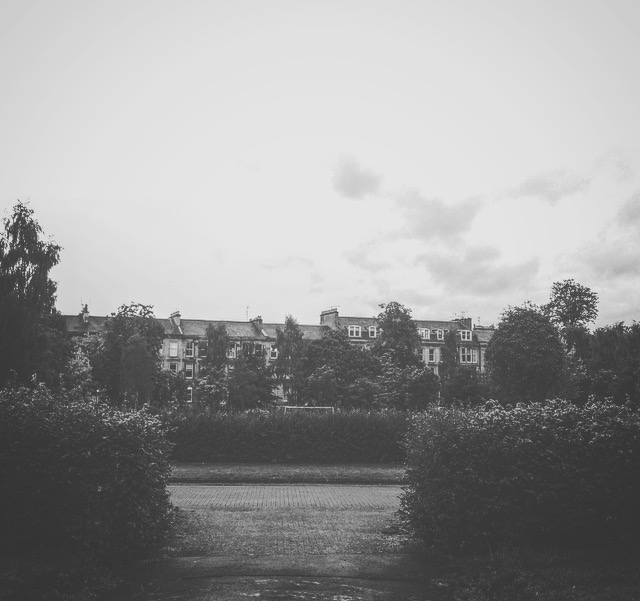
April rain. Tree rustles. It’s funny, leaves again; just being leaves. Green in the park and a gilded quality of the light on bark. I listen to music which quickens the senses. Clarity shattering synthetic beats. Very eclectic moments of hovering wanting confusing mixing the feelings which feeling makes feeling a feeling again not quite feeling but experience, touch, brief encounter with the liquid mirror of l-l-l trapped tongue on the moment can’t quite control or a button of the air to switch there’s a second you can stare through the window through viscid glassy matter or wishing for tears or the sound of pavement heels to cut through soft mulching rain you can’t see how the nightclub crashed with fire or how I lost a trail in the night to a newer location. creeps coming out of the grasses. thin leafy pages of choice discourse. Fallen have I in hexagon aromas of steamed vegetables, steamed cigarettes, the little vanish of an innocence, the widening eyes. April, pear-smelling nostalgia for autumn gone to the fresher ecstasies of the air and the sadness of wisping daffodil haircuts or the cloyingly poisoned imminent deadline. (we are not in May already) maybe.
The Cure – ‘The Top’
Anna Meredith – ‘Nautilus’
Joni Mitchell – ‘Amelia’
Belle & Sebastian – ‘Marx and Engels’
Eels – ‘Love of the Loveless’
Bob Dylan – ‘Up to Me’
Nirvana – ‘Dumb’
Radiohead – ‘Lucky’
Melody’s Echo Chamber – ‘I Follow You’
Mooncreatures – ‘Guilt Chills’
Hazel English – ‘More Like You’
Beck – ‘Can’t Help Falling in Love’
Fazerdaze – ‘Jennifer’
Slow Dive – Star Roving
Bonobo, Rhye – Break Apart
Father John Misty – ‘So I’m Growing Old on Magic Mountain’
I’d be lying if I said the highlight of this month was anything other than seeing the glorious Laura Marling perform at the ABC, flanked by her full band. My expectations were extremely high (I’d waited a ridiculously long time to see her, basically 8 years) but somehow she managed to top them, stepping onstage with a billowing white dress and that ethereal voice that held the audience in precious, adoring silence the whole way through. Even the weekend drunks saluted her with respect. She played most of the new album and some favourites from the past, from ‘Sophia’ to ‘Once’ and ‘Rambling Man’. Marling is one of those artists who I truly ‘grew up with’, in the sense that I followed every album as it was released over the last decade; I can pinpoint certain moments of my life in relation to her songs. It’s a beautiful thing. I’m 23 now and she released Once I Was An Eagle at my age. Every day this inspires me to try and do better. Often I fail.
I also had the pleasure of attending the BBC6 Music Festival By Day at Tramway on Sunday, which was really lovely. Father John Misty was resplendent in his usual theatrical, sarcastic glory; Baloji were really fun & great performers; the folk bands were lovely (especially King Kreosote and his endearingly well-handled technical mishaps) and I rather enjoyed a wee chat about the Glasgow label scene between Gideon Coe and Stephen McRobbie of the Pastels.
In March, we were blessed with three full days of actual perfect sunshine. There’s something so striking about a sunny day in Glasgow. You forget for 10 hours that most of your life is lived under greyness and misting rain. I always think of that Frightened Rabbit lyric from ‘Fun Stuff’: “the city was born bright blue today“. It’s a simple line but it carries that sense of wonder, stepping out the door feeling warmth on your skin.
I sat in the park bare-sleeved, reading. The next time I was in work somebody genuinely said I looked tanned. That’s a result, I must say.
(no mention of deadlines please…) => I wrote an essay about memory, technology & the body in Beckett, Ali Smith & Don DeLillo while listening exclusively to Burial and it was sort of a transcendent, spooky experience.
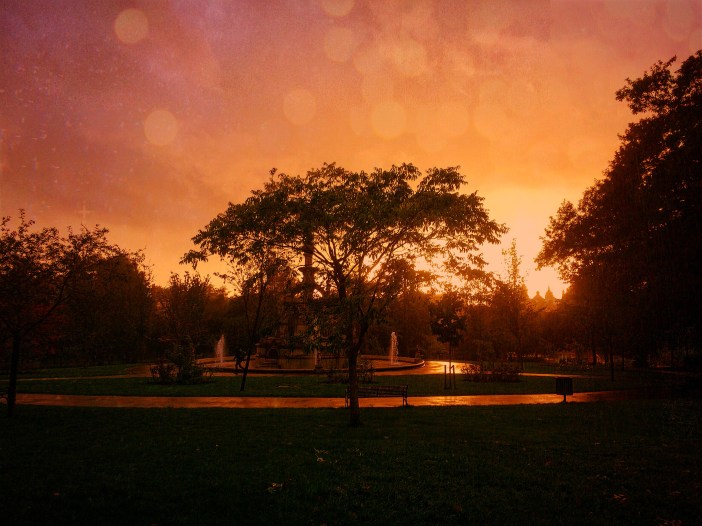
(It’s been a funny old month. Listened to lots of sick and addictive vapourwave and strange ambient music, lots of Burial and Boards of Canada in addition to the list above. Got freaked out from half an Adam Curtis documentary. Spent some late nights in the library procrastinating and walking home at 2am with the shape of the world mildly distorted. Autumn leaves, waiting for twilight to arrive in the park all soft and lilac, the colours coming on all burnished and brighter gold as the darkness falls…)
Suzanne Vega – ‘Marlene on the Wall’, Suzanne Vega (1985)
Partly to blame for my writerly obsession with long, m-beginning girls names (Meredith, Meredana, Marianne), this song was one of the first tracks that brought me to music – brought me to music in the sense of listening to it and discovering something new about the world through it. It’s a story of a dangerous and probably ill-advised love affair, told through an impression of symbols; the singer urges the listener to ‘observe the blood, the rose tattoo and the fingerprints on me from you’. The line between desire and violence blurs here and there’s something about Vega’s cool, whispering voice: an intimacy that is at once conversational but also steadfastly aloof, refusing the self-aestheticising of vibrato and instead fixing itself on the delivery of its sharply observational lyrics. In an age where big, operatic voices dominate the popular music scene (think Adele), Vega’s vocal style seems comparatively and indeed curiously fresh. When she returns, angrily, to the chorus, there’s a real, mesmerising venom to her delivery.
The song was on an acoustic compilation CD I’d nicked from my Mum’s car and I used to play it over and over again, my nine-year-old mind trying to make sense of the song’s darkness; its ‘danger zone’, the urgent guitar strums and insistence on silence – ‘don’t talk about it later’. By successfully striking the experience of ambiguity in desire, twisting pop’s conventional picture of love to one more sinister, Vega draws you in and in again to her characters. Who’s Marlene? What does she mean by the wall? Who are the soldiers, and the ‘things I cannot see’? I still have no idea.
2) Bloc Party – ‘I Still Remember’, A Weekend in the City (2007)
Like a Roald Dahl novel, rife with endearing surrealism, you sink into this story of young love with a queasy mix of confusion and warm familiarity. The guitar riff that kicks in with all its clarity is a comfort, even now, listening back almost ten (!) years later, and the song lilts between the energy and languidness of longing. The relief that comes when Kele Okereke breathily sings that first line, ‘I / I still remember / how you looked that afternoon / it was only you.’ It’s a love that touches on the unspokenness of queer desire, the possibility of falling for your best friend: ‘we left our trousers by the canal / and our fingers, they almost touched’. It’s almost Blakean in its very pure, stripped-back articulation of innocence: ‘you said “it’s just like a full moon” / blood beats faster in our veins’. It’s draped in childhood nostalgia: ‘and on that teachers’ training day / we wrote our names on every train’. With all these images, you can’t help but remember such experiences from your own youth, those simple days and strange feelings.
When the song builds up with the thrashing drums and the insistent refrain, ‘I still remember’, all the campouts and nights out and beach drinking and endless hanging out come flooding back. Okereke’s love exists now only as a metonymic collection of details, sentimental objects and memories: the playgrounds and rooftops, park benches, school ties. There’s a terrible bittersweetness to the song, its sense of regret, of unrealised, forlorn desire: ‘You should have asked me for it / I would have been brave’. Sure, the album came out in January 2007, but in a way it’s a song for autumn: the aftermath of summer holidays, the return to school, the always problematic sense of fresh beginnings, of leaving a certain era behind. The golden haze of nostalgia, and all its futile longing. The dissolution of that final shining chord.
In my head, it’s inextricably tied up not just with my own adolescence but with that even earlier exposure to frustrated love. I think of the ending to Phillip Pullman’s His Dark Materials trilogy, with Mary’s endless stories, the ‘quantum leap’ that is love’s realisation, her talk of negative capability and the unravelling of Proustian memory, decades deep from a piece of marzipan; then Lyra and Will, after so many adventures across several universes, admitting they love each other, their first kiss like the taste of the ‘little red fruit’ and then the devastating revelation that they love each other and yet can literally never exist in the same world and live. I remember vividly sitting on my bedroom floor on a Sunday night, picking flakes of paint from the floorboards, anxiously devouring the last of book of the fantasy trilogy that had consumed both my summer and winter and feeling this weird immenseness of sadness and relief all at once. I think it’s the expression that counts; the only overcoming of such feelings. That’s why Bloc Party’s song’s so good. It’s cathartic.
3) Belle & Sebastian – ‘Dress Up in You’, The Life Pursuit (2006)
For me, The Life Pursuit is one of Belle & Sebastian’s most obviously ‘chamber pop’ albums, it’s lush and glossy and upbeat, featuring vocal contributions from both male and female members of the band. Its production is shiny and the mood (for once?) is cheerful.
Probably not surprising that the song I picked is one of the album’s most melancholy, however. We can all relate to ‘Dress Up in You’, in a way. It’s a song about jealousy, about our problematic relationship with the friend that always dazzled, the one with a ‘beautiful face’, that was always destined for great things, while you were stuck back home, ‘knitting jumpers’ and ‘working after hours’. There’s a bitterness to the song’s tone but at the same time the relaxing cadence of the piano riff and the upliftingly sweet horn solo keep the sadness in check: ultimately, the song’s message is one of admiration. The ‘singer in the band’ paints a vision of her friend, the one who ‘got lucky’, who forgot about her, as a beautiful idol: ‘if I could have a second skin I’d probably dress up in you.’
We’ve all wanted to be someone else at some point. It’s probably part of the human condition that we’re mostly doomed to be dissatisfied with our own skin, to long for where the grass is greener, where there are airplanes and style and ‘the essence’. What I love about this song is its contradictions: the bitter lyrics and the sweet music, the sense of absolute friendship (deals signed in blood, understandings, love, the sense of missing someone so much they give you stomach pain) and jealousy/resentment, the contrast between stardom and failure. It carries them off perfectly and there’s a satisfying relief in the way the song closes with the rallentando leading into ‘they are hypocrites, forget them / so fuck them too’ and then all those carefree la la la la las, harmonised lovingly with the accompanying brass.
It’s a song that reminds me of sitting up till 5am on friends’ sofas, passing round the laptop and its weighty iTunes library, drinking the dregs from a bottle of gin and feeling a bit miserable for ourselves but also kind of paradoxically content with the feeling of discontent.
Notably, it’s also the song that plays over the credits to Stuart Murdoch’s film, God Help the Girl, and I like that the film’s ending is pretty open, just like the outcome of the song—does the friend become an actress? Is she a success or a failure?
4) Frightened Rabbit – ‘Poke’, The Midnight Organ Fight (2008)
2009 and 2010. Two winters so cold the roads and rivers froze over; so cold we wore coats in our classrooms, the heating system of our leaky-roofed Victorian school building packing in in tandem with the collapse in temperatures. These years all a blur of computer screens and studies, of long walks round town and into the hills with friends. I had tickets to see Frightened Rabbit at the Barrowlands in December; I was in school, reading Sylvia Plath for my English dissertation, when from the windows of the computer suite I saw the first flakes of snow, falling from the sky like a promise. They came thick and fast and soon everything was draped in white. Something inside me soared, even with the sad knowledge that the trains were cancelled. I couldn’t go to the gig.
At parties, we would mockingly sing the words to each other: ‘poke at my iris / why can’t I cry about this’. Sometimes we’d mishear the lyrics. We wanted a reaction from each other, perhaps, a way of making sense of that weird desire to be poked in the eye, to be stilted from our drunken reveries. Or maybe it meant something deeper, weirder. Maybe that was our own ‘brand new language’, a semiotics of stupid expressions and warbling voices, the way we’d brush up against each other’s hands as if we wanted to hold them.
‘Poke’. It’s an elegy of sorts; an elegy for the disintegration of a relationship, the frustration of striving for closure, caught between an animalistic need for freedom and that enduring residue of whatever was there before: ‘Why won’t our love keel over as it chokes on a bone? / And we can mourn its passing / And then bury it in snow’. It’s that wintery, rural Scottish numbness, the refusal or even inability to admit feeling – ‘Why can’t I cry about this?’. There’s the tender, Burns-like romanticism of this love – ‘it’s got lots to do with magnets and the pull of the moon’ – kicked viscerally in the teeth with all that suppressed violence that we bury in the darkest dullness of our relationships: ‘Or should we kick its cunt in / and watch as it dies from bleeding?’. Scott Hutchison’s poetic, sometimes growling croon is softened in this song, even as he refuses to hold back on the emotion, it unravels perfectly in the expression of paradox that governs the end of a relationship: ‘But I hate when I feel like this / And I never hated you’. The sudden severance of that connection that was almost familial, blood-strong in its longing. The interludes where Hutchison sings his Ooooohs with that perfect, withdrawn sorrow are like the movements of the sea over the steady rivulets of the guitar picking. I always wanted to be able to play this song on guitar. It sounded so simple and sad and pure.
5) Wild Nothing – ‘Paradise’, Nocturne (2012)
I used to do double shifts most Saturdays and Sundays and it was a grim affair without the aid of some good music to brighten the restaurant where I found myself pacing endlessly, lifting plates, taking orders, polishing glasses, picking litter and leaves off the floor, scraping candle wax off tables, dusting the gantry, moving zombie-like between tables with the same forced fresh, maybe fragile smile.
My friend Douglas would bring stacks of CDs in and leave them for me on the bar top while he was away working in his section. In the midst of sensory deprivation, I would pore over those CDs like they were exquisite treasures (which, fuck it, they were). For one, it was lovely to find someone else who shared my passion for the actual tangibility of the compact disc. The sleeve and the notes and the design printed on the disc itself. I liked the sheen of plastic, which felt solid in my hands. It was 2013 and Douglas had a music taste that ranged from the up-and-coming heroes of alt-pop (Grimes, Lana Del Rey) to the more left-field and experimental/electronic; looking over those CDs reminded me of the world I had missed while immersing myself in nothing but literary theory podcasts and James Joyce audiobooks for two years solid. Now there was Bjork, Angel Olsen, Poliça, Wild Nothing.
I asked to take a few home to borrow, mostly based on my attraction to the album artwork and the titles of songs. I’ve always been drawn to song titles and artwork, probably because I am literary-minded but also because I love it when artists actually pay attention to building up a particular aesthetic that’s appropriate to, or even spins a whole new meaning on, their music. I love thinking about how the title of a song changes everything. It’s weird because I find it really hard to title my own work, but I guess that’s a common problem…
Anyway, one of those lucky albums was Wild Nothing’s Nocturne, which is a blissful array of buttery, colourful dream pop songs which mould together as perfect as the lunar cycle. The standout track for me is ‘Paradise’, a five-and-a-half-minute ambient starry-eyed disco epic which, if the album is meant to sort of capture ‘a sleepless state of mind’ (hence the album’s title, Nocturne), is that moment when the endorphins kick in and you reach that precise state of euphoria that occurs when you have not slept for say 40 hours solid. Maybe you’re travelling, airborne to distant lands. Maybe you’ve been boozing through the night and morning. Maybe you’ve just been on your feet all day and are reaching the 11th hour of your shift…
For me, this is sort of The Cure drenched in pastel tones; the meticulous crafting of those dark synths and celestial reverb; Joy Division staring into the refracted galaxies of a crystal ball that would predict a brighter future. Jack Tatum’s voice here acquires a much stronger, more sonorous quality than on most other Wild Nothing tracks, and there are definitely Ian Curtis comparisons to be made here. The mood perfectly balances its bouncy drums, uplifting synths and twinkly 80s guitar riffs with a controlled and almost majestic lyrical delivery which is rather melancholy in theme, the refrain ‘love is paradise’ framing most of the song, as if striving to reach some sublime point where paradise would be reached. If you check out the extended version online, with Michelle Williams doing spoken word in an interlude section, there is a definite sort of Allen Ginsberg/Beat generation vibe to the lines, moving to a sort of transcendent rapture: ‘The past was folded up and in the twinkle of an eye / and everything had been changed / And made beautiful and good’.
The song overall feels like a spiritual and spatial journey; it fades and builds and comes to fade again. It never indulges in elaborate solos but instead maintains its vibrant rhythm that moves between liveliness and a kind of soporific haze of drums and sparkling guitar and synths. Listening to it at work, for those five-and-a-half-minutes I felt weightless, bodiless, up in the air; free from the cutlery and crockery and bells tolling endlessly from the kitchen…
A song that you carry with you somehow, that’s so engrained in your brain as to never leave you, each chord and lyric sedimented with years of memory. It’s a fragile song, sparse as a deciduous tree in winter. It’s a song about wandering, the dislocated sense of not exactly inhabiting the world, but somehow just drifting through. It’s a paean to solitude: ‘when everything is lonely I can be my own best friend / I get a coffee and a paper have my own conversations / with the sidewalk and the pigeons and my window reflection’. It explores the thinness of reality, the sheen of ‘polish’ that in the morning ‘looks like shit’, the false love sold in the evening, which by the morning ‘won’t exist’. It’s a candid admission of human frailty, the mercurial nature of our emotions. It’s a specifically metropolitan song: you have a sense of Conor Oberst’s warbling voice as he wanders the streets, lost protagonist in his solipsistic sadness. Yet the song spreads outwards, as a commentary on the human (or at least a generational) condition, a not-quite nihilistic exhaustion with the world – ‘we might die from medication but we sure killed all the pain’. We flit from one thing to another, our desires will oscillate as sure as the moon’s phases. Everything seems ‘so simple as the moonlight’ but no amount of incantation will render solid this refrain.
Thematically, the song is about addiction, depression, the everyday vacillations of sensation contained in a morning and evening. The random party at ‘some actor’s west side loft’ and the flask shared on the train, the person addressed who looks ‘skinny like a model’ and keeps escaping to the bathroom, ‘always say you’ll be right back’. In body, the people in the song waste away as easily as the time that contains them, surviving off coffee and moonlight and imaginary conversations.
Oberst, lyrically, is a genius at paradoxes and parallels and expresses them in a way that offers them as explanations or gestures of understanding which never quite satisfy but at least leave us pondering: ‘But what was normal in the evening by the morning seems insane’. The opening line, ‘I know that it is freezing but I think we have to walk’ so clearly establishes the tone of the song, the jar of realisation – we’re both forced upon this journey, nobody’s going to give us a ride – that it could be a line from a Wallace Stevens poem. It’s a cold song, whose play of end rhymes only half hit home – ‘walk/loft’ ‘off/gone’ – leaving us always longing for something more. No closure can be reached: the song can only end with the circular repetition of ‘so simple in the moonlight’, a childlike rehearsal of the beauty which cannot kill the complications of adult life, the self-destructive habits which inhabit the song’s lyrics.
In third year of high school, I used to listen to this every lunchtime, lying in the playground by the P.E block, feeling so light and empty, the world dissolving around me in a dull cacophony of kicked footballs, shrieking games and called-out names. It was a mysterious adult world, the one contained in that song, but I almost felt I was already there, dissolving what was left of matter.
[There’s a lovely version Oberst recorded with Gillian Welch for the album Dark Was the Night (2009) which gives it a flavour of melancholy Americana, a greater sense of dislocation, fusing the urban setting and Oberst’s minimalist delivery with Welch’s distinctly lilting, country voice and all its resonance of the prairie].
7) Muse – ‘Citizen Erased’, Origin of Symmetry (2001)
It seems insane to think that this album was released fifteen years ago, but maybe the timing was appropriate. There’s something uncanny about it: the paranoid, political and often surreal lyrics, howling soprano, bloated distortion of electric guitars, as if the music were forcing us to release the visceral eeriness and indeed grotesque weirdness of a reality that tried to cloak itself in the fairytales of gameshow tv and the financial greed offered by a fresh new century…
‘Citizen Erased’ is visceral, beautiful; at once tender and full of fury. It renders the experience of someone living in a fucked-up political state, the striving for freedom and confusion over what it means to be human, to be a person, at all. The thrashing drums give way to a thickly buzzing bass and the yearning swirls of screeching electric guitar solos. The song builds slowly and softly but the choruses are huge and operatic, with Bellamy’s distinctive wail crying out: ‘For one moment / I wish you would hold your stage / with no feelings at all / open minded / I’m sure I used to be, so free’.
The experience of this song is one of purification. You are exposed to music that is violent, lashing, angry, but like any good narrative, there is a turning point, a calming of the waves. The music becomes almost ambient. The key changes and Bellamy’s voice returns to its melodic, delicate expression, accompanied by ripples of piano and the fuzzy, spacey twanging of distorted guitars: ‘Wash me away / clean your body of me / erase all the memories / that will only bring us pain’. I’ve always felt purged somehow after listening to ‘Citizen Erased’. I think it chews you up a bit then leaves you, disembodied, drifting along the final tributaries of its current, back to a place of imaginary origin, more peaceful and pure than the harsh world it renders…
So with finals approaching I’ve been spending nigh on every day in the depths of my university’s library. I thought, therefore, that it would be appropriate to report my observations on human life as it seems to occur in this environment…
I’ve identified 12 subtypes which emerge amidst the Darwinist conditions of computer shortages, desk squabbles, bright lighting and excess caffeine…
The sleepers: always a good start to a list, these types are keen on the trend for daytime napping. You will find them either tucked in a comfy chair, their legs propped on the nearest table, or else face down over their keyboard. Probably the source of much resentment, but perhaps it does increase productivity. Still, there could be beds provided, when desks are in such scarce conditions at this busy period…
The chatterers: they come in pairs. Often they arrive around 9-10 in the morning and stay till 5, interrupting each other’s study constantly and engaging in joint Facebook stalking and looking up photographs of famous people on Google Images and giggling without much hush. Tend to take 2 hour lunch breaks and leave all their stuff to hog the desks.
The fortress builders: you rarely glance a peek at these specimens, as they tend to erect large towers of hardback books on their desks. It is unlikely that the books themselves will be opened, but the careful assemblage of pens, paper, notepads and books is very important to their sense of zen.
The aggressive opportunists: to be found hovering about on every level, clutching their phones to their faces and occasionally hesitating an anxious glance around them, as if they were bird-spotting. These types basically scour every floor desperately waiting for someone to vacate their computer so they can dive in. You’ve got to feel sympathy for them, though there is something rather alarmingly aggressive about the way they rush to your desk as soon as you have clicked ‘log off’. It’s like they have super vision.
The stressor: he or she will either be a weepy type, or a sweary type. The weepy type invites deep sympathy, as it is awful to see a fellow human reduced to the state of tears or panic attack over university work. To be honest though, I have encountered more of the latter. In particular, it is common to see finance students sweating it out in the upper levels, swearing under their breath at a screen of what I assume to be frustrating figures, occasionally slamming their fist down upon a hefty textbook.
The gruesome eater: disappears for an hour, comes back with some disgusting excuse for a lunch gleaned from any number of surrounding convenience stores or supermarkets. They favour the more odorous of foodstuffs, and are inclined to make vile slurping noises as they lick their tub of oily pasta or packet of tuna sandwiches. The worst, perhaps, is the Monster Munch crunch.
The early bird endurance workers: these more elusive types tend to congregate in the upper floors with the segregated desks and rule of silent study. They arrive around 8am to get their favoured seat (the same one every day it seems) and are there for most of the day, working away like beavers. Will disappear occasionally for a coffee or cigarette, but rarely leave their desks, which begin piling up very quickly with masses of paper and scribbly notes.
The portable secretary: seems to get a phone call at least once an hour. Will either proceed to talk freely about a mate’s sex life with the entire floor listening, or else make a panic dash to the nearest ‘quiet zone’, leaping heroically over trailing cables. Sometimes is away and the phone will ring unanswered for twenty minutes until a brave stranger plucks up the courage to turn it off in his or her absence.
The rebel: turns up mid-afternoon and somehow still manages to blag a seat somewhere. Pulls the plug out of a PC to stick their laptop on charge. Doesn’t care. Eats trifle on level 8. Whose gonna challenge ’em? Snorts heartily with laughter watching silly Youtube videos in the middle of the day whilst anxious students rush around looking for a computer they can study on.
The drifter: seems not to ever do actual work, but to spend all day scanning every level for anyone he or she happens to be acquainted with, stopping, in an elaborate trail of procrastination, to gabber and pester said acquaintances. Tends to wear a school leavers’ hoodie, and very soft cotton joggers.
The library lightweight: most likely in first year, though the trait can continue up into honours sometimes. Tends not to venture beyond level 3. Dips into the library between classes and sits on Facebook for an hour or so whilst gobbling a sandwich loudly.
Lastly…(perhaps the worst) the foot shuffler: Need I say more? – Takes 10 minutes to walk 10 metres, owing to the way he or she drags their feet across the carpet. Pick your feet up when you walk, for God’s sake!
 April… the practically non-existent month in general temporal terms (I wrote the last one of these yesterday it seems) and yet so rich you were, plump with blossoms: like only this evening I stood in a snow swirl of pale pink flakes which felt like Paris or Japan, trace imagery of semiotic foreignness whirling around us as if weather had been borrowed from another place, a lovelier time. Love blossoms. I love April. April rain; it’s sweet and very quiet almost like a rustle, the silk crease in your jacket, how I imagine the pillow of the sky clouds to crease or maybe they fold like lightning and it’s more of a shattering, a bit like sheets of ice cracking with the sound all resonant rich in pain. Stay up late to cheat time or find hours abandoned in the first flashes of daylight which alleviate their airy orange through a bright red sieve or am I getting mixed up with sunsets? I have followed the resonant crescendos of synths until every loop is a transference of frequency through various slot machine ratios which fall on the clinking chance of ice in my glass my mouth all misted clearness of vision dissipating vision upon vision, red lights and the cherries glister with money & abstract value which is nice O so nice. ( ( ekphrastic reveries mould quicker in memory) ) You can hesitate on an omen, I spent weeks writing astrological reports in attempted reflection on a bitterer future which needed a sugar cube of lumpen conversation or hours as proletariat spent plate-washing tray-carrying performance of eloquent emotional labour for strangers. His wide eyes, asking about plaits in my hair and clogs. The schmoozes gathered at funerals as I served dark liquid in watery transference of mass into white cups made for the purpose. Wishing for the red room effect where the stuff hardens to strong viscosity then elasticates its way back to fluid to spill on the carpet burn the bourgeois toes through the patent shoes. (my crush on dale cooper lives still uncured). Mine had holes, grazed through by contact with broken glass. I love
 I’d be lying if I said the highlight of this month was anything other than seeing the glorious Laura Marling perform at the ABC, flanked by her full band. My expectations were extremely high (I’d waited a ridiculously long time to see her, basically 8 years) but somehow she managed to top them, stepping onstage with a billowing white dress and that ethereal voice that held the audience in precious, adoring silence the whole way through. Even the weekend drunks saluted her with respect. She played most of the new album and some favourites from the past, from ‘Sophia’ to ‘Once’ and ‘Rambling Man’. Marling is one of those artists who I truly ‘grew up with’, in the sense that I followed every album as it was released over the last decade; I can pinpoint certain moments of my life in relation to her songs. It’s a beautiful thing. I’m 23 now and she released Once I Was An Eagle at my age. Every day this inspires me to try and do better. Often I fail.

 mariaology