Sleep Felt Productive

cn: mention of bulimia; spoilers

It’s been a fair while since I posted. Struggling through Covid, another supercold (emerald phlegm forever), more transitions, finishing my thesis, April snow, more streaming of the body and ache, but here we are. It’s good to get words down. I can’t smell or taste anything at all right now (coffee is just…neutral earthiness, sweet potatoes are…mush of the orange variety, bread is…send help) — so the vicarious pleasure of language is all the more heightened. Sometimes it’s a barrier: why read about anything when your senses don’t respond? I’m drawn to the elliptical which doesn’t hold me for too long. I want to be let go or dissolve a bit. Like eking my reading through a fine mesh of muslin, a semi-permeable membrane of comprehension. Or pull it over my head, this paragraph, the whole fabric of the thing. I was gonna write about a month’s worth of reading: mostly while walking west to east along the polluted, outer commuter belt of the city; on trains between Glasgow, Inverness, London, Leeds; in frail, unwaking mornings; at the park, in that golden week, sitting in the grass with salad from Juicy and daffodils. Instead I wrote about sleep.

*

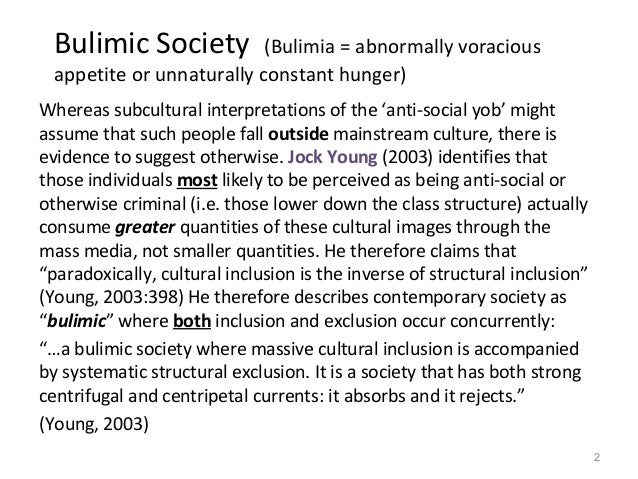
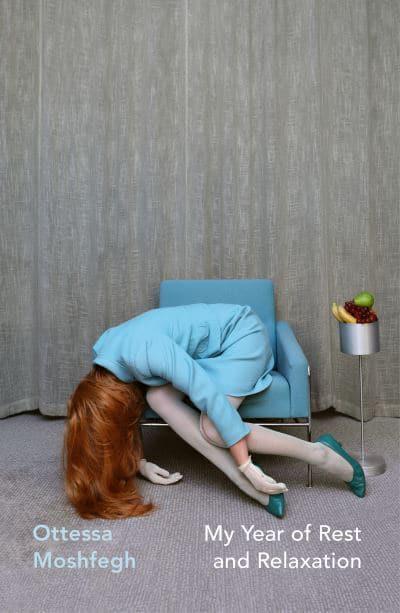
Finally I got round to reading Ottessa Moshfegh’s My Year of Rest and Relaxation (2018), a book I wanted to read especially because a trusted friend described the ending to me as ‘disappointing’. I love to glut myself on disappointment. For some reason the novel produced a similar effect on me as Tom McCarthy’s Remainder (2005), in that the pleasure was all in the premise. I would love to exist endlessly in the loop that is prolonged sleep or the reconstruction of a highly specific sensory memory. I want these novels to just go on and on like that. Of course, there has to be escalation, as per the rules of plot or ~human nature~. Is it true we can’t circle the mobius loop forever? That after a while the pleasure is desensitised, and we need to dialup on the extremity? McCarthy’s novel sort of preserves that perfect figure of eight in its set-piece ending, and you’re left with the image adrift to loop back on the primal, inciting moment of falling debris and trauma. I found the Moshfegh ending ‘cheap’ in that it seemed to cash in its bulimic character for a kind of tragedy whose fate was to fall. Bulimia, I can say, is generally an experience of permanent insolvency in the body, resulting in a loop time of binge and purge. You pay the debts of fasting by devouring; you pay the debts of eating by purging and fasting. Rinse, brush teeth, ouch, repeat. The sociologist Jock Young talks of ‘bulimic society’ as one where the poorest and most marginalised are often the most culturally enmeshed in the desperate iconography and desire economy of consumerism. The most excluded populations, according to this view, absorb images of what is apparently available under the veil of late-capitalism; but simultaneously they are rejected from accessing this culture themselves due to material inequality and class difference. As Young puts it: ‘a bulimic society where massive cultural inclusion is accompanied by systematic structural exclusion. It is a society that has both strong centrifugal and centripetal currents: it absorbs and it rejects’. But does capitalism spit us out or do we boak back? This is why I am scared to go on TikTok, like fear of lifestyle saturation to the point of nauseating breakdown.

Often powerpoint slides defining bulimia for this sociological context mention an ‘abnormally voracious appetite or unnaturally constant hunger’. In Moshfegh’s novel, the character Reva (an insurance broker) is constantly eating or constantly fasting; something our protagonist describes with pity or nonchalance. Reva is tragic because she wants too much what the protagonist effortlessly has by birth: beauty, thinness, style, money. Thinness is kind of the ur-sign for WASP privilege in the aftermath of the heroin chic fin de siècle. Reva is jealous of the protagonist’s weight loss, steals her pills. Both women are after control (or its relinquishing) in a world in freefall.

This is a period novel: set in the early 2000s, New York in the lead up to 9/11. It’s full of that inertia following the boom of the 1990s. The desire to just sleep in the unit of a single year is like a microcosm for not just an end of history, as per Fukuyama, but a refusal of history altogether as this thing that keeps growling, accumulating, disrupting sleep. I kind of buy into Reva’s bulimia as something about the consequence of being voraciously invested in a world that wants to expel you, sure. The sky’s big whitey’s the limit around Manhattan. Chewing on this feels productive. The violence of the novel is primarily in the gallery where the narrator starts out working. The gallery’s prized artist, a young man called Ping Xi, has these ‘dog pieces’: a ‘taxidermied […] variety of pure breeds’, which are rumoured to make their way into the artist’s exhibition via premature slaughter and industrial freezing. The work apparently ‘marked the end of the sacred in art’. The narrator is kind of offhand disgusted but eventually comes to identify with the young animals in the freezer, waiting to be thawed into art. Writing can be a bit like self-cannibalism; the denial of which leaves you stoked for a snack.

There are several kinds of hunger in the novel: primarily for sleep and food, but also for meaning, intimacy, loyalty. Love is a strange relation that moves uneasily between two girlfriends whose friendship is based on a premise of inequality and co-dependency. The hungers are sated by devouring emptiness. Sleep, junk food, fleeting talks. That bit in Melancholia where Justine screws her face up deliciously and says the meatloaf tastes like ashes. When I realised the same of my dinner, I didn’t even react. 

We look more peaceful when sleeping. It’s worth lauding, like Lana singing Pretty when I cryyyyyyyyyy………….

O, and the concept of the sad nap:

There was no work to do, nothing I had to counteract or compensate for because there was nothing at all, period. And yet I was aware of the nothingness. I was awake in the sleep somehow. I felt good. Almost happy.

     But coming out of that sleep was excruciating. My entire life flashed before my eyes in the worst way possible, my mind refilling itself with all my lame memories, every little thing that had brought me to where I was.

(Moshfegh, My Year of Rest and Relaxation)

The brutal awakening cashes in on the extra expenditure of napping. I’ve written in a poem somewhere, ‘I wish I could sleep forever’. It’s different from wanting to die. It’s more like, wanting to feel aware of the nothingness and calm in its premise. Nobody needs anything from you and you can’t give anything back. It’s restful or at least prolongs the promise of rest. Stay awake super late to relish the idea that you could go to bed. I don’t remember the last time I woke up feeling energised by sleep. </3 I remember listening to an interview with the editor of Dazed where he talks about sleep being his great reset. I remember thinking wow sick cool. Whatever mental health thing he’s going through, sleep will heal it. Sleep can otherwise be a kind of emulsion of depression. You’re in the weight of it spreading right through you. I carry sleep along even when I don’t ‘have’ it. 

I want you mostly in the morning
when my soul is weak from dreaming
(Weyes Blood, ‘Seven Words’)

I used to wake up extra early before school to steal back from sleep. I felt sleep would eat me alive. I used that time to browse the internet, write, read. Eat shitty muesli. Puke. 

I’d sleep in class. Teachers would bring it up at parent’s night. I just couldn’t understand why everyone else wasn’t regularly passing out over their schoolbooks.

The perma-arousal of bulimia is a counternarrative to the inorganic sleep cycles pursued by the novel’s main character. I got a similar vibe from watching Cheryl Dunn’s Moments Like This Never Last, a documentary snapshot of the pre- and post-9/11 world of New York’s underground, showcasing Dash Snow’s graffiti and outsider art. Dash is always cheating sleep to go tag, paint, take pictures. There’s a ton of cocaine and consequence. 9/11 had toppled right through all of that leaving a wound. You know by the law of entropy that it can’t be sustained, this life, writing on the walls and all that. Maybe tagging is also about a kind of hunger-purge. Colour’s aerosol vom marking time, presence, ideas. It’s permanent, but then someone can just go clean it up; the ultimate fuck you.

Whose space does this belong to? Remainder is a novel about gentrification, the white guy’s obsessive reorganising of London spaces as precursor for the gentrification of Brixton. A novel of the zombie flaneur, fuelled on flat whites, iPad swipes and vape juice, as Omer Fast’s 2016 movie adaptation brings into focus. Moshfegh’s novel is set around the same time, but her protagonist is decidedly not a flaneur, even if she carries that vibe of the waking dead. She barely leaves her apartment to get coffees from the local bodega, and when she does venture further it has all the amnesiac disaster of a night on the NY tiles with Meg Superstar Princess, furs and all. I find this zombie existence an irresistible metaphor for the numbing effect of late-capitalism: we are overstimulated and aroused to the point of just turning off. It’s banal to say that, sure. What’s great about the Meg Superstar Princess blog girl revival is the way the writing itself is charged with like, full off-kilter zaniness. The opposite of zombie. It’s like barhopping around A Thousand Plateaus — cheap wine in one hand, vintage Android in the other — to the tune of Charli XCX and it’s absolute chaos: ‘spitting e pillz out my mouth, trying to live normal, disco n apz’. You get smashed. You’re alive! I’ll have it in writing because I can’t really have it elsewhere rn, the same way I sleep but I can’t really sleep. Apps (f)or naps?

For all this tangent on (post)pandemic hedonism (let’s say post to mean, posting and not to signal some wholescale shift in era), it’s weird how history just hits you in the face at the end of Moshfegh’s novel. Falling debris, bits of glass. Words:

On September 11, I went out and bought a new TV/VCR at Best Buy so I could record the news coverage of the planes crashing into the Twin Towers. […] I watched the videotape over and over to soothe myself that day. And I continue to watch it, usually on a lonely afternoon, or any other time I doubt that life is worth living, or when I need courage, or when I am bored.

(Moshfegh, My Year of Rest and Relaxation)

Earlier in the novel, she’s frustrated when someone replaces her VCR player with a DVD player, even though she doesn’t have any DVDs. She kind of hates the concept of the DVD. She likes the process of rewind. Video tapes, with their seriality, make you confront duration; whereas DVDs allow easy random access to specific scenes. The over and overness of Moshfegh’s careful, clean, lethargic prose is at once soothing and disturbing. When the pandemic first hit, I couldn’t stream anything because the thought of having all that content at my fingertips seemed appalling. Like accessing a trillion orderly dreams of someone else at the very moment I couldn’t even touch another person. Maybe video tapes would’ve been different. The residue of wave matter at the edge. The analogue sense of fossilised images, decaying in visible time.

In a poem called ‘Along the Strand’, Eileen Myles is like,

The times of the day, the ones
with names, they are the 
stripes of sex unlike romance
who dreamlike is a continuous 
walker

I love the rhythmanalysis of daily life here. VHS stripes in descending order of luminance: white, yellow, cyan, green, magenta, red, blue and black. How the speaker clings to named moments of the day as like khora: receptacles unseen for adhesive feelings. ‘Vigorous twilight’, ‘noon’ you slip into, ‘Morning’ as ‘something / I could stay with’. The times of day are lovers. If romance is continuous walking, there’s not a lot of romance in My Year of Rest and Relaxation. So after reading the novel I’m sorta stuck on wanting the romance of sleep again. Exhalations as stripes of sex. Like when you have a new partner and after a few weeks of breathless sleeplessness suddenly the first thing you realise is how well you’re sleeping, like being beside them all night just fixed your life. And so to be in love you know noon tastes different, and twilight has a lilac halo. And you’re sharing this shiny sticky static in the air like asterisks, so much more to say.

*

Sleep. After a long walk, I remember circling South Norwood Lake and humming Elliott Smith’s ‘Twilight’, because of the time. You asked me to sing it. I had a low voice, a high voice. I was just waking up; the air was all lavender, leaves in fall. 

I don’t want to see the day when it’s dying.
My Black Dog

Life changed the moment I minted my depression as an NFT. The process was long and boring, but now I am a clean one who has never grasped the meaning of silverware. Let me try to explain the process of having a life thus expunged of its fungibility, which is to say, I feel now worthy of anything. I don’t even need to log on.

  1. This is not a book of ‘the environment’, nor do I profess care for the precise expenditure required to fuel that sluice of the blockchain which facilitated said transaction. Honestly I am just glad to have sold my black dog to an eager buyer.

  2. I can hear someone crying thru the walls most nights, the kind of wail that angels do, having no sex to think about they might body millennia of pain. The quality of having no carnal emotions owing to calorific deficit is guaranteed.
     
  3. The black dog was adopted from more or less insipid childhood fantasies in which more or less I could not have lived this far. Small red marks on my glyph flesh. Not to be dramatic but there is a reason why I am scared of cars. The first time what is called Marlene sat behind a wheel I freaked.

  4. Communiqué over Excel spreadsheets had led me to believe my sadness was extractable. I started feeling it everywhere, standardised and flashing among the long trails of light exposure.

  5. Imagine buying a thing for its absolute exclusivity, only to release its essence, bit by bit, in meatspace! The ambience of my original sadness spread across the mall, where generally I was to be found weeping by the ceramic fountain, where people tossed coins as the wanton value of wishes.

  6. [Autumn redux]

  7. Dramatic monologue of the dog: I am a dog! A fucking dog! You better not touch me.

  8. I tell you, I freaked the fuck out. She did. Is it better to have someone crying or having sex thru the walls? Irritability is a relative condition. I’m so tired and fucked up. Moan.

  9. I want my black dog back :/ Why are they not a blue dog, someone asks in the comments. The internet is so fucking literal. I paint my nails hot pink and chew them so all the polish flakes into my mouth like itsy bits of sext.
  10. Have to stop myself reading Lauren Berlant’s blog again. Get kinda sentimental at night. ‘I was lucky to be the dreamer because the dreamer never stops being interested. People know when they haven’t said enough, that’s why they dream’. I never say enough, that’s why I write. There’s something I always wish I told you, but you never could tell.

  11. Every time I sit next to a man on the bus, I assume he’s gonna reach for something intangible, a long red thread you could tug from my cunt with this terrible thing at the end, that’s it.

  12. The black dog had impossible puppies and the puppies are always following me, especially onto the bus. Ten black puppies is a lot of transport coverage. Driver winks and goes, ‘you’re just a pup’. When I close my eyes, we spit in each others’ mouths. I hear a Belle & Sebastian song in the distance.

  13. Scenery passes, etc. Static poplars.

  14. Everybody started to ask, Where do you see your future? I see my future in NFTs, is the prepared, p(r)eppy answer. No, not as an investor. I’m not even a flip in bed, where it counts. Can you guess?

  15. Everybody who doesn’t have a choice has a price. I used to text M. like, what do you think I should do with my life. There’s nothing to buy at the mall. You should go home, she says.

  16.  Earlier I lied. I kind of do care about the environment. Black dogs let loose among burning forests.

  17. I have no memory for the feeling of rain. 
  1.  Non-fungible errors cluster my dashboard. That I had my sadness minted and then accused of bad metaphor. Darling, I was the economic downturn all along.

  2. I eat with my fingers among the dogs. They love me. 

Eleven / Cherry / Extinction

Screenshot 2019-04-08 at 14.31.06.png

On the 11th of June, 1993, I was born with an extra digit, an eleventh finger. I am told it was a finger, so goes my parents’ mythology, but probably there is some anatomical word which better explains the strange appendage attached to my left pinkie. Resembling a kind of lollipop, a glass candy, my eleventh finger was a long thin vessel of muscle or blood (what I cannot know or ask of that fact) attached to a kind of crimson orb, like a cherry. It wasn’t really a finger at all, but the unfinished potential of what might’ve been one, a mutation. This was accompanied by a strawberry-shaped birthmark on my inner left wrist which, my dad assured me, would fade as I grew older. The cherry finger was lopped off on the day of my birth, and the blood splattered the doctor’s coat, bright red upon starch white. Soon after, I nearly died. A lightning storm raged through the morning. I was placed in an incubator, I had some kind of viral infection. They furnished me with the supplementary khora, until I grew blonde and better. So the story goes, and already I have probably messed up the order.

But I want to say something of the number eleven. Eleven feels like a residue, an extra. The loss of this finger, which I do not write with and yet slyly it makes itself present as absence, constitutes a kind of originary erasure. Years pass in which I forget this secret was mine at all. Eleven, perhaps, is a statement of entropy, a chaos spilling over our familiar limits and even regressing or falling in loops. However we parcel our intake/outtake, our sense of personal energy. I test out images of eleven, of extra. In Tom McCarthy’s novel Remainder, the protagonist wants to claim his free coffee, the remainder, so badly that he buys ten cappuccinos just to get the loyalty card stamped, just to claim the free one, the eleventh beyond the card. A strange caffeination that remains incomplete, to come. Then there’s Eleven from Stranger Things as a kind of genetic extra; the number identifies her as a test subject. The number becomes name. That phrase, turn it up to eleven, when really the system stops at ten. Why is it we make wishes on 11:11, when did I start doing that? The wish constituted itself as extra. Over time, I find myself ‘catching’ this time more and more, glancing at the clock of my laptop when it just happens to be 11:11. And the wishes pile up at the forefront of thought, they take a while to resume as memory. When I am sad, I visit the Kelvingrove fountain. There is water and clarity, the hum of other people’s wishes. Sometimes this is better than poetry, it’s simply potential.  
Screenshot 2019-04-08 at 14.32.05

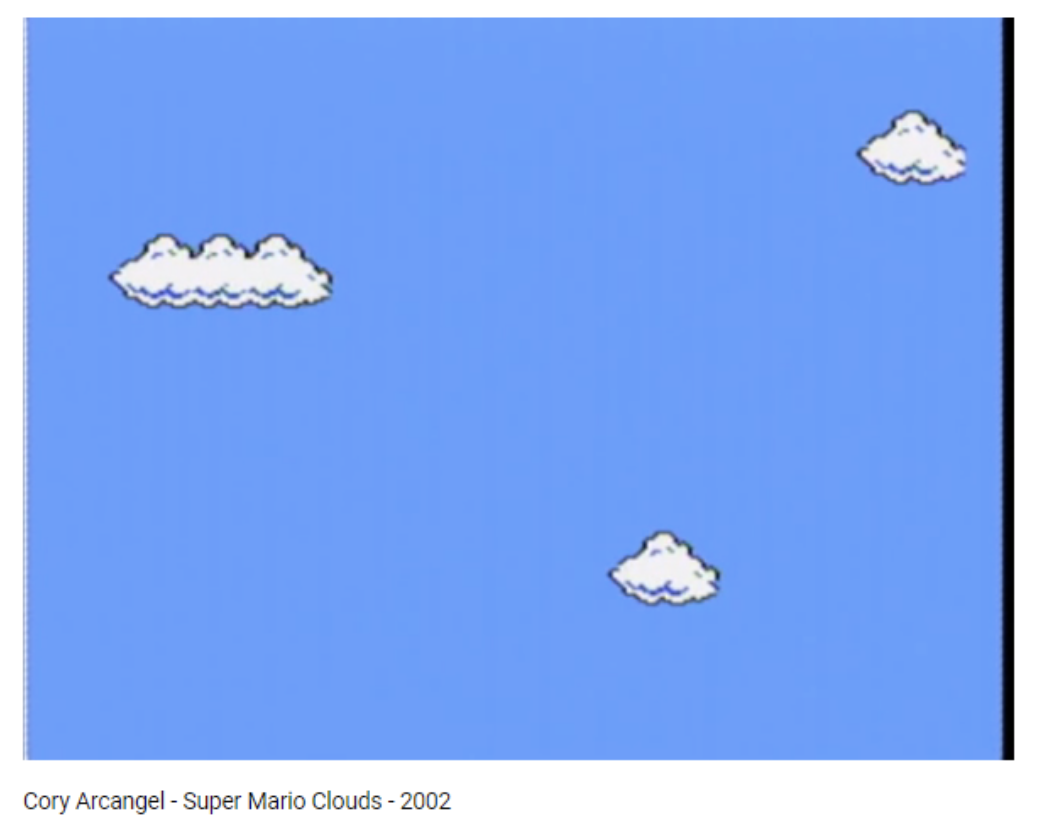
I knew someone who named themselves after the sky in Super Mario (with Ayrshire inflection) long before either of us had even heard of Cory Arcangel. We were born on the exact same day, same year, and we called ourselves twins. It took eleven years of our lives to find each other. Speaking to this person, I felt always this chiasmus of consciousnesses, a sense of keeping up, or ongoingness.[1] They were super beautiful with luminous curls and sports jackets. Their nights were spent up with consoles and synthesisers, and we messaged each other until our windows crashed, or our parents needed to use the phone. I will not quash the romance of the dialup connection, for it was real, the frisson of interruption. The sense of a moving into, the attunement that performed itself in the temporal interlude of a radio whistle, blow of white noise that had its sonic continuum, warping and twisting as though all these howls in the wires were coming to life, and we would sing through the modem our deepest thoughts. You would teach me a riff. We were each messaging the others at once. There would come a point where everything was just text in the end, the fragile reminder of each bodily fragility.

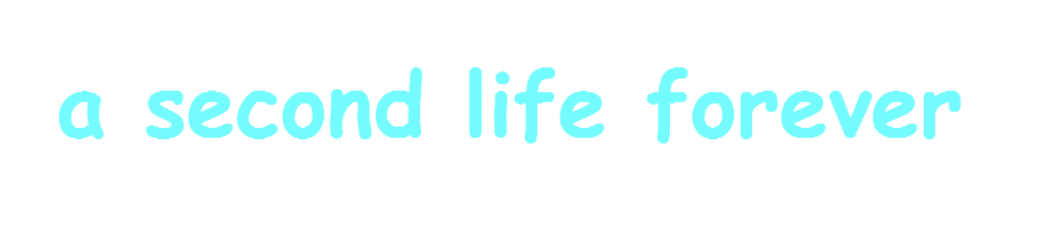
You wrote in cyan-coloured Comic Sans, before this was ironical.
Screenshot 2019-04-08 at 14.33.15.png

Half of my brain wants a masculine state; the other half a quiet, feminine comedown. What is it to speak or sleep gender. I’d sip cider in the wee hours after the party, but nothing fragmentary said then was as good as it was on the computer. It was like coming to life, discovering what had not yet been told of a love or a taste. I suddenly felt affectionate towards everything, and the aesthetics of a particular website, the trajectory of a song, could startle me into tears. Everything grew fizzy and sugary; it was all too much. What we were supposed to say to each other. I was learning to apply eyeliner, clip bras and shed weight like a grownup. The environment was a diagram we drew at school, a set of names we recited while dipping for critters in rockpools, freezing our brains on polluted beaches. A joke that was told to the air before we could return to our games.


***


I never learned the word for what happened at my birth, what grew on me, this residue fruit. After a while, it broke away, the fact of it which was a specialness. I was losing that specialness the more I learned language. There was a solvent process of being okay with a long red line that meant mine or anybody else’s ‘I’. (/) A length of energy, a vessel snipped close to the richness. We invent names for ourselves on the internet.

Something constant was the minor chord shard in my heart, when I knew there was a thing awry. I could not put my finger on it, much as I could not remember what I wanted to do with my life, or what passion that had driven me to write as a child. For I had filled documents and jotters with my rambles before. What happened, if you can forgive me for inserting a narrative turn here, was a loss of story. Post-puberty, it seemed there could be no climax in my life. Events I had expected to effect a shock into existence had not occurred so; a long hard drag had occurred instead, slow enough to trick you into passive submission. Resistance became a case of daily withdrawal, decay. It seemed there was nothing to write into, now I understood the mysteries of sex, reproduction, death. I had written these epic fates about unwanted births, woman impregnated against their will in labs buried deep in violet mountains. I had a horror of the body inside the body, which was the same as the body inside the planet or the planet inside you. What grows, regardless.

There was a fragile voice I was waiting to hear on the radio. I had not yet worked out the temporal trick that was poetry, the way it could stop you on the blot of a page, by fact of its shape. What grew charged or tangled. I became interested in the way the body was just a body, something to be seen, something to offer up to bodies beyond you. I wanted to know its limits, its multiplicities, as much as its points of attunement. Like plugging in headphones to the library PC just so I can hear the electrical charge of each scroll as a sonic intensity. There was a time of mark-making, rigging lighters, taking steaming baths. Staring at other people’s ceilings. I practiced lying on concrete, feeling the dark cold of summer’s inversion travel up from my spine. I listened to music so loud that stars began splintering inside my ears, and so I would have tinnitus forever more. I burned my tongue on a minor chord.

And so the same sound would scream back, muted lagoon trapped in my ear a decade later, the splitting sextillion stars of that music. The melody itself was irrelevant. I was drawn to songs where you could fall between verse and chorus, and the space of that slack guitar was far more important, the way a man’s voice could break on a word. For some reason, then, it was always men.

What does it mean to be taught how to feel by the opposite sex? Things tilted and sweetened the weaker I grew. We held hands in west coast impressions of sunset. The word for weather was like whether to say I’m going offline. The fort-da pull of your endless sign-ins. r u okay?

Jean-Luc Nancy: ‘A corpus is not a discourse, and it is not a narrative. A corpus is what is needed [qu’il faudrait] here, then. Here—there is something like a promise that this has to deal with the body, that is going to deal with it—there, almost without waiting […] there is a sort of promise tacitly to hush’.

Thus the body is clearer in machinic absence. Thus this vast proliferation of forgettable text was the logic we gorged on, empty calorific haribo words. There was no vegetarian alternative, we were eating each other. I mean the sway of exchange, this sense to be dealt with. A hunger, sugar rush. I message you later. The pressure of reply, now we’re always online; transmission as love’s endless labour. Isn’t it exquisite just to hush, to disappear mid-conversation and relish the ellipsis for a future hour. In these small ways I was building a tentative next, but its openness was yet clouded by thought itself. I couldn’t think beyond three minutes, and that was depression.


***


I learned the deformity of my birth was a sign of witchcraft. I bought a bright pink book on the subject when I was very young, and tried to astral travel. I wanted to see things from above, but instead I found myself suffocated by their closeness. Children can smell sorrow, the weight of it dripping from adult expression; the way dogs pick up the mood of the house and embody it through quivering and whimpering. I burned incense and imagined an orb of lilac light spreading over my body, which became the mountain I buried my heroines in as a child writer, an amateur at fantasy. I slept with crystals under my pillow (I still do).

The wrongness of the world was everywhere. The way people spoke to each other. I could not connect. I leapt into situations where voices were just echoes back into the water they came from, where sentences shored up nothing more than the vice of their speaker. I began a long affair with silence. I stopped writing, and later I stopped speaking. For weeks at a time, I would lose my voice. It broke on the shore. I smoked little menthols in wind tunnels, listening to reality talk shit back to me. I was broken inside before I began; that was the feeling. Long walks could not smoulder it off, and the only calm I achieved was from the absolute lack of understanding I experienced in math. Not knowing was a clarity, one I still crave in the space of writing. The absolute sentence as a violence that closes all others.

Later, much later, I would discover this glitch was a crisis far beyond me, a crisis of climate, a crisis of world itself: so huge my child’s mind could hardly have discovered it. And yet, having said that, I was already halfway there. Halfway towards ecocide. As a child, I swore to my mother I would leave the planet on my fifteenth birthday. She almost believed me. Mars beckoned, with its fiery red swirls and its secret knowledge of an evil beyond. I liked the way the name felt ‘full’ in my mouth. When nothing happened, I drank myself into amnesia; I stopped eating. It was a birthday gift to myself, the hope that I might still disappear.

Hungover, I know there will be a point where I go and that is to die. The blank is like a name you forget at the point of recall. It is so much worse than that, as if we’d forgotten our own name and the name of our mothers and the E____ itself. And what it means to see the back of the tapestry and a trypophobic horror where every unloosened stitch, a tiny blank, is the signal of multiple (un)ending worlds. Consider the strawberry seen from inside, with its millioning glowing yellow seeds of light. My wrists replaced originary marks with marks.

There was so much to learn about what was happening. I needed to know what would be okay. It was just this whole impossibility of thinking the future. The word ‘career’ was hilarious. It made me think of falling through time, Scrabble letters tossed into void at light speed. That was the language I wanted, letters at light speed.


***


Silver foil, the metallic smell on your fingers from playing guitar. The way I could play through brass and acquire an instrumental breath, vibrations that slid out of tune because I had damaged my ears too much to listen.

As promised, the strawberry birthmark faded. It was like somebody had slowly quietened the white noise, so slowly that I could not be sure if what I heard was truth or hallucination. The distinction mattered less over time.

Dream where I can’t sleep, so I wake up to watch Super Mario Clouds on YouTube, so I relive the level without level.

Sometimes I feel twinges of pain in the bump where my finger was. This phantom sensation is strange because I have no working memory of the limb itself, if it can be called a limb. The-cherry-nothing-more-than-a-supplement. Wikipedia tells me that the pain of phantom limbs can be aggravated by ‘stress, anxiety and weather changes’. The supplementary limb, then, its existence as a constant play between presence and absence (I had the limb, and yet no memory of its function; the limb was extra and yet in having it removed I felt less than a ‘normal’ person, I am less than I was and in sameness still more), acts as a site of super-attunement. When the temperature gets weird, the tingles start over. The pain is a drift of cirrus.

If you press very hard on the bump on my hand, I feel a sort of convex nerve pain, akin to the ache of pins and needles, concentrated in this single location. I wonder if this is what happens to a cherry when you slice it in half, when you make of the round fruit a sudden circumference. Something fell out, a long long time ago. The tiniest stone.

The world is wrong. There are only signals. Nothing has even really reached us yet. So why leave?

Wikipedia tells me one explanation for phantom limb pain is ‘the result of “junk” inputs from the peripheral nervous system’. There is an overhaul of arousal just to live now; somehow the waste of this activity is concentrated in this mark of removal. Can it be called a wound if it is not a gap or a hollow, but something in addition to the skin, a geologic feature: a kind of tiny crater, a half-sphere, a mound? I imagine a tangle of thread-like nerves coiled up inside. Nobody has noticed this bump of their own volition. To mention it to someone, I was born with an eleventh finger, is of course to commit an act of confession, a gesture of intimacy.

Like here, you can nearly have my birth back. A gift to the Earth in you.   

Derrida: ‘The wound can have (should only have) just one proper name. I recognise that I love — you — by this: you leave in me a wound I do not want to replace’.

I died when I was born, literally; I was born wrong. But in being born this way, I had to love the world as a child of enchantment. I had to trick myself into existing. It would be an obscenity to look back at those pictures, tiny  baby with this slight extremity, this tuning fork of flesh, so easily severed. Who knew anything of a redheaded future, a salad of spent conditionals and love. And I want you to be free.


***


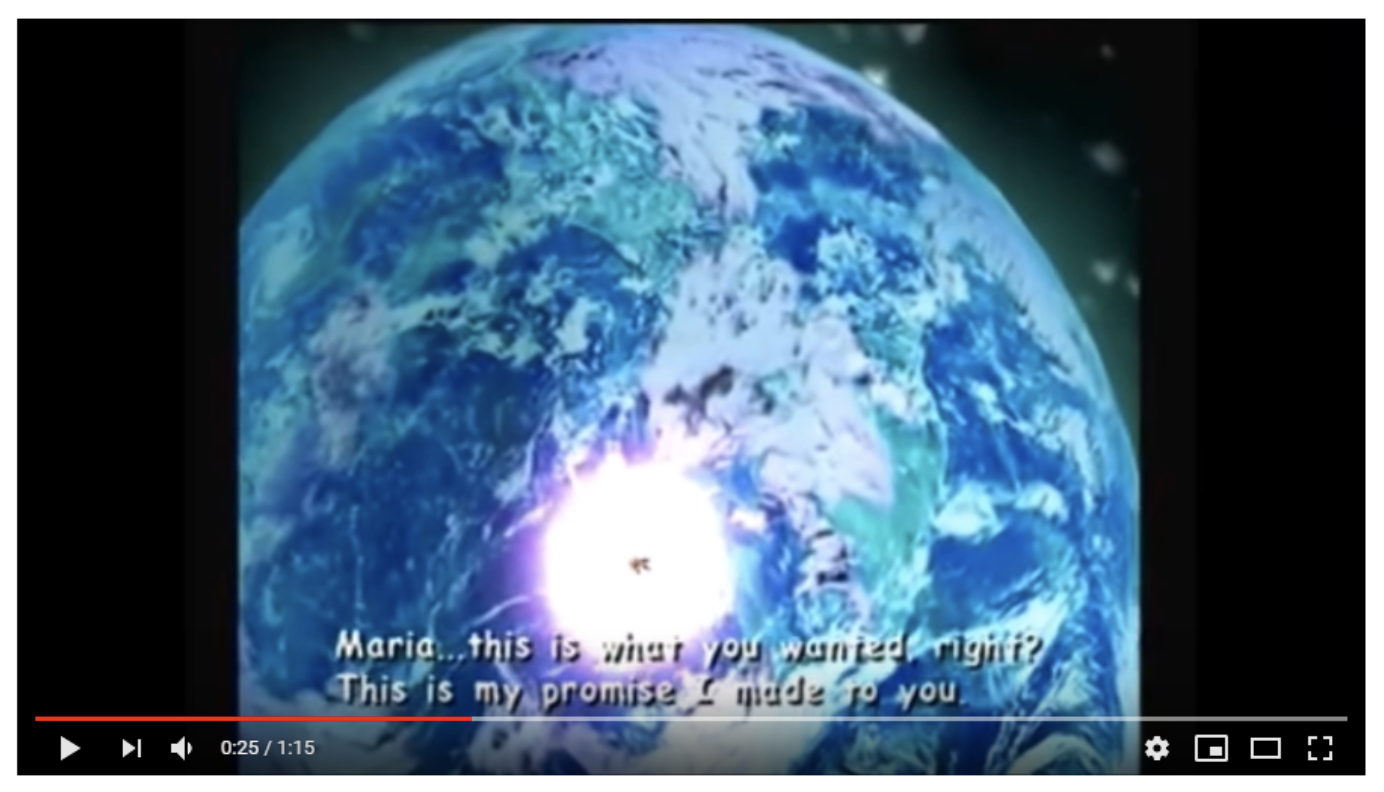
So what do we do with this extra? Knowing too much of the world and what the self cannot say of the world in itself. Autoplay is paused for the meantime, by which I mean the time in which we are mean. I remember discovering cruelty in the playground, where a boy would go round and hit us with strong red branches he pulled from a shrub that grew with some abundance around our school. And realising the marks made on the back of our calves were really just marks of a pain this boy had felt; a pain inflicted upon him from elsewhere, so that cruelty was something you transferred, a kind of heraldic ink you wore for your life, for your family. I would not explain these marks to my mother, or to myself, for years. My early experience of inflicting cruelty: throwing Chao against the wall, only to nurse them back into serenity later. Teasing the dog, watching a friend knock his head off a wall, deliberately fucking things up. Then the delirious pleasure: to throw one’s avatar off into starry void, a final sacrificial act. In Sonic Adventure 2 Battle, a game to which I dedicated many hours of pre-adolescent life, the villain Dr Robotnik has programmed his space colony, ARK,[2] to collide with Earth if the chaos emeralds are used. Such annihilation intends vengeance on ‘the government’ for condemning the doctor’s research and killing his daughter, Maria. Her request to Shadow, Sonic the Hedgehog’s Jungian double, is to help mankind. When Shadow plummets back to Earth, following the ultimate battle, ‘the Finalhazard’, he is happy, because he has fulfilled his promise to Maria.

Admittedly, this cosmological battle of heroes is little more than parenthesis here. I want to say something of my entrance into this discourse of annihilation. Shadow was a supplement: Sonic’s ‘double’, but also his genetic extra, his genetic remainder; both hero and villain, his narrative volition was ultimately self-sacrifice to save the world, and yet he was created to conquer the world. He embodies the eerie promise of a kind of living apocalypse, an ‘end’ to the world that does not end. I remember the final book of Garth Nix’s Old Kingdom series, whose blurb used the word cataclysm, or cataclysmic, to describe the events that closed the trilogy. That word lived on in me as a wound, cataclysm: something sharp that had already cut me. It was a word I could not unthink. What actually happened in the book was terrible, was a battle, it involved the loss of life; and yet there was redemption. I knew then that cataclysm was not necessarily apocalypse, because one world of fantasy could open into the new, like a modified species. There were chain reactions.

Screenshot 2019-04-08 at 14.34.48.png
But all this is just average Earth. Learning to like the light, to paint a thought with the similar blue, knowing it only exists in dreams, and the way she holds a note.


***


These days, everything mostly feels like transing times. I listen to a Jason Molina recording and realise that he is gone, he is missing from the world, and yet the warmth of his fingers, these arpeggios; the sound of sirens passing through the windows of his Chicago apartment. These are present but I discover them only after absence. I have to realise this over and over, to register the shock of this or that loss. I close one tab, only to open another window onto extinction: this fact of a text we can’t share, because the text is ourselves, and we have shared unto each other enough of the missing space. And someone else I once loved dies. Data is what’s given, it clots into so much hurt. We just are confusion, the two of us and the planet and what’s opening up.

Everything swells; a cherry-red globe recurs in memory. I drift on a lifelong melancholia that isn’t quite mine. I want to be able to parse this bodily symbology as a something beyond me, of course; I want to look outwards at the felt inequality. So many wounds between us. The word continent crunched sour in my mouth. These histories we can’t unpeel or remain in singular. I want to be able to understand the matheme, but there is a wilderness still. The breath won’t catch up. Scared I’ll fall off the edge of my mind.

What we make difficult for ourselves, these fractures in fact or family. Always a guilt that sticks. It is as though we were speaking underwater, our altered tongues; what we could only bring together as lyric.

I had all these dreams of traffic, and the traffic could only move in the night. I was at the edge of a slip road, but I could not merge. Are we closer, now that you know this?

whatever in the world behind closed eyes the doors whispered. let her be. let her be her. let us be as if we were not forever entwined in that, as if we were not able to unthread the conclusions, deliver ourselves of the plot. at that level she intercedes for you. she cries mercy at the feet of her father. she knows where he is at the far corners of the universe. he has removed himself. he has gone off to sit and brood beyond the pale of light. if not that then this. but we had opened it. the knife that cuts both ways. always. in the centre of it the rose. pure. the flaming heart, an artifact. believe me. this is not a special dispensation. this is a matter of life and death.

(Beverly Dahlen, A Reading)

And why did they give me the middling name of the Rose? There was a world tucked in and still to unfurl, and the rose was a planet with cloud tucked into its darkest heart. Let her be here. That time I set my hair on fire and everything of the world smelt singed for weeks. It happened at the funeral. She was at the mercy of a childhood memory, curled at the window as they came in the night to tip the car. And she remembers the way the oil ran down the road as rainbows. The sound of her parents on the phone and a knife that cut the silence of Sunday. It was a thick gelatine; the boiled fruitmeat of calorific lyric. The cut in the world behind closed doors, closed eyes, the lids we can’t keep on our possible futures. So we swim through; no, it gets stuck in our teeth. How can it be a matter of both?

Screenshot 2019-04-08 at 14.37.06

Crank the anthropocene up to eleven. I wish we had been sweeter to each other. Like listening to the bees without meaning to. We’ll never know why we are born the way we are born, or whether that matters. And I’m pushing sleep for the pleasure of that stretch of the break: when you say the break of the sky and is it a pink cloud I see, or just blue. The 8-bit troposphere catching nightly. Facebook is blue because Mark Zuckerberg is colourblind. There is the overlay, the twice-lived light of the screen and the sky beyond, which is also contained in a window. At no point do I choose to go outside, as it were; for this is the happening of a necessary containment. I need to be able to switch between tabs, my brain still reeling. There is always extra, the bit we missed and have to pursue.

If I saw you again, and we were the same as we were.

Excoriations of time are like Facebook disavowal; don’t click, don’t react. They rub off on our skin as however many times we surrendered our diaries, only to take them again in our arms, cradling tiny diacritics. The first broadband was the rupture of a secret, something breaking out widescreen and hurting.

Narcissism: this essay. A name comes out the sky(e), its extra e for the isle, for extinction. The Earth is active now, this state of evil, eleven, never even.

We should be kinder to each other, said the tree to the thing that would grind it to pulp. When Justine eats the meatloaf and it turns to ash in her mouth. And you know that all this extraness, extremeness of death is from the other planet that is our planet. Just is. I put a bar through Mars, I pierced its fat red eye with the proto-knowledge of Earth’s erasure. That was my great stupid rebellion. It felt like a dreamwork of futile justice.

The fact is only an identity, a pristine midnight. Land lines of countryside glimpsed in the feed, I know the moon only this way until I leave the library. So sigh, milk silver of gaze. Instinctive descent occurs in dark mode, and we play it over, scrolling and scrolling. The hours between. For all I remember of that night, there is only the simple avocado emoji, and a thank you. You’ve been more than a friend to me.


***


What do we call for?

It’s like the first time I saw Jane Campion’s Bright Star and thought of something shimmering in the woods, that would not come as powder or song but simply as itself. And yet even that was split. Cancer moon/Pisces rising. I could sense it, and the morning hurt, and the continuum of pain whose fidelity remained still into the half planet smudged on the edge of my hand. The Earth is a cherry that lost its innocent self. You would interrupt our greeting in honour of the end of the album. That was the tempo we stretched for ourselves, syncopating sleep with the lights adorning our names with time’s ongoingness; eleven hours at the end of the wish again, after we stayed up past the chorus of dawn. And the world was shimmering in the woods. Our cut had barely interrupted the story.


  1. And ongoingness is, as Tim Morton puts it, the temporality of melancholy in the anthropocene, this sense that ‘nothing is determined yet’. This sense that we are not looking towards apocalypse but rather trying to be here, knowing this ‘here’ is not ours or fixed but is a viscous spreading of multiple subjectivities, bodies and times. Ongoingness is to look for pleasure as well as pain, to not look towards loss as imminent or behind us, but rather to appreciate the uncanniness of reality. So this person’s consciousness became for a while another half of my own, their thoughts would echo and remain in me, beyond pathology, warping from something raw and ‘live’ to a gentler articulation of being here, being-with. The enviro-mind, formerly-known-as
  2. Incidentally, the Ark was a youth club I’d frequent as a teenager, beside the sea. The site of many formative drinking experience, it was surrounded by dunes of lawn and behind those dunes I’d learn my first versions of drowning.

Playlist: March 2019

playlistmarch2019.jpg

9 June 1977

Plato wants to emit. Seed, artificially, technically. That devil of a Socrates holds the syringe. To sow the entire earth, to send the same fertile card to everyone.

— Derrida, The Post Card

He goes around sliding things under doors. When I answer the buzzer he coughs through the speaker. Is there something for me? Impossible to tell. He clutches bundles of luminous, anonymous catalogues. But there is mostly paper, less of noise, in my dream. All the colourful paper is folded into neat little butterflies and cast about a room somewhere, a trillion paper butterflies made animate by a ceiling fan. They swirl up and hover and tremble, they display the fact of display. If Damien Hirst were kinder to hyperobjects. The butterflies are destined to live for only a day, but their larvae live on and on, reproducing in squirming punctuation. The home screen was full of these icons, butterfly icons, but the state that I am in…well, I saw them as colours in kaleidoscopic array, you could say formless because they were almost utterly without origin. I tried to click through the butterflies to open a window. The word broadcast has its origins in agriculture. I see him at the edge of things, broadcasting his literature; dreaming of that broadcast whose discourse would finally slip into ‘Stone in Focus’, fully looped for 1:17:10 duration. The butterfly paper of things we were supposed to purchase. Palimpsests of unspent ‘truth’, a kind of solvent tonic for wounded text. What folds is the secret of objects, their identity prior to products. The butterflies fly, land, twist, secrete. They become tiny wedges. I want to gather up quantities of plastic and watch it melt between my fingers, the putty of a capitalist extinction. I kinda wanna call him. One day the fan will stop running and that will be the end of the day. The paper is better than plastic, by a mite.

That is what I write to you. A little shard of a page. I can pinpoint its scene of writing, the place where the walls are real moss and everything is green and utopian blue. The signs are over-scrawled in washable ink: fill up the kettle after finishing. A world slides out of focus when I write to you. No one cares. The point of a sentence is itself the long-tail; maybe I had not converted the file right, maybe I had not stretched this line as far as it wanted. But it broke apart regardless:


. . .  . . .. .             . . .

.        . . . .. . . . . .. .. . . . .

 . .     . . . . ..       . . . . .

             . . . . . ….. .   

     . .         .. .


I see last year’s city in a flowing grid of water. The artificial channel of departure. I am trying to remember the blue of the plane, the blue of a single window. It seems this journey annihilates the next. The weather is unavailable to me. I was up so late, crunching chocolate eggs between my teeth and reading Dodie Bellamy. Everything said was fibrous, electric, painfully or even exquisitely wired. I was in San Francisco, I was in a flooded New York; I was in my hometown, even more underwater. The prose came in streams but it was hardly mine. I leaned in to suck the smoke from your face. What everyone needed was chamomile, a breath of the air by the river.

At the end of the world, the butterflies drown. We mourn them very quietly, last of our senses stimulated. The muscularity we made of our work is immaterial now. I’m trying to swear myself into a rhythm of perfect sleep. What comprises a wake up call, the fuck fuck fuck of it. Alarms are sent from afar to hold me in the punch of 400 words, Plato’s postcard. I wake to her dreams in WhatsApp messages; I split samples of songs I don’t like into ringtones. Something slips into something and the dark looks different. I walk home and catch variant scents of spring, mixed up with the fumes from the late-night buses. I rub blossoms and leaves between my fingers, trying to intensify the feeling. I am incredibly nostalgic for Chloé perfume, when I hug her goodbye. Magnolia, freesia, honey and cedarwood hidden beneath. Often those moments are so sweet I have to stand there in the street and text myself about it. I have these texts on my phone:

05:12: It’s just sunset, stupid

01:01: My legs are full of equinox

23:42: What if we wrote a line for every hour slept

02:34: Orchid.mpeg remembering futures

In Lars Von Trier’s Melancholia, the only safe place is the cave. But the cave is more like a teepee, it has no walls; it opens out onto the cinematic event which is this massive planet colliding with Earth. So there are no walls, not even ones made of moss, woven with pollen. It is not exactly a place ‘to go’. The cave at the end of the world is a triangulation of lines, a diagram. It points to the sky. The inside of the cave is the outside; it is a geometric skin; it is infinitely double. I think of the cherry red skin of my hotmail; at what point in my life did I choose that? The interior kitsch of human flesh, rendered plastic. Sometime in the month I write: I want everything to be tender but I had no idea it could be this bad. When the hail comes, when they salt the road, when the snow comes, I think it is ending but I wake up as before with the equal ache. Sunlight (?) Statistics lisping the roof of my mouth, as though writing itself would produce an allergy. I lay down my stuff, just as he is walking in, and my tongue in my mouth and the blood in my veins and the thought—indistinct sense of where the year will head. But I am looking instead for the tail. Already curling back into itself, the significant events of January chase me with flickering imagery, they are a personal narcissism. If I could boil them down, attain a clarity; shoot them, syringing…

I roll up my sleeves for airborne beams of vitamins.

She tells me how gorgeous the ghost was. The coast was. I keep thinking about the chestnut taste and the kisses of light, the packet I put back on the shelf. The world was wrong; the supermarket made me soft enough to go, checking the mirrors in financial departure. Incredible sponges, dying at the bottom of oceans. Someone holds the syringe but not for me. Someone holds out for loose change. I lose specialness daily in order to live. I dream I have a daughter who stands by a fireplace while I clip a starfish pin in her hair. She can’t say the word. I perform the tiniest sweep, distracting her gaze. She doesn’t want to go outside, she will scream and clutch the radiator if I tell her. The word is literally unnameable, I wake up with it gone from my lips. But the word exists! There was surely a species. It is only a technicality now. Secretly I write the word down, days later when it returns to me, burning. To write it here would be to violate that, to cheapen its life with a summoning. I realise the daughter is only the version of self that I didn’t fuck up. She exists elsewhere. I swear to her:

Anne of Julia Kristeva’s psychoanalysis:

I dreamt that a little girl came out of my body, the spitting image of my mother, while I have often told you that when I close my eyes I can’t bring her face to mind, as if she had died before I was born and carried me along into that death. And now here I am giving birth and it is she who lives again…

(Kristeva, Black Sun)

The daughter as a twice-lived avatar of futurity, the mask of what comes before as pushing through generative time; mothering and lusting and screaming for our place in their state of absolute melancholy. Be with me and share this pain. In the anthropocene, we accumulate a sense of primitive, foetal lostness (how many times have I curled, cried, questioned); the world is our fragile, amniotic sac. We float, we are starved of good air; we trap the heat. We can’t trust the way we damage it, extract from its boundaries the richest juices; the way we carry it; the way we absorb and are absorbed by it; the way we circulate in the midst of our mutual toxins. But the Earth is nothing so essential to us as mother, and no blood-ridden cloud of cotton could stop the daughter, screaming all through my sleep.  

The longest comedown, the longest night. Where mist is mostly the way of him holding a note, and it is not instant, it is not like the drug or the river that drowned him. It is the name with so many consonants. It could shatter a language with time. My dreams are thick and long but my sleep is short. I like how many times Sophie Robinson mentions her inbox in Rabbit. I check my own and the number surpasses 50,000. Spending the morning in turmoil, wanting to write back to the sunset I missed. Endless proliferation just is. It is something like, hold simultaneity in blockchain. Mathematics achieves a weightlessness. I’m sorry I’m sorry. Pieces of skylight I can hold in my head, granular blue. I’d let myself into the rain again. I need a very tall building, a stairwell to make the blood rush back to my extremities. You tell me not to.

Remembering the summer where all I could do was measure the slenderness of other people’s legs, in a numb, inexorable kind of way. This felt relative to my sense of extinction. It was something about, what do we put in our bodies and where or why do we want to go. I was suffused with the sense of the need elsewhere. How do we blend into a world, make of our souls these chalk pastel auras. If you could terraform Mars with memory only. The drift was the weight of an email, it was rainbow and stretched as far as my childhood. I saw her by the river, holding a piece of glass to the light. She hitched up her skirt and waded in. The voices subside in the rush of the current. The image fades, because she is anyway there, chastising my choice. I wonder how ever we lived without each other.

Heartburn and techno. Reasons I want to fold this away, why I walk along rivers regardless. The latent burn was only as far as the beat could measure. After the movie, I felt a depression so immense it was like I lost touch with each muscle. The doorbell. Friendships fraying like so many neglected threads. Coal emissions are rising like shares or something. I ran and ran in the dream of the land I remembered. I could smell wild garlic along the river. My brother was already home for the match. I ran and ran to get back to the gym with the moths in the showers, stuck to curtains. 91%, 69%, 43%, 1%. Even my phone is dying. Little white eggs in your palms are lyrics. What if the lilac tree were more than or less than life itself? Lilacs symbolise the beginnings of love. Being earnest, accelerationist, plugged into the HEX account of refresh, streaming language. What colour is it that flickers in time? I have been ignoring innumerable messages. I want to dwell in the missing hour, the split that occurs when the clocks go forward. It’s just like the extra cappuccino, the final stamp on a loyalty card. It always resets.

She is no longer there. It was so simple, letting the blood of the thought away. Dark liquids filled my days: cola and Guinness and the black, oozing matter you see in the water in Tarkovsky’s Stalker. Dreams of petroleum slick I saw in the sky. Oily dream of the Essay of the Book of the Essay. Literature seems almost impossible now. I needle myself into the heads of writers. I want them to pierce the myriad empty pores of me, tiny molten residue eggs. This imagination, waning. White cracking liquid black on the page. I was taking pleasure in texture and loops, cutting my tongue on a shout. I don’t know how to write! Mostly I would lie in bed reading D.rida and peeling the skin around my fingers, leaving tiny strips of red underneath. The cherry-rose flavour of Rescue Remedy. I needed something heavy; like an extra river, proplus, nicotine gum.

Transducer: A device that converts one form of energy into another.

I wanted to be online forever and I wanted that status to annihilate the fact, I wanted to erase onlineness from the web and I wanted the result to be world, oblique exchange of realities, and people uploading their papers forever, and a sweetness, whatever it means just to speak. I wanted the spider to eat the fly. I wanted to read behind the lines until I became signal, and my signal was a force behind the language I wanted to speak, and it was prior to me. I went to the Tower and forgot they were having a party. The white wine tasted like sugary air. There was a video I watched, ‘Pyramid Song’ performed in Egypt. What doesn’t care to be sent. The egg won’t open its hatch. The complete terroir of relief in southerly regions where I cram all my life into multiple time zones, the sibylline remainder of day. Mysterious she beckons with fat grapes squashed in the O of her mouth, all rotten fruit I could smell from the train going south. She designed a very careless outrage and I realised there wasn’t a single shout inside me. She twists out the stalks like dead capillaries. I confront the thought of something terrible happening. So many times and I could not shriek. Later, tiny black seeds spill into my palm. I can only cherish them.

Facebook is the broadcast of Earth. I try to straighten the mirror, as though the spatial urge were innate and not just void. It was not the same book that I had ordered, the Book of the Essay. I had already set forth on the impossible project. I struggled to review. I had not even written the fact of it yet. There is value and heat to this project, even in its moments of stretch and collapse. I would put writing through the machine that makes water effervesce, missing the ease of waitressing. When ‘Beyondless’ came on, I felt infinite again on Great Western Road. Short-sighted, I missed the faces of every stranger. I wrote this sestina called ‘Lucozade Blues’, but I had not the stomach for any orange energy. Would you like ice with that?

The cave is a kind of triangle. Facebook is the vending machine, dispensing the glitches and beats of our life. It is as one, invisible crowd of desire. I want to say swarm. I want to say seed, but the burst spent seeds that lie in the dust of the archive. And she does calisthenics just to stream them live, and she lays her beautiful eggs. I am obsessed with the rhythms I can’t keep, lunar cycles for mindless complexion. Someone comes along to clear us west, they have had enough of our westerly airs. Sometimes I long to smash the windows of my local Tesco after midnight, just to boost M&Ms off the shelf, scatter them along the coated floor and crunch their acid colours one by one with my shoes. I want a whole lifetime to tread in my shoes. The pause when you stop in the walk to tie your laces, and you look so lovely with your leg in the air; a kind of ballet occurs in suspended time. Everything about this sentence is soft, it has to be. Plié. It subjects me to a slenderness, elsewhere a song. Bend and taut. Fear of the dark or the light, lilac wiiine. Somebody else is always between us; somebody else is the cavalier world, riding its way through galloping matter to get back to the point at which this becomes anti. And later I stroke your hair in the stable, and later we find him, and later your dream hair is all I can smell and scrunch when I come up for air or salt in the morning. And you are smaller than I ever remembered. We do things we shouldn’t exactly do. As if all this could be written in cafés!

I felt sick all semester with radial thoughts, and when I woke it was spring and the circle made of my mood a halo, it would be the same mood to return forever. Sunshine, caffeine, approximation. A loop the butterfly pages can fly through, and we chase them, baby-fisted, throughout the night. I want to be this clumsy and look at you straight in the eye and smile. Faster, the butterfly pieces of colour and light. Faster the streams of warmth and the morning gulls and something that comes on astrological. Supermoon channel. It is only you that makes me angry. Spring arrives solely in Getty images. I could just download all this weather, I want its data to supplement; I listen to ‘Eudaemonia ’ on repeat and remember the future we were yet to inject, starbright direct to our arteries. I’m sending a sort of word to Socrates, I’ve got this whole card—

~

Drugdealer, Weyes Blood — Honey

Sky Ferreira — Downhill Lullaby

Grimes — REALiTi (Demo)

Ess_Gee — Bubble Queen

Hand Habits — are you serious?

Stella Donnelly — Tricks

Julia Jacklin — Body

Pocket Knife — Custard Cream

Kelly Lee Owens — Lucid

Youth Lagoon — Daydream

Them Are Us Too — Eudaemonia

Tim Hecker — Obsidian Counterpoint

Sarah Davachi — Perfumes III

Logos — Menace

William Basinksi — 4(E+D)4(ER=EPR)

George Clanton — Livin’ Loose

HEALTH — LOSS DELUXE

Bliss Signal — Floodlight

Frankie Cosmos — Eternal

Strawberry Switchblade — Trees and Flowers

Galaxie 500 — Fourth of July

Silver Jews — Trains Across The Sea

Her’s — Under Wraps

Burial — U Hurt Me

The Durutti Column — Love No More

The Walker Brothers — Orpheus

Nico — Somewhere There’s A Feather

Talk Talk — I Believe In You