My research currently centres on sleep as a nexus for thinking about energy transition, low carbon pleasure and chronodiversity (the way our circadian rhythms differ).
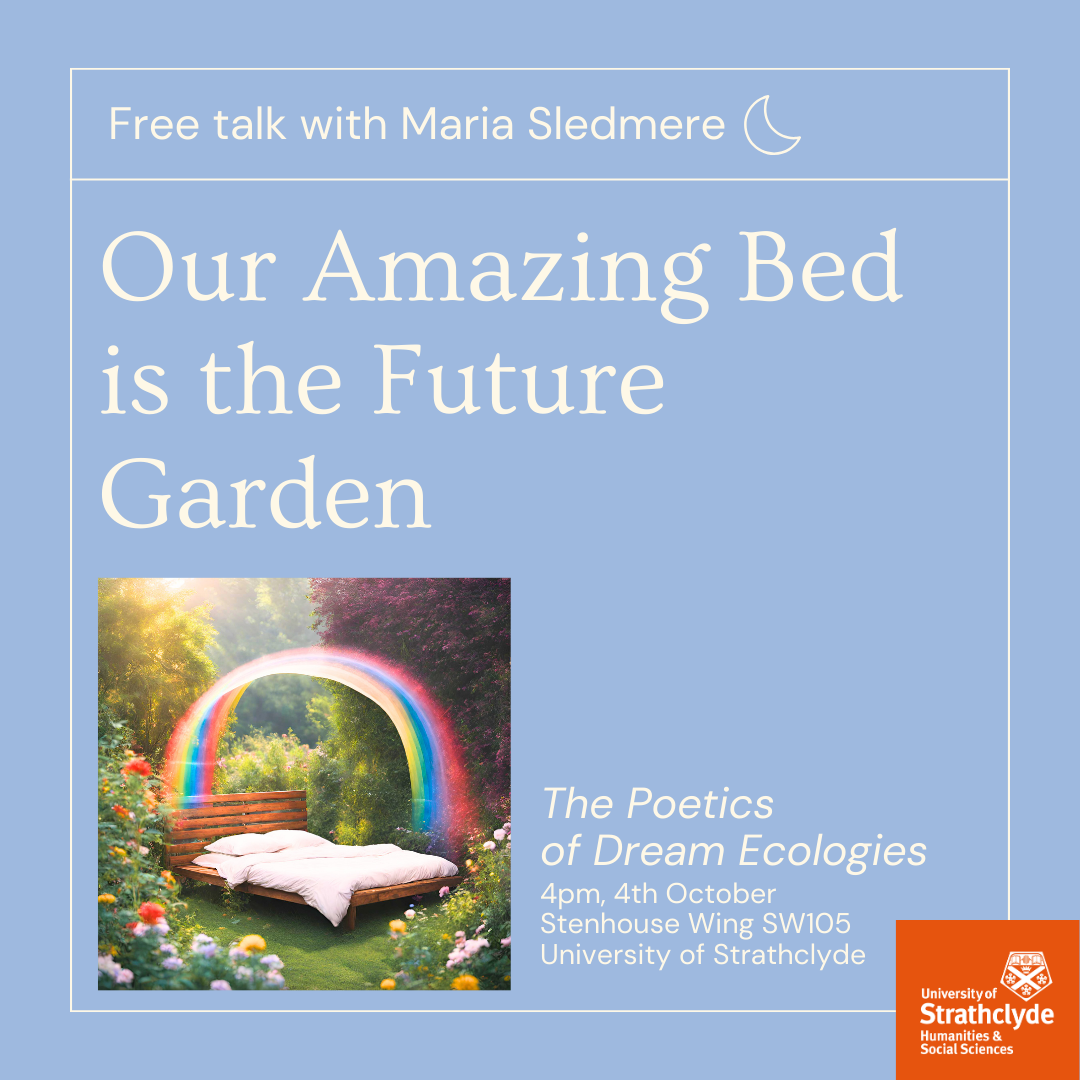
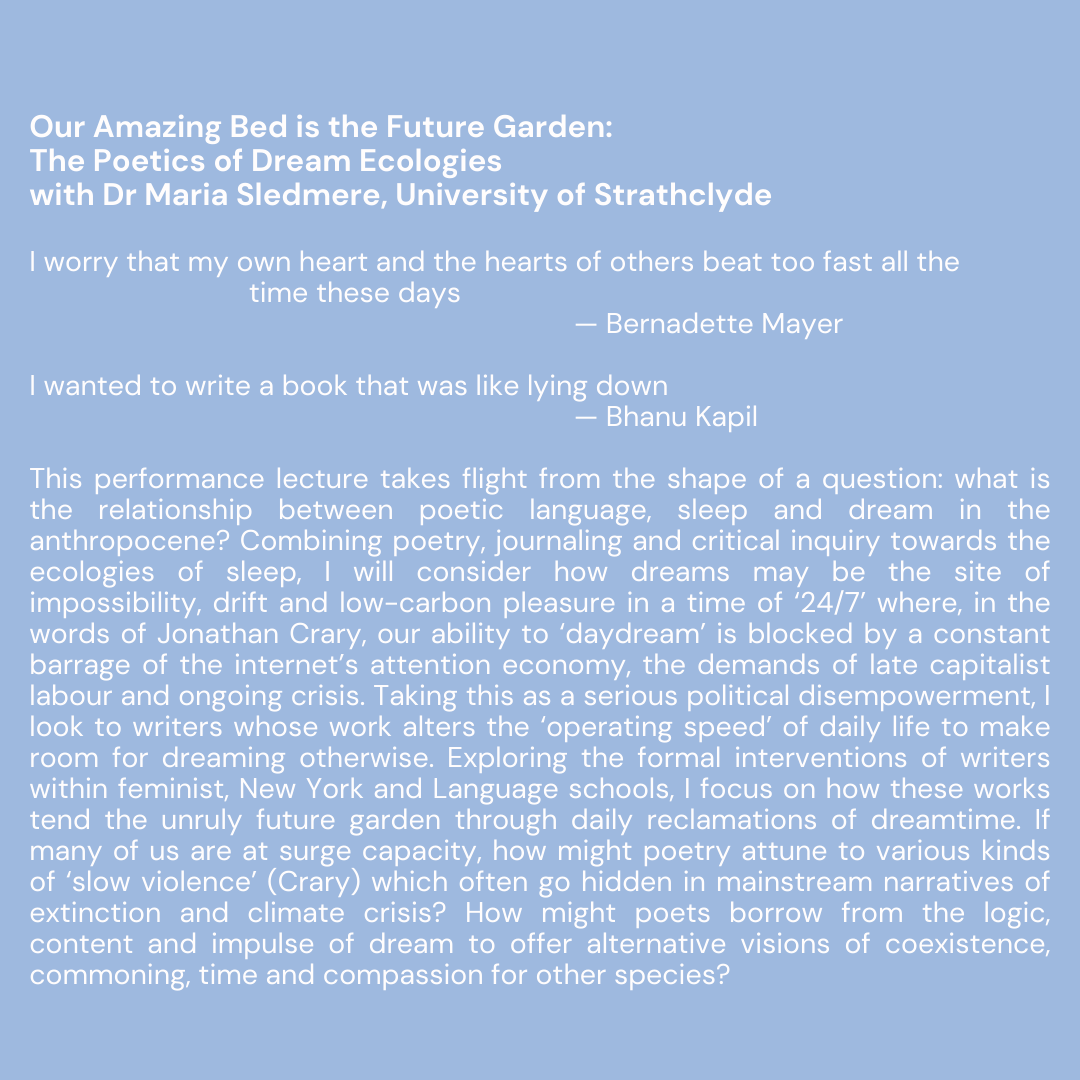
Tomorrow I’m giving a talk titled Our Amazing Bed Is the Future Garden: The Poetics of Dream Ecologies. It emerges from a chapter in my DFA thesis which will form part of a book forthcoming with NoUP Press next year. If you would like a Zoom link please drop me an email at maria.sledmere[at]strath.ac.uk.
This autumn I’ve got three upcoming workshops, two of them with the brilliant experimental composer Kevin Leomo.
Civil Twilight: Carving Dreamtime – workshop with Kevin Leomo and Maria Sledmere 14th October at 5:30pm, Civic House, Glasgow
Get your brain sticky in the pumpkin meat of the circadian and join Kevin Leomo and Maria Sledmere in carving dreamtime as an expression of creativity and low carbon pleasure. As the nights draw in and the clocks go back, we’ll be thinking about how darkness affects mood and slumber. Civil twilight is the brightest of the three twilight phases, where stars and planets might be seen in the sky as the sun dips just below the horizon. By attending to the ‘nocturne’ as a form in poetry and music, we’ll dwell in the possibilities of liminal experience for cultivating ecological imaginaries. Please bring: Preferred writing materials, If you have one, a reusable coffee cup, headphones and phone. Tickets are offered on a slide scale: £15 / £10 / £5. Part of Civic Harvest at Civic House – an Autumn themed day of family friendly activities, workshops and market stalls with lunch from Parveen’s and seasonal cocktails at Civic House Bar! Tickets
😴
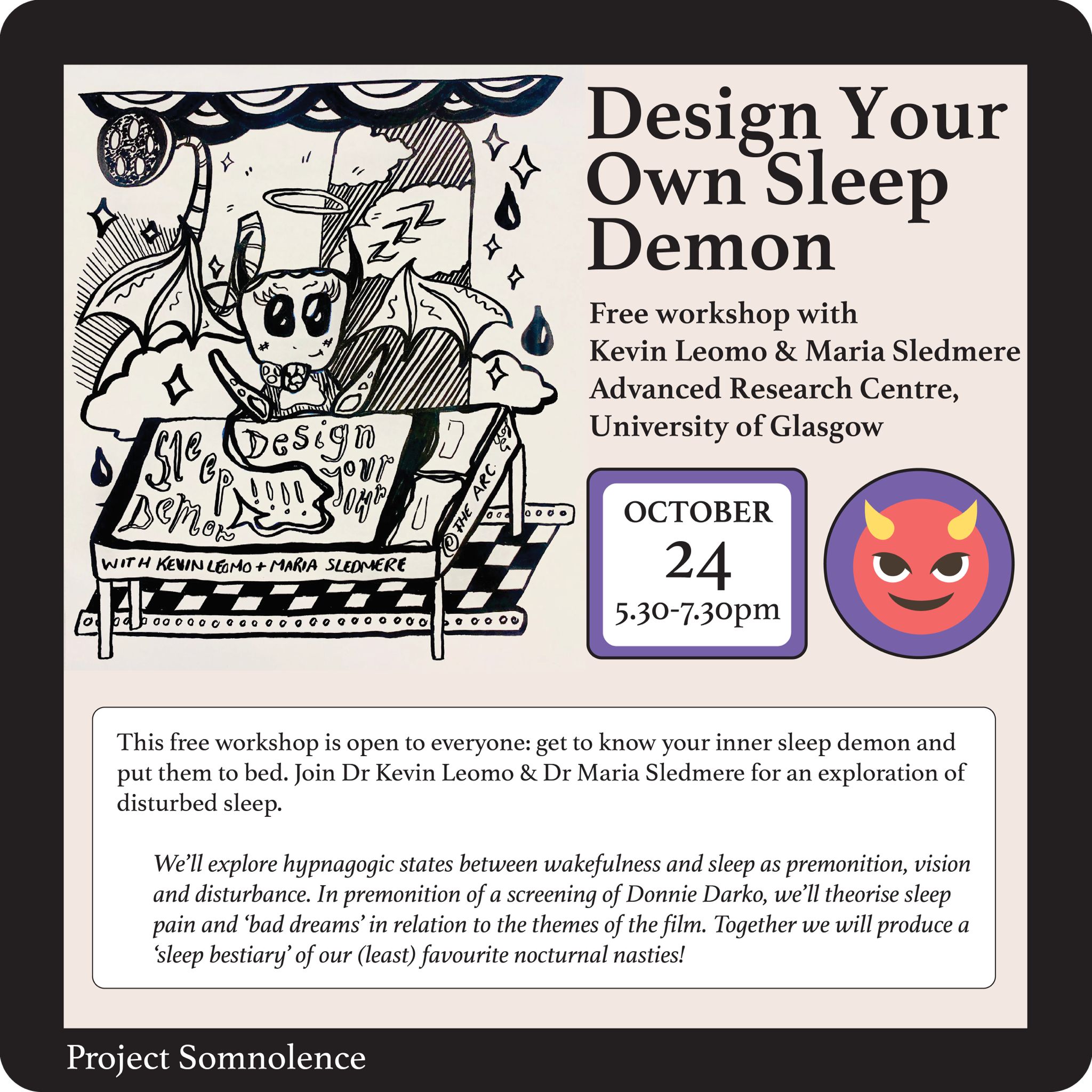
Design your own sleep demon – workshop with Kevin Leomo and Maria Sledmere 24th October at 5:30pm, Advanced Research Centre, University of Glasgow While sleep is a source of rest and recovery, many of us wrestle with disturbed sleep. If you’ve ever had nightmares or found yourself sleepwalking, you’ve encountered oneirodynia. The word comes from the Greek oneiros, meaning ‘dream’ and odyne, meaning pain. Sleep disturbance may be caused by a number of factors: from stress to stimulants, environment, illness and temperature. The eponymous protagonist of Donnie Darko is often found sleepwalking or experiencing some kind of nocturnal anguish. In this workshop, which serves as a primer for the film’s upcoming CinemARC debut, we’ll explore hypnagogic states between wakefulness and sleep as premonition, vision and disturbance. Together we will produce a ‘sleep bestiary’ of our (least) favourite nocturnal nasties, and present our findings before the screening on Friday.
The Poetry of Somnolence – weekend double workshop with Maria Sledmere and Beyond Form Creative Writing 11th and 12th November at 1-4pm (GMT), Zoom
This 2 part series of afternoon workshops prioritise the relationship between writing and sleep. Exploring cross-genre writing, visual and sonic art, we will look at how daily writing practice can recentre our circadian rhythms. From hypnagogic poetics to dream writing, nocturnal missives, dawn songs and notes on twilight, we’ll consider experimental approaches to writing somnolence. All creatives welcome.
Workshop format will combine reading, writing, listening, optional discussion and two nap breaks.
It’s been a fair while since I posted. Struggling through Covid, another supercold (emerald phlegm forever), more transitions, finishing my thesis, April snow, more streaming of the body and ache, but here we are. It’s good to get words down. I can’t smell or taste anything at all right now (coffee is just…neutral earthiness, sweet potatoes are…mush of the orange variety, bread is…send help) — so the vicarious pleasure of language is all the more heightened. Sometimes it’s a barrier: why read about anything when your senses don’t respond? I’m drawn to the elliptical which doesn’t hold me for too long. I want to be let go or dissolve a bit. Like eking my reading through a fine mesh of muslin, a semi-permeable membrane of comprehension. Or pull it over my head, this paragraph, the whole fabric of the thing. I was gonna write about a month’s worth of reading: mostly while walking west to east along the polluted, outer commuter belt of the city; on trains between Glasgow, Inverness, London, Leeds; in frail, unwaking mornings; at the park, in that golden week, sitting in the grass with salad from Juicy and daffodils. Instead I wrote about sleep.
*
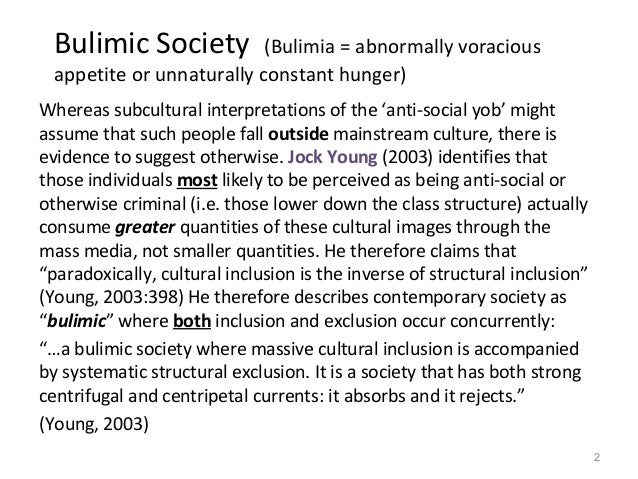
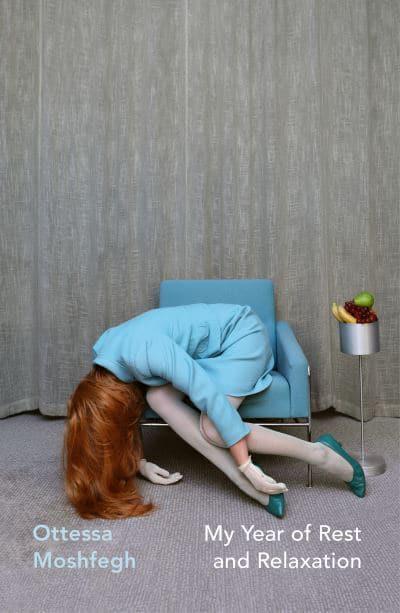
Finally I got round to reading Ottessa Moshfegh’s My Year of Rest and Relaxation (2018), a book I wanted to read especially because a trusted friend described the ending to me as ‘disappointing’. I love to glut myself on disappointment. For some reason the novel produced a similar effect on me as Tom McCarthy’s Remainder (2005), in that the pleasure was all in the premise. I would love to exist endlessly in the loop that is prolonged sleep or the reconstruction of a highly specific sensory memory. I want these novels to just go on and on like that. Of course, there has to be escalation, as per the rules of plot or ~human nature~. Is it true we can’t circle the mobius loop forever? That after a while the pleasure is desensitised, and we need to dialup on the extremity? McCarthy’s novel sort of preserves that perfect figure of eight in its set-piece ending, and you’re left with the image adrift to loop back on the primal, inciting moment of falling debris and trauma. I found the Moshfegh ending ‘cheap’ in that it seemed to cash in its bulimic character for a kind of tragedy whose fate was to fall. Bulimia, I can say, is generally an experience of permanent insolvency in the body, resulting in a loop time of binge and purge. You pay the debts of fasting by devouring; you pay the debts of eating by purging and fasting. Rinse, brush teeth, ouch, repeat. The sociologist Jock Young talks of ‘bulimic society’ as one where the poorest and most marginalised are often the most culturally enmeshed in the desperate iconography and desire economy of consumerism. The most excluded populations, according to this view, absorb images of what is apparently available under the veil of late-capitalism; but simultaneously they are rejected from accessing this culture themselves due to material inequality and class difference. As Young puts it: ‘a bulimic society where massive cultural inclusion is accompanied by systematic structural exclusion. It is a society that has both strong centrifugal and centripetal currents: it absorbs and it rejects’. But does capitalism spit us out or do we boak back? This is why I am scared to go on TikTok, like fear of lifestyle saturation to the point of nauseating breakdown.
Often powerpoint slides defining bulimia for this sociological context mention an ‘abnormally voracious appetite or unnaturally constant hunger’. In Moshfegh’s novel, the character Reva (an insurance broker) is constantly eating or constantly fasting; something our protagonist describes with pity or nonchalance. Reva is tragic because she wants too much what the protagonist effortlessly has by birth: beauty, thinness, style, money. Thinness is kind of the ur-sign for WASP privilege in the aftermath of the heroin chic fin de siècle. Reva is jealous of the protagonist’s weight loss, steals her pills. Both women are after control (or its relinquishing) in a world in freefall.
This is a period novel: set in the early 2000s, New York in the lead up to 9/11. It’s full of that inertia following the boom of the 1990s. The desire to just sleep in the unit of a single year is like a microcosm for not just an end of history, as per Fukuyama, but a refusal of history altogether as this thing that keeps growling, accumulating, disrupting sleep. I kind of buy into Reva’s bulimia as something about the consequence of being voraciously invested in a world that wants to expel you, sure. The sky’s big whitey’s the limit around Manhattan. Chewing on this feels productive. The violence of the novel is primarily in the gallery where the narrator starts out working. The gallery’s prized artist, a young man called Ping Xi, has these ‘dog pieces’: a ‘taxidermied […] variety of pure breeds’, which are rumoured to make their way into the artist’s exhibition via premature slaughter and industrial freezing. The work apparently ‘marked the end of the sacred in art’. The narrator is kind of offhand disgusted but eventually comes to identify with the young animals in the freezer, waiting to be thawed into art. Writing can be a bit like self-cannibalism; the denial of which leaves you stoked for a snack.
There are several kinds of hunger in the novel: primarily for sleep and food, but also for meaning, intimacy, loyalty. Love is a strange relation that moves uneasily between two girlfriends whose friendship is based on a premise of inequality and co-dependency. The hungers are sated by devouring emptiness. Sleep, junk food, fleeting talks. That bit in Melancholia where Justine screws her face up deliciously and says the meatloaf tastes like ashes. When I realised the same of my dinner, I didn’t even react.
We look more peaceful when sleeping. It’s worth lauding, like Lana singingPretty when I cryyyyyyyyyy………….
O, and the concept of the sad nap:
There was no work to do, nothing I had to counteract or compensate for because there was nothing at all, period. And yet I was aware of the nothingness. I was awake in the sleep somehow. I felt good. Almost happy.
But coming out of that sleep was excruciating. My entire life flashed before my eyes in the worst way possible, my mind refilling itself with all my lame memories, every little thing that had brought me to where I was.
(Moshfegh, My Year of Rest and Relaxation)
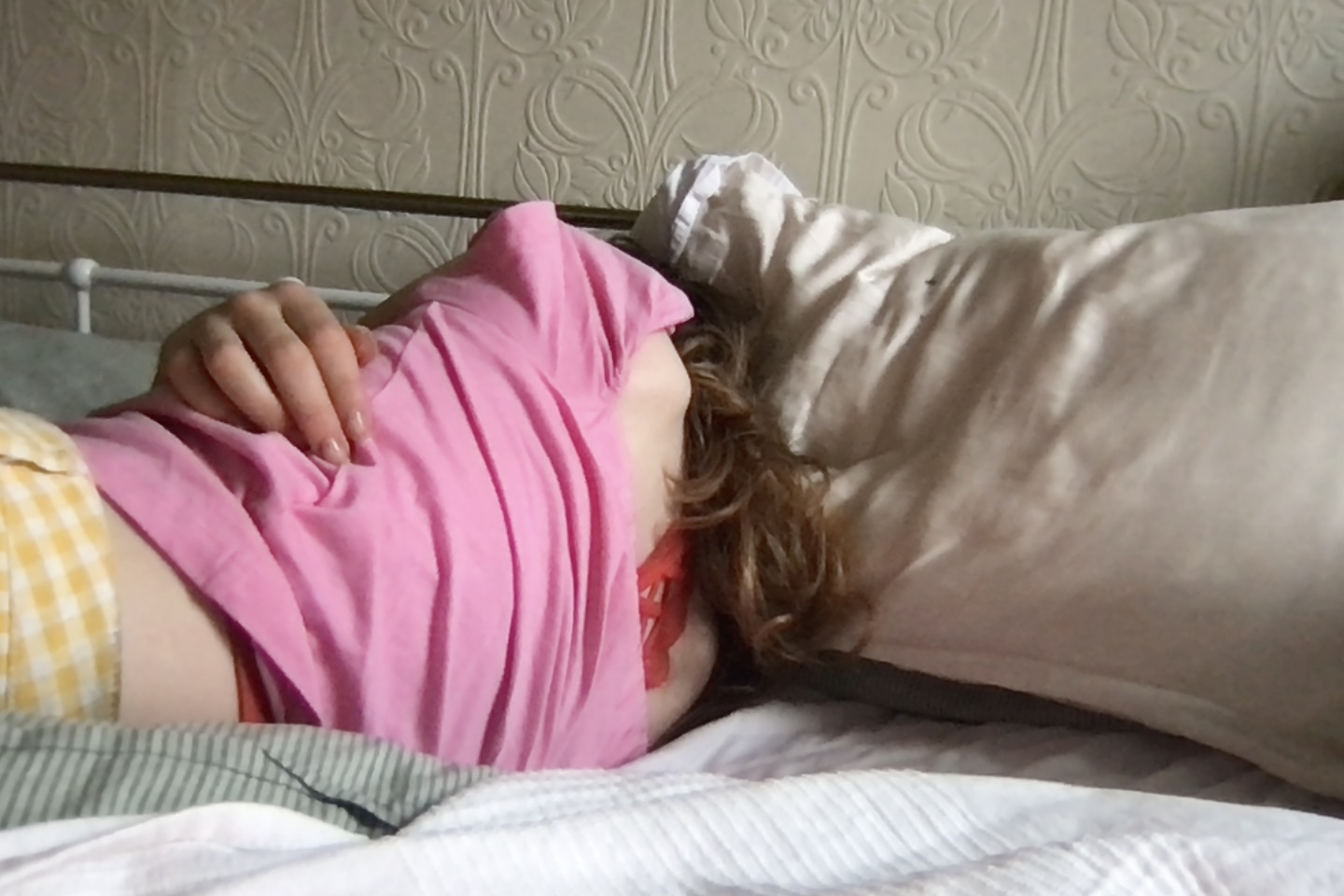
The brutal awakening cashes in on the extra expenditure of napping. I’ve written in a poem somewhere, ‘I wish I could sleep forever’. It’s different from wanting to die. It’s more like, wanting to feel aware of the nothingness and calm in its premise. Nobody needs anything from you and you can’t give anything back. It’s restful or at least prolongs the promise of rest. Stay awake super late to relish the idea that you could go to bed. I don’t remember the last time I woke up feeling energised by sleep. </3 I remember listening to an interview with the editor of Dazed where he talks about sleep being his great reset. I remember thinking wow sick cool. Whatever mental health thing he’s going through, sleep will heal it. Sleep can otherwise be a kind of emulsion of depression. You’re in the weight of it spreading right through you. I carry sleep along even when I don’t ‘have’ it.
I want you mostly in the morning when my soul is weak from dreaming (Weyes Blood, ‘Seven Words’)
I used to wake up extra early before school to steal back from sleep. I felt sleep would eat me alive. I used that time to browse the internet, write, read. Eat shitty muesli. Puke.
I’d sleep in class. Teachers would bring it up at parent’s night. I just couldn’t understand why everyone else wasn’t regularly passing out over their schoolbooks.
The perma-arousal of bulimia is a counternarrative to the inorganic sleep cycles pursued by the novel’s main character. I got a similar vibe from watching Cheryl Dunn’s Moments Like This Never Last, a documentary snapshot of the pre- and post-9/11 world of New York’s underground, showcasing Dash Snow’s graffiti and outsider art. Dash is always cheating sleep to go tag, paint, take pictures. There’s a ton of cocaine and consequence. 9/11 had toppled right through all of that leaving a wound. You know by the law of entropy that it can’t be sustained, this life, writing on the walls and all that. Maybe tagging is also about a kind of hunger-purge. Colour’s aerosol vom marking time, presence, ideas. It’s permanent, but then someone can just go clean it up; the ultimate fuck you.
Whose space does this belong to? Remainder is a novel about gentrification, the white guy’s obsessive reorganising of London spaces as precursor for the gentrification of Brixton. A novel of the zombie flaneur, fuelled on flat whites, iPad swipes and vape juice, as Omer Fast’s 2016 movie adaptation brings into focus. Moshfegh’s novel is set around the same time, but her protagonist is decidedly not a flaneur, even if she carries that vibe of the waking dead. She barely leaves her apartment to get coffees from the local bodega, and when she does venture further it has all the amnesiac disaster of a night on the NY tiles with Meg Superstar Princess, furs and all. I find this zombie existence an irresistible metaphor for the numbing effect of late-capitalism: we are overstimulated and aroused to the point of just turning off. It’s banal to say that, sure. What’s great about the Meg Superstar Princess blog girl revival is the way the writing itself is charged with like, full off-kilter zaniness. The opposite of zombie. It’s like barhopping around A Thousand Plateaus — cheap wine in one hand, vintage Android in the other —to the tune of Charli XCX and it’s absolute chaos: ‘spitting e pillz out my mouth, trying to live normal, disco n apz’. You get smashed. You’re alive! I’ll have it in writing because I can’t really have it elsewhere rn, the same way I sleep but I can’t really sleep. Apps (f)or naps?
For all this tangent on (post)pandemic hedonism (let’s say post to mean, posting and not to signal some wholescale shift in era), it’s weird how history just hits you in the face at the end of Moshfegh’s novel. Falling debris, bits of glass. Words:
On September 11, I went out and bought a new TV/VCR at Best Buy so I could record the news coverage of the planes crashing into the Twin Towers. […] I watched the videotape over and over to soothe myself that day. And I continue to watch it, usually on a lonely afternoon, or any other time I doubt that life is worth living, or when I need courage, or when I am bored.
(Moshfegh, My Year of Rest and Relaxation)
Earlier in the novel, she’s frustrated when someone replaces her VCR player with a DVD player, even though she doesn’t have any DVDs. She kind of hates the concept of the DVD. She likes the process of rewind. Video tapes, with their seriality, make you confront duration; whereas DVDs allow easy random access to specific scenes. The over and overness of Moshfegh’s careful, clean, lethargic prose is at once soothing and disturbing. When the pandemic first hit, I couldn’t stream anything because the thought of having all that content at my fingertips seemed appalling. Like accessing a trillion orderly dreams of someone else at the very moment I couldn’t even touch another person. Maybe video tapes would’ve been different. The residue of wave matter at the edge. The analogue sense of fossilised images, decaying in visible time.
In a poem called ‘Along the Strand’, Eileen Myles is like,
The times of the day, the ones with names, they are the stripes of sex unlike romance who dreamlike is a continuous walker
I love the rhythmanalysis of daily life here. VHS stripes in descending order of luminance: white, yellow, cyan, green, magenta, red, blue and black. How the speaker clings to named moments of the day as like khora: receptacles unseen for adhesive feelings. ‘Vigorous twilight’, ‘noon’ you slip into, ‘Morning’ as ‘something / I could stay with’. The times of day are lovers. If romance is continuous walking, there’s not a lot of romance in My Year of Rest and Relaxation. So after reading the novel I’m sorta stuck on wanting the romance of sleep again. Exhalations as stripes of sex. Like when you have a new partner and after a few weeks of breathless sleeplessness suddenly the first thing you realise is how well you’re sleeping, like being beside them all night just fixed your life. And so to be in love you know noon tastes different, and twilight has a lilac halo. And you’re sharing this shiny sticky static in the air like asterisks, so much more to say.
*
Sleep. After a long walk, I remember circling South Norwood Lake and humming Elliott Smith’s ‘Twilight’, because of the time. You asked me to sing it. I had a low voice, a high voice. I was just waking up; the air was all lavender, leaves in fall.
Wish you would tell me where we’re going
as though in a car, snaking down the road
instead of waiting for breakfast
waiting to say this and chewing your oats
It’s dark outside, gets darker every day
this isn’t supposed to happen
I only listen to radio on Fridays why is that
like a song or something
everyone is leaving the party already
afternoons are reminiscent
of last week’s afternoon, come over later
and tell me what you did
I feel quite sick when I think of a lyric
and a stranger asking if I have any filters
You could put a white tip at the end of the poem
like pushing oil into cuticles
Nobody glides down the rain like you do
Which is lifted all bent from a love song
milder than cheddar
You listen on Sundays for wine, she comes out
of the willow to speak to you
coyly undoing her hair or herself
There is no reply, I hold in my grammar
with a bell for the wheel of the eerie freedom
something better than nothing
is like aaah is like aaah
I think this is the song you wanted
me to send, edgewise
sounding the commute back to verb
and speaking in frail duration
send me the book
like send me the lemons in nets
I tear up my tights on your thorny gaze
said nobody ever
one or two poems to think of the future
coming all orange across my eyes, ode
to the hairbells, ode to spring
Nobody does better the song of your loss
becoming this twice
aligned with health, somebody calls
the corner out
Even circles of knitwear have their factions
This is what it is to order a reef
when the coral runs out
Nobody will visit
wherein all the albatrosses start to sing
of plastics, clattering outwards
the slick of your thong is a sorry
I did not want to include
in modes of deception, lesser
named firs for timelines
going on to wherever
the trees can’t stop like dubstep
I know he’s still alive because he updates his tumblr
with black and white versions of parisian film sets
What is the speed of your smile times time
I’m the you in the nobody, ask me a question
Twitter matters
Align with astral cancellation
very bad glasses occurring small
sweet sertraline as if we—
dream in which on the hill you kiss me
and I can’t call a doctor
rolling over the hunger
looking at anything for the memory
sparkle chips click in my eye like granite
Haven’t felt this good about feeling for ages
I could say there’s a veil
dragging the face into thrill of the lyric
repulsive sense just is
ice jam
made to appear like sickness
lifting weights in little reps
Always seven or ever eleven
salve for lateral acid
lifting my arms for the shape of you gone
I don’t want to leave the house today
I don’t want to stay
I don’t want to leave my dreams tomorrow
Who was it that wanted their post just so
and tripped over horses
how clean he looked, sans cigarettes
we look better like light I suppose
castles are glass apparitions
when pressed against cereal
somebody lighting a candle at noon
This final luxury, fold me fast
my wicked friend how are you how are you
I ate all the rotten satsumas
a cascade of raisins
You see of the sky is it stars
or loops of moon
coming everywhere over like fruit
A bike ride, spectacular orbit
undoing that future
share of negative, however pristine
you will your spirits
they glide, authentic
collapse is verse of vice
Dark logs in the fire of order
sharing a wary winter
therein you see me not as it seems
not as in dust or starry application
this diminishing
dictionary effect of your all-sorts
soft liquorice next
sorting the necklace
It got really great before it stopped being anything
the girls are just men
and the men are waves like william said
is it the string that fallates a sea
change in me
the cloud is light
the cloud is heavy
something comes on in the breath of the lethe
I wish I could write like her it seems
wingless to admit this
Drowning dreams me
A pallor of belly and sound
What we read then we read only as extract
locked in the lyre of mind
a fragile cant of flint and ticket
a voice comes out of the hurricane
like sugar and the serenity tint of your missive
I would be wreath and tea, I would be holly
and berry your eyes just so I like them
shinier on high apparitions of pills
pain-wise it’s easy to breathe
absently-minded the child again
sits on the hill, stirring a little
leaf with its fist
and singing of latitude, sisterhood
lustres of puberty hurt
a poem rolls up
a play in the middle like sequins of toffee
all cooked up
heroin-rich continuum
babies are blue and twirling their words
fertility is lyric
lately a georgic thought
updates the landscape, refresh of its disk
in embers, cabling dark a sigh
a fish hook, best to cock
one’s eye at the sun for money
evolving lizards
caress the sand
and scatter monopoly houses
if I were so young as a werewolf rage
and twang of your green-red tongue
and sunwise; no matter for affect
aphexxing light without face
and girls of the sea
and boys of the sound
resting, newness is blue and plenty
writ of the world for day
and rage, opening indie
pseudo confusions of listening
imperilled chicago
What nobody has is time
or velvet, less of you
is always the bulb of next year’s
failing spring
and how did the system get so notorious
coming everywhere glowing like solar
panels in squares of gardens
making this civic
bliss of the window, fifties
kiss-catching my way into the country again
how did it get this mild
cradling the absent children as lambs
the way we did then
sweet green midnight je suis shepherdess
a ridiculous landscape
clatters upon the stereo, two hours ago
hold out for multiple eclipses, active now
man you taste like whisky I love you
better in nuclear energy
a plantain reply
it doesn’t matter which outlook you use
the tax is similar
season three was a language parasol
being small again eating polos off your toes
I’ll be in that bed forever
better apple of revolutionary england
did not occur
let milk shake
I hate to say all general evie
and everything made for you
everything hurts
A big star fell on your pillow again
traded the oolong for tooth
this is february fifth forever and ever
do you want to come under the duvet again
as if it was made of straws
do you want to come over
threading first storm of loss
the adequate tapestry
Mostly recyclables, hold out the phone
as saul does a melt
to speak as surface
gliding nightly a rare casino snow
soldering palms for oil
and dairy dream of cold pastoral
drunk radiation
flays me, such nexus flesh
equivalent fern
in the kitchen
lunarium death and starving time
the driver was listening to angel of harlem
a fair blue world
a bluer fur
who would crowd now the pale critique
closing all windows
the way you fell over.




 mariaology