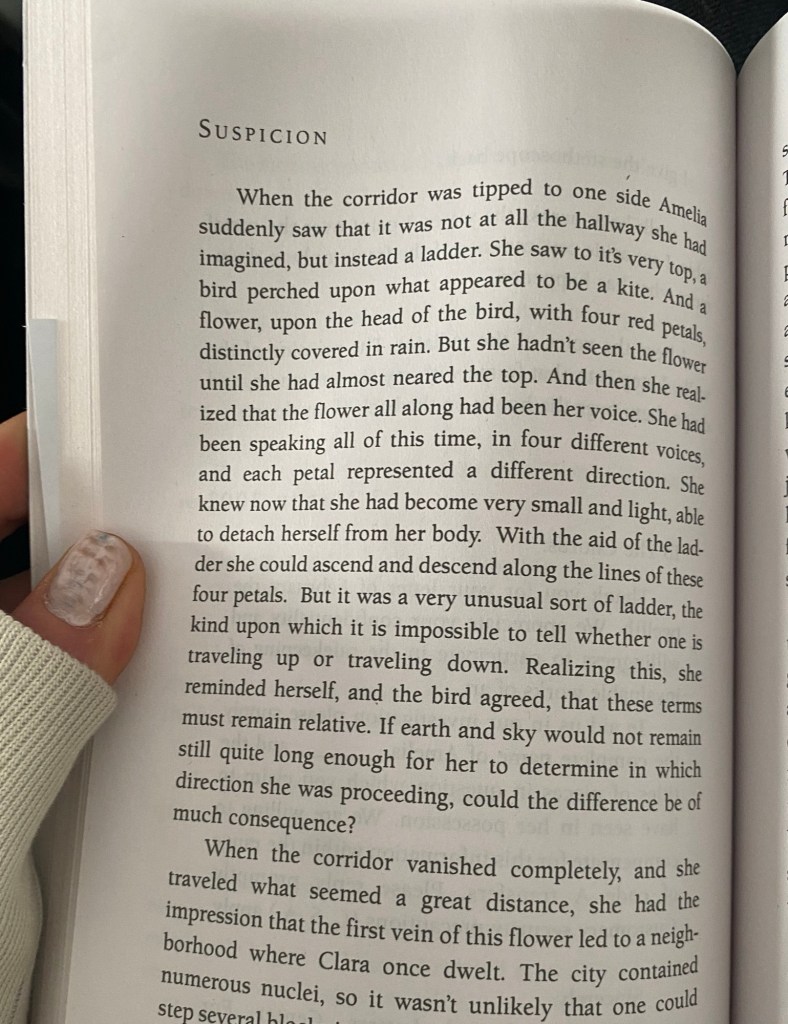
the flower all along had been her voice

Hello everyone!
I’m thrilled to be reading at the launch of Stacy Skolnik’s The Ginny Suite this Saturday at Burning House Books. The novel is one of my favourites in a long time — a pearlescent, speculative many splintered tale of mystery, hysteria and the world fuckery of technology evermore. I savoured it and reread certain pages with a dreamy clarity because deja vu was the narrative logic that I could most accurately access. When I finished it, nestled at the airport waiting lounge, I immediately wanted to read it again but I’m almost afraid to. I talked with Courtney over email and we agreed that the book lodged in our brains. That might be the most proper description. It crystallised the eerie fourth space feeling of proximate and synthesised intelligence. It was strange and razor-edged and a glut of forms and genres stitched up in this thing called the novel. My favourite thing about the novel is when it can serve as a kind of nervous container of multiple ideas and concepts playing out in time. The book itself is experiential prosthesis.
More info:
‘Information didn’t need to be remembered; it remembered her…’
A mysterious global syndrome is affecting women, causing symptoms of submissiveness and aphasia. While the number of sufferers grows, so does our protagonist’s paranoia—of the media, her doctors, and her husband. In the age of misinformation, AI, and surveillance technology, The Ginny Suite asks how much—and who—we’re willing to sacrifice in the name of progress.
Born in Belfast on Valentine’s Day, Suki Hollywood is a writer and poet. Her work has been featured in Gutter, Deleuzine, SPAM, Water Wings and more. Her debut novel ‘Jesus Freaks – a queer thriller – is available now via wwww.sukihollywood.com.
Maria Sledmere’s latest collection is ‘Cinders’ with Krupskaya Books, 2024. She is managing editor of SPAM Press and a Lecturer in English & Creative Writing at the University of Strathclyde. With Kevin Leomo, she is one half of Project Somnolence: a portable lab for exploring speculative approaches to sleep across art, literature and daily life. Her next book, ‘Midsummer Song (Hypercritique)’ is forthcoming with NoUP Press in 2024.
Stacy Skolnik is the author of the poetry collection mrsblueeyes123.com (self-released, 2019), the chapbook Sparrows (Belladonna* Collaborative, 2023), the workbook From the Punitive to the Ludic: Prompts for Writing Public Apologies (with Thomas Laprade for Montez Press Radio, KAJE, 2022), and the chapbook Rat Park (with Katie Della-Valle, Montez Press, 2018). She is a co-founder and co-director of Montez Press Radio, the Lower East Side-based broadcast and performance platform. The Ginny Suite is her debut novel.
Book free tickets here ✨
cn: mention of bulimia; spoilers
It’s been a fair while since I posted. Struggling through Covid, another supercold (emerald phlegm forever), more transitions, finishing my thesis, April snow, more streaming of the body and ache, but here we are. It’s good to get words down. I can’t smell or taste anything at all right now (coffee is just…neutral earthiness, sweet potatoes are…mush of the orange variety, bread is…send help) — so the vicarious pleasure of language is all the more heightened. Sometimes it’s a barrier: why read about anything when your senses don’t respond? I’m drawn to the elliptical which doesn’t hold me for too long. I want to be let go or dissolve a bit. Like eking my reading through a fine mesh of muslin, a semi-permeable membrane of comprehension. Or pull it over my head, this paragraph, the whole fabric of the thing. I was gonna write about a month’s worth of reading: mostly while walking west to east along the polluted, outer commuter belt of the city; on trains between Glasgow, Inverness, London, Leeds; in frail, unwaking mornings; at the park, in that golden week, sitting in the grass with salad from Juicy and daffodils. Instead I wrote about sleep.
*
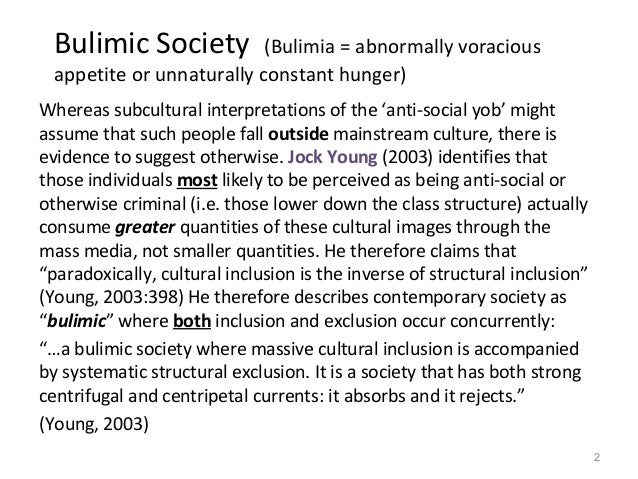
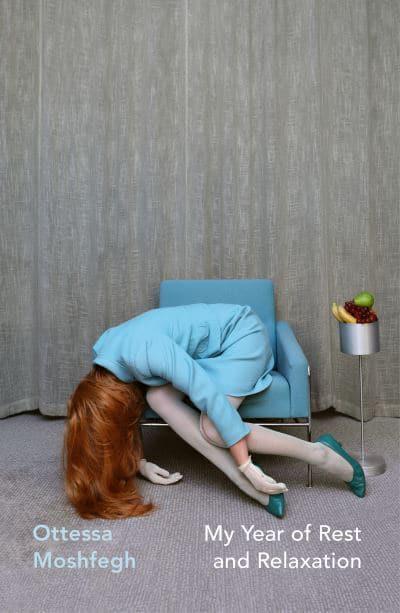
Finally I got round to reading Ottessa Moshfegh’s My Year of Rest and Relaxation (2018), a book I wanted to read especially because a trusted friend described the ending to me as ‘disappointing’. I love to glut myself on disappointment. For some reason the novel produced a similar effect on me as Tom McCarthy’s Remainder (2005), in that the pleasure was all in the premise. I would love to exist endlessly in the loop that is prolonged sleep or the reconstruction of a highly specific sensory memory. I want these novels to just go on and on like that. Of course, there has to be escalation, as per the rules of plot or ~human nature~. Is it true we can’t circle the mobius loop forever? That after a while the pleasure is desensitised, and we need to dialup on the extremity? McCarthy’s novel sort of preserves that perfect figure of eight in its set-piece ending, and you’re left with the image adrift to loop back on the primal, inciting moment of falling debris and trauma. I found the Moshfegh ending ‘cheap’ in that it seemed to cash in its bulimic character for a kind of tragedy whose fate was to fall. Bulimia, I can say, is generally an experience of permanent insolvency in the body, resulting in a loop time of binge and purge. You pay the debts of fasting by devouring; you pay the debts of eating by purging and fasting. Rinse, brush teeth, ouch, repeat. The sociologist Jock Young talks of ‘bulimic society’ as one where the poorest and most marginalised are often the most culturally enmeshed in the desperate iconography and desire economy of consumerism. The most excluded populations, according to this view, absorb images of what is apparently available under the veil of late-capitalism; but simultaneously they are rejected from accessing this culture themselves due to material inequality and class difference. As Young puts it: ‘a bulimic society where massive cultural inclusion is accompanied by systematic structural exclusion. It is a society that has both strong centrifugal and centripetal currents: it absorbs and it rejects’. But does capitalism spit us out or do we boak back? This is why I am scared to go on TikTok, like fear of lifestyle saturation to the point of nauseating breakdown.
Often powerpoint slides defining bulimia for this sociological context mention an ‘abnormally voracious appetite or unnaturally constant hunger’. In Moshfegh’s novel, the character Reva (an insurance broker) is constantly eating or constantly fasting; something our protagonist describes with pity or nonchalance. Reva is tragic because she wants too much what the protagonist effortlessly has by birth: beauty, thinness, style, money. Thinness is kind of the ur-sign for WASP privilege in the aftermath of the heroin chic fin de siècle. Reva is jealous of the protagonist’s weight loss, steals her pills. Both women are after control (or its relinquishing) in a world in freefall.
This is a period novel: set in the early 2000s, New York in the lead up to 9/11. It’s full of that inertia following the boom of the 1990s. The desire to just sleep in the unit of a single year is like a microcosm for not just an end of history, as per Fukuyama, but a refusal of history altogether as this thing that keeps growling, accumulating, disrupting sleep. I kind of buy into Reva’s bulimia as something about the consequence of being voraciously invested in a world that wants to expel you, sure. The sky’s big whitey’s the limit around Manhattan. Chewing on this feels productive. The violence of the novel is primarily in the gallery where the narrator starts out working. The gallery’s prized artist, a young man called Ping Xi, has these ‘dog pieces’: a ‘taxidermied […] variety of pure breeds’, which are rumoured to make their way into the artist’s exhibition via premature slaughter and industrial freezing. The work apparently ‘marked the end of the sacred in art’. The narrator is kind of offhand disgusted but eventually comes to identify with the young animals in the freezer, waiting to be thawed into art. Writing can be a bit like self-cannibalism; the denial of which leaves you stoked for a snack.
There are several kinds of hunger in the novel: primarily for sleep and food, but also for meaning, intimacy, loyalty. Love is a strange relation that moves uneasily between two girlfriends whose friendship is based on a premise of inequality and co-dependency. The hungers are sated by devouring emptiness. Sleep, junk food, fleeting talks. That bit in Melancholia where Justine screws her face up deliciously and says the meatloaf tastes like ashes. When I realised the same of my dinner, I didn’t even react.
We look more peaceful when sleeping. It’s worth lauding, like Lana singing Pretty when I cryyyyyyyyyy………….
O, and the concept of the sad nap:
There was no work to do, nothing I had to counteract or compensate for because there was nothing at all, period. And yet I was aware of the nothingness. I was awake in the sleep somehow. I felt good. Almost happy.
But coming out of that sleep was excruciating. My entire life flashed before my eyes in the worst way possible, my mind refilling itself with all my lame memories, every little thing that had brought me to where I was.
(Moshfegh, My Year of Rest and Relaxation)
The brutal awakening cashes in on the extra expenditure of napping. I’ve written in a poem somewhere, ‘I wish I could sleep forever’. It’s different from wanting to die. It’s more like, wanting to feel aware of the nothingness and calm in its premise. Nobody needs anything from you and you can’t give anything back. It’s restful or at least prolongs the promise of rest. Stay awake super late to relish the idea that you could go to bed. I don’t remember the last time I woke up feeling energised by sleep. </3 I remember listening to an interview with the editor of Dazed where he talks about sleep being his great reset. I remember thinking wow sick cool. Whatever mental health thing he’s going through, sleep will heal it. Sleep can otherwise be a kind of emulsion of depression. You’re in the weight of it spreading right through you. I carry sleep along even when I don’t ‘have’ it.
I want you mostly in the morning
when my soul is weak from dreaming
(Weyes Blood, ‘Seven Words’)
I used to wake up extra early before school to steal back from sleep. I felt sleep would eat me alive. I used that time to browse the internet, write, read. Eat shitty muesli. Puke.
I’d sleep in class. Teachers would bring it up at parent’s night. I just couldn’t understand why everyone else wasn’t regularly passing out over their schoolbooks.
The perma-arousal of bulimia is a counternarrative to the inorganic sleep cycles pursued by the novel’s main character. I got a similar vibe from watching Cheryl Dunn’s Moments Like This Never Last, a documentary snapshot of the pre- and post-9/11 world of New York’s underground, showcasing Dash Snow’s graffiti and outsider art. Dash is always cheating sleep to go tag, paint, take pictures. There’s a ton of cocaine and consequence. 9/11 had toppled right through all of that leaving a wound. You know by the law of entropy that it can’t be sustained, this life, writing on the walls and all that. Maybe tagging is also about a kind of hunger-purge. Colour’s aerosol vom marking time, presence, ideas. It’s permanent, but then someone can just go clean it up; the ultimate fuck you.
Whose space does this belong to? Remainder is a novel about gentrification, the white guy’s obsessive reorganising of London spaces as precursor for the gentrification of Brixton. A novel of the zombie flaneur, fuelled on flat whites, iPad swipes and vape juice, as Omer Fast’s 2016 movie adaptation brings into focus. Moshfegh’s novel is set around the same time, but her protagonist is decidedly not a flaneur, even if she carries that vibe of the waking dead. She barely leaves her apartment to get coffees from the local bodega, and when she does venture further it has all the amnesiac disaster of a night on the NY tiles with Meg Superstar Princess, furs and all. I find this zombie existence an irresistible metaphor for the numbing effect of late-capitalism: we are overstimulated and aroused to the point of just turning off. It’s banal to say that, sure. What’s great about the Meg Superstar Princess blog girl revival is the way the writing itself is charged with like, full off-kilter zaniness. The opposite of zombie. It’s like barhopping around A Thousand Plateaus — cheap wine in one hand, vintage Android in the other — to the tune of Charli XCX and it’s absolute chaos: ‘spitting e pillz out my mouth, trying to live normal, disco n apz’. You get smashed. You’re alive! I’ll have it in writing because I can’t really have it elsewhere rn, the same way I sleep but I can’t really sleep. Apps (f)or naps?
For all this tangent on (post)pandemic hedonism (let’s say post to mean, posting and not to signal some wholescale shift in era), it’s weird how history just hits you in the face at the end of Moshfegh’s novel. Falling debris, bits of glass. Words:
On September 11, I went out and bought a new TV/VCR at Best Buy so I could record the news coverage of the planes crashing into the Twin Towers. […] I watched the videotape over and over to soothe myself that day. And I continue to watch it, usually on a lonely afternoon, or any other time I doubt that life is worth living, or when I need courage, or when I am bored.
(Moshfegh, My Year of Rest and Relaxation)
Earlier in the novel, she’s frustrated when someone replaces her VCR player with a DVD player, even though she doesn’t have any DVDs. She kind of hates the concept of the DVD. She likes the process of rewind. Video tapes, with their seriality, make you confront duration; whereas DVDs allow easy random access to specific scenes. The over and overness of Moshfegh’s careful, clean, lethargic prose is at once soothing and disturbing. When the pandemic first hit, I couldn’t stream anything because the thought of having all that content at my fingertips seemed appalling. Like accessing a trillion orderly dreams of someone else at the very moment I couldn’t even touch another person. Maybe video tapes would’ve been different. The residue of wave matter at the edge. The analogue sense of fossilised images, decaying in visible time.
In a poem called ‘Along the Strand’, Eileen Myles is like,
The times of the day, the ones
with names, they are the
stripes of sex unlike romance
who dreamlike is a continuous
walker
I love the rhythmanalysis of daily life here. VHS stripes in descending order of luminance: white, yellow, cyan, green, magenta, red, blue and black. How the speaker clings to named moments of the day as like khora: receptacles unseen for adhesive feelings. ‘Vigorous twilight’, ‘noon’ you slip into, ‘Morning’ as ‘something / I could stay with’. The times of day are lovers. If romance is continuous walking, there’s not a lot of romance in My Year of Rest and Relaxation. So after reading the novel I’m sorta stuck on wanting the romance of sleep again. Exhalations as stripes of sex. Like when you have a new partner and after a few weeks of breathless sleeplessness suddenly the first thing you realise is how well you’re sleeping, like being beside them all night just fixed your life. And so to be in love you know noon tastes different, and twilight has a lilac halo. And you’re sharing this shiny sticky static in the air like asterisks, so much more to say.
*
Sleep. After a long walk, I remember circling South Norwood Lake and humming Elliott Smith’s ‘Twilight’, because of the time. You asked me to sing it. I had a low voice, a high voice. I was just waking up; the air was all lavender, leaves in fall.
I don’t want to see the day when it’s dying.
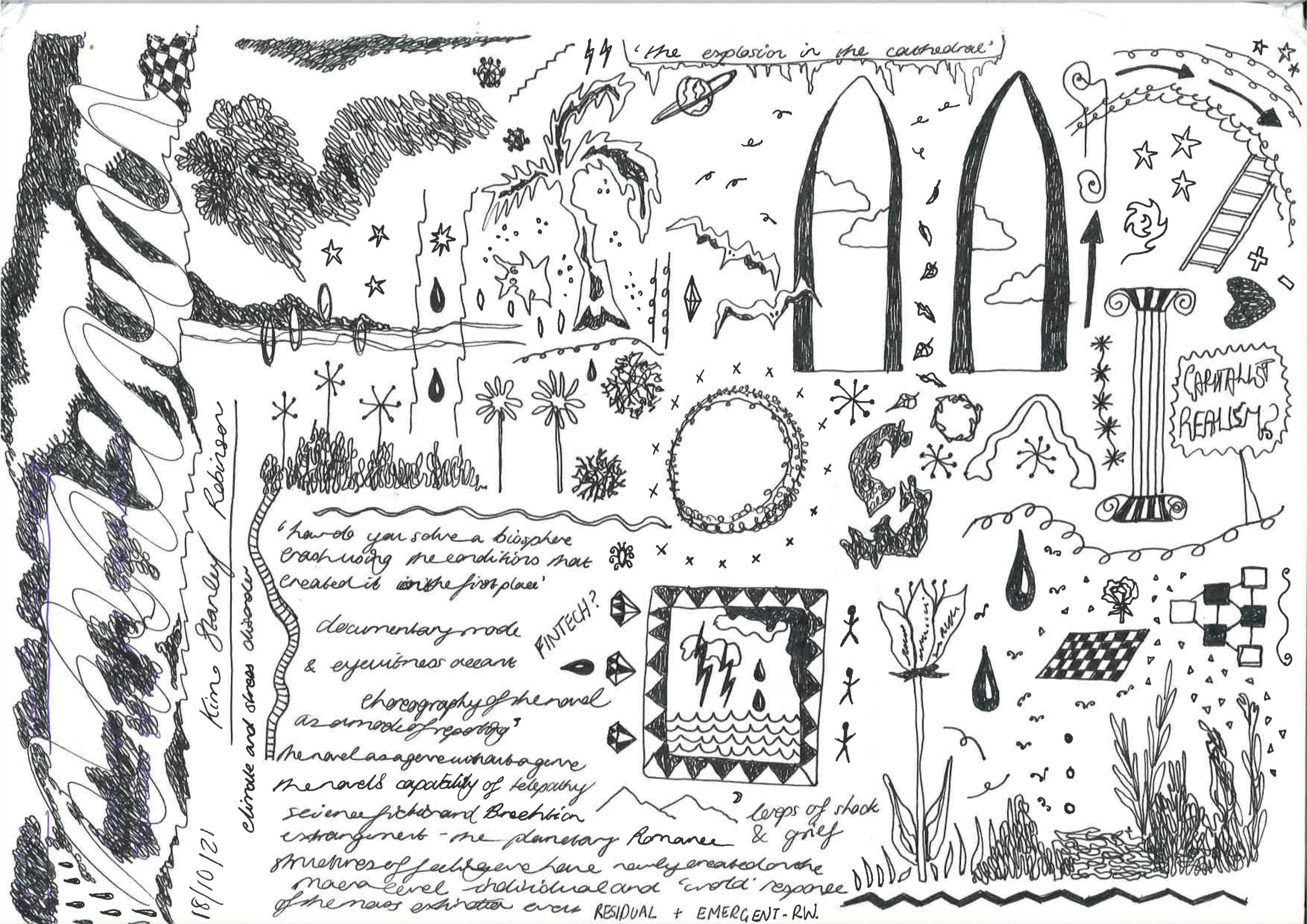
Last year’s April was a leap year. For every 29th day I summoned to think of the hours as gifted, secret, strength. I spent the actual leap of February in somebody else’s bed, a cherished cliché: cradling sadness, cat-sitting, reading Anne Carson and rolling the word ‘tableaux’ around my stressy mouth, whose hostile environment required twice-daily salt-rinses. On the 29th of last year’s April, I wrote about vermillion and silverware, ‘the lint of your heart’ and hayfever. A friend and I exchanged tips on how to best work from the floor, how to make it your best work. I miss ‘working the floor’ in other senses.
What do you want is not the same as What would you like?
There was a reading group on Lisa Robertson’s The Baudelaire Fractal (2020), and the Zoom chat was elliptical pursuit, a good fuck pendant, fractal kissing and restless deferral. The word besmirch which isn’t a word search.
Those days
I remember cycling long into the hard sun; I recall better eyesight.
⋰
Okay, recently. Do you want to hear this? I spent a week of anticipation, languishing with migraines and digestive upsets and the kind of blues where mostly you curl foetally into the fantasy that really you, or this, doesn’t exist. Sip worry coffee and brush the hair, tweeze or shave, sit patiently on top of the abstract, waiting for something lucid to hatch. ‘Opening up’. A weekend bleeding, the minor cramp of womb in Autechre rhythm; then a further week of physical ailment whose primary treatments, according to the lore of reddit, included punching one’s spine, counting to ten, pinching between nose and lip and lying in hot baths. I did not have the baths, which seemed terrible and luxurious given how faint they could make me. I read two books by Samuel Beckett.
In Garments Against Women (2015), Anne Boyer writes that ‘Everyone tries to figure out how to overcome the embarrassment of existing. We embarrass each other with comfort and justice, happiness or infirmity’. It is awkward to smile and to squirm. To be red-faced and faint after a luxury bath. To be found frowning in the Instagram reel of somebody else’s dreaming. To apologise, to dwell upon, to ask for help. To be the one clutching a hot water bottle in the Zoom call; to hide or show this. To sip beer, the migraine coming. To say “hello” from the room next door. To deem something luxury, to partake of it. ‘I have done so much to be ordinary’, writes Boyer, ‘and made a record of this’. Say I learned this month how to paint my nails grape soda, define hypercritique, appreciate the slept-in curls of my hair.
It is awkward to be unwell, to express this without clear definition. “Sorry it’s all late, I’ve been sick” and to not elaborate on that sickness, the specific ways it kept you up all night, kept you retching or clutching something tight inside yourself which seemed to want to give birth. A stray barb or small contaminant. A numb pill. Transpiration is the process of water movement through a plant and its evaporation from aerial parts. Plants are not awkward; they just grow. Sometimes upwards, sideways; sometimes back inside themselves. Wilt logic. ‘Let’s be happy insofar as we were for a few days not infirm’ (Boyer). The ecstasy of a new morning where the body stretches out, the mind clears and one is ready to work. Who gets these mornings? Can they be traded? Is their delicious ease somehow fungible? What would I give for more of them? Fungus, rot, the fangs of lilies.
Maybe it starts with crisp garments. But pretty soon the neat attainment of day will unbutton. Watch it happen in Lorenzo Thomas’ poem ‘Euphemysticism’:
Some happily sing
They have joy for white shirts
Singing “O white shirt!”
And that’s just the start
What ecstasy to declare the white shirt! What embarrassment! The chiaroscuro of lily-white shirt against the everyday’s dull shadows, but then showing up ‘baby pictures / Of pollution becoming disaster’ and Thomas’ poem is all about this. Disaster. Headlines, emissions, confusion. And that’s just the start. ‘A man crashes with his shadow’, perhaps because there is no one else. I did this for months on end because nothing else was safe. I could go the long walk for my safe grassy spot and crash there along with my shadow. I crashed in sunshine and rain. Crashland. Why did I bring the lily. It was like being fourteen again and walking for miles just to find a safe, anonymous place to smoke or weep. Sleep crash. ‘In the prickling grass in the afternoon in August, I kept trying to find a place where my blood could rush. That was the obsolete experience of hope’ (Lisa Robertson, XEclogue). It was like staring at the potential of Marlboro Golds tucked behind books and wondering what version of me they belong to. Synecdoche. Rising swirls. The poem burns out but also gets better. Blood rush and screen crash are lyric in pop songs. Sorry my windows. They are getting cleaned today.
Narrate my day again to you.
Thomas’ poem turns to the reader: ‘I’d like to check your influence / Over these ordinarily mysterious things’. The poem takes pictures or talks about it. What is a photographer responsible for? Do they re-enchant or estrange? If someone took a picture at this point or that point, if there was evidence, who would need to be told. How do you photograph pollution? Is this merely witnessing? In the past year and more, I have become witness to my own inability to really see. Disaster itself recedes into medial condition, blood swirls, scratching matter. I think of the way Sibylle Baier sings ‘I grow old’…
Some happily sing the white shirt and are they complacent with their conditions of work? Influence! ‘Desire is a snowscape on a placemat’ (Thomas). I trace its snowy lines in the stray thread of this weave. Ant-sized bloodstain. Am I to be made safe, or eat giant buttons? Put your plate on a place elsewhere and devour the rolling hills. Artificial snow is delicious. Crinkled thread. The white line curls around my tongue like spaghetti. Lila Matsumoto has a poem, ‘Trombone’, about hammering buttons. I unbutton the top three buttons of my blouse to walk around in fifteen degrees, absorbing/zorbing, and call the sunlight oil inside me.
‘There is a risk inherent in sliding all over the place’ (Boyer). This is what language does. There is a risk in crackle, in static, in the O shape of ‘sorry’ or ‘love’ or ‘alone’. Petition to upgrade for bubble emoji.
⋰
Last night, on the train back from another city I had not visited since August, I opened Sarah Bernstein’s new novel, The Coming Bad Days (2021). I did not close this novel again for several hours, except to pass through ticket gates or beyond groups of steaming men whose presence was vaguely threatening. They seemed cardboard cut-outs, stumbling towards me. When a migraine began burning my temples, I took paracetamol and kept walking, reading. When the light became gloam I walked faster. When I got home I sat at the table and opened the book again, like a schoolchild eager to begin their homework (as a ticket to freedom) or revisit a dream. It is risky to write about something you finished barely twelve hours ago. It’s embarrassing, the way talking about illness is, or happiness. To gush. You risk offering a raw piece of thought. Something has stuck to you and you are trying to convey the exact, impossible, vicious way in which you are changed by it. Still steaming.
This is what I understand by gorgeousness. As in, I gorged on it.
In the book’s last third occurs a fabular moment. The narrator is often telling their inner life through external surroundings — textures and fluctuations of weather. This is also to tell disaster. It is not the dramatic crash so much as a slow, implacable violence whose consequence ripples below and above the surface of our lives. Sometimes there is rupture: a cyclist is hit by a motorist, a storm occurs, an unspecified act of harm is committed, a life-changing conversation alluded to. But so much is in the insidious atmospheres which turn between dream and reality, which refuse to be nailed to the moment:
I dreamt of a landscape, overgrown grass, trees blanketing a hillside, leafy canopies moving against the sky, a deep river bisecting the scene. Fat berries pulling on their stems, apples weighing down their branches. Then a breeze came through with a slow hiss, and I knew it carried poison on its back. Here was a green abundance that I could not eat, a cold stream from which I could not drink. Take care, a voice said. Take care to call things by their names.
(Bernstein, The Coming Bad Days)
In this Edenic scene of harvest and green abundance, nothing is properly named. The landscape is unspecified, generic, anywhere. The voice belongs to anyone. It could be a serpent, a god, an angel, a person. Unlike Adam, the narrator cannot name things in nature. It is not their purpose. They came to Eden in dreams and after the fall. What fruits of knowledge exist are overripe and almost a burden to their branches and vines. In addition to the biblical resonance, this passage recalled for me the fig tree motif in Sylvia Plath’s The Bell Jar (1963),the poison tree of William Blake’s poem from Songs of Experience (1794). Wrath is in the air, and failure. I want to wrap around the passage like a kind of vine. Hold and be held in it. Is language a kind of taking care? A watering cruelty? What are the ecological arts of attention and tending to, towards, against?
I was struck by the possibility that Bernstein’s narrator embodied the abject and porous, slow and injured thought of an anthropocenic subject. This statement feels inevitable. The only abundance they could conjure was unconscious and laced with ‘poison’. It could not be imbibed; was not nourishing. But somehow such dreams nourish the text. For all its depiction of coldness, cruelty and the failure of communication, the cold stream of suffering, the weathering of Bernstein’s lyric prose effects a possible intimacy. Weathering, for Astrida Neimanis and Jennifer Mae Hamilton, ‘names a practice or a tactic: to weather means to pay attention to how bodies and places respond to weather-worlds which they are also making’. I think of the narrator skittishly eating cheese sandwiches at the window of their office, every single day of the week. I eat this sandwich with them. What is it they see? Each iterative mention of the weather reminds us that the social and interpersonal dramas of the novel are part of the medial, immersive or remote dramas of climate. The agential presence of rain, frost, clouds and fog, the turn of the waves, the ‘glistening violet evenings’: it’s more than metaphor. It sinks into the prickling skin of Bernstein’s language. Maybe you’d want to call this a weathering realism.
This novel seized me to read with compulsion, the way a dream does come and the writing of the dream is luxuriance that only later you bathe in. Not quite vulnerable or resilient. Responsive. Exposed to something.
⋰
On the 28th April 2019 (no entry for the 29th), I wrote in purple ink:
We would do better to sleep now, I have been sleeping much better and trying to resist the pull of insomnia, trying to perfect a monologue. What comes and goes in a dream without noticing, whose handwriting on the sun you recognised chancing your luck with yellow corn and fields of trials against sensitive, colours of smear and floral obstacle. Hyperboreal data flow into the crinkle cut futurity. Applying for latitude, acid.
Not sure about ‘we’: did I mean the ‘we’ of me reading back, and the ‘me’ who was writing, there in the moment? Are you also included, reading this passage over one of my shoulders? Can we take care to name things in dreams? But when I dream of people — friends, loved-ones, family, colleagues the famous — as I often do, what happens when I write their names? Am I opening them up to something that could harm or exhaust them? Is their presence a giving over of energy? Am I to be persecuted by the purple, anonymous flower of somebody’s need? What if I didn’t even know? What if the mark-making of initials was key? Will it bloom or wilt?
Go back to sleep in the forest, soft cosmos of dissolving forms.
⋰
There is a sense of missing someone that grows an acorn in your belly. It hardens and rattles with new life. It burns out of place. Leaves you with a feeling of placelessness. Impregnates every word with the possible, the fizzy wake, the fear and hurt. Makes you grow sideways. Hey. To exist in no-time of not knowing when the feeling comes. Pastel vests are back in fashion. Pull over. Kisses. Rarest flower emoji that doesn’t exist. To be sometimes well and other times racked in a well-documented madness that pays various attention to weather. Something painful. A few days of goodness seized. I would leap out the door, do 15,000 steps each day; so I would name the colour chartreuse when I saw it. Watching for changing bone structures in Zoom tiles. Your hair grown long and lemon blonde. My internet broke for a whole day and night. I felt old-timey in the pdf archive. Phoned you.
~
Bebby Doll – Weeks
Ana Roxanne – I’m Every Sparkling Woman
Zoee – Microwave
Cowgirl Clue – Cherry Jubilee
Laurel Halo – Sun to Solar
trayer tryon, Julie Byrne – new forever
Life Without Buildings – Sorrow
Cocteau Twins – My Truth
Kelsey Lu, Yves Tumor, Kelly Moran, Moses Boyd, ‘let all the poisons that lurk in the mud seep out’
Iceage – Gold City
Le Tigre – Deceptacon
FKA twigs, Headie One, Fred again.. – Don’t Judge Me
Porridge Radio – Wet Road
Angel Olsen – Alive and Dying (Waving, Smiling)
Big Thief – Off You
Perfume Genius – Valley
Grouper – Poison Tree
Sonic Youth – Providence
U.S. Maple – The State Is Bad
Sky Ferreira – Sad Dream
Waxahatchee – Fruits of My Labor (Lucinda Williams cover)
The Felice Brothers – Inferno
Bright Eyes – Train Under Water
Weyes Blood – Titanic Risen
Lucinda Williams – Save Yourself (Sharon Van Etten cover)

There’s something about Bret Easton Ellis. Whether it’s the alluring cool of a literary ‘Brat Pack’, the frisson implied by a 1980s enfant terrible or the fact that he published his first novel while still in college, aged 21 (the canny bastard), I find myself drawn to his presence both as a cultural persona and simply as a man of interesting writerly craft. I have been listening obsessively to his podcast for a few weeks now, engrossed in his attacks on the millennial ‘cult of likability’, on the pop cultural salivation over a tv ‘golden age’ and on the lack of context which accompanies the bandying around of quotes online (and the accompanying Twitterstorm). Part of it, I guess, is the perspective of a millennial (me) feeling they have something to learn from a Gen-Xer. Part of it is simply that Ellis does have his own particular brand of pop cultural and authorial genius. This article hopes to delve into this genius by looking at Ellis’ debut novel, Less than Zero, which I recently reread.
Turn up the TV. No one listening will suspect,
even your mother won’t detect it,
no your father won’t know.
They think that I’ve got no respect
but everything means less than zero
(Elvis Costello, ‘Less than Zero’).
See above the chorus from Elvis Costello’s song, ‘Less than Zero’, released in 1977 on the My Aim is True album. Costello has written that the song is about totalitarianism and fascism. What does it mean for Ellis to take this song as the title for his novel? – a novel which doesn’t exactly exude the anarchic spirit of 1970s punk, nor does it make any overt political critique. Nevertheless, Less than Zero is a political text on some level, in so far as it deals with the subject/self under late capitalism. Costello sings about something secret, an inner feeling that you can drown out with the static sound of television. What kind of secret is concealed here? The absolute flatness of existence, the alienating depression that creeps and inhabits your bones? I’ve got no respect. For what – the world? What do your parents matter in this life without boundaries, where morality thins to a flimsy image, where selfhood is nothing but the label on your trainers? This is a world of regression, degeneration, of falling from grace, redefining what the hell grace is. It’s the secret inner disgust for all that surrounds you. The sadness bursting in your brain, the endless lines of cocaine…
So goes the life of Clay, the protagonist from Bret Easton Ellis’ debut novel, Less than Zero. Published in 1985, it’s often lumped together with the likes of Tama Janowitz’s Slaves of New York and Jay McInerney’s Bright Lights, Big City as an exemplary work of the 1980s literary Brat Pack: writers who encapsulated the alienated experience of Generation X, often influenced by journalism and the movies as much as that elusive category of literature known as the Great American Novel. Less than Zero follows Clay’s return to his family home in Los Angeles after his first semester at college. Yes, it could be considered a Gen X Catcher in the Rye, where the apathetic perception of cultural phoniness plays out against a backdrop of sex, drugs and snuff films. However, while Salinger’s novel exposes the adult world as darkly sham and shallow, Ellis’ turns its attention to the synthetic lives of Clay and his fellow adolescents. Unlike a traditional bildungsroman, it lacks plot and narrative and that most perjured and celebrated of terms: humanist subjectivity. The question of character development in the novel is mostly a non-issue, as Clay ‘grows’ only in the sense of growing more detached from the world around him, more aware of his own indifference.
In a way, Clay is the perfect model of a disillusioned teenager, and Ellis nails the setting. Where better to lose all sense of self and reality than in LA, the city where dreams and visions are spun on film reel and everyone’s an actor, or at least the spawn of one. Clay and his friends live hollow lives, gorging themselves at the playgrounds of consumerism offered by the city: fancy bars and clubs, endless bottles of Perrier and expensive therapy. The novel more or less follows a repetitive structure, the narrative moving in a series of vignettes as Clay moves around, calls a friend from a payphone, drops by people’s houses, goes to a club, takes drugs, gets laid, hangs out by the pool, smokes a joint. Little else happens. It’s all in the accumulation.
I’m not saying this is an avant-garde novel, working through ‘accumulation and repetition’ in the way that Zadie Smith said of Tom McCarthy’s debut, Remainder (2005) in her famous NY Times essay, ‘Two Paths for the Novel’. Ellis is less interested in ripping apart the contemporary consumerist (and humanist) literary establishment than in using this establishment, its obsession with pulp (check out the noirish drug/snuff/pimp plot) and branding to unravel the vacuous experience of being young and glitteringly rich in the 1980s. Part of the novel’s point is questioning whether Clay ever really had a sense of selfhood or reality in the first place – whether such things exist at all. The wastefulness of contemporary culture trickles out of Ellis’ minimalist prose, which is just as effective as Joan Didion’s was in capturing the strange alienation of the mid-twentieth century. We are left longing for something more in the gaps between his sparse paragraphs, his dull and vacuous dialogue. This is all culture. This is all politics. Only, you wouldn’t know it from the novel itself.
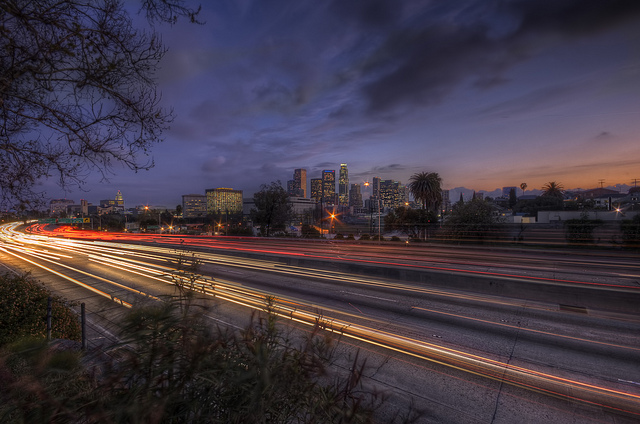
No, the world of Less than Zero couldn’t be more insular. Its only connection to the world outside Los Angeles is through the brand names, the song lyrics and movie references which trail through the narrative as often as Clay’s car trails along the LA freeways. Yet if literature is about subjectivity, than the subjectivity explored in Less than Zero is irrevocably damaged, fractured and, if you’re a fan of Deleuze & Guattari, schizophrenic. It’s dispersed along the various signifiers that constitute culture. All of Clay’s perception is whittled down to tiny details: the catalogue of brand names, the repeated references to physical appearance (always tan, always blonde) and the drinks that people are cradling, the glamorous food pushed uselessly round a plate. It’s a highly cinematic narrative, which sometimes resembles a screenplay. Sections of prose often begin with brief indications of time and space, the opening words in bold to quickly situate the reader in a social setting, neglecting any poetic descriptions to set the scene in favour of blunt ‘headlines’: ‘It’s a Saturday night’; ‘At Kim’s new house’ ; ‘It’s Christmas morning’; ‘My house lies on Mulholland’.
Perhaps, indeed, it’s not all that far (stylistically) from Made in Chelsea; except take away the tv show’s sparkling jouissance (its soaring indie pop and glorious Instagram-worthy visual filtering) and replace it with the endless merging of barren surfaces which make up Ellis’ novel. Replace the easily sweet pleasures of Made in Chelsea’s gin bars and contorted gossip and romance plots with sleazy LA mansions, snuff films, heroin and bodily dismemberment…While the lack of affect in Made in Chelsea contributes to a kind of narcotic addictiveness, in Ellis’ novel it creates a sheen of unsettling detachment.

‘People are afraid to merge on freeways in Los Angeles.’ So goes the opening line of Less than Zero. It was only when I first picked up this book, about three years ago, that I realised the connection to Bloc Party’s ‘Song for Clay (Disappear Here)’. The song, an homage of sorts to Ellis’ novel, repeats several phrases, including ‘complete disdain’, ‘live the dream’ and ‘won’t save you’. It’s a song which builds slow and sparse and then suddenly thunders with a sharp guitar riff and pounding drums. It’s sort of the experience of reading Ellis’ novel: the headache, the endless migraine of details, the food and coke and insomniac joints in the early morning. People are afraid to emerge on freeways. What does it mean? Why does it repeat in the text like some fragment from a litany? I guess you could say it’s about the fear of opening yourself to someone else, of sharing problems, being personal and ‘genuine’. You know, take this interchange between Clay and his on/off girlfriend, Blair:
“Clay?” she whispers loudly.
I stop but don’t turn around. “Yeah?”
“Nothing.”
What the hell is genuine though? Even in the privacy of his narration, Clay struggles to admit any emotional depth. His focus is always on cool detail:
I’m sitting in the main room at Chasen’s with my parents and sisters and it’s late, nine-thirty or ten, on Christmas Eve. Instead of eating anything, I look down at my plate and move the fork across it, back and forth, and become totally fixated on the fork cutting a path between the peas. My father startles me by pouring some more champagne into my glass. My sisters look bored and tan and talk about anorexic friends and some Calvin Klein model and they look older than I remember them looking, even more so when they hold their glasses up by the stem and drink the champagne slowly; they tell me a couple of jokes that I don’t get and tell my father what they want for Christmas.
It’s the immediate present tense. It’s (in)tensely detailed. The sentences drag with repetition, long and slow, heavy and stoned. Clay replaces what would typically occur in such a scene with the mundane reality, pulling out the grotesque from the shiny film of appearance. Sure, to an outsider, Clay and his family would seem like any good looking LA clan out for a fancy meal. Yet it’s immediately clear that Clay feels very distant: not just from the image but from the family themselves. His fixation on cutting a path between his peas is a bit like the cars which won’t merge on the freeway: another symbol of separation, of dividing lines. The self in its shell, stunted. He splits the peas up into meaningless scattered matter. The novel is full of meaningless scattered matter, the endless push and pull of desire, ‘back and forth’. Anorexia is mentioned several times in the novel (Blair’s friend Muriel is hospitalised for it) and the consumption of food and drink is of course central to much of the action (settings; family lunches, dinners, expensive bars). Anorexia, you could argue, is the simultaneous consumption of culture (absorbing absolutely and indeed making literal the beauty of the image, thinness and surface) but also its rejection (literally refusing to consume, to accept the consuming impulse). It provides another symbol of the contradictory imperatives of postmodern culture.
So we have branding, so we have mental illness, disturbed appetites, boredom and beauty and the annual climax of consumerism: Christmas. So far so adolescent bildungsroman. Yet unlike Esther Greenwood in Sylvia Plath’s The Bell Jar (1963), Clay is quite content to sit around in a hullabaloo, watching the world swirl meaninglessly on by around him: ‘No one talks about anything much and no one seems to mind, at least I don’t’. The fact that he has to qualify ‘no one’ to refer mainly to himself indicates how easily the micro reflects the macro, the self reflects the culture. Clay feels like his experience of boredom and alienation is pretty much endemic, therefore uninteresting. Ellis doesn’t exactly depict a special snowflake, a depressive uniquely at odds with his society. Sure, there are times where Clay feels particularly ill at ease with what goes on around him (he sometimes leaves the room when his friends’ sex games and suchlike get too unsavoury), but never makes an effort to stop what’s going on.
One way of looking at this aspect of Clay’s personality is by comparing him to Patrick Bateman, the serial-killer protagonist who narrates Ellis’ later novel, American Psycho. While Bateman is an active assailant, Clay is relatively passive. Stuff happens to him; he drifts through life. He never has much of an opinion, openly admits to not enjoying anything. Why does this make him interesting? Maybe he resonates the dullness of culture in such a way as to provide incisions that cut apart the surface sheen of everyday LA life…
Yet we cannot easily develop a ‘cool’ relation to Clay’s narration in the way that we can in American Psycho. The sheer volume of violence and repetition of brand names and daily routines that make up American Psycho’s narrative perhaps forces us to become desensitised to Bateman’s narrative, even to the point of distrusting its ‘veracity’. Is this an effect of Ellis’ intoxicating cataloguing or a defence mechanism to deal with the acts of extreme violence the narrator describes? Either way, there is a lacing of satire in American Psycho, a cynicism perhaps, which is far less, if at all present in Less than Zero. Indeed, amidst the bored, sparse descriptions of similar social encounters, there are moments of genuine poignancy which peek through the narrative. We get these mostly in the italicised ‘flashbacks’ where Clay relates stories about his childhood, about his holiday with Blair in Palm Springs; where he recalls these things with a flatness of affect, yet the sadness of these scenes sheds a kind of melancholy over the rest of the novel, which would otherwise mostly lack in emotion. About halfway through, Clay recalls a time when he thought he saw a child burning alive in a car crash, and how afterwards he started obsessively collecting newspaper clippings about violent accidents and crimes:
And I remember that at that time I started collecting all these newspaper clippings one about some twelve-year-old kid who accidentally shot his brother in Chino; another about a guy in Indio who nailed his kid to a wall, or a door, I can’t remember, and then shot him, point-blank in the face, and one about a fire at a home for the elderly that killed twenty and one about a housewife who while driving her children home from school flew off this eighty-foot embankment near San Diego, instantly killing herself and the three kids and one about a man who calmly and purposefully ran over his ex-wife somewhere near Reno, paralysing her below the neck. I collected a lot of clippings during that time because, I guess, there were a lot to be collected.
Clay’s involvement with the violent world of LA youth, then, has a root. It’s cultural, it’s endemic. Violence is rife in the media, spreading through the collective Gen X psyche. They grew up realising that they wouldn’t necessary be better off than their parents; that the economy did not owe them the same opportunities it did previous post-war generations. They grew up into a world of job insecurity, of decentred, fragmented wars. They grew up against the backdrop of the War on Drugs and the War on Terror, though perhaps millennials are more affected by the latter. In short, a globalised world of messy, liquid or late modernity (depending on whether you prefer your Bauman or your Giddens).
In the above passage, Ellis’ prose garners an almost incantatory sense of endless, meaningless violence being related through the media. All the place names he describes end in the same vowel sound (‘o’), creating an accumulating effect of repetition that desensitises us to the specificity of crime and instead forges a sense of its ubiquity. There is no emotional reaction which accompanies these stories; Clay merely describes them in a matter-of-fact tone. This emotional sparseness (characteristic of the entire novel) leaves an even more chilling sense of our culture’s paradoxical obsession with and indifference to violence. Ellis sums this up neatly with the tautological final sentence: ‘I collected a lot of clippings during that time because, I guess, there were a lot to be collected.’ No personal, subjective or cultural explanation is given for Clay’s interest in collecting the clippings; the habit becomes one of recursive, self-justifying meaninglessness. The explanation pans out onto Ellis’ novel as a whole, which also constitutes a kind of collection of clippings: vignettes from Clay’s brief stay back in LA, the cataloguing of brands, names, places; scenes of darkness and violence, the lack of a strong narrative thread to connect them.
Yet the kind of cultural and existential emptiness implied by such passages does not preclude the presence of some poignancy to Clay’s narrative. Sure, there’s a lot of violence, a lot of banality; but there are also moments which almost reach the level of personal reflection. We can compare this to American Psycho’s comparatively cold satire and lack of character ‘depth’ by looking at two very parallel scenes in each book. In these scenes, Clay and Bateman go to visit their mothers, who each ask them what they want for Christmas.
American Psycho:
My mother and I are sitting in her private room at Sandstone, where she is now a permanent resident. Heavily sedated, she has her sunglasses on and keeps touching her hair and I keep looking at my hands, pretty sure that they’re shaking. She tries to smile when she asks what I want for Christmas. I’m not surprised at how much effort it takes to raise my head and look at her.
Less than Zero:
My mother and I are sitting in a restaurant on Melrose, and she’s drinking white wine and still has her sunglasses on and she keeps touching her hair and I keep looking at my hands, pretty sure that they’re shaking. She tries to smile when she asks me what I want for Christmas. I’m surprised at how much effort it takes to raise my head up and look at her.
Aside from a few situational details (Bateman’s mother is in a residential home, Clay’s meets her son in a fancy LA restaurant), these passages are virtually identical. Except, perhaps, for one crucial line. In American Psycho, Bateman is not surprised by ‘how much effort it takes to raise my head and look at her [his mother]’, whereas in Less than Zero, Clay is ‘surprised’ by the effort. Thus while Bateman fits some kind of definition of psychopathy, utterly indifferent and lacking empathy for his mother, Clay is surprised at his own indifference, his struggle to display some kind of emotion or human connection. To merge on the familial freeway (to use a horrible phrase!). As readers, we can empathise with Clay far more than with Bateman, who locks us out with his construction of a cold and clinical world (see more about this here – an article I wrote a few years ago). Less than Zero is a novel more obviously filled with human pain, perhaps, than Ellis’ later novel, where the pain is certainly there, only more coded, buried inside violence, surface and image in an even more complex way.
Take, for example, the passages towards the end of the novel where Clay revisits his old school:
I used to pass the school often. Every time I drove my sisters to their school, I would always make sure to drive past and I would watch sight of small children getting onto yellow buses with black trim and teachers laughing to each other in the parking lot before classes. I don’t think that anyone else who went to the school drives by or gets out and looks around, since I’ve never seen anyone I remember. one day I saw a boy I had gone to the school with, maybe first grade, standing by the fence, alone, fingers gripping the steel wire and staring off into the distance and I told myself that the guy but live close by or something and that was why he was standing alone, like me.
We can imagine Clay glancing at this other boy, still trying to justify his presence there by means other than a shared moment of sentimentality. The only reason they have visited, Clay tries to say, is purely down to physical proximity. A meaningless walk. LA, then, is made up of intersections, connections and disconnections. Freeways that nobody merges on. You don’t just wander and end up somewhere significant, you drive places. The two could be friends, could’ve been friends, but Clay can only gaze at him from afar, as the boy too gazes on, seemingly at nothing. At distance. The core of the novel: absence. Always caught between meaning, between human connection, lost in the swamp of cultural signifiers that supersede any ‘deep’ emotion.
Clay’s attention to little fragments of visual memory here give us a sense of his warped nostalgia for childhood. His younger sisters are never described as having the innocence that Clay has lost: they steal his cocaine, idly watch porn and greedily snatch cheques from Daddy on Christmas Day. There’s the sweet yellow school bus, the laughing teachers, the familiarity of routine. Those rose-tinted things. You don’t get that kind of sentiment in American Psycho. It’s emotionally painful to read because this passage is sort of an interlude in the midst of the noir plot elements (Clay trying to get his money back from Julian, who is being brutally pimped; the rape of a pre-pubescent girl, foreshadowed by a horrible porno tape). It’s a burst of curious innocence amongst the ugly detritus of Gen X’s consumer lifestyle. Yet the classroom sweetness of yellow has become something altogether too bright, too painful for Clay to deal with. In an early scene in the novel, Clay describes the walls of a diner, Fatburger, as: ‘painted a very bright, almost painful yellow’. The colour of happy childhood has soured. It’s the colour of the Valium pills by his bedside. There’s the ‘grotesquely yellow’ moon that hangs ominously in the sky as Clay looks out over the business district, woozy from too many gin and tonics. As Clay returns to his former school, it soon becomes the yellowing of age, of moral decay:
I go to another bungalow and the door’s open and I walk in. The day’s homework is written on the blackboard and I read it carefully and then walk to the lockers but can’t find mine. I can’t remember which one it was. I go into the boy’s bathroom and squeeze a soap dispenser. I pick up a yellowed magazine in the auditorium and strike a few notes on a piano. I had played the piano, the same piano, at a Christmas recital in second grade and I strike a few more chords from the song I played and they ring out through the empty auditorium and echo. I panic for some reason and leave the room. Two boys are playing handball outside and leave the room. Two boys are playing handball outside. A game I forgot existed. I walk away from the school without looking back and get into my car and drive away.
Clay retraces his childhood steps, literally. He’s like a ghost, haunting the corridors of his youth, idly attempting to recreate the simple universe he once inhabited, squeezing the soap dispenser, reading the day’s homework from the blackboard. However he literally cannot locate/identify his former self, as he fails to find his old locker. Throughout the novel, we are given very little indication of Clay’s interests; he never even talks about what subject he studies out in New Hampshire. Yet here we have a snippet of something he once did: playing piano. There is something slightly uncanny about the older Clay standing at the same piano and striking a few notes, as if he were trying to summon up that younger self, the fragile doppelgänger. He even remembers the same chords. Funny how he remembers the music but not the game of handball. The fact that Clay panics is telling: he is literally allergic to his feelings, unable to deal with the sudden pain that comes from memory, from realising the loss brought on by time. His alienation is complete as he drives away, escaping his feelings as readily as all the times before, where he snorts coke to deal with a problematic or potentially emotional situation. The narrative also trails off, moving to another scene, another jump cut. There is nothing left to say, no coherence, no self-development.
This lack of narrative and self development or ‘growth’ is exemplified in Clay’s personal lack of futurity. Towards the novel’s end, Clay meets Blair for a drink and they skirt around the issue of their relationship. In a way, Blair sums up what we have come to learn of Clay: ‘You’re a beautiful boy, Clay, but that’s about it’. Yet we are left yearning for something more than beautiful surface. Sure, Clay as the narrator has given us many beautiful surfaces, but he has also exposed the rot beneath the surface, the absolute black nothing inside each person. Blair asks him up front: ‘“What do you care about? What makes you happy?”’ and his reply is explicitly telling: ‘“Nothing. Nothing makes me happy. I like nothing. […] I don’t want to care. If I care about things, it’ll just be worse, it’ll just be another thing to worry about. It’s less painful if I don’t care.”’ This is something we don’t really get in American Psycho. Clay actually admits his feelings, or lack of, and the way it’s expressed doesn’t come across as cold or psychopathic, but human and genuinely sad, a classic case of depression. We get this sort of emotional ‘revelation’ towards the end, after Ellis has carefully laid out the social context of Clay’s psychological and emotional numbness. Unable to think about the future, Clay seems to put off its existence, or anything that might change things as ‘another thing to worry about’. He cannot think positively, cannot be active in his likes or interests.
The question of futurity and passivity is also interesting in American Psycho, as an insight into what Bateman values in his killings. There’s a classically disturbing scene where seemingly at random Bateman fatally injures a young child at a zoo. His reflections follow thus:
Though I am satisfied at first by my actions, I’m suddenly jolted with a mournful despair at how useless, how extraordinarily painless, it is to take a child’s life. This thing before me, small and twisted and bloody, has no real history, no worthwhile past, nothing is really lost. It’s so much worse (and more pleasurable) taking the life of someone who has hit his or her prime, who has the beginnings of a full history, a spouse, a network of friends, a career, whose death will upset far more people whose capacity for grief is limitless than a child’s would, perhaps ruin many more lives than just the meaningless, puny death of this boy.
This view is obviously at odds with the overriding sentimentality and regret publicly voiced in the wake of a child’s death. We put great meaning on the futurity of the child, its association with a new life, with possibilities and an open future, a pure blank slate. Lee Edelman, in No Future: Queer Theory and the Death Drive, has written on how the child is held up as a glorified symbol of the future, of the onward march of heteronormative culture. We are ideologically forced to take the side of the child and the future because ‘the child remains the perpetual horizon of every acknowledged politics, the fantastic beneficiary of every political intervention.’ Edelman asks what it would mean not to be ‘fighting for the children’, and in a way, Ellis’ novel points towards this. Bateman doesn’t care about what the child stands for as a symbol of pure innocence and possibility to come, of what Edelman calls ‘reproductive futurism’. The queer, Edelman argues, is always pitted against this social conscience of reproductive futurism, as contrastingly selfish, narcissistic, antisocial and backward-looking – in short, the opposite of a collective drive towards development, progress and the future. Bateman, while hardly a queer hero by any means, interrupts the privileged ideology of futurity.
Indeed, he questions the value of the child because he lacks history. Without a record of decisions, mistakes, actions and memories, the child is reduced to pure matter, ‘small and twisted and bloody’ – he is animal, inhuman. This could obviously be taken as a moment of the novel’s token existentialism, the fact that, as Sartre put it, existence precedes essence: there is no inherent self, but only the values and meaning the human has created for herself through actions. It is also, however, a crucial component of the novel’s critique of various ideologies underpinning the yuppie world of consumerism which Bateman inhabits. Suddenly, a life can be described as worthless, ‘puny’. Bateman takes far greater pleasure in ravishing lives whose deaths entail a broader sweep of social impact. It’s as if he takes pleasure in destroying narratives, the networks of associations a person acquires through life. In doing so, he creates meaning: by destroying, Bateman has the pleasure of interrupting the consistency of social worlds, asserting his power. It’s the venture capitalist gone mad, staking his claim in all sorts of places, schemes and, well let’s face it, bodies.
So I guess I’d argue that part of Clay’s central pain is this disconnect with the future, his queer relationship to temporality. The sense that he’s drifting, which is pretty much now a ubiquitous social phenomenon among young adults, both from Gen X and millennials living in a post-recession world. When Clay’s friends ask each other what they’ve been up to, where they’ve been, the answers are always flat and vague: ‘“Not too much”’, ‘“I don’t know”’, ‘“Like hanging around”’, ‘“Shopping”’. Sometimes they simply repeat the question back to the questioner. One of the phrases that repeats a lot throughout the text is ‘Disappear Here’, which Clay reads off a roadside billboard. In a way, the phrase represents the limit point, the blind spot, the aporia into which meaning is deferred, the space of emotion where Clay cannot go. On a sunny Friday after Christmas, Clay hangs around the beach club, waiting for his friends: ‘I sit on a bench and wait for them, staring out at the expanse of sand that meets the water, where the land ends. Disappear here.’ It’s as if the phrase is dragged up in avoidance of interior reflection; its repetition supplements the kind of psychological detail that would appear in a classic realist or bildungsroman novel. The self has dissolved into the sign: the world of surfaces, of signs referring only to signs described by Baudrillard in Simulacra and Simulations, but also literally the billboard sign, the symbol of capitalism’s flattening of the self. Not unlike the billboard advertising Eckleberg’s eyes in The Great Gatsby. Disappear here: you pour your own meaning into the sign; sign after sign constitutes self. What is it that the eyes see?
And indeed there’s something uncanny about this. Clay’s repetition of disappear here throughout the novel only adds to its temporal sense of an unending present, with the run-on sentences and disjointed dialogue creating the impression of not only a stunted self, but also a stunted world. The more you repeat something, the more it becomes meaningless. The characters’ lives stop and start: plots about drugs and sex climax brutally then fizzle to nothing. As the narrative draws to an end, it doesn’t move towards closure, but leaves the reader with an empty feeling of being lost in the world of LA. Ellis really amps up the gothic elements which have been woven in and out of the text so far. Take, for example, Clay’s description of the Ellis Costello poster at the beginning:
It’s the promotional poster for an old Elvis Costello record. Elvis looks past me, with this wry, ironic smile on his lips, staring out the window. The word “Trust” hovering over his head, and his sunglasses, one lens red, the other blue, pushed down past the ridge of his nose so that you can see his eyes, which are slightly off centre. The eyes don’t look at me, though. They only look at whoever’s standing by the window[…].
The Costello poster substitutes for the spooky portrait which hangs traditionally in a gothic heroine’s bedroom. Presumably, Clay once had an interest in this poster, bought it for a reason – but now it seems eerie. The homely has become unhomely. Clay refers to the hypothetical subject ‘standing by the window’, the ghost who meets the gaze. Clay admits to being too exhausted to even be that subject, to even be the observed – ‘I’m too tired to get up and stand by the window’ – perhaps this is an early hint at his drive (conscious or otherwise) towards disappearing altogether. The elements of gothic which colour some of Clay’s narration give an expressionist tinge to his descriptions, externalising some of the inner fear and turmoil, the hollow sense of fear and emptiness at returning to a place that is no longer home, even when Clay gets his tan and starts to fit in. At a party in Malibu later on in the novel, Clay observes:
There are mostly young boys in the house and they seem to be in every room and they all look the same: thin, tan bodies, short blond hair, blank look in the blue eyes, same empty toneless voices, and then I start to wonder if I look exactly like them.
Is fitting in the same as disappearing? The boys appear strangely inhuman, little more than mannequins; uncannily voiced with the same dull monotone. It’s Clay’s sudden identification and self-realisation that startles here. Looking at the boys is like looking in the mirror and seeing many horrible doppelgängers surround you. There’s an opportunity for him to freak out about it, but instead he ‘tr[ies] to forget about it and get[s] a drink’. In short, he dissolves even deeper into the thick glaze of surfaces, spreads himself thinner as an image. When Clay first observes his bedroom poster, he’s feverish and ill, like the heroine in a gothic novel. We may not have the moors of Yorkshire, a la Wuthering Heights, but we do have the desert, the Hollywood hills and the accompanying coyotes.
As the novel starts to close, we get some spooky vignettes. Clay relates how his sister’s kitten disappears, leaving behind only ‘pieces of matted fur and dried blood’. He talks about the coyotes which sometimes come down from the hills:
On some nights when the moon’s full and the sky’s clear, I look outside and I can see shapes moving through the streets, through the canyons. I used to mistake them for large, misshaped dogs. It was only later I realised they were coyotes. On some nights, late, I’ve been driving across Mulholland and have had to swerve and stop suddenly and in the glare of the headlights I’ve seen coyotes running slowly through the fog with red rags in their mouths and it’s only when I come home that I realise that the red rag is a cat. It’s something one must live with if you live in the hills.
That final sentence almost seems un-Claylike in its resonating wisdom. It suggests the tone of a social commentator, reflecting on the environmental conditions of LA and lending a metaphorical weight to his words. The brutally devouring coyotes thrive on instinct; the youths of LA pursue physical gratification out of sheer boredom. How easily for the ‘red rag’ to become a slaughtered domestic pet. There is a surrealist vibe to this transformation of objects. In American Psycho, the transformation of the child into something ‘twisted and bloody’ is more classic horror, whereas there is a perhaps darker, eerier atmosphere to Less than Zero. The sense of emptiness, the canyons at night and the fog. Clay’s description has a slow-motion feel to it, drawing the reader into his stoned-out world. These frequent killings, we are reminded, keep happening against the backdrop of Clay’s friends, endlessly circling the freeways, making calls, popping corks, snorting coke.
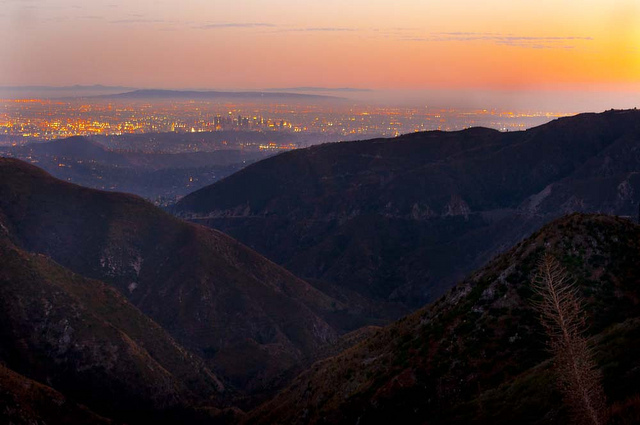
Clay himself, as I have already suggested, is a kind of ghost. He recalls the previous Christmas in Palm Springs, sweating in bed and struggling to sleep. The vaporous heat seems to cloy his mind, cloy the narrative. Think of the many references to the palms in Less than Zero: their shadows, their fragmented remains after storms and car crashes, their wildly shaking branches. It’s creepy and atmospheric in the way the swaying pines and Douglas Firs are in Twin Peaks. There’s the omnipresence of MTV, its serial carnival of flashing images, the humming numbness of Valium. Clay describing the ‘strange sounds and lights next door’, ‘visions of driving through town and feeling the hot winds on [his] shoulder and watching the heat rise up out of the desert’. In all the emphasis on Ellis’ interest in sex, drugs and violence, it’s easy to forget the importance of atmosphere. You can tell that the novel is influenced by film, self-consciously soundtracking itself (Squeeze, INXS, U2, the Psychedelic Furs), laying out scenes, drawing us in with its snippets of visual detail. The heat is stifling and everyone is sleepless, wired or stoned. The novel slowly moves towards Clay’s return to New Hampshire, like a fade to black at the end of a film: the final sections each start with some temporal marker in relation to his actual leaving: ‘The last week’, ‘Before I leave’, ‘Blair calls me the night before I leave’, ‘When I left’. In leaving, Clay seems to dissolve. His narrative closes with reference to a song called ‘Los Angeles’. A kind of montage of memories, of visual images stolen from another cultural source. Clay feeds on these images after leaving. The temporality is important. Has he broken into some other dimension, or is this a reference to how memory burns right through you (even memories that aren’t your own, memories from visual media – images and film)? My impression (and I have not yet read the sequel, Imperial Bedrooms), is that Clay is not moving into a new, open future; necessarily he still defines everything in relation to the past, to the dream world of LA, its perpetual, glittering, trashy present:
There was a song I heard when I was in Los Angeles by a local group. The song was called ‘Los Angeles’ and the words and images were so harsh and bitter that the song would reverberate in my mind for days. The images, I later found out, were personal and no one I knew shared them. The images I had were of people being driven mad by living in the city. Images of parents who were so hungry and unfulfilled that they ate their own children. Images of people, teenagers my own age, looking up from the asphalt and being blinded by the sun. These images stayed with me even after I left the city. Images so violent and malicious that they seemed to be my only point of reference for a long time afterwards. After I left.
After I left. After I left. The insistence on the posterior. The sense of grotesque sublimity, the reference point of LA contained in these almost unspeakable images of ‘people being driven mad by living in the city’. They ate their own children. Isn’t this the ultimate violation of linear temporality: literally consuming symbols of the future, one’s own legacy? Hypercapitalism, perhaps, creates its own kind of queerness.
My degree programme requires you to take at least one ‘pre-1800’ course – i.e., anything that’s not Victorian or Modern, anything that stretches back into the depths of distant history. For some people, the prospect of reading up on Shakespeare or Medieval literature is a dream, but I chose a course which was dated 1660-1785 – the most modern dates I could get my hands on. I was at first pretty worried about studying the eighteenth-century, possibly sharing Esther Greenwood’s view in Sylvia Plath’s The Bell Jar: ‘I hated the very idea of the eighteenth century, with all those smug men writing tight little couplets and being so dead keen on reason’. When my copy of Samuel Richardson’s Pamela arrived, reading one paragraph of the heroine’s gushing account of her virtue left me exhausted. I looked at the fat Collected Works of Samuel Johnson and my heart sank. However, with some surprise, I soon found myself enjoying the books I was supposed to read. The truth is that the eighteenth-century has a lot more to offer than stuffy old men and their commitment to reason. Of course, it was the time of the Enlightenment, but it was also the time of radical social upheaval: of the expansion of empire, changing gender roles, political turbulence, religious opposition, the loosening of sexual mores and of course literary innovation. The renewed critical interest in eighteenth-century post-Reformation literature in recent decades has meant that the canon is no longer confined to Alexander Pope, Jonathan Swift and Samuel Johnson, as I feared it might be. I’ve had the chance to study more ‘obscure’ works by women novelists, parodies, life-writing, vicious epistles and pastoral poetry that does more than merely sentimentalise the countryside. ‘Tight little couplets’ neatly encapsulates the idea of formal restriction, but the eighteenth-century was actually a period of literary experimentation, facilitated by the shift from a system of patronage to individual publication, and the more general rise in literacy which meant there was a wider market for more writing. It produced the phenomenon of the ‘peasant poet’, as well as the likes of Lady Mary Wortley Montagu, an aristocrat and ‘woman of letters’; it saw the merchant Daniel Defoe becoming a successful novelist in his sixties after years of prolific journalism, and Jonathan Swift penning sharp satirical pamphlets that criticised government policy (suggesting that the problem of poverty in Ireland could be solved by fattening up the starving babies and feeding them to rich landowners…ah, never mind, just go read A Modest Proposal – but bear in mind the irony). So yeah, I’m going to give you a walking tour of what I’ve learned from studying literature in the eighteenth-century. It’s funny how much we already know about eighteenth-century literature, often without realising it. Reading Samuel Johnson’s Rasselas, for example, I was struck by how many of Johnson’s aphoristic statements have been absorbed into our general consciousness, such as that hardened phrase of pessimism: ‘Human life is everywhere a state in which much is to be endured, and little to be enjoyed’ or the wisdom of ‘do not suffer life to stagnate; it will grow muddy for want of motion’ (these terms acquired greater significance to me proportionate to the amount of time I was spending in the library, where life certainly grows muddy for want of motion). I was struck too by Alexander Pope, whose poetry is generally written in heroic couplets, which makes them snappy and easy to remember. So many couplets from An Essay on Criticism and An Essay on Man will strike most people as familiar:
‘Good-Nature and Good-Sense must ever join; | To err is human, to forgive, divine.’
‘True ease in writing comes from art, not chance, | As those move easiest who have learned to dance.’
‘Hope springs eternal in the human breast: | Man never is, but always to be blest.’
At first, Pope’s couplets do sound smug, especially in poems where he’s satirically tearing shreds from literary critics, other writers and the artifice of dress and manner which ‘ladies’ must shroud themselves with in ‘Epistle to a Lady’. But you start to get a feel for them, and the neat syntax and rhyme scheme quickly becomes pretty satisfying, especially in his Pastorals and Windsor Forest. Windsor Forest is an interesting poem because it’s a panegyric (a poem written to commemorate a public event) written to celebrate the Treaty of Utrecht (which was basically a deal allowing Britain freer access to the slave trade), but its attitude to slavery is ambivalent, and with his vivid images of animals being cruelly hunted, Pope via synecdoche (‘if small things we may with great compare’) invites us to compare the treatment of the pheasant to the foreign subject, the slave:
‘Short is his joy! he feels the fiery wound / Flutters in blood, and panting beats the ground’.
I’m quite happy I remember this quote from my exam. Anyway, it’s a fairly distressing image, with all the assonance of flutters and blood stirring up this sense of entrapment and terror, raising our sympathy for this humble piece of ‘game’. The poem is a good one to start with because you learn a lot about history from it, and the poetry itself is enjoyable to read. Pope definitely falls into pompous patriotism, especially towards the end, but because it’s framed through delicious images of silver and gold and rushing rivers, it’s hard to put the poem down purely because of it’s subject matter. And there’s always a sense of unease to Pope’s ideology, as it’s filtering through mythical allusions always adds an ambiguous, extra dimension to the meaning. This is the sort of thing you have to grapple with: not only ‘getting’ the mythical and historical references, but being able to trace their ambiguities through a poetic tradition you’re not quite familiar with.
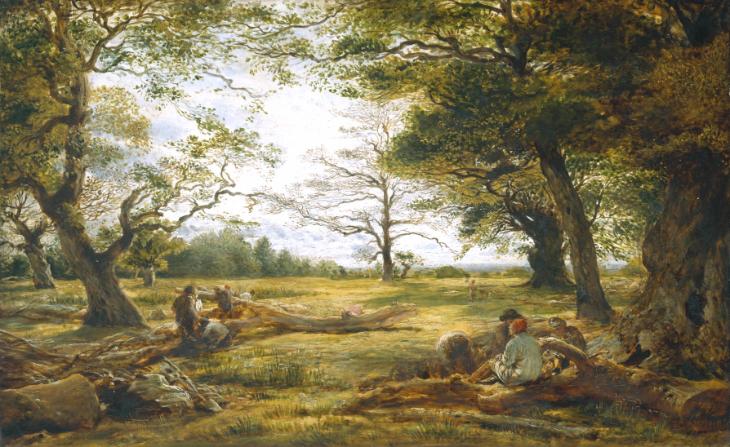
Then there’s Pamela, Samuel Richardson’s novel about a young servant girl who falls prey to her master’s endless and increasingly insistent attempts to seduce her, becoming more violent every time. While she does not suffer the terrible rape that Clarissa endures in Richardson’s much longer novel, Clarissa, Pamela goes through a lot and chronicles every scrap of it in her letters home to her parents. Pamela can seem a slog, especially with all those self-justifying lines about how pure she still is and virtuous in spite of everything. It’s frustrating that she never seems to do anything but weep and write and swoon. Still, there are some funny moments, like when she tries to escape but mistakes two innocent wee cows for scary bulls, adding a dab of Freudian psychodrama to the otherwise relatively static action. I guess the main thing we can take from this novel is its intense focus on the individual (something that wasn’t really available before in fiction, because romances were interested in characters as archetypes – princess, villain, hero – rather than real people), and the process of introspection, the attention to everyday detail. The same goes for Robinson Crusoe: part of what’s seductive about Defoe’s novel is not just the adventure and pirates, but all those long passages about how he sets up his little domestic fortress on the island; how he learns to cure raisins, build boats, grow corn. He goes into so much detail you think you’ll go mad, but when you go back and read it, there’s a certain satisfaction to it. You can imagine yourself in his position – Samuel Taylor Coleridge famously claimed that Robinson Crusoe’s success was that he represented human nature in general – and the novel becomes a sort of survival guide to living on a lonesome tropical island.
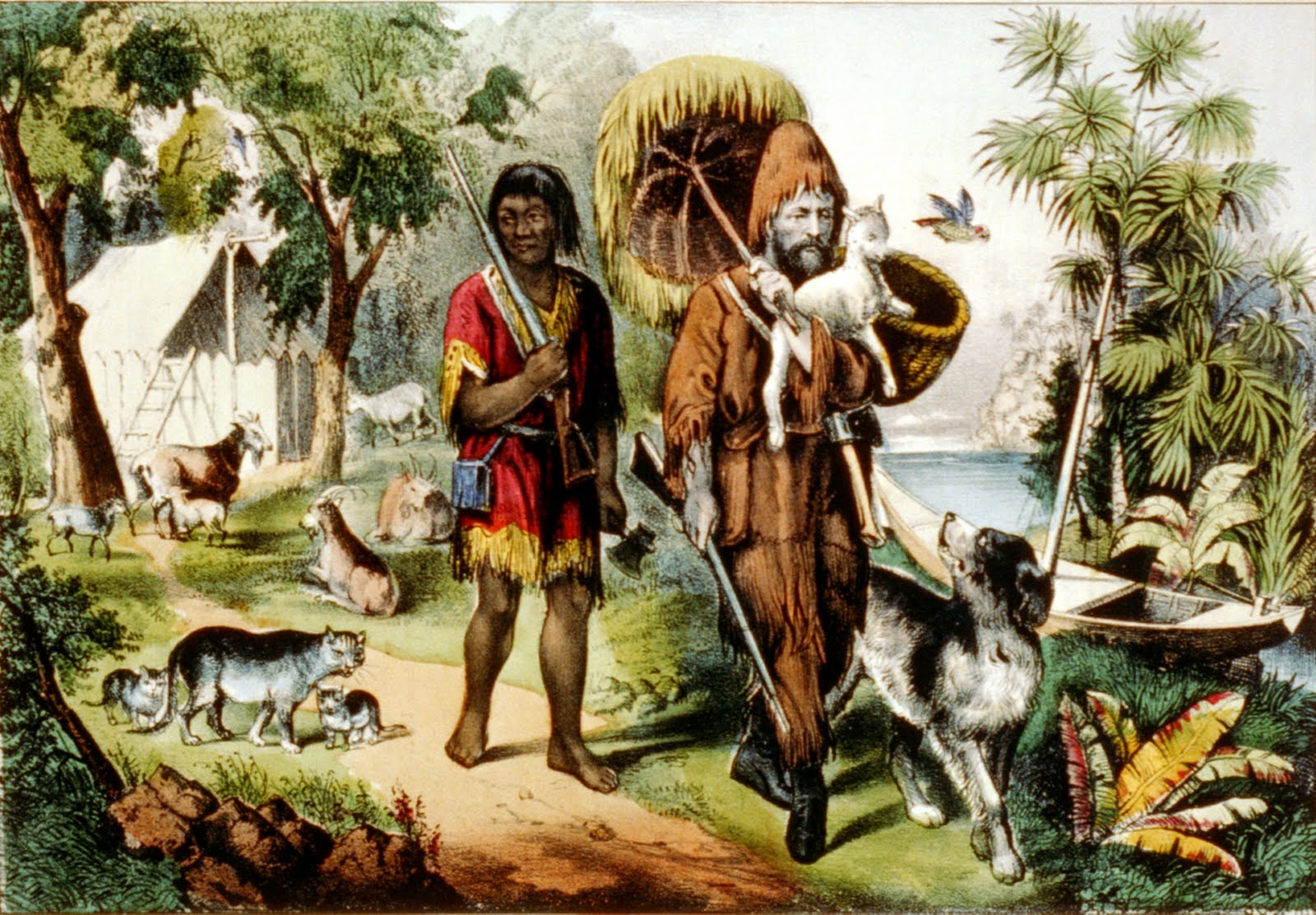
Incidentally, Crusoe’s story was loosely based on that of Alexander Selkirk, a Scottish man who ran away to sea to escape punishment for bad behaviour back home. When he got into an argument with the captain of his ship, he asked to leave and go ashore on one of the South Pacific islands they were close to. Selkirk thought some ship would come and find him soon enough, but instead he was stranded there for over four years. Crusoe, by contrast, is on his island for twenty eight years. Part of the wonder of the story is how sane he stays. Crusoe rediscovers religion and his spiritual devotion is essential to giving his life order and meaning on the island. It’s the little things that matter, that give him a sense of self: carving the days into a wooden cross, having dinner with his ‘family’ of animals and writing in his diary. The whole novel basically celebrates the power of human reason and endurance, as Crusoe notes that ‘by making the most rational judgments of things, every man may be in time master of every mechanic art’. I guess in this way it’s very typical of the Enlightenment attitude of the time, but there’s also a very strong capitalist motive for Crusoe’s actions and attitudes. As Ian Watt points out in The Rise of the Novel, many of Crusoe’s behaviours prefigure that of the canny venture capitalist: his restless travels for more trade, his saving of supplies and investing of crops, his careful planning of time and stock, and the mythological story of the individual’s capacity for survival. In fact, it could even be read as a kind of Puritan spiritual autobiography, because Crusoe has all his capital successes rewarded supposedly by ‘Providence’ as a blessing for his religious (re)awakening. It’s funny how a lot of eighteenth-century texts like Robinson Crusoe are perhaps best known for their adaptations into children’s literature (NOT as the rather awful film versions which insist on adding an irrelevant romance plot to everything). I suppose it’s because Defoe’s novel is also an adventure narrative, encountering pirates and ‘educating’ his ex-cannibal slave ‘Friday’ with Western values (another problematic but critically rich part of the story is Defoe’s relationship to ‘my man Friday’, which sheds light on the colonial context of the time). Another example of an eighteenth-century novel being famous as a children’s book is of course Gulliver’s Travels, by Jonathan Swift. The irony here is that Swift wrote this tale about fantastic worlds with tiny people, floating islands, people who could extract sunlight from cucumbers, giants and talking horses (Houyhnhnms) to deliver a harsh satire on the politics and Enlightenment culture of the period. Unless you have a canny eye or an edition rich with footnotes, you might miss all these references, and so revel along in Gulliver’s story and thus fall prey to the kind of naivety Swift critiques in Gulliver himself. Indeed, because the book was so cleverly prefaced and presented as a true account of a man’s travels, many people thought that the events and the strange places described were all true. In addition to lashing the follies of man’s claim to reason and pursuit of enlightened knowledge, Swift was attacking travel writing itself, albeit with lesser gall. He parodies the supposed objectivity of travel writing, and its attention to seemingly inane details. He gives very precise numbers, showing the reader how he cleverly carves up the worlds he encounters, noting ‘three hundred tailors’, ‘six of his majesty’s greatest scholars’ and so on. He also feels the need for self-justification, as when he describes how his excrement has to be taken away by two wheelbarrows by the tiny Lilliputians:
I would not have dwelt so long upon a Circumstance, that perhaps at first sight may appear not very Momentous; if I had not thought it necessary to justify my Character in Point of Cleanliness to the World, which I am told, some of my Maligners have been pleased on this and other Occasions, to call in Question.
Swift’s writings had been previously critiqued for their lewdness, as in A Tale of a Tub and ‘The Lady’s Dressing Room’, where the human body becomes a site of grotesque revelry and disgust. Swift, therefore, is here fashioning his own self-defence with thick layers of irony, inviting critics to judge him against his own self-protection, his free reign expression on matters abject and bodily. Travel writing was a big thing in the eighteenth-century, what with the growth of the British trade empire and the trend for the ‘Grand Tour’. While they didn’t have access to a railcard, undergraduate (men) would often take the Grand Tour of Europe, learning about refined French manners and Greek culture to more fully develop their education. This of course also involved a lot of drinking and probably visiting prostitutes, but then again, such matters were perhaps necessary to a gentleman’s education – he could ‘get it out of his system’ overseas and come back to Britain enlightened and satisfied and ready to be a ‘good’ citizen. Hm. One of my favourite pieces of travel writing is James Boswell and Samuel Johnson’s account of their journey to the Western isles of Scotland. Their approach was slightly different, as they each wrote separate accounts of the time. Boswell focused mainly on Johnson himself (as he tends to do in his writing!) whereas Johnson spent much time critiquing the dreariness of the scenery and observing the primitive lives of the locals with some disdain, though respect for their hospitality. You can read A Journey to the Western Isles of Scotland for free online via Project Gutenberg, and I think it’s worth a gander, if only to take a brief lunch-break holiday into the wilds of eighteenth-century Scotland. There is also a rather humorous article in The Telegraph detailing the author’s attempts to retrace the steps of Boswell and Johnson’s tour, though I am somewhat uncomfortable with his complaints about encountering a range of ethnicities rather than ‘native’ Scots on his tour…can Scottishness not finally now be defined as authentic through multiculturalism, as everywhere else in Britain, or must it still be hailed as a land of blood and soil nostalgia, pale skin and tartan…? just a wee grumble! I have only skimmed over the stuff we covered in our course on the eighteenth-century. Other things worth reading are the hilarious parodies of Pamela, which cast severe doubt on the veracity of Pamela’s ‘virtue’ and burlesque Richardson’s prose style – some good ones include Eliza Haywood’s Anti-Pamela and Henry Fielding’s Shamela. Also, Raymond Williams’ The Country and the City is a marvellous book which looks at how the countryside was often falsely represented in various examples of pastoral and Georgic poetry through the ages as an idealised contrast to the corruptions of the city. Millenium Hall by Sarah Scott is a very intriguing epistolary novel which has been dubbed a ‘feminotopia’, an early representation of a utopian community run by women on a country estate. I suppose what really strikes you about this period is the sheer diversity of works, and the strong political ties most of the literature displays. It was a time of experimentation, but because the novel in particular was still a nascent form, it’s possible to perceive all the strange incoherences, the little faults and cracks which allow us to reflect on the form in general and its relationship to ideology. Edward Said, after all, has argued that the novel is by definition born out of colonialism: it is ‘fundamentally tied to bourgeois society […] it accompanies and indeed is a part of the conquest of Western society […] the novel, as a cultural artefact of bourgeois society, and imperialism are unthinkable without each other’. The novel’s representation of social authority in the hands of the British, its focus often on middle-class life and relentless individualism are all part of this bourgeois basis of the novel. Whether we agree entirely with Said’s statement, it’s a compelling argument that challenges us to rethink how we consider what is probably the most popular form (other than celebrity biography) in the contemporary literary market. And I guess that’s one of the thing’s I enjoyed most about this course: returning to origins, understanding how modern literature came into being out of the cultural circumstances and experimentations of the long eighteenth-century. It is rather ironic that while Samuel Johnson characterised the typical novel reader as ‘the young, the ignorant and the idle’, reading novels is now one of those activities that mark you out as ‘cultured’, ‘educated’, perhaps even ‘bourgeois’. Not only in its form, but also in its critical reception, the novel has come a long way. Some extra info:

Source: popesgrotto.org.uk
Alexander Pope was a dissenting Catholic during the time of Protestant monarchy, which meant he was barred from participating in many societal institutions, like university. In 1719, he retreated to Twickenham in the rural outskirts of London, building himself a villa and a grassplot garden whose verdant beauty was to imitate the Arcadian landscapes of much of his poetry. Pope’s residence is notable and pretty cool because he constructed a tunnel under the road connecting his garden to his villa. It led to the basement of his villa in which he fashioned his own grotto. He wrote a rather beautiful description of his delight in a letter to Edward Blount:
When you shut the Doors of this Grotto, it becomes on the instant, from a luminous Room, a Camera Obscura, on the walls of which all the objects of the River, Hills, Woods, and Boats, are forming a moving Picture…And when you have a mind to light it up, it affords you a very different Scene: it is finished with Shells interspersed with Pieces of Looking-glass in angular Forms…at which when a Lamp…is hung in the Middle, a thousand pointed Rays glitter and are reflected over the place.
You can visit Pope’s grotto at certain times of the year, and that area in Twickenham has been named after Pope’s Grove. More info can be found here: http://www.twickenham-museum.org.uk/detail.asp?ContentID=21

How are you meant to review a year when the year itself isn’t quite over? You try and think of it as a block of time: a chunk of events lumped together to form some kind of history. You’re always reaching out for connections, trying to box things and label them as such. This was the year I got divorced and found my freedom; the year I graduated and stepped onto my career path to success; the year I lost someone dear to me and found solace in a new hobby. The movies have it all mapped out for us, the way we’re supposed to review the events in our lives. Facebook, Flickr and other social networks that we rely on help us with this theatre of memory, by archiving everything together in chains of photograph albums and status updates. Events are strung together in relation to chronology and names and computer-configured faces; what happened to who, who was tagged where, who liked this and who got married and who had a baby and who got promoted. Every element of time is rendered orderly, linear. Compartmentalised to make us all competitive, individual, empathetic, jealous. We’re moving on a straight line towards goals, achievements – more notches to add to our timeline.
But what end are we moving to? A timeline cannot flow on indefinitely; or can it? Surely it’s meant to document an A to B, a fixed period in time with all the events this period contains (contained). Life, as we commonly think of it, is a series of events strung together only by their relationship to the future, to development and change. We hate stasis; we love drama. Really, as Freud put it, what we desire is death.
Desire, however, isn’t quite as simple as this. Freud, as Deleuze and Guattari argued, ignores the basic tenants of capitalism. The need for more, more, more which arises not solely out of some psychoanalytic lack, but out of production itself. The act of purchase, the mesmerising experience of lifting up some pretty snow globe and spinning it in one’s hand and thinking I would like to buy that. The flicker of a giggle as we take it home, imagining how our new product is going to enhance the life that fills our fragile hours. Fill a room and create new topographies of mental space. For everything we see disrupts our schemas of reality, even if only slightly. The snow swirls up and covers the landscape and for that moment we are free from the chaos around us.
What we are looking for is T. S. Eliot’s ‘still point in the turning world’: that perfect moment where we are at peace with ourselves, where we see through to the present itself amidst all the churning miasma of the world we exist in. The wars and media images, the headlines and celebrity photographs and radio crackle and dance music beating and phones ringing and Blackberries bleeping and all the million signals that flicker in our brain as we gaze into a computer screen. For we are multiple, divided, networked creatures, always-already caught up in swarms of information. Time is not a static archive, but a rhizome of interconnected possibilities that flash and shift and click in our minds.
And what’s more, events in time always come back. The logic of the return. Write a sentence and press the Enter key. We aren’t just running forward into the bright light at the end of some metaphorical tunnel. We follow our lives in a loop. Spilling over and retracing our steps. Think, for example, of a book: meaning is made not from a linear plot, but from the intricate play of signifiers and motifs which weave a melody of meaning throughout the narrative, linking the past and present with a possible production of future. That old New Critical interplay between Fabula and syuzhet.
Real life too. Wars return and people die in the same way, as if re-enacting the past in some big-budget film, tracing archives of pain that carve out a bitterness in history. We stand in the mirror at roughly the same times each morning and perform the same routine. Routine, like it or not, structures our whole mentalities. That’s why culture is formed on the basis of habit and ritual. Religion falls in here too. Are we always waiting, as Yeats suggested, for the Second Coming? The ‘revelation’ that is always ‘at hand’, ‘surely’? Let’s circle back to the start – of the twentieth century, to be specific. Freud says our personalities are determined by the first few years of our lives. Our anxieties now repeat the biological functioning of our infant bodies. Are we so caught up in ourselves that we cannot think beyond our bodies?
***
What does it mean to be in simultaneous temporalities? I write this sitting by my newly-decorated Christmas tree, in the living room where I spent almost every Christmas of my life since the age of three. The smell of pine and the reflection of fairy lights through the window lighting up the pampas grass in the garden. Everything wondrous and dark. Remembering lying on the floor after a day in town drinking Jack Daniels and shivering cold on the bus and listening to Muse’s ‘Butterflies and Hurricanes’ and dreaming of another night so unlike this. The frozen park in November with the roundabout and fireworks and the tall black shadows of the distant trees. Now the steady showering of rain at the window, spraying like glitter under the orange lamp light. Once there were family members sitting where I sit now, all laughing and ripping open presents and drinking sherry. My dog Bella climbing over everything, whining and wreaking havoc with the whip of her tail. I slip through all these memories until they feed my present. I cannot focus on one thing alone. I feel like I am several people at once. I am no longer singular. No longer a statistical person.
What happens when you are no longer one person? There is a politics to this. There are the people that believe in return and repetition. People whose whole religion is based around recurrent events and cyclical time. The solstices of Paganism, then the spiritual systems of the Mayans and Aztecs. This contrasts with the Judaeo-Christian vision of linear time, which starts with Creation and ends with the Second Coming. But what if this Second Coming was always coming? To come? Since the present is contaminated with the future (unconsciously or not, the things we think and do are always shadowed somehow by some possibility to-come), doesn’t this render the idea of ‘the present’ almost impossible? Do we slip into the spirals of Yeats’ gyre and Derrida’s spectrality?
Are we on a road or an ocean? A stream or a snowball?
Capitalism and heteronormativity set out a life plan for us. Find a mate, get married, reproduce, recreate the system. Work, earn money, pay your way. Consume. These are all instrumental processes which work towards goals. Inside these events we make our own histories, certainly, and there is a degree of creativity and fulfillment. We aren’t just pawns. But this isn’t the whole story. Here comes in Judith Halberstam’s queer temporality. What happens to the temporal experience of those who do not follow this conventional route to eventual death? Who fill their lives with more entangled possibilities which are fraught with uncertainties and questions rather than fixed narratives and clear answers…
Remembering his lover’s death from AIDS, Mark Doty says: ‘all my life I’ve lived with a future which constantly diminishes but never vanishes’. The looming possibility of a non-future, a future without hope or action or life, shifts the focus back to the present. Gone are the regular goals of ‘making a living’, ‘providing for the future’, ‘putting something away’ for one’s children. The next generation are often invoked in political discourse. Global warming is dangerous because it will spoil the world for the children of the future. Non-heterosexual relationships are supposedly dangerous because they don’t follow the capitalist ethic of (re)production in the strict sense. Atheists threaten the idea of progression because they do not believe in a future beyond. The list goes on. Sometimes we are unaware of how important time is to politics. If we ‘queer’ time by questioning the validity of its conventional Western linear conception, what kinds of lives can we live in our present political realities? How can we change – perhaps even revolutionise – the system. There’s the old doctrine of Hedonism – live out your pleasures in the present with a general disregard for others and the future. But the present isn’t inherently selfish. It’s a place where people can come together and change things, without being bound to the very isolated narratives of old age and death.
Drugs, jobs, relationships and illness all alter our experience of time: slowing it down, speeding it up, blurring it, erasing memory, making us fearful for the future. As these things become less stable and more unpredictable, how will this affect the future?
Will we have a future, or will it be a series of presents? Can we really look to the future?
Maybe the answer is in science fiction.Think of Ursula K. Le Guin’s The Dispossessed (1974), which explores the concept of anarchist politics through ideas of simultaneous temporality and cyclical return. Revolution and repetition are in operation at the level of both form and content: story and narrative, narrative and story. Time revolves in curious ways around and between two planets, just as a moon revolves around the Earth…but what does the Earth do when you are on the moon? Einstein’s relativity comes to disrupt the easy narrative of linear time, even at the level of science…
Maybe the answer is also in our own experience. Think of a memory. Any memory you have: the first time you rode your bike, the time you fell over while dancing drunkenly on a beach in the freezing winter, the time you lost your first pet to the grovelling paws of death. All these memories do not stand alone in our minds like a physical photograph stuck and labelled in an album; but are rather bloated and blurred with the original anticipation of the event itself, and of the aftermath – the events which have happened since and in turn coloured the original. Repetition is not static but transformative. Moreover, human beings revel in repetition. The simple pleasures of revisiting an event, even if just to experience the same emotions again as they recur in a faded form like a polaroid misted by the breath of time. Maybe that’s why people have children, so they can do the things they miss doing as a kid. And as Fredric Jameson points out, in the postmodern condition of consumer capitalism, nostalgia becomes an industry itself, shaping culture from advertising to film and literature. As our lives get more complicated, faster, information-saturated – we return to an idealised, rosy history that is often removed from any genuine meaning.
***
I always find Henri Bergon’s work fascinating, when I can get my head around it. He was writing around the same time as William James, the psychologist that first coined the term ‘stream of consciousness’, which is still widely used today to describe the workings of our minds but also how these workings are depicted in certain kinds of literature. Yet a stream has linear connotations, assuming that our mind is always ‘in flow’ – moving forwards and never stopping or growing, just streaming onwards. Bergson, however, figured consciousness as an experience of ‘duration’. Think of any moment, any moment as it happens. As soon as you think of it, with a milli-gasp of a second, it’s gone again. Time is always shifting and never static or complete. While science might attempt to chart time in a linear, measured fashion with clocks and calendars and equations, in our psychological experience; time does not easily fix itself to such points. It can only be grasped by imaginative intuition; it is always fallible and contingent, never the same as each moment reconfigures the last, endlessly shifting our experience of the world and ourselves: ‘my mental state’, as Bergon puts it, ‘as it advances on the road of time, is continually swelling with the duration which it accumulates: it goes on increasing – rolling upon itself, as a snowball on the snow’. And so where does that lead us, if not to the icy abyss of our certain deaths?
Well, for one thing, it actually confirms that we are not mechanical beings, destined to follow the path that time lies out for us. Sure, we will probably all die. But importantly, if Bergson’s theory works, we have free will; imagination plays a significant role in determining our relationship to the past and future. The moment is always an evolution, and this gives us a kind of freedom.
There are, of course, a multiplicity of links between return, recurrence, rupture and revolution. The breaking free of history as history is understood in a linear manner, read from front to back like a traditional book.
Literature has a long history of delving into irregular conceptions of time. An example might include Tom McCarthy’s Remainder (2005), in which an unnamed protagonist decides to reconstruct a series of memories after coming into a large sum of money following a mysterious accident. These reconstructions are performed down to the smallest of details: the expression on an old lady’s face as she takes out the bin, the cats that prowl the rooftops, a crack in the wall, the pattern of floor tiles, the sound of liver frying in the flat below. What follows is a topography of static memory, caught in the narrator’s imaginative present. Time loses its linear quality as the past plays out in ‘real time’ with the narrator switching his memory scape into ‘on mode’, hiring ‘re-enactors’ to perform the roles of the people in his memory. And yet an amnesia and aporia haunts the narrative, as we are never quite sure where these memories originally came from; whether they even belong to the narrator. With a book like this, we lose the certainties of the traditional realist novel and the linear movement which often ended so finally with the closure of marriage or death – the first promising reproduction and progression, the latter an ultimate extinction that ends the line. There is something about the novel form in general that links it irrevocably to time; it is not contained in a performative moment like poetry, but must be read over a series of hours or days or even weeks. We physically must turn the page. Days pass in the novel, or maybe they don’t, as in the one-day novels of Woolf and Joyce (Mrs. Dalloway and Ulysses). Novels often concern themselves with memory and futurity; the sheer arrangement of sentences on a page, moreover, takes us through time. Time flows as we read. We make connections and go back again; we are at once linear and circular as we exist as minds in a novel.
But we are now in the era of the great hypertext, which denies all paths to origin in its networks of complex code and multiple nodes. The Internet exists largely in a state of simultaneity, connecting various presents from around the globe. And yet, like Bergsonian duration, it resists a static conception of time; everything about a webpage is always changing as new file paths are forged, different visitors leave their online traces, new links and reposts alter the original location. Life is a labyrinth, but we would do well to forget thinking about what lies at the end. Maybe we should focus on the here and now, and give ourselves the freedom to transform the present.
***
And this year? Well, this year started with a parting: losing my most beloved pet to death. All life is a natural cycle though, as the year ended with two new births in our family. On New Years Day 2014, I went for a walk to refresh my head from working the night before. A man stepped out of the 24 hour newsagent with a bottle of Mad Dog 20/20 and cracked open the screw top to a dream of futurity that ended in drunken oblivion. I feel this is somehow fitting.
Most of my months passed in the library with the seductive glow of the computer stopping me from doing much other than reading and essay writing. I fulfilled both of my somewhat humble resolutions to a) do more creative writing and b) grow my hair down to my hips. I passed my exams and spent my 21st birthday hanging upside down at the park. Went to Dublin and even got a bit tanned and kind of liked Guinness. Saw Little Comets twice, first at Cabaret Voltaire and then Liquid Rooms in Edinburgh. Spent quite a bit of free time in Edinburgh actually; explored the Botanic Gardens and the beach at Portobello and went for walks at Dean Village. Listened to lots of Belle & Sebastien, Manic Street Preachers, the new Bright Eyes album and a heap of other stuff. Bagged an iPod classic before Apple stopped doing them. Had one of my best Wickerman Festivals and ate coffee granules for the first time. In August I went down to England to see family and ended up at Stepney Green, going ‘back to the ancestors’. Drank a lot of ginger tea and did some yoga. Went to Loch Lomond. Averaged about a kilo of chocolate a week, mostly Dairy Milk. Got a blog article put up on WordPress’ Freshly Pressed which was lovely. Went through the referendum and came out a little deflated but unscathed. Also enjoyed the spirit of the Commonwealth Games, even if I couldn’t really give a toss about sport. Saw an amazing sunset on Ayr beach, all alcopop pinks and oranges burning and sinking into the silver sea. Wrote three times my dissertation then another proper word-count-conscious dissertation and didn’t go completely insane. Served Alasdair Gray some brandy and a few months later . Started playing trombone again. Enjoyed one sip of red wine and dyed my hair strawberry copper. Went to a conference call to Peter Singer. Changed my favourite study space in the library…
Yep, as you can probably tell, my 2014 hasn’t been exciting by most people’s standards. But you know, it was a very good year overall. God knows where I’ll be a year from now, having graduated and moved out and hopefully made some provisions for the future. But even if I haven’t, even if it seems that not much has changed, what does it matter when everything dissolves in a series of moments? 😉

Some Reading:
Deleuze, Gilles, and Felix Guattari, Anti-Oedipus: Capitalism and Schizophrenia.
Bergson, Henri. Creative Evolution.
Eliot, T. S. Four Quartets.
McCarthy, Tom, Remainder.
Halberstam, Judith, In a Queer Time and Place: Transgender Bodies, Subcultural Lives.
 mariaology