Notes on iNsEcurE exhibition

Che Go Eun, a hole in a boat and a deep hole (2024)

Dear pain,

That’s how the light gets in. Fractal emanations of screaming the dark is a luxury the dark the dark. I listen to the radio and a mother talks of her autistic child preferring the dark — thriving in it, coming to life.

We soft-light to protect the unsaid stories.

Our bodies twist in the dark and we make an inconsistent work of pain-pleasure. The mattress gives out: pools of blood, ink, sweat, coffee, sex. I feel better when the sun comes up and when the sun goes down, wine-dark. It’s what’s in-between that’s the problem.

I keep thinking about Fred Moten’s luminous correspondence, ostensibly between Andrea Geyer and Margaret Kelly:

My friend, I have discovered in the antagonism between my work and dead letter that the project returns as an amazing field and air of correspondence, a transgenerational lotion of breathing, a revue of breath, a general bouquet in the grace of your asking in friendship since the day we met, and our braiding and breathing of a correspondence that we are now and have been working together in the atmosphere of our comrades, that we literally breathe them as a kind of braiding, an insistence of revolt as garment, a tapestry for the touched wall of a spaceship we noticed on the way to school, that off dimensionality of the cloud from our perspective, which I want to say is real not graphed, which I want to say is both a function of, and still untainted by the terrible business of, the Dutch masters, so that it’s impossible to tell the top from the side, though there was some kind of emanation or emendation that we all saw as a smooth flatness, like a table the cloud prepared of its own accord, a spread platform for spreading our metastatic air, our beautiful, is ourreal.

Fred Moten, The Service Porch (2016)

To make a pain of you, stop being a pain, I’d form a cartography of the nerves so rich you’d never know I’d outmatched the major scale. A map does not function in service of security. Anyone who has seen me read (and attempt to follow) a map knows this.

What is so gorgeous about the Moten quote above is its ph(r)asal longing: an ongoingness open to improvisation and constant sentence desuetude. Language like you don’t even need it, breathing all the same beyond what’s essential. Take this key. Braiding and breathing a coital somnolence of the body, twice rung out in language / only us leaving voice notes for what clicks pearls together, minor, deep in the distance.

Emollient longing of writing between pith and pronoun, what is prepared by the passing between. Our breath, clouds; mattering.

‘•.¸♡ ♡¸.•’

I saw the spaceship too. Didn’t you?

Intimacy, I told someone recently, feels like the opposite to what capitalism wants of us. Intimacy is worldsharing, ourreal, a grammar of humours, kisses and shibboleths. You know my pain and I know yours. We make a joke of it. What escapes serious talk but our serious dreams. So when we’re all in the gallery, we switch to our senses to make language-sense of ourreal, cellular vibe spread. It’s a room replete with the sonic ecology that is feeling all my fucking feelings (Clémentine Coupau): aka hook me up to ‘electronic components, dimensions variable’. The little paper lantern is a miniature version of my own IKEA lampshade. The problem with my IKEA lampshade is that I had to tear it a bit to change the lightbulb. I have a torn lantern. Magic hands. That’s how the light gets in. Paper = skin. Creamy light.

Che Go Eun 최 고 은, a hole in a boat and a deep hole (2024)

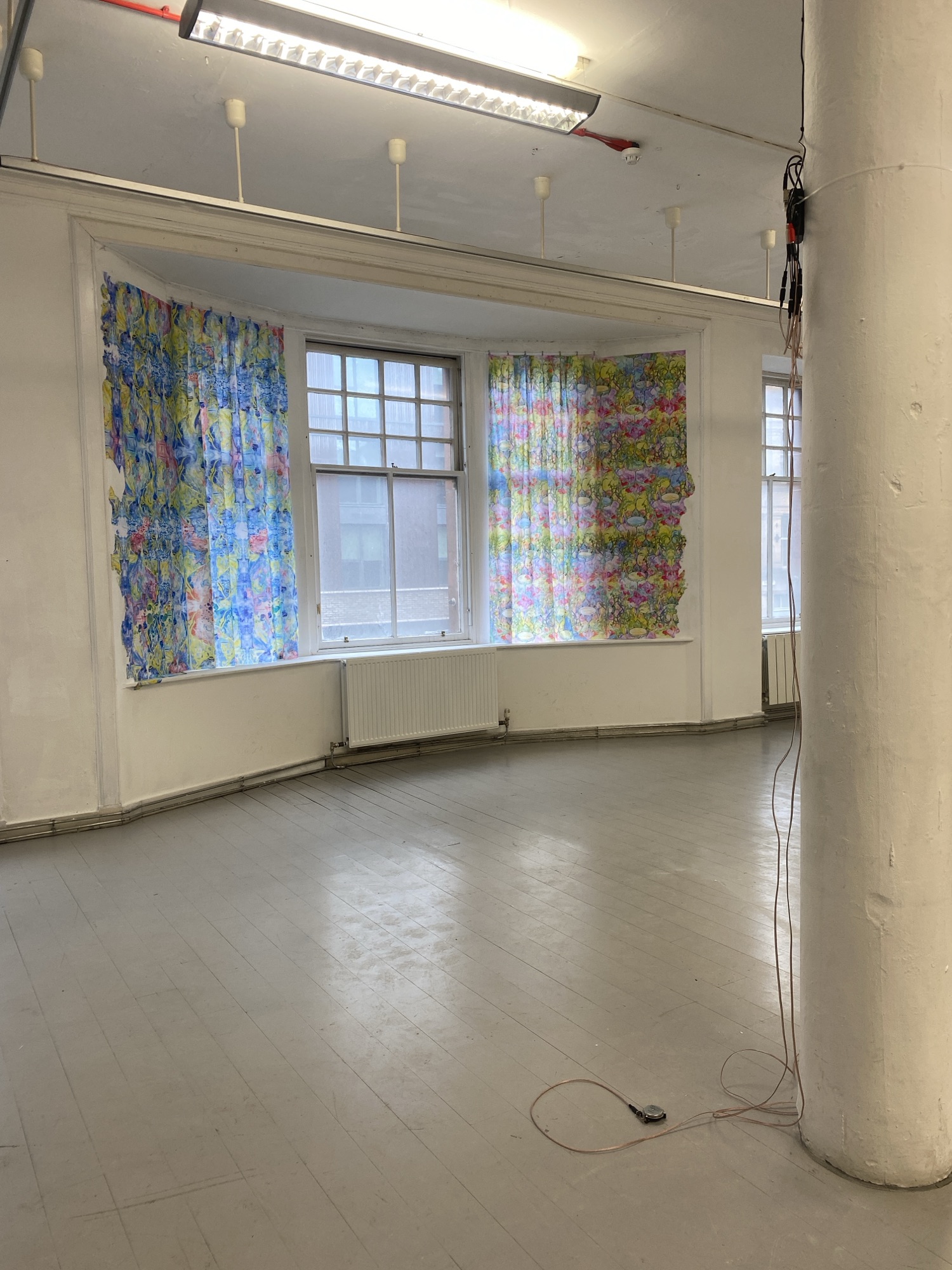
Aside from lanterns, the other homeware alluded to are curtains. Che Go Eun’s a hole in a boat and a deep hole is composed in collaboration with artificial intelligence. The artist inserted diary notes into an AI image generator which ‘transformed [their] intimate reflections and resulted in images’. Watercolour drawings were then made in response to those results, with the artist ‘reappropriating’ their ‘own feelings back from the AI’. This tension between creativity, data and predictive imaging results in a fascinating, speculative assemblage of arabesque, thorn and psychedelic colour. The nod to William Morris/Arts & Crafts reminds us of the collaborative handicraft that has gone into the piece’s imaginary and manifestation. Diary phrases such as ‘art nouveau’, ‘harder I am sinking’, ‘throw all my stress into the hole’ are woven into the fabric of these drapes which suggest both privacy and opening, light and shade. The work is gauzy. There’s a real street, a construction site behind it. Trongate: name as lozenge. What Moten says in the same letter-poem as quoted above, ‘a gauze of reckoning’. Threads, braids: stress, tension. I want to wrap the code-baroque of the fabric around my body like I’m a silkworm going in reverse, all the way back to its gross and sultry, larval conception. I keep hearing that the internet is just the unconscious. I see a bag of squishie candies in a vending machine and think: ugh, silkworms.

‘•.¸♡ ♡¸.•’

Back IRL, it’s raining with the pelting dreich that only a Glaschu April delivers, and I arrive at Trongate 103 having walked through Dennistoun listening to Elliott Smith. I’m not feeling morose; I’m just in touch with my feelings. As if they were tangible: animatronics, statuettes, pets. I’m still on a medication that holds such whimpering demands at just enough distance to be considered somehow ornamental — torrents no more. Once I would torrent my day in their favour. Let someone seed me. Now, I might choose to pick them up, put them back down, or smash them into oblivion. Let my soul have the architecture of a bleeding gate.

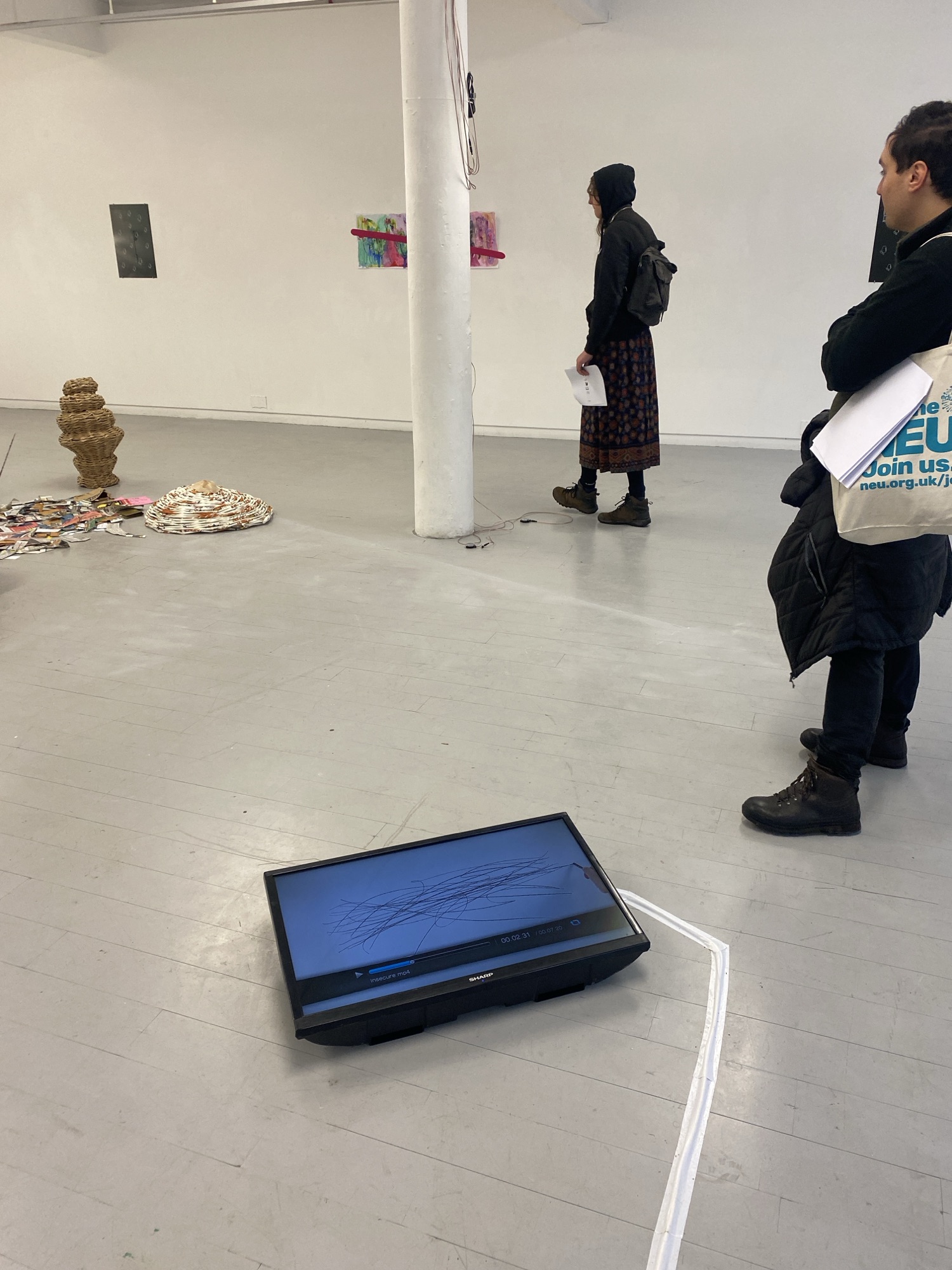
As I enter the exhibition, the invigilator says something about one of the objects we’re allowed to touch. I forget immediately what they say because I am greedy for colour and form, not meaning. So the whole time I am looking at the exhibits wondering: which of you may be touched? A finger trace of the curtains, time slider on video screen, glass surface of framing, kinesiology tape cut into bows and ribbons.
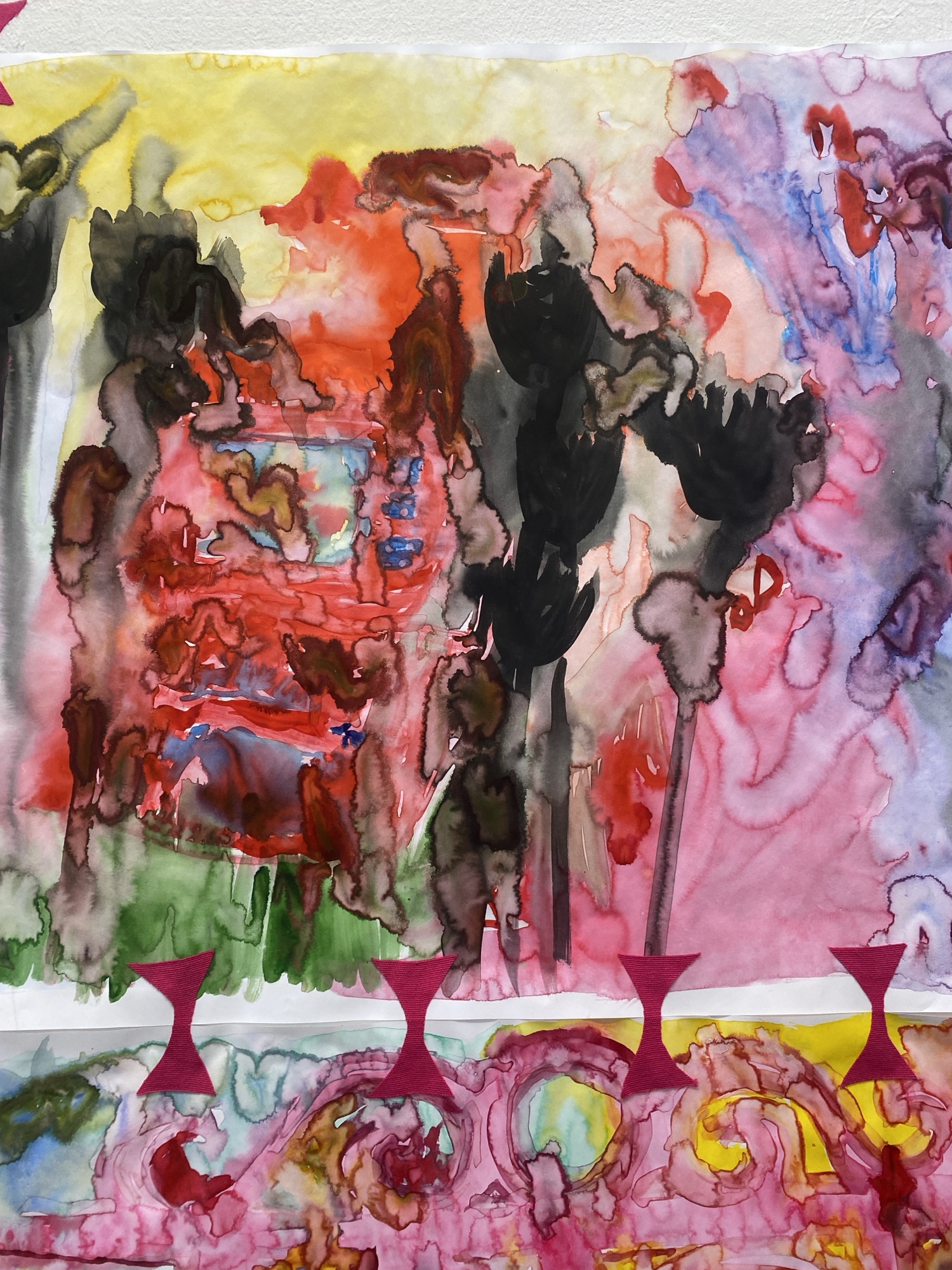
Daisy Lafarge, Gate Theory of Pain (III) (2024)

Touch is not in itself untainted. I am in love with Lafarge’s black tulips; their painful, precious tendrils.

‘•.¸♡ ♡¸.•’

Some people gave me advice
on how to do better: thirsty
in the flowerbed
for some aphids fed upon
200 ladybugs to eat/moult
more often than not they
would die as fast as any plant
blocked sunlight to pay
(dustfall / bonnie / smitten )
should the wind ever blow
you a raven

‘•.¸♡ ♡¸.•’

Mau and I try to diagnose the  Mandelbrot set-seemingness of Lafarge’s watercolour fractals. The sequence ‘remains bounded in absolute value’. This is a beautiful phrase I find on Wikipedia. ‘It is one of the best-known examples of mathematical visualisation, mathematical beauty’. I could watch the little fractal gif forever like giving birth to myself over and over as a starfish with 7000 eyes & infinite narcissism. As it stands, that boundedness is a gate: pink, the colour of doll-flesh. I think of tentacles, elliptical phone calls, inflammation. We agree that almost all the art in the room is art that could be done on the phone. It’s not just about doodlecore but the intimate, desultory gesture of the line itself, and what’s on either side of it.

Not to get kinda kinky but the other day we were explaining ‘lucky pierre’ in the pub (because of Frank O’Hara the poet we all love and love most of all to discuss in the pub). In his ‘Personism: A Manifesto’, O’Hara talks about the poem in supplementary relation to people. Intimacy again. Sure, he wrote it while ‘in love with […] a blond’, which makes it all the more true and golden:

I went back to work and wrote a poem for this person. While I was writing it I was realising that if I wanted to I could use the telephone instead of writing the poem, and so Personism was born. It’s a very exciting movement which will undoubtedly have lots of adherents. It puts the poem squarely between the poet and the person, Lucky Pierre style, and the poem is correspondingly gratified. The poem is at last between two persons instead of two pages.

Frank O’Hara, ‘Personism: A Manifesto’ (1959)

As Moten’s poem from The Service Porch is framed between two persons, so the epistolary heat is folded into Personism. It’s not letters but speech itself that gets electric. So what Mau and I mean by ‘this is art that could be done on the telephone’ is perhaps something about how the work takes place in correspondence between two or more bodies. Lafarge describes her paintings ‘as a means of pure distraction’, made during ‘episodes of severe chronic pain’, ‘remote NHS chronic pain sessions’ and ‘in phone queues and conversation with Adult Disability Payment (Social Security Scotland)’. The trembling of watercolour is an apt form for the bleeding edges that connect the power imbalance of someone trying to get support and the person with the power to connect them to it. It’s the art of turning away, seeking psychic space, without letting total go of the line.

How often do we find ourselves at the gate, with no end of wanting to both know and not-know what’s beyond it?

Wrought/not I.

‘•.¸♡ ♡¸.•’

I love gates. I love especially baroque ones with curlicues. I grew up with a broken gate which soon got removed. What did we have to keep in, or shut out? It was black and gold and the paint flaked off very beautifully. You might describe it as ‘tawdry’. I probably have false memories about this gate. Sometimes the screech of its opening hinges my dreams. Lafarge’s gate might be a homophonic pun on ‘gait’ (and so referencing the debilitating effects of chronic pain on one’s ability to walk freely). The painting, titled Gate Theory of Pain (III), no doubt references Ronald Melzack and Patrick Wall’s 1965 paper on ‘The Gate Theory of Pain’. In the words of Lorne M. Mendell:

The [Gate Theory of Pain] dealt explicitly with the apparent conflict in the 1960s between the paucity of sensory neurons that responded selectively to intense stimuli and the well-established finding that stimulation of the small fibres in peripheral nerves is required for the stimulus to be described as painful. It incorporated recently discovered mechanisms of presynaptic control of synaptic transmission from large and small sensory afferents which was suggested to “gate” incoming information depending on the balance between these inputs.

Lorne M. Mendell, ‘Constructing and Deconstructing the Gate Theory of Pain’ (2013)

The Gate Theory concerns sensory fibres, transmission cells and their respective levels of activity. The idea is that painless sensations can supplant and so quell sensations that are painful. The process involves a blocking (a closed gate) of input to transmission cells. When the gate is left open, the sensory input gets through to transmission cells and produces pain. An example of the therapeutic application of this theory is transcutaneous electrical nerve stimulation (TENS), massage, acupuncture, vibration and mindfulness-based pain management (MBPM). While gazing at Lafarge’s vivid watercolours, one senses that pain is not suspended in the art of painting so much as calibrated, channelled, short-circuited. We keep commenting on the bleeding edge.
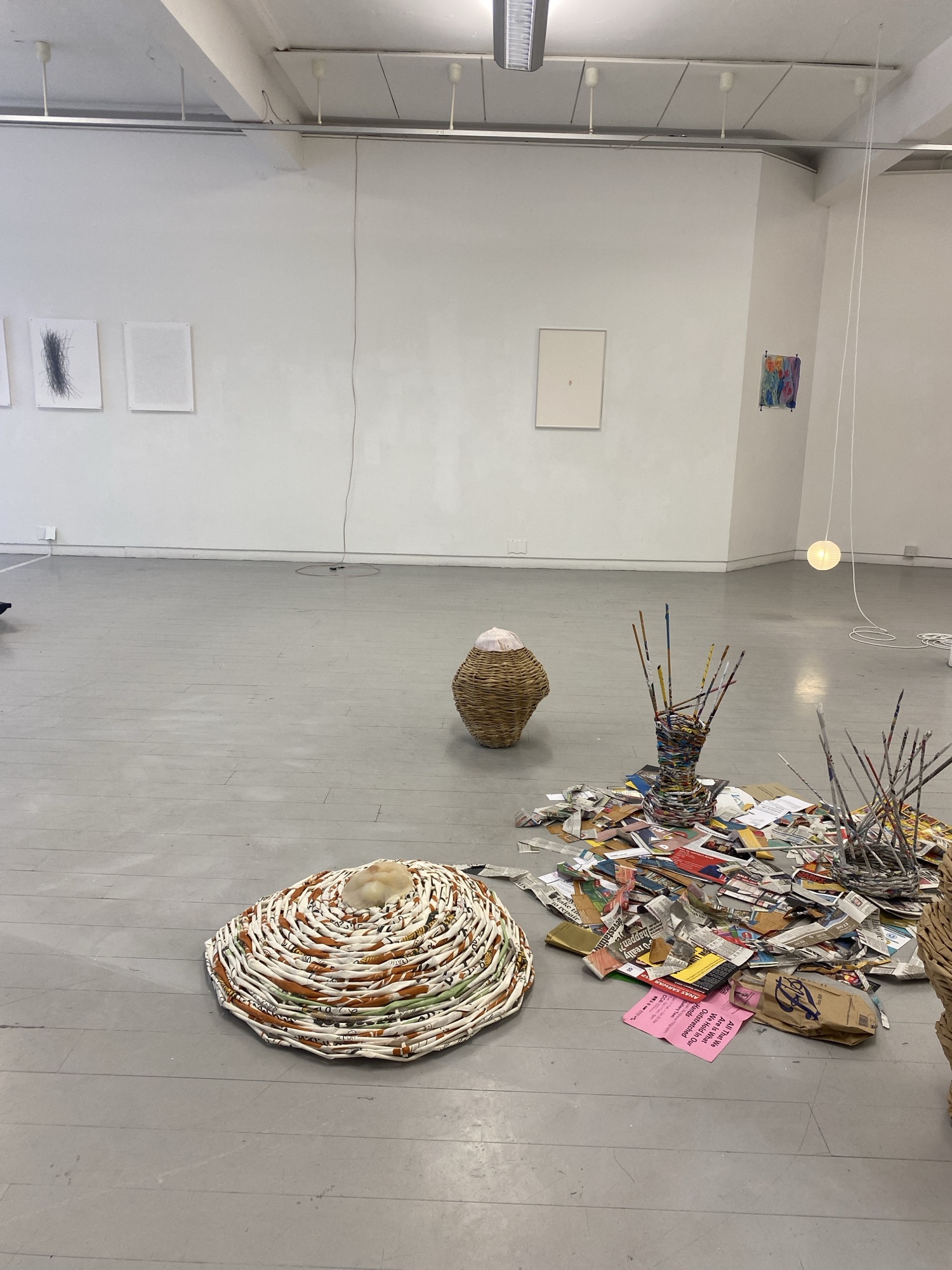
Aniara Omann, Resting on an icy couch (mother, grandmother, grandfather, big brother, older sister, little sister) (2020-2024)

Elsewhere in the exhibition, ideas of feedback loop, intimacy, daily life and relationality are also manifest. Feronia Wennborg and Simon Weins’ soft tissue plays with sound transduction to install a ‘lo-fi sound system that lives at the periphery of perception’. This installation of contact-based sound production manifests the pair’s ‘long-distance collaboration’ in felt space. Aniara Omann’s haunting paper baskets, plugged by family faces, makes a ragged philosophy of grief and panic. The raggedness betrays a struggle for focus which is played out through the woundful (I meant to say wonderful, but this works better) arrangement of loose paper, woven baskets, the sense of things cut, twisted, recycled. Omann describes wearing the clothes of their sister, who died: ‘If anyone complimented me on a garment I had inherited from her, I would say it was a gift from a family member’. In that sense, we could think about the paper baskets as fragile amphora for an archival underworld. The baskets are not perfect, machine-made. They retain the expressive and painful grace of their making. They are a flammable structure, woven from newspaper clippings, election flyers, prescription papers, envelopes, bills. What is it to find a way of wearing something? Wrap your troubles in dreams. Shuffle for sources. The difference is a question of agencies; and yet either way the gesture remains. The gift: it has to be infinite.
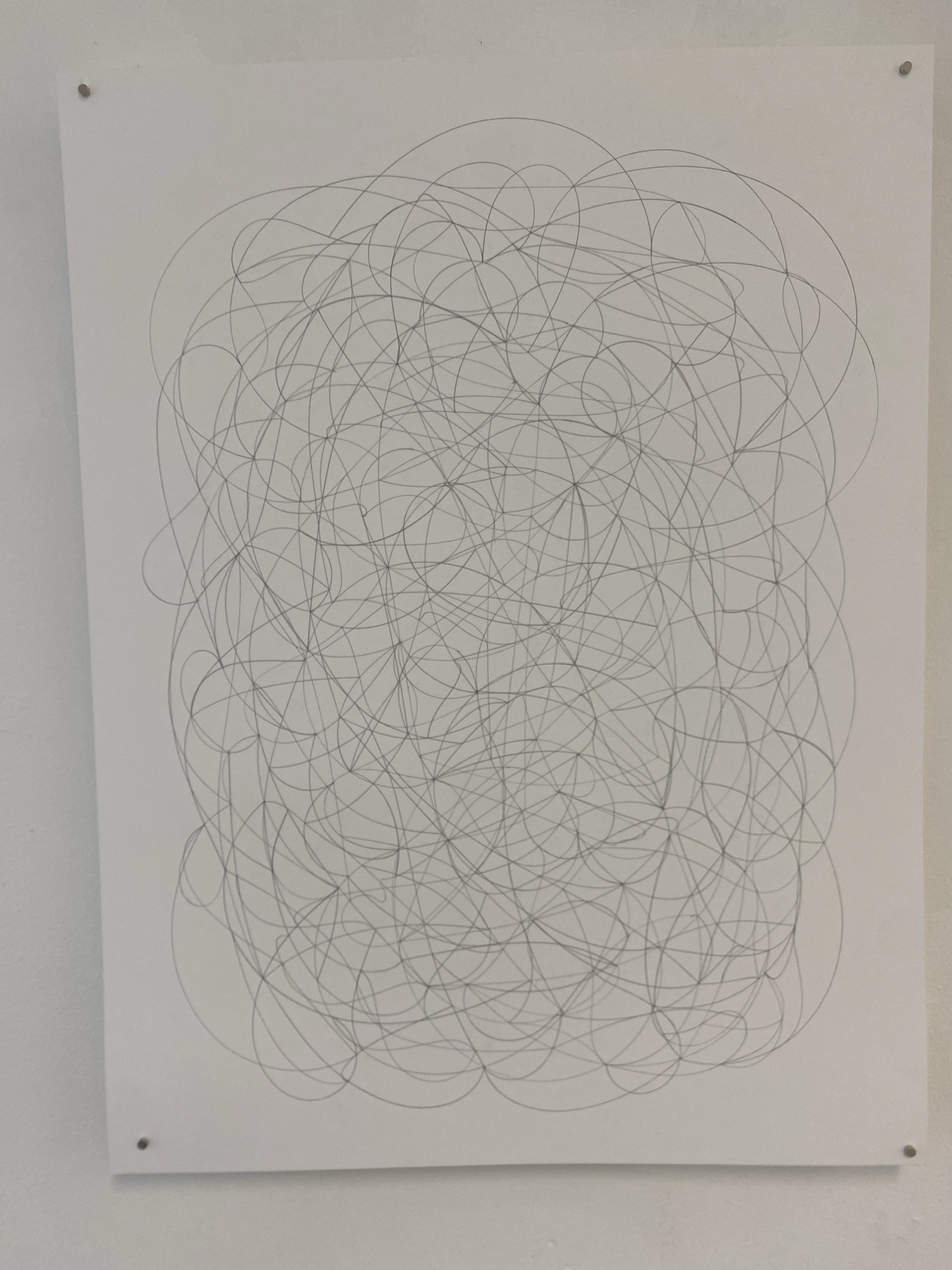
Elísabet Brynhildardótti, The Lines- Hesitant line, Obediant line, Indecisive line, Decisive line (2023)

When someone says ‘hold the line’. Please hold the line. Please hold the handrail and take care on the stairs. Will you please hold? What’s at the end of that hold? I have been trying to get a medical appointment for weeks. They keep putting me on hold, hanging up. I phone up a doctor’s surgery which is based in a shopping mall at precisely 08:30, when the lines open, and immediately the lines (the queue) are full. How do I envision those lines? Swirling and spiralling around the postcode lottery of where we live, tangled and fizzing with people trying to find words for the pain they’re in. I think of my mum in lockdown, endlessly on the phone 500 miles away from the fact of trying to get prescriptions and medical treatment for my nan. It’s pretty mild for me, my current need to be on the line: among other things, fucked-up hearing, tinnitus, crackling I hear like static between the two sides of my skull. Sometimes a pleasurable hum in the morning, like ultrasound waves in the skeins of my pillow. On hold to the doctor’s office, you become a line. The hidden labour of the chronically ill is this beholden quality, the line with its insecurities. It’s getting thinner. There is no guarantee that the line will lead to something: its pulsing, throbbing insistence on being anything but spirogram music. The irony of disconnect. Give me a point; an appointment; a person at the other end.

Who would pick up the line would do so, of course, in the dead of night. In Stigmata: Escaping Texts, Helene Cixous writes:

It is the dead of night. I sense I am going to write. You, whom I accompany, you sense you are going to draw. Your night is waiting.

The figure which announces itself, which is going to make its appearance, the poet-of-drawings doesn’t see it. The model only appears to be outside. In truth it is invisible, but present, it lives inside the poet-of-drawings. You who pray with the pen, you feel it, hear it, dictate. Even if there is a landscape, a person, there outside—no, it’s from inside the body that the drawing-of-the-poet rises to the light of day. […] The drawing is without a stop.

Hélène Cixous, Stigmata: Escaping Texts, trans. by y Catherine A.F. MacGillivray (1998)

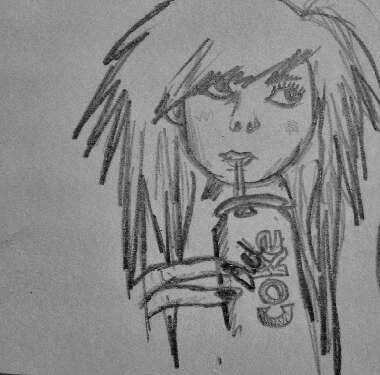
What I see in iNsEcurE (whose inconsistent casing recalls the long identifiers of medical-grade pharmaceuticals, the vowel-like howling insistence, the trembling name) are poets-of-drawings. The asemic work of line, layer and bleed is an avid supplement for writing itself. Who can write while in pain? Who’s afraid of the dark? Who’s afraid of the blank? It is in the night of writing, unnannounced. What is that invisible presence but pain itself? There is no ‘outside’ to pain, once you’re inside it. And yet the gate theory does imply a certain threshold. Relief bucks at the gate. Still, we draw from the well of it moving inside us. You can’t stop it. The appearance of the outside is only gauzy separation.

‘•.¸♡ ♡¸.•’

When I thought I had endometriosis and lived in the hormone torture of latent, duplicate pubescence, resulting from the long-durée of various quiet disorders, I wrote spiky little poems for a pamphlet called Cherry Nightshade. I didn’t yet know about the gate theory of pain but I saw all the poems in a dream_garden festering behind a gate. Well, more like a trellis. Ground cherries contain solanine and solanidine alkaloids: toxins which are lethal, and all the more lethal for their immaturity. Tart cherries have soporific qualities. I wanted sleep to envelop me in perfect velvet. My speaker was a jumping nerve, a shitty little internet silkworm.

What did I get from staring so long at the gate? I fell asleep on the line and the vine grew around me.

I love this exhibition for what it teaches us about art between bodies, how light interacts with feeling-colour, Moten’s ourreal in its total ambience, the drilling outside is part of that thrum in your skull, the way I love to look at my friends as they look at art, tulip mania, mourning vessels, the exquisite difference between red and pink, the meaning of panic touch, pain as the body’s great epistolary effort, fragility, attention’s relationship to healing, what it means to be gratified (if at all). I am grateful for the sharing of insecurity at the heart of the works, and for what they offer by way of being with pain. A bearing, a cloud platform, an intricacy. Standing at the gate.

‘•.¸♡ ♡¸.•’

Further notes:

  • medical filigree
  • acid yellowing
  • mau touches a sound magnet
  • ‘insecurity fuels consumerism’
  • light source
  • biofeedback
  • neon bandage
  • organelle ballet
  • tesselate attentions
  • the puzzle pieces do not technically touch
  • go into the hole
  • golden shovel
  • ’emoji repertoire’
  • give me a viable body
  • ‘cast latex, apple seeds, sawdust’
  • ‘I am still earning less than living wage through my art practice’

Becoming a line was catastrophic, but it was, still more unexpectedly (if that’s possible) prodigious. All of myself had to pass through that line. And through its horrible joltings. Metaphysics taken over by mechanics. Forced through the same path, my thoughts, and the vibration.

Henri Michaus, Miserable Miracle (2002) – quoted by Elísabet Brynhildardótti in the exhibition handout

iNsEcurE is open at Glasgow Project Room, Trongate 103, First Floor G51 5HD between 29th March-7th April. It is organised by Aniara Omann and supported by Creative Scotland and Hope Scott Trust.
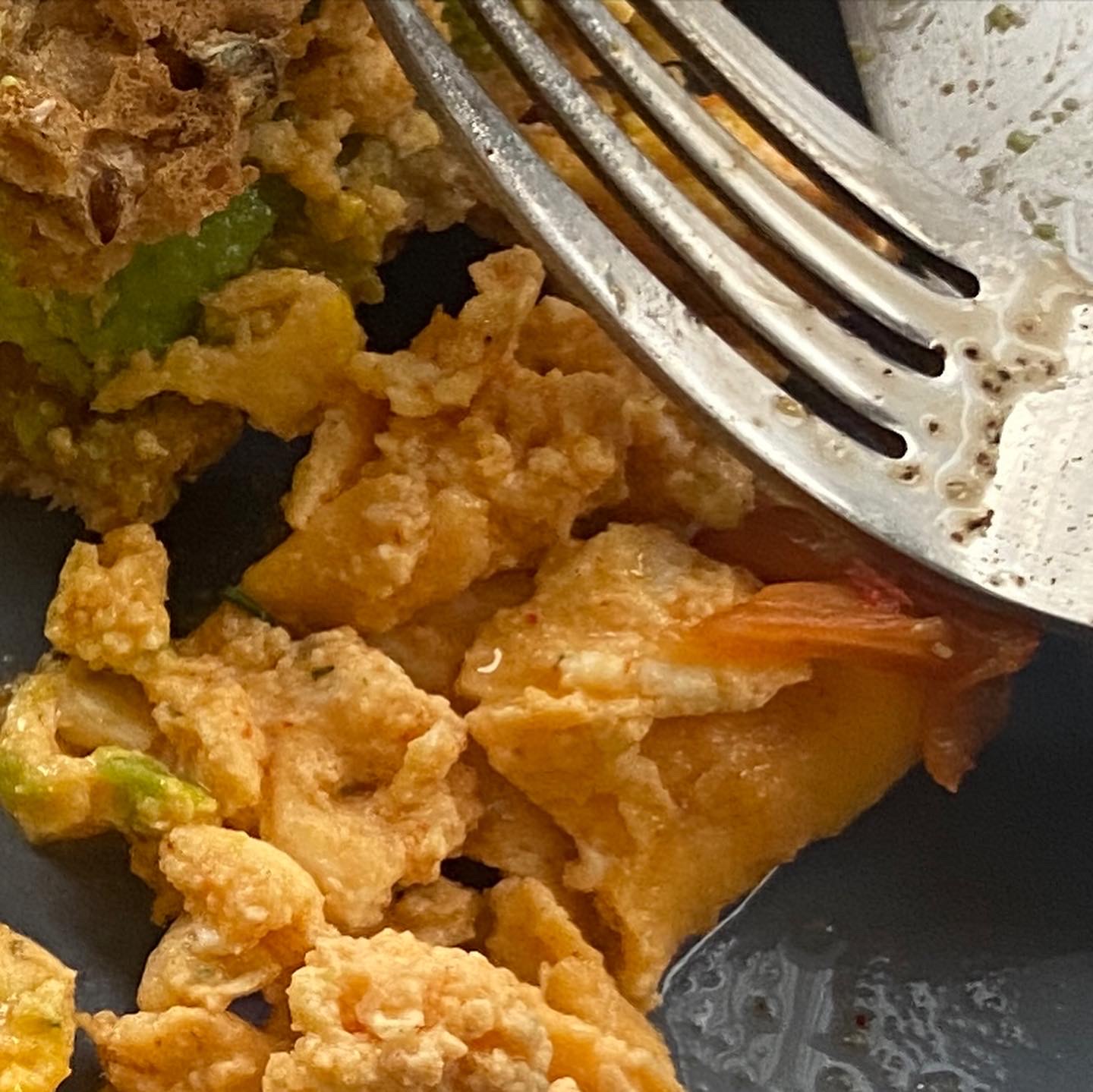
Mush

Bataille wrote ‘affirming that the universe resembles nothing and is only formless amounts to saying that the universe is something like a spider or a spit’. Losing the self in formlessness is ‘in common with erotic perversion’ and also ‘death’. I’ve always wondered what it felt like to have a galaxy embrace you. All the buried stars popping off underground where your meadow is a whole erogenous zone. Swish the mint wash around my mouth and spit. Blood. Sky stuff. 

O how I’d love to swallow wholly and be done with something, star self, in its millions. 

Bataille: ‘I propose to admit, as a law, that human beings are only united with each other through rents or wounds; this notion has, in itself, a certain logical force. If elements are put together to form a whole, this can easily happen when each one loses, through a rip in its integrity, a part of its own being, which goes to benefit the communal being’.

Open wide?

Our toothaches in sync and the sky gone down, its scroll won’t work. Clouds clot rain in our gums, I feel sorry for them.

What do I owe you?

Haven’t eaten anything crunchy and good for several weeks, I’ve lost count, there was that pizza at Little Italy that was the last good thing, dripping with goats cheese and artichokes. Formlessness. A gnarly tooth set back in your mouth, meaning something then the lack of it. We drank whisky where the doorman made me empty my huge bag and explain what Marxism was. I let alcohol numb my jaw and stumbled, I was upstairs, sleep weeping in lieu of sleep in a bed, in a travel lodge imagining myself like Sean said to be a larva in a honey colony.

Growing especially acquainted with mush again, less wisdom, I develop fresh desires for attachment. I’m baby for a while, wanting. Scrambled egg, porridge, cherry kefir, refried beans, applesauce, marmalade for no reason, chocolate ice cream, melted cheese, lentil soup, sweet potato, oat milk. Mush has sentience. In your mouth you have its true formlessness and you become one with it. Literally the last few days I’m scrambled, soupy, result of melt. I wanted to be licked thoroughly to nothingness, just this sweetness at the back of your throat.

Jealous of hard edges, hipbones, infrastructure.

Happy Cunny October.

Dentist with claws in my dreams, dentist with dog food in a bowl for me, dentist with a very tall pylon, dentist with a sabre the length of god.

Spider in my shower, spider tattooing itself to my nail, spider has form. Style. Spider in each of my eyes.

Redistribute anything of meat that remains. Bataille wrote of eruptions, necessary expenditures, ‘laceration’. No more content.

You must let the blood clot. No coffee for five days. 

Poetics of mush: reduce itself down, a sauce made with the juices released from thought. Tasty essences and tastelessness itself. V Covidian feeling: the only taste is mould, garlic, capers. Salting my kale. You said something.

It hurts to smile! 


~

Bataille, Georges, 1985. Visions of Excess: Selected Writings, 1927-1939, ed. by Allan Stoekl, trans. by Allan Stoekl, with Carl R. Lovitt and Donald M. Leslie, Jr., (Minneapolis: University of Minnesota Press).

Playlist: July 2018

IMG_2559.JPG

This month first bloomed in the green-gold fairgrounds of sleepless nights, twinned in a week of pre-delirium. We stood in a packed sports bar and watched three screens simultaneously, everyone’s face a spectacle of something other that was going on beyond offsides and angles and penalties. Indulgent love of epi-bro culture. Finding that tiny jubilance inside you. Running round with the lights off, spouting catch phrases that kill and kill. I say the same name again and again, without meaning to. Am I winning.

Closing time and proximate whisky. What swills and feels wavy, later, at the top of the street. I hold ice in my gums for the numbing. 

Imagine a toothache so rich in pain it was like cradling some other entity within yourself.

So the paths seemed windier than usual and trailing my way into whatever would happen and the ascent and the lights that seemed stranger. Cradle your toothache into some kind of coda, a pause that leads to return. The portholes of naproxen, dihydrocodeine, paracetamol, ibuprofen. Appetite collapses and the mouth is a metallic pool of pain. Send one thing away to endure. Circle around, forget about yourself. Forget your body. Learn to make of my carpet a turquoise pool, our belligerent drift which quickens to pulse. I lay very still and bit my lip. Learn not to cry when people are kind, learn to accept gesture in itself. Walk in the back roads of Finnieston on some green afternoon, everything lush and wilted with rain.

So it warms again.

Salt rinses make me sad for the sea.

These train rides between cities and the way the light looks at eight of an evening in late July. The soft yellow gold of fields to be harvested, trails of meadow lines read as braille. We talk intermittently. I close my eyes to a faint remainder of presence. It is difficult to remember what’s happened, bundling into a part song of falling. Walk back along the Clyde, swallow a letdown that ricochets through all buried traits, read as you walk. Walk as you read. Chance encounters that mean things.

To be sent home early, to feel over-brimming with all this salty, incorrigible water. Cancer season comes to an end.

I say whatever weird thing pops into my head. This is the way we are now. It is light at six in the morning, we sit at the table among fag paraphernalia and sketch each other’s souls. So ever to read glitches between us in negative space. I walk home alone and the daylight tastes so beautiful and I am so dizzy from twice cheating the diurnal within the same week. When we message, we use only the choicest emojis. Wouldn’t you like a vial of mercury?

I told him I was seeing. I was seeing.

My head in my throat, forehead to forehead. Is it the sweat, the seemingly interminable beats? The club is like the cabin of a ship, sloshing with heat and bodies. I spill out in cold night. I write this looking at the rain outside, which is utterly vertical and soft, drooping the branches of trees I can’t name. The sky is a greyish egg white, clearer towards centre. It matches my mood quite perfectly. I fear it will melt.

The colours in the takeaway were ravishing, erratic. I could not take my eyes off the shreds of meat. The singular tomato.

The rain was welcome. It gushed bright cold to my skin as I peddled, the canal adjacent to my trail. Catching my breath on the hot chest feeling, which later would become a pang, a harp string pulled too taut. A minor chord that needed to settle. It takes awhile to settle into your own body, to learn its game. The rain was good, the rain was silver and dazzled the leaves. I cycled to Lock 31 and back again twice in a week. I wanted to compare each experience. The fact was a shift in my flesh, a chorus of moving blood and water.

My sweaty hair smelled of the sea. I like that the seagulls leave when it rains.

Maggie Nelson writes: ‘How many ways are there / to get saturated in another’s mind?’ & I wonder. She is writing about a canal too, but really she is writing about desire. Canals don’t flow though; canals are relatively static. Something of undercurrent draws them along?

The pale sweet scent of coconut oil and misplaced nostalgia.

The Forth & Clyde Canal is so unlike the Clyde, this great wide luminously masculine river. When the song came on and I thought of the boy who drowned. I like to look at the lights on the Clyde at night, feel quite dark in myself and proximate to history. Feel everything dimming. Feel muscular for merely being there.

But then once I saw the Clyde in the afternoon, it was buttermilk.

Maryhill becomes a sort of fairyland, the unseen space around the canal, the outcrops of houses blending into Anniesland. I stick to the line, the gravel, the pace. Trust in my breath. Clusters of teenage girls pass by on their mobiles.

Sometimes I hallucinate the phone ring of my childhood home.

Keep sleeping in and savouring escape. The trick is to get to bed before five. To keep yourself stable.

The weeks slip away like vulnerable sand flats.

I drink things that are orange and icy and strong. I try to recall that hullabaloo of pain. A wedge of it bright and red.

Drawing is a warm sweet vortex where I drag myself deep into greens and blues.

Layering long stints of techno over the same routes. It gets heavier. I walk into the headlights of cars without meaning to. They keep playing Darude’s ‘Sandstorm’ in Byres Road Tesco, the inchoate vertigo of a broken decade. Later I dream the stores were empty as they were in the snow days. Water everywhere, sloshing the hours and ankles, not a drop to drink. Remember when everything caught glitches, sounded through the tinniness of a Motorola phone, those metallic wee speakers, resounded twice over on the plexiglass of a bus stop?

Everyone’s cold suburbia closes. You just shut the skylight, ignore the rain.

When you are away I sort of half live in the other place, but then already between myself.

Is it the circles below my eyes, below ugly tungsten light? The intimate work of a visceral distraction? Too many bowls of soft cereal?

Craving the expanse of the sea, releasing my cuts, wanna lose all time + memory.

Salt rinse, salt rinse; salt and cloves.

Find a note on someone’s jotter at work: get cunt fae spar. It will take a while to parse this. Fae spar get cunt, cunt spar get fae. Ye olde spar will get yae. Forget the star. 

There is a fight and a fire and over and over I write things like, gratitude, gratitude. Plug sockets sparking. 

Resist the tinny in the fridge. Do magick. I think maybe I am tired and scared of the present. The piano sounded lovely. With my window open, I could hear someone warming the keys. Notes for a genuine summer, notes for a situation. Then breathe. Bryan Ferry is sound-checking from the bandstand, you can hear the distant, phasing groan. It is almost August. 


*


Death Grips – Black Paint

03 Greedo – Jealous

Cold Cave – You & Me & Infinity

Fred Thomas – Good Times Are Gone Again

The Twilight Sad – I/m Not Here [Missing Face]

Hand Habits – Book on How to Change

Pavement – Harness Your Hopes

Mush – Luxury Animals

Black Marble – A Great Design

Sun June – Discotecque

Emily Isherwood – Calibrate

Hana Vu – Crying on the Subway

Laurel Halo – Sunlight on the Faded

RF Shannon – Jaguar Palace

Amen Dunes – Lonely Richard

Lucretia Dalt – Edge

Ride – Chrome Waves

Oneohtrix Point Never – Monody

Gang Gang Dance – Lotus

Beach House – Black Car

Womensaid – Magick!

Wooden Shjips – Eclipse

Phoebe Bridges – The Gold (Manchester Orchestra cover)

Galaxie 500 – Tugboat

Judee Sill – Lopin’ Along Thru The Cosmos

Aphex Twin – aisatsana [102]

Playlist: May 2018

IMG_1092.JPG

If April is the sweetest or cruelest, May has become the strangest month. Not ever but ever at present. It is summer’s gatekeeper, but also something other. Nurse of darkness and grief, rushing in bright lines and new delusions. Keeper of shadows flickering among green. In previous years, the season when confusion blooms. A dull need that quickens with the light through dawn to dusk, that honeys the flesh and the flesh’s sense of itself as pearlescent. Coming to endings. I brush my hair smooth copper in a mirror and notice green rings beneath my eyes. My eyes turn green from the copper, the sun. Moss agates held to the light. My irises look less like little sad pools of ocean; more forest now, with secret capillaries. With vague fantasy, I keep planning day trips I don’t then take. The sense of this name or that, a train stop, a heady clifftop walk, is sometimes enough. 

Alcohol does me favours, then doesn’t. That absolute sinking sensation of four in the morning, the day already blooming before you a pale lilac silver that streaks the sky and exacts a sort of spermicide resistance to the nourishment of sleep’s regeneration. So you are still electric, pacing at six, drenched in the ersatz light of the screen. White upon white. Straining fingers. I leave early one day to buy crystals, snapping photographs afterwards of bluebells in public gardens. The bluebells hide miniature universes. Still entranced by the fairies; the barmaid knows because she offers me absinthe, green bottle labelled with a delicate eye. The beer garden teeming; cradling sticky glassware back to the bar. Couples come out in the sun, as if so many never existed before it got light and warm. I’m very small, like a vulnerable child, but then swollen and huge altogether. I can’t help the Alice comparison: that sudden shrinkage or growth, beyond the normal bounds of the human. I lust for the fall—that’s all I want now. Air rushing quick around my skull, a delicious plunge. Shake out plumage, feel ridiculous. Everything limps.

It all started with a simple accident: flipping my bike off the road, the front wheels spun thrice, a smashed head smashed knee smashed hand and leg. Smashed brakes. The most extravagant black-purple bruise spread down my shins, clustering like a brand new galaxy around the bloody wounds of my knee. To bleed with gleaming garnet blood. Shocking the folk outside bars with my bleeding. To feel fresh and young at the sight of your insides red against the old old blue of flesh. This youth, this youth. I pedal forever to exact the same feeling, the rush of getting back on again, unlocking the city. I seem to be terribly in love with falling. The streets feel dizzy, the shapes and forms of things are not what they are. I sense they have changed without telling me. The world knows a secret I don’t. 

Illness, as it hits. The invisible sickness. I become an overflowing jar of water when I drink, the brimming emotions about to spill—things I usually hide and quench and disguise. Need to piss in awkward situations. Things you can roll out with a bike ride, a cluster of lung sucks and cheek flush adrenaline. But when they get to the surface, they poison the air around you. I spend longer hours in bed in the morning, night shifts and gigs leaving me delirious. To unroll from the covers is an art hardly mastered. I spend hours drifting back into sleep’s coma: a settled levitation of uncertain images, which I try to translate upon waking. A friend and I keep a dream journal. I notice she is always noting faces in crowds: skins, layers, mirrors; juices and rinds and types of paring. My dreams grow more detailed over time, a side effect of writing them down, giving them the agency of language. They dance with image, they have additional emotional import.  

I walk across the city, because sometimes that seems the only safe thing to do. The colours in the park just shy of midnight. Pastels brushed and blurred by a child’s ham-fist. Chalked sentences around Woodlands. Pick up your dog shit. My nails grow long and strong and I do not clip them. I want them to seem like a pianist’s, as if at any moment they might pluck out a symphony. 

Something of grief scored into my bones. We lost someone we loved, after days of looking and sharing and fighting. My timelines overflow with collective sorrow and personal pain. I spend hours scrolling through tiny stories, slices of joy and memory’s catharsis. We have all been hurt in some way; there is a tear. What rushes in and scolds the fresh wound. It is the one grey drizzly day I remember of this May, utterly fitting. I walk along the Kelvin, listening to The Midnight Organ Fight over and over, hymn to my youth and so many others. The drone fills my blood; I do nothing to stop the rain dampening my hair, filling my shoes, dripping down my neck. Shake out my stolen Monet waterlily umbrella. Remember the bleak streets of Ayr, adolescence an age of cool slain time. Kicking litter, drinking. Rain. Falling into sick sick love then forgetting. The rain rain rain, the rain falling into the sea. It is a membrane I crave, the pale wet indifference to shroud my pain. Sand on skin. What glisters at the edge then beckons. I did not know it was possible to hurt so much for someone you barely knew. It hurt more, in a way, than forms of loss by blood. Family funerals. Toasts. Drunk, I walk back along bridges and try not to cry at the moon, the black black water. Something astride us, everlong waxing and waning. Photographs of plastic, closeup and swallowed in song.

I tore an elegy out of my hours in bed and maybe one day I’ll share it. Something in the darkness, heard.

By some miracle, I regain my night off to go see Phoebe Bridgers play Saint Luke’s. It is a warm night and I walk all the way from west to east; the football’s been on so the drunks stumble out of pubs in their green. She purrs something from the stage, like “So I heard y’all had a sports ball game on today”. We smile at the understatement, there’s a mesmerising space. I stand and my body is so weak my knees hurt and thighs burn and it takes every nerve in me to keep standing, to negate the presence of those around me. Her silvery voice slices through all that, makes perfect rivulets in my soul. When I think too much about it I can’t breathe. There’s a trembling of recognition, little swells of emotion that prick the whites of my eyes. What you thought you were over comes crashing again and over, over. The world whirrs and hurts. It’s barely enough to keep clinging. Walking home, seeing old friends, I felt exhausted: every pore stung but I was also exhilarated. Climbing the concrete city. That feeling of release. The sweet way her vowels lit up the Mark Kozalek cover, the encore. I imagine bright candles snuffed out one by one, the great murder and the guilt of afterwards. Cold and red. The soft caress of the senses, a temporary catlike imaginary. Darkness comes over, consumes the white space you left for happiness. You can’t have it without dreams; you can’t have dreams without darkness. I am dependent on this sorrow. Watching the Ohio river flow at night. These landscapes I know mostly through song, these burning reeds and the gilt-edged clouds over desert metropolis, lost coyotes. 

I start writing a novella, set between Britain, Berlin and some mysterious American prairie. Think cheddar-red sunsets, unrequited desire, distance. The indigo swimming pool, covered in leaves.

Distracting myself from everyday idleness, I go to see vast quantities of decent indie, mostly at The Hug and Pint or Glad Café. I take a break from an all-dayer to sit atop a hill in Queen’s Park, south side, watching the sky grow peachy. Chew fruit bars. Drink gin to feel better, in soft medicinal quantities. Do not write as I wish I could. Leave gaps. The pages don’t fill as I’d like. Walk back alone.

I think I am okay but then I walk over water and think of the cold decision. My mouth sours as though filled with the juice of an apple and any word I might have dissolves in the acid, prior to speech.

Remember as kids we’d build dams in rivers? Inefficient structures of misshaped rocks. The cool cola feel of water, smooth through our fingers.

In some hot bright room of the CCA, practicing Oulipo techniques with Lynn Crawford and Josh Thorpe. I write a handful of sestinas, a process that feels akin to weaving. I am paring threads. In times of crisis, I used to sit and make friendship bracelets, focusing on the unconscious flicker and flow of my fingers. The particular colours woven thrice. Pick six words and make do with their pattern, the possible. 

Iced Americano from Caffé Nero. Jolt of the nerves. Heat haze over Greenock.

A delay in the body akin to the moon. Waxing slow motion; glitch and lag; the sense of being dulled; the sense of being injured, cramped and twisted. Walk around, see friends, drink bright and early. Waves of hot agony. Go to poetry readings. The sparkle and trance of listening. Speaking. Record poems that settle a corridor of airwaves, signals, emoji. However the connection works. 

Get haircut. Scalp massage. Brighter orange bleeds to gold. Sodium. Get on a train. 

Loch Lomond never looked so good in green and gold and blue as it did that May of 2016. I lay in the bluebells taking pictures, feeling so restful, red-headed. Fire against green. Now I arrive and make it my imperative just to walk. Early evening of a Sunday and I want to walk my way out of a sorrow, past gaggles of boozy youths; the fresh wound of loss still there and irritating, itching and burning. It is hard to have ordinary conversations, so I take myself off. Everything is so green and the green is so necessary. My body is heat and then freezing. Later, he holds his cold fingers to my neck and we trade levels of shiver. Purple nails and tales of bad circulation. I trip up on my past and can’t help it, looking for the clavicle. The endless craving of a former body…

I parse more and more my botanical ignorance. 

Missing the last train home from Edinburgh, after a poet’s birthday party. Doors slammed shut in our face from the carriage. We missed the margaritas, and then the disco. Drank beer in the Meadows, contemplated snow. Menthol vape smoke and cluttered streets, strangers playing tennis all through the dusk. Lovely people. Record collection, good books for miles, pizza. Conversations sweet & real & funny.

The maidenhair fern grows healthy again. I have had her for two years and she’s seen frazzled stages. Clipped back, green again. Does that boy drive? She asked, in the car to the garden centre. I miss the winding corridors of plants, the paint samples, colour cards, smell of wet pine and murmuring water features. May goes on, regardless.

A series of goodbyes. One friend moves back to Greece, the other to the Highlands. Life goes porous with the temporary emptiness that nonetheless lingers without supplement. Miss our wee chats at all ours, in stairwells or pink-tinted texts. Cascading games of our rucksacks swung. I listen to Josh telling Canadian ghost stories in the restaurant: tales of a bride burned alive by tea lights catching her luminous dress, doomed to forever haunt some hotel in the vast, faraway mountains. The geography remains vague in my mind. The customers come and go or don’t at all. I polish cutlery to a deathly sheen.

Festival atmosphere of everywhere in sun. A sunny day in Glasgow, then another one. Minor riots in the park. How are we so blessed, it’s amazing. Botanical taste at the back of my mouth forever. Bewitched house plants, buttered bread rolls, cold tea, slabs of Aviemore carrot cake, tarot readings in Thai restaurants. I wish I could be more glistening. The air in the park at night smells musky and sweet, weed smells and seeds and greening. Saying goodbye without babbling. I noticed the blue, two iris skies at the station.

The last card pulled a cosmic future.

Run across roads to see old friends, nearly get knocked over. Every day I regret not waking earlier. Not going to bed, the struggle to sleep and reset again. Scared of the endless bleed of days.

Feeling kinda weirdly low. I think he’s one of the biggest inspirations in my life right now. Can someone inspire you, I mean in the way they deal with feelings? I value an honesty I can’t offer myself. Not yet. 

Rereading old Wordsworth and falling asleep while writing and leaving black dots of ink that seep through my diary. Opening scene of a whirlpool. Talk about Stonehenge with a singer from Portland I love very much. Something about the lapse of water, like every trickle another neglect. People walk round and round in circles, scrolling the whites of their phones as if in sync with the rolling traffic. In my childhood bedroom, I kept a framed photograph of the stones at sunset. I felt calm and serene and apart from myself, apart from time, when I looked at the stones.

I worked a 9-5 the day they found the body, his body. I was serving people with a smile I didn’t recognise and trembled all over and the sense of witnessing this alter-reality or shock, the opening of feelings I thought I’d forgotten. What went on inside the shell, a quivering. Hid behind crates of dirty glasses, in curtains. Tried not to cry on my lunch break, watching solo acoustic version of ‘Poke’ on my phone. Hugging everyone. Earnest conversations. Work is a family. Hot strong coffee takes the edge off. Sometimes no need to talk. The lyrics come again and they burn harder this time. I need to catch my breath. Regain metabolism.

Beautiful messages out of the blue.

Emotional hangover. Best cure, I dig among the piles of clothes in my room and pull out a hardback book: Sylvia Plath’s journals, Christmas gift from my mother in 2012. The book feels heavy and secure on my lap, like a complicated baby. Read her through sleep, while dinner is cooking. Steam, garlic scent, onions, steam. Her voice makes sluices through the fug of everything, so I can feel clear and real again. She mentions ‘the adrenaline of failure’, the up-and-down wavelengths of acceptance and rejection. A poet’s lot. Lust. Apple-bitten first encounters. Fears & jealousies, petty grievances. Genuine pain. Periods of drifting depression, absence of thought. Blood. Self-laceration. Womanhood. Fizzy inspiration, sociability. New challenges in life are a test of endurance. ‘Interesting’, she notes, as to whether she would ‘pass, keep myself intact’. How often are we aware of our everyday proximity to breakdown? 

Saturday October 10th, 1959. 

‘Feel oddly barren. My sickness is when words draw in their horns and the physical world refuses to be ordered, recreated, arranged and selected. I am a victim of it then, not a master’.

7.30pm Wednesday, October 17, 1959.

‘I don’t know why I should be so hideously gloomy, but I have that miserable “nobody-loves-me” feeling’.

Journal Fagment 31st December 1955 – 1st January 1956. 

‘Sun well up, losing red and paling into blinding gold, air fresh and cold, essence of snow melting in sun, checking baggage and wandering toward the sea in a strange city’. 

I will be flying to Munich in less than a week. The first time travelling alone without family. Somebody gift me with orientation. As though without sleep, the comedown slides across a map, egg yolk cool upon blue and green. My eyes won’t focus.

Leaving the flat after 4pm each day, I am a stranger in a world I recognise dearly then don’t. I am best in the early hours or late at night. Catching spiders on sidewalks. Everything between that is strange oscillation, is tuning in and out of social existence. What about when the words don’t come. So many trite feelings. A terrible love. The shapes of things. I’m walking with. All of Glasgow a building site, dust of destruction and foundations laid. Piles of concrete slab, churning tar; industrial scents lace the too-warm air. 

Where once I would say, hey I’m addicted to chocolate. Honestly, 200g+ a day! Now, it’s a serotonin craving. Simple as. Deficient.

Playlists make better sense of these feelings. Thin black lace, an open window. Warmth.

Easier not to just clack and bite.

Go to prom re-enactment. Balloons and alcopops, rhinestones; blue velour and slacker rock. Fall asleep, nearly, on the night bus, passing airport and eerie business estates. The pool and the plastic palms. Walk home, low battery, ruinous sadness. Insomniac documentaries about Karen Carpenter. Milk cookie eyes and innocent villanelles. Her voice a creamy river, glossy brunette, hometown glory.

We enter Gemini season. The energy shifts. Borderlines and places I can’t cross in my dreams, lost people glinting in distance. Blue folds of tumblr embrace me again. Streams of midnight images, pastel landscapes and metallic objects melted to abstraction. Things split and twin and I miss all my soulmates, past and present. Editing, editing. I miss when the truth felt less of a shimmer. Sleep it off, sleep it off.

The loud loud noise of all these feeds.

Out in the hot dusty yard of SWG3, disco ball scintillating in the sun, I see LCD Soundsystem with my friends around me. For once, that’s totally enough. Stand between two brothers. Smile all through set. There is a sort of ultimate feeling. I can change I can change I can change. Synths blister through me. Drums. Feel drunk when I’m not. Feel heady. The old chandeliereal, teenage way. Sun glitters. Swap limbs. Burst memories are easy.

Wander home through herbaceous border. Covet her 3am poems, blog posts. We stay up all night discussing complex crushes, then I’m sad because endings are happening all around me. Withdrawals. Wilted tulips. Little flurries of unexpected messages, best sensation. Campari with soda or cherry brandy, amaretto on ice and sharing a seat, clinking glasses and feeling breezy. Sitting in dark galleries on hay bales, waiting. Clutching cigarettes I won’t smoke but stole anyway. Talk of literary idols, musicians and artists. Writing things down with conviction, like: I love the new Stephen Malkmus album, so much! Sparkle Hard! The dreamy subsistence of the suburbs at dusk. Those shoes are shinier than my future. I hope he’s okay. Plagiarise conversations. You could boil it all down to a haiku, May a tiny, significant bulb of gorse: 

Luxury sadness
Twice for sale, gold and then green
Forget to mention.

*

Bob Dylan – Tonight I’ll Be Staying Here With You

Sharon Van Etten – The End of the World (Carpenters cover)

Cat Power – Metal Heart

The Twilight Sad – I Couldn’t Say It To Your Face (Arthur Russell cover) 

Manchester Orchestra – Architect (feat. Scott Hutchison)

Harrison Whitford – Poltergeist Love

Pavement – Type Slowly

LUMP – Curse of the Contemporary

Bright Eyes – Coyote Song

Common Holly – If After All

Sufjan Stevens – Romulus

Milk Carton Kids – Wish You Were Here

Mark Kozalek – Good Nostalgia

Fossil Collective – Disarm

Nap Eyes – Every Time The Feeling

Arctic Monkeys – Star Treatment

Iceage – Beyondless 

Parquet Courts – Violence 

The Brian Jonestown Massacre – Animal Wisdom

Kendl Winter – Shades of Green

Big Star – Thirteen

Hatchie – Sleep

James Blake – Don’t Miss It

Stephen Malkmus & The Jicks – Bike Lane

Sufjan Stevens – Make Out In My Car (Moses Sumney cover) 

The Innocence Mission – Look out from Your Window

Frightened Rabbit – Head Rolls Off

LCD Soundsystem – All My Friends

Falling through Glass


3746713882_eb3e039a09
self-portrait//circa 2008

[An essay on anorexia, femininity, adolescent pain & writing the body]

I distinctly remember the first time I watched someone apply liquid liner to their eyes. We stood in the Debenhams toilets before a sheet of unavoidable mirror. She emptied her rucksack of trinkets and tools, drew out a plastic wand with a fine-tip brush and skimmed the gooey ink skilfully over her lids, making curlicues of shimmering turquoise. Her irises were a kind of violent hazel, whose flecks of green seemed to swim against the paler blue. She was very tall and for a while, very thin. She had a nickname, a boyfriend and sometimes she shoplifted; in my head, she was the essence of teenage success. Only later, in the maelstrom of a drunken night out down the beach, do I discover she’s heavily bulimic.

A year or so passes since this first incident, watching my friend slick her eyes with electric blue. I have since learned to ink my own eyes, draw long Egyptian lines that imitate that slender almond shape I long for. My makeup is cheap and smudges. I have grown thinner and people are finally starting to notice.

My mother goes quiet when we do the shopping. She tells me to move out the aisle and I ask what’s wrong. People are staringshe says. I turn around and there they are by the stacks of cereal, mother and daughter, gesturing at my legs and whispering: stick insect, skeleton. A feel a flush of hot pride, akin to the day in primary school when I got everyone to sign my arms with permanent marker—this sudden etching of possession. I am glad I lack this conspiratorial relationship with my own mother, reserving comments on others for the page instead, for my skin. My pain and frustration are communicated bodily: I slink into the shadows, sleeping early, avoiding meals. When people stare, they imbue me with a visibility I desire to erase. I should like better to float around them intangibly, diaphanous, a veil of a name they can’t catch. Instead it rests on everyone’s tongue, thick and severe: anorexic.

It took a week for all the names to fade from my arms; it takes much longer to erase a single label.

In the television series Girls, Lena Dunham’s character reveals that she got tattoos as a teenager because she was putting on weight very quickly and wanted to feel in control of her own body, making fairytale scripture of her skin. In Roald Dahl’s short story, ‘Skin’, an old man gets a famous artist to tattoo the image of a gorgeous woman on his back, the rich pigment of ink like a lustrous ‘impasto’. Years later, art dealers discover his fleshly opus and proceed to barter, literally, on the price of his skin. The story reveals the synecdochical relations between the body, the pen and the value of art. Everything is a piece of something else, skin after skin after skin. In Skins, Cassie Ainsworth gazes into the camera: I hate my thighs. With black marker, she scrawls her name onto her palm; she’s got a smile that lights up, she’s in love. Everyone around her rolls cigarettes, swaps paper skins like scraps of poetry. It feels dirty, the chiaroscuro mood of sunshine and sorrow. Her whole narrative purpose is the spilling of secrets, of human hurt turned to vapour, smoke. Wow, lovely.

For a while, my name mattered less than my skin. There were levels of weight to lose, dress sizes which signified different planes of existence. Over and over, I would listen to ‘4 st. 7lbs’ by the Manic Street Preachers, Richey Edwards’ lyrics spat over a stomach-churning angst of guitar: ‘Self-worth scatters self-esteem’s a bore / I’ve long since moved to a higher plateau’. That summer, ten years ago now, I would walk for hours, the sun on my skin. All the fields stretched out before me like fresh pages of impossibility; my life was a mirage on the flickering sea. I thought of liquid turquoise ink, the friend in the mirror. I started to forget the details of her face, so she blurred into the impressionist portraits I wrote about in school.

Midsummer’s eve; I laid down in one of those fields. With bone-raw fingers, I counted the notches of my spine. Even in free-fall you never feel quite free.

I was obsessed with Richey’s ghost. He disappeared decades ago and they never found evidence of his body. I wanted to evaporate like that, leave my abstracted car somewhere along the motorway; step into the silence of anonymity. Richey wrote screeds of furious notes: ‘I feel like cutting the feet off a ballerina’. There it was: the dark evaporation of resentment and envy. Around this time, Bloc Party released A Weekend in the Citya record that uses Edwards’ lyric to express the racial frustration of being made Other by a racist society. I was acutely aware that the figure of a ballerina, the doll-like white girl, was a divisive source of symbolic desire. We inscribe such societal alignments on the female body, and shamefully I was more than ready to fall into place, to shed the necessary weight. But what I wanted was less the bloody violence of a crippled ballerina, and more the success of erasure.

In Zelda Fitzgerald’s only novel, Save Me the Waltz,the protagonist Alabama trains to be a ballerina late in her twenties, too late to ascend to any real career success. Here was ballet, the pre-adolescent world of waif-thin bodies and she was a mother, a woman—someone who once gave birth, who was strong in flesh. She reaches this frenzied state of beautiful prudence, honing her body to the point where every movement and thought is guided by the waltzing beat, the perfect arabesque: ‘David will bring me some chocolate ice cream and I will throw it up; it smells like a soda fountain, thrown-up, she thought’. I could attest to that. Ben and Jerry’s, swirls of it marbling the toilet bowl, clots of sweetness still clear in your throat. Fitzgerald’s sentences stream towards endless flourish. Alabama makes herself sick with the work, her desire is lustily bulimic. She gets blood poisoning, finds herself hospitalised with tubes in her body, drip-fed and cleansed by the system. I thought of how I wanted to photosynthesise, survive on nothing but air and light. Like a dancer, I was honing my new ascetic life.

Sometimes at night, the old ticker would slow to such a crawl and I thought it would stop in my sleep, sink like a stone. A girl I met on the internet sent me a red-beaded bracelet in the post and in class I’d twirl each plastic, pro-ana ruby, imagining the twist of my own bright sinew as later I’d stretch and click my bones.

I was small, I was sick. I used to write before bed, write a whole sermon’s worth of weight-loss imperatives; often I’d fall asleep mid-sentence and awake to a pool of dark ink, flowering its stain across my sheets. Nausea, of one sort or another, was more or less constant. Waves would dash against my brain, black spots clotting my vision. I moved from one plane or scale to another, reaching for another diuretic. I tried to keep within the lines, keep everything in shape.

Often, however, I thought about water, about things spilling; I drank so much and yet found myself endlessly thirsty. Esther Greenwood in Sylvia Plath’s The Bell Jar, trying to drown, being spat back out by the sea: I am I am I am.

 I’m fine I’m fine I’m fine. The familiar litany.

Something buoyed up, started showing on the surface. People could read the wrongness in the colour of my skin, all that mottled and purpling blood like a contrast dye my body had been dipped in. Against my pallid aquatic hue, I used to envy the warm and luxurious glow of other people’s skin. I sat on a friend’s lap and he freaked out at the jut of my bones. Someone lifted me and we ran down the road laughing and they were like, My god you’re so light. The sycamores were out in full bloom and I realised with a pang it would nearly be autumn. Vaguely I knew soon I would fall like all those leaves.

Anorexia is an austerity of the self. To fast is to practice a refusal, to resist the ideological urge to consume. To swap wasteful packs of pads and tampons for flakeaway skin and hypoglycaemic dreams. Unlike with capitalism, with anorexia you know where everything goes.

The anorexic is constantly calculating. Her day is a series of trades and exchanges: X amount of exercise for X amount of food; how much dinner should I spread around the plate in lieu of eating? It was never enough; nothing ever quite added up. My space-time melted into a continuous present in which I constantly longed for sleep. The past and future had no bearing on me; my increasingly androgynous body wasn’t defined by the usual feminine cycles—life was just existing. This is one of the trickiest things to fix in recovery.

Dark ecologist Timothy Morton says of longing: it’s ‘like depression that melted […] the boundary between sadness and longing is undecidable. Dark and sweet, like good chocolate’. Longing is spiritual and physical; it’s a certain surrender to the beyond, even as it opens strange cavities in the daily. The anorexic’s default existential condition is longing: a condition that is paradoxically indulgent. Longing to be thin, longing for self, dying for both. The world blurs before her eyes, objects take on that auratic sheen of desire. Later, putting myself through meal plans that involved slabs of Green & Black’s, full-fat milk and actual carbs, the dark sweet ooze of depression’s embrace gradually replaced my disordered eating. I wondered if melancholia was something you could prise off, like a skin; I saw its mise-en-abyme in every mirror, a curious, cruel infinitude.

In Aliens and Anorexia, Chris Kraus asks: ‘shouldn’t it be possible to leave the body? Is it wrong to even try?’. What do you do when food is abstracted entirely from appetite? What happens when life becomes a question of pouring yourself, gloop by gloop, into other forms? What is lost in the process?

I started a diary. I wrote with a rich black Indian ink I bought from an art supplies store. The woman at the counter ID’d me, saying she’d recently had teenagers come in to buy the stuff for home tattooing, then tried to blame her later when they all got blood poisoning. Different kinds of ink polluted our blood; I felt an odd solidarity with those kids, remembering the words others had scored on my skin for years. Tattooing yourself, perhaps, was a way of taking those names back. In any case, there was a sense that the ink was like oil, a reserve of energy I was drawing from the deep.

Recovery was trying to breathe underwater; resisting the urge of the quickening tide, striving for an island I couldn’t yet see.

(…What I miss most, maybe, is the driftwood intricacy, the beauty of the sternum in its gaunt, tripart sculpturing. Thinned to the bone, the body becomes elegiac somehow, an artefact of ebbing beauty…)

I think about beef and milk and I think about the bodies of cows and the way the light drips gold on their fields sometimes and how I’d like to curl up in some mossy grove and forget that all of this is happening. Sometimes I worry that my body is capable of making milk, making babies; its design is set up for this nourishing. Hélène Cixous insists women write ‘in white ink’ but I don’t want to be that plump and ripe, that giving. I want scarification, darkness, markings. I want Julia Kristeva’s black sun, an abyss that negates the smudge of identity.

I try to find loveliness in femininity, but my hands are full with hair barrettes, pencils, laxatives, lipstick—just so much material.

As Isabelle Meuret puts it, ‘starving in a world of plenty is a daring challenge’. Anorexia has the highest mortality rate of any mental illness. Recently, I logged onto my Facebook to find an old friend, a girl I’d known vaguely through an online recovery community, had died in hospital. Her heart just gave up in the night. People left consolatory messages on her wall; she was being written already into another existence. Another girl I used to know posts regular photos from her inpatient treatment. She’s very pretty but paper-thin, almost transparent in the flash of a camera. Tubes up her nose like she’s woven into the fabric of the institution, a flower with its sepals fading, drip-fed through stems that aren’t her own. She’s supposed to be at university. I think of Zelda Fitzgerald, of broken ballerinas. A third girl from the recovery forum covers herself in tattoos, challenging you to unlock the myriad stories of symbol. Someone I know in real life gets an orca tattoo in memory of her sea-loving grandfather; she says it helped to externalise the pain. My own body is a pool of inky potential; I cannot fathom its beginning and ending. I wish I could distil my experience into stamps of narrative, the way the tattoo-lovers did. I am always drawing on my face, only to wash the traces away. I must strive for something more permanent.

Recovery, Marya Hornbacher writes in her memoir Wasted,

comes in bits and pieces, and you stitch them together wherever they fit, and when you are done you hold yourself up and there are holes and you are a rag doll, invented, imperfect.
And yet you are all that you have, so you must be enough. There is no other way.

Every meal, every morsel that passes the lips, we tell ourselves: You are okay. You deserve this. Must everything be so earned? Still there is this girl underneath: the one that screams for her meagre dreams, her beautiful form; her starlight and skeletons, her sticks of celery. I try to bury her behind sheet after sheet of glass, lose her in shopfronts, the windows of cars and bathrooms; I daily crush out the bloat of her starched hyperbole, keeping the lines plain and simple. Watching others around me, I try to work out other ways of feeling full, of being free. There is an entry from 2009, scratched in a hand I barely recognise in the final page of a diary: ‘Maybe we are only the sum total of all our reflections’. I wonder what kind of sixteen-year-old wrote this, whether she is happy now and if that matters at all.

Observations of Sky

09080746-4F00-44A0-8428-241B4C4A4222

Observations of Sky

[Exercise in which I recorded the sky over nine days upon waking.]

10/3. The sky today is a grey recalling opals. Something of a swallowing grey, an inversion of light. An all-consuming, elderly grey. It feels smooth enough to resist osmosis and yet it manages to yearn its way into you, needling the soul. A grey that knows mortality, even as it gapes its ceaseless ugliness. A grey you’d pearl into a necklace, then hate it.


11/3. The sky today is the slightly off-white of old furs, you know the kind that’ve been festering in vintage shops a little too long. Demographic time-bomb. Once clean bleached, now a bit lossy on the gleam front. You couldn’t picture Kate Moss starrily circling a red carpet in this kind of white. It’s sorta depressing; an off-white mother’s day. Facelift.


12/3. The sky today is white again, but the kinda white with a glow behind it, promising future glimpsing blue. Maybe that’s an audiovisual effect of birdsong, deceiving me as to the premise of spring. The sky is a white that goes on forever. You have to lift yourself up mountains to see where it breaks into greys and golds, watercolour perimeter slowly blurred.


13/3. The sky today is spread with the aquarellist promise of blue. It is still early, before 10am and there is hope for sunlight later in the day. It is a true March morning, the kind I remember from beautiful hangover walks two years ago, savouring the fact of my company and an energy I’m sure I didn’t deserve. Spiralling & dashing like a girl again, not needing a drop of anything. The clouds are faint but everywhere, leaving the blue slightly mottled beneath and I think of canopy shyness–left faintness of yesterday’s rain which I missed anyway, being inside all day. Imprinted silhouette pretty. It is hopefully a blue for opening daffodils.


14/3. The sky today is grey again. This is the unmistakably fatty grey that speaks of climatic sickness. It is grey going backwards, clustering soot upon styrofoam. Some elements clicked together to make a nasty residue, spread like paté or peat across where clouds might be; but no gaps in between, no alterations of colour. It is all the same grey. It is all of a thickness, bubbling. I wonder who clutches the knife to prise it.


15/3. The sky today is grey again, but imbued with a stony blue within it. Tricky to explain, a certain weight. Completely opaque. Maybe algaeic. Can hardly imagine it ever breaking again, breaking to blue. I find myself longing for that Frightened Rabbit b-side, and the line, Well the city was born bright blue today. Clacking my feet upon fresh pavements; the westerly smell of warm tar, marijuana. Maybe I’ll wake up soon to that topsy-turvy, luminous feeling. It is like somebody took wax and ripped off the beams of sun, so all that’s left is the gluey residue, sweat-stained and delirious between earthly dimensions.


16/3. The sky today is a discharge grey, clotting so gross into its own thickness. It has not broken for days beyond sprinklings of rain. It is a turgid and bodily grey, waiting to burst. It is a hundred mixed-up medical metaphors. I listen to the pale road roar and the twinkles of sparrows. Mostly the sky is just grey though. I watch a video of people kissing inside cellophane.


17/3. The sky today is much more blue. I dream I bought cornflower underwear. Oh, this blue. Powdery and fragile, but blue nonetheless; you can see it made out against white patches of cloud that are not quite summer white, cotton white, but white of a sort. It is such a relief for this briefness of blue. Blue you might achieve something in, except I am so tired I succumb to rested eyes, closed lids, the watery exhaustion that leaks between lashes like a great whale expelling its plankton, mistaken plastic.


18/3. The sky today is heavy as a belly about to give. It presses down, sags with white. I hope somebody administers a drip to silently remove its snow. Through the back entrance, back to heaven. I cannot handle any more snow. Never mind silent spring, what of invisible spring. All the frost and snow crushed out the crocuses. Will I even see a single row of good daffodils this year? I fear I won’t. I am reading Dorothy’s journals for practice, or some sort of vernal supplement. Of course more skiffles start drifting, but it wasn’t supposed to snow after 1am and now it’s 11:11, the witching minute, and I can’t help but wish for a flourishing kinship. The sky will resolve its millioning creases into further whiteout loneliness, so I make do down here, terraforming my future.