New course: Writing the Everyday

Writing the Everyday

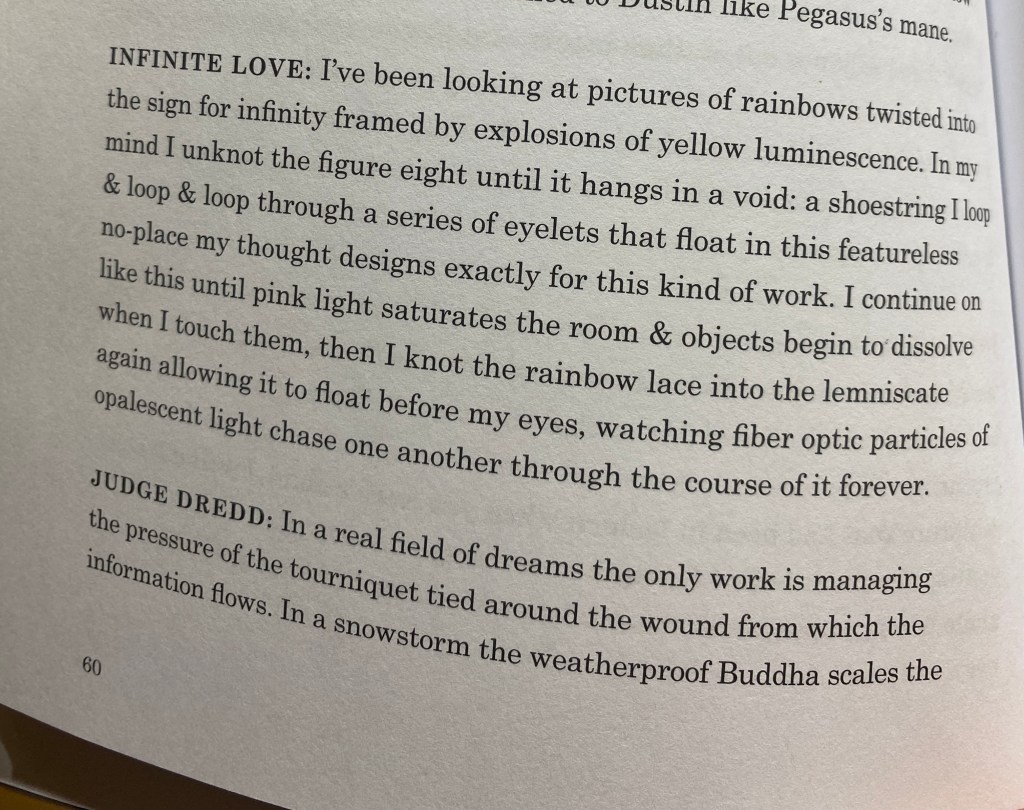
Pleased to announce that I’m joining the Beyond Form team as a tutor and mentor, and about to begin my first course: Writing the Everyday. If you’re interested in poetry, hybrid forms and journaling, in how we attend to everyday life in writing and think critically about time, work, ritual and habit, capitalism, technology, sickness and health, rest and dreams, then this course is for you!

Official descriptor:

This seven-week course takes everyday life as an abundant field of study. Following the rhythms of work, leisure, the body, technology, desire and play, we’ll explore various approaches to writing the daily. What forms of ‘extreme attention’ (CAConrad) can writing access, and to what effect? How do we break, queer, slow or sabotage time? What kind of writing could hold, shrink or expand the day? We’ll read a range of contemporary experiments in the quotidian and engage with journaling, poetry and hybrid writing. 

Open to writers of all backgrounds and practice. This course is for anyone interested in exploring everyday life in their writing, reflecting critically on the poetics and politics of daily writing and encountering literary issues of time, intimacy, objects, environment and the body. Extracts from all texts will be supplied on a shared Google Drive and linked through Experimental Creatives Collective.

Here’s a breakdown of the course structure:

Week 1 February 24th: Today

Exploring ‘today’ as a unit of experience in writing, rhythms of repetition, return. What do we mean by an aesthetics of ‘everydayness’? How does literature encounter everyday life — its things, feelings, tempos, bodies and motions — in form and content?

Week 2 March 3rd: Work

In what ways can we explore the rhythms and demands of work, and make space for play and dream? In what ways is writing a form of work? How can our writing critique the conditions of labour which variously structure our daily lives? What kinds of interval, escape and resistance might it offer?

Week 3 March 10th: Ritual Attention

How can we practice forms of attention that estrange us from the familiarities of daily and domestic life? What forms of collage and screenshot experiments help us make sense of the chaos of daily life under late capitalism?

Week 4* Tuesday March 14th: Consumerism and Desire

What are the political and poetic potentials of our everyday desires? How can we think beyond the desires of capitalism? What is the significance of gender and sexuality within daily life, and how is this negotiated through consumption?

*please note this class will take place on Tuesday 14th March not Thursday

Week 5 March 24th: Technology and the Post-Internet 

What is the relationship between writing and technology in our daily lives? How does experimental writing explore, and intervene in, the forms, genres and platforms of Web 2.0 — from social media to texting and digital objects/systems? What are the everyday politics and poetics of the internet and its various temporalities of labour, desire, data, communication and self-presentation?

Week 6 March 31st: Sick Time

How can writing explore personal and societal experiences with sickness, from chronic illness to pandemics? How does illness alter our sense of time, space, work and embodiment; how does it change our sense of the ‘day’?

Week 7 April 7th: Rest and Dreams

What forms of rest and relaxation can writing offer? What is the relationship between writing and dreaming, and how can dreaming help us imagine better worlds, or access hidden portals in writing? What are the politics of rest and how might we pursue it through creative practice?

Week 8 April 14th: Optional Open Mic

Registration

Prices are on a sliding scale and you can choose to enrol on the full course or to attend individual workshops. Most of the workshops are focused on individual writing, with room for open discussion at the end of sessions. You will not be expected to share work or give feedback on others’ work, although there may be occasion for this informally throughout the course, and through the Experimental Creatives Collective workspace which you will gain access to upon registration. There will be an optional open mic, held online, at the end of the course.

If you want further feedback on your work, I am available for one-to-one mentorship through the Beyond Form mentorship scheme.

All classes will take place on Zoom. How-to videos for using Zoom can be found here.

If you have further questions about registration, accessibility and Beyond Form more generally, please email Tawnya Selene Renelle at info@beyondformcreativewriting.com.

For more information and to register, head over to the course page here.
Upcoming Workshops: Feb 2022

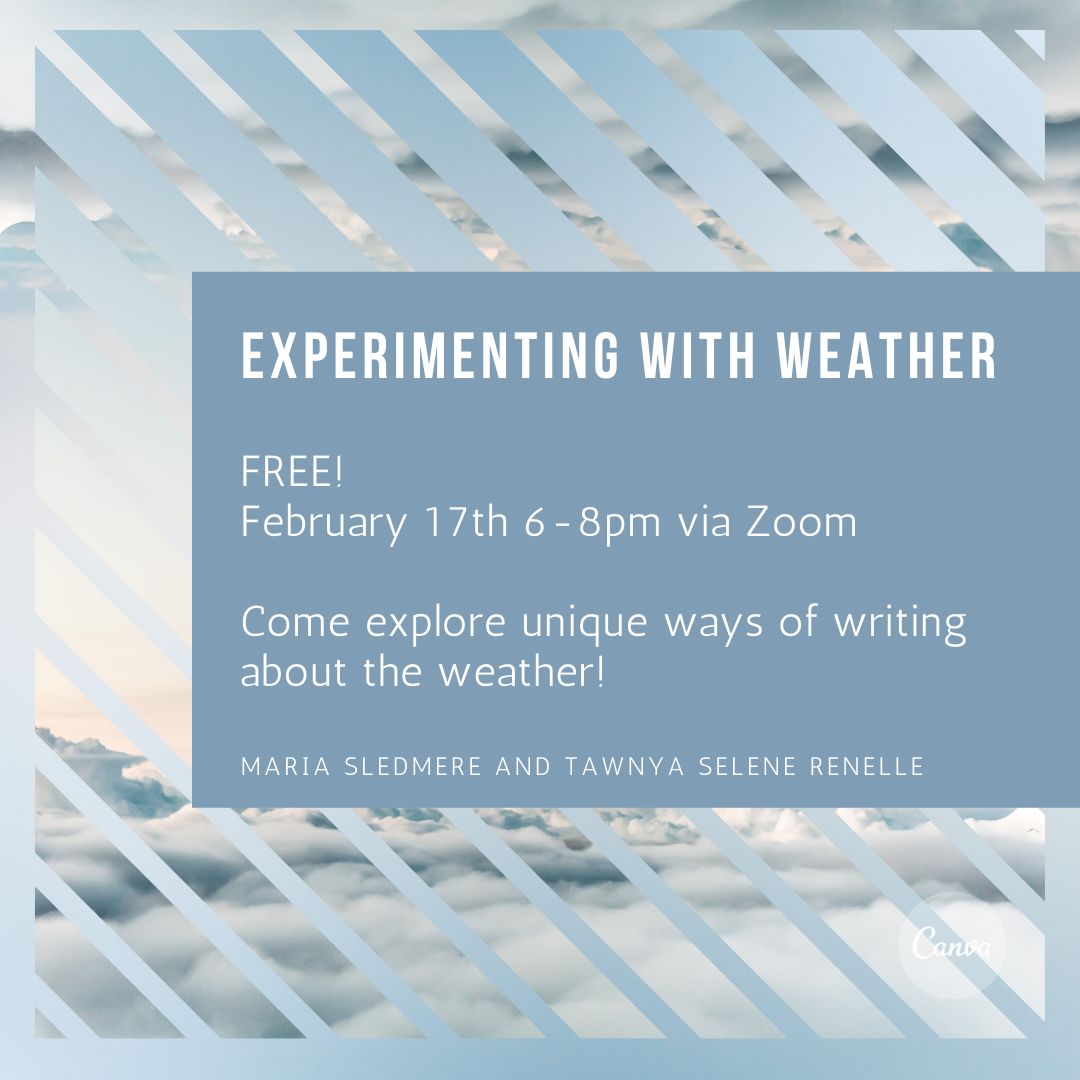
Experimenting with Weather
A workshop with me and Tawnya Selene Renelle

(Online and free)

Thursday February 17th

6-8:00pm (GMT) via Zoom

Join us for this free workshop. Maria Sledmere will be our guest as she gets you ready for her new course Writing the Everyday which will begin on February 24th.

We will be deep diving into all the ways we can experiment with weather and thinking about the ways that weather can shape both the content and structure of our writing. We will be thinking about the influence of weather and how something simple might be woven into experimental writing.

Suited to all genres, skill levels, and artists of any medium.

Register here.

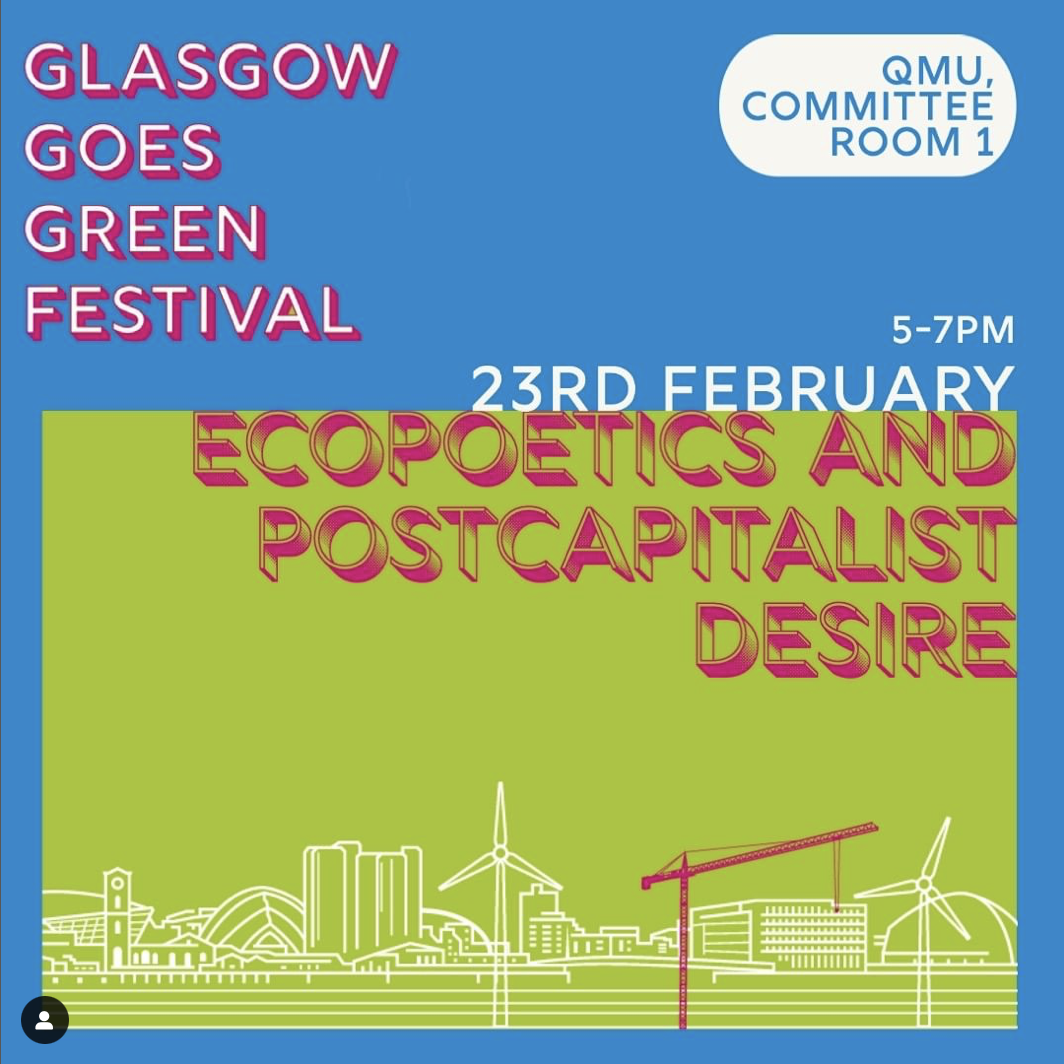
Ecopoetics and Postcapitalist Desire
As part of Glasgow Goes Green Festival (QMU, University of Glasgow)

(in-person, 5pm on 23rd February)

In his 2012 essay, ‘Post-Capitalist Desire’ Mark Fisher recalls protestors at the Occupy London Stock Exchange critiqued in the press for having iPhones and buying Starbucks coffee. In many mainstream framings of environmental activism, to be ecological is to be solemnly ‘pure’ and somehow entirely free of the taint of consumerism’s impulse. How do questions of energy, desire and expression come into artistic and activist responses to the climate crisis? Can we complicate the binary of ascetism and pleasure when it comes to ecology? This workshop asks: what does it mean to be ecological in and beyond capitalist society? Looking at various works of contemporary poetry, we will locate ecological thought within complex expressions of excess, hedonism and despair; works which intersect ecology with queer joy and critiques of racialised capital; works which negotiate ecological politics and ethics within everyday life and its games of recognition. 

After a short introduction to ecopoetics, we’ll read some poems (distributed as pdf handouts), explore writing activities and have discussion. 

Open to anyone interested in reading and writing poetry.

Location: this workshop will take place in Committee Room 1 of the QMU. Enter through the front door of the building and take the stairs or the lift ahead to the third floor. A member of staff will be present to direct you to the workshop.

Please bring your own preferred writing materials.

Register here.

Cowboy Gardening

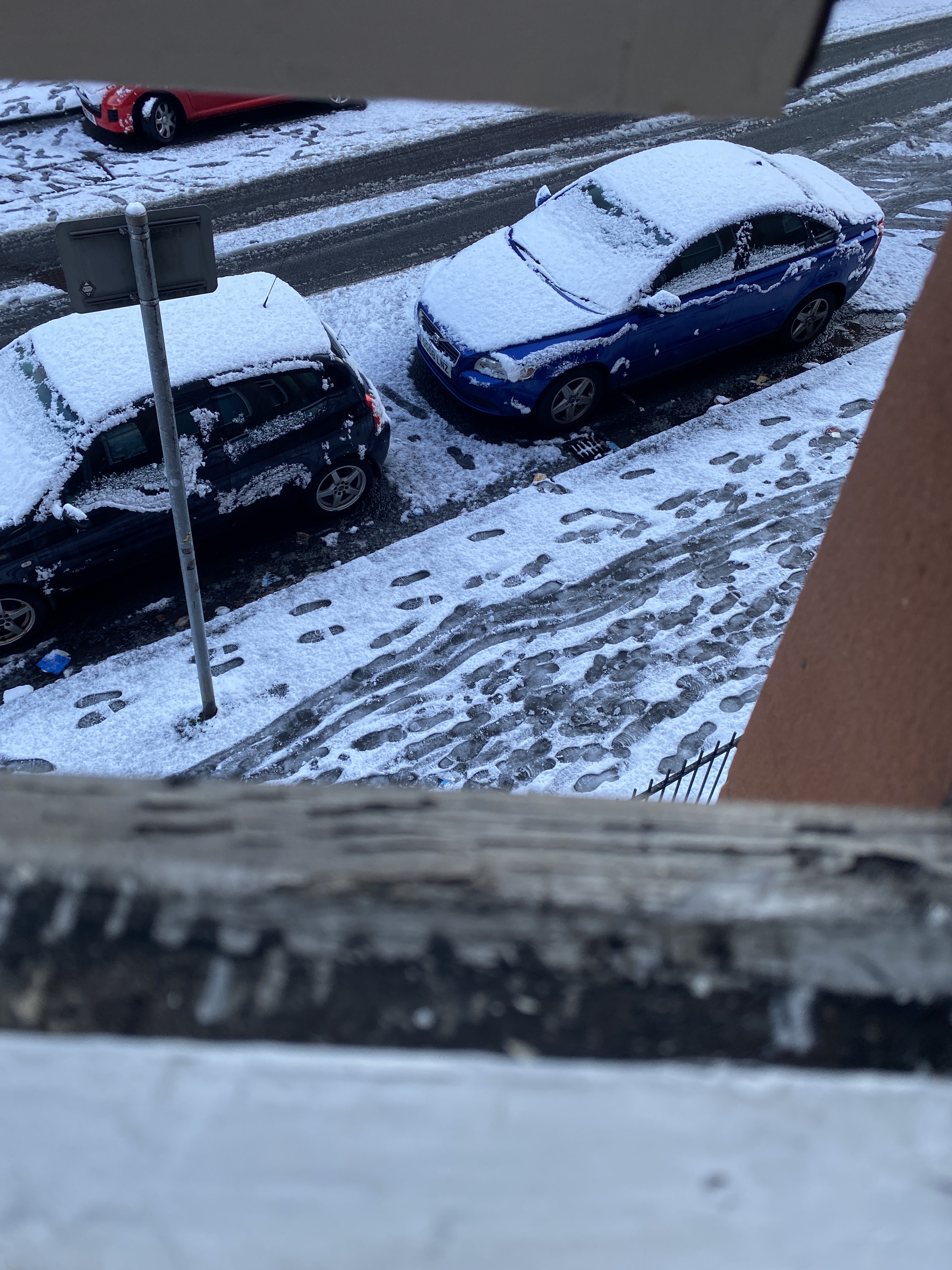
It was supposed to snow in the night and the not snowing was sore as a missed period. I awoke with two crescent-shaped moons in the palm of my hand and thought of a sacrifice unwittingly given in dreamland. Said Jesus. Peridot phlegm and the scratchy sensation, knowing that speech too could be cool, historical, safe. Could not see beyond pellucid rivulets, Omicron my windows, my streaming January. January 

streams from every well-known orifice of the world. Its colour is shamelessly stone. I seem to be allergic to inexplicable moments and so keep to the edge of the polyphony of yellow. I am cared for. The Great Barrier Reef dissolves in my dreams the substrate of yellow. It goes far. Pieces of the GBR are washed ashore in Ayr, Singapore, Los Angeles, Greenland. I go to these places by holding a polished boiled candy in my mouth, like the women in Céline and Julie Go Boating. My ankles licked by truest shores / but January didn’t fucking happen. 

❤

Put together the orange-purple rose, your possible outcomes are red or gold (if you are lucky). Two reds together, with the golden watering can, could result in the rare blue rose. A novel rose. Black velvet roses grow in the old woman’s garden because she has infinite time to tend them. I’m not saying she’s immortal, like the Turritopsis dohrnii jellyfish; only that she doesn’t exist in our time. It’s rude to assume so. I’m not saying the lines of her face are asemic writing — nobody did that to her, or scarred her. She’s not scared. She just lives and dies all the time. She waters the roses.

Sometimes I imagine her in fisherman’s clothes, in meshy nightclub outfits of neon flavours, in extravagant ballgowns, blue boilersuits. Sometimes I’ve seen her before. The only way I can see her is to climb a few steps on the ladder by the village store, its red paint flaking, and I hang my body upside down the other side, risking exposure. I never eat before doing this. She doesn’t see me; she doesn’t see her roses either, not the blooms. In the village, people walk around with handfuls of rose seeds sometimes strung in little hemp bags. These are the currency of care. I have tended the young with haircuts and watched the flourishing of teenage roses. They say I am an old lady in the garb or garbage of former actresses. I hear them sing to me their stories. “Remember 
she shot the guy who brought the astrograss”.
What they don’t remember, whippersnappers, is the incorrigible realism of that turf. Fuck it, 
I have done nothing wrong. I perform for them my cowboy gardening. Broadcast the surplus value of our mutual twilight. Halloween roses for everyone. Every night I wake up from someone else’s childbirth and the world is so sore, the wound in the sky the snow wants to fall through. They bandaged it with realism. I need to go far. Do you remember the last time you awoke and felt like a person?

❤

The roses grow up in the gaps of the cattlegrid, knowing they will be trodden on. Again and again. We can’t stop them from doing this and they do it so often we have to account for a portion of Waste. Kissing you is itself a trellis. But we are propped and grown sideways with the vines strung betwixt our ribs. We are babies.

I like the tired way the roses intonate colour. The economics of the roses. Their euphemistic fetish. I tried to avow my commitment to rosehood the day I saw your calves all torn, and saw about women getting their labias reduced, and the red, blood roses sold on the internet, and rest. I lay this on your grave, the world.

My love, as a redness in our rosette
That’s newly worn in June
O my love, like the melt 
That’s sweetly played in turbines 

So fairway artery thou, my bonnie lasso
Defiled in love as I 
Will love thee still, my decade
Tinged as the seas are garlanded dry 

Tinged all the seas as thee, my decanter
At the romantic menagerie of sunset
I will luminary still, a debutante
Of the lighthouse sarcophagi 

And plough thee well, my only lathe!
And plough thee well, awhile!
And I will come again, my love
Though it were ten thousand millennium.

My love’s rose-coloured highlighter really hurt the extra-textual, and thus booked trains to bed. I had an identity. I knew what you had done to the text. Austerity of the meadow to blame for ongoing culling of kin. You are abandonable as you have always been. Saplings for pronouns.

I feel wild and sad. 

I feel pieces together stirring inside the world. Little bits of coral awake in
my throat, the shape of eight billion sun-spike proteins I was dumb
enough to swallow. It is not my fault but in my dreams 
I get product emails like, Forget-me-not
a pair of jeans, high-waisted Levi’s 
as if to wear at the end of the month 
we keep saying sorry for delay, embroidered 
our thighs with spiders
excuses to use lighters
without smoking
does it make us vectors
the warning of snow and ice still issued
from inside the snow globe of the rosehip 
changes as it withers, glass shards
pissed from acid clouds in all colours:
black, blue, burgundy, cherry brandy, coral
cream, dark pink, green, lavender, light pink,
lilac, orange, peach, purple’s timeless red,
salmon, Hollywood white & yellow, rainbow
chosen for the significant other, a masculine flower
dipped in fortified light, I’m thankful
I look good lying down, the long unconditional stem 
aka Lemonade, l-l-l-lemonade, l-l-l-lemonade…….

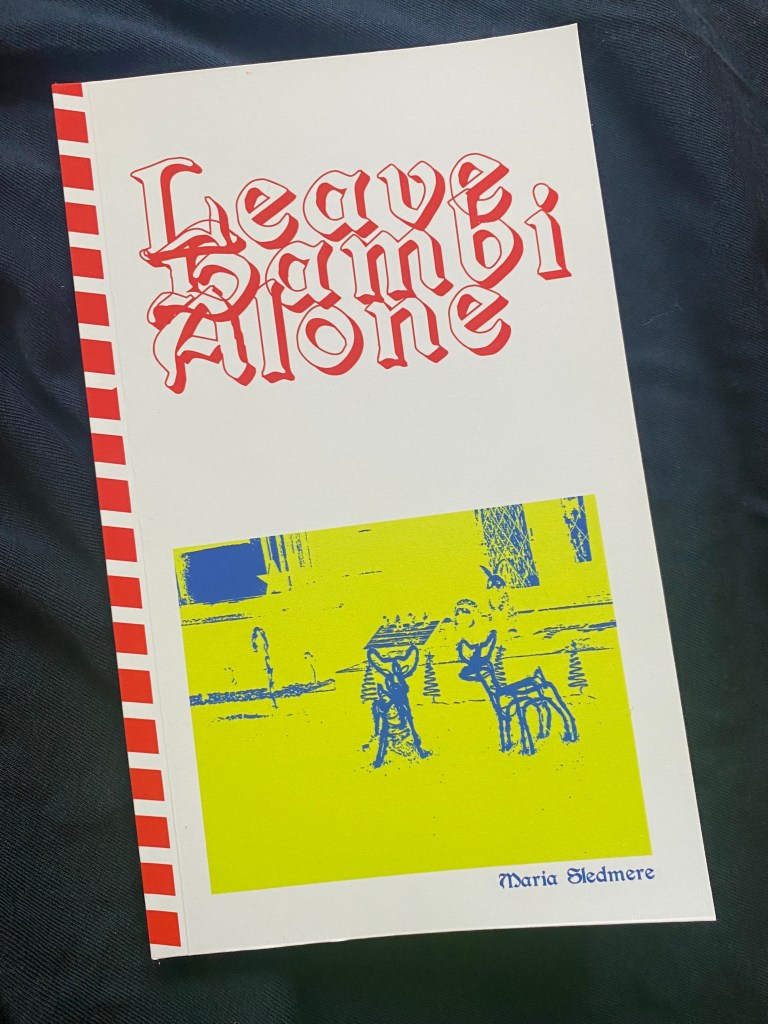
Leave Bambi Alone

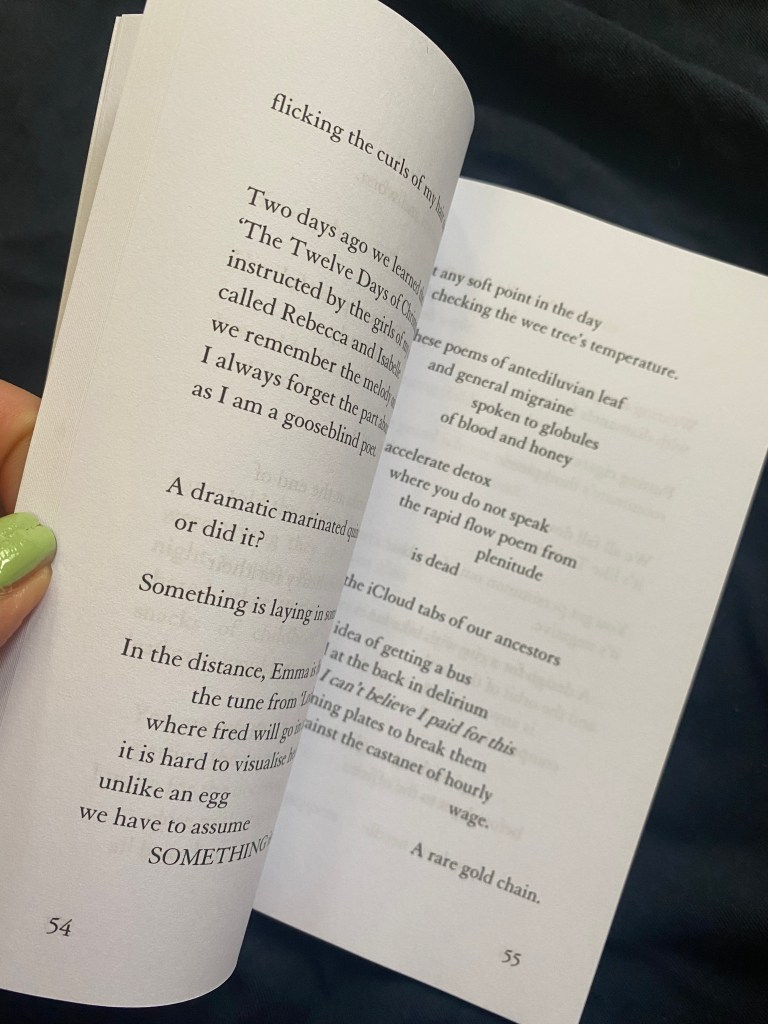
Over xmas & boxing day I kept a small notebook and wrote a meandering poem because I couldn’t get the phrase LEAVE BAMBI ALONE out my head. Anyway, it’s one of those ad hoc stream poems of no coherence or consequence. Available now via Lulu & Mermaid Motel. link in bio 🍕🧜‍♀️🏨

Documenting the festive habits of a special cat, the early career of Björk, champagne pageantry and calorie paradise, the wearing of acid berets, childhood whims and ‘the iCloud tabs of our ancestors’, this is a bad poem written in defence of shy animals who love in the livid dream their tiny world.

🦌🎄🦌🎄🦌🎄🦌🎄🦌🎄🍃

ISBN: 9781678194895
87pp.

Buy a copy here.

Dorothy

Dorothy

Dorothy’s Opiates is the name of the real Arcadia 
not to be busted, learning that sleep deprivation is a kind of
spiritual death from a podcast featuring the Nap Ministry
I set off to sleep under three duvets: one is representative 
of snow, the other a sleep mode, the other a body. I write to you
from beneath this slumberous context to wonder why anyone
who ever lived in a single glazed tenement loved the cold.
I can think of reasons: always something to look forward to
such as the crocuses and milder temperatures, the searching of
someone to warm you, wanting to dissolve into their skin
this someone who is never cold like you. I can’t explain this cold
but I can summarise its various sensations, cold as in a kind of disease
that eats your bones from the inside with terrible icicles 
and lives in your back as a demon, cackling from within your kidneys;
a small child dependent on your energy, the cold needs fed.
The cold is in your chest, your throat, your head. 
It throbs in your fingertips until they are red and puffy and burning
like nothing else you have ever felt: imagine every orgasm of your life
summarised and congealed as an opposite evil — pain — and concentrated
in the tips of your fingers, as though a malformed heart had grown 
in each one, beating out of time, each heart individually failing 
at the tips of your fingers until the pain spreads out like a juice
all the way down your fingers, hot, the nerves pulling into your arm
but it is so concentrated at the tips, you can’t really move 
and to hit them against each other is like clanging vegetal matter
against blunt metal, they are thumpy and numb, now the pain 
is melting it becomes a warm sensation of somewhat release
as though only a generalised bruising of the nervous ends 
of all your digits. And by this time I hope I’ll have gotten home
to run them perilously under cold water, bringing them to room temperature
as if they could crack off and crumble into snowflakes of ache
it takes ten minutes or more; after which they will sting 
with the feeling of having been battered. And it will happen again 
the second your blood spikes, you go outside; they may as well 
have been trodden on or run over by a van the way they feel right now.
I ask you sometimes to squeeze my hands so hard it bursts the blue of us.
            Once I knew a worse cold
accordant to body weight this kind of cold is all-consuming for all seasons
of the year, a kind of inverse fire that licks your insides with its ice 
so you feel it as a constant in your sternum, the cold that is eating 
the meat of your ribs so you become a delicate succulent, always with 
sugar on your mind, wanting to be watered. Always watering yourself
fruitlessly
    and feathered of flesh, wilted
as if to float upon a snowdrift and not leave footprints.
                                    Sometimes it is barely to speak 
or, having dry Januaried the masses, some lubricant of society was missing
sorely from our dreams. So we did not dream of touching each other
so much as falling from breezeblocks, frosted, the hard fuck that doesn’t come
bounding down stairwells to greet you at sun-up with cigarettes and coffee,
which you cannot touch, which aggravates your nerves to a passion. 
Nicotine, caffeine, dopamine. The endocrine systems of our dreams 
    are running on empty
and I have fed this day with the manifest boilersuit, as though to fix my own boiler
with mechanical prowess, die in your arms and so on. There are parts of the city
whose arteries confuse to the point of a general surge, desirous of insulation
    and drivers 
arrange the marzipan animals of their dashboard tenderly. 
            Snowfall. The first of the year’s cold drama
gone to pick up a wardrobe through the Narnias of other vinyl records
caught on the loop of the sweltering imaginaries a slice of life, of liquorice.
   Flying by the Vogue Chippy of Cumbernauld Road.
You play loose with it, as if the rain alone would melt 
what meadow remains of the innocence. A summary of the movie
of other Januaries: asking if I am a bad feminist for not liking such-and-such 
a book, the enclave of housing utopias, the sunshine duration of the ad 
for Stella Artois, the scene in All is Forgiven where the drunk kids dance 
to The Raincoats’ version of ‘Lola’. I want to be inebriated 
with chips and cheese on the corner and kissing you darkly
in the overlit takeaway. Anniversary of another fascist coup. 
The cold in blunder, spraying my tongue with Vitamin D, worrying about sleep.
                        ‘Dorothy’ is a song by Kevin Morby
in the video, somebody plays a trumpet underwater. I drape a cardigan
over my daughterhood, pull stories across my knees until I am deep 
in the grass with you, the snow grass, a long sore note, we have pink faces
keeping up with each other’s sleeps, to rotate
in the bed, the powdery dreamscapes gathering form. 
            Dorothy,
Your warm apparition not to be sold or bought, an account 
of the aspirin sunlight, too much, taking the flower pill 
that makes me react as a plant, long stem in your arms 
and coaxed of sap. 
   Calcium is a luxury to those who might keep their flesh self-
sustained and hard and warm. I thought of Kansas and corn 
with the morning yoghurt as a viscid snow, spoonfuls 
of what we are missing to kiss 
goodbye of the freezing streets of Partick, melt in your mouth, 
   the pressure of boilers
adjusted by release, the way our bodies incline to the light
even when it is missing, how I wish you could trade
kisses for calories of actual heat, the truthfeel of one in the morning
stands for baggies of memories
    the prized alacrity of exercise, 
            I insufflate 
                                   the nervous internet.
            If this poem really were sentient, this would be the queue 
for the doctor’s office, which is a location after all, novel
in its banality, after the fact of actually being here, a state of waiting
requiring the mortal presence of your body.
  I stopped asking what a poem can do
when it seemed like I was done typing 
with my fingers searing hot white words like arrows 
tearing the flesh as they wrote, O Dorothy, listening 
   to a band called Trapped in Kansas.
I was born. Wrestling with duvets to change the music sheets
afresh, up close with the soot-covered mountains, 
called to the room with thermometers jammed 
in the hole of the poem, its quavers jostling with old composition,
   bloodstream, organ, snow.
                                             It is safe, it is safe. 

2021 in review

From this year in-between brushing my teeth:

BOOKS AND PAMPHLETS

Miss Anthropocene (Mermaid Motel)
a selection of short lyric, ‘ethereal nu metal’ poems responding to the Elon Musk/Grimes complex.

Sonnets for Hooch – with Mau Baiocco and Kyle Lovell (Fathomsun Press)
An ongoing pamphlet series of sonnets attuned to the weirding seasons: what started as an internet joke about alcopops and longing as a keystone for exploring adolescent malaise, nostalgia and resilience thru civic space and Friendship. Current editions available are Lemon Bloom Season and Summertime Social. Two more instalments are forthcoming in association with Rat Press and Mermaid Motel.

Polychromatics (Legitimate Snack)
A pamphlet-length poem about colour, cetaceans and cosmic twilight, inspired by Walter Benjamin and a sculptural and textile works by the artist Anna Winberg.

Soft Friction – with Kirsty Dunlop (Mermaid Motel)
Soft Friction is an intimate gathering of dreams from 2018, written during a summer of ‘existential soup’, fainting at gigs, pulling all-nighters and panic surrealism. Extracted from a longer diary, these fragments wear the sensuality and sass of an active dream life shared between two people getting high on each others’ brains.

The Palace of Humming Trees (Sundays)
Edited and typeset by Katie O’Grady with visual identity by Paul Smith, this book-length poem features illustrations by Jack O’Flynn plus a curator’s word from Katie O’Grady and collaborative mixtapes. Set in the speculative locale of The Palace of Humming Trees, the poem is a jaunt through weird nature’s arc of glass, following the desire lines of hyperfoxes, sunburst melancholia and corona correspondence. Also available as a free pdf.

The Luna Erratum (Dostoyevsky Wannabe)
The Luna Erratum, Maria Sledmere’s debut poetry collection, roams between celestial and terrestrial realms where we find ourselves both the hunter and hunted, the wounded and wounding. Through elemental dream logics of colour, luminosity and lagging broadband, this is a post-internet poetics which swerves towards the ‘Other Side’: a vivid elsewhere of multispecies relation, of error and love, loss and nourishment.

ARTIST COLLABORATIONS

‘The Rosarium’ for Zoee’s album, Flaw Flower (Illegal Data)
A lyric sequence responding to the glistening pop garden of Zoee’s debut record Flaw Flower. Available as an A6 booklet as part of the limited edition album bundle.

The Palace of Humming Trees with Jack O’Flynn and Katie O’Grady (French Street Studios)
A collaborative project with artist Jack O’Flynn and curator Katie O’Grady which took place April to August 2021 and was showcased at French Street Studios in Glasgow. Featuring new works of poetry, sculpture, illustration and multisensory dreamscapes (from mixtapes to Tarot readings), we offered a ‘tenderly crumbling foliage’ of visual and sonic otherworlding.

The Dream Turbine with A+E Collective and The NewBridge Project
This online installation explores the relationship between sustainability and dreaming, offering a space to collectively share dreams and promote discussions surrounding these broader topics. The Dream Turbine was conceived by A+E Collective in collaboration with Niomi Fairweather and Jessica Bennett, as part of the Overmorrow Festival. I contributed to a preparatory DreamPak of resources and the curation of a Dream Vault and associated ‘Lost in the Dreamhouse’ workshop on Zoom.

Cauliflower Love Bike Episode 1: Play with A+E Collective
While play might be co-opted for capitalism, true play is that which exceeds instrumentalism and commodification. This episode reclaims play from its dialectical relation with work, exploring play as a practice and thought-mode that is capable of radical sensing, temporal sabotage, tenderness, sociality and a joyous excess that is also low-carbon. The podcast series was launched at COP26 in the Rachel Carson Centre’s pop-up exhibition at New Glasgow Society.

ACADEMIC ARTICLES

Article: ‘Hypercritique: A Sequence of Dreams for the Anthropocene’ in Coils of the Serpent Issue 8
An in-depth venturing through the possibilities of hypercritique, featuring readings of Billie Eilish, Sophia Al-Maria, Ariana Reines and more; plunging through dream, fire and the heartwood of anthropocene imaginaries.

“Just to distract you like the inside”: a correspondence wrapped up in Bernadette Mayer’s poetry, in post45, Bernadette Mayer cluster (with Colin Herd)
An epistolary collaboration which wraps and unwraps itself in and around the poetry of Bernadette Mayer, as part of a special cluster issue on Bernadette’s work.

‘I, Cloud: Staging Atmospheric Imaginaries in Anthropocene Lyric’, Moveable Type, Issue 13
Tracing the possibilities of ‘cloud writing’ in anthropocene lyric by way of Brian Eno, Mary Ruefle, Anna Gurton Wachter and more, asking what kinds of reading are possible or desirable in a medial world of thick atmospheres.

POEMS

ESSAYS AND OTHER ERRATA

‘On Foam’ for Futch Press

Feature: Some Letters – a correspondence with Joe Luna

Review: Cloud Cover, by Greg Thomas

Feature: “It’s pretty utopian!” A conversation with Marie Buck, Mau Baiocco and Maria Sledmere pt.1, pt. 2

SPAM Cut: ‘I RESEARCH THE ORIGINS OF THE MODERN ROSE AND DISCOVER’ by Sarala Estruch

Feature: Some Notes on Muss Sill by Candace Hill

Feature: A conversation with Kinbrae and Clare Archibald ‘Tangents: letters on Etel Adnan’: a correspondence with Katy Lewis Hood in MAP Magazine (part 1) (part 2) (part 3)

‘‘Now now is everything’: Maria Sledmere on two maximalist poets of the Anthropocene’, Poetry London issue 99

‘Cloud Shifts’ BlueHouse Journal

Anam Creative Launch for MAP Magazine

DESIGN

Cover for Katy Lewis Hood’s Bugbear (Veer2)

Cover for fred spoliar’s With the Boys (SPAM Press)

Cover for SPAM Press Season 5 Pamphlet series

Christmas Eve Auto Draft

You’ve got a nerve to be embodied. Lana says it pains her how good the male vocals are on ‘Dealer’. Season of frivolous spending I call you from the floor of a mall, you spend £16.90 on coffee, I don’t know what prose is. 

At some point I must have remembered the password to the room of amphibians, Analysis.

It’s not like the contact is there. A plate of sliced ham many decades ago, the puppy ate. A palate refined into podcasters who go out for cheeseburgers, murmuration of commas, choleric entropies. It’s a form of sleep paralysis. Horny letters to environmentalists. 

Save me…as…

You lucid dream or you stop / shall it be blessed to touch the furnace a hard-light, the caterpillar blonde. 

The door is locked. It needs a medicine. Rivers of cognac coagulate arterial: one is gold, one is white. Nightmares of Fancy prose. Aperitif or signet ring. Solid aura. 

The barista gifts me free lemon cake “for someone that needs it” and it might be me or I half it with you? All canal walk I sipped the glow of that coffee their human kindness 

The city a hologram out of Musk’s Eye™️

Sharing our name with the semblance of oatmeal, remembering for the business of hibiscus. It’s not as if I don’t want to say sky leaf, high staples, the charcoal nights of London. The bars are still apparently ours, a sensibility measured by flood vibe. Names of boats.

I can’t listen to music it’s all ships. The pillow faults of true music. Soundcloud was a planet. Salad Daze. Salad translates leaf array, a contour irrealism, swarm economics, morbid blonde. Wafer arrangements of transistor radio. 

A feedback loop of the dark. The edifice of gelatine.

Time goes off like a triangle. 

Photoelastic buoyancy; saline; bone; lime. 

Nearby they are sleeping so I am the night elf 

I miss tinsel I want so much tinsel I want Porphyria’s Lover erotica tinsel I want to be metaversed into the scintillant realm of tinsel a mass effect class tinsel I want blonde tinsel a gold physiology I want reddish the trad version tinsel ikr 

Silvering with these destroyer lawyers 

What was the original chipmunk music? 

tinsellllllllllllllling total tinsel insensate a hard sell 🙂

I sue you! 

Remember the xmas we listened to psychology podcasts as we hung gold baubles on the natural tree I wept in the eighties before sun lamps were invented 

Remember me, I was a product 

The Luna Erratum

My first full-length poetry book is now slinking out into the world!

The details:

138pp. with inside illustrations by Maria Sledmere and cover design by Douglas Pattison

Typeset by T. Person

ISBN: 978-1-8380156-5-7

RRP: £10.99

Order from Dostoyevsky Wannabe.

The Luna Erratum, Maria Sledmere’s debut poetry collection, roams between celestial and terrestrial realms where we find ourselves both the hunter and hunted, the wounded and wounding. Through elemental dream logics of colour, luminosity and lagging broadband, this is a post-internet poetics which swerves towards the ‘Other Side’: a vivid elsewhere of multispecies relation, of error and love, loss and nourishment. Its leitmotif of Luna, a shapeshifting feline of satellite proportion, waxes and wanes through poems which move beyond the twilight moods of left melancholia, sad hospitality and ecological crisis towards a fugitive imaginary that lingers in the ‘Flirtation Device’ of lyric and its many echolocations.

Taking cue from Jenny Boully’s ‘erratum’ — ‘the text of what is and the text of what should have been’ — Sledmere writes with failure, friction and fractal attention, with a yearning for intimacy, shelter and ongoing ways of bearing the im/possible. She offers poems of mystery, refusal and pain at personal, political and planetary scales, tracing the desire-lines of the everyday and its glitching encounters. The Luna Erratum is a book of memory and friendship in the so-called anthropocene, of bodily disorder, painterly gesture, quantum kissing, rodent sisterhood, open world intervention, technology, tenderness, shimmer and song.

☆

Praise for The Luna Erratum: 

How do you explain yourself to yourself when you suspect that actuality – your experience of it – is provisional and full of error? You come up with your own poetics, your own tense and mode of address, which is a lunar one, and which involves speaking in crushed, frothy mouthfuls to a terrifyingly silent, unpredictable and generous friend (celestial objects, an indifferent lover, &c.). 

The Luna Erratum offers no truth except in things – colours, materials, beings, dreams, schemes of language, human artefacts and locations – and their known convergences, all of which hold as much affective weight and capacity for transformation as the events that precipitated this profoundly graceful, unsettling and mesmerising book.

— Sophie Collins, author of Who is Mary Sue? (Faber, 2018)

☆

A glittering universe, Maria Sledmere’s first poetry collection is both lyrical and electric, both video game and watercolour. Reading these poems feels like ingesting semantic MDMA, the ectoplasm of a Victorian ghost trying to reach her lover through an unstable wifi connection. Sledmere’s words ooze a desire that is part animal, part human, part astral body. Let them transfix you.

— Nadia de Vries, author of I Failed to Swoon (Dostoyevsky Wannabe, 2021)

☆

In Maria Sledmere’s The Luna Erratum, rivulets of neon daylight stream through the ever-quickening fibre-optic cables of the soul. Beneath ‘morphine clouds’ climates change as human groans crosspollinate in the moon’s tread. Sledmere concentrates the neural pathways on the world spirit, crossmatching the matters of attention. The lines grasp at what repositories of sentiment might be made secure for poetic memory, as the pleasure of every experience is threatened by its immediate disappearance, like Bernadette Mayer reciting Keats in the abandoned sea life centre. And yet, for the poet’s eye, the sumptuous bounties of the world are still all up for grabs; the human squats on top of the non-human and: ‘you can take bites from the sun’. This book is a hot tub full of Tamagotchi frogs’ spawn glistening in the light of the full moon atop the Yggdrasil skyscraper.

— Ed Luker, author of Other Life (Broken Sleep, 2020)

☆

If you would like a copy for review, or to stock in your bookshop, please email mariasledmere [at] outlook [dot] com. 🙂