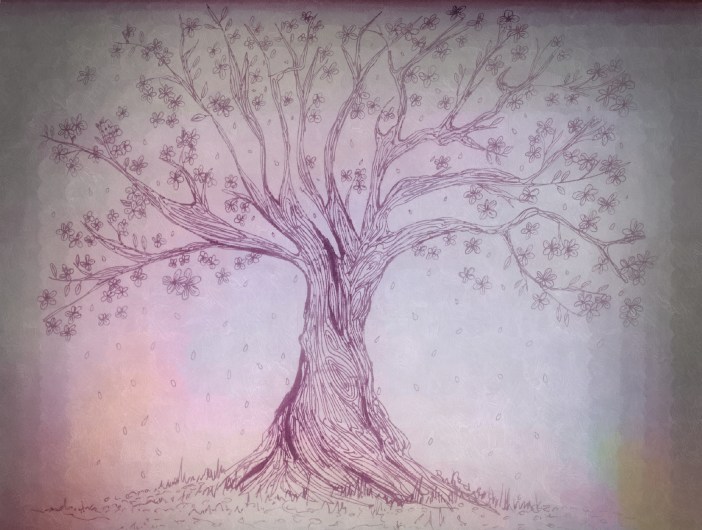
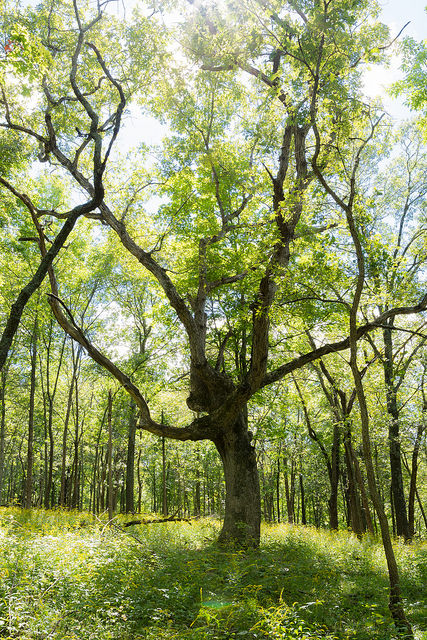
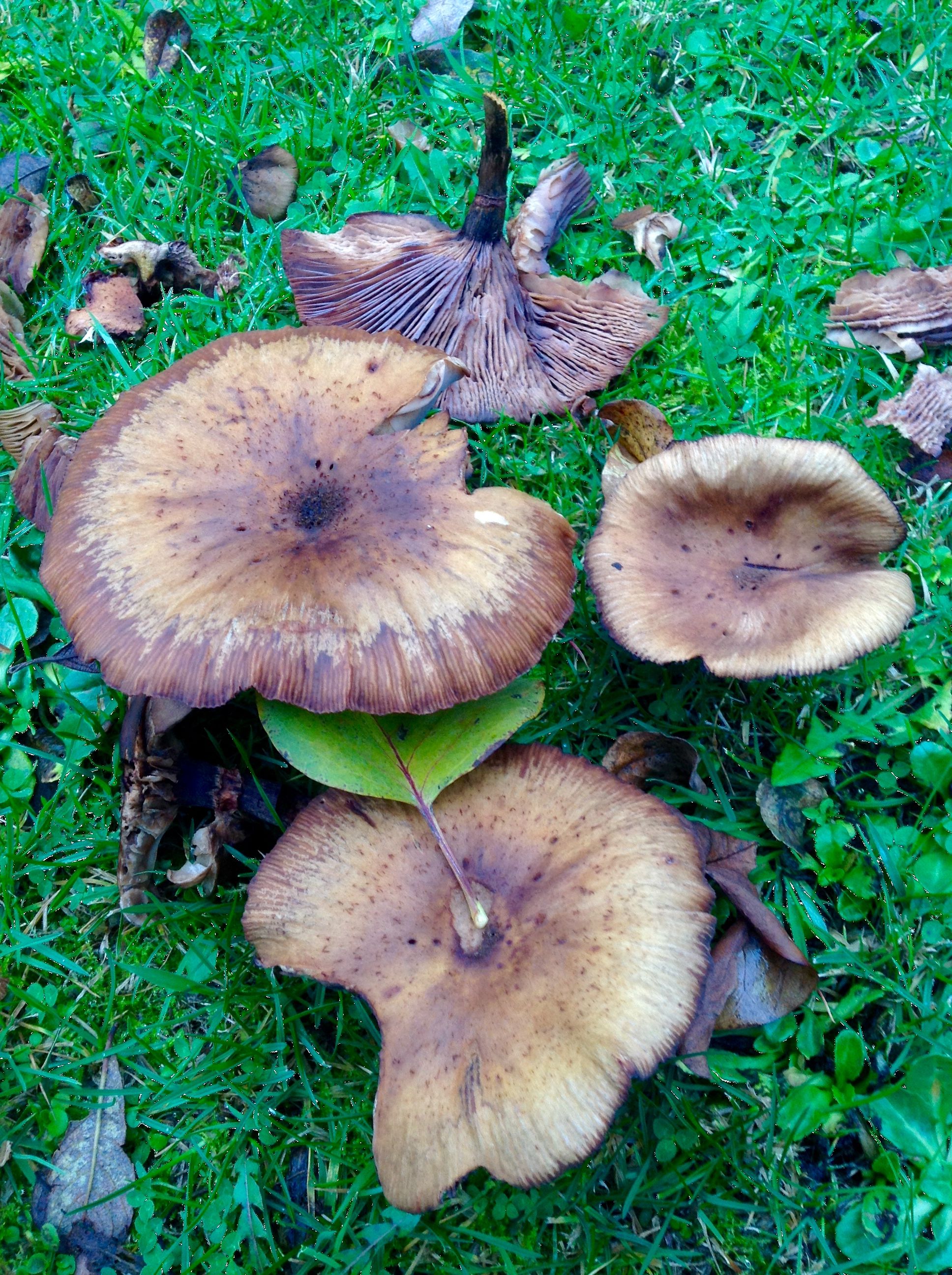
Other Echoes Inhabit the Suburbs

Other Echoes Inhabit the Suburbs

The soup tasted pretty gross, but April kept right on eating it. For one thing, she couldn’t bear letting her grandma know that the heap of sugar she’d added ‘to bring out the flavour of the carrots’ had rendered the whole dish a form of cloying mush, as opposed to subtle teatime cuisine. Her grandma wasn’t all that good at subtlety. You only had to glance around the dining room, where they were sitting right at that minute, to know that Ms. Grainger (a return to her maiden name after the divorce) had a taste that lent itself to the gaudy and nostalgic, far more than the graceful and subtle. Along the mantelpiece, ugly china ornaments cluttered the marble surface (long overdue a good dusting); the wallpaper, a lurid shade of magenta, bore the same floral pattern it had done 30 years ago. As a child, April enjoyed peeling the corner of wallpaper behind the headboard of her bed, leaving a gape where the plaster underneath revealed itself like a blank and secret canvas. On that surface of plaster, April had written something special, eight years ago, when she first moved into her grandma’s home. The day after her parents died. It had been a long while since she’d checked if it was still there.

Despite her constant culinary failures, Ms. Grainger loved to entertain. She ran a competitive bridge club, who every Thursday traipsed through her door and gambled their pensions away round the dinner table. She still took great pride in her swimming pool, the envy of neighbours for decades now, even though she rarely (if ever) used it herself. Once upon a time, April had splashed around in that pool with her brother and sister, falling off her father’s shoulders as he waded her through the water, laughing. She had advertised her thirteenth birthday as a pool party, gathering all the kids from school round the kidney-shaped turquoise surface, drinking lemonade in the springtime sun. April was named after the month she was born in; when the kids used to tease her and ask her if that was why, she would nod, glumly, complicit in their derision of her mother. Her grandma always said it was a lovely name, but April herself was indifferent to its supposed charms. She realised that probably it was another ornament, a quaint and pretty reminder of a golden, bucolic past, when girls would flock round Maypoles in their white dresses. Maybe it hadn’t been her parents’ choice at all, but another idea cooked up by her grandma.

“Don’t you think it’s marvellous, how Jacob is doing?” Grandma Grainger piped up, pausing to look around the room for dramatic effect, though her only audience was April, along with old Marjorie from down the road. Marjorie, who was half deaf, took a good long minute to process the question before answering.

“Oh, what? Jacob, how is he doing?” Marjorie slurped a spoonful of soup, piercing her lips in mild disdain.

“He’s sailed through his third year of law school, that’s how he’s doing!” Grandma exclaimed, making no attempt to suppress her glee. “They say he got As all through his exams.”

“You must be so proud,” Marjorie said.

“Not only that, but he’s landed quite the internship, out in the city with a big firm.”

“Isn’t that wonderful,” Marjorie said, even more mechanically this time. She, like everyone else, had grown used to Grandma’s bragging, and had developed her own form of automatism to deal with it. April sipped her soup. She fixed her eyes on Marjorie, intent on registering every hint of discomfort that showed on her face. She too would be tasting, right at that moment, the same watery sugary sludge, the faint aroma of sage that cut brutally through the blandness of broccoli, potato, carrot. There was a pleasure in the knowledge that they shared this painful experience, dragging their spoons through the viscous excreta that Grandma Grainger had poured so obliviously into bowls for them.

“And how is Grace doing?” Marjorie asked, clearing the last of her bowl with one triumphant swallow. The question seemed even more forced than the act of putting soup in her mouth.

“Oh Gracey,” Grandma smiled, “she’s doing just fine. Very sensible girl.”

“Is she still wanting to…what was it, design buildings?”

“Yes Marjorie, she’s actually apprenticing as an architect right this minute, though I have high hopes for her and this man she’s living with. He works for a bank and is quite the charmer. I can see them settling down very soon.”

“Children, at her age?” Marjorie seemed mildly alarmed. She had never had kids, and though the subject was once taboo in the neighbourhood, she was now quite proud of the fact that the freedom had allowed her time alone to tinker with her paints, with trips to the seaside – to spend the evening consumed by soap operas instead of her husband’s ironing. Besides, some of the art shops in town had once bought her watercolours.

“Goodness, but wasn’t I firing them out at eighteen? Grace is 22 now, perfectly capable of handling a couple of youngsters.”

“Of course,” Marjorie murmured.

“A year younger than April, in fact,” Grandma found the need to point out, unnecessarily, as April stared glumly into her soup. There was no way of finishing the last of it. Already she felt a little sick. She swirled it round until patterns appeared about the sides, patterns which soon sunk back down as gravity sucked at the sludge.

“May I be excused?” she asked, having long ago perfected the strategic politeness of an obedient grandchild.

“Yes dear, what have you planned for the evening? I was wondering if you’d let Marjorie and I teach you bridge. You could whirl up quite the storm, with those maths skills of yours. I’d like to show you off on our Thursdays. I could do with some more winnings too, now that I think of it. Ethel really swiped us last week, eh?”

“I’m not sure you need maths skills to play bridge,” April said quietly.

“Will you listen to this? The girl really cannot take a compliment,” Grandma retorted. “I’m just trying to involve you dear.”

“I work most Thursdays.”

“Oh well. You spend far too much time alone, it’s not healthy for a young woman. You ought to be more like your sister.” The cutting line. “She’s always telling me – on the phone you know – how much fun she’s having.”

“I’m going out, Gran, I’m going out.” She scraped back her chair and wandered upstairs to her bedroom.

“At this time of night? She must be crazy,” Grandma muttered, out of her granddaughter’s earshot.

“Indeed,” came Marjorie’s reply.

The house was so dark, mostly lit by old-fashioned oil lamps that were stuck to the walls. It was an ex-council house, which Grandma Grainger had spent most of her life trying to make look bourgeois. Most of the houses in the surrounding suburb had been knocked down, upgraded into gleaming new builds, replete with fresh pine surfaces and huge double-glazed windows. Grandma, along with a small handful of fellow residents, had refused this development and by some miracle they were allowed to go on living in their humble hovels. It was a good thing they did, because the new builds had driven the local house prices up considerably, pushing out many of her old friends. It was home now mostly to young families, who relished the picket-fence dreams sold to them in American movies, who wanted to cocoon their kids from the dangers of ‘town’.

It wasn’t just town that was dangerous though. April knew well enough that this house itself could be ‘dangerous’. Many times she had fallen up those creaking stairs in the darkness, had found herself privy to some sordid phone conversation between her grandma and a mysterious third party:

“Oh, a terrible thing indeed!”

“He’s quite the scoundrel!”

“You’ll never believe what she told me she found in his sock-drawer!”

“I heard they’re getting the police involved. A terrible mess, for certain.”

One thing April hated was her grandma’s tone of mock horror, her incantations of scandal. She had perfected it for all the local housewives, proving herself a key player in the steady circulation of gossip upon which the suburb depended. It was worse than Facebook, the way news got around, the way her grandma would dissect every last detail of her neighbours’ lives around the dinner table, while April stared into uneaten soup or peas or sometimes, on Sundays as a treat, ice cream. April deleted her Facebook a long time ago. It provided too many links to her past, reminders of times that were happier, sadder, or at least more complicated. It hurt, to get bound up in all that again. She couldn’t be bothered hurting anymore. She couldn’t help thinking it would be nice to delete real conversation  as easily as she’d gotten rid of Facebook.

“Well I heard he lost his job at the call centre. Shocking, isn’t it?”

April couldn’t help thinking: if only her grandma had employed that tone, to deft effect, when her parents had died. If only she had talked to the in-laws, to April’s father’s family; if only she had been more understanding, less impatient with the lawyers. Maybe then, April would still have another family. As it was, Grandma Grainger was all she had. Jacob and Grace, in all their seeming perfection, were always too busy – out of reach, ploughing headlong into their respective futures.

April’s bedroom, like the rest of the house, hadn’t changed an awful lot since she’d moved in. In fact, her grandma’s kitten obsession had crept its way even in here, in the form of a cross-stitch concocted from a palette of lurid pastels, tacked to the wall by the window. It was a very small window. The carpet was a foul kind of jungle green colour, supposedly a fashionable compliment to the orange walls, though its chic shabbiness was no detraction from the massive stain where Grace (who shared the room with April as a teenager – they slept top-and-tail in the bed) had once spilled half a bottle of red wine. Despite sharing a room for those years before university, Grace and April were never all that close. Grace seemed to find April strange, asking her all sorts of weird questions, as if she were the big sister and not April. Have you ever let a boy touch you? Ever done drugs? Why don’t you ever text anyone, I never see you with your phone. Are you gay? In truth, April had never really understood her younger sister. Her life had always revolved around a carnival of minor dramas – breakups and hook-ups and clandestine phone-calls, which April would eavesdrop on at night, while she pretended to sleep – and the whole wanting-to-be-an-architect thing seemed nothing more than just another design for life that took its place among the rest. Grace had always had plans, always rattled on about some boy she liked, a handbag she was saving for, a class she was intending to drop or take up. They were as sure in her head as the bottles of alcohol she stashed beneath the bed, and as certain to disappear or deplete by the end of the week.

As for April, the whole concept of a ‘design for life’ seemed drastically elusive. She couldn’t quite grasp how some people were able to think into their futures, then spin out a ten-step plan about how they were getting there. She liked lying in her bedroom, listening to obscure classical music, staring at the ceiling, letting the percussion and the elaborate orchestration of instruments and melodies weave themselves into her brain. She had been to university, stuck at it for nearly a whole year, but it just wasn’t for her. The equations and quadratics came easy to her, but everything else had gotten her down. Halls were a drag, seminars were a drag, and getting out of bed in the morning was the biggest drag of all. Making friends seemed to require some impossible formula that nobody had bothered to teach her, and April had made herself content with loneliness.

The mirror in her bedroom always showed you as fatter than you really were. Grace had first pointed this out, aged fourteen, preening her face and frowning as she noticed the curves that she hadn’t noticed before in the old mirror of their parents’ house.

“You haven’t put on weight,” April had assured her, with careful sincerity. Puberty had been the elephant in the room for a couple of months now: April had filled out and sprung up like a runner bean, her feet had grown to an impossible shoe size, while Grace stayed skinny and small as a boy, as her grandma. She became very touchy about it, worrying about every pound she might put on, pinching at her stomach.

“Oh,” she sighed in reply, “yes, it’s just the mirror I think. See the way it stretches out like that? The glass is damaged or something.”

After that observation, neither of the girls bothered much to look in the mirror. For April at least, it was difficult to be narcissistic in a house where every surface, every detail or ornament, sucked your attention away. It was all too lurid, too extreme; there was no place to retreat into the bubble of yourself. You found yourself trapped, submerged even, in the things around you, their perpetual assault on the senses. It wasn’t beauty, because there was no seduction, no entrancement caused between the eye and the objects that absorbed it; it was more like the constant bombardment of sheer stasis. Realising that time hadn’t really changed. Feeling as if time itself were that sticky thing that stopped you from leaving and growing. Grandma herself was as preserved, as perfected, as she was thirty years ago. The hair remained the same dyed silver; the face was as powdered and smoothed as ever. It was only when she frowned or smiled that the wrinkles cracked out around her mouth; otherwise she seemed not much of a breath over sixty. Yes, it was the sense of timelessness that drew April away from the mirror, away from thoughts of the future, of what she would do with her life. The stasis sucked you in, like some kind of chemical in the air.

She had gotten out for nearly a year, but something drew her back. The phrase ‘Boomerang Generation’ meant nothing to April, because coming back to her teenage home wasn’t like bouncing backwards – it was more like sinking into a deep and dirty swamp. The familiar, suburban smells of petrol, musty cars and marijuana. The Sonic Youth CDs she’d drowned herself in as a teenager, losing whole afternoons to that wall of gritty, reverberating sound.

Yes, Grandma’s house was the shrinking bedroom, the endless, empty summers, the grating noise of Kim Gordon’s cool and impassive voice, filling April’s ears through her Walkman headphones.

There were never any pets, no familiar animal presence. When she lived with her parents, there was always a budgie or a hamster or even a goldfish, whose daily needs and eventual deaths provided a healthy sense of normality and temporality and responsibility: they had to be tended to, their deaths were milestones in the family calendar. They had no garden, so it would be a ceremonial trip to the local park, a gathering by some innocent tree for the symbolic burial, followed by a treat – chocolate ice creams and tea. No such markers of time or presence existed in Grandma Grainger’s abode. There weren’t even any family photos; just the kitten pictures, the cross-stitches and faded placards declaring various slogans on love and housekeeping that Grandma herself forgot to live by: Home is Where the Heart Is (did she even have a heart?), A Clean House is a House Well Managed (the dust that covered the placard said enough), and, April’s favourite, Love is All (what was love? what was all?).

Thin as a rake, Grandma was always cold and perpetually had the thermostat turned up full, so that sometimes it seemed as if the walls themselves were sweating. Sometimes, just before dawn, when April would come home from a shift at the petrol station, she would sit in the kitchen eating toast and staring at the wall. As the butter oozed on her plate, greasy and gleaming on her fingers, so too did the floral wallpaper. It was as if the stems were bleeding, dragging themselves down over the other flowers, drowning each other out or else entangling themselves in a choking collective suicide. After a sleep she would check again, much to Grandma’s bemusement, but the wallpaper was the same – tastefully gross but admittedly flawless, unchanged, after all those years.

In her bedroom, April struggled to yank open her window, only managing to open it a crack. It always got stuck. She rummaged in her sock drawer and drew out the little tobacco tin (her grandfather’s, found at the back of a kitchen cupboard) and prised it open carefully, so’s not to spill any of the precious weed on the carpet. She sat on her bed, still sweating, and rolled a joint. It was perhaps the one thing that she wasn’t clumsy at. She bought her weed off a kid she’d known at school, a boy who met her in the carpark by the mall, who wore baseball caps and communicated mostly in grunts and ‘likes’ and ‘mans’. He had a nickname, Rattata, acquired during an epic Pokemon battle he’d won in his first year of high school. Somehow, it had stuck; such was the timelessness of the suburbs.

She left out the back door, trying to attract a minimal amount of attention. Through the window, she could see in the gap between the filthy velvet curtains her grandma and Marjorie sitting round the table still. They would not wash the bowls up, probably not until the morning. Nor would they do something normal, like sit together and watch telly (Grandma prided herself on having never owned a telly, which probably explained her absolute indifference to current affairs and anything which might tenuously be defined as ‘culture’). Grandma would bring out the bottle of sherry from the dust-filled drinks cabinet and they would sip it all night, mostly in silence, punctuated only by Grandma’s vague and inane observations. She saved her best gossip for the neighbourhood mums, not for little old Marjorie. April knew the routine well. That was why she was gasping to escape it.

The night air was cool and sweet. It was funny how you could literally taste it, it was so much nicer than inside. The sprinklers were on in the back garden and their spray lilted across the darkness and snagged a few rainbows from the street lights which poured their light upon the grass. April hung out by the bins and smoked her spliff. The smell rose up, warm and fragrant, curling around the drainpipes, hovering dangerously by Grandma’s bedroom window. April loved the smell of marijuana: the stuff she bought had a kind of spice to it, reminding her of far away locations, exotic places she had only imagined, the lifestyles of those who made a career out of slacking – or, at the very least, a perfected mysticism. She liked the way it numbed and slowed her brain, how it allowed her to focus on single things; how it dissolved, momentarily, the pressure of Grandma’s house, which always loomed, monstrously, at the back of her mind.

She stood for a while, watching a snail slide slowly over the patio, trailing its glimmeringly malignant ooze. Grandma left slug pellets all over her garden, but the little molluscs had grown clever and cunning: they knew their way around her property, how to crawl inside the skirting boards and leave their silvery traces over the carpets, walls and cabinets – even the stacks of housekeeping magazines.

April started smoking weed aged seventeen, two years after her parents died. It was the highlight of her day, lighting up behind the bus station in town, prolonging the return to the suburban hinterlands, watching the sun fold itself neatly behind the high rise buildings. Relishing that lovely oblivion on the bus home, giggling at nothing.

It was the perfect evening for a walk. The streets were pristine, gleaming from the shower of afternoon rain that had now cleared into a late spell of twilight sunshine, that bounced off the white gloss paint of the picket fences and semi-detached houses. Just a few yards from her grandma’s home, April felt lighter already, as if each step was somehow melting her material connection to the world. Often she was gripped with such wonder for things. It made her heart sore, to see the yellow roses in the neighbour’s garden, speckled with raindrops, swaying against the fading sky of pastel blue. Her body no longer mattered. She could not taste the gross sweetness of the soup, nor the earthy residues of the spliff. She felt the houses around her (of which her grandma’s was the sole, grotty anomaly) blur into a white haze, as if they were a chalky plume of cloud, following her, swaddling her. It was lovely. On nights like this, she kept walking.

When she was younger, she walked a lot; mostly to escape Grace (when she had a boyfriend over), or Jacob, who would always ask if she was okay. Grandma didn’t count. She was just there, and then when April crossed the threshold through the door, she just wasn’t. The whole while, she always wanted to get lost. She knew these streets so well, it seemed as if she were walking through a film set, a well-trodden stage which never changed.

Her footsteps echoed on the clean concrete. No chewing gum, no cans or crisp wrappers, as there were scattered around downtown. A man was out mowing his lawn, the grass cuttings billowing up in slow motion behind him.

The light was turning, darkening. April hardly noticed: she was so intent on her walking, that to a passing stranger she might seem possessed by her thoughts – though in truth she thought of nothing at all. She passed through the copse of woods where she had smoked her first spliff, where Katie Willoughby had pushed her into the nettles all those years ago, where Grace (as she had confided, breathlessly) lost her virginity. She passed by the pastel-coloured sheds where people stored cars and gardening equipment, the allotments which sparkled strangely with birdsong, the pile of slates stacked outside the Cherry Tree mansions, the road that led towards her old school. All detail floated by her. Until she heard the screeching.

At first, April thought it was someone being attacked, maybe even raped. The sound was so shrill, so gasping and sharp, that it seemed the definite screech of a tortured human. There was, however, no human voice, no desperate breathing. Just that screech, that terrible wheezing. She tried to identify its source, peering over the tall hedges into people’s gardens, but there seemed to be no person around at all. It was only when she crouched to the ground that the sound got louder, and suddenly April stumbled upon the poor creature who was making the awful noise.

It was a fox, its flesh bearing a graze of barbed wire across its back, gaping and bleeding out onto the grass and concrete. The fox was smaller than April had ever thought foxes were. From her picture book imagination, she had always imagined them larger, perhaps the size of collie dogs, whereas this one was no bigger than the average alley cat, worn scrawny by its scrappy suburban diet. April knelt on the pavement and tried to place her hand on its little head, expecting it to snap at her. Instead, the fox’s body was seized by a great spasm; it jerked violently as if to vomit, but only gasped instead – the kind of breathless gasp that seems to suck a lifetime of oxygen.

“You poor, poor thing,” April whispered, stroking its soft ears as it lay there, whimpering. She had never owned a cat or a dog; she had only watched the blonde labrador that used to skip about the street by Grandma’s house, chased playfully by the kids that lived opposite. The screeching subdued, the fox settled into a kind of stasis. April glanced at the wounds on its back. She couldn’t think where there was barbed wire round here (the allotments, perhaps?), though she had to admit that she wasn’t exactly sure where she was now. Had she really managed to wander far enough to get lost? It was an exciting thought. She found herself dipping a finger into the pool of blood that had gathered on the concrete. It glistened under the lamplight. As if by instinct, she raised the finger to her face and painted two streaks of warpaint on each of her cheeks. The blood thinned to a graininess, mixed in with the dust and dirt of the pavement. A solid feeling of invincibility formed in her stomach, like a knot.

She waited a while in the silence of the evening, alone on this street which she could not name, among houses whose windows were no longer bright and golden. A hundred chintz curtains shut her in darkness.

The day the police phoned, she had been alone in the house: Grace was at choir practice, Jacob at debates club. She remembered the cold feel of the kitchen tiles on her bare feet as she ran through to pick up the receiver, the smell of the toast that she had just burned. What chance of luck had made her pick up? April never answered the phone, but that evening she had. The way the words spilled through the line, clumsy almost, like chunks of food being forced through a pipe; had they made any sense at all? Had she slumped against the wall, the way they did in films? She had experienced that cold certainty, the tingling clarity that got her onto the phone with her grandma, that got her to school to tell her siblings. There’s been an accident. Mum and Dad.

What horror had torn this fox to such misery? Had it chanced its luck in the carpark of some warehouse, raiding the bins for food?

“Poor, poor creature,” she crooned. The thing was quivering, shaking with some savage pain which shook April to the pit of her stomach. Its black glossy eyes were shrunken, yellowed at the corners as if strained by some disease. Only once before had she spotted a fox around the suburbs, but it had sprung away into the shadows of an alley. Making eye contact with this injured thing before her, April felt something dissolve inside of her, the knot unravelling. She curled up beside it, trying to keep the fox warm with the mere heat of her body. The pavement felt cool; the fox smelt of damp fur and trash and blood.

“Hello?” How much time had passed since she had first lain down beside the creature? April sat up with a fright, to meet the gaze of the man standing over her.

“Is everything okay?” he knelt beside her. She could see he was wearing a navy cable-knit jumper, like the ones her father used to wear. He smelled faintly of soap, as if he had just had a shower, and of something else that seemed vaguely familiar.

“It’s-it’s a fox,” April stammered, “I found him on the ground and he’s really sick.”

“Oh.” She moved out the way a little so he could see the animal. “Jesus.”

“What should we do?” It was strange how easy it felt, talking to a stranger. She expected him to unleash a flood of genius upon the situation, to take control, to tell her she’d be safer leaving it in his hands. Instead, he took a seat on the ground. She watched him feel among the matted fur, which was beginning to clump and congeal with dried blood, though a steady stream of fresh stuff still made its way out onto the pavement. There was a deftness to his touch, a gentle, clinical sense of knowing.

“We should phone a vet. They’ll come out to sort it out.”

“Sort it out?”

“Well, put the damn thing out its misery I suppose.”

“Just like that?”

“Just like that. You ever had a pet they put down?”

“Um, well, I guess they all just died naturally…”

“I’m a doctor,” he said, after a pause, “I guess I’m used to it.”

“What, death?”

“Mm.”

“It seems strange to say one is ‘used’ to death,” April pointed out. The doctor was surprised at the way she spoke: there was an old-fashioned, perhaps conscious naivety to her diction, reminiscent of some prim heroin of Jane Austen’s.

“Well, I wouldn’t say you ever get used to death,” the doctor replied. “Look, give me a sec, I’m just going to phone a vet. I have a number somewhere, a place that’s on-call 24 hours.”

Time itself suddenly occurred to April. 24 hours. Well, she supposed, it must be somewhere in the middle of the night by now; perhaps she had walked for hours. She listened to the doctor speak on the phone in a hushed yet urgent tone. She wanted to cling to the security of those words, whatever it was they were saying. She watched him click a button on his phone (a Blackberry, she noted), then slip it back into his pocket.

“They’ll be coming within the hour,” he said. “You don’t…you don’t have to wait.”

“It’s okay, I want to.”

“Better get comfy then eh?” a sudden boyish playfulness sprung into his face. “I have an idea. Be right back.”

“Oh, sure.” He hurried up the street again and disappeared round a corner. Those ten minutes while he was gone felt like an eternity. The fox seemed to be in even more pain now, slipping in and out of consciousness, its eyes flickering like the kid in math class who once took a seizure on the floor. April was increasingly feeling privy to some dark reality of the animal kingdom, a turn towards nature’s cruel lacerations. It was as if every minute she swallowed another gulp of the fox’s pain, the barbed wire gashing at her own throat.

The doctor returned, finally, with two bottles of beer. She realised that maybe she was just thirsty. He deftly opened the bottles with an opener attached to his keys. She took the first sip, murmuring thank you, tasting the sweetly bitter tang of the cheap hops. It was strange, the taste, because she had not drank alcohol since her months at university. It wasn’t really the drug of choice in the suburbs. Grandma liked her wine and sherry, but April had never been attracted to that sleepy retreat, the way it made you spill out truth after truth round dinner tables. She had seen enough people ravaged by alcohol, at teenage flat parties, where she stared at the walls while people around her pulled and played cards and were sick. She preferred marijuana, the way it scattered you into laughter, made you slink into sofas, soporific.

“Are you hungry?” she asked the doctor, after a brief pause. “I’ve got sweets.” She slipped a roll of fruit pastilles from her sleeve. Since starting her job at the petrol station several months ago, April had taken to sugar as a means of coping with the insomnia caused by the erratic night shifts, as a means of staying awake after ten hours staring catatonically at a cash desk.

“You’re getting fat,” Grandma told her, a few weeks in. Grandma, who didn’t own a car, had no concept of the world of the petrol station, its jelly-like liquefying of time. With her pinched appetite and terrible cooking, she could have no concept of the need to just gorge. She seemed quite surprised that April could put on weight so fast. She had no concept of coming home, drowsy and stoned at four in the morning, laden with packets of junk food. Of staring mindlessly at the flickers of a screen while stuffing all that salt and sugar in your face. No, she could have no concept of that at all; she was from a sensible generation, she knew the rules, the limits. She had dieted in the eighties, but only because it was fashionable.

April realised how rude it was to offer sweets to a doctor. Would he not warn her of the dangers of tooth decay, diabetes, heart disease? It astounded her that he simply took the first pastille of the roll (a black one) and slipped it between his lips. The alcohol had relaxed, almost instantly, the awkwardness between them.

“It’s been a while since I’ve had one of these,” he chuckled. April grew frustrated with his mildness. She decided to ask him about death again. It seemed so easy, pressing her questions upon the darkness, the distant sound of sirens that filled the streets. She wanted to fill that darkness with everything.

“You’re pretty morbid you are,” he replied to her query, chewing thoughtfully.

“Well isn’t death right here beside us?”

“I guess I can’t argue with that…”

“Have you ever killed a person? she asked brightly, after a pause.

“Of course not—have you?” The beer bottle was still partly wedged between his lips as he spoke, sending his voice into a strange consonance of echoes.

“Well no.” He took the bottle out his mouth.

“I’ve had a part to play. I’ve messed up enough times at work to know that sometimes I’m powerless against death. These dying patients, you realise that their whole lives are closing down. One by one they’re saying goodbye to their will, to their memory, to all those tangible things that kept them together. Personality blurs into a sort of serenity of acceptance, or else twists into violent denial. I’ve had folk scream at me at my practice, telling me I’m wrong. People are so sure that they’re fine sometimes. Then again, so am I. I’ve misdiagnosed before, of course. I thought a man in his mid-40s, non-smoker, vegetarian, track-runner, was fine. He came to me with stomach pains, problems with his digestion. I put it down to IBS, prescribed him some antacids and peppermint tea. A couple months later and he’d lost three stone and was passing blood. It was cancer of the bowels, and he only had three weeks to live. Hell, if I’d caught that sooner…he had a wife and two kids. It still haunts me, I’m telling you.”

“But doctors must make mistakes like that all the time,” April said carefully, “I mean, there are so many illnesses to choose from – it’s impossible to get it right for each person. You’re not a computer.”

“Man, human weakness is no excuse. I was lazy, I should’ve asked him more questions. Can I have another fruit pastille?”

“Sure.” She pushed out an orange one, the last of the packet – she’d wolfed the rest already. A residue of the sugar coating remained on her palm.

“Then there was this old lady,” he continued, after a while, “she had all these problems. Alzheimer’s, kidney problems, trouble breathing and eating – the lot. She just came to me constantly, every week, complaining about everything. Sometimes she collapsed and a neighbour would find her and rush her to A&E. There were never enough beds to keep her for long. She’d always come back to me, just her practice doctor, thinking I had the miracle of life or something. I should’ve referred her to a geriatric specialist. I thought I was being clever, taking on the challenge; I thought all she needed deep down was someone to talk to. These suburban types, sometimes they’ve been shut up all their life, silenced by housework and Vallies. It’s a wee cliche, but it’s kinda true – an army of hypochondriacs.”

“What happened to her?”

“One time she was at a coffee shop, you know the one by the park, Crow’s Cafe I think it’s called. She was just drinking tea and doing a crossword. Collapsed right there and then.”

“Wow.” For a sudden moment, the image of her own grandma flashed into April’s mind: she saw her standing over the sink, washing dishes, staring vacantly at the filthy windows. So transparent, she could be a ghost.

“It was fucking gruesome. Her spleen and all. Kidney failure. They never really told me what happened exactly, but I was heavily disciplined for not spotting the signs.” He added, bitterly: “I nearly took to drink, after that one.”

“You’re a little too young to talk like that, surely.” April sipped slowly on the last of her beer, savouring it, as though if she drank to the bottom of the bottle the conversation would end.

“How old do you think I am?”

“Um, maybe thirty…?” It occurred to April that she hadn’t the foggiest idea how old a doctor was supposed to be. All the ones she’d ever met were in their fifties – at the very least – and this man beside her wore a nice jumper and had nice skin and a smile you could fall for. He could be near enough fresh out of medical school.

He laughed, almost snorted at her suggestion.

“Put it this way…my fortieth birthday seems a long time ago now.” She was conscious that he didn’t ask for her age in return.

“Really?”

“Uh huh. Twenty years ago, near enough, that I told my first patient that she was pregnant, that I first prescribed a batch of sleeping pills, antidepressants. I don’t remember their faces. The woman sent me a card, after the baby was born. I think it was a boy.”

“That’s pretty cool. You have a hand in life and death.” He snorted.

“I wouldn’t say that. I just…notice things.” They were cut short by the sound of the fox wheezing again. Its body trembled, rustling the leaves of the hedge behind it.

“Come on now fella,” the doctor said, awkwardly, as if speaking to a person. April knelt close to it again, stroking it, making soft, soothing cooing noises.

“You have a way with animals,” he remarked, as the fox began to quieten again, “you’re like the fox whisperer.”

“Maybe it’s just cos I’m crap with humans,” April said.

“I guess we all think we’re crap with humans.”

“That’s probably true.” She scrunched the foil of the fruit pastilles wrapper in her hand.

“For some more than others, I can assure you. The benefits of hindsight and age.” She saw him wink at her in the darkness.

“The vet’s taking a long time,” she remarked.

“Oh, they have to come across town,” he said vaguely. “Anyway, what were you doing out this late, wandering around?” It was the unspoken mystery between them, the chance encounter, the dying fox beside them on the pavement, the press of the darkness like the sweet-smelling sheets of a stranger’s bed.

“I…I get sad. Sometimes I need to get out of my grandma’s house. I could feel the walls melting. It’s a nightmare. And you?”

“Believe it or not, I’m wearing pyjamas under this jumper.” He lifted the jumper to reveal a baggy, pinstripe shirt. She noticed a flash of his brownish belly underneath where the shirt rode up, the hint of a snail trail in wisps of hair that she could see even in the darkness. There was a slight paunch, perhaps the only suggestion of middle-age. “My…girlfriend, she’s a doctor too, at the hospital. Works crazy back shifts and nightshifts all the time. We catch each other for lunch, for dinner parties, in bed in the wee hours before dawn. I get lonely: sometimes I can’t sleep and I just get out of bed and walk. There’s never anyone around.” He put down his empty beer bottle, ran a hand through his hair, which was overdue a cut. “I don’t know why I’m telling you this.”

“It’s like,” April replied solemnly, “you sometimes just need the fresh air.”

“Yeah, that’s probably it.”

“I wasn’t even sure where I was, but I think I know now,” she said, “it’s not far from my old school.”

“Have you lived here all your life?”

“Well…since I was a teenager. Something happened to my parents and we had to move from our nice flat downtown to Grandma’s place in the ‘burbs.”

“I bet that was a shock and a half for you.”

“Yes, they died quite suddenly.”

“Oh, er, no I meant the move to the suburbs…I didn’t realise your parents had actually passed away. I’m so sorry.”

“No, it’s okay.” His sincerity made something physically ache inside of April. Who was this man, and what was he doing to her? She felt as if all the scrunched-up resentments of the past few years were slowly melting away, leaving her with a sense of going soft, of somehow opening. It was so easy to just…talk. She stroked the fox’s ears, following a comforting rhythm.

“Yeah, this street…I think I even walked down it to school sometimes. I used to buy sweets at some corner shop. It looks different at night.”

“Indeed.”

“It’s funny,” she said, “I think a boy tried to kiss me once, just over there on that corner.” She gestured to a spot where the pavement rose up to someone’s drive, drenched in amber lamplight. “I’m pretty sure he did it for a joke.”

“What makes you say that?”

She frowned. “Oh I dunno, the look in his eyes. He was popular and they all hated me. He literally asked me the question, stared at me, came up to me out of nowhere.”

“What did you do?” She was surprised to see he seemed genuinely curious. What business did a middle-aged man have caring about the (non)romantic history of a girl almost half his age?

“I told him no thanks.” He laughed.

“Brutal, truly brutal. I’m telling you, you probably broke his puny wee heart.”

“I sincerely doubt it.” There was something so uncanny in the way she said that, I sincerely doubt it: it seemed a thing an older woman would say, someone made weary with bitterness, cynicism; someone with experience under their belt. There was a sort of aged wisdom that sparkled in her eyes when she said it. In the darkness he could not see her blush; could not read in her face that at 24 years old, she had never kissed anyone before.

“Can I offer you a smoke?” he asked, after a pause.

“So you smoke too, do you? I’m beginning to lose my faith in doctors,” she replied wryly.

“Well, you must’ve had a shock, stumbling upon old Fantastic Mr Fox here.” She smiled at his Roald Dahl reference. “And a thing I like to prescribe to myself on such occasions is, well, what you might call the humble drug of the suburbs.” He slipped a tin from his pocket and prised the lid open. There was a baggie of what was unmistakably weed, some tobacco skins and filter tips, like tiny pieces of white candy. “Marijuana.” He winked once again his mischievous wink, and April felt a tingling in her stomach.

“Yes please,” she said without pause. She felt like a child at a restaurant, being offered some exotic food for the first time. She watched him deftly roll a joint, handling the paraphernalia with the ease and grace of someone who spends all day tinkering with syringes and stethoscopes and thermometers. He lit up and sucked in the first draw, his face alight in the orange glow. In that slight intensity of light, she noticed the tiny lines that crinkled in the corners of his eyes, the tiredness that cut shadows underneath them.

He passed her the spliff. It tasted very sweet, and she realised there were little strawberries printed all over the skin.

“Yeah…” the doctor said awkwardly, “I find it hard to deal with the feel of tobacco in my mouth, so I use flavoured skins, like some brazen wee hussy from an American high school movie.”

April drew a long deep lungful of smoke. The weed was very sharp and bitter, but the strawberry taste smoothed it out.

“You just used the word hussy,” she stated.

“I know, is that very awful?” the doctor lay back against the hedge and giggled like a schoolgirl.

“Probably,” April replied. She took a few more greedy draws then passed the spliff back to him. The stuff was evidently much better than what she procured from Rattata. Already she could feel something lifting in her stomach, her brain sort of crumpling, lightening, as if filling up with a strange, ascendant vapour.

“Do your colleagues know you smoke this?” she asked, in all sincerity.

“Oh, I suppose they have an inkling that I’m not quite…orthodox.”

“I always wondered how you were supposed to have fun, as a doctor. Like, golf and stuff. Red wine, because it has antioxidants?”

“Terribly boring, eh?” he smiled. She saw that his lips were quite dry and pale. “I guess there’re some teenage habits you just can’t give up. I only do it alone these days. My girlfriend would kill me if she knew.”

At this point, April was only half-listening. Her hand was on the belly of the fox, softly stroking the ruined fur, feeling the troubled rhythm of its breathing. A Sonic Youth song – one she hadn’t heard in years – was pulsing through her head:

Everybody’s talking bout the stormy weather

And what’s a man to do but work out whether it’s true?

Looking for a man with a focus and a temper

Who can open up a map and see between one and two

“I just realised something.” The doctor straightened himself up from his slumped position. “Is that blood caked in your cheeks?”

“What?” April had totally forgotten about the tribal marks she had smeared on her skin on some bizarre impulse. “Oh.”

“I thought it was just the shadows from the street lamp, but no, I can see it now.” Then he did something strange. He licked his finger and placed it on her cheek. He gently wiped away the marks. Then he put the finger in his mouth.

“Bitter,” he muttered.

April finished the last of the spliff, stubbing it out into the ground, well away from the fox. She remembered, then, what she had written, all those years ago, on the exposed plaster behind her bed: I Hate Everyone. 

It was only now that she experienced the vague realisation that maybe she didn’t.

“I think it’s so sad,” she began, “the way things can just die like this. Who knows what it went through? It’s like, why should an innocent creature be torn to shreds like that? For what? An accident? I don’t understand how easily death can just happen. It can just shake up the world for a second and then it goes on as normal. And so often we take for granted the difference – between life and death – like seeing death as this other realm, dressed up in old age and frailty and all this flowery symbolism, but actually, actually, it can happen at any time. It can be as part of your life as brushing your teeth in the morning. It hangs over you, as easily and constant as routine. You could die anywhere, you could stumble upon someone dying.” There was a pause of silence between them. April felt warm and content at her own eloquence. They listened to a trio of starlings in the tree behind them, presumably settling down to roost.

“I used to be suicidal,” he said suddenly, “as a teenager. I never told anyone. For six months of my life I thought about death everyday, and I never told anyone. I would write all my plans on scraps of my maths jotter: tonight I will take my mother’s pills; today I will hang myself. I won’t eat or drink anything, so that I can starve to death. It felt safe, having those notes on me all the time. Then one day – the day I decided to be a doctor I guess – I realised that what was the point in death? It wasn’t even giving up, it was making an effort for something that didn’t want you. Like unrequited love. I knew then that suicide required an act of will that I didn’t have. Since then, I’ve been a slave to anatomy. There’s something soothing about studying the body in this precise, objective way. You stop thinking about that abstract thing inside yourself that you want to kill. Eventually, it just sort of goes away.” He sighed deeply. “You don’t forget, but you can make it go away.”

“Do you think everything happens for a reason?” she asked.

“I don’t know,” he admitted, “I think everything just…happens. We make the reasons, maybe.”

“My parents were killed in a car crash when I was fifteen. It was no-one’s fault. Just two sets of people clashing on bad luck.”

“I’m so sorry,” he repeated the phrase from before, when she had first told him of her parents’ passing. His sincerity seemed genuine, and not the perfected sympathetic stare of the medical professionals April was used to dealing with in the immediate aftermath of their deaths.

“It’s okay,” she said, “it was a long time ago now. Nearly ten years…”

“Do you ever wonder about the future? I suppose you have a glittering career ahead of you, smart girl like you from the suburbs, living faithfully and chastely with her grandmother…”

“No, I can’t,” she said bluntly. She was struggling for the words, waiting to snatch them out of the air; she was so high now that she seemed to be speaking through fog, the words churning and swirling in her brain.

“The world is just day after day after day and will anything change or happen? I feel like I’ve been preserved in jelly, destined to play out the rest of my days in this stasis…but it seems impossible to imagine time not happening anymore, the world going on without you, consciousness itself dissolving. I can’t see what it’s like, not existing. It’s kind of exciting, more tangible maybe than any real change you could have in life. I feel like the death of my parents was the one shock, the thing that would decide the rest of my future. But what future? Nothing changes in the suburbs.”

She pictured the ripples of her years, spreading out from that central, dramatic node: the stone thrown in the water, the shrapnel left by two cars crashing.

“Things do happen,” the doctor whispered. And then she felt him lean in towards her, over the dying fox, his warm marijuana breath suddenly so close to hers. His hand slid into her hair and he pulled her close to him and kissed her on the mouth, softly at first, and she felt the press of his lips which were so light and almost papery dry and she was conscious of how wet her own felt, tasting of cannabis and fruit pastilles. She felt his tongue push through and dance around her own, slippery and not at all awkward as he led the way, their heads moving together just so. His stubble left a faint, grazing feeling on her cheeks. He pulled away, after what seemed a long, long time – this interlude in reality, strange and sweet.

April leant back against the hedge and looked up at the cherry tree in the garden opposite. She knew it would be bearing fruit now, little glossy cherries that would shrivel and fall off in autumn. She felt a lightness inside of her burst open, a kind of pale fire in her chest.

“I’m sorry,” he said.

Just then, a flurry of lights cascaded down the road as the vet’s van pulled round the corner. A single man got out the van. April noticed the pale toothpaste blue of his coat, the Converses he wore on his feet.

“Over here,” the doctor called out. The vet slammed his door and strode over to them with nothing in his hands.

“Oh dear,” he said, “what happened to it?”

“We don’t know,” the doctor replied firmly, “he was just here.” The vet knelt down and gently turned the fox over slightly.

“He’s a she,” he said.

“I found her,” April piped up, glancing at the doctor. “I think she got caught in barbed wire.”

“Well, the thing’s lost a lot of blood,” the vet observed blankly. He would never get used to these calls in the wee hours; his head was still swimming from the evening operation he’d performed on someone’s cat, back in the surgery.

“Are you going to…?” the doctor looked at the vet uncomfortably.

“Yes,” he replied. “I see no other way. Nobody owns foxes as pets so there’ll be no bother with that. There’s nothing else we can do for it I’m afraid.” April thought then what a sad thing to say, that in the end they could do what they wanted to the creature, because nobody owned it. She herself felt a strange propriety over the animal, as if she wanted to shelter it from its cruelly inevitable fate.

“I’ll foot the bill,” the doctor said quickly, “I don’t mind.” There was such gravity in those three words, I don’t mind, that he could be talking about paying the medical bills for his own child, never mind some stray fox who’d stumbled into a roadside accident. The vet seemed impatient.

“No, no, there are council fees I can claim for this…duty. Don’t worry.” He went back to his van and returned with a plastic box that matched the blue of his tunic. April noticed his fingers were shaking slightly as he fixed up two syringes with the solutions contained in little glass phials. The doctor held his phone out as a torch, while the vet fiddled around with his drugs. April stroked the fox’s ears. Its wheezing was growing more intense, more laboured. The blood had seeped right out onto the road.

“It’s okay,” she whispered, to no-one or nothing in particular. Somehow, saying it felt like taking control of the situation. She could feel the adrenaline start to rush round her stomach.

The vet searched the fox’s neck for a vein. April was told to step back as the doctor held its head and legs still. Sure enough, the fox mustered enough strength to snap at the vet’s arm, but the bite narrowly missed. The first injection, the vet explained, was a strong muscle relaxant. The second was the anaesthetic overdose. It took just a couple of minutes to shut the life out of this animal, this russet-coloured beauty of the streets who had once roamed and scoured and hunted for fun. What was left was this bloodied toy of a creature, which the vet so effortlessly scooped into his arms and took back to the van.

“What are you going to do with her?” April asked urgently. She noticed that the doctor was distracted by his phone.

“We can take the animal back to the surgery to be properly destroyed,” the vet explained, regaining the strength of his clinical tone, the relief that soon he could be home and in bed again. “You did the right thing. We put it out its misery.”

Once upon a time, Jacob had brought in a dying bird from the park where they used to play near their parents’ old flat. It was such a small thing, cradled in his palms.

“Probably got by a fox, or more likely a cat,” their father had said, laying the creature out on a paper towel on the kitchen table.

“Can we save it?” Jacob had asked, eyes wide in earnest. He was nine years old at the time, eager to exact a place for everything in the universe. He would not let his sisters anywhere near the bird, which had to be, irrevocably, his personal discovery.

“Best to put it out its misery.”

Had her father said it as coldly and triumphantly as that? April pictured him now, gaining power over the situation as he instructed the children to leave the room, then bent over the thing to wring its tiny neck. End the pain. The following evening they all traipsed down to the park to bury it in a shoebox, along with the hoards of other dead pets whose shallow graves had amassed over the years. Perhaps there was some law against burying your animals in a public place, but April’s parents seemed never to care a fig what anyone else thought, digging out their makeshift animal tombs with gardening trowels while the other parents looked on with a kind of supernatural horror.

“Well thanks.” The doctor shook the vet’s hand. The hand that had killed.

“It’s no problem. Er, do either of you need a lift home?”

“I live just up the road,” the doctor explained.

“I’m fine,” April said quickly. The last thing she wanted was a ride with that dispassionate harbinger of death. Already she could see hints of the sun coming up and a walk home through the pastel glow of dawn seemed the perfect way to gain some catharsis from this incident. She suddenly felt very numb.

“You’d better clean yourselves up when you get in, you look like you’ve been at the scene of a murder!” the vet joked as he opened the door of his van, where the fox’s body was already loaded. April glanced down and realised that sure enough, there were great bloodstains caked in her bare knees, all up her calves and along her arms. The van drove off. She looked at the doctor and he looked back at her and they both laughed. Maybe they were still high; maybe it was the adrenaline; maybe it was just the relief.

“Well,” he said, after they had regained control over their breath.

“I guess I better split,” April murmured. The doctor glanced at his phone.

“Yeah, Amy—er, my girlfriend’s— finished her shift. She’ll be back soon. I’m supposed to do the right thing and go home and make her grilled cheese.” He smiled wryly.

“It was nice meeting you.” She thrust out her hand, an awkward reaction to the ensuing silence. “I’m April.” Laughing again, he took it and shook it firmly.

“I’m Jonathan. April’s a lovely name.”

“T-thanks.”

“It was nice meeting you too,” he said, playing along with the sudden formality, “and I’m sorry, well, sorry for…”

“No,” she interrupted, “it’s totally cool, really. Thank you.”

“Right, well.” He noticed with a shock that her eyes were shining with unspilled tears. She kept looking down at her feet. In an awkward, fatherly gesture, he sort of rubbed and patted her shoulder, then drew away again. In that moment, she seemed as vulnerable and defeated as the fox that had lain at their feet.

“Um, maybe see you again sometime?”

“Y-yeah,” she said. She couldn’t hold in the sigh that then escaped her lips.

“What’s wrong?”

“Oh, I just…” she paused. “I just wished we could’ve done something to save it. The fox.” As soon as she said the word ‘fox’ she realised she meant something else also: the moment, perhaps, that handful of hours they had shared, alone in the suburban gloaming, with the orange lamplight and the greenish shadows of the hedges and cherry trees, the spray of sprinklers intermittently twinkling in the neighbouring gardens. All the words they had said: hardly any, but so precious to her now as she saw it all disappearing, as she clasped at this silence between them, trying to preserve it in memory. The taste of the doctor’s mouth, clean and dry with the faintest tartness of marijuana, the blackcurrant fruit pastilles.

“If there’s one thing you’ll learn in life kiddo,” the doctor said, “it’s that there’re some things you can’t control, you can’t save or change.” And then he added, mysteriously: “you’ve got to work with what you’ve got. Everything else is just…nature. The course of life.”

“S-sure…yes, I guess so.”

“Don’t worry about it, it’ll be okay. Take care.”

He watched as she turned away, denying him the twinge of her smile – as she began to amble back up the street. He watched her until the sliver of her silhouette – the swollen thighs squeezed into denim shorts – had turned the corner, then he made his way across the road, back into his own house, where the door closed tight on the last of the evening.

***

She was standing over the swimming pool in her grandma’s back garden, near-naked in the pallid morning light. It was that queer interlude between dawn and night, where the sky acquires a nacreous frailty, burst intermittently with the blue and yellow watercolours of a morning. The pool was variously still and rippled, buffeted occasionally by the slight blasts of wind which were picking up in the trees, shaking some of the leaves off their branches and onto the water. There was a slight coolness to the air that was almost autumnal, but something inside April felt warm and fiery. She realised she had sweated through all her clothes, and so took them off. Just like that: she pulled off her t-shirt and unzipped her skirt, thrust aside her shoes and socks. In the light she saw more clearly how they were covered in blood. It had seeped through to her skin, so that her feet too bore the dying essence of that fox. She didn’t spare a thought for the neighbours, who, if they had been awake, would most certainly have had full view of her bare white body through their windows. There were no secrets, not even in the gardens or the back lanes of this neighbourhood.

She found herself slipping into the water. The pool had been utterly disused for at least a year now, though the man still came twice a month to clean it of leaves and dead insects, to pump it with fresh water and scrub the grime that gathered around the sides, to pinch out the weeds that grew in the tile cracks. April had forgotten that feeling of absolute submersion. She tugged her hair out of its braids and dunked her head under the water. It was her brother who had first taught her how to swim. She saw now the ghost of those flexing muscles, the firm tanned arms scooping the water as easily as knives being drawn through butter.

She was seven years old, the holiday they took on the coast. The sea spray licked her neck; the cries of the gulls were a sadness her childish heart could not bear. She preferred the anxious, argumentative coos of the pigeons in the city. The jackdaws she could hear at night, nestling and rustling for fruit in the cherry trees.

She liked the look of her limbs in the water, fish-like and shimmering.

She started to swim in laps, gathering momentum to the breaststroke she had first learned all those years ago. There was a slightness of violence to each bending kick.

Sometimes she rolled over onto her back, letting the water, the slipstreams of her movement, buoy her body up for awhile. From above, her body would seem a pale sliver; from as high as an airplane, she could be just a piece of plastic litter.

She plunged through the water, again and again, her arms sluicing little currents around her. She felt the steadiness of the world slowing down, the sense that there could be nothing else except for the perfect emerald of the water, the white of the porch lights turned on like clockwork by her grandma’s timer, the soft ebullience of an uncertain sun. It seemed there could be nothing in the world so pure as the pool water. She felt light and clean and free, just swimming and swimming.

For a moment, she pictured the doctor in bed with his girlfriend. Would their bodies fold over each other, like koi fish caught up in the quivering swirls of their chiffony fins?

She thought of his tongue in her mouth, its lubricious, hungry press against her own.

It ached a little, to think of that. She plunged deep to the bottom of the pool, brushing the tiles with her hands. She pulled herself into contorted positions: front rolls and twists and hand stands. Underwater she felt lithe and elastic as a ballerina; her body was just this flexing and yielding of muscle. It was as if she didn’t even need to breathe.

She pictured the fox, tangled in barbed wire, making its final, bloodied struggle along the pavement. Had it tried to cross some boundary line, a manmade defence against that which would penetrate some inward purity? A children’s playground, a walled garden, a hospital?

She pictured the fox down some suburban back alley, skulking around for trash. She saw it murdering the starlings from the cherry trees, tearing them up in a scattering of cries and feathers. Not even bothering to finish them off.

Her mother and father in a car crash, all metal and flesh and seatbelt leather, the eerie screeching of brakes. The trailer clip of their deaths she had played over again and again, sleepless each night in the terror of waking dreams, until the weed had abated the awful addictiveness of that fantasy. Its hazy shroud, smoked daily, was the only escape. It was like inhaling the detritus of the earth, entering into a polluted communion with waste itself, rebelling against the aseptic surfaces of the suburbs, clawing deeper with every toke.

She climbed out of the water, finally exhausted.

In the glazed, cerulean surface, she saw herself: milk chocolate eyes wide as marbles. Its fluid reflection was as mercurial as the mirror in her bedroom, the shimmering, distorting wallpaper, the surfaces of wood, metal, plastic, glass and carpet which seemed to ooze and blend into one another. Inside the house, everything flowed and churned in static repetitions of temporality, of reality itself, whereas here there was a possibility of solidity. The tiles around the pool clung to her pale cold skin. It was so easy to just fold inwards, to just lie down, right there, in the sweet gold light…how easy to be that sliver of a thing, which the world would burn through in its indifference.

“April? April dear, is that you?” It was Grandma Grainger, leaning out the bathroom window which overlooked the back garden. Her voice echoed around the surrounding houses. She repeated herself when she saw no movement of registration from her granddaughter, who lay by the pool on her side, like a beached seal.

Grandma came running out into the garden, cradling a huge white towel that she’d grabbed from the linen cupboard, neatly folded.

“Oh darling!” she knelt over April’s wet body, her underwear soaked through and the skin of her fingers wrinkled slightly from the water, like long thin prunes. She realised that the skinny, teenage girl she had watched since her own daughter’s death had filled out with fleshy, swollen curves. She was there in front of her; she was substantial. As if in pain, April groaned a little, and her grandma breathed a sigh of relief, to see she was alive at least.

“You look so very pale,” she said, tutting with disapproval. “Sit up.” Unconsciously, April obeyed this instruction. She hugged her knees and let her grandmother wrap the towel around her shoulders, feeling like a child again, small and vulnerable. It was soft and almost warm. Another kind of shroud.

For a while, they sat like that in the quiet suburban garden, the only sound being the soft calls and song of awakening birds. So close they seemed, yet distant. The two women did not appear to be speaking to one another. They just sat together, as if they were static ornaments in the mise en scene of a film set: April enveloped in her white angelic veil, shuddering in the cold, Grandma Grainger folded in the cream-coloured silk of her nightgown. The garden was bathed in a queer blue glow that seemed to emanate from the pool.

Grandma did not comment on the bloodstained clothes, nor the fat, silvery tears which were suddenly pouring from April’s eyes, uncontrollable as the rain that came in a storm. There was something elemental and strange in that unexpected display of emotion. She did not think she’d ever seen her granddaughter weep, not even after her parents died, or when she came back from university, defeated.

“I wondered where you’d gone off to for so long,” she said quietly, picking at a tiny chip in her vermillion nail polish. In the ensuing silence, Grandma knew that she would never get an answer, not properly: April really was this unknown entity, an absolute other who she could do nothing for but care for unconditionally. It was a sorrowful burden, the love of this shivering thing beside her, an adult and yet a girl, almost an alien.

Fighting the paralysis that had overcome her in the cold, April dipped her toe back into the pool water. The ripples undulated outwards, as if she had just pierced some huge and molten jewel. All you had to do was find the weak point.

“Oh, what are we going to do with you?” Grandma sighed deeply, her voice a fragile croak, almost lost in the rustling roar of the poolside trees. The breeze would come and go; would rattle the branches then leave them in silence again.

“What are we going to do with you indeed,” Grandma repeated, as if for good measure. She was surprised when April opened her mouth to reply.

“I don’t know,” she said, teeth chattering, “but maybe we’ll figure it out tomorrow.” She wrapped the towel tighter round her shoulders, then stared back out at the water, at the spot where she had just dipped her blueish toe, the ripples spreading outwards still, stiller and still.
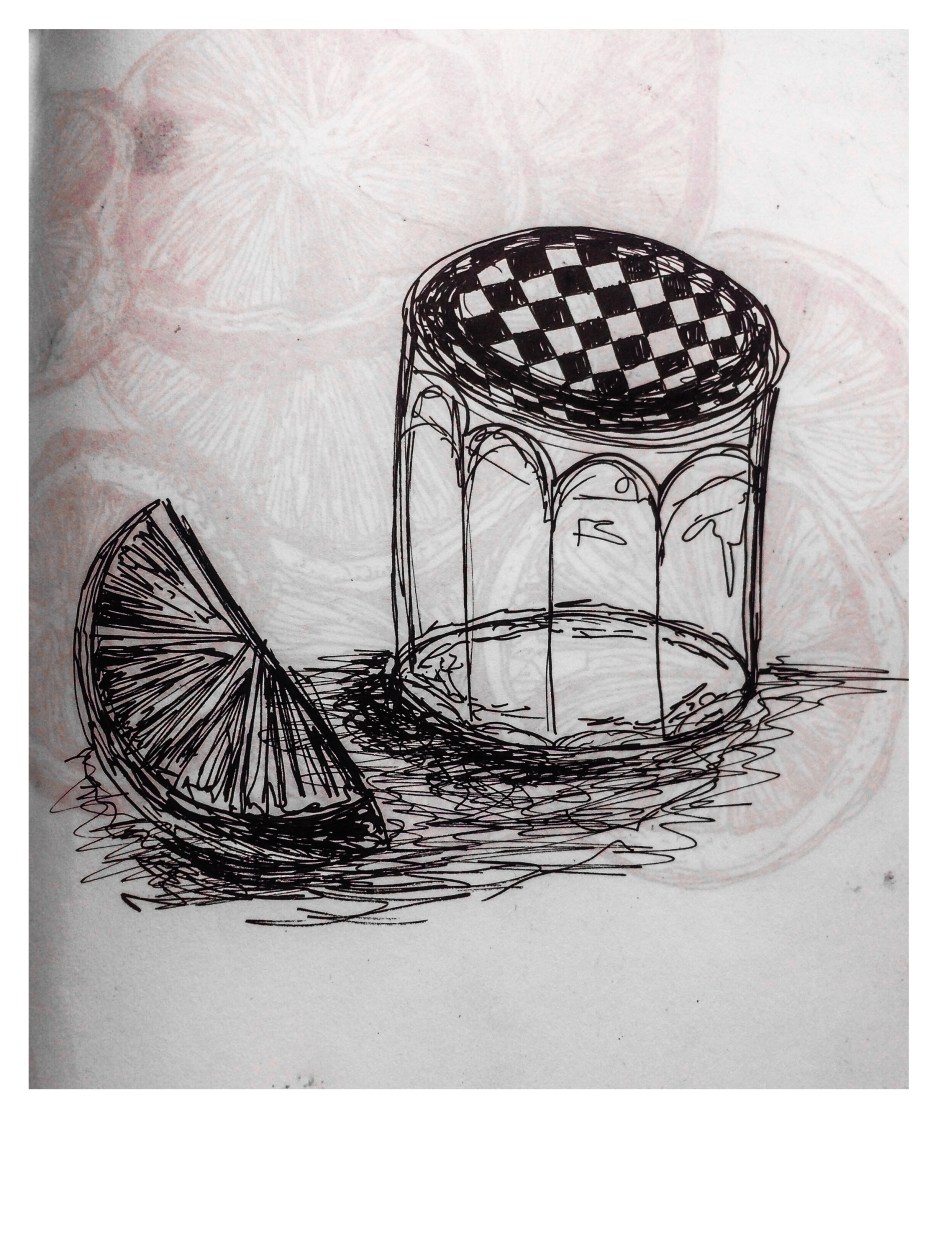
Oranges for Marmalade

So delighted to have been picked as a runner-up in the 2016 GUCW Summer Short Story Competition. The theme was ‘journeys’ and you can read the other winners HERE.  Here’s my wee story, about an elderly lady trying to get to the end of the road…

Oranges for Marmalade

oranges marmalade.jpg

“No, no, no, must get to the shop, can’t stop, can’t stop…”

You could only hear her if you were very close to her. From afar, there was only the distant rustle of her words, softly murmuring like an insect.

“Must get to the shop, must…”

You could see her fuss with the door of her bungalow, shuffling along the path out of the front garden and onto the pavement, never forgetting to close the gate. She was always careful with these details. Sometimes the cat was out, draped over the stump of wood where once there was a lilac tree, prowling around the unkempt lawn, or else sitting at the window, watching carefully as her mistress slowly made her way down the road.

It was a beautiful street, even by the city’s standards: a long, broad avenue of horse chestnuts, which shadowed the pavements and when the sun shone they cast dapples of green light on the concrete, clear and pretty as stained glass windows. In the autumn, conkers would gather in the ground, brown and gleaming amidst the fallen leaves, and the neighbourhood children came out in their droves to pilfer them. She had lived on this street for a very long time. Whole families had come and gone, homes were split into rented apartments, townhouses halved into bungalows. Only the corner shop remained at the end of the road, though it had changed hands a few times.

If you watched her for long enough, you would see the rhythm of her walking was most unusual. She stopped in fits and starts. She would halt in her step, standing as if suddenly finding herself tied to the ground, looking around her with a bewildered expression. If you were close enough, you could hear her tutting under her breath.

“Can’t stop, can’t stop.”

She attempted her stilted, aborted journey almost every day. So sad, she always seemed, picking her footsteps over the same old concrete. There was a frown on her face, etched deep into her skin. Her eyes, a watery green, always glazed over, or else were sharp and jolted and fearful.

This is the tree, the special tree which she stops at halfway on her journey. She knows there is something significant about the tree. Her fingers, sometimes, escape the cloak of their gloves and feel along the trunk; dry, brittle skin brushing upon the gnarled wood, whose bark came apart in dusty flakes. Somewhere on the tree two letters are carved: E + J. She winds her pointy finger up the J to where it stops. Sometimes, the sticky sap clings to her nail and later, in the shower perhaps, she will notice it and worry about where it came from.

Was this it? No. She is not here for the tree. She is never travelling towards the tree; it just so happens that she finds herself here again.

She always gets to a certain point in the walk where suddenly everything loses its clarity. She can no longer make sense of the shapes and colours. She does not recognise this street at all. Where am I? Where am I? The windows of buildings seem to stare down at her in mockery, circle-shaped and evil. She is running back through her memory, names and faces, names and faces and places. The East End street where her grandmother lived. Was it just like this? She remembers the ochre and gold of the bricks and the white window frames and the old men that would stand on street corners, at all hours of the day, staring aimlessly and smoking cigarettes.

Pull your stockings up, her mother used to scold. She would run around the streets, shooting marbles and playing with the boys, her stockings always half up, half down. She remembers them fondly, those stockings, the colour of a lilac sky, as her father used to joke. He was a secret poet, and he liked to mix words like his wife would mix the oranges and sugar for marmalade. Marmalade, her speciality, the milk of summer nourishment. The fruit comes all the way from Spain, as her father would say, slathering it over his toast. She remembers him reading the newspaper, stealing mischievous glances with butter-smeared lips as she mended the holes in her school blouses.

The sky was greying now, the weather turning. An umbrella: she should have brought an umbrella. The door to her bungalow was so far away now; there could be no turning back. She felt the panic rise like a sickness in her chest. Nobody could know how much she needed to urinate. There was a new desperation to her journey, as if somehow it was now life-threatening.

“Are you okay ma’am?” the woman in the business suit stops her car, rolls down the window. The woman leans her head out but she is already walking away, pacing in circles of confusion. “Are you lost?”

“What? What?”

“I said, are you lost?”

“No, no, mustn’t stop, got to get to the shop.”

“Can I give you a lift?”

“No, no, it’s not far – the end of the road.”

“Are you sure? It’s no bother for me.”

“I must – must get to the end of the road. Good day to you.” She clutches her handbag tight to her chest, thinking how nosy people were, even these days. The car trundles reluctantly away and the street is quiet again. Very few commuters pass through here. It was only the locals who brought their cars to reside in the sleepy parking spots, draped with the luxuriant leaves of the chestnut trees.

There was something she had to get from the shop. What was it? She had lost it again, the slip of paper that she was supposed to carry around to help her remember.

“Something to get from the shop,” she mutters. A handful of kids, skiving from school, burst round the corner, their skateboards cracking loudly on the concrete like fireworks. She shivers with fright, looking up to the sky for an explanation. The kids whirl past her, laughing. They went from one end of the street and onto the next in less than a minute.

Her own children–how old were they now?

“Oh, hello Rosie,” she said once, greeting the little boy who was dragged into the living room by his harassed mother.

“Mum, it’s Robert. Robbie. Your grandson.”

“Robert? Oh, yes, a boy! Hello Robbie.” It happened every time. Every time it was like she was meeting them anew.

“Yes, this is Robbie, Mum,” she repeated, “Rosie’s…dead. Your daughter Rosie, she died out in Israel. Five years ago. Remember?”

“Rosie? Rosie what?” The same thing, every time. She died, she died. “What was she doing in, in Israel?” Sometimes the words would come back to her: It’s just something I have to do Mum, I have to find myself. What was it they had told her? Something about the desert, the collapsed sand dunes, all those foreign-sounding names that had swirled around in her head, loose and dead as the leaves picked up in an autumn breeze. The young folk, why was it they had to go away, what was it they thought they would find elsewhere?

There were always funerals. Funerals were as sure as the passing seasons. People were always dying; that was true enough. You put on a good spread and said your good will and life went on just the same.

“But my Rosie? How…my Rosie?”

“She was stranded, Mum, stranded. My sister and they flew her home in a box.” And her own daughter then, choking up in the living room, white knuckles rubbing her knees.

Stranded, stranded…

Stranded, like she was now, stuck on a traffic island in the middle of this suburban avenue where she had lived for twenty years, and the traffic coming and going so slow and intermittent, and still the thought of crossing terrified her and she was suddenly frozen and her hands were quivering like, like birds’ wings and she knew, she just knew there was someone in the window opposite watching her…

They had given her a necklace with a plastic button, an alarm that she was supposed to press when she needed help. She could picture it, hanging by the door, clicking against the glass as the draft blew in.

She could hear the buzz of a telephone.

The cry of the magpies outside her window.

The sound of her girls, laughing in the garden.

The thrum of the music from next-door.

The skateboards smashing the concrete.

It was all this deep, dark, churning cacophony. She knew she needed to keep moving, but her legs were stiffening, her joints seizing up, her bladder trembling. The rain was coming down now in cold speckles on her face.

Nobody in the street could know the secret strain of her journey. Each time she tried to cross the road, she saw her feet step off over a cliff and the car like a gush of coastal wind, ready to sweep her down to her death. All around her, this sea of sound, lashing and stirring.

She’d always thought of death as a kind of quiet, a restful transition from life into sleep. This was not death at all, this turmoil. The huge green chestnut leaves which bore upon her like so many hands, glinting wickedly with unforgiving light. The clouds clearing, then closing in again.

Her own daughter, and all the things she would have shown her. The special rules that kept families together, the various arts of living and loving and housekeeping. The things that you were supposed to be proud of. The little efforts to make everyday life somehow tangible, meaningful.

She’s left the stove on again. 

Often, these days, she thought of herself in that anonymous third person.

She lost her glasses. Lost the handset for the telephone. 

That anonymous third person, disorientated, mocking.

Life seemed more and more a journey in which you found yourself lost. You were not supposed to reach a destination, but merely immerse yourself in further confusion. The thought of it was almost a comfort.

She is less distressed. She is breathing properly and her hands stop shaking as she stuffs them in her pockets. As always, it is at this point in the road that she turns back, heads towards the house with the gate and the cat and the alarm by the window and the bathroom with the toilet and the living room where they told her that Rosie had died. It is always at this point that she gives up.

It is only later, at some unfixed time in the middle of the night, that she will wake up and remember the purpose of her journey. Maybe she is dreaming of her mother, sad and milky swollen dreams. Maybe she is dreaming of the quiet suburban street itself: the swaying leaves of the horse-chestnut trees, the conkers in autumn gleaming, the children on the green and the thrash of the skateboards and the way the world looked ten, twenty years ago, before she started forgetting…

Maybe she dreams of her own daughters, golden on the front lawn, singing and playing.

Always she awakes to that singular purpose, a child again, the glitch in her memory that always sticks like a scratch on a record: Oranges. I must buy oranges, to make marmalade. Oranges for marmalade.

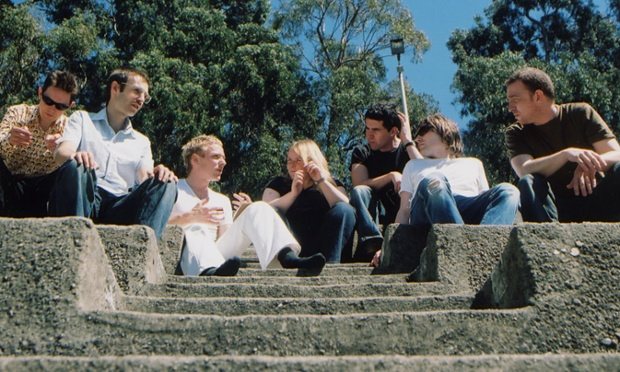
‘Do something pretty while you can’: The Magic of Belle & Sebastian

aa037da0-a17c-47f3-9e82-4639aeba279e-620x372
image source: The Guardian

Belle & Sebastian are one of those bands that give you a warm, fuzzy and nostalgic feeling. As much as they’re often lazily attributed to the cultural realm of the ‘indie kid’ or the ‘Glasgow hipster’, this neglects the fact of their wider popularity. They are, after all, a band who’ve been around for over 20 years now. I’ve played their tunes in the restaurant where I work and witnessed middle-aged folks who look like they’re off to a Springsteen concert humming along to ‘The Boy With the Arab Strap’. Their songs have popped up on plenty of popular tv shows and films (‘I Don’t Love Anyone’ on Girls, ‘I’m a Cuckoo’ on The Inbetweeners, ‘Piazza, New York Catcher’ in Juno – to name just a handful). Like a sweet, familiar honey, their music just sticks to you, whether you wanna spread it on your toast or not. Sure, they get a lot of hate: their songs are cloying, the singing a bit too saccharine at times, the lyrics silly, the sound the same on each album. I’ve heard them being called ‘beige’ music.

For me, Belle & Sebastian make pastel coloured music. I don’t know, maybe it’s a touch of the old synaesthesia but I’ve always imagined their songs awash in delicate shades of blue and pink, green and yellow and orange – a bit like the colours of sorbet. They’re just the perfect summer band. Some bands it’s easy to have a colour for, or even a texture: Mogwai are deep deep green and black, LCD Soundsystem are bright, shiny white, Mac DeMarco all denim blue and dirty mustard yellow, Kate Bush is a luscious kind of cherry red, Bjork is all the hues of a pearl, Tame Impala are psychedelic greens and blues and oranges, Aphex Twin is ink black, but sometimes yellow, blue or bubblegum pink. In the same vein, Belle & Sebastian to me are all about pastels, sometimes a wee bit brighter but never beige, except when it’s that classy kind of chino beige that you might see paired with a yellow blouse and pink ribbon. I want to be dressed up with a funny hat, a mini skirt and retro sunglasses when I listen to them. Something lilac, a stick of ice lolly. Hell, maybe even rollerblades. I find myself immersed in the stories of the songs; I sort of want to be a character in one of them – a lost twenty-something with her school days long behind her, figuring out how to deal with the world and enjoying living in the city.

DearCatastropheWaistress

Listening to them involves a kind of camaraderie: you’re sharing the world with them, with all the voices of each song’s narrator; sharing Stuart Murdoch’s hazy, romanticised version of Glasgow, the lives of the quirky characters he writes into his lyrics. The musical arrangements in their songs vary between stripped back and fragile, sometimes very much Smiths-influenced (inherently, B&S are an ‘urban’ band, right?), with pretty melodies adorned with piano, acoustic guitar, maybe a bit of bass (‘We Rule the School’, ‘It Could Have Been a Brilliant Career’, ‘Dress Up in You’ – these are some of my favourites), to zany and fun and maybe even lovably chaotic, with some of the earlier songs sporting surf rock guitars (‘La Pastie De La Bourgeoisie’) or (in the early days, Cubase-arranged) electronic numbers (‘Electronic Renaissance’, or, later on, the near seven minute ‘Enter Sylvia Plath’ which frames its tribute to the late great poet inside a Europop epic), as well as the Beatles-influenced ‘chamber pop’ (of which they share the influence mantle with Camera Obscura) – see, for example, The Life Pursuit. Their songs are often self-conscious, writing about the importance of losing yourself in books and songs (the final song of Tigermilk, ‘Mary Jo’, references the fictional book that titles the album’s first song: ‘You’re reading a book, “The State I Am In”’), referencing themselves, other ‘indie’ bands (Arab Strap being the most obvious), creating this whole dreamworld of literary and musical references which itself becomes the fantasy world of the songs. When you listen to them, it’s impossible not to lose yourself slightly to this pastel-saturated universe. It’s not just twee; it’s bittersweet happiness, nostalgia, personal and cultural reflection – they began making music in the 90s, after all. That’s why I smile when I see someone sporting a wee Belle & Sebastian tote bag or t-shirt: you know there’s someone else out there who shares that sweet and silly, slightly sad but hopeful little world.

In a way, they’re a band for the underdogs. They cut their teeth on the Glasgow open mic circuit, with its crowds veering between adoration or ruthless indifference. Every Saturday, under the guise of various band or solo arrangements, Stuart and his pals would appear in the Halt bar on Woodlands Road (sadly it no longer exists) – you can read all about it in bass/guitar player Stuart David’s memoir, In the All-Night Café, which geekily delves into early musical experiments, the songwriting process and all the crazy moments that brought the band together in their formative year. So yeah, it’s worth a read if you’re a B&S fan or even just a musician. It’s important to remember that the band produced and recorded all their early songs (came together, essentially) at Stow College’s now slightly legendary Beatbox course, which at the time was more or less a course that unemployed musicians in the area took to ensure they kept receiving the dole: ‘From what I could tell,’ Stuart writes of his first impression of the course, ‘[Beatbox] was a total shambles. Just scores of unemployed musicians sitting around in a dark, airless labyrinth, doing nothing. […] I wandered around on my own trying to work out what was what, while people scowled at me, or just stared blankly into space. A thick cloud of cigarette smoke pervaded the place, and something about the absence of daylight and the lack of fresh air made me wonder if the place was actually a detention centre set up by the government to incarcerate all the people they’d caught using Social Security benefit as an arts bursary’ (In the All-Night Cafe, pp. 10-11). This is probably an impression of college hallways and classrooms that most young adults of Generation X or millennials growing up in Britain can relate to: the flickering strip lighting, the apathy amongst both staff and pupils, the sense of suffocating bureaucracy, of life in suspension. And yet out of that dark and maybe even Kafkaesque environment, sometimes the magic happens. People come together and make the best of things – it’s inspiring.

For me, it’s also inspiring that Stuart Murdoch is actually from Ayr. The only other celebrated artist I can think of off the top of my head that hails from Ayr is none other than Robert Burns, so yeah, it’s been awhile since the place has been put on the map, artistically speaking. Belle & Sebastian are usually associated with Glasgow (especially the West End), but for me it’s important to remember their humble beginnings. Ayr still has a pretty cool music scene in terms of acoustic nights in local pubs, but there’s definitely a dearth of actual decent gig venues, especially when it’s producing so many talented musicians through, for example, the well-respected Commercial Music course at the UWS Ayr Campus (see for example Bella and the Bear and the wonderful Shanine Gallagher).

Belle-And-Sebastian-Tigermilk

ANYWAY,  back to Belle & Sebastian. I wanted to talk about Tigermilk as an example of their oeuvre in general – as the raw, often forgotten diamond. It’s their debut album, though I actually came to B&S first through If You’re Feeling Sinister, having picked it up from Fopp when I moved to the West End for university and decided a B&S CD was a good way of immersing myself in local culture. Tigermilk reminds me of that lost and lonely summer feeling, walking around the city killing time before going to work, worrying about all the books I had to read before September, the people and things and memories I was in love with, that paranoid and desperate desire to write myself and indeed keep writing. It’s a lo-fi sort of album; it feels sweet and magical in that simple way, and you can tell that it marks the moment when the band discovered they had something special going on.

Sometimes the lyrics are a wee bit strange and surreal; the cast of characters Murdoch evokes in his lyrics can be pretty bewildering. The band’s slightly surreal vibe is indicated by the cover art for Tigermilk: a black-and-white picture of Murdoch’s then girlfriend, Joanne Kenney, apparently breastfeeding a toy tiger. Then take a look at the lyrics to ‘My Wandering Days are Over’ for example: ‘Six months on, the winter’s gone / The disenchanted pony / Left the town with the circus boy / The circus boy got lonely / It’s summer, and it’s sister song’s / Been written for the lonely / The circus boy is feeling melancholy’. You’re never sure if the characters are metaphors for existentially pained middle-class indie kids (lost in the job market/lost in the adult world circus of mad capitalism??), or actual protagonists in B&S’s musical universe. That’s the poetry of it – you get to decide. It all sort of makes sense, this girl with spiky black hair nourishing a toy tiger; sure, you can take it as symbolic, but it’s also just intriguing and slightly controversial enough to draw attention to a debut album.

One of B&S’s unique selling points is the whimsical fictions they weave through their ‘brand’ as a band. Take, for example, the sleeve notes to Tigermilk: they detail a cute little tale about Sebastian and Isabelle, the namesakes for the band.

Sebastian met Isabelle outside the Hillhead Underground Station, in Glasgow. Belle harassed Sebastian, but it was lucky for him that she did. She was very nice and funny, and sang very sweetly. Sebastian was not to know this, however. Sebastian was melancholy.

He had placed an advert in the local supermarket. He was looking for musicians. Belle saw him do it. That’s why she wanted to meet him. She marched straight up to him unannounced and said, ‘Hey you!’ She asked him to teach her to play the guitar. Sebastian doubted he could teach her anything, but he admired her energy, so he said ‘Yes’.

It was strange. Sebastian had just decided to become a one-man band. It is always when you least expect it that something happens. Sebastian had befriended a fox because he didn’t expect to have any new friends for a while. He still loved the fox, although he had a new distraction. Suddenly he was writing many new songs. Sebastian wrote all of his best songs in 1995. In fact, most of his best songs have the words ‘Nineteen Ninety-five’ in them. It bothered him a little. What will happen in 1996?

They worked on the songs in Belle’s house. Belle lived with her parents, and they were rich enough to have a piano. It was in a room by itself at the back of the house, overlooking the garden. This was where Belle taught Sebastian to put on mascara. If Belle’s mum had known this, she would not have been happy. She was paying for the guitar lessons. The lessons gave Sebastian’s life some structure. He went to the barber’s to get a haircut.

Belle and Sebastian are not snogging. Sometimes they hold hands, but that is only a display of public solidarity. Sebastian thinks Belle ‘kicks with the other foot’. Sebastian is wrong, but then Sebastian can never see further than the next tragic ballad. It is lucky that Belle has a popular taste in music. She is the cheese to his dill pickle.

Belle and Sebastian do not care much for material goods. But then neither Belle nor Sebastian has ever had to worry about where the next meal is coming from. Belle’s most recent song is called Rag Day. Sebastian’s is called The Fox In The Snow. They once stayed in their favourite caf’ for three solid days to recruit a band. Have you ever seen The Magnificent Seven? It was like that, only more tedious. They gained a lot of weight, and made a few enemies of waitresses.

Belle is sitting highers in college. She didn’t listen the first time round. Sebastian is older than he looks. He is odder than he looks too. But he has a good heart. And he looks out for Belle, although she doesn’t need it. If he didn’t play music, he would be a bus driver or be unemployed. Probably unemployed. Belle could do anything. Good looks will always open doors for a girl.

You’ve got it all here: the playful and ultra twee imagery ‘(she is the cheese to his dill pickle’), the hint of queer culture and crossdressing that sometimes runs through B&S songs (‘This was where Belle taught Sebastian to put on mascara’), the DIY elements, the spatial immersion in Glasgow’s West End as a kind of leafy wonderland where people own pianos in airy rooms overlooking gardens. It’s honest and cute and totally unashamed, totally uninterested in being cool. Compared with the stylised, rock’n’roll swagger of Britpop, this album (originally released in 1996 then rereleased in 1999) is so refreshing. The tale of Belle and Sebastian is a short story, more than an explanation of the album’s lyrics or ‘concept’; it’s a bit ambiguous, a touchstone for all the other B&S characters who populate later LP – it’s perhaps, most importantly, an indication of the band’s consistent literary bent.

‘Sebastian was melancholy’. Well, melancholy is probably the overriding emotion on Tigermilk. Melancholy being that feeling of sadness, yearning and inexplicable loss. An indulgent feeling, a languid and probably narcissistic feeling that is almost pleasurable despite lolling around in the negative. Freud, in Mourning and Melancholia (1915[17]) famously distinguishes mourning and melancholia thus: ‘In mourning the world has become impoverished and empty, during melancholia, it is the ego itself’.  Mourning is about the loss of a specific object, whereas melancholia is a vaguer feeling, a depression with no apparent or obvious source, a swallowing up of selfhood into narcissistic darkness. One of the reason’s I really like ‘I Don’t Love Anyone’ is its in-your-face rejection of the Coca Cola style let’s-all-hold-hands-and-be-happy version of love, the assertion of personal endurance and the often denigrated value of independence in a world where we’re all supposed to follow the crowd: ‘But if there’s one thing that I learned when I was still a child / It’s to take a hiding / Yeah if there’s one thing that I learned when I was still at school / It’s to be alone’. I was that kid who sometimes liked to walk around the playground alone, making up stories in my head – adults just assume it’s because you’re being bullied but there’s a golden value to imagination and it’s easier to forget that as an adult, easy to forget that sometimes you need time out from your friends to be in your own mind.

A lot of Tigermilk is about trying to negotiate personal identity in an often problematic adult world with few opportunities for anyone vaguely creative. It’s worth quoting a hearty chunk of ‘Expectations’ to demonstrate this:

Monday morning wake up knowing that you’ve got to go to school
Tell your mum what to expect, she says it’s right out of the blue
Do you want to work in Debenham’s, because that’s what they expect
Start in Lingerie, and Doris is your supervisor

And the head said that you always were a queer one from the start
For careers you say you went to be remembered for your art
Your obsession gets you known throughout the school for being strange
Making life-size models of the Velvet Underground in clay

In the queue for lunch they take the piss, you’ve got no appetite
And the rumour is you never go with boys and you are tight
So they jab you with a fork, you drop the tray and go berserk
While your cleaning up the mess the teacher’s looking up your skirt

We’ve all known (or been ourselves!) the weird kid obsessed with music, inviting abuse with every strange word spoken. Wear something black, a bit of eyeliner and you’re inviting folk to ask you if you “shag dead folk”. There’s always the one of many that has a whole collection of cool things to say, to contribute to the world, but ends up in retail, in a call-centre, maybe waitressing. Again, Belle & Sebastian are the band of the underdog, the folk (and there are a lot of them) who slog away at day jobs but don’t give up on their dreams – whether those dreams involve becoming a star of track and field, a model, artist, musician, writer.

Tigermilk, then, isn’t just a melancholy album; there are some feel good moments, such as ‘You’re Just a Baby’, which features handclaps and a nice rock’n’roll beat with a simple, serenading refrain: ‘You’re just a baby, baby girl’. Fundamentally, Belle & Sebastian are a pop band, and a damn good one at that. Stuart Murdoch recently wrote and directed his own film, God Help the Girl, which more or less demonstrates his near-religious philosophy of pop music, as the character James (fittingly played by the singer from pop/electronic band Years & Years) proclaims:

A man needs only write one genius song, one song that lives forever in the hearts of the populous to make him forever divine. […] Many women and men have lived empty, wasted lives in attics trying to write classic pop songs. What they don’t realise is it’s not for them to decide. It’s God. Or, the god of music. Or, the part of God that concerns Himself with music.

This is some fairly interesting religious imagery coming from a singer (Murdoch) who has always been openly Christian. And of course, the hyperbolic emphasis on music’s divine significance here is perhaps a cheeky dig at the ego of the pop star, but it also touches on the importance of universalism for pop. It’s easy to consume, it should transcend generations, it should be technically perfect – the satisfying work of a ‘genius’. But good pop, as Belle & Sebastian demonstrate, isn’t all bubblegum songs about loving your sweetheart – it also has that spark of something else. For me, B&S capture a very specific experience of existential bewilderment in the modern world, combined with the right amount of romance, comedy, storytelling and a healthy streak of cynicism. God Help the Girl is twee as hell, but it’s also a loving portrait of Glasgow, of the early days of being in a band, the freedom of summer days drifting down the canal with the world shining bright around you. It’s maybe also a portrait of unrequited love. And, crucially, it transforms that cliche, the power of music, into something sparkly and fun as well as serious and uplifting – it is a musical after all. Its ambiguous ending, with the heroine (significantly called Eve – more religious imagery!) finally leaving the city and on a train ride to London where she intends to try and make it ‘alone’ after her existential rebirth and artistic awakening in Glasgow, is perhaps its strongest point – it’s a feminist assertion of personal creative desire as opposed to remaining tied down to the things your friends want.

god-help7
The protagonists of GHTG: James, Eve, Cassie

Once again, Murdoch puts complete faith in his slightly damaged protagonists; he encourages us to just trust our creativity. Maybe that’s why I love Belle & Sebastian so much, because sure, their songs are mostly golden, pastel-hazed pop, but it’s not that simple; they embrace that wavering, magical and sad place between warm dreams and cold reality, and represent all the poor souls who live there in that limbo, such as the eponymous heroine from ‘Mary Jo’: ‘Your life is never dull in your dreams / A pity that it never seems to work the way you see it’. And even though such songs are full of melancholy, you’re still treated, as in an Arctic Monkeys song, to some brilliant lyrical candy: ‘Cause what you want is a cigarette / And a thespian with a caravanette in Hull’. So maybe that’s the special element, the thing that makes the everyday divine, that elevates the ordinary into a valid subject for pop music. And maybe, pleb that I am at heart, that’s why I love it.

24 Hours

IMG_35076

It was the summer of being totally numb. I woke up every morning with the sensation of being dragged down some strong gulf stream, warm and foggy and going nowhere.

I smoked cigarettes leaning over the harbour wall, watching the waves curl over the lisp of the sand, gathering in little billows. I worked a job at one of the out of town supermarkets, driving my car around in the day, stacking shelves at night. I worked from midnight till dawn, driving home as the birds sang and the junkies collapsed into their hellhole flats. I sort of enjoyed the boredom, the routine sense of drifting; the way the hours and days just dissolved away. I had a vague sense that something had to happen by the end of the summer, but never paid much attention to prospects of the future.

The doctor put me on these antidepressants, you see. I don’t know what they were supposed to be doing, but they made me very numb. I felt weightless, as if my skin wasn’t my own. There was an agitation, a twitchiness to my existence. I couldn’t help scratching, shivering. I worried the sores that rose in welts on my arms. Every time I tried to eat, I felt nauseous. Only the cigarettes helped.

I was getting through thirty a day, a pack and a half, that summer.

Then I met Oliver. I used to know him, years ago, at primary school. I was standing outside a club, watching the thin blue moon disappear into dark clouds, watching some sixteen-year-old kid throw up on the pavement across the road. Oliver came out of nowhere, wearing this flamboyant shirt, a shark-tooth necklace, his hair wiry and long. I don’t know how he recognised me; I barely recognised him. I wanted to melt into the wall.

But then we started talking about childhood. I guess it seemed like forever ago, this whole other world of messy innocence. The games we used to play, running over the fields, throwing clumps of hay at each other. Days out with the school, teasing one another over the contents of our packed lunches. We walked around town all night, waiting for the sun to come up, sitting shivering underneath a slide at the park, sharing a half bottle of vodka.

He gave me his number, refused the cigarettes I offered. Said we should talk again, but he had to go to work.

I never did text him. I went straight home, teeth chattering on the bus, then lay in bed all day, staring at the ceiling. I couldn’t sleep. I kept thinking about the person who used to run around those fields, laughing and shrieking, throwing wads of hay and falling back into the soft long grass. I smoked so much my room was a grey, tarry haze. At some point I must’ve slept.

I woke up and the world was brighter, clearer. The smoke was gone. I drove to work and the strip lights of the supermarket glowed in my brain, the colours of all the signs and products seeming ultra saturated, a pleasure to stare at. Everything felt so intense, so real. I guess I was feeling again. It was a joy to just touch things, finger the labels of tins and packets, brush my feet over the vinyl floor.

I’m not even sure I took down the right number. I never did text him.

It was a joy to stand over the bridge on my break, watching the cars pass on the dual carriageway, biting into something sweet, maybe a donut, maybe a piece of carrot cake. I didn’t think about falling over that bridge, about smoking a cigarette. I thought of Oliver, of the little girl asleep in the backseat, going nowhere through the night. Falling asleep on someone’s shoulder. That sense of safety. I don’t remember much else about how I felt, but I know that something had changed, even though in the end I didn’t text him.

I guess it was just that in those 24 hours, I’d forgotten to take my antidepressants. For once, it felt good to go nowhere.

***

(Flash Fiction February prompts: ‘nowhere’)

The Many Moons of Jupiter

I was just five years old when my Dad first took me to see the stars. In the museum downtown they have this observatory room with a great glass ceiling displaying the night sky. A kind of visibility you can’t get in real life; you can’t help staring and staring for hours and hours, just staring at that bright jewellery case of stars. The blackness in the background, that velvet sheet they use, seems deeper alongside the purplish blueish hues which streak behind the twinkling chips of silver. I would sit on the floor of the observatory and stare up at those stars until my neck hurt. There was a makeshift telescope too, which showed up tiny coloured planets. You could check everything you saw against The Book of Celestial Details which was lying open on the glass table. It gave me an immense satisfaction: checking up on those stars, learning the constellations.

It was always Dad that took me to the observatory. Saturday afternoons I was his responsibility, and the easiest thing – the thing I begged for – was to visit the museum. We would go out to lunch afterwards, me leading the way down the familiar streets with the bustling weekend crowd, people weaving in and out of each other like threads from a harlequin fabric, trailing smiles and shopping bags. We always went to the same cafe, where they sold chocolate milkshakes and beans on toast for a fiver.

Dad is a landscape gardener. He digs up piles of mud and lays down square rolls of soft grass and puts in fancy plants that people order from catalogues. He does things with precision: cutting up his food carefully, watching everything I do with his observant eye, following this kind of persistent rhythm. He hated if I got food around my mouth, if I made a mess of the salt shakers or the scraps of food I left on my plate. In the cafe he talked to me about school and how I was getting on and what I liked and if my friends ever got into trouble. One thing we never talked about was Mum. Dad didn’t know how to talk about Mum.

My favourite planet is Jupiter. The biggest planet in our solar system, made of flaming greys and yellows and oranges, patterned with swirling lines which sweep around its diameter. After the moon and Venus, Jupiter’s the brightest planet in the night sky. Of course, I’ve never seen it in real life, only the simulated museum version – the version that flashes up onscreen and floats around in orbit. I always dream of that beautiful hologram, but all those pixels get mixed in with the Saturday city buzz and the taste of milkshakes. I don’t know what I’d do if I stumbled upon it one day, walking in some clear crisp countryside and seeing it up in the real night sky. I think it’d be pretty scary, not very real at all. I always wonder about that giant spot, the storm that’s raged for centuries on its surface. I’ve zoomed in right close to that Giant Red Spot like I was looking into the eye of a god. It’s like my way of praying, staring into that spot, feeling very small as I read about its greatness.

In the cafe, Dad asks me about the future.

“What do you want to do when you grow up?” he says. He asks me this just about every week, like he’s forgotten how I answered before. I have a list of things which I reel off for him: astronaut, astronomer, artist, builder.

“Artist? Builder?” he sounds confused. He doesn’t understand what I mean by that. I mean, I want to draw planets, to make planets come to life out of pencil and paper. I tell him I want to build things which will last like the planets, that will exist on the earth as the earth exists in the solar system. I can’t put it quite into words; it’s a feeling I have. Eternity. The rings, faint and reddish pale, that surround some of the planets – it’s sort of like that – the feeling drifts out to you, faint and pale. I wonder what it’s like to glide along one of those rings, feeling the chaos of gravity, shafts of light shooting right through you. Like playing Mario Kart, whizzing down a rainbow highway and picking up gold stars.

The problem is, I don’t think I’ll ever be an astronaut or an astronomer; I’m no good at maths.

Sometimes, I don’t think I’ll ever grow up at all, because Mum and Dad won’t let me.

“He doesn’t like toys anymore!” Mum shrieks at Dad when he buys me a train set for my birthday, or a Gamecube for Christmas. “He’s too old, for God’s sake!” She stares at me with her eyes on fire, wanting me to say something, to agree with her. Sometimes she throws plates or tips the dinner all over the floor, or literally shoves my father out the door. They fight over everything.

What’s confusing is that I can’t tell sometimes whether they’re making up or being mean; whether they hate each other or love each other. There is a small red wine stain on the carpet by the sofa, and I stare at it when they are arguing in the living room in front of me; I stare at it like it’s the Giant Red Spot of Jupiter. I want to dig my nails into the carpet and peel it off like a scab. They hurl swear words at each other, and Dad always shrinks into silence. It’s Mum who creates disorder, swirling her self around the room, her voice getting louder and louder. I sometimes have nightmares about this: the way she goes from shouting to crying, her red face blurring into something indistinct and terrible. I close my eyes and think of comets, shooting endlessly over the night sky.

She says I’m getting too old for museums.

“Help him with his homework instead,” she nags to Dad as we leave on Saturday mornings to get the bus into town. Her plea is lost to our backs as we step out of the house. Sometimes, late at night, I hear her come into my room and tuck me in. She stays there for a while, hanging over me and breathing softly – breathing warm tufts of fire. She touches my face and I pretend to be asleep as she slowly starts to cry, still stroking my cheek. All I want to do is shout: Mum, stop! but I can’t. I lie there, still as a shop floor dummy.

She listens to me sleeping, but she doesn’t listen to me talk about the things I like. She doesn’t listen to me when I talk about the sun and the solar system, the many moons of Jupiter. She just switches off, shutting you out with this kind of supernatural force.

How amazing it would be, to escape among the stars! I watch the science channels and see the space ships and the shuttles hurtle away from earth. They always interview the astronauts after they’ve landed: How do you cope with not seeing your family for so long? Don’t you get lonely? What can you eat out there? but they never ask about the things want to know:

Were you good at maths at school?
Do you need to do algebra to be an astronaut?
What is the square root of 395,691,324?
What do Saturn’s rings and Jupiter’s Red Eye look like from Space?

I always turn off the tv when I see their smug faces, when they take off the space helmets like they think they’re in a movie. Plain old human faces are as boring as my parents’ arguing.

Nowadays, they fight about anything at all. I don’t understand it; they’re like kids – and even Dad shouts now. From the top of the stairs I watch them through the gaps in the banister, wishing I could go down there and make them stop, make them shut up as fast as a hurricane tears up a city.

“Don’t forget we love you son,” Dad always says afterwards, “no matter how Daddy and Mummy feel about each other.”

But he never answers when I ask if they are getting a Divorce. It’s like I’ve whispered a secret I’m supposed to keep quiet, the one special code word that holds us back from chaos.

Now that I’m older, we don’t go to museums anymore; we get lunch in the pub. Dad loves fish and chips and Fosters lager. He also loves the slots.

Saturday afternoons he stands in front of the puggies while I watch the bartenders pouring pints and count how many times they spill things. Sometimes I go over and watch him play: I like to see the flashing lights, the colourful fruit symbols glow as the slots fall into place. Simple, persistent, like the bubbles in a glass of lemonade. Dad buys the drinks and tells me to go sit down. It’s a weird thing, watching him at the slot machine; like he’s in control of everything, like he knows when the slots will align the way he wants them to. Often, he pounds on the plastic shell of the machine, curses. We walk home in the purple dusk, past the city shutting up, and he tells me about anything – a song on the radio, the size of his shoes, the hat his mother used to wear when he was a kid – anything but how much money he’s lost.

The other day, I found Jupiter in a textbook at school. I guess I haven’t really been thinking about planets and stars and space for awhile, and now it stood out from the glossy pages like a face smiling from the darkness. A familiar face.

This girl sitting next to me, Layla, leant over my shoulder.

“What’s that you’re looking at?” she asked in that bright, tinkly voice of hers.

“Jupiter,” I said. I ran my hand over the smooth page where the clouds patterned themselves across the surface, like the wisps and eddies of smoke leftover from a fire. In my head, I rehearsed the names of all the elements that drift on through those clouds: carbon, vapour, neon, sulphur. 

“Is that your favourite planet?” Layla whispered, a lock of her hair spilling over my cheeks. I nodded.

“It’s the biggest planet there is. It’s so big it could swallow up all the other planets.”

“And one day you’ll live there like a king?” she smiled. She was teasing me.

“Nobody could ever live there, it’s too cold.” I closed the textbook.

After a while, I turned to look at Layla, thinking she would be facing the front again, watching the teacher scribbling sums on the board. But she was still looking at me. In her eyes I saw the glass darkness of another kind of space, where stars come forward like shoals of beautiful silver fish rising to the surface of the ocean. I glanced back at my paper and wrote down a perfect equation.

It was winter and after class she cornered me in the snowy playground and for fun I kissed her, just like that. Her lips were cold and wet with snowflakes and everything felt very still around us, like we were caught in a hullabaloo. It was all just luck really – that was the exciting part. I told her it’s a beautiful world and she laughed, like I had just said something funny and random from a movie. Like we’d made up the world ourselves and now we were powerful.

When I got home, all Dad said was: she’s left us. He looked around the room with this blank expression on his face, like the air itself was different, like something in the particles around him had changed. I poured a glass of milk and thought about it for awhile, but then I remembered the stars and the cool night sky that was only a few hours away, waiting with equations and gorgeous auroras. And yeah, I guess I felt okay.

(This short story was written for the GUCW Summer Short Story Competition 2015, under the theme of ‘Chaos’, and is republished from http://gucreativewriting.wordpress.com).

Apple Blossom

Apple Blossom

April, the sweetest candy of a pink-tinged sky blessing the late afternoon. Rebecca has sat in the garden for hours, watching the birds nibble from the feeder and splash around by the pond. This is her Grandpa’s garden, though he no longer enjoys it. They have him cooped upstairs on a dialysis machine, in a bedroom that smells of sweat and death. Rebecca is not allowed up there: the air, her mother says, is not fit for a young and blooming girl.

She misses her Grandpa. She remembers him mowing the lawn on Sunday afternoons, stooping with his bad back. She remembers him commending the shapes of his moon-faced daffodils. She remembers him singing Frank Sinatra in velvet baritone while pruning the roses.

The roses are now out of control. They cluster all over the flowerbeds along the path, dangling out with their swollen, sumptuous heads. They have grown so tall that they bend over, crippled with the excess weight, the stems stretching to breaking point. Grandpa would be so disappointed if he witnessed the state of his roses.

Sometimes, Rebecca liked to peel off a petal or two. It was hard to resist; once she took the first few, the others came off so easily and they just slid softly into her fingers. Vivid trails of pink and red petals are now strewn along the gravel path, where Rebecca has walked like a bridesmaid.

At the back of the garden is the apple orchard. In winter the trees are gnarled and bare silhouettes, and not a soul would dare enter the darkness between them. Now that spring has arrived they boast their pretty bows of white, flaky blossom. Every year, Grandpa used to send glossy photographs of the apple blossoms to Rebecca and her parents, who lived far away down in London and rarely made it up to visit. The sight of those lovely trees was always a dream to the young girl who yearned for the country.

“When can we go and see them for real?” Rebecca would sigh.

“Oh, sometime in summer. Maybe Christmas.” They were so often dismissive like this. They had waited too long to see him and now he was dying. Even Rebecca knew it.

She was growing quite bored now, in the garden with no-one to play with. She knew there would be supper soon: hot buttered crumpets with a dark smudge of Marmite melting inside them. Real Earl Grey (loose leaf) because that was the only tea Grandpa had in the cupboard. Rebecca thought it smelt a bit fusty, but you could read the tea leaves at the bottom of the cup afterwards. She thought she saw a bird in hers that morning.

Yes, she was quite bored. The hula hoop which she had brought up from London lay abandoned on the lawn. She had tossed away her tennis racket somewhere into a dense clump of shrubs, because it was no fun to play by yourself, hitting a ball against the shed wall. A bag of marbles had burst open on the patio, the little glass balls having long rolled away, to settle amongst their brethren of grass and gravel. Rebecca had no toys left and besides, she was so tired of them all.

Even the insects had bored her, with their slimy indifference to her existence, their urgent desire to escape her clasping girlish fingers. She couldn’t give a toss about snails and slugs, or even butterflies anymore.

It was in this moment of tedium that she spotted the boy through the hedge. She couldn’t believe she had never seen him before. It was a difficult thing not to be spotted, not to make a peep, but Rebecca crawled expertly into a gap and tried not to breathe as she watched him. He was lying on his front, kicking his long legs back and forth. From this angle, he looked about fourteen. His hair was sort of ginger but also sun-bleached, as if he had spent a long time outside in a streak of good weather that Rebecca must have missed. He looked like something the sun had offered as a blessing. She could see his freckles, the concentrated curl of his lips. He was drawing in a big sketchbook which was flipped open, so that sometimes the breeze rippled the pages. Rebecca felt her heart hum and flutter in the cage of her chest, like some swarm of insects had trapped itself deep within her. He was so beautiful.

She wanted to crawl right out of the hedge into the next-door garden, step into the other world where he existed. She wanted to talk to him, ask for his name. See what it was that he was drawing. She felt like the secrets of the world would unlock themselves once she had learned his name. The sapling of herself would unfurl and a bounty of happiness would overflow from her body like the golden leaves in autumn.

“Rebecca!” she froze. It was her mother calling. She had been searching all over the garden for her daughter and now here she was, discovered in the hawthorne with white blossoms caught in her hair and a strange smile on her lips. She saw there were tears in her mother’s eyes, clinging and spilling like rain from the knots of tree trunks. How could there be tears at a moment so pure, so lovely?

“It’s Gramps,” she gushed, “he’s, he’s gone!” And so her mother pulled her out of the hedge and clutched her in her arms, held her so tight Rebecca thought she would burst. It didn’t make sense: he’s gone, he’s gone. As her mother sobbed into her hair, she watched the apple blossoms being blown away by the gathering night wind. Next-door, the boy stretched out his long limbs, packed up his things and disappeared.

(This little story emerged out of a longer short story project combined with prompts from Glasgow Uni Creative Writing Society’s Flash Fiction February challenge (‘renewal’ & ‘orchard’)). 

Things Enchanted

Source: https://www.flickr.com/photos/mshipp/

The wedding was held on the first of October, that first fresh fling of a spring day with cherry blossoms lining the avenue and the smell of sunlight in the air. Marianne had chosen this day because on the calendar it had glowed up like a promise, the hope of something clean and new that wasn’t tarred with the silliness of April Fools or the bloat of British summertime. It was luck, really, that brought the good weather to New Zealand on that uncertain spring morning. It was also luck that bagged them the venue. She and Ethan had spent weeks debating where to get married, pouring over glossy brochures featuring medieval castles, luxurious hotels with honeymoon suites, country houses and converted churches which allowed you to toss your bouquet extravagantly from the bell tower. Arguing about the cost of fancy desserts and appropriate champagne. It was all very expensive and a little vulgar for Marianne’s liking. She was raised to believe that the most enchanting things in life were free. She had insisted for years and years that if she ever got married she would do it smack bang in the middle of Oxford Street for all it mattered. The best part of a wedding, Marianne had thought as a child, was the cake. I will find the best cake in the world, she would boast to her mother, because everyone likes cake, and not everyone likes a wedding. You can always, as Marie Antoinette put it, let them eat cake.

Growing up, Marianne found it to be true that not everyone likes a wedding. Or, at least, a wedding doesn’t do well for everyone. At the age of twenty-six, Marianne had dragged herself through enough of her friends’ weddings to know that the occasion prompted flourishing happiness for some, and hours of breakdown for others. Only last year, she had been drinking with her old roommate Bill at a colleague’s wedding and over the slurry candlelight he confessed to her his deep desire to kill himself.

“I just can’t stop thinking about it,” he had said quietly, refilling his wine glass, wiping the sweat from his eyes.

“William, William I had no idea.” And as the confetti swirled about the crowd, queer as a summer snowdrift, Marianne felt like she’d been chained to something dark and profound. Some sense of the underworld that she needed to get rid of. Bill had left soon after, taking a cab back to the hotel, and Marianne had gorged herself on the cheeseboard to cheer herself up, because it seemed there was nothing else she could do but stuff away her dreams with sticky lumps of brie. In the midst of all the magic, there was still all this sadness that seemed to coat the world in fear. When the bride passed her, Marianne smiled brightly, but later on she called Ethan in tears.

“Don’t worry,” he’d said, “he’ll be alright. Weddings bring out the best and the worst in people—”And yes, Bill was still alive, but he and Marianne had not spoken since. In all the chaos of organising her own wedding, she had forgotten.

Eventually, she and Ethan found their perfect venue in New Zealand, of all places. It was a rare corner of the world, special in its simple charm of rolling hills and friendly faces. Yet Marianne had a great deal of trouble convincing Ethan’s family to fly out there, even for just one weekend. Ethan’s mother suffered from bouts of depression and an event like a wedding, he said, could prove difficult – if not debilitating – to her state of mind, which had been fragile since his childhood. What’s more, Ethan’s father (they were divorced) seemed to drag himself through life with the sole intention of avoiding tricky situations such as these. He was a plumber who worked hard and spent most of his spare money down the pub, with people he’d known since high school. A cosy existence, free of the kind of complications that Marianne’s parents liked to pick over for a living. Marianne’s parents were academics, the kind of academics who relished a wedding, if only for the excuse to drink nice wine. She and Ethan were very worried about the whole occasion, about their parents coming together for only the second time, about the cost and the question of religion and whether it was weird to give people Love Heart sweets as favours.

“Shouldn’t we try for something more…intellectual?” It was him that said it first, not her.

On the last day of September, they landed crisp and safe on New Zealand ground, ready for rehearsal. To their surprise, they found the priest getting baked under a cabbage tree.

“My god, look at you two!” he exclaimed in his thick Kiwi accent, scrambling to his feet to greet them with a dazed look on his face. “Why I’ve never married such a beautiful couple!” He kissed them both on the cheek with enthusiasm.

“When do the family arrive?” he asked, walking them towards the church.

“Tonight,” Ethan glanced at his fiancé, expecting the nervous expression to show on her lips. She was, however, remarkably composed.

They were being married in a church made of trees. A brand new church, constructed in imitation of a similar design which went viral on the Internet a few years ago. The venue had appeared quite randomly in Marianne’s inbox, with all the sparkle of a super-charged Groupon offer, and she was quite enchanted by its strange beauty, its sense of the ephemeral. She did not want her marriage to be stone-cold and static, confined to a church, but to evolve and shift with the seasons, like this lovely temple.

Ethan and Marianne were just the seventh couple to get married under its bowers.

Silently, they stepped inside the iron framework and stood under the greenery, marvelling at the dappled light playing along the carpet of grass.

“Amazing,” Ethan whispered.

“It’s better than I ever dreamed of.” Marianne turned to him and gave him a long, satisfied kiss. They felt like they could stay here forever, dreamy and alone in this virescent version of heaven. The priest ushered them through their vows before leaving to meet his next clients. They delayed going to the airport to meet their parents, preferring to sit on one of the pew benches, scuffing their bare feet in the soft soil and laughing as they shared their secrets.

“All I want,” Marianne said to her fiancé as they sat later in the back of a cab, “is a few days of harmony. D’you think we can manage it?”

“All I want,” Ethan replied, “is our parents to get on okay. God knows I’m dreading the next few hours.”

“Don’t,” Marianne kissed him quiet. “It will be fine. They love us.”

To their surprise, it was fine. Fine as dinner and mumbled wisps of conversation could ever be. At the end of the meal, Ethan’s father stood up to deliver a drunken speech, exposing an embarrassing array of Ethan’s ex-girlfriends and childhood habits, enough for Marianne’s parents to speculate on for months to come. Ethan’s mother complained about the food and how warm it was for this time of year, her jet lag and sore head, then retired early to her room. Marianne worried, but Ethan knew better.

After dinner, they drank coffee in the restaurant lounge and all talked quite civilly about married life. Brian, Ethan’s father, had consumed a little too much wine and was already slurring off with jokes about how marriage was always a ‘two-way street’ with ‘no exits except death’. He wouldn’t stop, no matter how much Ethan tried to hush him. He teased the young couple about their choice of venue, speculating on all sorts of disaster scenarios which could disrupt the ceremony: lightning storms, forest fires, a rain shower. Marianne’s parents remained very quiet through all of dinner; so quiet, in fact, that Marianne worried there was something on their mind that they were choosing not to share.

Under the cool spring moon, they walked Marianne back to the hotel, leaving Ethan and Brian to have a last-minute tête-à-tête, which Ethan clearly didn’t appreciate. In the hotel garden, Marianne nuzzled herself into her father’s arms like she used to do as a child, feeling small and safe. It was different from how she felt with Ethan.

“Are you going to be okay?” Her father asked her. She thought about the day she first met Ethan, walking up the campus steps to her morning lecture, the sun breaking through a rain shower and the look on his face, concentrated and expectant. He wore his hair very short then – even shorter than it now was – clipped and cool in his blazer, a third-year law student.

“I think so,” she whispered back. The crickets purred around them.

“Just remember, everything is your own decision,” he said cryptically, ruffling her hair gently as he turned to enter the building.

“Goodnight love,” her mother echoed.

She and Ethan spent the night achingly in separate rooms, sleepless and fearful and eager. Marianne took out a pad of paper from the desk drawer and under the header with the hotel logo she wrote a list of all the reasons she was getting married: Love, dreams, sex, money, future, Sunday mornings, love. She laughed at how easily the cliches buoyed up in her mind. Brian’s words had awakened some tiny, irritable worm inside of her, a worm that wriggled with uneasiness. Yet she waited for it to rest and eventually fell asleep, letting the magic of the words she had written take shape in her dreams.

In the morning the sun bathed the grass in golden light and it was just as the first day of spring should look like, so different from October back home, where the streets were bronzed with glossy rain and fallen leaves. Ethan waited among the bright green bowers until Marianne appeared half an hour later, shrouded by the vines and only gradually entering his vision as she stepped through the knitted trees.

“How long?” he mouthed at her. She gave him a funny look as she slowly glided down the aisle, trailing her lacy dress. The church could only seat fifty guests, but there were very few people there. None of Ethan’s friends could afford the New Zealand flight, and Marianne hadn’t wanted to invite so many of her own that the bride’s side would outweigh the groom’s.

“What?” she asked him as they got closer.

“Why have we waited so long for this?”

She stood opposite him over the simple altar and as the priest approached Ethan added:

“I would’ve married you at uni, I would have married you so long ago.” He couldn’t help but grin then, and it was the kind of grin that unravelled the tight poise of his face and showed the fine lines around his eyes, the sparkling hazel eyes that she knew as mirrors of her own soul. She loved him, then, for that fragile smile alone.

“Don’t kid with me,” she murmured. She then looked up to face who they would be soon; who they would be after the magic words and the kiss that sealed them. She stood tall in her crystal heels and white gown, her light hair tumbling long down her shoulders, secured by the flower garland that her little niece had assembled for her that morning from the field of daisies. It was funny, she didn’t feel quite grownup; it was like being a child again, playing dress-up, playing at something that all of a sudden she knew nothing of. The priest stood over them in his robe, casting a shadow into the space around the altar. Marianne imagined that in winter the ground beneath their feet would be scattered with old seedpods and stray leaves fallen from the trees. Were they evergreen? She could not tell; she was no scholar of nature. How different the place would look, all wiry and skeletal. It was a chance vision, the fleeting kind gifted to the mind from a wisp of wind, cold and coming northwards. A fantasy of life at another time, caught in the secret culverts of the land around them.

She smiled as he slipped the ring on her finger, looking into the clouded space of his eyes and enjoying the blind joy that enveloped her.

After the ceremony, they led the guests down the aisle and out of the sparkling world of green onto the garden plains with the ornate shrubbery and the guesthouse lodge in the distance. Marianne’s mother, in her yellow hat, approached her and dutifully kissed her daughter on each cheek.

“It’s been a pleasure,” she said warmly, simply. Her father came and clasped each of her hands in his.

“You look wonderful love,” he told her. “I’m sure you’ll be very happy.” But she felt the clamminess of his fingers in hers, and slipped away. It was as she had felt at her friend’s wedding, that sudden moment talking to William, his face cloaked in cigarette smoke. There was something strange about the way her parents were so keen to share in her joy; it didn’t seem real.

What she would remember most about that day was not the party afterwards, with the sunlight dancing in her hair and the lilting joy of the violins and the woman that sung for them from a makeshift podium. It was not the fairy lights strung across the trees at night, or the sad sighs of the children told they had to go to bed. Not the crumbling wedding cake and the sugared strawberries eaten secretly in the grove by the river, or the sweet laughter of Ethan’s parents as they sat together sharing a bottle of wine and loudly reminiscing. Not the restless, whisky kisses pressed between the sheets in the cool summer evening, with the starriness of midnight pouring through the window. What she remembered most, now, was the feeling of her father’s fingers: cold and foreboding as she pulled away from him and out of her old world altogether.

Yet in the haze of those joyful days, it seemed obscene that in a few more hours they would be returning to a bleak, British winter, leaving behind the Kiwis and their colourful summer.

And love was all, love was all. That was what they said, what everyone kept saying, not knowing what it meant. The daydream of that day, its harmony draining slowly away in the time that was passing, the prickling chaos of day after day in each other’s company. Years flaking from them; precious layers of what they had always wanted to be, sloughing off and collecting in piles on the bedroom floor. There was then the new house, the miscarriage, the man in the white coat who talked to them as if they were children. The strangeness that grew between them. When they had argued, falling back into bed with tired passion, her father’s words flashed back to Marianne: everything is your own decision. And yet.

Here she was at her desk with the wads of paper blocking her view of the window, with the mirror glass behind her and that silver strand in her hair exposed for all to see. They had waited too long; too long they had waited to let happiness wash over them like a morning shroud of marijuana dreams. Marianne sat at her desk because it was the only place she knew where she was. Her head was full of the smell of hospital chemicals and the sound of dogs barking down the lane, old women nattering at bus stops. Blood being sucked through a plastic tube, the soft groan and the closing of his eyes, the shadow self that came over him in those moments. Pale and loitering. Loosely, the memories unravelled from her grasp, so that sleeplessly she would lie awake seeing her mother-in-law’s tormented face, the frown she pulled when she heard the news, the devastation in her eyes. There were too many pieces, too many pieces to pick up, replace.

Marianne lit a cigarette and stared at the ceiling.

In June she boarded the flight to New Zealand – the one she had booked only a week ago – the one her mother had paid for because Marianne was bogged down with the debts he’d kept secret.

Up in the air, suddenly the world no longer appeared in cut glass fragments of what she had lost. The blue sky was open and wide, the land below long and solid. When she landed, this time there was no priest to greet her, no summer insects singing in the grass.

She stepped off the road and made her way into the gardens without stopping, because there was no longer an attendant at the gate asking for an entry fee, a charity donation.

The land was starved. Ten years had passed, and here was the place where his parents had sat looking healthy for once, here the river where the children played, there the place with the daisy ring and the standing stones, the spot where they took their first dance under the virgin moon. The grass was now dry and yellowed underfoot, the breath of winter bitter on her cheeks, like ice kisses left by a dead lover. The irony was not lost on her. As she paced around, traces of litter – plastic rings, bottle tops and molten cardboard – lingered on from summer picnics. There were charred places where bonfires had burned, and Marianne imagined the fatty air filled with ash instead of confetti snow.

From the sky, the rain fell cold and slow. It seemed there was no money to be made from love, not here, not anymore.

The trees which had once flourished together protectively were now gnarled and thin and lonesome-looking, like trees from a fairy story.

How long had they waited for this? The last gasp of a feeling: not everyone likes a wedding. A ghost doesn’t like a wedding; a ghost resents its solidity, she thought, its promise of new absolution. Or was it the dreamy quality? Marianne had forgotten. They had waited too long, and it had cost them.

She sat under the skeleton trees, on the same bench where ten years ago she had dug her toes into the soft earth, sighing. And with the violins sounding sweetly in her ear, she took her shoes off; but the earth was too hard at her touch, encrusted in hoar frost and the dust of other memories, other dreams floating free.

Time present and time past are both perhaps present in time future: A Year in Review

10350989_10152268098521309_5656240328826622387_n

How are you meant to review a year when the year itself isn’t quite over? You try and think of it as a block of time: a chunk of events lumped together to form some kind of history. You’re always reaching out for connections, trying to box things and label them as such. This was the year I got divorced and found my freedom; the year I graduated and stepped onto my career path to success; the year I lost someone dear to me and found solace in a new hobby. The movies have it all mapped out for us, the way we’re supposed to review the events in our lives. Facebook, Flickr and other social networks that we rely on help us with this theatre of memory, by archiving everything together in chains of photograph albums and status updates. Events are strung together in relation to chronology and names and computer-configured faces; what happened to who, who was tagged where, who liked this and who got married and who had a baby and who got promoted. Every element of time is rendered orderly, linear. Compartmentalised to make us all competitive, individual, empathetic, jealous. We’re moving on a straight line towards goals, achievements – more notches to add to our timeline.

But what end are we moving to? A timeline cannot flow on indefinitely; or can it? Surely it’s meant to document an A to B, a fixed period in time with all the events this period contains (contained). Life, as we commonly think of it, is a series of events strung together only by their relationship to the future, to development and change. We hate stasis; we love drama. Really, as Freud put it, what we desire is death.

Desire, however, isn’t quite as simple as this. Freud, as Deleuze and Guattari argued, ignores the basic tenants of capitalism. The need for more, more, more which arises not solely out of some psychoanalytic lack, but out of production itself. The act of purchase, the mesmerising experience of lifting up some pretty snow globe and spinning it in one’s hand and thinking I would like to buy that. The flicker of a giggle as we take it home, imagining how our new product is going to enhance the life that fills our fragile hours. Fill a room and create new topographies of mental space. For everything we see disrupts our schemas of reality, even if only slightly. The snow swirls up and covers the landscape and for that moment we are free from the chaos around us.

What we are looking for is T. S. Eliot’s ‘still point in the turning world’: that perfect moment where we are at peace with ourselves, where we see through to the present itself amidst all the churning miasma of the world we exist in. The wars and media images, the headlines and celebrity photographs and radio crackle and dance music beating and phones ringing and Blackberries bleeping and all the million signals that flicker in our brain as we gaze into a computer screen. For we are multiple, divided, networked creatures, always-already caught up in swarms of information. Time is not a static archive, but a rhizome of interconnected possibilities that flash and shift and click in our minds.

And what’s more, events in time always come back. The logic of the return. Write a sentence and press the Enter key. We aren’t just running forward into the bright light at the end of some metaphorical tunnel. We follow our lives in a loop. Spilling over and retracing our steps. Think, for example, of a book: meaning is made not from a linear plot, but from the intricate play of signifiers and motifs which weave a melody of meaning throughout the narrative, linking the past and present with a possible production of future. That old New Critical interplay between Fabula and syuzhet.

Real life too. Wars return and people die in the same way, as if re-enacting the past in some big-budget film, tracing archives of pain that carve out a bitterness in history. We stand in the mirror at roughly the same times each morning and perform the same routine. Routine, like it or not, structures our whole mentalities. That’s why culture is formed on the basis of habit and ritual. Religion falls in here too. Are we always waiting, as Yeats suggested, for the Second Coming? The ‘revelation’ that is always ‘at hand’, ‘surely’? Let’s circle back to the start – of the twentieth century, to be specific. Freud says our personalities are determined by the first few years of our lives. Our anxieties now repeat the biological functioning of our infant bodies. Are we so caught up in ourselves that we cannot think beyond our bodies?

***

What does it mean to be in simultaneous temporalities? I write this sitting by my newly-decorated Christmas tree, in the living room where I spent almost every Christmas of my life since the age of three. The smell of pine and the reflection of fairy lights through the window lighting up the pampas grass in the garden. Everything wondrous and dark. Remembering lying on the floor after a day in town drinking Jack Daniels and shivering cold on the bus and listening to Muse’s ‘Butterflies and Hurricanes’ and dreaming of another night so unlike this. The frozen park in November with the roundabout and fireworks and the tall black shadows of the distant trees. Now the steady showering of rain at the window, spraying like glitter under the orange lamp light. Once there were family members sitting where I sit now, all laughing and ripping open presents and drinking sherry. My dog Bella climbing over everything, whining and wreaking havoc with the whip of her tail. I slip through all these memories until they feed my present. I cannot focus on one thing alone. I feel like I am several people at once. I am no longer singular. No longer a statistical person.

What happens when you are no longer one person? There is a politics to this. There are the people that believe in return and repetition. People whose whole religion is based around recurrent events and cyclical time. The solstices of Paganism, then the spiritual systems of the Mayans and Aztecs. This contrasts with the Judaeo-Christian vision of linear time, which starts with Creation and ends with the Second Coming. But what if this Second Coming was always coming? To come? Since the present is contaminated with the future (unconsciously or not, the things we think and do are always shadowed somehow by some possibility to-come), doesn’t this render the idea of ‘the present’ almost impossible? Do we slip into the spirals of Yeats’ gyre and Derrida’s spectrality?

Are we on a road or an ocean? A stream or a snowball?

Capitalism and heteronormativity set out a life plan for us. Find a mate, get married, reproduce, recreate the system. Work, earn money, pay your way. Consume. These are all instrumental processes which work towards goals. Inside these events we make our own histories, certainly, and there is a degree of creativity and fulfillment. We aren’t just pawns. But this isn’t the whole story. Here comes in Judith Halberstam’s queer temporality. What happens to the temporal experience of those who do not follow this conventional route to eventual death? Who fill their lives with more entangled possibilities which are fraught with uncertainties and questions rather than fixed narratives and clear answers…

Remembering his lover’s death from AIDS, Mark Doty says: ‘all my life I’ve lived with a future which constantly diminishes but never vanishes’. The looming possibility of a non-future, a future without hope or action or life, shifts the focus back to the present. Gone are the regular goals of ‘making a living’, ‘providing for the future’, ‘putting something away’ for one’s children. The next generation are often invoked in political discourse. Global warming is dangerous because it will spoil the world for the children of the future. Non-heterosexual relationships are supposedly dangerous because they don’t follow the capitalist ethic of (re)production in the strict sense. Atheists threaten the idea of progression because they do not believe in a future beyond. The list goes on. Sometimes we are unaware of how important time is to politics. If we ‘queer’ time by questioning the validity of its conventional Western linear conception, what kinds of lives can we live in our present political realities? How can we change – perhaps even revolutionise – the system. There’s the old doctrine of Hedonism – live out your pleasures in the present with a general disregard for others and the future. But the present isn’t inherently selfish. It’s a place where people can come together and change things, without being bound to the very isolated narratives of old age and death.

Drugs, jobs, relationships and illness all alter our experience of time: slowing it down, speeding it up, blurring it, erasing memory, making us fearful for the future. As these things become less stable and more unpredictable, how will this affect the future?

Will we have a future, or will it be a series of presents? Can we really look to the future?

Maybe the answer is in science fiction.Think of Ursula K. Le Guin’s The Dispossessed (1974), which explores the concept of anarchist politics through ideas of simultaneous temporality and cyclical return. Revolution and repetition are in operation at the level of both form and content: story and narrative, narrative and story. Time revolves in curious ways around and between two planets, just as a moon revolves around the Earth…but what does the Earth do when you are on the moon? Einstein’s relativity comes to disrupt the easy narrative of linear time, even at the level of science…

Maybe the answer is also in our own experience. Think of a memory. Any memory you have: the first time you rode your bike, the time you fell over while dancing drunkenly on a beach in the freezing winter, the time you lost your first pet to the grovelling paws of death. All these memories do not stand alone in our minds like a physical photograph stuck and labelled in an album; but are rather bloated and blurred with the original anticipation of the event itself, and of the aftermath – the events which have happened since and in turn coloured the original. Repetition is not static but transformative. Moreover, human beings revel in repetition. The simple pleasures of revisiting an event, even if just to experience the same emotions again as they recur in a faded form like a polaroid misted by the breath of time. Maybe that’s why people have children, so they can do the things they miss doing as a kid. And as Fredric Jameson points out, in the postmodern condition of consumer capitalism, nostalgia becomes an industry itself, shaping culture from advertising to film and literature. As our lives get more complicated, faster, information-saturated – we return to an idealised, rosy history that is often removed from any genuine meaning.

***

I always find Henri Bergon’s work fascinating, when I can get my head around it. He was writing around the same time as William James, the psychologist that first coined the term ‘stream of consciousness’, which is still widely used today to describe the workings of our minds but also how these workings are depicted in certain kinds of literature. Yet a stream has linear connotations, assuming that our mind is always ‘in flow’ – moving forwards and never stopping or growing, just streaming onwards. Bergson, however, figured consciousness as an experience of ‘duration’. Think of any moment, any moment as it happens. As soon as you think of it, with a milli-gasp of a second, it’s gone again. Time is always shifting and never static or complete. While science might attempt to chart time in a linear, measured fashion with clocks and calendars and equations, in our psychological experience; time does not easily fix itself to such points. It can only be grasped by imaginative intuition; it is always fallible and contingent, never the same as each moment reconfigures the last, endlessly shifting our experience of the world and ourselves: ‘my mental state’, as Bergon puts it, ‘as it advances on the road of time, is continually swelling with the duration which it accumulates: it goes on increasing – rolling upon itself, as a snowball on the snow’. And so where does that lead us, if not to the icy abyss of our certain deaths?

Well, for one thing, it actually confirms that we are not mechanical beings, destined to follow the path that time lies out for us. Sure, we will probably all die. But importantly, if Bergson’s theory works, we have free will; imagination plays a significant role in determining our relationship to the past and future. The moment is always an evolution, and this gives us a kind of freedom.

There are, of course, a multiplicity of links between return, recurrence, rupture and revolution. The breaking free of history as history is understood in a linear manner, read from front to back like a traditional book.

Literature has a long history of delving into irregular conceptions of time. An example might include Tom McCarthy’s Remainder (2005), in which an unnamed protagonist decides to reconstruct a series of memories after coming into a large sum of money following a mysterious accident. These reconstructions are performed down to the smallest of details: the expression on an old lady’s face as she takes out the bin, the cats that prowl the rooftops, a crack in the wall, the pattern of floor tiles, the sound of liver frying in the flat below. What follows is a topography of static memory, caught in the narrator’s imaginative present. Time loses its linear quality as the past plays out in ‘real time’ with the narrator switching his memory scape into ‘on mode’, hiring ‘re-enactors’ to perform the roles of the people in his memory. And yet an amnesia and aporia haunts the narrative, as we are never quite sure where these memories originally came from; whether they even belong to the narrator. With a book like this, we lose the certainties of the traditional realist novel and the linear movement which often ended so finally with the closure of marriage or death – the first promising reproduction and progression, the latter an ultimate extinction that ends the line. There is something about the novel form in general that links it irrevocably to time; it is not contained in a performative moment like poetry, but must be read over a series of hours or days or even weeks. We physically must turn the page. Days pass in the novel, or maybe they don’t, as in the one-day novels of Woolf and Joyce (Mrs. Dalloway and Ulysses). Novels often concern themselves with memory and futurity; the sheer arrangement of sentences on a page, moreover, takes us through time. Time flows as we read. We make connections and go back again; we are at once linear and circular as we exist as minds in a novel.

But we are now in the era of the great hypertext, which denies all paths to origin in its networks of complex code and multiple nodes. The Internet exists largely in a state of simultaneity, connecting various presents from around the globe. And yet, like Bergsonian duration, it resists a static conception of time; everything about a webpage is always changing as new file paths are forged, different visitors leave their online traces, new links and reposts alter the original location. Life is a labyrinth, but we would do well to forget thinking about what lies at the end. Maybe we should focus on the here and now, and give ourselves the freedom to transform the present.

***

And this year? Well, this year started with a parting: losing my most beloved pet to death. All life is a natural cycle though, as the year ended with two new births in our family. On New Years Day 2014, I went for a walk to refresh my head from working the night before. A man stepped out of the 24 hour newsagent with a bottle of Mad Dog 20/20 and cracked open the screw top to a dream of futurity that ended in drunken oblivion. I feel this is somehow fitting.

Most of my months passed in the library with the seductive glow of the computer stopping me from doing much other than reading and essay writing. I fulfilled both of my somewhat humble resolutions to a) do more creative writing and b) grow my hair down to my hips. I passed my exams and spent my 21st birthday hanging upside down at the park. Went to Dublin and even got a bit tanned and kind of liked Guinness. Saw Little Comets twice, first at Cabaret Voltaire and then Liquid Rooms in Edinburgh. Spent quite a bit of free time in Edinburgh actually; explored the Botanic Gardens and the beach at Portobello and went for walks at Dean Village. Listened to lots of Belle & Sebastien, Manic Street Preachers, the new Bright Eyes album and a heap of other stuff. Bagged an iPod classic before Apple stopped doing them. Had one of my best Wickerman Festivals and ate coffee granules for the first time. In August I went down to England to see family and ended up at Stepney Green, going ‘back to the ancestors’. Drank a lot of ginger tea and did some yoga. Went to Loch Lomond. Averaged about a kilo of chocolate a week, mostly Dairy Milk. Got a blog article put up on WordPress’ Freshly Pressed which was lovely. Went through the referendum and came out a little deflated but unscathed. Also enjoyed the spirit of the Commonwealth Games, even if I couldn’t really give a toss about sport. Saw an amazing sunset on Ayr beach, all alcopop pinks and oranges burning and sinking into the silver sea. Wrote three times my dissertation then another proper word-count-conscious dissertation and didn’t go completely insane. Served Alasdair Gray some brandy and a few months later . Started playing trombone again. Enjoyed one sip of red wine and dyed my hair strawberry copper. Went to a conference call to Peter Singer. Changed my favourite study space in the library…

Yep, as you can probably tell, my 2014 hasn’t been exciting by most people’s standards. But you know, it was a very good year overall. God knows where I’ll be a year from now, having graduated and moved out and hopefully made some provisions for the future. But even if I haven’t, even if it seems that not much has changed, what does it matter when everything dissolves in a series of moments? 😉

10489865_10152315313756309_3620620074657700141_n

Some Reading:

Deleuze, Gilles, and Felix Guattari, Anti-Oedipus: Capitalism and Schizophrenia.

Bergson, Henri. Creative Evolution.

Eliot, T. S. Four Quartets.

McCarthy, Tom, Remainder.

Halberstam, Judith, In a Queer Time and Place: Transgender Bodies, Subcultural Lives.

Mushrooms at Dusk

mushroom

She found the quality of light at this time of year awfully confusing. Dull grey in the morning, silver streams of mist that lick the sky like butter from your fingers. The twilight haze of three o’clock, where the amber lamps come out like fireflies and shadows gather ominously across the sky. Maybe a wisp of some foreign wind, darkling in the fade towards four, where she’d be sitting at her window, wondering. It was the time of year to tend to the garden, pile up the heaps of leaves, clusters of rotting pinecones and acorns that clotted in the soil. The earth was hardening for winter, and soon the frost would come, eating into the grass like a glittering poison. She’d see it as she dressed in 7am sunlight, the whitish mist making crystals at her window. Everything still and beautiful.

It was a luxury, to be home now. She waited for the seasons to change, right at the hinge between autumn and winter, before she made her journey. Asleep on the train, dreaming of being small again, so small in the bubble of childish memory. She could smell the peanut crunch of M&Ms, the sparkling particles of someone’s perfume. Soon, soon she’d be home. The place grew tighter every year, as she grew fatter on the milk of new years and their offerings of plastic joys and flattened dreams. She stood in the kitchen, watching the steam swirl out of her first cup of tea. No new mugs, of course. Later, she would press her face to the window and her breath would fog a dewy canvas, and with one finger she’d draw pentagrams, like she always used to. There’d be the rubbery squeak of skin on glass.

No-one was at home now, just her in the wide archives of the house. In the dusty shelves that made her sneeze, and the picture postcards, she imagined a thousand phantoms. They were pretty phantoms, ornamented with the smiles of children and the pinkish sheen of memory. They did not speak to her, but she was somewhat comforted by their silence. What counted was the presence, the ghosted sigh of a skin-prick or coldness. She would wait till her parents got home and read books, in that nook between the banister and the cabinet on the landing. Imagining herself as Jo in Little Women, taking great bites out of Braeburn apples, lines of prose flying before her eyes. She did not fit there as well as she did as a child. The wood cut into her arm as she read the strange poems covered in gold-frosted dust. Somebody had been spraying glitter in the study, making Christmas decorations. That was a long time ago.

***

Morning came like a murmuring of starlings, and slipped away again just as quickly. Her body was heavy, her limbs tree-trunks of aching muscle. She felt she had been away again, and the new hours were another return. She worked them over in her mind, pondering the way their shapes formed with her hunger and sleepiness. Moulding, slowly. At the window she stood and yawned. Some machine was whirring away, making her coffee. The smell dissipated through the room with its warm opulence, stirring her brain to life. Yes. She peered closely into the garden, staring at strange dark shapes which clumped in the fronds of long grass. Most peculiar. Later she would investigate. She ate her breakfast of burnt toast with the radio humming in the background, speaking of a war somewhere, and then advertisements for hair salons and special restaurants. Onto her toast she spooned pools of blackberry jam that looked like crushed rubies, and the soury sweetness bit at her tongue between her teeth. She chewed loudly and grinning, the wine-coloured juice staining her lips. Afterwards, she left everything on the table: the crumbs peppering the wood like a pixie’s debris.

It was almost enough just to be here, out of the shouting sirens, the madness of the city. Home, she supposed. She sat at her laptop, fingers clicking ruthlessly at the keys. She was writing a message to someone, a sad story about why she would no longer remember them. She would keep it saved, locked deep in her computer’s hard-drive, and then one day send it. When she had the person’s address. When the time was right; which it wasn’t just yet.

Everything stretched out like the languid yawn of a giant, just a long morning and the gape of afternoon, uncertain evening. The sheerness of time was narcotic, rendering tiny signals that pulsated in her brain. She was at once sleepy and electrified. She rushed up the stairs to check something in her room, but her phone was dead and all that was there were her clothes strewn across the carpet. She messed around looking for things to read. She highlighted her favourite words in the dictionary. It was a big dictionary, and a whole hour shed away like the flake of skin that layers the top of a scar. She remembered only a handful of this vocabulary: sapphire, salience, stardust, Saprotrophic. She was cleaning the window with lemon vinegar, making sweeping lanes in the film of dirt. A thin moon peered out of the weary sky like a wink. Saprotrophic…she had forgotten something. Ah…the mysterious clumps in the garden! Of course, they were mushrooms, only mushrooms…

She pulled on her mother’s wellies and trod out into the garden, up the concrete steps. The air was very still; mournful, even. It smelled of wood-smoke, and somewhere she could hear the crackling snaps of burning tinder. Plumes of it rose against the blueish dusk in dark arabesques. She sighed contentedly. The clumps were even more abundant than she’d thought; the whole garden was teeming with their shadowy figures. She knelt down to inspect some. She thought of the honey fungus they’d found out in a forest once, clinging prettily to a rotting stump. In the sunset glistenings that glazed the silhouetted trees, she had thought she could almost see fairies, fluttering above the mushrooms. They were lovely mushrooms, with their smooth peachy caps. Her friend had said they were edible; but you could not be sure with wild ones, so they left them alone, like a living relic, noting their path. The toadstools she saw now in the garden were a putrid brownish colour, etched with black lines and little white spots. They were ugly in a kind of otherworldly way. Ethereal, even.

Her knees were going numb from bending so she stood up and did a lap of the garden to get her circulation back. She was recalling things. The party where a boy brought out a sandwich bag of suspicious-looking vegetables, frying them on somebody’s pan. She’d stood in the doorway of the kitchen, her mind full of cheap red wine, watching the way the little things unfurled in the buttery oil, their spindly stalks stretched out like tentacles, their heads jiggling like jellyfish. As they started to sizzle and wilt, they let out a curious, bitter smell. The boy had shared them among his friends and then they had disappeared for most of the night. Later, one of them was hanging upside down in a tree at the village park, and he was reciting streams of Byron’s poetry. Sometimes, she still heard his voice, even now, reverberating through the dark.

The cold was coming out of its slumber and creeping into her bones. She stood still, wrapping her cardigan tight around her. She crouched down again and dug her nails into the earth. A weird feeling gripped her, a feeling tinged with homesickness. She pulled nothing out of the ground, no trace of seed or root. She stood up again. The quietness made her feel smaller than ever, but her mind was huge and overbearing, stretching itself across the matter of the garden. It all glared in her vision like the close-up shots of a dream. She wished some sound would break the silence. A bird-cry, even. But the little creatures were so quick with their wings that they made no noise as they flew between branches. She was trembling now, remembering everything.

The fungus at her feet now looked like the severed heads of something. She had to breathe.

If only a car would start in the drive, or a plane fly overhead…something, something!

They say that magic makes you happier. And she thought there was a thing she could do, before going inside again to the womblike comforts of heat and sleep. She brushed through the grass with her wellied feet, and stood in the centre of one of the fairy rings. It was a near perfect circle. She stared first at the mushroomy clumps at her feet, then up at the sky. It bore the dramatic flashes of an expressionist painting: great bolts of violet wounded the blue, and rivulets of yellow broke away from the horizon, approaching amber and spiralling, spiralling. Then she found again the moon. Brighter now, it was a sharp crescent, the fold of an eyelid. She waited, waited. Her body was cold and her skin prickled like coral on a sea-washed rock.

The clouds began to gather, slowly at first then fast like an army.

You could smell it in the air, the sourish dampness that held as a breath.

She closed her eyes and the rain came. She felt the initial sprinkles that bounced off her skin, the cries of birds as they darted into the hawthorns for shelter. Drizzles of silver slashing the landscape. A downpour of water and chilly air. She stuck her tongue out for the cold shock and the sharp taste. The crescendo sound of it showering louder, coming down thick and heavy from the west in globules fat as teardrops. She opened her eyes and her hair streamed down her face like seaweed, clinging to the marble of her skin. She felt it surge within her, the waterfall sounds of this injured nature. A grumble of thunder. Something stirring in her chest, a rush in her pulse. Almost like someone was watching her, a million things flashing around her. Her laughter was lost in the cavernous sound of the rainstorm, another echo pirouetting through the chambers of memory. And as she stood there, the fungus and mushrooms soaked up their nectar, before crumpling to a wasted doom. The rain had poured through and through her, and she felt hollow and purged as a mermaid tossed from the sea to a tomb. And she was the still point in the tempest around her, her body soft and sad with its sickness. This was it; home was just this, wild and true, the beatific glow of a hullabaloo.

Mould

10155541664_fdbdb1532e_z

It was a moon-scape she saw, peering into the mug in her mother’s study. Yes, a moon-scape with little lumps of perilous blue and grey, seeping into one another. Or maybe it was another kind of space terrain: she imagined the ground of Pluto, with its eye-like holes and fissures. She gave it a shake, and watched the particles break up and drift away, flotsam on some unreal ocean. A polluted ocean; maybe the earth’s oceans in a hundred years’ time. They told her in school that the world was filling up with waste and one day everything would melt away, like those paintings of dissolving clocks she saw when her mother took her to the museum. You could already tell it was happening, her teacher had said, the way that it gets so warm these days. The mildness of winter. It wasn’t right.

Well, the moon wasn’t right either that night. No; she could not stop thinking about what she saw in that mug. Another world, was it? She wished she could go back and count the dots, knowing that if she did she could start to chart this new universe, and in knowing it better she could sleep. She could enter its landscapes, drift across it with the powers she had in her dreams. Her mother put a sachet of lavender under her pillow and she could smell it through the cotton, soft and sweet…but it was not enough distraction. She needed to know what she had seen. But her mother might hear her and send her back to bed. It had to be worth a try. Sucking in her breath, she tip-toed back into the study, closing the door quietly behind her and flicking on the light. It was an energy-saver bulb, that took ages to properly glow. So she stood in the dull orange light, watching the wall till it got brighter. Then she would pick up the mug and see. Then she would know again.

Finally it was bright enough and so she went to pick up the mug…but this time, oh how the smell caught her! It was sharp and evil like the stench of seaweed, only worse, like the most rotten thing in the world, slowly fermenting. Yes, she smelt it and was knocked backwards almost. But it was fascinating. She let her nostrils quiver and sniff deeper as she held the mug to her nose. The she looked into it again and saw how the dunes and lumps had mushroomed and the blue was turning greenish, or maybe that was just the duller light. Still, these were definite changes. And she was thinking of the clumps of toadstools she’d seen in the school playground, while they were out measuring soil quality and watching the teacher bending in the grass with a thermometer. They were big brown flat things, ugly and intriguing, and she knew that some of them were poisonous, and some of them if you poked them let out a puff of steam. She wished she could touch these mushrooms but the thought of putting her finger in the mug was repulsing. It was kind of like a horror movie, she thought, where they showed you somebody’s festering wound, only it never looked quite real. Still, you would not like to touch it, it was just sort of funny to look at. No, she would not touch it; instead she shook it again, and this time the dunes did not dissolve, but she could see little fissures rippling across them. Her stomach turned over as if emptying something, and she felt a surge in her gullet. She put the mug down and breathed in deeply, trying to rid herself of the awful smell that clung to her like a disease.

She wondered what it was that these microbes loved so much about her mother’s tea. She considered if they’d accept her into their colony. Like them, she was partial to a glass of milk, but maybe not tea, unless it was laden with sugar. She wondered how they’d order themselves, scattered about as they were like that. Bulbous, growing over each other. It would be a ruthless economy. She sat down on the comfy office chair and span around slowly. The queasiness was leaving. She liked how all the objects rushed around her, melting into long white and orange lines. She stifled a giggle; she must not wake her mother up. She whispered stories to the mug. Telling them about the boy she wrote a letter to once in class and the time she left her homework on a bus. Soon she would say goodbye to her mother. She knew that it could not be long before she was ready to join them. They would be like ants, or the tiny people in Gulliver’s Travels – Lilliputions – running all over her body. Only, they were so small you could not see them. You could just imagine them, growing and multiplying, all over her skin.

They made the moon rocky and bumpy, like that boy whose skin was cratered with pimples. She had seen on television once two fat ladies in white coats scrubbing away green things from the corners of a bathtub. She and her mother didn’t have a bathtub, but sometimes she saw things come out of the plughole in the shower. Great streams of wiry hair that poked out, or smeared themselves upon the porcelain. Once a huge spider. She heard its legs patter and she screamed, and her mother tried to lift it out with a gardening trowel. Sometimes there were little black seeds all over the bath, and the first time she thought maybe a plant had vomited up all its babies (in class that morning she had been drawing diagrams of sepals and stigmas and filaments and seed-pellets), but then her mother told her it was just exfoliating beads from some lotion she had. She tried the lotion and it made her skin burn, but it was not unpleasant; kind of like the scratch of dry sand. It left a pinkish blotch on her legs. She was wondering if the moon was like that: all pastures of dry sand. Were there lakes or ponds or waves? Trees, even? In the mug she could not see any trees, and the only waves were from when she rippled the sticky liquid with the swirl of her wrist. She thought maybe if she lived there she’d have to invent some more things, to keep her interested. There would be a gift shop, for one thing. You could buy t-shirts with maps of the land on them, with close-up details of the blue-green growths and the tea-stains that ringed the china walls. It was like a whole continent splayed out, with all the countries slotted together, their landmasses enveloping each other. A strange thing.

She would take the mug into school on Monday, for show-and-tell. It was the right thing to do. Everybody else would bring in their cinema tickets, their remote-controlled helicopters, Pokemon cards, a book they had read over the weekend. And they would talk about themselves, nattering away about this thing that had brought them  their childish joy. Then she would take to the stage, like the prime minister on the telly, clasping her precious mug, and she would tell them how she had found the moon. At first they would laugh, she recognised that, but then they would realise how clever she was. How amazing was her discovery. She giggled just thinking about it. But I must let it rest, she reflected. After all, she needed to let her colony expand, for the spores to pile up higher upon one another until they were spilling over the edges of the mug. She wanted her colony to be huge and impressive. I mustn’t let them escape. She took a postcard from the wall – it was a painting of a lemon and a teacup by Francis Cadell – and she placed it over the mug. The moon was safe, and its surface would continue to bubble and grow in their new warmth and darkness. So she tip-toed back to bed and lay awake, her mind floating around this wondrous space. Each star was a point of contact, a possibility.

And she spoke to the stars, even as she jumped between them, as you jump between chairs and tables and sofas when you play ‘The Floor is Lava’. Each one told her a story, and she basked in the glow of all those words weaving a tapestry around her. Soon she could slip into sleep, soon, soon, soon…she closed her eyes to a new darkness, felt the warmth of the space beneath the sheets. The smell of mould dissipated from her brain, and now there was only silence, the scent of lavender, wafting in delicate waves…

When tomorrow arrived, it was Monday, so she got dressed for school and went downstairs. To her horror, she saw the mug up-ended on the draining board. What on earth…? Mummy? Her mother came down to boil the kettle and make her porridge, but was startled to see her daughter crying so early in the morning. What is it, darling? She was already late for work, and starving. She threw her handbag on the table and brushed down her jacket. What is it? she repeated. The child was pointing at something next to the sink. Mummy! she wailed, you’ve killed the moon! 

14999083677_30927ae383_z