An Elegy for Wickerman Festival

An Elegy for Wickerman Festival

sam_1547

The organising team for Dundrennan’s Wickerman Festival announced on the 18th November 2016 that they will no longer be continuing the festival. It ran for fourteen years and held its last event in July 2015 (2016’s festival was cancelled). It’s difficult to even know where to start with this one; the festival has such a big place in my heart and I’ll never forget all the weird and wonderful memories I made there. I first attended Wickerman when I was in primary seven. Now I’m 23 and trawling through old photographs of my friends and I dressed as hippies and standing around colourful tents and prayer flags and feeling very sappy about life, the way good things always have to end.

There’s something special about Wickerman, a unique sort of magic you don’t quite get at the bigger commercial festivals. Yes, it’s a cliche to say that now, especially as ‘non-commercial’ and ‘family-friendly’ are terms flung around constantly by startup festivals cashing in on the middle-class nostalgia for folk music and rural picnics, homemade gin and artisan cheese. Wickerman came before all that. It started as a passion project with a commitment to putting on a variety of musical genres and activities ranging from go-karting to circus skills to drum workshops. It never sacrificed its particular brand of pagan carnival for the enticement of getting in bigger bands and hiking up ticket prices. Sure, there was a fairground, but it hardly took up half the arena, and there was something mildly thrilling about seeing all those fluorescent colours flash in the purplish midsummer dusk, alien ships landing tacky mid-noughties style merry-go-rounds and carousels in the middle of ancient farmland.

I’ve been to Wickerman about eleven times. I can’t quite believe I’ll never go again; never get to sit in the car, heart thumping with excitement as we pull up the hill and into the field, directed by cheerful stewards with flowers painted on their faces and wellies splashed with mud. That silent, uncanny thrill when you look up and see the Wickerman itself: giant effigy woven of wicker and mysterious history, standing tall at the top of a mound. We always arrived on Thursday morning, and there was never that mad dash or endless queue or epic quest to drag your stuff across field after field to get set up. Wickerman was big enough to showcase a load of acts across an array of tents, but small enough that you always felt safe, you could always (more or less) stumble through the dark, tripping over guy ropes, to find your way back to the tent.

I’ve made friends for life at Wickerman; I’ve seen bands that I’ve stuck with ever since I first saw them play in the rain; I’ve discovered the wonders of power drinking for warmth; the value of dry shampoo; the importance of custard creams and caffeine pills; the absolute magic of seeing a giant wicker effigy go up in flames while fireworks sparkle around it, a strange sensation rising in my blood as if we truly were channelling the ancient spirits that lay still in the earth and now leap to the sky in torrents of fire.

I think the best way to properly recount all my favourite festival memories is with a list, since there’s so many to go through! These are mostly my own highlights but if anyone has any they’d like to share it would be lovely if you left a comment. I’m hoping this will be a wee bit cathartic, as I’m currently going through a sort of what-will-I-do-with-my-summers-now crisis, as well as the problem of no other festival quite living up to my experiences at Wickerman, and what’s more where else can I properly embrace my witchy identity?

These memories are in absolutely no order and most likely I will have forgotten the actual year in which they occurred, but anyway, hope you enjoy!

10400403_1156775929987_1462770_n

  • GLOWSTICKS – Especially when we were kids, glowsticks were absolutely essential. We’d stockpile them from trips to Poundland and crack them open as soon as the first shadows of darkness fell over the sky, waiting for the strange gooey liquid to start glowing like plutonium. Sometimes we’d bite the plastic tubes to make the stuff come out and spray them all over each other, waking up with luminous neon bleeding all over our skin. Sometimes a stranger would gift you with a bracelet and it felt truly celestial, running around all night with that circle of light sliding up and down your wrist.
  • MEETING THE SOUTERS – I was maybe eleven years old and my brother eight. We were sitting in the tent waiting for the rain to stop while my Mum hunched over the camping stove, stirring a pot of pasta, when the Souter family arrived at our tent. “Are you Debs?” they asked my Mum, who promptly answered in the affirmative. A mutual friend, Lynn, had generously brought our two wee families together and ever since then we’ve been a bit like cousins to each other, going to the festival year after year (in various combinations, with various extra friends, boy/girlfriends and family members tagging along). The first meeting became a bit of a mythological encounter. I remember sharing some fizzy laces and talking about school and maybe playing football on the grass before everyone came the next day to pitch their tents. Anyway, if it wasn’t for Wickerman, we wouldn’t have met, so I’m very grateful.
  • MAKESHIFT CEILIDHS – If eight years of Scottish P.E lessons doesn’t drill the rules of ceilidh dancing into you, I don’t know what will (especially as both my P.E teachers across my six years of secondary school were positively militant in their approach to dance demonstration). Mind you, I don’t think my muscle memory stood the test of time. I remember we started some very ad hoc makeshift ceilidhs in the Acoustic Village at one in the morning, jostling into one another and spinning round and round till we fell over, got covered in mud and decided to do it again. Earl Grey & the Loose Leaves and the Trongate Rum Riots were firm ceilidh(ish) favourites.
  • WEIRD STORYTELLING/SPOKEN WORD – When it rains in the middle of the day, often you end up in the spoken word/poetry tent. There’ll be some guy walking around with a drum, incanting a bizarre story about a bear, or maybe someone giving a both tenderly beautiful and utterly absurd ode to his body fat. Either way, as soon as you’re in, often the warm cosy atmosphere stops you from leaving and it’s nice to just chill.
  • EMBARRASSING BODIES – I’m not sure what the tv show hoped to find in a field of drunken Scots but they must’ve picked up a few choice samples for broadcast. One of my pals nearly got on telly by showing them his rather delicately-located skin tag, but because he was underage at the time, they had to phone his mum first to check. Bet she appreciated that call!
  • OUTDOOR CINEMA – Watching the original Wickerman film being projected onto a giant dome in the middle of a field in Dumfries & Galloway is just dreamy. Also very spooky. Watching naked witches dancing round gravestones – well it was enough to curdle my childish blood but it felt like something genuinely horrific, an actual evil that made me very curious…
  • THE TAMPON APPLICATOR – A weird one this. When we were much younger, we used to jump the fence and play up in the woods up by the quiet campsite. One time, we found what I now know to be a tampon applicator, though back then we were convinced it was a needle. Cue various kinds of recounted horror stories (as the second eldest, with a stupidly wild imagination, I was probably not the best influence). Eventually, one of the adults in our party thought it was about time the needle was checked out, and she informed us with much gusto that it was in fact a tampon applicator and not a syringe. Our wee hearts sunk with disappointment. I don’t know why we liked the idea of junkies hanging around in the woods so much; maybe we’d watched too many Skins episodes. Still, the thought of actual tampon applicators still gives me the creeps; I can’t shake the association with dirty injections, with worms crawling over a plastic shell still resonant with the mysterious vapours of its narcotic contents.
  • THE TIME LYNN BURST THE WATER PIPE – This was one of the first, if not the first, festivals we attended together as a big group. We were camping near the wall to keep away from the river midges and to shelter from the wind. On the first night, we decided it was fine weather for a bbq, and we’d all brought disposable ones. Lynn got hers lit first and all was going swimmingly as we began fishing out the packs of veggie sausages when all of a sudden a thin spout of water burst extravagantly from the ground, scattering the bbq aside and continuing to spray upwards like a sort of avant-garde fountain. It took us a good five minutes to realise that the bbq had burnt through a water pipe which (Lynn had neglected to notice) lay directly under where she placed the bbq like an alluring blue snake…Cue various comic attempts to tape up the hole while Lynn ran around manically looking for a steward to help.
  • TOO KEEN – That time my maw made us turn up for Roddy Hart’s acoustic village gig about two hours early so she could get a view from the front, only for it to be announced last minute that he wasn’t gonna play due to a sore throat. Och well, we’ve seen him plenty of times since to make up for it!
  • SIBLING PROTECTION – That time my pal Jack, aged thirteen at the time, squared up to this creepy stocky middle-aged guy who kept trying to convince Jack’s sister to go on his shoulders.
  • THE MARGARET THATCHER/TEXAS ENCOUNTER – The year that Texas played, my Mum dragged me along to see them. I stood at the top of the hill and ended up getting stuck in an endless conversation with a guy from Dumfries about Margaret Thatcher. It was quite interesting at first and good to let off some political steam, but pretty soon I realised he was more or less gurning crazily on Mandy and talking a load of pish. Still, it added some flavour to the Texas set.

    11222291_10206112321220781_2520634083702435824_n
    Pagan ginger vibes, plus a manky skinned knee (maybe Millsy’s?)
  • THURSDAY NIGHT PIMMS – A proper tradition. Get your tents all set up, help each other unload the cars, meet the stragglers off their buses. Eat some crisps, a cereal bar (you’re gonna need your energy). Then crack out the Pimms. We graduated eventually to buying proper plastic wine glasses and loading them with actual strawberries and lemon slices. If I was pouring, the ratio to Pimms and lemonade weighed rather heavily on the former. Afterwards, we’d explore the main arena and probably go up to see the Wickerman itself at dusk, the purplish light falling on the pines and casting the perfect feeling of eeriness over the site. Then maybe we’d get a chippy on the way back to the tent, drink more Pimms and talk until it got too cold.
  • BROKEN CAMPING CHAIRS – Let’s face it, there’s always a few. I mean, a grown man really shouldn’t try and perch himself on a three-legged stool. Have you seen someone fly backwards on a camping chair, straight into their own tent? It’s rather amusing.
  • THE BUILDUP – We’d meet at a lay-by near Dalmellington where there was a river and picnic benches and we’d rub our sleepy eyes, drink from flasks of coffee and set out on the road for the Co-op in Castle Douglas. It was the last point of call in the real world before entering the shimmering membrane of the festival site.
  • LOUISE GETTING KICKED BY A MAD BREAKDANCER – My friend Louise and I were in the dance tents one year and it was all going well until I heard her cry out in wincing pain. Some dude getting a bit overzealous with his crazy dancing had accidentally side-kicked her right behind the knee. Poor Louise went to calm down outside while the entire entourage of this guy’s mates came to apologise to my group, the dancer in question sleeking back into the shadows. It left a bruise as dark as mouldy fruit.

    SAM_0561.jpg

  • THE SHISHA BAR – There was a guy with dreads who constantly got up and played Pendulum’s ‘Tarantula’ on the mini stage, so much so that the song was stuck in my heads for weeks afterwards. There were shisha pipes which you could rent cheaply and enough pretty tea flavours to cure any hangover. There was also Scrabble, for when you really needed an intellectual lift.
10532865_10204257796515491_1464257062526632651_n
Before things got messy…
  • STARTING A CROWD CHANT – I’ll probably never get to say this again but once upon a time I started an actual crowd chant. The whole weekend, we were mocking the fact that The Feeling were headlining (I think on the Saturday as well!) and I encouraged my pals to start chanting ‘Steamin for the Feelin’ when they came on. I don’t remember much (alcohol was involved, yes), but for about five minutes half the crowd were chanting Steamin for the Feelin and yes it was sort of bizarre and wonderful and I was thoroughly, pleasantly ashamed of myself. They weren’t even that bad in the end, and played a nice wee Blur cover which sounded very good in a drunken messy sort of way.
  • THE FUDGE STALL – Every year, especially when we were younger, we’d visit this poor man who made Galloway fudge and ask to try every free sample before buying a paltry wedge of straight-up fudge worth maybe a £1, our teeth already dissolving under the taste of rum and raisin, hazelnut nougat and caramel. W’d keep little paper bags of the stuff with us all day and dole it out carefully to our closest friends when the blood sugar hit low after hours of dancing.
  • FALLING FLAT ON MY FACE – One time I really did drink probably a little too much gin and I was on my pal William’s shoulders and we were going to be late for a band (can’t remember who, maybe it was Twin Atlantic?!) so he started running in crazy zig zags down the hill and I was totally fine, held on tight, until he stopped at the edge of the crowd and I went flying over his head to land flat in the mud. I don’t think anyone noticed…
  • THE PROCLAIMERS – I’m pretty sure they played at least twice. The first time, I was very young, maybe twelve, and high on two cans of Irn Bru, having a rare moment of pure patriotism next to my very ginger very Scottish friend Holly. The second, my brother and Mum got to go backstage to meet them, while I was probably too busy lolling around the reggae tent. Which brings me to…
  • THE REGGAE TENT – Where else do you go on a Thursday night? You were sorely missed in 2015 and will be sorely missed forever…The sweet smell of a certain magic psychotropic plant, of incense; the trippy bass which vibrated right in your chest, all the people dancing languidly and the warm weightless feeling of being inside. One year I bumped into two boys from school in there, which was weird. Another year, I watched my pal make very awful and awkward attempts (I think they actually succeeded in the end?!) to chat up girls. You could go in there in the afternoons and lie down and smooth out a hangover, no problem. The damp grass just smells so nice, even with all the sweat and bodies, there’s something comforting about light glowing through tarpaulin, the earth right beneath your skin, a heavy bass shaking right through you.10532802_10204257679632569_5919307318081771899_n
  • HOME VIDEOS – There’s one of me sticking my finger into a tub of coffee granules and licking them off, and proceeding to do so despite constant yowls of protest. I think I was quite fleein’ indeed after that. There’s another of two friends doing an excellent impression of one of our old teachers which teeters towards complete Beckettian absurdism. Go trawl YouTube for them, I dare you.

  • OFFICIAL VIDEOS – Every year, the festival organisers assemble a video with footage taken during the weekend. When it came out, you’d always keep an eye out to see if you were in it. Somehow, my friends and I ended up in the 2015 one, and also they used a Little Comets song in the soundtrack, which I’m still pleased about.
  • LOSING YOUR FRIEND AT NIGHT – Splitting into search groups, talking to the police and forming an elaborate investigative operation…only to find they had stumbled back to the tent to pass out in their clothes, the zip of the porch still half open.
  • AD HOC GUITAR PLAYING – Yes, there are only so many times you can play ‘Wonderwall’ without driving everyone in your vicinity to thoughts of murder…Still, it’s fun to push it. Again a cliche but nothing beats a wee singalong outside with a group of friends (it helps when you can download Ultimate Guitar for your phone and extent the repertoire beyond Oasis).
    35382_1492822130932_2929827_n
  • PLANNING THE MUSIC – In the run up to the festival, I’d always make an effort to research some of the bands on the lineup. It’s always exciting getting to see bands live, especially when you’re not quite sure what to expect. It would be impossible to list all the great bands I’ve discovered/gone to see over the years at Wickerman, but here’s a few: Frightened Rabbit, The Noisettes, There Will Be Fireworks, The Pains of Being Pure at Heart, Martha Ffion, C Duncan, Sonic Boom Six, Alabama 3, The Xcerts, We Were Promised Jetpacks, Model Aeroplanes, Little Comets, The Futureheads, The Dykeenies, Fenech Soler, Fridge Magnets, Amphetameenies,  Kobi Onyame, 808 State, Utah Saints, Unicorn Kid, Rachel Sermanni, Emma’s Imagination, Fatherson, Admiral Fallow, Withered Hand, Hector Bizerk.
  • HEADLINERS – Ranging from the Buzzcocks to Arthur Brown to Gary Numan to Echo and the Bunnymen, The Human League, The Charlatans, Scissor Sisters, Goldie Lookin’ Chain, Dizzee Rascal, Example & DJ Wire, the one thing you could count on was that you could never predict who would be next year’s headliner, and that probably you’d enjoy it regardless of who the hell it actually was (providing you had enough glowsticks, caffeine pills & tequila).
  • GOLDIE LOOKIN’ TRAIN – I’d arranged to meet my Mum to watch them on the main stage but my pal Courtney and I got a bit merry and completely forgot, so my Mum had to watch their entire set alone. I’m sure she really appreciated that sensational track, ‘Your Mother’s Got a Penis’. Don’t think she’s forgiven me yet.
  • SURPRISE BANDS – Discovering bands who were announced last minute, or stepped in to fill an empty slot. I refuse to be ashamed about my Twin Atlantic excitement, but maybe all that jumping around was a bad idea as early as six in the evening.
  • HAIR WASHING – Specifically, the lack of for me. Letting your hair billow out, just a bit greasy and free. For my male friends, hair washing meant standing underneath the drinking tap or the giant ‘Peeing Cow’ which spouted river water out of its tail, then shaking your head like a dog and spraying everything in your vicinity with water.
    1937114_1174816901000_6339159_n
  • THE WICKER FORUM – Nothing like deconstructing portaloo conditions and the effectiveness of security and stage placement with strangers online as a way of quelling your post-festival blues.
  • WHEN AMY WINEHOUSE DIED –  We’d literally just been over at the Summerisle Stage listening to Emma’s Imagination do a lovely cover of ‘You Know I’m No Good’ just as the sun was finally coming out in a shower of faint rainbows. We were back at the tent having some dinner and my pal William checks his phone and says, Amy Winehouse is Dead. It was one of those flashbulb moments.
39272_1492827491066_1608296_n
Vodka and Vitamin Water: Not as nutritious as it sounds. From 2010.
  • ELABORATE DRINKING GAMES – Often played in Carol’s big tent when it started to rain. We came up with lots of creative rules, and it did the trick.
  • VENDORS – Selling everything from cheap Nag Champa incense to pretty silver rings, prayer flags, tarot cards, deliriously tacky 90s rave wear, goth trousers, dubious legal highs, healing crystals, handmade felt bumblebee brooches, sew-on band patches, circus paraphernalia and all the body glitter you could ever need (my wee brother once being scared to death by a lovely couple of Rastafarian men who were offering us pots of body glitter – Joe was convinced it was drugs bless him…Wait, can you snort glitter?).
  • MAKING FRIENDS WITH STRANGERS – Including strangers who want to sexy dance with your underage pal (and his mother) at two in the afternoon. Aye, go for it love, but please, put some knickers on under those short shorts.
  • THE DODGEMS – Getting whiplash off aggressive six year olds isn’t generally how I’d like to spend my Friday nights, but somehow it was always fun.
  • REUNIONS – There were certain people I’d only really see once a year, at the festival. That gave a bit of magic to our friendship; it felt almost religious, that sense of returning for a yearly carnival. Having the time to just walk around and chat and soak up the atmosphere and feel super relaxed and forget that you have a dissertation due or whatever. I’m going to miss that sense of structure to the year, the promise of freedom offered by a single weekend in July. I’ll have to start properly celebrating the summer solstice or something.
  • GETTING TOO DRUNK AND FALLING ASLEEP AT FOUR IN THE AFTERNOON  – Enough said. I’d have to crack out the ProPlus after that.
  • FAMILY FRIENDLY – You’re constantly surrounded by kids having fun at the festival, and never in a way that seems dangerous or intrusive/annoying. It merely adds to that sort of magic freeing atmosphere. Once, a ten-year-old ginger kid who looked a bit like Ted Mosby from How I Met Your Mother kept tormenting us and tried to steal our tent pegs, but the wafting smell of fag smoke coming from our wee site kept his ~unadulterated youthful self~ away.
  • PLAYING STEAMING RED ROVER UNTIL WE ALL FELL OVER – Into a stranger’s tent…
  • PLAYING TENNIS WITH SAUCEPANS AND APPLES – You smashed it!
  • STOPPING AT THE CAFE ON THE WAY HOME – My Mum used to always pull into a wee cafe in a nearby village, where you could sit at outside by a gently trickling river under parasols and order a proper lunch (sandwiches with salad and fresh bread!), a pint of water and use a very nice clean toilet. It was part of the ritual of slowly readjusting to society.37693_1492854731747_5845901_n
  • NOT WANTING TO READJUST – When I was younger I used to hate having to readjust to social norms. What do you mean I have to have a bath everyday again? 😦 I would hang around town wearing my inappropriate festival clothes for as long as possible until the whole of Maybole genuinely just thought I was a witch.
  • DANCE TENTS – Enjoying the whole sweaty pulsing maddening sea of bodies thing until you’re forty minutes in, sobering up and realising everyone is over forty, on pills and reliving their glory (rave) days and suddenly you feel like an intruder and have to leave, maybe to hang around the oxygen bar and feel like even more of a twat.
  • GETTING (ACCIDENTALLY) HOT BOXED AGED ELEVEN – There used to be these really cool Eden tents which I believe were the origin of the actual Eden Festival. They were full of mad tall zanily-coloured mushrooms, sandpits, palm trees and pulsing trippy psytrance. Once, I sat in there a bit too long letting the bass flood through me, sucking in whatever that bittersweet smell was, and when we went back outside I looked around and promptly turned to my Mum: “Gosh, the sun’s bright tonight isn’t it!” It was midnight, and I was looking at a hanging lantern.
  • TEQUILA MAGIC – Running down hills in pursuit of the mainstage summons of Utah Saints, red hair flowing freely and the drunken wind in my ears, neds somewhere in the distance shouting – “LOOK, IT’S FLORENCE! ! ! !”
  • HEATWAVE – That freak streak of nature when summer 2014 was so hot at the festival that we had to dip our heads in washing up bowls full of cold water and actually apply suncream every five minutes because there was no shelter from the heat except in the Pimm’s bar and everyone was just mad with it (the sun, that is).
  • ROSIE LOCKING HER MAW’S KEYS IN THE BOOT – It took a while for the AA to arrive, but we had fun sitting in an empty field eating dry Weetos and playing guitar till then.
  • MOMENTS OF BEING – I remember last year’s Wickerman I was walking up to the caravan field on the Thursday evening to meet my school friend Connor who was staying in his auntie’s caravan for the weekend. I was excited to see him, it being so long since we’d caught up. The sun was just setting in the distance, a big juicy orange orb spreading its light over the pines and the hillsides speckled with sheep. I could smell the trees in the air and the vague cool coming of nightfall. I don’t think I’ve felt so serene ever since. Connor’s mum ploughed me with several glasses of Prosecco and his whole family were there, steaming and brilliant and buzzing with good craic. We caught up on small town gossip and got very drunk and it was a wonderful and very unique moment (seconded only by the time Connor took me to a Hogmanay party and folk were playing a game throwing tatties at each other to see who could catch them in their mouth?).
  • MAKING FRIENDSHIP BRACELETS AND TALKING POLITICS FOR HOURS – When else in life do you have the time / inclination to indulge in such activities, simultaneously?

    39244_1492834891251_3861959_n

  • FLOWER GARLANDS – Once, I thought you could only wear them at festivals, but then I gave up caring. Embrace the Pre-Raphaelite vibes!
  • THAT YEAR YOU FINALLY GET YOUR OVER-18s WRISTBAND – And then promptly realise that the beer tent is like, the worst place to hangout. Plus, beer drinking from cups with bad chart music is lame. Still, the novelty was cool for a while.

38282_1492850411639_2302810_n

  • WHEN THE MIST COMES DOWN – At quarter to midnight and a bagpipe drone seeps eerily into every particle of air, filling the surrounding valleys and hillsides with its resonant, primordial echoes. A strange glow appears in the distance and fire dancers sweep their maddening patterns round a giant effigy, which already is starting to burn as flames lick hungrily up its legs and stomach and arms, while in the background the neds are chanting BURN THE BASTARD and you’re dying for a falafel and a piss but still none of that kills the original magic.

    37714_1492833931227_2455696_n

  • MY 2003 WICKERMAN HOODIE – It has the smiley rave face, Northern Soul and Ska symbols on it and I still wear it to bed, and fancy that buried somewhere deep in the material is the smell of stale beer, incense, smoke, cut grass and sparkling midnight dreams.
  • THAT FEELING ON SUNDAY MORNING – Sometimes, when the majority of hungover tent packing is complete, I like to take a lonesome wander over the main arena, where already the Wickerpickers are busy clearing up the weekend rubble, where stall vendors are packing away their goods and folding away tables. There’s that peaceful sense of a good weekend done, of things slipping away and back to normality. The field will be green again and the cows will return. It’s sad but also calming; it brings a nice sort of closure to the festival. Sometimes, picking through the trash left behind by other people, you’d find whole crates of Tennents or packs of cigarettes, a harmonica, unopened bags of crisps, ripe for the taking. Once, a whole teepee. This process is obviously more fun when the weather isn’t awful, which invariably it is – just when you need the wind to let up so you can unpeg your tent.

37466_1492851771673_4334863_n

Wickerman, you were so bloody beautiful. You’ve given me a lot of fun experiences which I’ll never forget, even though most of them were thoroughly soaked in gin. There was something so special about those three days which were spent utterly in the present, in the company of friends and good music and lots of equally crazy and lovely people. It’s not just the breathtaking landscape or the amazing people or the sweet sweet music – you’ve got some mysterious brilliance that I can’t quite pin down. I’ve got a drawer full of wristbands and old programmes at home and even though the fabric is wearing away, my sense of all that mad atmosphere and the enchanting farmland and the fresh Galloway air won’t! I hope one day another festival will come close to what you were, but I don’t think it ever will. Keep the faith! ❤

37482_1492816570793_1657369_n

Homesick

Daisybank

Homesick

ONE need not be a chamber to be haunted,
One need not be a house;
The brain has corridors surpassing
Material place.

—Emily Dickinson

It seems silly to write about one’s love for a house. After all, houses are inanimate things; they can’t feel or think, can’t love you back. It’s a bit materialistic, a bit capitalist perhaps, to love one’s property. Still, houses aren’t just houses. We are brought up in this world to experience ourselves through things. Not only is this the sociological and psychological consequence of living in a world where we define ourselves through the symbolic order of possessions, but it is also the personal, lived experience of assigning meaning to that which surrounds us, the structures and spaces in which we spill our being. What’s more, the very act of dwelling is charged with the problem of desire. We constantly pursue ownership and control over that which we occupy; constantly assigning possession, marking territory. As Karl Marx said, ‘the felt need for a thing is the most obvious, irrefutable proof that the thing is part of my essence, that its being is for me and that its property is the property, the particular quality peculiar to my essence’: we are, through and through, the things that we own, desire, lose. Maybe it is our seemingly irrevocable need for things that dooms us to a certain emptiness, a loss that prevents the fulfilment of the self.

The old Lacanian equation of desire as relying on lack. Maybe we love things more when we lose them. We start to think if we ever really had them in the first place; we question the possibility of possession altogether. In the void we clasp at meaning, like a baby blindly seeking nourishment.

When I was just three years old, my parents, my brother and I left a cramped cottage in leafy, small-town Hertfordshire for a three-bedroom, two-garden semi-detached house in Ayrshire, Scotland. Land of agriculture, Burns, Buckfast and teenage pregnancy. My first day at school, a couple years later, and I did not understand why everyone kept saying aye, still thinking they were making bizarre expressions of the first person pronoun, rather than simply saying yes. Ken was another strange one. Scotland was foreign and I was even more foreign. I spent most of my childhood trying to grapple with my Englishness, working out who the hell I was and what’s more, who did I want to be? Toning things down to avoid being bullied…but really, deep down, did I want to be different from anyone else? Slowly, the older I got, I felt the bright Scots words trickle into my vocabulary: hanek, gads, glaikit, wee, Ned, jakey. When my cousins visited, I found myself wishing I had the purity of that sweet, Hampshire accent, instead of my own brand of weird hybridity. When friends at school made jokes about Scotland’s superiority, their hatred of the English, the need for their country’s freedom, I felt that wavering sense of otherness, an instinctive need to protect my ‘origins’. As a child, England meant family; it meant going home and being ‘free’. Days out in the summer holidays to the sun-sparkly cities of Brighton and London; the suburban beauty of Milton Keynes in autumn. I liked how I was the only one in my primary school class who wasn’t born in Irvine hospital. When you’re a kid, you kind of like to be special.

Maybe it’s terribly ironic that I would grow up to become a pretty staunch supporter of Scottish independence; someone who works in a whisky bar and identifies more with the social milieu of Kevin Bridges’ standup than that of Austen novels, who cut their teeth drinking Frosty Jacks instead of White Lightning, who fell in love with a wasted seaside town instead of London, and spent inordinate amounts of time listening to endearingly miserable Scottish folk bands over whatever was ‘hip’ in Hoxton. When did the change happen? At what point did I stop mourning my lost English childhood, with its (probably false) promise of sunny summers, middle-class comforts and extra bank holidays? It was long before I started to associate much of England with the heartlands of UKIP and Brexit, long before I realised that Scotland did things differently (socially and politically) to the rest of Britain, and that this was a very good thing.

I guess part of it was realising I didn’t really belong in England either. I couldn’t play the cool and demure English rose, not all the way. For one, with the lack of sun up north, my naturally blonde hair faded, and I’ve now settled on a Celtic shade of copper red. Back then family members would point out queer things I said, like when I relayed stories about folk ‘battering’ each other at school, or how it was ‘pishin’’ it down with rain, or my periodic and derisive expressions of ‘haneck’ whenever anything unfortunate happened. My brother and I would amp up our ‘Scottish’ banter whenever we were down south, cracking jokes and putting on our rough Ayrshire accents the same way any Brit does abroad. I started to realise that I sort of loved the strangeness of Scotland: the Ceilidh dancing we had to learn in P.E, the pervasive aura of folktales, of haggis and kelpies; bottles of Irn Bru that I was forbidden from drinking as a kid, the stern broad Scots of the man on the tape who announced the beginning of every French Listening paper. I wasn’t sure how well I fit in, but I liked it anyway. It started to feel like home.

IMG_2030
Home. The year before I left for uni.

***

In my hometown of Maybole, there is a strict policing of difference. The smoke plume of neds at every bus stop will be the adjudicators of any risqué fashion you choose to indulge in. If you wore black and a slick of thick eyeliner, for example, they were sure to enquire whether you ‘shagged deed folk’; if you wore a miniskirt you were a ‘wee hoore’; if you were a guy who had slightly long hair you were a ‘poof’; skinny jeans made you – perhaps the ultimate insult – ‘an emo’. In our school, there was the Mosher’s Corner, the Farmer’s Corner, the Smoker’s Corner, to name just a handful of territories whose policing often bordered on the militant. In first year, I witnessed a friend being shoved headfirst into a spiky hedge because he tried to ‘invade’ the Farmer’s Corner. At the Mosher’s Corner, which took a couple of years to gain full acceptance, you were pelted with stones by bored and angry first years, or scolded by irate P.E. teachers, who had to pass through the area and always liked to pull you up on inane details of uniform. Don’t tell me I can’t wear my stripy knee socks to school when that guy’s cutting about in a tracksuit.

In the midst of this battlefield of identities, is it any wonder I loved my house? The one place where I could be whatever I wanted? Whenever we had to write our address down at school, I relished scribbling down the house name, Daisybank, with all its pastoral resonance. Compared to all the places I have lived in Glasgow (room such and such, flat 1, 2, 3 etc), having a house name is a proper luxury. It was on the road to Turnberry Golf Course; ten minutes walk from the Ranch caravan park. I had a pal who owned a dairy farm nearby, and the woman a few doors down bred collie dogs. For some reason, we always seemed to live beside ministers. In a way, Maybole is the epitome of rural quaintness: it is famous mostly for its former glory as a cobbler’s paradise, for being the meeting place of Rabbie Burns’ parents, for having a relatively crap golf course, a sixteenth-century castle and once upon a time a couple of lemonade factories. You’re ten minutes drive from the sea and surrounded by vibrant green hills studded with pretty villages. The air is fresh and the water tastes great. There’s even a train line.

Still, it’s difficult to appreciate all that stuff as a teenager. I started to dream of Glasgow as this mythical solution to all my problems: a place of cosmopolitanism, where people read poetry, played in bands, and didn’t care what anyone thought of them.

It was only when I moved away from home, got a flat in the city, that I realised the extent of my weird sense of belonging to this silly wee town where technically I had no roots.

***

The last time I properly cried was the day I said goodbye to Daisybank and Maybole for the last time. I paced round the empty rooms, hearing the silent creak of the floorboards, memories passing by me as fleetingly as moths, leaving me with this overwhelming sense of grief. It was like saying goodbye to the entirety of childhood, the last eighteen years of my life, all at once. Unlike most people, we didn’t move around much and this was our home all that time, through thick and thin, good times and bad. I realised how protected I had felt by the presence of the house, its strong sandstone walls, the elaborate latticework of memories that had wove themselves into every structure, every smell and texture and object.

I sat on the train back to Glasgow, staring at the late summer scenery pass behind me, feeling like I had severed a limb.

I don’t know what it is that made me feel that way. Maybe it was the garden: the pond we made with water reeds and frogspawn pinched from the lake at Culzean (the pond in which at my sixteenth birthday party, my friend lost his Buckfast bottle), the faint scent of the lilac tree and its treasure trove of bluebells in May, the memories of bonfire nights, Easter egg hunts, performing original plays; the August weekend when a friend and I climbed the rowan tree and picked every red, gleaming berry – each one to our childish eyes as precious as a ruby. Maybe it was the peace sign my Mum’s ex-boyfriend mowed into the front lawn. The lingering whiff of failed baking experiments that still haunted the kitchen, popcorn burnt to the bottom of the pan, bowls dissolved in liquid heat, vague explosions in  the oven (the door of which had to be constantly propped open by a chair). The mice that lived in the piano, the washing machine that shook so violently we had to put a brick in it.

SAM_1412
Maybole Golf Course & The Memorial monument. Winter 2014.

The bike rides up into the Carrick hills; the hysterical impersonations of bleating sheep, chasing chickens and pheasants off the roads. Feeding lambs in spring, horse-riding and jumping off hay bales. Long walks with friends, where we deconstructed the universe as the sun bled its final light behind the Kildoon monument.

The summer we painted the wall of the den at the back of the garden, purple and orange, and I got black floor paint, thick as molasses, on my brother’s leg. He was about six and it didn’t come off for weeks. The concrete steps I fell down once and grazed my side so badly I could hardly move. The cities we drew with chalk on the patio, until the rain came the next day to wash them away again. The nights of mild teenage trauma, when I crawled into the space beneath my bed to calm myself down. All the people that came and went, who knocked on the back door or else rang the bell at the front. Afternoons alone in the corner of my room, hunched over chord sheets and trying to play Paramore songs on guitar. Parties with gin served in secondhand teacups, with contraband vodka smuggled in Coke bottles, with the perpetual background flicker of my frozen iTunes library, which everyone cracked a shot at.

Halloween parties with ersatz cobwebs strung from every surface, bowls of punch and fistfuls of body glitter; dubstep thundering from the upstairs study.

The secret room next door to the bathroom which we never discovered, because you had to knock the wall through. Sometimes, when I was lying in the bath, I liked to think about what was on the other side. What wild and weird stories I could fathom from that dark place of possibility? You could see the skylight in the garden and I thought maybe someone had died in there and the previous owners had decided to seal it in.

Previous owners. It’s strange, when you settle so deeply into a house, you think you are the only person to have ever lived there. I remember being about six years old and finding a little plastic doll under the gas fire once and thinking how disturbing it was to think of another young girl playing on the floor of the living room, as I was. The mere thought of her presence could only be a ghost to me, as transient and fantastical as the people on tv.

There was the man next-door who thought we were dirty hippies, but still gifted us with various vegetables grown in his greenhouse, and murmured a gruff hello when we were in the garden.

The long grass meadows out front across the road, where once we made snow angels in winter and walked the dog, where now there’s an estate of houses.

IMG_1253
My wee bro and I hanging out on the patio. Don’t think I have aged at all to be honest.

The home videos from when we first moved in: plastic toys scattering the grubby carpet, school friends garbed in 90s fashion (lilac or orange crop tops, white peddle pushers and velvet hairbands) draped over the ugly, velcro sofa. The dent in the wall from a misfired golf ball; the scorch mark on the carpet where someone dropped char from a shisha pipe. Places on my bedroom wall, behind the plaster, where I scrawled Green Day, then Cat Power lyrics; ‘star pupil’ and various Kerrang stickers that couldn’t be peeled off the wardrobe (also the Metal as Fuck sticker we stuck on the lamp, which I’m sure still lingers, irrevocably); the cupboard under the stairs with the camping gear, the old washing machine and the pervasive smell of must. As soon as you opened the door, you were simultaneously attacked by a falling hoover, a bag of tent pegs and a canopy of jackets.

Whole evenings and afternoons, lost to playing Sim City on the old computer. Waiting patiently for dialup to connect, doodling on wee notepads that my dad brought back from hotels on his business trips. Sifting through stacks of Standard Grade artwork, band posters, electric guitars, music stands, golf clubs, tennis rackets and folders of homework.

I could go on forever listing details. I guess it’s the nature of missing something that you link things together, this endless concatenation of memories. You think it would be claustrophobic, living in a small town, but one of the things I’ve always missed since moving out was the space. You could run up and down the stairs, pretend the floor was lava and jump from sofa to sofa in the living room, stare out the big bay windows not at a yard of bins and more buildings but at the rolling, sprawling countryside. Hear the jackdaws in the chimney, watch the butterflies flutter around the Buddleja, the sunflowers bloom in June after the dying of the tulips. Life had a rhythm; you paid more attention to nature: the creeping in of the spiders in September, the wasps in August that nested constantly outside my mother’s bedroom, to the point where her windowsill was a nasty holocaust of their dying bodies.

My childhood home was flawed. There was the icy drafts that blew in through the floorboards, the lack of a shower, the grit that sometimes spat out the taps, the sound of lorries trundling past, the toilet that struggled to flush, the kids out back that belted JLS songs as they bounced on their trampoline. Sometimes the roof leaked, we had to clean the gutters, the hot water stopped working, the carpet always slipped on the top step of the stairs. Somehow though, despite their irritation, these flaws were endearing. It’s different, I think, when you own a property compared to when you rent: when you own it, the flaws are just something you sort of live with, rather than demand your landlord to fix. When you explain them to guests, you’re only ever semi-apologetic. The embarrassing parts (the Alan Partridge lap dance postcard on the fridge, the broken oven, the cracks in the kitchen tiles which our friends and I used to take apart and reassemble like puzzle pieces, the precarious stability of the garden wall) become something you’re sort of proud of. It seems kind of absurd now to think that one time, in the middle of the night, our garden wall literally just collapsed, blasting bricks across the patio and shattering the wooden bench, sending its splinters as far afield as the neighbour’s garden.

Maybe it’s that shambolic charm that drew me again and again to Dodie Smith’s novel, I Capture the Castle, as a preteen. I wasn’t just obsessed with the lucidly beautiful voice of the young heroine, her story of unrequited love and the struggle to grow up amidst slightly meagre and crazy circumstances, but also her descriptions of the crumbling castle which her family called home. She describes her first impressions thus:

How strange and beautiful it looked in the late afternoon light! I can still recapture that first glimpse – see the sheer grey stone walls and towers against the pale yellow sky, the reflected castle stretching towards us on the brimming moat, the floating patch son emerald-green water-weed. No breath of wind ruffled the looking-glass water, no sound of any kind came to us. Our excited voices only made the castle seem more silent.

The image is imprinted on her memory, relayed back through her diary; as still as a flower pressed between the pages of a book, as the motionless water, a reflection of a very specific and idealised point in time, the fresh perception of this place that would become the crumbling though romantic ruin of a poverty-stricken home. It is clear that much of Cassandra’s descriptions of the castle are filtered through the discourse of fairytale, though in a knowing, reflexive way, that recognises the flaws of such fantasies. Her sister, Rose, will not be the perfect princess, English Rose though perfect she is; neither will she be the perfectly objective narrator. I just adore the scene when they are drinking outside the village pub: cherry brandy for Cassandra, bright green creme de menthe for Rose, to bring out the russet shades in her hair.

Sitting outside in the comparative paradise of my own garden, I enjoyed the traditional Scottish though equally vibrant liquor of Mad Dog 20/20 to season my youthful palette (unlike Rose, I don’t think my choice of tipple ever worked very well to seduce rich and handsome American suitors). I had the smell of woodsmoke in my hair, the wind coming in off the near-distant sea with a faint and familiar saltiness, the taste of health. There’s something so lovely about that nostalgia, when you can see yourself outside of yourself, picturesque in your childhood surroundings.

IMG_2728
The den beneath the sycamore tree and all its long-faded paint.

In a way, I guess I sort of thought as Daisybank as my castle. We didn’t have a mote, or a crumbling turret, but we had a garden of long grass and dog daisies and a steep drive that kept the floodwater out and the crazed night dwellers away (once, my mother parked the car on the road and some random jakes literally tipped it on its side, so she woke up in the morning to it pouring oil all down the street, like it was weeping sadness and blood). It’s hard to recreate that sense of absolute safety, of home — where all your memories have long seeped into the walls, where you first wept at a book, kissed a boy, got blackout drunk on whisky. All the birthday cakes and candles, the mean words said and the reparations. It’s like the house has witnessed the sweetest and darkest parts of ourselves and god knows it must be a burden to bear those secrets.

It’s kind of impossible for me to imagine the house with new people living in it. It’s even difficult to imagine Maybole without my family living there. You sort of stay in touch via Facebook pages, you have the odd dream about walking down the high street or buying a roll in the deli or sitting on the swings at Miller Park, but you can’t really imagine it just going on being. Like a kind of clockwork village, it stops in your mind when you’re no longer there; when your roots are sort of severed. When people I’d known a long time found out we’d sold the house, they talked about it with the almost the same level of sadness and compassion they would on discovering a close relative had died.

It was a bloody good house; I don’t think I’ll ever live somewhere as nice and homely again – or at least it’ll never be quite the same. There’s just something about the place you grow up in, a magical and elusive quality. I can start to describe it, the pink and orange light seen from the patio on winter mornings, the daffodils on the kitchen table, steam from the iron, the flicker of Sonic the Hedgehog games on the old television, the space under the desk where my dog used to hide on fireworks night; but then here I am again, slipping back into details. You can’t grasp it; it’s in all of these things. Like love. It’s supplementary, in the Derridean sense that it has no inherent presence or meaning: it’s just all the things you try to hold in place for a moment, the mesh of connections and space of interplay that forms, pliably, impermanently, when you try to grasp at the meaning.

IMG_2733

Houses are, perhaps, more than houses. Every writer, every intellectual discipline under the sun has spent centuries debating the meaning of ‘home’, but perhaps houses themselves are equally strange and uncanny. What does a house mean to us after we have vacated it, stripped it of all the stuff that made it personal to us? Can it still be a home? I must admit, I don’t imagine myself living in my old house anymore; I can only see it as it was before. I can recall myself standing in particular locations: the feeling of waking up in my bed, or standing at the sink, washing up on a Sunday evening, watching the birds out the window. Yet when I try to think about how it might be decorated now, what the people inside are doing, I draw a blank. You can’t picture it like in the the Sims; can’t just imagine the drama of the lives within.

Many authors have anthropomorphised the houses in their books. They become characters in themselves, or at least acquire some kind of emotional or physical sensitivity to what goes on in and around them. Toni Morrison, in Beloved, describes the house, from Denver’s perspective, as ‘a person rather than a structure. A person that wept, sighed, trembled and fell into fits’: the domestic space is as much a character as Denver herself, it takes on the qualities of and indeed reacts to the events which take place within it. You know that eerie sense of dust settling, of silence and weightiness that falls upon a house after an argument? There’s something to it. An ethereal feeling, a kind of knowingness; as if the house itself could somehow be conscious.

Perhaps the most famous instance of an anthropomorphised house is that of the Ramsay’s holiday home on the isle of Skye in Virginia Woolf’s novel, To the Lighthouse. Woolf takes a hefty chunk out of her narrative to describe the process of decay that unravels the household in the Ramsay’s absence. Significant family events, such as marriage, childbirth and death, are confined to parentheses, while intensely lyrical descriptions of the details of the changing conditions of the household are given centre stage:

[Prue Ramsay died that summer in some illness connected with childbirth, which was indeed a tragedy, people said, everything, they said, had promised so well.]

And now in the heat of summer the wind sent its spies about the house again. Flies wove a web in the sunny rooms; weeds that had grown close to the glass in the night tapped methodically at the window pane. When darkness fell, the stroke of the Lighthouse, which had laid itself with such authority upon the carpet in the darkness, tracing its pattern, came now in the softer light of spring mixed with moonlight gliding gently as if it laid its caress and lingered stealthily and looked and came lovingly again. But in the very lull of this loving caress, as the long stroke leant upon the bed, the rock was rent asunder; another fold of the shawl loosened; there it hung, and swayed. Through the short summer nights and the long summer days, when the empty rooms seemed to murmur with the echoes of the fields and the hum of flies, the long streamer waved gently, swayed aimlessly; while the sun so striped and barred the rooms and filled them with yellow haze that Mrs. McNab, when she broke in and lurched about, dusting, sweeping, looked like a tropical fish oaring its way through sun-lanced waters.

I just adore this passage for several reasons. It’s full of poetic devices which bring the house itself to life: all the personification which renders objects and shadows and light into living, breathing things. The recurring consonance of the l sound which leads us, liltingly, through all sensory encounters; as if we, occupying and flying through the sentences, were as light as air, a travelling dust mote, surveying the situation. L is a flickering kind of sound, fluttering, leading onwards, somehow soporific. A line like this sends tingles up your spine: ‘the stroke of the Lighthouse […] came now in the softer light of spring mixed with moonlight gliding gently as if it laid its caress and lingered stealthily and looked and came lovingly again’. The sentences and descriptions flit between movement and stasis: the loving caress and the sudden shift of a rock, followed by a hanging, a loosening, a suspension. Everything seems to be swinging, swaying; the material of the house unfolds and unravels like a shawl. The zanily surreal image of the housekeeper Mrs. McNab trying to control the chaos in the manner of a ‘tropical fish oaring its way through sun-lanced waters’ is deliciously both amusing and vivid, conjuring a sense of the beauty of this interplay of order and decay. It’s a clashing sort of image, the vibrancy juxtaposed with the dulling surroundings, but the effect is to exoticise, just ever so slightly, the whole scene. We are invited to look closer, as if peering through a fish tank. This is more than just a house laying to waste in its owners’ absence. Real empathy is stirred for the house itself: all the ghosts that inhabit the walls, the absence that tears at everything. Objects and noises, the vacant trails where once human footsteps made their passage. Mrs. McNab, in all her matronly cleanliness, is but a colourful fish, pulling itself fleetingly through the reeds. All our efforts to clean up the world, to annihilate its disorder, are perhaps similarly slightly futile.

Throughout Time Passes, Woolf contrasts and holds together opposites: day/night, abstract/specific, growth/decay, movement/stasis, beauty/waste, absence/presence and life/death, to name a few. At once we lament the abandoned house, while also marvelling at the ‘power’ of nature’s ‘fertility’ and ‘insensibility’: the way in which dahlias, giant artichokes, cabbages and carnations continue to flourish amongst the house’s decline. She might as well be describing the inconsistencies and tensions within the psyche of an actual human character. Time veers between eternities and instances; the sheer significance of a death (here, Prue’s) is passed by fleetingly, another stain upon the already well-blotched backdrop of war, a different trauma to the slow, inevitable decline of the house. The writing here is both photographic and cinematic: moving through the stillness of random snapshots to the build-up and unravelling of a time-lapse. Isn’t that like life, like memory itself?

***

‘Some days in late August at home are like this, the air thin and eager like this, with something in it sad and nostalgic and familiar’

— William Faulkner, The Sound and the Fury

Maybe home is all about the seductiveness of boredom, the comfort of merely occupying space. Maybe its familiarity is what contains an inherent sadness: a sense of loss stemming from that which we cannot regain, despite our close spatial proximity. Like someone you love but who has changed, irrevocably, drifted out far beyond your reach. Like lost innocence and joy, the way we were before we knew certain things; before life happened, in all its terrible narrative beauty. Quentin’s reflections in The Sound and the Fury have a degree of universal application. Late summer and early autumn; the turning of the seasons, the fading of the year. We spend more time indoors as the air thins to a coolness; we retreat into the safety of houses. Each year, we think back to blackberry picking in gardens, cooking soup on the stove, going back to school. One of my favourite (and pleasantly simple) opening lyrics, from Stornoway’s song ‘Zorbing’: ‘Conkers shining on the ground / the air is cooler / and I feel like I just started uni’. It’s details like that that send us home. Reminders that time moves in loops; that constantly we are living through our memories, mixing the strange and new with familiarity. You don’t necessarily need a specific physical location to be ‘home’. Maybe it’s more complex and slippery than that. Sure, I miss Daisybank like hell, but it’s the details I miss most, and like everything else, with age they acquire that golden, treacly glow of nostalgia. Maybe I don’t need to be Scottish or English or anything at all. I just need to find home. Then I can begin again.

Home is where one starts from. As we grow older
the world becomes stranger, the pattern more complicated
Of dead and living. Not the intense moment
Isolated, with no before and after,
But a lifetime burning in every moment
And not the lifetime of one man only
But of old stones that cannot be deciphered.
There is a time for the evening under starlight,
A time for the evening under lamplight
(The evening with the photograph album).
Love is most nearly itself
When here and now cease to matter.

— T. S. Eliot, Four Quartets

IMG_1252
My wee bro & what was probably my first bike in the kitchen, 1997.
IMG_1389
Christmas 2014 in the kitchen
IMG_1884
2011

The Dunure Labyrinth

IMG_2643

Overgrown in summer, late summer with the lushness of August
fattening in the green bloom of another afternoon
exploring these spots on the west coast.

The labyrinth hasn’t been here for long;
laid down by volunteers
it etches out a vision of something otherworldly–
Pictish, perhaps, or else Pagan
and the strange age of overlap
where still we worship the unknown,
feel breezy and free in uncertainty.
Keats called it negative capability.

She will wander alone into the labyrinth,
scuffing her shoes in the gravel,
trying to deny the way the stones grow before her
rising like those of Stone Henge,
monuments to some elusive god.

Where all she sees are the sea flowers,
the saltiness sticking in her lashes,
soon she will be sucked in, the last gold drops
of sunlight just distant memories
tacked to the glass of her mind,
which ripples in the sea breeze
always wanting its tidal sweep,
its final sleep.

(You can get here on the bus and by walking through the village to the coast, somewhere down near the castle which perches on the cliffs. There are many paths through overgrown bracken and nettles, paths which wind down the cliffside along to the beach. There are benches and a couple of info signs and many views out to Arran, the particular grey green of the Firth of Clyde. The sea gulls here are less aggressive than the ones in Ayr, and sometimes you can see cormorants, which are of course more interesting. When you get to the maze, you have this lovely spot which is naturally sheltered from the wind and you can sit at peace with the world).

Top 15 Albums of 2015


(in alphabetical order…)

beach-house-depresssion-cherry-album1

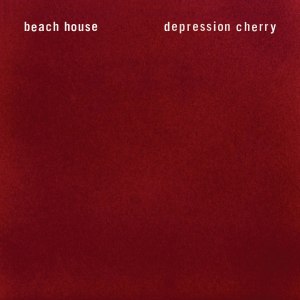
Beach House, Depression Cherry 

It’s moody and melancholy and perfect for Sunday afternoons in winter, where hardly an hour of light graces us with its presence. The singing is woozy and lush, the track titles are typical Beach House (‘Wildflower’, ‘Levitation’, ‘Days of Candy’) and a mellow, dissonant drone seems to drift over most of the songs. There’s a whispery feeling to the vocals and a scratchy-sounding organ keyboard. Also, the album is coated in soft red velvet, so the physical copy is pretty beautiful, and there’s definitely a ‘tactile’ sense to the music itself, with all the sparkling effects and the echoing texture of Legrand’s voice. I like Beach House for the same reason I like Cocteau Twins: the music enfolds you like the atoms (or pixels?) of another world – it doesn’t sound 100% human, there’s something too mystical about it. The band released a website with typed lyric sheets, which adds to the sense that the whole album is a hazy collection of dream poems. It was released in late summer but I have listened to it a lot more in winter; it’s like the sound of  Victoria Legrand’s hazy, drifting vocals is better suited to the cold weather, the whiter light, the sheen of ice.

Favourite tracks: ‘Space Song’,  ‘Levitation’, ‘PPP’.

beirut-no-no-no

Beirut, No, No, No

There were a few weeks where I sort of just played this album on repeat in the restaurant where I work. Generally it was pretty harshly reviewed and there is a sense that single tracks stand out more than the whole. Still, I appreciated that cheerful continental folk vibe to get me through the autumn and winter with its remnants of pastel-hazed summer. Even though the songwriting might not be as *original* or *inventive* as 2011’s The Rip Tide, you can have a lot of fun with some staccato beats and percussion. Plus I love a bit of brass.

Favourite tracks: ‘No, No, No’, ‘Gibraltar’, ‘Perth’.

packshot

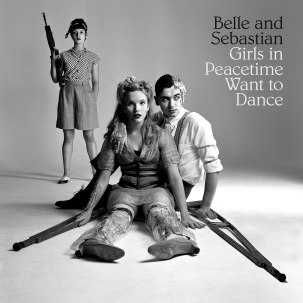
Belle and Sebastian, Girls in Peacetime Want to Dance

Just the sort of lively pop weirdness you need to brighten your January, when the album was released. I love Belle and Sebastian, the way they create simple catchy folk-pop but base it around stories and characters and inventive lyrics about lost girls and ~cutely~ wayward indie kids. There’s a bit more experimentation than usual on this one: from the funky disco atmosphere of ‘The Party Line’  and ‘Perfect Couples’ to the epic near-7-minute dance track ‘Enter Sylvia Plath’, there’s something for everyone. ‘Nobody’s Empire’, which approaches the subject of lead singer Stuart Murdoch’s MS, reveals Murdoch’s general genius for lilting melodies punched through with a weightier-than-usual buildup and bass line. ‘Ever Had a Little Faith’ is maybe the closest song to old-school Belle & Sebastian. Generally this album is full of interesting licks and typically witty lyrics, and its experimentation lends well to repeated listening.

Favourite tracks: ‘Nobody’s Empire’, ‘The Party Line’, ‘Enter Sylvia Plath’.

1035x1035-MI0003841720

Blur, The Magic Whip

Blur’s first album since 2003, The Magic Whip is kind of a mystical, surreal experience. Along with the artwork (a neon ice cream and some Chinese lettering), the album’s whole vibe sort of reminds me of this weird game I used to have for Sega Megadrive where you could do fight scenes on top of an apartment roof in the depths of Tokyo. Everything was blurry and glitchy and full of bright lights against the backdrop of glittering darkness. The Magic Whip is set in Hong Kong rather than Tokyo, but it has that strange sense of futuristic metropolitan darkness. It takes away the grunginess of Blur and sonic spaciness of 13 and enters a more self-aware, perhaps even ‘postmodern’ (ugh, the implications of that term) territory.

Well, for one there’s the obvious cultural borrowing from Hong Kong, where the album came together; there’s also the sense of meta-britpop on songs like ‘Lonesome Street’ and ‘I Broadcast’ which update the whistle-along laddish bounce of 1990s culture for a more accelerated version of the jaded digital and cosmopolitan era (‘Lonesome Street’ is overlaid with the sound of someone reporting – on the news? – sparkling synths and echoing city street noises). The sense of absurdity and collapse, like in ‘I Broadcast’ where the chorus falls into the repeated line: I’m running being played over Graham Coxon’s sharp guitar. It’s a complex and intriguing album with some sweet bass lines and dreamy Damon Albarn vocals. Listening to it really does sort of take you somewhere else. Also, ‘Mirrorball’, the record’s final song, sounds almost like it belongs on a David Lynch soundtrack.

Favourite tracks: ‘Ghost Ship’, ‘Pyongyang’, ‘My Terracotta Heart’.

clarence_clarity_-_no_now

Clarence Clarity, No Now 

From the glitchy, 90s Windows computer aesthetic of its videos to the vibrating bass, disco rhythms and shrieking guitars and falsetto vocals, this is one crazy good album. Not many folk are brave enough to put out 20 tracks on their debut album, but the effect of doing so sort of drags you underwater into a world of sound that’s electric as a field of lightning, as shrieking neon as that purple lava you get in Sonic the Hedgehog 2, Chemical Plant Zone. Sorry, is that mixed metaphors? Who cares, with music like this, everything is mixed to fuck. 

Some of the songs have a cinematic feel, which is hard to define except for a sort of atmosphere created by all the glitchy sound effects and samples (listen to the start of ‘The Gospel Truth’, for example). It’s a relief when Clarity strips back into ‘purer’ or softer vocals (see ‘With No Fear’), but also a great feeling when the effects pedals step on again, like having water thrown over you. Cold, shocking, refreshing. Kinda like the whole album. You’ve got references to ‘worm holes’ and ‘cancer™ in the water’ and all sorts of surreal cyber imagery and staccato vocals in reverse (‘Tathagatagarbha’ is straight out of Twin Peaks’ Red Room, right?). ‘Those Who Can’t, Cheat’ is the kind of psycho disco death funk they would play at the end of the world. I was lucky enough to see Clarence supporting Jungle in Edinburgh this year and I can say that it all sounds sweet as hell live – the band’s energy really plays out the craziness of the album – which isn’t always always the case when the production is one of the best parts.

Favourite tracks: ‘Those Who Can’t, Cheat’, ‘Bloodbarf’, ‘Will to Believe’.

(Also, I think ‘Hit Factory of Sadness’ is one of my favourite song titles ever).

FoalsCover

Foals, What Went Down 

I guess the critical/commercial success of Foals’ fourth album (in October they were voted ‘Best Act in the World Today’ at the Q Awards) means I don’t need to say much to justify my choice. I’ve been with Foals ever since they were bouncing out math rock on early Skins, and this album was no letdown. For one, it has several tracks which follow in the footsteps of ‘Spanish Sahara’: ‘London Thunder’ is a beautiful, atmospheric track with a lovely build, and even Lana Del Rey has sung her praises for ‘Give It All’, which addresses love as a kind of fragile presence/absence, of digital melancholia – ‘Give me the way it could have been / Give me the ghost that’s on the screen’. ‘Birch Tree’ has that sort of upbeat, syncopated feel reminiscent of ‘My Number’ (from Holy Fire). Other than the softer tracks, it’s a whole lot rockier than previous albums, especially on the frenzied ‘What Went Down’ and jangly guitar rhythms of ‘Mountain at My Gates’. I listened to this all throughout the month it took to move from my old flat, so it will always have that sense of dislocation and haunting futurity for me… (plus the stress of shifting boxes and scrubbing kitchens).

Favourite tracks: ‘Mountain At My Gates’, ‘Birch Tree’, ‘London Thunder’.

music-gaz-coombes-matador-cover-art_1422624416

Gaz Coombes, Matador

I have to confess that while Matador was released in April, I didn’t actually listen to this album until about a month ago, when I found out my cousin (the lovely Hannah Lou Clark) was supporting him on his UK tour dates. I saw Supergrass a long time ago when they supported Coldplay at Bellahouston Park, but I don’t remember much of it, especially as I was right at the back! This is such a gorgeous album though, I swear I’ve listened to ‘Matador’ on repeat to and from work for the last fortnight at least. It has great range and depth, another fine example of the maturity that can come out of the Britpop era. Coombes can sound both delicate and powerful, and there’s a certainty, a sureness, to this record. There are songs whose haunting atmosphere is complimented by stunning but simple lyrics (‘Worry fades the soul away / I’ll take the hurricane for you’ – ’20/20’) and climactic choruses. If I close my eyes I imagine this song being played over a dramatic film scene, like someone running through city streets, a breakdown, things exploding, changing. Something like that. I know it’s cheesy but there are definitely songs on this album which you could call sublime in the true sense of the word. Disorientating, awesome, majestic, powerful. Gospel influences, electronic beats, acoustic guitar. I’m still in love with it.

Favourite tracks (this was difficult, and may change): ‘The Girl Who Fell to Earth’, ‘Matador’, ’20/20’.

5f30eab1

Kurt Vile, B’lieve I’m Going Down

Aw man, there’s just this beautiful twang to Kurt Vile’s music that is so addictive. It’s not just his hair. The country twang of guitars, his sweetly droning, idiosyncratic voice. You can see the influence of Nick Drake, maybe a touch of Dylan, but also a very modern sense of disconnectedness, of goofiness even – the sense of being very self-aware but at the same time alienated from who that self is. Some of the songs sound a bit ballad-like, but there’s always a kind of dissonant, bluesy twist. He really nails his lyrics and imagery too: ‘I hang glide into the valley of ashes’, ‘A headache like a ShopVac coughing dust bunnies’. The twinge and stuffed wordiness of ‘Pretty Pimpin’ proves strangely addictive, as does that developing, repeating, turning, twanging guitar riff. ‘That’s Life, tho (almost hate to say)’ is a darker, sadder sort of folk ballad. Generally, it’s an album to listen to dreamily, maybe on a car journey, but also one that goes well in the background of bars, because it’s lively enough, and pretty damn cool.

Favourite tracks: ‘Pretty Pimpin’, ‘That’s life tho (almost hate to say)’, ‘I’m an Outlaw’.

Lanadelreycapa

Lana Del Rey, Honeymoon

I could rave about Lana all day. She has the genius of Lady Gaga, Bowie and Madonna in her creation of the ‘gangster Nancy Sinatra’ persona, but an old-school Hollywood voice that haunts and croons and glides over dark, sweet melodies. Honeymoon is very much a coherent piece of art. It’s a very visual album, much in the tradition of Del Rey’s previous work (the monochrome vibe of Ultraviolence played out in the gloomy, stripped back energy of the Dan Auerbach produced songs). Picture a summer-hazed beach with pastel huts and neon-signed strip clubs, peeling paint. Lana writhing about in her mint green muslin in the video for ‘High By the Beach’. It’s her dark paradise, a retro realm of sweet pop richly infused with jazz, blues, R&B, trap, disco and poetry. The loveliest recital of T. S. Eliot’s ‘Burnt Norton’ I’ve ever heard, soft and haunting. A Nina Simone cover. Tracks like ‘Salvatore’ and ‘Terrence Loves You’ really demonstrate the crystal clarity of her voice, as well as the strength of her range. The title track can be described in many ways, but I prefer the terms glimmering and cinematic. Really, it was the perfect soundtrack for a melancholy, post-graduation summer — except I swapped the retro cars and ice cream for long walks in Glasgow rain.

Favourite songs (again, so hard): ‘Terrence Loves You’, ‘Honeymoon’, ‘The Blackest Day’.

7af7acd9

Laura Marling, Short Movie 

It’s quite lovely to witness Laura Marling’s music maturity. From the honest folk pop of Alas I Cannot Swim to the stronger, mythological tones of Once I Was an Eagle, she has really developed and expanded her sound, not just in a literal sense but in a metaphysical one too. Does that make sense? I mean the way that her music opens worlds up. Eerie, dark soundscapes and cessations of space, interruptions and pauses and softly twangling guitars. Opening track ‘Warrior’ is spellbinding, allusive and elusive; full of echoes and misty vocals, guitar licks that curl round and round. It feels distinctively American, as opposed to, for example, the Englishness, countryside sweetness of I Speak Because I Can. There’s a sense of being lost, looking for something (‘the warrior I’ve been looking for’), of endlessly journeying.

For most of the record Marling steps away from the acoustic songwriting (delicate, but sometimes forceful) which won her fame in earlier records; her electric guitar simmers through the tracks, building around her increasingly impassioned vocals. On ‘False Hope’, a track about Hurricane Sandy, she steals us away from the vague landscapes of ‘Warrior’ to the metropolis, the Upper West Side, where darkness falls and electricity fails as she tells us of the storm. The weather plays pathetic fallacy to the storminess of the singer’s mind: ‘Is it still okay that I don’t know how to be at all? / There’s a party uptown but I just don’t feel like I belong at all / Do I?’. ‘False Hope’ slides into a more traditional Marling track, ‘I Feel Your Love’, which rolls along like a nice old folk song, a bit Staves-like maybe, but more haunting. Her more ‘spoken’ delivery of vocals, intertwined with some searingly brief high notes, in ‘Strange’ for example, bring to mind Joni Mitchell. At times she addresses different characters: spurned lovers, young girls who mirror herself, the ‘woman downstairs’ who’s lost her mind. The overall effect is less introspective, and more fleeting, transient: the self behind the voice slips in and out of view, through various narratives and images. There’s a restlessness which contributes to the Americana vibe, but one which is perhaps also simply the natural expression of a successful singer songwriter still only 25, trying to find her way in the world…

Favourite tracks: ‘Warrior’, ‘False Hope’, ‘Worship Me’.

large

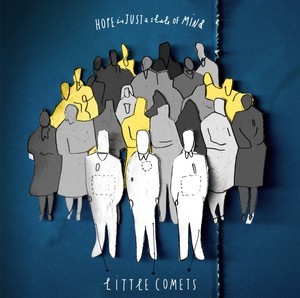
Little Comets, Hope is Just a State of Mind

My favourite band for kitchen sink indie…I like how Little Comets ease you into their changes in sound through various EPs released throughout the year. With the tingly guitars released on ‘Salt’ and the earnest lyrics, a ballad (‘The Assisted’) and emphatic drumming (‘Ex-Cathedra’) of ‘The Sanguine EP’, listeners were prepared for what was to come on Hope is Just a State of Mind, which seems to head towards what might be called a more eccentrically pop direction. One of my favourite things about this band is how they delve into the political and there’s certainly no avoiding it on this album, from the dig at Robin Thicke’s gender politics in ‘The Blur, the Line, and the Thickest of Onions’ to the lethargy of rock and roll in ‘Formula’ and the cultural demonisation of single motherhood in ‘The Daily Grind’: ‘You must feel so proud / Stigmatising every single mother / While your own world’s falling down’. Songs like ‘The Gift of Sound’ and ‘Formula’ have a more straightforward energetic pop vibe, whereas ‘B&B’ begins with an accapella moment and revolves around the repeated line: ‘my own mother cannot take me back’. There’s lots of thudding drumming and a swinging sort of emphatic, repetitive melody. The song, incidentally, is about bedroom tax and Robert Coles has eloquently said of the lyrics:

‘Lyrically the words came quite quickly as I always had the “even my own mother cannot take me back” line in my head from writing the melody. I knew it was going to be about politics: specifically the patronisation of people by the political class in both ideology and delivery, and the way that my own region has been altered by the blue hoards of conservatism.

The title stems from a tweet by Grant Shapps regarding the last budget – “budget 2014 cuts bingo & beer tax helping hardworking people do more of the things they enjoy. RT to spread the word”. Beer and Bingo – because there’s nothing else to do.

I think the first verse is just frustration with the attitude put across by politicians that suggests that they think people are total idiots – policies light on detail, simplistic ideology, framing debates in headlines, constant ill behaviour. Plus from the other end of the scale the total demonisation of the less well off in the swingeing benefit cuts typified by the bedroom tax. I just think it is bizarre and to treat us with this brazen amount of contempt.

It really got me thinking about the north east getting so bashed up in the time of Thatcher – destroying lives and communities because of a need to dominate on an ideological level. I think the second verse tries to convey the depressing notion that beyond this pain, she also eradicated trades and skillsets that had been built for hundreds of years without the prospect of anything new, or transferability. To extinguish a trade, a way of life…. Wow….. That’s a pretty crazy course of action.

It’s almost like she stole those years from us – and it feels a little like it is being echoed now. Taking away what someone relies on is oppression, and this is being felt in communities across our country today – horrified in the knowledge that it will continue until people are so battered that they accept it. The worst part is if you look closely enough, past Grant’s apparent carrot you can see the joy in the eyes behind the ghastly stick, and they look frighteningly familiar” (Source: Little Comets’ Lyric Blog).

I guess I’ve included the quote because I think the politics have become more direct in this album and it’s interesting to flesh out the backstory here. Sure, there have been plenty of ‘northern’ bands before, but rarely have I listened to a pop or indie band who engage with their politics so directly and so articulately (usually this space is reserved for punk or rock – Manic Street Preachers of course, representing a ‘marginalised’ Welsh perspective). Aside from lyrical content, you’ve got the usual pleasures of Little Comets harmonies, shredding guitar licks and bouncy rhythms. ‘My Boy William’ is wonderful live, the way it builds up and everyone following the drum rhythm. ‘Little Italy’ is great fun too, with its cascading melodies (liiiittalll iiiitaaalllyyyyy I reeAAd heeEre) and syncopated rhythm. It’s true, on this album (especially on ‘Salt’), the songs are very up and down, rarely straightforward and often lines are lyrically and melodically convoluted; this isn’t a criticism but more a reflection of what seems to be a desire to push the formulaic boundaries of pop, to infuse guitar chords with lush vocal harmonies and ringing percussion. To represent detailed, difficult subjects in pop is never going to be easy, but Little Comets nail it in their own unique, beautiful way. Look forward to seeing them again live next year!

Favourite tracks: ‘Don’t Fool Yourself’, ‘Little Italy’, ‘The Blur, the Line & the Thickest of Onions’.

The-Maccabees_Marks-To-Prove-It_cover

The Maccabees, Marks to Prove It

Well, to be honest I never would’ve thought I’d be including The Maccabees on my 2015 albums of the year. Over the last few years, I haven’t spared much thought for the band other than as another soundtrack to the general indie trend of the last ten years: a band mentioned frequently in NME perhaps, soundtracking lovelorn scenes in movies, but nothing particularly distinct other than in their creation of twee indie pop. However, one night after work I was lying on the floor recovering from a terrible shift with the radio on, listening to X-Posure With John Kennedy on what used to be XFM. The Maccabees were talking through their new album and playing the songs, and I was pleasantly surprised by how intriguing the sound was, as well as how articulate the band were in talking through the writing process and the stories behind the songs. I guess the next day I went out and bought the album. It definitely sounds a long way away from ‘Toothpaste Kisses’, though the added kazoos and varied percussion doesn’t spoil the simple joy of good plain songwriting. The songs have a weight to them, a grander atmosphere, especially the weird dissonance on the likes of ‘River Song’. ‘Silence’, however, is quietly beautiful, drifting along soft piano notes, subdued vocals and a somewhat eerie sample of an answering machine voice.

Where once you would recommend The Maccabees mostly to fans of The Mystery Jets, Pigeon Detectives or Futureheads, this album feels much more grownup, darker somehow, wilder and expansive. The lyrics vary in subject from the gentrification of London’s Elephant & Castle (the band’s hometown) to heartbreak (‘When you’re scared and lost / Don’t let it all build up’) and well, happiness (‘Something Like Happiness’). It’s refreshing to have a song that does just feel like at times like a gentle old ode to joy: ‘If you love them / Go and tell them’. ‘Marks to Prove It’, the opening track, feels confident and bouncy, with a sharp riff and assured vocals. It would fit in with a fast pop set from The Futureheads, but the rallying battle cry that precedes Orlando Weeks’ voice announces something slightly stranger, a record with new edge.

Favourite tracks: ‘Silence’, ‘River Song’, ‘Something Like Happiness’.

Currents_artwork_(Tame_Impala_album)

Tame Impala, Currents 

I was introduced to Tame Impala mostly from one of the chefs at work playing it in the kitchen on Sunday mornings, and weirdly enough his psychedelic brand of synth pop seems appropriate preparation for a day serving Sunday roasts to hungover customers. It’s the swelling bass and brilliant synths that really catch you, the smooth falsetto and tingling production. You can tell Kevin Parker is a dream at studio magic, with flawless instrumental arrangement that makes for a sound that could be big or chilled, depending on how you play it. There’s some dark keyboard drama, there’s a lovelorn anthem (‘Eventually’) and what might tenuously be described as weird disco funk. For some reason (maybe all the synths, gossamer vocals and vintage-sounding guitars?) has a ‘bedroom-made’ feeling, but with a much slicker production than the DIY element might suggest. Some songs sound like they belong on a long, atmospheric train journey across a space desert; others sound like they’d fit on the cuts of drama interspersing a video game. There’s a dreaminess to songs like ‘Yes I’m Changing’, but a more radio-friendly funkiness to the likes of ‘The Less I Know the Better’, or even ‘Love/Paranoia’, with its silky beats and finger clicks. As the album progresses, the theme of heartbreak starts to really solidify and I guess that’s the overriding drive of the songs – a heartbreak that slows and stifles, morphs between introspection and the temptation of mild bombast.

Favourite tracks: ‘Yes I’m Changing’, ‘The Less I Know the Better’, ‘Love/Paranoia’.

81-uo32700L._SL1500_

Stornoway, Bonxie

This was a lovely album to enjoy in spring, from the hopeful folksiness to the cute origami bird on the cover. I guess it got me through that period of hell in my life that was finals. I would go on walks around Kelvindale where all the cherry blossoms were, listening to the soft acoustic licks and all the soothing bird sound effects. It’s an album to enjoy by the sea perhaps, full of a sort of longing. There’s the noise of distant foghorns, the rolling harp-like guitar and sparkling xylophone over the drifting shimmer of a wave-like cymbal. This is probably my favourite Stornaway album, or at least equal to the debut, Beachcomber’s Windowsill because of its more folksy atmosphere, its immersion in nature — the sense of being lost, deliciously lost by the edge of the ocean. ‘The Road You Didn’t Take’ especially boasts a shanty-like chorus which adds to the nautical theme and sort of swells up like you’re caught at sea, singing along irrevocably. Melodies build up to climaxes and fall back down into subdued, slower choruses, as if the speaker tries to articulate something about his surroundings (the beautiful environment) but fails to express them entirely. Sweet, comforting guitar licks glide us through (e.g., the start of ‘Sing With Our Senses’). Vocals are never aggressive, only sometimes shrill and generally soothing – like a bird’s? Apparently over 20 types of bird donated their song to the album, and let’s not forget that singer Brian Briggs is a Dr. of Ornithology! It’s just a lovely escapist sort of album, reminding you of seaside holidays from years ago, that childlike ability to sink into your surroundings and find wonder in a leaf, a taste of salt air, a bird call.

Favourite tracks:  ‘The Road You Didn’t Take’, ‘We Were Giants’, ‘Between the Saltmarsh and the Sea’.

81HZecd+uwL._SL1500_

Swim Deep, Mothers

It seems everyone has been describing this album as Swim Deep’s foray into psych-pop. You only have to take a glance at the warping colour bleed of the cover art to pick up those vibes. The honey sweet guitar pop of Where the Heaven Are We has morphed into something heavier, more saturated. There are so many influences, but I suppose you could start with psychedelic music, house and kraut rock. Lots of bursting, colourful synths. It reminds me of The Horrors’ Primary Colours, not only because it’s a ‘change-around’ album, but also the subdued, atmospheric reworking of prior image and musical style. Songs like ‘Honey’ and ‘The Sea’ from their debut album were chilled and loose with catchy melodies, and while Mothers retains the catchy melodies, its style has tightened up a bit. The instrumental elements are more complex; songs open up a multilayered world rather than the silver stream of a simple pop tune. ‘To My Brother’ has an epic quality, building up to the chorus with some extravagance – weirdly, the sort of mistiness of the vocals and quirky synths remind me of Seal. I’m not sure why, or whether that’s even an accurate comparison, but the link just popped into my head. I love the way critics have compared ‘Namaste’ to discordant game show music, which obviously fits in with the 1990s vibes of the video. All that beige, those glasses, the sense of mania reflected in the music! It’s more mature maybe, but still fun.

Favourite tracks: ‘To My Brother’, ‘Namaste’, ‘Imagination’.

A few others…

  • Beach House, Thank Your Lucky Stars (two albums in one year, ‘nuff said)
  • Florence & the Machine, How Big, How Blue, How Beautiful 
  • The Libertines, Anthems for Doomed Youth (listening to it to drag up the old nostalgia of discovering the first albums, for the lovely production and Doherty vocals on ‘You’re My Waterloo’ and Carl Barat’s very English swagger).
  • Prides, The Way Back Up (Stewart Brock has come a fair way since Drive-By Argument (big up a band from Ayr!) but the wide, electronic sound of Prides has its heart in the original synthiness of Drive-By Argument which developed into more distinctly electronic side-project, Midnight Lion. Obvious comparisons are to Chvrches, but maybe also a bit of Daft Punk. Radio-friendly but I’d imagine really big and energetic live, plus whenever I hear them I get sweet teenage nostalgia for Drive-By Argument).
  • Sufjan Stevens, Carrie & Lowell 
  • Years & Years, Communion (sparkly EDM pop with plenty of pluck, from a band whose singer starred in Skins and Stuart Murdoch’s indie flick, God Help the Girl).