flotsam

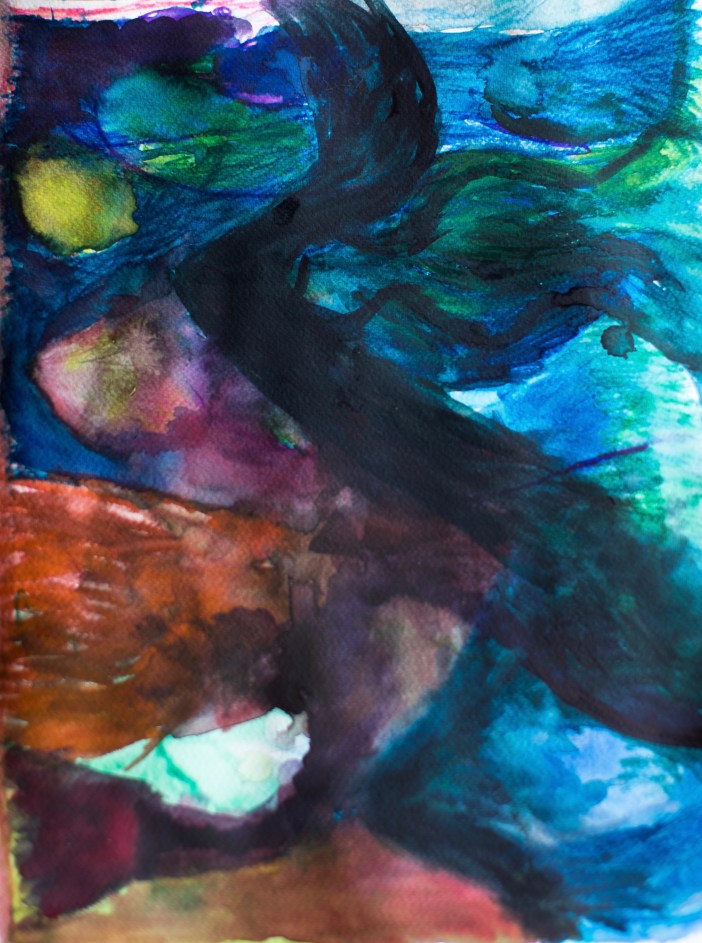
Flotsam 1.jpg
flotsam I., A3 watercolour, by Jack O’Flynn
Flotsam 2
flotsam 2, A3 watercolour by Jack O’Flynn

flotsam


‘Hear me, hear my silence. What I say is never what I say but instead something else. When I say “abundant waters” I’m speaking of the force of body in the waters of the world. It captures that other thing that I’m really saying because I myself cannot.’
— Clarice Lispector, Água Viva

I crawl like an insect down the ladder
and there is no one
to tell me when the ocean
will begin
— Adrienne Rich, ‘Diving into the Wreck’

On becoming a body,
the little abundant shines and its pores are clotted with dust.
I saw what sound it was a wave makes
when startled by gestures towards this torsion
a long beach, the false irrigation of beautiful islands.
The melody was a long intimation of losing faith
in what is meant by a certain colour, not
this blue which runs in the prussian rain.
I want to run up the spine of your back
and settle the amygdala city, tie
my lyrical wrists in mobius fibres
and return the rights to speech.
Do you want to continue?
He was born and beautiful,
he might have seizures. We interfere in definition.
The depression of time is a beautiful curve
in the small of morning, named
after the call you wanted.
Blue dust of feeling.
Blue dust of biblical name.
I worry for his tiny heart.
Glycolic, afloat
in the radical millions
when I say this bird
is a nameless bird, plotting
and pecking the wreck
I go down
in such hunger
I go down
without formula.
Not this.
The world is stuck.
I sing to you
in the echo, in the rich
and greatest loss.
Who hurt us?
I had a dream we were swimming
in the San Pedro Bay, just like the video
it was almost sunny. There will come a time
when my car won’t start
if I ever have a car
in a lightless world
the structure of passion is a ritzy hotel.
Your hour is a fucking astronaut.
Imagine Disney injected
arterial dreams
this crudely.
Imagine a fire in the minibar
at the back of your mind.
As the relation to your wreck
I call it ship, I still want
the elsewhere conduit of thoughts
to sign my brain as treeware
in the black black gold
my oleochemical, fear of soap
and gaussian world is a kitten.
She burns it all up.
On becoming this back-lit
history of pixels, we pour into jars
the last of sea-glass, liquid shingles, I cut the bird
into salad I cut this sort of pristine hope
to feed the kitten.
I thought the picket
was shining in rain, a sound.
Something is drawing us out.
I make a romance from your shoes
and the kissable way of these days
is a no-show, mewing, the marketing
of genital shame, the apocalypse breakfast
tastes of salt. Come back into my life,
I always found you
with a breath laced in pesticide,
a currency of morphine
dreaming me
back like a thrush, I want to wreck
the multitude of this song
with its hyperthermia, its oil-made
hide of feathers.
You want me to be less literal,
littoral I like your wildlife.
Lighter, somewhere
what we see
without reason.
What can soak
up the dark this good.
I like your messages.
I like to react with my abstract halo.
The rediagnosis read depression, to kill
not clean the long and beautiful rain.
Prising the daylight from its packet
I want April, a lot
of lilac song.
I go down to the nervous water,
deep in mammalian blood
I am, I am
not breath, not bird
west coast
my body is a poke of air
in the book. And it lets in
the crudest wind, reminder of gold
in the room where we woke up last October
in my father’s house
in the valley
where frost never leaves the cornicing forests
or sets its voice to speak
for the sodas and junipers.
If we could just avalanche into orange
like the song, Mount Eerie would be a genuine place
to kill or not kill the birds we oiled
in the prussian rain, they gleam
like unemployment
doesn’t in the colourless streets.
We share a little nest
of noctilucent materials.
I was jobless
as the natural light, listening
to your comedown opening chord
which is to say, I think we should stop
seeing, I think we should stop
seeing at all. I roll around
in the oil of this
happiest adderall
to sob uncontrollable
to stop trying to see you
as snow,
if a former love should fall
very cool, like a two-minute Uber
costs less than lunch.
Ducter, he
could break me
the ultimate mosh is us.
I have said that he could and he could
I have said that too much.
To float like capital
back to your panic
I smooth my sleepless residuals.
Ducked it, ducked it
you come back, holding a blink
to know
that time is a gleam, we had a guest speaker
passing out in notional
structures of passion.
I wrote everything down.
It is a wreck to think in the beautiful rain.
It is all that dissolves
to remember
I hope to meet in code someday
again, to set this
in parenthesis, very lightly
choosing to run
the artificial palms
horizontal across your eventide.
This was all ours in the poem.
Prospering, we’d know
each other
so much more than mineral
in the flotsam
way, a lot of coffee
fills our faultlines
and the tar sands sing, and the quicksands
go astray, what of the waters
don’t touch what we were
to sing something
hurting, to rainbow
the quoted weight of your heart
is only debris
I go so long in the rain
to break her
I go so long in the run
as to make a beach
in loops of oil
to empty my purse
of mermaids, to feel like
the only decorated islands
in the United States of America.


*

This poem was written following a talk I gave on Energy (W)rites: Telling the Embodied Stories of Energy, as part of The Curatorial Fellowship: With the North Sea series at Peacock Visual Arts, Aberdeen. It responds specifically to Lana Del Rey’s ‘The Greatest’, where the mournful twangs of a classic rock ballad play out over sunset scenes of Long Beach in the San Pedro Bay, whose four decorative ‘Astronaut Islands’ were built in the sixties to camouflage offshore oil derricks and muffle their sound pollution. Classic rock is a genre and industry founded on oil: vinyl is a type of plastic made from ethylene (found in crude oil) combined with chlorine (found in salt). PVC, the resultant material, is a highly toxic form of plastic, for both our health and the environment. Perhaps it’s only ‘natural’ that Lana would style a kind of vinyl-nostalgia to sing of various kinds of tainted existence. If her earlier work was dubbed ‘Hollywood sadcore’, we might note this recent aesthetic shift as something more like ‘anthropocene sadcore’: where the cinematic eulogising of wasted youth, ‘the greatest’ American Dream, is played out against the false beauty of late twentieth-century petroscapes. But alongside oil there is also water, and the brilliance of light, tone and pigment. There is haze and trace and repeat. Lush tints within variant opacity. A khoratic space where the colours soften or harshen into each other and something of form is held between, with varying paleness or intensity. It could be Billie Eilish singing of ‘burning cities / And napalm skies’ in the apocalypse unconscious of her song ‘Ocean Eyes’; it could be a flare of orange burning into Grimes’ ‘permanent blue’, its elegia for opioid bliss and extinction. The weird pleasure vistas of a scene we can’t quite name. An improvised blur or break. What the water speaks as a force of shimmer. The accompanying visual works are by multimedia artist and sculptor Jack O’Flynn. 

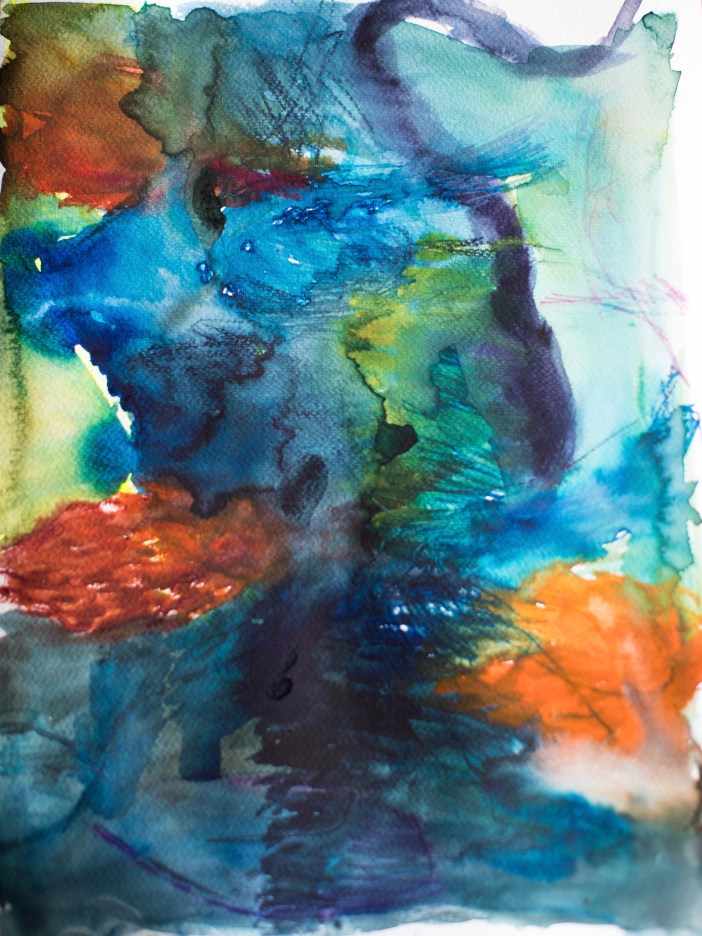
Flotsam 3
flotsam 3, A3 watercolour by Jack O’Flynn
Flotsam 4
flotsam 4, A3 watercolour by Jack O’Flynn


Loving the Other: The Cinematic Magic of Paddington

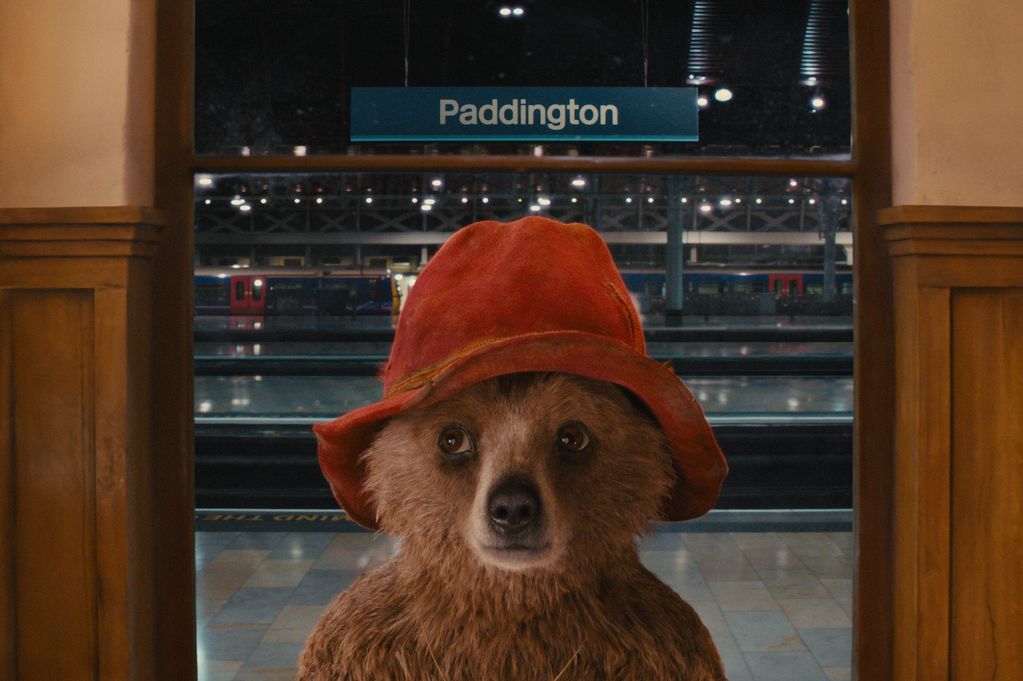
Source: www.walesonline.co.ukSource: http://www.walesonline.co.uk

It was the morning after the busy Black Friday weekend at work, and, predictably, I slept in. The rain was pouring down thick and fast and Glasgow was a gloomy vat of grey. There was a need for something warm and enchanting in this mist that overshadowed Christmas.

Every year, my Mum, brother and I try to find something to visit – it’s become a kind of tradition. An acoustic gig, a play or a film, usually. In past year’s, we’ve seen the likes of Pearl and the Puppets, Great Expectations; a long time ago, it would be Maybole Bazaar or the Carrick Christmas Show. Sometimes it’s true that the older you get, the better things are. There was a year when I was supposed to go see Frightened Rabbit at The Arches with some friends, but a heavy snowdrift cancelled out all the trains and so I had to content myself with a night at home studying Higher Sociology…

Anyway, this year I found myself on the train to Edinburgh on Sunday morning. Since the weather was a gloomy storm of wind and rain, we decided to go to the cinema. I always like the thrill of going to a cinema I haven’t been before – even if it’s got the same pick and mix, popcorn machine and seats, there’s still something exciting about navigating the screen doors and the dark staircases. We went to the VUE cinema. Mum was keen on going to see Paddington. I was pretty sceptical; I mean, I’m not too keen on animated films, and I agreed with my brother that it might end up being a bit…childish. Probably like going to see Frozen, although I wouldn’t dare to be so controversial as to comment on that film, and anyway I haven’t seen it. Certainly, when we sat down to watch the adverts, there were a lot of commercials for toys and cereal and films that come with a ‘U’ certificate. A baby behind us intermittently crying. We exchanged Sibling Glances. What was this going to be?

I suppose in my mind I’ve always lumped Paddington in with Winnie the Pooh, The Wind and the Willows, Watership Down and Beatrix Potter: fuzzy, anthropomorphic children’s tales which hold prime place in the history of children’s literature. Yet all these tales tend to have a hidden dark side: like all traditional fairytales, their simple stories of adventure are interwoven with commentaries on the likes of family, love, violence and perhaps even racism. So I wasn’t sure what to expect from Paddington, but as I waited for the adverts to roll out, I was imagining that perhaps this would be more than just a plain old children’s film. Maybe it would reach the stature of one of the only children’s films I like, the (I think) highly symbolic Bug’s Life. 

Paddington begins in the midst of ‘darkest Peru’, recounting a colonial tale whereby an English explorer named Montgomery Clyde makes friends with two bears and tells them upon his return to England that they will always be welcome in London if they ever visit Britain. The whole film holds a self-conscious ironic mockery of British colonialism, like some postmodern update of Conrad. Imperial knowledge is held by the ‘Geographical Society’ who cruelly banish Clyde for his benevolent approach to the ‘natives’.

Soon after, we witness fantastical elements of the bears’ lives as they live alongside their nephew in the wilds of darkest Peru. These lives are remarkably sophisticated, featuring an intriguing marmalade-making machine and a radio crackling with the sharp tones of BBC R.P. informing distant listeners about life back home on the streets of London. There are also some very nice hats. The simple harmony of the forest is disrupted one day by a violent earthquake, which leaves the female bear Lucy effectively a widow as the other bear Pastuzo disappears. Lucy sends her poor bereft nephew away to London to seek adventure and fortune by sneaking him onto a ship, and retires peacefully to a retirement home for bears.

After this, the film follows a somewhat bizarre but delightfully heartwarming immigrant narrative. The young bear finds himself alienated in a strange city, acquires himself a ‘British’ name (Paddington, after the train station he arrives at), and then a suitably quirky and very English family to adopt him. The Browns (with Downton Abbey’s Hugh Bonneville as the dad and Made in Dagenham’s Sally Hawkins as the mum) embody that kind of slightly dysfunctional, messy and a bit bizarre middle-class family that holds mythological status at the heart of our culture. Yes, there is the threat of stereotype, but the film carries off these qualities generally well as they mould perfectly into warm, fairytale figures that chime in various ways with cultural caricatures without becoming too flat or prescriptive. The stern, paranoid father and the liberal, empathetic mother; the boy obsessed with building things; the girl choked on embarrassment and fear of seeming ‘weird’ to her friends. The Scottish and slightly alcoholic housekeeper, Mrs Bird, who can predict things with her knees and saves the day towards the end of the film by distracting a security guard with copious shots of whisky.

We might compare this play on well-loved family archetypes it to the likes of TV comedies My Family or Outnumbered, which features semi-improvised scripts depicting the chaos of modern family life. The overly-inquisitive little sister Karen, the perpetually-stressed mum, the wearied father, the embodied chaos of Ben, the youngest brother, the sulky teenager. What makes Paddington shine above any TV drama is the simple humour of its script and the cinematic magic of its costumes: Nicole Kidman’s sharp heels and trench as she stars as the villainous taxidermist who seeks to capture and stuff our beloved bear for the Museum of Natural History, Sally Hawkin’s outfits (all marvellous colour-clashing, woolly hats and embroidered cardigans), and that iconic blue duffle coat and red hat that Paddington wears himself. Let’s hope sales of said duffle coat go up in the aftermath of this film because I’m more than happy to see it everyday, especially in that lovely cobalt colour that Paddington sports so well:

Source: www.cityam.com
Source: http://www.cityam.com

Then there’s the magic of the house itself, which features a giant spiral staircase and walls painted with a Japanese cherry blossom tree, the blossoms of which bloom or fade beautifully according to the emotional tone of the story.

As Paddington adjusts himself to (human) family life, the audience goes through scenes of low-level cognitive estrangement, as Paddington explores everyday human life and tries to make sense of it, with amusing consequences: flooding the bathroom, using a toothbrush as an ear-cleaning cotton-bud, mastering how to use the escalators at the tube station. As I said at the beginning, I’m not generally a great fan of animated films, but Paddington carries off its loveable animal protagonist flawlessly, down to the details of individual water droplets shaking off each strand of his fur. Originally, Colin Firth was set to play the voiceover for Paddington, but he stepped down after worrying that his voice didn’t sound quite ‘open’ enough for the young bear. Instead, Ben Whishaw got the part and the sweet dulcet tones that so charmed us in his portrayal of Romantic poet John Keats in Jane Campion’s Bright Star are here perfect for the innocent wide-eyed charisma of Paddington. It’s a remarkably technical process; Whishaw had to wear a kind of helmet so that the animated Paddington bear could match the facial expressions and head movements of his kindred (human) spirit.

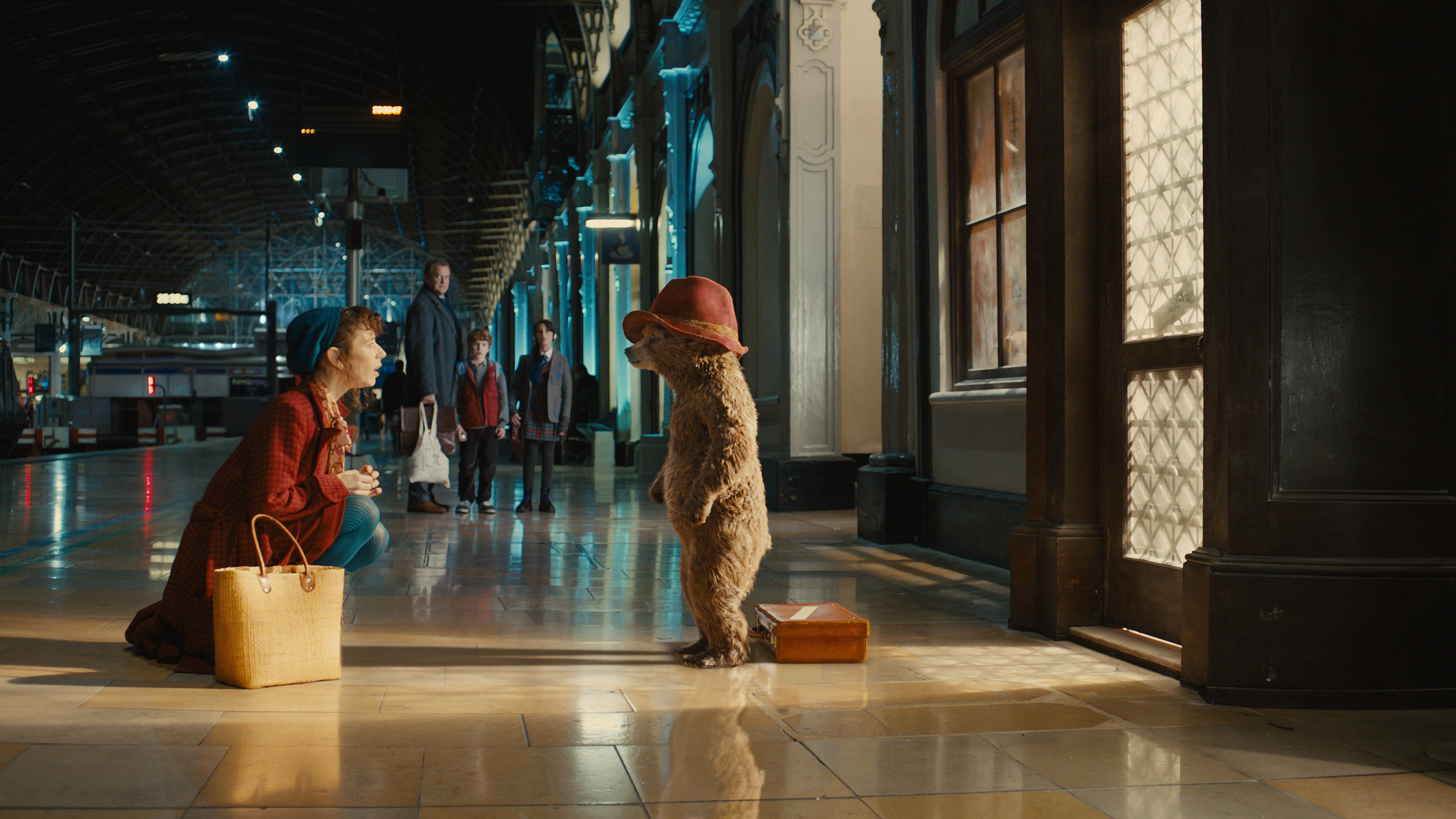
Source: www.networkrailmediacentre.co.uk
Source: http://www.networkrailmediacentre.co.uk

London is a dream in this film. From the grand corridors of the museum to the polished floors of Paddington Station (I imagine a much-needed plug for Network Rail…) and the snowy streets, it provides a romantic backdrop to Paddington’s adventures that makes us fall in love with the old city all over again. Sometimes I get very sick of London, especially the way it always flickers through media as this glassy corporate giant full of rich people with perfect lives (I’m thinking of the sweeping shots that open The Apprentice or basically every shot in Made in Chelsea that isn’t an awkward closeup of someone’s glakit face). The London of Paddington is a city of nostalgia, drenched in snow and old antique shops and red telephone boxes and a Dickensian wallet thief. Peter Capaldi playing an archetypal nosy old neighbour with a cockney accent and Doctor Who scarf. The family portrayed at the heart of the film are at once old-fashioned (the boring, distant father that perhaps echoes the banker father of Mary Poppins?) but deal with relatively modern issues: the presence of technology, the moodiness of teenagers. It’s this blend of the nostalgic and contemporary that really adds magic back to London itself, that spins a fairytale of visual beauty and enough narrative suspense to keep you hooked to the end (there is the encroaching threat of Kidman’s cold cyborg of a villain coming to kill and stuff our beloved protagonist).

Aside from the lovely visuals and fairytale storyline of good vs. evil, there’s the narrative of the Other which I already touched upon. Paddington experiences both alienation and welcome, and simultaneously the audience goes through the motions of heartbreak and compassion. Initially, he finds himself spurned by Mr Brown for his clumsy inability to fit into the household without making a mess of everything. In the cold rain he wanders the streets, and finds shelter with one of the Queen’s Guards who kindly offers him an emergency sandwich that he has stuffed under his enormous hat. Paddington is of course perfect for Christmas time: there is the message of family love, compassion and understanding, but also that simple narrative of sharing food that means so much in the shared gluttony of the festive season. There’s a reason we buy a tin of Roses or Heroes or Quality Street and it’s not just because it offers choice, but also because it’s a shared pleasure. Much like the film itself (I recommend everyone sees it on the big screen where the glorious visuals can really come to life).

You can look to the likes of Derrida or Donna Harraway to academically unpick the importance of understanding animality and other species for recognising the animal in us. By the end of the film, we realise that species shouldn’t divide us or cause fear or hatred or hierarchy. It’s wrong to treat another being as an instrumental object: something to be prized and displayed and stuffed. Go to Peter Singer for some philosophy too; I recommend ‘All Animals Are Equal’ (1974). It’s wrong to treat the Other with anything less than the respect you’d give to your own ‘species’. If bears and humans can become family, then can’t we all as humans get along in the turbulent times of the terrorism and threat and anti-immigration rhetoric of the 21st century?

What draws the immigrant narrative out from this Every(bear’s)man’s tale of immigration is the interspersed classic calypso songs which a band play throughout the action. Michael Bond’s children’s books were written, as Tim Masters (BBC 2014) points out, around the time when a new immigrant community were settling in Notting Hill – the place where Paddington himself finds a home. The songs are all positive and cheery, telling a story of endurance in the face of hardship and rippling with a fresh, hopeful spirit. The kind we need for 2015. By invoking the positive narrative of the Caribbean settlers in the mid-twentieth century (who came to help rebuild post-war Britain), the film implicitly critiques our contemporary societal stance on immigration. All the fear-mongering rhetoric that gets whipped up by the likes of UKIP is exploded in this heart-warming tale of love and discovery and acceptance of difference. It’s a classic tale of the journey of the Outsider that could be applied to anyone who has had the experience of settling into a new community as some kind of racial/ethnic/sexual/physical Other. And perhaps this, more than anything else, is the enduring magic of Paddington. So I’m glad I went to see it.

(On a side note, the only thing I was sceptical about was the heroic pigeons who essentially save Paddington at the film’s climax – not to put to fine a point on spoilers – I can’t see pigeons ever acting so benevolently. But then maybe that’s a terrible species bias that I should work on myself).

Bibliography:

Masters, Tim, 2014. BBC News Online. http://www.bbc.co.uk/news/entertainment-arts-30196290

Pauli, Michelle, 2014. Interview with Michael Bond. http://www.theguardian.com/books/2014/nov/28/michael-bond-author-paddington-bear-interview-books-television-film