Curious in the cartoon litany of lying underneath the song is Sylvester the main antagonist out of touch with the show girls who nourish ducklings with a fractal hush that something connects and is like done, the texture of communication bristles against the cat’s tuxedo and beautifully undiminished and slow I go into the lair of the wholesome embodiment, holding up glove puppets of my favourite characters — Melancholy, Sanguine, Cholic and Phlegm — asking will you be west on the day of this shimmering announcement, new protections and crystals, slamming on the bed of our lungs it was gorgeous; I was sick for a month in the cold, moist aporia of not getting it done, my fingers in the cleft of the being held sideways and what is called dyscrasia was thought to be the underpinning of all disease including the disorderly eating with which I bring to you my body, its folds and anthropomorphic sinews, the double blush of my hipbones — and even if Sylvester comes bounding along with impossible feline precision, smacking his chops, and even if temperament is a psychologically damaging aspiration, I aspire to a joy that would swallow, susceptible, the violation — and if that be spirit, Sophia, spiritedness, the cellar door opens on its own to reveal a vital wine whose bold adoration unmerited is only a thrifted, fruity red that is lightly tattooed on your ankle and if you dance with your dear antagonist there’s no stopping, my dear one, stopped, I do not try to bend down the pain tree my spine’s impression remembers the dance of the dream in which I was willowy, carefree without keys and spiralling through the gardens of the queerest princes their sensuous lips are peonies the cognitive vacillation of anyone’s truth claim a clause unlocks and is perilous, like a thirst
Neoliberal hubris and Dionysius on the news escapes immunity, the wilder instinct of the puppet in me and the me in the glove is like holding a hand but who’s anyway, we are going into the structure of witnessing where to hand a soft hypocrisy to the beach is only placating the burning palms, or how it feels to hold you; every little habit or thing in continuum to compulsively repeat the lossy compression of origins every time simple, night time, the song of the puppetshow of the vegetables and a drone in humour — looping whose function — in play’s decentred exigency we are unthinking the shadowplay of having said CHILD YOU ARE IN HOT WATER to a crumbling earth in our green plaster-cast sandpit at the art school tending towards minerals and diacritics, to blush soot from your lashes and the cartoon voice of the angelheaded baristas where the faucet is switched off from redacted
Prometheas all you could want buffet of fire, deep in life’s interior is the dream or the drama — if I am a conduit for being punched in meatspace to say every person is already in the poem saying ‘I’ for ‘aw’ say hello online in a burst of tiny energies, swift changes, inserts an otherworldliness within the world banality of movement; can a person really be a spider or a cyclone, like jouissance to speak of the symbiotic ana-cartharsis, triangulates how honey I shrunk the president is wanting to move in with you / how it is too much to meet this lyric transfer, taut love’s blank dream to be twisting and safe, people in the street have been multiplied lately like kissing, we are here, a sad reprisal
Featuring nearly thirty authors, our next issue takes a slomo plunge into the ocean in search of lost cities, cephalopods and that selkie we made friends with in ’93. The issue features poetry, fiction and essaying around themes of alien drift, andromeda, billionaire hubris, despairing jacuzzis and more.
From my editor’s introduction:
Our title, BERMUDA ▲ SADCORE, embodies the vibe theory of oceanic feeling. The word sad, in its Germanic origin, connotes ‘weighty, dense’, eventually replaced in Middle English with the sense of ‘steadfast, firm’ — later ‘sorrowful’. The ocean is at once weighty, dense and everchanging, temperamental. We love the doleful, consonant insistence of the ‘d’ in ‘sad’ and ‘bermuda’. In recent years, the ocean has been toxified by microplastics, literally set on fire, forced to house massive, heat-generating data centres and scraped for rare earth minerals. If anyone has the right to be sad, it’s the ocean. And the ocean, historically feminised as sailors did with their boats, might herself be the Anthropocenic siren in the night everafter. Our original home and eventual disaster. Stop me if this sounds like an emo lyric.
What would it mean to be sad forever? Or to be steadfast in sadness, like the great eighteenth-century poet Charlotte Smith: who would wander the cliffs of Beachy Head and later write her Elegiac Sonnets from a debtor’s prison. To be sad forever is to forever be facing the sea. The vibrant imaginaries of the poems, essays and fiction contained herein will transport you to bodies of water whose sumptuous power to surprise, query and upend our bodies of knowledge is remarkable. The only way in is through surrender. In the movie Triangle of Sadness (2022), the rich are punished for their attempts to control, own and influence everything. With virtuosic abjection, we are witness to them literally vomiting the poisoned fruit of the ocean.
The issue features the following contributors:
Adam Fraser Al Anderson Al Crow Alex Grafen Ali Graham Amy Grandvoinet Andrew Hykel Mears Carolyn Hashimoto Dan Power Daniel Ridley Fynn Kǒster Grace Marshall Iain Morrison India Bucknall James Andrews J.R. Carpenter John McCutcheon Kim Crowder Lauren Kalita Lizzy Yarwood Matt Pollock Mattea Gernentz Matthew Kinlin Rahul Santhanam Rose du Charme Ruby Eleftheriotis Sam Francis Victoria Brooks 1846975493
You can read the whole thing for free here or download a pdf here.
Thanks as ever to Douglas Pattison for co-editing, curating and designing the cover art.
It was supposed to snow in the night and the not snowing was sore as a missed period. I awoke with two crescent-shaped moons in the palm of my hand and thought of a sacrifice unwittingly given in dreamland. Said Jesus. Peridot phlegm and the scratchy sensation, knowing that speech too could be cool, historical, safe. Could not see beyond pellucid rivulets, Omicron my windows, my streaming January. January
streams from every well-known orifice of the world. Its colour is shamelessly stone. I seem to be allergic to inexplicable moments and so keep to the edge of the polyphony of yellow. I am cared for. The Great Barrier Reef dissolves in my dreams the substrate of yellow. It goes far. Pieces of the GBR are washed ashore in Ayr, Singapore, Los Angeles, Greenland. I go to these places by holding a polished boiled candy in my mouth, like the women in Céline and Julie Go Boating. My ankles licked by truest shores / but January didn’t fucking happen.
❤
Put together the orange-purple rose, your possible outcomes are red or gold (if you are lucky). Two reds together, with the golden watering can, could result in the rare blue rose. A novel rose. Black velvet roses grow in the old woman’s garden because she has infinite time to tend them. I’m not saying she’s immortal, like the Turritopsis dohrnii jellyfish; only that she doesn’t exist in our time. It’s rude to assume so. I’m not saying the lines of her face are asemic writing — nobody did that to her, or scarred her. She’s not scared. She just lives and dies all the time. She waters the roses.
Sometimes I imagine her in fisherman’s clothes, in meshy nightclub outfits of neon flavours, in extravagant ballgowns, blue boilersuits. Sometimes I’ve seen her before. The only way I can see her is to climb a few steps on the ladder by the village store, its red paint flaking, and I hang my body upside down the other side, risking exposure. I never eat before doing this. She doesn’t see me; she doesn’t see her roses either, not the blooms. In the village, people walk around with handfuls of rose seeds sometimes strung in little hemp bags. These are the currency of care. I have tended the young with haircuts and watched the flourishing of teenage roses. They say I am an old lady in the garb or garbage of former actresses. I hear them sing to me their stories. “Remember she shot the guy who brought the astrograss”. What they don’t remember, whippersnappers, is the incorrigible realism of that turf. Fuck it, I have done nothing wrong. I perform for them my cowboy gardening. Broadcast the surplus value of our mutual twilight. Halloween roses for everyone. Every night I wake up from someone else’s childbirth and the world is so sore, the wound in the sky the snow wants to fall through. They bandaged it with realism. I need to go far. Do you remember the last time you awoke and felt like a person?
❤
The roses grow up in the gaps of the cattlegrid, knowing they will be trodden on. Again and again. We can’t stop them from doing this and they do it so often we have to account for a portion of Waste. Kissing you is itself a trellis. But we are propped and grown sideways with the vines strung betwixt our ribs. We are babies.
I like the tired way the roses intonate colour. The economics of the roses. Their euphemistic fetish. I tried to avow my commitment to rosehood the day I saw your calves all torn, and saw about women getting their labias reduced, and the red, blood roses sold on the internet, and rest. I lay this on your grave, the world.
My love, as a redness in our rosette That’s newly worn in June O my love, like the melt That’s sweetly played in turbines
So fairway artery thou, my bonnie lasso Defiled in love as I Will love thee still, my decade Tinged as the seas are garlanded dry
Tinged all the seas as thee, my decanter At the romantic menagerie of sunset I will luminary still, a debutante Of the lighthouse sarcophagi
And plough thee well, my only lathe! And plough thee well, awhile! And I will come again, my love Though it were ten thousand millennium.
My love’s rose-coloured highlighter really hurt the extra-textual, and thus booked trains to bed. I had an identity. I knew what you had done to the text. Austerity of the meadow to blame for ongoing culling of kin. You are abandonable as you have always been. Saplings for pronouns.
I feel wild and sad.
I feel pieces together stirring inside the world. Little bits of coral awake in my throat, the shape of eight billion sun-spike proteins I was dumb enough to swallow. It is not my fault but in my dreams I get product emails like, Forget-me-not a pair of jeans, high-waisted Levi’s as if to wear at the end of the month we keep saying sorry for delay, embroidered our thighs with spiders excuses to use lighters without smoking does it make us vectors the warning of snow and ice still issued from inside the snow globe of the rosehip changes as it withers, glass shards pissed from acid clouds in all colours: black, blue, burgundy, cherry brandy, coral cream, dark pink, green, lavender, light pink, lilac, orange, peach, purple’s timeless red, salmon, Hollywood white & yellow, rainbow chosen for the significant other, a masculine flower dipped in fortified light, I’m thankful I look good lying down, the long unconditional stem aka Lemonade, l-l-l-lemonade, l-l-l-lemonade…….
It was the morning I had decided to stop living as if dust wasn’t the primary community in which I sobbed and thrived, daily, towards dying. I spent Tuesday night in a frenzy trying to discern what particular dust or pollen (animal, vegetable, floral) had triggered my allergies anew, what baseline materiality had exploded in my small room its abysmal density. All recommended air filters had sold out online in the midst of other consumers’ presumably asthmatic dust panics; the highly desirable Vax filter seemed sold out across all channels, and I eyed up the pre-owneds of eBay with lust and suspicion, through a fug of beastly sneezes. A friend recommended the insufflation of water as a temporary remedy: ‘I drop some drops on my chopping board, get a straw and snort it up like a line of Colombian snow’, he texts me. I sneeze at the thought, but have to admit that the promise of clearing one’s nasal cavities with water is somewhat appealing. For isn’t water, like sneezing, a force in itself? Some kinds of sneeze come upon you as full-body seizures of will; so that to sneeze repeatedly you must surrender an hour or so, sometimes a full day, to the laconic state of being constantly taken over by this brute, unattractive rupture. ‘Sneezing’, writes Pascal, ‘takes up all the faculties of the soul’. My soul is in credit to the god dusts, who owe me good air. It’s why I am always writing poems (the word air meaning song/composition). But maybe I need good water, a wave of it.
In Syncope: The Philosophy of Rapture (1990), the philosopher Catherine Clément characterises sneezing as an instance of ‘syncope’: a kind of ‘“cerebral eclipse,” so similar to death that it is also called “apparent death”; it resembles its model so closely that there is a risk of never recovering from it’. My muscles ache; I eclipse myself with blood, cellular juices and water. What kind of spiritual exhaustion results from being cast into eclipse repeatedly? Quite simply, one becomes ghost: blocked, momentarily or otherwise, from the light of consciousness. One becomes lunar and attached to the dark bright burn, the trembling red of their inflammation. Those who suffer respiratory allergies might better glimpse what Eugene Thacker calls ‘a world-without-us’. I sneeze myself to extinction. It is the hyperbole of a felt oblivion. I do this on random days of the year, at random times; it is beyond my control. But can I derive pleasure from it, as one does the other varieties of syncope (orgasm, swoon or dance)?
From Spirited Away (2001)
Let me admit, I have always had a fetish for those moments on television and film where a character is administered, or self-administers, an intravenous dose of painkill so sweet as to enunciate this ecstasy simply by falling to a sweet slump, their eyes rolled back accordantly. The premise of silencing the body’s arousal so completely to blissful inertia (suspending the currency of insomnia, hyperactivity, anxiety and attention deficit) is delicious. The calmness of snowfall, as if to swallow the durée of its full soft melt. From quarantine, I fantasise about having adequate boiler pressure as to run a bath and practice the khoratic hold of hot water’s suspension. This is not what I text my landlord.
Recently, my partner spent several hours unpacking boxes from the attic of their parent’s house, in preparation for moving belongings to a new flat. The next day, I found myself suffused in the realm of allergy: unable to think clearly, or articulate more than three words without the domination of a sneeze. On such days, I am held on the tight leash of my own sensitivity: I tremble pathetically, my blood temperature rises; my nose glows reindeer and no amount of fresh air, hydration or sinus clearance will appease it. I am not ‘myself’. The body has enflamed itself upon contact with the ambient and barely visible. I feel an intimate, but non-consensual relation to the ghost trace, the dust trace, of all boxed things — finally been given the attention they so summoned or desired in dormancy. I mourn with objects the passage of time and neglect so betrayed on their surface; I never ask for this, but my body is summoned. Dust presses itself upon you, even as you produce it. I’m scared to touch things because of the dust. What is it but the atmospheric sloughing of something volatile, mortal — the grammatology of our darkest spoiler, telling the story of how bodies are not wholly our own, or forever.
Sneezing disrupts and spoils nice things; it is an allergic response to both luxury and decay. Cheap glitter, rose spores, Yves Saint Laurent. Sneeze sneeze. ‘When a student comes to class wearing perfume’, admits Dodie Bellamy, ‘my nose runs, my eyes tear, I start sneezing; there’s nowhere to move to and I don’t know what to do. When the sick rule the world perfume will be outlawed’. Often I have this reaction too. It prompts a fury in me: Why can’t I have nice things, as I used to? During my undergraduate finals, I developed phantosmia: a condition in which you smell odours that aren’t actually there (olfactory hallucination). Phantosmia is typically triggered by a head injury or upper respiratory infection, inflamed sinuses, temporal lobe seizures, brain tumours or Parkinson’s disease. Often I have tried to conjure some originary trauma which would explain my condition: did some cupboard door viciously slam my head at work (possibly), did I fall over drunk (hm), was I subject to some terrible chest infection or vehement hayfever (often)? Luckily, my phantosmia was a relatively benign and consistent scent: that of an ersatz, fruity perfume. It recalled the pink-tinted Poundland scents I selected as a twelve-year-old to vanquish the horror of body odour raised by the spectre of Physical Education, before graduating to the exotic spices of Charlie Red. I was visited by this scent during intervals of increasing frequency as I served customers at work, cooked or studied; I trained myself to ignore them by pinging a rubber band on my wrist, or plunging my nose into scented oils I kept on my person. Years later they returned at moments of stressful intensity; the same cryptic, sickly smell.
More recently, phantosmia, under the umbrella of a general ‘parosmia’ (abnormality in the sense of smell) is associated with Covid-19. Not long ago I realised I hadn’t been smelling properly for months, despite not testing positive until very recently. Had I, like many others, a ghost Covid that went undetected by symptom or test? Drifting around, deprived of olfactory sense, I felt solidarity with the masses of others in this flattened condition. I eat, but when was the last time I truly enjoyed food? My body doesn’t register hunger like other people’s; unless it is a ritualised mealtime summoned in company, I eat when I get a headache. Pacing around the flat, I plunge my nose again into jars of cinnamon, kimchi, mint tea bags, bulbs of garlic. Certain things cut through the fug: coffee, bleach, shit. I remember a friend, who was born without a sense of smell, telling me long ago that the absence of that sense made her a particularly spicy cook. Often she wouldn’t notice the over-firing of a chilli until her nose started running. What does scent protect us from? What does it proffer? Surely it is the unsung, primal gateway to corporeal desire itself: the gross and indescribable comfort of a lover’s sweaty t-shirt, the waft of woodsmoke from a nearby village, the coruscation of caramelised onion to whet your appetite. Scent is preliminary in the channel of want. Without it, I feel cast adrift into anhedonia. I begin chasing scent. Still, I sneeze.
Dust gathers. Is it yours or mine? Can we really, truly, smell our dust? How does dust manifest as material trace or evidence? In Sophie Collins’ poem ‘Bunny’, taken from the collection Who Is Mary Sue? (2018), the speaker interrogates an unknown woman on the subject of dust:
Where did the dust come from and how much of it do you have? When and where did you first notice the dust? Why didn’t you act sooner? Why don’t you show me a sample. Why don’t you have a sample? Why don’t you take some responsibility? For yourself, the dust?
It would be perhaps an act of bad naturalisation to read the dust allegorically, or metonymically, as a figure for all kinds of evidence we are expected to produce as survivors of violence and harm. This evidence is to be quantified (‘how much’, ‘a sample’) and accounted for temporally in terms of cause, effect and responsible agency (‘first notice’, ‘act sooner’). The insistent repetition of dust produces a dust cloud: semantic saturation leaves us unable to discern the true ‘meaning’ of the dust. That anaphora of passive aggression, ‘Why don’t you’, coupled with the where, when and why of narrative, insists on a logical explanation for the dust that is apparently not possible. For anyone summoned to account for their trauma, the dust might be a sort of materialised psychic supplement: the particulate matters of cause and effect, unequally distributed and called for. It seems as though the speaker’s aggression, by negation wants to produce the dust while ardently disavowing the premise of its existence. The poem asks: is it possible to have authority over one’s experience when others require this authority to take the form of an account, a story, with appropriate physical corroboration? The more I read the poem, the more ‘dust’ becomes Covid. But it could be many things; dust always is.
‘Bunny’ also reveals the process by which testimony is absorbed into a kind of white noise, a dust storm repugnant to those called upon to listen. As Sara Ahmed puts it in Complaint! (2021), ‘To be heard as complaining is not to be heard. To hear someone as complaining is an effective way of dismissing someone’. Collins’ poem performs the long, grim thread of being told to ‘forget’, bundling us into a claustrophobia whose essence, the speaker implores, is ‘your own / sense of guilt’. Does this not violently imply (from the speaker’s perspective): as producers of dust, we take responsibility, wholly, for what happens to our bodies? I take each question of the poem as a sneeze: it is the only answer I have. I feel compelled to listen.
As she is asked, ‘Why don’t you take some responsibility? / For yourself, the dust?’, the addressee of the poem becomes conflated with the dust itself. I often think of this quote from Sylvia Plath’s The Bell Jar (1963), where erstwhile sweetheart Buddy Willard announces to budding poet Esther Greenwood, ‘a poem is […] A piece of dust’. Poems can be swept away; they are miniscule in the masculine programme of reality. They are stubborn, perhaps, but easily ignored by the strong and healthyy. In ‘Bunny’, the addressee’s own words are nothing but dust, ‘these words, Bunny’: the name ‘Bunny’ hailing something beyond the colloquial term, dust bunny — a ball of dust, fibre and fluff. The invocation of the name a kind of violent summons: you, the very named essence of you, are nothing but words and dust; there is no proof. The more I say the word ‘bunny’ aloud, the more I become aware of a warm and tender presence; this entity who has lived so long in the house of language — under the stairs, on the mantel’s sentence. Bunny, bunny, bunny. Clots in syntax. Dust can be obliquely revealed to all who notice; it coats the surface of everything. It is in the glow of wor(l)dly arrangement, the iterative and disavowed: a kind of ‘paralanguage’ Collins writes of in her nonfiction book small white monkeys (2017):
similar to ours but that is not ours […] when a writer manages — nearly, briefly — to access this paralanguage, we get a glimpse of what could be expressed if we were able to access this other, more frank (but likely bleak, likely barbaric) reality.
Running parallel to, or beneath ‘Bunny’, is the addressee’s reply, or lack of: the dust of her permeable silence, or inability to speak. It catches as a dust bunny in the throat. So how do we speak or listen, when faced with the aporetic knots of a hidden, ‘barbaric’ reality that is glimpsed in various forms of testimony and written expression? ‘Citation too can be hearing’, writes Ahmed. The title of Collins’ poem cites implicitly Selima Hill’s collection Bunny (2001), which she writes of extensively in small white monkeys as a book ‘I am in love with’. This citation opens ‘Bunny’ through a portal to the household of trauma that is Bunny: documenting, as Hill’s back cover describes, ‘the haunted house of adolescence’ where ‘Appearances are always deceptive’ and the speaker is harassed by a ‘predatory lodger’. Attention (and reading between texts) offers us openings, exits, corridors of empathy, solidarity and recognition. Its running in the duration of a poem or conversation might very well relate to the ‘paralanguage’ of which Collins speaks, in the oikos of trauma, grief and counsel. If poems are dust, then to know them — to write them, read them aloud and listen — is to disturb the order of things, one secret speck at a time. But the sight of each speck belies the plume of many.
The morning I tested positive for Covid on a lateral flow, having assumed my respiratory problems were accountable to generalised allergies, I decided to blitz my one-bedroom flat of dust. In the hot panic of realising my cells were now fighting a virus, I vacuumed my carpet and brushed orange cloths over bookshelves. I was really getting into it. Then my hoover began making a petulant, rasping noise. I turned off the power and flipped it upside down. To my horror, in the maw of the hoover’s rotating brush, I saw what can only be described as dust anacondas: huge strings of dense grey matter attached to endless, chunky threads of hair. Urgently donning a face mask, I began teasing these nasty snakes out with a pencil, as clumps of dust emitted from the teeth of the hoover and gathered on my carpet, thickly. All this time I was crying hysterically at the fact of my having Covid less than two weeks before my PhD thesis was due, the hot viral feeling in my head, and of having to deal with the dust of my own flesh prison: the embarrassment, shame and fail of it all, presented illustriously before me.
From My Neighbour Totoro (1988)
If only I could have purified my air! Forced to confront my body’s invasion (this time coronavirus, not just dust), I try to settle into the ‘load’. I make lists of the smells I miss, research perfumes online (aerosols glimpsed from the safe distance of text). I sneeze a lot, cry a lot, wheeze a lot; and then my sinuses go blank. Is this breathing? I imagine the cells of my body glowing new colours from the Omicron beasties. I re-watch one of my favourite Studio Ghibli movies, My Neighbour Totoro (1988), which features anthropomorphic dust bunnies known as susutarawi, or ‘soot sprites’ (which also appear in Spirited Away (2001)). The girls of Totoro, Noriko and Mei, initially encounter these adorable demon haecceities as ‘dust bunnies’, but later they are explained as ‘soot spreaders’ (as per Netflix’s Japanese-to-English translation). When the younger girl, Mei, gingerly prods her finger into a crack in the wall of the old house she has just moved into, a flurry of the creatures releases itself to the air. She catches one in her hands, and presents it proudly to Granny, a kind elderly neighbour who reassures her the soot sprites will leave if they find agreeable the new inhabitants of their house. When she opens her palms, the sprite is gone, leaving just a smudge.
An absent-presence in My Neighbour Totoro is Noriko and Mei’s mother, Yasuko, who is in hospital, recovering from an unexplained ‘illness in the chest’. Mei’s confrontation with the animated dust mites, or soot sprites, acts out the wound of her mother’s absence. With curiosity and panic, she and her sister delight in the particulate matters of the household, of more-than-human hospitality. What is abject about history then, or even the family, its hauntings, is evoked trans-corporeally through the trace materials of a powdery darkness, dark ecology (see Timothy Morton’s 2016 book of this name) that is spooky but sweet. (S)mothering in the multiple. My sense of smell now is consumed entirely by a kind of offbeat metallic ash; I’m nostalgic for cheap perfume. I’m not sure if this essay is a confession or who is speaking; it seems increasingly that I speak from a cloud of unknowing coronaviruses. And so where do I end or begin, hyperbolically, preparing my pen or straw? The ouroboros of my dust anacondas reminding me that I too was only here, alive and in this flat, by tenancy and to return from my current quarantine having prodded the household spirits for company, with nothing for show for it these days, except these, dust, my words.
‘Hear me, hear my silence. What I say is never what I say but instead something else. When I say “abundant waters” I’m speaking of the force of body in the waters of the world. It captures that other thing that I’m really saying because I myself cannot.’
— Clarice Lispector, Água Viva
I crawl like an insect down the ladder
and there is no one
to tell me when the ocean
will begin
— Adrienne Rich, ‘Diving into the Wreck’
On becoming a body,
the little abundant shines and its pores are clotted with dust.
I saw what sound it was a wave makes
when startled by gestures towards this torsion
a long beach, the false irrigation of beautiful islands.
The melody was a long intimation of losing faith
in what is meant by a certain colour, not
this blue which runs in the prussian rain.
I want to run up the spine of your back
and settle the amygdala city, tie
my lyrical wrists in mobius fibres
and return the rights to speech.
Do you want to continue?
He was born and beautiful,
he might have seizures. We interfere in definition.
The depression of time is a beautiful curve
in the small of morning, named
after the call you wanted.
Blue dust of feeling.
Blue dust of biblical name.
I worry for his tiny heart.
Glycolic, afloat
in the radical millions
when I say this bird
is a nameless bird, plotting
and pecking the wreck
I go down
in such hunger
I go down
without formula.
Not this.
The world is stuck.
I sing to you
in the echo, in the rich
and greatest loss.
Who hurt us?
I had a dream we were swimming
in the San Pedro Bay, just like the video
it was almost sunny. There will come a time
when my car won’t start
if I ever have a car
in a lightless world
the structure of passion is a ritzy hotel.
Your hour is a fucking astronaut.
Imagine Disney injected
arterial dreams
this crudely.
Imagine a fire in the minibar
at the back of your mind.
As the relation to your wreck
I call it ship, I still want
the elsewhere conduit of thoughts
to sign my brain as treeware
in the black black gold
my oleochemical, fear of soap
and gaussian world is a kitten.
She burns it all up.
On becoming this back-lit
history of pixels, we pour into jars
the last of sea-glass, liquid shingles, I cut the bird
into salad I cut this sort of pristine hope
to feed the kitten.
I thought the picket
was shining in rain, a sound.
Something is drawing us out.
I make a romance from your shoes
and the kissable way of these days
is a no-show, mewing, the marketing
of genital shame, the apocalypse breakfast
tastes of salt. Come back into my life,
I always found you
with a breath laced in pesticide,
a currency of morphine
dreaming me
back like a thrush, I want to wreck
the multitude of this song
with its hyperthermia, its oil-made
hide of feathers.
You want me to be less literal,
littoral I like your wildlife.
Lighter, somewhere
what we see
without reason.
What can soak
up the dark this good.
I like your messages.
I like to react with my abstract halo.
The rediagnosis read depression, to kill
not clean the long and beautiful rain.
Prising the daylight from its packet
I want April, a lot
of lilac song.
I go down to the nervous water,
deep in mammalian blood
I am, I am
not breath, not bird
west coast
my body is a poke of air
in the book. And it lets in
the crudest wind, reminder of gold
in the room where we woke up last October
in my father’s house
in the valley
where frost never leaves the cornicing forests
or sets its voice to speak
for the sodas and junipers.
If we could just avalanche into orange
like the song, Mount Eerie would be a genuine place
to kill or not kill the birds we oiled
in the prussian rain, they gleam
like unemployment
doesn’t in the colourless streets.
We share a little nest
of noctilucent materials.
I was jobless
as the natural light, listening
to your comedown opening chord
which is to say, I think we should stop
seeing, I think we should stop
seeing at all. I roll around
in the oil of this
happiest adderall
to sob uncontrollable
to stop trying to see you
as snow,
if a former love should fall
very cool, like a two-minute Uber
costs less than lunch.
Ducter, he
could break me
the ultimate mosh is us.
I have said that he could and he could
I have said that too much.
To float like capital
back to your panic
I smooth my sleepless residuals.
Ducked it, ducked it
you come back, holding a blink
to know
that time is a gleam, we had a guest speaker
passing out in notional
structures of passion.
I wrote everything down.
It is a wreck to think in the beautiful rain.
It is all that dissolves
to remember
I hope to meet in code someday
again, to set this
in parenthesis, very lightly
choosing to run
the artificial palms
horizontal across your eventide.
This was all ours in the poem.
Prospering, we’d know
each other
so much more than mineral
in the flotsam
way, a lot of coffee
fills our faultlines
and the tar sands sing, and the quicksands
go astray, what of the waters
don’t touch what we were
to sing something
hurting, to rainbow
the quoted weight of your heart
is only debris
I go so long in the rain
to break her
I go so long in the run
as to make a beach
in loops of oil
to empty my purse
of mermaids, to feel like
the only decorated islands
in the United States of America.
*
This poem was written following a talk I gave on Energy (W)rites: Telling the Embodied Stories of Energy, as part of The Curatorial Fellowship: With the North Sea series at Peacock Visual Arts, Aberdeen. It responds specifically to Lana Del Rey’s ‘The Greatest’, where the mournful twangs of a classic rock ballad play out over sunset scenes of Long Beach in the San Pedro Bay, whose four decorative ‘Astronaut Islands’ were built in the sixties to camouflage offshore oil derricks and muffle their sound pollution. Classic rock is a genre and industry founded on oil: vinyl is a type of plastic made from ethylene (found in crude oil) combined with chlorine (found in salt). PVC, the resultant material, is a highly toxic form of plastic, for both our health and the environment. Perhaps it’s only ‘natural’ that Lana would style a kind of vinyl-nostalgia to sing of various kinds of tainted existence. If her earlier work was dubbed ‘Hollywood sadcore’, we might note this recent aesthetic shift as something more like ‘anthropocene sadcore’: where the cinematic eulogising of wasted youth, ‘the greatest’ American Dream, is played out against the false beauty of late twentieth-century petroscapes. But alongside oil there is also water, and the brilliance of light, tone and pigment. There is haze and trace and repeat. Lush tints within variant opacity. A khoratic space where the colours soften or harshen into each other and something of form is held between, with varying paleness or intensity. It could be Billie Eilish singing of ‘burning cities / And napalm skies’ in the apocalypse unconscious of her song ‘Ocean Eyes’; it could be a flare of orange burning into Grimes’ ‘permanent blue’, its elegia for opioid bliss and extinction. The weird pleasure vistas of a scene we can’t quite name. An improvised blur or break. What the water speaks as a force of shimmer. The accompanying visual works are by multimedia artist and sculptor Jack O’Flynn.
I remained on the alert to seize those vagrant moments which seemed to me in quest, as a lost soul is in quest of a body, of a consciousness to register and feel them
— Jean Genet.
I’m in a Caffe Nero in Central Manchester, and they’re playing Joni Mitchell’s ‘A Case of You’, a song I love dearly but haven’t heard in a while. People nearby are talking Italian, Portuguese, French; the coffee smells of a job I left behind. I kept dozing on the train heading south, the way you only doze as a teenager, as if falling asleep was its own laconic rebellion. As if your cares were minor enough to warrant a worldly suspension. There is something bittersweet I can’t name, for fact of the secret and something new coursing through me. I forget to spell, to brush my hair. I check in, and then out. I walk until my feet are sore. Along the canal the water glitters, a quintet of goslings tap at the grass. These shoes don’t fit yet. I’m collecting images for later, holding off the impulse to open my phone. Everything good is a little green light, an almost constancy.
There are bits of wax pastel under my nails I can’t scrape out, the blues and greens. Late at night I sketch mountains, undulating lines that mean something unnameable of time and place. This is where we are when we can’t hold it clearly. I need a selection of scenes. As if you could peel the line from the form. I do this over and over when I struggle to write. It all looks kitsch.
Transferable lines betray their futures.
As though you had to draw to think the drawing hand, the soul behind it. I could drink so much more of this thing that we are. Little symbol of something merlot. We talk of luminous substances, cinema.
*
I buy a badass topless postcard of Sappho. I do the splits at a poetry reading.
An elderly man from Cumbria relays a potted history of the railways between Preston and Carlisle. He tips his hat to me upon leaving the carriage; I go back to Clarice, reeling.
Suited lads order Carling till everything stops and we slump back into the city.
Fade out.
*
We do doubles and discuss our thievery; we’re not counting exactly, the hours just melt into amber, slosh after slosh and the sting of it. He says lovely hurt things, plus the syntax of limbs and rhythms. Weeks before, I snap glow-sticks onstage, follow the blue dot flash on the map. April feels sweet and easy. The blossoms are gone from the trees already. We are vaguely north. I want to hand you something precious that can’t be replaced.
We smash his plates at six in the morning, as though the heart were a sacred amphora.
Every few days I flip open Derrida’s Glas at random. I am caught on this gl, this glimmer and glyph. The only good thing we learned on that course was the runes, I see more of the runes in the church in Govan. I want to wrap my hands round a genuine sunstone, we discuss evolution at dusk and somebody is always interrupting us. The weather is clear and mild, like a symbol. Elsewhere I write the phrase, life is just stars refusing to die, and I don’t know why.
*
“We talked of the sun and moon, of what makes an earnest Instagram.”
*
I called it good air and used more cobalt to imply the sky. A man on my train resembled Mark Fisher and later I dreamt I asked him a question. Plexiglass demands a certain click. I scrolled on my iPod to find the playlist with all the rainbows, there was this chat of garage shanty and April showers. I tell your dad about the legendary felling of the lilac tree. Sometimes we think in firewood and catch sparks in the kitchen. If you want me I’ll be in the bar…
*
Cixous: ‘It is as if I were a fish and I wondered: “How can I be too much for the sea? How can I drown the sea?”’.
What is it we said of the question itself. ‘We never die enough’, she writes. Currently obsessed with excess, against lack. I die into the writing and it gets so I can’t even write! But that’s beautiful too, because the not-writing is the veer of the pen that leaks on my bed and the sleep that made it happen. I walked so far it was all I could do. Something turned over with pale deliberation; we had to elide the sea from each scene. And the gulls fell away like punctuation.
The fish drowns the sea with interminable shimmer! ABSOLUTE selenium. It is a vodka taste of pearlescent tendrils, it is everywhere you want to go of the road. We trundle into London at minimal expense. The air is mega.
*
Out in the dark, I lost the necklace with the ‘M’ on it, the one I’ve had since I was a child. I bore the loss quietly, which seemed to befit initial extinction. Later, I’d buy a watch with a face of pearl to replace it. I saw there was a value in time again.
*
Sincerely I wished to be a reader of science-fiction, but that was an effect of the store with all the metallic covers, the pop music. And of Messenger, ever. Some things you can’t parse from a future, but certain emotions grant you investment. There is finally something to want of tomorrow.
The day is all pinstriped and sunny, I can’t see through it.
* Scientists are finding shrimps that are laced with cocaine. We’re geared up for anything, they scream in journals. I eat my way through loops, wake shiny without comedowns. Something translucent twangs of the skin.
* I taste a nearly virtual plain, with lavender milk.
* In her poem ‘April 23rd’, Bernadette Mayer writes of a ‘cardinal’. I keep thinking of that song with the butterfly and the dogwood, the shades drawn down. It just appears, almost without comments excepting the greyness. Cixous notes, ‘The things that happen are too beautiful to be written’. This is all true and maybe why mostly the lines elude, or weigh too rich on the page these days. I am grateful for small indefinite phrases that come, and the pretty ones that even sometimes land. You can cry if you find the right canopy.
*
He wore green velvet.
*
There is all this tender intuition. The expressions of vanishing in Permanent Green Light. The protagonist who lies in a sleeping bag on this soft suburban lawn, a piñata hanging in the tree above him. Prior serenities of sleeping on trampolines through summery twilight. Blinded we’d swipe at the sky to beat the last of the leaves into tinder. Explosion is what happens to the sun all the time. It’s kind of delicious to think of that, like romance as solarity and the space between us. Measured days and days, held breath.
…What changed?
*
Dream of Sibylle Baier’s colour-green sweater. It’s made of angora and makes me sleep into the sleep of itself, as though sleep were exactly what you drew about your shoulders. And you did.
They were playing Bright Eyes in Nice ‘n’ Sleazy’s, a good omen if ever I know one. First with your hands, then with your mouth…
* Alone on the stairwell, dropping slips of snowy paper. Enjambed cacophony of the neighbours smoking, and a blue light that isn’t mine, the massive tv I pass each night in familiar windows. I love to be alone in hotel rooms, the soft mood of the light. The endless sense of mirror and sleep. When you played, you wanted to see to touch. I tried to remember the beautiful email, to make it better. Little confused thing, said so simple, sorting papers.
Sometime in April a letter I wrote.
Last edit was seven hours ago and boy can you feel it, a critical hit.
*
What I drew had no obvious form. I’d stopped bothering to look for permanence. There’s a new kind of ring to the rain, the smell of green leaves and the river’s illegibility. Most extravagant violet marks, a watched ellipsis. Here.
~
Sibylle Baier — Colour Green
Yohuna — The Moon Hangs in the Sky Like Nothing Hangs in the Sky
Pinegrove — Skylight
Hand Habits — what’s the use
Twain — Solar Pilgrim
Frankie Cosmos — On the Lips
The Bellybuttons — Mannequins, Gr.
Aldous Harding — Fixture Picture
Thee Oh Sees — Island Raiders
Youth Lagoon — 17
Buck Meek — Halo Light
Cate le Bon — Home to You
Joni Mitchell — Little Green
Weyes Blood — Something to Believe
The Cure — Plainsong
Galaxie 500 — Hearing Voices
Four Tet — Teenage Birdsong
Robert Sotelo — Orangerie
King Gizzard & The Lizard Wizard — Planet B
PUP — Full Blown Meltdown
Better Oblivion Community Centre — Exception to the Rule
Lately I’ve been haunted by a couple of lines by James Schuyler: ‘In the sky a gray thought / ponders on three kinds of green’ (‘A Gray Thought’). I can’t work out what kinds of green he means. Funny how the trees of London still have their leaves, mostly, and how the city keeps its own climate. Sunk in a basin. Schuyler names the source of the greens: the ‘tattered heart-shapes / on a Persian shrub’, ‘pale Paris green’ of lichens, ‘growing on another time scale’, and finally ‘another green, a dark thick green / to face the winter, laid in layers on / the spruce and balsam’. A grey thought to match the greyer sky. The sky has been grey in my life for weeks, it came from Glasgow and it came from England; I saw it break slightly over the midlands, a sort of bellini sunset tinged with pain. I just wanted it to fizz and spill over. I saw my own skin bloom a sort of insomnia grey, a vaguely lunar sheen. Schuyler’s greens describe a luxury of transition, pulling back the beaded curtains of winter and finding your fingers snagged on pearls of ice.
There is a presence here, and a space for mortality that starts to unfold like the slow crescendo of a pedal, held on the upright piano of childhood, whose acoustics promise the full afternoons of a nestlike bedroom. Which is to say, everything here. Protection. Which is to say, where every dust molecule seems to glow with us, which makes us multiple. A commodious boredom that opens such worlds as otherness is made of, ageing. Annie Ernaux in The Years (2008):
During that summer of 1980, her youth seems to her an endless light-filled space whose every corner she occupies. She embraces it whole with the eyes of the present and discerns nothing specific. That this world is now behind her is a shock. This year, for the first time, she seized the terrible meaning of the phrase I have only one life.
There is this life we are supposed to be living, we are still working out the formula for. And yet the life goes on around us, propels through us. It happens all the while we exist, forgetting. It is something about a living room and the satisfying crunch of aluminium and the echo chamber of people in their twenties still playing Never Have I Ever. And the shriek and the smoke and the lights outside, reflective laughter.
The many types of grey we can hardly imagine, which exist in friction with the gild of youth. He shows me the birthday painting hung by his bedside. It is blue and green, with miasmatic tangles of black and gold, like somebody tried to draw islands in the sky with lariat shapes. I look for a roar as I walk, as though something in my ears could make the ground tremble. The air is heavy, a new thick cold that is tricky to breathe in. It requires the clever opening of lungs. I stow cigarettes from Shanghai in my purse. My Nan says she gets lost in the city centre. She gets lost in the town. She looks around and suddenly nothing is familiar. She has lived here for years and years and yet. It is the day-to-night transition of a video game, it is the virtuality of reality, inwardly filtered. She sucks industrial-strength Trebor mints and something of that scent emits many anonymous thoughts in negative. How many worlds in one life do we count behind us?
From P. Syme’s Werner’s Nomenclature of Colours (1821)
There is something decidedly Scottish about singing the greys. A jarring or blur of opacity. We self-deprecate, make transparent the anxiety. There is the grey of concrete, breezeblock, pregnant skies delivering their stillborn rain. Grey of granite and flint, grey of mist over shore; grey of sea and urban personality. We splash green and blue against the grey, call it rural. Call it a thought. Call out of context. Lustreless hour of ash and in winter, my father lighting the fire. In London they caramelise peanuts in the crowded streets, and paint their buildings with the shiniest glass. It is all within a movie. My brother walks around, eyeing the landmarks and shopfronts fondly, saying ‘London is so…quaint’. He means London is so London. I stray from the word hyperreal because I know this pertains to what is glitz and commercial only. It does not include the entirety of suburb and district; it is not a commuter’s observation. Deliciously, it is sort of a tourist’s browsing gaze. Everything dematerialises: I get around by flipping my card, contactless, over the ticket gates. There is so much to see we forget to eat. It is not so dissimilar to hours spent out in the country, cruising the greens of scenery, looking for something and nothing in particular. Losing ourselves, or looking for that delectable point of loss. As Timothy Morton puts it, in Ecology Without Nature (2007), we ‘consume the wilderness’. I am anxious about this consuming, I want it to be deep and true, I want the dark green forest inside me. I want the hills. I’m scared of this endless infrastructure.
Some prefer a world in process. The greys reveal and conceal. The forest itself pertains to disturbance, it is another form of remaking. Here and there the fog.
In ‘A Vermont Diary’, it’s early November and Schuyler takes a walk past waterfalls, creek flats, ‘a rank harvest of sere thistles’. He notes the continuing green of the ferns in the woods, the apple trees still bearing their fruit despite winter. Our craving for forest, perhaps, is a primal craving for protection of youth, fertility, sameness. But I look for it still, life, splashed on the side of buildings. It has to exist here. I look up, and up; I j-walk through endlessly aggressive traffic. What is it to say, as T. S. Eliot’s speaker in The Waste Land (1922) does, ‘Winter kept us warm’?
Like so many others, in varying degrees, I walk through the streets in search of warmth.
Lisa Robertson, in Occasional Work and Seven Walks from the Office for Soft Architecture (2003), writes of the inflections of the corporeal city:
Architectural skin, with its varieties of ornament, was specifically inflected with the role of representing ways of daily living, gestural difference and plenitude. Superficies, whether woven, pigmented, glazed, plastered or carved, received and are formed from contingent gesture. Skins express gorgeous corporal transience. Ornament is the decoration of mortality.
So with every gorgeous idiosyncrasy, the flourish of plaster, stone or paint, we detect an age. A supplement to the yes-here fact of living. I dwell awhile in Tavistock Square and do not know what I am supposed to do. So Virginia Woolf whirled around, internally writing her novels here. There was a great blossoming of virtual narrative, and so where are those sentences now — might I look for them as auratic streams in the air, or have they regenerated as cells in leaves. There are so many sycamores to kick on the grass. There was a bomb. A monument. Thought comes over, softly, softly. I take pictures of the residue yellows, which seem to embody a sort of fortuity, sprawl of triangular pattern, for what I cannot predict. Men come in trucks to sweep these leaves, and nobody questions why. The park is a luminous geometry.
I worry the grey into a kind of glass. The cloud is all mousseline. If we could make of the weather an appropriate luxury, the one that is wanted, the one that serves. In The Toy Catalogue (1988), Sandra Petrignani remembers the pleasure of marbles, ‘holding lots of them between your hands and listening to the music they made cracking against each other’. She also says, ‘If God exists, he is round like a marble’. The kind of perfection that begs to be spherical. I think of that line from Sylvia Plath’s poem ‘Daddy’ (1960): ‘Marble-heavy, a bag full of God’. So this could be the marble of a headstone but it is more likely the childhood bag full of marbles, clacking quite serenely against one another in the weight of a skirt pocket. Here I am, smoothing my memories to a sheen. I have a cousin who takes photographs of forests refracted through crystal balls. I suppose they capture a momentary world contained, the miniaturising of Earth, that human desire to clasp in your hand what is utterly beautiful and resists the ease of three-dimensional thought. How else could I recreate these trees, this breeze, the iridescent play of the August light?
I like the crystal ball effect for its implications of magicking scene. One of my favourite Schuyler poems is ‘The Crystal Lithium’ (1972), which implies faceting, narcosis, dreams. The poem begins with ‘The smell of snow’, it empties the air, its long lines make every description so good and clear you want to gulp it; but you can’t because it is scenery just happening, it is the drapery of event which occurs for its own pleasure, always slipping just out of human grasp. The pleasure is just laying out the noticing, ‘The sky empties itself to a colour, there, where yesterday’s puddle / Offers its hospitality to people-trash and nature-trash in tans and silvers’. And Schuyler has time for the miniatures, glimpses, fleeting dramas. My cousin’s crystal ball photographs are perhaps a symptom of our longing for other modes of vision. They are, in a sense, versions of miniature:
“Miniature thinking” moves the daydreaming of the imagination beyond the binary division that discriminates large from small. These two opposing realms become interconnected in a spatial dialectic that merges the mammoth with the tiny, collapsing the sharp division between these two spheres.
(Sheenagh Pietrobruno, ‘Technology and its miniature: the photograph’)
Miniaturising involves moving between spheres. How do we do this, when a sphere is by necessity self-contained, perhaps impenetrable? I think of what happens when I smash thumbs into my eyes and see all those sparkling phosphenes, and when opened again there is a temporary tunnelling of sight — making a visionary dome. Or walking through the park at night and the way the darkness is a slow unfurling, an adjustment. For a short while I am in a paperweight lined with velvet dark, where only bike lights and stars permit my vision, in pools that blur in silver and red. The feeling is not Christmassy, as such colours imply. It is more like Mary of Silence, dipping her warm-blooded finger into a lake of mercury. I look into the night, I try to get a hold on things. On you. The vastness of the forest, of the park, betrays a greater sensation that blurs the sense between zones. I cannot see faces, cannot discern. So there is an opening, so there is an inward softening. What is this signal of my chest always hurting? What might be shutting down, what is activated? I follow the trail of his smoke and try not to speak; when my phone rings it is always on silent.
Enter the zone through the sky… Twin Peaks: The Return (2017)
It becomes increasingly clear that I am looking for some sort of portal. The month continues, it can hardly contain. I think of the towns and cities that remain inside us when we speak, even the ones we leave behind. Whispering for what would take us elsewhere.
Write things like, ‘walked home with joy, chest ache, etc’.
They start selling Christmas trees in the street at last, and I love the sharp sweet scent of the needles.
There is a sense of wanting a totality of gratitude, wanting the world’s sphere which would bounce back images from glossier sides, and so fold this humble subject within such glass as could screen a century. Where I fall asleep mid-sentence, the handwriting of my diary slurs into a line, bleeds in small pools at the bottom of the page. These pools resemble the furry black bodies of spiders, whose legs have been severed. A word that could not crawl across the white. I try to write spellbooks, write endlessly of rain. Who has clipped the legs of my spiders? I am not sure if the spells I want should perform a banishing or a summoning. The flight of this month. The icy winds of other cities.
The uncertain ice of my bedroom: ‘tshirts and dresses / spiders in corners of our windows / making fun of our fear of the dark’ (Katie Dey, ‘fear pts 1 & 2’). Feeling scorned by our own arachnid thoughts, which do not fit the gendered ease of a garmented quotidian, the one we are all supposed to perform. I shrug off the dusk and try out the dark, I love the nocturnal for its solitude: its absolute lack of demand, its closed response.
In the afternoon, sorting through the month’s debris. A whole array of orange tickets, scored with ticks. The worry is that he’ll say something. The dust mites crawl up the stairs as I speak between realms. This library silence which no-one sweeps. There is the cinema eventually, present to itself. I see her in the revolving glass doors and she is a splicing of me. Facebook keeps insisting on memories. People ask, ‘What are you doing for Christmas?’ Wildfires sweep across California and I want to say, Dude where are you? and for once know exactly who I am talking to. I want to work.
On the train I wanted a Tennents, I wanted fresh air and a paradox cigarette. They kept announcing atrocities on the line.
She talks in loops and loses her interest. She gives up on her pills, which gather dust in the cupboard among effervescent Vitamin C tablets and seven ripe tomatoes, still on the vine.
Every station unfurls with the logic of litany, and is said again and again. Somewhere like Coventry, Warrington. This is the slow train, the cheap train. It is not the sleep train.
In Garnethill, there is a very specific tree in blossom; utterly indifferent to the fading season. It has all these little white flowers like tokens. I remember last December, walking around here, everything adorned with ice. Fractal simplicity of reflective beauty. Draw these silver intimations around who I was. An Instagram story, a deliberate, temporary placement. Lisa Robertson on the skin of an architectural ornament: well isn’t the rime a skin as well; well isn’t it pretty, porcelain, glitter? Name yourself into the lovely, lonesome days. Cordiality matters. I did not slip and fall as I walked. One day the flowers will fall like paper, and then it will snow.
It will snow in sequins, symbols.
Our generation are beautiful and flaky. Avatars in miniature, never quite stable. Prone to fall.
Maybe there isn’t a spell to prevent that, and so I learn to love suspense. And the seasons, even as they glitch unseasonable in the screen or the skin of each other. Winter written at the brink of my fingers, just enough cold to almost touch. You cannot weave with frost, it performs its own Coleridgean ministry. Anna takes my hands and says they are cold. She is warm with her internal, Scandinavian thermos. Through winter, my skin will stay sad like the amethysts, begging for February. Every compression makes coy the flesh of a bruise; the moon retreats.
I mix a little portion of ice with the mist of my drink. It is okay to clink and collect this feeling, glass as glass, the sheen of your eyes which struggle with light. A more marmoreal thinking, a headache clearing; missing the closed loop of waitressing. Blow into nowhere a set of new bubbles, read more…, expect to lose and refrain. Smile at what’s left of my youth at the station. This too is okay. Suddenly I see nothing specific; it is all clarity for the sake of itself, and it means nothing but time.
Paint my eyes a deep viridian, wish for the murmur of Douglas firs, call a friend.
~
Katie Dey – fear pts 1 &2 (fear of the dark / fear of the light)
Oneohtrix Point Never ft. Alex G – Babylon
Grouper – Clearing
Yves Tumor, James K – Licking an Orchid
Daughters – Less Sex
Devi McCallion and Katie Dey – No One’s in Control
hard, cream-coloured, unbreakable even in our travels — Adrienne Rich
Whatever else requires a lightness.
The man with the vacuum is making love among dust in the corridor, a clack clack clack that wakes me each Wednesday, before my time.
To fuck in the dirt, the dirt. To forgive.
I am crawling around the floor at work, the shadows pressing into me. In the dream I cannot access the glass of water I want. The ice coruscates, tumbles over and over in a distant machine. Its absent-presence smoothes me, the creases in these dreams; once the ice went missing, we had to replenish. We have ran out of the beer she likes and she is twisting my arm and when I wake I cannot move it for half an hour.
Whatever else of lightness.
I smell the metallic tang of me. The perfect little cigarette you rolled, like you’d preserved a secret wave from the sea, a roll of paper and salt-clung thought. I’m trying so hard to be sweet for the world.
Lightness wherever.
The ice is a panorama of what’s happening. I catch a landscape and watch till it melts into memory. Mottlings of familiar tulip glass. The peach-struck colours recede into this chiaroscuro of hills, mist of sky and sheep. They are the blurry insistence of words, each one a cloud, a bleat. They emblemise time.
To say it lightly, I love you.
There are two songs called ‘Heavy Water’. One works like this: ‘We bully clouds now’; the other, ‘I want the love I fought to say’. I leave one zone for another and sometimes bring you. Bring little motes of dust, and so struggle to breathe.
The air here is heavy.
I am dragging myself up out of dreamtime, requirements of lightness. You drift as snow, your water is crystal. It tessellates, the shape of your thought which is silver. The sound of silver.
Autumn is restless, there is more of it in me.
How the wind came, named with volition, stealing the limbs of the trees! I felt good in all the arboreal catastrophe, I relished the chaos. It beat the blood back into my cheeks. Climbing the hill at the park. Air sign. I sent letters, felt better. I arrived at the bar and asked for a double.
To write of starry-eyed narrators, textual chalices.
‘If you can look across the distance without wanting to close it up, if you can own your longing in the same way that you own the beauty of that blue that can never be possessed?’ (Rebecca Solnit).
My best clause is a blue you can’t see.
We look for each other in mysticism, she seizes us. When I inched my way to the moss and felt the fronds of that fern betwixt my fingers, when my own skin became mycological x-ray. We look for the eye that already recedes, a flash in the room, twinned in blue. Verisimilitude.
We floated ideas like spores. Those songs were both tender and epic.
I am going to take a fresh notebook and paint every page blue before I write in it. The watercolour tinge will be green on blue, a cool viridian. To swirl, then invite lines.
Each page like a pool you can swim in.
You walk along the river and walk along life. I am so drowsy I can’t feel time, excepting the hour of sunlight this morning. The permanent sofa. I’d rather be sleeping. This is not to say, I won’t cherish a week, a week to come. I hope despite blood this one’s a good one.
To suck out the essence like liquorice.
In the shower the dream water came gushing reams of hail. My skin red raw and amazing. I notice the spidery cracks on the back of his hand, how they make a sort of Pier Kirkeby sketching pattern, a blueprinting cobweb. He pours pints like a pro. We are clean out of work but otherwise dirty.
I would like to be ‘splashed and held’, like Schuyler’s bluet.
Paring acoustic versions of old Kinks songs, leaving the core of my sadness around the room in plural, like apples. To say thank you and mean it, there is always a breaking, the lit parts eking their news into juice and crunch.
I need a day elsewhere.
The dark is just circumstance when you touched my shoulders, a situation thinks its way out of the rainbow. I find them now scattered on cream plaster walls, and twilight is terror. The reflection just happens, occurs in circles. Somebody comes to mop it up. The upside smile.
Watching the sea is like watching something in pieces continually striving to be whole
Imagine trying to pick up a piece of the sea and show it to a person
—Emily Berry
Richard Dawson’s ‘To the Sea’ opens with anxious strings, unearthly vocal drones and harmonised chants that carry across a darkening, eldritch bay. There’s a shiver in my heart and a sense of the waves chopping apart what constitutes the sea, the sea, the sea. How much sea do you need for it to be sea? Is every wave an incantation—and if so, whose? What if you took whole eons and chunks of the sea away, would you be left with puddles or rivers? That word that shudders: estuary. When does the sea become ocean? I feel it is to do with a feeling. To feel oceanic is different to feeling the sea. There’s an intimacy with the latter, its intimation of bitter-green waters, childhood memories, tidal flats on which you take off your shoes and wade towards the water. The sea is a mirror for our feelings, but they don’t stay still—you can’t just project them. They change like light; the water answers. The water has its own shanties, stirred up by night tides that lick at the edge of the land less like lovers than knives. A silver kiss of sharpness and silence, a tiredness.
How many times have we apostrophised the sea? Built into it myth, folded our cavernous longing through song and let ourselves out into the blue. The sea is a monster, a tyrant, a Leviathan; the sea is feminine, rippling, birthing and giving. We can never decide. The sea is the unseen foetus of sound in a shell, little figure as portal, an unwhorling. Imagine how its voice would look on a sonogram, the whispers. The sea is a place to blow away cobwebs, to unravel your hair and blink into wilderness. In ‘On the Sea’, Keats urges ‘Oh ye! who have your eyeballs vexed and tired, / Feast them upon the wideness of the sea’. The sea is expanse, expansive, expanding. We can stand at the edge and be caressed by its urges; the catharsis in that. The elastic edges, islands and coastlands and cliffs that shift and zoom and shrink with parallax. We whisper and the wind carries forth our voices. It’s good to howl at the sea, alone on a beach.
Then there’s Charlotte Smith’s catchily titled, ‘Sonnet: On Being Cautioned Against Walking on an Headland Overlooking the Sea, Because It Was Frequented by a Lunatic’. The sublime in this poem is born less from the sea itself, the Sussex Cliffs Smith walked all her life, than the ‘giant horrors’ of the man’s madness. A madness glimpsed readily enough by the speaker, at a distance: ‘He seems (uncursed with reason) not to know / The depth or duration of his woe’. His mind is the unseen deep of the sea. If reason is a curse, this state of nature in which the man has found himself can’t be so bad. He can only plunge through his days in a kind of ‘moody sadness’ of unknowing, an eddying through time: his ‘hoarse, half-uttered lamentation, lies / Murmuring responses to the dashing surf’. This primal communion between man and sea is met with the sensation of legend, adorned with a sonnet’s rhythm and rhyme.
But the sea, equally, is a haunted place for all of us. I remember being obsessed with this Los Campesinos! song at a time in my life when I was stuck in the city with unhealthy constancy, wanting to wail for the blue back home. There’s a burn in your chest, then indifference again. ‘The Sea is a Good Place to Think About the Future’ is a song about a broken girl, intimate with and yet distant to the singer, starving herself in response to grief. What could be a self-lacerating song, a depressing lament, is lifted by the strings, the joined-up shouts, the catharsis of those candid lyrics and the way they break into chorus, so loud:
And all you can hear is the sound of your own heart And all you can feel is your lungs flood and the blood course But oh I can see five hundred years dead set ahead of me Five hundred behind, a thousand years in perfect symmetry
The song swirls with the clutter of contemporary culture, our fraught politics and virtual addictions; but it draws towards the deep time of the sea, the abyssal possibilities fringing Britain with mist and grey. What could be a desolate song of dwindling spirit, bursts into that thumping, rousing chorus and the release in that, the release so strong. Waves crashing ahead of you, the splash-backs spitting your face with salt tears so that just to stand there is to have a conversation with the sea, with what hurts in the Earth and might hurt forever in you, but that’s okay. An inhuman empathy; the human washed out of language.
Why is it we need the sea to look ‘just like the edge of the world’? Why is we need the horizon of apocalypse ahead of us? Does love always require the threat of the ending; does death have us thinking of forever beginnings? There is the question of translation. Are we all, like Charlotte Smith’s ‘lunatic’ (she must be forgiven for her eighteenth-century lack of political correctness) just muttering in our pain to the sea? Who will hear us? In Emily Berry’s poem, ‘Picnic’, communing with the sea is like the kinds of communication you do in therapy. Trying to pick out the pieces that make up the story of the sea, the pieces that make up the story of grief, then ‘polish’ those uncertain feelings before ‘a man in a room’, whose ahhs and mhms are perhaps no coherent than the whispers of the sea. Sometimes we just need someone—something—to listen. Sometimes we just need to listen.
Susurrations of the tongue and throat, the vowel sound sweetening eeeee. Sea, sea, sea.
At the brink of most existential crises in my life, I revisit the sea. Summer 2016, I got a train to Cardross then walked a couple miles along a busy road, wildflowers growing in the verges past a cemetery, to Ardmore Point. The smell of the brine was like a drug: this vague area where the River Clyde becomes Firth and innumerable fragments of quartz are washed up on shore, residue of the sea’s mysterious industry. I looked across the water and I suppose I saw Greenock. There is so much of the jagged geography of westerly Scotland unfamiliar to me. The northness of names I have loved since childhood, the west coast forever of fishing villages, port towns, places of old time and tiny ruin: Luss, Arisaig, Applecross, Ullapool, Stornoway, Uist, Portree. A new indulgence in studying maps, mostly for a vague sense of where blue meets green. I have started to worry about sea levels. I keep a vague memory of my mother’s old home in Twickenham, where there are plaques to mark places where the river burst and flooded as high as the houses. The fields near my father’s house in Ayrshire become so easily sodden with water, a sunken valley where sheep sometimes drown. A favourite childhood memory is the single night we camped in Arisaig, and I’m sitting on a rock snapping fizzy laces between my teeth and watching a lurid strawberry sunset. Still I am filled with such sugary imaginings. The sand was so smooth, in the last light it seemed almost a mirror. It didn’t matter that we woke to torrential rain, with that sunset still within me.
I open my sky-blue edition of W.S. Graham’s (Greenock-born) New Collected Poems and find ‘Falling into the Sea’: ‘Breathing water is easy / If you put your mind to it’. I think it is maybe a poem about dying, about the changes in the body, scary at first, a metamorphosis you adjust to: ‘Breathe / Deeply and you will go down / Blowing your silver worlds’. It is a plunge through new emotions, learning how to float in the bubbling eternity you have blown for yourself. Is this a dream? Is this a survival guide for the drowned? When you arrive on the ‘sea / Floor’, Graham suggests, you will encounter a ‘lady’ from ‘the Great Kelp Wood’ who offers you good British hospitality then ‘asks you / If you come here often’. How many times do we pretend we are mermaids as children, harbouring some hope of adoption by the elements. I spread my dreams on the sea like butter on a scone, the way they glimmer in the light then go. Are we recalling some anthropogenic trauma, deep embedded blue and sea green in our genes? In every deja vu there is a song, a half-remembered line with a context long forgotten: ‘Go down to the sea / And tell me what it is that you wanna be’ (Swim Deep). The sea is possibility, maybe; summertimes and sweet jangly, insouciant indie. Singing the greys,the blues, the self in crisis. The backdrop to so many of our deepest conversations, the murmurings melodic. The backdrop to perfect silence. When things went wrong in our house, we’d drive out and take long walks along Maybole Shore. We often didn’t talk; it was the wind in our ears and the kicking up sand and the smell of the salt that cleared the air, that did the work of unspoken feelings. There was the night two friends and I took vodka down Prestwick Beach and talked our lives out and embraced in the drunken rain, the spray of the water. It was so cold it burned the blood from our fingers, but we didn’t care. We were so fucking pure.
Ten minutes listening to Drexciya in your living room and already I feel subaquatic again, 8am on a Sunday. Remember, we came from the sea. Our bodies are so much water and salt; we can hardly process any more of it. Crisping the lisp between here and there and what might drown. I was still a teenager when I sat by the harbour and twisted pink thrift into the plaits of my hair. I’d weave this space into a novel someday, the pain of the land sloshed up in geologic process; again the erosion, the sense of two worlds coming apart as a gaggle of teenagers stand lost in the waves, on the rocks and in water. It would all come to an end this way. I guess the bad techno thudded through every staccato chapter, the fault-lines of pointless dialogue. On a whim, I titled the whole thing West Coast Forever. Its universe was jagged, familiar and strange at once, self-destructive to the point of indulgence. I wrote it because I missed the sea, its harshness. I gave my twin protagonists eyes of green; two halves of what could be. I wanted to think about all the ways we are wild once, to try not to forget it. The sea is a lore we pass onto our children. The rocks we are not supposed to swim beyond, the orange buoys that mark the danger. The lives lost and loves found, the glitchy repetitions; the sand that thickens our mouths like overripe fruit, our words purpling and furring.
Then there are gentler lagoons, bays which float out and away into grander blues. Clear and liquid lyrics, drizzling like moonlight or syrup over some wide and distant surface, the panoramic sea. The finger-plucked acoustic soothes and tells us what to do in its melancholic verse. Cat Power’s ‘Sea of Love’, Julie Byrne’s ‘Sea As It Glides’. I am obsessed with how these songs might sound, crackling and passed down to us over a ship radio, the edges worn away. The uncertain rasp of tuning in. I think of ‘Above the road (Skies of Blue)’ by Fionn Regan, or Johnny Flynn’s ‘Heart Sunk Hank’: antique and between times; recordings on a Voice-o-Graph; all white noise and sparseness, the yearning words. When I was twelve, I spent four days on a little fishing boat, bobbing up and down the Sound of Mull, between Oban and Tobermory. I lived off a Pepsi cup full of pick’n’mix sweets for the most of it, my sugar levels spiking like the rise and fall of the tide around us. Back then, I rarely noticed the wax or wane of silver and night, flesh and bone, blood and milk; I was only just learning to treat my body in cycles. There were very little times in the journey when we couldn’t see land, but Oh the loneliness when it went away.
When the mist came and there was only the greys. I used to play this game as a child, embracing my Pisces moon, thrashing through the waves and swimming out so far that someone on the sand would be shouting me back, roaring my name. I rarely cried; I dealt with my emotions that way. I liked that fort-da play of presence and absence, testing boundaries; the idea that I might disappear and become something other. The running against what resisted. I liked the way the waves licked my arms and thighs and stung me, the sand in my pores still flaking away later when I stood in the shower. The body catches a taste for the other world. It unravels.
All weekend I’ve been listening to Frightened Rabbit, ‘Swim Until You Can’t See Land’, trying to heal the torn-apart strings of my heart. Ways we deal with loss, chasing the source. Some kinds of plunge are stilling, others sweep you up again and you’re back to before and the shock of it. You think you are okay but then again the sting behind your eyes, like somehow you let the sea in. This song will always feel new to me, a tune coming fresh out of hurt and to burst into something else altogether. There’s the rolling bass and energetic strums and the way the mood changes easy as weather between brilliant and bleak. I watch a YouTube video of Scott Hutchison singing an acoustic version in some courtyard; you can tell it’s spring from the two fire tulips that grow beside his bench. It’s spring like it is now, spring before the sunshine and colour felt wrong. There’s a helicopter flying overhead, so you know the world goes on and there are other bodies drifting into distance. And I miss him. I miss him.
And the water is taller than me And the land is a marker line All I have is a body adrift in water, salt and sky
Collapse again and again on the anaphora, the swirling, thirsty water. Who gets to wash up, who is vomiting their life and drying out on the sand and who presses a cool palm to their raging forehead? Why do we have these fantasies of saving someone from the sea? Is it a primitive fear: that we will lose everything we know that way; our life’s loves and possessions dragged away, river to firth to sound to sea. I flick through my Instagram stories this very morning, and my brother is filming the sea with his phone: an hour ago, ten seconds of grey-licking waves. He’s somewhere far away, I don’t remember—Bali, maybe. The sea is a trip-hop ballad, a rippling distance in which the ambient sounds don’t save me from thinking. The sea a great wash of the late 1990s, a millennial curve at the turn of distance. I think I think too much. Didn’t they worry, before 2000 came, that every system would collapse on zero? Didn’t Emily Berry describe the sea’s wee ripples as glitches? I long for the tidal flats and the drag of scavenging gulls in the skies above, howling some song that would save me. What are they hungry for, the circling birds? Arthur Russell is telling me to jump off the platform again; in the glimmer of that cello I can hear the echoes of a seascape blurred, pixelated to grey but alluring still. I plug myself in, deep in the chasms of sonic escape; here it is all wave and wave of shoegaze. The sea glows red before I sleep.
We need to break the waves, we need to break our minds. There’s a cleaving in there, hard as a diamond but liquid if you breathe deep enough the cold salt grey. It’s the saddest summer of my life and where was that aeroplane when I needed it, soft and sweet. Then neutral, oh so neutral; in all oceanic tang the lingering metallic taste. Do you miss me. I miss this. How blue the sea was from the air, so clear! One of maybe five songs I can play on guitar, the simple chord progression kills me still. How close his vocals are to the mic, that loudness an unabashed roar, a unified sound. My guitar strings are so old they sag like kelp strung across rocks deep below and in that looseness there’s a release, a new feeling. A lyric embrace which is the voice rising from platitude in earnest acrobatics and disappearing in a brass solo. The sway of the rhythm, I’m realising now, is a bit like the buoyed-up feeling of being on a boat, or watching the waves side-to-side from the land and finding your body a little seduced by the back and forth. Who is there on the shoreline, who waits? Before it gets dark, when we are still the sweet notes and the swaying trees. Little cross rhythms, a minor key and so far apart in our shadows and secrets. Ocean rain. I won’t say the name, I won’t say anything.
The sea is a darkness we hold under our tongues. Sometimes when I think of it too much, I see myself as a siren. But Oh the cost of screaming in the night. Elizabeth Fraser in ‘Song to the Siren’, haunting and flawless: ‘Here I am / Here I am’. The way her voice curls and shimmers, like a whirlpool coming into itself upon shipless waters, swallowing those foolish enough to break their bodies on the sea—‘Oh my heart / Shies from the sorrow’. In what lick of tide may we assert ourselves. I flip up the lid of my laptop, see the screen, and all is a glorious ersatz blue. A whole thalassic core of thought.
Berry again: ‘If a person standing still watched another person minutely moving would it / seem after a while as if they were watching the sea?’ How do we hold who we love in our vision, crawling at the brink of distance, disappearance? Why do they always become the sea? Why is there ever this scattering, and can that alone be the work of elegy—the between the between, the breezy, the needing?
Let go, for eternity
is too much with us
& not with us yet.
I was turning all the lights off, trying to mute history. There were several moments in which it felt like things were changing, possibly blossoming for the better. The aftermath stung and went backwards again. There was a song about the M62 I followed briefly, thinking about motorways more generally and something expansive and grey, crossing the Pennines eventually. For a week, I wrote down descriptions of the sky. Mostly they read: the sky today is grey. I then started noting the patterns in Dorothy Wordsworth’s journals, which often begin with vignettes of the morning:
3rd February. A fine morning, the windows open at breakfast. 6th March. A pleasant morning, the sea white and bright. 26th May. A very fine morning. 31st May. A sweet mild rainy morning. 2nd June. A cold dry windy morning.
Mostly, she summarises the day. There is much letter-writing, Coleridge dining, William writing. Walking, cooking, taking guests. There is a rhythm and comfort to her entries, the circling of Ambleside, the sauntering in sun and air. Days condensed and hours expanded, cute little details in pastoral glimpses: ‘Pleasant to see the labourer on Sunday jump with the friskiness of a cow upon a sunny day’. She sees into the life of things. She inspires me to mark the simple, joyous moments of daily existence. Like walking home along Sauchiehall Street (the nice part towards Finnieston), close of midnight, seeing a couple in each other’s arms, sobbing, the man with a bunch of flowers held behind his back. They were not by any means striking flowers, probably bought cheap and last minute. I wonder what sort of gesture they were supposed to convey. At what point in the night did he decide to buy them; did he attain them from those wandering women who pray upon drunks with their floral wares? Did he cut himself, ever so slightly as he paid for those unlovely thorns? Is love always a form of apology for self? The self when it expands beyond too much of itself, hotly craving?
17th March. I do not remember this day.
It seems irrelevant to say, today is Easter Sunday. Jackdaws torment me in the expensive fruit of a wakeful morning. I imagine pomegranate seeds falling from a pale blue sky. These days unfold with wincing clarity, like the hypnotic drag of a Sharon Olds poem: ‘I could see you today as a small, impromptu / god of the partial’. There are things we are maybe not supposed to remember. As if survival were a constant act of lossy compression. Like a contract between two people, pinkie promise, except one of you has broken it. Has let out the glitches. Your dreams and daily reveries are full of the content you’re not meant to remember. You are clasping this thing as if it might live again, and indeed it might really. It is not easy to simply file away memory. Its particular phraseology of physical pain comes floating to the surface regardless. There are techniques of displacement. Letting yourself shimmer in the wind. It was one more step to be gone again. So every song I went to put on, clicking the laptop, he was like, stop, it’s too sad. When they ask what’s wrong and you’re smiling instead, worrying the edge of your lips into muscles you don’t recognise at all. The room was a singular bottle of beer and a breeziness to other people’s sweetness. They wear lots of glitter and laugh as we did once. They are singing. I feel like the oldest in a test of forever. But anyway this is all only temporary. Things break down but they do not go away.
30th March. Walked I know not where.
I watch a film about plastic in the ocean. They haul fish after fish, bird after bird, prise exorbitant quantities of bottle caps, ring pulls, microbeads and indiscernible fragments from stomachs and lungs. It is quite the display. Hopelessly choking. Seems obscene to describe that deep blue as ever pure again. There are patches of plastic in all its particles swirling. It makes not an island exactly, more like a moment in species collision. Whales absorb plastic in the blubber of their skins, digesting slowly the poisons that kill them. I wrote a story about a whale fall once. The protagonist trains in swimming, in underwater breathing, in order to enter other worlds: ‘This place is a deep black cacophony; you hear the noises, some noises, not all the noises, and you feel the pressure ripple pulling under you’. There have been bouts of sleeplessness this month that feel like dwelling inside a depleting carcass. If every thought dragged with subaquatic tempo. Blacking out at one’s desk into sleep. Forgetting in the glare of screen flickers. I meet people for coffee and feel briefly chirpy, stirring. There are pieces of colour, uncertain information, clinging to the shuddering form of my body. Do not brush my hands, for fear of the cold. I am so blue and when he squeezes my fingers my insides feel purple. The woman at the counter remarked on the cold of my hands. I am falling for the bluest shade of violet. How anyway in such situations I become the silent type as I never do elsewhere. So ever to cherish a bruise as violet or blue. I polish vast quantities of glassware, lingering over the rub and sheen. One song or another as 4.30am aesthetic.
Emily Berry: ‘All that year I visited a man in a room / I polished my feelings’.
The questions we ask ourselves at work form a sort of psychoanalysis, punctuated by kitchen bells and the demands of customers. What superpower would you have? The ability to live without fear of money. We laugh at ourselves as pathetic millennials. I have nothing to prove but my denial of snow, power-walking up Princes Street on the first bright day of the year. The sky is blue and the cold flushes red in my cheeks. But I am not a siren, by any means; I wish mostly for invisibility. The anthem for coming home the long way is ‘Coming in From The Cold’ by the Delgados, feeling the empathy in lost dreams and the slow descent into drunkenness that arrives as a beautiful warning. Like how he deliberately smashed his drink on the floor in the basement out of sheer frustration with everything. The ice was everywhere. As though saying it’s complicated was an explanation for that very same everything. The difficulty of cash machines. Emily Berry again: ‘I wanted to love the world’. In past tense we can lend shape to our feelings. Will I know in a week or more the perfect metaphor for this dread, this echo chamber of grey that longs to be called again? I punch in four numbers.
I covet my exhaustion in slow refrain. There are people whose presence is an instant comfort. There are people you’d like to kiss in the rain; there are people you’d kiss in the rain but never again. What of the gesture of that bouquet? Surprise or apology? The sky is catching the mood of our feelings. Is this a melancholic tone of regret, or maybe an assured and powerful one? I twist round the memory of a mood ring; its colours don’t fit. I photograph the rings beneath my eyes, finishing an eleven hour shift. She shoves rose-petal tea biscuits under my nose but I smell nothing. I watch the chefs at work, caressing their bundles of pastry and sorrow/sorrel and rocket. I climb many stairs and assemble the necessary detritus of another funeral. Sadness requires a great deal of caffeine.
I eat mushrooms on toast with Eileen Myles. I long for the lichens on the trees of Loch Lomond. I sleep for three hours in Glasgow airport, on and off, cricking my neck and drifting in and out of vicarious heartbreak. Lydia Davis is often perfect:
But now I hated this landscape. I needed to see thing that were ugly and sad. Anything beautiful seemed to be a thing I could not belong to. I wanted to the edges of everything to darken, turn brown, I wanted spots to appear on every surface, or a sort of thin film, so that it would be harder to see, the colours not as bright or distinct. […] I hated every place I had been with him.
(The End of the Story)
Must we coat the world in our feelings? What of the viscosity that catches and spreads on everything? There is an obscenity to beauty in the midst of defeat. Year after year, I find myself dragged into summertime sadness. There is so much hope in the months of June and May, soon to dwindle as July runs spent on its sticky rain. The lushness of a city in bloom, all fern and lime, is an excess beyond what dwells inside, the charred-out landscapes of endless numbness—or ever better, missing someone. We covet the world’s disease as externalisation of our hidden pain. Let things fragment and fall away; let there be a sign of change in motion. How hard it is to be happy around depleted friends; how hard it is to be sad among joyous friends. They pop ecstasy and go home for no reason. It is self-administered serotonin that mostly buoys up the souls of the lonely. There were songs from the mid-noughties that now sound like somebody shouting down a coal mine. I want to offer them a smile and a cup of coffee. It’s all I have, the wholesome concatenation of smooth flat-whites.
There is a song by Bright Eyes, ‘If Winter Ends’: ‘But I fell for the promise of a life with a purpose / But I know that that’s impossible now / And so I drink to stay warm / And to kill selected memories’. Winter’s demise in conditional form. Alcohol convinces us of a temporary rush into the future that blooms and is good, is better than before. The drinkers I know have muffled recollections, blotted out mostly by false nostalgia. We covet a swirling version of life in the present, its generous screen flickers, its spirals of affect. We pair off in the wrong. There are days when nothing will warm me up—not the dust-covered space heater, not the hot water bottle, not the star jumps that scratch heart-rates out of the hour. Was it the same sensation, hanging on for his vowels on a hazy afternoon, four o’clock stolen from whatever it was I was supposed to be doing?
Summer, however, is forever. It is supposed to be best. The clocks skip forward.
I learn to riso-print. To work with the uncertain blot and stealth of brighter inks. What results is a marvel in teal and burgundy, splashed with cyan. See it as past with glitters of future.
In a cramped, fourth floor hotel room in Amsterdam, I lay on my bed, leg-aching, listening to ‘Shades of Blue’. Yo La Tengo get it, the vaporous sprawl of the days upon days, days replacing days: ‘Painting my room to reflect my mood’. It is a kind of overlay, the new versions of blue which are deeper maybe than they ever were before. Which lend alter-visions to original blues, the ones you thought were bad before. I see my first IRL Yves Klein in the Stedalijk museum. Words elude this particular blue. It is deep and extravagant and more oceanic than the ocean would dream of. I have no idea what materials or dreams created this blue. Lazuli, sapphires, the pigmented stain of a rare amphibian? It is the steady, infinite eye of the Pacific. It is sorrow itself, the wound of the world. The Earth bleeds blue, not red. It is this kind of blue, a supranatural blue. After the first crisp cold of a new blue day, the rest of the week is brumous and mild. My feet get wet in a cemetery. I learn that Paradise Valley is an affluent town in Arizona, and not in fact merely a Grouper album. I drink mint tea all week to detox, then stay up all night when I get home. The gin sodas sparkle within me for days, but I’m feeling guilty.
The canals are parallel, the streets are winding. There are neon and fishnetted girls in windows, drolly sipping mysterious drinks. Their eyes are heavily lined. Nobody is looking. The air is warm and spicy at night. The tourists admire displays of various erotic paraphernalia; I take pictures of the lights splashed gold on the water. They say if you get to know the place, you can really settle into a meandering layout. A guy at work supplants my name for ‘Marijuana’. I wonder if ever I’ll be someone’s Mary Jane, and what that means in the long run. Feels like a Green Day song. Marijuana, they’ll say, Marijuana I miss you. There are pockets of Finnieston that waft forever between early summer and fullness of June; evenings hung by the scent of a stoned hour poised on forever. I stay sober. I think of the river, the people and dreams it steals. The world crystallises with ridges of cold, so I must sleep beneath sheets in my click&collect coat. Blue-fingered, shivering.
Carl Sagan’s ‘Pale Blue Dot’ has been lingering on my mind: ‘Consider that dot. That’s here. That’s home. That’s us’. I keep writing out line after line, just for the sake of avoiding full stops. I’m not yet ready for that singular compression, even as it strikes in its simple beauty.
There was the massive, narcotic blue of the sky from the airplane. A blue you can cling to. A blue you descend through.
Lana Del Rey: ‘Blue is the colour of the planet from the view above’.
Pop singers these days are attuned to new scales. That Bright Eyes song opens with a whole lot of static and children shouting, rasping. It is like watching some black-and-white film in a museum, shudders of war or monsters in every low boom and flicker. There are ways we strum ourselves out of the mourning. It’s okay to be enraged and frustrated. Oh Conor, how I love you: ‘and I scream for the sunlight or car to take me anywhere’. So when things fall apart, fray at the edges, I’m thinking of myself as a place, a location elsewhere, ‘just take me there’, and the ridge of my spine is a highway that ends where the best palm glows afire by its imaginary desert. The curve of my neck and uncertain horizon, something of all this skimming around by the brink of etcetera. What else do I have to say but, ‘it’s gonna be alright’, not even realising when I am quoting something. It is hot here, adrift on this sofa, then cold again.
The walks grow ever more indulgent, Mark Kozalek humming in my ear. I think of all his familiars. I think of my younger self thinking of all his familiars. Is it cats or is it women. How many supplements do we make of lust?
The day afterwards, it’s best to drink again. Grapefruit is cleansing. You can order whole pitchers but I choose not to. A certain suffusion of gossip and horror, ice cubes crunched between teeth to ease up the gaps where I’m meant to speak. I see Hookworms play the Art School and they were incredible: they were a rush they were eons of dizzy vigour and sweetness, the music you want to surrender to. I stop giving customers straws with their orders. It snowed again. I wasn’t drinking; I was wearing green for Paddy’s Day. I was so tired my eyes felt bruised. I keep dreaming of islands, motorbikes, exes; broken tills and discos. The flavour of these dreams in surf noir; like even in the city it’s as if a tidal pull is directing everything. I don’t mind being sucked away into nothing; I don’t mind feeling the impulse of a pale blue dot. At least in my sleep. A good collapse. The order of pain is reducing.
29th June. It is an uncertain day, sunshine showers and wind.
This week I will find a hill for my vision. New forms of erasure. I see myself boarding a train.

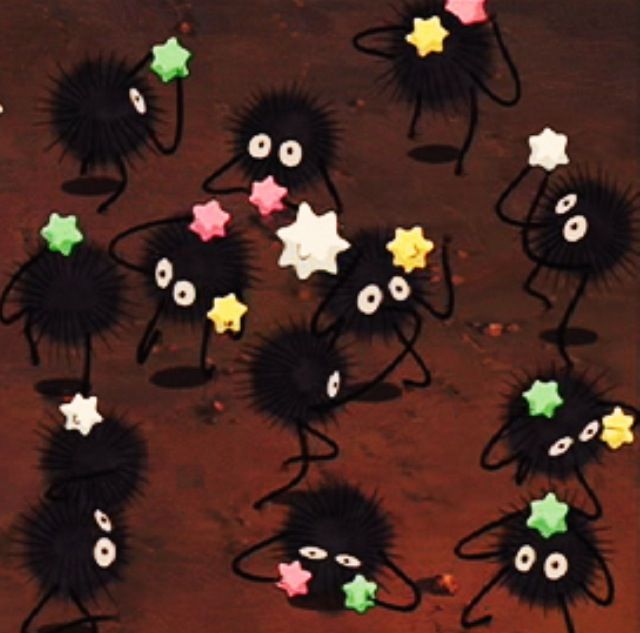
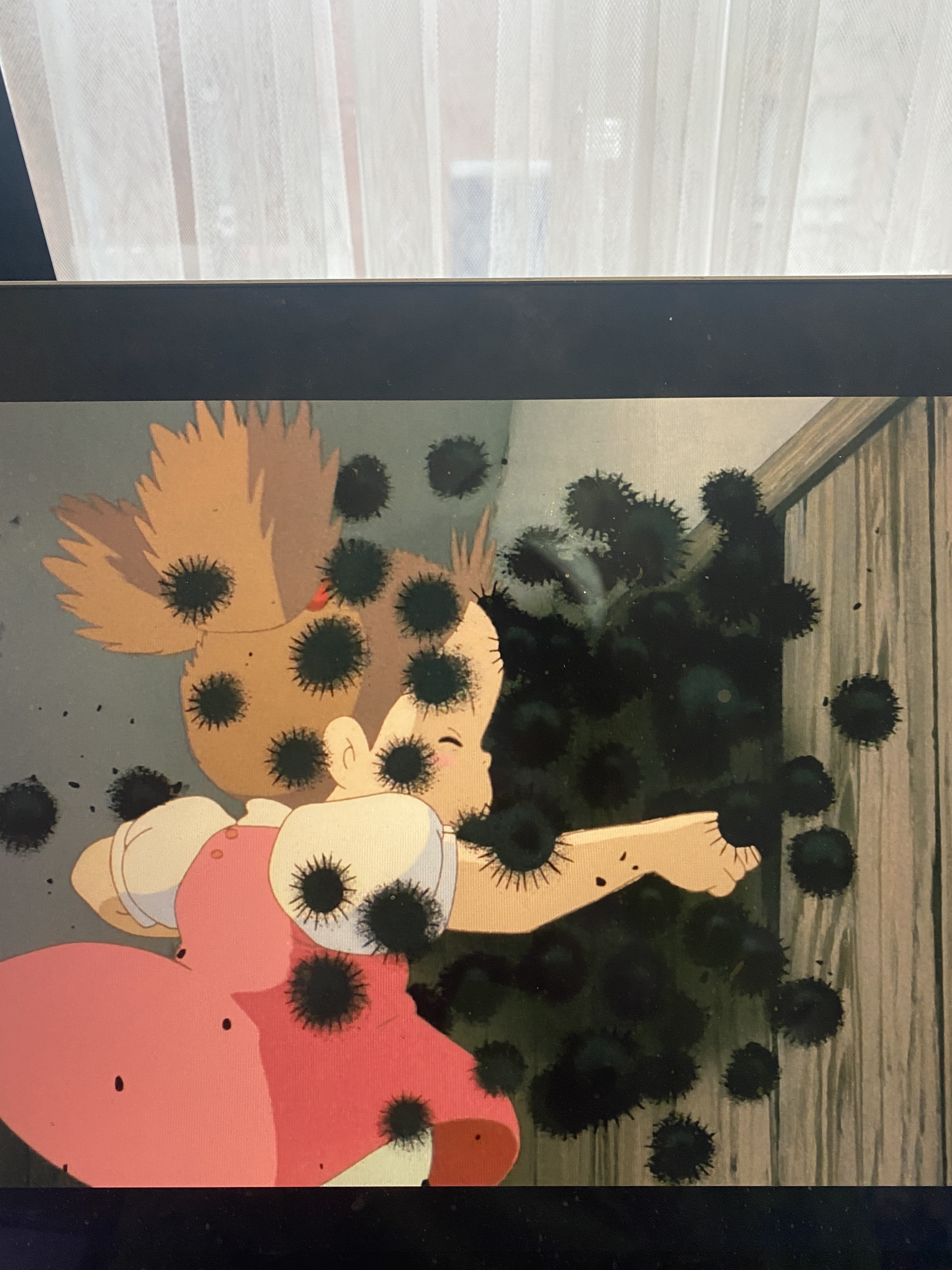
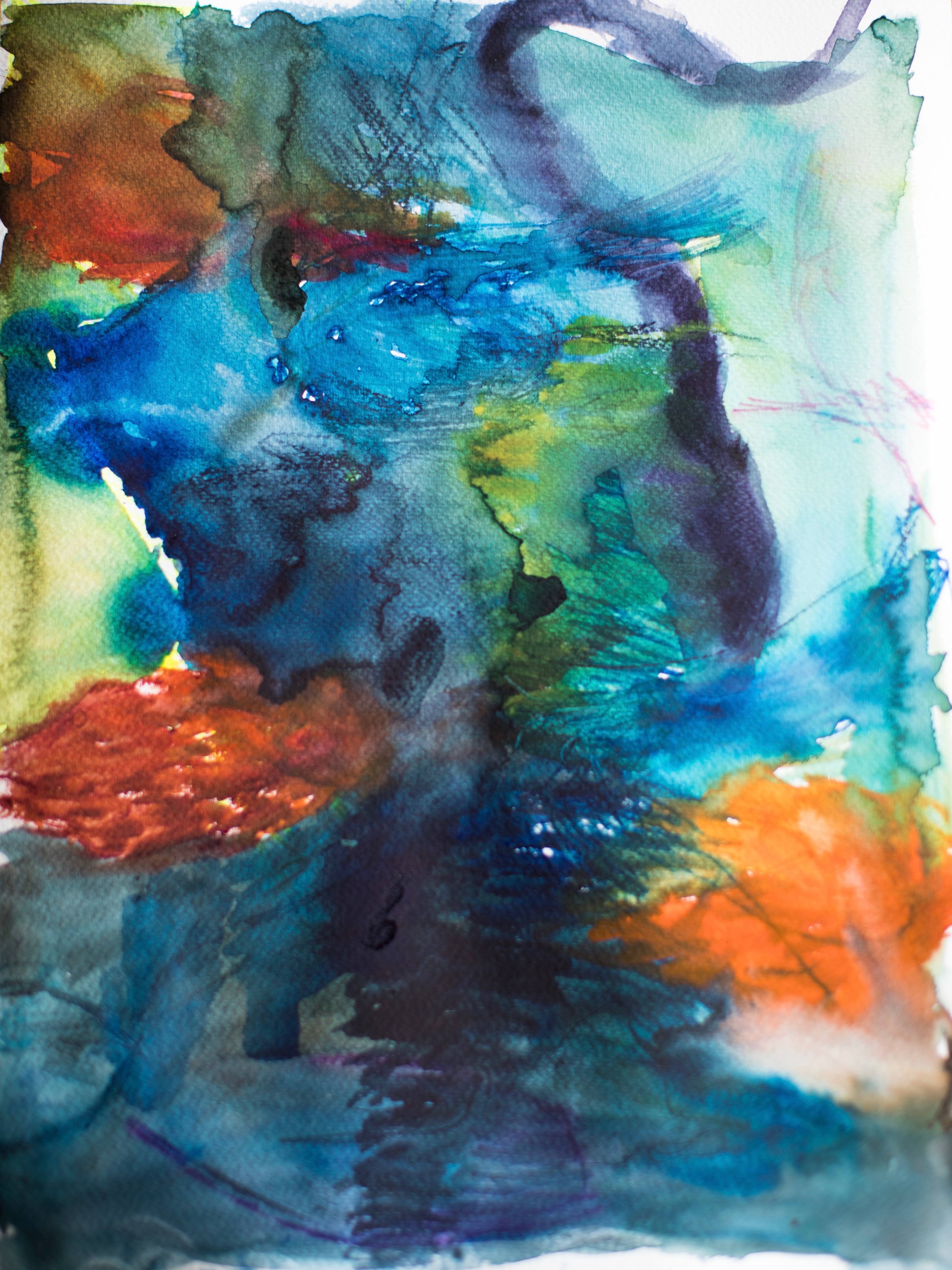

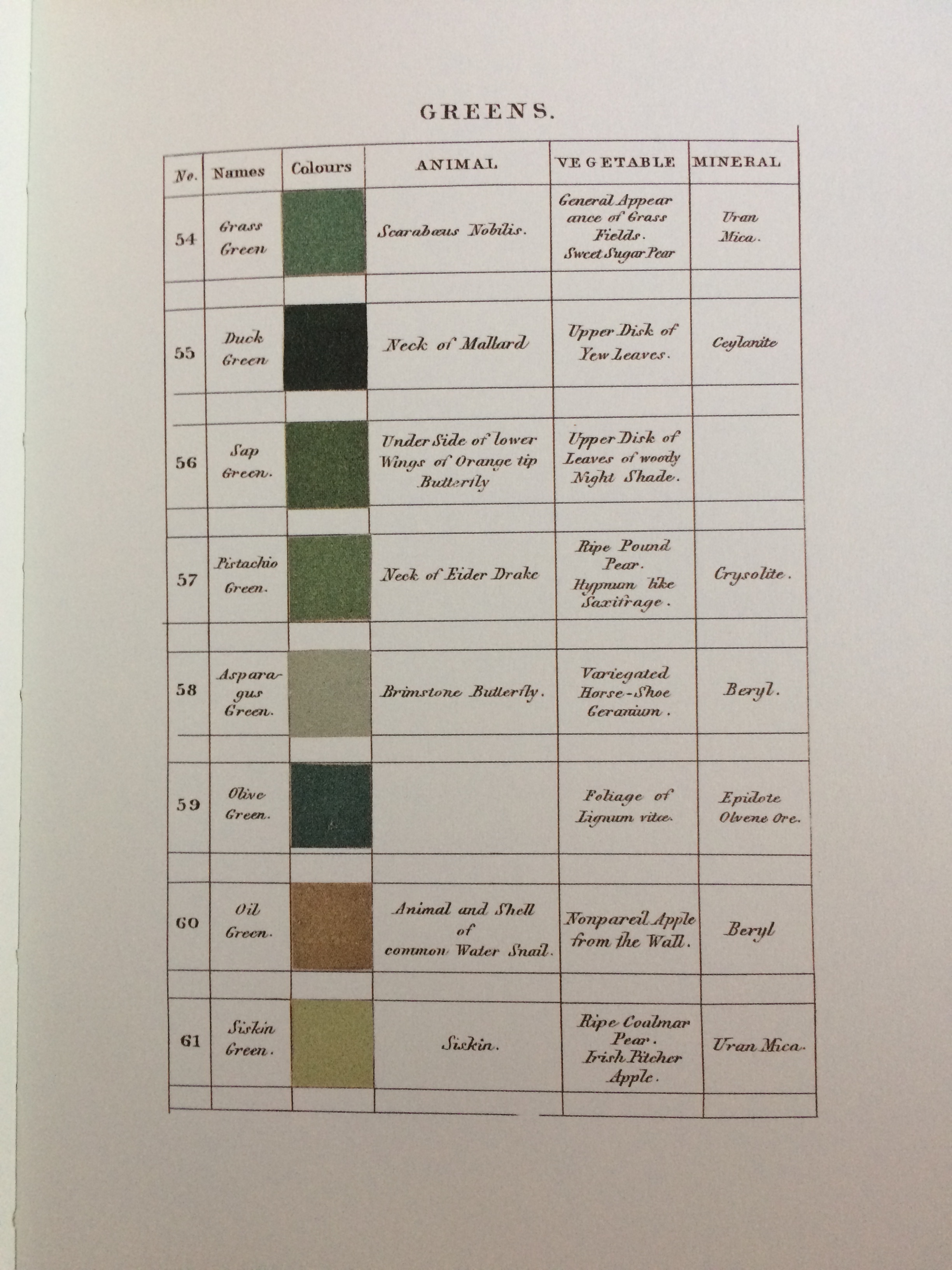
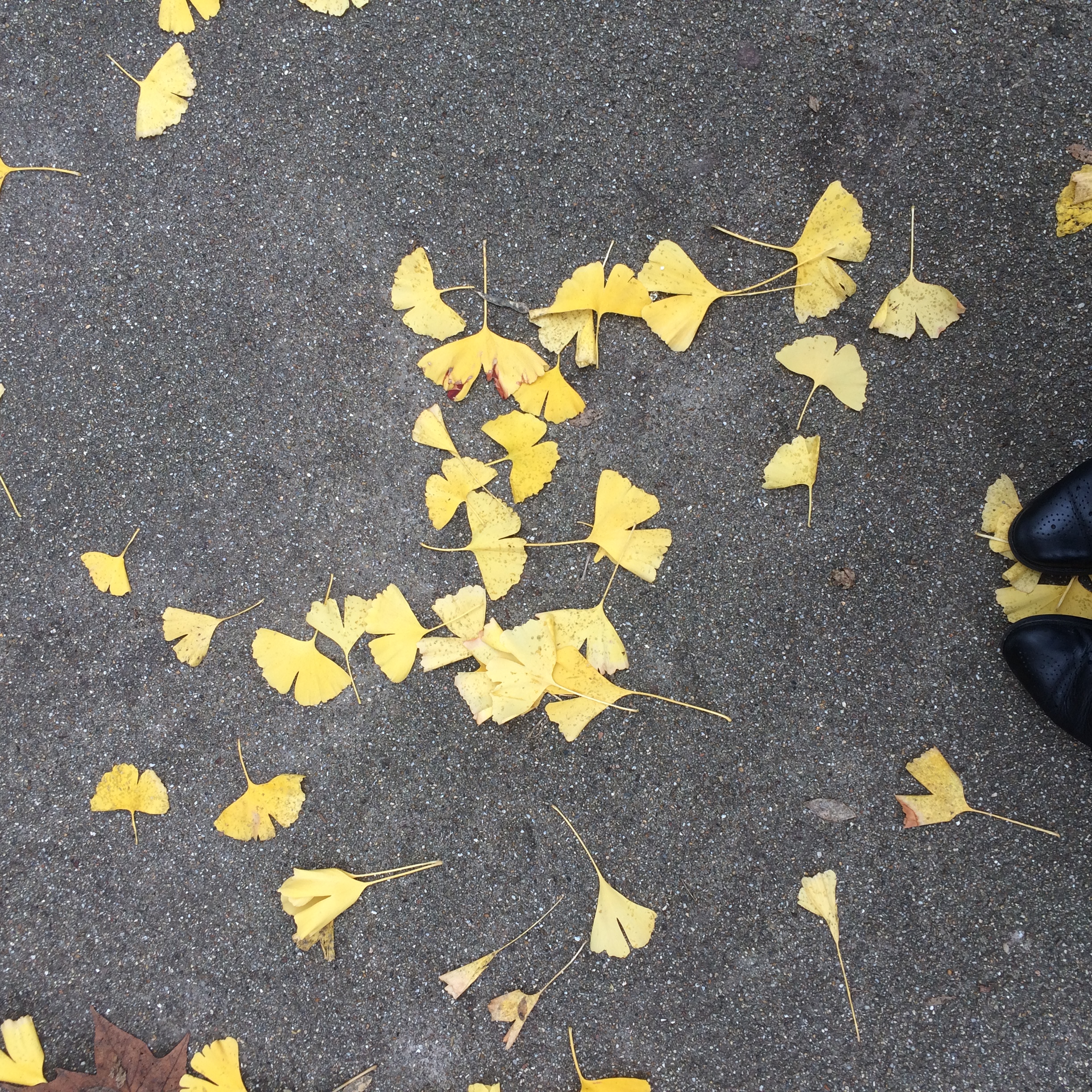
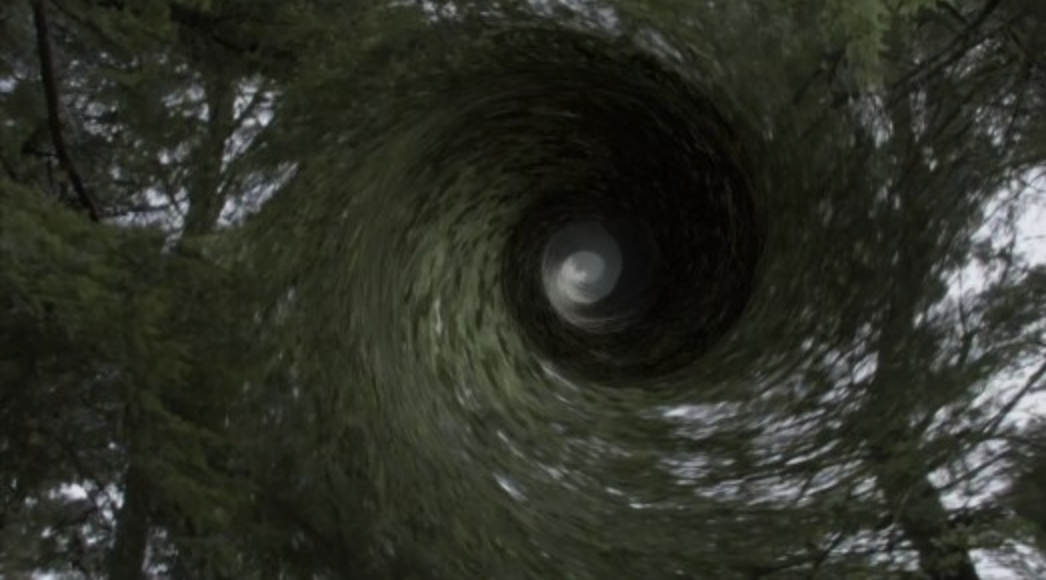
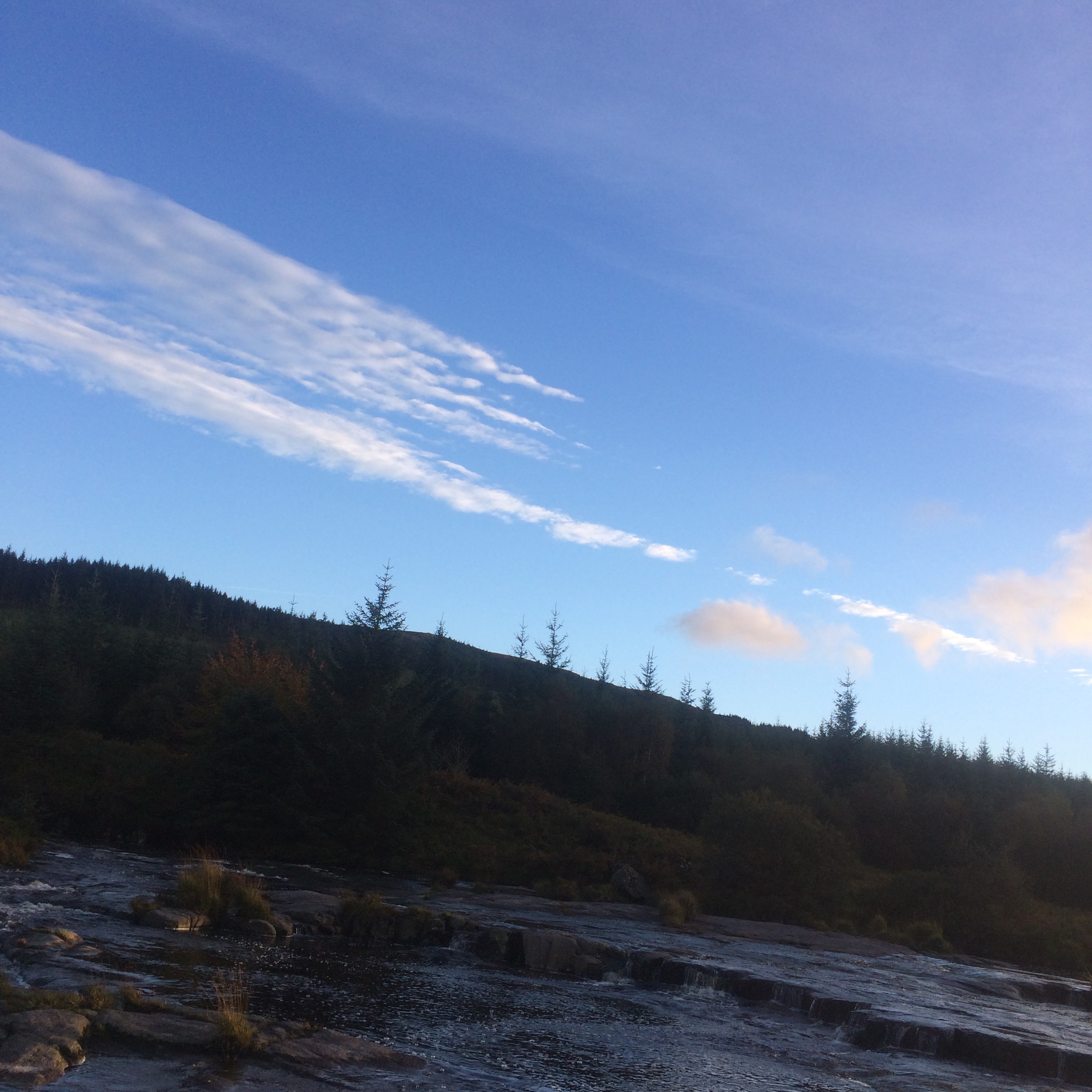

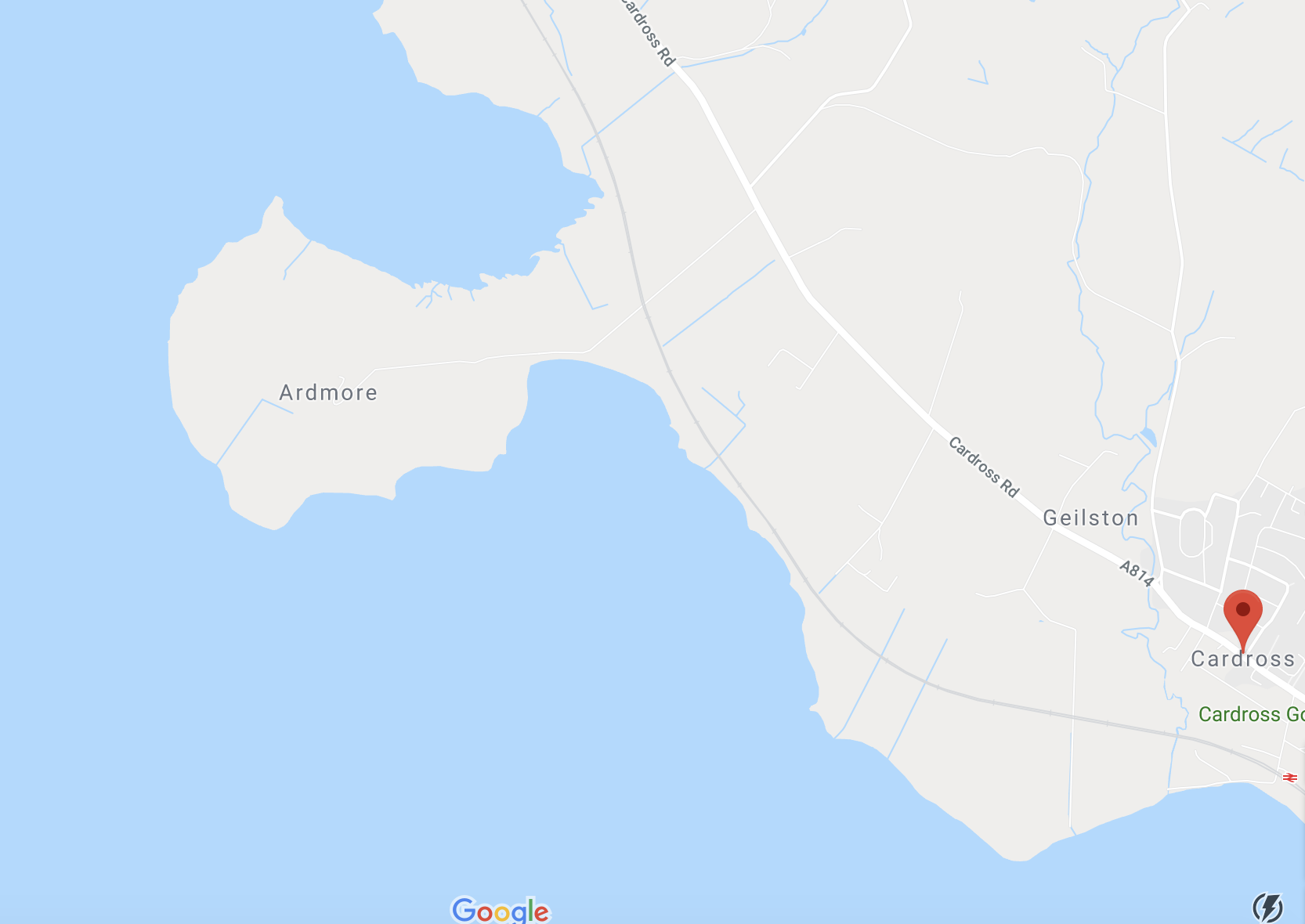
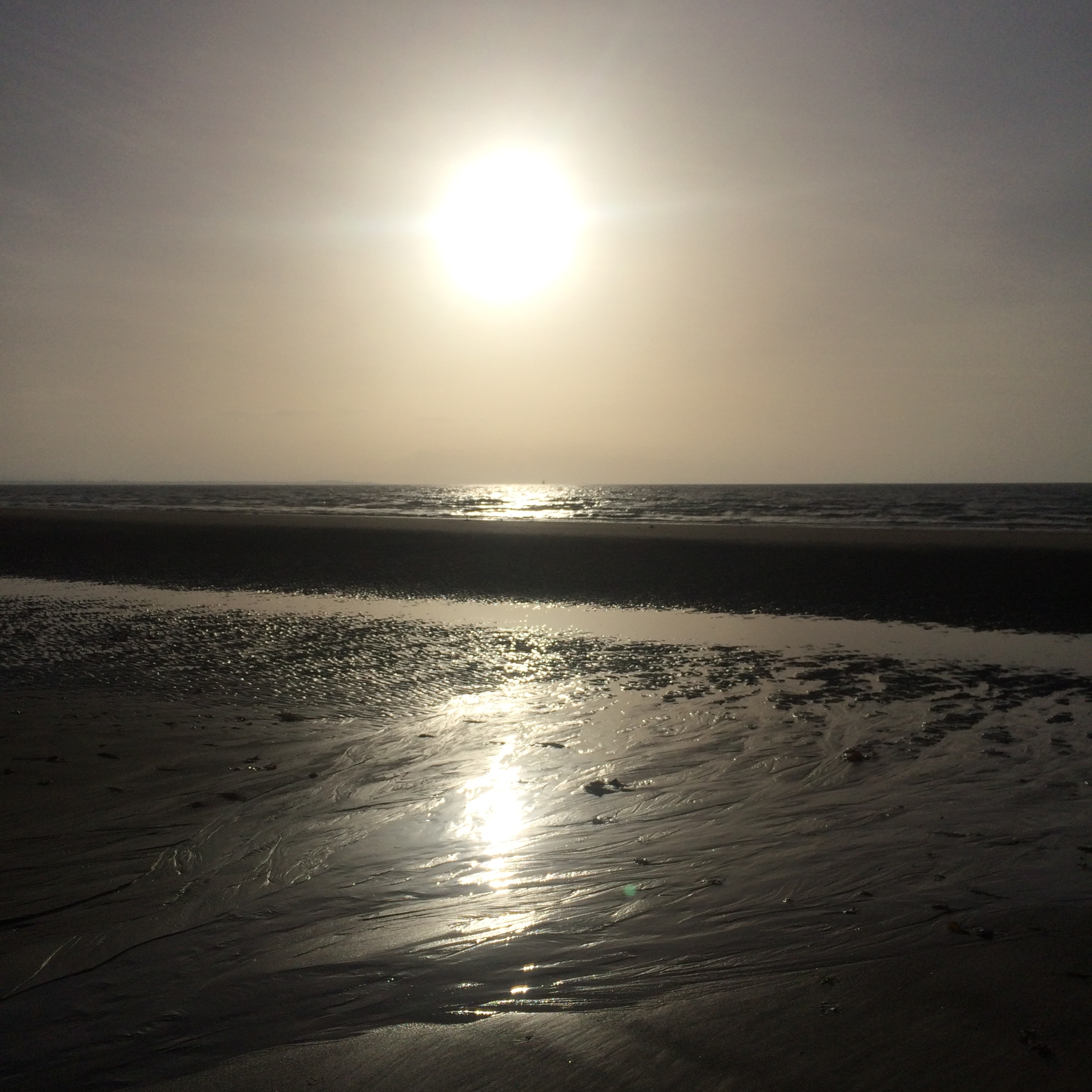


 mariaology