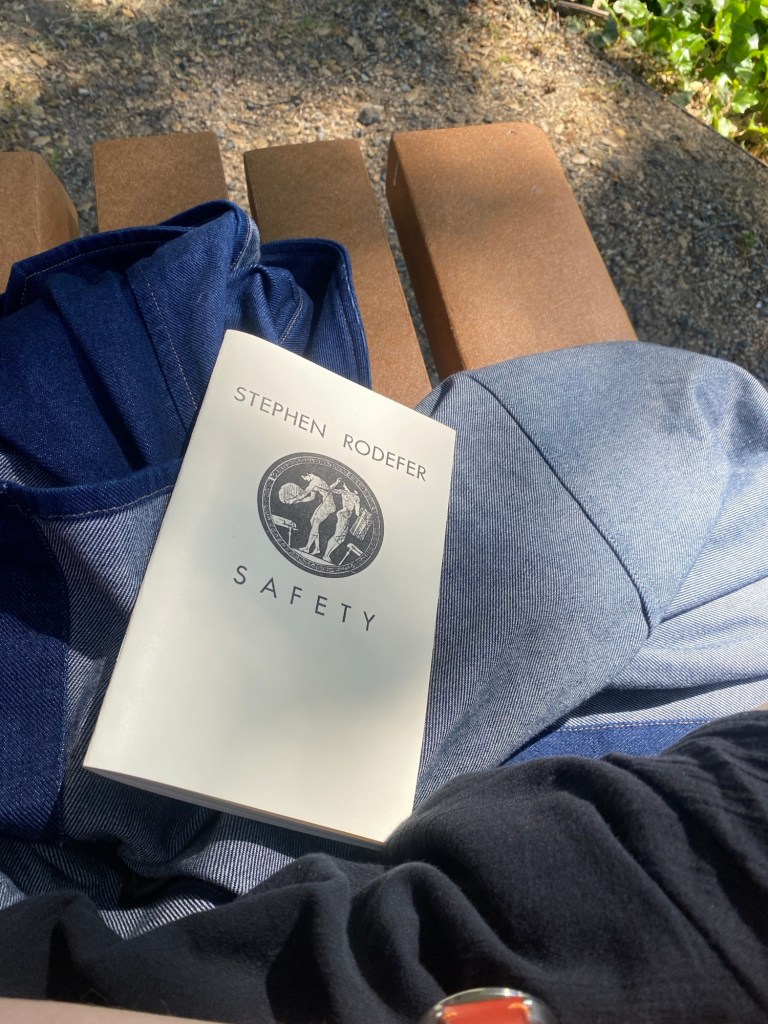
Safety Birthday
Al Filreis, Sophia DuRose, Lee Ann Brown, Irene Torra Mohedano, Laynie Browne, Christie Williamson, Maria Sledmere, and Tessa Berring convene on Calton Hill in Edinburgh to discuss the poem “The Way to Keep Going in Arcadia (after Bernadette Mayer)”, which was published in Cinders (Krupskaya, 2024). You can read the whole poem over at trilobite. For more information visit modpo.org.




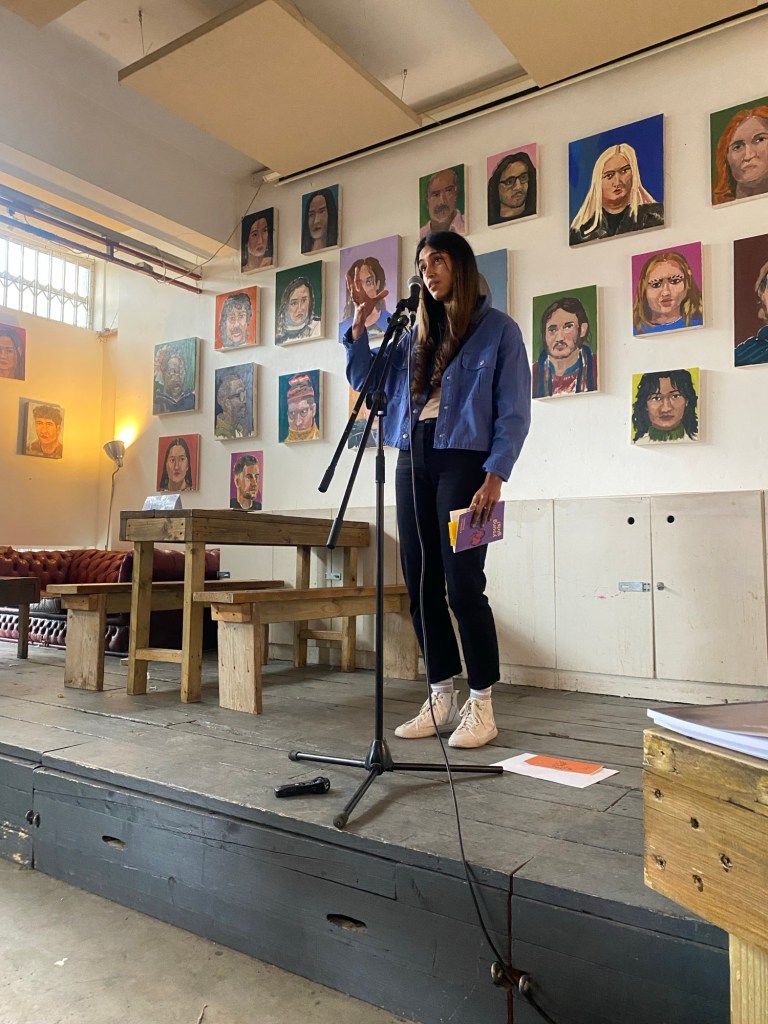
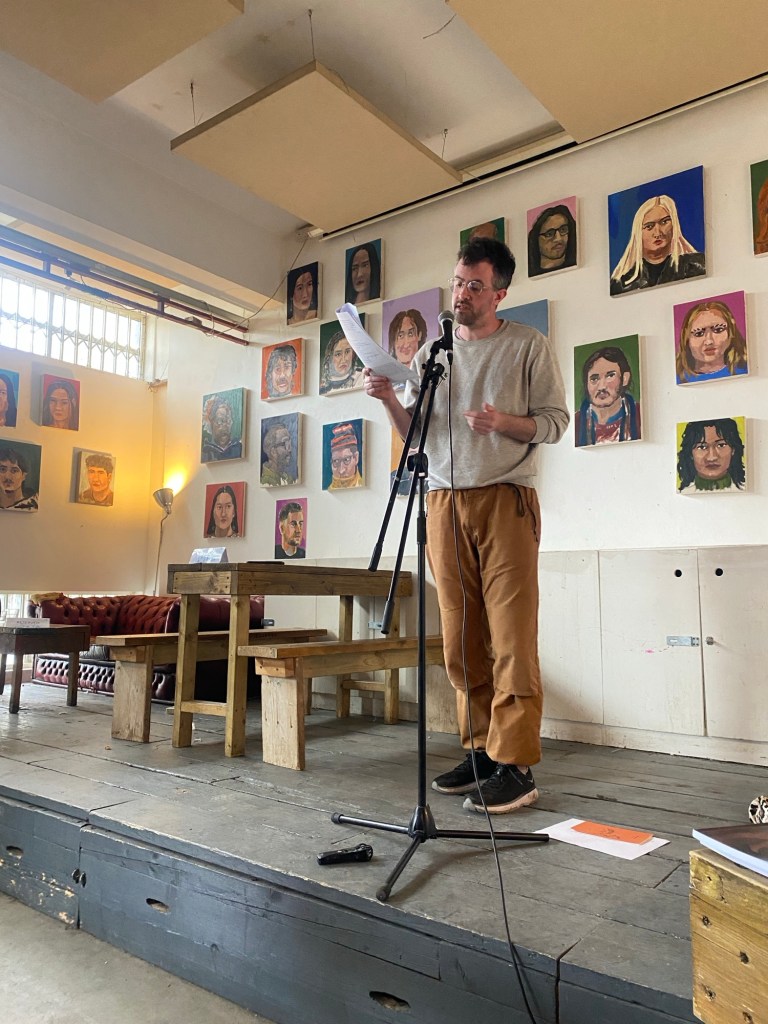
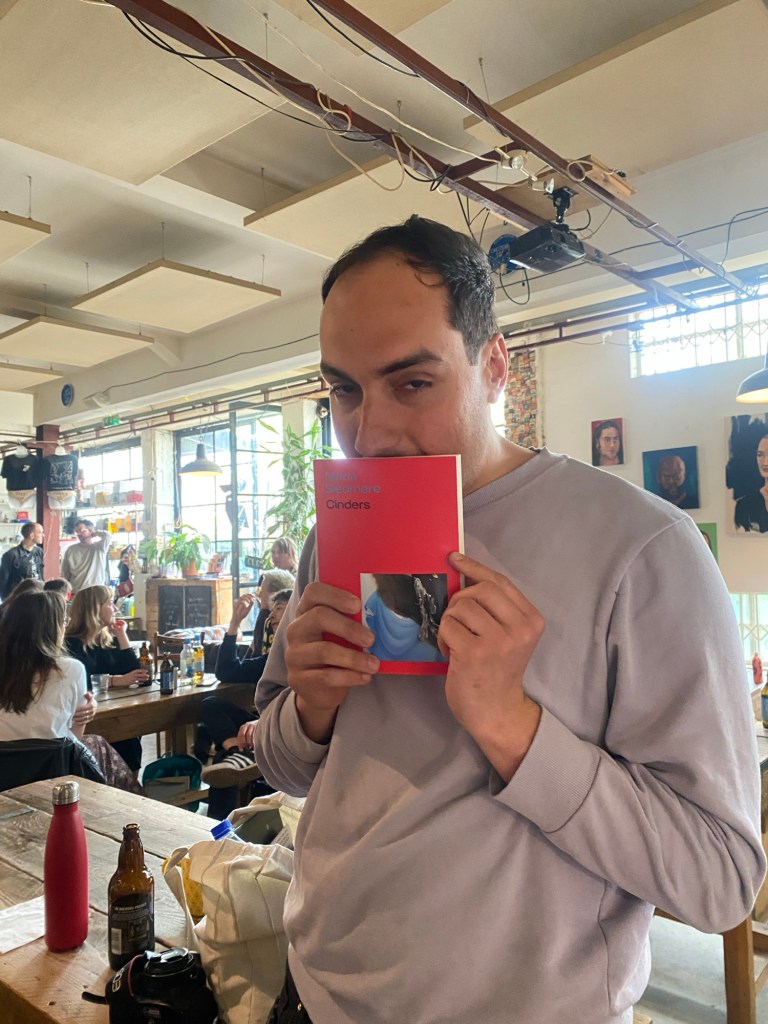


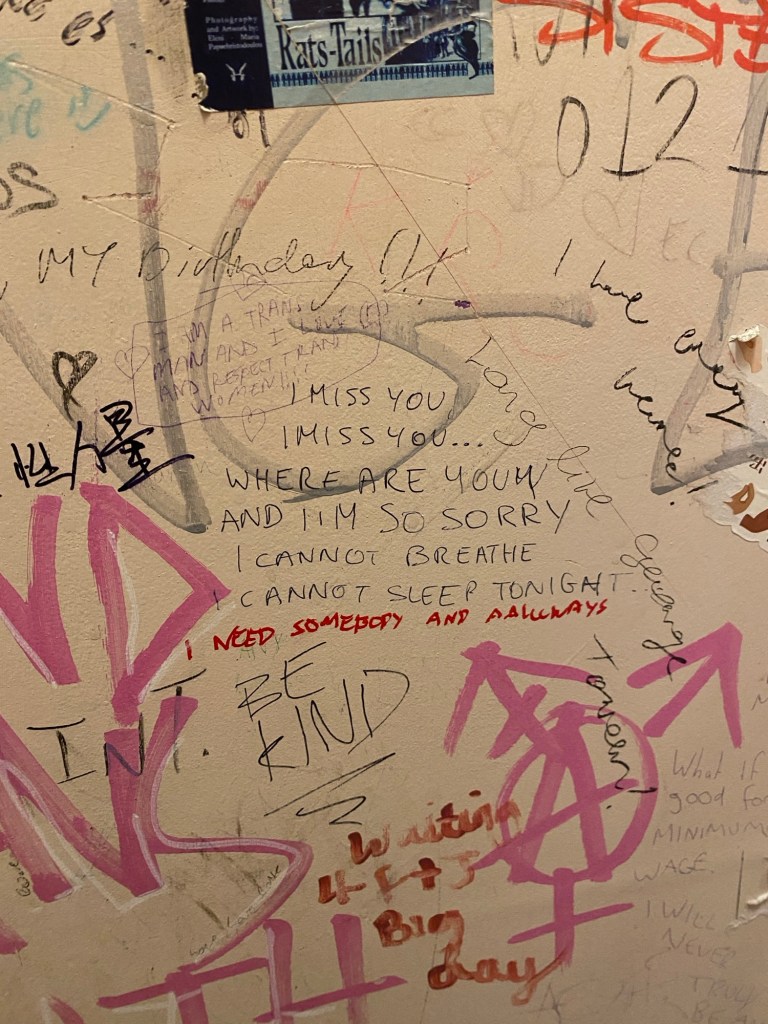

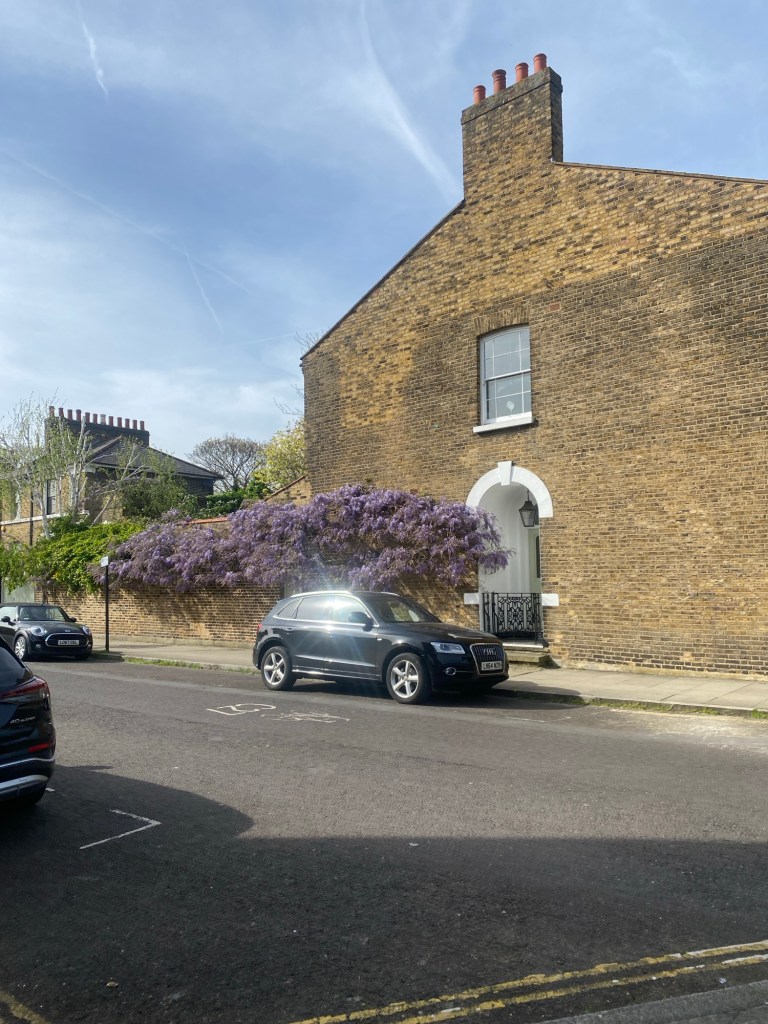
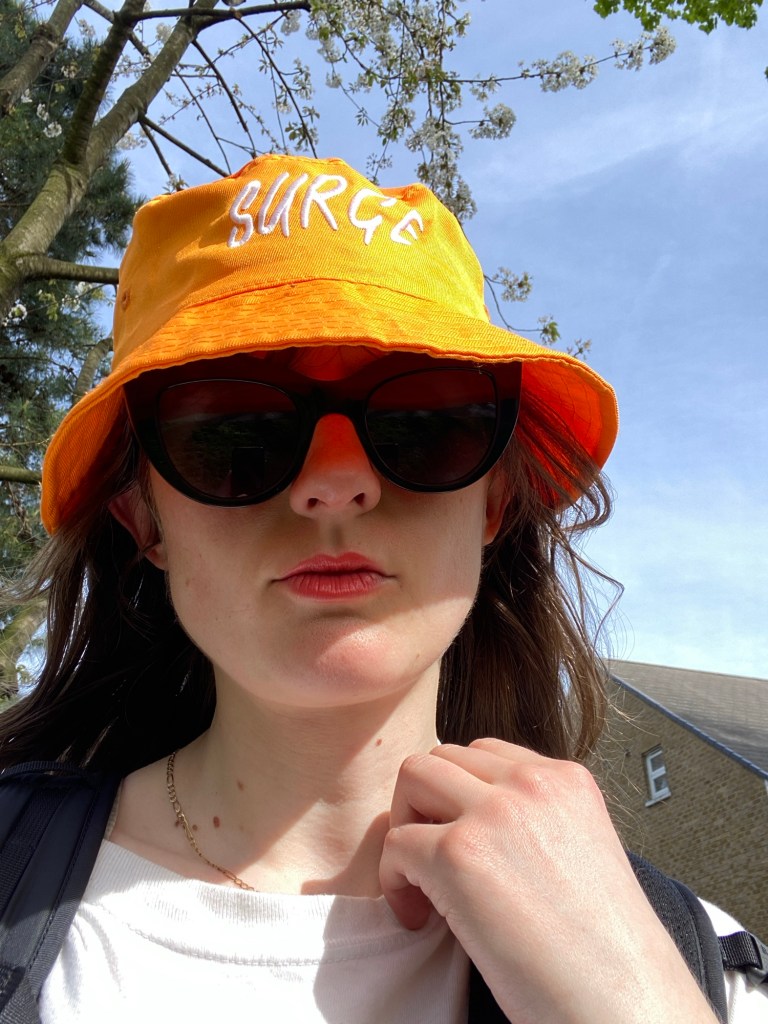
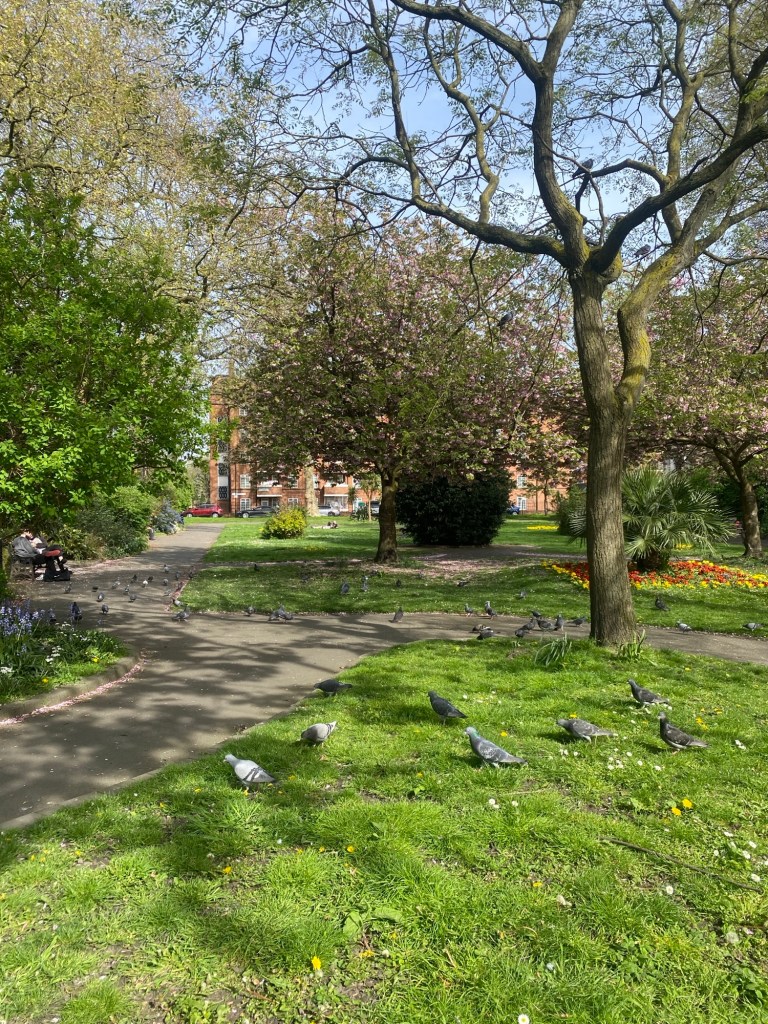

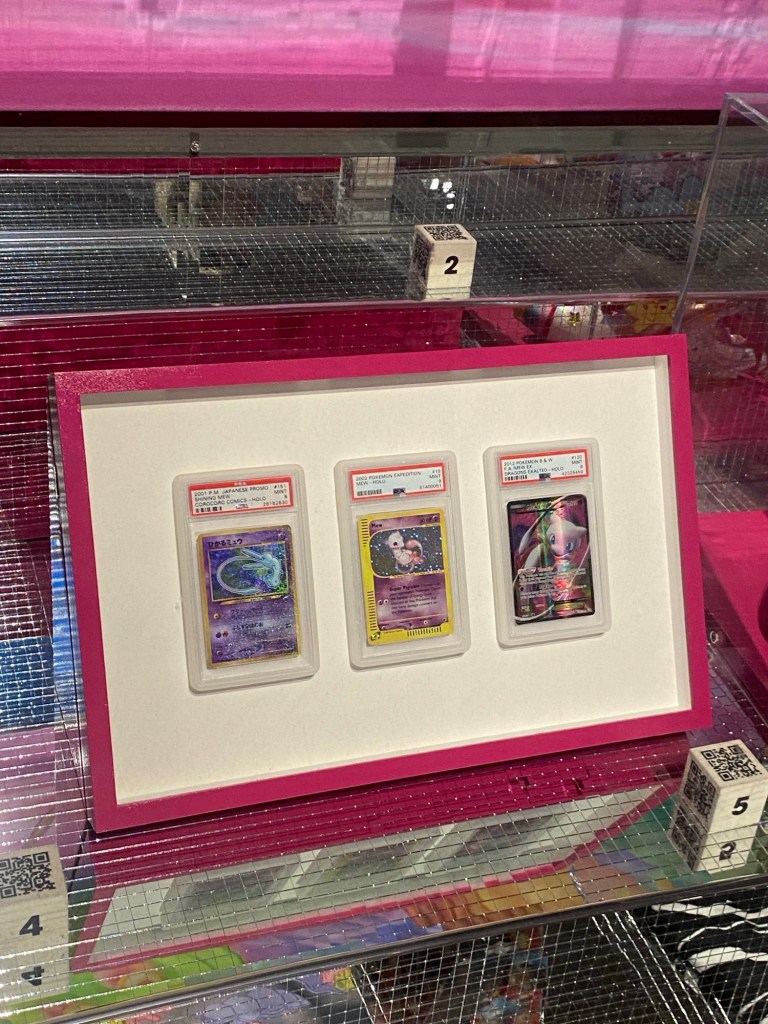







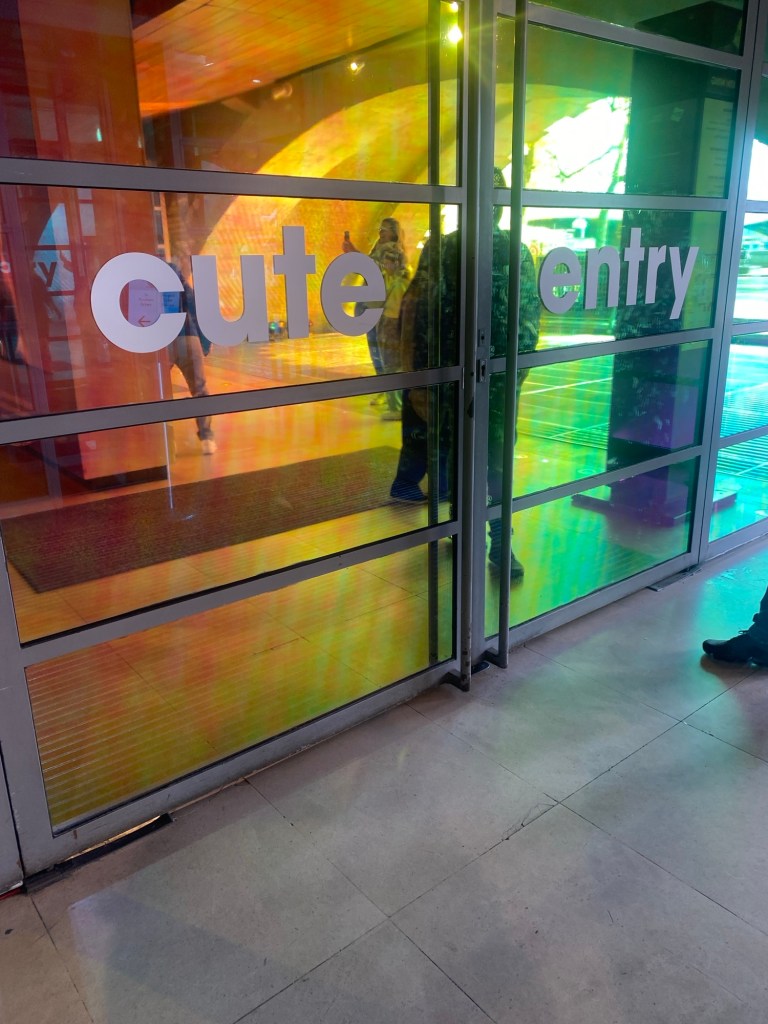
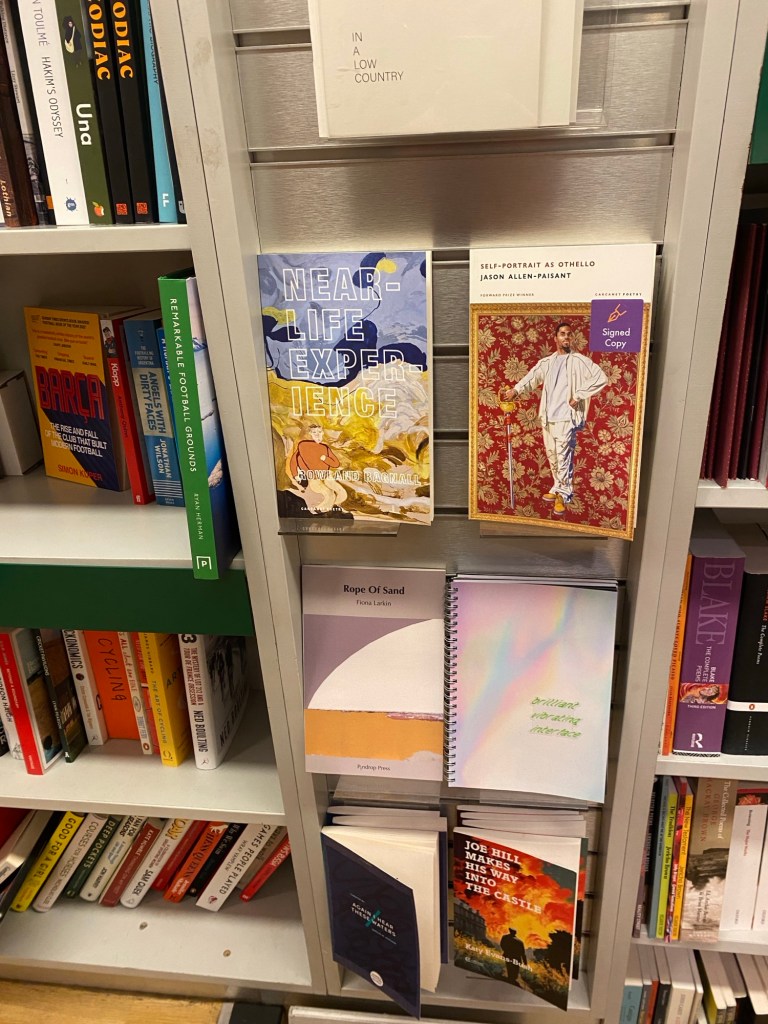

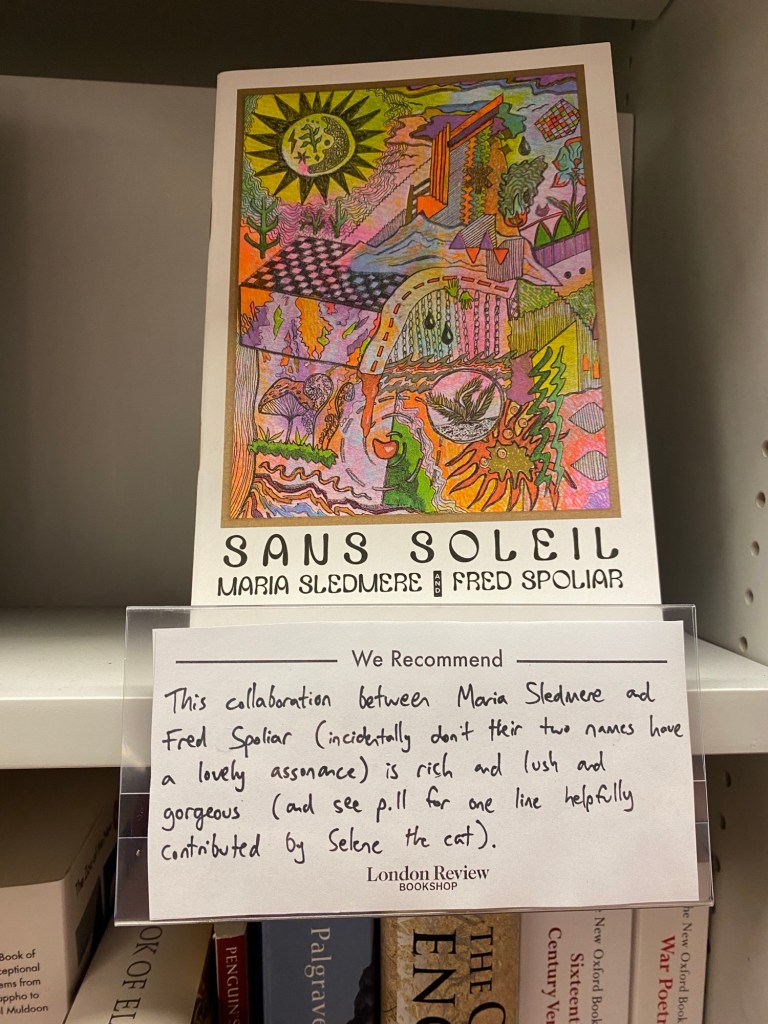
cute entry / / yellow tulips
London, April 2024
I was out somewhere reciting my love for Adidas with wishes thrice – décolletage! – and music, the train arrived on time. I wanted to ask about your shoulder and you said there was so much Guinness after the football, the rest of the world was a rumour. We had all these non-sequiturs to like, communicate the fizzy little spirals. I was like an ice cream sky for you! A spring-rush blossom you! Tapering, tapering. Went to buy salad from downstairs, went to run around putting jeans on. New jeans. Matte suede lips. Blue Sunday. Covent Garden was glistening with consumerism and the new good weather. Every time I’m in London it’s sunnier, warmer, more deniable; so much the smell of pollution & impossible flowers, pollution & impossible flowers
the city I really learned to love was so expensive you could only love so much before the money felt
mouth garbage
of gorgeous surplus:
What I kept feeling about London was…what I had kept of something & nothing a type of ‘neutral metabolic beverage’ bought at room temperature in the clothing store – spontaneous purchase!
Questions to fall in love to……what’s your favourite checkout compulsion? To shoplift gum? To flirt with cashier? To buy an oaten flute and play it to god? I was so concerned about the woman in Asda with the bleeding nailbeds and I kept recommending apricot oil and lots of sleep, I’d been through it too, and my Nan from the chemo. What our nails tell us. Mine used to be silver striped and blood-let-violet, now they are cracked with the memory.
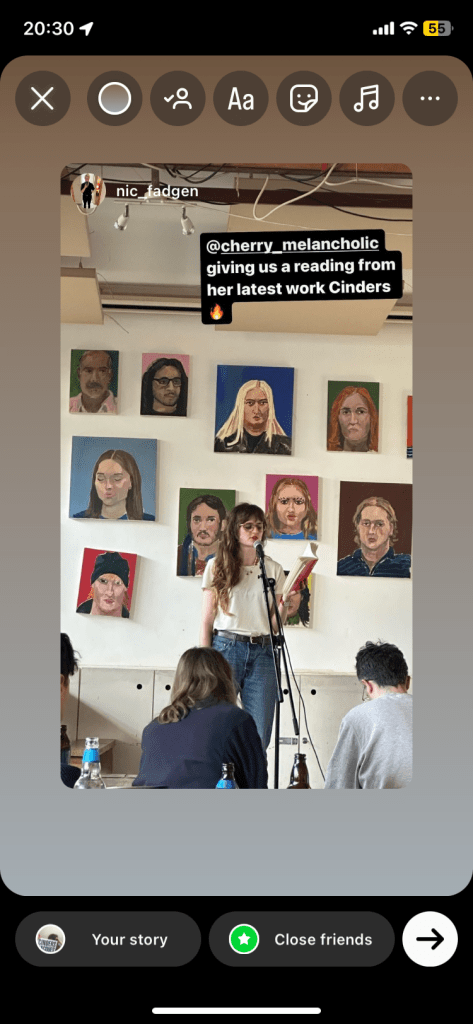
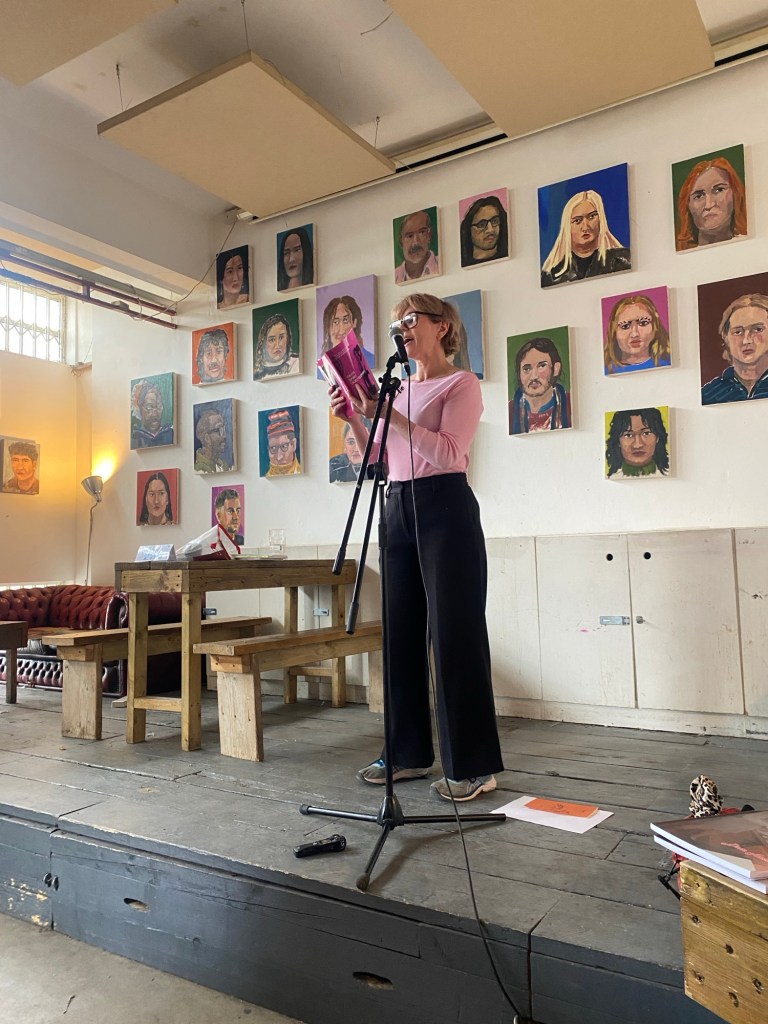
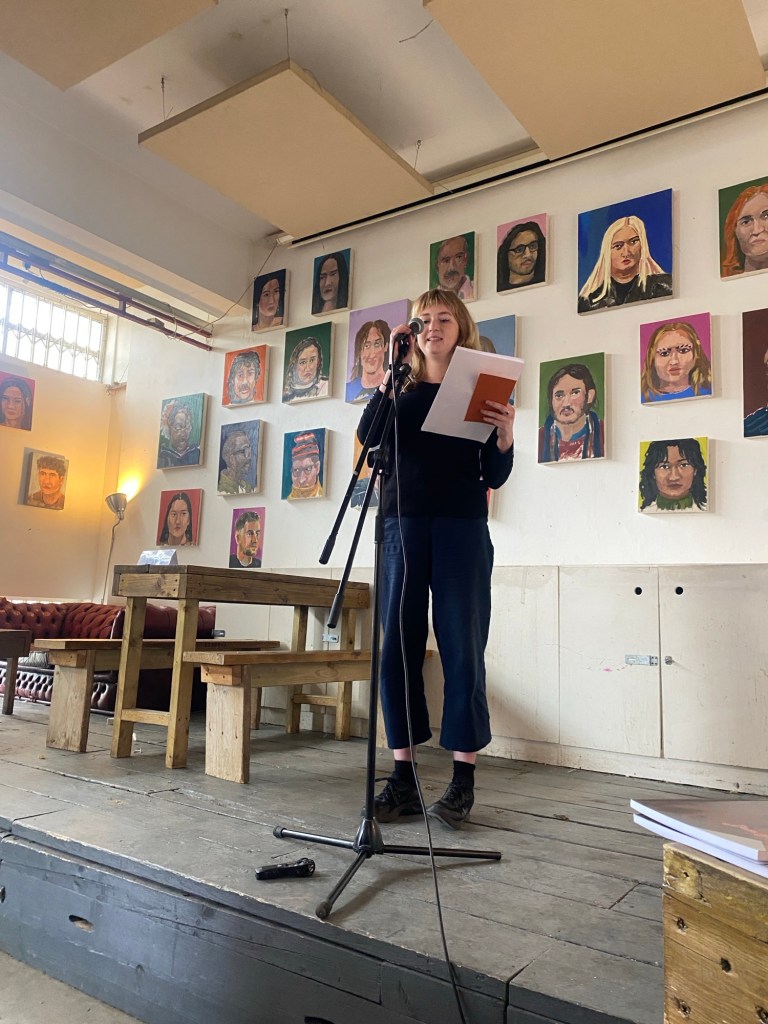
The rain came out the day I went home. Lucky I got to bring my book to London. Oh god it was beautiful the matinee I was nervously also on Guinness and lots of intersections of arrival, read first, took ponytail out like to say she is me now. Cinders. The night before, D. and I had gone to see some bands at the George Tavern and we talked through a few sets just because it had been so long since we’d talked and I wanted to know all about work and love and she said something amazing about how it gets better every day, like you just want to find out so much about the person, you want to figure out the total every degree of how they think and what they feel about something – this plenitude. I said that to my friend last night like the thing about a successful relationship is surely that every day it gets better in that you change together, you change each other, you discover things about yourself that would irrevocably not be possible to discover unless you met this person and you change each other’s day and daily and that’s not like tree branches curled around each other it’s more like mycelia underground, so much unseen, more like alchemy. So when you break apart, you never really sever. You are cellular bonded. Their energy surges in you – what – a bus ride home, a voice note, a quiet cry in the night. Something said, something unspoken. Unexpected holding of hands. Curly little yes.
*
I reread The Hour of the Star over breakfast sauerkraut and the flicker of lighter-light out at the end was it. So easy ideation; not to say I made plans, just that the impulse had become my little sister. You have to find your light.
I was lighting up to go to the next thing.
‘Beautiful though it is, it’s just walking really,’ said the woman behind me on the train, talking about the countryside.
She also said:
My brother and I stay up til 2am listening to hardstyle and reminiscing 2000s absurdism like it’s our good soft history and I suppose it is. Castles in the sky, pretty green eyes, quiver, save me, braveheart, moonlight, sunshine after the rain, bits and pieces, concrete angel, true love never dies.
I want to exhibit gelatinous entrails of everything we ever said.
*
Someone not new I met again talked about making love in a cornfield, listening to Sting. That the not-not-new of it all shared love for Eva Cassidy broke a little nerve platonism so much that I would melt into what we made awhile. Nightcap. Fortuitous timing of trains.
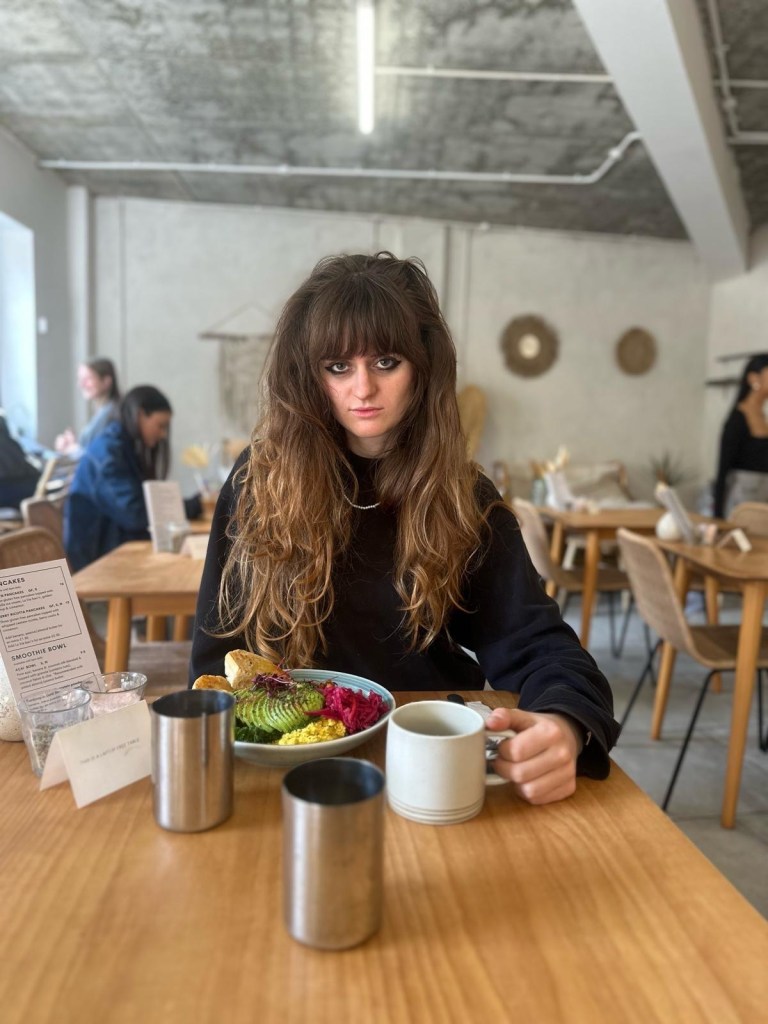
J. said I looked about twelve in the picture. I said this is my heartwood: surly, surly.
The readings:
Jane’s brilliant poise – poetry delivers the body.
Ellis’s infinite – I was so elated to meet them finally ❤
Rob’s plasma poems enamoured and the fuck devastation of elegy.
Karenjit’s percussive grace.
The readings were gems I will live with. I took videos but for some reason couldn’t upload them anywhere, but I have them.
Noodles at Silk Road backscattering miso. Hospitality stories. Stafford yellow fields. Lambs around Penrith.
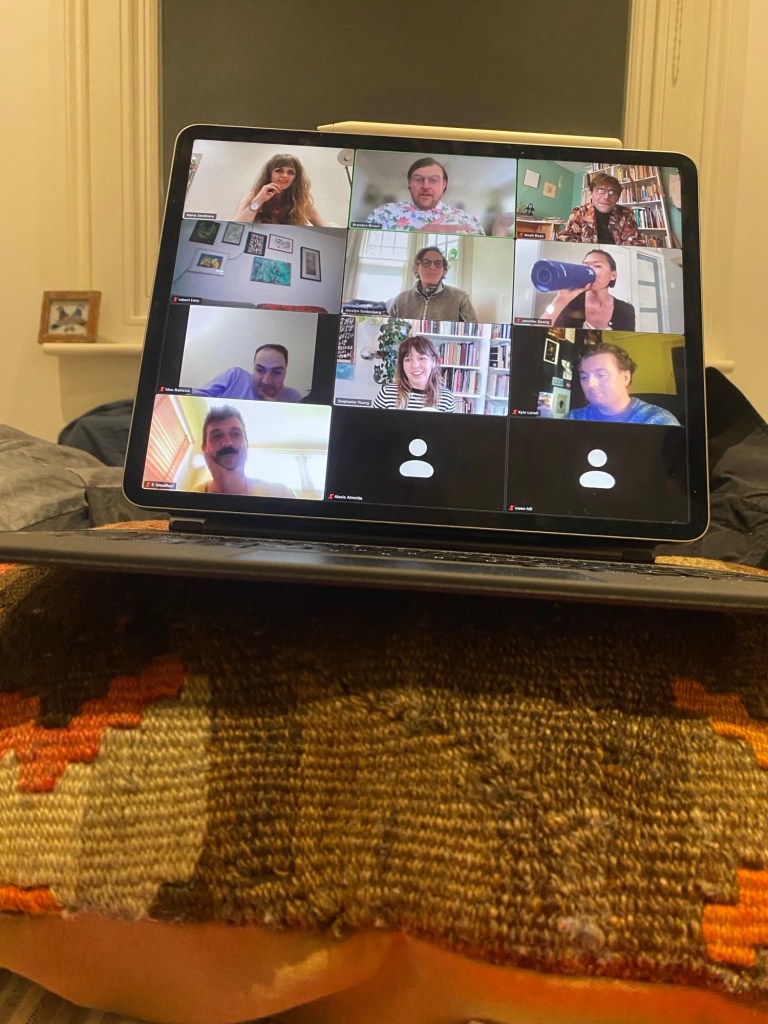
Intimate fish tank of the Zoom reading with my Krupskaya label mates. I nearly read with the AR halo. Two in one day.
I slept thick treacle.
“kept swelling with the sense of this year as the best, it keeps getting better”
“wonderful”
“Oh rly?”
The other maria.

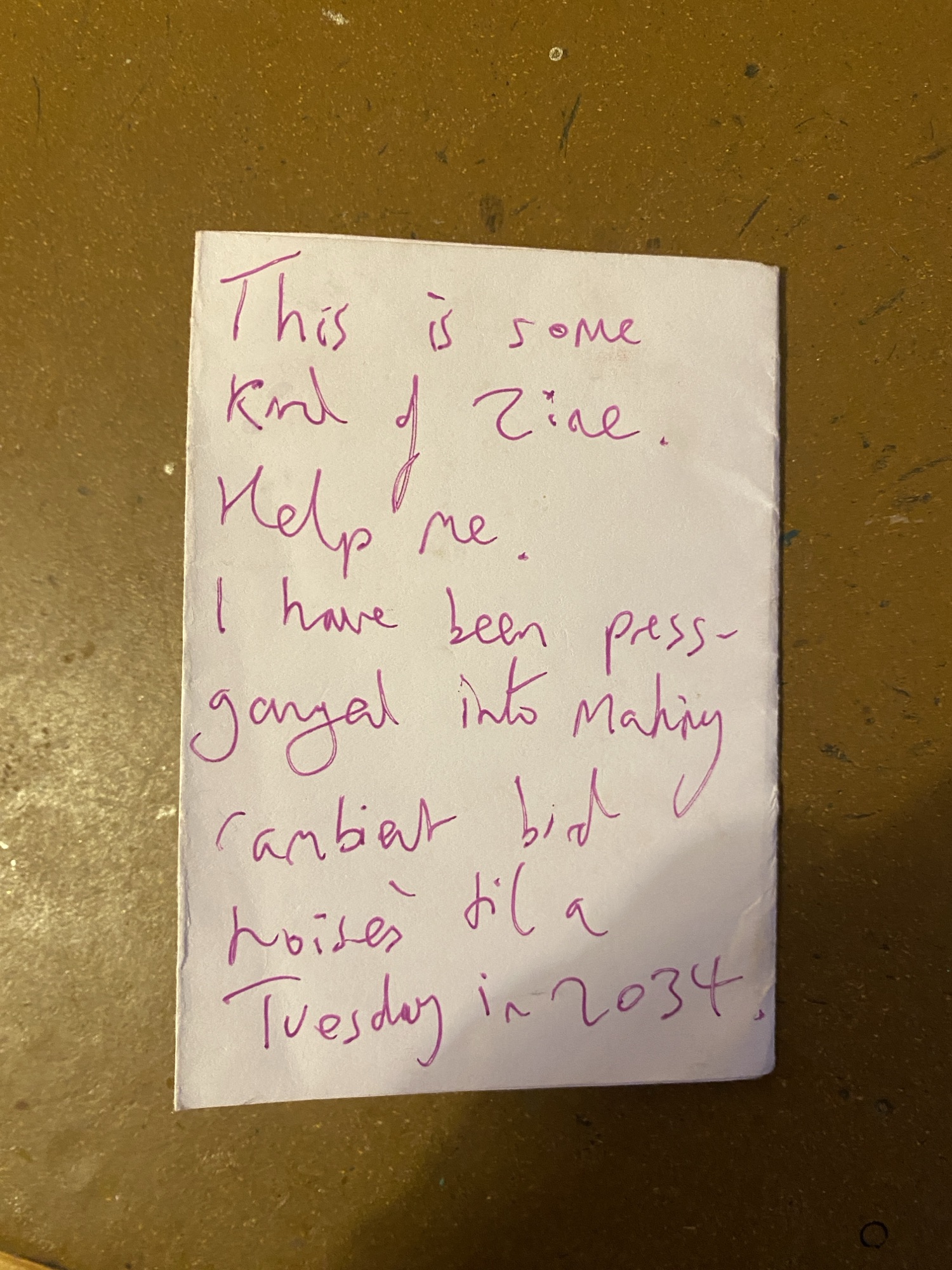

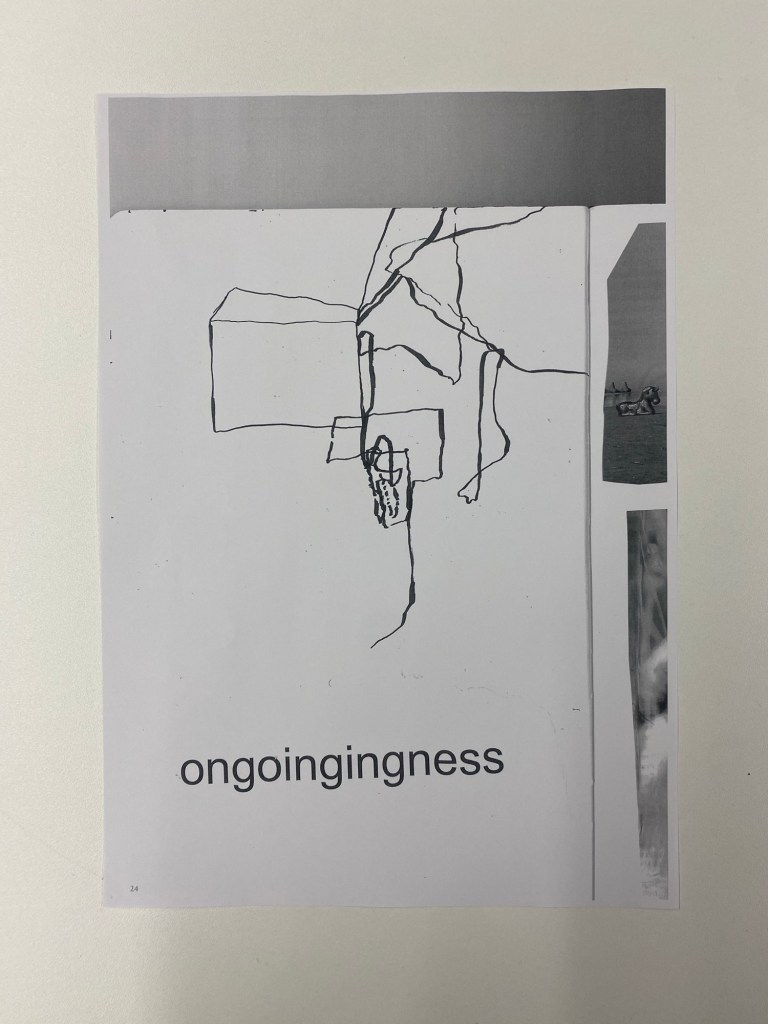
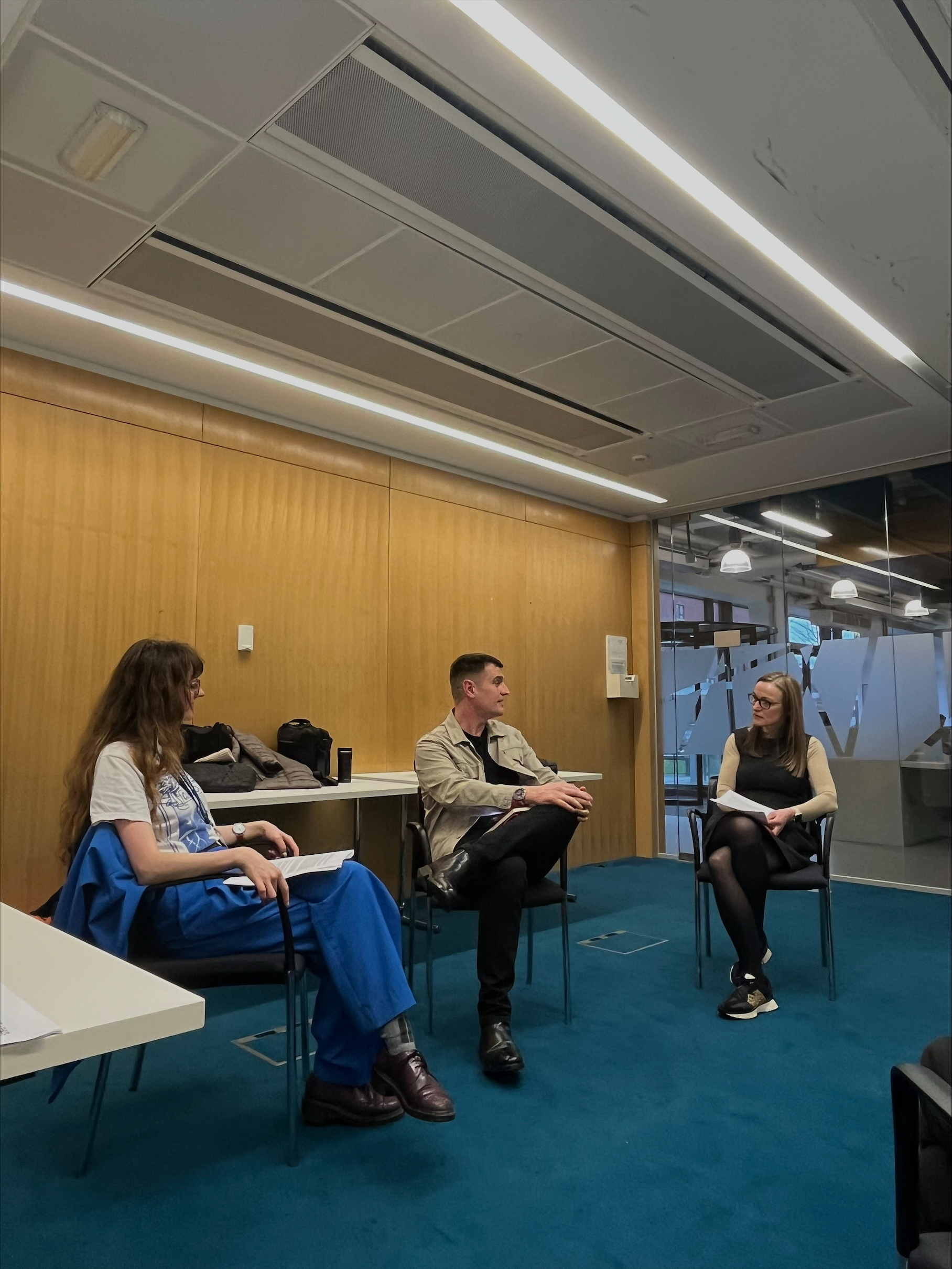
What a fucking privilege to sit down with a writer whose work not only touches a nerve but leaves a whole room of folk feeling inspired, invigorated and just the right amount of raging about the world to go and do something good about it. Graeme is an eloquent, generous speaker who came to StrathWrites last week to talk to us about his memoir, The Cloud Factory, along with his debut novel The Young Team (2020) which has made waves for its frank engagement with Scottish gang culture, masculinity and the vitality of Scots language. Graeme read from the end of The Cloud Factory, a work which feels like memoir dialled up to the communal document of what it feels like to be both inside and outside of something, to memorialise it and to work right through it, to know what was beautiful and also painful beyond words, camaraderie and shattering, refusing to paper over the cracks in reality, to note their presence and texture, to send up lost pals and those who never made it, to speak measuredly about how class and gender affect everything, to meditate on addiction, self-medication, faith, to find a turning point, to know what the past does, ‘stored as a memory in yir very cells’. He’s an author that gets it — the inside violence as much as the outside — and it’s clear from listening to him and watching a room full of folk listening to him that he can negotiate what goes unsaid with clarity and determination. After the reading we all just talked for ages, people sharing their stories and their experience of working in schools and what it means to teach and mentor and edit and pull each other through the muck of it all. What I loved most was everyone just speaking in their strongest tongue, telling stories.
~
StrathWrites is a series of writing events and workshops supported by the Strathclyde Jubilee Engagement Fund and the Strath Book Club. I’m lucky enough to work with the wonderful Jenny Carey from the Institute of Education — she’s swiftly become a radiant presence in my life and we’ve had loads of fun collaborating on these events.
READ: Extract from The Cloud Factory by Graeme Armstrong, in Granta
For anyone who missed Thursday’s event with Graeme, in lieu of a recording here’s a transcript of the workshop handout:
‘In place ae a realistic dialect portrait, authors create mutations where narrative is transacted in a ‘higher’ form. The clarity ae thought n expression afforded tae oor native guide default tae a more palatable Standard English. Meanwhile, the low, wild demotic dialect is reserved fur characters, who become linguistic puppets dangled on strings ae supposed authenticity. Characters ir reduced tae caricatures by this effect, their true dialect offered as dialogue canapés tae the unfamiliar reader, satiated by the apparent otherness ae the partial linguistic exhibit. They provide the local reader nae such nutrition. Oor language becomes a motif n isnae truly represented or respected by it. Nae working class Scot thinks in RP. Kin yi imagine? The willin suspension ae disbelief fur us is broken. An elevated n alien Standard English narrative voice betrays the remainin realism they have so carefully n respectfully crafted.’
— Graeme Armstrong, ‘Standard English is oor Second Language’, Literature Alliance Scotland
‘My culture and my language have the right to exist, and no one has the authority to dismiss that.’
— James Kelman’s Booker Prize Acceptance Speech 1994
Prescriptive grammar, in other words, becomes the sound made flesh of prescriptive pronunciation. The tawdry little syllogism goes something like this:
1. In speaking of reality, there is a standard correct mode of pronunciation.
2. In writing of reality, there is a standard correct mode of pronunciation.
3. In reality, correct spelling and correct syntax are synonymous with correct pronunciation.
Putting it another way, if a piece of writing can’t be read aloud in a “correct” Received Pronunciation voice, then there must be something wrong with it.
— Tom Leonard, ‘Glasgow Stir-Fry: Chopped language pieces on “the language question” in answer to a request’, Poetry Ireland Review
Drug-inspired delusion or Christmas epiphany, A cannae say fur sure but everyhin changed fae that night on. A never used drugs again n the violence wis finished tae. Suhin stirred in that wee flat that feels fundamental tae ma life noo. Maybe it wis always kinda there n just a ringin phone, never answered. The mare A sat n scrutinised it days later, A felt stupid n that kinda exposed way that speakin aboot faith sometimes makes yi feel, like if yi told any yir pals they would rip the pish oot yi n aw laugh. That feelin started tae pass. A dunno the ins n oots ae aw this either. The required leap that faith demands is complicated tae the best ae us, but ask yirself this, who really made the clouds? N when they clear, ask yirself, who put aw they fuckin stars up there? No everybody hus faith n that’s sound. A don’t minister tae anycunt, but A know the difference it made tae me wis life or death. That’s no nuhin.
Gangs huv dominated ma life. A’ve spent the last decade recoverin fae them n tryin tae find the words fur it aw in ma writing. That’s twenty year ae gangs in total. Their effects on yi ir far-reachin n complicated. Substances n drink ir used by many as self-medication. The aggression n hypervigilance that years ae gangs create don’t just disappear. They’re stull somewhere below, stored as a memory in yir very cells or expressed as violent tendencies.
— Graeme Armstrong, The Cloud Factory
WORKSHOP ACTIVITIES
Word bank warmup
Share what you consider to be an unusual or personal word – perhaps one you associate with place/location or a dialect word. Share a definition with the room.
Then pick someone else’s word and use that as a prompt for some free-writing.
Discussion: collocation e.g. ‘pishy pubs’. What effect do these have on our sense of familiarity with the world of the prose and the associations we have between words?
Voice
Writing dialogue: write a conversation between two people who come from a place you know really well. It might be your hometown or your current neighbourhood or a place that’s connected to your family somehow, or just a place you’ve spent a lot of time. Think about the textures of familiarity that are revealed in the language: experiment with dialect, code-switching and loanwords.
Now write about the relationship between these two people using the same dialect that they speak in. Whether your narrator is third person omniscient or first person, experiment with writing in dialect so that there isn’t a stark difference between how the characters speak to each other and how the narrative ‘speaks’.
Memory triggers
Think of a photograph or significant object that holds memory for you. Describe it in detail and use it as a springboard for writing a poem or story. Be as personal as you like.
Turning points
Write about a turning point in your life where you realised something, or had to make a decision to live differently.
This event took place on 21st March 2024 at the University of Strathclyde.
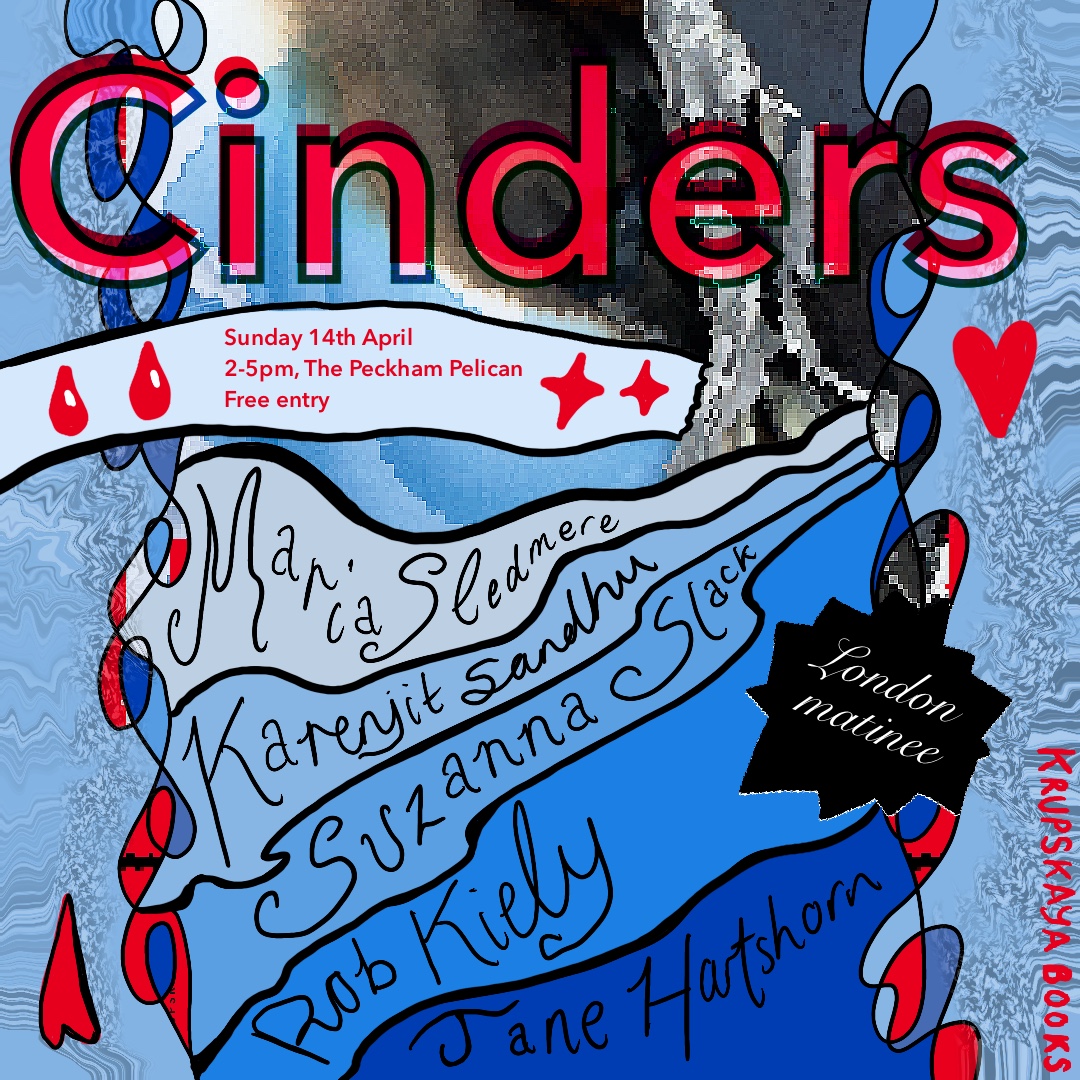
Thrilled to be bringing the Cinders ball to London for a lil matinee at Peckham Pelican on Sunday 14th April. I’ll be accompanied by a dream line-up. There will be books for sale (card only). Hope to see you there!
Event starts at 2pm and will be finished by 5pm.
Entry is free and unticketed.
Accessibility:
The Peckham Pelican is a ground level venue with step-free access, gender neutral and disabled toilets. You can find out more about the venue here.
Readers:
Jane Hartshorn is a poet and PhD candidate at the University of Kent, writing about the lived experience of chronic illness. Her pamphlets include Blowfly (in collaboration with ossa prints), Soft Tissue Rarely Preserves (in collaboration with Valeska Noemi), In the Sick Hour (Takeaway Press, 2020) and Tract (Litmus Publishing, 2017). Her work has been published by Footnote Press, Boudicca Press, Dostoyevsky Wannabe, Lucy Writers, The Polyphony, and SPAM. She is founder of CHASE Medical Humanities Network and teaches poetry to medical students at University of Southampton. @jeahartshorn janehartshorn.weebly.com
Robert Kiely is the author of ROB, Gelpack Allegory, and simmering of a declarative void. He is an editor at veer books.
Karenjit Sandhu’s publications include Poetic Fragments from the Irritating Archive (Guillemot Press), young girls! (the87Press) and Baby 19 (intergraphia books). Her practice comprises poetry, performance and artists’ books. She is a member of the British Art Network and Lecturer in Art at the Reading School of Art.
Suzanna Slack is the author of Happy Birthday Story, Is This It?, The Poor Children, The Shedding, Luxury Profile, White Spirit Videotelephony and Gummi Zone. Their work has been published by Solstis Literary Magazine, Datableed, Hot Pink Literary Magazine and others. They are seeking assistance with their next work!
Maria Sledmere is the author of books including Cinders (Krupskaya), An Aura of Plasma Around the Sun (Hem Press) and Visions & Feed (HVTN Press). She is managing editor of SPAM Press and a Lecturer in English & Creative Writing at the University of Strathclyde.
from The Nerve Meter

