Insights on Sleep and Rest: Perspectives from the Arts and Humanities

 22nd of May 2025. 11-5.30.

Institute for Advanced Studies in the Humanities, 2 Hope Park Square Edinburgh EH8 9NW

Broadly, our societal response towards sleep and rest is one of downgrading and devaluation. In our current capitalist society, sleep and rest are conceptualised as a time of passivity and inaction, and thus, as a period in which we are not producing or accomplishing. We tend to be jealous of those who can go about their days with fewer hours of sleep than ours, or praise those who can maximise their schedules, crammed with an endless series of activities and tasks. However, lack of sleep and rest time can lead to poorer health, both physical and mental. A good night of sleep can be one of our most restorative activities, and despite this fact, it tends to be neglected. Similarly, sleep and resting states allow for the occurrence of experiences that, if carefully attended, can provide us with a tool for self-exploration, such as dreaming and daydreaming.

The workshop intends to explore how these and related issues to our relationship to sleep and rest can be approached from the methods and perspectives of different disciplines within the arts and humanities. To that end, the workshop will consist of short presentations, panel discussions, and collaborative sessions for active participation. The workshop will be hosted both in-person and online.

Speakers and facilitators:

Dr Adriana Alcaraz-Sánchez (Philosophy, University of Edinburgh)

Dr Marco Bernini (Literary Studies, Durham University)

Prof Felicity Callard (Geography, University of Glasgow)

Dr Robert Cowan (Philosophy, University of Glasgow)

Dr Oli Hazzard (English, University of St Andrews)

Dr Sophie Jones (English, University of Strathclyde)

Dr Kevin Leomo (Music, University of Glasgow)

Dr Elizabeth Reeder (Creative Writing, University of Glasgow)

Dr Maria Sledmere (English & Creative Writing, University of Strathclyde)

Preliminary schedule:

11-11.25: Introduction and reflective activities: In this initial session, participants will be encouraged to share and write down their thoughts about their relationship to sleep and rest.

11.30-13: “Topics on dreaming, sleep experiences and transitory states” (Dr. Alcaraz-Sánchez, Dr. Bernini and Dr. Cowan). Short talks followed by a Q&A.

· Dr Marco Bernini (Durham University): “Dreams and Heightened Narrowed Immersivity: Combining Saturation, Permeability, Presentationality and Presence”. Are dreams (narrative) worlds? What similarities and differences are in play between our waking consciousness of the perceptual world and dream consciousness as quasi-perception? This paper posits that dreams exhibit a unique experiential mode called ‘Heightened Narrowed Immersivity’ (HNI)—a state characterized by intense presentational immediacy and severely restricted informational context. Combining frameworks and concepts from narrative theory and cognitive science while looking at dream reports, literature, lyrics, and movies, the paper shows how dreams and their artistic mediations reveal unstable ontological environments—low saturation in time, causality, identity, and space—while maintaining a high degree of immersive presence.

· Dr Robert Cowan (University of Glasgow). “Exotic and Ordinary Dreaming”. In this talk I consider two kinds of ‘exotic’ dreams. First, those that occur during episodes of REM sleep behaviour disorder where subjects allegedly ‘act out’ their dreams. Second, lucid dreams wherein subjects are apparently aware that they are dreaming while dreaming. My question: what do these exotic cases tell us about the nature of ordinary dreaming? My answer: very little and certainly less than others have thought.

· Dr Adriana Alcaraz Sánchez (University of Glasgow). Hacking the sleeping mind: the exploitation of the dreamspace. In dream research, the term ‘dream engineering’ has been adopted to describe techniques that manipulate, record and affect our dreams. Within the research context, dream engineering has become a useful tool for exploring the nature of dreaming as well as its potential for enhancing our waking lives. Yet, a couple of examples taken from outside scientific research might make us worry about the extent dream engineering practices should be conducted, especially when those are applied widely to the general public. Here, I consider some of the ethical implications of those practices outside the research realm, some of which put into question the value we attribute to sleep and dreaming.

13-14: Lunch Break: Vegetarian and Vegan catering for all participants

14-15: Panel discussion: Working title “The need for rest” (Dr Reeder, Dr Jones, and Dr Callard and Dr Sledmere): Our panellists will give a flash/provocation followed by a chaired discussion with questions from the audience.

15-15.15: Short break: Tea and coffee for all participants

15.15-17.00: Creative session. In this facilitated session, we will explore the role of dreaming/liminal states for creative purposes.

· Poetry reading and discussion by Dr Sledmere and Dr Hazzard.

· Haiku writing and Deep Listening activities

17.00-17.30: Discussion back to the rest of the workshop/final thoughts

From 17.30: Wine reception at IASH (Open to all participants)

This event is organised by Adriana Alcaraz-Sánchez (Postdoctoral Fellow in Philosophy, IASH, University of Edinburgh), Maria Sledmere (Artist and Lecturer in English & Creative Writing, University of Strathclyde) and Kevin Leomo (Artist and Community and Engagement Manager, University of Glasgow).

The event is supported by the Susan Manning Workshop Fund from the Institute for Advanced Studies in the Humanities (IASH) and is jointly hosted by IASH and Project Somnolence [https://projectsomnolence.com/about]

Accessibility: This event will take place at IASH, 2 Hope Park Square, Edinburgh, EH8 9NW. Please see a map here: https://www.iash.ed.ac.uk/location

The Seminar Room is on the first floor, and unfortunately IASH does not have a lift. If you have mobility issues and would like to discuss access, please contact iash@ed.ac.uk as soon as possible. Next to the Seminar Room, there are a couple of rooms that can be freely used in between the sessions/break time. If you require a quieter space at any point during the duration of the workshop, do reach out to the lead organiser (contact below) or let any of the organisers know on the day of the event. There’s also access to a microwave/small kitchen space if you require it.

Note to online participants: All sessions will be streamed, and online participants will be able to ask questions. However, note that due to the engaging nature of some of the sessions (i.e. creative session), we will not be able to provide tailored support or feedback to online participants. The sessions (including the talks) will not be recorded.

Note to in-person participants: Unfortunately, we are unable to cover travel and/or accommodation expenses for participants. Catering (including lunch and refreshments) will be provided to all.

Contact: For any questions or enquiries regarding the event, please get in touch with the lead organiser Adriana at Adriana.alcaraz.sa@gmail.com

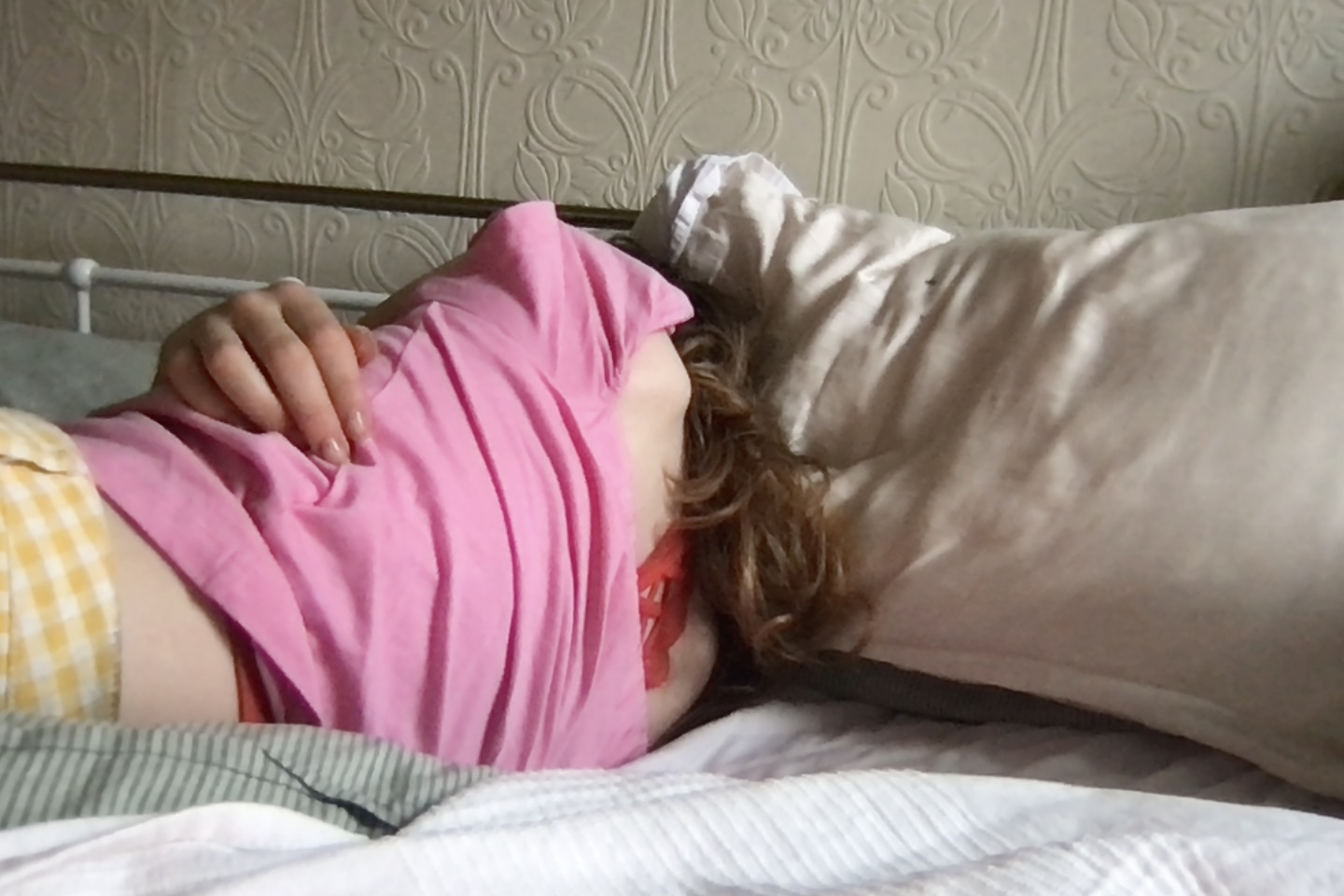
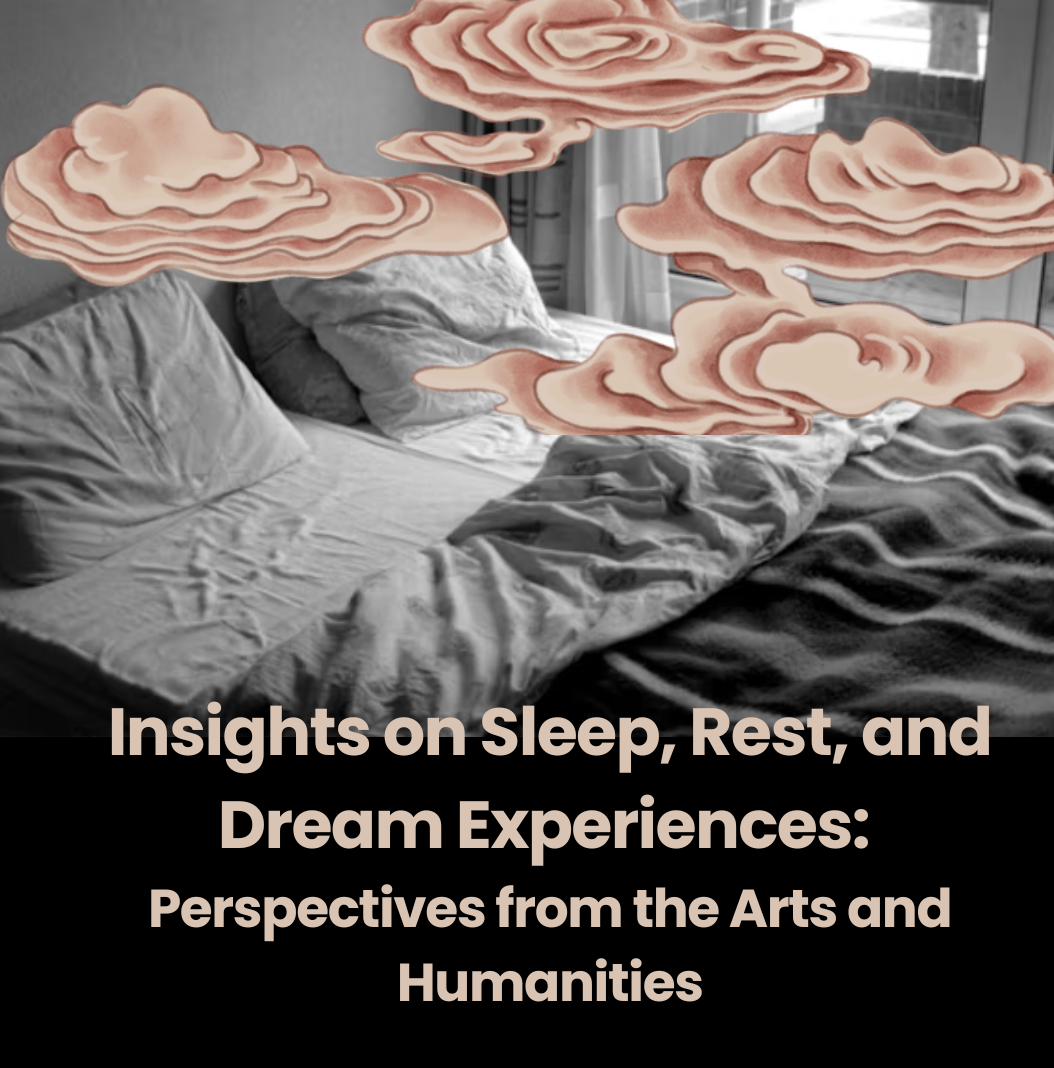
Cover picture: https://unsplash.com/es/fotos/una-cama-se-deshace-cerca-de-una-ventana-mbvHui7I5KQ [Digital alteration by Adriana Alcaraz Sánchez]

The event is supported by the Susan Manning Workshop Fund from the Institute for Advanced Studies in the Humanities (IASH) and is jointly hosted by IASH and Project Somnolence.

Register herehttps://www.eventbrite.co.uk/e/insights-on-sleep-and-rest-perspectives-from-the-arts-and-humanities-tickets-1349784053439?aff=oddtdtcreator

1993: the birth of the Web

Daily writing prompt
Share what you know about the year you were born.
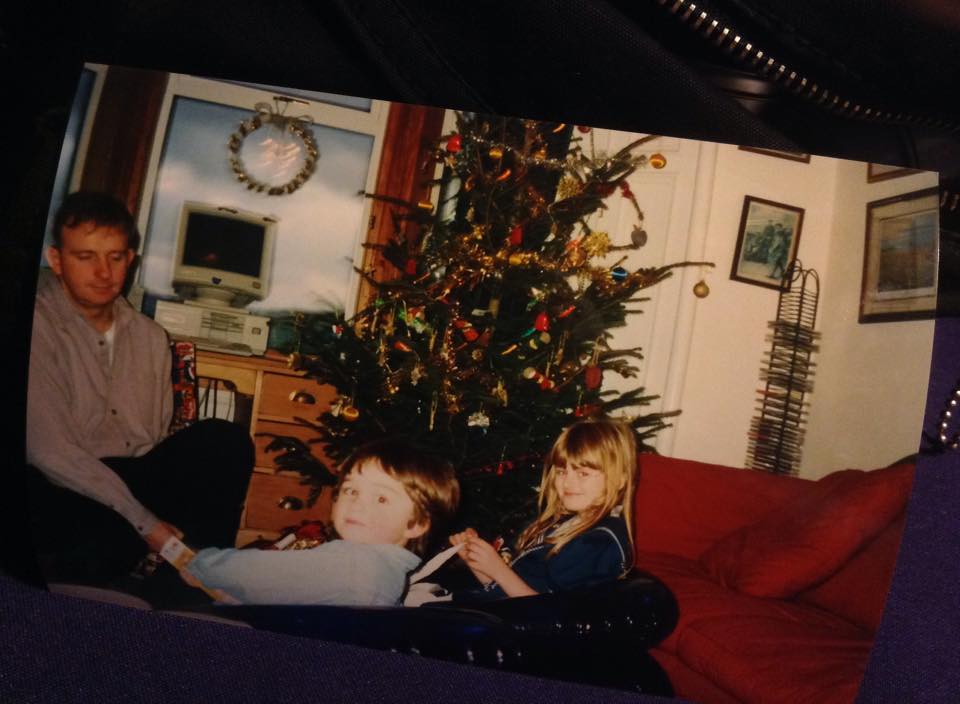
My dad, brother and I at home in the 1990s, overlooked by a magisterial PC

In 1993, the World Wide Web was released into the public domain. There are many histories of the internet and this one is pretty idiosyncratic. I like asking people when they got their first desktop computer. The internet of 1993 could be navigated through bright blue hyperlinks and you would drift between websites. You would type stuff into AskJeeves and have no idea what to expect. At school we had a ‘passport to the Web’ certificate that could be obtained by completing numerous training activities on a twee little software whose name I forgot. It was something like ‘CyberKids’ though surely that is a New York City raver subculture from a time not yet captured by the sleazification of all things indie 2000s. I imagine it was superior to the present Cyber Security Training on offer, in which actors pretend to discover pen drives in the street, gleefully insert them into work desktops only to find their screen literally blowing up in front of them. Nowadays, cyber security training is less about don’t talk to strangers and more about change your passwords regularly. I have a lot of floaty metaphors for the password changing which seem to all include underwear or car parts. Passwords though are pretty boring, clunky things but they’re also gauzy ephemera. Pieces of secret unlocking. Recently I spent an entire Sunday trying to unlock a 2011 MacBook. The password, when I found it again, accessing the deepest recesses of abstract memory, was unforgivably cherishable. I’ll keep it forever like a pet (I’ve already forgotten it).

I keep thinking about ressentiment as a sensation produced by the internet. I mean the internet’s failure. When I was a child, I adored the internet. Once we’d upgraded from dial-up, I would spend upwards of 12-14 hours almost nonstop on forums, games, LiveJournal, websites. I gravitated naturally from the virtual worlds of the Game Boy to the bigger screen of the laptop. Before I was even allowed internet access, I would simulate them by making endlessly complicated Powerpoints and Microsoft Publisher pages which connected to one another like a crude open world. I was beset by RAM crashes and Wi-Fi outages. We didn’t have broadband for a very very long time. My dad was one of the first in the village to have it. I would write letters to the broadband guy pretending to be my dad complaining about the speed of the internet. When I go back to the Shire now, I say things like ‘the internet here is ass’. I can’t get 4G at the semi-demolished and barely functioning station. We can’t find out if our train will come or not. We communicate as a brooding micro crowd, frowning and looking anxiously towards digitised screens whose flicker says only ‘delay’. There are no staff. The staff hide in a crisis. I can relate.

Ressentiment – deep hostility combined with powerlessness. The promise of an open world, a generous future, seems rotten. We hate it. It’s failed us. The sheen of that; it keeps nicking us like a pen knife writing sentences on the skin of our hard-worn feet. We can’t even quit the platforms, can we? The implied ‘we’ of a web community is now an absurdity. What have we seen of the Web in thirty years? Unimaginable horrors. Nevertheless, the perambulations continue.

Right now, I’m deeply interested in the dissonance between how we feel the internet ought to be structured, how it almost was, and what it’s become. The dream metaphors we might use for how it once felt to drift between websites, stumbling upon weirdness after weirdness, unlocking more zones of reality. This versus the algorithmic governmentality and corporate monopolies, ‘technofeudalism’ (Varoufakis) and the appification of it all. I think I got interested in poetry right around the time I fell out of love with the internet (2015). I would memorise passages of Charlotte Smith’s sonnets and learn to swoon over Keats. I felt there was something in the shifting stanzas, the intricacies of form, the dazzling surprises it produced and the infuriating difficulties of grasping the source code — a connection.

I still use the term ‘post-internet’ because I want to believe you can take what Tavi Gevinson in 2018 called ‘The utopian ideal of the internet’ and polish its ‘antiquated’ remains. You can still feel the affective charge of every Web-related signifier that has brushed your life. You can be desensitised to ‘internet discourse’ through the media proliferation of tales of digitality, its foreclosures of democracy, its moral flops, its proliferating conspiracies. But there are parts of you irrevocably brought alive by the internet. I am haunted by digital solastalgia. As a child who felt out of place, abjected from the beginning, I sought the Web as a place not for social belonging exactly but something more like beauty, information, elsewhere. I found little pockets of home all over the place. The web (I’ll stop capitalising now and step out of History) was an extension of the fictional landscapes I found in my dreams or when walking around, making up novels in my head which I did every day until I hit puberty and hormones ruined my brain forever (or whatever). I don’t really know where to find those places any more. They weren’t just artefacts and I know this because you can’t produce a screenshot of a website from 2003 and experience a sweet pleasing nostalgia in the way you could with say, a beanie baby. It was something about the world of it all, the navigation, the desire paths forged to get there. The post-internet, for me, is a lifelong quest in understanding that melancholia and homesickness of what comes after. What do I do with the feeling of ‘we can’t go back there, where do we go now?’. All this time, have I used the web itself as some elaborate metaphor for wanting more than a hostile, futile reality? It’s why I like infrastructure, databases, libraries: the promises of systems which take you somewhere. Which transit something. I also love loops, links and non-linearity.

What was the poetry that got me into poetry? It was Romantic in flavour, sometimes in era. Something between the locatedness and dislocatedness, the attention to daily life, the catapulting scale logic of the sublime, the dogged attempt to render the brain on Nature, the melancholy and mourning, the quiet adoringness, the slow accumulation of elements, the sense of quest, pilgrimage, the unexpected visitor at the door. The everpresence of something more mysterious than could easily be folded into waking life. The delicious fug of opium and promise of a language capable of killing pain. The shimmering excess. The imaginative extremities and morbid dullness of Romanticism were necessary supplements to what the web had done for my childhood.

I’ve been dwelling on this quote awhile, from a Spike article about ‘What’s after Post-Internet Art?’:

The technoromantic reimagines posting as liturgy, algorithms as messengers, and artists as saints. They reach into a glorified past for motifs and meaning that invoke the aura of life before memes.Their aesthetic flirtation with the materiality of technology is a double-edged sword, however, that blurs the lines between critique and commodity fetishization. The stakes for this ambivalence are high at a time when capitalist technology is threatening human dignity and agency. Do we really want to engender an emotional attachment to the internet?

Is the function of art to engender the emotional attachment or to transmute its energies into something other? In my day job, I spend almost a whole day a week dealing with academic misconduct cases relating to the plagiarism and hallucinations of Generative-AI. I am supposed to come up with ethical and interesting ways to engage new technology in the classroom, but I fantasise about whole server forms blowing up or quietly being sucked back into the toothpaste tube of Silicon Valley, as if none of this ever happened. At the same time, with two close family members currently undergoing heavy duty cancer treatment, I marvel at the wonders of modern medicine. I think about what Tracey Emin said when asked by Louis Theroux what she thought of AI, or whether there was room for AI art in the world. She says ‘thanks to robots […] that’s another reason why I’m still sitting here’ [presumably due to AI’s role in innovations in cancer treatment and her own recent experience of this]. She’s also like, ‘In terms of art, AI doesn’t really sit well with me, especially when I’m a compulsive, passionate, hot-blooded person who paints’. The contradictions of my feelings about machines get more extreme by the week. I feel born into this contradiction. It’s maybe why my former work twin Nigel would always leave old copies of Wired at my desk.

Does all poetry written after the ‘post-internet moment’ also risk the commodity fetishisation mentioned above? Insofar as it betrays its own lovingness towards the technology it otherwise seeks to critique? Do we want an archness of superior distance or can we do something else with that self-awareness? I think the affect touched upon by Kat Kitay’s piece in Spike is Romantic irony, you know when you realise the narrator is caught up in the situation being described. The Romantic poet speaker discovers they are also a character in the poem. There’s a kind of turn. Timothy Morton uses Blade Runner as a classic example of this, you know when Deckard realises he’s a replicant. Being asked the question, what do you know about the year you were born, for me is like being asked what do you know about what happened to the web? My life is a character in the web’s and the web is a character in my life. What’s the poem here? The continuous mess of everything enmeshed, written, performed, dialogued, deleted, drawn and coded in my lifetime. I have a hot-blooded relationship to the internet. It makes my fucking eyes twitch.

Is transmutation an alternative to merely engendering feeling? I like the word transmutation because I learned it from the great poet Will Alexander. It’s also used by Ariana Reines a lot. We’re thinking here about alchemical transformations in the realm of language, feeling, sensing. I want a poetry that is able to metabolise impossible feelings and in doing so, fuel its reader to think anew. Do I reassign the pain of childhood, the loss of some otherworldly dream, onto the external scapegoat of an enshitified internet? Is that okay? I think about all the times our art teacher made us sit at PCs unconnected to WiFi writing about the design of vintage radios and speaker technology. We had no access to books, the web or other resources to find out more about the designs displayed to us. So in lieu of history or context, we wrote acute, proliferating descriptions of what we saw. What it reminded us of. We found endless vocabularies for edges, colours, surfaces, affordances. This mind-numbing two hours a week was a little oasis from digital supplementarity. A cool, replenishing retreat from external stimulation. We sat on hard, tall stools and typed on clacky keyboards. A tiny little art factory. I had only my brain and the image. I didn’t know it at the time but I was learning that ekphrasis can have a communicative and transformative function. I wrote through the notion of writing about radios to escape the moment where I was supposed to be writing about radios. This did not prepare me for my Art & Design exam so much as it prepared me for poetry.

What do I do with my hatred of the internet? My yearning for it? I write poetry because poetry is a cheap form of that dream architecture I so longed for, all of my life, and I felt good making/using/playing. Marie Buck has a poem that says ‘The point of reading is asynchronous intimacy, and hopefully it works forever’. I said this to my colleague Rodge last week, when we were having one of our regular moments of private despair, and he prints it out and now it’s on the wall of my office. When I look at it I think about all the books out there and all the interesting things I’ve read on the internet and how connected I feel to other worlds. I just have to keep that connection going. I will never know what it’s like to have not been online.

Records I listened to in 2024

Okay music this year was weird for me. I liked things where the lyrics were meltwater into guitars and my ~spotify wrapped was all obsessively listened same songs split geode feelings. Exclusively masculine guitar bands with the exception of Brat (top 5). I too am the virus. Maybe because it rained nonstop all year in Glasgow, even with my heart split with California it made so much sense to listen to The Natural Bridge on loop and felt that bridge would cross the ocean. It was the bridge in the song and the bridge of the ocean. I kept thinking about high-singing shoegaze sirens and lay in the mud during a Mogwai gig. Songs about blues and magic mountains and lucifer and love and sympathy and blood and fluoresce and dallas and golden days and dreams and strawberries and tiredness and june and miracles. Seriously I know 2024 was music gossip and humming cancellations and virality blown up to chromatic ontology but (here I want a line break) I just wanted to be stoned at the claire rousay gig forever. And that was my music.

<cue sparkly tambourine>

“Come talk to me about it outside”

Thought about taking a searing breath onstage and how long til it heals?

[Shane Lavers’ shriek]

“Then there was this weird music video that popped up in my complaining featuring jelly sparkle heels and the message was about destroy your cloud with new CD-R storage capacities! and there was this song from the early 2000s and in the music video you could walk around with big yeti slippers

and this really horny barbie song set in a swimming pool which honestly just sounded like goats but was visually orgiastic & gauche 

guess I blame the pseudoephedrine!”

Winter – shoegaze, e-girl
Spring – folk, emo, concrète
Summer – jam bands, indie rock, hyperpop
Autumn – alt, slowcore

Jazmin Bean — Traumatic Livelihood

Kim Gordon — The Collective

DIIV — Frog in Boiling Water 

Waxahatchee — Tigers Blood

Julia Holter — Something in the Room She Moves

The Lemon Twigs — A Dream Is All We Know

Bladee — Pyskos 

Four Tet — Three +

Grace Cummings — Ramona 

Vampire Weekend — Only God Was Above Us

Pearling — Lovelocket

claire rousay — sentiment 

Billie Eilish — HIT ME HARD AND SOFT 

Charli xcx — Brat 

Dr. Dog — Dr. Dog 

Clairo — Charm 

Bella White — Five for Silver 

Chanel Beads – Your Day Will Come 

Loukeman — Baby You’re a Star 

Phish — Evolve

Kelly Lee Owens — Dreamstate

SOPHIE — SOPHIE

LI YILEI — NONAGE 

claire rousay — The Bloody Lady

Asher White — Home Constellation Study 

Porridge Radio — Clouds in the Sky They Will Always Be There For Me 

Horse Jumper of Love — Disaster Trick

Papa M — Ballads of Harry Houdini 

The Cure — Songs of a Lost World

Magdalena Bay — Imaginal Disk

070 Shake — Petrichor

Horse Jumper of Love — Disaster Trick

201520162017, 2018201920202022, 2023

hmu if there’s stuff you think I missed……………………………………

xoxo

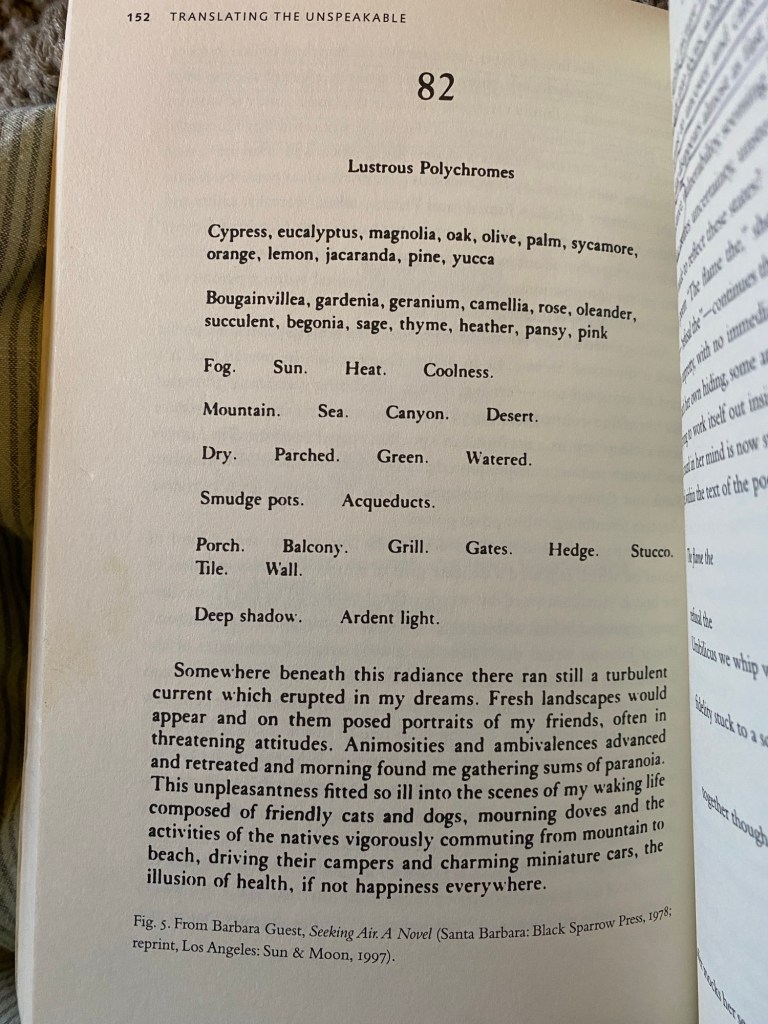
Lustrous Polychromes

Rereading Kathleen Fraser’s Translating the Unspeakable: Poetry and the Innovative Necessity (2000) in preparation for some teaching this year. Stumbled into Barbara Guest’s dreamscapes. How much does emotion colour your dreams? Sometimes such residue feels the longest hours beyond. How often a day’s blue tint, whose dream was responsible? I live in Sunday celadon. I love you. Ardent light.

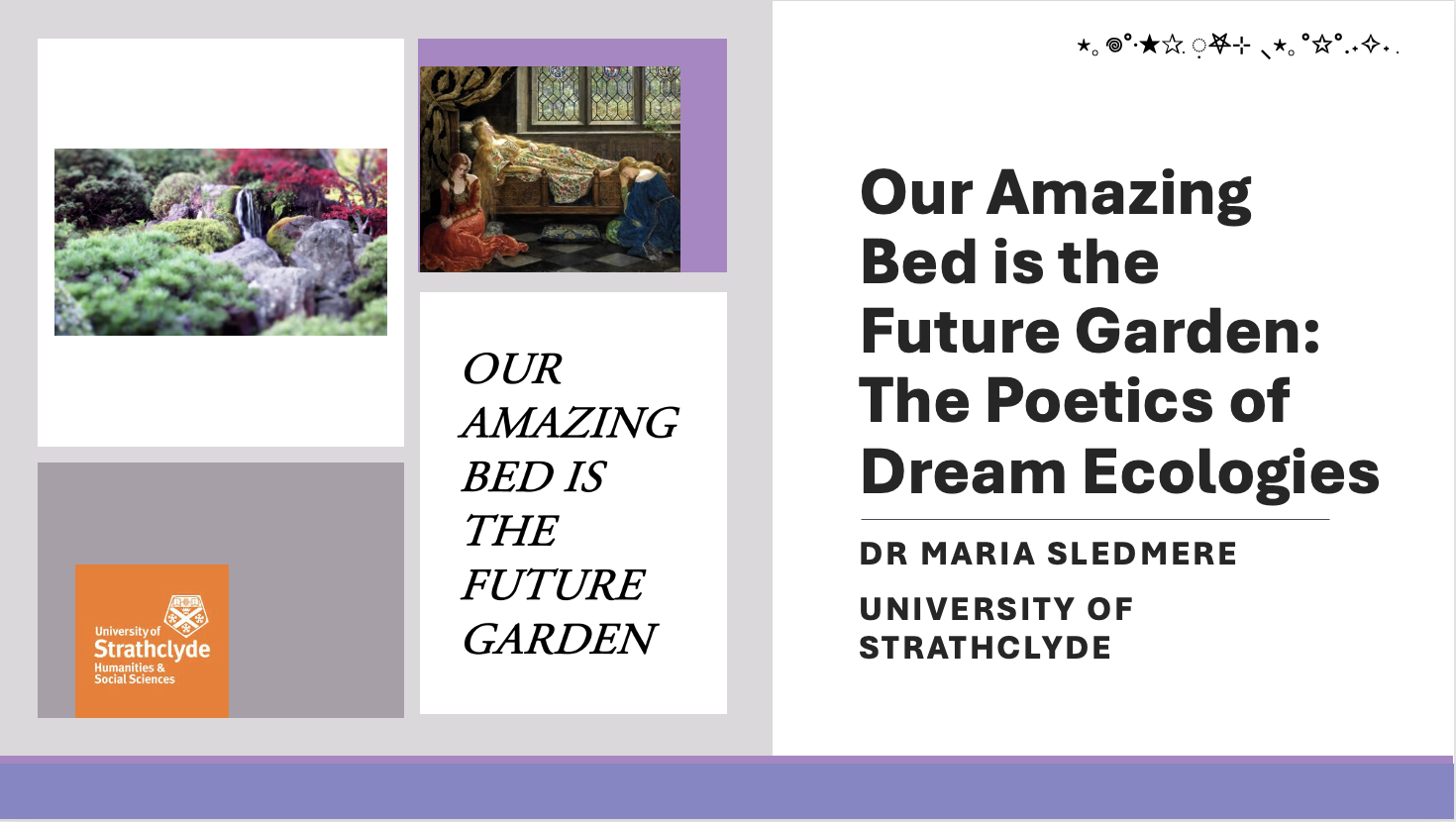
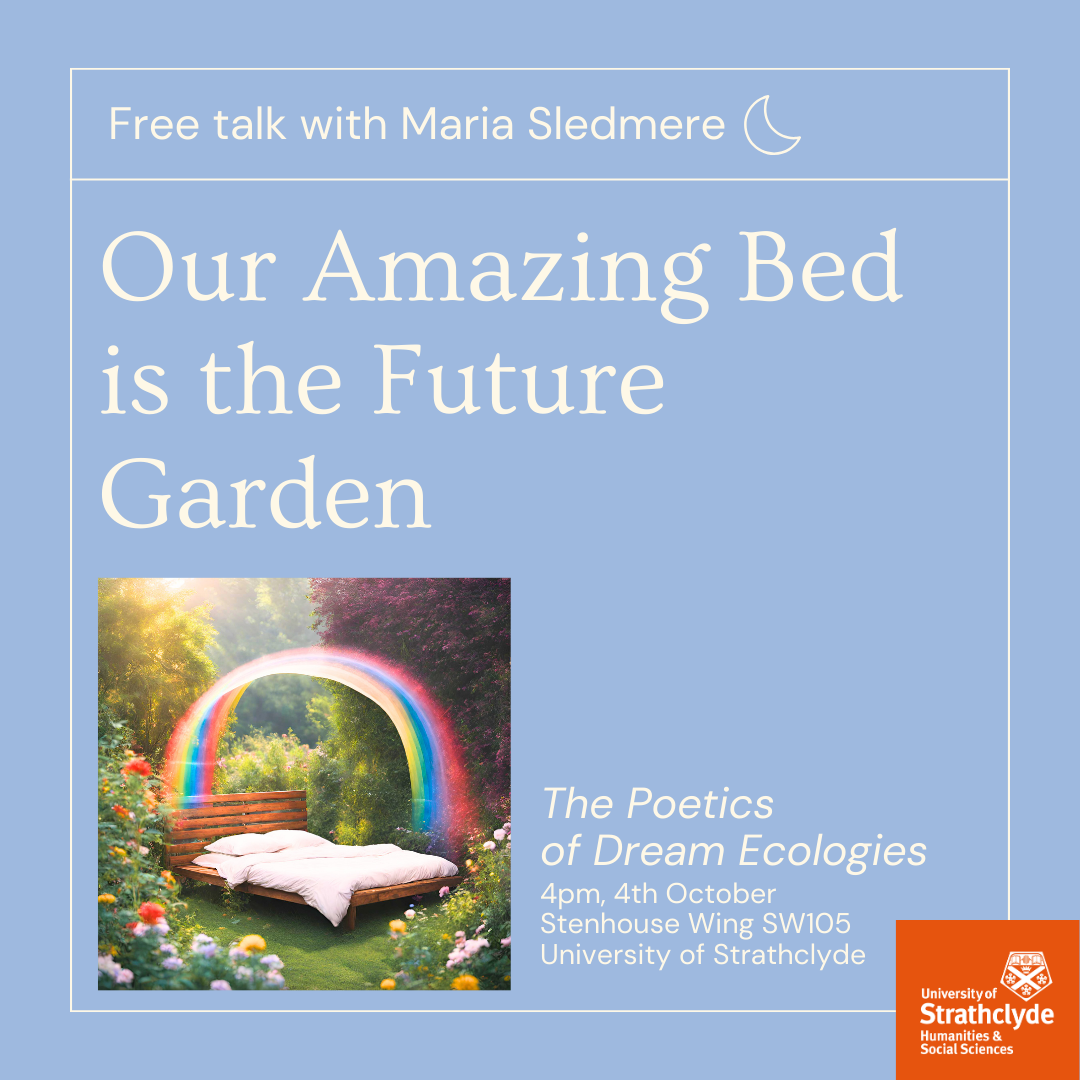
Our Amazing Bed is the Future Garden: The Poetics of Dream Ecologies

This performance lecture takes flight from the shape of a question: what is the relationship between poetic language, sleep and dream in the anthropocene? Combining poetry, journaling and critical inquiry towards the ecologies of sleep, I will consider how dreams may be the site of impossibility, drift and low-carbon pleasure in a time of ’24/7′ where, in the words of Jonathan Crary, our ability to ‘daydream’ is blocked by a constant barrage of the internet’s attention economy, the demands of late capitalist labour and ongoing crisis. Taking this as a serious political disempowerment, I look to writers whose work alters the ‘operating speed’ of daily life to make room for dreaming otherwise. Exploring the formal interventions of writers within feminist, New York and Language schools, I focus on how these works tend the unruly future garden through daily reclamations of dreamtime. If many of us are at surge capacity, how might poetry attune to various kinds of ‘slow violence’ (Crary) which often go hidden in mainstream narratives of extinction and climate crisis? How might poets borrow from the logic, content and impulse of dream to offer alternative visions of coexistence, commoning, time and compassion for other species?

Recorded at the University of Strathclyde’s Department of Humanities Seminar Series, hosted by Charles Pigott and Hannah Proctor, 4th October 2023.

Upcoming Sleep Curricula

My research currently centres on sleep as a nexus for thinking about energy transition, low carbon pleasure and chronodiversity (the way our circadian rhythms differ).

Tomorrow I’m giving a talk titled Our Amazing Bed Is the Future Garden: The Poetics of Dream Ecologies. It emerges from a chapter in my DFA thesis which will form part of a book forthcoming with NoUP Press next year. If you would like a Zoom link please drop me an email at maria.sledmere[at]strath.ac.uk.

This autumn I’ve got three upcoming workshops, two of them with the brilliant experimental composer Kevin Leomo.

Civil Twilight: Carving Dreamtime – workshop with Kevin Leomo and Maria Sledmere
14th October at 5:30pm, Civic House, Glasgow

Get your brain sticky in the pumpkin meat of the circadian and join Kevin Leomo and Maria Sledmere in carving dreamtime as an expression of creativity and low carbon pleasure. As the nights draw in and the clocks go back, we’ll be thinking about how darkness affects mood and slumber. Civil twilight is the brightest of the three twilight phases, where stars and planets might be seen in the sky as the sun dips just below the horizon. By attending to the ‘nocturne’ as a form in poetry and music, we’ll dwell in the possibilities of liminal experience for cultivating ecological imaginaries.
Please bring: Preferred writing materials, If you have one, a reusable coffee cup, headphones and phone.
Tickets are offered on a slide scale: £15 / £10 / £5.
Part of Civic Harvest at Civic House – an Autumn themed day of family friendly activities, workshops and market stalls with lunch from Parveen’s and seasonal cocktails at Civic House Bar!
Tickets

😴

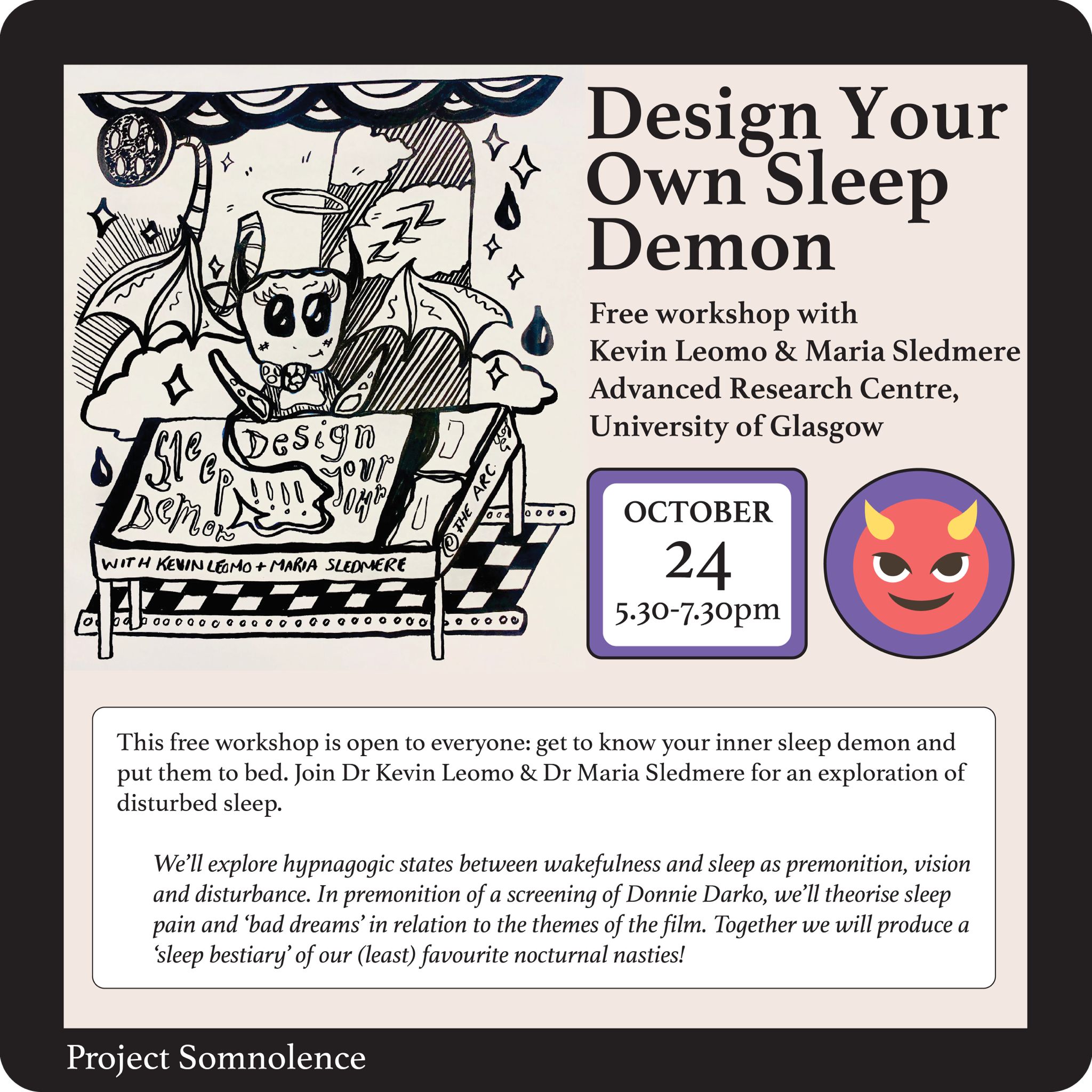
Design your own sleep demon – workshop with Kevin Leomo and Maria Sledmere
24th October at 5:30pm, Advanced Research Centre, University of Glasgow
While sleep is a source of rest and recovery, many of us wrestle with disturbed sleep. If you’ve ever had nightmares or found yourself sleepwalking, you’ve encountered oneirodynia. The word comes from the Greek oneiros, meaning ‘dream’ and odyne, meaning pain. Sleep disturbance may be caused by a number of factors: from stress to stimulants, environment, illness and temperature. The eponymous protagonist of Donnie Darko is often found sleepwalking or experiencing some kind of nocturnal anguish. In this workshop, which serves as a primer for the film’s upcoming CinemARC debut, we’ll explore hypnagogic states between wakefulness and sleep as premonition, vision and disturbance. Together we will produce a ‘sleep bestiary’ of our (least) favourite nocturnal nasties, and present our findings before the screening on Friday.

Tickets

😴

The Poetry of Somnolence – weekend double workshop with Maria Sledmere and Beyond Form Creative Writing
11th and 12th November at 1-4pm (GMT), Zoom

This 2 part series of afternoon workshops prioritise the relationship between writing and sleep. Exploring cross-genre writing, visual and sonic art, we will look at how daily writing practice can recentre our circadian rhythms. From hypnagogic poetics to dream writing, nocturnal missives, dawn songs and notes on twilight, we’ll consider experimental approaches to writing somnolence. All creatives welcome.

Workshop format will combine reading, writing, listening, optional discussion and two nap breaks.

Tickets

Kevin and I have also been working on this somnolent playlist for your melatonin delectation:

Infinity States: The Palace of Humming Trees

A few weekends ago marked a whole year since my exhibition with Jack O’Flynn, The Palace of Humming Trees, curated by Katie O’Grady. It was the height of summer, electrified by lightning storms and rain showers which sent the city streets flooding my ankle boots. I sat in the exhibition watching the auras of animals, drifting in and out of presence, doodling, planning short fiction I’d never write. The rain came down through the ceiling, just a little, and caught in a bucket. I texted in streams.

Something of the exhibition magicked itself into existence. We were all ’93 babies. Making things happen felt so easy. There were synchronicities and invincibilities. When Katie and I hung out at Phillies, we won the quiz. Jack and I wove this hyperplane of fantasy from the gestures of clay and line, whittling and glitter cast wide across floorboard and spiderweb. It was a strange time, the summer of 2021. I was also partially in the numb haze of grief. There was a delta wave but not like the deep sleep of the sea. People brought champagne and flowers to the opening. I wore a long white dress and wished the days were as long as they used to be. The Earth spins too fast.

Partly I wanted to write in the choral voice of many creatures speaking to one another. The process felt like a lyric surrender to this collective, their hyperintelligence of humming and stammer that spoke through pores, chitin, liquid. I don’t know where they learned all this. There was a sun virus in the emails we sent the summer before it. Time freckled on my arms. I could draw out the muscle ache from cycling more. It was possible then.

Anyway, about this experience of writing. A porous voice. Here’s an artist’s talk from a recent conference.

First delivered at Hear them speak: Voice in literature, culture, and the arts
10th June 2022

K Allado-McDowell, ‘And they showed me that their life was a pattern of hyperspace’

Who might be the ‘they’ in K Allado-McDowell’s statement? Taken from Pharmako-AI, published in 2021 and the first book to be co-authored with the neural network GPT-3, a system trained on extensive web data (from Google Books to Wikipedia), the quote suggests voice, presence and identity are questions of patterning, replication, weaving, plurality. Recurrent in Allado-McDowell’s book is the figure of the spider and its web, in a kind of constant movement like thought itself.   

I was travelling north on a train when I began writing The Palace of Humming Trees, a book-length exhibition poem which forges energy fields of dreamy relation between many species of animal, mineral and element. Late spring and the fields I could forget about, texting myself more poem. The motion of the train according inverse to the downward scroll of the document. All the while seeing spiders in the corner of my vision, emitting great clots of silk. Commissioned by curator Katie O’Grady and made in collaboration with the artist Jack O’Flynn (both from Cork, Ireland), the exhibition was to offer something of a ‘hyperspace’ to its viewers: somewhere in which voices coalesced, formed new modalities of being and relation, new webs. In a Tank Magazine interview with K Allado-McDowell, Nora N. Khan notes that hyperspace ‘is an abstract space in which we perceive patterns of information and then shape them in language in order to communicate’. Having a big, serial and open field poem adjacent to visual work premised on bold, ecstatic colour and texture was to perform multiplicities of voice within an otherwise abstracted work. Inspired by Timothy Morton’s ideas of ‘dark ecology’, adrienne maree brown’s ‘pleasure activism’ and Ursula Le Guin’s ‘carrier bag theory of fiction’, I wanted to think about that communication as a form of attunement through which we gather, desire and coexist as ecological beings. 

In The Palace of Humming Trees, the lyric voice is taken as that trembling spider silk assembling worlds. Spider silk is a protein fibre which embodies the inside of the spider woven on the outside for shelter, cocoon, courtship or the trapping of prey. It’s five times stronger than steel and is now being synthesised to make everything from body armour to surgical thread and parachutes. I began imagining the twangling of droplets on silk strands as the visualisation of a deep vibration, perhaps the wood wide web – something humming in and between trees. The world of the exhibition was inspired by the Irish folktale, The Hostel of the Rowan Trees, also known as Fairy Palace of the Quicken Trees. In the story, trees of scarlet fruit provide refuge, but the fruit itself (the quicken berries) are highly desirable to the point of despair. The rowan was brought from the land of promise, and its berries offer rejuvenation. With these symbolic undertones of danger and desire in mind, we wanted to explore a mythic ‘palace’ which merged the digitality of hyperspace with the organic textures of woodland and the chromatic intensity of dream, fantasy and ethical relation.

At the heart of our project was a notion of infinity. Hyperspace suggests that our ecological sense of world, surrounds, habitat, umwelt is always being reassembled. I wondered if infinity could somehow be voiced in a way that wasn’t just postmodern recursion or echo. What does it mean to be open to a state of infinity? To let many worlds pass through you all at once, making diamond-like instants and gossamer patterns of prosody? 

Infinity became our figure for ambience. As spider silk is densely structured, and the neural net densely layered, so the notion of ambience captures, in Brian Eno’s words ‘many levels of listening attention’. To walk through the door of The Palace of Humming Trees was to enter a portal of multiplicity. You could take any route you liked around the room, moving between sculptures of hyperfoxes and sparklehorses, lichenous forms, ceramic butterflies of psychedelic hue and illustrated groves where trees shimmered green, orange, purple and blue. You could also scan a QR code and choose to listen to a recording of the poem, voiced by Jack, Katie and I and accompanied by Dalian Rynne’s sonic dreamscapes. To hear something ‘humming’ is to sense its presence, even if you can’t wholly understand it; humming implies electromagnetic vibration, birds and bees, a weather event or tectonic movement. We weren’t interested in translating the more-than-human voice so much as bringing it into the forcefield of lyric poetry, and through that expansive patterning achieve ‘infinity states’ of reassembled meaning, of felt experience that could not be crystallised into singularities of being. Visitors took pictures, sketched Jack’s sculptures, ran their fingers through the luminous plaster dust, placed to highlight the debris or excess of our clay animals. Something always in the process of creation or decay, incomplete. Corporeal, yet infinite. 

One of the many voicings of this project was Letters from a Sun Virus, a correspondence between Jack and I that occurred over the first Covid lockdown, documented at the back of the exhibition book. While the email exchange had distinct senders and receivers, the you and I, over time in collaborating and sharing work between the visual and textual, our voices were beginning to mingle. Sometimes this co-voicing was painterly; other times musical, inflected with the characteristic intonation and energy of our respective speech patterns, moods, expressions. An entry from April 2020 reads: ‘…the wateriness of the poem. I had completely forgotten about all that blur. It’s like all the brush of the ocean and one which seems the idea to spill that way. Almost like a pressure, lines that go on and hair turning into the sea, each one of kinetic energy then finds all these points’. To assemble the correspondence for publication, I plugged it through text remixers, copying, pasting and rearranging phrases to enhance that sense of two voices repatterning one another. A ceaseless quest for points; for elements acting upon objects, emotions. Denise Riley has written of ‘inner speech’ as a strange oxymoron, where one hears voice at the moment of issuing voice inside us – a kind of running commentary that hums without actually humming. The letters suggest a kind of inner voice infected by the anticipated response of the other, rendering intimacies of collaboration which form a sticky substance, sentences and mobius formations holding time’s play and repeat – ‘Unending loop of my dream resins / not to complete the palace infinity of these trees’. Imagining the many of them speaking.

In Texts for Nothing, Samuel Beckett writes:

Whose voice, no one’s, there is no one, there’s a voice without a mouth, and somewhere a kind of hearing, something compelled to hear, and somewhere a hand, it calls that a hand, it wants to make a hand, or if not a hand something somewhere that can leave a trace, of what is made, of what is said, you can’t do with less, no, that’s romancing, more romancing, there is nothing but a voice murmuring a trace.

To ask whose voice in The Palace of Humming Trees is to hear sound bouncing as light, romancing, refracting in what Katie, the curator, calls a many-panelled ‘vivarium of humming thought’. To say ‘there is no one’ is to declare at once absence and the impossibility of presence as a singularity, there is no ONE. What if voice was infectious, modular, sporous, erotically charged, in common? Early in the project, I had this conversation with Jack where he told me that sometimes in the process of sculpture, he’ll try turning something upside down, or inside out, to revitalise the work. Make it strange or more-than. To sculpt by hand is to ‘leave a trace, of what is made’, and to write is to leave a trace ‘of what is said’. I wondered if the inner speech of the lyric ‘I’ could be turned inside out, to be exposed to the grain, the noise, the weather. A voice that touches is and is being touched, traced, smudged. I imagine this book as a glasshouse, somewhere between inside and outside, shelter and exposure; a chamber music of alchemical voicings, always repatterning, transforming each other. Sound and light. A place of invitation, ritual attention, metamorphosis. Many selves stuck to the web of a visual, expansive language. 

Hyperfox – photo by Sean Patrick Campbell (French Street Studios, 2021)

Cowboy Gardening

It was supposed to snow in the night and the not snowing was sore as a missed period. I awoke with two crescent-shaped moons in the palm of my hand and thought of a sacrifice unwittingly given in dreamland. Said Jesus. Peridot phlegm and the scratchy sensation, knowing that speech too could be cool, historical, safe. Could not see beyond pellucid rivulets, Omicron my windows, my streaming January. January 

streams from every well-known orifice of the world. Its colour is shamelessly stone. I seem to be allergic to inexplicable moments and so keep to the edge of the polyphony of yellow. I am cared for. The Great Barrier Reef dissolves in my dreams the substrate of yellow. It goes far. Pieces of the GBR are washed ashore in Ayr, Singapore, Los Angeles, Greenland. I go to these places by holding a polished boiled candy in my mouth, like the women in Céline and Julie Go Boating. My ankles licked by truest shores / but January didn’t fucking happen. 

Put together the orange-purple rose, your possible outcomes are red or gold (if you are lucky). Two reds together, with the golden watering can, could result in the rare blue rose. A novel rose. Black velvet roses grow in the old woman’s garden because she has infinite time to tend them. I’m not saying she’s immortal, like the Turritopsis dohrnii jellyfish; only that she doesn’t exist in our time. It’s rude to assume so. I’m not saying the lines of her face are asemic writing — nobody did that to her, or scarred her. She’s not scared. She just lives and dies all the time. She waters the roses.

Sometimes I imagine her in fisherman’s clothes, in meshy nightclub outfits of neon flavours, in extravagant ballgowns, blue boilersuits. Sometimes I’ve seen her before. The only way I can see her is to climb a few steps on the ladder by the village store, its red paint flaking, and I hang my body upside down the other side, risking exposure. I never eat before doing this. She doesn’t see me; she doesn’t see her roses either, not the blooms. In the village, people walk around with handfuls of rose seeds sometimes strung in little hemp bags. These are the currency of care. I have tended the young with haircuts and watched the flourishing of teenage roses. They say I am an old lady in the garb or garbage of former actresses. I hear them sing to me their stories. “Remember 
she shot the guy who brought the astrograss”.
What they don’t remember, whippersnappers, is the incorrigible realism of that turf. Fuck it, 
I have done nothing wrong. I perform for them my cowboy gardening. Broadcast the surplus value of our mutual twilight. Halloween roses for everyone. Every night I wake up from someone else’s childbirth and the world is so sore, the wound in the sky the snow wants to fall through. They bandaged it with realism. I need to go far. Do you remember the last time you awoke and felt like a person?

The roses grow up in the gaps of the cattlegrid, knowing they will be trodden on. Again and again. We can’t stop them from doing this and they do it so often we have to account for a portion of Waste. Kissing you is itself a trellis. But we are propped and grown sideways with the vines strung betwixt our ribs. We are babies.

I like the tired way the roses intonate colour. The economics of the roses. Their euphemistic fetish. I tried to avow my commitment to rosehood the day I saw your calves all torn, and saw about women getting their labias reduced, and the red, blood roses sold on the internet, and rest. I lay this on your grave, the world.

My love, as a redness in our rosette
That’s newly worn in June
O my love, like the melt 
That’s sweetly played in turbines 

So fairway artery thou, my bonnie lasso
Defiled in love as I 
Will love thee still, my decade
Tinged as the seas are garlanded dry 

Tinged all the seas as thee, my decanter
At the romantic menagerie of sunset
I will luminary still, a debutante
Of the lighthouse sarcophagi 

And plough thee well, my only lathe!
And plough thee well, awhile!
And I will come again, my love
Though it were ten thousand millennium.

My love’s rose-coloured highlighter really hurt the extra-textual, and thus booked trains to bed. I had an identity. I knew what you had done to the text. Austerity of the meadow to blame for ongoing culling of kin. You are abandonable as you have always been. Saplings for pronouns.

I feel wild and sad. 

I feel pieces together stirring inside the world. Little bits of coral awake in
my throat, the shape of eight billion sun-spike proteins I was dumb
enough to swallow. It is not my fault but in my dreams 
I get product emails like, Forget-me-not
a pair of jeans, high-waisted Levi’s 
as if to wear at the end of the month 
we keep saying sorry for delay, embroidered 
our thighs with spiders
excuses to use lighters
without smoking
does it make us vectors
the warning of snow and ice still issued
from inside the snow globe of the rosehip 
changes as it withers, glass shards
pissed from acid clouds in all colours:
black, blue, burgundy, cherry brandy, coral
cream, dark pink, green, lavender, light pink,
lilac, orange, peach, purple’s timeless red,
salmon, Hollywood white & yellow, rainbow
chosen for the significant other, a masculine flower
dipped in fortified light, I’m thankful
I look good lying down, the long unconditional stem 
aka Lemonade, l-l-l-lemonade, l-l-l-lemonade…….

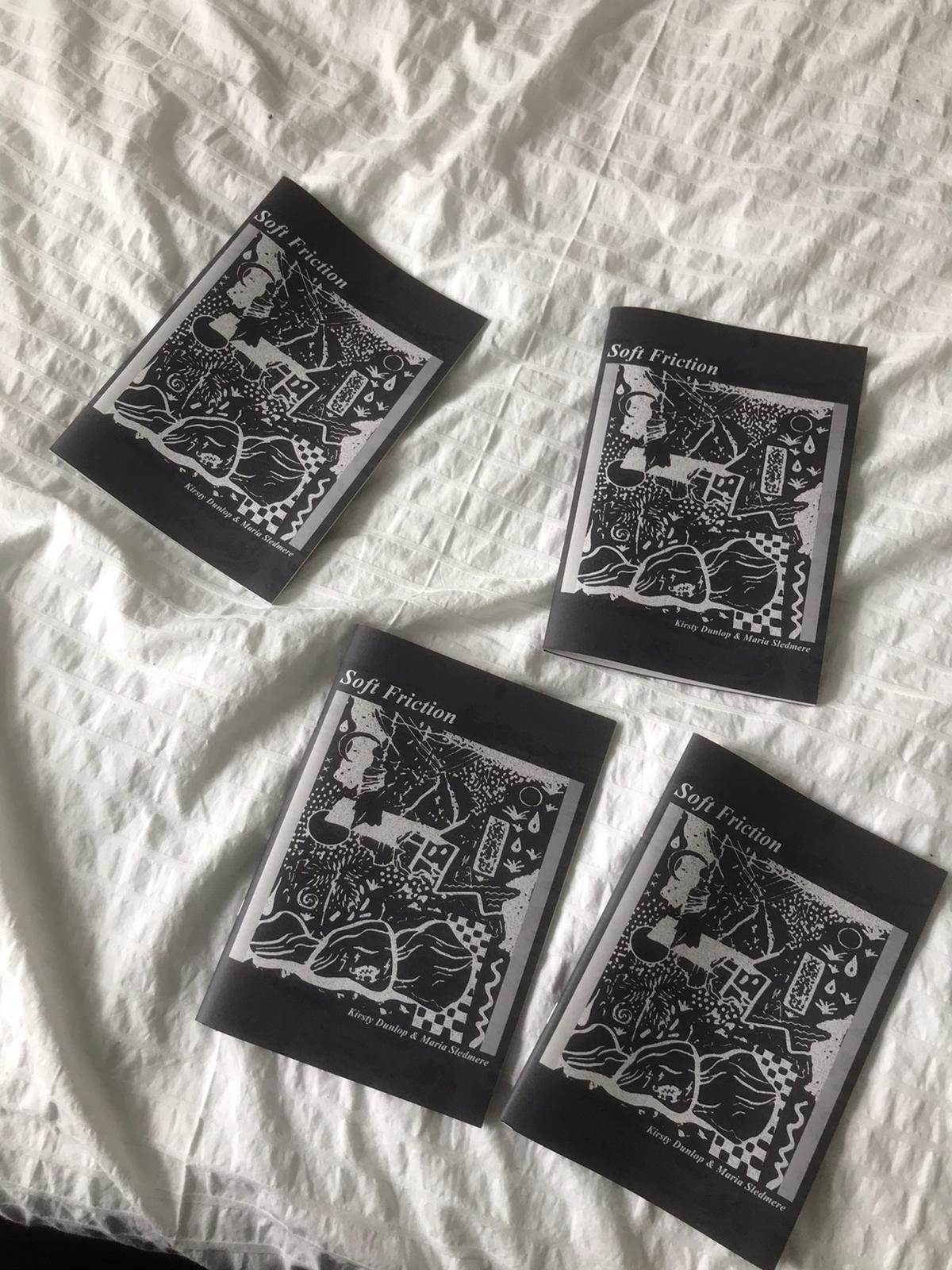
Soft Friction

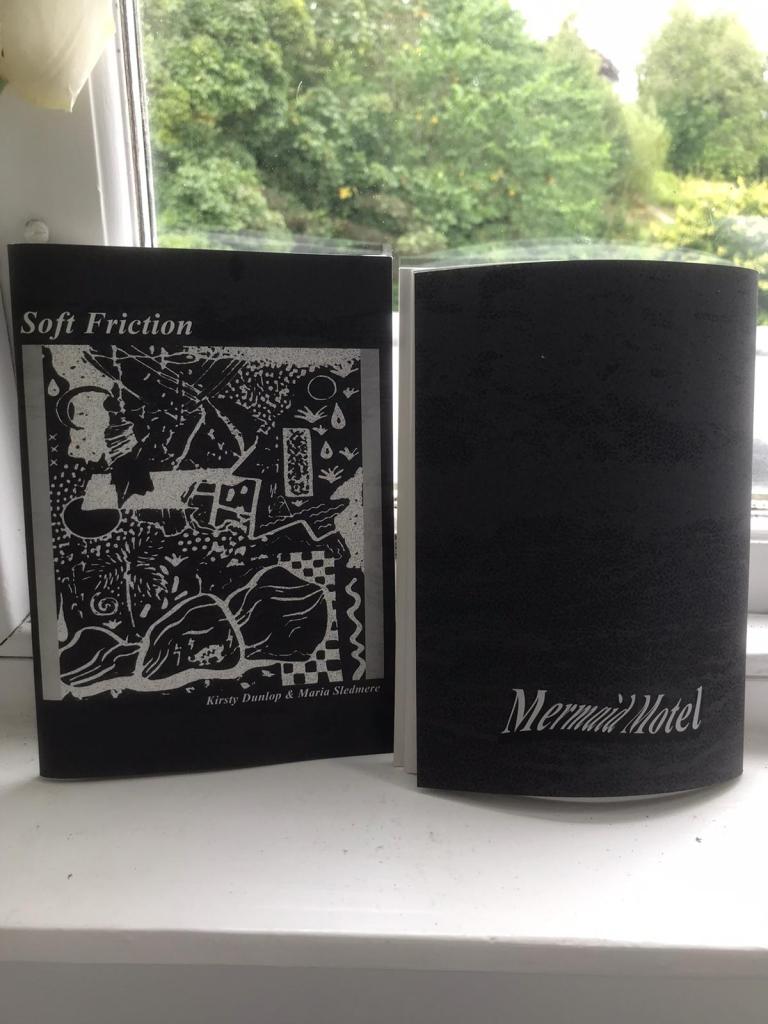
New publication: Soft Friction by Kirsty Dunlop and Maria Sledmere

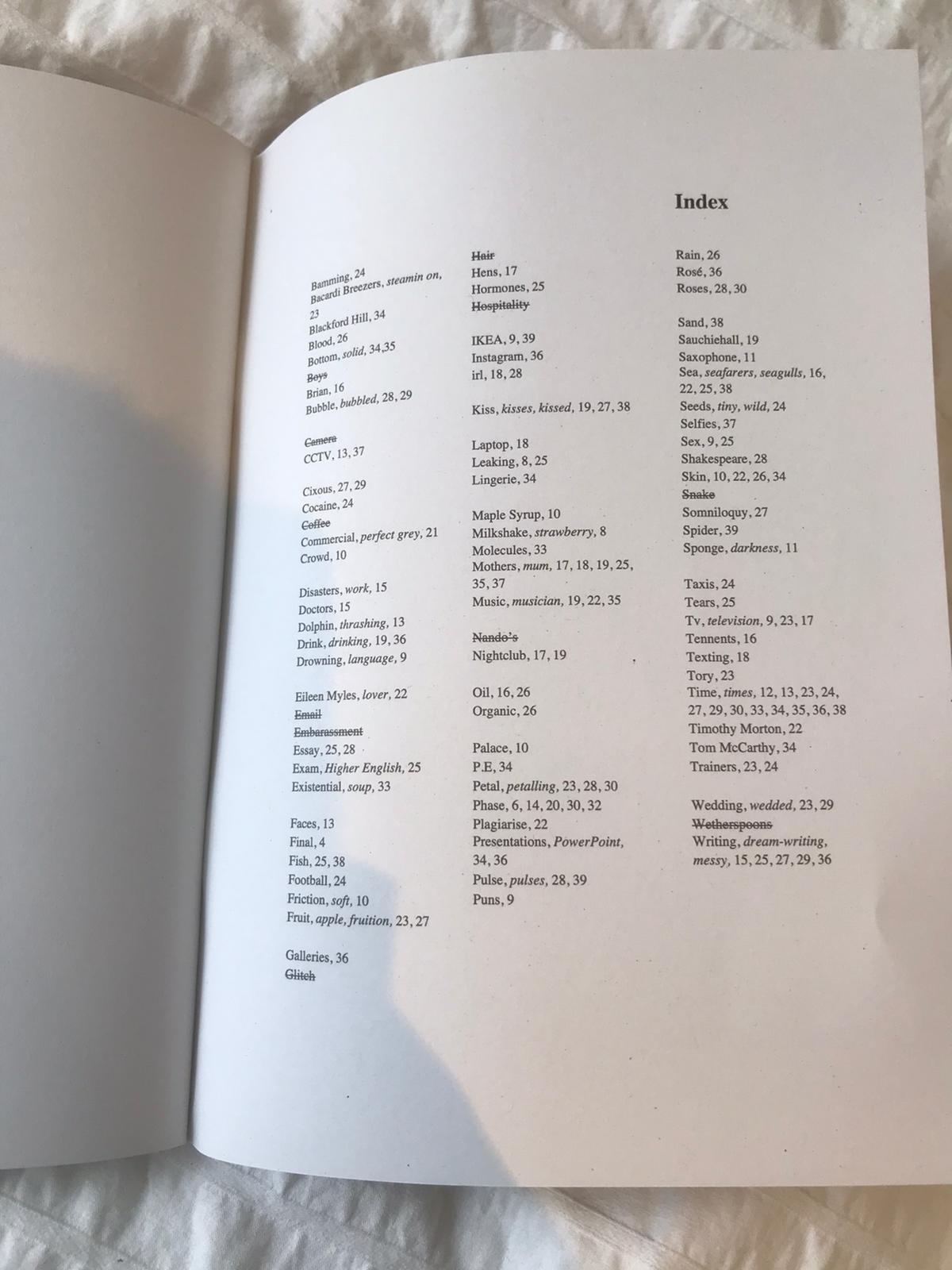
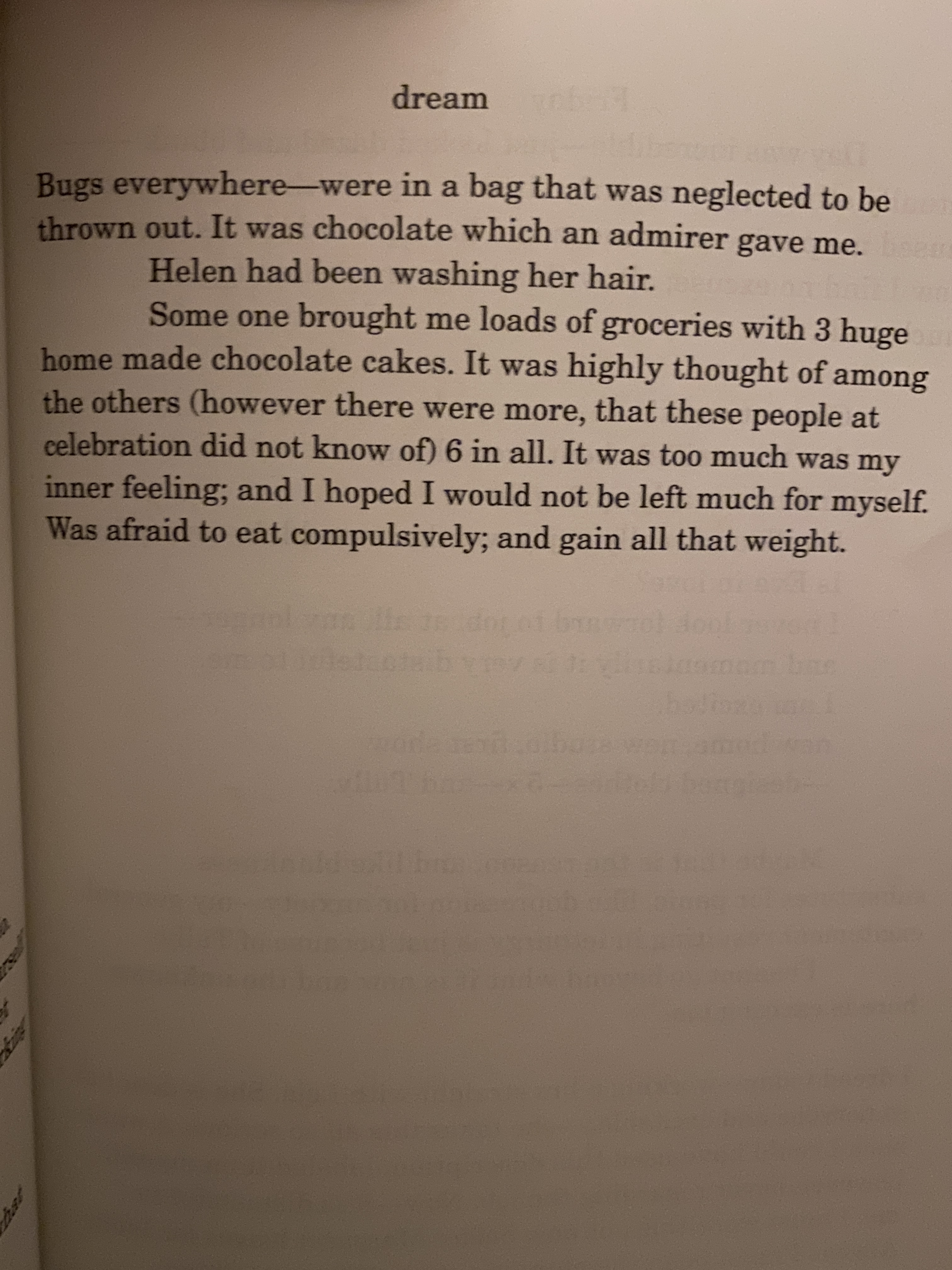
Here we present you a bundle of our dreams, wrapped in something like a rhythm, or did we mean a ribbon? Soft Friction is an intimate gathering of dreams from 2018, written during a summer of ‘existential soup’, fainting at gigs, pulling all-nighters and panic surrealism. Extracted from a longer diary, these fragments wear the sensuality and sass of an active dream life shared between two people getting high on each others’ brains. From dolphins thrashing in kitchens, to maths equations, celebrity encounters and shopping for underwear, the pamphlet runs through the four stages of sleep and wakes you with a cheeky tickle of incompleteness.

44pp (A5 B/W)
Printed on recycled natural paper 100gsm
Cover by Maria Sledmere
Published by Mermaid Motel
£5 inc. UK P+P

To order, email kirsty_dunlop[at]hotmail.co.uk or simply paypal £5 to this email with your postal address. For orders outside the UK drop Kirsty an email for postage.

Now available.