Stoned Julia 

Puts on her shoes. She’s late for work but work doesn’t occur to her. Dad called and said I’ll not be home, not the now. Dad called and said, I’m reading all of it. Dad said I’m done. I’m done with this.

Stoned Julia stops by the salon and asks for a casual shag. 

We’re out of razors, the girl says. 

Do whatever you want, says Julia. The world is moving very slowly and she will have the hair for it, pronto.

The salon has a fine selection of scissors and combs. Julia is texting very slowly the underwater pleas of a failing employee. She’s supposed to be at work but she can work from her phone. She has words for every pore in a body. 

What do you do, when you’re not looking this cute? The hairdresser says, snipping Julia’s fringe into triangles.

I make content. 

Content.

It’s kind of boring.

What kind of content? 

I pretend I’m famous and sometimes reply to pitiable men who want me. As in me, the celebrity. I am good at being not who I am.

Is the pay good? She spritzes with expert nips the front half of Julia’s hair.

It pays. 

Huh. 

Put it this way, I don’t ever wanna serve tables again. But then, you put up with some shit in the content farm, let me tell you. 

The hairdresser squints with a dash of suspicion.

Want dye? 

Is there a colour? I mean, it’ll cost more. 

What?

What do you think of me, naturally? 

You’re a mousy blonde. 

I guess. 

I mean, do you like it? 

I blend in. Nobody knows that I’m the voice of a famous — 

Can I make you strawberry blonde? It won’t take long if I super bleach. 

Can I just have a moment to vape outside? I wanna finish this monologue. Then I’ll make a decision.

You can just vape in the toilet. But you’ll have to take the cloak off. 

Okay.

Outside is overrated. They say the pollution —

Girl, I haven’t got all day, Stoned Julia slurs.

Okay, well, lift up your arms. 

I have strawberry ice vape, lychee vape, goes Julia, parma violets. I smell like chemistry. 

What do you mean? 

Just chemistry. Something I remember. 

The salon girl hums.

How long is this going to take?

She’s putting a ton of foils in Julia’s hair, heavy thick silver foils that fold endless origami smelling of chemicals.

The foils need twenty minutes then I’ll do an orange wash, with a splash of pink maybe. 

Another hour in total. 

Julia, nodding off, relishes the incoming wrath of her boss.

More foils. A machine that goes over her head is so sci-fi.  

Do your parents know what you do? 

Julia mumbles like… her parents are dead, or she doesn’t know.

What are they doing? What are they doing right now?

She tries to picture them watching television but only sees static. 

Things are a bit fuzzy. Her hair is so, so wet. Dripping. 

Honey you’re gonna look gold when I’m done. 

Strawberry gold. 

Pretty much edible.

What you writing now? 

Wouldn’t you like to know what the famous love.

I feel like it must be amazing to be anyone in the world. 

Sometimes. Sometimes it stings. 

Do they say anything weird?

Like you couldn’t imagine. I once sent them a packet of my toenails for a hundred dollars, claiming they belonged to ___________.

Could you not get sued for that? 

People don’t copyright their toenails honey. The whole industry runs on body parts and scams.

How did they know they were buying the real deal?

I painted them violet.

The hairdresser takes ten minutes to blow dry Julia’s hair, using a diffuser the size of the moon. Everything afterwards is huge and bouffant. 

Wow, I love it. What would my dad say? Girl you’re a CAKE! 

I guess ___________ would have violet toenails, I mean I can see it. She pauses, holds a mirror up so Julia can see the back of her head.

Do you like it? She brushes some flyaways into place with a small comb. 

Yeah I look delicious. You’re really good. I can see this working.

A woman in the opposite seat is talking about the scandal involving a local politician. 

Yo that guy went to high school with me, the wash girl chimes, rinsing silver from the octogenarians — two of them at once. He used to go out with my sister. He seemed kind of rich.

A phone rings. 

You need to delete more with the razor. Hone in on it. I’m looking for an edge.

I wonder if anyone still has his number, Julia thinks. Julia sees his baby face in a newspaper and knows the big policy. What he’ll do to the city. What he’d do to her.

Hmmmmmmm…..hmmmmmmmm…..hmmmmmm…. goes the razor.

Brush little sweat from someone’s brow.

So are you happy girl? You look great, go get ’em.

Cutely, Julia is tousling her blonde curls, newly bright, a shade too tangerine. The credit card taps sweet and completes a big transfer. It’s a big day. Fragrant.

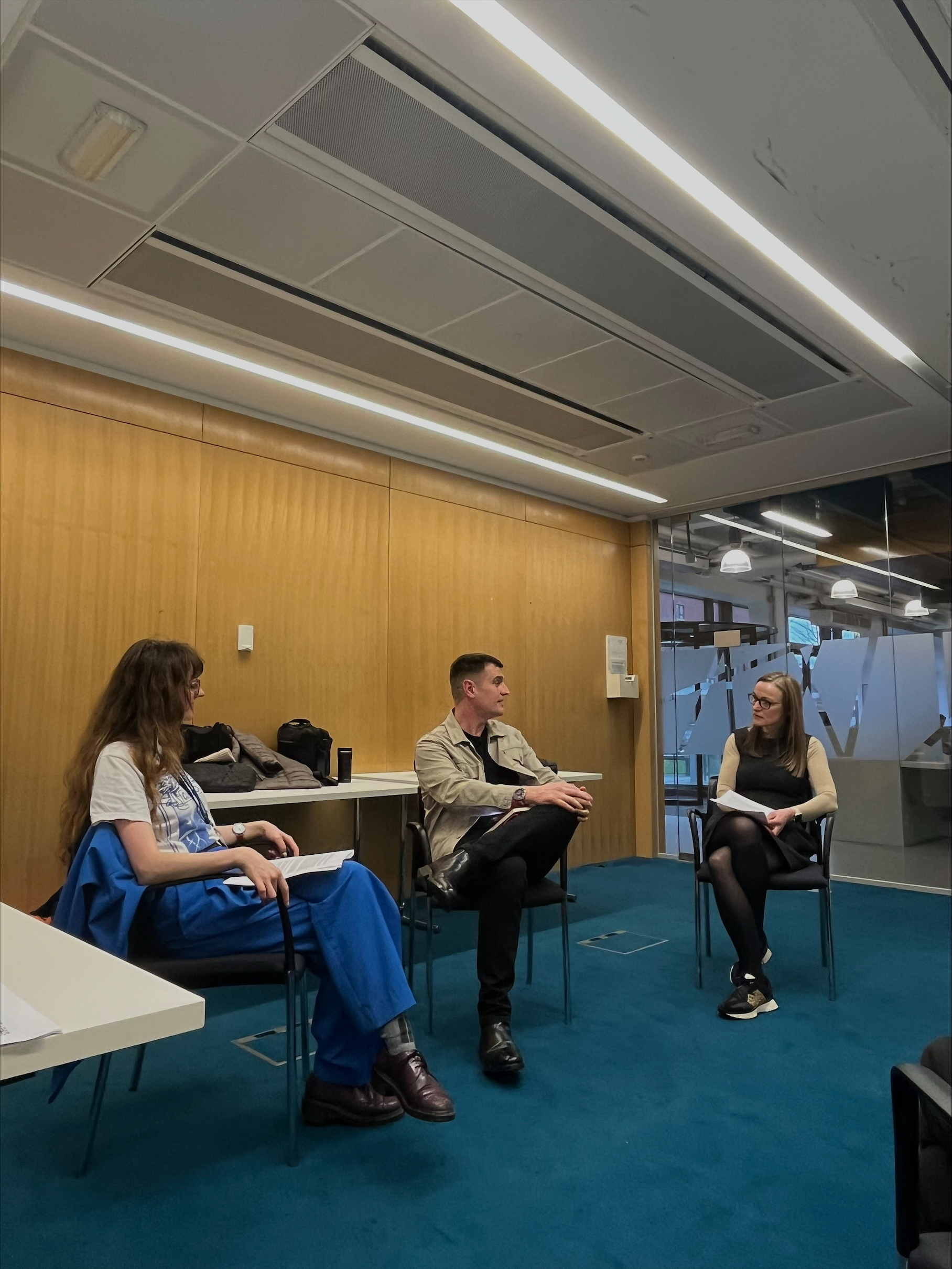
StrathWrites: An evening with Graeme Armstrong

photo credit: Olivia Page

What a fucking privilege to sit down with a writer whose work not only touches a nerve but leaves a whole room of folk feeling inspired, invigorated and just the right amount of raging about the world to go and do something good about it. Graeme is an eloquent, generous speaker who came to StrathWrites last week to talk to us about his memoir, The Cloud Factory, along with his debut novel The Young Team (2020) which has made waves for its frank engagement with Scottish gang culture, masculinity and the vitality of Scots language. Graeme read from the end of The Cloud Factory, a work which feels like memoir dialled up to the communal document of what it feels like to be both inside and outside of something, to memorialise it and to work right through it, to know what was beautiful and also painful beyond words, camaraderie and shattering, refusing to paper over the cracks in reality, to note their presence and texture, to send up lost pals and those who never made it, to speak measuredly about how class and gender affect everything, to meditate on addiction, self-medication, faith, to find a turning point, to know what the past does, ‘stored as a memory in yir very cells’. He’s an author that gets it — the inside violence as much as the outside — and it’s clear from listening to him and watching a room full of folk listening to him that he can negotiate what goes unsaid with clarity and determination. After the reading we all just talked for ages, people sharing their stories and their experience of working in schools and what it means to teach and mentor and edit and pull each other through the muck of it all. What I loved most was everyone just speaking in their strongest tongue, telling stories.

~

StrathWrites is a series of writing events and workshops supported by the Strathclyde Jubilee Engagement Fund and the Strath Book Club. I’m lucky enough to work with the wonderful Jenny Carey from the Institute of Education — she’s swiftly become a radiant presence in my life and we’ve had loads of fun collaborating on these events. 

READ: Extract from The Cloud Factory by Graeme Armstrong, in Granta

For anyone who missed Thursday’s event with Graeme, in lieu of a recording here’s a transcript of the workshop handout:


‘In place ae a realistic dialect portrait, authors create mutations where narrative is transacted in a ‘higher’ form. The clarity ae thought n expression afforded tae oor native guide default tae a more palatable Standard English. Meanwhile, the low, wild demotic dialect is reserved fur characters, who become linguistic puppets dangled on strings ae supposed authenticity. Characters ir reduced tae caricatures by this effect, their true dialect offered as dialogue canapés tae the unfamiliar reader, satiated by the apparent otherness ae the partial linguistic exhibit. They provide the local reader nae such nutrition.  Oor language becomes a motif n isnae truly represented or respected by it. Nae working class Scot thinks in RP. Kin yi imagine? The willin suspension ae disbelief fur us is broken. An elevated n alien Standard English narrative voice betrays the remainin realism they have so carefully n respectfully crafted.’

— Graeme Armstrong, ‘Standard English is oor Second Language’, Literature Alliance Scotland 

‘My culture and my language have the right to exist, and no one has the authority to dismiss that.’

— James Kelman’s Booker Prize Acceptance Speech 1994

Prescriptive grammar, in other words, becomes the sound made flesh of prescriptive pronunciation. The tawdry little syllogism goes something like this:

1. In speaking of reality, there is a standard correct mode of pronunciation.

2. In writing of reality, there is a standard correct mode of pronunciation.

3. In reality, correct spelling and correct syntax are synonymous with correct pronunciation.

Putting it another way, if a piece of writing can’t be read aloud in a “correct” Received Pronunciation voice, then there must be something wrong with it.

— Tom Leonard, ‘Glasgow Stir-Fry: Chopped language pieces on “the language question” in answer to a request’, Poetry Ireland Review 

Drug-inspired delusion or Christmas epiphany, A cannae say fur sure but everyhin changed fae that night on. A never used drugs again n the violence wis finished tae. Suhin stirred in that wee flat that feels fundamental tae ma life noo. Maybe it wis always kinda there n just a ringin phone, never answered. The mare A sat n scrutinised it days later, A felt stupid n that kinda exposed way that speakin aboot faith sometimes makes yi feel, like if yi told any yir pals they would rip the pish oot yi n aw laugh. That feelin started tae pass. A dunno the ins n oots ae aw this either. The required leap that faith demands is complicated tae the best ae us, but ask yirself this, who really made the clouds? N when they clear, ask yirself, who put aw they fuckin stars up there? No everybody hus faith n that’s sound. A don’t minister tae anycunt, but A know the difference it made tae me wis life or death. That’s no nuhin.

Gangs huv dominated ma life. A’ve spent the last decade recoverin fae them n tryin tae find the words fur it aw in ma writing. That’s twenty year ae gangs in total. Their effects on yi ir far-reachin n complicated. Substances n drink ir used by many as self-medication. The  aggression n hypervigilance that years ae gangs create don’t just disappear. They’re stull  somewhere below, stored as a memory in yir very cells or expressed as violent tendencies. 

— Graeme Armstrong, The Cloud Factory 

WORKSHOP ACTIVITIES

Word bank warmup 

    Share what you consider to be an unusual or personal word – perhaps one you associate with place/location or a dialect word. Share a definition with the room.

    Then pick someone else’s word and use that as a prompt for some free-writing. 

    Discussion: collocation e.g. ‘pishy pubs’. What effect do these have on our sense of familiarity with the world of the prose and the associations we have between words?

    Voice

      Writing dialogue: write a conversation between two people who come from a place you know really well. It might be your hometown or your current neighbourhood or a place that’s connected to your family somehow, or just a place you’ve spent a lot of time. Think about the textures of familiarity that are revealed in the language: experiment with dialect, code-switching and loanwords. 

      Now write about the relationship between these two people using the same dialect that they speak in. Whether your narrator is third person omniscient or first person, experiment with writing in dialect so that there isn’t a stark difference between how the characters speak to each other and how the narrative ‘speaks’. 

      Memory triggers

      Think of a photograph or significant object that holds memory for you. Describe it in detail and use it as a springboard for writing a poem or story. Be as personal as you like.

      Turning points

      Write about a turning point in your life where you realised something, or had to make a decision to live differently.

      This event took place on 21st March 2024 at the University of Strathclyde.

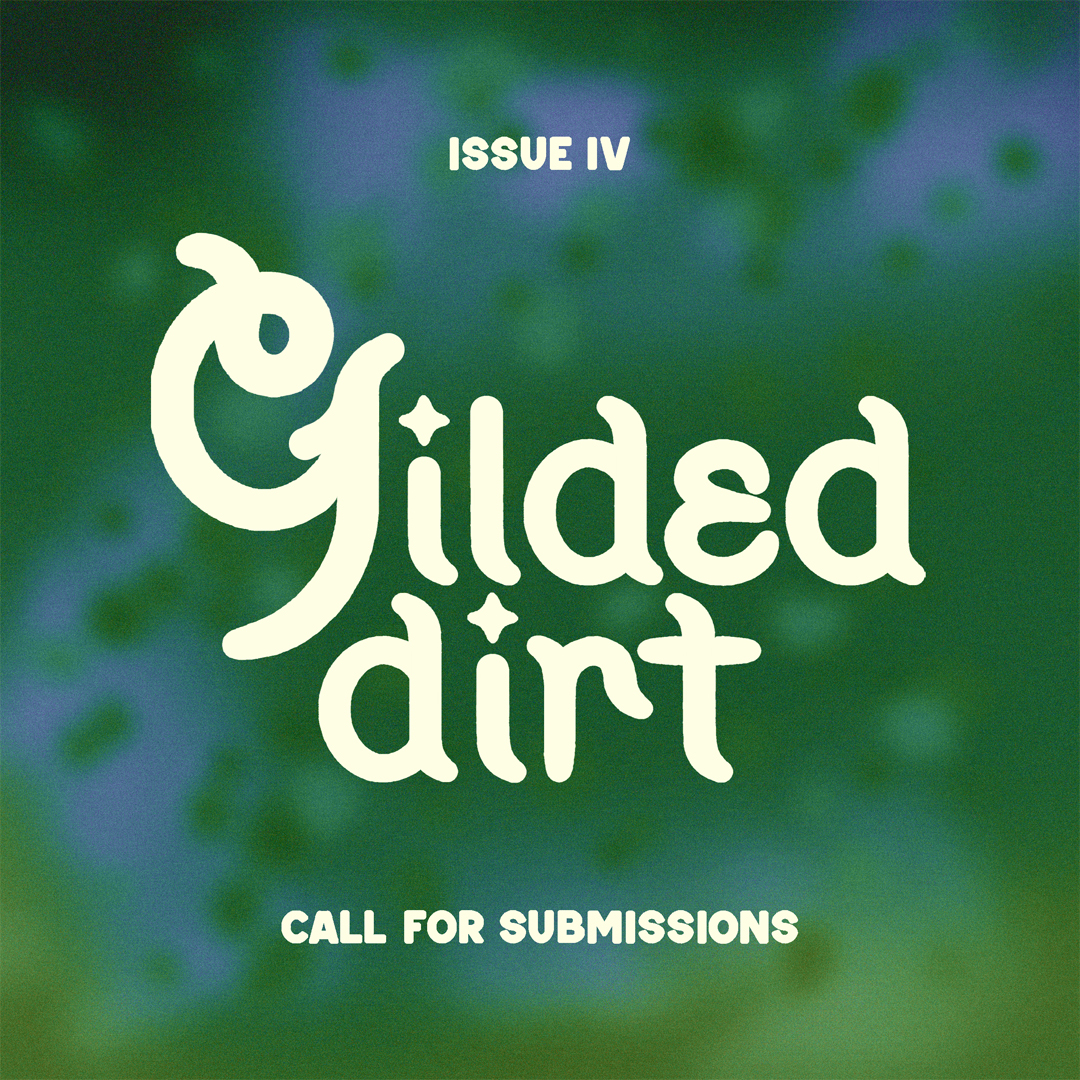
      Call for Submissions: Gilded Dirt issue iv

      CALL FOR SUBMISSIONS

      Gilded Dirt, issue iv

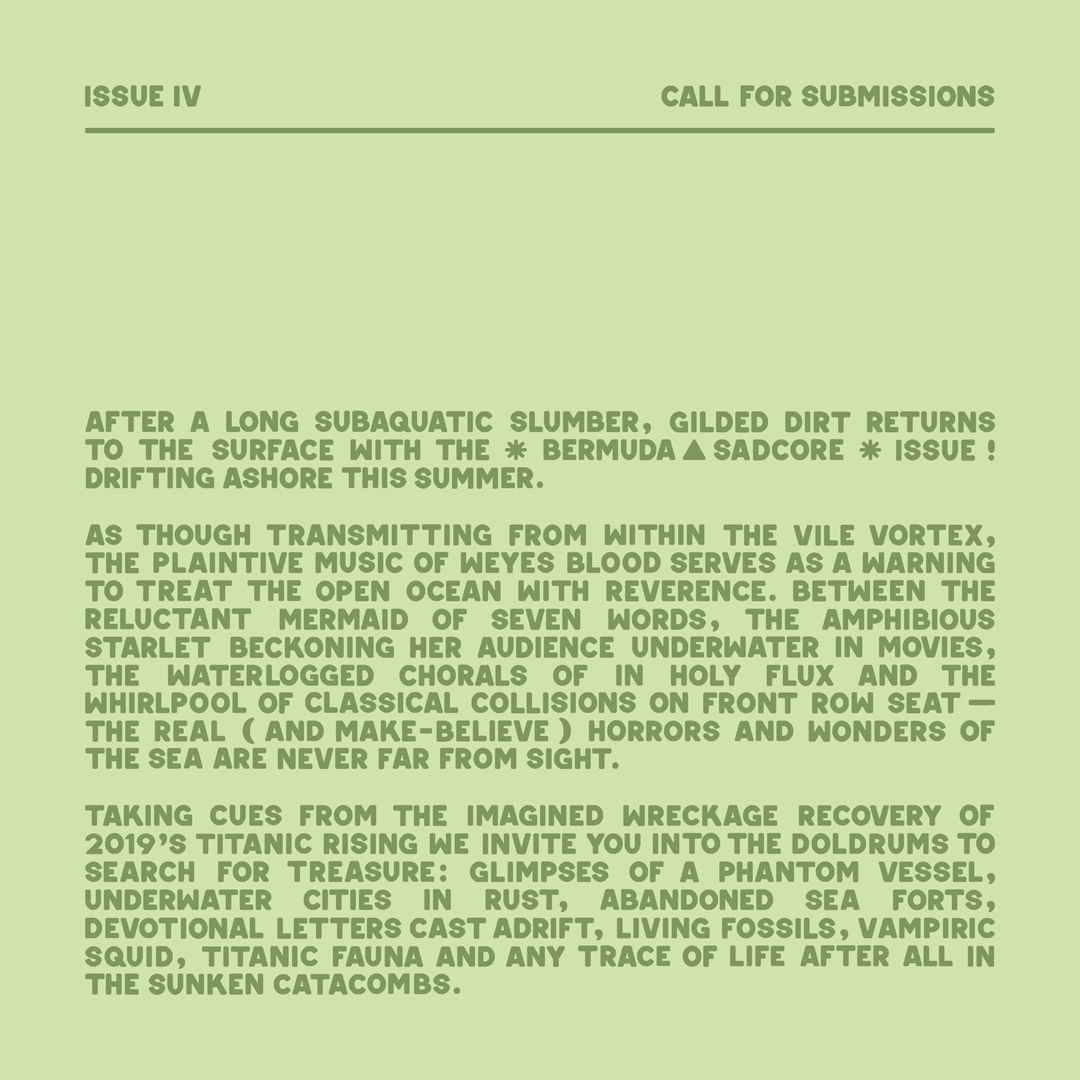
      After a long subaquatic slumber Gilded Dirt has returned to the surface with the BERMUDA ▲ SADCORE issue ! Drifting ashore this summer ! 

      As though transmitting from within the ‘vile vortex’, the plaintive music of Weyes Blood serves as a warning to treat the open ocean with reverence. Between the reluctant mermaid of Seven Words, the amphibious starlet beckoning her audience underwater in Movies, the waterlogged chorals of In Holy Flux and the whirlpool of classical collisions on Front Row Seat – the real (and make-believe) horrors and wonders of the sea are never far from sight.

      Taking cues from the imagined wreckage recovery of 2019’s Titanic Rising, we invite you into the doldrums in search of treasure; glimpses of a phantom vessel, underwater cities in rust, abandoned sea forts, devotional letters cast adrift, living fossils, vampiric squid, titanic fauna and any trace of life after all in the sunken catacombs. 

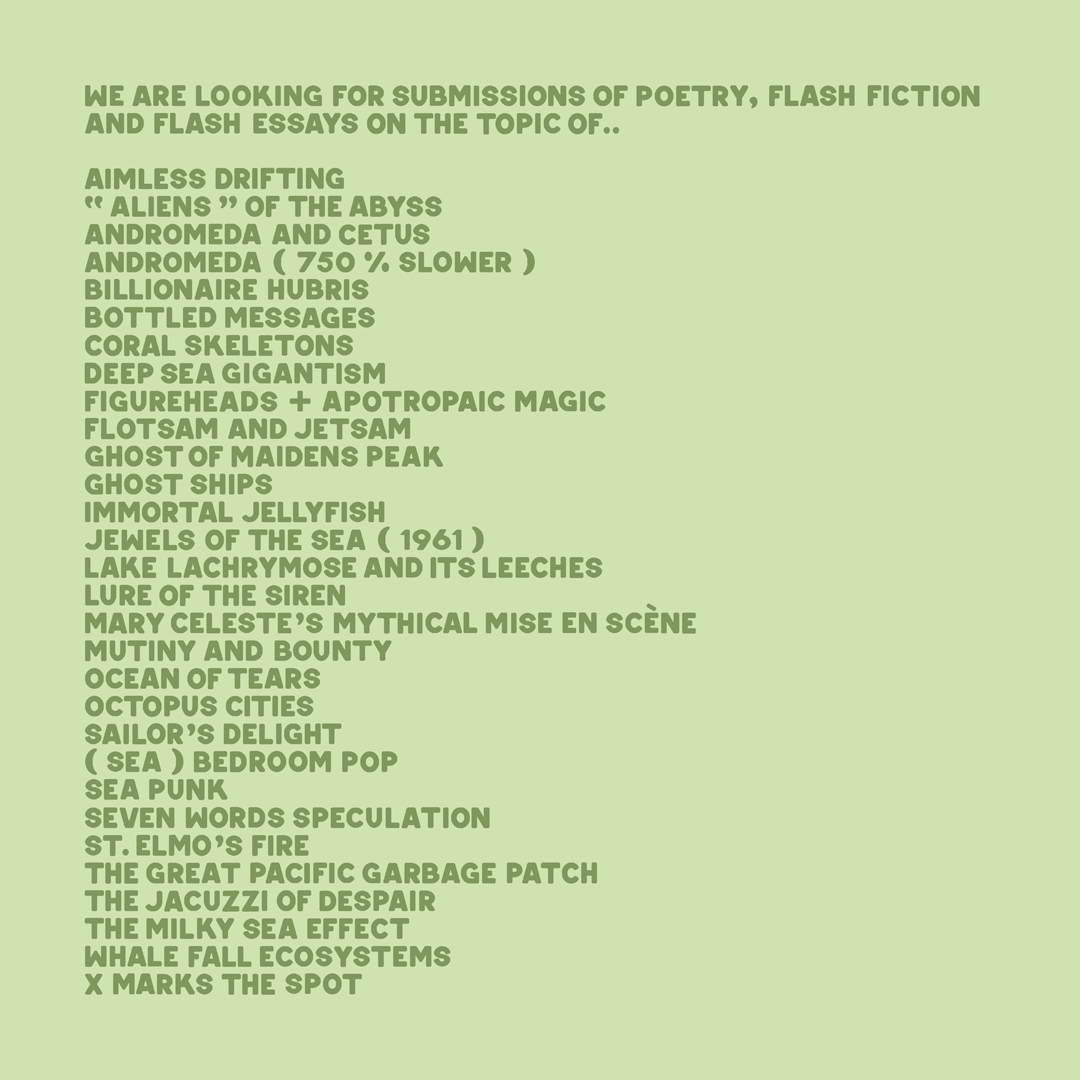
      We are looking for submissions of poetry, flash fiction and flash essays on the topic of.. 

      aimless drifting..
      “aliens” of The Abyss..
      Andromeda + Cetus..
      Andromeda (750% Slower)..
      billionaire hubris..
      bottled messages..
      coral skeletons..
      deep-sea gigantism..
      figureheads + apotropaic magic..
      flotsam and jetsam..
      Ghost of Maiden’s Peak..
      ghost ships..
      immortal jellyfish..
      Jewels of the Sea (1961)..
      Lake Lachrymose and its leeches..
      lure of the siren..
      Mary Celeste’s mythical mise en scène..
      mutiny -and- bounty..
      Ocean of Tears..
      octopus cities..
      Sailers Delight
      (sea)bedroom pop..
      Sea Punk..
      Seven Words speculation.. 
      St. Elmos fire..
      The Great Pacific Garbage Patch..
      The Jacuzzi of Despair..
      The Milky Sea Effect..
      whale-fall ecosystems..
      x marks the spot..

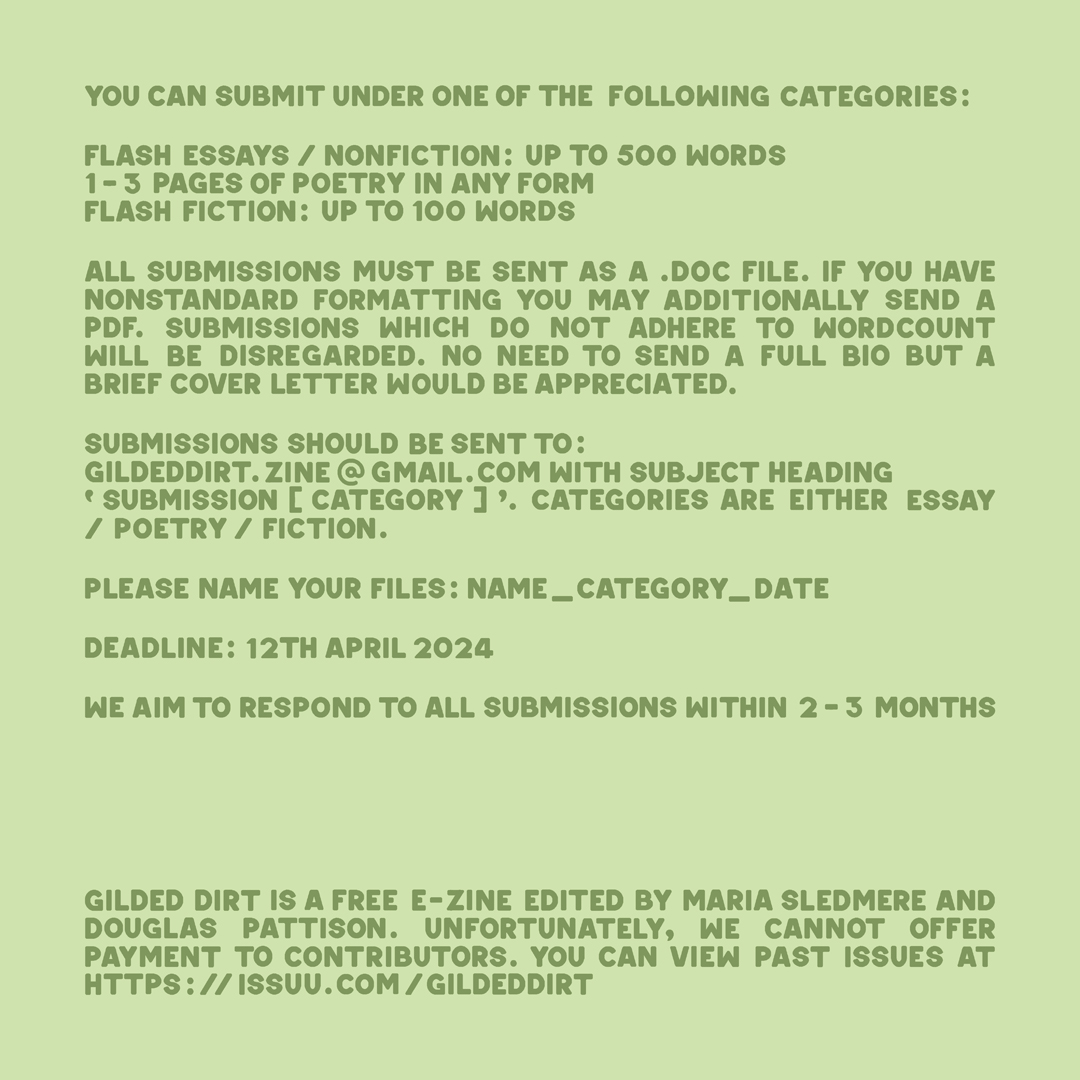
      You can submit under ONE of the following categories: 

      Flash essays / nonfiction: up to 500 words

      1-3 pages of poetry in any form 

      Flash fiction: up to 100 words 

      All submissions must be sent as a .doc file. If you have nonstandard formatting you may additionally send a pdf. Submissions which do not adhere to word count will be disregarded. No need to send a full bio but a brief cover letter is appreciated. 

      Submissions should be sent to: gildeddirt.zine@gmail.com with subject heading ‘SUBMISSION: [CATEGORY]’. Categories are either ESSAY/POETRY/FICTION. 

      Please name your files: NAME_CATEGORY_DATE

      Deadline: 12th April 2024

      We aim to respond to all submissions within 2-3 months.

      Gilded Dirt is a free e-zine edited by Douglas Pattison and Maria Sledmere. Unfortunately, we cannot offer payment to contributors. You can view past issues at

      GILDED DIRT ISSUE ARCHIVE

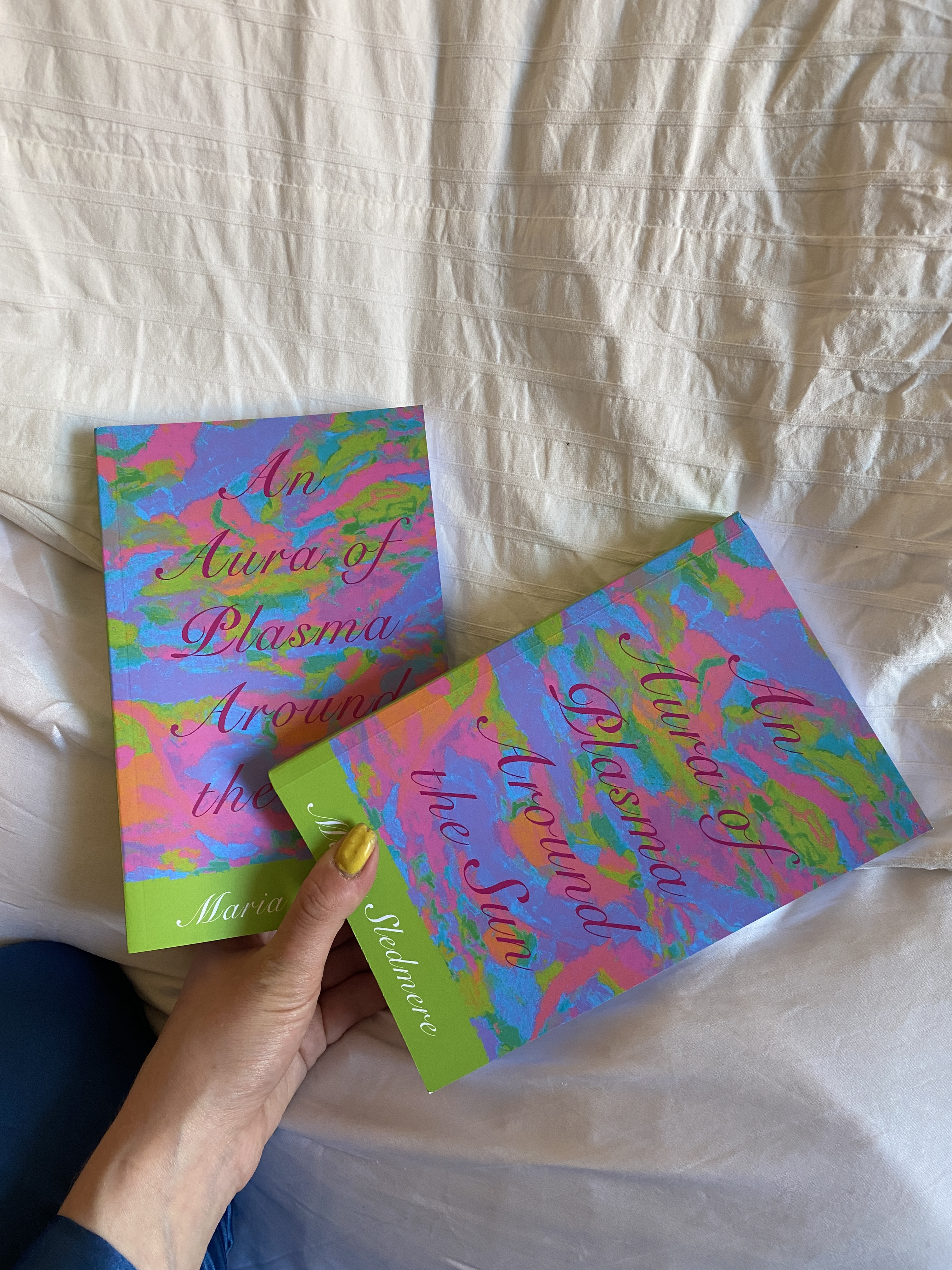
      An Aura of Plasma Around the Sun

      £12.00

      RELEASED 19TH JUNE 2023

      FROM THE PUBLISHER:

      Blending oneiric memoir, experimental fiction and glitched verse, An Aura of Plasma Around the Sun swirls narratives of adolescence, occulted textual topographies and Scotland’s pandemic lockdown. Sweet, funny, heartbreaking, clever and ridiculous, often sentence-by-sentence, Maria Sledmere doesn’t guide readers through these whirlwinds so much as throw them in. Yet her spliced reveries and decadent languages are always underpinned by a celebration of community, as radiant and permeating as the sun. 

      198 x 129 mm / 254 pages with illustrations and photographs

      Preorder from Hem Press

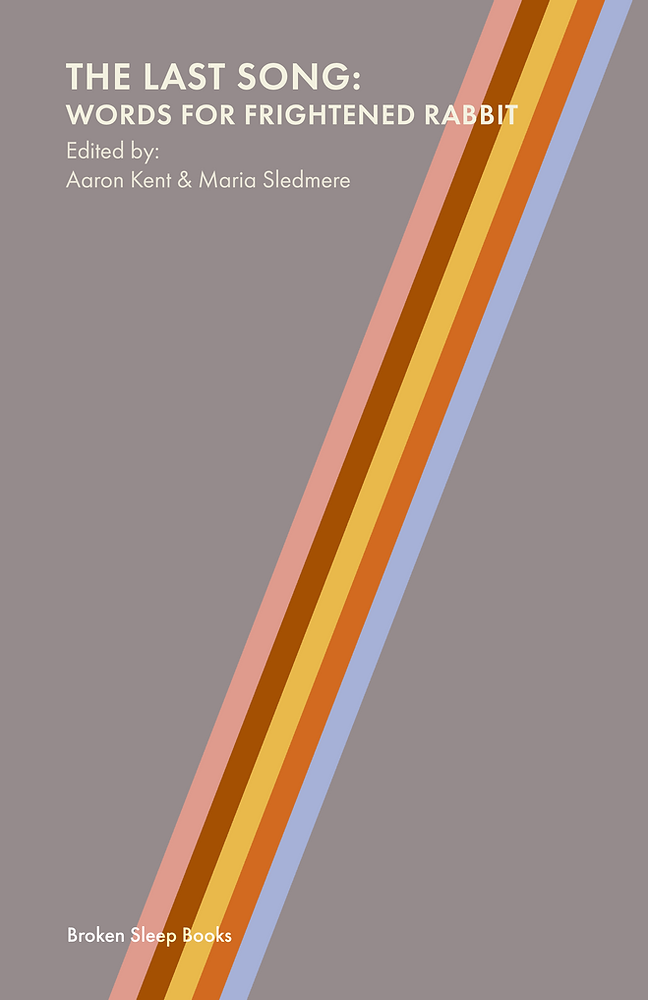
      The Last Song: Words for Frightened Rabbit

      Released 31st March, 2023 // 56 pages // 978-1-915760-92-0 // RRP £8.99

      It’s been a real pleasure and twang of the heart to work with Aaron Kent on this anthology for Frightened Rabbit. How to make sense of all that salt and the greys in your eyes looking back through the years as if to still be sitting in the living room with a whisky, listening to ‘It’s Christmas So We’ll Stop’ or like analysing lines with the passion of teenagers trying to make sense of everything that can only be felt in the body, or walking backwards or into the wind and sea. Thank you to everyone who sent us work and especially to our brilliant contributors who have shared something really special. This will be with us in the world at the end of March, a weird three years on since my first Broken Sleep release with Katy Lewis Hood which came out on 31st March 2020. What times we constantly live in.

      ~

      The Last Song is a poignant tribute to one of the most beloved bands of our time. This book takes readers on a journey through the heart and soul of Frightened Rabbit’s music, exploring themes of love, loss, and the human condition with raw emotion and lyrical beauty. Each page is a powerful reflection on the band’s songs, offering a new perspective on the music that has touched so many lives. Whether you’re a die-hard fan or discovering Frightened Rabbit for the first time, The Last Song is a must-read for anyone who appreciates the power of music to move us and inspire us.

      PRAISE for The Last Song:

      Scott and Frightened Rabbit left us a wonderful legacy of music and words in their wake. This collection shows that that legacy doesn’t have to be a passive, inert thing; the ripples of their writing continue to spread ever outwards, making tiny changes as they go. This is a beautiful tribute to art, and to an artist we still hold in our hearts.

         — Frank Turner

      List of contributors

      Foreword by Aaron Kent and Maria Sledmere
      Laura Theis
      Ian Farnes
      Emma Whitelaw
      Alice-Catherine Jennings
      Catriona Murphy
      Anthony Desmond
      M Mccorquodale
      Geraint Ellis
      Michelle Moloney King
      Aaron Kent
      Jo Higgs
      jade king
      Carl Burkitt
      Tulian Colton
      Andrew Blair
      Charlie Rose Evans
      Maria Sledmere
      Kyle Lovell
      Vita Sleigh
      Gavin Baird
      Lynn Valentine
      Al Crow

      Preorder here

      Spider Necklace

      That spiderwebs look like necklaces is hardly surprising. You made really good use of the cookies. They lived in your brain and measured time like a smart meter to cost more, horrible sharp smell of time, golden darling. The temperature got cold enough so that spiderwebs were necklaces encrusted with sharp frost, to unhook from trees and arabesques of gate to wear at night. The people took pictures of glaciated cities and posted them on the outer gates, with affections measured by the gram. They wore black tourmaline wolf spiderlings and blizzard stone zebras to cover their décolletage. Inside the small room, scared my hot water bottle would burst on me, I was too cold to have glamour. I looked at my golden darling coming close to coming, I could hardly wait for winter to end its solo guitar on the buttress of autumn. It wasn’t as though time snatched the web from her neck and said no more posting, no more selling yourself short as a small glass animal. Often I was a gelid cadaver, after a fuck. The man on the podcast who was a famous director said he hated to be in pain and encouraged women to stop poking their own wounds. He said to do things that made you feel better, instantly, and he put those words in the mouth of a blonde and glamorous actress. I used to buy lighthearted eyeliner and dot my face with artificial freckles to look ‘healthy’. Squinting at the sun is a personality. The moon is our universal friend. Those cookies will be hatching soon and we’ll live in the fat of their secrets. I couldn’t be alone again, especially with the gimmick machine of octovision. I had studied the web and was now found styling myself a spider matriarch, highly resistant to magic, indulged in the cannibalism of love’s imaginary, myself at the end of Verity Spott’s Hopelessness. Frost crystals glitter in the gathering wind saying people make mistakes. You can tear this from me, all of my necklacing sentence, I don’t care anymore.

      Ornament & Missouri

      Once, the temperament of the bellflower was of concern to me. I wrote down words like ‘ornament’ and ‘Missouri’. I had a Lamy pen to write sideways, slantwise, of my other life. There was one club in particular where I excelled in the art of other people’s music. What some call karaoke but I call languishing in melody, obsessively, falling apart in front of an audience. I was like the VHS girl-child in Aftersun butchering ‘Losing My Religion’ with such sweetness the whole resort goes silent. What talent had I for pitch or flourish? There was a column of white light above my head at all times which I imagined writing into, solemnly, a long list of my songs. The more they snared in my throat, the more they became me. The newspapers declared this behaviour ‘cheery perennial’ at the local, noted my penchant for particular martinis, the olive glow of the evening. Any evening, you could find me there in a sequin distress, picking my excess off the floor. I had this thing called a hem. It was the way my voice dropped. The way I gathered it up. Outside the club was a cottage garden, can you believe it, where I tended these purple flowers. I spritzed the last of my drinks across their wilted leaves and I murmured the inside scoop of each song, so only the flowers knew. Their growth was writing itself all over the skirts of the club, I was feeding it; soon we would nourish ourselves from the fruits of trial and error. It seemed appalling that my whole generation had fallen back into the habit of other people’s songs. As a child, I was dragged along to open mics, and all the songs were original, weren’t they? You had to put a few coins in the kitty to get on the list. According to the principle of locality, a particle is influenced by its closest surroundings, with interactions limited to the speed of light. But according to Bell, there are variables. The risk of being heckled or worse, adored. I knew my theory of the song to be incomplete and quantum. It went very far. I stroked the rare blue hue of my partial shade. I queued Outside. Sung the non-lexical vocables of glossy stars. Ate lyrics for kicks. I paid the price.

      12/09/1998

      I began life calloused on the thumb of the family. All my life I ate chalk. My first memory was volunteering the date in class. “It’s the 12th September miss”. What’s the year? They made me stand up to write it. That morning a bee had stung me behind the knee, in that very soft spot, and I hadn’t told anyone. I winced and limped to the board and wrote 12/09/1998. It was the summer the ash tree was felled and then the oak, and we all made nests from the heaps of cut grass and I tried not to cry when scolded for grass stains, my skirt too short, my sting. Did I not understand the task at hand? You need to help the boys beside you, they said, when you’re finished your work there’s always more to be done. I wanted to be done with it all at once, and to never do it again and bask in the slow, drawn-out time of my earned oblivion. Then I discovered coffee and had all these memories rushing to the loch where I learned the name of a baby swan, a cygnet, which sounded like a form of jewellery or grammar. “That bread has stones in it”, I would say when presented with brown slices of something seeded. Throw it all to the swans. The mothers did not know what to do with me. I would not eat the slabs of pink trembling on dinner plates, so I ate the sleepover candy, all of it, and slept through the films, the first to want to sleep in their company. The mothers were vicious with hairbrushes. Do you know what happened that day in 1998? I licked white powder off my forefinger, then my green thumb. I felt funny. Under the table, the boys showed me their easy-peelers, their cigarettes, their rusty little knives. Somebody telling me to focus. To stop. At any moment, I’d feel the ash, the wax, the writing all over me. I was in the birdshit deep in the loch, my sediment; I was a lot of work.

      Sleep Felt Productive

      cn: mention of bulimia; spoilers

      It’s been a fair while since I posted. Struggling through Covid, another supercold (emerald phlegm forever), more transitions, finishing my thesis, April snow, more streaming of the body and ache, but here we are. It’s good to get words down. I can’t smell or taste anything at all right now (coffee is just…neutral earthiness, sweet potatoes are…mush of the orange variety, bread is…send help) — so the vicarious pleasure of language is all the more heightened. Sometimes it’s a barrier: why read about anything when your senses don’t respond? I’m drawn to the elliptical which doesn’t hold me for too long. I want to be let go or dissolve a bit. Like eking my reading through a fine mesh of muslin, a semi-permeable membrane of comprehension. Or pull it over my head, this paragraph, the whole fabric of the thing. I was gonna write about a month’s worth of reading: mostly while walking west to east along the polluted, outer commuter belt of the city; on trains between Glasgow, Inverness, London, Leeds; in frail, unwaking mornings; at the park, in that golden week, sitting in the grass with salad from Juicy and daffodils. Instead I wrote about sleep.

      *

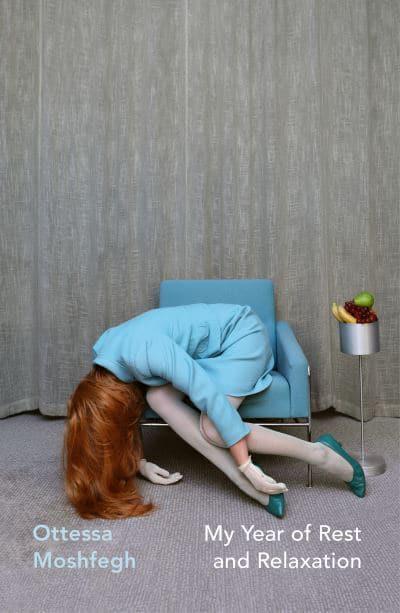
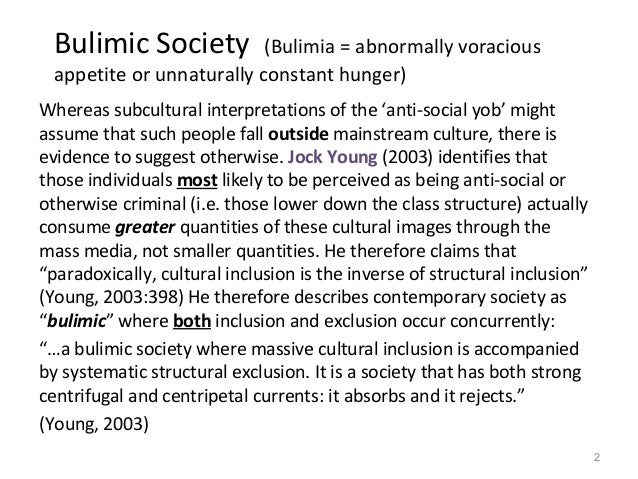
      Finally I got round to reading Ottessa Moshfegh’s My Year of Rest and Relaxation (2018), a book I wanted to read especially because a trusted friend described the ending to me as ‘disappointing’. I love to glut myself on disappointment. For some reason the novel produced a similar effect on me as Tom McCarthy’s Remainder (2005), in that the pleasure was all in the premise. I would love to exist endlessly in the loop that is prolonged sleep or the reconstruction of a highly specific sensory memory. I want these novels to just go on and on like that. Of course, there has to be escalation, as per the rules of plot or ~human nature~. Is it true we can’t circle the mobius loop forever? That after a while the pleasure is desensitised, and we need to dialup on the extremity? McCarthy’s novel sort of preserves that perfect figure of eight in its set-piece ending, and you’re left with the image adrift to loop back on the primal, inciting moment of falling debris and trauma. I found the Moshfegh ending ‘cheap’ in that it seemed to cash in its bulimic character for a kind of tragedy whose fate was to fall. Bulimia, I can say, is generally an experience of permanent insolvency in the body, resulting in a loop time of binge and purge. You pay the debts of fasting by devouring; you pay the debts of eating by purging and fasting. Rinse, brush teeth, ouch, repeat. The sociologist Jock Young talks of ‘bulimic society’ as one where the poorest and most marginalised are often the most culturally enmeshed in the desperate iconography and desire economy of consumerism. The most excluded populations, according to this view, absorb images of what is apparently available under the veil of late-capitalism; but simultaneously they are rejected from accessing this culture themselves due to material inequality and class difference. As Young puts it: ‘a bulimic society where massive cultural inclusion is accompanied by systematic structural exclusion. It is a society that has both strong centrifugal and centripetal currents: it absorbs and it rejects’. But does capitalism spit us out or do we boak back? This is why I am scared to go on TikTok, like fear of lifestyle saturation to the point of nauseating breakdown.

      Often powerpoint slides defining bulimia for this sociological context mention an ‘abnormally voracious appetite or unnaturally constant hunger’. In Moshfegh’s novel, the character Reva (an insurance broker) is constantly eating or constantly fasting; something our protagonist describes with pity or nonchalance. Reva is tragic because she wants too much what the protagonist effortlessly has by birth: beauty, thinness, style, money. Thinness is kind of the ur-sign for WASP privilege in the aftermath of the heroin chic fin de siècle. Reva is jealous of the protagonist’s weight loss, steals her pills. Both women are after control (or its relinquishing) in a world in freefall.

      This is a period novel: set in the early 2000s, New York in the lead up to 9/11. It’s full of that inertia following the boom of the 1990s. The desire to just sleep in the unit of a single year is like a microcosm for not just an end of history, as per Fukuyama, but a refusal of history altogether as this thing that keeps growling, accumulating, disrupting sleep. I kind of buy into Reva’s bulimia as something about the consequence of being voraciously invested in a world that wants to expel you, sure. The sky’s big whitey’s the limit around Manhattan. Chewing on this feels productive. The violence of the novel is primarily in the gallery where the narrator starts out working. The gallery’s prized artist, a young man called Ping Xi, has these ‘dog pieces’: a ‘taxidermied […] variety of pure breeds’, which are rumoured to make their way into the artist’s exhibition via premature slaughter and industrial freezing. The work apparently ‘marked the end of the sacred in art’. The narrator is kind of offhand disgusted but eventually comes to identify with the young animals in the freezer, waiting to be thawed into art. Writing can be a bit like self-cannibalism; the denial of which leaves you stoked for a snack.

      There are several kinds of hunger in the novel: primarily for sleep and food, but also for meaning, intimacy, loyalty. Love is a strange relation that moves uneasily between two girlfriends whose friendship is based on a premise of inequality and co-dependency. The hungers are sated by devouring emptiness. Sleep, junk food, fleeting talks. That bit in Melancholia where Justine screws her face up deliciously and says the meatloaf tastes like ashes. When I realised the same of my dinner, I didn’t even react. 

      We look more peaceful when sleeping. It’s worth lauding, like Lana singing Pretty when I cryyyyyyyyyy………….

      O, and the concept of the sad nap:

      There was no work to do, nothing I had to counteract or compensate for because there was nothing at all, period. And yet I was aware of the nothingness. I was awake in the sleep somehow. I felt good. Almost happy.

           But coming out of that sleep was excruciating. My entire life flashed before my eyes in the worst way possible, my mind refilling itself with all my lame memories, every little thing that had brought me to where I was.

      (Moshfegh, My Year of Rest and Relaxation)

      The brutal awakening cashes in on the extra expenditure of napping. I’ve written in a poem somewhere, ‘I wish I could sleep forever’. It’s different from wanting to die. It’s more like, wanting to feel aware of the nothingness and calm in its premise. Nobody needs anything from you and you can’t give anything back. It’s restful or at least prolongs the promise of rest. Stay awake super late to relish the idea that you could go to bed. I don’t remember the last time I woke up feeling energised by sleep. </3 I remember listening to an interview with the editor of Dazed where he talks about sleep being his great reset. I remember thinking wow sick cool. Whatever mental health thing he’s going through, sleep will heal it. Sleep can otherwise be a kind of emulsion of depression. You’re in the weight of it spreading right through you. I carry sleep along even when I don’t ‘have’ it. 

      I want you mostly in the morning
      when my soul is weak from dreaming
      (Weyes Blood, ‘Seven Words’)

      I used to wake up extra early before school to steal back from sleep. I felt sleep would eat me alive. I used that time to browse the internet, write, read. Eat shitty muesli. Puke. 

      I’d sleep in class. Teachers would bring it up at parent’s night. I just couldn’t understand why everyone else wasn’t regularly passing out over their schoolbooks.

      The perma-arousal of bulimia is a counternarrative to the inorganic sleep cycles pursued by the novel’s main character. I got a similar vibe from watching Cheryl Dunn’s Moments Like This Never Last, a documentary snapshot of the pre- and post-9/11 world of New York’s underground, showcasing Dash Snow’s graffiti and outsider art. Dash is always cheating sleep to go tag, paint, take pictures. There’s a ton of cocaine and consequence. 9/11 had toppled right through all of that leaving a wound. You know by the law of entropy that it can’t be sustained, this life, writing on the walls and all that. Maybe tagging is also about a kind of hunger-purge. Colour’s aerosol vom marking time, presence, ideas. It’s permanent, but then someone can just go clean it up; the ultimate fuck you.

      Whose space does this belong to? Remainder is a novel about gentrification, the white guy’s obsessive reorganising of London spaces as precursor for the gentrification of Brixton. A novel of the zombie flaneur, fuelled on flat whites, iPad swipes and vape juice, as Omer Fast’s 2016 movie adaptation brings into focus. Moshfegh’s novel is set around the same time, but her protagonist is decidedly not a flaneur, even if she carries that vibe of the waking dead. She barely leaves her apartment to get coffees from the local bodega, and when she does venture further it has all the amnesiac disaster of a night on the NY tiles with Meg Superstar Princess, furs and all. I find this zombie existence an irresistible metaphor for the numbing effect of late-capitalism: we are overstimulated and aroused to the point of just turning off. It’s banal to say that, sure. What’s great about the Meg Superstar Princess blog girl revival is the way the writing itself is charged with like, full off-kilter zaniness. The opposite of zombie. It’s like barhopping around A Thousand Plateaus — cheap wine in one hand, vintage Android in the other — to the tune of Charli XCX and it’s absolute chaos: ‘spitting e pillz out my mouth, trying to live normal, disco n apz’. You get smashed. You’re alive! I’ll have it in writing because I can’t really have it elsewhere rn, the same way I sleep but I can’t really sleep. Apps (f)or naps?

      For all this tangent on (post)pandemic hedonism (let’s say post to mean, posting and not to signal some wholescale shift in era), it’s weird how history just hits you in the face at the end of Moshfegh’s novel. Falling debris, bits of glass. Words:

      On September 11, I went out and bought a new TV/VCR at Best Buy so I could record the news coverage of the planes crashing into the Twin Towers. […] I watched the videotape over and over to soothe myself that day. And I continue to watch it, usually on a lonely afternoon, or any other time I doubt that life is worth living, or when I need courage, or when I am bored.

      (Moshfegh, My Year of Rest and Relaxation)

      Earlier in the novel, she’s frustrated when someone replaces her VCR player with a DVD player, even though she doesn’t have any DVDs. She kind of hates the concept of the DVD. She likes the process of rewind. Video tapes, with their seriality, make you confront duration; whereas DVDs allow easy random access to specific scenes. The over and overness of Moshfegh’s careful, clean, lethargic prose is at once soothing and disturbing. When the pandemic first hit, I couldn’t stream anything because the thought of having all that content at my fingertips seemed appalling. Like accessing a trillion orderly dreams of someone else at the very moment I couldn’t even touch another person. Maybe video tapes would’ve been different. The residue of wave matter at the edge. The analogue sense of fossilised images, decaying in visible time.

      In a poem called ‘Along the Strand’, Eileen Myles is like,

      The times of the day, the ones
      with names, they are the 
      stripes of sex unlike romance
      who dreamlike is a continuous 
      walker

      I love the rhythmanalysis of daily life here. VHS stripes in descending order of luminance: white, yellow, cyan, green, magenta, red, blue and black. How the speaker clings to named moments of the day as like khora: receptacles unseen for adhesive feelings. ‘Vigorous twilight’, ‘noon’ you slip into, ‘Morning’ as ‘something / I could stay with’. The times of day are lovers. If romance is continuous walking, there’s not a lot of romance in My Year of Rest and Relaxation. So after reading the novel I’m sorta stuck on wanting the romance of sleep again. Exhalations as stripes of sex. Like when you have a new partner and after a few weeks of breathless sleeplessness suddenly the first thing you realise is how well you’re sleeping, like being beside them all night just fixed your life. And so to be in love you know noon tastes different, and twilight has a lilac halo. And you’re sharing this shiny sticky static in the air like asterisks, so much more to say.

      *

      Sleep. After a long walk, I remember circling South Norwood Lake and humming Elliott Smith’s ‘Twilight’, because of the time. You asked me to sing it. I had a low voice, a high voice. I was just waking up; the air was all lavender, leaves in fall. 

      I don’t want to see the day when it’s dying.

      My Black Dog

      Life changed the moment I minted my depression as an NFT. The process was long and boring, but now I am a clean one who has never grasped the meaning of silverware. Let me try to explain the process of having a life thus expunged of its fungibility, which is to say, I feel now worthy of anything. I don’t even need to log on.

      1. This is not a book of ‘the environment’, nor do I profess care for the precise expenditure required to fuel that sluice of the blockchain which facilitated said transaction. Honestly I am just glad to have sold my black dog to an eager buyer.

      2. I can hear someone crying thru the walls most nights, the kind of wail that angels do, having no sex to think about they might body millennia of pain. The quality of having no carnal emotions owing to calorific deficit is guaranteed.
         
      3. The black dog was adopted from more or less insipid childhood fantasies in which more or less I could not have lived this far. Small red marks on my glyph flesh. Not to be dramatic but there is a reason why I am scared of cars. The first time what is called Marlene sat behind a wheel I freaked.

      4. Communiqué over Excel spreadsheets had led me to believe my sadness was extractable. I started feeling it everywhere, standardised and flashing among the long trails of light exposure.

      5. Imagine buying a thing for its absolute exclusivity, only to release its essence, bit by bit, in meatspace! The ambience of my original sadness spread across the mall, where generally I was to be found weeping by the ceramic fountain, where people tossed coins as the wanton value of wishes.

      6. [Autumn redux]

      7. Dramatic monologue of the dog: I am a dog! A fucking dog! You better not touch me.

      8. I tell you, I freaked the fuck out. She did. Is it better to have someone crying or having sex thru the walls? Irritability is a relative condition. I’m so tired and fucked up. Moan.

      9. I want my black dog back :/ Why are they not a blue dog, someone asks in the comments. The internet is so fucking literal. I paint my nails hot pink and chew them so all the polish flakes into my mouth like itsy bits of sext.

      10. Have to stop myself reading Lauren Berlant’s blog again. Get kinda sentimental at night. ‘I was lucky to be the dreamer because the dreamer never stops being interested. People know when they haven’t said enough, that’s why they dream’. I never say enough, that’s why I write. There’s something I always wish I told you, but you never could tell.

      11. Every time I sit next to a man on the bus, I assume he’s gonna reach for something intangible, a long red thread you could tug from my cunt with this terrible thing at the end, that’s it.

      12. The black dog had impossible puppies and the puppies are always following me, especially onto the bus. Ten black puppies is a lot of transport coverage. Driver winks and goes, ‘you’re just a pup’. When I close my eyes, we spit in each others’ mouths. I hear a Belle & Sebastian song in the distance.

      13. Scenery passes, etc. Static poplars.

      14. Everybody started to ask, Where do you see your future? I see my future in NFTs, is the prepared, p(r)eppy answer. No, not as an investor. I’m not even a flip in bed, where it counts. Can you guess?

      15. Everybody who doesn’t have a choice has a price. I used to text M. like, what do you think I should do with my life. There’s nothing to buy at the mall. You should go home, she says.

      16.  Earlier I lied. I kind of do care about the environment. Black dogs let loose among burning forests.

      17. I have no memory for the feeling of rain. 
      1.  Non-fungible errors cluster my dashboard. That I had my sadness minted and then accused of bad metaphor. Darling, I was the economic downturn all along.

      2. I eat with my fingers among the dogs. They love me.