Cool news. Will be in Berlin weekend of 12-15th September doing two readings. It would be lovely to see some of you there!
Friday 13th September, 7pm POETRY: Reading & Discussion with Maria Sledmere & Ian Macartney 7pm, FIXOTEK, Lohmühlenstraße 65, Berlin, Germany 12435
Thanks to Hopscotch for hosting!
No tickets just show up.
&
Sunday 15th September 2024 1-3pm, ChertLüdde Potsdamer Straße, Berlin
Reading with Ian Macartney, Max Parnell and Ari Níelsson from 1-3 PM, followed by an open mic at 4pm. This performance event is part of Ali Eyal & David Horvitz’s exhibition, A new garden from old wounds, whose title is taken from a poem of mine, ‘Deciduous‘ which was recently published by berlin lit.
In their duo exhibition, A new garden from old wounds, artists Ali Eyal and David Horvitz explore geographical and conceptual distances, delve into the intricate boundaries of memories and emotions, and investigate how fragmentary elements can come together to form a new enduring presence. The exhibition brings together new and existing works that interconnect with each other as separate fragments of a single unit.
Opening Reception: 12 September 2024, 6 – 9 pm
11 September – 12 October 2024 ChertLüdde Potsdamer
I was out somewhere reciting my love for Adidas with wishes thrice – décolletage! – and music, the train arrived on time. I wanted to ask about your shoulder and you said there was so much Guinness after the football, the rest of the world was a rumour. We had all these non-sequiturs to like, communicate the fizzy little spirals. I was like an ice cream sky for you! A spring-rush blossom you! Tapering, tapering. Went to buy salad from downstairs, went to run around putting jeans on. New jeans. Matte suede lips. Blue Sunday. Covent Garden was glistening with consumerism and the new good weather. Every time I’m in London it’s sunnier, warmer, more deniable; so much the smell of pollution & impossible flowers, pollution & impossible flowers the city I really learned to love was so expensive you could only love so much before the money felt mouth garbage of gorgeous surplus: What I kept feeling about London was…what I had kept of something & nothing a type of ‘neutral metabolic beverage’ bought at room temperature in the clothing store – spontaneous purchase! Questions to fall in love to……what’s your favourite checkout compulsion? To shoplift gum? To flirt with cashier? To buy an oaten flute and play it to god? I was so concerned about the woman in Asda with the bleeding nailbeds and I kept recommending apricot oil and lots of sleep, I’d been through it too, and my Nan from the chemo. What our nails tell us. Mine used to be silver striped and blood-let-violet, now they are cracked with the memory.
The rain came out the day I went home. Lucky I got to bring my book to London. Oh god it was beautiful the matinee I was nervously also on Guinness and lots of intersections of arrival, read first, took ponytail out like to say she is me now. Cinders. The night before, D. and I had gone to see some bands at the George Tavern and we talked through a few sets just because it had been so long since we’d talked and I wanted to know all about work and love and she said something amazing about how it gets better every day, like you just want to find out so much about the person, you want to figure out the total every degree of how they think and what they feel about something – this plenitude. I said that to my friend last night like the thing about a successful relationship is surely that every day it gets better in that you change together, you change each other, you discover things about yourself that would irrevocably not be possible to discover unless you met this person and you change each other’s day and daily and that’s not like tree branches curled around each other it’s more like mycelia underground, so much unseen, more like alchemy. So when you break apart, you never really sever. You are cellular bonded. Their energy surges in you – what – a bus ride home, a voice note, a quiet cry in the night. Something said, something unspoken. Unexpected holding of hands. Curly little yes.
*
I reread The Hour of the Star over breakfast sauerkraut and the flicker of lighter-light out at the end was it. So easy ideation; not to say I made plans, just that the impulse had become my little sister. You have to find your light.
I was lighting up to go to the next thing.
‘Beautiful though it is, it’s just walking really,’ said the woman behind me on the train, talking about the countryside.
She also said:
99% of people who study to be dentists end up being dentists
99% of people who study art don’t end up being artists
My brother and I stay up til 2am listening to hardstyle and reminiscing 2000s absurdism like it’s our good soft history and I suppose it is. Castles in the sky, pretty green eyes, quiver, save me, braveheart, moonlight, sunshine after the rain, bits and pieces, concrete angel, true love never dies.
I want to exhibit gelatinous entrails of everything we ever said.
*
Someone not new I met again talked about making love in a cornfield, listening to Sting. That the not-not-new of it all shared love for Eva Cassidy broke a little nerve platonism so much that I would melt into what we made awhile. Nightcap. Fortuitous timing of trains.
J. said I looked about twelve in the picture. I said this is my heartwood: surly, surly.
The readings:
Jane’s brilliant poise – poetry delivers the body. Ellis’s infinite – I was so elated to meet them finally ❤ Rob’s plasma poems enamoured and the fuck devastation of elegy. Karenjit’s percussive grace.
The readings were gems I will live with. I took videos but for some reason couldn’t upload them anywhere, but I have them.
Noodles at Silk Road backscattering miso. Hospitality stories. Stafford yellow fields. Lambs around Penrith.
Intimate fish tank of the Zoom reading with my Krupskaya label mates. I nearly read with the AR halo. Two in one day.
I slept thick treacle.
“kept swelling with the sense of this year as the best, it keeps getting better” “wonderful” “Oh rly?”
I wanted to write this a week ago, in the throes of a northbound Avanti while grown men stood up shouting things like ‘plastic cunts!!!! all of em plastic cunts!!!!!’ (some cryptic reference to the footie) before departing at Carlisle, but another border had to be crossed and here I am, writing this from my sickbed. Week 6 of the academic semester finally got to me. But this is my diary of the first official SPAM Tour. Guys, I was so so excited for this tour. I even got up at 5am on a weekday to iron the custom design on a tour t-shirt (omg why did nobody tell me how hard it is to draw on tshirt fabric?). I love that poetry literally takes me places. I met some of the best people ever on tour. Tour tour tour.
What follows is my fond paracetamol-induced delirium ❤
We were a poetry carousel in celebration of three new pamphlets: Thirteen Morisettes, a transatlantic collab by Courtney Bush and Jack Underwood; in the country garden/the end of england, by Jack Young and Karólína Rós Ólafsdóttir’s All in Animal Time. Ever since the latter was submitted to SPAM I have been rolling it around in my head when something is asked of me and I want to say, sighing, yes yes all in animal time, it will be done. Who were the horses? Who were the horseback riders? This is getting a bit Yeatsian so I’ll give you the names: of course there were the two Jacks, Courtney and Karó, along with Marianne Tambini, Leo Bussi, Annie Muir, Eve Esfandiari-Denney and me. And everyone we met along the way.
It may have been my decision to go see All of Us Strangers on Valentine’s Day but the transition to a dreamstate of solace, if not soul-searching, was upon me. Walking home on Wednesday night I wrote: ‘When she looks at him taking his wet clothes off from the rain and knows that suddenly he is older and she is sort of his daughter. I feel so messed up and grateful that it is raining and when I get home I can cry and read my stupid poetry. How I have missed this ceaselessly crying. I was always too sensitive like melting into the folds of the world’.
The next morning was all coffee and white noise, still a bit shook. I met Kirsty Dunlop, my glitchsistertrix, at Glasgow Central and we piled on the Avanti whose queue as ever was abundant. I had big plans to commit to ‘agile working’: I was going to research Detroit techno, ahead of a summer conference, get my MLitt marking done and generally clear the inbox but these earnest endeavours were DERAILED by the indubitable fact of half term madness. This is a concept still foreign to me, as someone raised in Scotland, the February half-term. Idk if that is a sufficient explanation for why there were about 300 twelve-year-old boys on our train. In the queue, the Avanti guy is like to me and Kirsty, ‘are you in the school trip’ and I clipped back, ‘nah, we’re far too old’ and he does this kind of sweet double take ‘aw not really’ to like, I guess encourage our confidence that we could make convincing schoolkids, probably with our backpacks etc. I take that as a flirt, though on hindsight maybe creepy. He’s a good guy though, I see him every time I get the London train and he’s having to put out fires with the insouciance of work-place survival tactics, every time. You can tell he’s reliable and it’s like being ID’d for cheap sauvignon blanc; you have to take compliments when they come.
On the train, from the get-go these schoolboys are kicking off. For the morning, Kirsty and I convince ourselves we are schoolboys too. We are practically hysterical. They are practically hysterical. The boys have discovered a famous boxer on the train called Anton. They are, let’s not beat around the bush here, obsessed with Anton. Every other word that comes out their mouths is Anton. ANTON. BIG ANTON. I daren’t google to see if he’s real or not. We are convinced he’s made up, a fiction. The hyperstition of their near arrival. ‘Let’s get Anton on snap’, ‘Come to the bathroom and we’ll go see Anton’, ‘Come get food and we’ll go see Anton’, ‘Let’s give Anton a present’, ‘I want to give Anton some milk’. K. and I dissected the extent to which such gestures were euphemisms. We answered some overdue Plaza emails because it was literally the first time in weeks we’d had a shred of time to do dedicated SPAM admin. We took pictures of ourselves being silly because how silly it is to be travelling poets. I’d left my anti-nausea pills in the big orange bag I couldn’t bear trying to get off the shelf in front of everyone, so I sat tight and gingerly sipped a ‘fiery kombucha’ and loosened my tie. I really do need anti-nausea pills for England. When we pulled into Euston the boys threw some of their milk sachets in our direction, landing by our boots, and I wondered if we’d been the hyperobject of ‘”Anton”‘ all along.
Before we get to London I should tell you about Tuesday. We had this great reading at Mount Florida Books, hosted by the glorious Katia: a bookseller and all-round babe whose generosity and humour ne’er fails to completely lift my mood. We agreed the secret to Glasgow was to talk freely about your life but don’t name anyone. We talked about when you can’t stop thinking about kissing. And sexy poetry. How did we get here or there? Most of us, as non-south-siders, were at the mercy of rush hour traffic. My bus didn’t show up. I missed the pre-match dinner at The Battlefield Rest and Courtney got stuck on a 90 bus which took her on some kind of motorway loop out of town. I love that she called it the freeway and briefly my brain merged the M8 with Los Angeles and an offbeat sunset, nine hours behind. The 90 bus is such a gamble at the best of times it is best taken when one has made peace with the possibility that you might end your journey on the moon, or Carlisle. We know that it’s always Carlisle, wherever you are. Perhaps Loch Lomond. On the bonnie bonnie bus to Loch Lomond…….okay, shut up Maz, get on with it.
Happily all poets were fed and watered and though they arrived late for their own reading, this is in fact a local custom to be adhered to. Plus, if you are going to have a press run by two ADHD queens this is going to happen at some point. Time must reasonably adjust to our lossy measure. Have you ever tried to get several poets out of (or, for that matter, into) a room all at once? My fellow editors had brought wine with the security tag still on (‘Kirsty did you steal this wine?!’, ‘No, ofc not!!!’) and which I sort of shotted with the precision demanded of 7pm on a Tuesday. Kirsty and I introduced the evening and I did something weird which was when she said the word ‘earworm’ or something like ‘lines that curl in your ear’ I couldn’t help but go to touch her ear onstage, like it was a seashell. Ian captured this gesture as a blur of the hand and my big stupid grin.
Our readers (Marianne, Leo, Annie) were by all accounts devastating, hilarious and super-luminous. Apparently it was Marianne’s first reading and you wouldn’t know it because she was so funny, deadpan and confident. I loved the M8/mate poem. She is a very fine reader of the absurdity of the world. Puns galore. Swerves. Leo also. Omg that Ben Lerner poem of theirs. Leo co-runs this amazing reading series in Glasgow that’s been going for over a year now: it’s called Waterwings and on Wednesday they have a pamphlet launch at Strangefield, French Street. Annie is a good friend of SPAM and MF and we are label mates on Broken Sleep Books (she read from her 2021 pamphlet New Year’s Eve along with some new stuff). She also runs Time For One Poem which is a poetry podcast I listened to a lot in the pandemic, and a workshop series at Glasgow Zine Library for beginners and experienced poets alike. I really admire Annie’s passion for breaking open the joy and difficulty of poetry and she really lights up a room when she reads.
This was the first time Jack and Courtney had actually met each other IRL. The story goes that Jack tweeted his first Morisette and only two people liked it (no way to prove this as Jack, like all respectable people, is no longer on Twitter). One of them was Courtney (the other purveyor of a like remains a trade secret). She slid into his DMs and thus the collab began, and the rest is post-internet poetry history. Both poets read from their new spamphlet as well as other books. they had such a joyous and sweet kind of poetry sibling rapport. You can watch their performance on youtube! Please like and subscribe to SPAM on youtube! If you do probably we will find more things to share there.
Afterwards, thanks to an enthusiastic Mount Florida resident and fellow writer Victoria, we wound up in a place whose sign promised ‘a friendly local bar’. We had tried to get into the Clockwork which was our usual post-poetry haunt, but they were not having it. Maybe they genuinely were closing for the night. I don’t know the ways of the south side. Anyway, it was too ‘well-lit’ for our tastes besides. Since it was the 13th February, the florist next to Mount Florida was still busy working at 9pm to put all the Valentine’s roses into sumptuous red bouquets. It was joyous to see our friendly poets all making friends with each other. Ian and I practised mewing and everyone seemed to have vitamin T and it took me an hour and a bit to get back to Haghill because the Cathcart Circle and the fact that trains are cancelled at Queen Street more frequently even than Matty Healy. I feel like somebody has made a similar joke in a poem before. I fell asleep at my desk next to a bowl of cornflakes reading about cybernetics. Yeah, idk who was doing the reading, me or the cornflakes. Theory eats itself.
I woke up with the horrendous news that I had been on Twitter (‘X’) for fifteen years, that is half my life. ‘Happy X anniversary’ is giving this bitch will never get married and their anniversary might as well be with an extractive hyperdistracting platform in whose word limits dreams are made and unmade.
Okay back to London. What the hell, we arrived and spring had sprung upon Euston with a vengeance. Which is to say it was seventeen bloody degrees and I was wearing my sleeping bag coat because Glasgow was cold and we had about thirty bags of books to carry between us. We stopped in Tavistock Square to rearrange our garments (essentially, stripping in public — I nearly pulled off my tights right in front of the Woolf statue). The purple crocuses were out and even some spring blossom on the trees. Lovely. I texted solidarity purple crocuses to someone who was doing a good and important thing back home. We got to the London Review Bookshop and spoke to the wonderful John who benevolently relieved us of some of our stock (including the work of the tour poets, plus Brilliant Vibrating Interface, Cocoa and Nothing, Visions & Feed). Down in the poetry basement and secret pamphlet cupboard, it was not long until I’d found away to pile the weight back onto my luggage in the form of Prynne’s Snooty Tipoffs, Ted Berrigan’s Get the Money! and Rachael Allen’s God Complex. Kirsty’s partner Sean also met us at the LRB (he’d gotten an earlier train but arrived later, such is the the Avanti’s negentropic spacetime elongation of the West Midlands) and saved us by carrying some of the bags. The suitcase, however, was doomed for. Kirsty has an unfortunate history with London-based suitcase drama and this poetry trip was no exception. We couldn’t get the damn handle to budge and at some point her and Sean had to perform a kind of suitcase surgery, whose outcome I can’t remember. I do remember wrestling with it on the floor of Euston while K. was in the loo and people looking at me like I was doing something not only suspicious but positively heinous. Yes my hair was in two plaits and I was wearing a tie but so what! Let the poets have their endless, impossible luggage. The tote bag theory of poetry tour.
We made our way to the Tate Modern and I can confirm that not once did I put us on the wrong tube. This is one thing I can show a concrete, material improvement on in the past five years: navigating London with confidence. After stowing our bags, we spent an hour and more wandering the Philip Guston exhibition. I’ve been wanting to see that for months. It was really breathtaking. We all choked up a bit at some of the late works, especially the painting of the tangled limbs in bed and the sense of mutual pain. I sat in front of The Ladder for a long time. Kirsty said sometimes in exhibitions you forget that it is actually the real painting in front of you, like it’s travelled all this way, and that’s quite overwhelming. Especially after a life of scrolling digital images. I thought about the sincerity of paint strokes and presence and colour and preservation. How lucky we all were. Worlds. Emotional corporeal pinks. What pink must’ve been like before the millennium. Our navigation of the Tate had a comic air of being in the funhouse, going between connected buildings. I took pictures of Sean and Kirsty on the escalator and charged on ahead because I was so excited for art. The coat check guy was kind of horrified that we found London hot because he said it was freezing to him and he only feels that way when he goes to Spain. Sometimes I forget how cold Scotland is in comparison. Once I was in London for one night only in March and it was genuine full-blown floral aromas while it snowed back home.
When we finally got to the Peckham Pelican, Kirsty fell into a hole right outside and let out a cry. You have to watch out for those holes in the ground (they might lead to Carlisle). Sean charged his vape and I delighted in the phenomena of ‘happy hour’. We ate nachos and pizza with caramelised onions and goats cheese and I drank an Asahi very slowly because I kept getting up to say hi to people. Reunited with so many poets and hugging Jane so hard because it had been so long, and everything we’ve been through. Katy with their long wavy hair and pizza queries. Adam and I talking about Don DeLillo. Courtney got stuck on a bus again listening to this guy talk on the phone to his girlfriend Jodie about how to cook a pork chop for over an hour. We sold loads of books (thanks!!!) and the readings were so gorj and we recorded them so stay tuned for the URL Sonata podcast episode someday. I loved taking pictures of the poets and I love the pictures where you can see people’s faces reacting to the poets, so wholesome. It was a dream to be united with our queen Denise and also Nasim and many others.
Kirsty and I performed our weird Morisette intro poem that we penned on the train and semi-plagiarised from Alanis and Lana. It makes a lot more sense if you hear it being sung but fuck it, here it is (we read it a line each taking turns). See if you can guess which Alanis song it’s from.
WRITE THRU U (ME+YOU)
You mispronounced my POEM You didn’t wait for all the INFORMATION Before you turned me away Wait a minute sleekit beastie You kind of hurt my feeeeeeelings You see me as tinned meat delight And you’ve got a meal deal taste I see tonight through you I know tonight through you I feel the SPAM bite through you I talk tonight through you You took me for a sonnet You took me for a round of golf You took a long hard look at my sass And then played crazy golf for a flash Your hacket face is like a fish You pat me on the motherboard You took me out to lyrically slay me But didn’t hear a damn anapaest I remix through you I hyperlink through you I glitchfully seduce you I’m loooooading you I’m buffering you slowly Oh hello Mr. SPAM You didn’t think I’d come back You didn’t think I’d show up with my poetry And these goddamn pamphlets on my back Now that I’m (almost) a doctor Now that I’m a zillionaire Now that I’m the incoming integrity officer of the tortured poets society You scan the credits for your literary influence And wonder why it’s not there I write through you I’m typing right through you I’m recording right through you I’m poyuming right through you, you You, it’s all for you everything I do I tell you all the time heaven is a place on earth with you tell me all things you wanna do I heard that you liked the bad rhymes honey is that true IRL from Glasgow me and you who knows what these poets will do ………..(FADE OUT)
People said they thought it was funny and very ‘written on the train’.
That night, I stayed at my brother’s in Hackney and it took Jane and I an hour and forty-five minutes to get home because London. We met Jack at the station and he also missed his train because they cancelled a bunch of trains. I tried some of the beautiful Björk liqueur that Karó had brought us as a gift from Iceland and it tasted like licking the sweet vanilla minerals of the most exquisite waterfall. In Joe and Minnie’s flat, I ate leftover Valentine’s babka, slept like a log on the floor and felt pretty good in the morning. We woke early and went for breakfast for weird mushroom lattes and talked about work problems, and our awesome school friend who now does hardstyle gigs in New Zealand. Karó, Courtney and I got the train to Bristol from Paddington and I sat next to Courtney and talked about love, about how being with poets is like a drug because everyone talking about poetry getting higher and higher on the total collapse infinity of language. This sensation was augmented by how warm it was on the train. We talked about cats, about US poetry scenes and struggling with narrative and being in love and the difference between feeling and thought, the art of being charming and our favourite poets. I kept thinking about how beautiful Eve’s poems were and how great it is when you discover a new poet.
When we got to Bristol, we headed straight to Bookhaus and met another Joe, this time Joe Vaughn of Strange Region who is super cool and lovely and hosted us in the bookshop that night. You can now buy a bunch of SPAM things in there! Courtney, Karó and I got lunch at an organic place round the corner (more kombucha, this time turmeric) and we talked about our craziest student/teaching experiences, learning runes for no particular reason, doing virtual workshops, making friends on the internet, making films, our collective love for Jack Underwood. We then got lost in a mall looking for Second Page Books, an excellent secondhand place, in which I found a copy of TheReality Street Book of Sonnets. I was pleased to find that Bristol did in fact fulfil all my Skins fantasies and more, as a place with bluetooth speaker jungle music, old tramlines, pervasive smell of weed, authentic mall goths, Cornish pasties and a vibe that seemed extremely conducive to thrifting. We walked around laughing about how bins in England always have to have some kind of rhyming poem on them to convince you to use them. After checking into our Travelodge, doors held open for us by earnest hockey-stick brandishing teen boys (more half-term trouble?), we fulfilled Courtney’s bubble tea craving then headed to Cargo Cantina where tacos were had along with orange wine and much funny conversing about the stuplimity of Valentine’s chocolates, dreams revolving around BeReal, the inimitable typing speed of Jo Lindsay Walton. It felt so classy and impossible to sit outside for dinner in February but I guess this is possible in Bristol! We collectively admired Courtney’s vintage coat and its interwoven display of amphora. We were just on time for our reading at Bookhaus. Alex Marsh of sold out Hot Orange Squash Sky was there and I was so excited that SPAM poets from multiple seasons were present in the same room, so far south from Glasgow.
We were hosted by lovely Dan Eltringham, who co-runs the reading series Toppling State (from which this evening had been christened as Toppling SPAM, and some people had thought it was a sushi tasting event from the poster) and who wrote this amazing book Poetry & Commons which won the ASLE-uki environmental writing prize last year. I read first, a few poems from my new book Cinders and my second collection, Visions & Feed. My copies of Cinders were supposed to arrive yesterday but UPS did that thing where they pretend to have showed at your door but they don’t leave a note or anything, and you were there all along and didn’t hear the doorbell. Jack Young and I were in the eco-bubble of the reading and he did such a brilliant performance from in the country garden, a book that was so great to work on last autumn and a book that has taught me a lot about the violence of taxonomy and what might a garden mean to ongoing colonialisms and how do we cultivate something queer and flourishing instead. Karó read wonderfully too, and I thought about her girl and punctuation poems as innovative gems that have stuck with me more than I otherwise realised. It’s like metabolising the lyric by way of Lisa Robertson (at her most camp) through Rachael Allen’s ‘Girls of Situations’ through zoomscapes of play and animal joy. I also want to shout out all of Karó’s showstopping colourful outfits. Courtney, alone this time (Jack U couldn’t make the Bristol leg of the tour) performed totally irresistible Morisettes numbers alongside poems from her book I Love Informationand even read some of Jack’s poems from A Year in the New Life. We debated the pronunciation of apricot. I prefer how Americans say it. I loved that she even near-sang some of the morisette poems to get at the sway of melody. The genius goddess of bad moons, Sam Walton, hosted a Q&A with all the poets and we talked about the importance of small press poetries and it was so nice to hear Jack, Karó and Courtney talk about the origin stories of their spamphlets. Thanks Sam, Dan and Joe for being great hosts!
Afterwards we went to a delightful pub called The Orchard where a drunk hippie fell on me (feels like a Bristol right of passage) and we guzzled the best cider I have ever tasted. I was so tired from the fullness of poetry and travel that I was falling asleep right there in the pub mid-conversation, such is my habit, I would fall asleep and chime in a few beats later with some anachronistic question. For a long time this happened to me constantly, such as at gigs or in attendance of lectures, and I now realise it’s not narcolepsy just a symptom of intense sleep deprivation. I was sort of light-dreaming while talking to my friends in the pub. It’s like my brain wants to be in both worlds at once. We talked about heartbreak, dating musicians, dating poets, writing novels. Joe is writing one, Courtney has written one, Alex is also writing one. I want to write one. I have an idea now, we cracked it out over hotel breakfast the next morning. Perhaps more on that later.
The next day we had to say bye to Courtney who was going back to London before the next leg of her Europe trip (Paris!) and none of us wanted to part </3. In an attempt to console ourselves Karó and I went to look at some art then we did some drawing and then met Sam and Dan and bought some supplies from Cass Art and got amazing noodle hotpots at Chilli Daddy that were bigger than our faces. Karó gifted me a big bag of Icelandic liquorice for the train home. I couldn’t believe that tour was over and we’d have to go back to our lonely heads. The train manager announced that people were having a good dance in coach H. Reader I almost joined them, but instead I read Courtney’s books twice because I was missing her and tour already and then I finished reading the Cixous novella I’d brought with me, which was all about time and grief. People seemed especially beautiful that day. Even the boy vomiting in the bowels of Queen Street Station was beautiful. Some women twice his age stopped, brandishing wine, told him that puking was a right of passage. It was Saturday night. They said they were having an overdue Galentines, which reminds me of gelatine which reminds me of the sacred caul in which spam is encased. SPAM forever!
~
Buy Thirteen Morisettes Direct from SPAM US folks might want to order from Printed Matter UK folks might want to order from Good Press, or head to MF Books or LRB Bookshop to pick up a copy.
I’m on the twelve-hour CrossCountry from Penzance to Edinburgh. Penzance is the most westerly town in Cornwall and being this close to the edge of something calms me. I always sleep better by the sea. On my way here, on the Great Western Railway, a woman gifted me a glass sculpture with a rainbow inside it, as thanks for helping with her bags at Truro. ‘It’s for stirring your drinks’. For the past week, I’ve been writer in residence at The Grammarsow: a project which brings Scottish poets to Cornwall in the footsteps of WS Graham, who was born in Greenock but spent much of his life down here, making a home of Madron, of Zennor, of the moors. To say this has been a magical week is to say it changed me. I first came across Graham when the poet Dom Hale sent me a voice note of his elegy, ‘Dear Bryan Wynter’, out of the blue; I immediately went out and bought another bright blue, the Faber New Collected Poems. There was something about that foxglove on the wall and the hum of some memory in childhood, watching the bees.
Graham grew up in Greenock, on the Inverclyde estuary. A town where I used to teach writing workshops at the Inverclyde CHCP, taking weekly, then fortnightly trains with our chitty from Glasgow. That time in my life is a blur of shift work, seasonal overhaul, hopeless crushes. I’d get there early to look at the lurid flowers in Morrisons with Kirsty, my co-tutor, or visit the docks alone. Sometimes, I brought my little heartaches to the docks because the air felt smelted, or salt-rinsed, excoriating. The nature of these workshops was that people would share their life stories of such intensity we’d bear them home. I remember one woman writing a story about the moon, ‘we share the same moon’: the one thing connecting her, unconditionally, to her estranged daughter. Many people with stories of recovering from addiction through returning to childhood pursuits: the fishing taught by their fathers, the harbour walks, the musical grammar of language. Graham was trained as an engineer and spent some time on fishing boats, but dedicated most of his life full-time to poetry. The more I learn about this, the more I pine for the shabby romance of that clarity of pursuit. Not as a sacrifice but a great generosity from him, like a penniless rock star.
I’m sure it took a toll on his friends. Graham sent many a letter pleading neighbours and pen pals for the loan of a pound or a pair of boots, once thanking the artist Bryan Wynter for a pair of second-hand trousers. His letters are documents of a life lived in gleaning, bracing the elements, enjoying his wife Nessie’s lentil soup and of course, drinking. On a ‘bleak Spring day’ in 1978, by way of a quiet apology, he pleads with Don Brown, ‘I was flippant in the drink when you came with your news […]. Please let me still be your best friend’. He was often full of fire, a real zeal, taking poetry so seriously but life a strange lark, ‘speak[ing] out of a hole in my leg’. He wrote to his contemporaries — artists such as Ben Nicholson and Peter Lanyon, Edwin Morgan, along with family and friends — with bags of personality, a man self-fashioning in the long blue sea of ‘I miss yous’. As he wrote to Roger Hilton:
We are each, in our own respective ways, blessed or cursed with certain ingredients to help us for good or bad on our ways which we think are our ways. What’s buzzin couzzin? Love thou me? When the idea of the flood had abated a hare pussed in the shaking bell-flowers and prayed to the rainbow through the spider’s web. I have my real fire on. I am on.
The real fire may have been a woodburner, sure, but it’s something lit within him. The letter as a turning on, turning towards: we see this spirit of openness and address in the poems. The real commitment to Lyric. I love the hare that shakes in the flowers with its rainbow religion. I love the flush of arousal from walking uphill at speed. I saw many a spiderweb and two hares chasing each other on dawn of Thursday. On the train home texting many friends as if to have the rush of being held again, ‘Love thou me?’, could I be so vulnerable. A foxglove shook in the wind. The line as a tremble is lesser felt in the steady verse. Clearly, Graham wasn’t afraid of sincerity, though he always took pains to remind his addressees of his roots. ‘No harder man than me will you possibly encounter’, he assures Hilton; elsewhere, after the death of Wynter, he writes to his Canadian friend Robin Skelton of the coming funeral: ‘Give me a hug across the sea. […] I am not really sentimental. I am as hard as Greenock shipbuilding nails’. In a way, the infrastructure of space inflects the language as its face. I’m reminded of a quote by Wendy Mulford which Fred Carter shared at the recent ASLE-uki conference in Newcastle, where she talks about ‘attempting to work at the language-face’. I wear the face of the land, Graham seems to say, and the build of it. At West Penwith, we face the end of the land, literally Land’s End to our west. It is sometimes a silver gelatine, other times a bright blue, a fog grey thicker than thought. A granite-hard land that nonetheless sparkles. I recall a rock on the beaches of Culzean, in South Ayrshire, we’d come across as kids. Mum called it a ‘moonrock’ or a ‘wishrock’. It was a perfectly huge dinosaur egg of white granite. I find this particular rock showing up in my dreams, even now; as if having touched it, I become complicit in a deep time that doesn’t so much store the past as bear its promise. What could hatch from within a rock like that? What could move it, or hold it?
Graham had the idea of poetry’s ‘constructed space’, what I’d call a lyric architecture for reassembling something sensuous in memory or emergence. That this space isn’t just designed (as in my idea of architecture) but constructed points to that emphasis on building. What kinds of muscle, time, effort of spirit and will go into this? The poet Oli Hazzard writes that one of the effects of Graham’s poetry is ‘that I feel like it allows me—or, creates a space in which it becomes possible—to see or to hear myself’. Graham’s poem ‘The Constructed Space’ opens with the line ‘Meanwhile surely there must be something to say’. I always hear it in the lovely vowels of his Inverclyde accent, assuring. Like he’s sitting with you in the poetry bar, two pints between yous, and the poem gives this permission to talk or make space to listen. I think of Denise Riley’s ‘say something back’. My own need always to blurt, interrupt, muse out loud what mince is in my head. It continues:
[…] at least happy
In a sense here between us whoever We are.
As I write this, light dances on the opposite wall of my tenement flat and it’s prettier than anything given to me by the window. Sometimes my love says I am harsh when they need delicacy, and so I soften the heather of my voice to listen. It’s true that I was happy while reading that poem, a happiness or lightness in the brain as precarious as the light is. Changeable and easily blown further west to let in what fog, or dimness. I don’t mind my brain when I’m in Graham’s poems. By which I mean, it’s no longer a drag to be conscious or sad; things move again, their metaphors in process. There’s a lightness to quietude, its intimate premise, that holds me. Nothing extreme is promised here, ‘whoever / We are’: lyric address sent through ether to find that ‘you’, held in the future’s new ‘us’. It’s better than a page refresh, reading the poem to think something Bergsonian of the self’s duration. I’m more snowball than the first maria who read this. It’s a kind of exhale, in a sense, like Kele Okereke singing ‘So Here We Are’ from an album named suitably Silent Alarm. Imagining my loves at the same time, out in Stirlingshire lying tripping by the loch, their eyes skyward, the high or low. I cherish that wish you were here / so here we are. I can look out from inside the constructed space of the poem. Wheeeeeeeeesht, you. You’ll find constructed spaces everywhere in Cornwall. The lashing blue skyscapes of Peter Lanyon, the abstract panoramas of Ben Nicholson, the ambient plenitude of Aphex Twin (especially ‘Aisatsana’ and most things from Drukqs). I want ambient or abstract art to give me the clouds in my head back to myself, with the light of it. Colours, gestures, fractals, lines.
~
I’ve spent the past week schlepping around the moors and lanes, reading Sydney Graham’s poems and letters, cooking veg on my wee stove and eating simple marmite and butter sandwiches. I have this grandparent on my mum’s side who shared his name, who died of cancer before I was born. Sydney was the name Graham tended to go by, signing letters. It’s not that I’m looking for literary fathers but I stumble into their charismatic arms all the same. Is it guidance I look for, or perspective? I love the rolling enthusiasm, pedantry and chiding of his letters, as well as their cheekiness and charm. His dedication to writing and reading, his swaggering or boastful tendencies after an especially successful performance (coupled with an irresistible gentleness and warmth). His big sweet expressions ‘THE MILK OF HUMAN KINDNESS IS CONDENSED – TTBB)’, ‘IMPOSSIBLE TALK’. TTBB is the slogan of Grammarsow and a familiar exhortation in Grahamworld, meaning Try To Be Better (the title of an excellent anthology of Graham-inspired poems, edited by Sam Buchan-Watts and Lavinia Singer). I summon my voices, I try to be; used to be; want us to be.
There’s a quietude I love about the work, which suits the land and mind. After a summer of working three paid jobs, and two voluntary, I was ready for a gearshift into something relaxed and focused. I’d had enough of my own ‘impossible talk’. Being here was like being given permission to play and explore. Quickly I realised my time didn’t need to be ‘dedicated’. I lived by the cruising whim of the big sky, its scrolling clouds and moodswings. Saw the moon at two o’clock in the afternoon. I watched dragonflies dart between the lanes, listened to my neighbourly ravens at night. Watched big jenny long-legs make flickery silhouettes on the walls. Slept peacefully with spiders above me and the ravens being craven. I wanted all these things in my poemspace, and the poems themselves were initially scarce, then they began a familiar elongation that was comforting, with the swerves of a bus but also the tread of a walk. Some poems wanting to hide themselves between logs where I might later try and find them.
~
A grammarsow is the Cornish name for a woodlouse, or what we’d call in Scots a slater. I remember growing up and having this internal argument about language: was I to go with what my English mum said, or everyone at school? Aye or nay, yes or no. At some point I realised it wasn’t a question of scarcity and elimination, but abundance. The words became barnacle-stuck from all over the sloshes of life, swears and all, and I cherished their stubbornness. Even those gnarly, uncommon words and spicy portmanteau like ‘haneck’, ‘gadsafuck’, ‘blootered’ and ‘glaikit’. And yous: the juicy, plural form of you. Addressing the crowd, the swarm or many. A woodlouse is a terrestrial crustacean drawn to damp environments. I grew up with woodlice crawling out from under cracked kitchen tiles, unearthing raves of them hidden under rotten logs, finding them in tins of old paintbrushes or sometimes a bag of flour or sugar. I always liked the way their little legs seemed translucent, a little alien, and was especially seduced by their darling tendency to curl up into a ball, for protection, like Derrida’s idea of the poem as hedgehog.
Across the English language, there are many amazing names for the humble woodlouse, not limited to:
armadillo bug
billy button
carpet shrimp
charlie pig
cheeselog
chisel pig
doodlebug
hardback
hobby horse
hog-louse
jomit
menace
pea bug
pennysow
pill bug
roly-poly
What is this penchant for lists I share with Graham? I want abundance from something other than products. I’m dumbly monolingual and lists are one of the few ways I can accumulate nuances of meaning. My attention-disordered brain collects lists as procrastination for the Thing itself, what is it I should be doing, always on the tip of some other event horizon bleeding through the last and first, so nothing is really finished. I like that in West Penwith, to look at the Atlantic you don’t see any islands, so there doesn’t have to be an end. You have the illusion that there can always be more time. The sea as this list of limitless light, colour shift, unbearable senses of depth. You are here.
~
The grammarsow crops up in Graham’s letters. In a missive to Robin Skelton, he muses:
And what are we now? Maybe better to have been an engine-driver in the steam-age. A sportsman a shaman a drummer a dancer rainmaker farmer smith dyer cooper charcoal-burner politician dog bunsen-burner minister assassin thug bird-watcher poet’s-wife queer painter alcoholic ologist solger sailer candlestick-maker composer madrigalist explorer invalid cowboy kittiwake graamersow slater flea sea-star angel dope dunce dunnick dotteral dafty prophesor genius monster slob starter sea-king prince earl the end.
Again the ‘steam-age’ of other infrastructures interfacing language. Better to have been a wave engineer in the renewable(s) era. I find myself somewhere between the ‘ologist’ and the ‘angel dope’, strung out on critique, measure and the promise of sensuous oblivion. Not sure if the dope is connected to the dunce or angel, but I’ll claim it spiritually as something good: an enhanced performance. As in, those are dope lines I’m reading. Do you want some? ‘And what are we now?’ not who, but what. A question I want always to ask — it’s almost Deleuzian — with someone in my arms or the sea swishing up to waist height, a sea-star clung to the hollows behind my knees. What’s possible when shame is gone. I love tenderly Graham’s list of possible existences and wonder how many I might retrain as (O genius monster), keeping in mind Bernadette Mayer’s old quip that all poets should really be carpenters. I love the raggedness of letters, which is why I love blogs (letters to the idea of being read). Who are they for? We’re so lucky to have these old ones, bound for us, evidence to the material conditions for our wild imaginaries.
~
In Cornwall, I love falling asleep. I love falling for new poems, stumbling a little on the rugged paths, falling for the air and water, for a little more mermaid’s ale or Bell’s, a blackcurrant kombucha or 100g of coconut mushrooms. In his essay for Poetry Foundation, ‘This Horizontal Position’, Oli Hazzard writes about a time Graham ‘went for a walk on Zennor Hill in Cornwall and fell into a bramble bush’. This falling was a repeat pattern: in 1950 he drunkenly fell off a roof and complained of his three-month hospital stay, ‘I hate this horizontal position’. In my DFA thesis I wrote extensively about lying down as a beginning for writing, the horizontal as a form of refusal when it comes to the upright requirements of an assertive ‘I’. It’s no secret that I prefer poetry in the mode of dreamtime, but that’s not to say I’m also a rambler. It’s a poetry of breath and of steps (of vigour!) I enjoy in Graham. Zigzagging and winding down well-trodden moor paths, stumbling upon bridleways that lead around the hills from holy shrines.
I was the lucky poet to first bless a new writer’s cabin that my host, Rebecca, built on some land near the Ding Dong Mine. From the garden, you can see right out over Mount Bay. The skies are huge here. I’ll say that a lot. I saw a seal down by one of the zawns on the north coast, felt the fear of losing the moon in you, let my lips chap on the telepathy of remote secrets. I try to be better, regardless. My poems become languorous obscurities. All of the land has hidden depths.
~
There was a summer before secondary school when we were gifted an unlimited pass to Historic Scotland, meaning our holidays involved camping across Dumfries and Galloway, the Trossachs, the Highlands, in search of abbeys, monasteries, castles and holy sites in various states of decay. I was turned off by leaflets documenting the actual details of history, emerging sleepy-eyed from the car where I’d been navigating the turgid sentences of fantasy novels or playing platform games like Super Mario. There’s a particular form of carsickness that produces electrolytic effects conducive to imaginative ventures. What I mean to say is, instead of vomiting I overlaid the real world with the promise of portals to elsewhere. In Penwith, I walk off my city sickness and sit by the standing stones, quoits and old ruins of industry. What do I imagine but a ‘news of no time’, still to come? Zennor Hill is both poem and place. The more I’m here, the more a sort of aura thickens.
Swap Zoom for the view from Zennor
On my last morning, I wake to sunrise over the sea. Dew shimmers the rosehips. The air is earthsweet as ever and I don’t know how I’ll go home. Travelling is an experience of dislocation: here, I find home again in language, its caught habits, Graham’s words sluicing Clydewards. There’s a poise to his poetry, steadfastly composed as ‘verse’ and often by iambic measure. Making perfect prosody with the chug of the train. I was pleased to roll into Glasgow having bumped into my friend Kenny, the whisky god of the Hebrides, attuned to the flight-pulse of conversing again. Hungry, ‘putting this statement into this empty soup tin’ to say cheerio as Sydney would, lighting up poetry to finish it, the best thing of all, a warm scaffold to hold up how we missed each other. A quiet disintegration of cloud. What are we now?
With thanks to Andrew Fentham, David Devanny and Rebecca Althaus for kindness and hospitality. Long live The Grammarsow!
A briar morning of London, the original underground statuette or ahistorical blossom — what are you doing here? It is very gentle to slice the cake of your loved one’s birthday, rich dark insomnia cocoa; the sky is practicing abstinence I can’t see the stars. Consider the interface of energies required to make this: several employees gathered around with walkie-talkies, another first edition loneliness, a seat to yourself. I say to myself, “this is the morning the sky is a gradient like the standardised gradients offered by Microsoft Powerpoint in the mid-2000s” and it is not cheapening? The modern philosophy of doing your tax returns in a panic to want accountancy exhausted and proffering the invoice through which a house is saved, this is the house of the poem whose cost is enormous. What is the most expensive poem in the world and was it ever gifted for Christmas? The doorways of the poem are the blanks in the world blank dream I sing for thee, the long day doesn’t remember itself as software. A man on the train says he’s connected to mystics and he saw a person looking over me in the moment I wrote this. A man took his Tesla into the dunes to obliterate the everyday dumpling of automobile labour, that you had to repair this through various elaborate steps like I order new headphones with speakers embedded so as to walk around on the phone, like a nozzle it connects my breath to the stars. You are dropping off sleeping bags in the dream, a shelf for your glasses, a coda for napping off lavish anxieties that bloom in the elevenses of news is a fallacy. Avanti mystics. This is the worst day to pass exactitude as a micro trend or see like zoomers typing badly in the 1980s; the person is a railroad that goes on forever once they get started. Friday is a frantic alacrity I love you a briar morning, my shins torn apologies of the privileged for getting this blood so torn — a tree, a sparkle, a dove, a star. Everyone’s locked in their own toasters and burning crumbs, smoking dope commons of the momentary aerosol, first-person trauma of seeing yourself convivial in other amusements. You read? You blink game? You test positive! It is a message to educate the beautiful thumbprint of kittens who haven’t yet scratched reality out of their innocent systems. Christmas is a rate of speed. Stasis, languid and of ivy, tussling, intimacy of the leaf miner and the leaf. We need holly, poinsettia, grace. A week from today will be the new year.
Lately I’ve been haunted by a couple of lines by James Schuyler: ‘In the sky a gray thought / ponders on three kinds of green’ (‘A Gray Thought’). I can’t work out what kinds of green he means. Funny how the trees of London still have their leaves, mostly, and how the city keeps its own climate. Sunk in a basin. Schuyler names the source of the greens: the ‘tattered heart-shapes / on a Persian shrub’, ‘pale Paris green’ of lichens, ‘growing on another time scale’, and finally ‘another green, a dark thick green / to face the winter, laid in layers on / the spruce and balsam’. A grey thought to match the greyer sky. The sky has been grey in my life for weeks, it came from Glasgow and it came from England; I saw it break slightly over the midlands, a sort of bellini sunset tinged with pain. I just wanted it to fizz and spill over. I saw my own skin bloom a sort of insomnia grey, a vaguely lunar sheen. Schuyler’s greens describe a luxury of transition, pulling back the beaded curtains of winter and finding your fingers snagged on pearls of ice.
There is a presence here, and a space for mortality that starts to unfold like the slow crescendo of a pedal, held on the upright piano of childhood, whose acoustics promise the full afternoons of a nestlike bedroom. Which is to say, everything here. Protection. Which is to say, where every dust molecule seems to glow with us, which makes us multiple. A commodious boredom that opens such worlds as otherness is made of, ageing. Annie Ernaux in The Years (2008):
During that summer of 1980, her youth seems to her an endless light-filled space whose every corner she occupies. She embraces it whole with the eyes of the present and discerns nothing specific. That this world is now behind her is a shock. This year, for the first time, she seized the terrible meaning of the phrase I have only one life.
There is this life we are supposed to be living, we are still working out the formula for. And yet the life goes on around us, propels through us. It happens all the while we exist, forgetting. It is something about a living room and the satisfying crunch of aluminium and the echo chamber of people in their twenties still playing Never Have I Ever. And the shriek and the smoke and the lights outside, reflective laughter.
The many types of grey we can hardly imagine, which exist in friction with the gild of youth. He shows me the birthday painting hung by his bedside. It is blue and green, with miasmatic tangles of black and gold, like somebody tried to draw islands in the sky with lariat shapes. I look for a roar as I walk, as though something in my ears could make the ground tremble. The air is heavy, a new thick cold that is tricky to breathe in. It requires the clever opening of lungs. I stow cigarettes from Shanghai in my purse. My Nan says she gets lost in the city centre. She gets lost in the town. She looks around and suddenly nothing is familiar. She has lived here for years and years and yet. It is the day-to-night transition of a video game, it is the virtuality of reality, inwardly filtered. She sucks industrial-strength Trebor mints and something of that scent emits many anonymous thoughts in negative. How many worlds in one life do we count behind us?
From P. Syme’s Werner’s Nomenclature of Colours (1821)
There is something decidedly Scottish about singing the greys. A jarring or blur of opacity. We self-deprecate, make transparent the anxiety. There is the grey of concrete, breezeblock, pregnant skies delivering their stillborn rain. Grey of granite and flint, grey of mist over shore; grey of sea and urban personality. We splash green and blue against the grey, call it rural. Call it a thought. Call out of context. Lustreless hour of ash and in winter, my father lighting the fire. In London they caramelise peanuts in the crowded streets, and paint their buildings with the shiniest glass. It is all within a movie. My brother walks around, eyeing the landmarks and shopfronts fondly, saying ‘London is so…quaint’. He means London is so London. I stray from the word hyperreal because I know this pertains to what is glitz and commercial only. It does not include the entirety of suburb and district; it is not a commuter’s observation. Deliciously, it is sort of a tourist’s browsing gaze. Everything dematerialises: I get around by flipping my card, contactless, over the ticket gates. There is so much to see we forget to eat. It is not so dissimilar to hours spent out in the country, cruising the greens of scenery, looking for something and nothing in particular. Losing ourselves, or looking for that delectable point of loss. As Timothy Morton puts it, in Ecology Without Nature (2007), we ‘consume the wilderness’. I am anxious about this consuming, I want it to be deep and true, I want the dark green forest inside me. I want the hills. I’m scared of this endless infrastructure.
Some prefer a world in process. The greys reveal and conceal. The forest itself pertains to disturbance, it is another form of remaking. Here and there the fog.
In ‘A Vermont Diary’, it’s early November and Schuyler takes a walk past waterfalls, creek flats, ‘a rank harvest of sere thistles’. He notes the continuing green of the ferns in the woods, the apple trees still bearing their fruit despite winter. Our craving for forest, perhaps, is a primal craving for protection of youth, fertility, sameness. But I look for it still, life, splashed on the side of buildings. It has to exist here. I look up, and up; I j-walk through endlessly aggressive traffic. What is it to say, as T. S. Eliot’s speaker in The Waste Land (1922) does, ‘Winter kept us warm’?
Like so many others, in varying degrees, I walk through the streets in search of warmth.
Lisa Robertson, in Occasional Work and Seven Walks from the Office for Soft Architecture (2003), writes of the inflections of the corporeal city:
Architectural skin, with its varieties of ornament, was specifically inflected with the role of representing ways of daily living, gestural difference and plenitude. Superficies, whether woven, pigmented, glazed, plastered or carved, received and are formed from contingent gesture. Skins express gorgeous corporal transience. Ornament is the decoration of mortality.
So with every gorgeous idiosyncrasy, the flourish of plaster, stone or paint, we detect an age. A supplement to the yes-here fact of living. I dwell awhile in Tavistock Square and do not know what I am supposed to do. So Virginia Woolf whirled around, internally writing her novels here. There was a great blossoming of virtual narrative, and so where are those sentences now — might I look for them as auratic streams in the air, or have they regenerated as cells in leaves. There are so many sycamores to kick on the grass. There was a bomb. A monument. Thought comes over, softly, softly. I take pictures of the residue yellows, which seem to embody a sort of fortuity, sprawl of triangular pattern, for what I cannot predict. Men come in trucks to sweep these leaves, and nobody questions why. The park is a luminous geometry.
I worry the grey into a kind of glass. The cloud is all mousseline. If we could make of the weather an appropriate luxury, the one that is wanted, the one that serves. In The Toy Catalogue (1988), Sandra Petrignani remembers the pleasure of marbles, ‘holding lots of them between your hands and listening to the music they made cracking against each other’. She also says, ‘If God exists, he is round like a marble’. The kind of perfection that begs to be spherical. I think of that line from Sylvia Plath’s poem ‘Daddy’ (1960): ‘Marble-heavy, a bag full of God’. So this could be the marble of a headstone but it is more likely the childhood bag full of marbles, clacking quite serenely against one another in the weight of a skirt pocket. Here I am, smoothing my memories to a sheen. I have a cousin who takes photographs of forests refracted through crystal balls. I suppose they capture a momentary world contained, the miniaturising of Earth, that human desire to clasp in your hand what is utterly beautiful and resists the ease of three-dimensional thought. How else could I recreate these trees, this breeze, the iridescent play of the August light?
I like the crystal ball effect for its implications of magicking scene. One of my favourite Schuyler poems is ‘The Crystal Lithium’ (1972), which implies faceting, narcosis, dreams. The poem begins with ‘The smell of snow’, it empties the air, its long lines make every description so good and clear you want to gulp it; but you can’t because it is scenery just happening, it is the drapery of event which occurs for its own pleasure, always slipping just out of human grasp. The pleasure is just laying out the noticing, ‘The sky empties itself to a colour, there, where yesterday’s puddle / Offers its hospitality to people-trash and nature-trash in tans and silvers’. And Schuyler has time for the miniatures, glimpses, fleeting dramas. My cousin’s crystal ball photographs are perhaps a symptom of our longing for other modes of vision. They are, in a sense, versions of miniature:
“Miniature thinking” moves the daydreaming of the imagination beyond the binary division that discriminates large from small. These two opposing realms become interconnected in a spatial dialectic that merges the mammoth with the tiny, collapsing the sharp division between these two spheres.
(Sheenagh Pietrobruno, ‘Technology and its miniature: the photograph’)
Miniaturising involves moving between spheres. How do we do this, when a sphere is by necessity self-contained, perhaps impenetrable? I think of what happens when I smash thumbs into my eyes and see all those sparkling phosphenes, and when opened again there is a temporary tunnelling of sight — making a visionary dome. Or walking through the park at night and the way the darkness is a slow unfurling, an adjustment. For a short while I am in a paperweight lined with velvet dark, where only bike lights and stars permit my vision, in pools that blur in silver and red. The feeling is not Christmassy, as such colours imply. It is more like Mary of Silence, dipping her warm-blooded finger into a lake of mercury. I look into the night, I try to get a hold on things. On you. The vastness of the forest, of the park, betrays a greater sensation that blurs the sense between zones. I cannot see faces, cannot discern. So there is an opening, so there is an inward softening. What is this signal of my chest always hurting? What might be shutting down, what is activated? I follow the trail of his smoke and try not to speak; when my phone rings it is always on silent.
Enter the zone through the sky… Twin Peaks: The Return (2017)
It becomes increasingly clear that I am looking for some sort of portal. The month continues, it can hardly contain. I think of the towns and cities that remain inside us when we speak, even the ones we leave behind. Whispering for what would take us elsewhere.
Write things like, ‘walked home with joy, chest ache, etc’.
They start selling Christmas trees in the street at last, and I love the sharp sweet scent of the needles.
There is a sense of wanting a totality of gratitude, wanting the world’s sphere which would bounce back images from glossier sides, and so fold this humble subject within such glass as could screen a century. Where I fall asleep mid-sentence, the handwriting of my diary slurs into a line, bleeds in small pools at the bottom of the page. These pools resemble the furry black bodies of spiders, whose legs have been severed. A word that could not crawl across the white. I try to write spellbooks, write endlessly of rain. Who has clipped the legs of my spiders? I am not sure if the spells I want should perform a banishing or a summoning. The flight of this month. The icy winds of other cities.
The uncertain ice of my bedroom: ‘tshirts and dresses / spiders in corners of our windows / making fun of our fear of the dark’ (Katie Dey, ‘fear pts 1 & 2’). Feeling scorned by our own arachnid thoughts, which do not fit the gendered ease of a garmented quotidian, the one we are all supposed to perform. I shrug off the dusk and try out the dark, I love the nocturnal for its solitude: its absolute lack of demand, its closed response.
In the afternoon, sorting through the month’s debris. A whole array of orange tickets, scored with ticks. The worry is that he’ll say something. The dust mites crawl up the stairs as I speak between realms. This library silence which no-one sweeps. There is the cinema eventually, present to itself. I see her in the revolving glass doors and she is a splicing of me. Facebook keeps insisting on memories. People ask, ‘What are you doing for Christmas?’ Wildfires sweep across California and I want to say, Dude where are you? and for once know exactly who I am talking to. I want to work.
On the train I wanted a Tennents, I wanted fresh air and a paradox cigarette. They kept announcing atrocities on the line.
She talks in loops and loses her interest. She gives up on her pills, which gather dust in the cupboard among effervescent Vitamin C tablets and seven ripe tomatoes, still on the vine.
Every station unfurls with the logic of litany, and is said again and again. Somewhere like Coventry, Warrington. This is the slow train, the cheap train. It is not the sleep train.
In Garnethill, there is a very specific tree in blossom; utterly indifferent to the fading season. It has all these little white flowers like tokens. I remember last December, walking around here, everything adorned with ice. Fractal simplicity of reflective beauty. Draw these silver intimations around who I was. An Instagram story, a deliberate, temporary placement. Lisa Robertson on the skin of an architectural ornament: well isn’t the rime a skin as well; well isn’t it pretty, porcelain, glitter? Name yourself into the lovely, lonesome days. Cordiality matters. I did not slip and fall as I walked. One day the flowers will fall like paper, and then it will snow.
It will snow in sequins, symbols.
Our generation are beautiful and flaky. Avatars in miniature, never quite stable. Prone to fall.
Maybe there isn’t a spell to prevent that, and so I learn to love suspense. And the seasons, even as they glitch unseasonable in the screen or the skin of each other. Winter written at the brink of my fingers, just enough cold to almost touch. You cannot weave with frost, it performs its own Coleridgean ministry. Anna takes my hands and says they are cold. She is warm with her internal, Scandinavian thermos. Through winter, my skin will stay sad like the amethysts, begging for February. Every compression makes coy the flesh of a bruise; the moon retreats.
I mix a little portion of ice with the mist of my drink. It is okay to clink and collect this feeling, glass as glass, the sheen of your eyes which struggle with light. A more marmoreal thinking, a headache clearing; missing the closed loop of waitressing. Blow into nowhere a set of new bubbles, read more…, expect to lose and refrain. Smile at what’s left of my youth at the station. This too is okay. Suddenly I see nothing specific; it is all clarity for the sake of itself, and it means nothing but time.
Paint my eyes a deep viridian, wish for the murmur of Douglas firs, call a friend.
~
Katie Dey – fear pts 1 &2 (fear of the dark / fear of the light)
Oneohtrix Point Never ft. Alex G – Babylon
Grouper – Clearing
Yves Tumor, James K – Licking an Orchid
Daughters – Less Sex
Devi McCallion and Katie Dey – No One’s in Control
These bias-cut days of diagonal action, mostly slow rise and decline, drift into restless though feathery sleep. ‘The dreamer in his corner wrote off the world in a detailed daydream that destroyed, one by one, all the objects in the world’. So goes Bachelard and my own sense of crawling, hovering, in the cracks between things. Letters, cups of tea, cutlery, brushes and pens, awakenings. I worry that making a fantasy means reality won’t happen. You can spend too much in your dreams. I pay my debts in daily wandering, lifting plates and cracking hard metal off the grinder to fill up the cylinder with further coffee. Speak standard grade French for ebullient tourists. A, petit pois! What was it he said? A vast divergence between work and vocation. What splits in you and hurts evermore like a skelf. I’m waiting at the bar for a check, looking miserable because elsewhere in my head.
The heat brings fights to the park. I seem unable to read in daylight.
Caffeine dissolves all sticky platitudes of self-surrendering, the negative web. Objects I love become loss, so I stop. Pull out the game. Everyone I know seems to be moving away. There are these Instagrammed images of shifting reality. I ‘like’ them as if to say…
So maybe I go home but not really. So maybe in my father’s car, passing the house I grew up in which now has a shiny white 4×4 in the driveway. There is a dj with the same name as a boy from my school who wore ill-fitting boots. Remember I told him I was pregnant with triplets. I know every road and house in this town. Nothing alters on the virtual maps.
Two miles south. There is this playground in the forest, pine-built tunnels that lead through the treetops. I shimmy my way through child spaces, accessing the world from a miniature angle. I chew away low-level anxiety. We sit in the park, rolling buttercup stems between our fingers. Think in yellow, and have no thorns to distance me. There is so much to discuss but this chat is symbolic only; mostly between, mostly hungry. I cycle around Govan in aimless circles, prolonging the river with industry. People sit on walls outside their houses, but they are not talking or rolling tobacco or playing chess.
Half of this month is a blue-dark nothing. No difference between eve and day but shades of blue. 4am my friend, our twilight spirals. I’m aching.
I spend a weekend in Munich and meet the illustrious Robert Macfarlane, who wears a mushroom pin badge and enthuses on Sebald. The Bavarian meadows are everything. I write condensed sentences in my notebook, sometimes unsure of source: ‘The painting asks the viewer to prefer shadows to sun’, ‘The brain’s sweet opening to calm and green’. I am travel tired, pleasantly so, and involuntary naps overlay with words—so images stir around me, lift from the page new worlds. I take photographs to mark a certain summer. Foxgloves, cash machines, the margarine tree; gorge of solstice which gives into poems.
We share wine outside. I lace my sangrias with a bottle of port, you’d call it darkling sunset, but not a good taste. How often this month have you woken to fog in your head?
Black-and-white plate of burnt kale.
Is our depression competing? Compression.
Admissions of sickness, 39 likes, mustang. He only smokes when drinking.
Maybe we don’t need sleep at all!
What lore of virtual archipelagos? I think of each chat log itself as an island.
My brother came home on the last day of May. Now off to Israel he leaves in our flat a blue bag of avocados, three fillets of salmon which rot in the fridge.
Sometimes time does me a favour. The way roses look at four in the morning, gilded with lamp light against husky sky, a faint azure. The hazy look of Lana roses, a vintage filter in always already.
The tenements were blood meridian. Sun moving west.
Scrunch salt to make curls in my hair. Post-chlorine shower feeling. Involuntary.
Wake to your messages, drop more before sleep. Two blue ticks. See everyone and then again everyone leaving. Homesick for dialect, yelling haneck. A mosher at heart requires eyeliner always. I keep some old stone beneath my pillow.
The lines around your eyes, a ring for every hour not slept.
Fall into chorus of gulls and whispered recordings. All of my gross human narcissism.
A birthday. Rose dress and fishnets, refusal of dancing. Middle-name. Tanqueray forever.
I resolve to make new—
Slim readings, okay so I swore and did not cry because I’m saving my hot bright tears for July. Cute motivational pastel skies. Line after line being temporary.
There’s a song but I just want everyone glowing around me.
When they played ‘Keep Yourself Warm’ in Sleazy’s.
I would look up, intermittently, through a canopy of light-filled leaves. I’m sorry.
As if nothing happened, / I’m so busy, I’m so busy.
When it burned down we were in the street, all interlocked, we could see the embers. Blue and red. Helicopters overhead and my heart in my throat, something lisping the skin of my ribs.
The comedown just happens. I’m not the only one who’s numb.
Invitations to the Catty all weekend.
Work a whirlwind of smiles and graduations. Bottles of prosecco forgotten and balloons that go missing in minor scandal. I try to be better. Accessing all these families. There’s heat and light and a barbecue; ‘Some Velvet Morning’ dragging the scene to its sunburned, surreal conclusion.
I hope something pure happens, softens inside me. Precarious mentality preserved in blue.
Little sweet, cycloramic tweeting.
After that article, feeling wholly grateful for my vision. I mean she had scars on her irises.
Does anyone ever want pineapple juice?
Slimmer now, reflection in coffee shop windows then not. Near tears on the phone. It’s mostly viral, the body’s bright omens. Everything revolves or resolves around you.
An hour a day I actually feel adult.
Calum does my tarot again and this time there are mermaids, mountains, a perfect circle.
Rodefer, Rodefer, Rodefer:
‘Breeze, trembling trees, the night, the stars. And there you are, in a manner of speaking.’
Infinite ugly gas bills from winter.
Disclosing my name as if to say, the end is near. Everyone lovely is reading Remainder. So talk of football and residuals, the free cappuccinos. A system.
‘You two look intimidatingly cool.’
I start painting again but find it hard to mix colour. I want the authentic, luminous lime. There will be a triangle off-centre in the heart of this landscape. Is it even a landscape.
Bike through gushing rain to get back to the present. We dwell awhile in the darker mezzanine, listening to the passing trains, the motorway traffic like hard waves sloshed against a sea wall.
My excuse is, this is all just sketching.
Better for energy, blessedness! A very old episode of Grand Designs.
Somebody somewhere is square-going a seagull while you read this.
Jazz gigs & taxis.
Fear of swallowing moss is utterly irrational, totally a Virgo thing. Intelligent attention.
She is likely to put on a facade of indifference.
Feel bad as ever for bailing.
Slather myself in factor 50, go out to embrace the evening. It’s half past three and I wear white cotton, 30 degrees washed and then a whole new 30 degree heat. Times the right way you make ninety, then three, the year of my birth. Somehow survived a quarter century.
I drink black coffee and watch seven swans moving towards me slowly.
Back on the west coast, I want Lee Harwood to describe the sea. Thin haze of blue Arran and my childhood dreams.
Later.
Even managed to change the sheets. The electricians came without warning.
Late.
Walk 20k steps for the sake of a stranding. June is all over me.
Skewed in a sunburst pleat, I wear less and contain my reactions.
I was turning all the lights off, trying to mute history. There were several moments in which it felt like things were changing, possibly blossoming for the better. The aftermath stung and went backwards again. There was a song about the M62 I followed briefly, thinking about motorways more generally and something expansive and grey, crossing the Pennines eventually. For a week, I wrote down descriptions of the sky. Mostly they read: the sky today is grey. I then started noting the patterns in Dorothy Wordsworth’s journals, which often begin with vignettes of the morning:
3rd February. A fine morning, the windows open at breakfast. 6th March. A pleasant morning, the sea white and bright. 26th May. A very fine morning. 31st May. A sweet mild rainy morning. 2nd June. A cold dry windy morning.
Mostly, she summarises the day. There is much letter-writing, Coleridge dining, William writing. Walking, cooking, taking guests. There is a rhythm and comfort to her entries, the circling of Ambleside, the sauntering in sun and air. Days condensed and hours expanded, cute little details in pastoral glimpses: ‘Pleasant to see the labourer on Sunday jump with the friskiness of a cow upon a sunny day’. She sees into the life of things. She inspires me to mark the simple, joyous moments of daily existence. Like walking home along Sauchiehall Street (the nice part towards Finnieston), close of midnight, seeing a couple in each other’s arms, sobbing, the man with a bunch of flowers held behind his back. They were not by any means striking flowers, probably bought cheap and last minute. I wonder what sort of gesture they were supposed to convey. At what point in the night did he decide to buy them; did he attain them from those wandering women who pray upon drunks with their floral wares? Did he cut himself, ever so slightly as he paid for those unlovely thorns? Is love always a form of apology for self? The self when it expands beyond too much of itself, hotly craving?
17th March. I do not remember this day.
It seems irrelevant to say, today is Easter Sunday. Jackdaws torment me in the expensive fruit of a wakeful morning. I imagine pomegranate seeds falling from a pale blue sky. These days unfold with wincing clarity, like the hypnotic drag of a Sharon Olds poem: ‘I could see you today as a small, impromptu / god of the partial’. There are things we are maybe not supposed to remember. As if survival were a constant act of lossy compression. Like a contract between two people, pinkie promise, except one of you has broken it. Has let out the glitches. Your dreams and daily reveries are full of the content you’re not meant to remember. You are clasping this thing as if it might live again, and indeed it might really. It is not easy to simply file away memory. Its particular phraseology of physical pain comes floating to the surface regardless. There are techniques of displacement. Letting yourself shimmer in the wind. It was one more step to be gone again. So every song I went to put on, clicking the laptop, he was like, stop, it’s too sad. When they ask what’s wrong and you’re smiling instead, worrying the edge of your lips into muscles you don’t recognise at all. The room was a singular bottle of beer and a breeziness to other people’s sweetness. They wear lots of glitter and laugh as we did once. They are singing. I feel like the oldest in a test of forever. But anyway this is all only temporary. Things break down but they do not go away.
30th March. Walked I know not where.
I watch a film about plastic in the ocean. They haul fish after fish, bird after bird, prise exorbitant quantities of bottle caps, ring pulls, microbeads and indiscernible fragments from stomachs and lungs. It is quite the display. Hopelessly choking. Seems obscene to describe that deep blue as ever pure again. There are patches of plastic in all its particles swirling. It makes not an island exactly, more like a moment in species collision. Whales absorb plastic in the blubber of their skins, digesting slowly the poisons that kill them. I wrote a story about a whale fall once. The protagonist trains in swimming, in underwater breathing, in order to enter other worlds: ‘This place is a deep black cacophony; you hear the noises, some noises, not all the noises, and you feel the pressure ripple pulling under you’. There have been bouts of sleeplessness this month that feel like dwelling inside a depleting carcass. If every thought dragged with subaquatic tempo. Blacking out at one’s desk into sleep. Forgetting in the glare of screen flickers. I meet people for coffee and feel briefly chirpy, stirring. There are pieces of colour, uncertain information, clinging to the shuddering form of my body. Do not brush my hands, for fear of the cold. I am so blue and when he squeezes my fingers my insides feel purple. The woman at the counter remarked on the cold of my hands. I am falling for the bluest shade of violet. How anyway in such situations I become the silent type as I never do elsewhere. So ever to cherish a bruise as violet or blue. I polish vast quantities of glassware, lingering over the rub and sheen. One song or another as 4.30am aesthetic.
Emily Berry: ‘All that year I visited a man in a room / I polished my feelings’.
The questions we ask ourselves at work form a sort of psychoanalysis, punctuated by kitchen bells and the demands of customers. What superpower would you have? The ability to live without fear of money. We laugh at ourselves as pathetic millennials. I have nothing to prove but my denial of snow, power-walking up Princes Street on the first bright day of the year. The sky is blue and the cold flushes red in my cheeks. But I am not a siren, by any means; I wish mostly for invisibility. The anthem for coming home the long way is ‘Coming in From The Cold’ by the Delgados, feeling the empathy in lost dreams and the slow descent into drunkenness that arrives as a beautiful warning. Like how he deliberately smashed his drink on the floor in the basement out of sheer frustration with everything. The ice was everywhere. As though saying it’s complicated was an explanation for that very same everything. The difficulty of cash machines. Emily Berry again: ‘I wanted to love the world’. In past tense we can lend shape to our feelings. Will I know in a week or more the perfect metaphor for this dread, this echo chamber of grey that longs to be called again? I punch in four numbers.
I covet my exhaustion in slow refrain. There are people whose presence is an instant comfort. There are people you’d like to kiss in the rain; there are people you’d kiss in the rain but never again. What of the gesture of that bouquet? Surprise or apology? The sky is catching the mood of our feelings. Is this a melancholic tone of regret, or maybe an assured and powerful one? I twist round the memory of a mood ring; its colours don’t fit. I photograph the rings beneath my eyes, finishing an eleven hour shift. She shoves rose-petal tea biscuits under my nose but I smell nothing. I watch the chefs at work, caressing their bundles of pastry and sorrow/sorrel and rocket. I climb many stairs and assemble the necessary detritus of another funeral. Sadness requires a great deal of caffeine.
I eat mushrooms on toast with Eileen Myles. I long for the lichens on the trees of Loch Lomond. I sleep for three hours in Glasgow airport, on and off, cricking my neck and drifting in and out of vicarious heartbreak. Lydia Davis is often perfect:
But now I hated this landscape. I needed to see thing that were ugly and sad. Anything beautiful seemed to be a thing I could not belong to. I wanted to the edges of everything to darken, turn brown, I wanted spots to appear on every surface, or a sort of thin film, so that it would be harder to see, the colours not as bright or distinct. […] I hated every place I had been with him.
(The End of the Story)
Must we coat the world in our feelings? What of the viscosity that catches and spreads on everything? There is an obscenity to beauty in the midst of defeat. Year after year, I find myself dragged into summertime sadness. There is so much hope in the months of June and May, soon to dwindle as July runs spent on its sticky rain. The lushness of a city in bloom, all fern and lime, is an excess beyond what dwells inside, the charred-out landscapes of endless numbness—or ever better, missing someone. We covet the world’s disease as externalisation of our hidden pain. Let things fragment and fall away; let there be a sign of change in motion. How hard it is to be happy around depleted friends; how hard it is to be sad among joyous friends. They pop ecstasy and go home for no reason. It is self-administered serotonin that mostly buoys up the souls of the lonely. There were songs from the mid-noughties that now sound like somebody shouting down a coal mine. I want to offer them a smile and a cup of coffee. It’s all I have, the wholesome concatenation of smooth flat-whites.
There is a song by Bright Eyes, ‘If Winter Ends’: ‘But I fell for the promise of a life with a purpose / But I know that that’s impossible now / And so I drink to stay warm / And to kill selected memories’. Winter’s demise in conditional form. Alcohol convinces us of a temporary rush into the future that blooms and is good, is better than before. The drinkers I know have muffled recollections, blotted out mostly by false nostalgia. We covet a swirling version of life in the present, its generous screen flickers, its spirals of affect. We pair off in the wrong. There are days when nothing will warm me up—not the dust-covered space heater, not the hot water bottle, not the star jumps that scratch heart-rates out of the hour. Was it the same sensation, hanging on for his vowels on a hazy afternoon, four o’clock stolen from whatever it was I was supposed to be doing?
Summer, however, is forever. It is supposed to be best. The clocks skip forward.
I learn to riso-print. To work with the uncertain blot and stealth of brighter inks. What results is a marvel in teal and burgundy, splashed with cyan. See it as past with glitters of future.
In a cramped, fourth floor hotel room in Amsterdam, I lay on my bed, leg-aching, listening to ‘Shades of Blue’. Yo La Tengo get it, the vaporous sprawl of the days upon days, days replacing days: ‘Painting my room to reflect my mood’. It is a kind of overlay, the new versions of blue which are deeper maybe than they ever were before. Which lend alter-visions to original blues, the ones you thought were bad before. I see my first IRL Yves Klein in the Stedalijk museum. Words elude this particular blue. It is deep and extravagant and more oceanic than the ocean would dream of. I have no idea what materials or dreams created this blue. Lazuli, sapphires, the pigmented stain of a rare amphibian? It is the steady, infinite eye of the Pacific. It is sorrow itself, the wound of the world. The Earth bleeds blue, not red. It is this kind of blue, a supranatural blue. After the first crisp cold of a new blue day, the rest of the week is brumous and mild. My feet get wet in a cemetery. I learn that Paradise Valley is an affluent town in Arizona, and not in fact merely a Grouper album. I drink mint tea all week to detox, then stay up all night when I get home. The gin sodas sparkle within me for days, but I’m feeling guilty.
The canals are parallel, the streets are winding. There are neon and fishnetted girls in windows, drolly sipping mysterious drinks. Their eyes are heavily lined. Nobody is looking. The air is warm and spicy at night. The tourists admire displays of various erotic paraphernalia; I take pictures of the lights splashed gold on the water. They say if you get to know the place, you can really settle into a meandering layout. A guy at work supplants my name for ‘Marijuana’. I wonder if ever I’ll be someone’s Mary Jane, and what that means in the long run. Feels like a Green Day song. Marijuana, they’ll say, Marijuana I miss you. There are pockets of Finnieston that waft forever between early summer and fullness of June; evenings hung by the scent of a stoned hour poised on forever. I stay sober. I think of the river, the people and dreams it steals. The world crystallises with ridges of cold, so I must sleep beneath sheets in my click&collect coat. Blue-fingered, shivering.
Carl Sagan’s ‘Pale Blue Dot’ has been lingering on my mind: ‘Consider that dot. That’s here. That’s home. That’s us’. I keep writing out line after line, just for the sake of avoiding full stops. I’m not yet ready for that singular compression, even as it strikes in its simple beauty.
There was the massive, narcotic blue of the sky from the airplane. A blue you can cling to. A blue you descend through.
Lana Del Rey: ‘Blue is the colour of the planet from the view above’.
Pop singers these days are attuned to new scales. That Bright Eyes song opens with a whole lot of static and children shouting, rasping. It is like watching some black-and-white film in a museum, shudders of war or monsters in every low boom and flicker. There are ways we strum ourselves out of the mourning. It’s okay to be enraged and frustrated. Oh Conor, how I love you: ‘and I scream for the sunlight or car to take me anywhere’. So when things fall apart, fray at the edges, I’m thinking of myself as a place, a location elsewhere, ‘just take me there’, and the ridge of my spine is a highway that ends where the best palm glows afire by its imaginary desert. The curve of my neck and uncertain horizon, something of all this skimming around by the brink of etcetera. What else do I have to say but, ‘it’s gonna be alright’, not even realising when I am quoting something. It is hot here, adrift on this sofa, then cold again.
The walks grow ever more indulgent, Mark Kozalek humming in my ear. I think of all his familiars. I think of my younger self thinking of all his familiars. Is it cats or is it women. How many supplements do we make of lust?
The day afterwards, it’s best to drink again. Grapefruit is cleansing. You can order whole pitchers but I choose not to. A certain suffusion of gossip and horror, ice cubes crunched between teeth to ease up the gaps where I’m meant to speak. I see Hookworms play the Art School and they were incredible: they were a rush they were eons of dizzy vigour and sweetness, the music you want to surrender to. I stop giving customers straws with their orders. It snowed again. I wasn’t drinking; I was wearing green for Paddy’s Day. I was so tired my eyes felt bruised. I keep dreaming of islands, motorbikes, exes; broken tills and discos. The flavour of these dreams in surf noir; like even in the city it’s as if a tidal pull is directing everything. I don’t mind being sucked away into nothing; I don’t mind feeling the impulse of a pale blue dot. At least in my sleep. A good collapse. The order of pain is reducing.
29th June. It is an uncertain day, sunshine showers and wind.
This week I will find a hill for my vision. New forms of erasure. I see myself boarding a train.
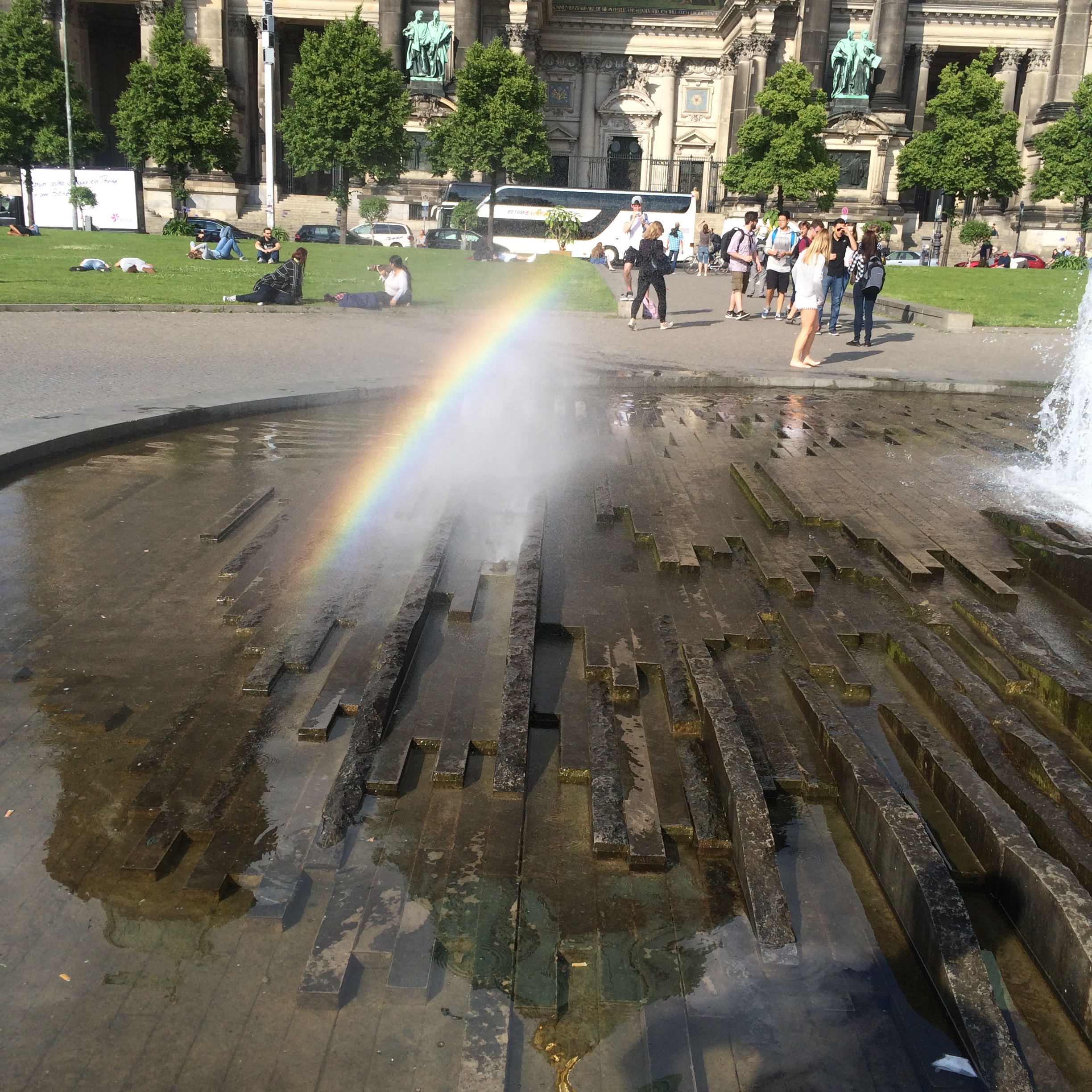



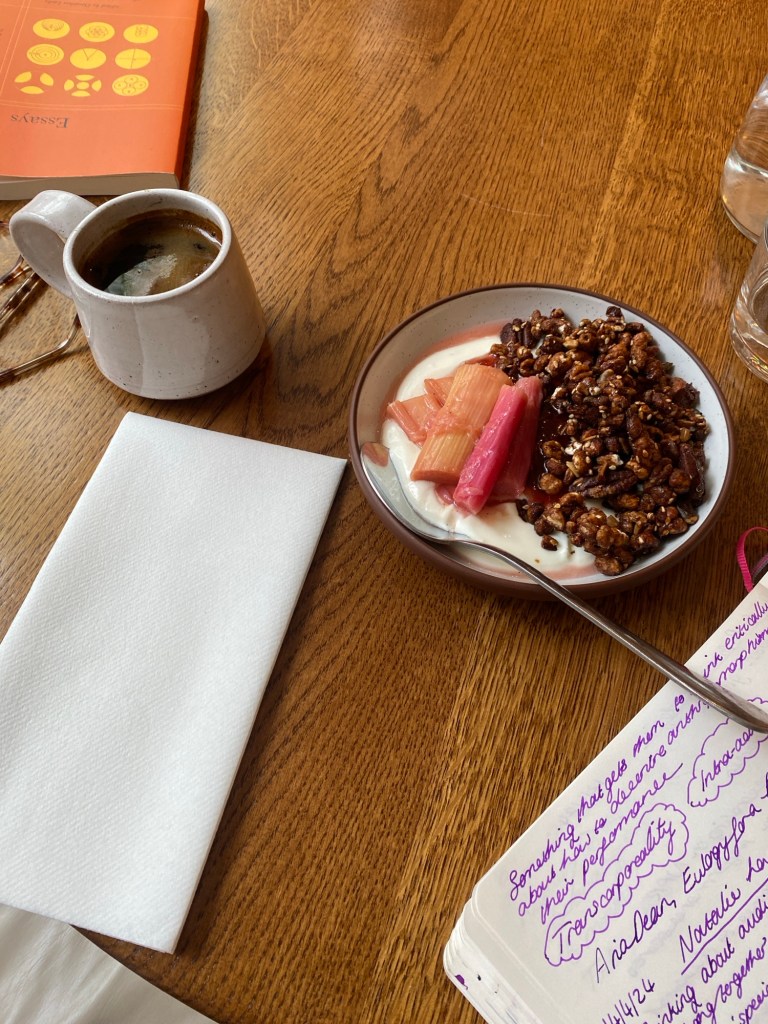

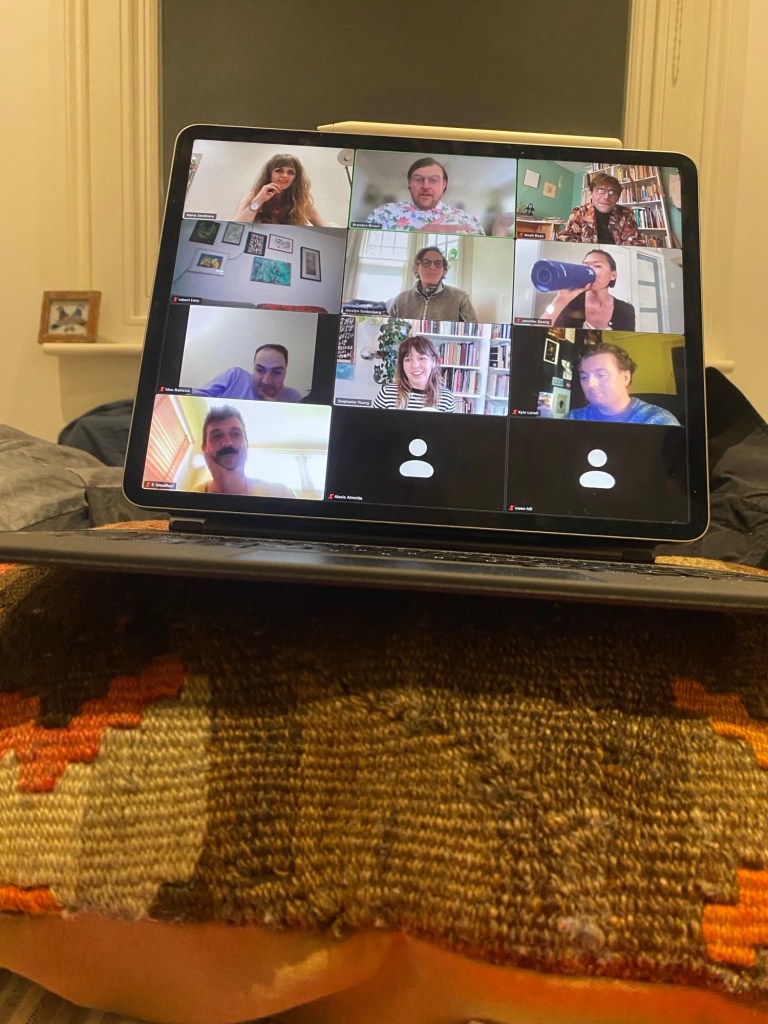
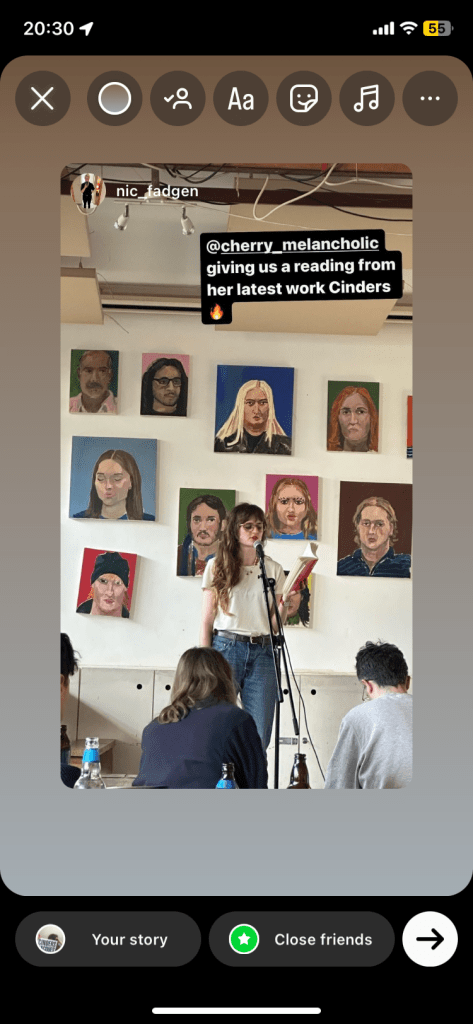

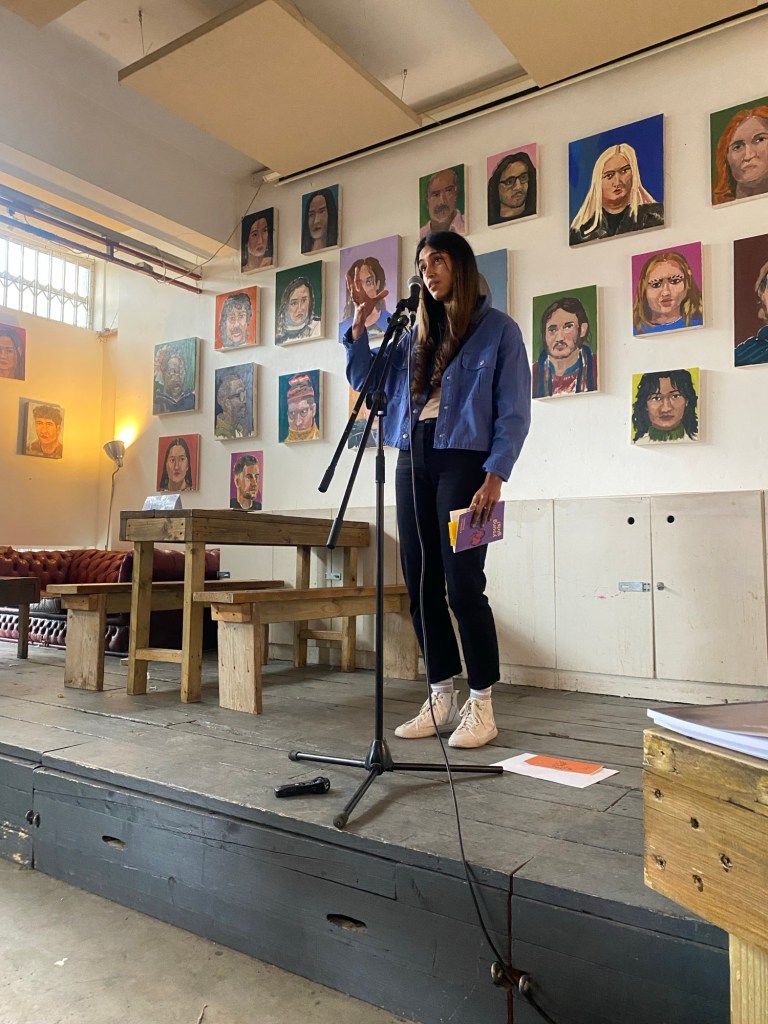
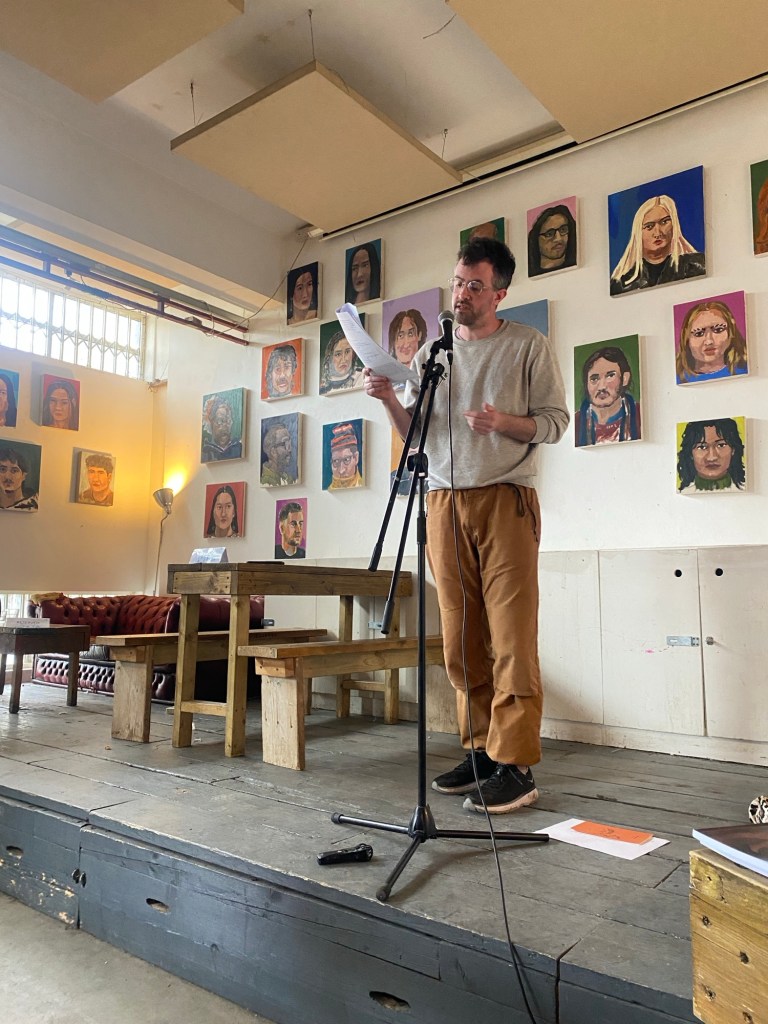
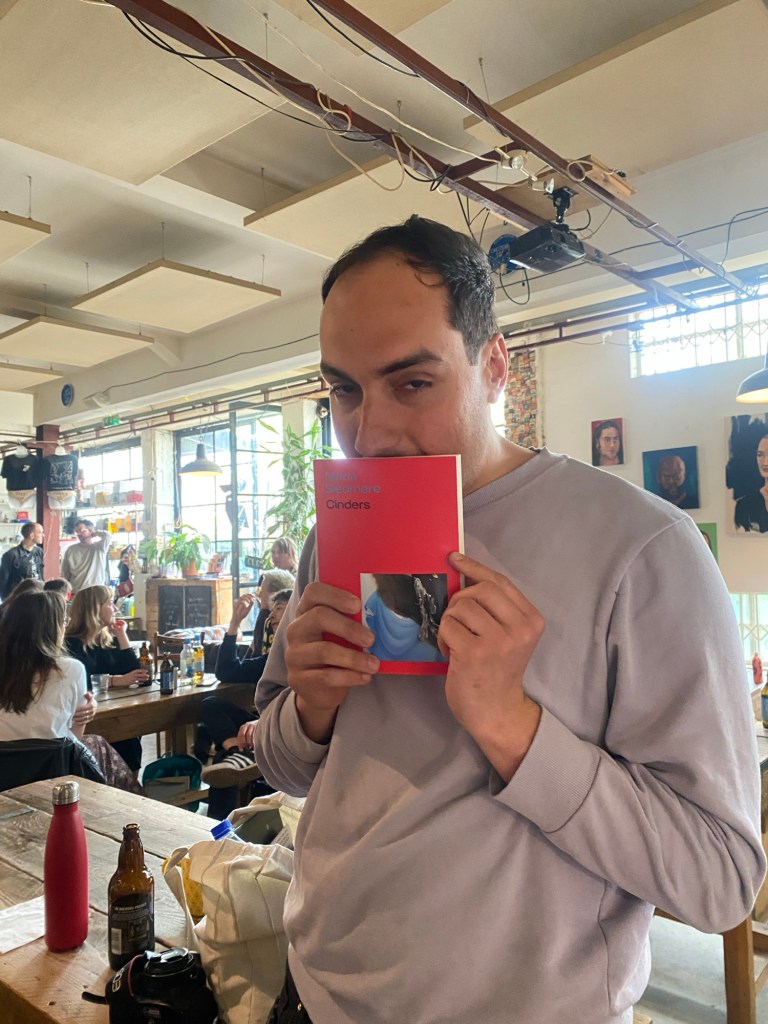
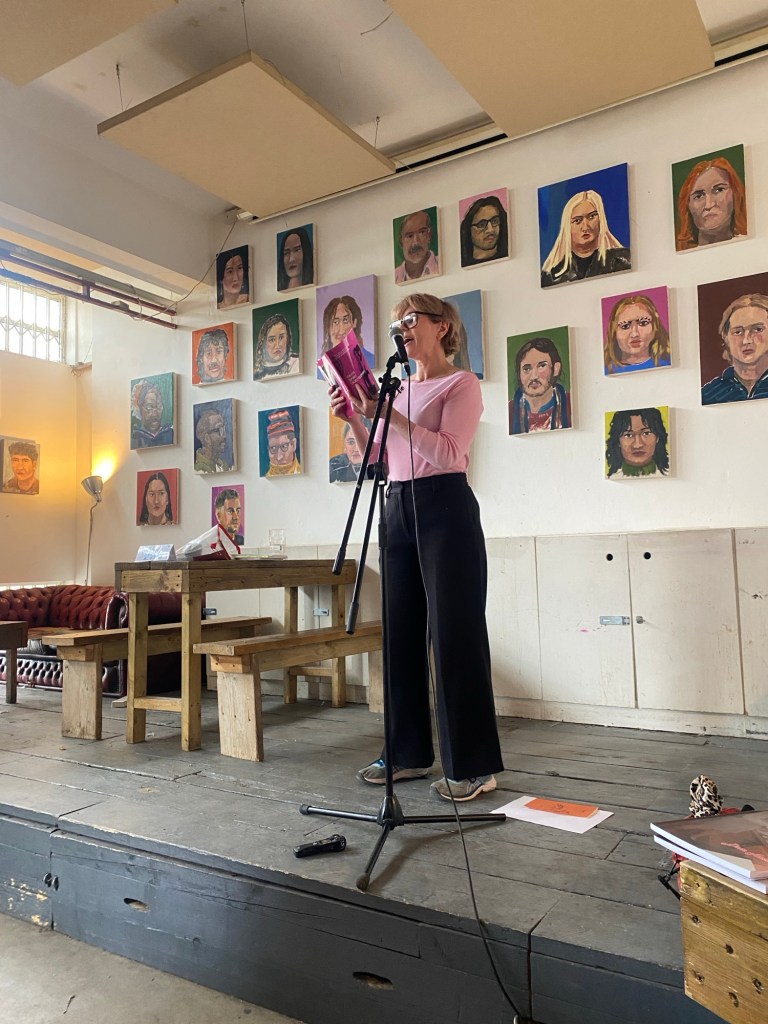
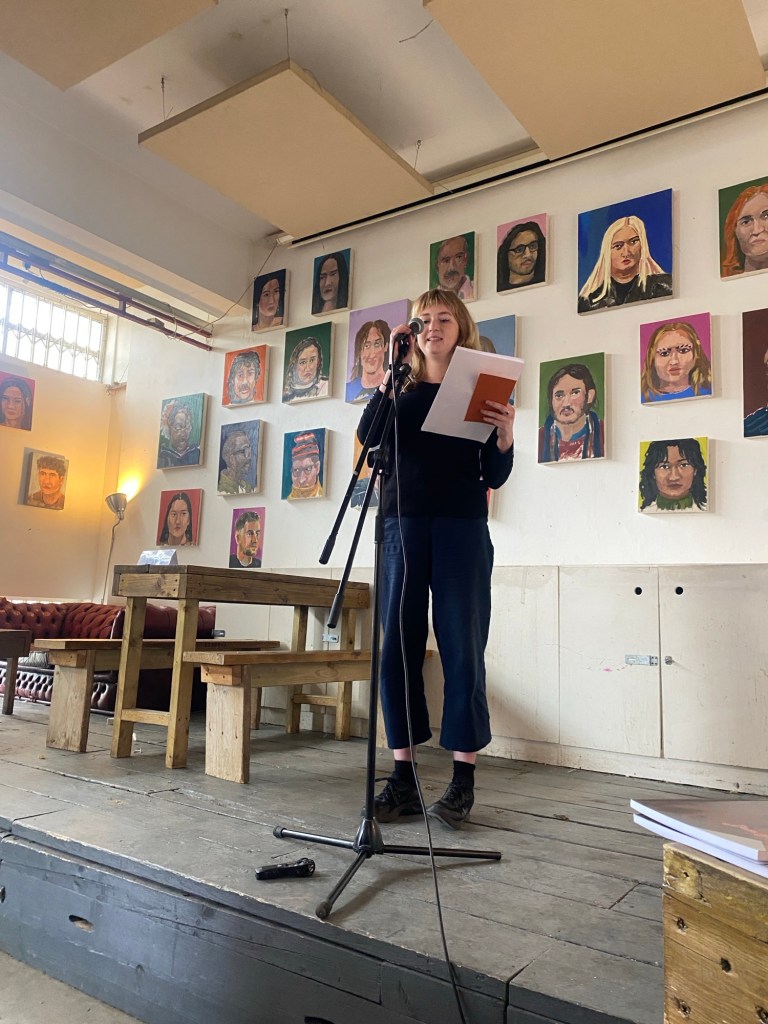


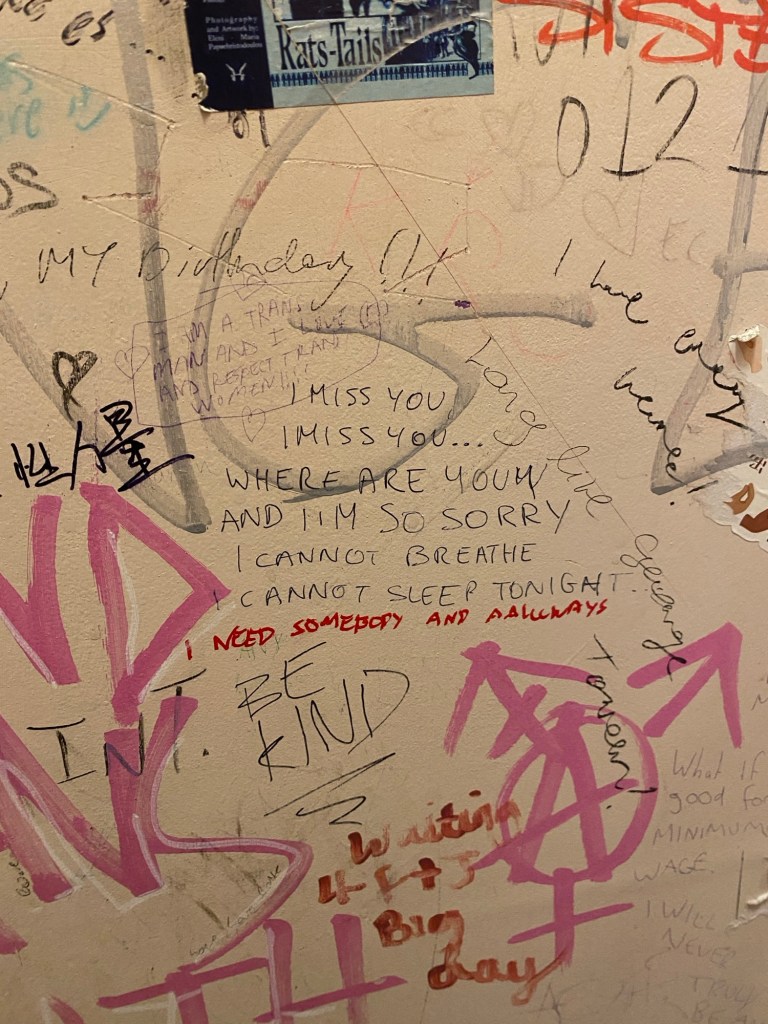



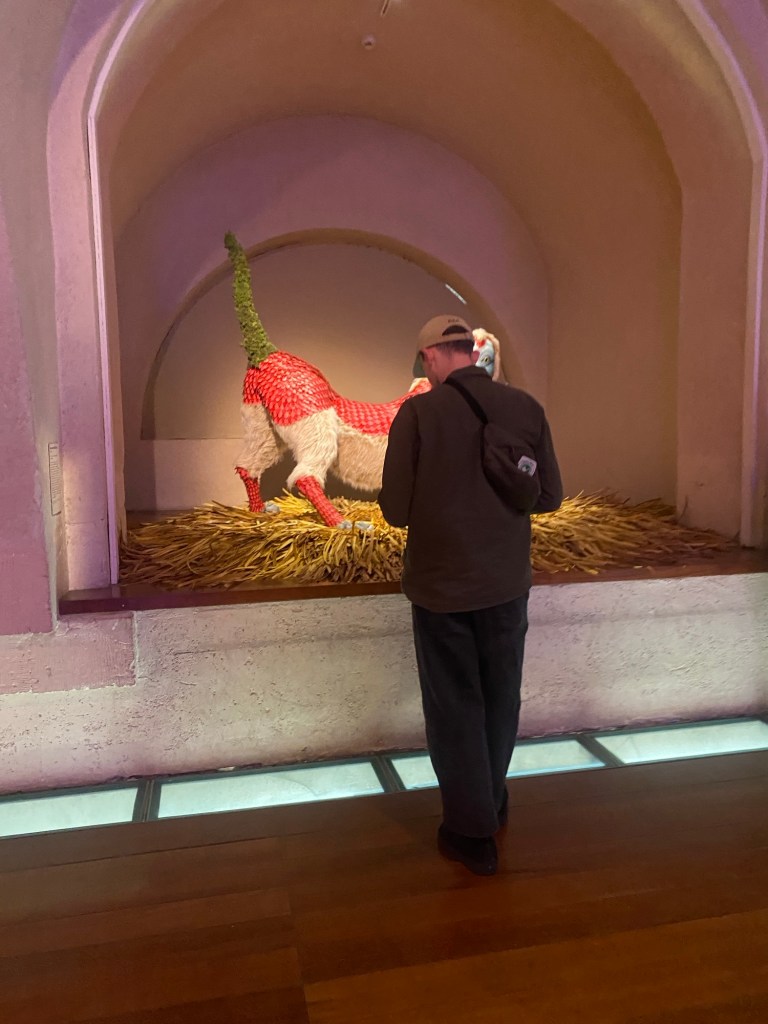


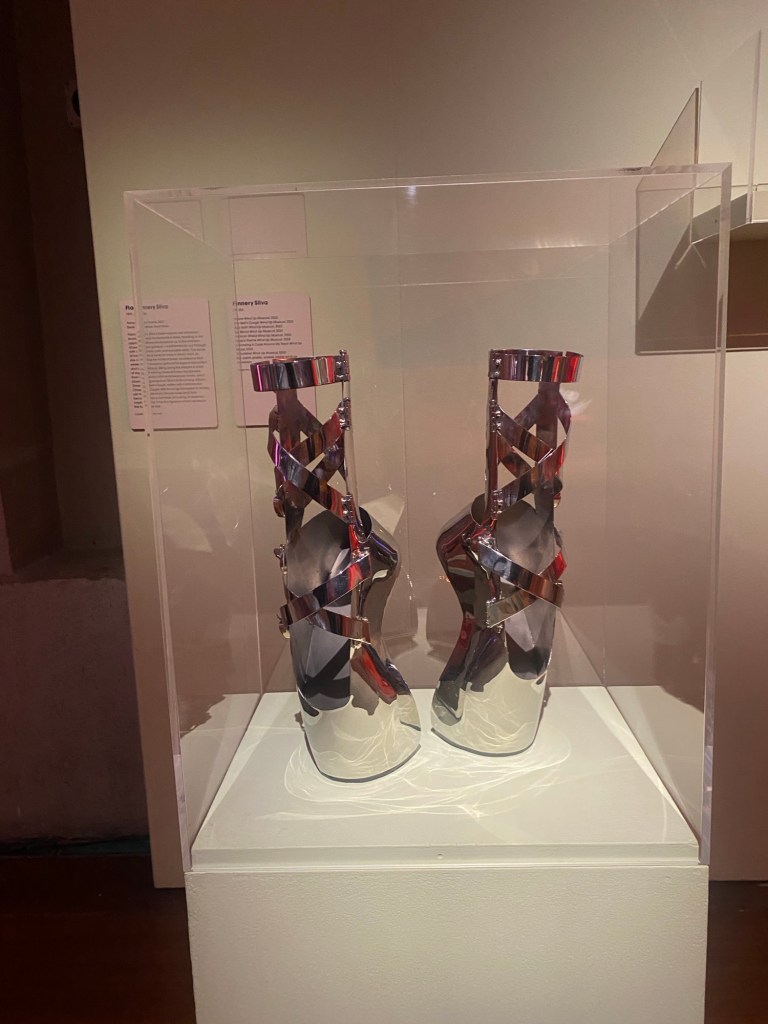


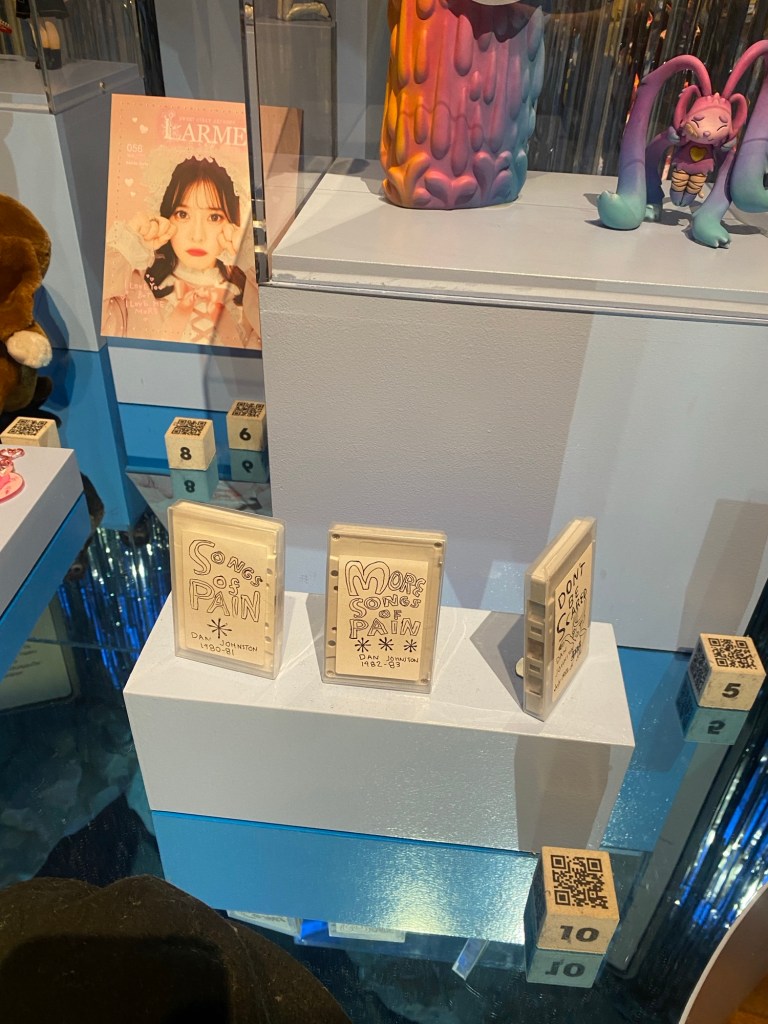


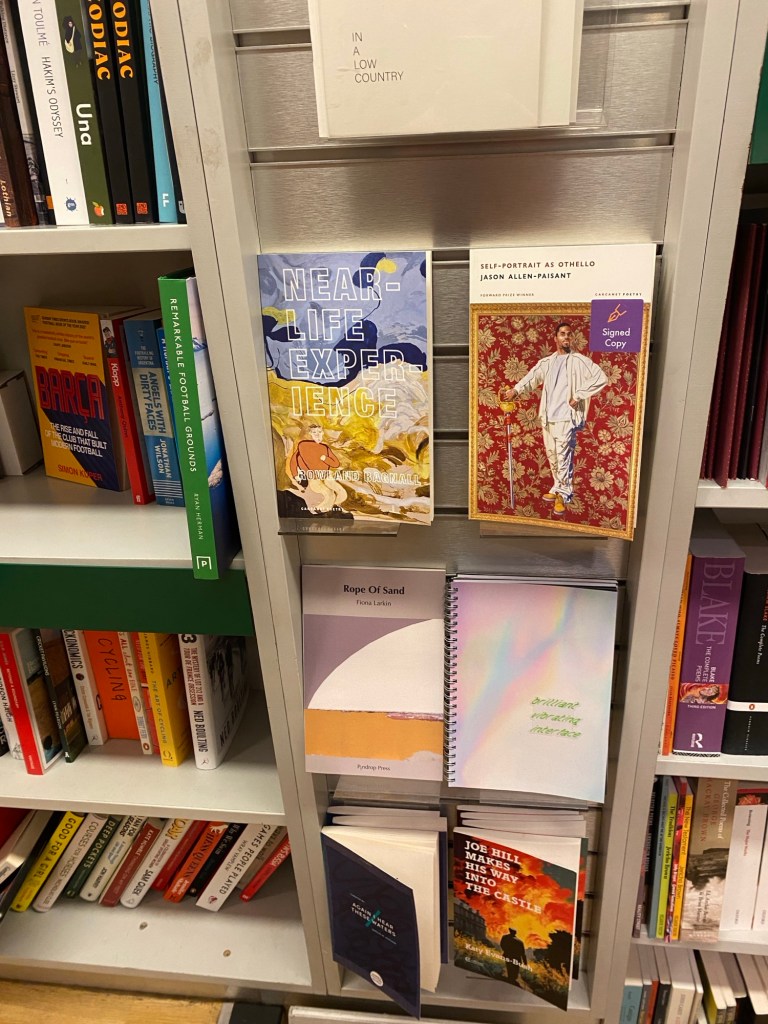

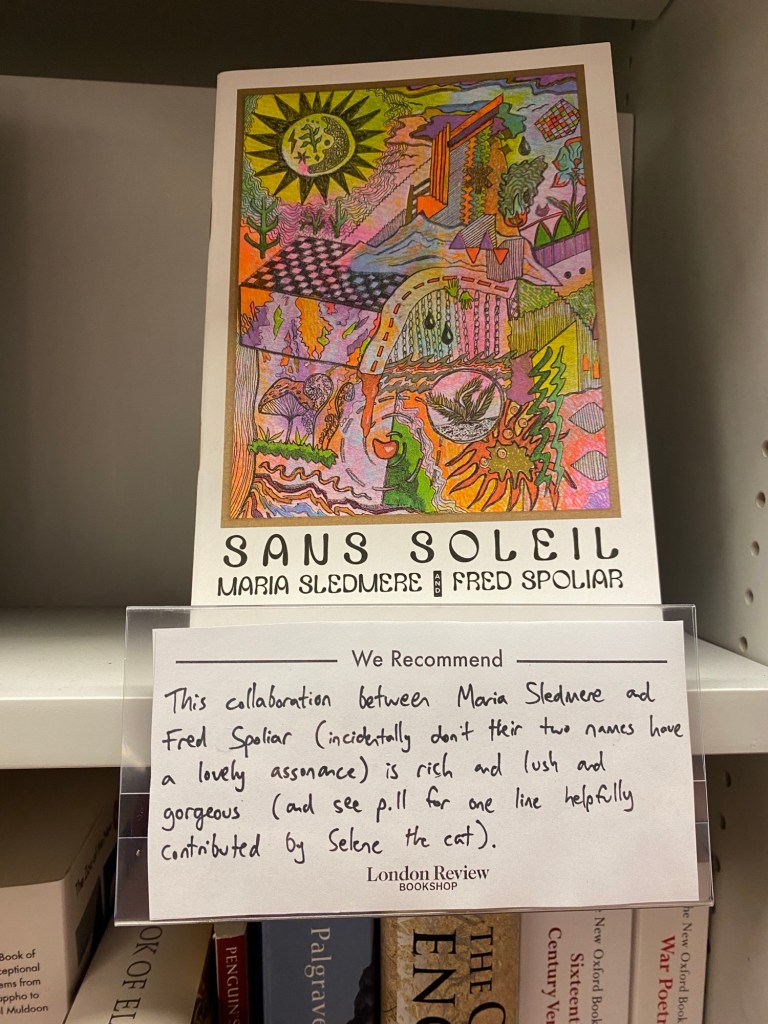
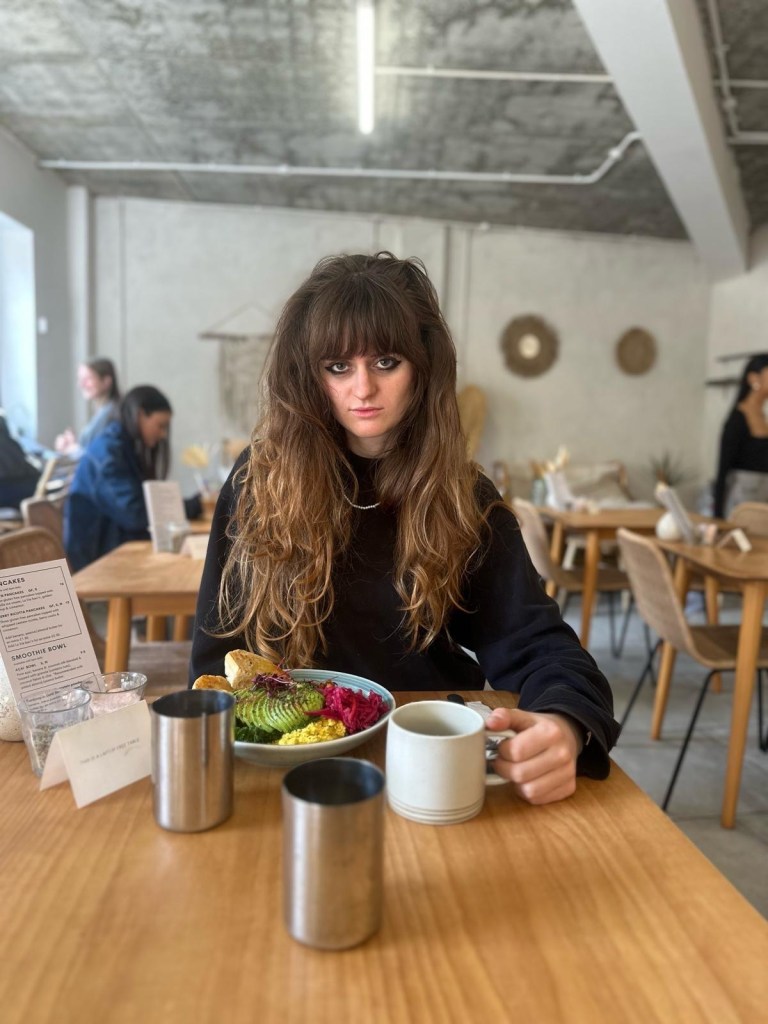


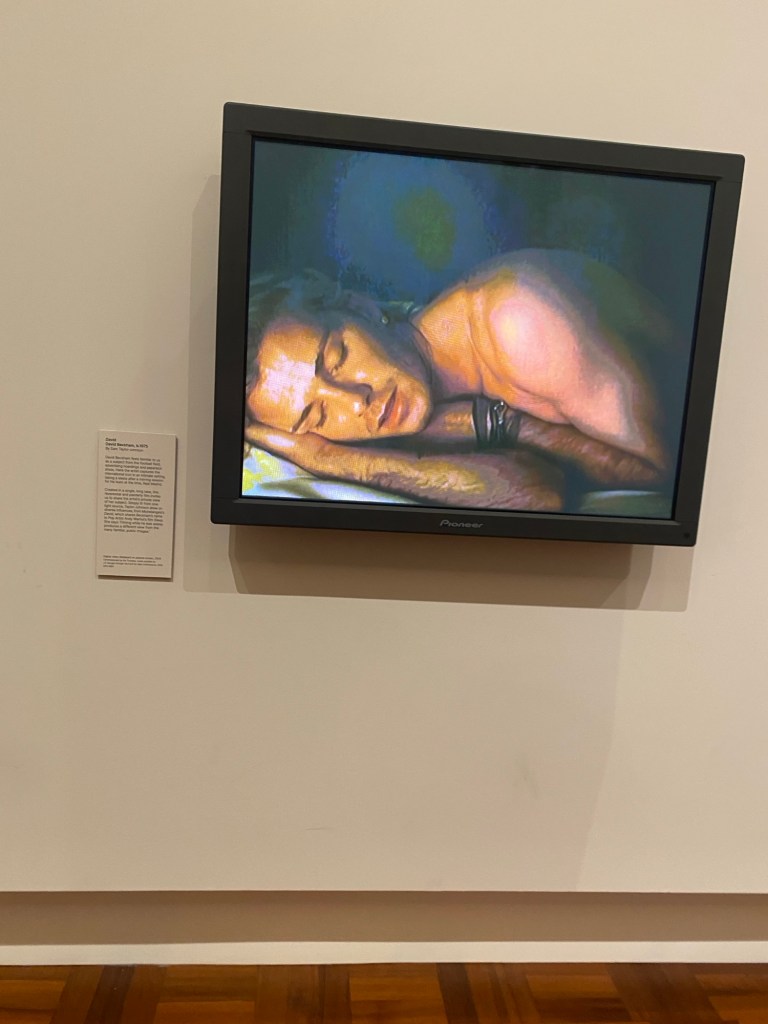












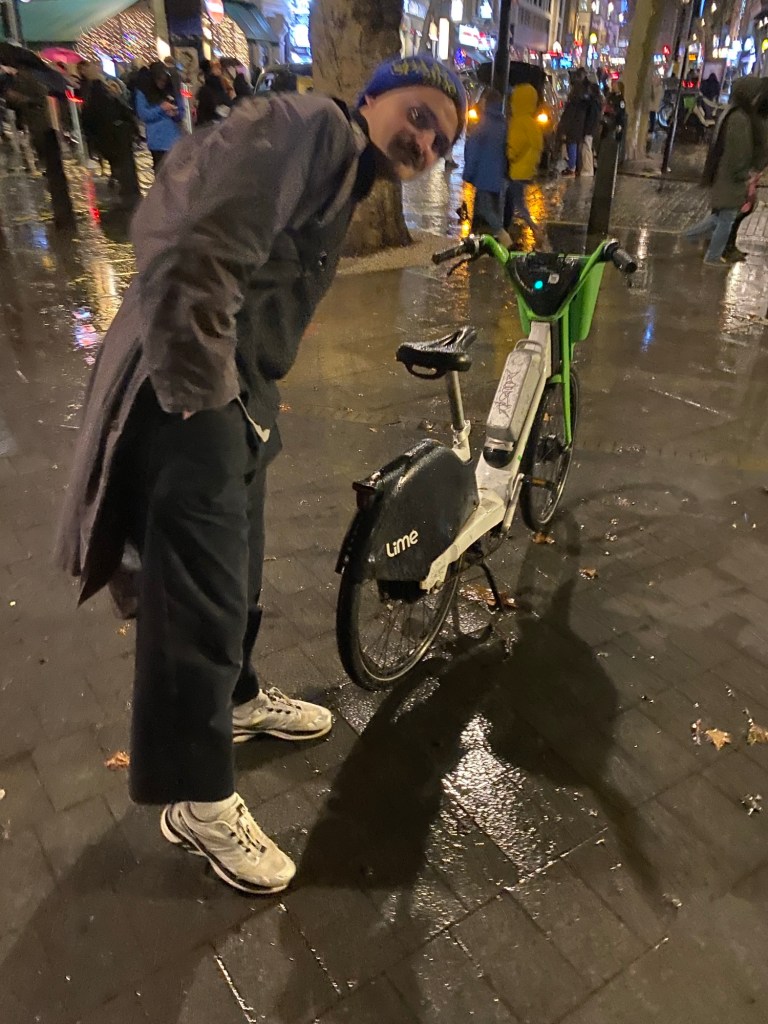
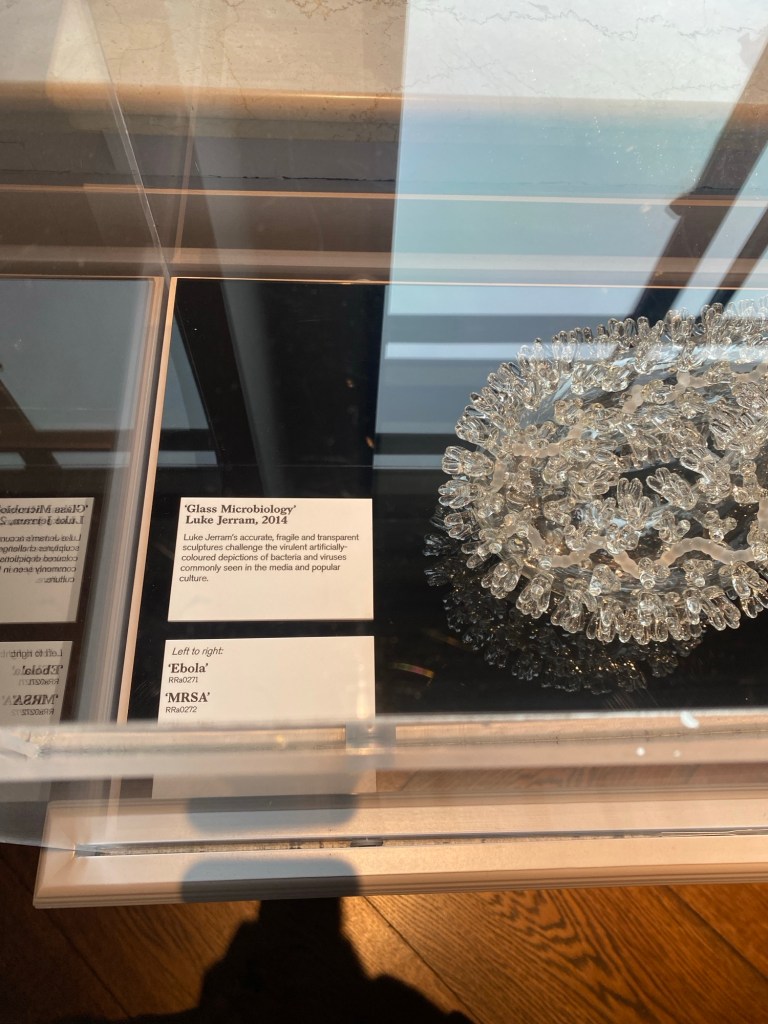

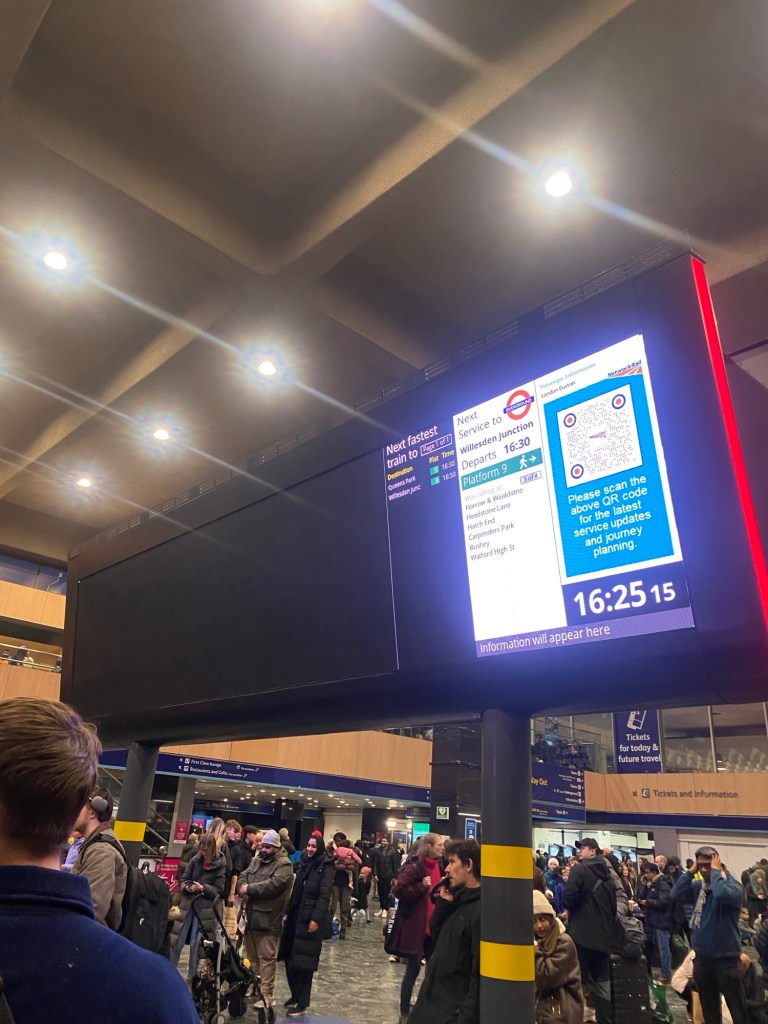
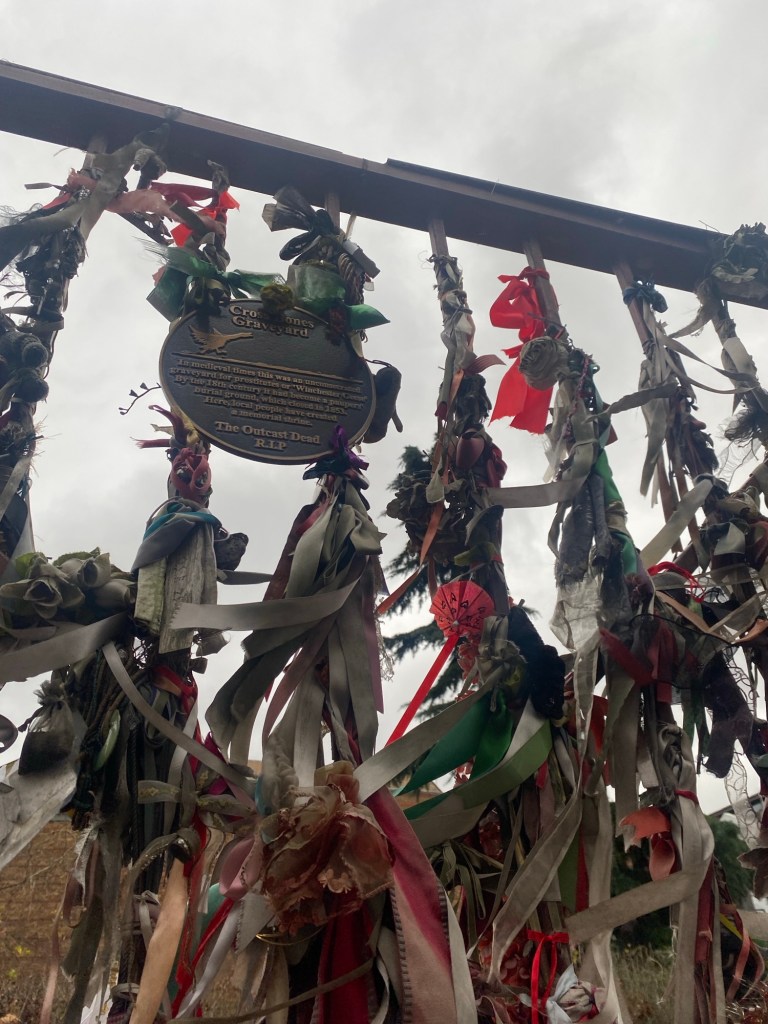
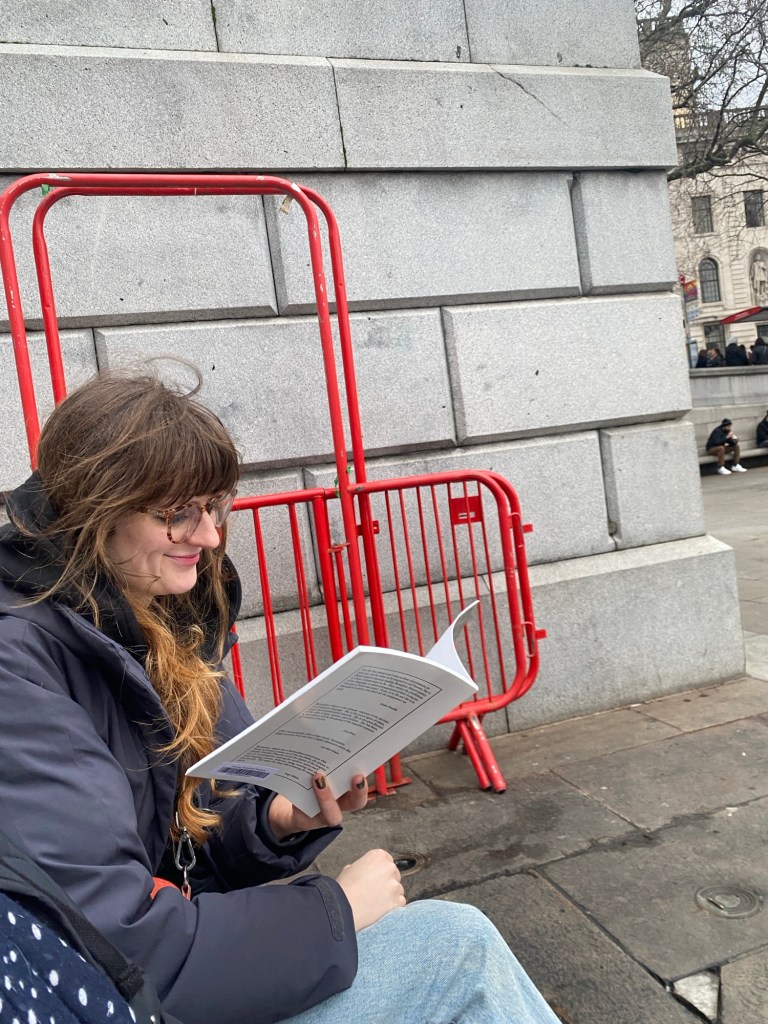


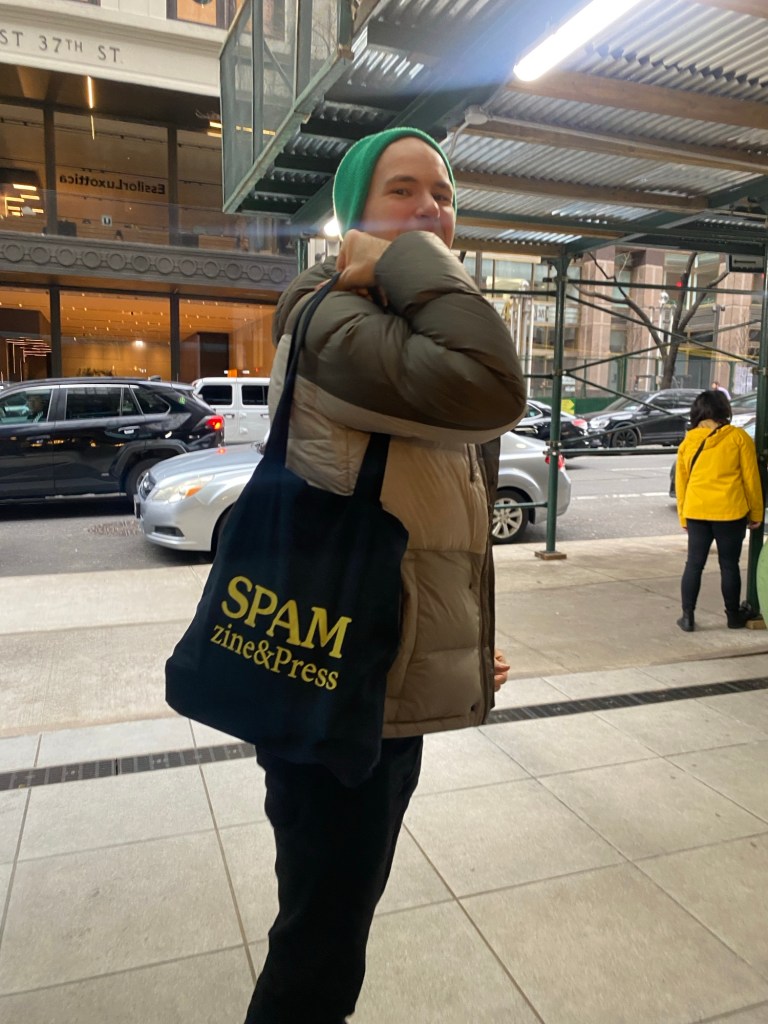




















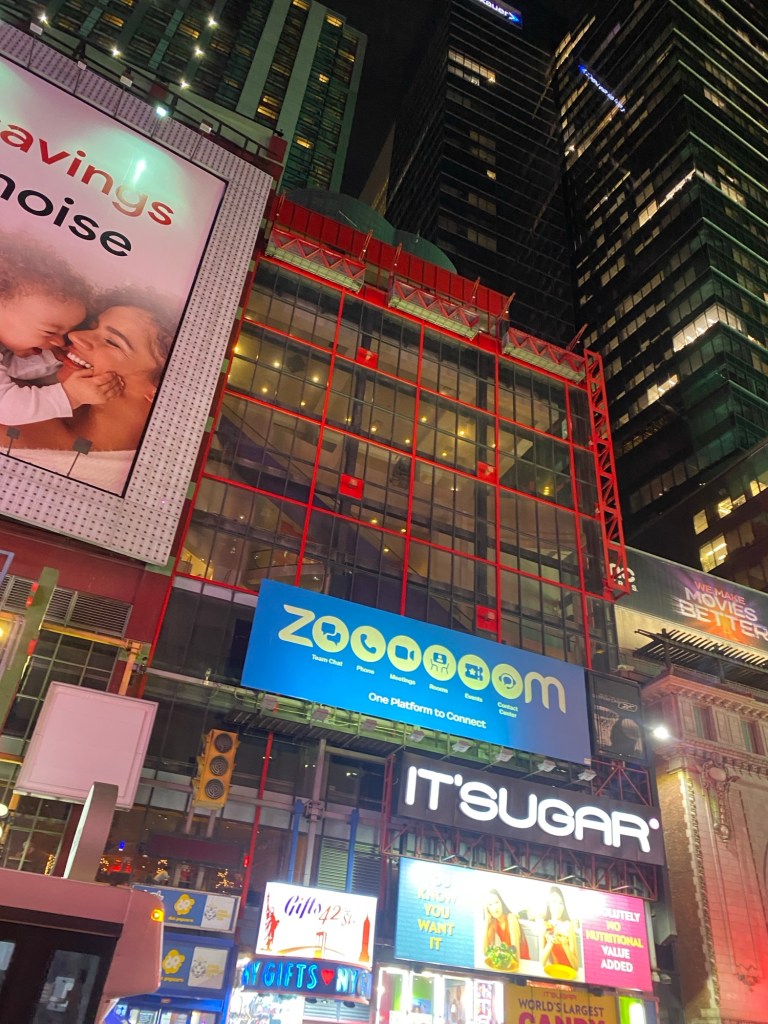





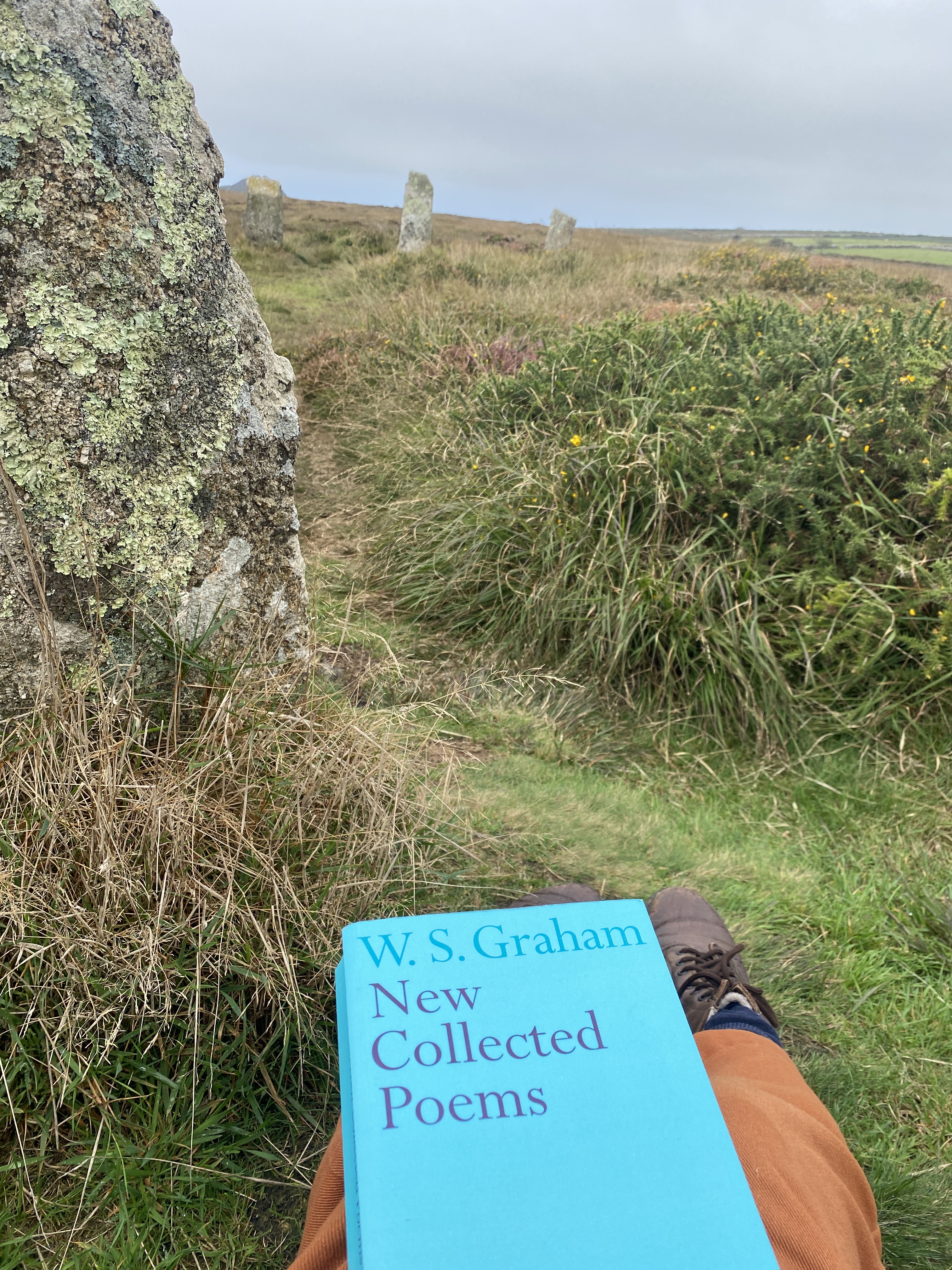
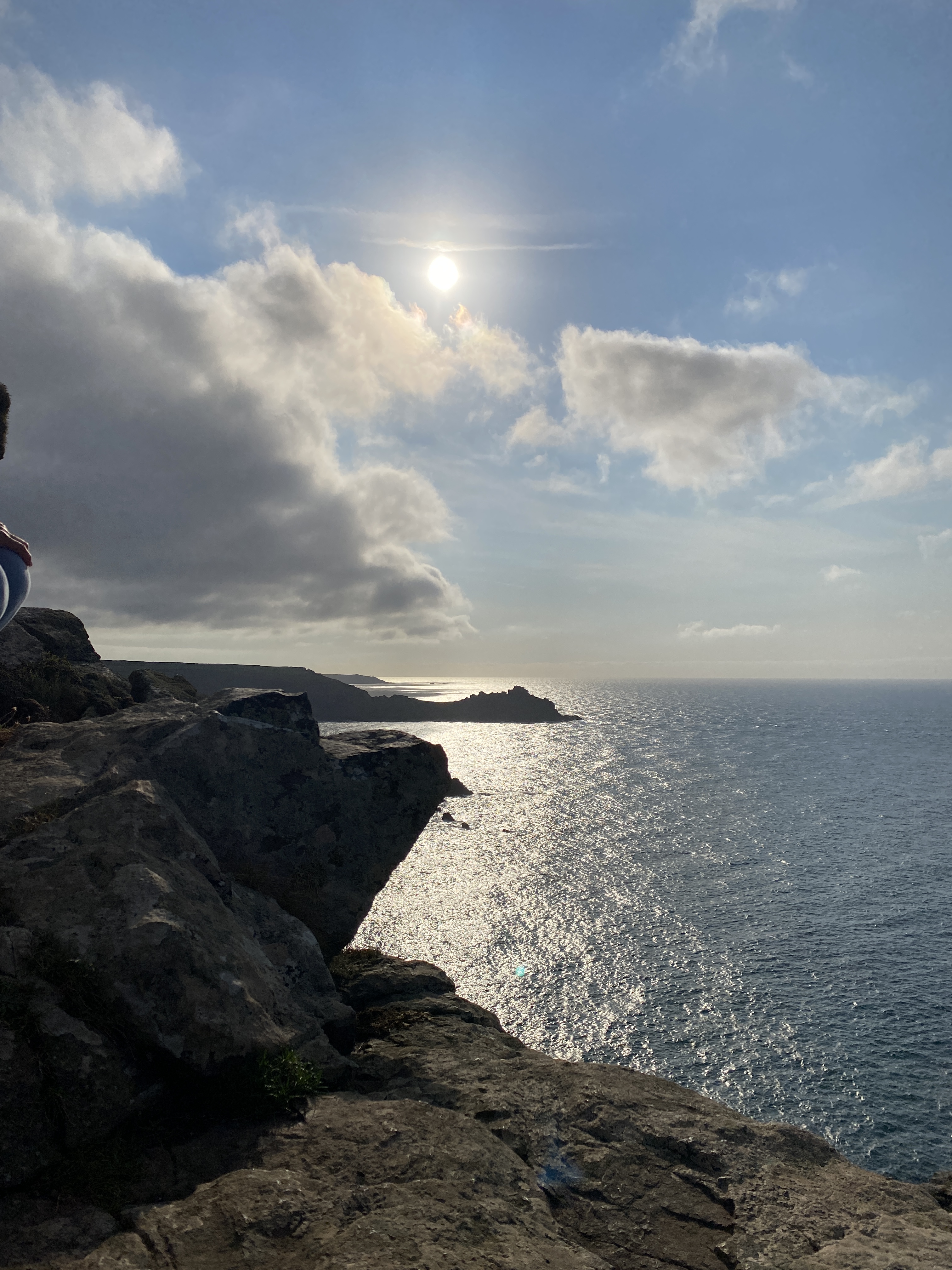

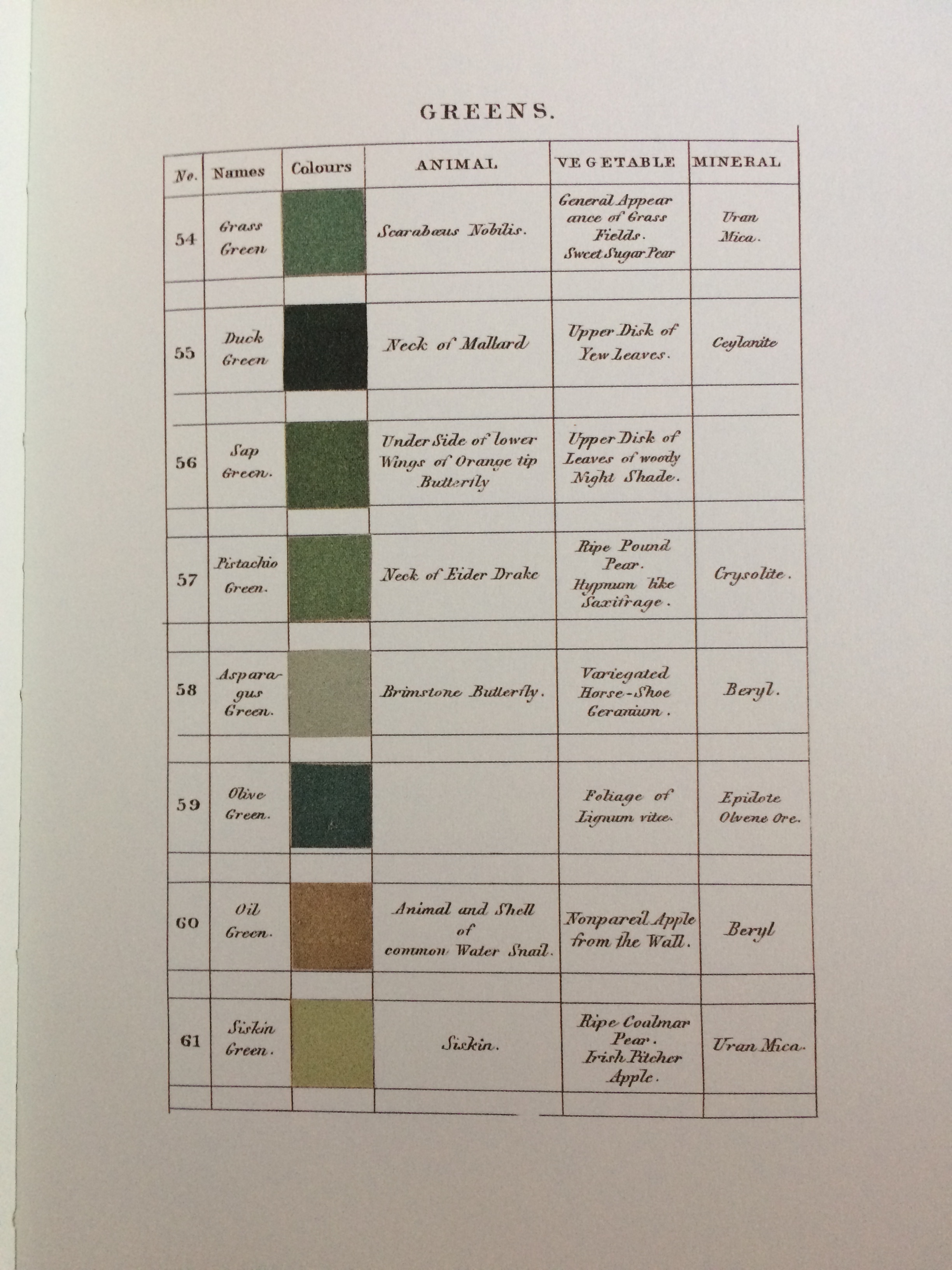
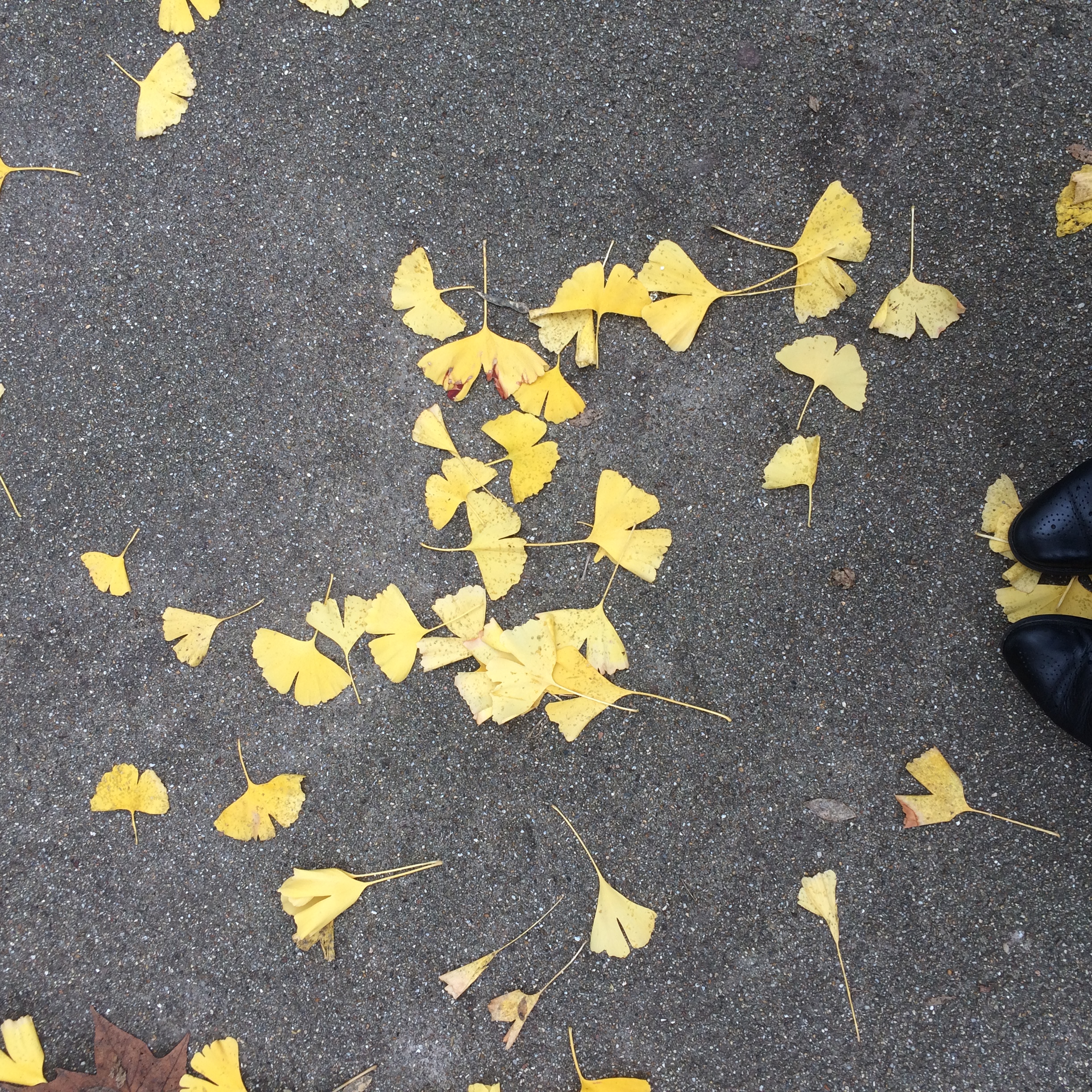
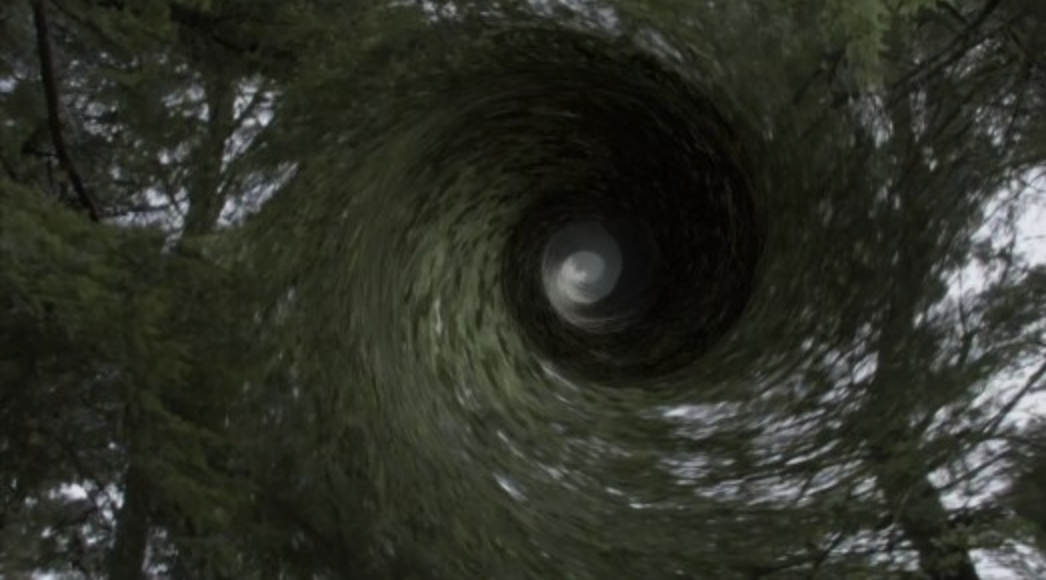
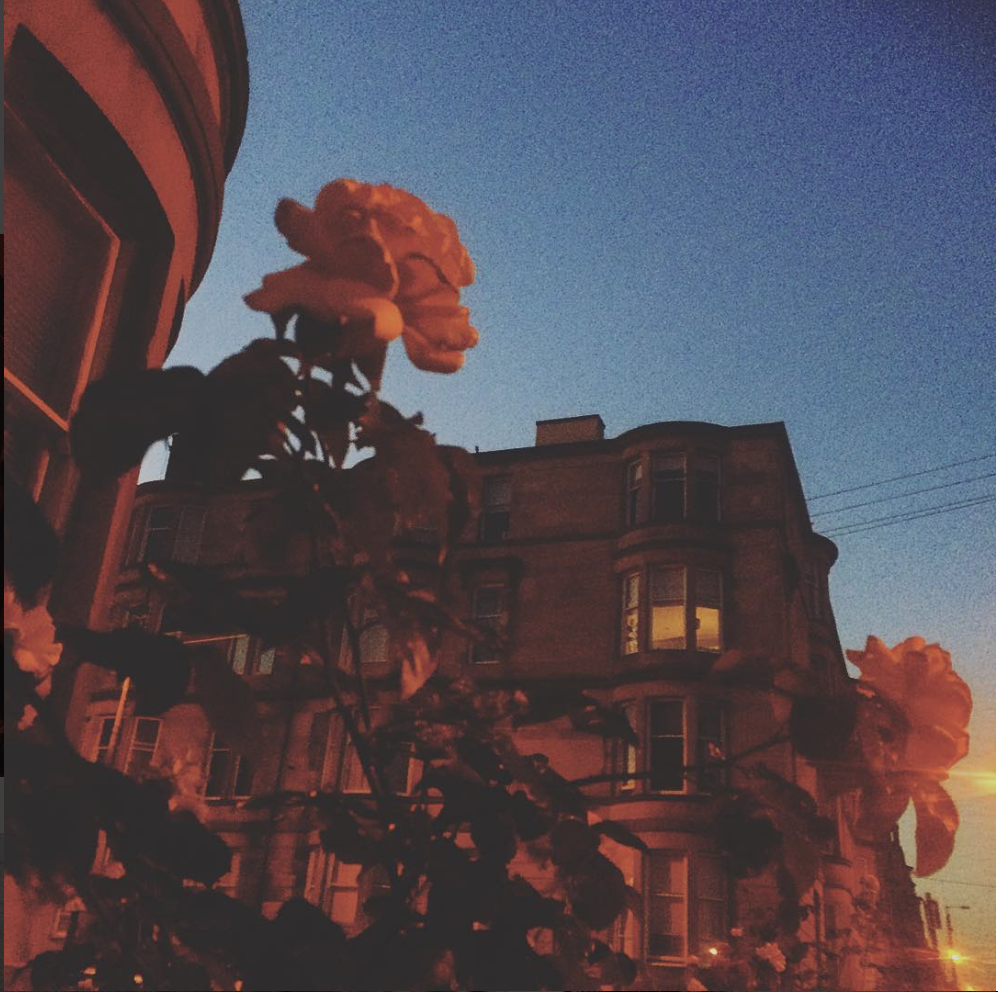


 mariaology