Every book I read in 2024

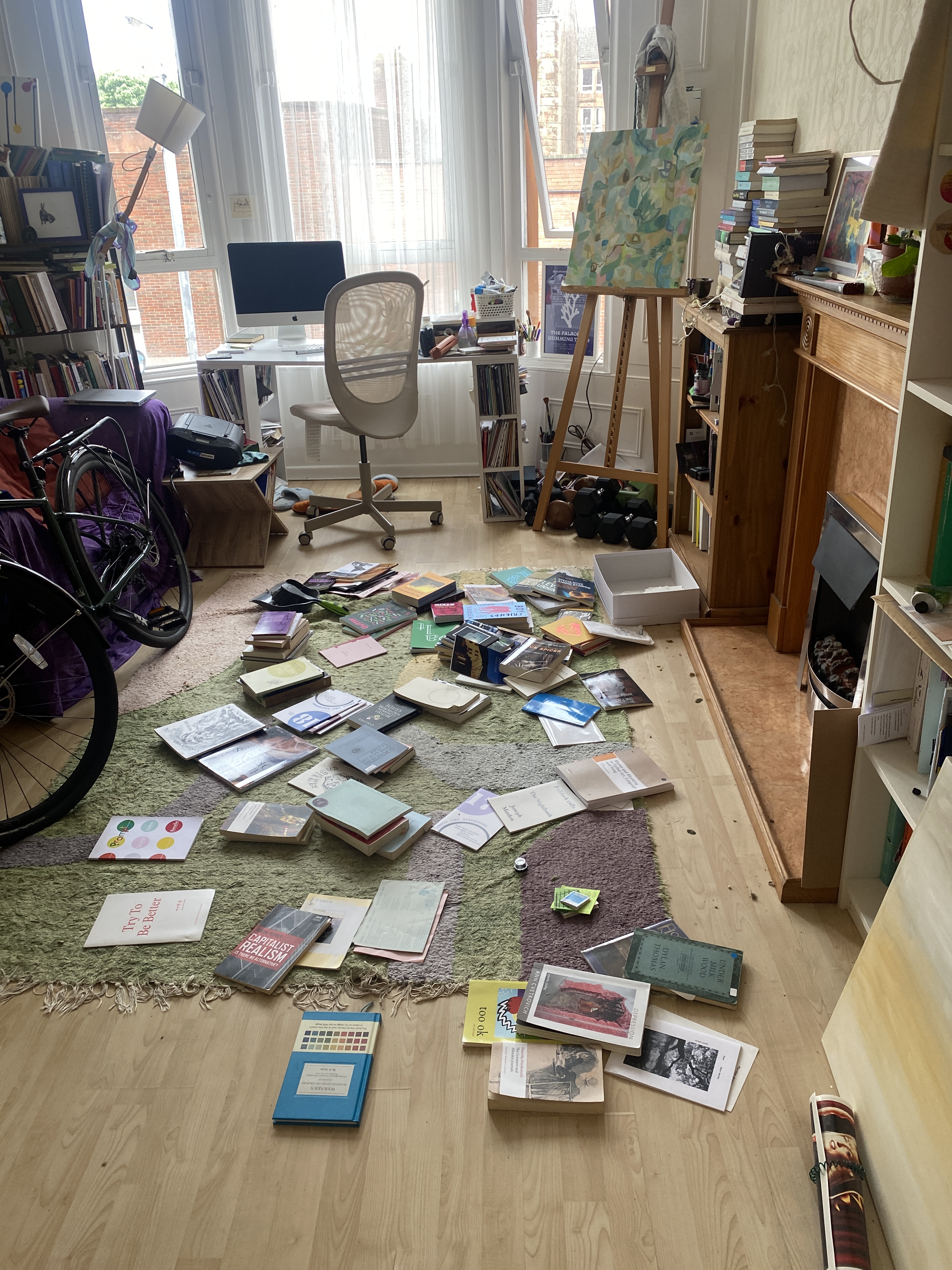
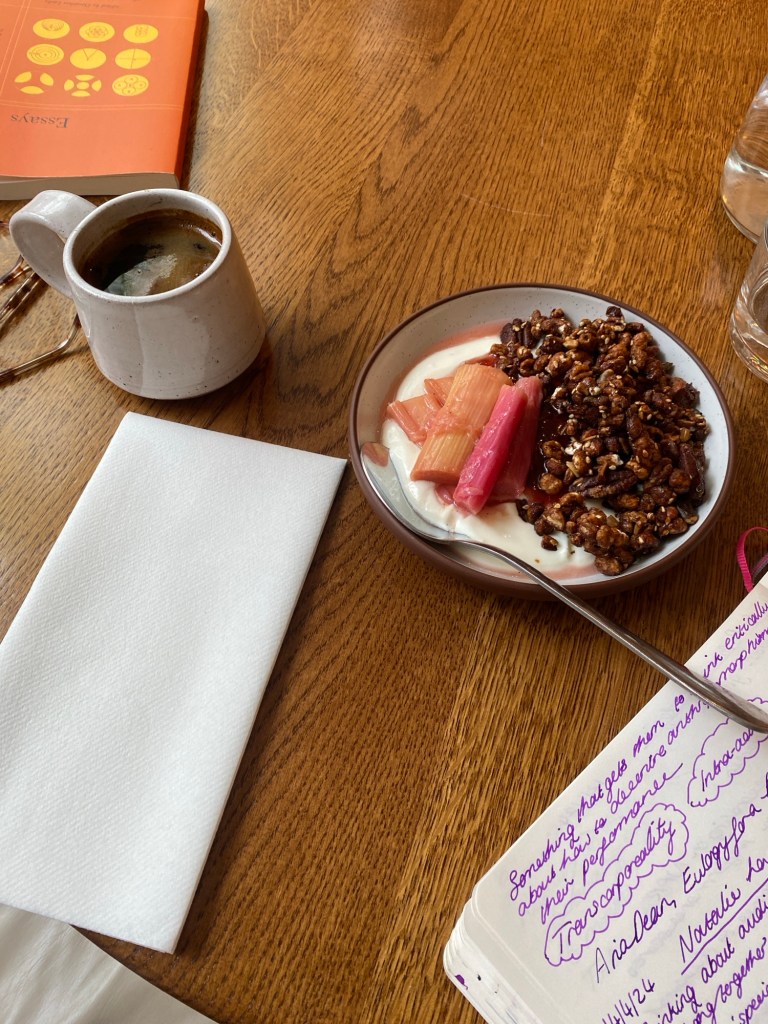
In loose order of reading. This year I made a vow to not let work ‘get in the way’ of reading. I was talking to a colleague about how every subject/specialism has one thing they are supposed to be really good at and actually kind of suck at. We agreed English & Creative Writing staff are often pretty bad at this thing that should be their lifeblood: reading. To prioritise reading is to affirm the necessity of thinking. I felt so burned out with the circuitry of the 2010s and the zoomageddon of lockdown, all those screens. Reading in scroll-time. I still love reading in scroll-time, but on the move only. Or in the midst of something else doing. It took me three years to get back into immersive, situated, FOCUSED reading again. I mean staying up all night to finish a book, crying at sentences, holding something to the light and putting it down and stopping and starting because you want to savour something and all the world of it following you into dreams. All reading started to plug into work. Good work. Channels. If I’m honest, I haven’t written a lot this year. I needed a break from concepts. I did a lot of editing and proofing and reading. I wrote a lot of emails and did a LOT of marking. I think of marking as writing time. It eats into writing time but it’s also a practice of sentence-making, observation, editing, rewriting. Eileen Myles says somewhere that when they write people recommendation letters and do interviews etc that’s a form of writing. So really there are very few ‘fallow’ periods. You’re always writing something to someone, for something or not. I have written over a monograph’s worth of student feedback this year, maybe more. Each paragraph of feedback is a micro-essay, a snapshot of orientation, a patchwork sample which stitches multiple discourses (genre, criteria, instinct, history) in ascent to encouragement and improvement. So all that feedback, I’m trying to say, means I also read a hell of a lot of student work. Hundreds of scripts. Marking trains my eye as a reader and writer. Still learning to toggle between different kinds of reading. Refusing the active/passive binary in favour of a continuum of generative involvement. A lot of what I read below was in-between other reading, but some of it is more explicitly ‘work’ reading. Or: reading as a way of connecting with friends, colleagues — their beautiful brains. Or: preparation for something as yet unknown. Working through personal syllabi. Refreshing the palette.

~

Robert Glück, About Ed (2023)

Jacques Derrida, H.C. for Life, That Is to Say…, trans. by Laurent Milesi and Stefan Herbrechter (2006)

Walter Benjamin, The Storyteller: Tales Out of Loneliness, trans. by Sam Dolbear, Esther Leslie, Sebastian Truskolaski, Antonia Grousdanidou (2023)

Marie Darrieussecq, Sleepless, trans. by Penny Hueston (2021/2023)

Joey Frances, Takeaway Night (2024)

Teju Cole, Black Paper (2021)

George Saunders, A Swim in the Pond in the Rain (2021)

Megan Ridgeway, The Magpie (2024)

Thomas Mann, The Magic Mountain, trans. by John E. Woods (1924)

Andrew O’Hagan, Mayflies (2021)

Tabitha Lasley, Sea State (2021)

Zadie Smith, Intimations (2020)

Jean Genet, Prisoner of Love, trans. by Barbara Bray (1986)

Donna Tartt, The Secret History (1992) 

Oli Hazzard, Sleepers Awake (2024)

Courtney Bush, Every Book is About the Same Thing (2021)

Hélène Cixous, Abstracts and Brief Chronicles of the Time, trans. by Beverley Bie Brahic (2016)

McKenzie Wark, Raving (2023)

Rachael Allen, God Complex (2024)

Elle Nash, Deliver Me (2024)

Joshua Cohen, The Netanyahus (2021)

Andrew Meehan, Instant Fires (2022)

Michael Eigen, Ecstasy (2001)

Noah Ross, The Dogs (2024)

Jennifer Soong, Comeback Death (2024)

Barbara Browning, The Gift (2017)

Cynthia Cruz, The Melancholia of Class (2021)

Courtney Bush, I Love Information (2023)

Clarice Lispector, The Hour of the Star (1977)

Barbara Browning, The Correspondence Artist (2011)

Hilary White, Holes (2024)

Laynie Browne, Everyone and Her Resemblances (2024)

Deborah Meadows, Representing Absence (2004)

Holly Pester, The Lodger (2024)

Terese Marie Mailhot, Heartberries (2018)

Kim Gordon, Girl in a Band (2015)

Lauren Levin, Nightwork (2021)

Oddný Eir, Land of Love and Ruins, trans. by Philip Roughton (2016)

Danielle Dutton, Prairie, Dresses, Art, Other (2024)

Elvia Wilk, Oval (2019)

Nisha Ramayya, Fantasia (2024)

Joanne Kyger, On Time (2015) 

Jean Day, Late Human (2021)

Lisa Jarnot, Black Dog Songs (2003)

Roland Barthes, Camera Lucida (1980)

Mariana Enriquez, Things We Lost in the Fire (2016)

Ben Smith, Doggerland (2019)

Ricky Monaghan Brown, Terminal (2024)

Wendy Lotterman, A Reaction to Someone Coming In (2023)

Joseph Mosconi, Fright Catalog (2013)

Tao Lin, Taipei (2013)

Haytham El Wardany, The Book of Sleep, trans. by Robin Moger (2020)  

Lucy Ives, Life is Everywhere (2022)

Maria Hardin, Cute Girls Watch When I Eat Aether (2024)

Brian Whitener, The 90s (2022)

Jamie Bunyor, A stone worn smooth (2022)

Lucy Ives, The Hermit (2016)

Brenda Hillman, Cascadia (2001) 

Bhanu Kapil, Incubation: a space for monsters (2006)

Peter Reich, A Book of Dreams (1973)

Steve Orth, The Life and Times of Steve Orth (2020)

Lindsey Boldt, Weirding (2022)

Christa Wolf, The Quest for Christa T. (1970)

Hannah Levine, Greasepaint (2024)

Joe Luna, Old News (2024)

Maggie O’Sullivan, earth (2024)

Ian Macartney, sun-drunk (2024)

Sébastien Bovie, Longing for Lo-fi: Glimpsing back through technology (2023)

Steven Zultanski, Relief (2021)

Lionel Ruffel, I Can’t Sleep. trans. by Claire Finch (2021)

Noémi Lefebvre, The Poetics of Work, trans. by Sophie Lewis (2021)

Cynthia Cruz, Disquieting: Essays on Silence (2019)

Marie Buck and Matthew Walker, Spoilers (2024)

Ed Steck, David Horvitz Newly Found Bas Jan Ader Film (2021)

Ammiel Alcalay and Joanne Kyger, Joanne Kyger: Letters to & From (2012)

Lyn Hejinian, Fall Creek (2024)

Etel Adnan and Laure Adler, The Beauty of Light: Interviews, trans. by Ethan Mitchell (2024)

Rick Emerson, Unmask Alice: LSD, Satanic Panic, and the Imposter Behind the World’s Most Notorious Diaries (2022)

Stephen Collis and Jordan Scott, Decomp (2013)

Miye Lee, Dallergut Dream Department Store, trans. by Sandy Joosun Lee (2023)

Barrett Watten, Steve Benson, Carla Harryman, Tom Mandel, Ron Silliman, Kit Robinson, Lyn Hejinian, Rae Armantrout, Ted Pearson, The Grand Piano: Part 1 (2006/2010)

Ottessa Moshfegh, My Year of Rest and Relaxation (2018)

Ian Macartney, Darksong (2024)

Chris Tysh, Continuity Girl (2000)

Barrett Watten, Steve Benson, Carla Harryman, Tom Mandel, Ron Silliman, Kit Robinson, Lyn Hejinian, Rae Armantrout, Ted Pearson, The Grand Piano: Part 2 (2007/2017)

Andrew Durbin, Mature Themes (2014)

Johanne Lykke Holm, Strega, trans. by Saskia Vogel (2022) 

Anthony Low, The Georgic Revolution (1985)

Robin Blaser, The Fire: Collected Essays of Robin Blaser (2006)

Daniel Feinberg, Some Sun (2024)

Maria Hardin, Sick Story (2022)

Lieke Marsman, The Opposite of a Person, trans. by Sophie Collins (2022)

Nadia de Vries, Thistle, trans. by Sarah Timmer Harvey (2024)

Rodge Glass, Joshua in the Sky: A Blood Memoir (2024)

Sarah Moss, My Good Bright Wolf (2024)

Giovanbattista Tusa, Terra Cosmica (2024)

Gabrielle de la Puente and Zarina Muhammad, Poor Artists (2024)

Andrew Meehan, Best Friends (2025)

Courtney Bush, Isn’t this Nice? (2019)

Meghann Boltz, Cautionary Tale (2021)

Ariana Reines, Wave of Blood (2024) 

Dalia Neis, The Swarm (2022)

Ian Macartney, Secret Agent Orca Twelve (2024)

Nicholson Baker, The Mezzanine (1988)

Kurt Vonnegut, Cat’s Cradle (1963)

Molly Brodak, A Little Middle of the Night (2010)

Bernadette Mayer, Midwinter Day (1982)

Anna Kavan, Ice (1967)

Molly Brodak, Bandit (2016)

Charles Bernstein, Content’s Dream: Essays 1975-1984 (1986)

Anna Gurton-Wachter, My Midwinter Poem (2020)

Midsummer Song (Hypercritique)

In 2018, I started a Doctorate of Fine Arts in Creative Writing at the University of Glasgow. I also started a new diary. In October, the month it all started, I wrote about duplicate footsteps and permanent landfills. I wrote of lacking the energy to dance, being lost in the forest, looking for safety among swirling leaves. Can’t remember if the forest was real or metaphorical. I wrote seemingly in lieu of being able to actually venture beyond the confines of my working life. Over three years and three months, I went through multiple iterations of research focus. I looked at foam, clouds, technicity, glitter, quotidian measures, fire and cinders. I fell asleep on coaches circling lochan sunsets. I produced a list of figures for how we might conceptualise this project. It was a sort of Escherian dollshouse, a self-deconstruction of building this place to think. I thought about Bhanu Kapil dropping her book in the river. I thought about doing a writer’s residency within the confines of a square-shaped digital platform. I wrote of ‘An angel tossing her gunpowder sequins’ and ethical eating, ‘how so often you are so paralysed between two choices that you just don’t eat at all’. I wondered what kind of home this work would make for me. This was a material question: thanks to the Scottish Graduate School of Arts & Humanities, it was a funded period. It paid me through Covid-19.

These were my original research questions:

  • How can creative and critical writing interrogate and depict the apparent tensions between the Anthropocene’s deep-time and the quotidian context of our ecological orientations?
  • What hybrid critical-creative forms might open up possibilities for a future ecological art, one which builds productive ways of ‘tuning in’ to a non-anthropocentric experience, with reflexive attention to the artistic and technological media involved in this process?
  • How might ‘the everyday’ provide a temporal and formal mode through which to develop a critical, interdisciplinary Anthropocene aesthetics, negotiating ecological questions of affect, sensory relations, ethics and responsibility at scales both macro and micro, human and nonhuman?

It is up to the reader to decide how far the end result fulfilled or strayed from these lines of enquiry.

Six years on, having graduated from being a baby scholar-poet, I am really thrilled this project has found a dream home with No University Press, a new imprint from Tenement Press. The ‘no’ of refusal feels appropriate to this project, which very much concerns the affordances and limits of an academic and institutional mode when thinking through (im)possible questions of ecological thought and living on. Working with Benjamin Pickford and Dominic Jaeckle, editors at Tenement, I was able to bring the project’s creative detours and modalities to life in its final book form: Midsummer Song (Hypercritique). This is definitely the most ambitious work of my life. It’s 469 pages of critique, poetics, meadow work, illustration and elegy. I see the whole book as a big song, a study, an architectural attempt at making an ecological home in lyric.

Somewhere between an academic monograph and performative dreamwork, poetry and poetics, conceptualism and the commonplace.

You can order the book direct from Tenement here or from Asterism here.

You can read a full description of the book and access endorsements, sample poems and other materials here.

I will be touring the book at some upcoming dates in Glasgow, Edinburgh, Manchester and London:

09.11.24                      Peter Barlow’s Cigarette /
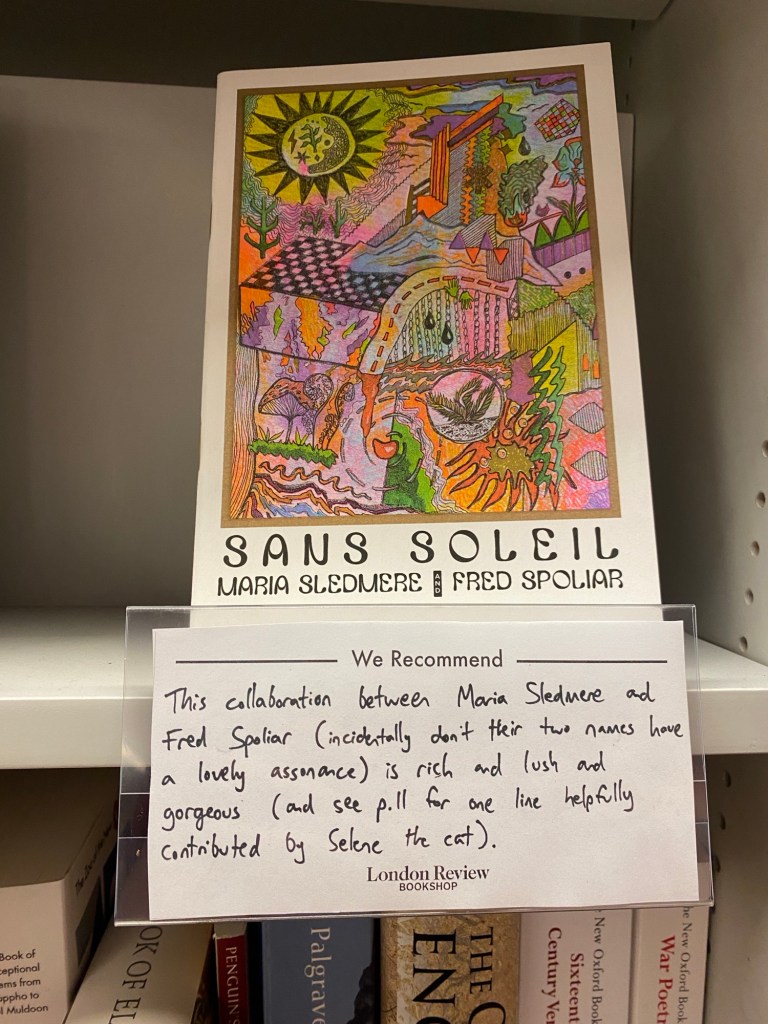
                                        with Maria Sledmere,
                                        Harriet Tarlo & Lucy Wilkinson
                                        The Carlton Club, Whalley Range
                                        Manchester
                                        See here.

05.11.24                      Midsummer Song / Readings & Discussion
                                        Maria Sledmere,
                                        David Farrier
                                        & Colin Herd
                                        Fruitmarket Gallery, Edinburgh
                                        See here.

26.10.24                      Midsummer Song / Readings & Discussion
                                        Maria Sledmere,
                                        Chris McCabe
                                        Small Publishers Fair
                                        Conway Hall, London
                                        See here.

22.10.24                     Midsummer Song / Readings & Discussion
                                        Maria Sledmere,
                                        Carl Lavery
                                        & Colin Herd
                                        Advanced Research Centre,
                                        University of Glasgow / (Online via Zoom)
                                        See here.

In s(w)ervice of attention

I wanna show up for poetry every day for the rest of my life. There’s this word for when food continues to cook itself — carry-over — like tortiglioni warm and slippery in the colander needing to be eaten. I wish poetry could do that. A. says it does, doesn’t it? When you remember a line sometime down the line and it occurs to you: a new meaning. Or when the poem you wrote marinades in the background all to be felt with alternative pressure. I guess to write then is to throw out your salt or chuck a glass of water behind you as you leave the door of the document. Poem to set out for the day each day.

When I say I want to show up for poetry it’s not just that I want to hear or write or feel it live. Is it that I want to pay it attention? Who or what is poetry and where do I go to do this?

Right now, I’m going to fiction.

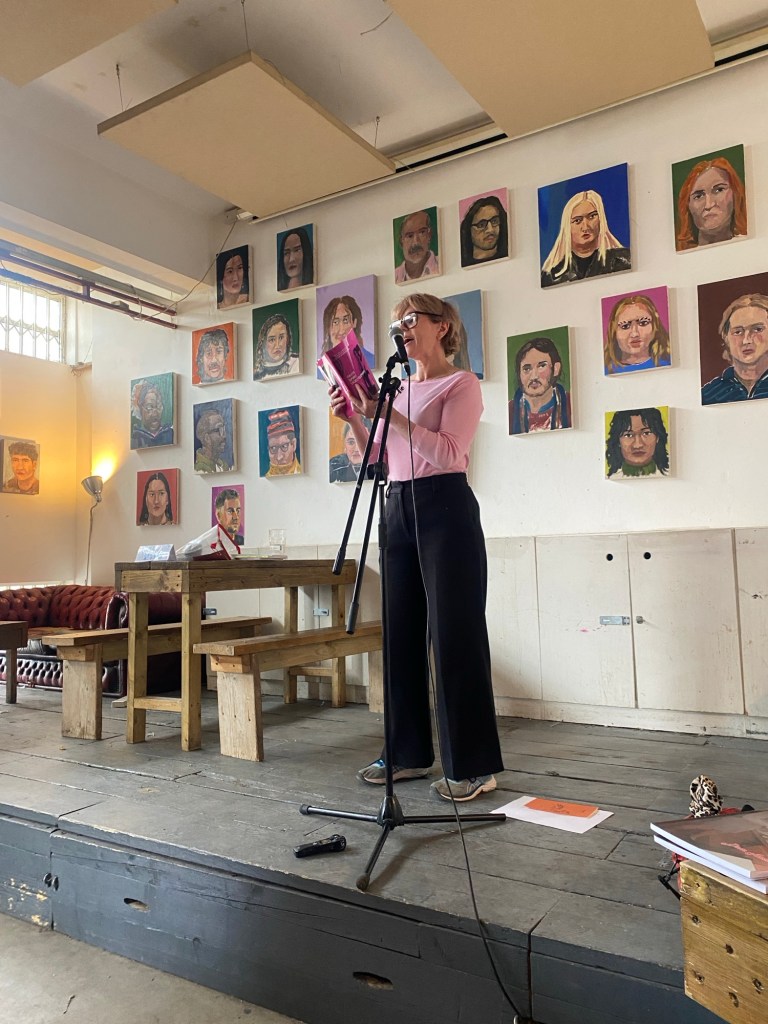
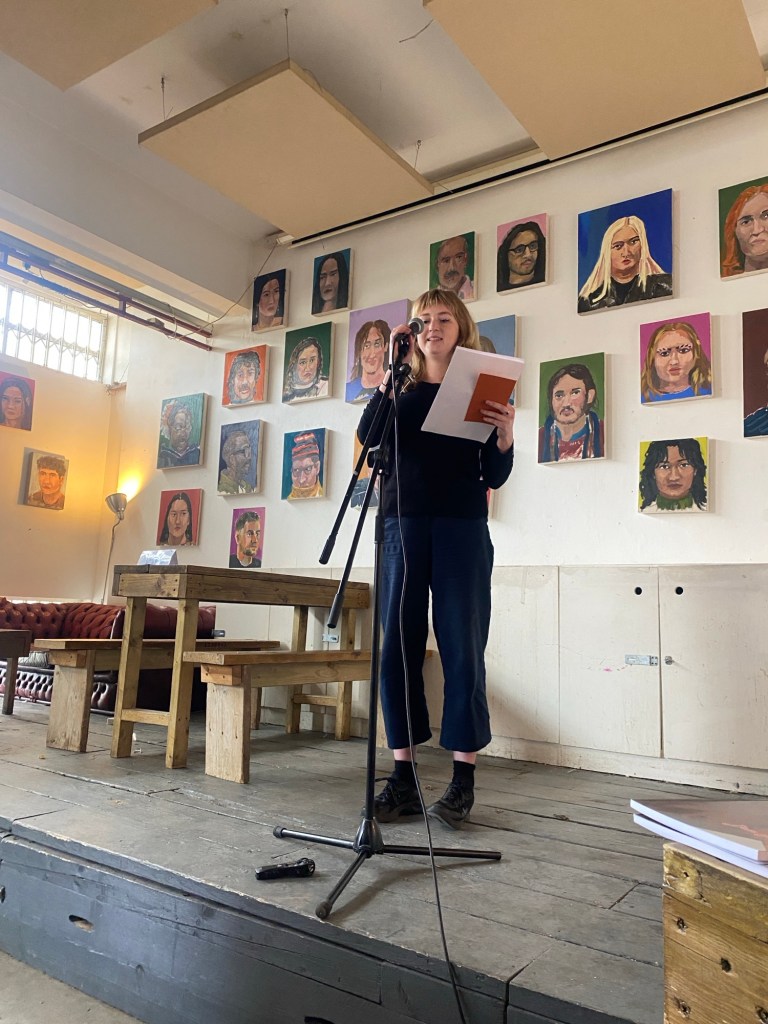
Recently I attended a joint book launch at Waterstones, Glasgow with Elle Nash and Kirsty Logan. Nash said the thing about fiction, her philosophy, is that she wants it to bring the reader to their knees. Logan said she wanted fiction to be like telling the reader a story. Both are forms of surrendering and/or attention. I don’t remember being held in the cosy space of storytelling at school because my brain was off on its own adventures. I categorically could not pay attention. Or maybe I practised another form of attention. I had it for free, and didn’t need to pay anyone anything. Something I was scolded for. Maria, pay attention. Was I failing to pay some kind of respect to the storyteller? Part of me wanted that form of listening attention so badly, to be wrapped up in the words of another and so in the folds of the room, but I just couldn’t surrender like that. I would look around the class and be hyper aware of a hundred things at once. The pins and needles in my feet; the subtle vocal inflections of the reader; the question of whether or not this teacher had sex and surely they had because they said they had kids but could I imagine them having sex and then when I tried I could not stop imagining them having sex and it was awful; what would there be for dinner tonight and would I have to cook it; does anyone in this room have a cute dog; when will I be old enough to smoke; which of these characters should I care about; why does my nose itch; when will I get my first period; why does my friend think everyone’s a lesbian; is everyone a lesbian; what does the word bedraggled mean; I think I know what lethargy means; what is the word for….; when can we go outside; I hate going outside; wonder why the publisher gave the book that cover; wonder why there are dots in the ceiling tiles; whose body odour is that etc etc etc. I’ve already forgot what this paragraph was supposed to do or say. At some point in my school years I would just nod off.

I have never been someone who could digest a book, slowly and thoughtfully, and then be able to recount the significant actions and characters and narrative highlights back in a considered, ordered and clarified way. I come at it sideways and can’t talk about it without finding a new angle each time. I need to talk to people about books who can work with the zig zag.

I need writing to ‘strike’ like a match or lightning. I need to read to fall off the edge of reading.

Piece of feedback from a student: you know you teach better off the book.

Been thinking a lot about what that means and what the book is and how to cultivate a kindness towards an open style of teaching.

Been thinking about the way Emma Stone drives that aubergine Dodge muscle in the new Yorgos Lanthimos movie, Kind of Kindness (2024).

Sometimes I can’t pay attention to my own teaching. It happens on auto-pilot and I’m saying things and all of a sudden it’s the breathless bell supplement of the passing hour and people are packing their bags, and bizarrely I’m starving and it’s over. What does it mean to trust the other self that takes over? To walk into every classroom unsure of what will happen?

Sometimes, crash. Often, swerve.

I would describe my reading style as lackadaisical, dyspeptic, errant, passionate, half-awake. Why would I expect my students also to listen with 100% unadulterated attention, when this is how I go about my own learning?

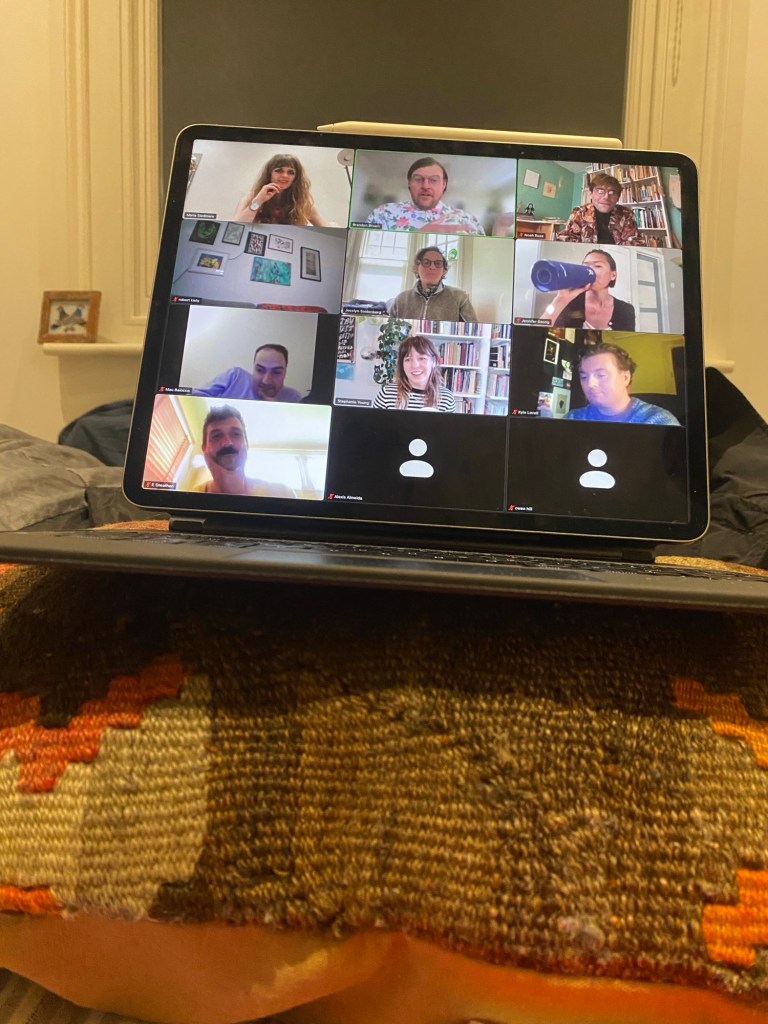
At her recent Good Press event for the launch of Lessons of Decal, Sophie Seita spoke of asking her audiences to ‘absorb [her] words like a piece of music, where the words come in and out of consciousness’. To be given permission for that form of drift and daydream to be okay is a huge relief. If I’m at some event where it feels cool to whip out your phone and notebook, I usually enjoy it a lot more. It’s relaxing to pay attention by not paying all your attention. Allowing my attention to go stereo is sometimes the best way to listen (this was one of the things I loved about the poet Callie Gardner, the way they would often whip out a notebook during a reading, and by extension granting a kind of permission for others to do the same). Seita spoke on what a non-extractive form of attention might be, and might it be that more ambient, absorbing, blurring and responsive mode. I sometimes let the sentences snake around me, other times they cut little jewels, hardening and cleaving and polishing the soft matter of my thoughts. Sometimes I mishear, overhear. In lockdown readings and lectures, I’d participate heartily in the flowing ticker-tape of the Zoom chat and its various overspills onto group chats and discords. I liked the sense of multiplying conversations happening simultaneously, emoji splurging.

⬫꙳⋄﮳✧﮲⋆꙳⬫꙳⋄﮳✧﮲⋄⋆꙳﮳✦﮳⋄⋆꙳⬫꙳⋄﮳✧﮲⋄⋆꙳﮳✦﮳⋄⋆꙳⬫꙳⋄﮳✧﮲⋄⋆꙳﮳✦﮳⋄⋆꙳ ⟡﮳﮲✧﮲⬫꙳⋄﮳⋆꙳⬫꙳✦﮳⋄⋄✧⬫꙳⋄﮳✦﮳⋄⋆꙳⬫꙳⋄﮳✧﮲⋆꙳﮳⋄⋆꙳✧⬫꙳⋄﮳✦﮳⋄⋆꙳⬫꙳⋄﮳✧﮲⋄⋆꙳﮳✦﮳⋄⋆꙳⬫꙳⋄﮳✧﮲⋄⋆꙳﮳✦﮳⋄⋆꙳ ⟡﮳﮲✧﮲⬫꙳⋄﮳⋆꙳⬫꙳✦﮳⋄⋆꙳﮳⋄✧⬫꙳⋄﮳✦﮳⋄⋆꙳⬫꙳⋄﮳✧﮲⋆꙳﮳⋄⋆꙳✧⬫꙳⋄﮳✦﮳⋄⋆꙳⬫꙳⋄﮳✧﮲⋄⋆꙳﮳✦﮳⋄⋆꙳ ﮲

I went recently to Inside Voices, a free night of ambient music and poetry held at King Tuts and hosted by anoraq. I love these nights because I always fill up my notebook. There were readings from Medha Singh and Ian Macartney, a performance by Dronehopper. While listening, I pondered especially what the percussive parts of language were. Little coughs, plosives, hovers of breath while the performer altered their pace of attention.

I want a manifesto for ambient attention. The closest I have found so far, aside from the classic 1978 Brian Eno piece, is a university project: ‘A Manifesto for Ambient Literature’ (2017) co-written by the Ambient Literature team. Here’s a snippet:

I take this to mean affirmation of porosity between texts, but nonetheless one that holds true to the material reality of a text’s construction.

There’s an iPhone that crops up in some kind of poem and whatever it’s doing there, I start to see it running the whole text, a little monstrously. The poetic subject becoming a mediating interface. When I asked the jetpack AI to give me more emoji string, it granted me a handful more stars.

I like books for being (in)complete worlds perforated with holes (words and the gaps between them). A night (sky), variably rich.

My lover sees me drop the book and flop sideways three times before taking it off me and shutting the light. I try to read and the whir of sentences stirring up is somehow the kind of stimulus to send me to sleep.

When I wake early, as I often do, to the dawn screeching of gulls, I keep the light off and try to read by the dark. It’s every sixth or seventh word I miss. The full stops slide away, smudge into dimness, and I read sentences continually — sloshing into one another.

Sometimes I think I read off the book. Like, the reading comes not when my eyeballs are actually skimming the lines on the page but in some kind of preliminary or afterglow moment.

What about the content?

I once had to do a medical questionnaire that asked me if I ever struggled to understand the motivations and emotional behaviours of fictional characters. This was a fascinating question. I let it cook for a few days before answering on the numbered scale.

Hovering with my ballpoint, I kept thinking of that Virginia Woolf quote from ‘Mr Bennett and Mrs Brown’ (1924): ‘On or about December 1910 human character changed’.

Maybe I didn’t know why characters did things, even as I sat in rooms and offices and Zooms with students, discussing with great sincerity and intent the mechanics and motivations of fictional bone collectors, world-savers, serial killers, suffering girlfriends etc. Maybe I could only attend, momentarily, their tendencies; and so fathom a pattern or path from there.

What does it mean to give your full attention, to pay attention or to offer it?

I’ve started to think paying attention means there might be such a thing as ‘attention debt’. Is that the same as ‘attention deficit’? If I were to somehow skip the NHS diagnostic waiting lists to find myself looking at a special time-release pill on a silver platter, would that pill buy me attention? And would I somehow have to give it back, eventually, foreclosed or with massive accruals of cognitive interest? I start to think about the speed of my heartbeat in time to attention.

When I press my ear to your chest, and it’s your heartbeat I hear: am I witnessing the cost of attention?

Paying attention = being a cognitive agent of capitalism?

Does the heart hold the indelible mark of other attentions?

I would save all my heartbeats for you in a heartbeat. I hold them back from work. I save them in service of love and its ghosts.

Sometimes I want to be sharp; other times it’s better to blur.

Why do we say ‘pay attention’ and not ‘give attention’ or ‘do attention’? There’s a pretty useful article on this over at Grammarphobia:

English acquired the verb “pay” in the early 1200s by way of Anglo-Norman and Old French (it was paiier or paier in Old French), according to the OED.

The Old French verb meant, among other things, “to be reconciled to someone,” Oxford says, reflecting its classical Latin ancestor pacare (to appease or pacify), derived from pax (peace).

As the Chambers Dictionary of Etymology explains, “The meaning in Latin of pacify or satisfy developed through Medieval Latin into that of pay a creditor, and so to pay, generally, in the Romance languages.”

Some of the earliest meanings of “pay” in English are obsolete today—including to pacify, or to be pleasing or satisfactory to someone.

But senses relating to handing over money—or whatever is figuratively owed to someone—are just as old, and of course they’re still with us.

If I say pay attention, I’m not exactly doing so in the service of pacifying or pleasing. Much more likely that you’d take the phrase the way you’d take ‘pay your debt’ or ‘pay your letting agent’.

I don’t want attention to be an extractable value, but it is. We know that most of presenteeism at work is about being able to perform your paying attention for the sake of appearances. It isn’t really about productivity.

What if I let go of that presenteeism in other areas of life which demand attention? What if we got much more into improvising what makes for good listening? What if I wanted to watch television as a way of processing a complex emotional conundrum while also laughing my ass off at another life?

Would I write more? Would I understand human character?

Would I ~frolic in the generative plenitude of non-instrumental value?

✦

In 2017/2018, I saw Iain Morrison perform some of his Moving Gallery Notes at Market Gallery, back when it was in Dennistoun. The video I’ve linked above begins something like ‘right now, the time is 97%’. I feel my attention brimming like a healthy battery. Morrison’s poetic works comprise notes made while at various gallery events and artist talks. He describes the project as ‘a sequence that samples a chain of events, encounters, conversations, meetings, empty spaces and all the other things that make up the life of an arts organisation making its way through changing contemporary contexts’. Listening to the work is less about being presented with ‘content’ and more about being provided a poetic architecture in which to indulge great reverie. The content itself is also fascinating. Morrison’s gallery notes encompass everything from embodied experience to the yield of eavesdropping. The initial ‘splurge’ or ‘stream’ of notes goes handwritten onto the page, from the context of an event, and eventually gets whittled into lineated poetry. I found this description from Morrison’s blog, Permanent Positions, particularly useful:

The reason ‘notes’ is in the title of this and my earlier series, is because my first step for each poem is to choose an event at the gallery and write notes during it. When I’m making the notes I mostly write continuously, allowing whatever I’m thinking about – whether it’s things people are saying, or things occurring by association in my head ­– to stream onto the page, at the speed I can write at. My objective while doing this is to not worry about the appropriateness or relevance of what I write down. I try to get material down on paper, and there’s a hope that I can use my embodied presence – a thinking body in the space – to make myself into a recorder, one that acknowledges its subjectiveness, of the event. So this stage of writing can be a splurge. It usually is. I will edit these notes at the next part of the process.

This seems to me an ambient method of composition. It is open to digression, refuses to ignore the body and sees the self as both subject and ‘recorder’. Not so much Spicer’s radio here as the ZOOM H1n versatile pocket recorder.

Moving Gallery Notes is of course also a work of ekphrasis.

For my birthday, K. gave me a copy of Danielle Dutton’s Prairie, Dresses, Art, Other (2024). Halfway into this delicious compilation of fiction and nonfiction is an essay on ekphrasis which discusses, among other things, Rindy Sam’s kissing of a Cy Twombly canvas in 2007 and Eley Williams’ short story ‘Smote, or When I Find I Cannot Kiss You in Front of a Print by Bridget Riley’ (2015). The idea of ekphrasis is presented as a kiss, a mark left more or left indelibly from one work to the next. Soon I will write a poem called ‘kissing cy twombly’ because aside from the brilliant parenthesis of the act itself, sullying a white canvas and paying one ceremonial euro to the artist for the privilege, it sounds like a CSS song or something. So I will commence the writing of the poem from the idea that I am speaking to Lovefoxxx or sprinkling tongue-glitter on crayola-smeared Moleskine.

I write this painting my nails Essie (un)guilty pleasures and trying not to leave such a mark on my MacBook keys. What shade of green is this? It’s too late. Everyone who has seen my laptop knows the key letters are tapped out beyond repair. Skin friction has caused the letters to smudge and blur into pools of acidic white light.

Milton writes of ‘th’ Arch Angel’, about to speak, in Paradise Lost: ‘Attention held them mute’. Meanwhile, ‘Tears, such as Angels weep, burst forth’.

Have I cried on my laptop sufficient to melt its keys? Do I write from speech or silence?

The OED reminds me that one can ‘attract, call, draw, arrest, fix‘ attention.

Thou art to wink.

What if we wept for attention. Made its call. Applied the right fixative.

Now we say something like ‘oh that therapy session totally ate‘.

✦

What I like about blogs is that they are deliberately undercooked. You basically serve them up to the world before you’ve had time to stew, finesse and perfect the product. This one I wrote this weekend while procrastinating emails, on a rickety bus and then rushed with sips of coffee before heading out to a festival. It’s pretty al dente okay sorry you’re gonna have to chew on it. I like that I can look at a blog post and think ‘that’s a fucking mess’ and then immediately post it.

I do think I am capable of being floored by good fiction. When I read Nash’s latest novel, Deliver Me (2024), I was sick with flu but the flu was on a kind of continuum with the book. I kept texting everyone: ‘no one writes sex and the body like Elle Nash!’. I read it feverishly, dreamed in it and let certain scenes linger in my psyche long after I’d folded the last page. I read it with a curiosity I don’t think I’ve had since the way I used to read the internet. By which I mean: I devoured its voices.

Similar thing happened when I devoured Thomas Mann’s The Magic Mountain (1924) in January. I was listening to the audiobook version and continually would have to stop what I was doing (walking to work, cleaning, washing my hair) to make copious notes. All such fiction makes me weak at the knees. And you know, it isn’t the characters or the plot that do this to me, but the language. Its essaying of life, presence, intimacy, repetition. The way narrative is a temporal prosody conducting attention.

I liked hearing about Nash and Logan’s manifestos for fiction, what they hoped to give readers, because it made me realise my own liminal, elusive bar for contact. I think about the text as a space, not just for the conveyance of meaning but explicitly for bearing its im/possibility and by extension, its potential for ellipsis, disappearance. That’s where the fun begins.

Maybe what I wanna do is s(w)erve attention. Keep showing up.

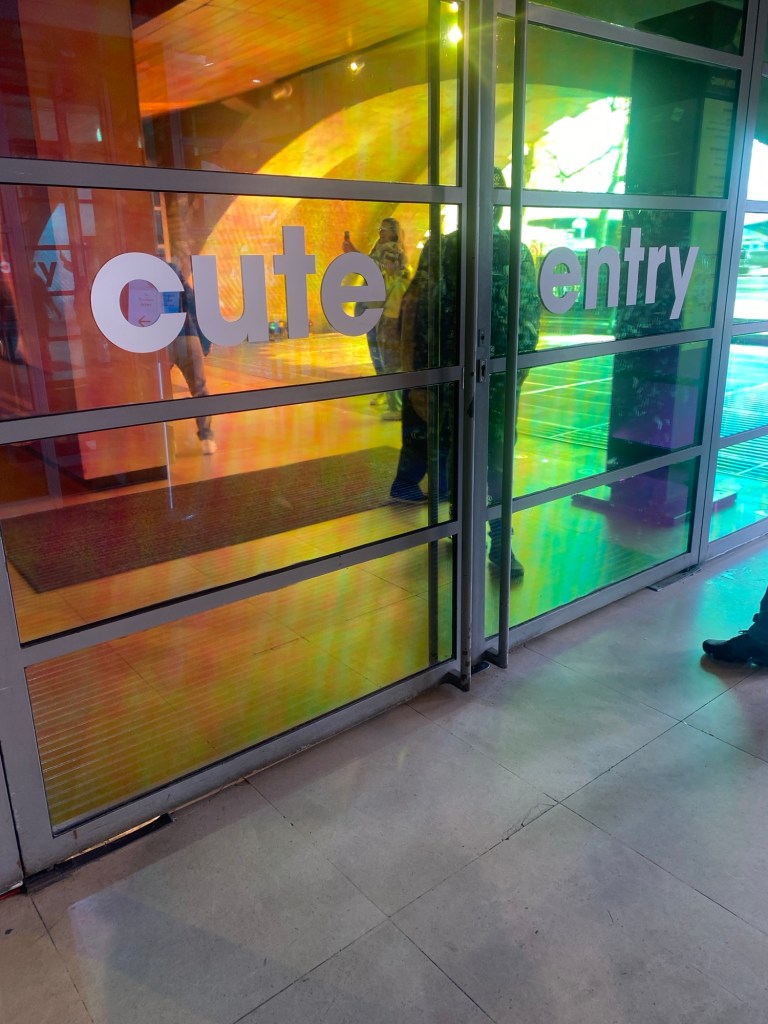
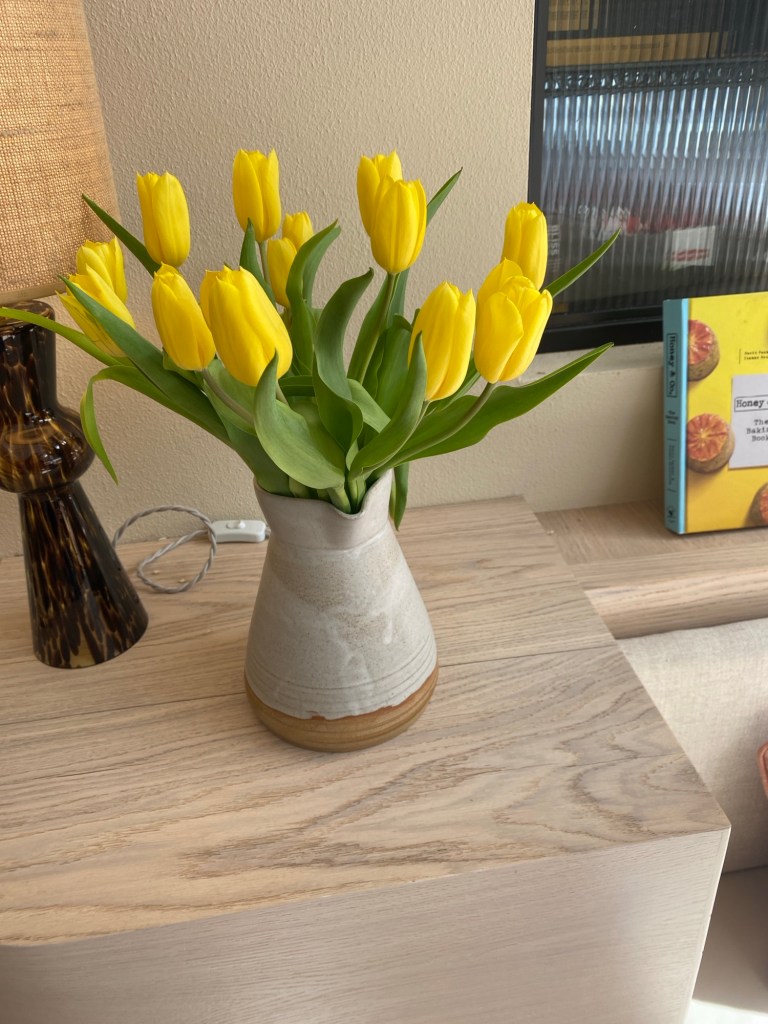
cute entry // yellow tulips

cute entry / / yellow tulips
London, April 2024

I was out somewhere reciting my love for Adidas with wishes thrice – décolletage! – and music, the train arrived on time. I wanted to ask about your shoulder and you said there was so much Guinness after the football, the rest of the world was a rumour. We had all these non-sequiturs to like, communicate the fizzy little spirals. I was like an ice cream sky for you! A spring-rush blossom you! Tapering, tapering. Went to buy salad from downstairs, went to run around putting jeans on. New jeans. Matte suede lips. Blue Sunday. Covent Garden was glistening with consumerism and the new good weather. Every time I’m in London it’s sunnier, warmer, more deniable; so much the smell of pollution & impossible flowers, pollution & impossible flowers
the city I really learned to love was so expensive you could only love so much before the money felt
mouth garbage
of gorgeous surplus:
What I kept feeling about London was…what I had kept of something & nothing a type of ‘neutral metabolic beverage’ bought at room temperature in the clothing store – spontaneous purchase!
Questions to fall in love to……what’s your favourite checkout compulsion? To shoplift gum? To flirt with cashier? To buy an oaten flute and play it to god? I was so concerned about the woman in Asda with the bleeding nailbeds and I kept recommending apricot oil and lots of sleep, I’d been through it too, and my Nan from the chemo. What our nails tell us. Mine used to be silver striped and blood-let-violet, now they are cracked with the memory.

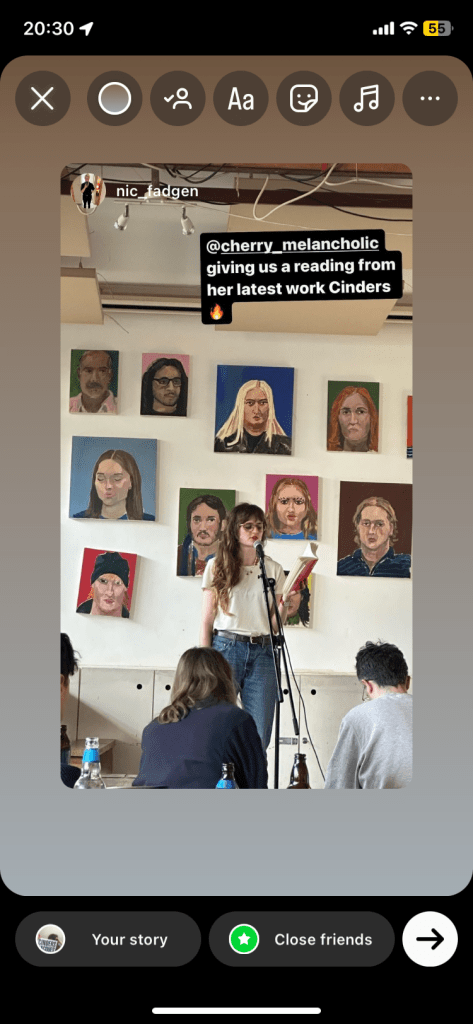
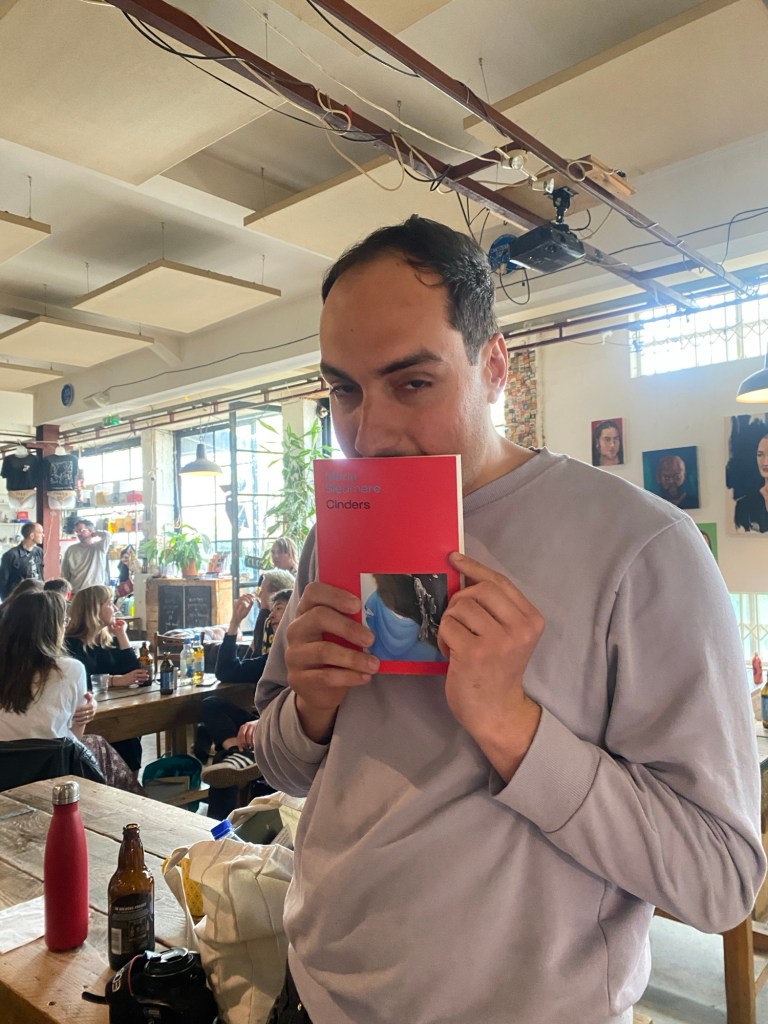
The rain came out the day I went home. Lucky I got to bring my book to London. Oh god it was beautiful the matinee I was nervously also on Guinness and lots of intersections of arrival, read first, took ponytail out like to say she is me now. Cinders. The night before, D. and I had gone to see some bands at the George Tavern and we talked through a few sets just because it had been so long since we’d talked and I wanted to know all about work and love and she said something amazing about how it gets better every day, like you just want to find out so much about the person, you want to figure out the total every degree of how they think and what they feel about something – this plenitude. I said that to my friend last night like the thing about a successful relationship is surely that every day it gets better in that you change together, you change each other, you discover things about yourself that would irrevocably not be possible to discover unless you met this person and you change each other’s day and daily and that’s not like tree branches curled around each other it’s more like mycelia underground, so much unseen, more like alchemy. So when you break apart, you never really sever. You are cellular bonded. Their energy surges in you – what – a bus ride home, a voice note, a quiet cry in the night. Something said, something unspoken. Unexpected holding of hands. Curly little yes.

*

I reread The Hour of the Star over breakfast sauerkraut and the flicker of lighter-light out at the end was it. So easy ideation; not to say I made plans, just that the impulse had become my little sister. You have to find your light.

I was lighting up to go to the next thing.

‘Beautiful though it is, it’s just walking really,’ said the woman behind me on the train, talking about the countryside.

She also said:

  1. 99% of people who study to be dentists end up being dentists
  2. 99% of people who study art don’t end up being artists

My brother and I stay up til 2am listening to hardstyle and reminiscing 2000s absurdism like it’s our good soft history and I suppose it is. Castles in the sky, pretty green eyes, quiver, save me, braveheart, moonlight, sunshine after the rain, bits and pieces, concrete angel, true love never dies.

I want to exhibit gelatinous entrails of everything we ever said.

*

Someone not new I met again talked about making love in a cornfield, listening to Sting. That the not-not-new of it all shared love for Eva Cassidy broke a little nerve platonism so much that I would melt into what we made awhile. Nightcap. Fortuitous timing of trains.

J. said I looked about twelve in the picture. I said this is my heartwood: surly, surly.

The readings:

Jane’s brilliant poise – poetry delivers the body.
Ellis’s infinite – I was so elated to meet them finally ❤
Rob’s plasma poems enamoured and the fuck devastation of elegy.
Karenjit’s percussive grace.

The readings were gems I will live with. I took videos but for some reason couldn’t upload them anywhere, but I have them.

Noodles at Silk Road backscattering miso. Hospitality stories. Stafford yellow fields. Lambs around Penrith.

Intimate fish tank of the Zoom reading with my Krupskaya label mates. I nearly read with the AR halo. Two in one day.

I slept thick treacle.

“kept swelling with the sense of this year as the best, it keeps getting better”
“wonderful”
“Oh rly?”

The other maria.

SPAM Tour Diary: February 2024

SPAM Tour Diary: February 2024

I wanted to write this a week ago, in the throes of a northbound Avanti while grown men stood up shouting things like ‘plastic cunts!!!! all of em plastic cunts!!!!!’ (some cryptic reference to the footie) before departing at Carlisle, but another border had to be crossed and here I am, writing this from my sickbed. Week 6 of the academic semester finally got to me. But this is my diary of the first official SPAM Tour. Guys, I was so so excited for this tour. I even got up at 5am on a weekday to iron the custom design on a tour t-shirt (omg why did nobody tell me how hard it is to draw on tshirt fabric?). I love that poetry literally takes me places. I met some of the best people ever on tour. Tour tour tour.

What follows is my fond paracetamol-induced delirium ❤ 

We were a poetry carousel in celebration of three new pamphlets: Thirteen Morisettes, a transatlantic collab by Courtney Bush and Jack Underwood; in the country garden/the end of england, by Jack Young and Karólína Rós Ólafsdóttir’s All in Animal Time. Ever since the latter was submitted to SPAM I have been rolling it around in my head when something is asked of me and I want to say, sighing, yes yes all in animal time, it will be done. Who were the horses? Who were the horseback riders? This is getting a bit Yeatsian so I’ll give you the names: of course there were the two Jacks, Courtney and Karó, along with Marianne Tambini, Leo Bussi, Annie Muir, Eve Esfandiari-Denney and me. And everyone we met along the way.

It may have been my decision to go see All of Us Strangers on Valentine’s Day but the transition to a dreamstate of solace, if not soul-searching, was upon me. Walking home on Wednesday night I wrote: ‘When she looks at him taking his wet clothes off from the rain and knows that suddenly he is older and she is sort of his daughter. I feel so messed up and grateful that it is raining and when I get home I can cry and read my stupid poetry. How I have missed this ceaselessly crying. I was always too sensitive like melting into the folds of the world’. 

The next morning was all coffee and white noise, still a bit shook. I met Kirsty Dunlop, my glitchsistertrix, at Glasgow Central and we piled on the Avanti whose queue as ever was abundant. I had big plans to commit to ‘agile working’: I was going to research Detroit techno, ahead of a summer conference, get my MLitt marking done and generally clear the inbox but these earnest endeavours were DERAILED by the indubitable fact of half term madness. This is a concept still foreign to me, as someone raised in Scotland, the February half-term. Idk if that is a sufficient explanation for why there were about 300 twelve-year-old boys on our train. In the queue, the Avanti guy is like to me and Kirsty, ‘are you in the school trip’ and I clipped back, ‘nah, we’re far too old’ and he does this kind of sweet double take ‘aw not really’ to like, I guess encourage our confidence that we could make convincing schoolkids, probably with our backpacks etc. I take that as a flirt, though on hindsight maybe creepy. He’s a good guy though, I see him every time I get the London train and he’s having to put out fires with the insouciance of work-place survival tactics, every time. You can tell he’s reliable and it’s like being ID’d for cheap sauvignon blanc; you have to take compliments when they come.

On the train, from the get-go these schoolboys are kicking off. For the morning, Kirsty and I convince ourselves we are schoolboys too. We are practically hysterical. They are practically hysterical. The boys have discovered a famous boxer on the train called Anton. They are, let’s not beat around the bush here, obsessed with Anton. Every other word that comes out their mouths is Anton. ANTON. BIG ANTON. I daren’t google to see if he’s real or not. We are convinced he’s made up, a fiction. The hyperstition of their near arrival. ‘Let’s get Anton on snap’, ‘Come to the bathroom and we’ll go see Anton’, ‘Come get food and we’ll go see Anton’, ‘Let’s give Anton a present’, ‘I want to give Anton some milk’. K. and I dissected the extent to which such gestures were euphemisms. We answered some overdue Plaza emails because it was literally the first time in weeks we’d had a shred of time to do dedicated SPAM admin. We took pictures of ourselves being silly because how silly it is to be travelling poets. I’d left my anti-nausea pills in the big orange bag I couldn’t bear trying to get off the shelf in front of everyone, so I sat tight and gingerly sipped a ‘fiery kombucha’ and loosened my tie. I really do need anti-nausea pills for England. When we pulled into Euston the boys threw some of their milk sachets in our direction, landing by our boots, and I wondered if we’d been the hyperobject of ‘”Anton”‘ all along.

Before we get to London I should tell you about Tuesday. We had this great reading at Mount Florida Books, hosted by the glorious Katia: a bookseller and all-round babe whose generosity and humour ne’er fails to completely lift my mood. We agreed the secret to Glasgow was to talk freely about your life but don’t name anyone. We talked about when you can’t stop thinking about kissing. And sexy poetry. How did we get here or there? Most of us, as non-south-siders, were at the mercy of rush hour traffic. My bus didn’t show up. I missed the pre-match dinner at The Battlefield Rest and Courtney got stuck on a 90 bus which took her on some kind of motorway loop out of town. I love that she called it the freeway and briefly my brain merged the M8 with Los Angeles and an offbeat sunset, nine hours behind. The 90 bus is such a gamble at the best of times it is best taken when one has made peace with the possibility that you might end your journey on the moon, or Carlisle. We know that it’s always Carlisle, wherever you are. Perhaps Loch Lomond. On the bonnie bonnie bus to Loch Lomond…….okay, shut up Maz, get on with it. 

Happily all poets were fed and watered and though they arrived late for their own reading, this is in fact a local custom to be adhered to. Plus, if you are going to have a press run by two ADHD queens this is going to happen at some point. Time must reasonably adjust to our lossy measure. Have you ever tried to get several poets out of (or, for that matter, into) a room all at once? My fellow editors had brought wine with the security tag still on (‘Kirsty did you steal this wine?!’, ‘No, ofc not!!!’) and which I sort of shotted with the precision demanded of 7pm on a Tuesday. Kirsty and I introduced the evening and I did something weird which was when she said the word ‘earworm’ or something like ‘lines that curl in your ear’ I couldn’t help but go to touch her ear onstage, like it was a seashell. Ian captured this gesture as a blur of the hand and my big stupid grin. 

Our readers (Marianne, Leo, Annie) were by all accounts devastating, hilarious and super-luminous. Apparently it was Marianne’s first reading and you wouldn’t know it because she was so funny, deadpan and confident. I loved the M8/mate poem. She is a very fine reader of the absurdity of the world. Puns galore. Swerves. Leo also. Omg that Ben Lerner poem of theirs. Leo co-runs this amazing reading series in Glasgow that’s been going for over a year now: it’s called Waterwings and on Wednesday they have a pamphlet launch at Strangefield, French Street. Annie is a good friend of SPAM and MF and we are label mates on Broken Sleep Books (she read from her 2021 pamphlet New Year’s Eve along with some new stuff). She also runs Time For One Poem which is a poetry podcast I listened to a lot in the pandemic, and a workshop series at Glasgow Zine Library for beginners and experienced poets alike. I really admire Annie’s passion for breaking open the joy and difficulty of poetry and she really lights up a room when she reads.

This was the first time Jack and Courtney had actually met each other IRL. The story goes that Jack tweeted his first Morisette and only two people liked it (no way to prove this as Jack, like all respectable people, is no longer on Twitter). One of them was Courtney (the other purveyor of a like remains a trade secret). She slid into his DMs and thus the collab began, and the rest is post-internet poetry history. Both poets read from their new spamphlet as well as other books. they had such a joyous and sweet kind of poetry sibling rapport. You can watch their performance on youtube! Please like and subscribe to SPAM on youtube! If you do probably we will find more things to share there.

Afterwards, thanks to an enthusiastic Mount Florida resident and fellow writer Victoria, we wound up in a place whose sign promised ‘a friendly local bar’. We had tried to get into the Clockwork which was our usual post-poetry haunt, but they were not having it. Maybe they genuinely were closing for the night. I don’t know the ways of the south side. Anyway, it was too ‘well-lit’ for our tastes besides. Since it was the 13th February, the florist next to Mount Florida was still busy working at 9pm to put all the Valentine’s roses into sumptuous red bouquets. It was joyous to see our friendly poets all making friends with each other. Ian and I practised mewing and everyone seemed to have vitamin T and it took me an hour and a bit to get back to Haghill because the Cathcart Circle and the fact that trains are cancelled at Queen Street more frequently even than Matty Healy. I feel like somebody has made a similar joke in a poem before. I fell asleep at my desk next to a bowl of cornflakes reading about cybernetics. Yeah, idk who was doing the reading, me or the cornflakes. Theory eats itself. 

I woke up with the horrendous news that I had been on Twitter (‘X’) for fifteen years, that is half my life. ‘Happy X anniversary’ is giving this bitch will never get married and their anniversary might as well be with an extractive hyperdistracting platform in whose word limits dreams are made and unmade. 

Okay back to London. What the hell, we arrived and spring had sprung upon Euston with a vengeance. Which is to say it was seventeen bloody degrees and I was wearing my sleeping bag coat because Glasgow was cold and we had about thirty bags of books to carry between us. We stopped in Tavistock Square to rearrange our garments (essentially, stripping in public — I nearly pulled off my tights right in front of the Woolf statue). The purple crocuses were out and even some spring blossom on the trees. Lovely. I texted solidarity purple crocuses to someone who was doing a good and important thing back home. We got to the London Review Bookshop and spoke to the wonderful John who benevolently relieved us of some of our stock (including the work of the tour poets, plus Brilliant Vibrating Interface, Cocoa and Nothing, Visions & Feed). Down in the poetry basement and secret pamphlet cupboard, it was not long until I’d found away to pile the weight back onto my luggage in the form of Prynne’s Snooty Tipoffs, Ted Berrigan’s Get the Money! and Rachael Allen’s God Complex. Kirsty’s partner Sean also met us at the LRB (he’d gotten an earlier train but arrived later, such is the the Avanti’s negentropic spacetime elongation of the West Midlands) and saved us by carrying some of the bags. The suitcase, however, was doomed for. Kirsty has an unfortunate history with London-based suitcase drama and this poetry trip was no exception. We couldn’t get the damn handle to budge and at some point her and Sean had to perform a kind of suitcase surgery, whose outcome I can’t remember. I do remember wrestling with it on the floor of Euston while K. was in the loo and people looking at me like I was doing something not only suspicious but positively heinous. Yes my hair was in two plaits and I was wearing a tie but so what! Let the poets have their endless, impossible luggage. The tote bag theory of poetry tour.

We made our way to the Tate Modern and I can confirm that not once did I put us on the wrong tube. This is one thing I can show a concrete, material improvement on in the past five years: navigating London with confidence. After stowing our bags, we spent an hour and more wandering the Philip Guston exhibition. I’ve been wanting to see that for months. It was really breathtaking. We all choked up a bit at some of the late works, especially the painting of the tangled limbs in bed and the sense of mutual pain. I sat in front of The Ladder for a long time. Kirsty said sometimes in exhibitions you forget that it is actually the real painting in front of you, like it’s travelled all this way, and that’s quite overwhelming. Especially after a life of scrolling digital images. I thought about the sincerity of paint strokes and presence and colour and preservation. How lucky we all were. Worlds. Emotional corporeal pinks. What pink must’ve been like before the millennium. Our navigation of the Tate had a comic air of being in the funhouse, going between connected buildings. I took pictures of Sean and Kirsty on the escalator and charged on ahead because I was so excited for art. The coat check guy was kind of horrified that we found London hot because he said it was freezing to him and he only feels that way when he goes to Spain. Sometimes I forget how cold Scotland is in comparison. Once I was in London for one night only in March and it was genuine full-blown floral aromas while it snowed back home. 

When we finally got to the Peckham Pelican, Kirsty fell into a hole right outside and let out a cry. You have to watch out for those holes in the ground (they might lead to Carlisle). Sean charged his vape and I delighted in the phenomena of ‘happy hour’. We ate nachos and pizza with caramelised onions and goats cheese and I drank an Asahi very slowly because I kept getting up to say hi to people. Reunited with so many poets and hugging Jane so hard because it had been so long, and everything we’ve been through. Katy with their long wavy hair and pizza queries. Adam and I talking about Don DeLillo. Courtney got stuck on a bus again listening to this guy talk on the phone to his girlfriend Jodie about how to cook a pork chop for over an hour. We sold loads of books (thanks!!!) and the readings were so gorj and we recorded them so stay tuned for the URL Sonata podcast episode someday. I loved taking pictures of the poets and I love the pictures where you can see people’s faces reacting to the poets, so wholesome. It was a dream to be united with our queen Denise and also Nasim and many others.

Kirsty and I performed our weird Morisette intro poem that we penned on the train and semi-plagiarised from Alanis and Lana. It makes a lot more sense if you hear it being sung but fuck it, here it is (we read it a line each taking turns). See if you can guess which Alanis song it’s from.

WRITE THRU U (ME+YOU)


You mispronounced my POEM
You didn’t wait for all the INFORMATION
Before you turned me away
Wait a minute sleekit beastie
You kind of hurt my feeeeeeelings
You see me as tinned meat delight
And you’ve got a meal deal taste
I see tonight through you
I know tonight through you
I feel the SPAM bite through you
I talk tonight through you
You took me for a sonnet
You took me for a round of golf
You took a long hard look at my sass
And then played crazy golf for a flash
Your hacket face is like a fish
You pat me on the motherboard
You took me out to lyrically slay me
But didn’t hear a damn anapaest
I remix through you
I hyperlink through you
I glitchfully seduce you
I’m loooooading you
I’m buffering you slowly
Oh hello Mr. SPAM
You didn’t think I’d come back
You didn’t think I’d show up with my poetry
And these goddamn pamphlets on my back
Now that I’m (almost) a doctor
Now that I’m a zillionaire
Now that I’m the incoming integrity officer of the tortured poets society
You scan the credits for your literary influence
And wonder why it’s not there
I write through you
I’m typing right through you
I’m recording right through you
I’m poyuming right through you, you
You, it’s all for you
everything I do
I tell you all the time
heaven is a place on earth with you
tell me all things you wanna do
I heard that you liked the bad rhymes honey
is that true
IRL from Glasgow me and you
who knows what these poets will do
………..(FADE OUT)

People said they thought it was funny and very ‘written on the train’. 

That night, I stayed at my brother’s in Hackney and it took Jane and I an hour and forty-five minutes to get home because London. We met Jack at the station and he also missed his train because they cancelled a bunch of trains. I tried some of the beautiful Björk liqueur that Karó had brought us as a gift from Iceland and it tasted like licking the sweet vanilla minerals of the most exquisite waterfall. In Joe and Minnie’s flat, I ate leftover Valentine’s babka, slept like a log on the floor and felt pretty good in the morning. We woke early and went for breakfast for weird mushroom lattes and talked about work problems, and our awesome school friend who now does hardstyle gigs in New Zealand. Karó, Courtney and I got the train to Bristol from Paddington and I sat next to Courtney and talked about love, about how being with poets is like a drug because everyone talking about poetry getting higher and higher on the total collapse infinity of language. This sensation was augmented by how warm it was on the train. We talked about cats, about US poetry scenes and struggling with narrative and being in love and the difference between feeling and thought, the art of being charming and our favourite poets. I kept thinking about how beautiful Eve’s poems were and how great it is when you discover a new poet. 

When we got to Bristol, we headed straight to Bookhaus and met another Joe, this time Joe Vaughn of Strange Region who is super cool and lovely and hosted us in the bookshop that night. You can now buy a bunch of SPAM things in there! Courtney, Karó and I got lunch at an organic place round the corner (more kombucha, this time turmeric) and we talked about our craziest student/teaching experiences, learning runes for no particular reason, doing virtual workshops, making friends on the internet, making films, our collective love for Jack Underwood. We then got lost in a mall looking for Second Page Books, an excellent secondhand place, in which I found a copy of The Reality Street Book of Sonnets. I was pleased to find that Bristol did in fact fulfil all my Skins fantasies and more, as a place with bluetooth speaker jungle music, old tramlines, pervasive smell of weed, authentic mall goths, Cornish pasties and a vibe that seemed extremely conducive to thrifting. We walked around laughing about how bins in England always have to have some kind of rhyming poem on them to convince you to use them. After checking into our Travelodge, doors held open for us by earnest hockey-stick brandishing teen boys (more half-term trouble?), we fulfilled Courtney’s bubble tea craving then headed to Cargo Cantina where tacos were had along with orange wine and much funny conversing about the stuplimity of Valentine’s chocolates, dreams revolving around BeReal, the inimitable typing speed of Jo Lindsay Walton. It felt so classy and impossible to sit outside for dinner in February but I guess this is possible in Bristol! We collectively admired Courtney’s vintage coat and its interwoven display of amphora. We were just on time for our reading at Bookhaus. Alex Marsh of sold out Hot Orange Squash Sky was there and I was so excited that SPAM poets from multiple seasons were present in the same room, so far south from Glasgow. 

We were hosted by lovely Dan Eltringham, who co-runs the reading series Toppling State (from which this evening had been christened as Toppling SPAM, and some people had thought it was a sushi tasting event from the poster) and who wrote this amazing book Poetry & Commons which won the ASLE-uki environmental writing prize last year. I read first, a few poems from my new book Cinders and my second collection, Visions & Feed. My copies of Cinders were supposed to arrive yesterday but UPS did that thing where they pretend to have showed at your door but they don’t leave a note or anything, and you were there all along and didn’t hear the doorbell. Jack Young and I were in the eco-bubble of the reading and he did such a brilliant performance from in the country garden, a book that was so great to work on last autumn and a book that has taught me a lot about the violence of taxonomy and what might a garden mean to ongoing colonialisms and how do we cultivate something queer and flourishing instead. Karó read wonderfully too, and I thought about her girl and punctuation poems as innovative gems that have stuck with me more than I otherwise realised. It’s like metabolising the lyric by way of Lisa Robertson (at her most camp) through Rachael Allen’s ‘Girls of Situations’ through zoomscapes of play and animal joy. I also want to shout out all of Karó’s showstopping colourful outfits. Courtney, alone this time (Jack U couldn’t make the Bristol leg of the tour) performed totally irresistible Morisettes numbers alongside poems from her book I Love Information and even read some of Jack’s poems from A Year in the New Life. We debated the pronunciation of apricot. I prefer how Americans say it. I loved that she even near-sang some of the morisette poems to get at the sway of melody. The genius goddess of bad moons, Sam Walton, hosted a Q&A with all the poets and we talked about the importance of small press poetries and it was so nice to hear Jack, Karó and Courtney talk about the origin stories of their spamphlets. Thanks Sam, Dan and Joe for being great hosts! 

Afterwards we went to a delightful pub called The Orchard where a drunk hippie fell on me (feels like a Bristol right of passage) and we guzzled the best cider I have ever tasted. I was so tired from the fullness of poetry and travel that I was falling asleep right there in the pub mid-conversation, such is my habit, I would fall asleep and chime in a few beats later with some anachronistic question. For a long time this happened to me constantly, such as at gigs or in attendance of lectures, and I now realise it’s not narcolepsy just a symptom of intense sleep deprivation. I was sort of light-dreaming while talking to my friends in the pub. It’s like my brain wants to be in both worlds at once. We talked about heartbreak, dating musicians, dating poets, writing novels. Joe is writing one, Courtney has written one, Alex is also writing one. I want to write one. I have an idea now, we cracked it out over hotel breakfast the next morning. Perhaps more on that later. 

The next day we had to say bye to Courtney who was going back to London before the next leg of her Europe trip (Paris!) and none of us wanted to part </3. In an attempt to console ourselves Karó and I went to look at some art then we did some drawing and then met Sam and Dan and bought some supplies from Cass Art and got amazing noodle hotpots at Chilli Daddy that were bigger than our faces. Karó gifted me a big bag of Icelandic liquorice for the train home. I couldn’t believe that tour was over and we’d have to go back to our lonely heads. The train manager announced that people were having a good dance in coach H. Reader I almost joined them, but instead I read Courtney’s books twice because I was missing her and tour already and then I finished reading the Cixous novella I’d brought with me, which was all about time and grief. People seemed especially beautiful that day. Even the boy vomiting in the bowels of Queen Street Station was beautiful. Some women twice his age stopped, brandishing wine, told him that puking was a right of passage. It was Saturday night. They said they were having an overdue Galentines, which reminds me of gelatine which reminds me of the sacred caul in which spam is encased. SPAM forever! 

~

Buy Thirteen Morisettes
Direct from SPAM
US folks might want to order from Printed Matter
UK folks might want to order from Good Press, or head to MF Books or LRB Bookshop to pick up a copy.

Buy Season 7 and other SPAM publications
https://www.spamzine.co.uk/shop

Books I read in 2023

Disclaimer: this list is probably missing a ton of really good poetry pamphlets that are in my room somewhere, sorry.


Gabby Bess, Alone with Other People (2013)

Charles R. Cross, Heavier than Heaven: The Biography of Kurt Cobain (2001)

Doris Lessing, The Golden Notebook (1962)

Anahid Nersessian, The Calamity Form (2020)

Robert Sullivan, The Meadowlands: Wilderness Adventures on the Edge of New York City (1999)

Hannah Weiner, Hannah Weiner’s Open House (2006)

Penelope Lewis and RA Page (eds), Spindles: Stories from the Science of Sleep (2015)

Kerry Hudson, Lowborn (2019)

Rose Ruane, This is Yesterday (2021)

Bernadette Mayer and Greg Masters, At Maureen’s (2013)

Nina Mingya Powles, Tiny Moons (2019)

Maggie O’Sullivan, murmur: Tasks of Mourning (2011)

Nina Mingya Powles, Small Bodies of Water (2021)

Tom Raworth, Removed for further study: the poetry of Tom Raworth (2003)

Torrey Peters, Detransition Baby (2021)

Patricia Lockwood, Priestdaddy (2017)

Nadia de Vries, Know Thy Audience (2023)

Savannah Brown, Closer Baby, Closer (2023)

Suzanna Slack, White Spirit Videotelephony (2023)

Suzanna Slack, Luxury Profile (2021)

Patti Smith, Just Kids (2010)

Jessie Widner, Interiors (2022)

Aaron Kent & John Welson, Requiem for Bioluminescence (2022)

Christiane F., Zoo Station: The Story of Christiane F. (1978)

Kaisa Saarinen, Weather Underwater (2023)

Fern Brady, Strong Female Character (2023)

Felix Bernstein, Notes on Conceptual Poetics (2015)

Rosemary Mayer, Ways of Attaching (2022)

Shehzar Doja, Let Us (Or, the Invocation of Smoke) (2023)

Will Harris, Brother Poem (2023)

Sarah Bernstein, Study for Obedience (2023)

Maggie O’Sullivan, murmur: tasks of mourning (2011)

Taylor Strickland, Dastrum/Delirium (2023)

Andrew Durbin, Skyland (2020)

Etty Hillesum, An Interrupted Life (2002)

Savannah Brown, Closer baby closer (2023)

Gareth Farmer, KERF (2022)

Ian Heames, Sonnets (2023)

Chloe Aridjis, Book of Clouds (2010)

Chris Kraus, I Love Dick (1997)

Samantha Walton, Everybody Needs Beauty: In Search of the Nature Cure (2021)

Stephanie LaCava, I Fear My Pain Interests You (2022)

Zara Butcher-McGunnigle, Nostalgia Has Ruined My Life (2021)

Chloé Hayden, Different, Not Less (2022)

Dana Ward, Some Other Deaths of Bas Jan Ader (2013)

Rob Halpern, Hieroglyph of the Inverted World (2021)

Eugene Ostashevsky and Galina Rymbu, F Letter: New Russian Feminist Poetry (2020)

Amy Key, Arrangements in Blue (2023)

bell hooks, All About Love (2000)

gentian meikleham, Kare Hansen, Sofia Archontis, Ruby Lawrence, William Knox, Meredith Macleod, Leonie Staartjes, Brave Dog (2023)

Tom Betteridge, Dog Shades (2023)

Alain de Botton, Essays in Love (1993)

Johanna Hedva, Your Love is No Good (2023)

Tom Raworth, Earn Your Milk (2009)

Maggie Nelson, The Red Parts (2007)

Robert Creeley, The Charm (1969)

Briony Hughes, Milk (2023)

Eduoard Louis, History of Violence (2016)

Eileen Myles, A “Working Life” (2023)

Daniel Alexander Jones, Love Like Light (2021)

Ivy Allsop, purge fluid (2022)

Stephanie Young, Ursula or University (2013)

Kristin Ross, The Politics and Poetic of Everyday Life (2023)

Jarvis Cocker, Good Pop Bad Pop (2022)

Alice Notley, The Speak Angel Series (2023)

Amina Cain, A Horse at Night: On Writing (2022)

Christina Chalmers, Subterflect (2023)

Suzanna Slack, gummizone (2023)

Greg Thomas, Candle Poems (2023)

Julia O’Toole, Heroin: A true story of drug addiction, hope and triumph (2005)

Kristine McKenna and David Lynch, Room to Dream (2018)

Lee Ann Brown and Bernadette Mayer, Oh You Nameless and Unnamed Ridges (2022)

Isabel Waidner, Corey Fah Does Social Mobility (2023)

Laynie Browne, Intaglio Daughters (2023)

Naomi Klein, doppelgänger (2023)

Elisabeth Roudinesco and Jacques Derrida, For What Tomorrow…: A Dialogue (2001)

J. R. Carpenter, An Ocean of Static (2018)

Alan McGee, Creation Stories (2013)

Jackie Wang, Alien Daughters Walk into the Sun: An Almanac of Extreme Girlhood (2023)

Sarah Schulman, Girls, Visions & Everything (1986)

Hélène Cixous, Manhattan, trans. by Beverly Bie Brahic(2007)

Antonio Tabucchi, Requiem: A Hallucination, trans. by Margaret Jull Costa (1994)

Bernadette Mayer, Another Smashed Pinecone (1998)

2021 in review

From this year in-between brushing my teeth:

BOOKS AND PAMPHLETS

Miss Anthropocene (Mermaid Motel)
a selection of short lyric, ‘ethereal nu metal’ poems responding to the Elon Musk/Grimes complex.

Sonnets for Hooch – with Mau Baiocco and Kyle Lovell (Fathomsun Press)
An ongoing pamphlet series of sonnets attuned to the weirding seasons: what started as an internet joke about alcopops and longing as a keystone for exploring adolescent malaise, nostalgia and resilience thru civic space and Friendship. Current editions available are Lemon Bloom Season and Summertime Social. Two more instalments are forthcoming in association with Rat Press and Mermaid Motel.

Polychromatics (Legitimate Snack)
A pamphlet-length poem about colour, cetaceans and cosmic twilight, inspired by Walter Benjamin and a sculptural and textile works by the artist Anna Winberg.

Soft Friction – with Kirsty Dunlop (Mermaid Motel)
Soft Friction is an intimate gathering of dreams from 2018, written during a summer of ‘existential soup’, fainting at gigs, pulling all-nighters and panic surrealism. Extracted from a longer diary, these fragments wear the sensuality and sass of an active dream life shared between two people getting high on each others’ brains.

The Palace of Humming Trees (Sundays)
Edited and typeset by Katie O’Grady with visual identity by Paul Smith, this book-length poem features illustrations by Jack O’Flynn plus a curator’s word from Katie O’Grady and collaborative mixtapes. Set in the speculative locale of The Palace of Humming Trees, the poem is a jaunt through weird nature’s arc of glass, following the desire lines of hyperfoxes, sunburst melancholia and corona correspondence. Also available as a free pdf.

The Luna Erratum (Dostoyevsky Wannabe)
The Luna Erratum, Maria Sledmere’s debut poetry collection, roams between celestial and terrestrial realms where we find ourselves both the hunter and hunted, the wounded and wounding. Through elemental dream logics of colour, luminosity and lagging broadband, this is a post-internet poetics which swerves towards the ‘Other Side’: a vivid elsewhere of multispecies relation, of error and love, loss and nourishment.

ARTIST COLLABORATIONS

‘The Rosarium’ for Zoee’s album, Flaw Flower (Illegal Data)
A lyric sequence responding to the glistening pop garden of Zoee’s debut record Flaw Flower. Available as an A6 booklet as part of the limited edition album bundle.

The Palace of Humming Trees with Jack O’Flynn and Katie O’Grady (French Street Studios)
A collaborative project with artist Jack O’Flynn and curator Katie O’Grady which took place April to August 2021 and was showcased at French Street Studios in Glasgow. Featuring new works of poetry, sculpture, illustration and multisensory dreamscapes (from mixtapes to Tarot readings), we offered a ‘tenderly crumbling foliage’ of visual and sonic otherworlding.

The Dream Turbine with A+E Collective and The NewBridge Project
This online installation explores the relationship between sustainability and dreaming, offering a space to collectively share dreams and promote discussions surrounding these broader topics. The Dream Turbine was conceived by A+E Collective in collaboration with Niomi Fairweather and Jessica Bennett, as part of the Overmorrow Festival. I contributed to a preparatory DreamPak of resources and the curation of a Dream Vault and associated ‘Lost in the Dreamhouse’ workshop on Zoom.

Cauliflower Love Bike Episode 1: Play with A+E Collective
While play might be co-opted for capitalism, true play is that which exceeds instrumentalism and commodification. This episode reclaims play from its dialectical relation with work, exploring play as a practice and thought-mode that is capable of radical sensing, temporal sabotage, tenderness, sociality and a joyous excess that is also low-carbon. The podcast series was launched at COP26 in the Rachel Carson Centre’s pop-up exhibition at New Glasgow Society.

ACADEMIC ARTICLES

Article: ‘Hypercritique: A Sequence of Dreams for the Anthropocene’ in Coils of the Serpent Issue 8
An in-depth venturing through the possibilities of hypercritique, featuring readings of Billie Eilish, Sophia Al-Maria, Ariana Reines and more; plunging through dream, fire and the heartwood of anthropocene imaginaries.

“Just to distract you like the inside”: a correspondence wrapped up in Bernadette Mayer’s poetry, in post45, Bernadette Mayer cluster (with Colin Herd)
An epistolary collaboration which wraps and unwraps itself in and around the poetry of Bernadette Mayer, as part of a special cluster issue on Bernadette’s work.

‘I, Cloud: Staging Atmospheric Imaginaries in Anthropocene Lyric’, Moveable Type, Issue 13
Tracing the possibilities of ‘cloud writing’ in anthropocene lyric by way of Brian Eno, Mary Ruefle, Anna Gurton Wachter and more, asking what kinds of reading are possible or desirable in a medial world of thick atmospheres.

POEMS

ESSAYS AND OTHER ERRATA

‘On Foam’ for Futch Press

Feature: Some Letters – a correspondence with Joe Luna

Review: Cloud Cover, by Greg Thomas

Feature: “It’s pretty utopian!” A conversation with Marie Buck, Mau Baiocco and Maria Sledmere pt.1, pt. 2

SPAM Cut: ‘I RESEARCH THE ORIGINS OF THE MODERN ROSE AND DISCOVER’ by Sarala Estruch

Feature: Some Notes on Muss Sill by Candace Hill

Feature: A conversation with Kinbrae and Clare Archibald ‘Tangents: letters on Etel Adnan’: a correspondence with Katy Lewis Hood in MAP Magazine (part 1) (part 2) (part 3)

‘‘Now now is everything’: Maria Sledmere on two maximalist poets of the Anthropocene’, Poetry London issue 99

‘Cloud Shifts’ BlueHouse Journal

Anam Creative Launch for MAP Magazine

DESIGN

Cover for Katy Lewis Hood’s Bugbear (Veer2)

Cover for fred spoliar’s With the Boys (SPAM Press)

Cover for SPAM Press Season 5 Pamphlet series

(NEW BOOK) infra·structure

Pleased to announce this sky-blue baby, a collaboration with the wonderful Katy Lewis Hood, has been in the world a week now, and you can order from Broken Sleep Books, for a cool £6.50.

From the publishers:

infra·structure is a collaborative work shaped over a year of correspondence between Katy Lewis Hood and Maria Sledmere. The pamphlet was written following an Association of Literature and Environment (ASLE) conference on the Orkney islands, a wind battered archipelago north of the Scottish mainland. The poems respond to this distinct setting and share a dichotomous relationship where each ‘complete’ poem is mirrored by an ‘incomplete’ sister poem. Katy Lewis Hood and Maria Sledmere’s innovative dismantling of language echoes the destructive energy of the natural world. infra·structure is a highly original, must read pamphlet.


Cyclone

Cloud

Blue heart


Mining the Light: My Time in Orkney


IMG_3289.JPG

I always have this sensation, descending the steps at Edinburgh’s Waverley Station, of narratives colliding. It’s a kind of acute deja vu, where several selves are pelting it down for the last train, or gliding idly at the end point of an evening, not quite ready for the journey home. The version that is me glows inwardly translucent, lets in the early morning light, as though she might photosynthesise. I remember this Roddy Woomble song, from his first album, the one that was sorrow, and was Scotland, through and through as a bowl of salted porridge, of sickly sugared Irn Bru. ‘Waverley Steps’, with its opening line, ‘If there’s no geography / in the things that we say’. Every word, I realise, is a situation. Alighting, departing; deferring or arriving. It’s 08:28 and I’m sitting at Waverley Station, having made my way down its steps, hugging my bag while a stranger beside me eats slices of apple from a plastic packet. I’ve just read Derek Jarman’s journal, the bit about regretting how easily we can now get any fruit we want at any time of year. He laments that soon enough we’ll be able to pick up bundles of daffodils in time for Christmas. The apples this girl eats smell of plastic, of fake perfume, not fruit. I’m about to board a train that will take me, eventually, to Thurso and then on via ferry to Orkney. I wonder if they will have apples on Orkney; it’s rumoured that they don’t have trees. Can we eat without regard to the seasons on islands also?

I needn’t have worried. Kirkwall has massive supermarkets. I check my own assumptions upon arrival, expecting inflated prices and corner shops. I anticipated the sort of wind that would buffet me sideways, but the air is fairly calm. I swill a half pint of Tennents on the ferry, watching the sun go down, golden-orange, the Old Man of Hoy looming close enough to get the fear from. Something about ancient structures of stone always gives me vertigo. Trying to reconcile all those temporal scales at once, finding yourself plunged. A panpsychic sense that the spirit of the past ekes itself eerily from pores of rock. Can be read in a primitive braille of marks and striations. We pick our way through Kirkwall to the SYHA hostel, along winding residential streets. I comment on how quiet it is, how deliciously dark. We don’t see stars but the dark is real, lovely and thick. Black treacle skies keep silent the island. I am so intent in the night I feel dragged from reality.

Waking on my first day, I write in my notebook: ‘the sky is a greyish egg-white background gleaming remnant dawn’. In the lounge of the hostel, someone has the telly on—news from Westminster. Later, I’m in a bookshop in Stromness, browsing books about the island while the Radio 2 Drivetime traffic reports of holdups on motorways circling London. Standing there, clasping Ebban an Flowan, I feel between two times. A slim poetry volume by Alec Finlay and Laura Watt, with photographs by Alastair Peebles, Ebban an Flowan is Orkney’s present and future: a primer on marine renewable energy. Poetry as cultural sculpting, as speculation and continuity: ‘there’s no need to worry / that any wave is wasted / when there’s all this motion’. New ideas of sustainability and energy churn on the page before me, while thousands down south are burning up oil on the London orbital.

When we take a bus tour of Mainland Orkney’s energy sources, we play a game of spotting every electric car we see. Someone on the bus, an academic who lives here, knows exactly how many electric cars there are on the island. There’s a solidarity in that, a pride in folk knowledge, the act of knowing. On the train up to Thurso, I started a game of infrastructure bingo, murmuring the word whenever I spotted a pylon, a station or a turbine. Say it, just say it: infrastructure. Something satisfying in its soft susurration, infra as potential to be both within and between, a shifting. Osmosis, almost. The kinesis of moving your lips for fra, feeling a brief schism between skin and teeth. A generative word. Say it enough times and you will summon something: an ambient awareness of those gatherings around you, sources of fuel, object, energy.

The supermarkets in Kirkwall seem like misplaced temples. This was me idealising the remoteness of islands, wanting to live by an insular, scarcer logic. The more we go north, the more scarcity we crave—a sort of existential whittling. Before visiting, I envisioned the temperature dropping by halves. On the first night, warm in my bed, I write: ‘To feel on the brink of something, then ever equi-distant’. The WiFi picks up messages from home. Scrolling the algorithmic rolls of Instagram, I feel extra-simultaneous with these random images, snapshots of happenings around the world. Being on an island intensifies my present. In Amy Liptrot’s The Outrun (2016), a memoir of recovery and return on Orkney, Liptrot writes of ‘waiting for the next gale to receive my text messages’. On the whims of billowing signal, we wait for news of the south to arrive. Maybe I was an island and I wanted my life elsewhere to vanish, disappear in a wall of wind; I wanted to exist just here, in a hullabaloo of nowness.

I say an island, but of course Orkney is more an archipelago. And I’m on the Mainland, home to the burghs of Stromness and Kirkwall. Here for the ASLE-UKI conference, there wasn’t time to visit the harbour at Scapa, or the neolithic village of Skara Brae or the stone circle Ring of Brodgar. I spend most of my time in the town hall opposite Kirkwall’s impressive, sandstone cathedral, aglow by night with fairy lights strung in surrounding trees. Yes, trees. Orkney has trees. They are often gnarled-looking and strange, stripped by wind or held up inside by steel plinths. Anthropocene arboreal hybrids. But still they are trees. Using my plant identification app, I find hazels and birches. Autumn is traceable in the swirls of thin leaves that skirt the pavement, tousling our sense of a general transition.
IMG_3285

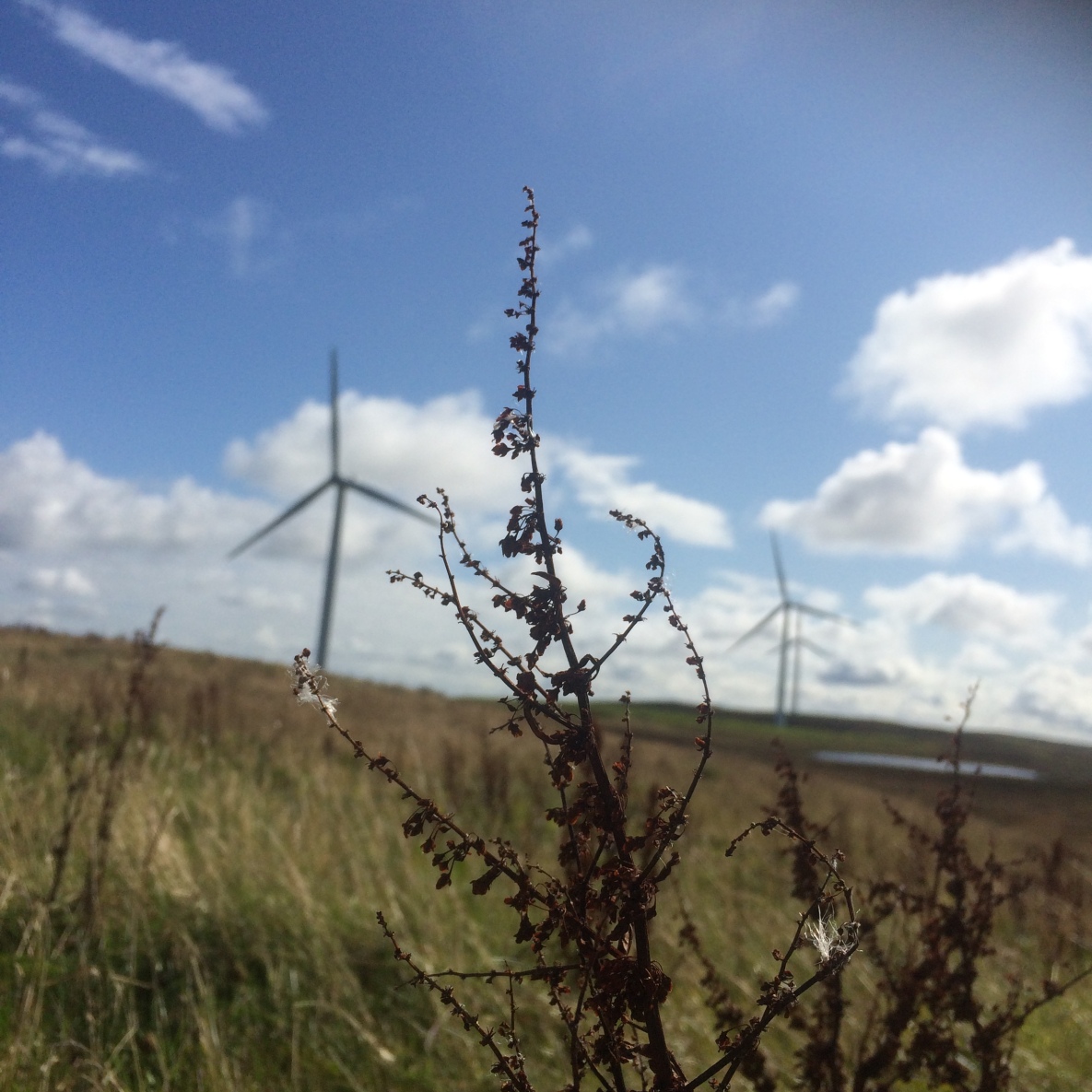
At one point in the trip, we visit the Burgar Hill Energy Project in Evie, alighting from the bus to stand underneath several massive turbines. The sound is wonderful, a deep churning whirr that feels like the air pressed charge on repeat. Under the chug chug chug of those great white wings we gathered, listened, moved and dispersed. I watch as our tight knit group begins to fragment; we need time apart to absorb this properly, little cells bouncing off and away from each other, quietly charged, loosening dots of pollen. Some of us finding the outer reach of the hill, looking for a view or panorama, leaning back to snap a photograph. I film the shadows windmilling dark the rough green grass. Capturing the turbines themselves seemed almost obscene. I don’t know why I was making them into idols, afraid to reduce them to pictures. It was easier to glimpse them in pieces, a flash of white, synecdoche. My friend Katy and I agreed the best photos were the ones out of focus, a bird-like blur against the blue.

Places I have been hit by wind:

  • The cloisters at the University of Glasgow, a wind-tunnel roar to blast out your thoughts post-exam.
  • The hills of Aviemore, my first and last time attempt to ski.
  • Ayrshire beaches in winter, icy particles of hail cast into my eyes and ears.
  • The last day of the Wickerman Festival, wrestling with tents that needed drying and folding, the wind blasting against my cliff of a hangover.
  • On the deck of a ferry, mascara stinging the black black veil of my lashes.

I am an air sign, Gemini, and there is something about losing your breath to elemental forces. I think I once finished a poem with a phrase like, ‘lashing the planetary way of all this’. We used to stand in the playground at school, brandishing our jackets like polyester wings, letting the wind move us forward, staggering in our lightweight bodies, our childish intuition of the way of the world. The pleasure in surrendering. Making of your body a buffeted object. Returning to Glasgow, I soon find myself hit with a cold, preemptive fresher’s flu; a weight on my chest, a diaphragm lag. A sense of my body heaving against itself.

On Orkney, I can smell the salt from the sea. Earlier in the summer, I was struck with wisdom tooth pain, the kind that requires salt-water rinses every half hour, not to mention agonised gargles of whisky. Wasting my precious bottle of Talisker. Amid the haze of those painkiller days, I felt closer to an elemental heat. Metonymically, I was inhaling islands. The taste of self-preservation, of necessary self-sustenance, is never as strong and unwanted as when you want a part of yourself to be wrenched out of you. Pulling teeth is an easy metaphor for lost love, or other forms of psychic distress. Breaking apart, making of the self an archipelago. There’s that song by The National, ‘I Should Live in Salt’, which always sticks in my head in granular form, occasional line. Refrain of refrains, ‘I should live in salt for leaving you behind’. I never knew whether Matt Berninger was singing about preservation or pain, but I saw myself lying down in a kelp bed, child-size, letting the waves lap over my body, salt suffusing the pores of my skin. Begin again, softer.  
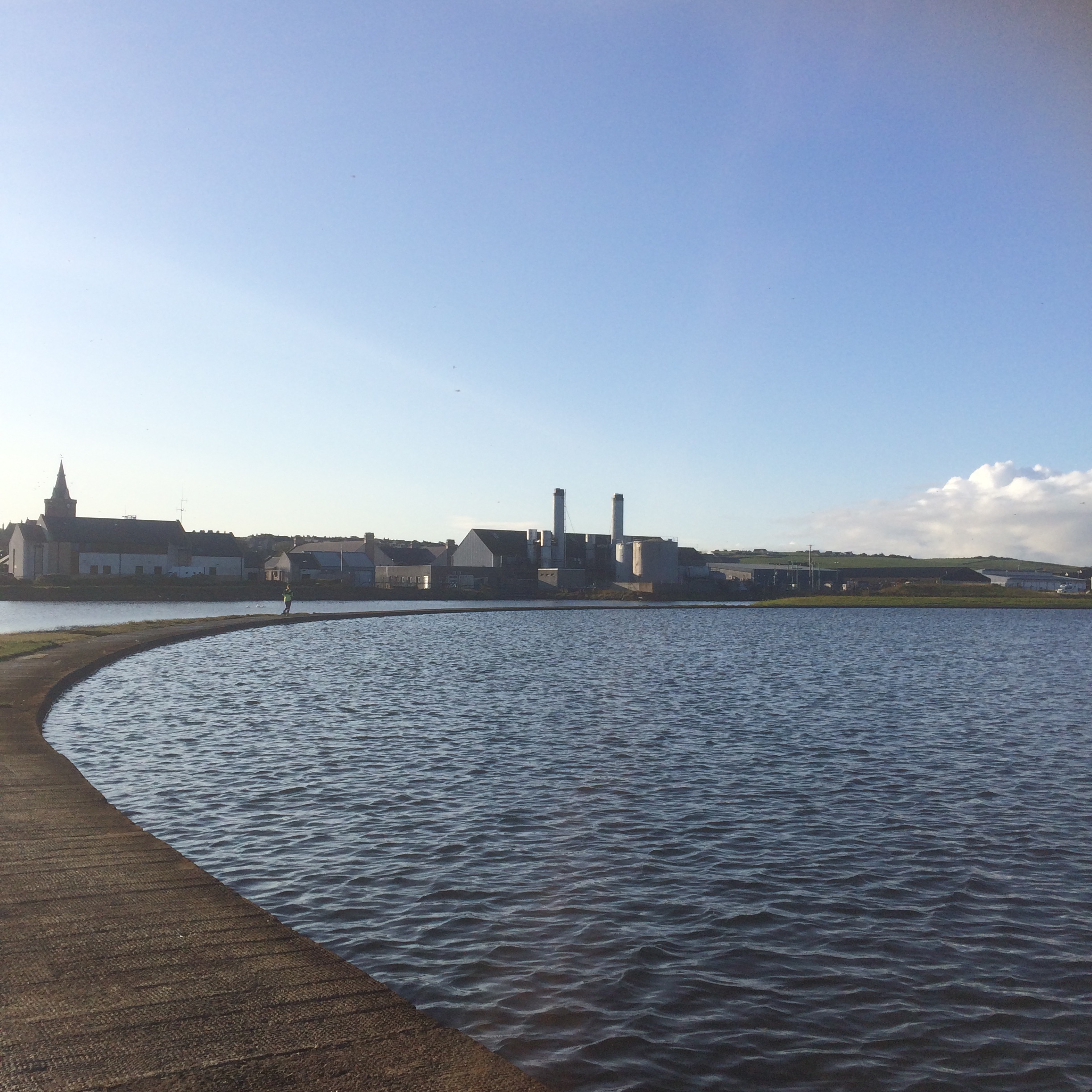
IMG_3256

The rain here is more a tangential shimmer. I wake up to it, dreaming that my window was broken and no-one would bother to fix it. Fear of boundaries loosened, the outside in. The future as a sheet of glass, a shelf you could place your self on and drink. Salt water rinse and heat of whisky. We leave the hostel early and wander beyond the Kirkwall harbour, to the hydrogen plant bordering an industrial estate. Katy and I discussed our fondness for industrial estates as homely reminders. She would go running, and wherever she ran the industrial zones were inevitable. As if in any city you would reach that realm, it called you in with its corrugated fronts and abrasive loneliness. My love for the canal, biking up through Maryhill where the warehouses watch serenely over you, loom behind trees, barely a machinic rumble disturbing the birds. We traced the edge of a man-made waterfront, a crescent curving lip of land. The way it curled was elliptical, it didn’t finish its inward whorls of land upon water, but still I thought of Robert Smithson’s Spiral Jetty, or the cinnamon buns I bought from the Kirkwall Tesco. Finding a bench, we ate bananas for breakfast, looking out at the grey-blue sea, our fingers purpling with the cold. I like to think of the banana, Katy said, as a solid unit of energy. Here we were, already recalibrating reality by the logic of pulse and burn and calories. Feeling infra.

I love the words ‘gigawatt’, ‘kilocal’, ‘megabyte’. I like the easeful parcelling up of numbers and storage and energy. I am unable to grasp these scales and sizes visually or temporally, but it helps to find them in words.
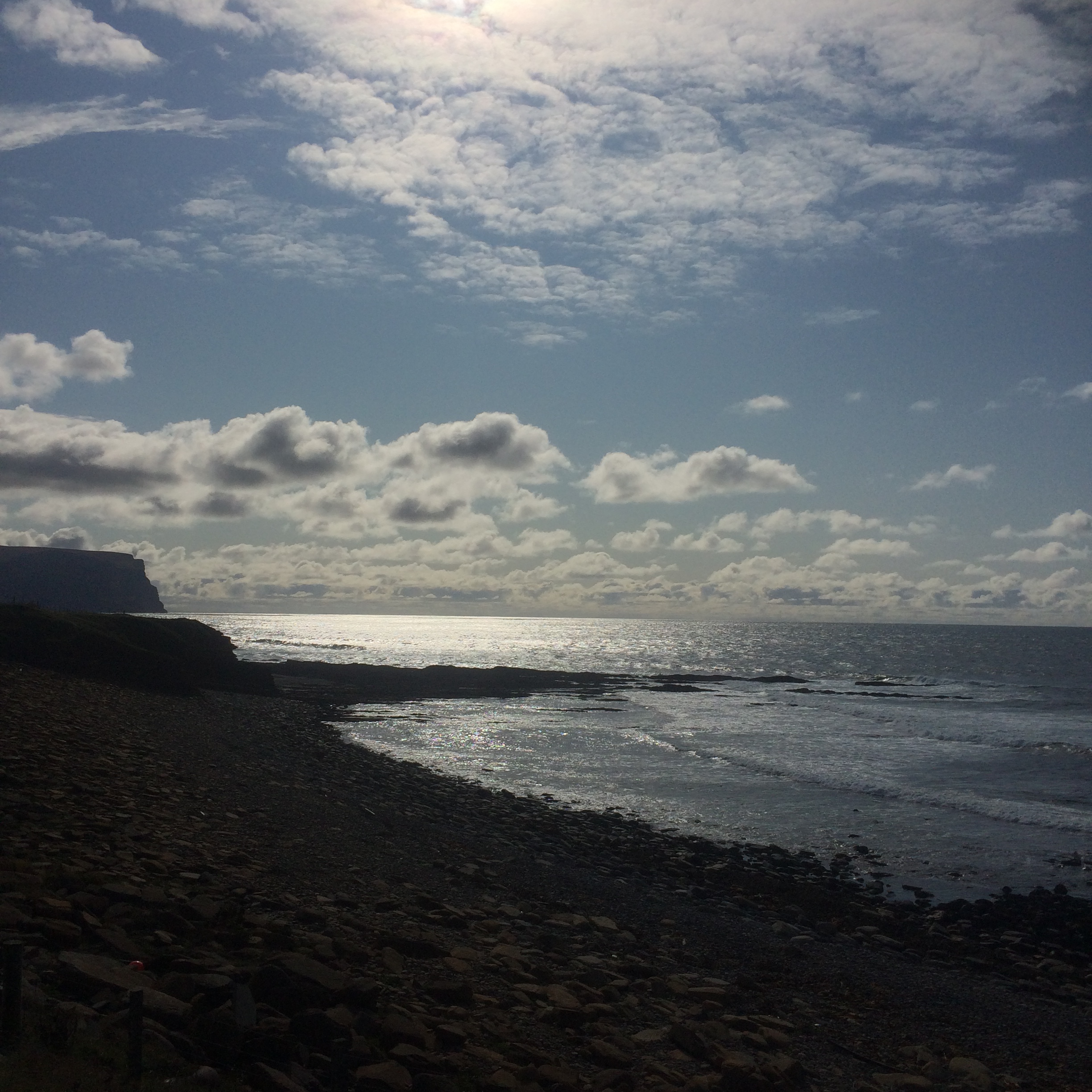
IMG_3304.JPG

We learn about differences between national and local grids, how wind is surveyed, how wave power gets extracted from the littoral zone. My mind oscillates between a sonar attentiveness and deep exhaustion, the restfulness gleaned from island air and waking with sunrise. I slip in and out of sleep on the bus as it swerves round corners. I am pleasantly jostled with knowledge and time, the precious duration of being here. Here. Here, exactly. This intuition vanishes when I try to write it. A note: ‘I know what the gaps between trees must feel like’. Listening to experienced academics, scientists and creatives talk about planes, axes, loops and striations, ages of ages, I find myself in the auratic realm of save as…, dwelling in the constant recording of motion, depth and time. Taking pictures, scribbling words, drawing maps and lines and symbols. We talk of Orkney as a model for the world. Everything has its overlay, the way we parse our experience with apps and books and wireless signals. Someone takes a phone call, posts a tweet. I scroll through the conference hashtag with the hostel WiFi, tracing the day through these crumbs of perspective, memories silently losing their fizz in the night.

I grew up by the sea, in Maybole, Ayrshire (with its ‘blue moors’, as W. S. Graham puts it), but a lot of my thalassic time was spent virtually. I loved video games like The Legend of Zelda: The Wind Waker, where the narrative happened between islands, where much of the gameplay involved conducting voyages across the sea. The interstitial thrill of a journey. There were whirlpools, tornados, monsters rising from the deep. On Maidens Harbour, I could hardly reach that volcanic plug of sparkling granite, the Ailsa Craig, or swim out to Arran; virtually, however, I could traverse whatever limits the game had designed. The freedom in that, of exploring a world already set and scaled. Movement produced within constraint. In real life, mostly our bodies and minds constrain. What excites me now is what I took for granted then: the salt spray stinging my lips, the wind in my hair, the glint of shells bleached clean by the sea; a beautiful cascade of cliches that make us.

‘To wake up and really see things…passages from a neverland.’ Back in Glasgow, fallen upon familiar nocturnal rhythms, I find myself craving the diurnal synchrony I achieved in Orkney. Sleepy afternoons so rich in milky light. The vibrational warmth of the ferry’s engine, activating that primitive desire for oil, the petrol smell at stations as my mother filled up the car for journeys to England. My life has often been defined by these journeys between north and south, born in Hertfordshire but finding an early home in Ayrshire. Swapping that heart for air, and all porosity of potential identity. Laura Watt talked of her work as an ethnographer, interviewing the people of Orkney to find out more about their experiences of energy, the way infrastructural change impacts their daily lives, their health, their business. Within that collaboration, she tells us, there’s also a sense of responsibility: stories carry a personal heft, something that begs immunity from diffusion. Some stories, she says, you can’t tell again. The ethics of care there. I wonder if this goes the same for stone, the stories impregnated within the neolithic rocks we glimpse on Orkney. Narrative formations lost to history’s indifferent abstraction, badly parsed by present-day humans along striated lines, evidence of fissure and collision. All that plastic the ocean spits back, co-evolutions of geology and humans. Plastiglomerates along the shore. But Orkney feels pure and relatively litter-free, so goes my illusions, my sense of island exceptionalism. I become more aware of the waste elsewhere. The only person I see smoking, in my whole time there, is a man who speeds his car up Kirkwall’s high street. Smoke and oil, the infinite partners; extraction and exhaustion, the smouldering of all our physical addictions. Nicotine gives the body a rhythm, a spike and recede and a need.

We learn of a Microsoft server sunk under the sea, adjacent to Orkney. There’s enough room in those computers, according to a BBC report, to store ‘five million movies’. And so the cloud contains these myriad worlds, whirring warm within the deep. Minerals, wires and plastics crystallise the code of all our text and images. Apparently the cooler environment will reduce corrosion. I remember the shipyard on Cumbrae, another island; its charnel ground of rusted boats and iron shavings. The lurid brilliance of all that orange, temporal evidence of the sea’s harsh moods, the constant prickle of salt in the air. The way it seems like fire against all those cool flakes of cerulean paint. I wrote a blog post about that shipyard once, so eager to mythologise: ‘Billowing storms, sails failing amidst inevitable shipwreck. It’s difficult to imagine such disasters on this pretty island, yet there is an uncanny sense to this space, as if we have entered a secret porthole, discovered what was supposed to be invisible to outsiders…The quietness recalls an abandoned film set’. Does tourism lend an eerie voyeurism to the beauty we see, conscious of these objects, landscapes and events being photographed many times over? Perhaps the mirage of other islands and hills glimpsed over the blue or green is more the aura of our human conceptions, archival obsession—the camera lights left buzzing in the air, traced for eternity.
IMG_3328.JPG

I come to Orkney during a time of transition, treading water before a great turn in my life. Time at sea as existential suspension. There have been some departures, severings, personal hurts, burgeoning projects and new beginnings. A great tiredness and fog over everything. ‘Cells of fuel are fuelling cells’. At the conference, my brain teems with this rich, mechanical vocabulary: copper wires and plates and words for wattage, transmission, the reveries of innovation. There is a turning over, leaf after leaf; I fill up my book with radials, coal and rain. My mind attains a different altitude. I think mostly about the impressions that are happening around me: the constant flow of conversation, brought in again as we move between halls and rooms, bars and timelines in our little human estuaries. We visit Stromness Academy, to see Luke Jerram’s ‘Museum of the Moon’: a seven-metre rendition of lunar sublimity, something to stand beneath, touch, lie under. I learn the word for the moon’s basaltic seas is ‘Maria’, feel eerily sparked, spread identity into ether. We listen, quietly, in the ambient dark, taking in composer Dan Jones’ textures of sound, the Moonlight Sonata, the cresting noise of radio reports—landings from a future-past, a lost utopia.
IMG_3348.JPG

On Friday night, Katy and I catch the overnight ferry back to Aberdeen. Sleep on my cinema seat has a special intensity, a falling through dreams so vivid they smudge themselves on every minute caught between reading and waking. Jarman’s gardens enrich my fantasy impressions, and I slip inside the micro print, the inky paragraphs. I dream of oil and violets and sharp desire, a pearlescent ghost ship glimmer on a raging, Romantic sea. Tides unrealised, tides I can’t parse with my eyes alone; felt more as a rhythm within me. Later, on land I will miss that oceanic shudder, the sense of being wavy. I have found myself like this before, chemically enhanced or drunk, starving and stumbling towards bathrooms. We share drinking tales which remind me of drowning, finding in the midst of the city a seaborne viscosity of matter and memory, of being swept elsewhere. Why is it I always reach for marinal metaphor? Flood doors slam hard the worlds behind me. There are points in the night I wake up and check my phone for the time, noticing the lack of GPRS, or otherwise signal. I feel totally unmoored in those moments, deliciously given to the motioning whims of the ferry. Here I am, a passenger without place. We could be anywhere, on anyone’s ocean. I realise my privilege at being able to extract pleasure from this geographic anonymity, with a home to return to, a mainland I know as my own. The ocean is hardly this windswept playground for everyone; many lose their lives to its terminal desert. Sorrow for people lost to water. Denise Riley’s call to ‘look unrelentingly’. I sip from my bottle, water gleaned from a tap in Orkney. I am never sure whether to say on or in. How to differentiate between immersion and inhabitation, what to make of the whirlwinds of temporary dwelling. How to transcend the selfish and surface bonds of a tourist.

The little islands of our minds reach out across waves, draw closer. I dream of messages sent from people I love, borne along subaquatic signals, a Drexciya techno pulsing in my chest, down through my headphones. My CNS becomes a set of currents, blips and tidal replies. A week later, deliriously tired, I nearly faint at a Wooden Shijps gig, watching the psychedelic visuals resolve into luminous, oceanic fractals. It’s like I’m being born again and every sensation hurts, those solos carried off into endless nowhere.
IMG_3389.JPG

Time passes and signal returns. We wake at six and head out on deck to watch the sunrise, laughing at the circling gulls and the funny way they tuck in their legs when they fly. These seabirds have a sort of grace, unlike the squawking, chip-loving gulls of our hometowns, stalking the streets at takeaway hour. The light is peachy, a frail soft acid, impressionist pools reflecting electric lamps. I think of the last lecture of the conference, Rachel Dowse’s meditations on starlings as trash animals, possessing a biological criticality as creatures in transition. I make of the sky a potential plain of ornithomancy, looking for significant murmurations, evidence of darkness to come. But there is nothing but gulls, a whey-coloured streak of connected cumulus. The wake rolls out behind us, a luxurious carpet of rippling blue. We are going south again. The gulls recede. Aberdeen harbour is a cornucopia of infrastructure, coloured crates against the grey, with gothic architecture looming through morning mist behind.

Later I alight at the Waverley Steps again. Roddy in my ear, ‘Let the light be mined away’. My time on the island has been one of excavation and skimming, doing the work of an academic, a tourist, a maker at once. Dredging up materials of my own unconscious, or dragging them back again, making of them something new. Cold, shiny knowledge. The lay of the heath and bend of bay. I did not get into the sea to swim, I didn’t feel the cold North rattle right through my bones. But my nails turned blue in the freezing wind, my cheeks felt the mist of ocean rain. I looked at maps and counted the boats. I thought about what it must be like to cut out a life for yourself on these islands.

Home now, I find myself watching badly-dubbed documentaries about Orkney on YouTube, less for the picturesque imagery than the sensation of someone saying those names: Papay, Scapa, Eday, Hoy. Strong names cut from rock, so comforting to say. I read over the poems of Scotland’s contemporary island poets, Jen Hadfield for Shetland, Niall Campbell for Uist. Look for the textures of the weather in each one, the way they catch a certain kind of light; I read with a sort of aggression for the code, the manifest ‘truth’ of experience— it’s like cracking open a geode. I don’t normally read like this, leaving my modernist cynicism behind. I long for outposts among rough wind and mind, Campbell’s ‘The House by the Sea, Eriskay’: ‘This is where the drowned climb to land’. I read about J. H. Prynne’s huts, learn the word ‘sheiling’. Remember the bothies we explored on long walks as children. There’s a need for enchantment when city life churns a turbulent drone, so I curl into these poems, looking for clues: ‘In a fairy-tale, / a boy squeezed a pebble / until it ran milk’ (Hadfield, ‘The Porcelain Cliff’). Poetry becomes a way of building a shelter. I’m struck with the sense of these poets making: time and matter are kneaded with weight and precision, handled by pauses, the shape-making slump of syntax. Energy and erosion, elemental communion. Motion and rest. My fragile body becomes a fleshwork of blood and bone and artery, hardly an island, inclined to allergy and outline, a certain porosity; an island only in vain tributary. I write it in stanzas, excoriate my thoughts, reach for someone in the night. I think about how we provide islands for others, ports in a storm. Let others into our lives for temporary warmth, then cast ourselves out to sea, sometimes sinking.
Why live on an island? In Orkney we were asked to think with the sea, not against it. To see it not as a barrier but an agential force, teeming with potential energy. Our worries about lifestyle and problematic infrastructure, transport and connection were playfully derided by a local scholar as ‘tarmac thinking’. Back in a city, I’ve carried this with me. The first time I read The Outrun was in the depths of winter, 2016, hiding in some empty, elevated garrett of the university library. I’d made my own form of remoteness; that winter, more than a stairwell blocked me off from the rest of existence. Now, I read in quick passages, lively bursts; I cycle along the Clyde at night and wonder the ways in which this connects us, its cola-dark waters swirling northwards, dragged by eventual tides. I circle back to a concept introduced by anthropologists at Rice University, Cymene Howe and Dominic Boyer, ‘sister cities of the Anthropocene’: the idea that our cities are linked, globally, by direct or vicarious physical flows of waste, energy and ecological disaster. This hydrological globalisation envisions the cities of the world as a sort of archipelago, no metropolis safe from the feedback loops of environmental causality, our agency as both individuals and collectives. On Orkney, we were taught to think community as process, rather than something given. I guess sometimes you have to descend from your intellectual tower to find it: see yourself in symbiosis; your body, as a tumbled, possible object: ‘All arriving seas drift me, at each heartbreak, home’ (Graham, ‘Three Poems of Drowning’).